Monts du Genevois Bet on Digital to Extend Tour de France Momentum


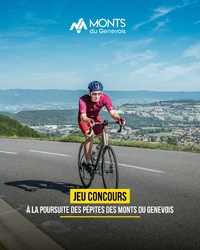
Les Monts du Genevois prolongent le Tour de France avec une chasse aux trésors digitale - Depositphotos.com, southmind

Costa Rica


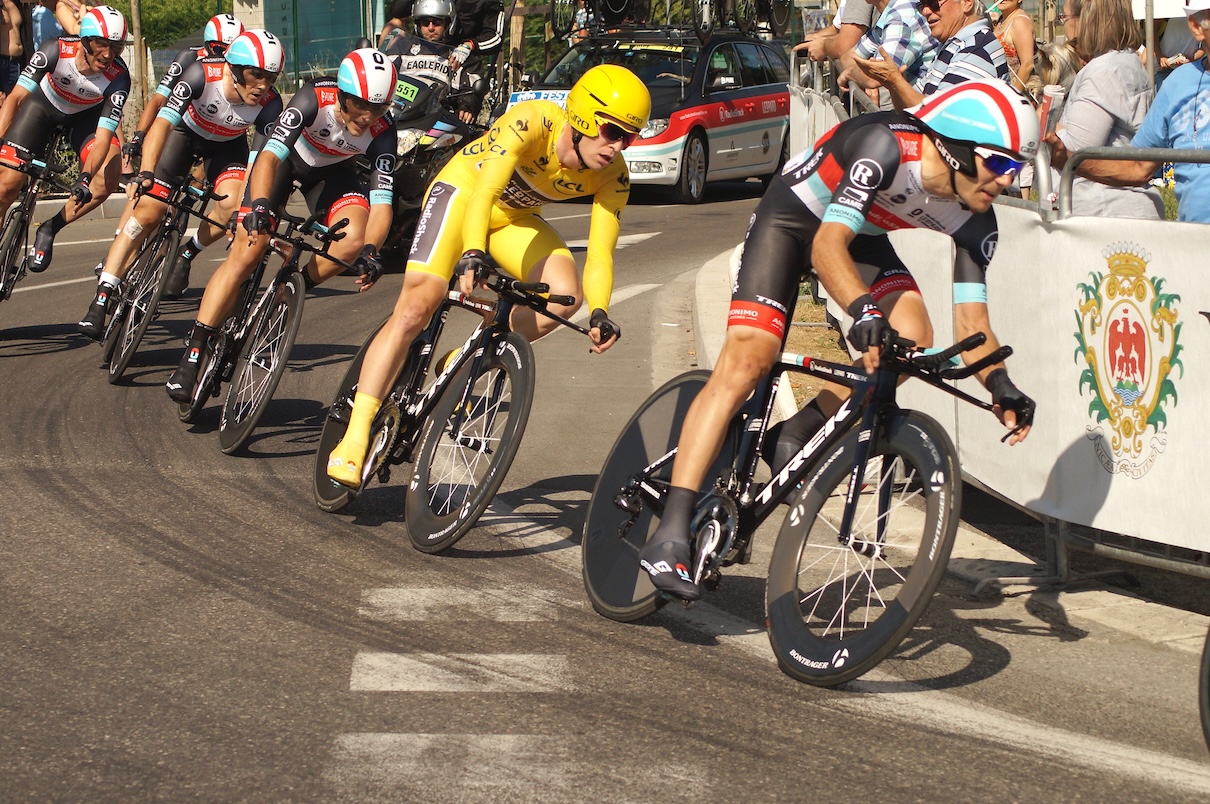
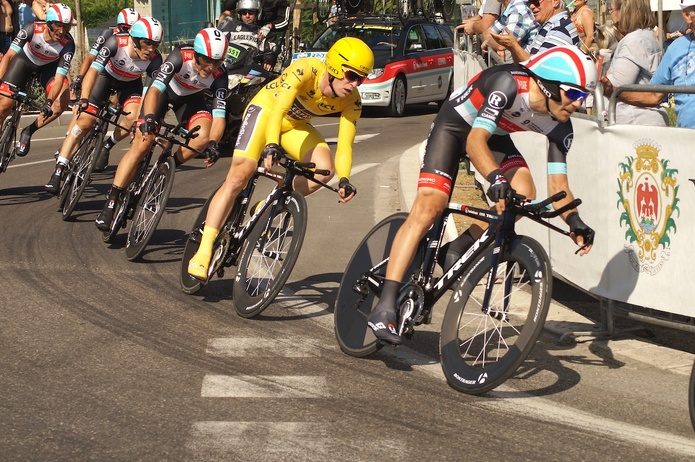
The Tour de France’s passage placed the Monts du Genevois in the spotlight on July 19.

The 15th stage of the Grande Boucle notably crossed the Col de la Croisette, perched at over 1,300 meters altitude, in the Salève massif.

On the occasion of this event, the Office de Tourisme des Monts du Genevois launched a gamification experience aimed at extending interest beyond the riders’ passage.

Until July 31, 2026, residents, visitors and curious people are invited to explore the area through a playful route accessible from a smartphone, a tablet or a computer.


A Treasure Hunt Inspired by the World of Cycling
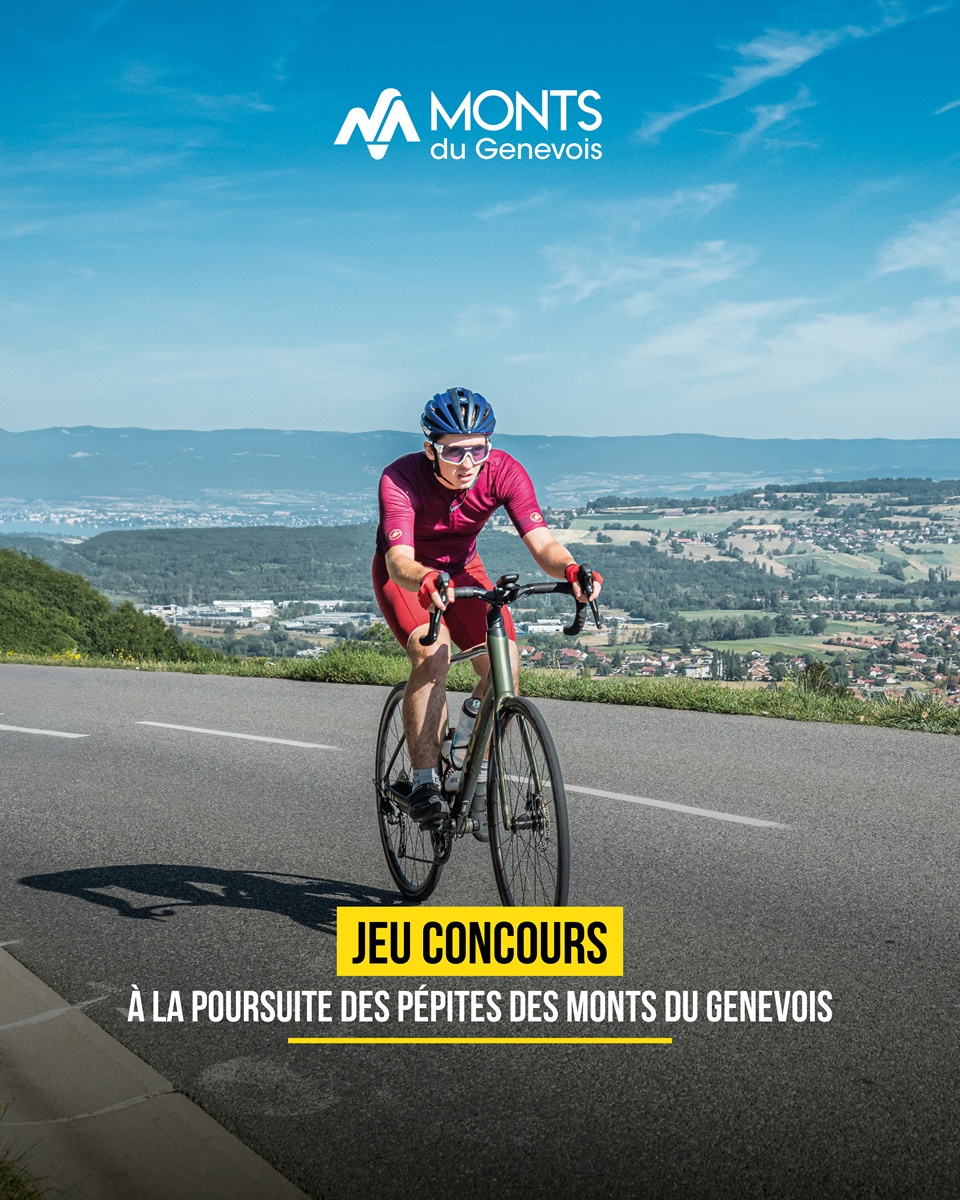

Illustration : OT des Monts du Genevois

The setup rests on an interactive map and a series of local riddles.

Participants progress through several stages inspired by cycling vocabulary: breakaways, ascents, intermediate sprints, and even mythical cols.

As they advance, they must locate symbols hidden in various locations across the Monts du Genevois.

The riddles lead them to viewpoints, natural sites, villages and addresses that contribute to the territory’s appeal.

A secondary quest, designed as a “time trial,” completes the experience.

It allows the most motivated participants to take on an extra challenge and win goodies, in a nod to the Tour de France’s advertising caravan.


Local Experiences to Win

The prizes have been designed in collaboration with several tourism players and professionals of the Monts du Genevois. The top prize, awarded by draw, will offer two people an immersion in the territory.

The stay includes, notably, a ride on the Salève cable car, a gourmet lunch at Hôtel-Restaurant L’Arborescence, and a night in the Salève Cabanes. Winners will also receive a personalized roadbook crafted by the Office de Tourisme.

A second draw also makes it possible to win several local experiences, including entries to UCPA Vitam, Filenvol, or the Salève cable car.


Making Visiting an Interactive Experience

Through this initiative, the Monts du Genevois Tourism Office aims to extend the Tour de France’s impact beyond the mere passing of the race.

The sporting event thus becomes the starting point for a tourism and digital experience intended to encourage discovering the territory.

The project relies on the experiential tourism trend, which motivates visitors to seek out activities and experiences to live rather than merely follow itineraries. The gamification here transforms the discovery of the Monts du Genevois into an interactive adventure.

The smartphone becomes the platform for this exploration, while the riddles guide participants to different sites around the territory.

A way for the Tourism Office to highlight its landscapes, its villages, and its tourism stakeholders in a playful light, while capitalizing on the visibility offered by the Tour de France’s passage.


Amelia Brille Publié par Amelia Brille Rédactrice TourMaG.com
Voir tous les articles d’Amélia Brille

  • picto Linkedin
  • picto email
Ajoutez TourMaG à votre flux Google Actualités Google Actualités icône  

Corsica Ferries Strengthens Summer 2026 Offering and Accelerates Digital Transformation


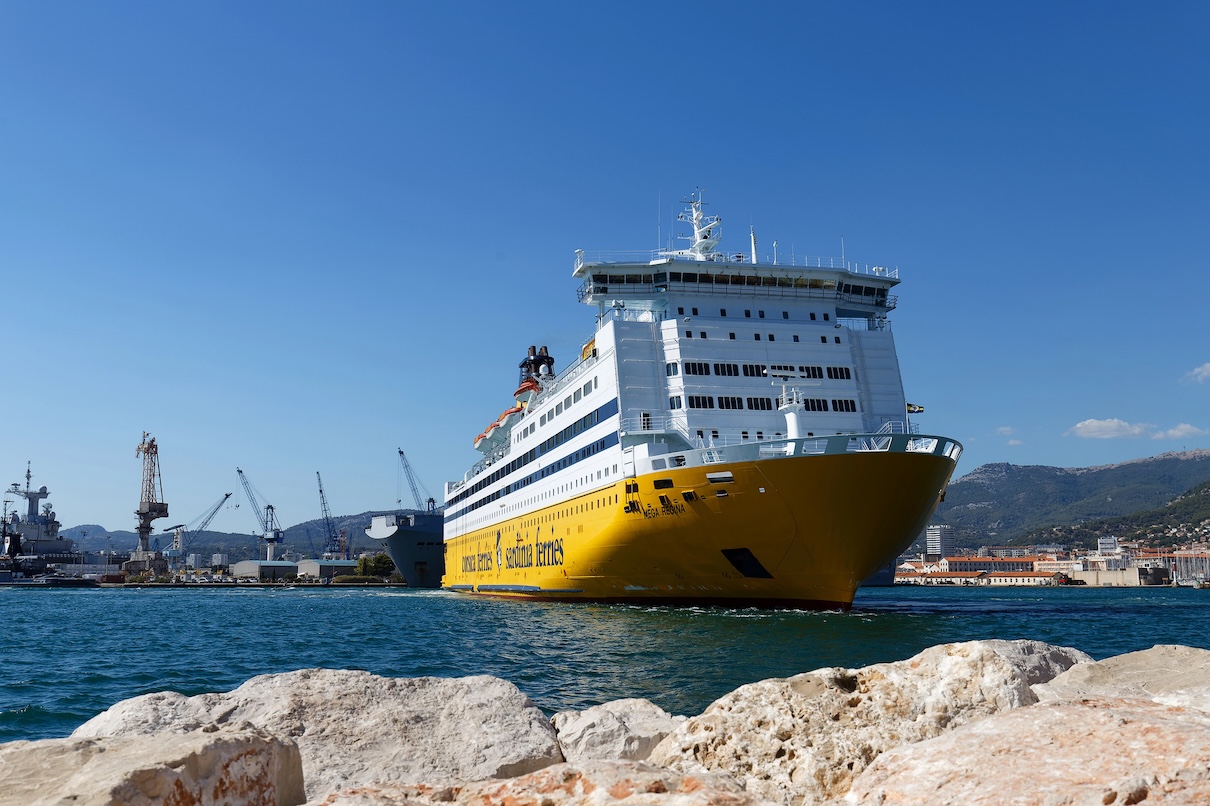
Corsica Ferries renforce ses liaisons en Méditerranée - Depositphotos.com, KovalenkovPetr

IFTM prenez RDV avec TourMaG


As spring-summer 2026 approaches, Corsica Ferries announces a strengthening of its links in the Mediterranean, while betting on digital innovation to improve the customer experience.

We continually adapt our offering to meet our customers’ expectations: more flexibility, varied destinations, and a strong focus on both the onboard experience and digital services“, says Fabien Agostini, Chief Operations Officer of the company.

Faithful to its historical markets, the shipping line consolidates its routes to the main Mediterranean destinations.

Since April, sailings to Mallorca and Menorca have resumed from Toulon and Sète. Two weekly rotations are scheduled from Toulon, complemented by a weekly crossing from Sète.


A Stronger Presence on Key Destinations

Faced with sustained demand, Sardinia is seeing its offering expanded. From Toulon, the frequency rises to two crossings per week.

In addition, a new connection was inaugurated on April 18 between Sète and Porto Torres, with one crossing per week (excluding August).

A central destination for the company, Corsica remains accessible year-round from Toulon, Nice, Sète, Savona and Livorno.

The increase in rotations aims to guarantee greater flexibility for travelers. A new weekly link between Sète and Ajaccio was also launched on April 18 (excluding August).


A Customer Experience Oriented Toward “Contactless”

In keeping with its modernization strategy, Corsica Ferries is rolling out several digital features through its mobile application.

Among the main developments, dematerialized cabin access allows passengers to use their smartphone as a key, without stopping at the reception.

The app also centralizes boarding passes, makes it easier to modify sailings, and provides direct access to the Corsica Club loyalty program, accompanied by real-time notifications.

Another novelty is the option to pay for bookings in multiple installments (2, 3, or 4 installments) for online purchases.

The company is also launching a thematic mini-cruise from May 7 to May 10, 2026, combining cultural discovery and sporting activities. Departing from Bastia, passengers will head to Civitavecchia, the gateway to Rome, before reaching Portoferraio on the island of Elba.

The program includes free time to explore the Italian capital, as well as on-board activities, notably in partnership with Fitness Park. The trip also offers possible participation in the Marathon of Elba Island for the most energetic travelers.


Amelia Brille Published by Amelia Brille TourMaG.com Journalist
View all articles by Amelia Brille

  • picto Linkedin
  • picto email
Add TourMaG to your Google News feed Google Actualités icône  

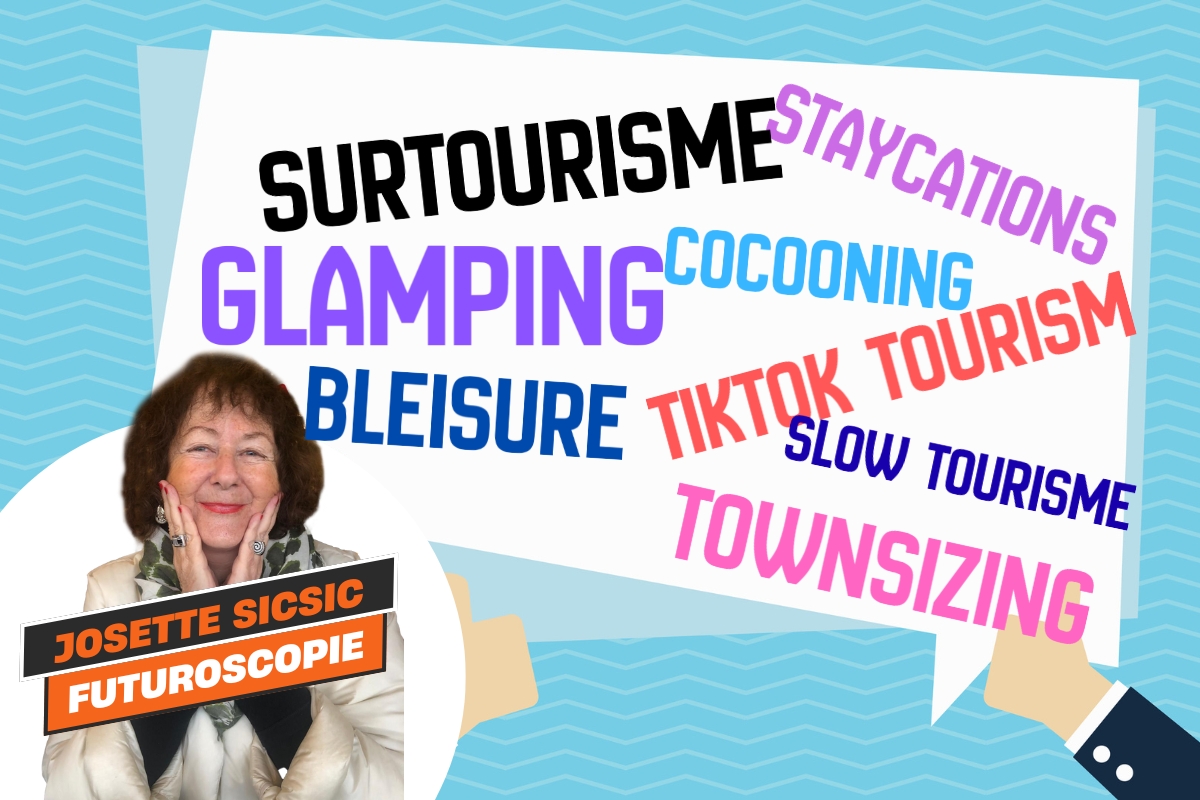
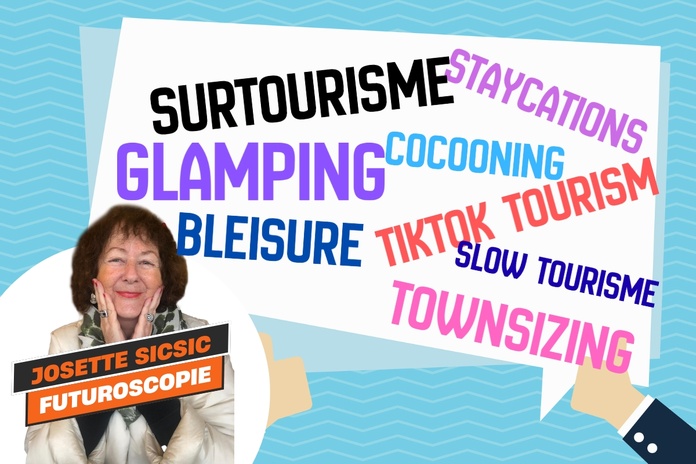
Cocooning, Overtourism, and Digital Nomads: Neologisms Shaping Foresight


Cocooning, surtourisme, digital nomads... les néologismes au service de la prospective ? - Depositphotos.com Auteur artursz

CroisiEurope


Among the champions of the genre, the term “cocooning” has taken the spotlight. It is all the more emblematic because, since its creation by Faith Popcorn’s forecasting firm (the brain reserve) in the 1990s, it has been understood across generations and has a knack for never going out of fashion.

It hardly fades, and this is reinforced by the Covid lockdowns, when a notion of “neo-cocooning” emerged. This represents a trend of retreating to one’s home that, at the same time, becomes multifunctional: work, entertainment, sport…

Another major success is the term “surtourism” or “hypertourism” denoting the negative impacts of tourism on territories and tourist sites. Repeated in unison, often exaggerated, this term even has its opposite: “undertourism”, which has not gained notoriety. And yet, “undertourism” exists indeed and is definitively more widespread than “surtourism”.

But it is less surprising, therefore less used by media seeking the spectacular.


Slow Tourism, Glamping… and Staycations!

Immense succès aussi pour le “slow tourism” born in Italy from the Slow Food movement which, as early as the 1980s, solidified a tendency to return to a slower life and tempo, especially in the realms of food, transport, and tourism.

Still widely used, this term marked a revolution that is undeniably lasting.

In another category, that of neologisms built around tourism styles, we find the “glamping”. A contraction of the words glamour and camping, signifying the emergence of luxury camping offerings. A real development, indeed progressing, deserving a specific label that has only one flaw: its sound.

The “couch-surfing”, describing a free way to travel from couch to couch, is also well recognized. Yet this activity is waning and tends to disappear.

The “staycations” are experiencing a committed trajectory? Less well understood, the compound term formed from stay (to stay) and cation (vacation) nonetheless constitutes a real trend, consisting of taking one’s holidays at home. It is not going to be reduced.

In the same vein, there are the “coolcations” which refer to budget-friendly vacations during heatwaves. A trend that will grow and will likely boost the appeal of Nordic destinations.


Traveller Styles

In the series of compound words describing vacation and traveler styles, “back packers” have been known for more than half a century. Often replaced in France by the term “routard”, they remain very present on roads worldwide. Denoting a travel accessory, they even precede “globe-trotters”. Another historical neologism.

New, thanks to Forbes magazine and its Global Nomad Index (as well as Skyscanner’s travel trends), the “Glomads” could this year gain some popularity. Signifying a highly connected population, traveling year-round with their laptops in hand, they do not differ greatly from the generation of “Digital natives” or “Digital nomads” identified by many destinations that consequently promote their welcome (Thailand, Canary Islands, Portugal).

In the same vein, the term “workation”—indicating the same mix of work and vacation—is more used by English speakers. It does not become popular in France, probably due to its awkward sound.

While the term “Bleisure”, though repeatedly mentioned by the media, does not take off either. Barely audible to Francophone ears, it fails to emphasize the combination of “business” with “leisure”. Yet the trend is there and will endure, especially as a well-established term is added: “remote workers”, i.e., teleworkers.

Another emergence is “JOMO” (Joy of Missing Out), describing individuals who proudly express their joy at skipping highly common experiences and activities. They stand in opposition to “FOMO” (Fear of Missing Out).


Some Developments in the Pipeline

Noting that nocturnal tourism has long constituted a large portion of the tourist offer (bars, nightclubs, concerts, parties…), the term “Noctourism” is trying to spread. For now, it still struggles to gain traction, but after-sunset experiences, notably those related to the sky, the stars, the northern lights, and full-moon nights, will develop. But beware, the “me mooning”—referring to those who want the full moon for themselves—gathers more and more followers.

The “Land snorkelling”, a recent trend describing a contemplative exploration of the landscape on the ground, just as one would snorkel in water (creative vocabulary used in 2025 travel trends), could also have a bright future. Just like “Micro-adventures”, which have always existed but needed a fresh twist!

The “Townsizing”, a tendency to choose smaller towns or communities as destinations rather than large metropolises, is also waiting in the wings to establish itself. But, more in Anglo-Saxon countries.

As for “Regenerative Tourism”, it has started a relatively bright career even though it hardly exists yet. An achievement that can be explained by a genuine traveler tendency not to degrade the environment and to practice sustainable tourism by picking up litter and leaving no traces of their passage. But who really does it? One might speak of “crypto trends”.

The “set jetting”, for its part, is undeniably in vogue. Denoting tourism practiced on film and TV shooting locations, it must be admitted that it is increasingly and very broadly media-covered.