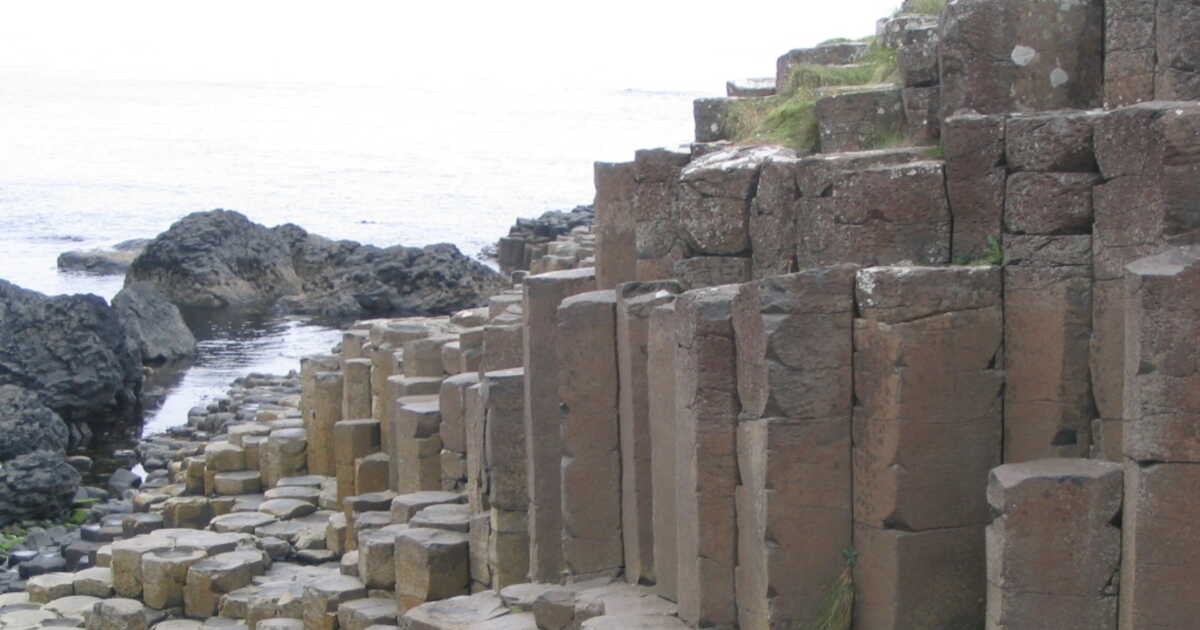
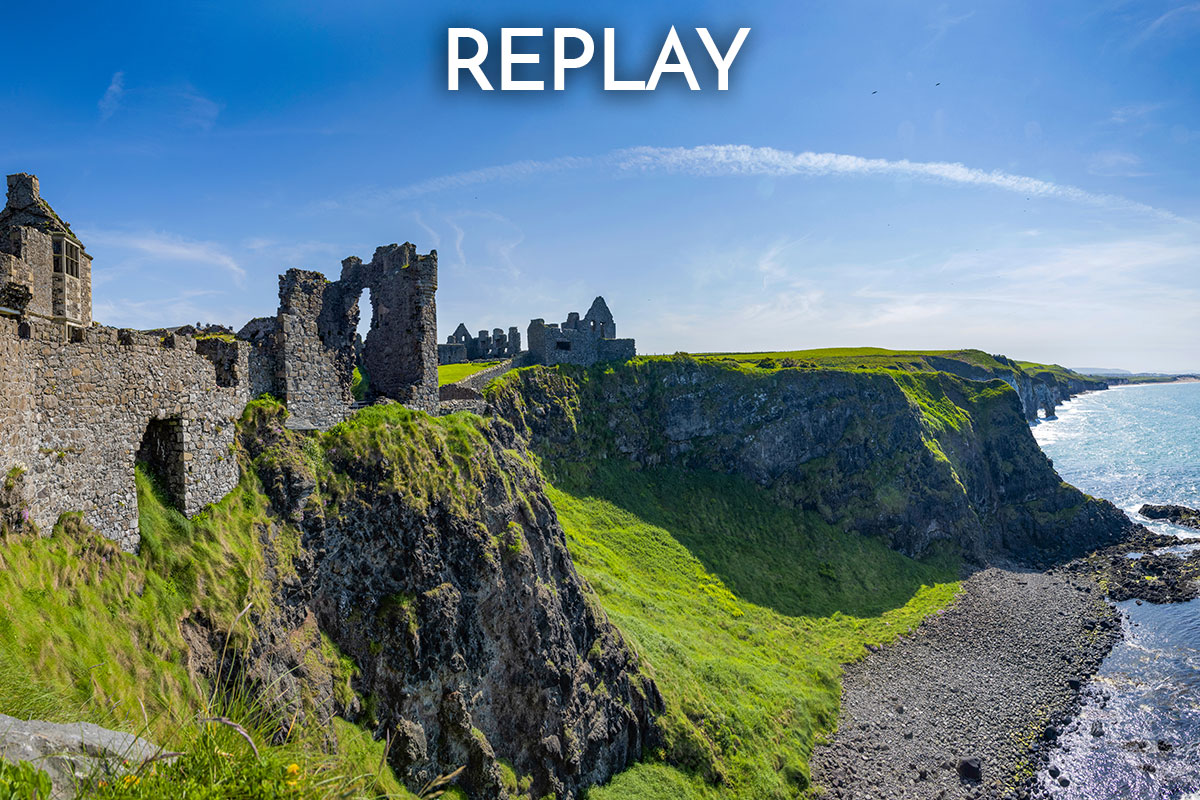
At first glance, they might look like simple lucky charms left behind by passing travelers. Yet the thousands of coins pressed into the rocks of the Giant’s Causeway, in Northern Ireland, forced conservationists to launch a particularly delicate cleaning operation. More than 20 kg of coins have already been removed from this UNESCO World Heritage site. And despite several months of intervention, thousands of coins remain trapped within the rocks.
A meticulous operation at the heart of an exceptional volcanic site
Located in County Antrim, in Northern Ireland, the Giant’s Causeway is one of the United Kingdom’s most famous geological landscapes. The site contains more than 40,000 basalt columns, formed about 60 million years ago during a volcanic activity. Molten rock flowed into the fissures of the Earth’s crust before cooling, contracting and fracturing, giving birth to these columns with their characteristic geometric shapes. The site is registered as a UNESCO World Heritage site.
It is in the interstices of these formations that visitors gradually began to wedge coins. The gesture seems to carry symbolic significance, with some tourists considering the money as a good luck charm or a sign of love. But the coins remain exposed to sea spray and humidity, and their prolonged presence in the fissures can become problematic for the rocks…
The National Trust therefore undertook their removal in May 2025, after an alert from the Geological Survey of Northern Ireland. Early observations had highlighted effects that were both physical and chemical on the basalt. The intervention required the expertise of a stone mason, Nathan Morrow. The teams could not simply pull the coins out for fear of damaging the columns. Pliers were used for those near the surface, while a jointing tool allowed access to coins wedged deeper in the cracks.
The difficulty varied greatly from one place to another. Some coins came out quickly, while the most deeply lodged ones could require more than 20 minutes of work each. In total, the operation involved around 200 hours of work. “Approximately 200 hours of work were devoted to the project”, said Cliff Henry, the National Trust’s nature engagement lead, to Need To Know.
Salt accelerates corrosion of coins stuck in cracks
But the problem is not limited to the number of coins scattered on the site. Their composition and the conditions to which they are exposed can also worsen their impact on the rock. British copper coins minted since 1992 notably have a steel core coated with copper. The 5, 10, and 20 pence coins are, meanwhile, made of steel coated with nickel. Yet these metals do not react to the environment in the same way. With humidity and especially the salt brought by sea spray, corrosion accelerates. The different metal layers can separate and expand inside the cracks, exerting pressure on the basalt.
This degradation also makes the coins difficult to identify after a few years. “The coins corrode so quickly in the salty and humid conditions of the Causeway that it becomes impossible to determine what currency they were, not to mention their date, after only a few years”, explained Cliff Henry.
The majority of recovered coins unsurprisingly came from the United Kingdom and the euro area, visitors tending to use the currency they have in their pockets. Only a portion could still serve as money, the others being too deformed or corroded.
Despite these hours of effort, the cleaning did not manage to remove everything. Several thousand coins would thus remain wedged in the cracks. Some are now too deeply buried to reach. Others are so rusted that moving them could further damage the rocks.
Cliff Henry, for his part, compares their accumulation to a carnival ride in which new coins gradually push the older ones inward. “As in a Penny Falls game in an arcade, the coins have been pushed further into the joints by the new coins hammered in at the front”, he explained.
The phenomenon could therefore continue to pose problems even after the end of the main operation, completed in June 2026. New coins have already been found after the cleaning, including 42 removed by Cliff Henry last month. The National Trust now plans to monitor the formations regularly and remove new deposits.
Informational panels have also been installed to ask visitors not to push coins into the rocks. The National Trust also plans to turn a portion of the recovered coins into objects for display to concretely demonstrate the consequences of this practice.
Is it worth going to Northern Ireland? A cultural and natural journey that deserves your attention
When is the best time to visit Northern Ireland? Tailoring your trip to changing weather
What is the most beautiful part of Northern Ireland? A journey from County Antrim to Derry
What is the capital of Northern Ireland? Belfast, between industrial heritage and cultural renaissance
Do you need a visa to go to Northern Ireland? Entry requirements to know before your trip
Nestled in the northeast part of the island of Ireland, Northern Ireland offers a rich blend of cultural heritage, breathtaking natural landscapes, and fascinating historical sites.
1. Discover the Giant’s Causeway (Giant‘s Causeway)
Listed as a UNESCO World Heritage site, the Giant’s Causeway stands as one of Northern Ireland’s most remarkable wonders, notable both for its geological formation and the symbolic weight it carries in the collective imagination. Made up of nearly 40,000 hexagonal basalt columns formed millions of years ago, this spectacular stretch of the Irish coast, located in County Antrim, evokes a strange sensation, especially when sunlight pierces the mist to illuminate the causeway.
A visit to Northern Ireland would not be complete without experiencing this spectacular panorama, accessible via a prepared walking trail. The Visitor Centre offers deeper insight into the site’s volcanic origins, while highlighting the legendary narratives that surround it. A place of open nature, blending wild landscapes with accessibility, the Causeway is a highlight of a coastal road trip along the north coast, often complemented by a stop at the Carrick-a-Rede Rope Bridge or the Temple of Mussenden to prolong the experience.
2. Delve into Belfast’s history
Belfast, the capital of Northern Ireland, is a place of historical memory and dynamic culture. Titanic Belfast is a must-see during your visit, a complex commemorating the construction of the famous liner and its tragic history. For fans of modern history, the Peace Walls and the mural graffiti offer a glimpse into the Troubles era. End your visit at Crumlin Road Gaol, a former prison now open to the public to better understand the region’s often intricate past.
Exploring Titanic Belfast: a historical immersion in the heart of the Titanic Quarter
Located to the east of Belfast’s city center, in the Titanic Quarter, stands one of the United Kingdom’s most emblematic museums: Titanic Belfast. Built on the very site of the old shipyards, this Titanic Belfast museum meticulously and powerfully recounts the history of the iconic liner, from its design to its tragic sinking. The museum experience blends interactive archives, life-sized recreations, and technical documentation, drawing visitors from around the world.
This visit to Northern Ireland serves as an excellent starting point for understanding the region’s industrial footprint. A few minutes on foot, the port, the Titanic sculpture, and the historic docks extend the experience into a setting steeped in memory. On a road trip around Belfast, this site stands among the highlights for those interested in maritime history as well as the city’s modern transformations.
Botanic Gardens and Ulster Museum: nature and culture at the heart of Belfast
The Botanic Gardens, located south of Belfast, offer a natural interlude within an urban frame, ideal for a few hours of strolling among Victorian glasshouses and manicured lawns. This relaxing space also serves as a gateway to culture, housing the Ulster Museum, a must-visit institution for anyone looking to deepen their understanding of Northern Ireland through art, archaeology, natural history, and contemporary events related to the Northern Irish conflict.
At the crossroads of the United Kingdom and the Republic of Ireland, this museum sheds light on the historical and identity nuances of a complex territory. The pairing of the botanical garden and the museum makes for a meaningful stop on any Belfast cultural road trip, alternating city days with intellectual immersion into the island’s past and present.
Cathedral Quarter and St. George’s Market: a living glimpse of contemporary Belfast
The Cathedral Quarter represents the cultural and artistic heart of Belfast, known for its cobbled lanes, mural art, and creative venues. Further southeast, near Lanyon Place and the River Lagan, St. George’s Market, active since the 19th century, hosts artisans, local producers, and musicians, creating a vibrant weekend atmosphere.
For a Northern Ireland visit that goes beyond clichés, this area showcases Belfast’s modernity without losing touch with its roots. These places also reflect the current dynamism of a United Kingdom undergoing change, where traditions and renewal coexist in a shared space.
Crumlin Road Gaol: the memory of imprisonment in a conflicted past
Once a prison, now a museum, Crumlin Road Gaol offers a striking lens on Northern Ireland’s recent political history. Located in Belfast, this 19th-century building housed both common prisoners and political detainees, becoming a major site of memory for the Troubles. The visit, often guided, traverses cells, corridors, and courtroom spaces in a silence heavy with meaning.
This step naturally fits into an exploration of Northern Ireland rooted in contemporary reality, pairing with nature-focused itineraries. It complements urban routes featuring Titanic Belfast or the Cathedral Quarter, providing a fuller picture of the city and its role in the history of the United Kingdom.
3. Take the Causeway Coastal Route
The Causeway Coastal Route, regarded as one of Europe’s most beautiful scenic drives, links Belfast to Derry and traces the scenery of Northern Ireland along the coast with rare intensity. This coastal road winds between rugged cliffs and seaside towns, offering excellent opportunities for short inland detours to glimpse Game of Thrones filming locations like the Dark Hedges and the dramatic coastal trails of the Gobbins, a must-see attraction.
Designed for a multi-stop exploration, this route blends the chance to discover with immersion in an authentic Ireland, ideal for contemplation, especially at sunrise on the solstice or during clear spells that reveal striking contrasts across the Atlantic Ocean.
4. Explore Derry/Londonderry
Situated on the northwest edge of Northern Ireland, the city of Derry (also known as Londonderry) stands at the crossroads of history, memory, and contemporary creation. Famous for its 17th-century walls, it remains marked by the Troubles and the Bloody Sunday events, whose memory resonates around every corner, notably near the iconic Free Derry Corner in the Bogside district, a hotspot of political and artistic engagement. This city has also gained international visibility thanks to the series Derry Girls, which poignantly highlights the paradoxes and resilience of this community.
Today, Derry in Northern Ireland hosts numerous festivals, exhibitions, and cultural initiatives, making this stop a good place to grasp the complexity of Northern Ireland beyond its landscapes. In a road trip combining an Ireland visit with a historical route, it serves as a vital stop to understand the past while observing current social dynamics, just a few hours from the north’s major natural sites.
5. Participate in outdoor activities
Renowned for its lush nature, Northern Ireland offers numerous possibilities for outdoor activities, especially for hiking enthusiasts, water sports lovers, or gentle explorers. The Mourne Mountains, with their spectacular summits, provide hiking trails suitable for all levels, revealing dramatic panoramas over wooded valleys and distant coastlines.
Further west, the Fermanagh Lakelands offer a wonderful setting for paddling, birdwatching, or simply enjoying the quiet of inland lakes, nestled in the heart of the rural interior. For sea-based activities, the beautiful Irish beaches along the Irish coast allow for surfing, sailing, or coastal walking, especially around White Rocks Strand. This variety of experiences can be easily woven into a multi-day road trip along the coast, providing a balanced mix of active exploration and peaceful contemplation.
In conclusion, whether you’re passionate about history, nature, or cultural experiences, Northern Ireland offers something to satisfy every curiosity. Visiting this region reveals a country where past and present intertwine within a natural setting of rare beauty. To deepen your experience, consider exploring not only the well-known tourist sites but also the hidden treasures that make it a unique and memorable destination.
Is Northern Ireland worth visiting? A cultural and natural journey that deserves your attention
A visit to Northern Ireland promises a richly contrasted experience, between spectacular landscapes, recent history, and accessible great outdoors. This portion of the United Kingdom, distinct from the Republic of Ireland, captivates with its marvellous places such as the coastline of County Antrim, the wild terrain of the Mourne Mountains, or the striking settings of the Gobbins, frequently cited in guides as a must-see attraction.
Couple these with iconic sites like the Titanic Belfast museum, the Mussenden Temple, or the Dark Hedges, some of which gained fame thanks to the TV series Game of Thrones, and you have a complete destination—historical, natural, and cinematic all at once. Whether you’re planning a few days in a van, a full road trip, or a broader discovery of Ireland, Northern Ireland proves to be an excellent starting point and a rare opportunity to encounter Atlantic winds, ruined castles, and vibrant culture.
What is the best time to visit Northern Ireland? Adapting your trip to the changing climate
The best time to visit Northern Ireland runs from May to September, when the sun is more present and temperatures are milder, offering favorable conditions to fully enjoy the landscapes of Ireland, its lovely Irish beaches like White Rocks Strand, or cliff-top hiking trails such as those found at Fair Head. The oceanic climate remains unpredictable, so it’s wise to pack clothing for wind and showers even in summer.
The sun over the Giant’s Causeway, when it breaks through the clouds, can transform this iconic place into a scene of intense beauty. For light-lovers, the solstice sunrise reveals remarkable hues along the Irish coast, especially in June. Around these times, you can combine long walks, local festivals, and cultural visits while minimizing weather-related constraints.
What is the prettiest part of Northern Ireland? A journey from County Antrim to Derry
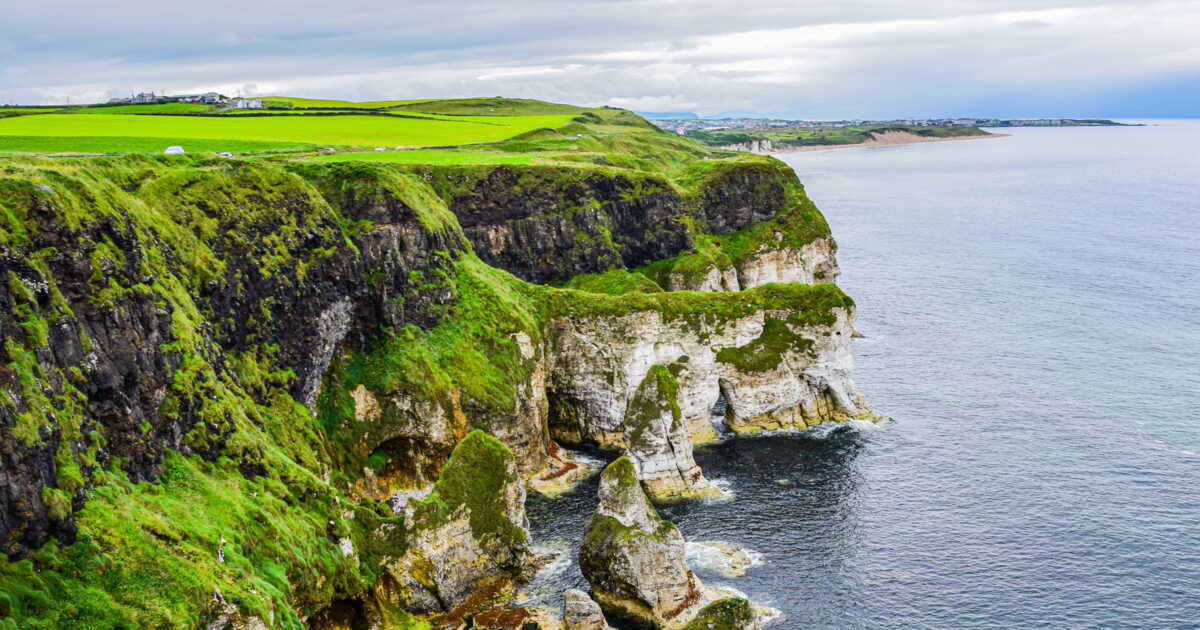
Among Northern Ireland’s most beloved spots, County Antrim stands out for the density of its natural and cultural sites. The Port of Ballintoy, the Fair Head cliffs, the Dunluce Castle ruins, and the geological formations of the Giant’s Causeway compose a route that blends dramatic scenery with outdoor nature. This region is also traversed by the Gobbins, a cliff-top path carved into the rock, a true favorite for walkers.
Venturing westward to the city of Derry (also known as Derry-Londonderry), immortalized thanks to the series Derry Girls, adds a historical and contemporary dimension to Northern Ireland exploration. These regions combine heritage, varied landscapes, and well-preserved inland scenery, making the northern part a great place to slow down and view the island from another angle.
What is the capital of Northern Ireland? Belfast, between industrial heritage and cultural renaissance
Belfast, capital of Northern Ireland, is today a city undergoing transformation, anchored in its industrial past yet clearly oriented toward cultural tourism. The Titanic Quarter, with the Titanic Belfast museum, offers an immersive chronicle of the liner’s history from its shipyards at Harland & Wolff. A few minutes on foot, the St. George’s Market, one of the oldest covered markets in the United Kingdom, provides a dive into local gastronomy.
Art and architecture enthusiasts will also discover the Cathedral Quarter, the city’s creative core, dotted with galleries, murals, and historic pubs. Additionally, a visit to the Crumlin Road Gaol helps illuminate the tensions that marked recent political history. Belfast serves as an excellent starting point for exploring the region, while offering in itself a representative spectrum of Northern Ireland’s past and present.
Do you need a visa for Northern Ireland? Entry requirements to know before your stay
For European Union nationals (excluding Irish citizens protected under the Common Travel Area), a tourist visa is not required, but a valid passport and a British Electronic Travel Authorization (EVA / ETA) are mandatory. For those combining both territories on a road trip, it’s important to anticipate administrative, currency, and mobile-network differences.
There is no systematic border check between the two jurisdictions, but authorities may perform occasional verifications. Before you depart, it’s wise to consult official British sources on current formalities and to anticipate possible adjustments according to the political situation. These practical tips are essential to ensure a smooth visit to Ireland, especially when staying across multiple regions.
This article was drafted with the help of artificial intelligence, then corrected, supplemented, and validated by the editorial team.
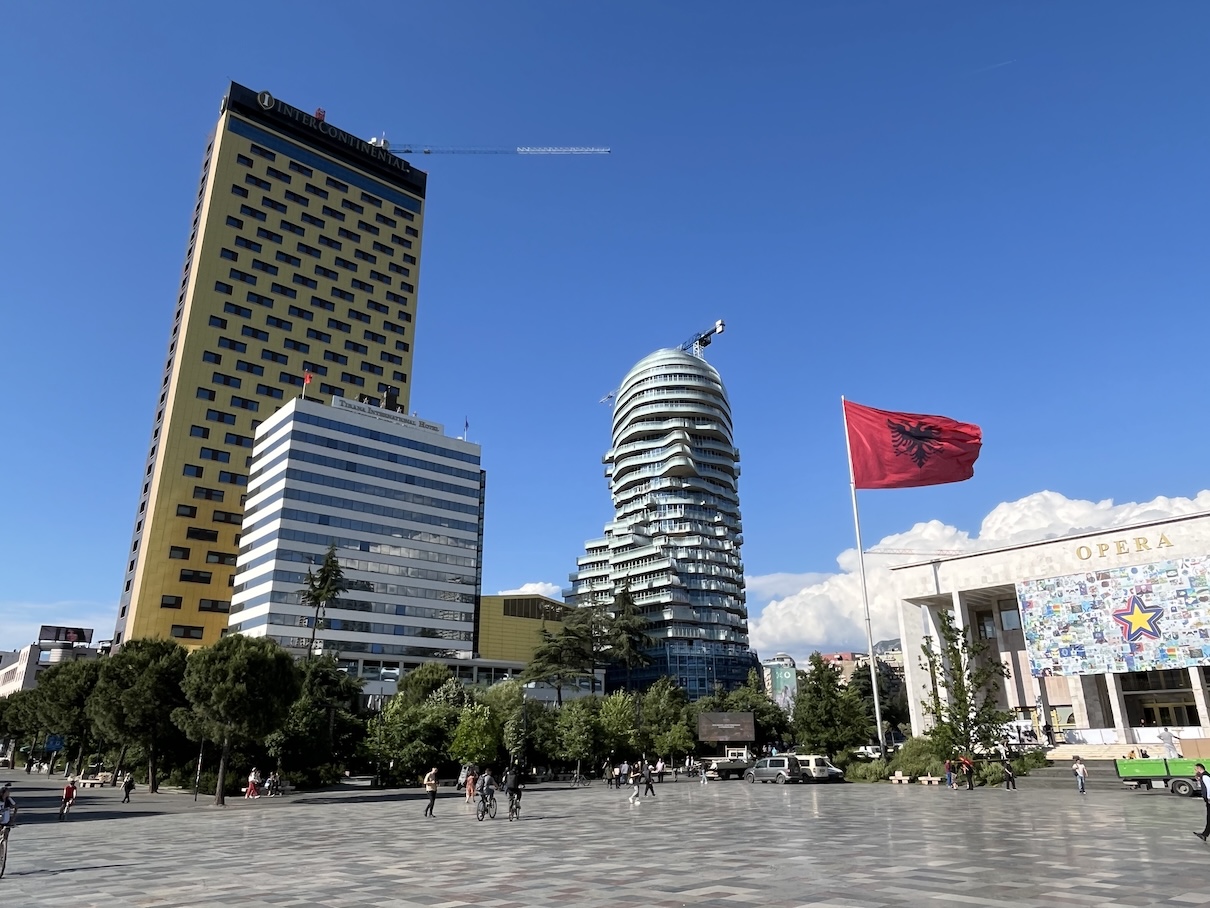
Tirana and its 900,000 inhabitants, almost a third of the country’s population, is a diverse capital. In response to the modernist buildings of the 1930s and the postwar communist era, futuristic structures are meant to place the capital firmly in the 21st century.
The result is an eclectic architecture. In the center, the pedestrian square Skanderbeg, the national hero ubiquitous across the country, is represented here by a statue on horseback, embodying this ramshackle urbanism.
The National History Museum and its large 1980s façade mosaic, the Palace of Culture (1963), the Bank of Albania (1938) or the Et’hem Bey Mosque (late 18th century), sit alongside the new InterContinental hotel and the futuristic Tirana’s Rock tower, whose profile draws the face… of Skanderbeg.
House of Leaves, former headquarters of the secret police
The grim period of Enver Hoxha’s communist dictatorship is laid bare at the House of Leaves. The former headquarters of the Sigurimi, the “Albanian Stasi,” reveals the full arsenal of repression, surveillance, and propaganda implemented by the Albanian state at the height of its paranoia.
In the evening, one can enjoy the vibrancy and Albanian cuisine in one of the many bars and restaurants in the Pazari i Ri and Blloku districts, festive and Westernized.
Citadel of Kruja
Located about 40 kilometers north of the capital, the town of Kruja enchants with its amphitheater-like position on the mountainside. Its fortress is believed to be the birthplace of the hero Skanderbeg, who fiercely resisted the Ottomans in the 15th century.
Rebuilt in the 1980s, it houses a large museum dedicated to the warlord and offers a splendid view over the Adriatic. People also visit Kruja for the bazaar, where a few craftsmen still fashion, in the old way, leather shoes and felt hats.
Shkodra, fascinating national photography museum
80 kilometers further north lies Shkodra. This city of about 150,000 inhabitants, situated 30 kilometers from the Adriatic Sea, is bordered by its namesake lake, adjacent to Montenegro.
It offers a double appeal: firstly its Rozafa fortress, built in the 14th century by the Venetians, whose ruins crown a hilltop across 200 hectares, and secondly the pedestrian bustle of Idromeno and Gjuhadol streets, with their numerous café terraces. Here one also visits the fascinating Marubi National Photography Museum, named after the family that documented Albanian society across three generations.
At the same latitude as Tirana, Durrës is, like all ports, a complex and eclectic city. Albania’s second city, it carries traces of Greek, Roman, Byzantine, Angevin, Venetian, and Ottoman rule, and it has long been a terminus for caravan routes from the East.
It is therefore by exploring the archaeology that one discovers it, visiting the 15,000-seat Roman amphitheatre tucked into the city, the remnants of its walls, and the Archaeological Museum, a thorough synthesis of all these eras.
Crown Plaza Hotel in Durrës
In the midst of a tourist boom, the city, well connected to Italy and the port of Bari by numerous ferries, is set to welcome a marina soon as new hotels rise along the coast, such as the Crown Plaza, recently opened on the seafront.
Nestled in the heart of the Northern Ireland, Belfast is a city that blends rich history with contemporary vitality. Known for its industrial roots and its central role during the Troubles, it now attracts visitors and locals alike with its emerging art scene, lively neighbourhoods, and surprising urban landscapes. If you are wondering what to do in Belfast, there is a multitude of activities to suit every kind of visit, whether for a day or longer. Let us explore together the attractions to prioritize to make the most of your stay.
1. Discover Titanic Belfast
Located in the Titanic Quarter, Titanic Belfast stands as one of the United Kingdom’s most iconic museums, both for its bold building, designed in homage to the legendary liner, and for the quality of its interactive exhibitions. Built on the historic Harland & Wolff shipyard site, it traces the birth, construction, and the centenary of the Titanic’s sinking.
The visit continues with admission to the SS Nomadic, the original tender docked nearby, another witness to the city’s maritime past. This immersive journey sits within the momentum of revalorising Belfast’s historic buildings, and constitutes an essential introduction to the local industrial history. Titanic Belfast is today a must-see stop on any itinerary in the city centre.
2. Explore the Cathedral Quarter
The Cathedral Quarter, in the heart of Belfast’s city centre, reflects the cultural buzz of the northern Irish capital. Around the St Anne’s Cathedral, a major edifice among Belfast’s historic buildings, unfolds an urban fabric of art galleries, pubs with traditional atmospheres, and concert venues.
This area is also a strategic hub for navigating the city. In the evening, visitors can attend a play or discover the recent mural frescoes that testify to an engaged contemporary art scene. The Cathedral Quarter represents a perfect synthesis of religious heritage, cultural vitality, and urban regeneration.
3. Stroll through the Botanic Gardens of Belfast
The Botanic Gardens, located south of the city centre, offer a moment of relaxation in the heart of the city. This public park, enjoyed for its outdoor activities, is built around the Palm House, a Victorian-era building designed by Sir Charles Lanyon, and the Tropical Ravine, housing a rich diversity of exotic plants.
This natural site, frequented by both locals and visitors, fits into urban itineraries for those seeking to escape the city bustle. It is also a link to culture, as it adjoins the Ulster Museum and provides a pleasant starting point to explore south Belfast. Ideal for a pause between two visits.
4. Discover the history at the Ulster Museum
The Ulster Museum, the largest museum in Northern Ireland, offers a structured reading of history and the arts in a building adjacent to the Botanic Gardens. Its permanent exhibition covers a wide spectrum, from prehistory to the Northern Ireland conflict, with a particular focus on urban memory and social evolutions.
The richness of its interactive exhibits draws both art lovers and visitors wishing to understand the region’s historical foundations. The museum is free, a strong argument for travellers mindful of their budget. It sits within a logical sequence of stops including Belfast Castle, Tudor-style buildings, and other downtown institutions.
5. Plunge into history with the Murals and Black Taxi Tours
Belfast’s mural frescoes, visible in several city districts, bear witness to the socio-political tensions that marked Northern Ireland’s recent history. To better understand their meaning, the Black Taxi Tours allow exploring this visual heritage in a documented context, often narrated by former witnesses of the events.
These guided tours traverse areas where history has been etched on the walls, notably around the Peace Wall, near the city centre. The role of Stormont Palace, the workings of the institutions, or stories connected to historical figures are addressed clearly. This itinerary is essential for anyone wishing to move beyond clichés and grasp the complexities of a city continually reconfiguring.
6. Stroll through St. George’s Market
St George’s Market, one of the oldest covered markets in the United Kingdom, is a must-visit to discover Belfast’s authentic atmosphere. Open on weekends, it hosts local producers, artisans, and restaurateurs in a Victorian landmark in the city centre. The stalls teem with fresh produce, handmade items, and specialties such as the Ulster Fry, a traditional dish.
This lively place is part of a broader effort to celebrate culinary and cultural heritage. With its central location, it makes an excellent starting point to explore the surrounding area, notably the city hall and the main Belfast historic buildings. Ideal for a break during a weekend, or to meet the city’s artisans.
7. Visit the Crumlin Road Gaol
The Crumlin Road Gaol, Belfast’s historic prison, offers immersion into a lesser-known chapter of local history. This Victorian-era building, still marked by past tensions, can be toured with or without a guide, through a structured route through the old cells, corridors, and the execution room.
Its role during the Troubles and earlier conflicts is explained in a factual manner, with integrated educational devices. Located a short distance from the city centre, the prison is a key stop to understand the social and political dimensions of Belfast’s history. It is also an example of successful heritage repurposing.
8. Admire Belfast City Hall
Belfast City Hall, or City Hall, stands out with its remarkable baroque revival architecture in the city centre. This building, whose construction was overseen by Sir Alfred Brumwell Thomas, houses exhibitions on municipal history and the city’s urban evolution. Free guided tours offer access to its ceremonial rooms, stained glass, and historic galleries.
Outside, the building is surrounded by open lawns often used for outdoor activities. A place for orientation and gathering, it makes an ideal introduction to Belfast for any visitor, near St George’s Market, the Crown Liquor Saloon, and other major institutions.
9. Enjoy a day trip to the Giant’s Causeway
A day trip to the Antrim Coast from Belfast lets you discover the Giant’s Causeway, a unique volcanic formation listed as a World Heritage site. Reachable in under two hours from the capital, this natural site impresses with its hexagonal columns perfectly formed.
The visit can be integrated into a broader circuit including coastal castles or locations used for TV series filmed in the region. For geology, photography, or hiking enthusiasts, this excursion represents a natural extension of a Belfast weekend, combining nature, culture, and heritage.
10. Relax at the Grand Opera House
The Grand Opera House embodies the elegance of live performance in Belfast, with a program that blends opera, theatre, and musicals. Its building, recently restored, offers a complete experience for stage enthusiasts in a historic setting. Its proximity to other iconic sites such as Titanic Belfast or the Crown Liquor Saloon makes it easy to include in a sightseeing itinerary, especially for short stays. Attending a show in this history-laden venue complements the city’s cultural discovery.
11. SS Nomadic: a ship-museum brimming with history
The SS Nomadic, the last ship of the White Star Line still intact, provides a natural extension to Titanic Belfast. This small tender, which once served to board first-class passengers at Cherbourg, is now moored in the city’s historic port. Recently restored, it welcomes the public for tours of its decks, cabins, and period spaces, recreated with precision.
This floating vessel, rich in personal stories and anecdotes, helps to better understand the social context of the early 20th century. It is recommended to couple the visit with Titanic Belfast for a complete reading of the city’s industrial past. The SS Nomadic is also a point of interest for sailing enthusiasts, naval design, and maritime World Heritage heritage, at the crossroads of workers’ memory and cultural tourism.
12. Belfast Castle: between city panoramas and Celtic legends
Overlooking the city from the heights of the Cave Hill Country Park, Belfast Castle offers an immersion into Northern Ireland’s architectural history. Built in the 19th century in the Scottish Baronial style, this building stands out for its romantic charm and its integration into preserved natural surroundings.
The surrounding park, rich in Celtic legends and hiking trails, leads to the famous Napoleon’s Nose, offering a breathtaking view of Belfast City Hall and the bay. Free to access, Belfast Castle is a place for relaxation as well as a cultural highlight, with its gardens and a café housed in the former cellars. It is one of the recommended stops for those wanting to combine outdoor activities with heritage during a weekend or a day trip.
13. Peace Walls of Belfast: a striking testimony of contemporary history
The Peace Walls, Belfast’s peace walls, remain one of the most powerful symbols of the political and religious division that marked Belfast in the 20th century. These historic walls in Belfast, transformed into open-air galleries, are today covered with mural frescoes recounting conflicts, but also the hopes of reconciliation.
Visiting the Peace Walls means stepping into a still-sensitive chapter of the United Kingdom’s history. This memorial route sits within a broader exploration of the city centre, between the Stormont Palace, the Belfast City Hall, and the cultural institutions that participate in the effort of collective memory. A must-see step to understand the complexities of Northern Ireland’s identity.
In conclusion, Belfast is a destination brimming with historical, cultural, and urban treasures that will captivate any curious visitor. Whether you are a music aficionado, a history buff, or simply seeking a picturesque setting to unwind, Belfast offers much to discover and reveals itself through multiple dimensions across its contrasting neighbourhoods and landscapes. Before concluding your stay, consider excursions around the city and seize the opportunity to capture the full cultural diversity of this capital in full renaissance.
What is Belfast’s most famous thing? A maritime heritage turned into a global emblem
The most famous thing about Belfast is probably Titanic Belfast, an iconic museum in the United Kingdom erected on the old White Star Line shipyards, where the legendary liner was built. Opened on the centenary of the sinking, this contemporary building, with angular shapes inspired by the ship’s bow, houses exhibitions tracing the Titanic’s history from its design to its tragic fate.
Located in the city centre, close to the SS Nomadic, the only surviving ship of the company, it forms with the latter a coherent heritage complex, accessible via a combined entry to the SS Nomadic. Titanic Belfast is not merely a museum: it embodies the city’s industrial identity, pays tribute to its workers, and stands as a major cultural heritage site within the city’s patrimony.
What to do in Belfast with children? A city suited for young explorers
Visiting Belfast with children allows for a mix of cultural discovery and outdoor activities. The Belfast Zoo, perched on the slopes of the Cave Hill Country Park, offers a spectacular view of the city and hosts over 130 animal species. The park itself, with its marked trails, enables families to reach the Napoleon’s Nose, a famous rock formation overlooking the Belfast Castle, a Victorian-era building nestled in a park ideal for a picnic.
For a more urban moment, children enjoy the exhibits at Titanic Belfast, as well as a visit to the SS Nomadic, which allows them to discover Belfast’s maritime world in a playful way. Finally, the murals and kid-friendly guided tours in the old districts mark an introduction to the city’s contemporary history.
What to do in Belfast on weekends? Culture, nature and gastronomy on the agenda
Spending a weekend in Belfast offers an excellent opportunity to explore the richness of this Northern Irish capital. Start at St George’s Market, famous for its fresh produce and authentic atmosphere, where visitors can sample a traditional Ulster Fry.
The city centre, dominated by the Belfast City Hall, invites strolls among Belfast’s historic buildings, such as the Crown Liquor Saloon, a pub listed as a historic monument, lit by its original gas lamps. Heritage enthusiasts will continue with Titanic Belfast and the SS Nomadic, to better understand the city’s maritime history. In the evening, attend a play or opt for a day trip to the Antrim coast, easily accessible.
This article was written with the help of artificial intelligence, then corrected, augmented and validated by the newsroom’s journalists.
→ Learn all about Slow Tourism in Northern Ireland
Webinar Description
Ireland, green by nature, offers numerous opportunities for responsible travel, and the Northern Ireland region certainly has a substantial share. From orchard strolls to traditional cuisine based on local ingredients, your clients can discover a sustainable Northern Ireland, a champion of slow tourism. Regional experts will present three unforgettable sustainable experiences in the locality:
Nikki Elliott, of Walk It Off NI, will virtually guide you through one of her hikes in the Belfast countryside.
Tracey Jeffreys, of Tracey’s Farmhouse Kitchen, will talk about her intimate cooking sessions where visitors craft their own versions of Northern Ireland’s most iconic dishes.
Finally, Donna Fox invites you to explore the famous orchards of her hometown, Armagh, as part of one of her environmentally friendly Northern Ireland tours that highlight local history and traditions.
→ Learn all about Slow Tourism in Northern Ireland
Upcoming Sessions
The Irish Tourism Authority will host themed webinars every two months throughout 2024 to provide you with the most relevant information and to inspire your upcoming itineraries in Ireland.
Sign up for the Irish Tourism’s monthly newsletter to receive the details.
Our Other Tools for Tourism Professionals
✔ Online brochure
Who We Are
Irish Tourism is the island’s official tourism office, the organization responsible for promoting the island abroad as a leading travel destination. The Paris-based team is at your disposal to answer your questions and support you in your efforts—please feel free to reach out to them.