
Ghislain Domi, VP GetGoing (BCD): France Set to Be One of Our Major Growth Contributors


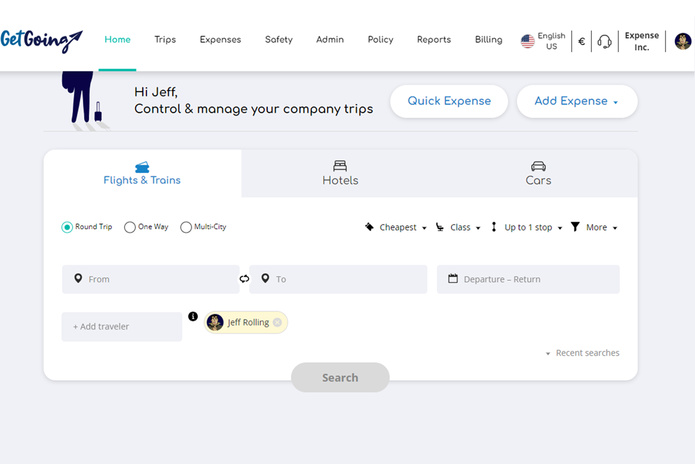
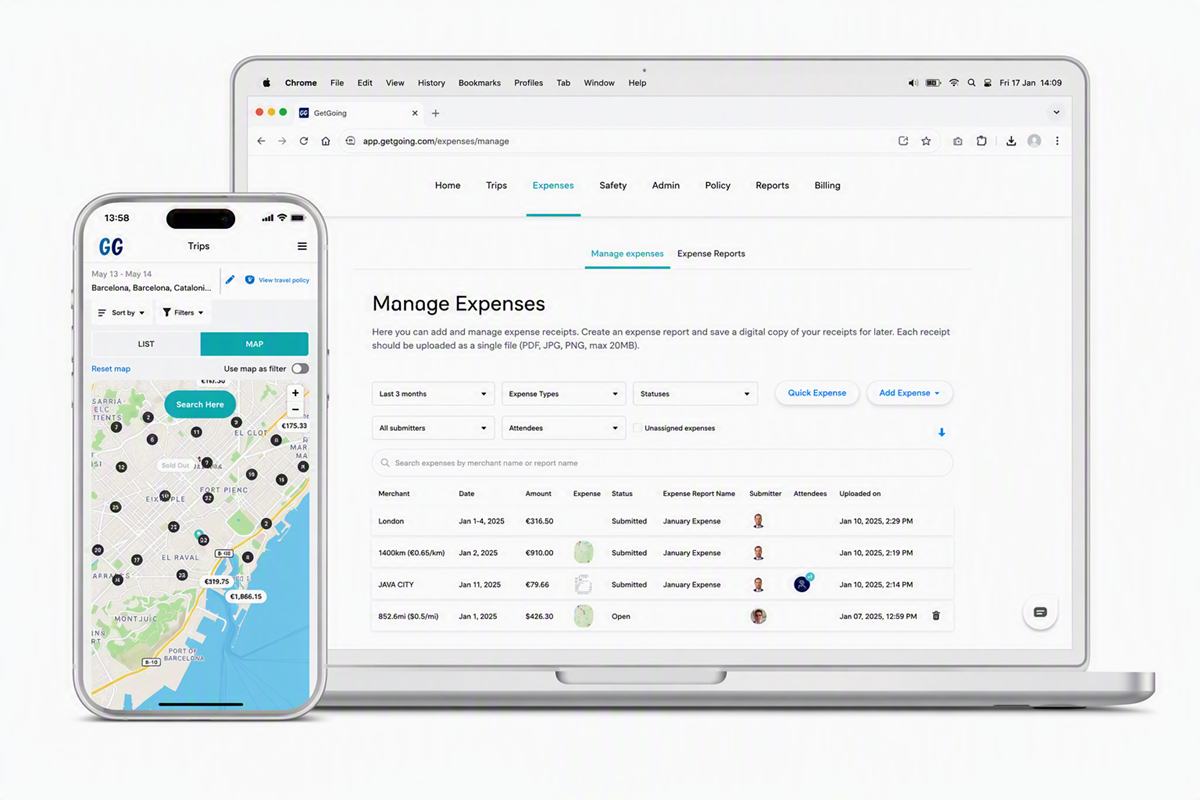
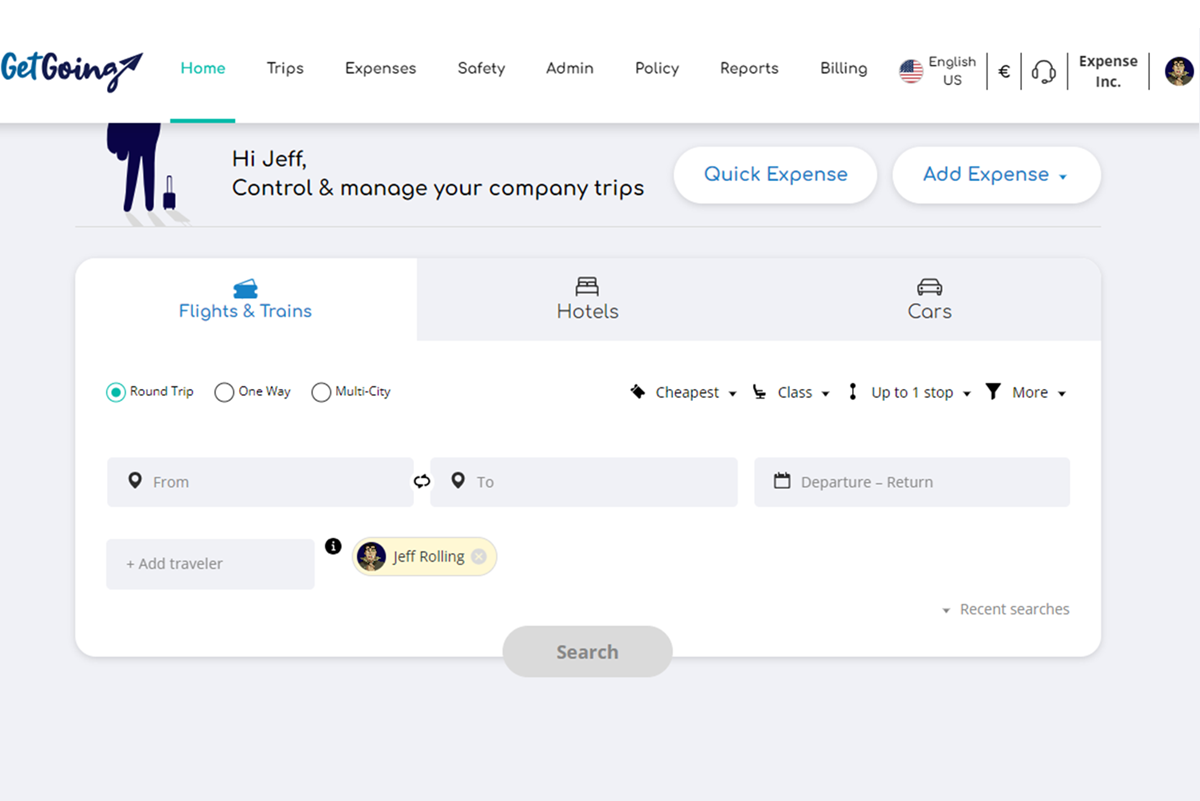
GetGoing, la plateforme de gestion des voyages d'affaires et des dépenses dédiée aux PME de BCD Travel est disponible en France depuis début 2026. @getgoing

MSC Croisières


TourMaG.com – BCD launched GetGoing on the French market at the start of the year. What is it about? Where is its deployment at?


Ghislain Domi : GetGoing was launched in Germany in 2022 and in the United States in 2023. We began rolling it out gradually in France at the start of the year, as well as in the United Kingdom, Belgium and the Netherlands.

We wanted to test the platform on the French market before communicating more broadly. Early feedback has been positive and IFTM represents a new milestone to accelerate this launch.

Growing companies reach a moment where travel management becomes too complex. They book on different sites, use Excel spreadsheets for their expenses, and assistants often have to manage travel alongside many other tasks.

Once a company reaches a certain size, they need to gain efficiency and take back control of their spending. GetGoing enables centralization of bookings, provides visibility into expenses, and reduces the administrative burden.

We also target companies that have already worked with TMCs, but for whom the tools and traditional processes have become too heavy. In such cases, their need is more about simplifying management.

TourMaG.com – GetGoing targets SMEs. Simplicity is therefore one of the platform’s main selling points?

Ghislain Domi : Absolutely. I have been in business travel for almost 20 years and have largely started with implementations of international programs. I’ve seen firsthand what can block these projects.

We wanted to approach the problem from the opposite angle: instead of shortening the implementation, we aimed to eliminate it. With GetGoing, there is no traditional implementation in the classic sense.

We can create a new client in a few minutes. Once the legal information is provided, building the base needed to start booking takes one to two hours maximum.

Of course, some topics can extend the process. A company that does not yet have a travel policy, for instance, can benefit from GetGoing deployment to define one. We can assist, but that inevitably takes more time.


“GetGoing and other BCD offerings are complementary”


Ghislain Domi est le Vice-President de GetGoing. @getgoing

TourMaG.com – Is the platform aimed only at travel managers?


Ghislain Domi : One of the goals is precisely to give travelers more control. We offer mobile apps on iOS and Android, and the idea is to cover the entire process, both for the traveler and the company.

The journey does not end when the employee returns home. Expenses, expense reports, and budget tracking must then be managed. We want to cover the end-to-end process.

TourMaG.com – Could GetGoing eventually compete with the other BCD Travel solutions?

Ghislain Domi : GetGoing and the other BCD offerings are complementary.

When a client grows or their program becomes more complex, they may need more customization, specific integrations, or customized processes. In that case, they can move toward TripSource.

We thus think less in terms of company size and more in terms of needs. GetGoing must remain a simple and effective solution for companies that primarily seek smoothness.


Air France NDC available in September

TourMaG.com – What role does artificial intelligence play in the platform?

Ghislain Domi : We are fairly selective. Our priority remains to keep a simple platform. We won’t add AI just for the sake of AI.

We use it where it provides real value, notably for receipt capture and expense reports. The traveler can take a photo of the receipt and the expense report is automatically prefilled. However, validation remains human.

AI also contributes to personalizing search results. For a flight, for example, it can determine the order in which the offers appear. But no algorithm will hide offers: we do not remove anything, we only adjust the hierarchy.

TourMaG.com – What adaptations did you have to make for the French market?

Ghislain Domi : The main adaptation obviously involves SNCF. We already had Deutsche Bahn in Germany and UK Rail in the United Kingdom. To offer a credible France-based offer, we had to include SNCF.

We are also working on Air France’s NDC. The feature is already in testing, and we are finalizing the last elements. It should be available by September.


“Around a hundred clients worldwide.”

« GetGoing représente un véritable relais de croissance pour BCD en général et pour BCD France en particulier », affirme Ghislain Domi, Vice-President de GetGoing.  @getgoing

TourMaG.com – What will be the next evolutions?


Ghislain Domi : We have a very busy road map, with several years of development ahead of us.

By the end of the year, we will particularly strengthen Travel Risk Management. We already have a map showing where travelers are located. We will develop the entire portion related to reporting, tracking, disruptions, and risk-event management.

We are also actively collecting feedback from customers to bring about regular optimizations.

Next year, we will also develop new offerings in payments, a topic that is particularly important for SMEs, and significantly strengthen the Expense module. This will include integrating credit card data, more connections with third-party systems, and greater end-to-end process automation.

TourMaG.com – How many clients are using GetGoing today?

Ghislain Domi : We have around a hundred clients worldwide.

We don’t primarily measure by client count but by business volume. Our objective is to surpass 100 million euros in business volume by 2030. We’re on a solid trajectory to reach that.

TourMaG.com – What ambition for France?

Ghislain Domi : The French market is still very small since we have just launched there. But it will be one of the major contributors to GetGoing’s growth.

Historically, BCD did not address this market directly in France. There is therefore a lot to do and enormous potential. GetGoing represents a real growth lever for BCD in general and for BCD France in particular.

TourMaG.com – Could GetGoing be deployed in other countries?

Ghislain Domi : For now, nothing has been decided. There are ideas and we will discuss them soon, but nothing has been decided or funded yet.

Future developments may not be limited to Europe. We already know how to serve the European subsidiaries of a client, even in countries where we have not yet launched commercially in a proactive manner.


Caroline Lelievre Publié par Caroline Lelievre Journaliste – TourMaG.com
Voir tous les articles de Caroline Lelievre

  • picto Twitter
  • picto Linkedin
  • picto email
Ajoutez TourMaG à votre flux Google Actualités Google Actualités icône

These 5 European Airports Named After Major Cities Are Sometimes Located More Than 100 Kilometers Away

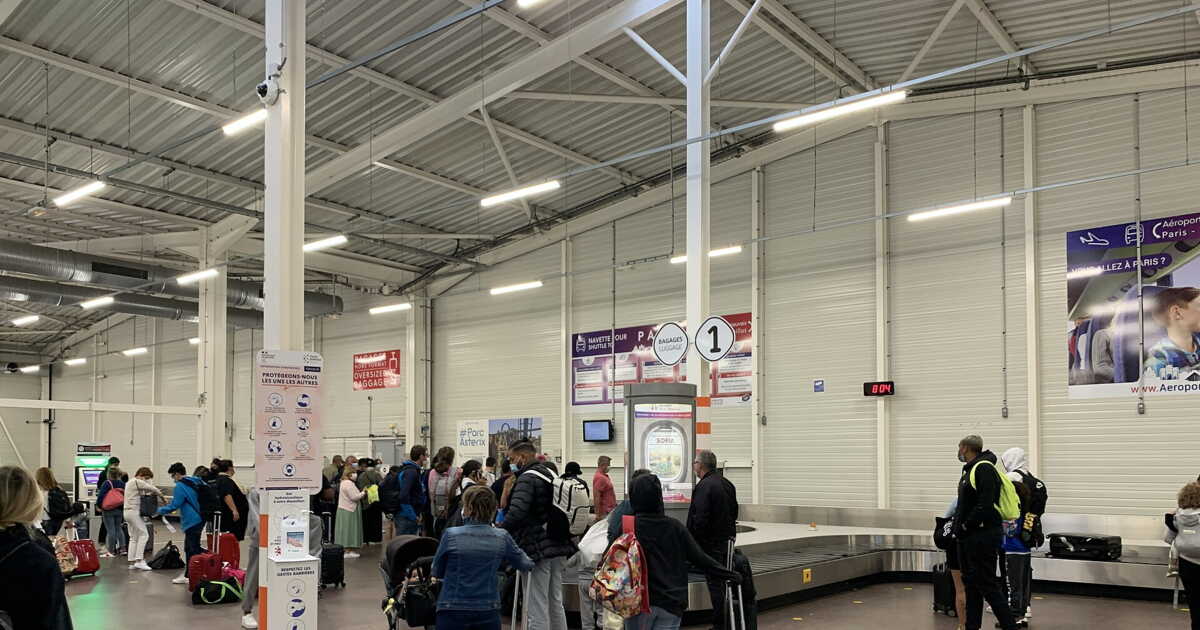
When you book a flight, you may be tempted to choose Paris-Beauvais Airport instead of Orly or Charles de Gaulle because of a more attractive price. Yet, Paris-Beauvais Airport is located about one hundred kilometers from the capital, roughly a 1 hour 30 minute drive. While many French people know the quirk of this airport in the Oise region, there are several airports in Europe that are not situated in the immediate vicinity of the city they serve, as noted by the Daily Mail.

When booking your tickets for a trip to London, Stockholm or Barcelona, you may face the unpleasant surprise of having to spend a few extra hours of travel before reaching your final destination. So even if the price of the plane ticket seems cheaper, this saving can quickly be erased by a long, unforeseen shuttle or taxi ride. Consider estimating the cost of the additional journey against the savings from the flight to see if it is really worth it.

The Frankfurt-Hahn Airport

If you plan to visit Frankfurt like millions of fellow travelers, beware of being misled by the Frankfurt-Hahn Airport. Despite its name, it is far from the German economic capital, as it is located in Lautzenhausen, about 124 kilometers from Frankfurt, roughly a 1 hour 30 minute drive. To reach the city directly, it’s better to choose Frankfurt International Airport. You should allow roughly twenty minutes to reach the city center.

View this post on Instagram

Düsseldorf-Weeze Airport

Still in Germany, be careful when booking your upcoming trip to Düsseldorf. If Düsseldorf-Weeze Airport is offered, know that it is located about 80 kilometers from the city. To avoid a long extra journey, favor Düsseldorf International Airport. It will take you only about fifteen minutes to reach the city center.

View this post on Instagram

Stockholm Västerås Airport

The name may still be misleading. Stockholm Västerås Airport is actually located about 100 kilometers from Stockholm, more than an hour by car. For travelers who want to reach the Swedish capital quickly, Stockholm Arlanda Airport presents a more convenient option.

View this post on Instagram

Barcelona–Reus Airport

The capital of Catalonia also has its own “trap airport.” Despite its name, Barcelona–Reus Airport is located about one hundred kilometers from Barcelona. It officially bears the name Reus Airport. To land as close as possible to the city, it is wiser to choose Barcelona–El Prat Airport, located about a 20-minute drive from the city center.

AI: Major Dangers and a Tremendous Growth Opportunity?


"Le dialogue social doit très vite s’engager sur la question de l’IA" selon Sébastien Lecornu - Depositphotos @AlexanderPokusay

CroisiEurope


There is not a single tourism industry conference or event that does not feature an intervention dedicated to artificial intelligence.

After the initial exposure and the push to avoid missing this disruptive breakthrough, speakers often go in circles on the subject.

Interventions strive to democratize its use, to alert about disengagement or the “grand replacement,” but few interrogate the changes this could trigger in our societies and in our relationship with others, with the world, with work and with leisure.

I am a child of possibility; there is progress only if it is shared. The misfortune of some is very bad for the health of others.

How can we not understand, when nature is ailing, that we are ailing? We are in the same boat. Progress only works if we resist the disenchantment of the world.

I work a lot with AI, but at what natural cost does the artificial nature of AI operate? Because water is a key question.

Water is at once the engine of our lives and the mirror of our societies, questioned Erik Orsenna during one of his talks within the Aix-en-Provence Economic Meetings.


“A historic rupture, akin to the Renaissance and the fall of the Roman Empire”

And this reflection is far from being incidental.

While France boasts of colossal contracts to build data centers on its soil, a recent American study reveals that a single such facility can consume up to 19 million liters of water per day, the equivalent of the consumption of a city with more than 120,000 inhabitants.

This is not all, because the technological progress brought about by AI also implies potential brutal and fundamental changes in our society.

AI is great, but it can lead us astray.

I greatly appreciate the minister of Taiwan’s discourse on AI, who emphasizes that there must be engineers, but above all a sense of civic responsibility, a sense of curiosity and collaboration. Not everyone will become an AI engineer, but everyone will use it.

So there are values to develop, because otherwise, yes, jobs can be eliminated, but to do what? The problem is that we face a historic rupture.

It is as powerful as the Renaissance and the fall of the Roman Empire,
explained Jean Viard, the sociologist for whom there is no longer any question of speaking about progress in our current world.

This historic moment is triggered by AI, but not only.

To this revolution are added two anthropological ruptures. The first concerns the relationship between humans and nature. Today, it is no longer humans who make history; it is nature. The second concerns the male-female relationship and the explosion of patriarchy.

Contemporary society must therefore invent a new future, a new society, by integrating these three major changes.

And in the face of AI’s development, it is necessary to rewrite a common narrative, but also reintroduce responsibility at all levels—whether among users, political leaders or businesses.

In addition, there is the crisis of information.


“The social dialogue must quickly engage on the question of AI”

The real question we must ask is this: Who designs the algorithms and with what intentions?

Because they are neither designed nor regulated in Europe.

Information will survive only if treated as critical infrastructure, on par with water, electricity or telecommunications. The information from a source existing on the cloud must be protected as critical infrastructure, so that no one can stumble upon it,
” explained Rajesh Krishnamurthy, CEO of Sopra Steria.

However, for the moment, this does not appear to be the stance of the current government or of the European Union.

Individual initiatives remain, such as that of Le Monde, the only French media to have signed contracts with AI giants.

Its boss, Louis Dreyfus, wants the regulator to take up the subject to prevent only a few newspapers from serving as sources for generative AI models.

Because, for him, the algorithms must reach readers aged 35 and under, thus renewing a readership that is aging rapidly. This is not the only opportunity represented by this technological revolution.

We are witnessing an acceleration in research, the creation of new professions and the need to generate data in a different way.

This world of terror, in which AI would replace everyone, is not yet there. We are in a transition period, in which we need high-quality data to use AI intelligently and rationally.

We must apply the fundamental principle of responsibility in all that we do, thus asking why we conduct research, for whom and how, while integrating AI
“, assessed Yasmine Belkaid, Director General of the Pasteur Institute.

To this, it will be essential to add the development of critical thinking, in a world that increasingly lacks it.

This will enable questioning the responses of AI agents and not accepting them as gospel, especially for next generations who will be born directly into this revolution.

Incidentally, for the current Prime Minister, the time has come to draft a new pact between employees and employers, integrating AI, to prepare the world of work for this rupture.

I do not see very well how one can discuss artificial intelligence and its impact on labor law if we do not engage in a five-, ten- or fifteen-year reflection.

Other countries around us are doing it.

It is evident that the social dialogue must quickly engage on the question of artificial intelligence and its impact on labor law. And this cannot wait for the presidential election.

There must already be a number of proposals on the table for us to seize and organize the political debate on this,
” set the course Sébastien Lecornu.


“AI is a weapon to kill bureaucratic jobs”

And while there have certainly been voices questioning this revolution, few have urged stopping it or slowing down.

Because for the business and political spheres, AI opens a new era, a new lever of economic growth that this disenchanted world needs.

The situation is such that American graduates protest this technology. Unable to find jobs after completing their studies, they would even turn to more manual trades less likely to be displaced by algorithms.

To read: Tourism jobs in the face of AI: technological mutation or new hospitality?

This question obviously arises in the tourism sector.

Everyone is realizing that we are entering an era of abundance of intelligence, whereas in the past, it was a scarce raw material.

We are in a kind of Spotify of intelligence, we can consume intelligence.

We are witnessing the end of humans performing supervised tasks. White-collar workers will have to immediately position themselves as supervisors to pilot AI agents. This raises the question of learning, because it used to take three to five years to become a supervisor. That step disappears.

In Western societies, we have created a large number of bureaucratic jobs. But AI is a weapon to kill bureaucratic jobs. And European and American educational systems have been designed to train young people for these jobs, whereas they will disappear
“, imagined Matthieu Courtecuisse, founder of the Sia consulting firm, based in New York.

A very dark vision, which aligns with the theories of “job apocalypse” that would accompany the deployment of algorithms throughout our lives.

For Myriam El Khomri, the former Minister of Labor in the Valls government, there is currently no visible impact on the job market.

We don’t know, and that is the conclusion of many studies.

But one thing is certain: it raises questions about technological maturity, managerial and organizational readiness, because it is above all a productivity issue.

In the automobile industry, when a new project took three years to come to fruition, it now takes nine months. This pace and evolution reveal our difficulty in organizing transitions.

Regarding training, it should no longer be viewed as a stock of knowledge acquired at the start of a career. AI must prompt us about our capacity to reorient ourselves
“, estimated, less radically, the director of CSR and strategy at Diot-Siaci.


IA : “a great danger and a tremendous opportunity for growth”

The uncertainties are numerous when we open the imagination around AI.

No one really knows what our future will look like, nor whether today’s jobs will be the same tomorrow. One thing is certain: AI should massively boost human productivity and therefore raise economic growth.

Europe can be the continent that best applies AI to its real economy.

I come from the United States, where I did a kind of AI trek. I was struck by the speed with which AI models are deployed there. Companies have taken this issue head-on.

And what makes me optimistic about jobs is our ability, with generative AI, to enhance human intelligence.

The challenge for businesses, as Éric, is to ensure that our employees become more productive, more creative and more competitive with AI. Our huge challenge is not to fear job destruction, but to work on transforming jobs and improving the employability of our staff
, stated by Éric Maumy, president of April.

To read: Arnaud Vaissié (International SOS), spokesperson for “considerably worried” bosses

The entire current issue in our economies, which are losing vitality, existing bearings and value, is to re-ignite the future through algorithms. They would open a new era of prosperity.

This is also the belief of the most recent Nobel Prize in economics.

The generative AI revolution reshuffles the labor market and raises the question of the concentration of economic power and wealth, to which one cannot be indifferent.

It can be a great danger, but it is also a tremendous growth opportunity.

AI will enable us to produce goods and services much more easily. It will also make it possible to innovate much more easily.


This force is like a wild horse. It can crash into a wall or lead you where you want to go, if you put in place the right institutions and policies.

We must move from growth by catching up, which characterized the Thirty Glorious Years, to growth through disruptive innovation and high-tech
, explained Philippe Aghion.

It remains for Europe to change its mindset, mobilize capital and promote its values without compromising them.


Green Is Our Gold: Sustainability Becomes a Major Tourism Draw in Australia [ABO]


Tourism Australia a lancé en mars 2026 son initiative "Green is Our Gold" - DepositPhotos.com, bennymarty

Dream Yacht


When 77% of international travelers say that sustainability is important in their daily lives, and 70% that it influences their travel choices, a long-haul destination can no longer merely promise spectacular scenery.

Tourism Australia has understood this.

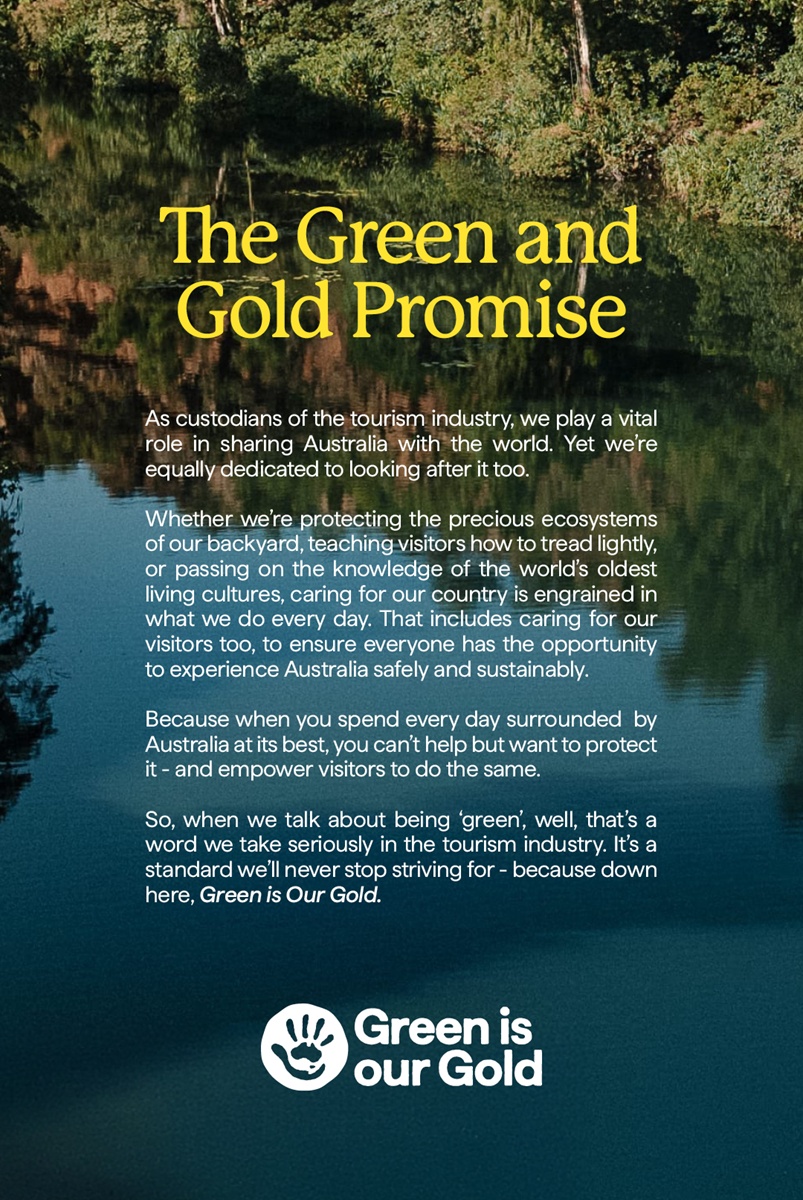
Launched on March 19, 2026, at the Destination Australia conference in Melbourne (Narrm) in front of 800 professionals, the initiative “Green is Our Gold” now structures the country’s sustainable commitment.

At the Australian Tourism Exchange 2026 in Adelaide, the program was placed at the heart of professional conversations, including those aimed at European markets.


Five Pillars, a Toolbox, 360,000 Businesses

Green is Our Gold brings together the Australian tourism industry around a shared promise“, explains a spokesperson from Tourism Australia’s Sustainability and Communications team met in Adelaide.

According to her, operators who sign the Green and Gold Promise access a practical toolkit containing operational sustainability tools and on the five pillars to embody.

These five pillars, formalized by Tourism Australia, have become the common grammar of Australian responsible tourism:

Celebrate Community : support local players and their businesses,

Embrace Culture : share heritage, including the stories of the First Nations,

Preserve Place : protect natural and iconic environments,

Respect Wildlife : ensure the health of the wildlife unique,

Take Care : encourage responsible travel, in the manner of locals.

More than 360,000 Australian tourism businesses are targeted by this rollout.

The momentum was confirmed at ATE26: more than 1,000 professionals signed the Green and Gold Promise during the fair, marking their formal commitment to the five principles.

The official engagement platform is accessible at greenisourgold.australia.com, where operators and organizations can sign the charter and download the practical kit.

The program is designed to last. The spokesperson describes “Green is Our Gold” as a lasting platform, designed to endure over time.

Phase 1, extending until 2027, aims to mobilize the industry. Phase 2 includes gradual integration into the Aussie Specialist program, which will directly affect French agencies trained by Tourism Australia.


Robin Mack: “Green is Our Gold is a Call to the Industry”


Manifeste "The Green and Gold Promise" - Illustration Tourism Australia

In an interview with TourMaG in Adelaide, Robin Mack, Managing Director of Tourism Australia, defends a strong industry conviction. “Green is Our Gold is a call to the industry to go even further,” he asserts.

Australia has a solid history of sustainable growth in tourism, and many companies have already integrated sustainability, delivering world-class experiences that respect our natural environments, cultures and communities.

For Robin Mack, two logics converge. First, that of the First Nations: “Our First Nations culture and sustainability are deeply linked.” Then that of geography: “We cannot escape our location. It’s a long flight to get here. When travelers are on site, we must show them how well we practice sustainability on the ground.

The initiative fits within the national THRIVE 2030 framework and complements the National Sustainability Framework for the Visitor Economy launched in 2023.


Between Industry Commitment and Carbon Accounting: a Balancing Equation

The initiative is not universally welcomed. At ATE26, several professionals highlight the paradox of a country that heavy invests in mining while access remains reserved for long-haul travel.

The critique has its legitimacy. But industrial awareness, on the scale of a continent, nonetheless marks progress.

The whole challenge now lies in transmission. That the program reaches regional operators and small firms, that agents pass the baton to their clients, and that these clients in turn accept concrete gestures, such as choosing a reusable water bottle over a plastic bottle, in a country where tap water is drinkable everywhere.

Transmission, in short, as the implicit fifth pillar of the program.


Sébastien Cros

Asia: The Major Festivals That Can Transform Your Trip into an Unforgettable Experience


Bhoutan © DTH Travel

Dream Yacht


In this quest for cultural immersion, festivals and traditional celebrations present a tremendous opportunity. For a few days, sometimes a few weeks, a destination reveals its most precious aspects: its beliefs, its traditions, its history, its creativity and its identity.

For tourism professionals, these events also constitute a powerful differentiating lever. Building an itinerary around a festival or a cultural event allows offering a unique experience, difficult to compare with a classic circuit, while giving real added value to the journey.

Asia, with its exceptional cultural diversity, offers year-round a multitude of celebrations that deserve to be integrated into programs for 2026 and 2027.


When an entire country goes into festive mode

Certain celebrations literally transform a destination.

In Bhutan, the famous Tshechus bring together local communities, monks and pilgrims around sacred dances performed in the fortress-monasteries of the Himalayan kingdom. The Paro Tshechu (18 to 22 March 2027) and the Thimphu Tshechu (21 to 23 September 2026) rank among the country’s most spectacular events.


Japon © DTH Travel

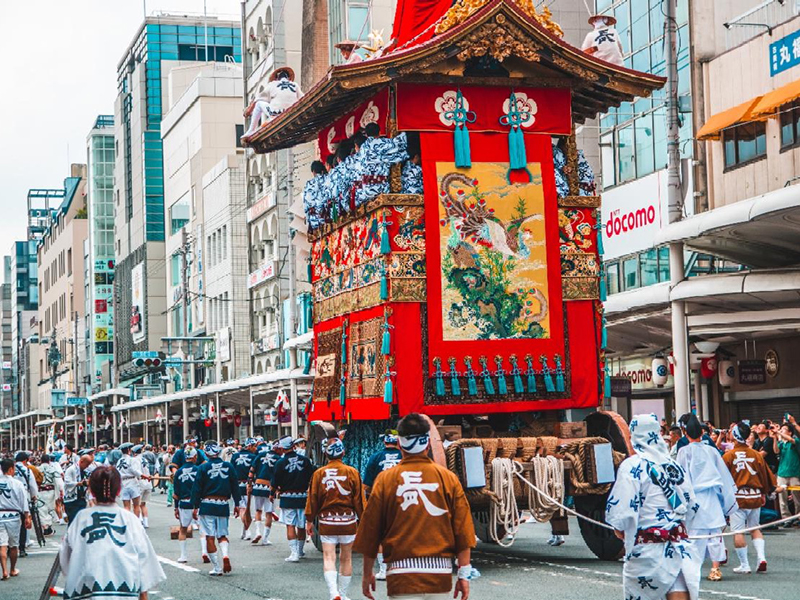
In Japan, the festival calendar rhythmically marks the seasons. From the monumental sculptures at the Sapporo Snow Festival in February to the majestic floats of the Gion Matsuri in Kyoto in July, and the timeless magic of cherry blossoms in spring, each period of the year offers a different view of Japanese culture.


Thaïlande © DTH Travel

In Thailand, the Yi Peng Lantern Festival of Chiang Mai (November 24-25, 2026) remains one of Asia’s most iconic experiences. Thousands of lanterns illuminate the sky simultaneously, creating an atmosphere filled with spirituality and emotion. If you wish to offer this experience to your clients, DTH Travel still has spaces available to attend this event.


Celebrations that tell a country’s soul

Beyond the spectacle, some events allow a glimpse into the spiritual and cultural dimension of destinations. In Cambodia, Pchum Ben, the Ancestors’ Festival, offers a rare immersion into Khmer Buddhist traditions. From October 10 to 12, 2026, families gather in pagodas to honor past generations.

A few weeks later, the country shifts to a completely different ambiance with Bon Om Touk, the Water Festival (November 23-25, 2026), which makes Phnom Penh pulse to the rhythm of boat races, concerts and popular celebrations.

In Malaysia, Thaipusam (January 22, 2027) impresses with the fervor of pilgrims climbing the Batu Caves’ famous steps in a spectacular display of faith.

In Sri Lanka, from July to October (peaking in August and September), the Minneriya Elephant Gathering is one of the year’s major highlights. Each dry season, herds of elephants gather around the Minneriya reservoir, producing one of Asia’s most impressive wildlife spectacles. The moment is especially striking in the late afternoon, when the animals arrive at the reservoir’s shores bathed in the sunset light. This natural phenomenon offers a unique immersion into Sri Lankan biodiversity and perfectly illustrates the link between nature, conservation, and responsible tourism.


Philippines © DTH Travel

The Philippines also offers a unique experience with the Sinulog, Ati-Atihan and Dinagyang festivals in January 2027. For several weeks, the streets transform into giant stages where music, dance and religious traditions blend.


The opportunity to craft unique journeys

However, building an itinerary around an event requires careful preparation. Festival periods often bring high hotel demand, specific logistical constraints and larger crowds. This is where local expertise becomes essential to select suitable accommodations and activities, or to combine the event with nearby less-visited destinations.

The goal is not merely to attend a celebration, but to allow travelers to understand its meaning and to experience it in the best possible conditions.

At DTH Travel, our local teams across 14 destinations in Asia assist tourism professionals in designing tailor-made itineraries that integrate these major cultural milestones, while preserving the authenticity and comfort of the experience.

Because beyond the destination itself, it is often the moments of celebration that leave the most lasting memories.

To imagine your next itineraries, the DTH Travel teams are at your disposal.


DTH Travel, your partner in Asia


Asie : les grands festivals qui peuvent transformer un voyage en expérience inoubliable
Mathilde Thrierr

[email protected]

www.dth.travel

facebook instagram linkedin

>> DTH Travel in the DESTIMAG Directory