
Royal Caribbean Takes a Stake in Sandals and Beaches Resorts


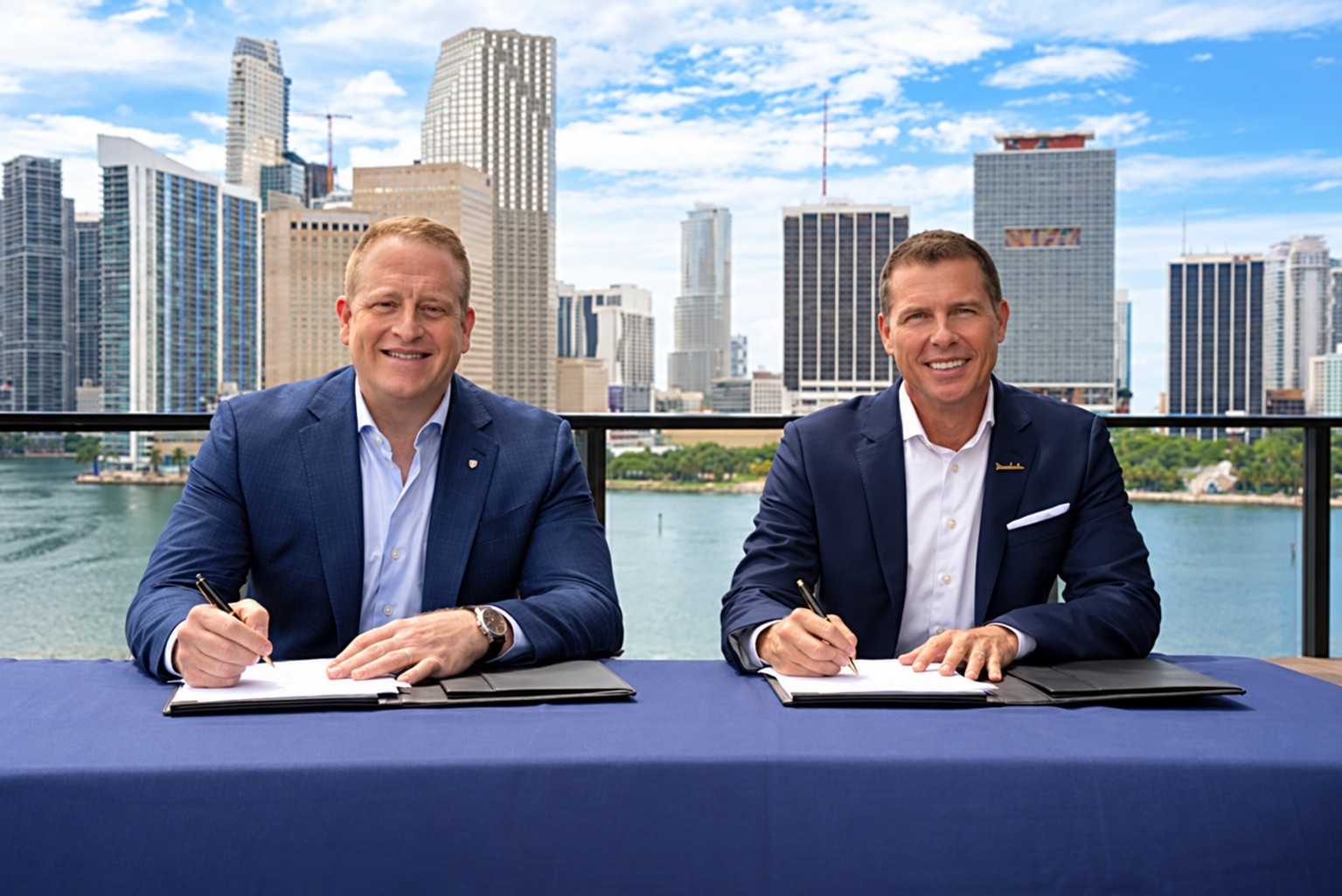
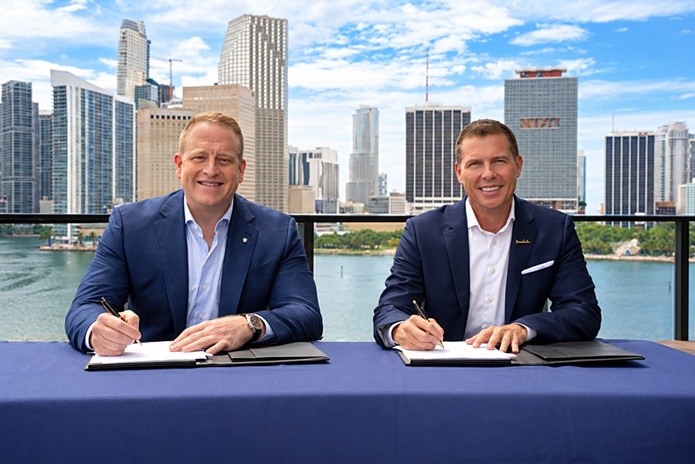
Jason Liberty, PDG de Royal Caribbean Group (à gauche), et Adam Stewart, président exécutif de Sandals et Beaches Resorts, lors de la signature de leur accord à Miami @RCCL

CroisiEurope


Royal Caribbean Group, owner of Royal Caribbean, Celebrity Cruises and Silversea, announced on Wednesday, September 23, a deal with Sandals Resorts to acquire 50% of Sandals and Beaches Resorts.

The planned investment amount is around three billion dollars.

The operation is set to give rise to a joint venture uniting the group’s cruise activities and private destinations with Sandals’ hotel portfolio.

The transaction remains subject to the usual authorizations and conditions. Its closing is expected in early 2027.


A New Gateway to the Caribbean

For Royal Caribbean Group, the agreement marks a step in its onshore expansion. The group already operates private destinations for its guests and plans to launch river cruising in 2027 with Celebrity River Cruises.

With Sandals and Beaches Resorts, it would enter this time the market for all-inclusive hotel stays.

The two brands occupy distinct niches. Sandals targets adults, with properties notably in Jamaica, Saint Lucia, the Bahamas and Barbados. Beaches targets families, with resorts in Jamaica and the Turks and Caicos Islands as well as several announced projects in the Caribbean.

The partners say they intend to explore ways to broaden distribution and facilitate the discovery of their respective cruises, private destinations and hotel stays.
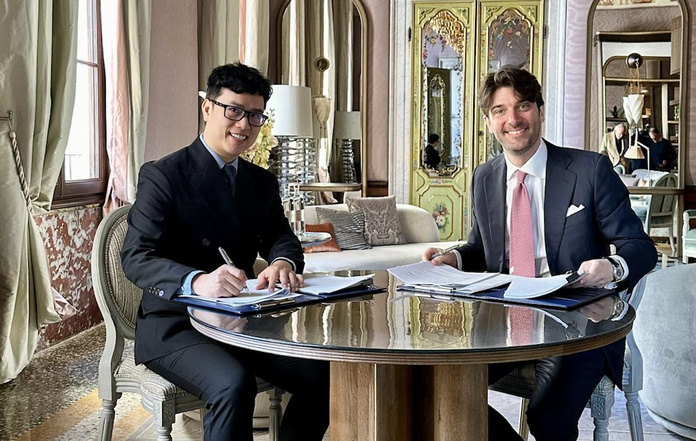
Arsenale Group Takes a 33% Stake in SJourney, Expands Its Presence in Asia


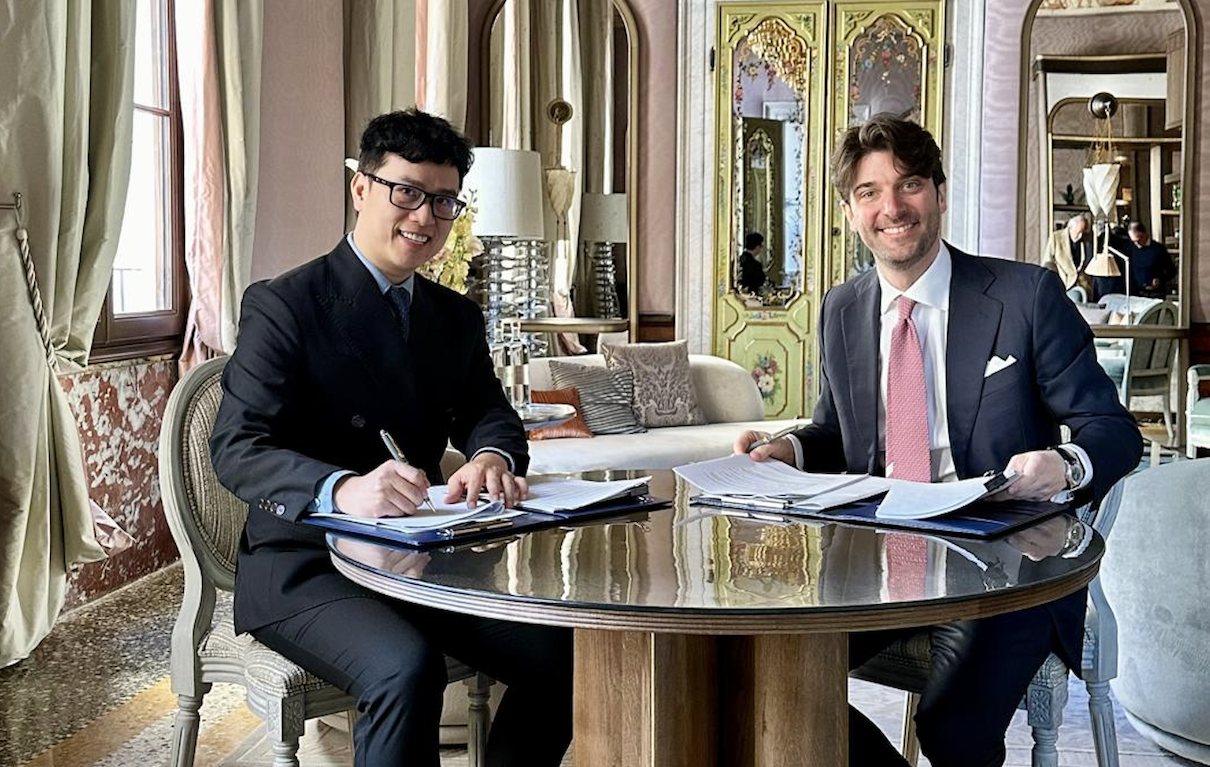
Arsenale Group prend 33 % de SJourney et entre sur le marché vietnamien - Photo : Arsenale Group

CroisiEurope


Arsenale Group announces a 33% stake in SJourney, a Vietnamese brand specializing in luxury rail travel.

The Italian group thus aims to continue the development of its international network of premium trains and strengthen its presence in the Asian market.

The operation follows the acquisition of Golden Eagle Luxury Trains by Arsenale in 2025.

It is part of the group’s strategy to develop an international offering of luxury rail travel across various destinations.


A New Milestone in SJourney’s Development

As part of this investment, Arsenale becomes a strategic minority shareholder of SJourney.

The group will notably contribute its commercial network and international distribution channels to support the growth and visibility of the Vietnamese brand on foreign markets.

Arsenale also intends to contribute to the development of new itineraries and to a potential expansion of SJourney into other markets. The group will also bring its expertise in evolving onboard service standards and offerings.

For its part, SJourney will preserve its Vietnamese identity and its positioning around experiential rail tourism. The brand offers itineraries that enable travelers to discover the landscapes, cultural heritage and local communities of Vietnam.


The Hanoi–Ho Chi Minh City Axis at the Heart of the Offering

Among the main itineraries proposed by SJourney is notably the link between Hanoi and Ho Chi Minh City. This route traverses Vietnam from north to south and highlights several landscapes and cultural sites of the country.

The partnership also foresees the possibility of granting a license for the Golden Eagle brand. A potential positioning under the name “SJourney by Golden Eagle” remains subject to strategic and operational alignment between the two groups.


Amelia Brille Publié par Amelia Brille Rédactrice TourMaG.com
Voir tous les articles d’Amélia Brille

  • picto Linkedin
  • picto email
Ajoutez TourMaG à votre flux Google Actualités Google Actualités icône  

Tourism Amid Geopolitical Tensions: Health of Industry Leaders and Employees at Stake


Le Tourisme face aux tensions géopolitiques : Cathy Bou, fondatrice et dirigeante d’AGAPÈ s’exprime sur le sujet © nidimages / Nicolas Demare

Top of Travel


Fresh from the COVID-19 pandemic, the sector is once again put to the test. Gulf monarchies, once hailed as the safest tourist destinations in the world, have in a single day become among the riskiest places.

Caught in a trap, thousands of holidaymakers turn to their travel agencies. Between emergency repatriations, destination changes and refund requests, travel agents and tour-operator teams, the magicians of our holidays, must face immense psychological pressures, and their mental health is undoubtedly affected. A silent deterioration of working conditions for these agents takes hold, exacerbated by the psychological precarity that the sector’s probable collapse could entail, with massive layoffs looming.

The closing of airspaces, navigational difficulties at sea, skyrocketing oil prices and surging insurance premiums have finally redrawn the map of zones accessible to tourists with fewer risks. “Dubai used to account for 70% of my annual turnover. Overnight everything collapsed. Today I spend two-thirds of my time reassuring clients who are blocked or panicked, while the remaining third is spent undoing what I had spent months building. Reprogramming isn’t even on the agenda given the great uncertainties about the end of this conflict in the Middle East. The hardest part for us travel agents is imagining our professional future. It’s truly depressing.” Sabrina, a staff member, portfolio manager for Maghreb and the Middle East at a French tour operator, shares with us.


Industry professionals on the brink of burnout

“We have shifted from dream merchants to firefighters. I used to sell dreams, dream destinations, voyages that changed lives. Now I am on the verge of becoming a psychologist, not knowing what tomorrow holds – how can we continue to sell when we are the ones on the edge of a nervous breakdown?” confides Sandrine, an employee at the same company. In this climate of emotional precarity and operational survival, how can a process aimed at achieving certifications or labels such as Travelife-ISO20121 – 26000-ATR or any other framework be steered?

What challenges lie ahead for the CSR approach, and what levers can the CSR consultant pull?


Challenge 1: Priorities

When a crisis hits in the middle of a certification-support process, the CSR consultant faces the paradox of priorities: urgency versus the standard.

Sabrina has just spent the day coordinating the evacuation of 200 tourists stuck in Abu Dhabi without success. The airport and the region’s airspace are closed. Sandrine has spent the last half hour dealing with the anger of a young married couple whose honeymoon in Dubai has just been cancelled. The two employees are in an extremely tense emotional state. At the same moment, the CSR consultant accompanying their company toward renewing its certification enters the office. The look she exchanges with the two employees convinces her that this is not the right moment to discuss standards*.

* The names have been altered to avoid identifying the individuals concerned


Challenge 2: Embody CSR, not endure it

For Agapè, the CSR consultant’s role in such a context is to show empathy, to listen to the management and to the employees, and not to appear as a zealot defender of the standard, adding an extra workload. The consultant has a moral obligation to immerse themselves in the palpable tensions in order to reshape the certification process agenda, reorganize the schedule, and demonstrate that it is ultimately a pedagogy, a guidance toward practices that preserve human beings first, then the planet.


Challenge 3: Social effectiveness

The social dimension is the central pillar of any corporate social responsibility approach, says Cathy Bou, founder and CEO of AGAPÈ.

Lately, we are encountering many cases of psychological pressure and decline in the quality of life and working conditions (QVCT). Our own situation could deteriorate as we encounter sensitive scenarios. Yet, our reading of the frameworks requires us to prioritize the protagonists, to consider sustainability in its entirety (Social, Economic, Environmental). It is certainly common for environmental concerns to take precedence.

The challenge for the consultant in this anxiety-filled climate for company leaders and their employees is to be a buffer between all parties. To succeed in their mission, the consultant must ensure that the management’s order of priorities is reversed. “They must convince the leadership to place health and safety — for themselves, their employees, collaborators and other providers — at the top of the CSR priority stack.” No certification would be credible if it is built on social distress and the collapse of teams. In such a case, the initiative would be nothing more than a “social-washing”.

When the initiative lacks humanity, when the consultant and the management ignore distress, the CSR standard will inevitably be perceived as cynicism by stakeholders, a new checkbox for the management. “We are asked to be eco-responsible certified, to think about carbon footprints or waste management while there are sickness absences, burnouts, fatal accidents during missions — it’s the height of cynicism.”


Contact Agapè CSR to initiate your process