

Purple Gold Takes Over the World: Can It Dethrone Matcha?

In the Philippines, ube, the country’s emblematic yam, has become a highly strategic product. Highly valued for its softly vanilla-sweet flavor, its beautiful purple color, and its myriad virtues, it enchants consumers around the world, even supplanting the trend for matcha. In 2025, exports surpassed three million euros, more than twice the previous year, yet this clear success hides a serious problem. Production no longer keeps pace with demand as enthusiasm continues to rise.

“Our harvest is no longer enough. We are asked for two tons per month. How could we supply such volumes?”, summarizes producer Esmeraldo Maligsa to the South China Morning Post, Tuesday, June 30.

A lack of resources and development assistance

Rich in fiber and antioxidants, this root is found in smoothies, coffees, jams, pastries, or even ice creams in many countries. The main export markets are Canada, the Middle East and several Asian countries, but the United States, South Korea and Europe are accelerating orders. Starbucks, among others, has launched its own ube drink in several outlets across the Atlantic as well as in the Old Continent. Gradually, this local specialty is turning into a high value-added agricultural product, while Philippine producers are not oblivious to the difficulties on the ground.

There, farming remains largely manual and processing infrastructure is still insufficient. “We need machines, backhoes”, explains Esmeraldo Maligsa, who notes that the hilly lands of the island of Bohol complicate their work. “We were given a motor cultivator, but it cannot climb the steep terrains… We turn the soil by hand, which takes time”, he adds, exhausted.

On Saturday, June 27, the Philippine government announced a plan to structure the sector, with common standards, investments and tools adapted to exports. “Supply and organization struggle to keep pace”, concedes Undersecretary for Agriculture, Philip Young.

A food product soon to be protected

The authorities also want to better protect the origin of ube from Bohol. This month, Manila filed a request for registration of a geographical indication (GI) for its production. This measure would allow to “officially recognize the qualities, the reputation and the cultural heritage of the ube ubi kinampay of Bohol, intrinsically linked to the geography, the soil, the climate and the province’s traditional agricultural practices”, according to the Philippine Intellectual Property Office, which notes a “purple gold rush”.

This recognition would also help protect this variety against imitations from abroad. Esmeraldo Maligsa asserts that “many try to imitate our ube, but no one manages to reproduce its aroma”.

Researchers, however, remind that the future of the sector will also depend on its ability to sustainably boost production. Ube remains vulnerable to diseases, to climate fluctuations and cannot be harvested year-round. For expert Marlon Tambis, it will be essential to develop other varieties and new cultivation methods. “Relying solely on kinampay will not be enough to solve shortages”, he says.

Airbus: 22-Hour Nonstop Flight Aircraft Takes Off


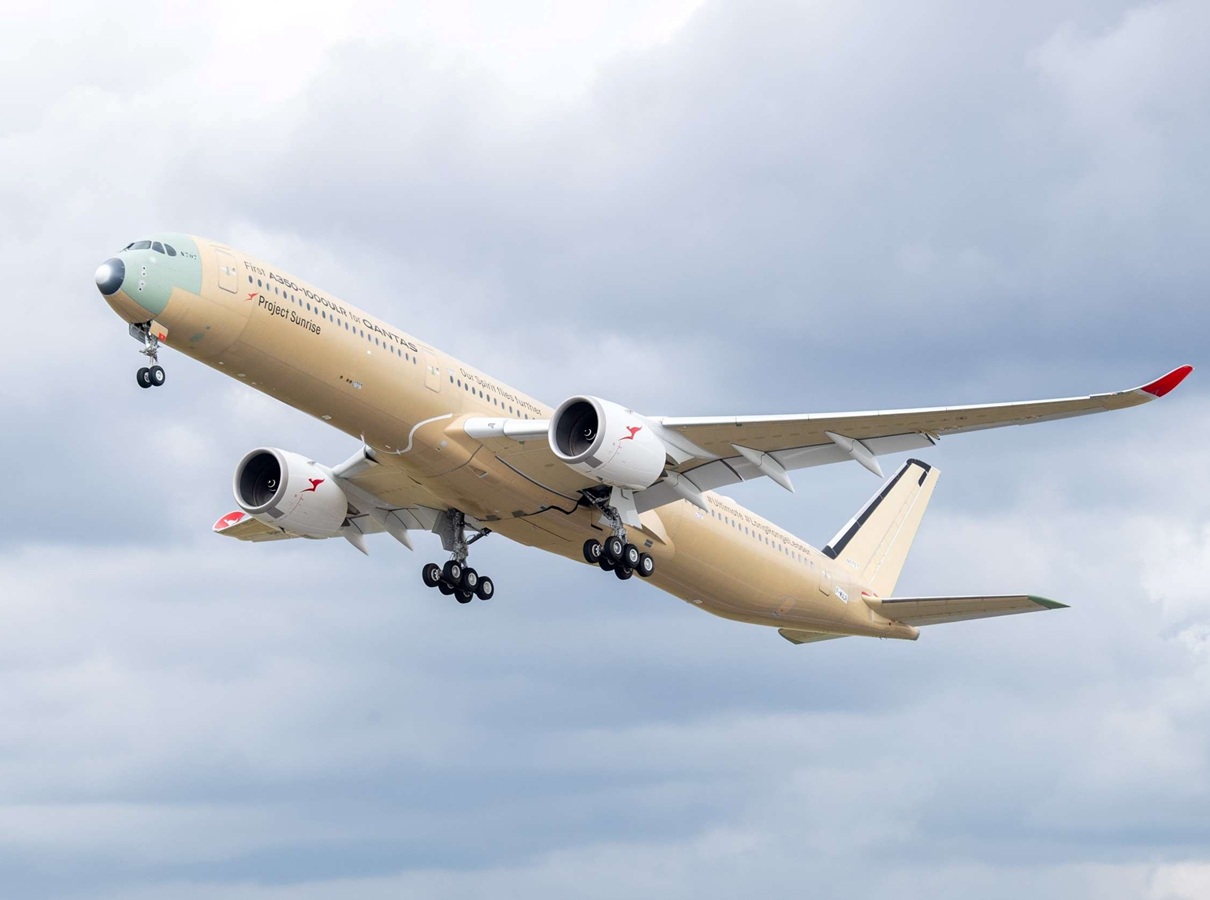
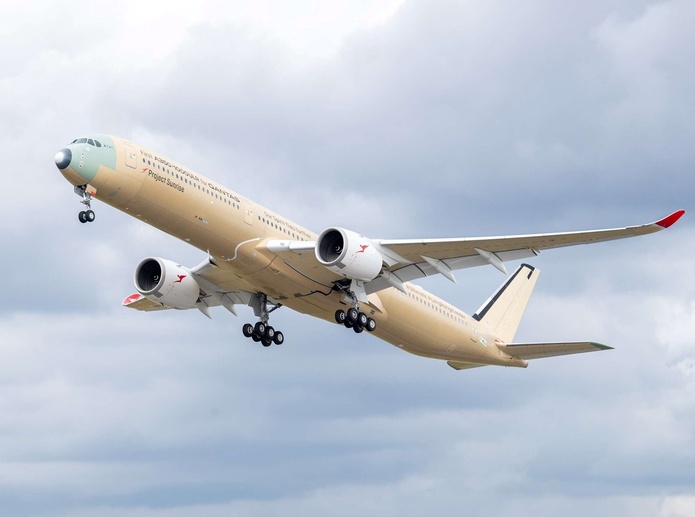
L’A350-1000ULR a effectué son premier vol à Toulouse - Crédit photo : © Airbus SAS 2026

CroisiEurope


This is a first that bodes well for the future.

After two years of delay, the A350-1000ULR carried out its first flight in Toulouse. The aircraft flew for 3 hours and 43 minutes, reaching an altitude of over 12,496 meters.

The crew consisted entirely of personnel dedicated to test flights.

They conducted general performance checks of the aircraft and tested the new fuel-system architecture. The test campaign is expected to last two months.


A350-1000ULR: a range of 18,520 kilometers

At the end of this period, the aircraft named AIB01LR will be outfitted according to Qantas’ commercial specifications.

For reference, the aircraft was developed for the Australian airline and will feature four cabin classes.

It is expected to enable, in 2027, non-stop flights between Sydney and London, spanning a distance of 18,520 kilometers, and to fly 22 hours without a technical stop.

To read: Ultra long-haul: technical feat or future model for commercial aviation?

This performance is made possible mainly by integrating, into the aircraft’s structure, an additional aft center tank (RCT), which further enhances the aircraft’s performance and increases its range by 1,000 nautical miles (1,852 kilometers, editor’s note),” explains the manufacturer’s press release.

The delivery of this first aircraft is scheduled for April 2027. The second A350-1000ULR is under assembly and is due to roll out of the paint shop in the coming days.

Qantas has ordered 12 A350-1000ULR as part of the Sunrise project.

Thailand 60-Day Visa Exemption Takes Effect July 15


Les citoyens de 93 pays bénéficieront d'une exemption de visa de 60 jours en Thaïlande dès lundi prochain | © ShutterStock

CroisiEurope


A few weeks ago, Thailand unveiled excellent news for international tourists by announcing the upcoming extension of the visa-free stay to 60 days.

And good news never comes alone: it will no longer be 57 but 93 countries that will be eligible for this visa exemption.

Planned to be activated “between late June and early July”, this liberalization of entry rules for the Land of Smiles finally has an effective date.

VisasNews reports today that as of July 15, 2024, tourists and business travelers from 93 countries will be able to enter Thailand visa-free and stay for 60 days.

However, authorities have not yet officially announced whether and how this period could be extended on-site.

Obtaining an electronic visa remains possible for travelers who wish to stay more than 60 days in Thailand.


Thailand Updates Its Visa Policies

On July 12, Traisulee Traisoranakul, the spokesperson for Thailand’s Interior Ministry, explained that her ministry had approved four updates to the country’s visa policies.

These initiatives aim to “line up with global competition to attract more foreign visitors, generate more revenue, and thus boost the national economy”, according to Traisulee Traisoranakul.

According to the spokesperson, the deputy prime minister and Thai Interior Minister Anutin Charnvirakul signed off on these four updates, which have now been submitted to the Prime Minister for approval.

They will then be published in the Royal Gazette, the Thai Official Journal, and will take effect simultaneously from July 15, 2024.

Here are these measures:

  • Extending the 60-day visa-free stay;
  • Increasing the number of nationalities eligible for the visa on arrival;
  • The launch of the new “Destination Thailand Visa”;
  • The extension of stay duration for certain students.


The Countries Eligible for the 60-Day Visa Exemption in Thailand

If the conditions for staying in Thailand are relaxed in the coming days, tourists eligible for visa-free entry into Thailand will soon have to complete a new formality before their trip.

As travelers bound for the United States, Canada, or more recently Israel are accustomed to, it will soon be necessary to apply for an Electronic Travel Authorization (ETA) to travel to Thailand without a visa.

The ETA for Thailand is expected to launch in December 2024, in a pilot phase, and to be fully operational by June 2025.

In the meantime, citizens of the following 93 countries and territories can stay up to 60 days visa-free in Thailand, with no pre-departure formalities:

  • South Africa, Albania, Germany, Andorra, Saudi Arabia, Australia, Austria, Bahrain, Belgium, Bhutan, Brazil, Brunei, Bulgaria, Cambodia, Canada, China, Cyprus, Colombia, South Korea, Croatia, Cuba, Denmark, Dominica, United Arab Emirates, Ecuador, Spain, Estonia, United States, Fiji, Finland, France, Georgia, Greece, Guatemala, Hong Kong, Hungary, India, Indonesia, Ireland, Iceland, Israel, Italy, Jamaica, Japan, Jordan, Kazakhstan, Kosovo, Kuwait, Laos, Latvia, Liechtenstein, Lithuania, Luxembourg, Macao, Malaysia, Maldives, Malta, Morocco, Mauritius, Mexico, Monaco, Mongolia, Norway, New Zealand, Oman, Uzbekistan, Panama, Papua New Guinea, Netherlands, Peru, Philippines, Poland, Portugal, Qatar, Dominican Republic, Czech Republic, Romania, United Kingdom, Russia, San Marino, Singapore, Slovakia, Slovenia, Sri Lanka, Sweden, Switzerland, Taiwan, Tonga, Trinidad and Tobago, Turkey, Ukraine, Uruguay and Vietnam.

Group Travel Reclaims Its Value in an Uncertain Global Context as Calafell Evasión Takes Charge to Drive Change


Le groupe en voyage sur la péninsule Ibérique © Calafell Evasión / Image générée par IA pour illustration promotionnelle

CroisiEurope


Today, travelers place greater emphasis on safety, the proximity of services, and the reliability of the organizations they rely on for their trips.

In this new context, group travel regains its full relevance. More structured, more reassuring and easier to organize, it meets a genuine need for serenity. For agencies and organizers, choosing an experienced local partner also becomes essential to ensure smooth stays that align with clients’ evolving expectations.


Le voyage de groupe : une réponse aux nouvelles attentes des voyageurs

For several years, traveler behavior has evolved. Where some once sought distant destinations or very rapid trips, many now favor experiences that are more accessible, more human, and better organized.

The current international context accelerates this trend. Groups want to travel to stable destinations, easily reachable and equipped with solid infrastructure. They also seek more active guidance, capable of securing every phase of the stay and responding quickly in case of unforeseen events.


© Calafell Evasión / Image générée par IA pour illustration promotionnelle

In this dynamic, group travel emerges as a reassuring solution. It helps pool costs, simplify planning, and above all, provides genuine peace of mind for both participants and organizers.

This shift also highlights the importance of human connection in tourism. Travelers no longer seek merely to “see” a destination, but to experience a collective, convivial, and authentic moment together.


Espagne et Portugal : des destinations adaptées aux réalités actuelles


© Calafell Evasión / Image générée pour illustration promotionnelle

In this context, the Iberian Peninsula naturally emerges as a particularly relevant destination for groups.

Spain and Portugal offer a rare balance between accessibility, safety, cultural diversity, and high-quality tourism infrastructure. Their geographic proximity helps limit travel times and the impact of rising fuel costs, while ensuring a genuine sense of change of scenery.

Another major advantage is the variety of possible experiences. Cultural stays, tours, hiking, gastronomy, traditional or seaside events… the Iberian Peninsula meets a wide range of expectations, with the possibility to travel almost year-round thanks to a particularly favorable climate.

In a world where uncertainty increasingly shapes travel decisions, Spain and Portugal appear as destinations that are both reassuring and inspiring.


Le rôle essentiel du réceptif local

More than ever, agencies and organizers need strong local partners who can anticipate difficulties and guarantee reliable execution.

The role of the DMC is no longer limited to mere logistics. It becomes a trusted ally, capable of securing operations, ensuring on-site responsiveness, and guiding groups through a tourism landscape that is continually evolving.

At Calafell Evasión, this close proximity to on-site realities has been one of the company’s cornerstones for over 30 years. The teams collaborate daily with carefully selected local partners to ensure the quality and stability of the services offered.

The integration of Promenade in Portugal now strengthens this presence across the entire Iberian Peninsula and enables agencies to obtain even more comprehensive coverage of the destination.


Et demain ?


Dans un contexte mondial incertain, le voyage de groupe reprend toute sa valeur. Calafell Evasión décide de prendre les choses en main et d’initier le changement…
Calafell Evasion, Espagne et Portugal

[email protected]

(+34) 977 37 30 15

Website

facebook linkedin