
Pioneers Forum 2026: Navigating Uncertainty in Tourism Transformations


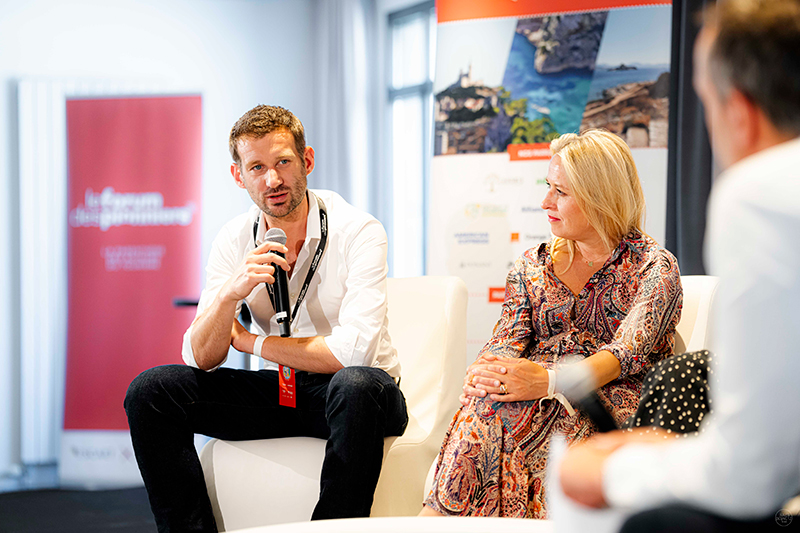
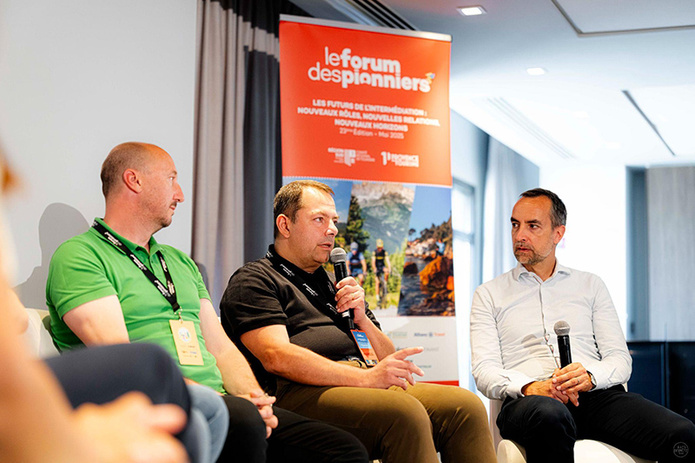
Forum des pionniers 2025 © Jules Despretz -

CroisiEurope


Travelers’ behaviors have never seemed so fluid.

Between late bookings, the search for security, new expectations regarding the experience, and evolving digital practices, tourism players must learn to cope with demand that is increasingly unpredictable.

In the face of this growing instability, the Forum des Pionniers 2026 aims to “steer the uncertain”.

A theme that signals the shift from a reactive logic to a forward-looking one, and the construction of scenarios for sector professionals.


Understanding the market through diverse perspectives

For Bruno Abenin, Commercial Director at Travel Evasion and co-organizer of the event, the main challenge is not a single reading of this uncertainty, but the confrontation of viewpoints.

“The theme is one thing, but what’s truly valuable are the exchanges and how each person perceives the market,” he explains. “A tech player, a tour operator, an incoming operator or a carrier don’t read the same issues in the same way. And it is precisely this diversity that makes the Forum so rich.

In a sector where crises are not felt at the same pace across professions, he emphasizes the importance of dialogue among varied experiences: “Some are facing their first crisis, others their tenth. The point is to pool all of this and understand what everyone actually does with the uncertainty.


Artificial intelligence, a new driver of decision-making

AI is now present in risk monitoring, customer relations, offer production, and corporate management, and it is no longer merely a tool for automation.

It gradually influences how organizations analyze their environment, make decisions, and anticipate market evolutions.

For tourism leaders, the challenge goes well beyond technology. What place should AI-generated recommendations have? How can human judgment be preserved in a context where predictive tools are becoming more precise?

And how can teams be guided through these transformations? All these questions will feed the discussions among the 130 decision-makers gathered in Egypt, in workshops and experience-sharing sessions.


An immersive experience to fuel strategic thinking

The Forum des Pionniers goes beyond theoretical content. It relies on an immersive format designed to foster exchanges and to encourage reflection.

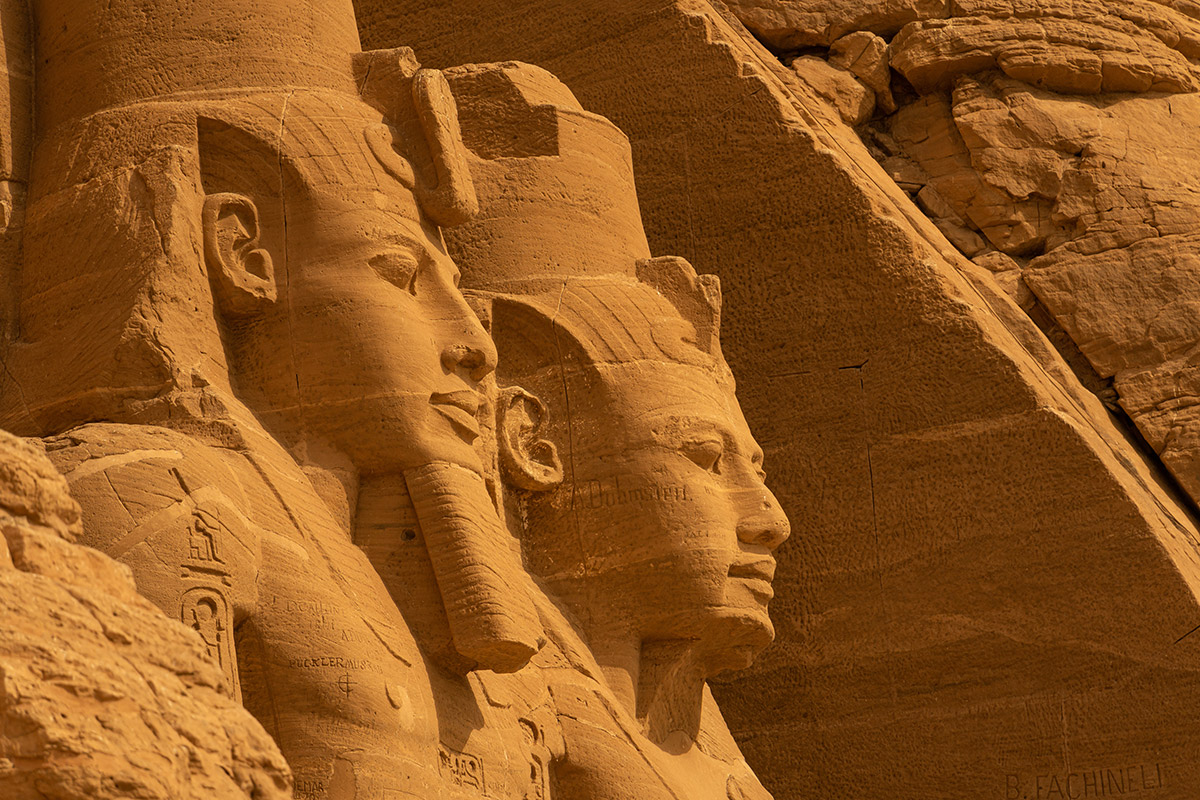
The Nile cruise, from Luxor to Aswan, provides the event’s through-line, with key stops such as the Valley of the Kings, Kom Ombo and Philae temples.

The program concludes in Cairo with visits to the pyramids of Giza, the Sphinx, and the Grand Egyptian Museum.

Working sessions alternate with workshops, round tables, and informal moments crafted to enhance the quality of dialogue among decision-makers. This relational dimension lies at the heart of the setup.


Egypt, a mirror of global tourism transformations

Choosing Egypt as the hosting destination gives a special resonance to this edition.

The country now concentrates a large portion of international tourism dynamics: a strong post-crisis rebound with almost 19 million visitors in 2025, accelerated modernization of infrastructure, upgrading of offerings, and major projects like the Grand Egyptian Museum.

Yet this growth takes place in a demanding environment. Egypt must contend with intense regional competition, sensitivity to geopolitical contexts, and a heavy dependence on air connectivity. It thus illustrates a model in perpetual transformation, where performance depends as much on attractiveness as on adaptability.

For Bruno Abenin, the gap between perception and reality remains significant. “I think people will be surprised by the world that exists in Egypt today,” he notes. “In Cairo, on the Nile, at the sites, there are crowds. Many tourists, from all nationalities.”

The Egypt expert adds: “Hotels are full, boats are sailing, sites are functioning normally. If you listen to some media, we sometimes have a distorted image of the destination.”

Beyond the exchanges among decision-makers and reflections on the sector’s major shifts, this 24th edition of the Pioneer Forum also carries a simpler ambition: to present a destination in its real context.

Pioneers Forum 2026: Egypt Faces the Uncertainty Challenge


L’Égypte, une destination emblématique du tourisme international, aujourd’hui engagée dans une nouvelle phase de transformation © IStock

Top of Travel


This 24th edition will bring together 130 sector leaders — tour operators, distributors, hoteliers, transporters, institutions, technology experts, insurers — around a market that alone concentrates a large share of the tourism industry’s current challenges. Post-crisis recovery, fierce competitive pressure, price wars, the role of air travel, evolving customer expectations, and the weight of geopolitical context: Egypt today concentrates many of the questions professionals are asking.

As the sector must learn to move forward in an increasingly unstable environment, the choice of Egypt takes on its full significance. For the destination, what is at stake is not merely a grand travel narrative, but a practical demonstration of what it takes today to restart momentum, refine a positioning, and adapt a tourism model to a shifting context.


A destination that blends heritage and transformation

Egypt stands as a benchmark in international tourism. Few destinations concentrate such a density of heritage, culture, and symbolic significance. Millennia-old sites along the Nile’s banks and the Red Sea’s coastal resorts make the country a premier choice for many travelers.

Today, the destination no longer rests solely on its heritage: it has embarked on a profound transformation of its tourism model. It must both capitalize on its fundamentals and meet new expectations that are increasingly demanding: quality of experience, clarity of the offering, smoothness of itineraries, and diversification of products.

In 2024, it already reached a record with 15.78 million visitors. In 2025, it pushed further, welcoming nearly 19 million tourists, a 21% year-over-year rise, exceeding even the goals announced a few months earlier by the authorities.

These figures position Egypt as a genuine case study. First, because they illustrate an exceptional rebound capacity after years marked by crises. Second, because they show that the recovery does not rely on a single engine. Charter traffic to Egyptian destinations rose by 32% in 2025. The country’s archaeological sites and museums, excluding NMEC and the Grand Egyptian Museum, welcomed 18.6 million visitors, a 33.5% increase year over year.

Led by the Egyptian Ministry of Tourism and Antiquities, this evolution rests on several structural axes: modernization of infrastructure, upgrading of the offer, diversification of experiences, and strategic repositioning on the international stage. The full opening of the Grand Egyptian Museum fits this logic: a country seeking to reaffirm its place on the international tourism stage by renewing how it tells its story and how visitors experience it.

This dynamic must also be read in a context of intense competition. Egypt operates in markets where comparisons with Turkey, Tunisia, Morocco, or Greece are immediate, and where the value-for-money proposition is decisive again. In the French market, the destination rose 26% in Orchestra’s August 2025 index, driven in particular by a lower average spend. Once again, the message is clear: the recovery exists, but it is also built through commercial, pricing, and distribution battles.


A coordinated mobilization of the destination’s actors

The arrival of the 2026 Pioneers Forum fits within a collective momentum driven by several key players in the sector, whose roles deserve closer scrutiny.

The Egyptian Ministry of Tourism and Antiquities occupies a central place. This is not merely institutional support, but a true strategic actor. Behind the 2025 results lies a political will to strengthen the country’s attractiveness, accelerate investments, expand hotel capacity, and better structure the tourism offering. The ministry thus carries a long-term vision, aiming to continue elevating the destination in the years ahead.

EgyptAir, as the national carrier, represents a central challenge for any tourism destination: accessibility. In a market where air travel directly shapes flows, competitiveness, and the ability to sustain volumes, its role is decisive.

Travel Evasion, Egypt specialist, provides essential operational expertise. Its on-the-ground knowledge helps reveal the destination’s diversity beyond rhetoric. Travel Evasion is committed to showcasing the country’s variety through itineraries that weave culture, cruises, and seaside experiences. It’s this type of expertise that helps reveal a destination beyond clichés and makes it legible for both professionals and travelers.

The coordination of these actors also illustrates a fundamental shift in the industry: a destination’s performance relies less on mere renown and more on the quality of coordination among institutions, carriers, and operators. Egypt thus offers a particularly compelling example of a collective approach to building tourism competitiveness.


Rethinking models in an uncertain context

The 2026 theme, “steering the uncertain”, will find a particularly relevant echo in Egypt.

In tourism, steering the uncertain means continuing to plan, sell, invest, reassure, and arbitrate even as parameters can evolve very quickly: geopolitical tensions, perceived safety concerns, economic fluctuations, demand shifts, dependence on aviation, price pressures, changes in buying behavior, and the rising influence of technologies like artificial intelligence.

Egypt crystallizes precisely these challenges. The destination has demonstrated a genuine ability to restart its tourism momentum, win back markets, and rebuild its appeal. Yet it remains exposed to the factors that today drive the sector’s fragility: a sensitive regional context, strong price competition, reliance on connectivity, and an image that external factors can rapidly affect.

That is why it constitutes a particularly fitting case for the Pioneers: Egypt does not merely endure uncertainty, it engages with it. It adjusts its offer, strengthens its infrastructure, improves accessibility, invests in new markers of desirability, and tries to transform vulnerability into adaptability. This trajectory speaks to actors far beyond the Egyptian case, because it raises a question that all tourism players face today: how to decide when not everything depends on you?

Observing how a destination like Egypt progresses in this complexity provides the 130 leaders present with material for reflection on their own practices, their models, their leeway, and their management tools.


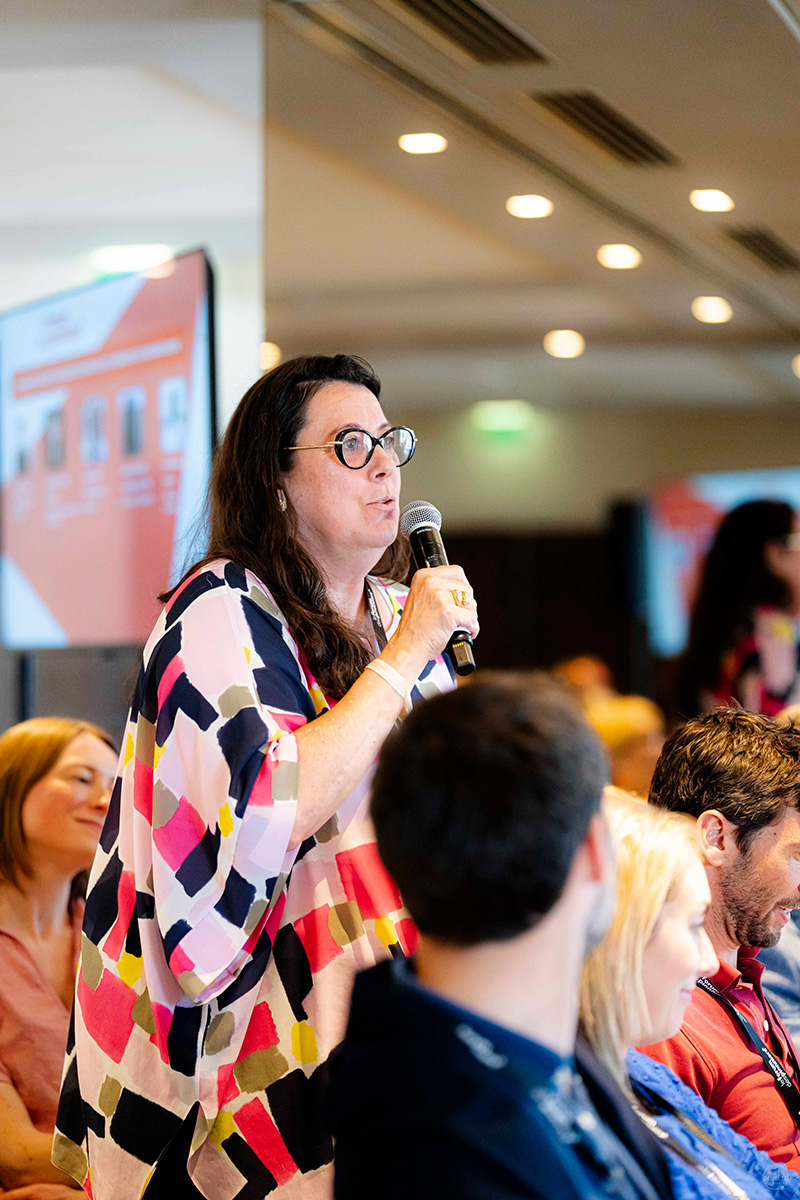
Lors de cette 24e édition, les décideurs du tourisme pourront croiser leurs regards, confronter leurs expériences et mieux comprendre les dynamiques d’un secteur en mutation. © Jules Despretz / Forum des Pionniers 2025


We are eager to welcome the Pioneers back for this new edition, which promises to be ambitious, inspiring, and deeply connected to the sector’s realities.

There are only a few spots left for general attendees.

💌 Contact us.


Installment Payments: A Crisis-Proof Strategy to Navigate Uncertainty


The Freefall in Bookings for Spring 2026

© Fuzz - Pixabay

Top of Travel


The barometer figures from EDV-Orchestra, published in April 2026, sketch a crisis landscape for the travel sector. March records a 15% drop in the number of bookings and a 19.4% decline in booking revenue, while departures are down 9.7% in the number of travelers.

Long-haul travel is particularly battered by tensions in the Middle East, with a 29% drop in bookings. The disruptions to Gulf hubs (United Arab Emirates and Qatar) are to blame, while Egypt and Turkey lose more than 66% of their bookings.

And for the summer of 2026, the outlook confirms this weakened trend: bookings for July–August are already 7% below last year in revenue. More telling still, the share of late bookings rises by 7% compared with 2025.

This dynamic weighs heavily on agencies and tour operators: March and April, traditionally key months for locking in summer sales, prove disappointing, creating unprecedented pressure on cash flow.


Installment payments, an immediate lever in the face of the crisis

In this tense context, installment payments (or BNPL, “buy now pay later”) emerge as an immediate operational response. First lever: remove budget constraints as prices soar. The average cart for summer 2026 already reaches €3,040, and long-haul packages are soaring due to the combined effects of rising jet fuel costs and tightening air capacity.

In this setup, the ability to split the payment into 2, 3 or 4 installments without fees dramatically changes the perception of cost. Sector data compiled by Alma confirms: BNPL leads to a 20% increase in the average cart for packages that combine transport and lodging. This uptick signals a psychological shift: rather than giving up in the face of a high price, the customer authorizes the trip initially planned by smoothing the financial outlay.

Second lever, crucial in the 2026 context: supporting the late-booking shift. The hesitancy linked to current uncertainty translates into an explosion of last-minute bookings, at the moment when prices are the highest. In this setup, installment payments offer this flexibility in a few clicks, with the same ease as a cash payment, even for substantial sums. Contrary to common beliefs that BNPL is limited to small baskets, solutions like Alma accept transactions up to €15,000, thus covering most family needs and even premium segments.

Third dimension often underestimated: adaptation to multichannel. Alma’s data thus show that 40% of installment payments in the travel sector are made at physical agencies. Just as during the Covid crisis, periods of uncertainty see customers favor human contact in agencies or by phone to be reassured. Alma supports this dynamic by enabling networks to offer installment payments across all channels, ensuring a consistent experience no matter the contact point.


Why over 410 operators have already embraced Alma

BNPL is now widely adopted in the travel sector. More than 410 operators currently trust Alma, including industry heavyweights: SNCF Connect, Sunweb, KLM, Perfect Stay, Weekendesk, Compagnie des Alpes, Showroomprivé, Corsica Ferry, Campings.com, and GNV.

The results speak for themselves: +10% in acquiring new customers, 15 to 30% of revenue generated via BNPL depending on the period, +6% loyalty. Installment payments facilitate the purchase decision at every stage, from discovery to repeat bookings.

This performance rests on a scoring model tailored to travel specifics. In a sector with high baskets and sometimes impulsive decisions, Alma has developed industry expertise that guarantees the maximum acceptance rate without increasing risk exposure.


When Installment Payments Become Essential

Beyond the cyclical response to the current crisis, BNPL is thus part of a durable transformation of consumer behavior. Today’s travelers refuse to choose between anticipation and flexibility. They want to be able to book at the moment they deem opportune, with payment options suited to their personal situation.

In a market that remains volatile, installment payments offer a structural answer. They turn uncertainty into a commercial opportunity by supporting new behaviors rather than letting them be dictated by conditions.

For travel professionals, Alma is no longer just an option but a permanent lever for commercial steering. In times of crisis, the solution secures sales by lifting budget barriers and supporting the late booking. In growth phases, it maximizes the average cart and improves loyalty.

While fuel surcharges accumulate and prices are not expected to revert immediately to pre-crisis levels, waiting for customers to get used to new rates is not a strategy. Alma offers an immediate solution to unlock sales: ease purchasing by smoothing the financial outlay, even for baskets now exceeding €3,000. More than 410 operators have already made this choice.


Would you like to learn more or propose Alma to your clients?


Le paiement fractionné, réflexe anti-crise pour piloter l'incertitude

Email : [email protected]

Site web : www.almapay.com

linkedin


Pioneers Forum 2026 Theme: Navigating Uncertainty


Cap sur l’Égypte pour la 24ᵉ édition du Forum des Pionniers. Du 30 mai au 4 juin, 130 décideurs du tourisme se réuniront pour explorer un thème au cœur des enjeux du secteur : piloter l’incertain. © iStock

Top of Travel


For over 20 years, the Forum des Pionniers has gathered yearly tourism and business travel decision-makers to broaden their thinking about the sector’s major shifts and to expand their network. Each edition is also an opportunity to (re)discover a destination.

When disruptions stack up

In 2026, instability has become the norm. Geopolitical upheavals, widespread inflation, climate disruption, the entry of artificial intelligence: the travel industry is undergoing an unprecedented transformation.


Geopolitical fragmentation is brutal. The conflict in Ukraine has already erased $44.5 billion from the outbound market. The flare-up in the Middle East has cost regional tourism 515 million euros per day. Where growth of 13% had been anticipated, declines of up to 27% were recorded. The Hormuz Strait was paralyzed, kerosene rose from $750 to $1,900 per ton in six weeks, triggering extra costs that were passed through to airfares starting in the spring.

A divisive question will be posed to the Pioneers: absorb, pass through, or wait? Three strategies, three different outcomes, because supplier agreements were signed in a context that no longer exists. A shock of six weeks is manageable. A shock of six months calls everything into question: the organization, the contracts, the teams. And the April 8 ceasefire does not change the price of kerosene. IATA is clear: the return to normal will take months. Many have built their summer plans on assumptions that no longer hold.

Beyond these geopolitical and economic shocks, climate disruption is no longer a distant risk. In 2025, natural disasters cost $107 billion in global insured losses, according to Munich Re.

Every other summer now, a destination that is marketed burns, floods, or becomes difficult to market in peak season. The question is no longer whether the catalog should evolve, but whether operators have already updated their offering, or if they still treat each episode as a separate incident. Climate risk will eventually raise insurance costs, weaken entire destinations, and weigh on margins in the long run. Some have already integrated it into their decisions. For many, it remains a topic they postpone.

This double geopolitical and climate shock also weakens the fabric of the industry. Cash reserves have not had time to recover since Covid. The players who fared best share one trait: the ability to pool risks, to forge alliances, to build collective resilience rather than go it alone. The real question for the leaders gathered in Egypt for this edition: if the same shock reoccurs in 18 months, what would they do differently, and why aren’t they doing it already?


AI: Co-pilot or Source of Concern?

In 2026, artificial intelligence is asserting itself in the tourism professions. It no longer merely calculates; it writes, advises, and creates. But its entry into organizations raises as many questions as it claims to answer.

First domain: risk anticipation. Tools now integrate in real time geopolitical signals, climate alerts, and traveler advisories. The horizon is scanned, risks are scored, automated alerts are produced. Yet cancelling a program 45 days out, hedging kerosene prices six months ahead, maintaining a destination when states advise against it: these choices remain human, solitary, and irreversible. The co-pilot sees far ahead. The pilot bears the burden alone.

Second domain: travel recommendations. Reducing the traveler brief by 60%, field adoption rates above 80%: the numbers show the tools work. But they pose a deeper question. When AI prepares and humans approve, what becomes of expertise? Is it mere quality control or a true enhancement of judgment? What the client does not say—the hesitation, the unspoken wish, the unformulated family constraint—remains entirely on the human side.


Au Forum des Pionniers, chaque participant
est acteur de la réflexion. Un cadre bienveillant
où l’on prend la parole, où l’on confronte
ses visions et où l’on construit ensemble.
© Jules Despretz / Forum des Pionniers 2025

Third domain, more delicate: what happens within teams. AI is embedding itself in organizations from the top with a strategic decision, a deployed tool, and expected adoption. But it is on the ground where the real dynamics unfold. The advisor who sees their brief reduced. The marketing team whose content is generated in seconds. The back office whose tasks are automated without consultation. AI does not eliminate day-to-day jobs overnight; it quietly reconfigures the roles. And it is precisely this silence that can generate resistance, disengagement, and a loss of meaning.

Ultimately, the challenge is not choosing between humans and machines, but redefining their complementarity. What is human expertise worth if AI can model professional knowledge, surpass data analysis, and personalize at scale? What remains— and perhaps that is the essence— is responsible decision-making, engaged judgment, and human presence in moments of doubt.


Egypt: far more than a backdrop, a lesson in resilience

The choice of Egypt as the destination for this 24th edition is not accidental. A land of millennial hospitality, the country embodies the tensions and promises that cut across the sector: a destination essential in the midst of geopolitical reconfiguration, it must manage the saturation of its iconic sites, protect its natural treasures, and modernize its infrastructure while continuing to welcome the world.

For the Pioneers, Egypt will be both a ground for reflection and a ground for discovery. Immersive activities will allow exploring its treasures while continuing exchanges in an exceptional setting, faithful to the Forum’s DNA: blending usefulness with pleasure, stepping back to gain perspective.


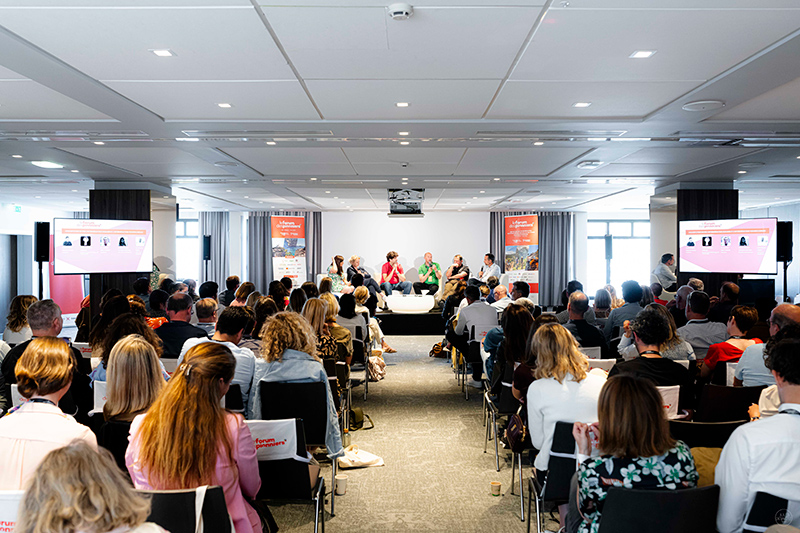
Le Forum des Pionniers : un format collaboratif pour confronter les visions, faire émerger des idées et co-construire des réponses opérationnelles. © Jules Despretz / Forum des Pionniers 2024


About ESCAET and Travel-Insight


Steering Uncertainty: Could Customer Relationships Be Your Best Market Sensor?


© HDB Solutions

Top of Travel


Chaque jour, des milliers d’interactions entre voyageurs et acteurs du tourisme révèlent des signaux précieux. Encore faut-il savoir les capter, les analyser et les transformer en décisions et avoir le temps de s’y consacrer.

L’incertitude est devenue la nouvelle norme du tourisme

Le tourisme a toujours été exposé aux crises. Mais ce qui change aujourd’hui, c’est leur fréquence et leur simultanéité.

Un événement géopolitique peut impacter une destination en quelques jours. Une vague de chaleur peut rediriger des flux entiers. Une variation du pouvoir d’achat modifie immédiatement les arbitrages.


Résultat : les comportements deviennent instables, parfois incohérents d’une semaine à l’autre.

On observe par exemple :

● des clients qui comparent beaucoup puis réservent au dernier moment

● des destinations abandonnées soudainement sans raison rationnelle

● des demandes de destinations fluctuantes en fonction du contexte politique national et mondial

● des demandes très précises suivies d’aucune conversion

Les historiques ne suffisent plus à expliquer ces mouvements.

Pour les acteurs du travel, cela complique tout :

● prévoir devient incertain

● pricings plus risqués

● distribution plus difficile à optimiser

Continuer à piloter uniquement avec de la donnée passée, c’est accepter d’avoir toujours un temps de retard et aucune garantie pour votre prochaine haute-saison.


La relation client : un observatoire en temps réel des signaux faibles

Pendant que les tableaux de bord regardent le passé, la relation client, elle, capte le présent.

Un conseiller qui enchaîne les appels le voit immédiatement :

● les questions changent

● les hésitations évoluent

● les objections se répètent

● les cas complexes apparaissent

Un exemple simple : une hausse soudaine des questions sur les conditions d’annulation n’est jamais anodine. Elle traduit souvent un doute, une inquiétude parfois même un frein massif à la conversion.

Même chose pour :

● des clients qui demandent “et si jamais…”

● des demandes très orientées budget

● ou au contraire un retour vers des offres plus premium mais sécurisées

Ces signaux arrivent avant la réservation ou avant la non-réservation.

Et ils sont précieux.

Mais il y a un deuxième niveau de lecture, encore plus intéressant.

Aujourd’hui, les voyageurs ne cherchent plus seulement une réponse rapide. Ils attendent :

● qu’on les rassure

● qu’on les guide

● qu’on leur simplifie une décision devenue complexe

Autrement dit : de l’expertise et de la personnalisation.

Et c’est précisément là que tout se joue.

Car si l’IA permet d’absorber du volume et de répondre vite, elle atteint ses limites dès qu’il faut :

● comprendre une hésitation implicite

● adapter un discours à une situation personnelle

● ou simplement sentir qu’un client n’est pas prêt à réserver

Ce type de lecture repose encore largement sur l’intuition, l’expérience et l’émotionnel.

Structurer ces échanges (canaux, motifs, analyse) reste essentiel. Mais ce qui fait la différence, ce n’est pas seulement la donnée.

C’est la manière dont elle est interprétée et utilisée.


Transformer l’incertitude en opportunité grâce à une organisation agile

Avoir des signaux, c’est une chose. Les exploiter rapidement en est une autre.

Sur le terrain, le problème est souvent le même : l’information existe mais elle circule mal.

Les équipes relation client observent des tendances.

Le marketing travaille de son côté.

Le revenue management ajuste ses prix parfois sans lien direct avec ce qui se dit côté client.

Résultat : des décisions justes mais trop tardives.

Les organisations les plus avancées fonctionnent différemment.

Elles raccourcissent les cycles :

● remontée rapide des insights

● partage transversal

● capacité à tester et ajuster rapidement

Concrètement, cela permet de :

● détecter un changement de comportement dès son apparition

● comprendre ce qui bloque

● ajuster immédiatement (offre, discours, conditions…)

La technologie, bien sûr, accélère ces processus. L’intelligence artificielle permet de structurer et analyser à grande échelle.

Mais elle ne décide pas à votre place.

Et surtout, elle ne ressent pas.

Dans un environnement incertain, la capacité à interpréter, arbitrer et prendre une décision reste profondément humaine.

C’est cet équilibre, entre puissance technologique et intelligence terrain, qui crée de la performance.

L’incertitude ne disparaîtra pas. Elle va continuer à s’intensifier.

La vraie question n’est donc plus : comment l’éviter ?

Mais plutôt : comment mieux vivre avec et organiser au mieux mes équipes ?

Les acteurs du tourisme qui s’en sortent le mieux ne sont pas ceux qui ont toutes les réponses. Ce sont ceux qui restent connectés à la réalité du terrain.

Et cette réalité, elle s’exprime tous les jours dans la relation client.

En la considérant comme un simple support, on passe à côté.

En la traitant comme un capteur stratégique, tout change.


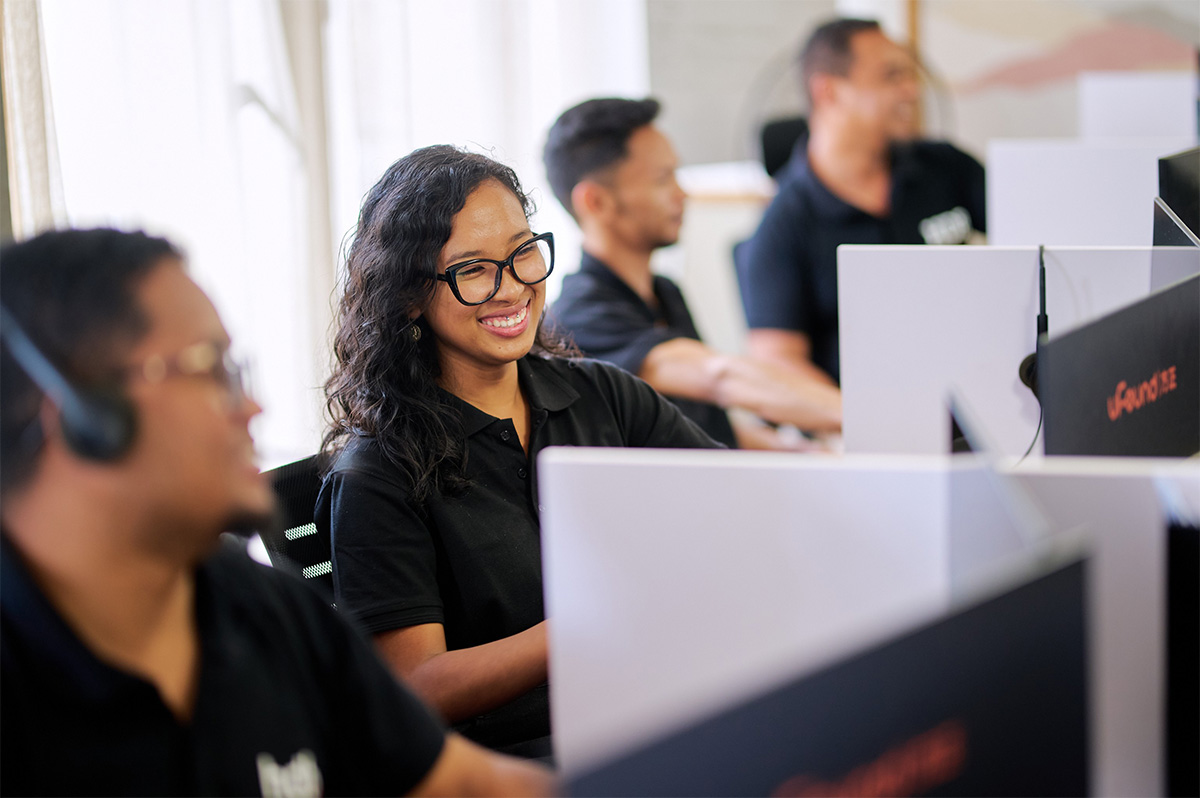
© HDB Solutions

On comprend plus vite.

On décide plus juste.

On s’adapte sans attendre.

Chez HDB Solutions, c’est exactement cette conviction qui nous guide :

la performance ne viendra pas d’une meilleure prévision, mais d’une meilleure lecture du présent.

Aujourd’hui, cette lecture s’appuie plus que jamais sur l’humain et des process métiers maîtrisés, une expertise stratégique à part entière.


Pioneers Forum 2026: Egypt’s Tourism Leaders Confront Uncertainty


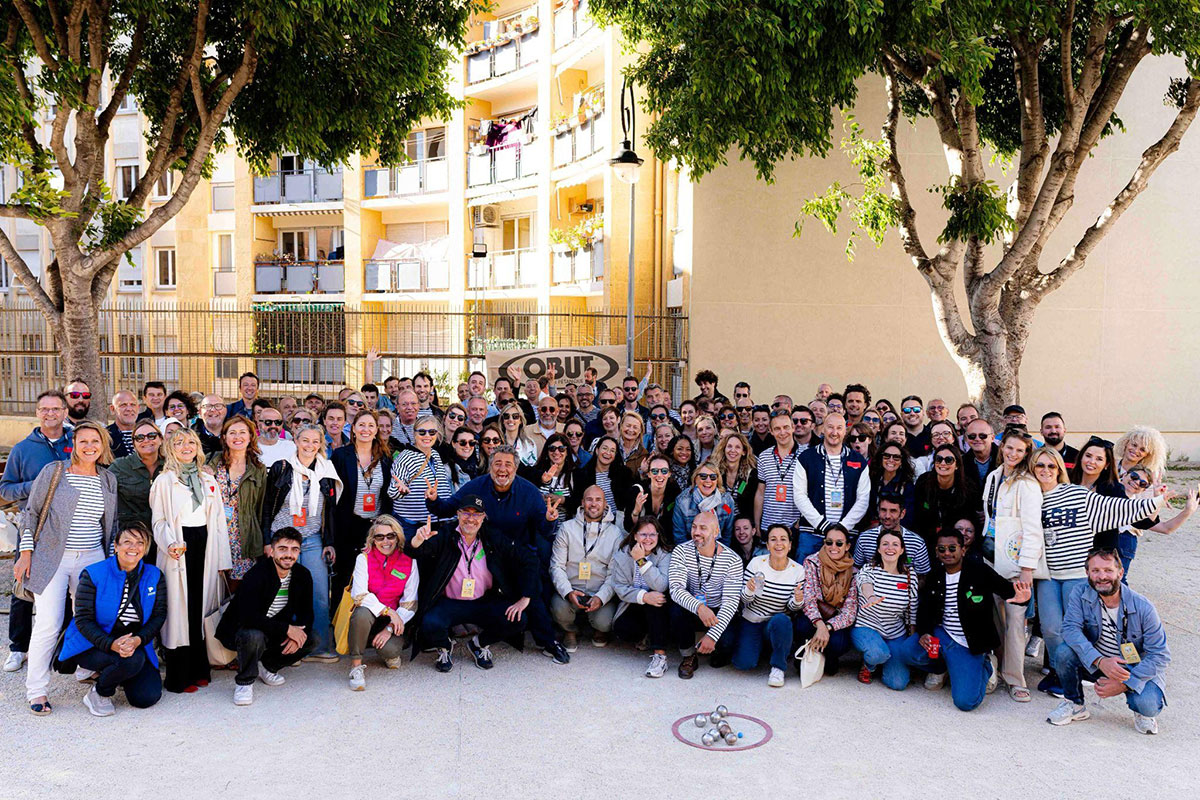
Les Pionniers à Marseille, en mai 2025 © Jules DESPRETZ

Top of Travel


From May 30 to June 4, 2026, 130 tourism decision-makers will fly to Egypt, traveling between Cairo and Aswan, with Luxor on the route.

Placed under the theme “Steering the Uncertain,” this new edition promises to be rich in exchanges, in reflections and in discoveries!

An edition focused on meetings, exchanges and professional opportunities

Created in 2000 by Pierre Amalou, the promise of the Forum des Pionniers has not changed for more than two decades: to create the conditions for shared reflection on the topics that stir the sector, in an environment conducive to in-depth discussions and to professional rapprochement. Participants find there as much strategic keys as concrete opportunities for collaboration, in a climate of trust and sharing.


The 2026 edition can rely on the Ministry of Tourism and Antiquities of Egypt, signaling strong government commitment to the event and marking the country’s tourism ambitions. EgyptAir, one of the oldest airlines in the world and a spearhead of Egyptian connectivity, as well as Travel Evasion, a French specialist in the destination, lend their support to this new edition.

This year, renowned companies such as Adyen, Agapè CSR, Allianz Partners, Alma, Atlas, HDB Solutions, Impact Consultants, Orange Travel, PenguinWorld (Quartier Libre, Resaneo, SpeedMedia), Travel Tech Factory and Vox Group have confirmed their presence as sponsors of the 24th edition of the Forum des Pionniers.


Un terrain de réflexion collective pour décrypter les grandes mutations du secteur

The 2026 theme “Steering the Uncertain” invites us to measure what is at stake today in the world of tourism. The traditional reference points of the trade have been upended in just a few years, pushing leaders to invent new methods of steering.

Between geopolitical instability, the emergence of artificial intelligence in all professions, and a coming wave of leadership transitions, the daily life of executives has changed. The Forum aims to provide a space to pose the right questions and to elicit operational answers, drawing on the diversity of experiences gathered in the room.

● How to decide and commit resources when the economic and geopolitical horizon is clouded?

● What role should AI play in travel professions, and how to preserve what gives teams their value?

● How to hand down, tomorrow, a tourism business, and what does that entail to prepare today?

Workshops on collective intelligence, masterclasses and moments of exchange will pace the reflection. These formats are designed to bring forth participants’ voices, rather than place them in the audience’s position.


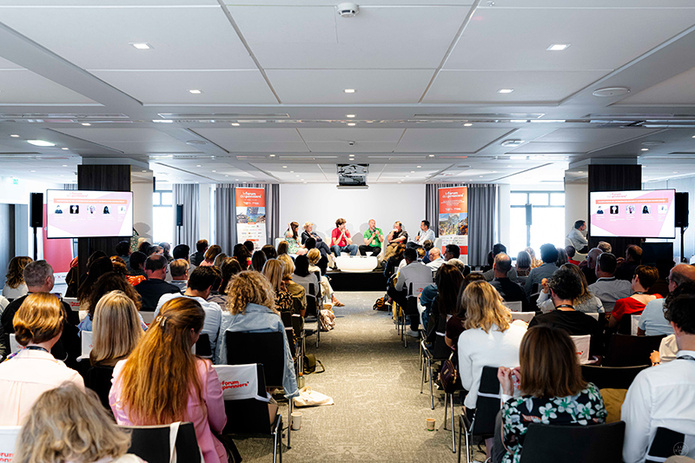
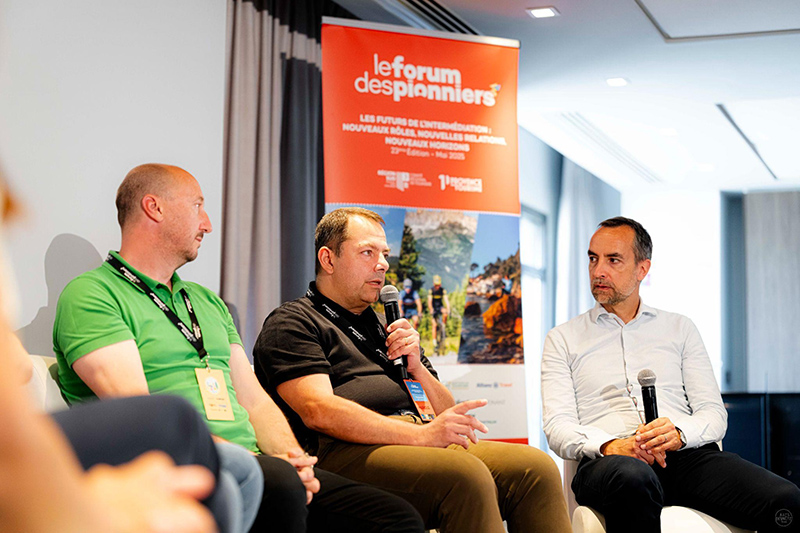
Retours d'expérience et débats : le Forum des Pionniers favorise l'émergence de réflexions partagées entre dirigeants du tourisme.  © Jules DESPRETZ


At the end, juxtaposed viewpoints, shared concrete cases and, true to the Forum’s DNA, professional connections that extend far beyond the event. The Pioneers will depart with a sharper reading of the ongoing transformations, practical tools to address them, and a network of peers that can be activated throughout the year.


L’Égypte en toile de fond, entre patrimoine universel et nouvelle dynamique touristique

It is in Cairo and along the Nile that the Pioneers community will gather. Egypt, which surpassed 19 million visitors in 2025, is experiencing an unprecedented phase of tourism growth not seen in decades. The country has made tourism a pillar of its economic strategy, closely linking it to the valorization of its heritage.

The recent opening of the Grand Egyptian Museum, the rehabilitation of major pharaonic sites, and the upgrade of hotel offerings compose a picture where historic heritage sits alongside a genuine ambition for renewal. Forum participants will discover this duality through immersion, through visits to major sites and meetings with local players who shape today’s Egyptian tourism.

This destination provides a particularly illuminating setting for leaders who come to question their own steering repertoires. Beyond the framework, Egypt adds additional material for reflection on a sector’s ability to transform without denying what makes it unique.