
Border Control: Twin Sisters Misidentified by the New European Biometric System (EES)

It’s a mistake that should never have happened. On April 10, 2026, the European EES and ETIAS systems were deployed at airports to improve the management of the external borders of the Schengen area by automating travelers’ identity checks, making them more reliable and efficient. For reference, the EES (Entry Exit System) concerns all nationals of non-member EU countries or those associated with the Schengen area who undertake short stays (up to 90 days within a 180-day period) on the territory of a Schengen member state.

However, since its implementation, this new device has already caused numerous difficulties for travelers, notably long queues. The reasons include airports not yet sufficiently equipped to accommodate this system, as well as several technical malfunctions. The President of the European Commission, Ursula von der Leyen, recently admitted that it suffers from “unresolved technical problems and requires a lot of work”.

These are not the only problems since the deployment of this new system. In May, a British national attempting to join the United Kingdom from Cluj-Napoca, Romania, was accused of illegal stay in the Schengen area. The authorities reproached her for not properly recording her departure after a previous stay in Amsterdam, in April 2026. The problem? It was not she who had gone there, but her twin sister.

The system duped by the similarity of the two facial scans

Following this, the young woman was interrogated for about fifteen minutes by border officers. When she explained that she had a twin sister, they initially suspected that she had lent her passport to her sister, which was false. Her sister was in the United Kingdom at the time of the events and had never set foot in Romania. She was ultimately allowed to take the plane, but remains concerned about her future travels.

The EES confused the two women due to the similarity of their facial scans, but perhaps also because of their surnames, dates of birth, and nationalities, which constitute the only common points detected by the system. Conversely, their fingerprints, first names, and passports are different.

According to Niovi Vavoula, a lecturer in cyberpolicy at the University of Luxembourg, this unusual situation could be explained by a misrecorded departure for her twin sister during her Amsterdam stay, but also by insufficient checks by the Romanian authorities in Cluj. “This type of incident is very common and is corroborated by many testimonies”, she told the POLITICO media outlet.

The authorities pointed at after this malfunction

The traveler’s interrogation would also have suggested that “the Romanian authorities did not do their job properly”. “According to the briefing you sent me, it seems the authorities are not sufficiently trained to distinguish between the different processes and rely on facial images as the sole identification method”, Niovi Vavoula told the media outlet POLITICO.

She then added: “the fact that they did not verify passport information in the EES, nor take into account that the EES is still new and that it contains various problems, illustrates what is known as anchoring bias, which is the tendency to rely on the first piece of evidence and neglect the rest”. On the European Commission’s side, a spokesperson said that the Commission “does not comment on individual cases.” He did, however, specify that “Member States are responsible for the data recorded in the EES, to which the Commission has no access”.

He concluded by recalling that “if a traveler is concerned about how their data is handled, they have the right to request the rectification and augmentation of their personal data. In such a case, they can contact the competent authorities of the Member State, either at the border or by directly reaching out to those authorities”.
Which European Countries Have the Cleanest Water for Swimming?

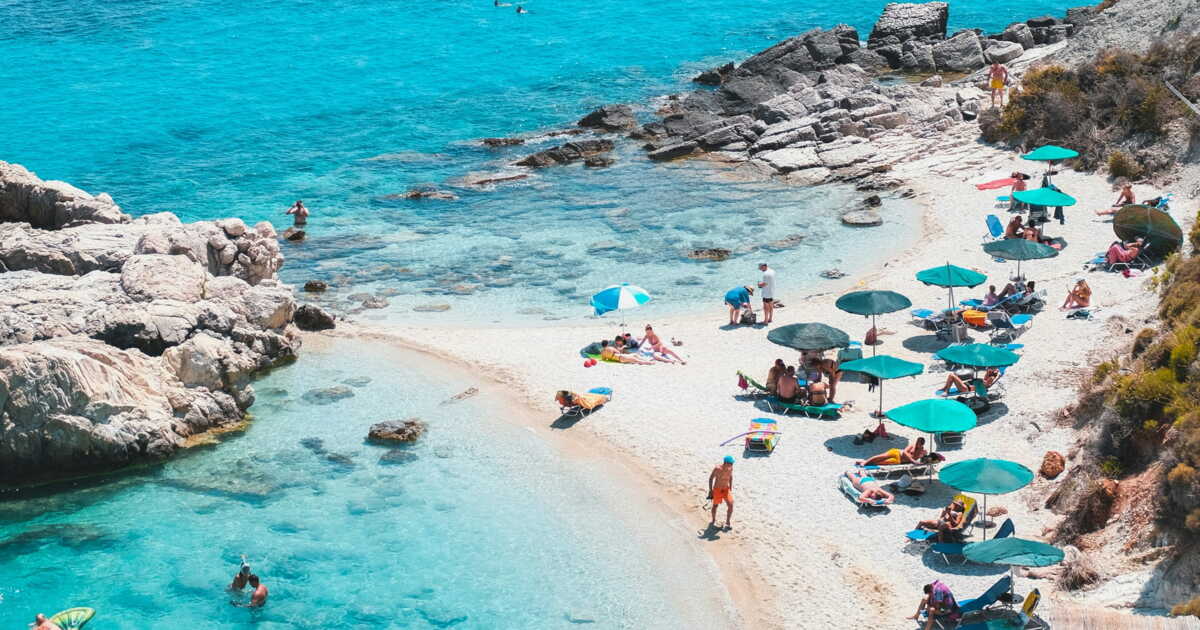
Genuine progress has been made over several decades in the management of bathing waters. As summer approaches, the latest report from the European Environment Agency brings reassuring news for holidaymakers. The continent’s beaches, lakes and rivers broadly display excellent bathing water quality. According to the study relayed by the Euronews site on Wednesday, June 17, 96% of monitored sites meet the European Union’s minimum standards, and only 1.5% of them are judged to be of mediocre quality.

Coastal waters remain the clear frontrunners in this ranking, with nearly 88% of seaside sites achieving the maximum score, compared with 78% for inland waters. This difference is largely explained by the “fragility of rivers and small lakes,” which are more vulnerable to pollution episodes linked to heavy rainfall or periods of drought. Experts remind that the analyses rely on the presence of bacteria such as E. coli and intestinal enterococci, which are indicators used to detect potential contamination of fecal origin.

France, not such a good pupil?

At the top of the European ranking, Cyprus stands out with a remarkable performance, with 100% of its waters classified as “excellent.” Behind the Mediterranean island come Greece with a score of 97.1%, Bulgaria with 96.9%, and Austria with 96.5%. For those who swim in lakes or rivers, Austria and Finland stand out in particular, with about 95% of their inland waters also considered as “excellent.”

Other countries, by contrast, face difficulties… In France, the Netherlands and Estonia, more than 3% of the sites inspected are categorized as “mediocre.” Albania, for its part, shows the lowest share of excellent waters in the whole continent, at only 16.8%.

Europe has “one main challenge” to tackle

Regarding inland waters alone, Spain records the most worrying results in the ranking. More than 11% of its rivers and lakes are deemed to be of poor quality, and just over half reach the excellent level. The report also notes that rivers remain the “main environmental challenge in Europe.”

Only 47% of the roughly 1,200 river swimming sites surveyed receive the designation “excellent.” Heavy rains, sewer overflows, agricultural runoff, and discharges from livestock farming continue to weigh heavily on their quality. Despite these drawbacks, the European Environment Agency notes a gradual improvement in many urban waterways, thanks to pollution-control policies pursued in recent years.

European Destinations to Escape the Summer Heat

As heat waves become more frequent in Europe, many vacationers rethink their summer plans. Rather than chasing sun at any price, they now favor destinations where temperatures stay pleasant even in the height of summer. This trend, dubbed “coolcation,” favors maritime, mountainous, or Nordic regions. From the Anglo-Norman islands to the vast Nordic expanses, several areas stand out as preferred refuges for a cool vacation.

Islands and Coasts Betting on Cool Temperatures

Just a few tens of kilometers from the French coast, Jersey and Guernsey offer an immediate sense of escape without requiring a long journey. Thanks to the influence of the English Channel, temperatures generally remain mild during the summer. Jersey particularly charms with the diversity of its landscapes: long sandy beaches, sheer cliffs, natural swimming pools revealed at low tide, and small fishing harbors compose a setting conducive to outdoor activities. Surfing, stand-up paddleboarding, kayaking, or coastal hiking allow visitors to fully enjoy an environment where the ocean is ever-present.

The Guernsey archipelago, which also includes Herm, Sark, and Alderney, attracts travelers seeking calm. Cliff-top trails offer spectacular views of the sea, while secluded coves and narrow country lanes invite you to slow your pace. The Anglo-Norman atmosphere, inherited from its distinct history, further enhances the sense of escape. A destination that notably charmed Victor Hugo in his time.

Further north, western Sweden constitutes another destination particularly suited to hot summers. Its vast archipelago, stretching along the Bohuslän coast, is dotted with fishing villages with colorful houses, rocky islets, and traditional ports. Summer temperatures are often cooler than those observed in southern Europe. Between cycling trips, boat excursions, swimming in often chilly seas, and sampling local seafood, the region offers a vacation style focused on nature and simplicity.

For those wishing to stay in France, Brittany remains a reliable choice. Thanks to its Atlantic-facing coastline, it generally escapes the intense heat that affects other regions of the country. Areas such as the Gulf of Morbihan, the Pink Granite Coast, or the environs of Lorient allow you to enjoy beaches, coastal trails, and nautical activities in conditions often more comfortable than in the Mediterranean.

Heading for the Mountains and the Great Northern Outdoors

The mountainous landscapes also serve as a coveted refuge during periods of heat. Nestled in the heart of the Austrian Alps, Innsbruck blends urban heritage with direct access to the mountains. From the city center, several ski lifts enable quick access to the surrounding summits. Travelers can thus alternate cultural visits, panoramic hikes, and breaks by alpine lakes where the air remains markedly cooler than in the lowlands.

In the Pyrenees, the Andorran town of Canillo captivates with its preserved environment. Surrounded by green valleys and mountain lakes, it offers an ideal setting for walkers, mountain bikers, and outdoor enthusiasts. The altitude helps maintain pleasant temperatures even during heat events affecting neighboring regions.

Ireland also ranks among the most popular destinations for fans of the “coolcation.” Temperatures there generally stay moderate throughout the summer, which fosters road trips across the island’s spectacular landscapes. Vertigo-inducing cliffs, lakes, mountains, coastal roads, and colorful villages compose a scenery particularly cherished by nature lovers. This mild climate makes it possible to multiply outdoor activities without suffering from intense heat.

Finally, it would be hard to speak of cool vacations without mentioning Iceland. With summer temperatures typically ranging between 10 and 15 °C, the Nordic island stands as one of the emblematic destinations of this new way of traveling. Monumental waterfalls, glaciers, volcanoes, black-sand beaches, fjords, and geothermal springs offer landscapes unique in Europe. A striking contrast to Mediterranean destinations, which explains travelers’ growing interest in a more breathable summer.