
TourMaG – The fact that your daughter is taking over the business, does that make you an entrepreneur and a happy father ?
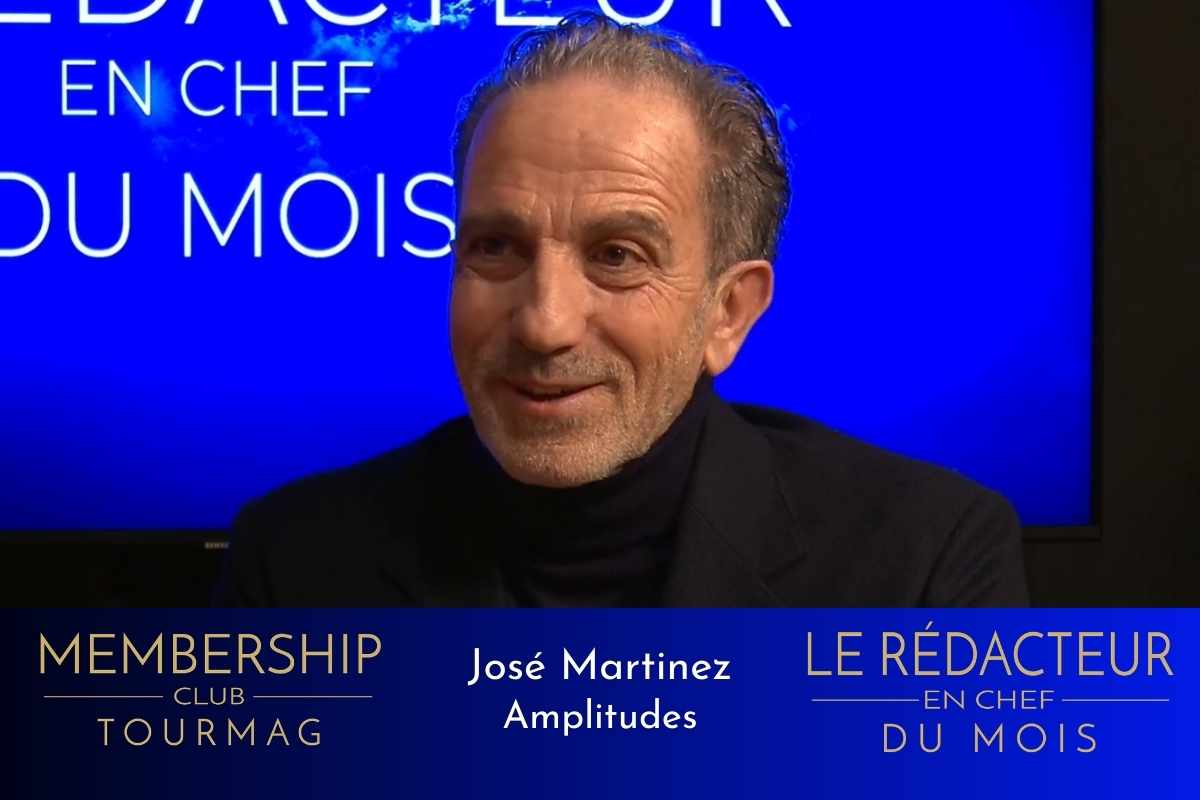
José Martinez : Yes, obviously. It’s a real joy. As a father, being able to hand down the company we created 35 years ago is a great satisfaction.
We work very well together with Laura, which is very positive. She has been in the company for almost eight years and we have not had any disagreements. That’s an important point.
As an entrepreneur too, this is excellent news. In a career, there inevitably comes a moment when one approaches the end of one’s professional journey. Often the last years before retirement are quieter: the leaders let the company run and slow down the development.
The fact that Laura expressed her willingness to take over the company and to continue its development has completely changed my own mindset. It has rekindled my desire to restart the growth dynamic.
This is especially reflected by the opening of the Bordeaux agency and by a very strong commercial development in the TMC activity. We also rely on what differentiates us: our own SBT tool. Today, it is on the market and allows us to win many new accounts. Between 2025 and 2026, we have already confirmed a growth of more than 30% thanks to these new contracts. It is very positive.
José Martinez : Yes, obviously. It’s a real joy. As a father, being able to hand down the company we created 35 years ago is a great satisfaction.
We work very well together with Laura, which is very positive. She has been in the company for almost eight years and we have not had any disagreements. That’s an important point.
As an entrepreneur too, this is excellent news. In a career, there inevitably comes a moment when one approaches the end of one’s professional journey. Often the last years before retirement are quieter: the leaders let the company run and slow down the development.
The fact that Laura expressed her willingness to take over the company and to continue its development has completely changed my own mindset. It has rekindled my desire to restart the growth dynamic.
This is especially reflected by the opening of the Bordeaux agency and by a very strong commercial development in the TMC activity. We also rely on what differentiates us: our own SBT tool. Today, it is on the market and allows us to win many new accounts. Between 2025 and 2026, we have already confirmed a growth of more than 30% thanks to these new contracts. It is very positive.
A also to see the interview of Laura Martinez, CEO of Amplitudes on TourMaG’s TV platform.
TourMaG – Precisely, you mention your SBT, eYoma. What are the strengths of this solution and its development prospects?
José Martinez : The development prospects are very significant.
One of the strengths of eYoma is its very recent technology. It is a cloud-native tool that makes it easy to connect the platform to different systems: those of our clients, expense reporting tools, and suppliers.
For example, we are directly connected to Air France to offer the entire NDC offering at no extra cost, including without the GDS surcharge that exists. We are also connected to PAO to directly access the SNCF offer and all of its features, without going through an intermediary.
We also have a connection with Distribution, an international rail provider, which allows us to offer cross-border and trans-European journeys. With eYoma, it is possible to book routes such as Prague–Budapest, Vienna–Munich or Rome–Milan.
We are also connected to Travelfusion to access the entire global low-cost offer. In practical terms, you can book a low-cost carrier on the other side of the world, even in China.
The tool has been developed with very recent technologies. It is hosted entirely in France on OVH servers, which guarantees a high level of security. In a context where digital sovereignty is becoming an important topic, we can ensure 100% French hosting.
José Martinez : The development prospects are very significant.
One of the strengths of eYoma is its very recent technology. It is a cloud-native tool that makes it easy to connect the platform to different systems: those of our clients, expense reporting tools, and suppliers.
For example, we are directly connected to Air France to offer the entire NDC offering at no extra cost, including without the GDS surcharge that exists. We are also connected to PAO to directly access the SNCF offer and all of its features, without going through an intermediary.
We also have a connection with Distribution, an international rail provider, which allows us to offer cross-border and trans-European journeys. With eYoma, it is possible to book routes such as Prague–Budapest, Vienna–Munich or Rome–Milan.
We are also connected to Travelfusion to access the entire global low-cost offer. In practical terms, you can book a low-cost carrier on the other side of the world, even in China.
The tool has been developed with very recent technologies. It is hosted entirely in France on OVH servers, which guarantees a high level of security. In a context where digital sovereignty is becoming an important topic, we can ensure 100% French hosting.
eYoma, a multi-traveler and multi-service tool
TourMaG – How did you design this tool?
José Martinez : When we began developing eYoma, I gathered my account managers and asked them to list all the client requests that we could not address with market tools.
That list became the project’s roadmap. Today, when we present our SBT to our clients, they are often surprised by how many of the issues they face we have already resolved. It’s a tool that is popular and helps us win markets.
It isn’t just an SBT. Behind it there is also eYoma Pro, the tool used by our agents. This enables a complete integration between online and offline.
For our teams, the tool is designed around our needs: priority management, task sharing among colleagues, alert systems to track travel progress.
eYoma is also a multi-traveler and multi-service tool. Unlike many SBTs on the market that charge per PNR and limit files to a single traveler, we do not have that constraint. We can therefore include several travelers in one file and group all the travel services together.
Eventually, we will also integrate the possibility of paying for certain services directly via virtual cards created by our clients to manage their travel expenses.
The development possibilities are therefore very numerous.
José Martinez : When we began developing eYoma, I gathered my account managers and asked them to list all the client requests that we could not address with market tools.
That list became the project’s roadmap. Today, when we present our SBT to our clients, they are often surprised by how many of the issues they face we have already resolved. It’s a tool that is popular and helps us win markets.
It isn’t just an SBT. Behind it there is also eYoma Pro, the tool used by our agents. This enables a complete integration between online and offline.
For our teams, the tool is designed around our needs: priority management, task sharing among colleagues, alert systems to track travel progress.
eYoma is also a multi-traveler and multi-service tool. Unlike many SBTs on the market that charge per PNR and limit files to a single traveler, we do not have that constraint. We can therefore include several travelers in one file and group all the travel services together.
Eventually, we will also integrate the possibility of paying for certain services directly via virtual cards created by our clients to manage their travel expenses.
The development possibilities are therefore very numerous.
Amplitudes, “the only TMC in France to own its own technology”
TourMaG – Amplitudes started with bespoke travel, then business travel and now technology. Could you become a technology company?
José Martinez : Becoming a technology company, yes, to some extent. In fact, I think we already are.
This is probably the future of TMCs. In France, we are currently the only TMC to own our own technology. Others rely on external solutions. Yet this model already exists in other countries.
In England, Germany or the United States, several major players have their own technologies. For example, Navan or Perk. We are aligned with this logic.
About twenty years ago, call centers operated entirely with human teams. With the advent of SBT tools, the share of human intervention gradually decreased to around 50%. Today, thanks to capable tools, adoption rates approach 90%. Tomorrow, with the development of artificial intelligence, this figure should rise even further and could reach 95%, or more.
José Martinez : Becoming a technology company, yes, to some extent. In fact, I think we already are.
This is probably the future of TMCs. In France, we are currently the only TMC to own our own technology. Others rely on external solutions. Yet this model already exists in other countries.
In England, Germany or the United States, several major players have their own technologies. For example, Navan or Perk. We are aligned with this logic.
About twenty years ago, call centers operated entirely with human teams. With the advent of SBT tools, the share of human intervention gradually decreased to around 50%. Today, thanks to capable tools, adoption rates approach 90%. Tomorrow, with the development of artificial intelligence, this figure should rise even further and could reach 95%, or more.
“We are among the French TMCs that want and have the means to internationalize”
“Our vision is more of Amplitudes Worldwide”
TourMaG – Would this internationalization go more through partnerships or through establishments? You also imply that without a large account you could not make the leap.
José Martinez : We are ready to develop internationally if we are given the time and the opportunity. But I am not a strong advocate of partnerships.
Since the beginning, in our leisure activity, we chose not to resell third-party products. We have our own production team and trips we design ourselves, with a high level of mastery and quality control. For the TMC, the logic is the same, with the development of our own SBT.
The day we cross this threshold, I think it will more likely be through direct establishments and full control of what we do. Our technology tool is already ready for this: it is multilingual and can connect to different systems like Sabre or Amadeus. It could therefore work internationally.
Our vision is therefore more that of Amplitudes Worldwide, rather than operating with networks or partners. Networks often pose several difficulties: governance, uniformity of service, data consolidation. These are complex issues when governance is dispersed.
José Martinez : We are ready to develop internationally if we are given the time and the opportunity. But I am not a strong advocate of partnerships.
Since the beginning, in our leisure activity, we chose not to resell third-party products. We have our own production team and trips we design ourselves, with a high level of mastery and quality control. For the TMC, the logic is the same, with the development of our own SBT.
The day we cross this threshold, I think it will more likely be through direct establishments and full control of what we do. Our technology tool is already ready for this: it is multilingual and can connect to different systems like Sabre or Amadeus. It could therefore work internationally.
Our vision is therefore more that of Amplitudes Worldwide, rather than operating with networks or partners. Networks often pose several difficulties: governance, uniformity of service, data consolidation. These are complex issues when governance is dispersed.
“My analysis, the GDSs have won the battle of the NDC”
TourMaG – You want to keep control…
José Martinez : Exactly. We want to preserve this control.
TourMaG – A word on the NDC, a hot topic in recent years. Where does it stand today? Air France announces rising adoption rates.
José Martinez : Contrary to what the GDSs initially thought, the NDC has ultimately established itself. It is still a relatively young technology that sometimes encounters difficulties, but it is progressing.
Today, for example in our eYoma tool, we pull in both GDS content and NDC content. The NDC share represents about 70% of bookings, which is already very significant, especially for corporate clients. The main reason is simple: fares are often more advantageous.
Features are also improving. Today you can modify a ticket, change a date or destination. It happens that some fare conditions do not surface correctly or some fares appear and then disappear, but that is quite normal for a technology still maturing. Airline booking remains a very complex system.
Moreover, GDSs have regained an important place in this ecosystem. Today there are very wide NDC offerings in Amadeus or Sabre. In a sense, they have managed to re-enter the race, whereas airlines initially hoped to free themselves from it thanks to NDC. My analysis nonetheless is that the GDSs have won the NDC battle.
In the French market, the majority of NDC bookings today go through GDSs, except for some companies like ours that have a culture of difference by choosing direct connection.
For us, it makes sense, especially with Air France which represents about half of our air sales. Just as we found it relevant to connect directly to PAO because 95% of our rail sales today are with SNCF.
We probably will not connect directly to every airline, because GDSs or certain aggregators do a very good job of handling that. However, being directly connected to Air France allows us to offer exactly the same fares and the same offer as on the airline’s site.
This also answers a growing demand for transparency. We can even commit to our clients: if they find a cheaper fare at the same time and under the same conditions, we refund the difference.
José Martinez : Exactly. We want to preserve this control.
TourMaG – A word on the NDC, a hot topic in recent years. Where does it stand today? Air France announces rising adoption rates.
José Martinez : Contrary to what the GDSs initially thought, the NDC has ultimately established itself. It is still a relatively young technology that sometimes encounters difficulties, but it is progressing.
Today, for example in our eYoma tool, we pull in both GDS content and NDC content. The NDC share represents about 70% of bookings, which is already very significant, especially for corporate clients. The main reason is simple: fares are often more advantageous.
Features are also improving. Today you can modify a ticket, change a date or destination. It happens that some fare conditions do not surface correctly or some fares appear and then disappear, but that is quite normal for a technology still maturing. Airline booking remains a very complex system.
Moreover, GDSs have regained an important place in this ecosystem. Today there are very wide NDC offerings in Amadeus or Sabre. In a sense, they have managed to re-enter the race, whereas airlines initially hoped to free themselves from it thanks to NDC. My analysis nonetheless is that the GDSs have won the NDC battle.
In the French market, the majority of NDC bookings today go through GDSs, except for some companies like ours that have a culture of difference by choosing direct connection.
For us, it makes sense, especially with Air France which represents about half of our air sales. Just as we found it relevant to connect directly to PAO because 95% of our rail sales today are with SNCF.
We probably will not connect directly to every airline, because GDSs or certain aggregators do a very good job of handling that. However, being directly connected to Air France allows us to offer exactly the same fares and the same offer as on the airline’s site.
This also answers a growing demand for transparency. We can even commit to our clients: if they find a cheaper fare at the same time and under the same conditions, we refund the difference.
Electronic invoicing: the return of commissions ?
TourMaG – You know the issues around electronic invoicing, notably the question of margins that could become completely transparent. Could it change the business travel business model?
José Martinez : For us, the question of margins does not pose an immediate risk.
If an airline grants us a negotiated fare, I am talking about a fare negotiated by Amplitudes, not corporate-negotiated fares, on which we apply a margin, there may be a discrepancy between the invoice sent by the airline and ours. That can create a form of distortion.
The question is therefore how the model will evolve. Perhaps some agencies will ask airlines to revert to a commission system rather than operating with negotiated agency fares. That is a possibility.
These negotiated fares are an integral part of agencies’ business models. Regulatory changes should not undermine this balance. But if the objective is to move toward more transparency, a return to commission could indeed be a solution.
TourMaG – What are Amplitudes’ objectives for 2026 and the vision for the coming years?
José Martinez : For the TMC part, we already know that the accounts won will ensure a growth of between 15 and 20 points. That’s very good news.
We also began the year with a very positive momentum in leisure activity, even if some events slowed this momentum. Despite that, I think 2026 will be a year of growth. Our objective is clearly to maintain double-digit growth.
Amplitudes is a company built from scratch, without initial capital, and which has gradually grown on solid foundations, with high growth rates.
This year again, we have received two important distinctions: a Financial Times award for high-growth European companies and a distinction from Les Échos, which also published an article about our post-Covid growth.
Our vision remains that of a company in motion. We do not want to be a static enterprise. We want to continue integrating sector evolutions, such as artificial intelligence, explore new destinations and invent new ways to travel.
On our scale, we also try to contribute to the positive image of travel agencies: a committed agency for its clients, whether individuals or businesses, capable of negotiating the best conditions with providers.
The vision we share today with Laura is clear: continue to develop Amplitudes to make it a European company in the near future, and perhaps an international company in the medium term.
José Martinez : For us, the question of margins does not pose an immediate risk.
If an airline grants us a negotiated fare, I am talking about a fare negotiated by Amplitudes, not corporate-negotiated fares, on which we apply a margin, there may be a discrepancy between the invoice sent by the airline and ours. That can create a form of distortion.
The question is therefore how the model will evolve. Perhaps some agencies will ask airlines to revert to a commission system rather than operating with negotiated agency fares. That is a possibility.
These negotiated fares are an integral part of agencies’ business models. Regulatory changes should not undermine this balance. But if the objective is to move toward more transparency, a return to commission could indeed be a solution.
TourMaG – What are Amplitudes’ objectives for 2026 and the vision for the coming years?
José Martinez : For the TMC part, we already know that the accounts won will ensure a growth of between 15 and 20 points. That’s very good news.
We also began the year with a very positive momentum in leisure activity, even if some events slowed this momentum. Despite that, I think 2026 will be a year of growth. Our objective is clearly to maintain double-digit growth.
Amplitudes is a company built from scratch, without initial capital, and which has gradually grown on solid foundations, with high growth rates.
This year again, we have received two important distinctions: a Financial Times award for high-growth European companies and a distinction from Les Échos, which also published an article about our post-Covid growth.
Our vision remains that of a company in motion. We do not want to be a static enterprise. We want to continue integrating sector evolutions, such as artificial intelligence, explore new destinations and invent new ways to travel.
On our scale, we also try to contribute to the positive image of travel agencies: a committed agency for its clients, whether individuals or businesses, capable of negotiating the best conditions with providers.
The vision we share today with Laura is clear: continue to develop Amplitudes to make it a European company in the near future, and perhaps an international company in the medium term.
 Published by Céline Eymery Editor-in-Chief – TourMaG.com
 See all articles by Céline Eymery


Add TourMaG to your Google News feed 
Viewed 3,816 times
Rate
New comment :
In the same section :
<
>
>
Thursday, July 16, 2026 – 13:38 Travelodge teams up with DerbySoft to boost its corporate bookings
|
Wednesday, July 15, 2026 – 15:40 Perk launches the first MCP connector to unify trips, expenses and invoices
|