In Vienna, a One-of-a-Kind Museum Reveals How People Long Imagined the Earth

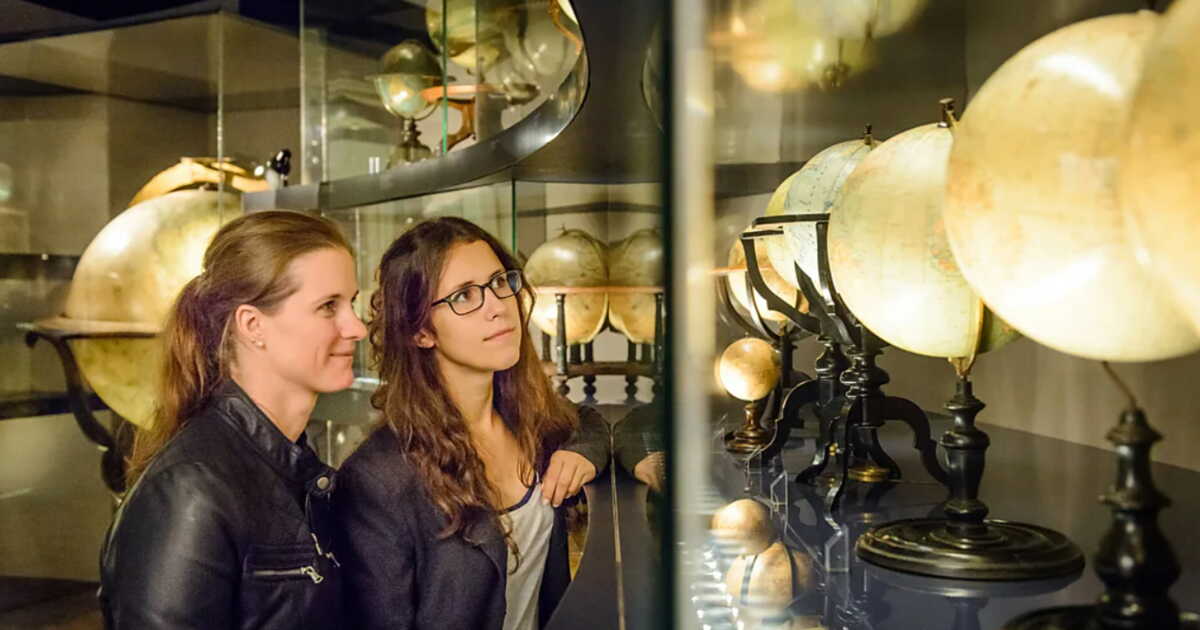
Our view of the world has continually evolved over the centuries, as a quirky museum in Austria attests. In the heart of Vienna, away from the crowds of usual tourist sites, there lies a unique museum on Earth. A gem for history buffs and lovers of maps, and sometimes even of the sky. Located in the Mollard Palace, the Globe Museum is indeed the only public institution wholly devoted to globes.

In this 17th-century setting, more than 220 rare and ancient spheres, most of which were crafted before 1850, are on display. “Globes attest to how our imagining of the planet has evolved. This is the only place in the world where you can see so many gathered together”, explains its director, Nikolaus Schobesberger, to the BBC, on Sunday, August 30.

A true mirror of bygone beliefs

The collection mainly tells how people over time tried to understand a world that remained largely unknown to them. Each globe records what people knew as well as what they did not know at the moment of its creation.

Some 16th-century globes show a North America that is lost among uncharted territories, when California isn’t depicted as an island state, an exaggerated Asia, or an imaginary southern continent in place of Australia and Antarctica. The oceans, meanwhile, are teeming with sea monsters or dragons, not with islands. On celestial globes, Renaissance astronomical observations still sit beside Pegasus, Perseus brandishing Medusa’s severed head, and other mythical creatures or figures.

Colonialism, space conquest…

Other pieces represent a colonial view of the world, with European flags planted on African coasts or caricatured representations of Indigenous peoples, transformed into cannibals. “They reflect the mindset of their time. They are certainly magnificent works of art, but we must also take into account the date of their creation”, notes Nikolaus Schobesberger.

One of the museum’s most fascinating objects is a lunar globe, created in 1961. The visible face of the Moon is meticulously drawn, but its far side is deliberately left white, because it had simply not yet been observed. Two years later, a new globe filled in that unknown portion. It also features a reproduction of the famous Martin Behaim globe, completed in 1492, which immortalizes a world without the Americas, but with an endless ocean separating Europe from Asia.

Initially reserved for princes and wealthy merchants, globes gradually became everyday objects, found in schools and households. In the era of Google Earth, they have not thankfully lost their power to fascinate. “It is not merely a scientific instrument, it is also an object that lets you dream of distant lands”, says the custodian of this place. For him, no other work of art stirs the imagination and the urge to discover distant places as much.
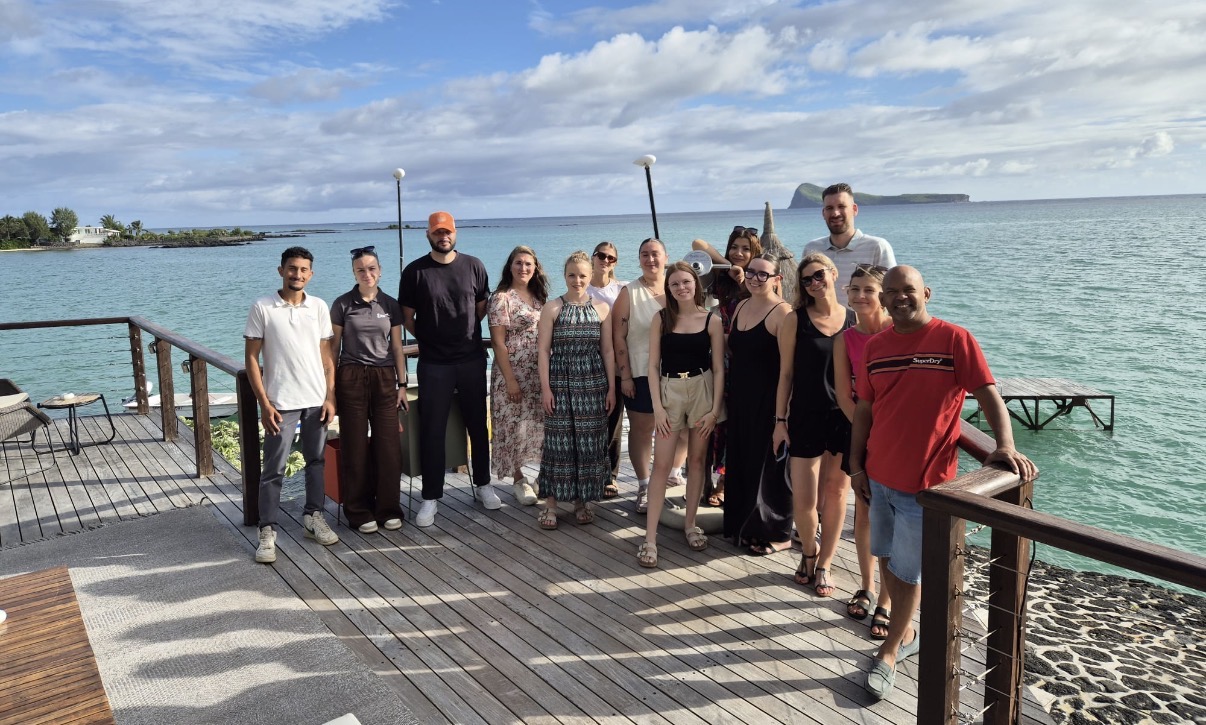
Mauritius–Réunion Eductour: Exotismes Reveals Two Sides of the Indian Ocean (Videos)


Eductour Exotismes. Photo : TourMaG

TAP Air Portugal


Barely had the luggage been retrieved at Roland-Garros Airport after a flight with Air Austral, when the stage was set.

Here, staying in one place for long is simply not an option. Réunion invites movement, and Exotismes built its eductour with this spirit in mind, alternating natural discoveries, meetings and visits to establishments with very different positions on the market.

The first stop is Saint-Leu, an iconic seaside resort on the West Coast. Facing the lagoon, the Santa Apolonia residence perfectly illustrates the kind of clientele Réunion can attract: families, groups of friends or travelers who wish to explore the island on their own, thanks to fully equipped apartments.

A few hundred meters further, a switch of register with Exsel Alamanda. More accessible, this hotel bets on a friendly atmosphere and a prime location just steps from the beach. Two establishments, two clienteles, and already a first glimpse of Réunion’s diverse offering.

But quickly, the lure of the interior calls louder.


Immersion in the Heart of the Island’s Intense Landscapes

The next day, the alarm sounds before sunrise.

Direction Piton de la Fournaise, one of the world’s most active volcanoes. Aboard the 4x4s, a Mille Tours activity, the agents traverse pastures and then the vast mineral plains where the scenery suddenly shifts to landscapes reminiscent of the Moon or Mars.

“In just a few kilometres, you completely change your universe”, sums up Vincent, one of the participants.

This excursion perfectly illustrates what makes Réunion so special: a sequence of experiences and landscapes packed into a single day.

The contrast is just as striking in the evening with the arrival at Wood Hotel & Spa, a recently opened four-star address in Trois-Bassins.

Open to the sea, the property emphasizes contemporary design, well-being, and an eco-responsible approach. The Sunset Live events, held every week, have already become one of the hotel’s must-see appointments.


Places to Suit Every Desire

As you reach Cilaos along its famous 400-turn road, the scenery changes once again.

At Le Vieux Cep, Creole architecture and gardens evoke the charm of the island’s historic hotels.

A few steps away, Tsilaosa leans toward a more intimate approach with only twenty-two rooms and a cellar where tastings and wine workshops are organized, offering a unique experience that, even on Réunion, evokes the conviviality and warmth of a winter raclette.

At lunchtime, another facet of the island of intensity unfolds.

At Tapacala, travelers come not only to share a meal. The owners also open the doors of their farm and invite visitors to discover their daily life. An immersive experience that illustrates the growth of encounter tourism on the island.

Then back to the coast with Papangue Hotel & Spa, a recently opened establishment focused on sustainable development, before ending the day at LUX Saint-Gilles. Set directly on the lagoon, the five-star offers a completely different face of the destination.

Villas and apartments scattered across a tropical park, four restaurants, a huge pool and premium services complete an offering where every category of guest can now find happiness.


“The Self-Drive Tour, the Best Way to Discover Réunion”

Before leaving Réunion, the program still has a surprise in store: a helicopter overflight of Mafate Cirque.

From above, the agents take in the island’s dramatic relief and understand why the self-drive tour remains the destination’s flagship product, insists Armelle Labesse, director of the inbound operator.

Visits continue with Exsel Ermitage, Résidence Tropic Appart’Hôtel, Relais de l’Hermitage and Le Récif, establishments that round out the range offered by Exotismes, from budget stays to family hotels facing the lagoon.

For Mille Tours teams, Exotismes’ long-time partner, this diversity is precisely one of Réunion’s major strengths: enabling a personalized itinerary without ever sacrificing the quality of accommodations.


In Mauritius, the hotel becomes the heart of the journey

Just forty-five minutes of flight are enough to completely change the scene.

While Réunion invites you to explore its cirques, volcanoes or villages, Mauritius places the hotel at the center of the stay. Each establishment has its own identity and atmosphere and tells a different story; the Attitude range is a perfect example.

Behind this diversity, one common thread: preserving the Mauritian soul. Whatever the hotel concept, the Attitude group expresses this local identity according to the expectations of each clientele, whether couples seeking tranquility, families, or travelers looking for a deeper immersion.

At Sunrise Attitude, adults-only, everything is designed to foster calm and disconnection.

Tropical Attitude opens directly onto Trou-d’Eau-Douce lagoon and emphasizes a relaxed seaside vibe. Friday Attitude offers a more family-friendly atmosphere, while Zilwa Attitude, one of the group’s flagship properties, multiplies restaurants, pools, water activities and even provides access to a private island.

Between visits, participants also discover L’Aventure du Sucre, a Kreola-branded activity delving into Mauritius’s history, before sharing a dinner at a local home, in line with Attitude’s aim to highlight local culture.


Two Islands, Two Ways to Build One Journey

Kyrgyzstan: An Extraordinary Hike Reveals 90,000 Prehistoric Petroglyphs

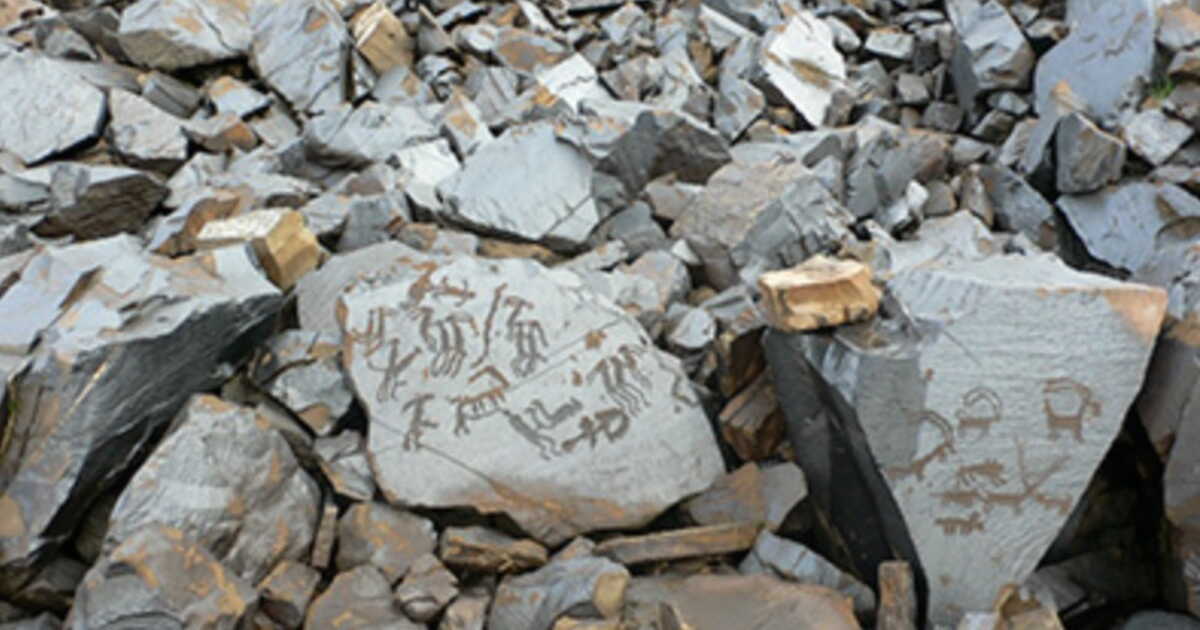
Lost in the Tian Shan mountains, in Kyrgyzstan, Saimaluu Tash holds a real treasure: nearly 90,000 petroglyphs carved on around 10,000 rocks. Some date back to the Bronze Age, about 4,000 years ago, bearing witness to a ritual occupation that lasted for nearly three millennia. Hunts, wars, animals, and scenes tied to the Sun’s cult follow one another on the blocks of volcanic basalt. But to discover this open-air art gallery, one must first tackle a particularly demanding route, accessible only a few weeks each year.

A 4,000-Year-Old Art Gallery

Saimaluu Tash, whose name means “Embroidered Stones” in Kyrgyz, sits more than 2,000 meters above sea level, in a glacial valley isolated within the Tian Shan. The site is regarded as one of the largest and most remote high-altitude petroglyph complexes in the world. The earliest engravings appear to have emerged in the Bronze Age, before later populations continued the work in the Iron Age, then during the era of the early Turkic peoples, up to around 900 CE.

The thousands of carvings etched into the basalt offer a rare glimpse into nomadic societies whose material traces are sometimes hard to trace. Notably visible are hunters, animals such as ibex, scenes of conflict, and depictions associated with the Sun. These images were presumably linked to the beliefs and ritual practices of the peoples who frequented the valley.

Before Islam arrived in Central Asia in the 8th century, Tengriism held a central place in the region’s beliefs. This tradition accorded a central role to the forces and spirits of nature, particularly through shamanic practices. Saimaluu Tash would thus have served as a place of worship for about 3,000 years, before gradually fading into oblivion.

The site was rediscovered only in 1902 by the Russian military cartographer Nikolai Khloudov. Archaeological investigations, however, did not truly begin there until the late 1940s. Since then, its isolation has paradoxically helped preserve it: looting and vandalism have remained limited, while the thick winter snow cover protects the rocks from significant temperature swings.

A Spectacular Site Yet Accessible Only for a Few Weeks

The discovery of Saimaluu Tash is well earned. From the Tian Shan’s mountains, the path winds over rocky terrain and notably crosses a temporary snow bridge. This access gate largely determines whether the site can be reached. Too early in the season, the petroglyphs are still buried under snow; too late, the passage may have melted away. The window during which the complex is accessible typically lasts about six weeks, from July to September.

After nearly three hours of walking, the first carved blocks come into view. For Altynai Kudaibergenova, a guide based in Bishkek, the ancient inhabitants would already have undertaken a true expedition to reach this sacred place. “Ancient peoples had to carefully plan their journey and face all kinds of difficulties to come here, year after year, for centuries”, she told CNN. “They had to travel along trails that skirt steep slopes and over ice-plateaus that linger in the shade and refuse to melt under the midsummer sun.”

The guide also notes the site’s particular position, set in a pass that links the Ferghana Valley with the interior of the Tian Shan. “It is the largest petroglyph site in Central Asia, left by different peoples across four millennia”, she says. Even today, Saimaluu Tash’s isolation remains part of the experience. Here there are no crowds or major tourist infrastructures, only the roughly 10,000 carved rocks sprinkled along the valley’s slopes. A tranquility that could become rarer as Kyrgyzstan grows more accessible as a tourist destination.

Evaluating hotel name formatting

I think we should make the title more natural, like "Aix-en-Provence: Grand Hôtel Roi René Unveils its Renovation" or perhaps "Aix-en-Provence: Grand Roi René Hotel Reveals its Renovation." However, "Grand Hôtel Roi René" is the formal name of the hotel, and in English, I’m considering how to best render it. For SEO purposes, using "Grand Hotel Roi Rene" without accents might be better. Ultimately, I’m leaning towards keeping it elegant while thinking about its marketing appeal.Considering hotel title options

I’m thinking about the title "Aix-en-Provence: Grand Hotel Roi Rene Unveils Its Renovation." Maybe it’s worth adding "in Aix-en-Provence," but since that’s already the location phrase, it might sound repetitive. It seems best to propose the title as "Aix-en-Provence: Grand Hôtel Roi René Unveils Its Renovation," while pondering whether to drop the accent for SEO purposes. However, keeping "Roi René" as is helps preserve the hotel’s proper name, even if it can confuse search engines. I’ll stick with the hotel’s name in English to ensure clarity.Finalizing the hotel title

I think we should translate the title correctly: "Aix-en-Provence: Grand Hôtel Roi René Unveils Its Renovation." In English, "Grand Hôtel" is "Grand Hotel" without the accent. So, "le Grand Hôtel Roi René" becomes "the Grand Hotel Roi Rene." "Dévoile sa rénovation" translates to "unveils its renovation." Putting it all together, I have: "Aix-en-Provence: the Grand Hotel Roi Rene Unveils Its Renovation." To keep it SEO-friendly, I’ll use title case: "Aix-en-Provence: Grand Hotel Roi Rene Unveils Its Renovation." That’s around 68 characters, which is just right!


Le Grand Hôtel Roi René réouvre à Aix-en-Provence.   Crédit photo : Grand Hôtel Roi René MGallery

IFTM


The Grand Hôtel Roi René reopened in Aix-en-Provence after a year of renovations, in late April 2026.

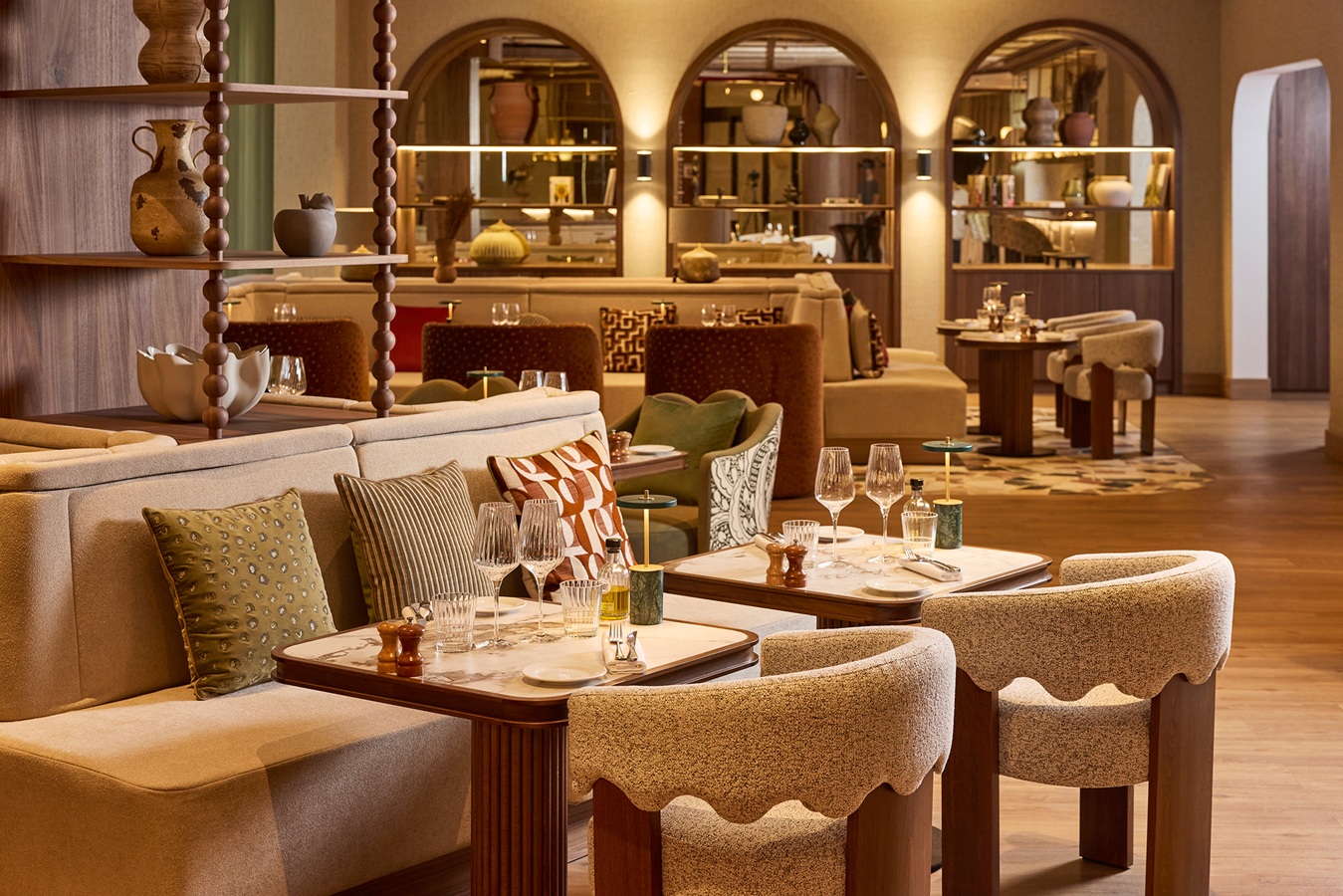
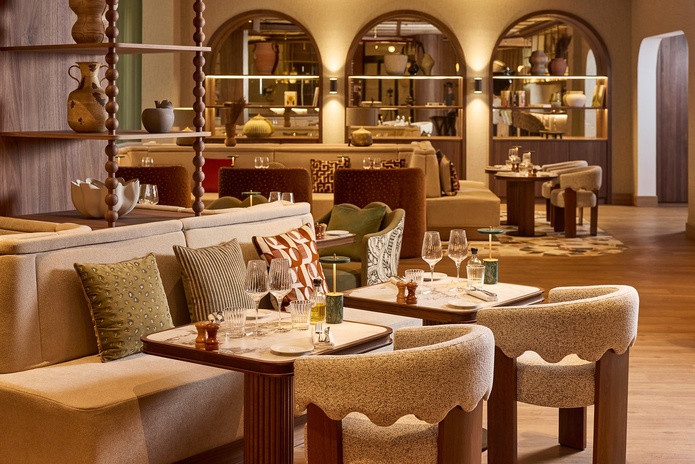
The hotel is pursuing a new identity, blending noble materials, craftsmanship, and contemporary design.


The renovation was entrusted to interior designer Fabien Roque, who completely reworked the lobby, the restaurant, the bar, and the reception areas.

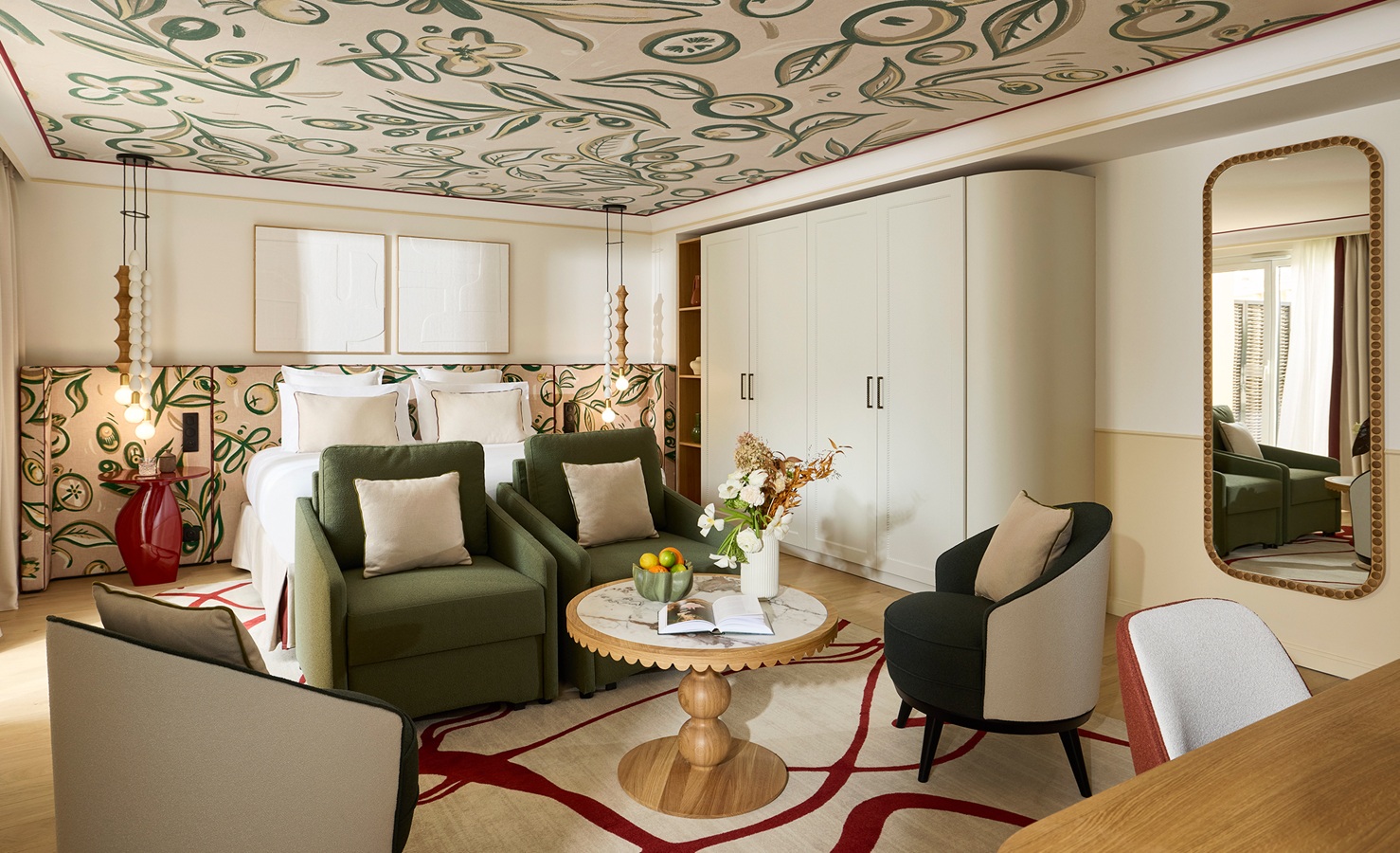
The property notably highlights a world inspired by Provençal colors, with terracotta tones, olive green and beige, paired with solid wood, marble, leather and velvet.

The hotel also hosts several artistic creations, including a ceramic screen signed by Marie Levêque, installed in the public areas.

The exteriors have also been redesigned around a spirit of “French Riviera“, particularly around the pool and the relaxation spaces.


Grand Hôtel Roi René: 131 renovated rooms and a new dining offer


Grand Hôtel Roi René : 131 chambres rénovées et une nouvelle offre de restauration - Crédit photo : Grand Hôtel Roi René MGallery

The establishment has also completely renovated its 131 rooms, including six suites and 17 rooms with terraces.

The rooms now emphasize brighter spaces, with a decor inspired by contemporary Provence and materials such as wood, stone, and linen. Some suites feature furnished terraces.

The project also includes the launch of the AÏGA restaurant, the hotel’s new Mediterranean dining concept. Open for lunch and dinner, the restaurant offers cuisine inspired by Provençal flavors and the Mediterranean basin, with mezzés, shareable dishes, grilled fish and reinvented specialties.

To read: Four places to see near Aix-en-Provence

The Aix calisson, a historic symbol of the city, also plays an important role in the culinary experience offered by the hotel.

Reachable in under three hours from Paris by train, the property also features a restaurant, a bar, an outdoor terrace, a 14-meter pool, and five meeting rooms.