Airline Overbooking: How to Turn a Bump into Big Compensation with These Tips

Overbooking, also known as over-reservation in France, is a practice used by airlines that involves selling more tickets than there are seats available on the plane. The principle rests on the assumption that a certain number of passengers will not show up for boarding. However, when all passengers do turn up, the airline is required to deny boarding to some travelers.

To avoid unpleasant surprises, our colleagues at the Washington Post advise checking that your plane ticket has been confirmed and that you are not on a waitlist. Check in as early as possible, typically 24 hours before departure. This signals to the airline that you intend to take the flight. Also arrive at the boarding gate well in advance. Late passengers, who risk missing the final call, may see their seats assigned to someone else.

In some cases, the airline may contact you directly to find out whether you would be willing to travel later or to offer compensation in exchange for giving up your seat.

How to obtain meaningful compensation once you have given up your seat?

In a full flight and overbooking scenario, the airline may first look for volunteers ready to relinquish their seats. While it is an inconvenience, the Washington Post notes that it can become an advantage for flexible travelers. “I got free purchases on Amazon for the rest of the year” shares with our colleagues Sally French, who agreed not to take her flight.

The travel writer at NerdWallet received 600 dollars in gift cards, as well as a seat on the next flight, which was scheduled only an hour and a half later. Another passenger interviewed explains that he received 1,000 dollars in travel credits, plus a hotel night and meal vouchers. Each airline seems to offer different forms of compensation, ranging from shopping vouchers to additional perks, including cash.

This option is mainly targeted at travelers without checked luggage and with a flexible schedule. Before agreeing, our colleagues remind you to check whether other flights to your destination are scheduled for the day and to negotiate the terms of compensation.

Denied boarding in France: what are your rights?

If you do not accept to give up your seat and the airline refuses you boarding due to lack of available seats, EU regulations provide assistance and financial compensation under certain conditions related notably to the route and the airline.

According to the Economy Ministry site, the amounts planned are 250 euros for flights of 1,500 km or less, 400 euros for certain flights over 1,500 km and up to 3,500 km, and 600 euros for international flights over 3,500 km. Compensation can be reduced by half if the arrival delay remains below certain thresholds.

Additionally, the airline must offer you a rerouting option to your destination as soon as possible, another flight on a later date, or a full refund if you decline the trip. If you take another flight, the airline must cover meals and refreshments, as well as accommodation in certain cases. The Public Service recommends keeping receipts and asking the airline for a written note outlining the steps to obtain the compensation.

If you have experienced a grievance and encounter difficulties in getting reimbursed certain expenses, file a complaint with the airline’s customer service. If there is no response, you can contact the Tourism and Travel Ombudsman.

Lost luggage on a flight: Essential tips to avoid surprises

In 2025, the global rate of lost luggage stood at 24 million, according to the SITA report published in June 2026, the parent company of the WorldTracer tracking system. In the United States, nine American airlines mishandled 1.1 million bags on approximately 226 million suitcases boarded, according to semi-annual data from the Bureau of Transportation Statistics.

These incidents include bags that are lost, delayed, damaged, or stolen, as the Washington Post notes. Busy travel periods, particularly in December, January, and July, are among the most problematic. It is also worth noting that connections increase the risk since suitcases may need to traverse large airports within tight timeframes. Errors can occur, especially when moving from one baggage-handling system to another.

Before departure: how to minimize the risks?

When you book your airline tickets, Washington Post reporters first recommend prioritizing direct flights whenever possible. If a connection is unavoidable, plan for a layover long enough to facilitate the transfer of your luggage. Depending on the size of the airport and the itinerary, a layover of 1 to 2 hours is advised.

Also remember to remove old labels from previous trips to avoid any confusion. If you encounter a problem with your suitcase, place in your carry-on your essential and valuable items, as well as a spare outfit. You can also take a photo of your bag and its contents to help with searches in case of loss.

To track your bag, some airlines offer dedicated tools within their apps. You can also equip your luggage with a tracker, such as an AirTag.

What to do when your suitcase is delayed or lost?

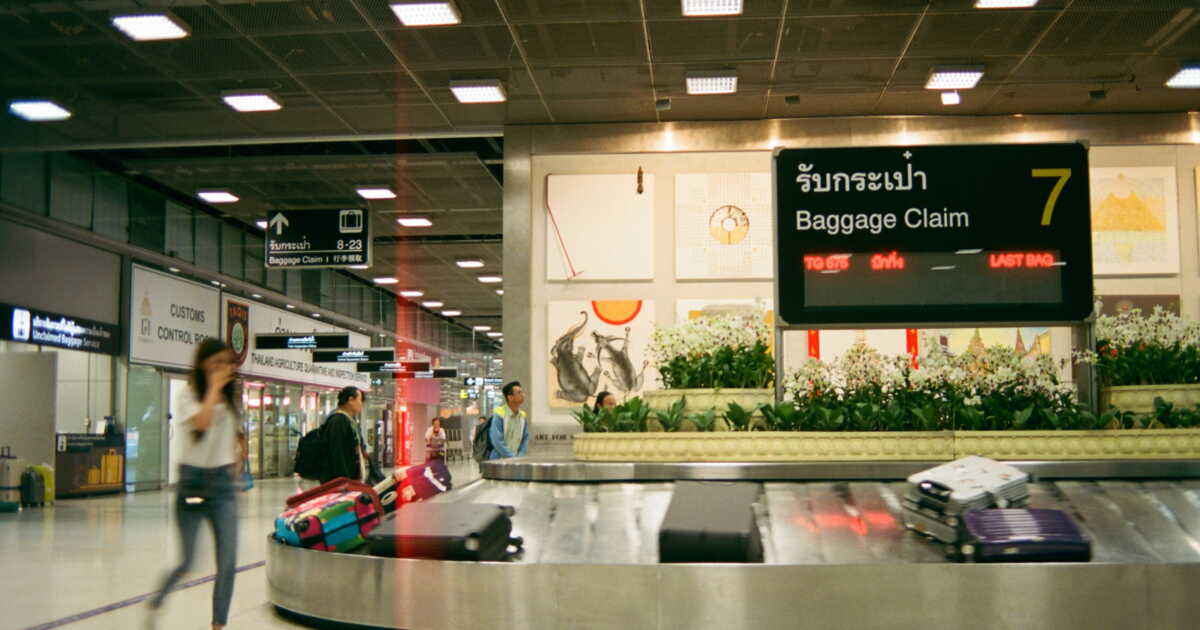
If you cannot locate your suitcase on the conveyor belt after landing, report it to the airline immediately before you leave the airport. The airline will record your claim and guide you on the steps to take to recover your belongings.

Meanwhile, our American colleagues advise checking the terms for reimbursement of essential purchases necessitated by the delay or loss. Also review the guarantees offered by your airline and those possibly linked to your credit card. A suitcase you do not locate right away may simply have been misplaced for a few hours or taken by another passenger by mistake.

Agencies: 10 Tips to Sell the Train More Effectively [ABO]


1. Identify the Right Clients and Focus on Practicality

Agences : 10 conseils pour mieux vendre le train - Depositphotos.com Auteur studiostoks

Hurtigruten


The train should not be presented solely as an eco-friendly alternative to flying. Families, travelers who value autonomy, environmentally conscious customers, or those looking to avoid airport constraints constitute good targets.

« Typically, for a family, the train is incredibly simple. You arrive in the city center rather than being far from the airport and having to pay again for a shuttle. », notes Hugo Bazin, cofounder and CEO of Tictactrip and Very Train.

Olivier Bernard, founder and partner at Déclic Evasion, also highlights « the ease of access and comfort », notably with a booking window of only 30 minutes before departure for TGV INOUI, as well as « the high frequency of TGV INOUI or OUIGO services, which offers great flexibility in planning ».


The train can also meet the expectations of travelers seeking more autonomy. « A well-prepared train journey, with a good travel diary, is still well structured », recalls Laure Jacquet, director of Discovery Trains, an agency specializing in train travel.


2. Turn the Journey into an Experience

The train can be more than just a means of transport: landscapes, night trains, scenic itineraries, or historic trains can build a genuine experience.

« The primary motivation of train travelers, at least those who go through an agency, is not ecology nor love of rail travel. These travelers mainly want to experience a different kind of journey. », observes Laure Jacquet.

« People love the train, adds Hugo Bazin. We can walk, use the restrooms, work, read… You’re not in a car where you must stay focused, and you’re not in the plane where you have to arrive very early.

The travel advisor can also rely on destinations that are close and easy to access : Brussels, Amsterdam, Geneva, London or getaways in France. « Brussels, it’s under two hours by train and you arrive in the center » illustrates Hugo Bazin.


3. Favor One Carrier

Avoid, when possible, multiplying carriers on the same itinerary.

« If one carrier manages the route, they will be more easily able to offer a solution in case of a missed connection », explains Laure Jacquet. Her advice: « choose the same company from start to finish ».


4. Allow Plenty of Time for Connections

Caution is especially important in Germany.

« On all routes in Germany, plan generous connections, truly generous », insists Laure Jacquet. When possible, it’s even better to allow a layover night rather than a too-tight connection.


6. Check Timetables and Stations


7. Anticipate Disruptions

Train canceled or a compromised connection: « above all, don’t panic », advises Laure Jacquet. The first instinct should be to head to the railway company’s ticket counter.


« They are aware. They know that a train has been canceled and they already know if there is a solution », she explains. For the agency, the key is therefore to anticipate difficulties and identify the right contacts.


8. Rely on an Aggregator or a Specialist

Distribution remains a major hurdle. « The first obstacle to selling trains through an agency is the lack of offers, such as a truly dedicated B2B platform for trains with an agency account », says Hugo Bazin.

For complex cases, it’s better to depend on a specialist. « Trains aren’t straightforward », he concedes.

Aggregators can serve as an entry point for beginner agencies. « Aggregators are handy », confirms Laure Jacquet, especially to simplify managing multiple carriers. But « as soon as you become a specialist, it’s better to go through the carriers’ own sites ».

Discovery Trains represents Austrian trains (ÖBB) but also Canadian Via Rail Canada, Swiss trains (CFF/SBB) and the Swiss Travel System.

Read also: Travel Agencies: Is Train Travel Easier to Sell than Air Travel?


9. Sell a Package Rather than a Ticket

The low remuneration of base tickets remains a hurdle. « Today, SNCF pays travel agencies or resellers very little », notes Hugo Bazin. Hence the value of building a comprehensive offer.

« If we talk about a complete package, it becomes interesting », he explains. Train, accommodation, and activities can create more value and margin. Very Train thus announces an average commission of 8 to 12% on the overall package, while circuits published on the Discovery Trains site are commissioned at 10% for agencies.

For Olivier Bernard, rail travel is also a compelling product for groups and works councils. « The group terms for SNCF INOUI trains allow adaptation to organizational constraints with more flexible registration deadlines and better control of financial risks in case of partial cancellations. »


10. Get Training and Start Simple

Training remains essential to master the specifics of rail travel. Laure Jacquet invites agencies to participate in Travel Talk organized by Discovery Trains on October 8, 2026.

« We want to overturn preconceived notions. Well-sold, the train is a pleasant and profitable product, provided you know its codes and know how to showcase this experience », she insists.

The right approach for a starting agency: begin with simple itineraries, train and learn, and don’t hesitate to rely on a specialist when the project becomes more complex.


Find all articles in our series “Very Special Agent – The Pro’s Practical Guide” by clicking this link.


Caroline Lelievre Written by Caroline Lelievre Journalist – TourMaG.com
See all articles by Caroline Lelievre

  • picto Twitter
  • picto Linkedin
  • picto email
Add TourMaG to your Google News feed Google Actualités icône

China Train Travel: Tickets, Sleeper Berths, Meals, and Tips

Traveling on the Chinese green trains requires a bit of foresight: online booking, a passport is essential, seats are often spartan and the comfort is rudimentary. But with a few smart moves and the right accessories, the experience remains simple and transportive. Here is the essential to know before boarding.

Old Trains but Dematerialized Tickets

Travel for Less: Outdated Tips That Could Cost You Money

Traveling without blowing your budget doesn’t necessarily mean systematically choosing the cheapest option. Some tips widely shared on the Internet no longer have much effect, while other strategies can genuinely reduce the bill. The destination, dates, transportation, and meals offer several ways to save, provided you know where to look. Travel experts reveal strategies that can truly make a difference, without sacrificing all comfort on your vacation.

Leverage Flexibility to Lower Travel Costs

To pay less, the first instinct is often to choose a destination and then search for the best fare to get there. Yet, proceeding in the reverse order can be much more advantageous. Jesse Neugarten, founder and CEO of Dollar Flight Club, considers that flexibility regarding the destination is the most effective way to bring down the bill. “Being flexible about where you’re going is by far the biggest lever”, he told Travel + Leisure. Rather than sticking to a single city, it can be worthwhile to compare several destinations and keep the one that offers the most attractive tickets.

This method is particularly useful for travelers who haven’t fixed their itinerary yet. Flight comparators allow you to visualize fares to several destinations and spot gaps sometimes considerable. It can also be worthwhile to compare nearby “secondary” airports, even if that means driving, bus, or train for tens of kilometers.

The timing of the trip constitutes another important lever. The most convenient departure and return days are also often the most sought after. Shifting your stay by a day or two can then be enough to obtain better rates. “Everyone is trying to maximize their vacation days today”, explains Travel + Leisure’s Jimmy Yoon, head of analytics at Point.me. So, being flexible about the days you depart remains worthwhile. A person who can travel outside the most popular dates thus has an extra advantage when booking.

This flexibility is also useful for travelers who use points or miles. Availability with these programs is limited, so booking well in advance generally allows for a wider choice. Conversely, people with very flexible schedules can sometimes take advantage of last-minute openings, especially during the week preceding departure.

Ditch Outdated Tips and Watch Small Expenses

Not all online recommendations deserve to be followed, however. Clearing your cookies or using a private browsing window before searching for a plane ticket does not lower the price. Jesse Neugarten is categorical: “Clearing your cookies and booking in private browsing does nothing, and it has never really helped.” Even the famous recommendation to buy your ticket on Tuesday afternoon is no longer considered a reliable rule. It would be tied to an era when airlines posted promotions themselves in a way very different from today.

On-site, savings can also come from expenses you might not think about when planning your trip. Chauffeur-driven car journeys, for example, can quickly add to the bill. Jimmy Yoon recommends prioritizing public transport, especially in European and Asian cities where networks are often well developed, fast, and affordable.

He also suggests comparing several platforms before booking a tour or activity. The same experience can be offered at different prices across sites, with occasional promotions likely to further reduce the bill. Travelers who have credit cards offering rewards programs can also check if some offers provide an extra discount.

Food, finally, is a category where it’s easy to modulate spending. Rather than multiplying expensive restaurants, it’s better to identify the meals for which an extra expense is truly worth it. A lunch at a fine dining establishment can notably let you discover its cuisine for a price lower than that of dinner. For other meals, local markets and food halls offer another way to sample a destination’s specialties without dedicating a large portion of the budget to every meal.

And cheaper isn’t always the most economical. A flight ticket of 59 euros can become far less attractive after adding a bag and choosing a seat. “Once you add a bag and seat selection to a 59-euro ticket, you often exceed the price of a standard economy ticket with a traditional airline”, notes Jesse Neugarten. In some cases, a slightly higher fare can therefore avoid a cascade of surcharges and offer more flexibility. A logic summarized by Jimmy Yoon: “It all depends on knowing where it’s worth splurging to keep the trip comfortable, rather than trying to cut costs everywhere”.

3 Flight Attendant Tips to Travel Like a Pro

Even before the plane leaves the tarmac, flight attendants have already analyzed a multitude of elements that most passengers are completely unaware of. These reflexes are part of their daily routine and address very real safety and comfort concerns. Two former crew members detailed their pre-flight habits to Travel + Leisure. Simple tips, but ones that could truly alter your manner of traveling.

Spotting the emergency exits before takeoff

The vast majority of travelers settle into their seat, stow their luggage, and wait for departure without paying attention to the rest of the cabin. Yet, for cabin crew, the location of the emergency exits is a top priority from the moment boarding begins. This vigilance can become essential in an evacuation carried out in the dark or in a smoky environment.