
TGV: Brussels–Strasbourg–Basel High-Speed Line to Open in 2027


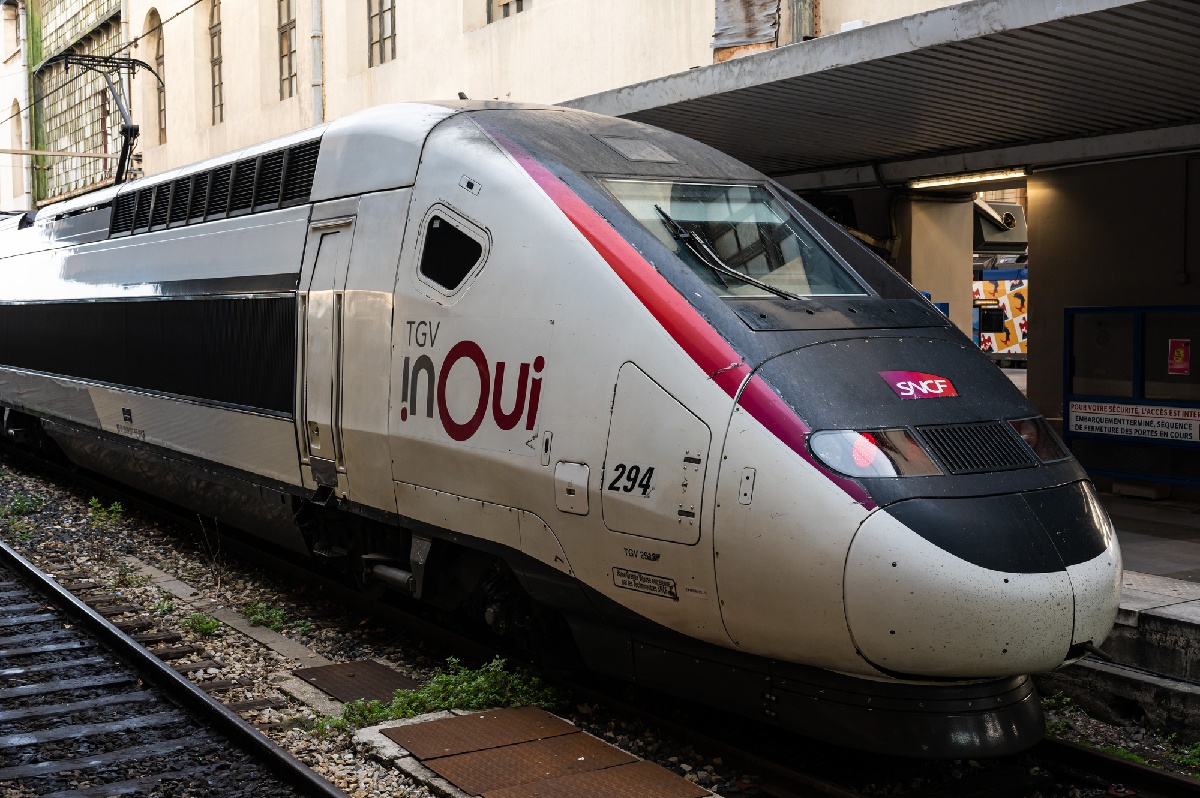
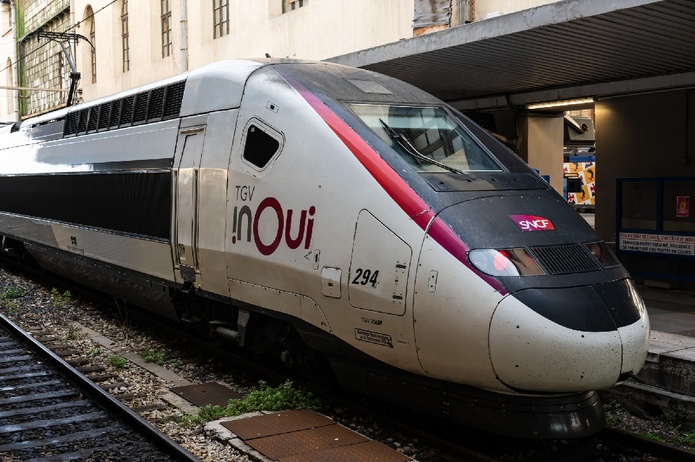
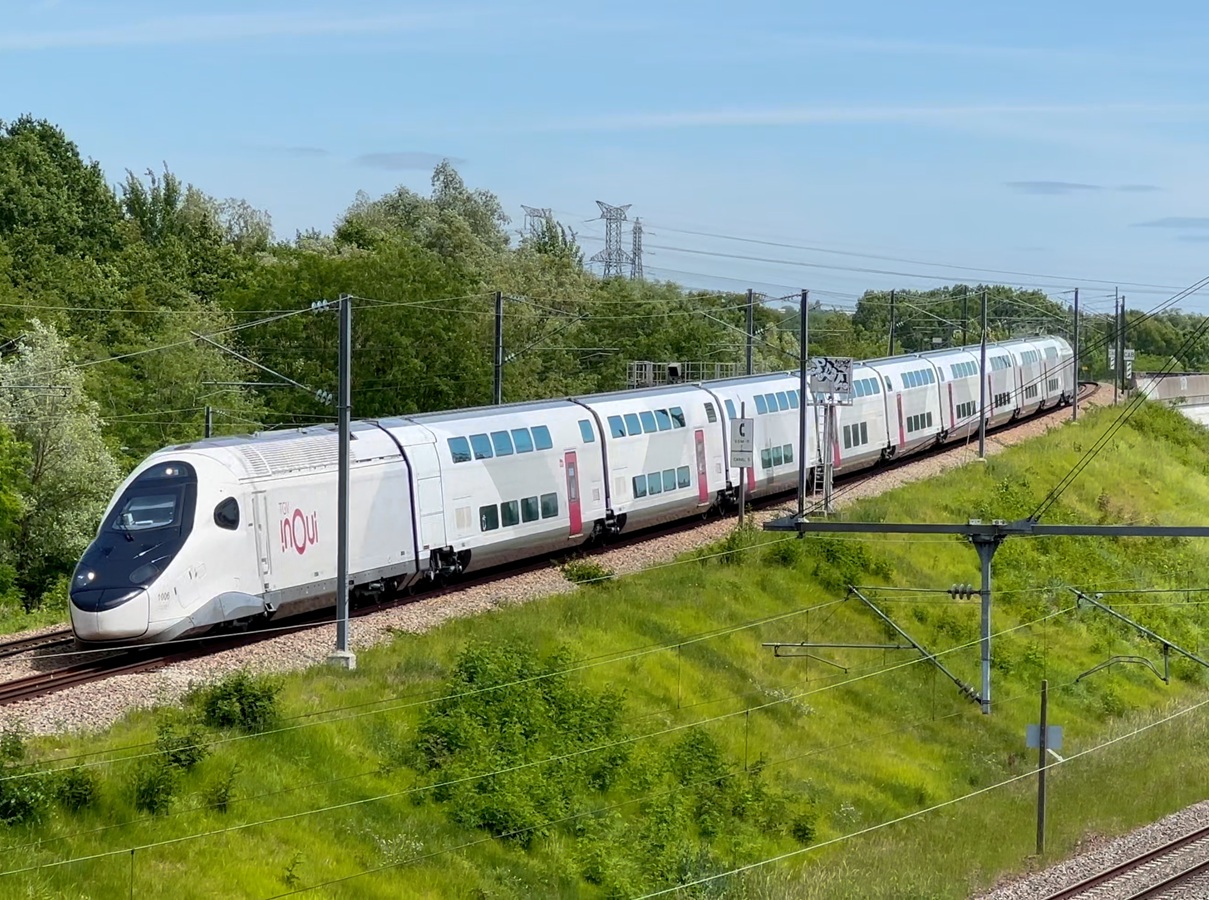
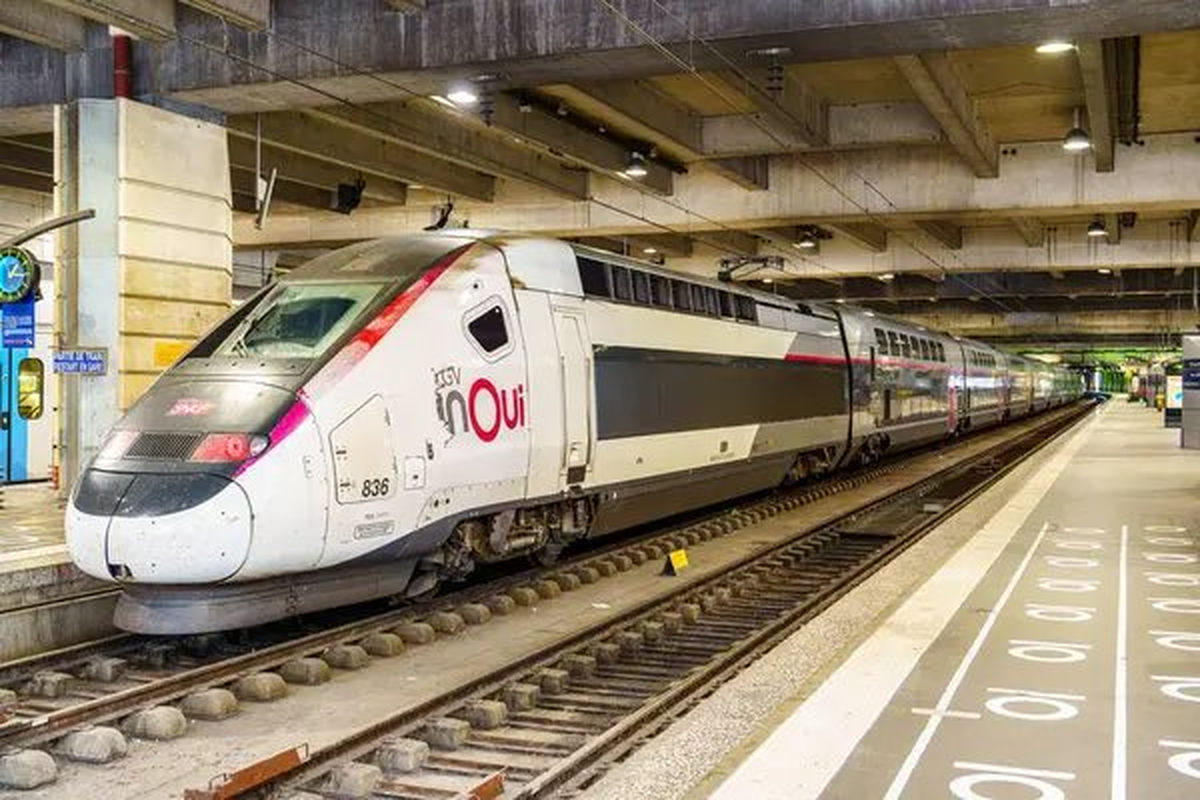
Une liaison TGV directe va relier Bruxelles, Strasbourg et Bâle dès l'été 2027, Depositphotos.com, Photo by FotoPrivet

TAP Air Portugal


The European rail network is undergoing a new development.

By directly connecting Belgium, the eastern part of France and Switzerland, the three historic operators that are SNCF, SNCB and CFF will optimize weekend connections, with a line linking Brussels, Strasbourg and Basel.


Ce prolongement offre également de nouvelles perspectives de correspondances internationales au-delà des terminus officiels.

Thus, travelers coming from Switzerland will be able to continue their journey to the Netherlands from Brussels or opt for a transfer at Lille to reach London.


Brussels-Strasbourg-Basel: A Weekend Rotation for International Travelers

From a practical standpoint, the timetable of this experiment has been designed to optimize half a day of travel.

The TGV will depart from Brussels-Midi station around 7:00 in the morning, stopping at the line’s usual intermediate stops, namely Lille-Europe, Roissy CDG TGV, Champagne-Ardenne TGV, Meuse TGV, Lorraine TGV and Strasbourg-Ville, with an expected arrival in Basel SBB around 12:30.

The return northbound trip will be organized in the early afternoon.

To read : SNCF becomes the official supplier of the Tour de France until 2028

The train will depart Basel SBB around 14:00 to perform the return journey and reach the Belgian capital around 19:00. For passengers making a change at Lille-Europe en route to the British capital, arrival in London is estimated at around 20:00 local time.


This fluidity of itinerary on the return journey illustrates the carriers’ desire to offer a solid and integrated alternative to regional air links.

Although the launch of this experimental service is pegged to the start of the summer departures in July 2027, the commercial timetable is already anticipated by the rail partners.

To read : SNCF raises its game with its new Optimum offer

Booking and ticket sales are officially planned to open in spring 2027.

Pierre & Vacances Opens Four Holiday Residences in Switzerland, Partners with TGV Lyria


Pierre & Vacances ouvre quatre résidences en Suisse, dont une à Thyon 4, dans le Val d’Hérens - DepositPhotos.com, Gorilla

CroisiEurope


For the summer season of 2026, Pierre & Vacances announces the opening of four new premium residences in Switzerland, located in various Alpine resorts.

In the Valais canton, two establishments will open in Val d’Anniviers: the Zinal residence, equipped notably with a restaurant, a gaming room and a children’s area, with access to mountain activities such as visiting the Zinal glacier, rock climbing, and mountain biking; and the Vercorin residence, which will offer a spa, a restaurant, and various activities such as paragliding or discovering the local wine heritage.

A third residence will be located at Thyon 4, in Val d’Hérens. It will notably include a restaurant with panoramic views and will provide access to a range of hiking and mountain-biking activities, as well as the spa at the Grands Bains d’Hérémence.

Finally, a fourth residence will open in Meiringen, in the canton of Bern, near the Sherlock Holmes museum and about twenty minutes from Interlaken.

Guests will also receive a guest card giving access to several local activities free of charge or at a reduced rate, such as the municipal swimming pool, mini-golf, tennis, or certain guided tours.


Make the Train the Gateway to the Swiss Alps

In parallel, the brand partners with TGV Lyria to promote a combined offering of rail transport and accommodation, with the aim of facilitating access to the Swiss Alps without a car.

This partnership takes place in a context where transportation accounts for nearly 70% of greenhouse gas emissions tied to vacations.

The two companies thus aim to encourage travelers to favor train travel to reach mountain destinations.

A subsidiary of SNCF Voyageurs and the Swiss Federal Railways, TGV Lyria connects Paris and Dijon year-round to several major Swiss cities, including Geneva, Lausanne, Basel and Zurich.

An additional summer link also connects Marseille to Geneva and Lausanne from April to October, with enhanced service in July and August.

“”With Pierre & Vacances, we concretely facilitate access to the Swiss Alps by combining low-carbon mobility and premium experience,” explains Éric Dehlinger, chief executive of TGV Lyria.

For Pierre & Vacances, this initiative is part of its strategy to develop mountain destinations accessible without a car. “The opening of Switzerland is a strategic milestone in our European development and strengthens our position as a leading actor in mountain travel“, notes Grégory Sion, the brand’s chief executive.

On the occasion of this launch, the two partners offer a joint promotion including -20% on stays in the Swiss residences and on TGV Lyria Standard class tickets. The promotion will be on sale from 16 to 31 March 2026, for trips and stays between 25 April and 12 December 2026.


Amelia Brille Publié par Amelia Brille Rédactrice TourMaG.com
Voir tous les articles d’Amélia Brille

  • picto Linkedin
  • picto email
Ajoutez TourMaG à votre flux Google Actualités Google Actualités icône  

Behind the Scenes of the Southeast TGV Axis: The Backbone of France’s Rail Network


Dans les coulisses de l’axe TGV Sud-Est, colonne vertébrale du rail français - Photo CE

IFTM prenez RDV avec TourMaG


It is the backbone of French rail transport. The TGV Sud-Est axis is the main railway corridor in France connecting Paris to Lyon and then toward the Mediterranean, spanning eastern France and the Alps.

« If you draw a line from Paris-Mulhouse to Paris-Barcelone, you already cover a good portion of the country », summarizes Benjamin Huteau, director of this strategic axis.

Each day, 120,000 travelers ride on 130 TGVs. Behind these figures: a workforce of 5,000 people and an annual turnover of 2.5 billion euros.

« This is the densest axis in Europe in terms of rail traffic. The backbone of the high-speed line that physically lies between Paris and Lyon, indeed, by far the busiest line in Europe because Paris-Marseille and Brussels-Montpellier also pass through it. »


Tolls account for about 40% of a ticket’s price

The general public often doesn’t realize it, but a significant portion of the price of a TGV ticket does not go directly to the operator and is used to finance the use of infrastructure: stations and the rail network.

Managed by SNCF Gares & Connexions and SNCF Réseau, these entities market, on the one hand, calling at stations and, on the other, slots—i.e., time windows for circulation on the rail network—allowing various carriers to run trains from one point to another.

« The track charges paid by TGV activity in France are among the highest in Europe. These fees largely — and often beyond — cover the maintenance costs of the high-speed lines. In France, they contribute significantly not only to the maintenance of the high-speed network but also to that of the entire rail network, including conventional lines » explains Benjamin Huteau.

These charges represent around 40% of a ticket’s price, with notable variations depending on the line. « On the busiest axes like Paris – Lyon, this share can reach nearly 50%. Conversely, on other lines where the cost per kilometer differs, this share can be lower, around 30%, such as on Paris – Mulhouse or Paris – Dijon. »

What is less known is that these tariffs are also set according to a yield-management logic: « On Paris – Lyon, this economic logic dominates: more than 80% of the toll relates to this dynamic pricing. It’s hard to be profitable on Paris – Lyon; tolls have risen by more than 30% since 2020. »


SNCF Réseau asks to pre-book track slots three years in advance


Sur certains tronçons, un train circule toutes les quatre minutes, bientôt toutes les trois minutes d’ici 2030 grâce aux évolutions de signalisation. - Depositphotos.com

In a context of high tolls, profitability hinges on two essential levers: maximizing load factor and keeping trains running as much as possible.

This requires aligning supply as closely as possible with fluctuating demand, depending on the schedules, days of the week, vacation periods, and holidays.

And it is all the more complex because SNCF Réseau asks to pre-book track slots three years in advance. « There is still a bit of crystal ball involved. We do not pre-book everything. We pre-book the base of our offer and then there are several milestones two years ahead, one year ahead… down to six weeks before. »

« This management allows volumes transported to vary considerably, depending on the day, ranging from about 80,000 to 140,000 travelers. »


Lyon-Part-Dieu, the Côte-d’Azur, Bourg-Saint-Maurice in winter… some near-saturation zones

Some zones are close to saturation. At the end-of-line stretches toward the alpine stations, such as Bourg-Saint-Maurice during winter and school holidays, or toward the Côte d’Azur, where coexistence with the TER limits capacity, are already heavily saturated.

Similarly for Lyon – Part-Dieu, which has the peculiarity of being a through station with passenger flows close to origin stations.

Unlike an origin station, where trains dwell long enough to allow progressive boarding of several hundred passengers, stops at Part-Dieu are extremely short, often limited to a few minutes.

In this shortened time window, it is necessary to both let many passengers alight and board as many again, under very tight conditions.

« For example, just one traveler with a stroller: out of courtesy we let them pass, but the time to settle in can block boarding. And then everything jams. In these cases, we try to propose boarding last to ease the flow, » cites Benjamin Huteau as an example.


A train runs every four minutes and soon every three minutes

On some sections, a train runs every four minutes, and by 2030, nearly every three minutes thanks to signalling improvements.

Even the slightest delay can quickly snowball into a knock-on effect on the punctuality of all following trains. «There isn’t a day without disruptions. The problem with rail is that we are rather sensitive to external disturbances,» admits the director.

Among the most frequent disruptions: sick passengers on board, abandoned baggage, or conflicts between travelers. They occur regularly but typically cause only limited delays.

Other events, more serious and less frequent, such as people being on the tracks, cause much longer interruptions. Add to this climate-related risks, or network or signaling failures.

In these situations, the teams’ role is to reorganize the transport plan to limit the spread of delays.

The main objective is to avoid cascading effects. To achieve this, it is often necessary to adapt the operating plan in real time.

Without adjustment, a morning delay risks lingering all day, especially if the same trains are used for several circulations. Teams revise allocations, reorganize rotations, and adjust operations.

This responsiveness also implies revisiting maintenance planning, itself highly optimized to maximize the availability of the rolling stock. The whole system is highly intertwined, requiring coordination to avoid further malfunctions.


The arrival of new TGV rolling stock on the South-East axis, with optimized maintenance


Céline Eymery Published by Céline Eymery Editor-in-Chief – TourMaG.com
See all articles by Céline Eymery

  • picto Facebook
  • picto Twitter
  • picto Linkedin
  • picto email
Add TourMaG to your Google News feed Google Actualités icône


Read 8,432 times

Tags :
sncf

Rate

New comment:


All rude, insulting, or defamatory comments will be immediately removed by the moderator.

Report abuse

In the same section :

<
>

Wednesday 8 July 2026 – 18:42 FlixBus integrates Paris-Beauvais Airport shuttles on its platform

Friday 3 July 2026 – 09:35 Train: SNCF Connect opens reservations to Germany and Switzerland

TGV M to Welcome Its First Passengers in Early September 2026


TGV M : un début des opérations commerciales prévu en septembre 2026 - Crédit photo : SNCF Voyageurs

IFTM TourMaG Party


Il devait, à l’instar du CDG Express, débuter son exploitation pour les JO de Paris. Finalement, les usagers français auront attendu deux années supplémentaires.

En effet, le TGV M vient de franchir sa dernière étape avant sa mise en circulation à grande échelle. La livraison des rames à la SNCF débutera dès le début de l’été.


Il a obtenu l’autorisation de mise sur le marché délivrée par l’ERA, l’Agence de l’Union européenne pour les chemins de fer.

Cette étape cruciale permet de vérifier que le matériel répond aux “exigences de sécurité et d’interopérabilité”.

“La qualité du travail préparatoire et la coopération des parties prenantes ont contribué à la bonne progression de l’évaluation, marquant un des derniers jalons vers l’entrée en service du train
“, selon le communiqué de l’opérateur.

Désormais, la SNCF et Alstom, le constructeur, vont pouvoir accélérer la mise en place de ce train de nouvelle génération.


TGV M: Commercial operations slated to begin in September 2026

Thus, the delivery of the first two sets destined for operation is planned for June 2026. Four more will follow by the end of August and, in total, the carrier will have 13 sets by the end of 2026.


For train enthusiasts, you will still have to wait a few more weeks before hoping to boards this new rolling stock.

A phase of testing and adjustments in real-world conditions is essential before welcoming the first passengers.

SNCF Voyageurs and Alstom have chosen to strengthen the commissioning arrangements by planning a several-week pre-commercial run of the first sets on the national network.

This exceptional step will mobilize hundreds of teams from the two companies in order to check every detail of the onboard experience, support the adoption of the train by the operational teams and finalize the last adjustments before welcoming the first TGV INOUI travelers
“, explains the press release.

To read : SNCF: what does the TGV M look like, which will run in 2026?

While commercial operations were scheduled for July 1, 2026, according to the latest postponement, they will not take place before early September.

For reminder, the TGV M is a 100 % French-designed train in its conception and built from 97 % of recyclable materials. It will feature 740 seats in its maximum configuration, i.e., 20 % more seats.

SNCF Voyageurs and Eurostar have ordered 160 train sets.

TGV Lyria: New Coworking Spaces for Business Travelers


IWG et TGV Lyria annoncent un partenariat pour proposer aux voyageurs d’affaires une offre de coworking - Depositphotos.com, GaudiLab

IFTM TourMaG Party


International Workplace Group (IWG), global specialist in flexible workspaces, and TGV Lyria announce a partnership to enhance the working conditions of business travelers.

This collaboration gives rise to a new coworking offering designed for professionals on the move.

TGV Lyria customers will benefit from exclusive advantages in a selection of spaces operated by IWG, under the Regus, Spaces and Signature brands, located near major stations in France and Switzerland.

While, according to a 2020 INFRAS study, professionals can work during 83% of their train journey, thanks to a conducive and connected environment, the agreement between IWG and TGV Lyria aims to extend this experience by offering work solutions tailored from the moment you arrive at the station.

Present in more than 120 countries with nearly 4,000 sites, IWG deploys a network of modern workspaces near major transport hubs.

This network acts as a lever to meet the needs of the 5.7 million annual travelers using the 17 daily return services between Paris and the Swiss cities of Geneva, Lausanne, Zurich and Basel.


An offering integrated into the TGV Lyria service strategy

This partnership fits into the “New TGV Lyria Services” program, rolled out progressively since January 2025. It aims to provide a travel experience more fluid and coherent, from departure to arrival.

Concretely, TGV Lyria travelers benefit from specific advantages in IWG spaces on the day of their journey. First Signature clients enjoy one hour free in certain spaces, as well as a discount on additional hours.

Travelers in First and Standard classes have access to discounts on day offices, coworking spaces, meeting rooms and subscriptions, upon presenting their ticket.

Reservations are made through a dedicated platform, with on-site teams providing support.

Several sites are involved, notably in Paris, near the Lyon station, as well as in the main Swiss cities served by TGV Lyria, just a few minutes on foot from the stations.


Amelia Brille Publié par Amelia Brille Rédactrice TourMaG.com
Voir tous les articles d’Amélia Brille

  • picto Linkedin
  • picto email
Ajoutez TourMaG à votre flux Google Actualités Google Actualités icône  

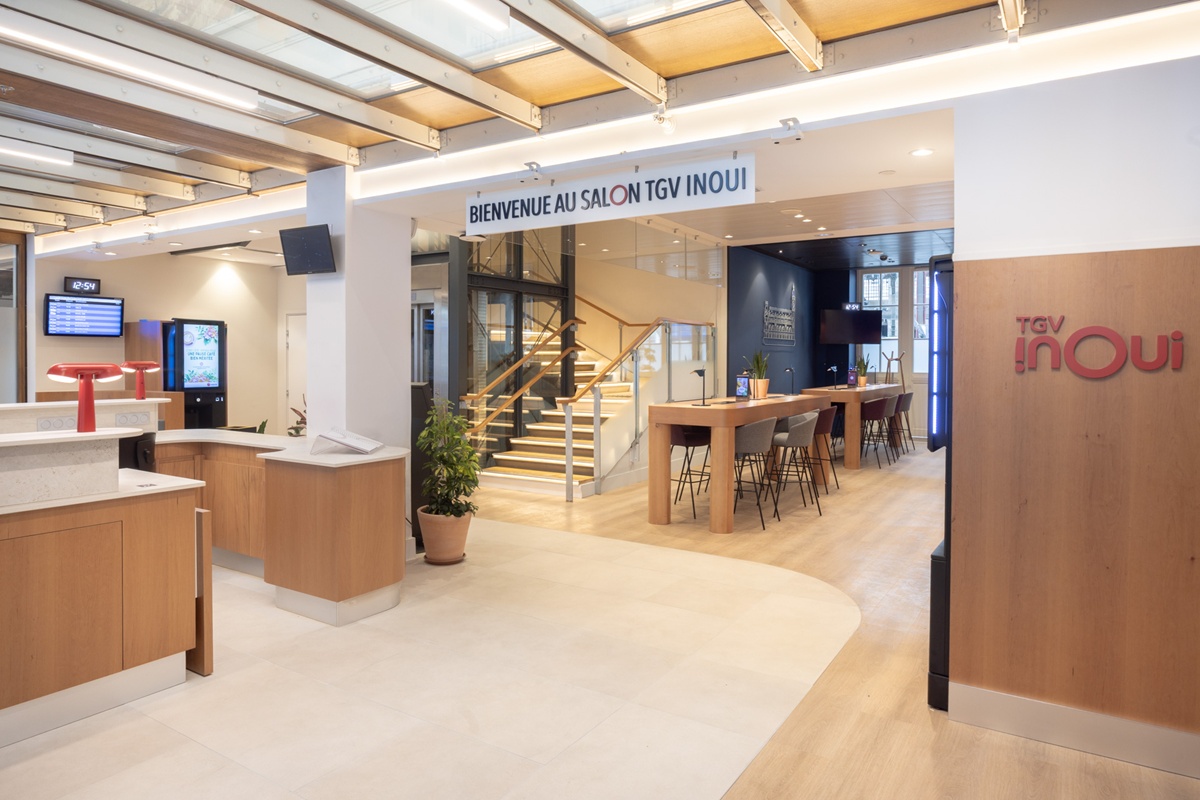
Paris Gare de Lyon: The TGV INOUI Lounge Gets a Makeover


Le salon Grand Voyageur Le Club TGV INOUI de Paris Gare de Lyon a officiellement rouvert après une rénovation complète - Photo : SNCF

IFTM TourMaG Party


On April 21, 2026, the Grand Voyageur Le Club lounge TGV INOUI at Paris Gare de Lyon officially reopened after a complete renovation.

Located at the heart of the station, in the Galerie des fresques – connecting Halls 1 and 2 – the lounge spans a total area of 630 m2, up from 610 m2 previously thanks to a 20 m2 extension on the ground floor and a 4% increase in seating.

With around 400,000 travelers in 2025, it is accessible to Grand Voyageur Le Club members and eligible corporate clients, who wish to work or unwind before their journey.

To better meet its clientele’s expectations, the lounge is now organized around two distinct spaces.

The ground floor is dedicated to guests making short stops, under 15 minutes, and offers immediate access to all services.

Upstairs, a new layout of the spaces, paired with a higher-end range of services and amenities, enables guests to relax and work in a calm environment.

In the relaxation areas, work zones or the individual telephone booths, each visitor can enjoy the full range of services including free Wi-Fi, electrical and USB outlets, the news and entertainment portal, a selection of beverages, etc.

Read also: TGV INOUI unveils its new lounge at Paris-Est station


A Reduced Environmental Footprint

The renovation of this lounge took into account a number of ecological criteria, such as the use of responsible materials – the furniture and construction elements are sourced from the European Union, durable and recyclable.

Likewise, the historic joinery has been restored exactly as before, while incorporating optimized thermal standards.

Furthermore, an airlock helps prevent heat loss or gain depending on the season.

Among the other measures implemented: the broad use of sorted recycling bins, a selection of organic hot drinks sourced from fair trade, the option to use your own mug at the coffee machine, and the reduction of paper by offering on-site newspapers and digital press.

Read also: Optimum: SNCF’s offer to compete with Trenitalia hits the rails!

* SNCF Voyageurs has set up a loyalty program that offers preferential deals for its premium customers. Launched in 2012, this program evolved in 2021 and comprises 2 statuses: Grand Voyageur and Grand Voyageur Le Club, the latter giving access to all Grand Voyageur TGV INOUI lounges. The progression from one status to another depends on the frequency and volume of purchases made each year.