Pays de la Loire: Four Ways to Travel Differently in Every Season

No, the Pays de la Loire are not reduced to their long summer beaches and the succession of their illustrious castles. Behind the postcard image lie intimate villages, monumental open-air artworks, and routes built for gentle wandering. With its New Voyages in Pays de la Loire initiative, the region invites you to venture off the beaten path and soak up the territory year-round. From adrenaline-pumping sports to quirky cultural getaways, here are four ways to (re)discover the West.

Between the Ocean and the Loire, a taste for adventure

On the Atlantic coast, the vast stretches of sand become a fabulous playground for outdoor enthusiasts. In Saint-Brevin-les-Pins, when the wind rises, land sailing delivers a thrilling sense of freedom along the water’s edge, accessible to beginners as well as seasoned athletes. Those who prefer to keep their feet on the pedals will find their happiness on the cycle paths of the Vélodyssée or the Vélocéan.

The Loire à Vélo unfolds a completely different backdrop. Tracing France’s longest river, this well-designed route winds through flourishing nature reserves and skirts an architectural heritage of rare value. The advantage of such a pace? Each pedal stroke invites a spontaneous stop at a lively riverside guinguette, a visit to a perched characterful town on a hillside, or a tasting of a local wine right at the producer’s door.

In the Alpes Mancelles and Mayenne, the art of slowing down

A change of tempo in the Alpes Mancelles, north of Sarthe. This land of wooded hills and narrow valleys contrasts with the more open landscapes often associated with the West. Around Saint-Léonard-des-Bois, hiking trails weave through pristine nature and reveal viewpoints over the surrounding reliefs. Along the paths, the scenery invites you to linger and discover a rural heritage still largely unknown.

In Mayenne, letting go plays out on the water. The river can be navigated aboard license-free houseboats. Glide through locks, pass by old mills, and dock at the foot of villages, all at a wonderfully slow tempo. Stops are improvised as inspiration strikes, far from the bustle of conventional tourist circuits.

From the Machines of the Isle to the Serpent d’Océan, unexpected discoveries

In Nantes, it’s not unusual to encounter a colossal mechanical pachyderm pounding the pavement. In the former shipyard district, the Machines of the Isle project has transformed the city’s industrial heritage into a dreamlike, captivating universe. The Grand Elephant embodies the perfect bridge between bold contemporary audacity and workers’ history.

Yet art is not confined to big cities. In Saint-Brevin-les-Pins, the astonishing Serpent d’Océan, conceived by artist Huang Yong Ping, spreads its gigantic aluminum skeleton across the beach. Visible with the tides, the sculpture seems to rise straight from the estuary’s waters. Another hidden gem, Sainte-Suzanne, a medieval town perched on its rocky spur, offers a plunge into History with ramparts that overlook the Mayenne countryside.

Spring, autumn, winter: a region to discover all year round

The Pays de la Loire changes its face with the seasons. In spring, gardens and green countryside invite leisurely strolls. In autumn, the Anjou vineyards and the Loir valley take on golden hues, while the wine estates offer opportunities to meet producers and discover local know-how.

Winter opens up its own perspectives. Along the coast, beaches return to a calmer atmosphere, perfect for long walks facing the sea. In Saumur, architectural heritage and cultural visits compose a weekend program, while the bocage of Vendée invites exploration of more intimate landscapes. All of these provide ample reasons to draw inspiration from these New Voyages in Pays de la Loire and pack your suitcase before July.

Sponsor article by Pays de la Loire. The editorial team did not participate in the creation of this article.


MEDEF Calls for Regulation of Travel Planners and Clarification of Their Status


La commission Destination France Tourisme du Medef demande au ministère de "clarifier, par voie administrative et réglementaire, le statut des travel planners"  - DepositPhotos.com, DepositNovic

CroisiEurope


After a first assessment at the end of 2025, the Destination France Tourism Commission of Medef, chaired by Aurore Iwanciw (Le Château Fort Hotel in Sedan) and Philippe Korcia (Voyages Eurafrique), is taking action.

On September 14, 2026, it handed to Serge Papin, minister of SMEs, Trade, Crafts, Tourism and Purchasing Power, a study containing 14 proposals to simplify the regulatory framework and remove barriers to the development of tourism.

Six of these measures are already “ready to process,” according to the report, three of which concern mountain resorts.

The other eight, dubbed “framework measures,” do not call for legislative reform, but “assume prior work before producing their effects: precise identification of texts, harmonization of administrative practices, coordination between several ministries, or, when the legal framework is already complete, operational implementation and execution timeline,” the document specifies.

Indeed, the Medef commission has prioritized short-term actionable regulatory and administrative levers (simplifying procedures, removing outdated formalities, or clarifying certain administrative rules) in order to achieve tangible progress for tourism businesses, while the parliamentary agenda remains crowded up to the presidential election, closing the legislative path for the coming months.


Better framing of the travel planners’ status

Among these 14 proposals, one concerns distribution, and more specifically the status of travel planners.

“They present themselves as mere advisory service providers, which allows them to operate outside the scope of the Tourism Code. However, some receive retrocommissions or concretely steer reservation choices, which functionally brings them close to a tourism intermediation activity“, describes the MEDEF Tourism Commission in its study.

For the latter, this situation creates a “distortion of competition, these actors escaping the obligations borne by traditional agencies (financial guarantees, liability, etc.), while offering similar services“; as well as a “risk for the consumer,” in the absence of a clear framework defining responsibilities in case of problems.

The Medef thus calls for a clarification, by administrative and regulatory means, of the status of “travel planners” by specifying the criteria that distinguish a simple advisory activity (outside the Tourism Code) from an intermediation or travel organization activity, thereby triggering the corresponding obligations (registration, guarantees, etc.).

“This clarification could take the form of a shared administrative doctrine (tourism / consumer), and, where appropriate, an adaptation of implementing texts to restore conditions of fair competition and consumer guarantees“.


Business travel also addressed

Two proposals also concern business travel.

The first — which also applies to events — calls for a simplification of the regulation of commercial events, which requires park managers to declare hosted events, and organizers to produce, certify by an accredited body (COFRAC), and transmit detailed numerical data.

“This quantified burden […] was intended to feed a public portal managed by the DGE“, the study explains. But, “since 2022, the DGE has stopped publishing these data online, although it was provided for by the Commercial Code. The regulatory obligations to collect and electronically declare therefore remain in force without their intended purpose being achieved“.

For Medef, “this situation creates unnecessary legal uncertainty for sector players while maintaining an administrative burden without real compensation“, estimated by industry professionals at “nearly one million euros per year, including certification costs and the administrative time mobilized by organizers and site managers“.

The tourism commission therefore requests the repeal or regulatory relief, through (art. R.762-10 to R.762-12 and A.762-3 to A.762-9 of the Commercial Code) the obligations to produce, certify, and transmit the quantified data borne by organizers and park managers.

In addition, it requests, in another proposal, a “better mobilization of the circulation visas for business travelers“, while the community visa code provides the possibility of issuing short-stay visas to third-country nationals wishing to stay within the Schengen area for up to 90 days in 180 days with multiple entries.

“In practice, their issuance remains uneven depending on profiles and consular posts, including for regular business travelers who frequently come to France for trade shows, conferences, or professional meetings“, notes the commission.

It adds: “The repetition of visa application procedures for identified profiles — even though they pose a low risk of illegal immigration or for the security of Member States — constitutes an administrative burden that is unnecessary and detrimental to travelers and the companies that host them“.

Believing that it harms France’s attractiveness for business tourism and major professional events in a context of intensified international competition, the tourism commission calls for, without modifying the Schengen framework, “to encourage, by consular instruction, a more systematic issue of multi-entry circulation visas for regular business travelers with an established profile (for example, thanks to travel history, invitation from an accredited organizer, participation in recurring events)“.

This measure, aligned with a compliant application of the Community Visa Code, falls under the purview of the Ministry of Europe and Foreign Affairs, in coordination with the ministry responsible for Tourism


Airports: remove document checks at boarding

A fourth measure concerns the airline sector, and targets more specifically the documentary check at boarding, defined by the February 5, 2013 order which requires airlines operating from French airports to verify the concordance between the boarding pass and an identity document at boarding.

“This verification is not airport security screening in itself but a documentary reconciliation procedure intended to check the match between the passenger and their travel document.

It mobilizes dedicated human resources and lengthens boarding operations even though several European states have removed this obligation for intra-Schengen flights, notably Germany, the Netherlands, Switzerland, the Nordic countries, or Italy
“, notes the report.

The commission therefore calls for the repeal of the order for domestic and intra-Schengen flights departing from French hubs.


Tourist rentals: the national registration system still not activated

Finally, note a fifth measure regarding the November 19, 2024 law, known as Échaniz-Le Meur, which obliges the national registration of tourist accommodations through a single online service.

If the obligation has been legally in force since May 20, 2026, in practice, “the deployment of the national online service has been postponed to the fourth quarter of 2026, with no firm date announced“, the report emphasizes.

Until Declaloc is open to all landlords, platforms (Airbnb, Booking, Vrbo) neither block nor remove listings lacking an registration number, and declarations continue to pass through the existing municipal online services.

This delay defeats the purpose: registration remains theoretical, and the distortion of competition that the law was meant to correct persists as long as listing blocking is not activated
“.

The Medef therefore calls for a firm opening schedule of the national online service by the Ministry responsible for Tourism, in coordination with the DGE, and the effective activation on that date of the platform blocking and removal mechanism for listings without a registration number.

Discovery Trains Hosts Webinar to Help Agencies Sell Train Travel


Discovery Trains organise un webinaire pour aider les agences à vendre le train - Depositphotos.com Auteur michelangeloop

CroisiEurope


Discovery Trains will host, on October 8, 2026, a Travel Talk dedicated to marketing rail travel.

For 45 minutes, the agency specializing in train journeys will present to tourism professionals the various possibilities offered by rail, particularly in the premium segment.

According to Discovery Trains, rail travel is sometimes viewed by travel advisors as a product that is hard to sell and less lucrative.

Find our special feature: [Rail Travel]urlblankhttps://www.tourmag.com/Voyages-en-train_r583.html


“The train: a product you must learn to embrace”

The agency, on the contrary, intends to show that rail travel can constitute a valuable offering to clients, provided one masters its specifics.

“The train: a product you must learn to embrace”, summarizes Laure Jacquet, director of Discovery Trains.

The Travel Talk will address in particular the destinations and rail products likely to be offered by agencies, as well as the arguments to convince hesitant clients.

Discovery Trains will also contribute several of its partners. Autria Tourism will be the official partner of the event. Switzerland will be represented with Switzerland Tourism, the Glacier Express and the Gornergrat Railway.

The agency also plans to discuss several other rail offerings, among which Accor’s Dolce Vita Orient Express, Trenitalia, Renfe, VIA Rail, Lernidee Erlebnisreisen trains, VisitBritain or offerings in western Sweden.


The Travel Talk will take place on Thursday, October 8, 2026, from 11:00 to 12:00, including 15 minutes allocated for questions and answers. The webinar is free and reserved for travel professionals.

A draw will conclude the session, with train tickets and rail passes to be won.

Interested in participating? Online registration.

Tourism and Travel Mediation (MTV) Sees a Well-Known Competitor Bursting Onto the Scene


Eurotravel Médiation veut gommer les faiblesses de la MTV - Crédit photo : Photo MTV

CroisiEurope


After nearly 14 years of monopoly, the Tourism and Travel Mediation sees a competitor enter the very specialized field of amicable resolution of disputes between professionals and travelers.

Indeed, Eurotravel Mediation is now active.

The project was initiated by one of the former high-profile figures of the MTV, who had even been at the origin of its creation in 2011, before leaving the company in May 2025.

“By leaving MTV, I knew there were things to do. I had ideas, projects, and developments in mind to bring about.

There have been exchanges with professionals, with public authorities, but also with consumers and consumer organizations, who shared their difficulties because, in this sector or for a particular company, they do not have access to a mediator.

There is a real need for mediation
“, explains Khalid El Wardi, the new tourism mediator since September 2026.

Between ideas, implementation and the creation of a mediation, here is the path traveled.


How does one become a tourism mediator?

Creating a mediation company involves several steps.

“The practical implementation and the creation of the structure were very rapid.

Having spent ten years at MTV and having participated in its creation, I knew the steps. I also know what works and what doesn’t, what needs to be improved, but also the dispute-resolution software.

The creation phase was therefore quite fast.

After that, the crucial step was obtaining approval, which depends on submitting a file and an audition before the CECMC, the Commission for Evaluation and Control of Consumer Mediation.

It evaluates whether the mediator possesses the knowledge, the skills and the independence necessary to perform the role. It also assesses the viability of the scheme
“, explains him. 

Once this step is completed, there is nothing left to do!

That is how Eurotravel Mediation was created. The next step is to contract with the various tourism operators that do not have a mediator, something essential.

“Professionals realize that they have an obligation to appoint a mediator, even though this has been in force for ten years now.

There are also organizations that did not feel concerned by this obligation, notably those headquartered outside the European Union. But that is not the case.

Thus, a number of companies do not have a mediator, so clients cannot benefit. We will have signings coming soon“, we confide Khalid El Wardi.


Eurotravel Mediation aims to address MTV’s weaknesses

If he launched it, it wasn’t out of vanity, but because he observed a number of issues that led him to think a market could open up to him.

“On the consumer side, I was told that processing of cases took a little time, and the idea of mediation is to obtain a response that is indeed free, but above all fast.

And on the professionals’ side, the idea is to facilitate access to mediation and to ensure that professionals also play along, by offering filing fees or a mediation cost that is less prohibitive.

We want to offer a more efficient and faster system, all at reasonable prices
“, explains the new tourism mediator.

Thus, the price is set at 60 euros per file, excluding taxes. This applies to admissible cases. A amount that would be far from current practices.


With this, one could capture market shares, as even the main stakeholder admits, even if that is not the primary aim.

This conquest will also involve a more digitized journey than in the past.

“We have really made a major effort on the digital tool, which will integrate, in certain parts of the procedures, AI, especially for tasks such as file sorting, document compilation, summarizing the facts, etc. ” reveals Khalid El Wardi.


“Having several mediators in tourism is a classic case in Europe”

AI will be present, but it will never make any decision nor render any opinion. Only the mediator will do so.

“One of the specifics of mediation, beyond handling certain cases that would be purely legal, is that we apply fairness.
Sauf que l’IA n’est pas capable de le faire.

I will be the sole mediator, but very quickly, the system will be strengthened by the arrival of jurists. Knowing that we have set quotas, because I know what a single person can handle.
Systematically, as soon as we approach that maximum activity level, we will reinforce our teams accordingly
“, asserts the mediator. 

While the Consumer Code provides a 90-day period between the acceptance of a file and the issuing of an opinion, some mediations do not meet the deadlines.

If the first contracts are expected soon, as well as the first cases, Eurotravel Mediation is not an isolated case in the ecosystem.

“In general, having several mediators in tourism is a common practice in Europe. In Germany, there are two mediators in air travel, in Great Britain the same and even a bit more in Spain.

I don’t know how the Tourism and Travel Mediation will personally, or not personally, react to our creation, but the idea isn’t to steal their members.

It’s mainly about ensuring that those who, today, do not have a mediator at all can get on track
“, attempts the former MTV employee to defuse.

And the cake seems large enough to share between the two competitors.

As Jean-Pierre Mas revealed to us, in 2025 MTV handled 16,558 complaints. Moreover, because of the decree that requires first a mediation attempt in the context of an aviation dispute, this figure should more than double.

The number of files, just for air travel, should rise from 12,000 in 2025 to more than 30,000 in 2026. And that does not count all those that slip through the radar.


“The professional must be willing to engage in mediation”

“An important criterion, regarding the companies with whom we will sign, is to say that we will not simply act as a mere approval stamp by saying: ‘You have a mediator, you are covered, the DDPP will not bother you.’

We want the professional to agree to play along and participate in mediation when there are consumer requests.

He certainly is not obliged to accept our opinions or our recommendations, but at least he should engage in the mediation, and we should see the process through to the end.

We will be a bit selective. The idea is to carry out mediation that is indeed fast, but of high quality
“, concludes Khalid El Wardi. 

Although costly, resorting to mediation can also help improve the relationship and customer satisfaction by defusing potential costly legal proceedings in terms of time, money and reputation.


Eurostar Enhances Its Business Travel Offering


Eurostar a transporté 20 millions de passagers en 2025. Photo: Eurostar

CroisiEurope


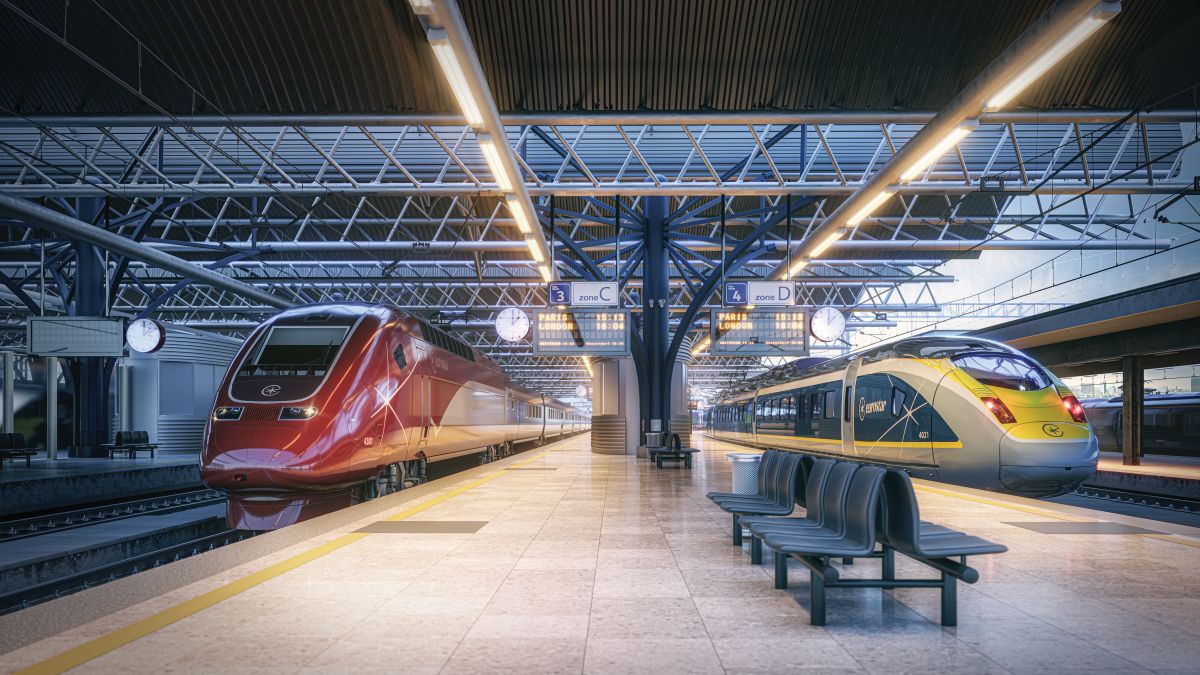
The arrival of Trenitalia and Virgin Trains on the Paris-London axis is not expected before 2029 for the former and 2030 for the latter. But already, faced with competition from air travel, Eurostar is stepping up its commitments to businesses.

“The corporate segment is valuable for Eurostar and continues to grow, with volumes up by about 2% in the first eight months of 2026 versus the previous year, across all of our routes in five countries” said François Le Doze, Commercial Director, on the occasion of the IFTM show.

Although he does not provide precise figures on the exact share of business travelers in activity, he came to Paris with a few gifts, namely an improved offer dedicated to businesses.

Read also : Trenitalia vs Eurostar: what competition could change for travelers


Two levels that cover eight destinations

Since September 1, the railway company is updating its corporate program, with two levels covering all eight permanent routes, whereas the old contracts were limited to a few axes.

Accessible from €50,000 in annual spend, the Level 1 offers preferential fares and greater flexibility, with a harmonized experience across the network. These discounts reach 5% in First Class and 3% in Plus Class.

The Level 2 (from €150,000) adds further discounts negotiated on a case-by-case basis, dedicated support, and services tailored for large accounts.

“This offering is simpler and more transparent. Companies today operate at a European scale and expect mobility solutions at the same scale” explains François Le Doze.


A more accessible offering


François Le Doze, directeur commercial. Photo: TB

This improvement goes hand in hand with enhanced accessibility of the offering through the online portal Eurostar for Business used by agencies and SMEs and via the various distribution channels.

From 2027, Eurostar for Business will integrate new tools allowing users to easily export travel data and better manage their travel policies.

“We have also formalized contractual frameworks with different technology players to better integrate our offering with SBTs” adds François Le Doze.

Grâce à l’adaptation de son API aux besoins du voyage d’affaires, les entreprises peuvent plus facilement retrouver l’offre d’Eurostar, les tarifs négociés et leurs avantages.

En parallèle, Eurostar continue de renforcer ses autres canaux de distribution, avec notamment une fenêtre de réservation portée à 364 jours dans GDS Air. Cette solution regroupe divers GDS où les entreprises peuvent réserver des billets et services Eurostar sous le code 9F.


Fifty new trainsets to accompany growth

Eurostar carried 20 million passengers in 2025. The company, 55.75% owned by SNCF Voyages Développement (a subsidiary of SNCF Voyageurs), plans to invest €2 billion in the coming years with up to 50 new Celestia duplex trainsets ordered from Alstom to be introduced starting in 2031.

Read also : Eurostar surpasses 20 million passengers and bets on up to 50 new trains

In addition to a 20% higher capacity, they will allow the rail operator, in a context of strengthened competition in Europe, to expand its offering and improve its services.

Opened in 2025, the new Eurostar terminal at Amsterdam Centraal station already helps to better welcome passengers and streamline boarding.


Trains to Switzerland coming soon

Future developments focus especially on the terminal at Gare du Nord in Paris. The redevelopment project named “Future Gare du Nord”, led by SNCF and unveiled in December 2025, notably promises an expanded Transmanche terminal by 2029.

“We are continually working to improve the customer experience. Station management is an everyday challenge and will become even more so in the future with greater competition” says François Le Doze.

Eurostar is also pursuing plans to run its trains in a sixth country, alongside France, the United Kingdom, Germany, Belgium and the Netherlands, with a Swiss service envisaged for 2030.

Travel in 2027: Seven Trends That Could Transform Your Next Vacation

What destinations and experiences will inspire travel in 2027? In its new annual report, Expedia Group identifies seven trends that could shape vacationers’ choices, from short escapes to stays inspired by films and TV series. The study draws on responses from 26,000 travelers across 16 countries, as well as search data and social media analysis. Here are the key developments to watch as you plan your next getaway.

Rising Destinations and Indulgent Getaways

Destinations of the Year

Some destinations are seeing a marked uptick in traveler interest. According to Expedia’s flight and accommodation search data, South Lake Tahoe, California, tops the 2027 list, up 195% from the previous period. This American mountain region is followed by Hyogo, Japan (+95%), then Punta del Este, Uruguay (+65%). Sedona, Arizona, rises 55%, while Busan, South Korea, gains 50%. In total, ten destinations make the ranking, including Holbox, Mexico; Perugia, Italy; and Chichester, United Kingdom. Six of them also meet the Smart Travel Health Check criteria, a framework that distinguishes destinations offering rich cultural and natural experiences along with responsible tourism management.

Micro-breaks

Why wait for the main holidays to travel? Micro-breaks, those one-night stays or brief getaways, are expected to appeal to more travelers in 2027. According to Expedia Group’s survey, 79% of respondents plan to book a one-night stay, compared with 83% among Gen Z and millennials. In France, one-night stay searches on Hotels.com rose by nearly 10% in a year. These short trips allow, among other things, celebrating an important event for 34% of respondents, attending a concert, show, or sports competition for 32%, or recharging between two longer journeys for 28%. For 45% of travelers, the main criterion remains finding a good deal.

A Return to Childhood

Adults also crave the carefree spirit of holidays gone by. This trend involves planning trips centered on play, playful activities, and moments shared with loved ones, away from everyday constraints. In total, 57% of travelers say they are likely to book this type of trip in 2027, a share that climbs to 71% among Gen Z and millennials. Motivations are varied: 69% want to experience a day without obligations, 64% want to spend more time with loved ones, and 56% seek a temporary escape from responsibilities. Mentions of carefree adult getaways on social media have also risen by 41% year over year.

Shared Hobbies

Personal passions are also becoming travel determinants. Photography, board games, creative workshops, or antiquing can now shape the choice of vacation rental. According to the study, 68% of travelers plan to travel in 2027 to pursue a hobby or activity they care about. This share reaches 79% among younger generations. For 41% of those interested, the aim is to practice their hobby in a new environment. The same proportion wants to meet or reconnect with people who share their interests. Board games top the activities cited for family or friends’ trips, ahead of photography, antiquing, and creative hobbies.

Unconventional Accommodations and Pop-Culture-Inspired Travel

The Set-Jetting

Films and TV series continue to shape destination choices. This phenomenon, known as set-jetting, involves traveling to a location discovered on screen. Nearly one in five travelers worldwide has already booked a destination after seeing it in a movie or series, according to Expedia Group. In France, the share reaches 30%. For 2027, several productions could reinforce this trend, notably The White Lotus season 4, tied to Cannes and Saint-Tropez, the upcoming season of Emily in Paris, which is slated to pass through Greece and Monaco, or The Lord of the Rings: The Hunt for Gollum, linked to Wellington, New Zealand. Nearly half of the travelers surveyed are already seeking or booking stays in destinations shown in productions that have not yet been released. This share rises to 58% among Gen Z and millennials.

Gothic Getaways

Hotels are no longer merely places to sleep; they can become attractions in their own right. In 2027, Gothic-style properties, castles, and historic buildings are expected to draw travelers seeking a distinctive atmosphere. According to Hotels.com, 65% of those surveyed want to book a Gothic-style hotel, compared with 71% among Gen Z and millennials. More than half of travelers, 56%, already choose an accommodation solely for its aesthetics or ambiance. Searches for castles on Hotels.com rose by 20% in a year. Interest in these stays aligns with a broader appeal for historic places, legends, and dark fantasy worlds.

The Allure of the Hinterland

Today’s latest trend identified by Expedia Group is the appeal of inland destinations, away from the most frequented coastal resorts. Nearly 58% of travelers who stayed in a vacation rental say they visited an inland destination in the past twelve months. Characterful small towns, valued for their historic heritage by 65% of those surveyed, are especially popular. Travelers also seek culture, cuisine, and local arts scenes (32%), want to venture off the beaten path (31%), or avoid crowds (29%). For 27%, more affordable prices than on the coast are also a factor. This trend highlights another way to discover a territory, prioritizing its villages, rural landscapes, and local life over its most famous tourist sites.

These seven trends, presented in Expedia Group’s Horizons 2027 report, reflect a range of travel desires, from new destinations to themed stays and shorter getaways. They are based on an online survey conducted from August 4 to September 1, 2026, with 26,000 adults across 16 countries, complemented by search data and analysis of social media conversations.

IFTM 2026: Recap of Topics Discussed with Travel Agencies


A New Order Tracking System That Has Everyone in Agreement

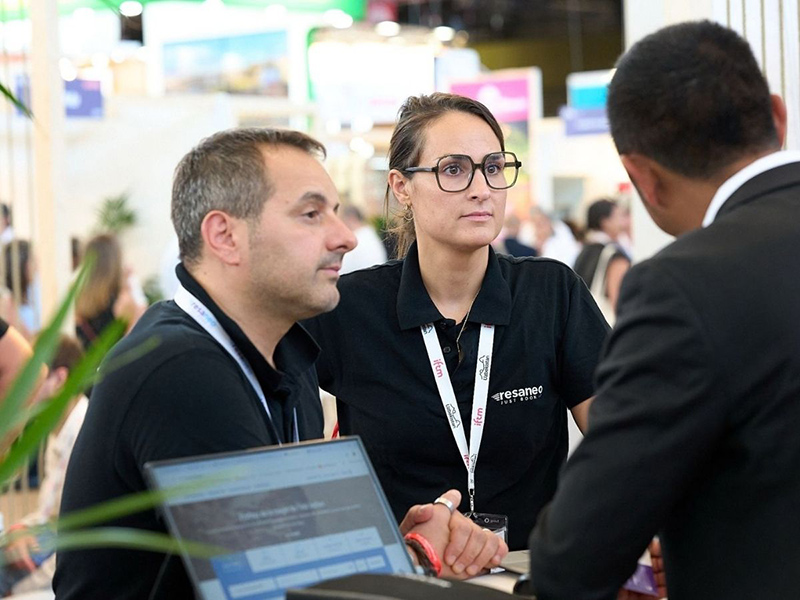
Resaneo était présent sur l'IFTM 2026 © Sacha Lenormand

CroisiEurope


Jean-Pol Leclercq, Sales Director of Resaneo, explains: “This is primarily a graphical overhaul, and that matters. It gives the interface a more contemporary feel with smoother, more intuitive navigation that makes users’ lives easier. A menu has been created via a side banner, consolidating all the features useful to the agency in its post-sale management. The rest of the services remain the same, with the exception of a new development on the group side. Agencies will now be able to download an Excel file, fill it with all passenger information, and then upload it to the tracking of their file. This was a request from our agencies, as it will simplify their tasks and also secure them. The rollout is complete and we are continuing with a few adjustments to fully meet the agencies’ expectations.”


RESANEO Training Sessions Grow in Popularity


Giacomo Filardo et Marion Strino © Sacha Lenormand

Marion, Head of Resaneo Account Managers, and her team invite you to discover all the secrets of Resaneo through 45-minute sessions. She explains: “We host four sessions per week, from Tuesday to Friday, to train our agencies in all the services offered and to answer any questions regarding users’ needs. Most often, Giacomo will take care of you.”

Each new agency registered on Resaneo automatically benefits from this training, and those who are already clients can, of course, participate. With staff changes and new entrants into the profession, Resaneo’s trainings are more useful than ever.

We have also chosen to prioritize individual trainings, which work better than webinars, as they allow us to have the agencies’ full attention and to foster constructive exchanges. To sign up, it’s easy: just click HERE »


Rail Travel Is Finally Getting the Attention It Deserves


© Canva Resaneo

Jean-Pol: “The train is a topic that is particularly close to my heart, and I must admit I have been pressing for it for some time now. What better way than to travel across France and Europe by train to take the time to discover the autumn colors of our regions, to reach city centers directly, all while feeling that you are doing something meaningful, in short, to treat yourself while rediscovering travel. Resaneo aims to meet the desires of a new, more demanding and virtuous clientele. This is why our rail offering is very substantial, with, among others, the TGV InOui, Ouigo Grande Vitesse, Ouigo Classique, TER, Eurostar, and Lyria. The range of destinations has greatly expanded and enables agencies to package with hotels or direct access to theme parks.

That is already very good, but we want to offer even more. This is why we launched, on certain segments, bookings up to a year in advance.

We put our recognized aviation expertise at the service of rail travel. Concretely, we host high-traffic connections on our platform and enable agencies to reserve journeys up to a year in advance.

Given that today reservations open only about three months ahead, this gives agencies a tremendous edge and significantly increases their added value.


© Canva Resaneo


For the time being, the lines covered are:

Lyon – Paris / Marseille – Paris / Bordeaux – Paris / Nantes – Paris / Lille – Paris.

We can also enable the clearance of allotments that agencies find hard to sell. In short, the broker and charter principle applied to rail travel.

The final advantage of the solution is the creation of train + hotel packages without the time constraint to market them. »


Travel and Literature: The Great Replacement [ABO]


Voyages et littérature : le grand remplacement - Depositphotos.com  Auteur sensay

CroisiEurope


… Since antiquity up to Hergé and Corto Maltese, passing through Marco Polo or Ibn Battuta, literature and comic books offer a wealth of narratives inviting readers to drift toward real destinations or partly fictional ones.

 
For many of us, Tintin stands as the prototype of the globe-trotting reporter, detective, and avenger that Joseph Kessel, for example, embodied in reality.

 
As for the immense Cervantes and his hero Don Quixote, he never stops embodying those adventurers who throughout history have hoped to discover in distant lands an ideal world.

 
Don Quixote is akin to Vasco da Gama, Christopher Columbus or Jacques Cartier… and Tartarin de Tarascon, in Alphonse Daudet’s pen, is a satirical novel interwoven with a travel narrative in Africa, completely imagined by the hero.

 
… Apparently invented from scratch, these characters actually draw their roots from the reality of the era that was theirs. An era when books circulated among the educated elites and carried their flood of narratives.


When Travel Becomes a Book

In fact, the story of the world as it has been understood since antiquity gave rise to a widely circulated and still vibrant body of literature, drawing its originality from personal experiences.


 
For evidence:

 
– The Festival “Etonnants voyageurs” in Saint-Malo has existed for 36 years and continues to draw crowds: 50,000 visitors over a few days. An achievement that each year welcomes regulars and newcomers to an event defined as that of “world literature.”

 
– The success of nineteenth-century great writers such as Lamartine, Flaubert, Nerval, Chateaubriand… who still populate bookshelves and recount their voyages in the East or in Italy, is another proof of the genre’s vitality.

 
– As for Sylvain Tesson and his superhuman journeys, he achieves exceptional sales, up to 500,000 copies for “La Panthère des neiges” or “Dans les forêts de Sibérie”… while Jack London’s “Martin Eden” remains a bestseller. Yet, alas, pamphlets against tourism are multiplying.


“I Hate Travel”

Overtourism and its heavy media coverage have left their mark, doing real damage to the world of essays and pamphlets: Leave Before It’s Too Late, The Anti-Tourist Handbook, Travel Was It Better Before?… and long before: Murielle Cerf’s The Anti-Travel, which chronicles the adventures of a young woman in Asia.

 
But above all: Claude Lévi-Strauss’s Tristes Tropiques, which opens with the profoundly unsettling line: I hate travel and explorers. While Paul Morand, Georges Simenon, Henry Miller and many others tempered their moments of ecstasy with sharp criticisms.

 
To read on TourMaG: The traveling writers.


When the Book Replaces Travel

Attention, however: while this observation about the harmony between literature and travel is well known and remains as firm as ever, let us not overlook the function of travel being replaced by the book.

 
Despite its decline, the book remains an extraordinary instrument of escape. Our entire collective imagery is built from the numerous reading experiences lived by children who retreat from the outside world to devour novels such as Tom Sawyer (Mark Twain), Harry Potter, through Little Nicholas or The Hobbit by Tolkien, or The Little Prince…

 
It opens to a non-material “elsewhere”; the book has the ability to become travel insofar as it absorbs both attention, and also the time and the imagination of readers young and old.

 
It is all the more capable of “replacing” a journey as it offers the reader several advantages:

 
– The immense freedom to interpret characters and settings with one’s imagination and personal culture.

– it can be read and reread and can transform itself depending on when it is read and especially the setting in which it is read.

 
– It provides a way to create insulating bubbles allowing the reader to flee others and focus on themselves.

 
– It is also a tool for well-being insofar as it provides mobility to a traveler who can stay “immobile.”

 
– It is finally a tool of knowledge on par with travel.

 
… Far from airports, train stations, the constant changes from one hotel to another, from one museum to another, literature offers an extraordinary means of leaping into another universe without leaving one’s couch.

 
An advantage that could, in the short term, threaten mobility. Especially when the reader becomes compulsive, as in Alan Bennett’s novel The Queen of the Bookworms, which depicts a Queen Elizabeth utterly passionate about her reading to the point of forgetting to govern her kingdom.

 
With her head perpetually elsewhere, the queen travels in her books and feels so at home there that she sees the world differently.

 
The emotion that can strike a reader during and after reading certain novels can indeed transform a person. Especially among young readers? And transform a life. Who doesn’t remember a cult book that enchanted or moved their existence?

 
One more push…


Josette Sicsic - DR

Josette Sicsic, a journalist, consultant, and speaker, has been observing the world’s changes for more than 25 years to analyse their consequences for the tourism sector.

 
After having developed Touriscopie for over 20 years, she remains at the frontline of current events where she decodes the present to forecast the future. On the site www.tourmag.com, in the Futuroscopie section, she publishes several times per week forward-looking and analytical articles.

 
Contact: 06 14 47 99 04

Email: [email protected]

Exchange Rates: Where Is Travel Most Expensive? [ABO]


Economic Situation

Taux de change : où les voyages coûtent-ils le plus cher ? - Depositphotos.com Auteur chrupka

CroisiEurope


Exporting Gulf oil is picking up again, but it is steering clear of Europe. The Middle East shipped 12.8 million barrels per day in September, hailed as a record since February, but this is mistaken: there is still a shortfall of six million barrels compared to that month, and transit through Hormuz has fallen to 7.4 million barrels per day, versus roughly a dozen to fifteen a year ago.

Yet Saudi Arabia has more than doubled its September loadings to 5.4 million barrels per day after 2.4 in August. However, they exit via Ras Tanura and head for Asia.

The pipeline linking the kingdom to the Red Sea was damaged on September 10 and 11. It has only been back in operation since the 23rd, at a reduced throughput. Aramco has even informed at least two European refiners that no cargo would reach them in October.

These missing barrels are being replaced at a high price. Norwegian crude Johan Sverdrup fetched as much as $35 more per barrel than the Brent benchmark, a gap that had stood at just 60 cents on September 8. The disruption mainly affects refined fuel: the Gulf is shipping only a quarter of the diesel sold before the war, and every barrel converted into Europe yields more than $85 for refiners, like never before.

At the pump, the diesel price stood at €2.399 per liter on September 25, a level that the March 2022 peak of €2.1407 had not reached. In one out of ten stations, at least one type of fuel was out of stock.

The €450 million in targeted subsidies announced by the state will not lead to lower displayed prices. In our view, this European disadvantage will persist as long as Gulf barrels head toward Asia: transfers, coaches, and winter travel are therefore budgeted on fuel that remains durably expensive.


Exchange Rates: The Technical Update

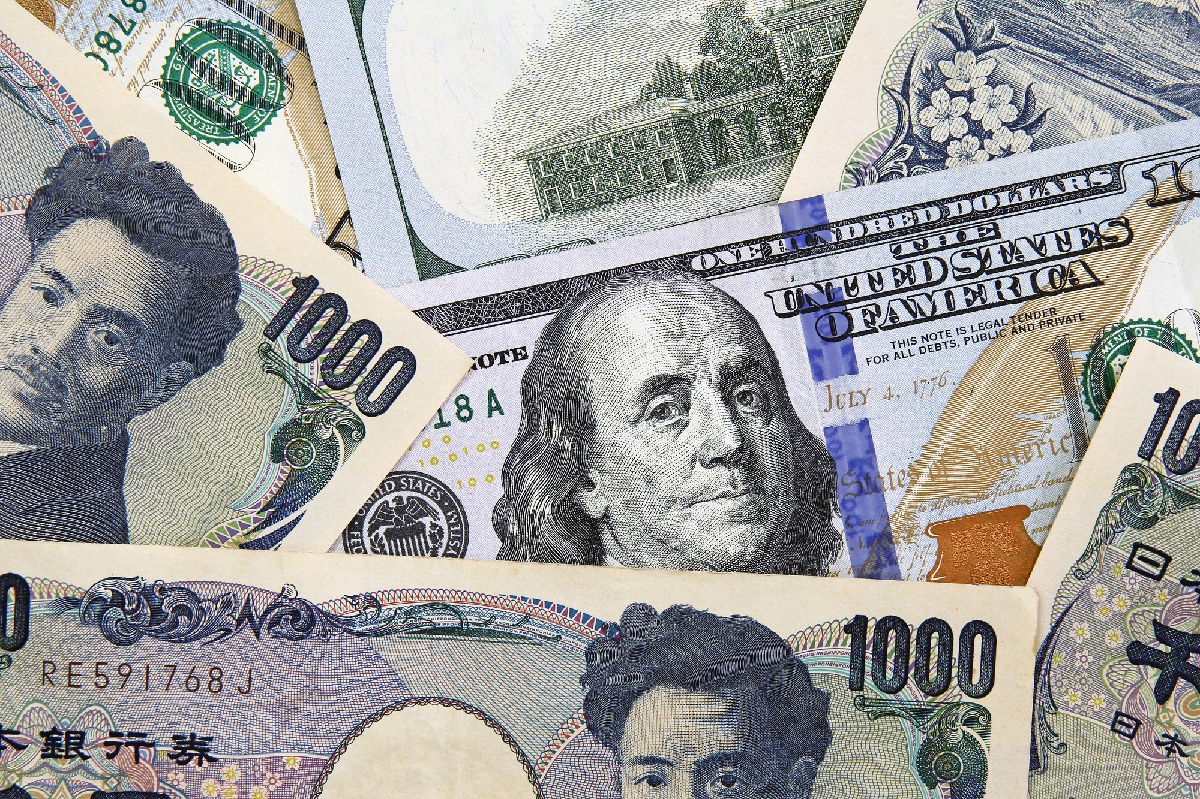
The euro closed Friday at 1.1391 dollars, down 0.81% on the week, marking its third consecutive decline. A floor is emerging between 1.1323 and 1.1353; if it yields, the path could open toward 1.09, which we do not expect. Our short-term range stands from 1.13 to 1.15.

Services priced in dollars, including North American hotel stays and cruises, are therefore a bit more expensive than in August, with no break in sight.

The Canadian dollar had everything going for it to benefit from the crisis, since Canada sells oil. It did not benefit: one euro was still worth 1.6111 Canadian dollars on Friday. Its central bank did not tweak its rate, kept at 2.25%, and Alberta ships its crude by pipeline to its American neighbor at a discounted price.


The yen, however, deserves attention.


Japan and the United States had jointly bought yen in August to support the Japanese currency, and Tokyo reminded on September 24 that this arrangement remains in force. A yen buyer thus faces two risks: the market, and a political decision capable of sending the currency surging. It took 179.17 yen to buy one euro on Friday evening.

Morocco, for its part, offers unusual visibility. The dirham’s value is pegged to a basket consisting of 60% euros and 40% dollars, within a fluctuation margin of 5%, so it never strays far from the euro.

The dirham is slowly retreating for four weeks, down 0.3% between September 17 and 23, to around 10.945 dirhams per euro. A Marrakech-traded circuit therefore settles at the same price as in August on the exchange, when fuel nonetheless weighs on it.


WEEKLY SUPPORTS WEEKLY RESISTANCES
S2 S1 R1 R2
EUR/USD 1.1323 1.1359 1.1450 1.1495
EUR/GBP 0.8520 0.8560 0.8635 0.8680
EUR/CHF 0.9355 0.9400 0.9475 0.9520
EUR/CAD 1.5960 1.6040 1.6190 1.6270
EUR/JPY 176.60 178.00 180.50 181.90


The supports and resistances shown below indicate, respectively, the lower and upper bounds within which prices are expected to move during the course of the week.


The information presented in this publication is provided for purely informational purposes and does not constitute investment advice, nor an offer to sell, nor a solicitation to buy, and should in no way be used as a basis or be taken into account as an incentive to engage in any investment.


Mondial Change is a French financial institution, founded in 2015, specializing in international payments management and foreign exchange risk.

Mondial Change also supports numerous players in tourism, travel agencies, group organizers, tour operators, and incoming operators…

www.mondialchange.com

Contact : [email protected]


Jeremy Grasset (Shanti Travel): ‘Amerigo Acquisition Strengthened Our B2B Image’ [ABO]


Jérémy Grasset (Shanti Travel) : "le rachat d'Amérigo a renforcé notre image B2B" - Photo Shanti Travel

CroisiEurope


TourMaG – With Shanti Travel, Tierra Latina and Amérigo, your group now covers a substantial portion of the world. How is this ensemble organized?

Jérémy Grasset : Indeed, Shanti Travel mainly focuses on Asia. We have a presence in Japan, Indonesia, Vietnam, the Philippines, Sri Lanka and Singapore.

Tierra Latina specializes in Latin America. We also maintain offices in Brazil and Argentina, as well as a Mexico City office under the Mexikoo brand.

With Amérigo, we added North America: the United States and Canada. This brings geographic complementarities. Amérigo is also active in Latin America, which also helps generate volume for our receptive activities.

TourMaG – Why did you decide to acquire Amérigo?

Jérémy Grasset: Jean Eustache (founder of Amérigo ndlr) approached me last year and suggested that we explore a discussion. We quickly realized that our activities complemented one another, particularly in terms of geography.

There was also a solid opportunity to launch Asia within Amérigo as a tour operator, for both group services and GIRs. We had GIR productions that were not widely distributed until now. Thanks to Amérigo, they are now more widely shared.

Amérigo is indeed registered as a tour operator and is listed with around 3,000 agencies in France.

In a second phase, we also plan to restart a bespoke service for Asia. But for the moment, we must take the time to integrate.


Complementarity between tour operator and receptive but also autonomy

TourMaG – This acquisition strengthens your presence in the French B2B market…

Jérémy Grasset :
Exactly. We were already recognized in the French B2B market, but quantifying it was challenging. And, achieving visibility is tougher for receptive operators.

The fact of having acquired Amérigo has reinforced our B2B image in the market. It now allows us to attract more groups and more B2B clients.

TourMaG – Some groups in the tour-operating business acquire receptive firms. This time, a receptive is acquiring a tour operator. How do you view this complementarity between the two lines of business?

Jérémy Grasset : Those who know the sector understand the difference between the two trades, but today, a French tour operator that produces everything in-house, purchases its rooms from a database and offers bespoke experiences is almost a receptive.

Direct production by tour operators is increasing, especially in countries where labor costs are high. In the United States or Canada, for instance, it is difficult to offer bespoke arrangements with a receptive behind it: there aren’t many that still do that. Receptives in developed countries mainly handle groups or GIRs.

It makes sense that this complementarity exists and that tour operators acquire receptive firms. Indeed, we have a receptive firm that is taking over a tour operator.

TourMaG – Amérigo will be able to rely on your receptive networks, but can it also collaborate with receptive operators that are competitors?

Jérémy Grasset : We aim to preserve this complementarity between the different units while maintaining a certain autonomy. Within our group, internal competition between units and competition with external rivals can coexist in a healthy way.

In travel, we often speak of partners rather than mere competitors. You can be competitive with your partners and partner with your competitors. Crises tend to strengthen collaboration across the different disciplines.

What matters is that the traveler experiences a wonderful journey, fulfills their dreams, and that the trip is executed flawlessly.


“We must diversify risks and sources of clientele”

TourMaG – What brought you closer to Amérigo?

Jérémy Grasset :
At Amérigo, there was a culture of receptive business, since, for years, Jean (Eustache ndlr) built receptive networks and represented LatAm and North America. He knows the trade very well.

In the final months of collaboration, we realized we spoke the same language. We are two product-oriented companies with excellent field knowledge. Amérigo’s teams possess a very good understanding of their destinations.

This, I believe, is the strength of the group today: in each entity, we have seasoned destination experts.

TourMaG – Asia, Americas… Are you targeting other geographic zones such as Oceania or Africa?

Jérémy Grasset : Being a specialist in a single region is no longer feasible nowadays. There are many geopolitical surprises, so we must continue diversifying risks as well as clientele sources.

The United States, despite some difficulties, remains an attractive destination for us. The day when Asia or Japan falters, and political shifts occur, we know the United States will rebound.

Oceania, we have begun selling on our site for our receptive activities. Once we have a traveler, it is, of course, interesting to offer another destination. In B2B as well, it works well.

Africa, why not, but for now it is not in the current projects.

Diversification also concerns client sources. Shanti is a hybrid, multichannel group, which should enable us to adapt to evolving markets and to become more agile.

We do not know exactly what will work tomorrow. Today there is the AI revolution, but also a return to agencies for high-quality luxury bespoke travel. We observe several trends in parallel, and it is hard to predict which will prevail.

That is why we are expanding in this manner, notably to secure activity.


TourMaG – Have you created synergies between the different teams?

Jérémy Grasset :
We have always invested heavily in training, both for destinations and for sales techniques and tools.

We are now more focused on destination training. The advantage is that Amérigo, like Shanti, shares a true culture of effective IT tools. We find ourselves aligned with these approaches.

The teams have learned to know each other and to meet. These are fields that can be somewhat different, but we try to figure out together how things work.

There are also recruitments underway. For Asia, we are seeking major destination specialists. This allows us to rely on former Shanti travel experts who moved back to France for personal reasons, and whom we are bringing back into Amérigo, for example.


TourMaG – How much does the group weigh today?

Jérémy Grasset :
The group currently amounts to 35 million euros.

TourMaG – What are your next priorities?

Jérémy Grasset :
For now, we are in a phase of deepening the destinations we already cover. There will be new developments later, but it is too soon to discuss them.

Today, the objective is to consolidate the whole. We must, if you will, “digest the acquisition,” integrate the new elements and train the teams.


Céline Eymery Published by Céline Eymery Editor-in-Chief – TourMaG.com
See all articles by Céline Eymery

  • picto Facebook
  • picto Twitter
  • picto Linkedin
  • picto email
Add TourMaG to your Google News feed Google Actualités icône