

While SETO announced on Thursday July 2 a deficit of 85,000 customers for the summer, the latest Orchestra figures – which, recall, only account for reservations made through this channel (custom trips, stays booked directly on TOs’ B2B, or the dynamic package created by agencies are notably excluded) – also show that, by the end of July, reservations for departures in July-August 2026 were lower than those of the previous year.
The number of files continues to fall by 8.2%, with a business volume down 7.9%. However, the trend is gradually improving: the lag was still about 10% a month earlier.
The medium-haul segment once again demonstrates the strongest resilience (-5.7% in dossiers), while long-haul continues to suffer (-19.2%). Travelers continue to favor nearby destinations, to the detriment of longer journeys.
Among the most dynamic destinations for the summer are Albania (+255%), Montenegro (+21%), Canada (+12%), Norway (+7%), Morocco (+4.5%), and the Dominican Republic (+2.3%). Spain manages to hold (+0.2%), while France, Greece, Egypt, Turkey or the United States remain down.
Summary:
June departures still lag behind
June reservations rebound
A marked retreat compared with June 2025: business volume -4.9%, dossiers -5.5%, with the average basket rising slightly (+0.7%) to €1,567. These results confirm a cautious entry into the summer period.
Medium-haul
Long-haul
Net improvement in bookings: business volume turns positive again (+2.3%) after a -21% in May, driven by an average basket up (+3.9% to €1,868) which compensates for the slight drop in dossiers (-1.6%). The average lead time stands at 60 days (-1 day vs 2025).
Medium-haul
Long-haul
Summer July-August 2026: reservations still behind (volume -7.9%, dossiers -8.2%), but the decline is narrowing compared with late May. The average basket is almost stable at €2,490 (+0.3%). Long-haul remains the most affected (-19% in dossiers).
Medium-haul
Long-haul
Data drawn from travel agencies using the Orchestra platform (20+ brands, at least 2 years).
‘;
}
function fill(id,data){
var h=””;
for(var i=0;i
new Chart(document.getElementById(‘edvC5′),{
type:’bar’,data:{labels:vL,datasets:[{data:vD,backgroundColor:vC,borderRadius:3}]},
options:{indexAxis:’y’,responsive:true,maintainAspectRatio:false,
plugins:{legend:{display:false},tooltip:{callbacks:{label:function(c){return c.raw+’ %’}}}},
scales:{x:{grid:{color:grid},ticks:{color:txt,font:{size:10},callback:function(v){return v+’ %’}}},
y:{grid:{display:false},ticks:{color:txt,font:{size:11}}}}}
});
})();
Inbound Tour Operator of Tomorrow: The Rise of Group Travel Strategy



The group journey has not spoken its last word. It is evolving, just as travelers, agencies and the ways of discovering a destination are evolving. In a world where everything seems bookable in a few clicks, the need to travel together, to share an emotion, to discover a culture with others, and to feel accompanied remains profoundly current.
At Únia Travel, this conviction guides the vision of tomorrow’s receptive partner: a hands-on ally capable of helping agencies design travel experiences that are more personalized, more reliable and more meaningful.
Group travel answers a need that will not disappear
Group travel still has a future because it answers a profoundly human need: the need to share, to meet, to exchange and to experience something together with others. Traveling is not just about moving from one point to another. It is about creating shared memories, discovering a culture with a guided perspective, being surprised by a meeting, a tradition, a flavor or a local story that one might not have found alone.
Even future generations will crave connection. They will likely want travel that is freer, more immersive, closer to the local culture. They will want to understand more, experience deeper moments, and feel like actors in their own journey. But that does not mean the end of the group. It means the end of standardized groups.
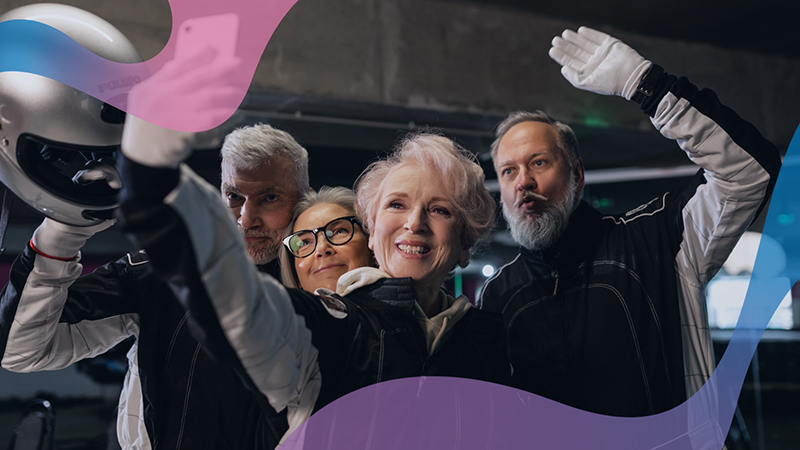
The group journey of tomorrow will be more personalized, more flexible, and better aligned with travelers’ real profiles. For agencies, this evolution represents a real opportunity, but it also requires more guidance, more anticipation, and a precise knowledge of the terrain. This demand is especially important for French-speaking senior groups, where pace, comfort, quality of meals, travel times, and accompanying support play a crucial role in the success of the stay.
Tomorrow’s receptive partner can no longer be merely an assembler
These tasks remain essential. But today, they are no longer enough.
An agency expects more from its local partner. It needs a counterpart who understands its clientele, its commercial constraints, its deadlines, its positioning, and its objectives. A group program must not only be feasible; it must be coherent, legible, well-paced, adapted to travelers’ profiles, and attractive enough to sell.
For Únia Travel, this evolution is obvious: a receptif must do more than just organize a trip. It must help the agency sell it, secure it, and build customer loyalty. It must become the agency’s eyes and ears on the ground, anticipate constraints, and ensure that every choice serves the final experience of the group.
Receptives capable of advising, personalizing, anticipating, and securing will become even more indispensable partners for tourism professionals.
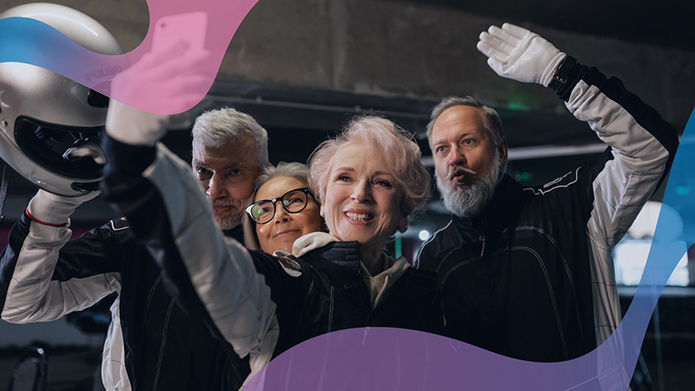
Personalization begins with listening
At Únia Travel, this personalization starts with listening. Who are the travelers? What is their rhythm? What have they already visited? What level of comfort do they expect? Does the agency seek an accessible program, an original experience, an in-depth cultural circuit, or a proposal capable of surprising a loyal clientele?
The answer cannot be the same for everyone.
That is why Únia defends a simple idea: the product must adapt to the client, and not the other way around.
This approach requires field knowledge, proximity, and flexibility. A successful program is not necessarily the one that offers the most; it is the one that finds the right balance between discovery, comfort, pacing, pleasure, budget, and flow.
It is in this spirit of personalization and listening that Únia Travel develops more differentiated ideas, notably through the Únia Signature universe: proposals built around local flavors, celebrations, traditions, lesser-known experiences, or themes capable of giving real personality to the journey.
Technology at the service of the field, not in place of it
This reflection particularly focuses on new tools that can facilitate exchanges with agencies, speed up certain communication steps, make proposals clearer, and simplify file tracking. The aim is to give professionals more legible, more practical, and easier-to-use supports in their own commercial work.
It also concerns how to better convey information to the various participants in a trip: internal teams, guides, drivers, local partners. A well-prepared, well-shared, and easily accessible file directly contributes to the stay’s success. In group travel, the quality of the experience depends as much on program design as on how precisely information circulates before and during the trip.
Technology should save time, streamline exchanges, organize information more effectively, and improve responsiveness. But it does not replace field knowledge, professional intuition, or human relationships.
A tool can speed up a response, but it cannot sense whether a program is too dense for a senior group, nor know whether a step is enjoyable in theory but not suited in practice. It does not replace the experience of a team that knows destinations, suppliers, the habits of French-speaking groups, and agencies’ expectations.
The modernity of tomorrow’s receptive partner will thus be hybrid: more tools, yes, but still more guidance. More speed, but without sacrificing quality. More structure, but without standardizing the travels.
Tell us about your projects: we are here to help you build them, adapt them, and succeed with them.


For your group projects, programmed itineraries, tailor-made stays, or specific requests:
[email protected]
[00376] 720 600
www.uniatravel.com
 |
 |
 |
>> Únia Travel in the DESTIMAG Directory
Museums and Health: The Rise of Museotherapy [ABO]

Celui éprouvé par le célèbre écrivain en visitant la basilique Santa Croce à Florence au cours de laquelle il est passé par un état à mi-chemin entre l’extase esthétique et une transe mystique, au contact des artistes qui en ont signé les splendeurs.
Consacrant la magie dont est capable une œuvre d’art sur nos émotions, ce syndrome qui s’est manifesté chez l’écrivain par toutes sortes de sensations physiques, ne constitue pas qu’une légende.
Le contact avec de beaux paysages, des monuments, des œuvres d’art qu’elles soient musicales ou graphiques, naturelles ou artificielles est indéniablement à la base d’un sentiment de bien-être dont nous avons tous besoin.
D’où la prolifération d’offres culturelles dans les programmes des voyagistes et la forte demande exprimée par bon nombre de touristes de tous âges pour des visites de sites et monuments exposant toutes sortes d’œuvres antiques ou contemporaines témoignant d’une part du génie humain et de l’histoire d’un pays, mais capables, d’autre part, de sublimer le mental de chacun d’entre nous.
Museums and Museotherapy
 In the forefront of these places that foster encounters with “the beautiful,” museums are no longer content with simply engaging the public; they now pair the experience with a palette of wellbeing practices capable of multiplying positive sensations in our brain and body.
This is how one can conduct a yoga session or attend a concert or take a simple stroll and feel real benefits.
Where? In any museum, or in those that offer museotherapy workshops such as the Fine Arts Museum in Lille.
Montreal: A Museum on Prescription
Après des expérimentations dans les années 1990-2000, notamment via le programme Meet Me du MoMA destiné aux patients atteints d’Alzheimer, l’initiative canadienne fait de la « muséothérapie » une pratique à part entière, où le musée se transforme en un lieu de soin et de mieux-être.
Dès 2016, Nathalie Bondil, alors directrice du musée et considérée comme une pionnière sur la question, défendait l’idée « qu’au XXIe siècle, la culture sera pour la santé ce que le sport a été au XXe siècle : l’expérience culturelle contribuera au mieux-être, comme la pratique du sport à notre forme physique ».
Bondil, aujourd’hui directrice du musée et des expositions de l’Institut du monde arabe à Paris, enseigne la muséothérapie à l’École du Louvre.
Bruxelles, pour sa part, a été la première ville à lancer des prescriptions muséales en 2022. Sur le même modèle.
Montpellier a suivi et vu naitre le projet Art sur ordonnance. A Paris, le projet Bulle d’Art a réuni Paris Musées et le fonds d’art contemporain pour proposer des méditations guidées devant des œuvre d’art.
Au Louvre-Lens, on expérimente un espace de thérapie comme au Hamo au Palais de Tokyo à Paris… Sans compter les séances de musicothérapie qui, pour leur part, sont plus nombreuses et anciennes.
Lire aussi : « La petite histoire » : un avatar du tourisme de mémoire pour aller mieux
Scientific Evidence
Grâce à une étude de l’University College de Londres menée sur un échantillon de 6 000 personnes pendant 12 ans, on a constaté que le taux de mortalité est plus faible chez les personnes qui ont pu fréquenter régulièrement un musée que chez les autres.
Au Japon, un muséologue Izumi Ogata a continué l’expérimentation de 2020 à 2024 avec son projet de bain muséal « Haku/Butsu/Kan/Yoku » en japonais, sur un échantillon de 1 300 personnes. Conclusion : une baisse généralisée de l’anxiété et un ajustement de la pression artérielle.
Plus probant encore, un rapport de l’Organisation mondiale de la santé (OMS) s’est employé à explorer les effets bénéfiques de l’art sur la santé.
Après avoir analysé plus de 900 études internationales, le Bureau régional pour l’Europe de l’institution est catégorique : il confirme la façon dont différentes formes d’arts – littérature, culture, arts de la scène, arts visuels, arts en ligne – peuvent promouvoir la santé.
Du diabète à l’obésité, du stade gestatif à la fin de vie, de la petite enfance jusqu’aux personnes âgées, les arts font bel et bien montre de leurs effets positifs : améliorer le sommeil des enfants avec des histoires au coucher, la prise de décisions des adolescents avec une formation théâtrale, les fonctions cognitives chez les personnes atteintes de démence grâce à la musique, les fonctions motrices chez les patients atteints de Parkinson grâce à la danse…
Bref, les exemples de cette étude parue en 2019 sont légion. Mais, comme le précise Christopher Bailey, responsable des arts et de la santé à l’OMS, « Les arts n’ont pas pour but de guérir – ils ne guérissent pas le cancer. Mais les arts peuvent soigner. »
Lire aussi : Colère, exaspération, dépression : le temps du bien-être actif revient
