
Forget the Maldives: The 10 Best Islands to Visit in 2026

Wanderlust is evolving and travelers are increasingly turning to less crowded destinations. This is highlighted by Expedia’s new ranking, which lists the islands most likely to attract visitors in 2026.

Between Arctic beaches, little-known Greek treasures and tropical lagoons, this selection highlights places where spectacular landscapes, authenticity and sometimes more affordable prices replace the emblematic destinations, such as the Maldives.

Preserved Islands Attracting Increasing Numbers of Travelers

Expedia unveiled its “Island Hot List 2026”, a ranking based on searches conducted on its platform. According to the online travel agency, searches related to islands rose by 55% year over year, while mentions on social media increased by 20%. At the top of the list is Saint Lucia, in the Caribbean, recommended for couples’ getaways. The island entices with its famous volcanic Pitons, white- and black-sand beaches, and geothermal sites, such as the Sulphur Springs of Soufrière.

The island of Porto Santo, Portugal, is presented as an ideal wellness destination thanks to its 9-kilometer golden-sand beach and its much calmer atmosphere compared to the neighboring island of Madeira. Hiking enthusiasts can notably take the Pico Branco or Pico do Castelo trails.

Nature lovers will find happiness on Praslin in the Seychelles. As the second-largest island in the archipelago, it hosts the Vallée de Mai Nature Reserve, a UNESCO World Heritage Site. A traveler shares her experience on Google Reviews: “Visiting Vallée de Mai on Praslin felt like entering a prehistoric paradise. Wandering through this ancient palm forest was an unforgettable experience, with towering trees, lush vegetation and peaceful nature all around.”

Alternatives to the Most Famous Destinations

Among the surprises in the ranking is Syros, Greece. Located in the heart of the Aegean Sea, the island is presented as a calmer alternative to Santorini or Mykonos, while offering a renowned culinary scene. It is also known for hosting nearly 3,000 stray cats, to the point of sometimes offering free accommodation to volunteers who come to care for them.

The Lofoten Islands, in Norway, illustrate another trend: Arctic destinations. Visitors can witness the midnight sun in summer or the northern lights between September and April. The archipelago also hosts the isolated Kvalvika Beach, accessible only after a hike, where golden sand contrasts with turquoise waters and jagged mountains.

One of the best value-for-money vacation options

In Asia, Palawan in the Philippines continues to rise thanks to its limestone cliffs and preserved beaches, notably Entalula Beach, accessible only by boat. Phu Quoc in Vietnam appeals to travelers seeking a high-end stay at a reasonable price, while Culebra, in Puerto Rico, attracts divers and snorkelers around its famous Flamenco Beach.

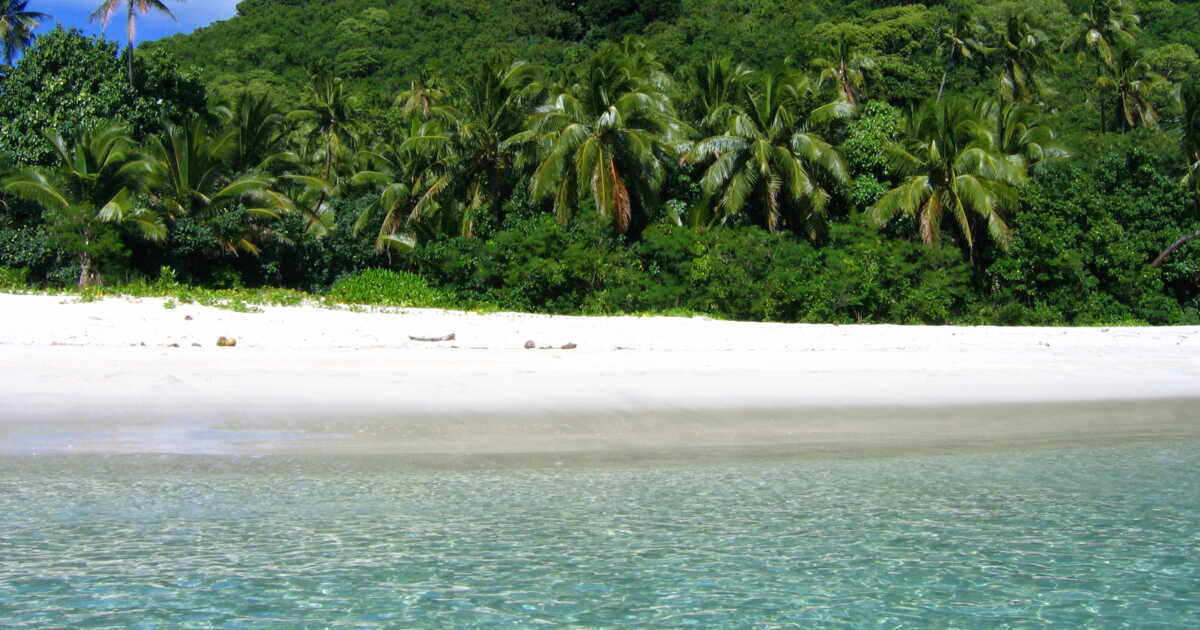
The rankings are completed by Sanibel Island, Florida, loved by families for its peaceful beaches, and by the Fiji Islands, which are gaining strong visibility on social media. For Melanie Fish, a travel expert and Expedia spokesperson, the islands offer today an excellent value for money: “Islands not only fulfill the urge to escape; they can also represent one of the best value-for-money vacation options, thanks to all-inclusive resorts and savings from bundled Expedia deals,” she concludes.

Things to Do in the Faroe Islands: 9 Top Outings and Activities

The Faroe Islands, a little-known Nordic archipelago, offer breathtaking landscapes and an immersion in pristine nature. Between raging seas and steep mountains, this destination captivates with its isolation and unique culture. If you’re wondering what to do in the Faroe Islands, here is a selection of activities that will make your stay a memorable experience.

1. Discover Gásadalur and the Múlafossur waterfall

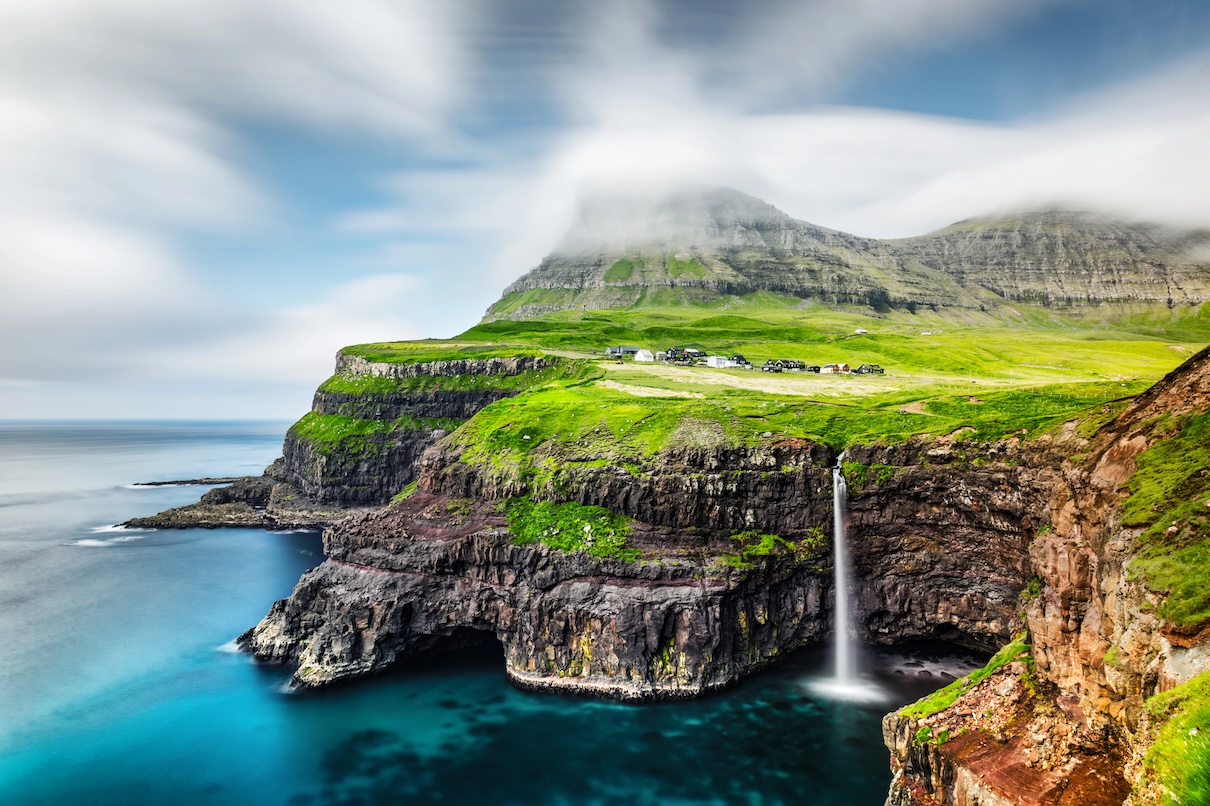
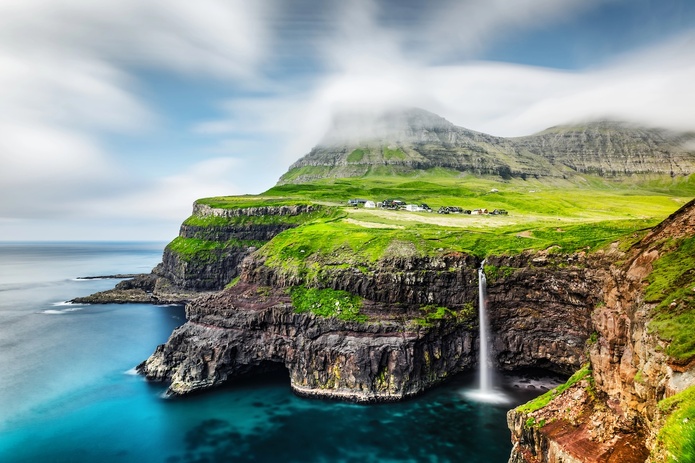
The village of Gásadalur, on Vágar island, is a must-see highlight when traveling to the Faroe Islands, especially for the Múlafossur waterfall, which plunges powerfully into the North Atlantic, creating an impressive natural spectacle. Access was eased from 2004 thanks to a road tunnel, increasing the appeal of this isolated site. This ideal starting point for a full day of exploration is distinguished by a wild landscape, framed by cliffs and dotted with wandering sheep.

Not far away, the village of Bøur, or bour in the Faroe Islands, completes this excursion by offering a favorable vantage for photography and contemplation. If the weather in the Faroe Islands remains variable, particularly in October, it can occasionally give way to sunshine on the island, elevating the beauty of the place. A visit here fits neatly into a well-planned Faroe Islands budget, despite the high costs tied to driving on the islands and the price of fuel.

2. Explore the historic village of Saksun

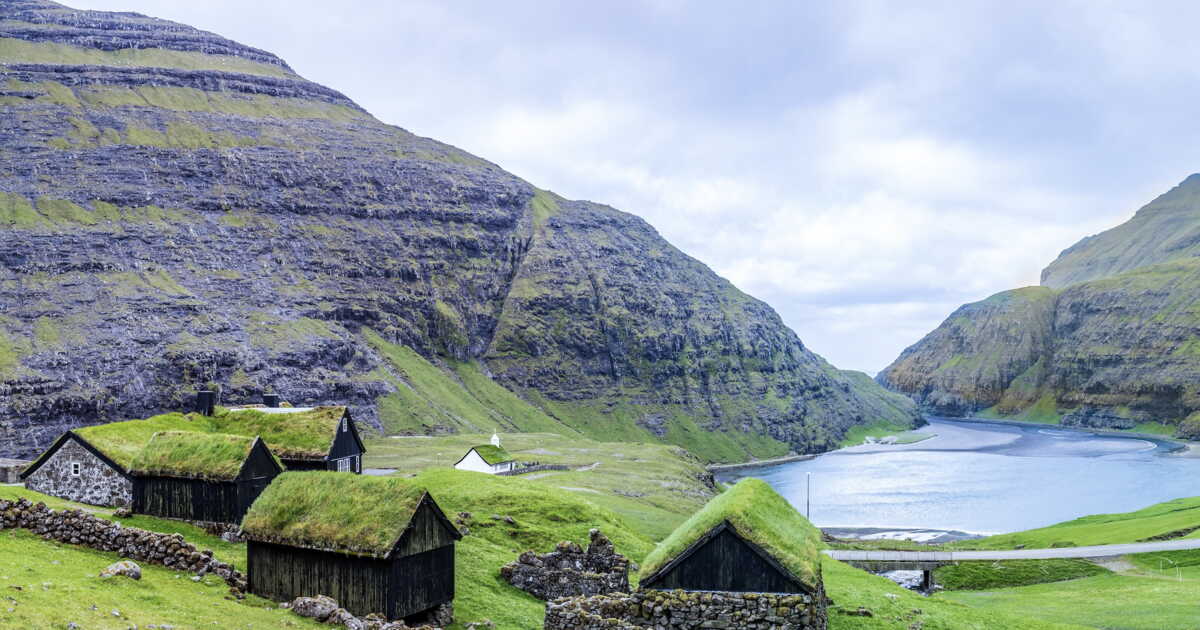
The village of Saksun, situated on Streymoy, stands out for its colorful turf-roofed houses and its 19th-century church, nestled in a setting of raw, breathtaking landscapes. Accessible by a narrow winding road, this place offers a unique experience of returning to origins, between nature and culture.

The landscape, especially at low tide, invites a walk to the lagoon and reveals a palette of colors that contrast with the North Atlantic sky. The time in this suspended village invites contemplation, and despite the weather some days, the visit is a strong moment of travel in the Faroe Islands. Integrated into a budget for a reasonable trip, this detour is recommended for travelers seeking preserved places off the beaten path.

3. Hike to the Kallur Lighthouse on Kalsoy

The island of Kalsoy, often nicknamed the “flute of the Faroe Islands” for its elongated shape, houses the Kallur Lighthouse, accessible by a ferry crossing to Syðradalur and then a panoramic hike from the village of Trøllanes. This excursion offers a spectacular view of the neighboring islands, up to the Drangarnir arch, visible on a clear day.

Seabirds, notably puffins, nest along the cliffs, making the hike even more rewarding. Due to isolation, the site is sparsely visited, and the weather in this village can feel motionless. The budget for this activity on the Faroe Islands includes car rental, the ferry passage, and weather-appropriate gear for Kalsoy’s climate, which can be harsh at times. The effort is well rewarded by the beauty of the place, making it a perfect destination for nature lovers and wild landscapes.

4. Admire Sørvágsvatn Lake and its optical illusions

The Sørvágsvatn Lake, also known as Trælanípa, is one of the most astonishing sites in the Faroe Islands. From certain viewpoints, an optical illusion makes the lake appear to float above the ocean. This geological curiosity is accessible after a moderately challenging hike, offering a dramatic backdrop of sea, cliffs and changing light.

The road to the starting village traverses maritime zones ripe for observing seabirds. The water, seemingly suspended, recalls the icy waters of Lapland or the April waters in the Nordic fjords. Including this excursion in a Faroe Islands budget remains reasonable, despite fuel costs and the need for a vehicle. On clear days, sunset turns the scene into a living painting, reinforcing its reputation as a true visual paradise.

5. Puffin watching at Mykines

The island of Mykines, to the west of the archipelago, is a major destination for watching Atlantic puffins. These iconic seabirds nest on the steep cliffs during the summer. Accessible by boat, and depending on the Faroe Islands weather, the island also offers a hike to an isolated lighthouse overlooking the North Atlantic.

A full day is required for this visit, demanding good organization, including ferry rates, again fuel prices, and sometimes midday sandwiches to avoid costly options. The unique experience Mykines offers justifies its inclusion in any trip to the Faroe Islands. The sea crossing, the sheep, and the wild landscape complete the picture of a nature encounter in its most original form.

6. Boat excursion to Vestmanna

The Vestmanna site, on the west coast of Streymoy, offers a boat trip to discover cliffs and sea caves in a highly immersive setting. This unique experience includes passages close to cavities where seabirds nest, as well as natural arches shaped by centuries.

Against the backdrop, the beauty of the place remains constant, reinforced by the frequent presence of wandering sheep visible from the road to the harbor. The activity, albeit subject to high prices, can be incorporated into a balanced travel budget. The contrasts between the water at bøsdalafossur, the black cliffs, and the bright sun on a clear day give this sea outing a distinctive relief within the broader context of a trip to the Faroe Islands.

7. Immerse yourself in history at Kirkjubour

Kirkjubøur, on the southern coast of Streymoy, represents one of the oldest historic centers of the Faroe Islands, with exceptional patrimonial richness. The site houses the ancient village of Kirkjubøur, the Roykstovan farm, continuously occupied since the Viking era, as well as the ruins of the St. Magnus Cathedral.

Accessible via a small road from Tórshavn, the visit fits easily into a full day of cultural discovery. The presence of local products and the authenticity of the place offer a strong contrast with the vibrancy of Tórshavn. The prices for this visit remain moderate and compatible with a measured budget in the Faroe Islands. The richness of the surrounding landscape and the view of the North Atlantic give Kirkjubøur a major cultural and geographical value.

8. Stroll through the streets of Tórshavn

Tórshavn, the capital of the Faroe Islands, is a mid-sized city with a distinct charm, balancing modernity and tradition. The Tinganes district, with its red wooden houses, forms the heart of the old town of Tórshavn. The heights of Tórshavn offer a view over the port and the island of Streymoy, while the Tórshavn Hilton Garden Inn represents an attractive accommodation option for travelers seeking comfort.

The city is best discovered on foot, exploring its museums, its restaurants where you can taste local products, and its cafes where you can have a midday sandwich. Driving in the Faroe Islands makes Tórshavn easily accessible from Vágar Airport, despite the relatively notable price of fuel. For those seeking an urban rendezvous in a natural setting, this discreet capital is a strategic starting point.

9. Venture to Gjógv

Located on Eysturoy island, the village of Gjógv derives its name from the natural gorge that forms its harbor. This singular geological site, known as the “Cleft of Gjógv”, is part of a network of hikes offering spectacular landscapes on neighboring islands and the North Atlantic. Gjógv’s isolation and the small road leading there make it an ideal spot for travelers seeking calm.

Despite high overall prices across the territory, the village remains accessible with careful budgeting for a trip. Wandering sheep, seabirds, and weather that is sometimes sunny or foggy shape the unique atmosphere of this place. The gorge, windswept, provides an ideal backdrop for photographing the wild landscape of this part of the Faroe Islands.

The Faroe Islands offer a varied range of activities for travelers seeking authenticity and preserved nature. Whether through hikes, maritime explorations, or cultural encounters, this archipelago manages to surprise at every turn. To maximize your experience, consider a multi-day trip to fully live each facet of Faroese life.

How many days does it take to visit the Faroe Islands?

For a truly enriching trip to the Faroe Islands, a duration of 5 to 7 days is ideal. This period allows you to explore the spectacular landscapes of Streymoy, to head to Mykines to observe the Atlantic puffins, and to wander the heights of Tórshavn, the capital, with its colored houses and its perfectly preserved old town.

This format also offers the opportunity to reach iconic places like the Drangarnir arch or the Múlafossur waterfall, visible from the village of Bøur. A full day can be dedicated to Kalsoy, famous for its wild atmosphere and steep trails. With a rental car, you can organize each starting point flexibly, enjoying the beauty of the place, the sun on the island when the weather allows, and the road to the villages that outline a true natural paradise.

Is life expensive in the Faroe Islands?

Budgeting for a trip to the Faroe Islands deserves careful consideration. High costs are a reality, especially for accommodation, food, and fuel. The Tórshavn Hilton Garden Inn or accommodations around the village of Bøur offer good value for money depending on the season, but overall costs remain significant.

A midday sandwich can cost the price of a full meal elsewhere in Europe, and driving in the Faroe Islands, while convenient, involves tolls on certain bridges or ferries. Plan a Faroe Islands budget adjusted to these constraints, without neglecting the countless sheep and landscapes of raw beauty that give this territory its unique character. Budget-conscious travelers can optimize by cooking locally with local products or choosing off-season itineraries, where prices may be more favorable.

What is the best time to visit the Faroe Islands?

The weather in the Faroe Islands, known for its variability, plays a central role in planning a stay. The period from May to September is generally considered the most favorable. Sunny days with clear skies offer an incomparable light on the landscapes, revealing the full majesty of the North Atlantic, from the village of Trøllanes to the heights of Tórshavn.

On the other hand, traveling in October exposes you to capricious weather, with frequent showers and reduced visibility. Yet, some autumn days can reveal a raw beauty, heightened by the solitude on the roads and the endless time spent indoors warming up. It’s also the season when seabirds remain prominent, and wandering sheep freely cross the roadside.

What to bring back from a trip to the Faroe Islands? The choice of lasting souvenirs

Bringing back a souvenir from the Faroe Islands means extending the experience of this journey to the far reaches of the North Atlantic. Local products take a prime place: sheep wool — outnumbering the inhabitants —, Viking-inspired crafts, or canned fish, typical of the region.

In Tórshavn, the mid-sized city retains traditional shops where time seems to stand still. In this context, the ideal gift is often modest but meaningful: a handmade scarf, a book on traveling in the Faroe Islands, or a framed photograph of the Múlafossur waterfall seen from Bøur. Each object then becomes a backdrop for telling the perfect place discovered between sea, rock and sky.

This article was written with the help of artificial intelligence, then corrected, expanded and validated by the editors of the desk.

What to Do in the Galápagos Islands: 10 Must-Do Activities and Experiences

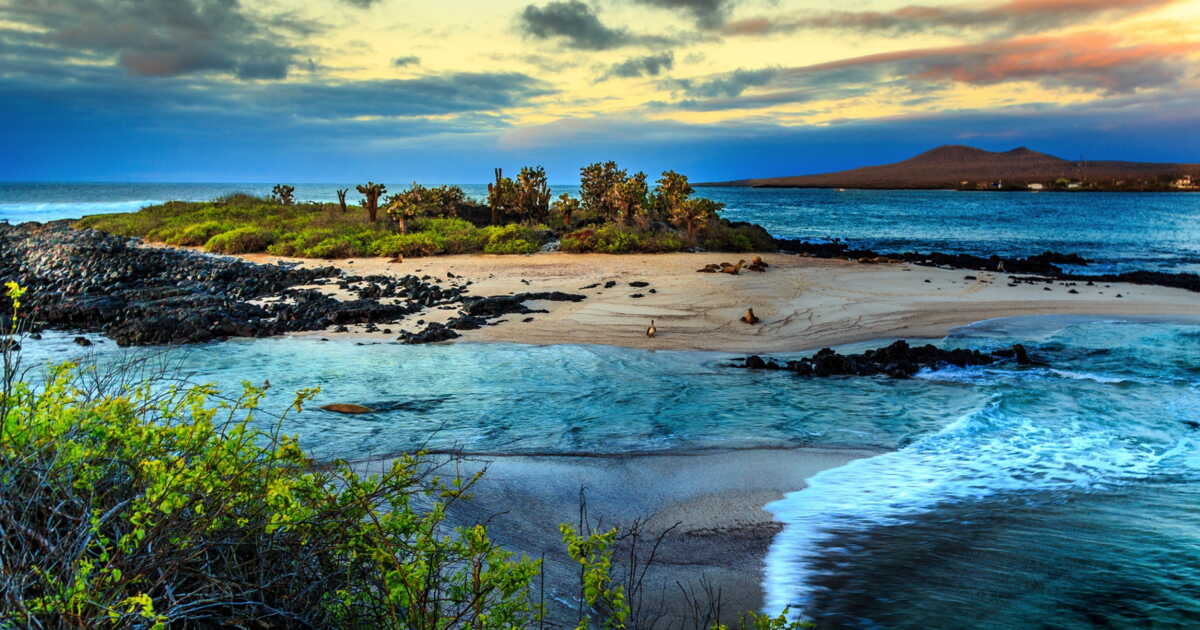
In the Pacific Ocean off the coast of Ecuador, the Galápagos Islands stand as a true paradise. The richness of their fauna and flora, the turquoise waters, and the variety of landscapes provide compelling reasons to visit the archipelago.

1. Exploring Santa Cruz: An Essential Starting Point

Exploring Santa Cruz constitutes the indispensable starting point for any stay in the Galápagos, as this island concentrates the main infrastructures and a significant portion of the archipelago’s biodiversity. Accessible via the Baltra Airport, with connections from Quito airports through various airlines, it facilitates arrival in the Galápagos for travelers seeking adventure or scientific discovery. In Puerto Ayora, a variety of options await, whether you’re traveling on a small budget or prioritizing comfort. Not far from the urban center, the Charles Darwin Research Station is devoted to protecting the giant tortoises, an impressive endemic animal observable also in the humid, green Highlands. This island is also ideal as a starting point for a Galápagos cruise or for excursions to other islands like Isabela or Floreana, making each day in the Galápagos rich with discoveries.

2. Hiking Tortuga Bay on Santa Cruz

Hiking to Tortuga Bay on Santa Cruz is an essential experience for those seeking to combine discovering Ecuador, landscape immersion, and wildlife watching. The footpath from Puerto Ayora makes this excursion easy, even on a Galápagos trip on a small budget. Lined with mangroves and featuring a white-sand beach, the bay hosts marine iguanas, shorebirds, and sometimes sea lions, in a peaceful atmosphere. The clear waters of the Galápagos are conducive to snorkeling, and while there isn’t much in terms of on-site services, the pristine ambience strengthens the sense of being somewhere nowhere, in nature, just a few kilometers from the equatorial coast. Tortuga Bay perfectly illustrates the link between land animals, conservation, and coastal beauty.

3. Discovering the Volcanic Landscapes of Sierra Negra on Isabela Island

Discovering Sierra Negra’s volcanic landscapes on Isabela Island lets you gauge the geological force that shaped the Galápagos Archipelago. Climbing this active volcano, renowned for hosting one of the world’s largest craters, offers a unique panorama of volcanic rocks and frozen lava flows. This hike ranks among the best options for geology enthusiasts or trekkers, while also allowing the observation of Darwin’s finches, another endemic animal of the archipelago. Down below, the Wall of Tears, a vestige of an old penal colony, adds a historical dimension to the day. The Isabela Island, reachable by ferry or Galápagos cruise, is a must in any list of Galápagos days, especially for those who want to move away from mass tourism.

4. Diving or Snorkeling at Kicker Rock (Leon Dormido)

Diving or snorkeling at Kicker Rock (Leon Dormido), off San Cristóbal, offers a direct immersion into one of the planet’s richest marine ecosystems. This iconic rock formation, a true refuge for marine life, draws divers for frequent sightings of hammerhead sharks, manta rays, and turtles. The crystal-clear waters of this site enhance visibility and make the experience especially rich. Even while snorkeling, you can encounter a multitude of tropical fish and approach Galápagos penguins. Kicker Rock is regularly included in day tours or in certain Galápagos cruises, departing from San Cristóbal, making the experience accessible to travelers mindful of preserving their budget.

5. Visit to Post Office Barrel on Floreana

The Post Office Barrel visit on Floreana Island combines historical heritage and immersion in the unique world of the Galápagos Archipelago. Established in the 18th century by sailors, this mail barrel still serves today as an informal exchange of letters among travelers. This quirky use anchors the site in a human-scale discovery of Ecuador. Nearby, Cormorant Point offers the chance to observe pink flamingos in a brackish lagoon, while the clear waters of the Galápagos invite snorkeling in a relatively uncrowded natural environment. Floreana, reachable by boat from Santa Cruz, remains less visited, which ensures a degree of remoteness from mass tourism and close contact with land and marine animals, within easy reach.

6. Meeting the Blue-Footed Boobies at Isla Lobos

Near San Cristóbal, it is possible to observe blue-footed boobies, one of the most emblematic birds of the Galápagos in their natural habitat.

The marked trails traverse a semi-arid landscape where sea lions and marine iguanas also roam, offering a condensed snapshot of biodiversity in just a few kilometers.

This birding excursion, often paired with snorkeling in crystal-clear waters, allows observers to witness the spectacular courtship rituals of the blue-footed boobies, an impressive endemic animal both for its colors and behaviors. Isla Lobos is an accessible stop during a Galápagos cruise or as a day trip, and ranks among the favorites for wildlife lovers.

7. Relaxation in Puerto Villamil (Isabela)

Relaxing in Puerto Villamil, on Isabela Island, provides a welcome break after days of hiking or intensive exploration. This tranquil village, far less visited than Puerto Ayora, embodies another facet of a Galápagos stay, more local and less packaged. The pale-sand beaches are long, the waves gentle, and the waters welcoming for swimming. Concha de Perla, reachable on foot from the town center, is an excellent snorkeling site in a protected bay. Ideal for travelers on a Galápagos budget, Puerto Villamil offers a peaceful setting away from mass tourism, while maintaining access to the best wildlife experiences, including Galápagos penguins, turtles, and sea lions.

8. Española Excursion to Observe Albatrosses

Exploring Española to observe the Galápagos albatrosses stands out as an exceptional naturalist excursion. Accessible only by boat as part of Galápagos cruises, Española Island hosts a large population of albatrosses, visible from April to December. Punta Suárez concentrates a remarkable density of seabirds, including the famous blue-footed boobies, as well as marine iguanas with distinctive pigmentation. This island also offers dramatic landscapes, with windswept cliffs and endemic vegetation. Including Española in your Galápagos trip means an immersion in the rare endemic animal, far from mass tourism, in an almost pristine space located several kilometers from the continental coasts.

9. Exploration des cratères jumeaux sur Santa Cruz

The exploration of Santa Cruz’s twin craters, located in the Highlands, reveals another facet of Santa Cruz Island, marked by lava tunnels, humid forests, and rich endemic vegetation. These massive volcanic collapses, accessible via a moderate hike, offer a striking glimpse into the geological formation of the Galápagos Archipelago. The trails around the craters are also conducive to observing Darwin’s finches and other land animals in their native ecosystem. For environmentally conscious travelers or those exploring Ecuador from a scientific perspective, this stop complements a Galápagos stay meaningfully, without requiring special equipment or high expenditures.

10. Aquatic Safari in the Tortuga Bay

Going on an aquatic safari in Tortuga Bay offers a unique and gentle way to discover the Galápagos’ marine life. By kayak or pirogue, you’re likely to spot rays, turtles, and the elusive Galápagos penguins, swimming in the crystal-clear shallow waters. This non-motorized approach provides a respectful relationship with the environment and suits travelers looking to avoid mass tourism. Easily accessible from Puerto Ayora, this activity sits among the best options for spending a few days in the Galápagos autonomously, even on a small budget. It fully exemplifies the idea of a measured and mindful immersion in one of the planet’s most iconic natural sanctuaries.

11. Explore Las Grietas

Exploring Las Grietas ranks high on any must-see places list for a Galápagos stay. Located on Santa Cruz Island, just minutes from Puerto Ayora, this geological fault system filled with crystal-clear waters attracts visitors seeking swimming, snorkeling, or contemplation. Bordered by volcanic rocks, these natural crevasses offer an immersion in a rare mineral landscape, where it is sometimes possible to observe land or marine animals between two walls. This site perfectly illustrates the exploration of Ecuador from a geological and natural angle. Easily accessible on foot and often included in day excursions, Las Grietas is a favorite for travelers, whether on a Galápagos cruise or in a Galápagos on a budget format, combining accessibility and wonder.

In conclusion, the Galápagos Islands are a treasure trove of diverse activities, ranging from the simplest hikes to the richest underwater explorations. To fully discover the wealth of this archipelago, solid planning is essential. Respect for local rules and the unique ecosystem remains paramount to preserve the splendor of these fascinating islands.

How can I get around the Galápagos?

Getting around the Galápagos Archipelago requires careful planning, as the distances between islands, environmental constraints, and protection rules limit improvisation. Access to the main islands such as Santa Cruz, San Cristóbal, or the Isabela Island is by sea or air, with strict checks at the Baltra Airport or at the CGREG desk at the airport. Between the islands, local ferries allow cheap travel, though journeys can be long and subject to sea conditions. To explore the uninhabited islands, the Galápagos cruise remains the most structured option, enabling close observations of the Galápagos penguins, blue-footed boobies, or the red crabs of the Galápagos in their natural habitat. This solution avoids mass tourism while maximizing encounters with terrestrial and marine animals. Those opting for a Galápagos trip on a budget can combine inter-island boat travel with day trips from a fixed starting point such as Puerto Ayora. Whatever the choice, managing days in the Galápagos and respecting the ecosystems are essential for a respectful and enriching experience.

What is the Best Time to Visit the Galápagos Islands?

The best time for a Galápagos stay depends on both the weather and the animal behaviors you wish to observe. From December to May, the warm season brings milder conditions, crystal-clear waters ideal for diving, and easier viewing of the giant tortoises during nesting. The clear waters of the Galápagos are perfect for diving with sea lions and Galápagos penguins. From June to November, cooler currents bring in many marine species and plankton, making this period excellent for marine wildlife enthusiasts. Far from being merely a climate note, choosing when to arrive in the Galápagos profoundly influences the types of experiences and endemic animals you’ll see, from the blue-footed booby to the Darwin’s finch. It is therefore wise to structure your trip around your naturalist priorities, keeping in mind that the Galápagos Archipelago, located a few kilometers from Ecuador’s coast, remains accessible year-round, but never in the same form.

Which Islands Should You Prioritize for Exploring the Galápagos?

Knowing which islands to visit in the Galápagos is a central decision in planning a Galápagos trip. Each island of the Galápagos Archipelago has its own ecosystem and houses impressive endemic animals. Santa Cruz, easily accessible from the Baltra airport, makes a great base with its giant tortoises at the Darwin center and its white-sand beaches. San Cristóbal, the administrative seat of the archipelago, is the best starting point to visit Leon Dormido, the iconic rock formation ideal for diving. The Isabela Island, the largest, delights with its lava tunnels, the Los Túneles, its volcanic rocks, and the hike of the Wall of Tears, offering a glimpse of the island’s penal history. These three islands concentrate the essential emblematic wildlife: sea lions, penguins, red crabs, and rare terrestrial animals. For a structured list of the best options, it is advisable to combine these islands according to the duration of the stay, naturalist preferences, and the best Galápagos cruise options or guided excursions.

How to Get There to the Galápagos Islands from mainland Ecuador?

Understanding how to reach the Galápagos Islands starts with an arrival in Ecuador, typically at one of the Quito or Guayaquil airports. From there, several airlines offer direct flights to the Baltra airports (near Santa Cruz) or to San Cristóbal, depending on the chosen departure island. Before boarding, a baggage check is conducted to prevent the introduction of exogenous species, an essential precaution for protecting the endemic animals of the Galápagos Archipelago. The flight lasts about two hours, and once on site, entry fees and a visit to the CGREG desk are to be planned. These procedures frame the arrival in the Galápagos within a conservation framework, where mass tourism is managed. This starting point then conditions itinerary possibilities, whether you opt for a Galápagos trip on a budget, a structured cruise, or days in the Galápagos with fixed lodging. Logistics remain straightforward as long as you follow official guidelines and book your tickets well in advance.

This article was written with the help of artificial intelligence, then corrected, expanded, and validated by the editorial staff’s journalists.

Atlantic Airways Expands Faroe Islands Service from Paris


La compagnie Atlantic Airways renforce l’attractivité des Îles Féroé - Depositphotos.com @Ivankmit

CroisiEurope


The Faroe Islands are gaining visibility in the French market.

Since April 24, 2026, Atlantic Airways has been operating a seasonal direct link between Paris-Charles de Gaulle and Vágar Airport.

After a start with two weekly frequencies, the carrier has shifted to three flights per week since May 27, 2026, on Mondays, Wednesdays and Fridays, until September 4. The service will then continue at two rotations per week until October 16, 2026.

The stated objective is to meet growing demand for nature-based destinations that remain pristine and easily accessible from France.

With a non-stop flight time of 2 hours 40 minutes, the Paris–Vágar link places the Faroe Islands among the territories closest to the European Far North.

For a long time kept off the European tourist circuits, the Faroe Islands are now attracting travelers seeking more immersive experiences, away from saturated destinations.


A destination oriented toward more responsible tourism

Spring and early summer are the best periods for exploring the archipelago: increased daylight, optimal hiking conditions, and easier access to maritime excursions.

In this context, Visit Faroe Islands continues to promote a more responsible approach to tourism through its campaign “Please Visit Responsibly”.

This initiative encourages visitors to adopt respectful behaviors: protect wildlife, close gates, reduce noise levels, and favor local operators.

A move backed by Atlantic Airways, which invites its passengers to inform themselves about these best practices before their departure.

In addition to this seasonal direct link, the airline also provides annual connectivity via Copenhagen in partnership with Air France, thereby strengthening the archipelago’s accessibility from several European markets.


Amelia Brille Published by Amelia Brille TourMaG.com Editor
See all articles by Amelia Brille

  • picto Linkedin
  • picto email
Add TourMaG to your Google News feed Google Actualités icône

La Gomera: Spectacular Roques Hike in the Canary Islands’ Volcanic Heartland


La Gomera : randonnée spectaculaire des Roques au cœur de l’île volcanique des Canaries - Photo JFR

Top of Travel


A hands-on geography lesson and a major physical exercise. It is by paying with one’s body that one will best enjoy one of the most impressive mountainous landscapes of La Gomera: The Roques, four volcanic spires rising above semi-arid slopes dotted with shrubs and conifers.

In almost 6 hours of walking, this looped itinerary begins and ends at La Laja, fifteen kilometers from San Sebastián, the main town of La Gomera.


Randonnée : la Laja, hameau niché dans un ravin

Beyond the last houses of this hamlet perched in a ravine, the path climbs steeply into the terrain toward the El Bailadero viewpoint.

Rapidement, la nature volcanique du terrain s’impose. Quelques dizaines de mètres plus loin se dresse, à droite du chemin, un haut mur naturel de pierre brun rouille.

Dans le langage local, on l’appelle un taparucha, une petite colonne de remontée de magma solidifiée et dégagée par l’érosion.


Filons verticaux et paysages volcaniques

Geologically, this is a dyke. Some have detached from the substrate, like this one. Others are enclosed in the rocks and form vertical veins, “rayant” the landscape.

As the trail climbs — one sometimes has to orient oneself by the cairns, small piles of stones marking the route — the view opens onto the first roque.

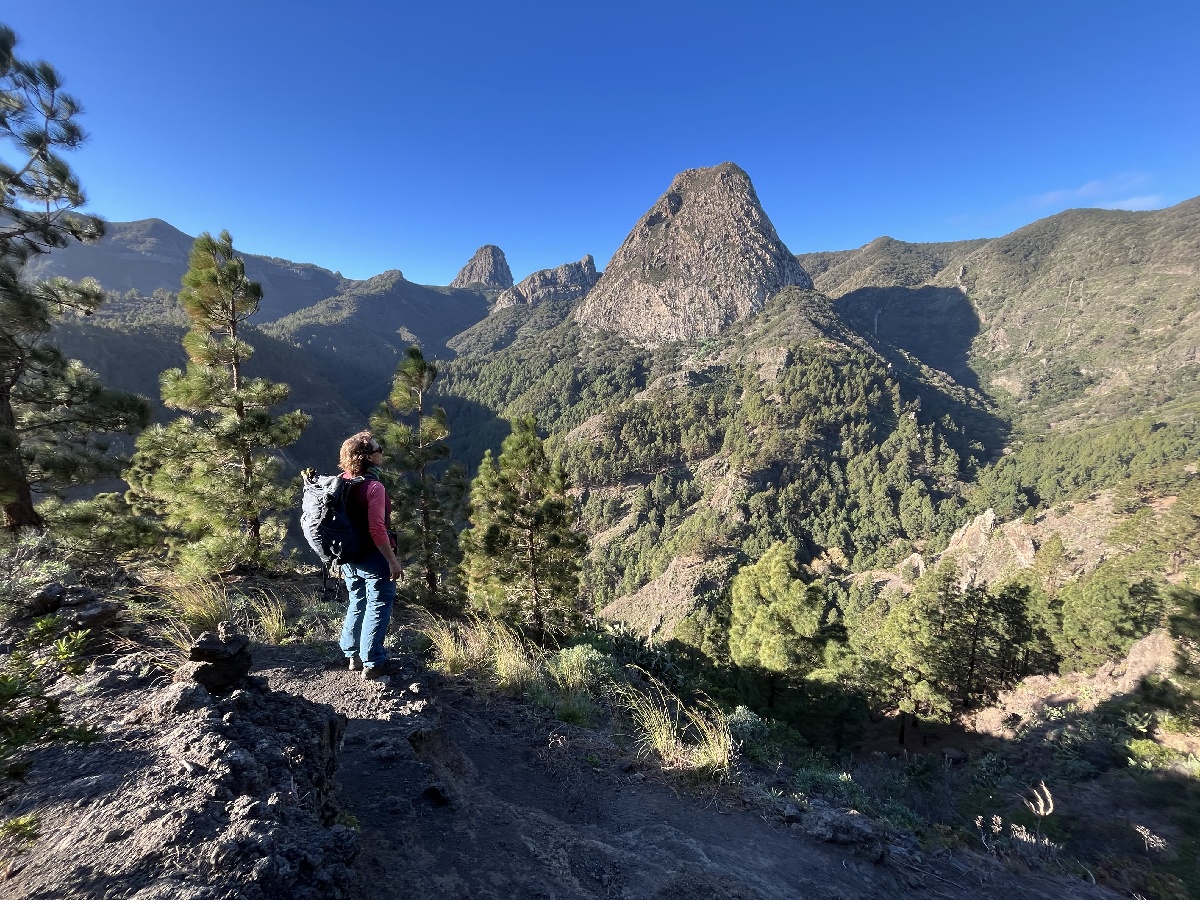
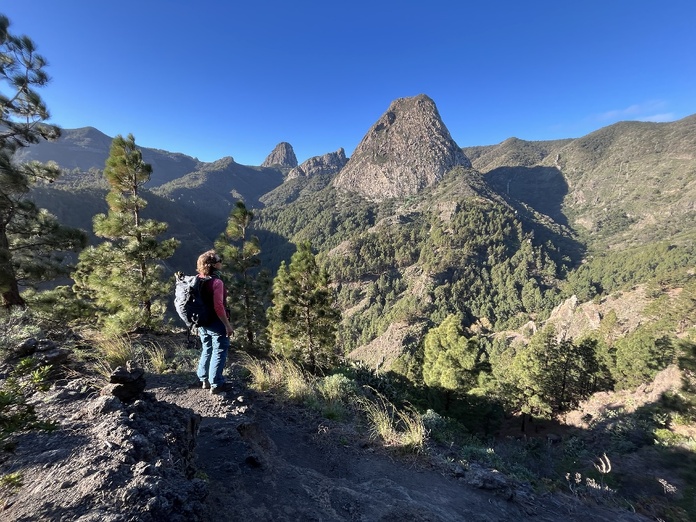
This is a bullet-shaped, conical rock; it is Ojila. Perched at 1,171 meters above sea level, it is made of trachybasalt. A remnant of the island’s ancient activity as well, two million years ago, this sugarloaf is in fact an old and wide eruption chimney eroded by the wear of the softer rocks that surrounded it.


La Gomera : repos bienvenue à El Bailadero

This hike confirms the volcanic origin of La Gomera. The peaks and slopes were subsequently shaped by water erosion and covered with vegetation that varies according to exposure to winds and sun. After 2 hours and nearly 500 meters of cumulative ascent, fatigue begins to set in.

Into a silence barely disturbed by the ringing of sheep bells rising from the valley floor, the El Bailadero viewpoint, at an altitude of 1,050 m, offers a welcome rest.

All visible to the south, the four roques undoubtedly constitute one of the most beautiful viewpoints of the hike: Ojila, Agando, La Zarcita and Carmona stand out against the azure sky.


Vue sur le Teide, point culminant de l’Espagne

What follows is a fairly long trek through the humid forest before reaching the summit of the hike, at nearly 1,250 meters above sea level. The Teide peak, towering over the neighboring island of Tenerife, looms on the horizon. This active volcano, perched at 3,715 meters, serves as the backdrop to multiple panoramas of La Gomera. It is the highest point in Spain.

After another pause at the belvedere of the roque d’Agando, the highest of the four (1,251 meters above sea level), the route descends into the La Laja valley, a quick plunge into a forest of Canary pines that leaves behind the four most famous sugarloaf peaks of La Gomera.

La Gomera: Humid Forest, a Natural Jewel of the Canary Islands


The Laurel Forest of La Gomera, a Unique Canary Islands Ecosystem

La Gomera : dans la forêt humide, joyau naturel des Canaries ! - Photo JFR

Top of Travel


The laurisilva, or laurel forest.

This is the scientifically sounding name used to describe this type of forest, almost permanently drenched by the dense haze arising from the clouds that rise along La Gomera’s slopes.

Spread between 800 m and 1,487 m in altitude, the island’s highest point, this forest is largely included in the Garajonay National Park, created in 1981 to protect this sensitive ecosystem.


A UNESCO World Heritage Site and Biosphere Reserve at the Heart of La Gomera

UNESCO also listed it on the World Heritage List in 1986 before designating it as a biosphere reserve in 2012.

If it stands out against the island’s otherwise dry scenery, that’s because this grove thrives under the influence of the winds, particularly under the trade-wind regime.

Coming from the northeast, they drive clouds loaded with water vapor toward the summit slopes.

They then shed their water droplets onto the trees and shrubs, forming a humid subtropical undergrowth of incomparable plant wealth.


A Three-Hour Hike Through Garajonay’s Humid Forest

In order to observe the phenomenon up close, head to el monte, the name locals of La Gomera give to this high-altitude forest.

From the island’s west and the village of Arure, a nearly 3-hour hiking route forms a loop and starts at the hamlet of Acardece.

As you rise through the different levels of the laurisilva, the opening stretch of the route, facing south, reveals a beautiful scrub vegetation, blending heathers and various shrubs.


Primary Forest Landscapes Shaped by the Trade Winds

At the entrance to Garajonay National Park, the landscape changes radically.

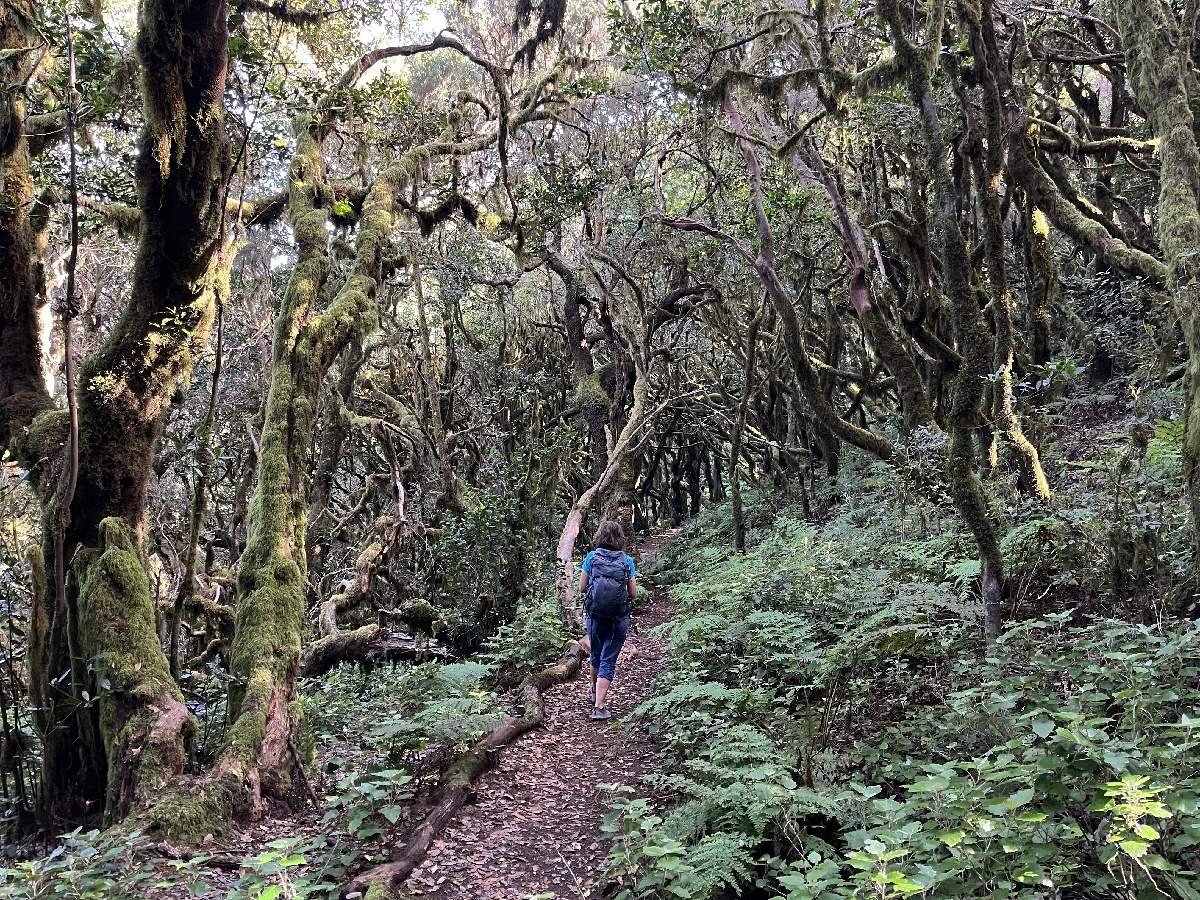
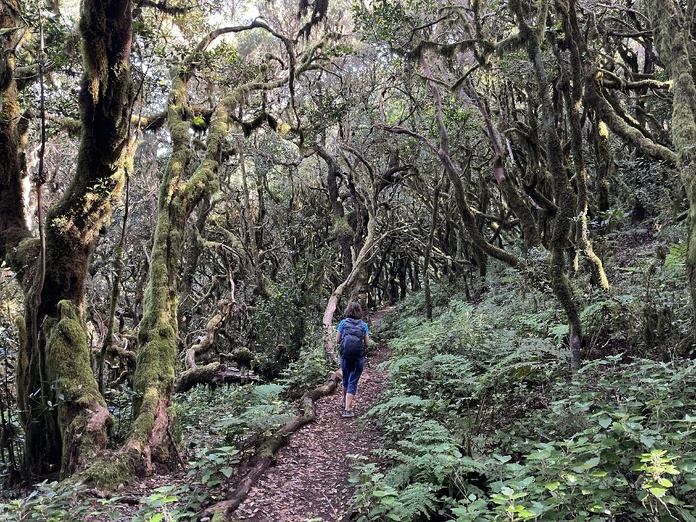
The path suddenly plunges into a dense forest formed by arborescent heathers, holly, laurels, and nearly twenty other tree species.

Initially dry in appearance, it becomes more humid as you ascend along the route, gradually leaving behind the southern influence to face winds coming from the north.


Mosses, Ferns and Lichens: a Tolkien-esque Atmosphere

At the place called Raso de la Bruma, the trail crosses a road and leans distinctly toward the north. A new atmosphere!

The twisted trunks and the branches of heathers, some specimens reaching up to 20 meters tall—a sort of world record—are wrapped in moist mosses and lichens.

Mixed with fern-covered soils, this emerald fuzz creates a Tolkien-like landscape, in a surprisingly cool freshness.


Why You Should Discover La Gomera’s Laurel Forest Right Now

Greece in Its Entirety: Worldia and SKY Express Open Access to Preserved Islands


© Unsplash -  Tânia Mousinho

Top of Travel


SKY Express: the air network that changes everything

Elected “Airline of the Year” by the ERA (European Regions Airline Association) and operator of Greece’s newest fleet — and one of the most modern in Europe — SKY Express has established itself as a benchmark on the regional market. With 33 domestic destinations served (islands and continental towns combined) and 60 destinations in total when including its international network, the airline offers coverage that, for a travel professional, is far more than a broad map: it is the tangible ability to build multi-destination itineraries without overnight stays, with no compromise on the smoothness of the trip.

From France, the airline naturally fits into sales circuits: travelers board from Paris, Lille, Brussels, Nantes, Lyon or Marseille, with direct flights to Athens, Rhodes and Heraklion. The connection with the Athens hub then opens up the entire domestic network, enabling access to archipelagos that many operators still struggle to cover seriously.

For agencies looking to move beyond standardized offers, this kind of connectivity is a valuable resource. It makes viable destinations that were not viable — not because they lacked appeal, but because they lacked perceived accessibility and thus visibility.


Worldia: the most complete Greek offering on the market

On Worldia’s side, the groundwork is solid. The platform has structured an à la carte Greek offering that covers all of continental Greece and nearly all islands open to tourism — that is, more than 55 islands connected by flights and ferries, 2,000 hotels selected from 2 to 5 stars, and 150 activities listed to enrich each stay. An ambit designed to meet all profiles: families seeking tranquil beaches, couples on romantic getaways, budget travelers as well as premium clients in search of authenticity.

What sets this offering apart is both its breadth and its editorial depth. Worldia has developed recommendations for visits, beaches, must-see sites and hidden gems for each destination — those places guides have not yet cited, the ones that make a real difference in a client proposal. The Peloponnese and its ancient ruins facing the sea, the Sporades where some coves remain sheltered from crowds, the Ionian Islands greener and wilder with their relaxed Italianate lifestyle — not to forget those names that intrigue: Astypalea, the butterfly island; Chios and its medieval villages; Kythera the elusive; Leros and its otherworldly ambience — so many regions that the platform has studied in depth, with itineraries available online to help partner travel agencies design seamless combinations between islands and regions, depending on available air or ferry connections. The objective is clear: diversify sales in Greece and give every intermediary the tools to move beyond the catalogue limited to the big, safe bets.


© Unsplash -  Constantinos Kollias


Selling Greece differently, an underutilized sales lever

Over-tourism makes headlines, but it also creates opportunities. More and more travelers are actively seeking to move away from it: they want Greece, not the Santorini sunset queue — but they don’t always know the alternatives. This is precisely where Worldia plays a role. The platform has developed a panel of itineraries and combinations promoting a varied offering, accessible to all budgets, to meet these new expectations: travel off the beaten path, without sacrificing a well-organized stay. Destinations less frequented, suitable for family stays as well as couples’ getaways, that offer that mix of calm, nature and authenticity that the most famous islands struggle to guarantee.

Worldia has crafted a few favorite itineraries — gateways to a destination that has not finished surprising.

Between sea and mountains — Peloponnese reimagined

Monemvasia perched on its rock, the stone villages of Magne, the Byzantine fortresses of Mystras facing a landscape of hills and sea: authentic Peloponnese exists; it simply needed a worthy itinerary to be offered. This 10-day road trip invites you to traverse a wild and luminous territory, far from the mapped routes, where each stop tells an ancient story, starting from Athens. → See the itinerary

Secret Cyclades — Sifnos & Milos, the alternatives that have all the allure of the big names

Mykonos and Santorini saturated? Their neighbors Sifnos and Milos offer an elegant answer. Sifnos, a mountainous jewel with olive valleys and perched monasteries; Milos with its 75 beaches and hidden coves for a no-compromise getaway. An 8-day package tailored for clients who want the Cyclades — without the crowds. → See the itinerary

Head for the Sporades — Skiathos & Skopelos, the archipelago worth getting to know

Skiathos for its paradisiacal beaches and gentle vibe, Skopelos for its authentic charm and landscapes that inspired cinema: this week-long escape in the Sporades ticks all the boxes for a couple seeking nature and picturesque villages, without multiple transfers. Best from June to September. → See the itinerary

The Greece your clients are unknowingly seeking is already here, cataloged, connected, ready to be sold. All that was missing was a serious access to the entire destination. Worldia and Sky Express have built it — now it’s up to you to seize it.


La Grèce dans sa totalité : Worldia et SKY Express ouvrent l'accès aux îles préservées
Worldia

19 rue Blanche

75009 Paris

Email : [email protected]

Site web : https://corp.worldia.com/

linkedin