Hervé Bellaïche (Catlante): Travel Agencies Are Our Main Growth Engine


TourMaG – The summer is drawing to a close. What assessment do you make of the 2026 season?

Hervé Bellaïche : The assessment is fairly positive, at least above our expectations. We were concerned because market trends suggested a difficult market that had trouble stabilizing.

In the end, we recorded a large number of last-minute bookings, about 20% more than usual. We also achieved an excellent August, the best in five years. So we are very commercially satisfied.

Travel agencies have been a great help and today constitute our main growth engine.

Beyond the commercial results, what matters most for Catlante is the customer experience, the quality of service and overall satisfaction. And in this regard, feedback is consistently excellent. Clients come back telling us they spent fantastic holidays, sometimes even “the best holidays of their lives.” That is what motivates us to go even further and to make the brand more widely known.

TourMaG – Travel agencies have thus embraced the cabin-cruise concept on a catamaran. How did you develop this distribution network?

Hervé Bellaïche :
A few years ago, Catlante was nearly exclusively sold direct. We found a second growth engine with travel agencies, thanks to the work undertaken for about two years to develop distribution networks.

It wasn’t necessarily easy. When you have a history of operating primarily through direct sales, you have to learn to work with a network of endorsers. I’ve been in the tourism industry for 20 years and for 20 years I’ve advocated this growth channel. I’m therefore very pleased that we managed to implement it at Catlante.

In the first half of the year, we’ve seen an 80% growth in travel agencies. It’s working very well, with two phenomena: some agencies are literally exploding their sales, with three- to fourfold increases over their previous level, while others still haven’t jumped aboard and are stagnating.

Our analysis is that some agencies have understood the appeal of this new type of vacation, which is popular, while others have not yet integrated this evolution.

TourMaG – The travel sector has faced the consequences of geopolitical tensions in the Middle East. Has your product proven particularly resilient?

Hervé Bellaïche :
Yes. In summer, around 90% of our production is in the Mediterranean. We have many departures from the Marseille coast, up to Saint-Tropez, but also from Corsica toward the north and southern Corsica, or Italy.

We also have departures from Palma to Minorca and Majorca in the Balearics. So these are mainly close-to-home trips. We also have a few trips to the Seychelles, which were more affected by the difficulties related to the Middle East.

Our product is resilient and even acted as a kind of travel refuge.

Some agencies have called us saying they had clients initially planned for long-haul trips or even within France, in areas hit by storms or fires, who had to rethink their plans. That perhaps explains part of the last-minute bookings.

We notably had a few families who had planned to go to the Landes region, Cap-Ferret for example, and who ultimately redirected to a Catlante trip.


TourMaG – What is the current split between cabin cruises and privatizations?

Hervé Bellaïche :
Catlante indeed does two kinds of offerings. We invented this cabin-cruise model: essentially sharing a boat, somewhat like a guesthouse on the sea. Our vessels are specifically designed for this, with plenty of space.

Clients frequently tell us they have met amazing people while still being able to live their own life. The act of sharing the boat can be a first hurdle at the time of booking, but once aboard, the initial hesitation completely fades away.

Today, roughly two-thirds of our activity comes from the cabin product. A couple, two couples or a family can take one, two or three cabins on the six cabins each boat offers. We have six cabins per boat, with a crew of two to three people.

The remaining one-third corresponds to groups or families who come together and privatize the boat.

TourMaG – Cabin cruising remains a niche product. Is it becoming more mainstream?

Hervé Bellaïche :
I can’t speak for the entire industry, but at Catlante we sense strong demand.

I believe this owes more to the way Catlante operates than to a general democratization of the sector. The company has been around for 23 years and, for 23 years, we have focused on the same thing: cabin-catamaran cruises, whether cabin-based or privatized, with crew.

Our know-how, our methods and our approach help us build client loyalty. We operate at smaller volumes compared with large tour operators—probably 10, 20 or 50 times less. We handle between 6,000 and 10,000 passengers per year.

We perform our activities in a professional manner. It is craftsmanship on a grand scale. We always depart with 12 people. Each departure is precisely shaped, personalized and customized. Yet we manage to run roughly 500 departures per year.

TourMaG – What are your prospects for the winter season 2026-2027 and which destinations will you offer?

Hervé Bellaïche :
The Caribbean is at the heart of our winter activity. The Grenadines stand out as a particularly fantastic destination to discover by boat and by catamaran.

We also propose tours around Martinique, Guadeloupe, Saint-Barthélemy and Antigua and Barbuda. We have a whole range of Caribbean destinations that lend themselves especially well to catamaran vacations.

We reach incredible lagoons, moving from paradise beaches to paradise beaches, from secret coves to secret coves. It is quite amazing.


TourMaG – How does the winter season look commercially?

Hervé Bellaïche :
Like many players, we’ve fallen a bit behind. We had a lot of momentum for the summer and managed to maintain it. For the winter, however, we sense a tendency toward last-minute bookings.

We still have quite a bit of availability for this winter. This does not overly worry us, but the activity will need to take off at the start of the autumn term. We look forward to the rentrée to boost sales and ensure that clients join us this winter.

We also tend to extend the summer season into September, or even late September, with departures in Corsica, the Balearics and more generally in the Mediterranean. We then begin the Caribbean season around mid-November. That gives us a little time to fill the order book.

TourMaG – 2027 will be an election year in France. Are you worried about the presidential elections?

Hervé Bellaïche :
Not at all. What could actually worry us is purchasing power.

We remain with prices that, relative to the product’s quality, are very well positioned. In our satisfaction surveys, which we analyze in great detail, a large number of clients tell us that the value for money is incredible.

Nevertheless, we do not want to raise prices to keep the product accessible. We prefer to increase the number of boats and grow our customer base rather than raise rates.

We are not, either, in a discounting framework. We have never done it and we will never do it.

One can be concerned about the situation of French clients and their purchasing power. On the other hand, I do not think that the fact that people must vote or fear what is going to happen will stop them from travelling. The experiences from previous years have shown us that this kind of context did not have a drastic impact on the travel industry.

TourMaG – What will be Catlante’s next engagements with tourism professionals?

Hervé Bellaïche :
We obviously continue all our familiarization tours and our actions with professionals. Our salespeople travel across France to meet travel agencies.

We are increasingly organizing familiarization trips and ship visits. It’s enough to contact Catlante and our sales team to arrange this kind of event.

We have put a lot of work into this area this year. We welcomed around 2,000 people, including nearly 500 travel agents aboard our ships to discover our product.

We will also be present at the IFTM, even though we will unfortunately not have a stand, as we do not yet have the budgets required or the critical size to do so. We will also be present at the Grand Pavois in La Rochelle at the end of September, at Cannes for the Nautical Fair, and at the Paris Boat Show in November.

Finally, we will organize in the coming months an evening bringing together our clients and our most loyal agencies, as well as a few partners and friends, to allow everyone to meet.

Because travel, too, is about that. At Catlante, it is about meeting, sharing and exchanging.

In a world that is very disconnected, what we advocate with Catlante is reconnecting with nature, switching off the phone, real reconnection and reconnecting with oneself. We want to connect and reconnect clients with one another.

Custom Group Travel


© Únia Travel / Image générée par IA à titre illustratif

Hurtigruten


A Well-Functioning Group Tour Does Not Necessarily Need Replacing

An agency has been programming Andalusia for ten years. Seville, Cordoba, Granada: the itinerary is well-known, mastered, and continues to captivate.

The first instinct could be to search for a new destination. But is it really necessary?

The great classics remain powerful triggers of sales. For a traveler who discovers Andalusia, removing the Alhambra or the Cordoba Mosque-Cathedral in the name of originality would make little sense.

However, a good circuit can wear out in the way it is built or told.

It can be worthwhile to preserve its backbone and refine a few moments: another stop, a gastronomic experience, a special evening, a more immersive visit, or simply a pace that leaves more room for the destination.

Renewal does not always mean changing the product.

It can involve looking at a known product with a fresh eye.


Finding a New Reason to Travel

Take another very common scenario.

Clients who have already visited Lisbon and Porto. How can we rekindle their appetite for Portugal?

Adding yet another visit to Lisbon will probably not suffice. Yet Portugal can be rediscovered very differently depending on the guiding thread: gastronomy, heritage, traditions, inland areas, local festivals, vineyards, crafts, or less-programmed territories.

The destination hasn’t changed. The reason to return, yes.

That is where the inbound agency’s work truly begins.

What truly aligns with the agency’s clientele? How far to go beyond the classics? Which experience provides enough value to justify its cost? Is it feasible for 45 people? At what period? What impact on kilometers, meals, and schedules?

These trade-offs turn a good idea into a marketable group program.

Because a service can be wonderful on paper and much less relevant when one must integrate a coach, travel times, a reasonable daily pace, and lunch for 45 people. In group travel, originality must always pass the field test.


Being Different Does Not Mean Packing In More

This is probably the most common trap when a program needs a new breath.

An extra tasting. An unusual visit. A workshop. A local encounter. Taken separately, each of these elements may seem interesting. Put together, they can produce a day that is more expensive, longer and ultimately less enjoyable.

The right question is therefore not: “What more can we add?”

But rather: “What will truly change the perception of the journey?”

A single well-chosen encounter can be enough.

In Galicia, for example, discovering the work of mariscadoras, the women who harvest shellfish on the rías, lets you approach the destination through a trade, the local economy, the gastronomy and the relationship with the sea. The experience is simple in form, but it offers a different reading of the territory.

It is also from this reflection that certain Únia Signature creations were born: starting from a tradition, an event, a season, or a know-how to give a through-line to the stay.

The Fallas of Valencia, Temps de Flors in Girona or a program built around local flavors and traditions are not interesting simply because they are “different.” They become interesting when they provide a genuine reason to choose or rediscover the destination.

That is why originality does not need to be spectacular. It must be relevant above all.



When the Catalog No Longer Suffices

There are also requests that fall outside any brochure.

For example, an agency calls us with a very simple brief: “I have a group of botany enthusiasts. They want to discover lesser-known gardens and they don’t want a classic circuit. What can we build?”

From there, we search. Which gardens are truly worth the trip? How can they be connected without spending the whole day on the coach? What season should we depart? Where should we lunch? What is realistic for the group and for its budget? It is by working these details with the agency that the program takes shape.

That is where the customized group travel makes all the sense.

Sometimes, the result will be a completely new program. Sometimes, it will be enough to evolve an existing circuit. In both cases, the starting idea must be tested against the terrain to become a product that the agency can actually sell and operate with confidence.


An Itinerary to Evolve?

A program that works but is starting to lose momentum? Clients who already know the destination? A particular theme to transform into a group travel experience?

At Únia Travel, it’s precisely this part of the DMC’s work that we are passionate about: listening to the idea, challenging it when necessary, researching on the ground, and transforming it with you into a program tailored to your clients.


Family Travel: From Kid-Friendly to Family-Friendly


From ‘kid-friendly’ to ‘family-friendly’

© Tristan Scohy

Hurtigruten


The distinction may seem subtle, yet it reshapes how a stay is designed. A product labeled as “kid-friendly” primarily answers the specific needs of children. The “family-friendly” concept encompasses them and pushes further: it aims to craft programs that captivate and involve both parents and children at once.

It isn’t about replacing the “kid-friendly” approach, but about weaving it into a broader framework. A pool, a family-friendly hotel, or services tailored for kids remain important—they form the comfort baseline families expect. But they don’t automatically guarantee distinction anymore.

The question shifts from “Is this suitable for children?” to “Will parents and children want to experience it together?”

This evolution represents a real challenge for agencies and tour operators. It invites evolution not only in product development but also in selling points: beyond comfort levels and facilities, one must be able to tell what the family will actually do and share during the trip.


Not just keeping kids busy, but giving them a real place

The shift also changes the child’s role during the trip.

It’s no longer enough to merely plan an activity to occupy them while adults explore. The child becomes an active participant in discovery: getting hands-on in a workshop, learning a local craft, spotting wildlife in its natural setting, or exploring a city through a game.

This approach also lets parents view the destination differently. Travel becomes less a sequence of must-see sites and more a program built around discoveries accessible to several generations.

For professionals, this evolution opens a space for differentiation. In a market where many offers claim to be “family-friendly,” the ability to provide genuinely original experiences tailored to different ages becomes a standalone selling point.


From Bali to Japan: when the offering embodies this evolution

This trend is becoming visible especially in how some destinations package experiences.

At Shanti Travel, for instance, this thinking led to the creation of a dedicated family-focused GIR in Bali. The lineup includes: an introduction to the art of pottery with a craftsman, a treasure hunt through the Ubud countryside, a catamaran excursion around Nusa Lembongan, and a sunset jeep ride at the foot of Mount Batur. Different formats, but a single objective: empower children to participate without turning the journey into a program built solely for them.


© Tristan Scohy


In Japan, experiences take a different shape: a sumo-themed dinner show, a manga workshop with a Japanese artist in Nakano, a kimono photoshoot, an origami workshop, or a glimpse into the world of samurai. Again, these are not “activities for children,” but offerings that children can enjoy alongside their parents.

For distributors, this type of content also provides a fresh sales angle: you’re no longer selling merely a destination or an itinerary, but the moments that will allow the family to recount the trip after they return.


© Tristan Scohy


Adventure, but in the right measure

The “family-friendly” approach also helps escape a binary view of family travel: on one side, a comfortable, highly structured stay, and on the other, an adventure reserved for experienced families.

Between them, there is a whole spectrum of possibilities. An accessible hike, a boat outing, a cycling excursion, or a night in an unconventional lodging can deliver real novelty without turning the trip into an obstacle course.

The professional’s job is to strike the right balance between discovery and comfort, taking into account the children’s ages as well as the parents’ desires.


Rethinking pace and priorities


Memory as the new criterion of success

In essence, shifting from “kid-friendly” to “family-friendly” reflects a broader evolution in how travel is conceived.

Families want to travel in good conditions, of course, but they also seek what everyday life doesn’t always allow: to discover, to learn, to marvel, and to share a different kind of pause.

For tourism professionals, the challenge is less about building trips where children don’t get bored and more about offering trips where every generation can find its place.

Because a few years down the line, a family is likely to remember less the hotel and more that tuk-tuk ride through the tea plantations, that harvest in the rice fields, that bicycle ride, or that night with a local host.

In other words: “family-friendly” isn’t just about tailoring the trip to children.

It means designing a journey that the whole family will want to experience.


Le voyage en famille sort du « kids friendly » : place au « family friendly »
Mélissa Pébrocq
B2B Sales Manager
[email protected]
www.shantitravel.com/fr
+33 6 52 77 86 09

linkedin instagram


>> SHANTI TRAVEL in the DESTIMAG Directory


Jans Tours Invites Travel Professionals to IFTM 2026 to Shape Tomorrow’s Travel Across Four Destinations


© Jans Tours

Hurtigruten


IFTM: three days to reconnect and prepare for 2027

A few weeks ahead of IFTM Top Resa, Jans Tours is gearing up to reconnect with its partners and tourism professionals for three days of meetings and exchanges.

For the receptive side, the trade show provides a privileged moment to take time to discuss upcoming projects, present new offerings, and share the latest inspirations from local teams.

As journeys for 2027 are already being planned, traveler expectations are evolving too: more personalization, new experiences, itineraries that depart from the classics, lesser-known addresses, and programs tailored to specific clienteles — topics that can be discussed directly with Jans Tours teams.

The objective is simple: to engage with professionals, understand their needs and collaboratively build the upcoming journeys for their clients.


Four destinations, four ways of traveling

This year, Jans Tours arrives at IFTM with four destinations to present to industry professionals: Indonesia, the Philippines, Malaysia, and Switzerland.

Four distinct realms, but a single approach: a strong local presence and teams that know their destinations from the inside out.

Indonesia remains at the heart of Jans Tours’ DNA. Bali, Java, Lombok, Sumatra, Komodo—these regions enable the creation of very diverse journeys, from a first-time visit to Indonesia to more hidden itineraries and tailored experiences.

In the Philippines, the team also guides professionals in building programs that blend islands, beaches, nature, encounters, and local experiences. A destination still full of opportunities to move beyond the most classical itineraries.

Malaysia continues to grow within the group. With its office in Kuala Lumpur, Jans Tours can rely on a locally based team to design programs aligned with travelers’ expectations and the needs of professionals.

And then, there is Switzerland.


A new destination joins the Jans Tours family

It’s one of the major novelties of this 2026 edition: Jans Tours expands its playing field with the opening of its office in Switzerland.

After Indonesia, the Philippines, and Malaysia, this new presence marks another milestone in the group’s development.

Jans Tours Switzerland is now fully operational on the ground and completes Jans Tours’ international network.

The destination opens up new possibilities for professionals: individual trips, group departures, incentives, premium stays, or tailor-made itineraries can be crafted around Switzerland’s diverse landscapes and experiences.

From the Alps to the lakes, cities to villages, gastronomy to scenic railway experiences, Switzerland offers a particularly rich playground for designing bespoke programs.

And above all, as with its Asian destinations, Jans Tours relies on local knowledge and close relationships with professionals.

So, even if the Jans Tours stand is located in the Asia space, Swiss projects are, of course, welcome!


© Getty Images Pro


An international team gathered in Paris

For this edition of IFTM, several Jans Tours team members will travel to Paris.

Anthony, Audrey, Eva and Lucie from the France office will be on hand to welcome professionals and discuss their projects.

Also present will be Geoffrey, Rudi and Benjamin, directly from the Indonesia office, as well as Sylvain, representing the Malaysia office.

An international team that will allow visitors to meet both their usual contacts in France and the teams based directly at the destinations.

Because this is also Jans Tours’ hallmark: behind every program there are local teams who know the ground realities, partners, new offerings, and experiences truly worth presenting to travelers. There is also a France-based office, with dedicated contacts, enabling French-language exchanges and close, on-site support, without time-zone constraints.

IFTM will thus be an opportunity to (re)put faces to these teams, and to take time to discuss beyond emails and quote requests.


Malaysia featured at a second pavilion

Jans Tours will also be present at the pavilion of the Malaysia Tourism Promotion Board, stand A014.

A complementary presence that will allow professionals to come and discuss the destination, its novelties, and programming possibilities.

Malaysia indeed offers numerous options for building journeys that combine major highlights with more intimate experiences. With its local team based in Kuala Lumpur, Jans Tours continues developing this destination with agencies and tour operators.

Professionals will therefore be able to find Jans Tours at two different spots in the show, depending on their needs and projects.


© Pexels


Meetings from September 15 to 17 in Paris


Jans Tours donne rendez-vous aux professionnels à l’IFTM 2026 pour préparer les voyages de demain autour de 4 destinations

Audrey Marc

Deputy Director, France

+ 33 6 70 54 20 63

+ 33 1 61 30 30 06

[email protected]

jans.tours

>> JANS TOURS in the DESTIMAG Directory


The Middle East Reimagined: Abu Dhabi’s Culture, Art, and New Travel Experiences


© Dakkak - Photo générée par IA

Hurtigruten


The Middle East is undergoing a transformation, offering travelers far more than a mere escape. Heritage, contemporary art, architecture, cuisine, and exclusive experiences are now at the heart of itineraries. In Abu Dhabi, the opening of the Guggenheim strengthens the emirate’s cultural appeal, while Saudi Arabia, Egypt, and Jordan are developing new ways to discover their history and landscapes. For tourism professionals, this evolution presents a tremendous opportunity to offer journeys that are more personalized, more immersive, and more centered on the experience.


Abu Dhabi: A New Cultural Milestone with the Guggenheim

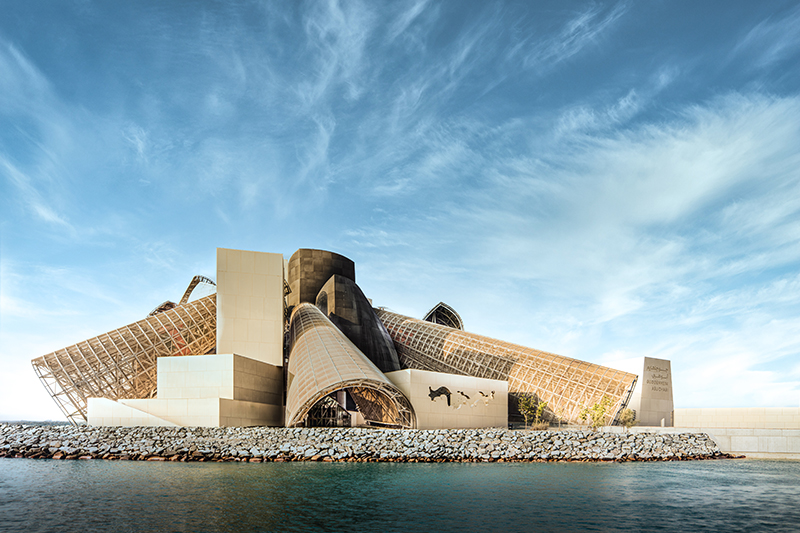
Long associated with its beaches, luxury hotels, and spectacular architecture, Abu Dhabi is increasingly asserting its identity as a cultural destination. The opening of Guggenheim Abu Dhabi, scheduled for December 11, 2026, marks a major new milestone in this transformation.

Installé sur l’île de Saadiyat, le musée imaginé par l’architecte Frank Gehry vient compléter un environnement culturel déjà exceptionnel, notamment avec le Louvre Abu Dhabi. Son arrivée offre une nouvelle raison de séjourner dans la capitale des Émirats arabes unis et ouvre de nouvelles possibilités pour les voyageurs intéressés par l’art, l’architecture et la culture contemporaine.

Pour les agences de voyages et les tour-opérateurs, cette évolution permet également de renouveler les programmes classiques. Abu Dhabi peut désormais se découvrir à travers des itinéraires mêlant patrimoine, culture, architecture, gastronomie, expériences exclusives et détente.

Cette nouvelle offre culturelle s’intègre naturellement dans des combinés avec Dubaï, permettant aux voyageurs de découvrir deux visages complémentaires des Émirats : une métropole internationale et dynamique d’un côté, une capitale culturelle et patrimoniale de l’autre.


Guggenheim Abu Dhabi © The Guggenheim


Destinations Emphasizing the Experience

The evolution is not limited to Abu Dhabi. Across the Middle East, travelers are now seeking experiences that go beyond traditional sightseeing.
In Saudi Arabia, AlUla perfectly illustrates this new approach. The dramatic landscapes, the archaeological site of Hegra, cultural experiences, and new hotel concepts enable particularly immersive stays.
Jordan remains a must-see with Petra, Wadi Rum, and the richness of its heritage. Yet the aim here, too, is to offer a more customized discovery: encounters with locals, gastronomic experiences, desert nights, private visits, or programs that combine culture and well-being.
In Egypt, the country’s immense historical wealth continues to attract travelers, while new experiences emerge. From Cairo to Luxor and Aswan, including Nile cruises and stays along the Red Sea, the destination allows for very different itineraries tailored to clients’ expectations.
The Middle East is thus becoming a region where customization, authenticity, and the quality of the experience are increasingly important.


Local Expertise, a Real Asset for Tourism Professionals

This shift in expectations reinforces the role of DMCs, which are becoming true partners for agencies and tour operators.
Dakkak DMC, a historic player in Middle East tourism since 1955, supports professionals in designing and delivering tailor-made programs across several destinations in the region.
From airport welcome to coordinating transfers, from hotel reservations to cultural visits, from private tours to group trips and MICE programs, the goal is to ensure smooth organization while preserving the flexibility to meet specific client requests.
This local expertise also enables the creation of programs that depart from traditional itineraries: meetings with local actors, private experiences, culturally guided visits by specialists, exclusive activities, or combinations of multiple destinations.
For a travel agency, collaborating with a local partner also means benefiting from concrete on-the-ground knowledge of the terrain, suppliers, logistical constraints, and the constant evolution of each destination.


Dakkak DMC: Assisting Agencies in a Middle East in Full Evolution

Present in several destinations across the region, Dakkak DMC helps tourism professionals design individual trips, group journeys, cultural circuits, incentives, and events.
In the United Arab Emirates, Egypt, Jordan, Saudi Arabia, and other Middle Eastern destinations, local teams work with agencies to build programs tailored to each client profile.
The arrival of new cultural attractions like Guggenheim Abu Dhabi perfectly illustrates this evolution. It enables new combinations and the reinvention of destinations already familiar to travelers.
For Dakkak DMC, the challenge is to continue anticipating these changes and to turn each novelty into an opportunity for tourism professionals.
The Middle East no longer merely tells its story: it is today writing a new page in the future of its tourism.


© Dakkak DMC


Authentic Morocco: From the Sahara to the Imperial Cities with NAGA Travel


© Naga Travel Maroc

Hurtigruten


In the Footsteps of Caravans Across the Moroccan Desert

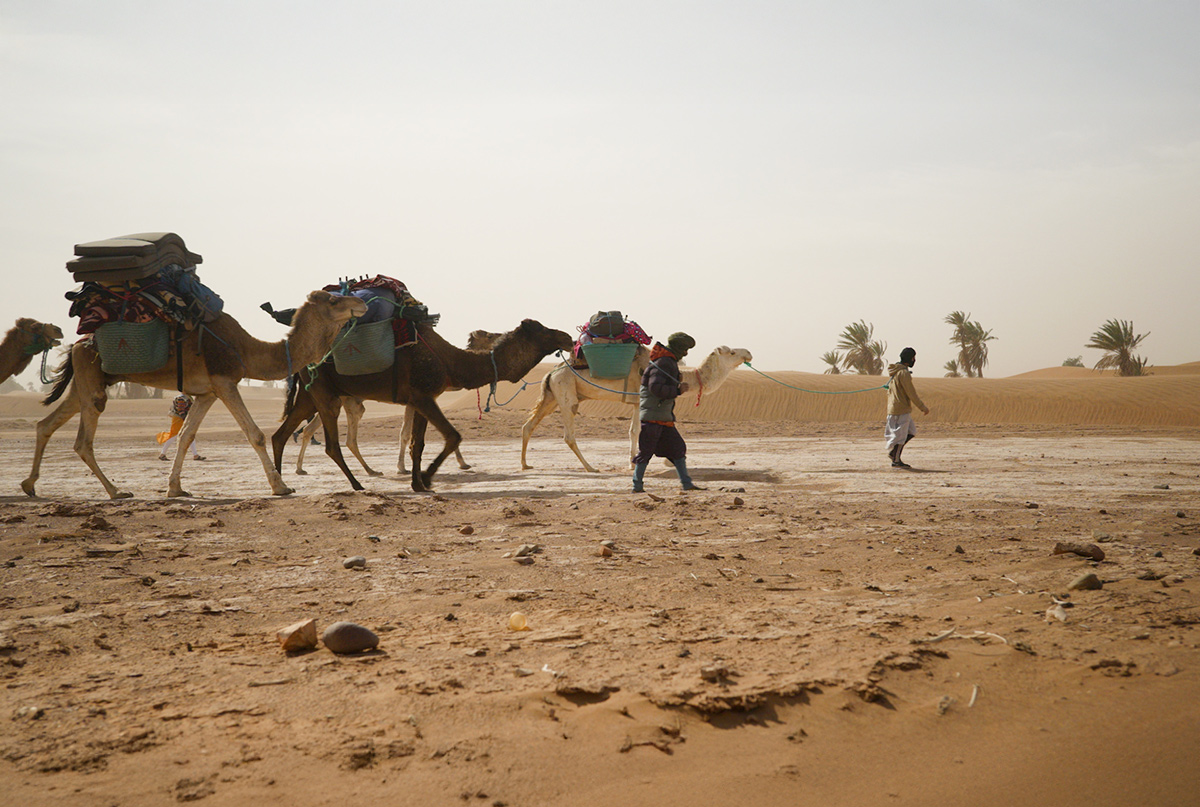
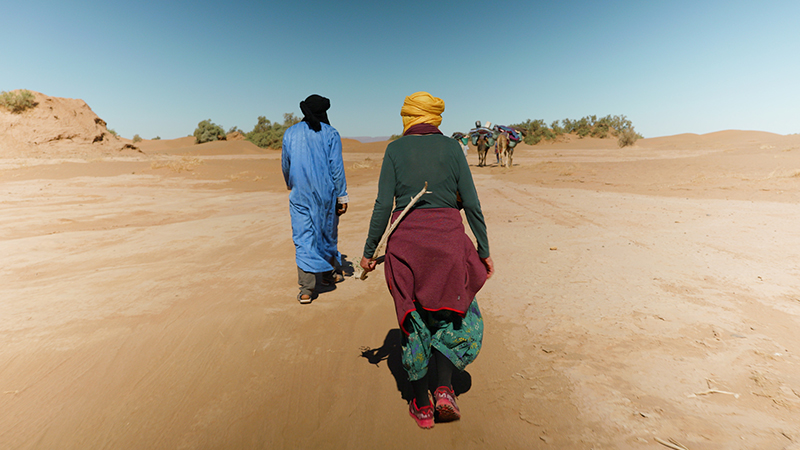
Nestled in the southern reaches of Morocco, at the edge of the Sahara, the village of Mhamid El Ghizlane marks the starting point of a unique adventure through the vast desert. With NAGA Travel, travelers embark on treks and desert hikes, guided by nomads and former caravan men, to discover the authentic Sahara and its grand landscapes.

The itineraries follow the ancient caravan routes, traversing oases and desert plateaus, all the way to the majestic dunes of Erg Chegaga and Erg Zahar, nicknamed the howling dune for its wild and spectacular character.


© Naga Travel Maroc

On the way, a must-stop is Sidi Naji, an iconic site rich in history and local traditions. This stop, frequently visited by caravans, offers a unique glimpse into Saharan spirituality and culture, inviting travelers to fully soak up the desert’s soul.

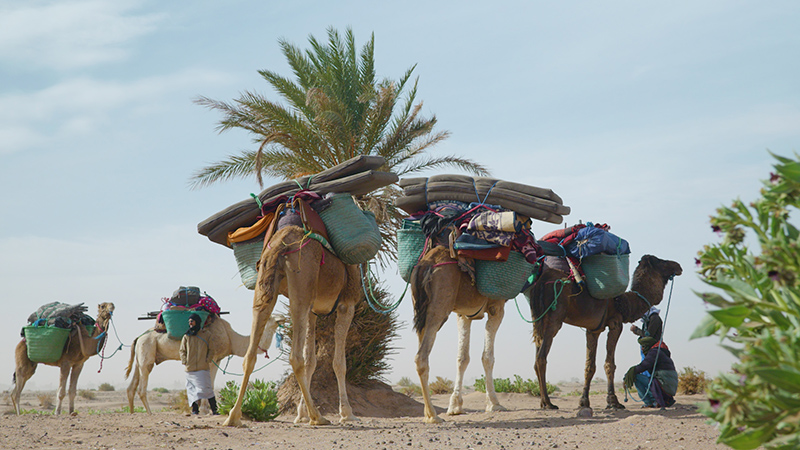
The days unfold to the rhythm of walking or camel caravans, weaving between dunes, hamadas and palm groves. In the evening, bivouacs set up in the heart of the desert provide magical moments: tea beneath the stars, nomadic tales, and a total immersion in the silence and beauty of the Sahara.


© Naga Travel Maroc

With NAGA Travel, every circuit is an authentic experience, combining adventure, spectacular landscapes and encounters with desert inhabitants, along the routes of Morocco’s ancient caravan trails.


Exploring the Imperial Cities and Northern Morocco


© Shutterstock

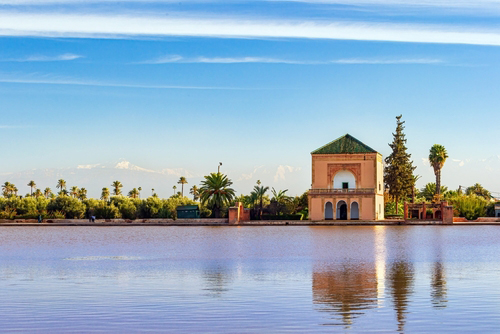
With NAGA Travel, embark on a journey to Morocco’s imperial cities and the treasures of the North. Our itineraries let you explore Casablanca, Rabat, Meknès, Fès, as well as the fascinating regions of northern Morocco, blending history, culture and extraordinary landscapes.

In Casablanca, you will discover the majestic Hassan II Mosque, a symbol of modern Moroccan architecture, and you can wander through the Habous district, with its authentic charm.


© Shutterstock

In Rabat, the royal capital, history is written between the Kasbah des Oudayas, the Mausoleum Mohammed V and the tranquil gardens that line the Atlantic.

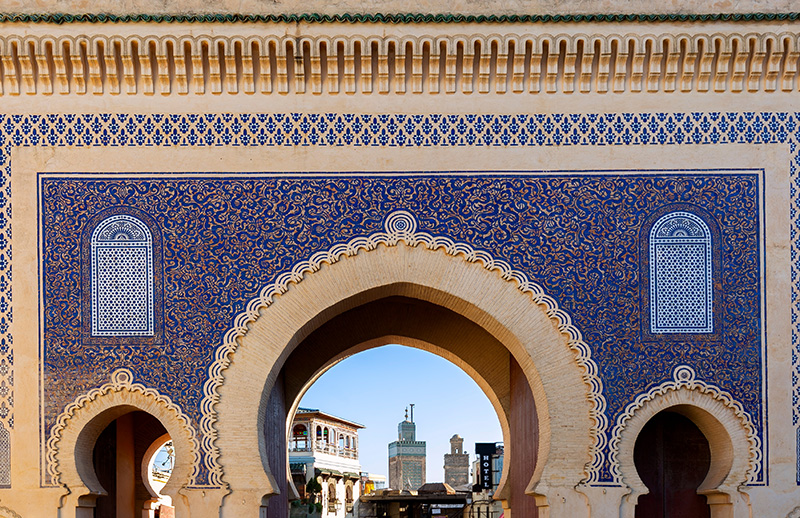
Meknès, an imperial city on the UNESCO World Heritage list, will captivate you with its historic ramparts, monumental gates and lively souks, testifying to the kingdom’s rich past.


Contact NAGA Travel


Maroc authentique : du désert du Sahara aux villes impériales avec NAGA Travel
Hassan Laghfiri

[email protected]

www.naga-travel.com

Hassan : + 212 644 777 405 WhatsApp


This Popular Destination Requires a $50,000 Travel Insurance Policy

Foreign visitors planning a stay in Kenya could soon have to contend with a new requirement before departure. The Kenyan government’s proposal aims to strengthen the medical coverage of people coming from abroad, as travel to the country remains particularly popular for safaris and expansive natural landscapes. But the measure is already stirring debate even before any potential implementation. The judiciary must now examine several points that could determine its future.

A medical coverage with very specific guarantees

The project applies to foreign nationals coming to Kenya for less than twelve months. It provides that they hold a travel health insurance with a minimum coverage of $50,000, or about €42,900. But the total amount is not the only feature of the scheme. The text details the various expenses that should be covered. The coverage would thus include up to $20,000 for medical costs, $25,000 for emergency medical transport, and $5,000 for the repatriation of remains. The scheme also provides $1,000 for mental health care and $300 for prescribed medications.

Travelers could subscribe to their policy before departing, from their country of origin. Another possibility would be to obtain insurance upon arrival, at certain designated entry points in Kenya. In both cases, the text governs the companies that may offer these policies: the insurances “must be provided by insurers licensed and authorized under the Insurance Act” , reports the Daily Nation.

This obligation would have a different scope from the optional insurances usually offered to travelers. High-end bank cards can, for instance, include medical guarantees or cover emergency evacuation, but the terms and ceilings depend on the contract. Some travel insurances, meanwhile, offer much broader international coverage. However, it remains to be seen whether these usual insurances, whether purchased separately or included with a bank card, will meet Kenya’s new requirements.

A measure suspended prior to its entry into force

However, the project has not (yet) become an obligation for visitors. Before its implementation, the Kenyan judiciary decided to temporarily suspend the arrangement. A hearing is scheduled for September 16 to examine more precisely the challenges raised against this new policy. Opponents of the project highlight in particular the lack of a sufficiently clear framework to govern its application. Questions also arise regarding the handling of travelers’ personal information and the protection of their data. These points will need to be reviewed before determining whether the obligation can actually be enforced.

The stakes are far from trivial for a country that attracts visitors every year mainly for its wildlife and landscapes. The current period corresponds notably to one of the most sought-after times for safari enthusiasts: the great migration. In Masai Mara, wildebeest, zebras and gazelles traverse the plains as they move seasonally, with river crossings that are especially spectacular. The phenomenon typically unfolds from mid-July to mid-September, sometimes into October.

Other regions offer the possibility to discover different wildlife. In Samburu National Reserve in northern Kenya, visitors can notably look for the five species grouped under the name “Special Five”: the reticulated giraffe, Grévy’s zebra, Somali ostrich, Beisa oryx and gerenuk. Nairobi rounds out this panorama with an urban stop that also grants access to several sites devoted to wildlife. For travelers planning a stay in Kenya, the situation remains to be watched. As long as the suspension is in effect and until the court renders its decision, the final terms of this potential mandatory insurance are not yet set.

Business Travel: Paris Region Confirms Global Leadership


Paris Île-de-France conserve une position de premier plan sur le marché du tourisme d’affaires - Depositphotos.com, Funtap

Hurtigruten


Despite economic and geopolitical uncertainties, business tourism in Île-de-France is showing solid indicators.

The CCI Paris Île-de-France has just published its 2026 assessment focused on the activity of the region’s main exhibition parks and convention centers.

With 24 major sites representing nearly 700,000 m² of covered exhibition space, Paris Île-de-France offers the leading European supply of infrastructures dedicated to professional encounters.


362 trade shows and 7 million visitors in 2025

In 2025, the 24 main Île-de-France sites hosted 362 trade shows, drawing together 100,487 exhibiting companies and 7 million visitors.

According to the CCI, these events generated 4.1 billion euros in economic impact for the Île-de-France region. Exchanges between exhibitors and visitors, meanwhile, accounted for 18.2 billion euros in turnover.

Beyond trade shows, congress activity also contributes to the economic weight of the business tourism sector in the region. Paris thus rose to the second place in the ICCA ranking of cities hosting the most international congresses in 2025.

Throughout the year, the capital and its region hosted 1,200 congresses, for a total of 716,195 delegates. International visitors represented 18.6% of participants. This activity generated 942 million euros in economic impact, according to data released by the CCI Paris Île-de-France.

Île-de-France infrastructures are not limited to trade shows and congresses. In 2025, they also hosted 1,204 other events, including corporate events, shows, cultural and sporting gatherings, examinations, training sessions and other meetings.

These events brought together 2.5 million participants. Overall, this confirms the sector’s weight in the regional tourism economy, particularly for hotels, dining, retail and transportation.


Major professional events support activity in 2026

The first available indicators for 2026 remain favorable, notably in the international congress segment.

More than 10 major international congresses, each drawing over 5,000 participants, are scheduled or have taken place this year. Among them are notably JFHOD, EuroPCR, ISTH, SFO, IPEM and the congress of ADF, as well as the congress of the French Society of Rheumatology.

The trade show sector also continued its progression in the first half of 2026. Several large-scale events helped sustain this dynamic, among them Wine Paris, VivaTech, Eurosatory, JEC World, Global Industrie, Who’s Next and Paris Packaging Week.

The trend is nonetheless less uniform on the consumer/public events side. The CCI reports more nuanced attendance results, despite growth in the number of exhibitors and net occupied space compared with the previous year.


A calendar already favorable for 2027

The prospects remain positive for 2027 as well, with several major international events already scheduled, including IMCAS, JEPU and COGI.

For Dominique Restino, president of CCI Paris Île-de-France, the sector’s results testify to its economic weight for the region.

Trade shows, congresses and professional events generate billions of euros in economic spillovers,” he notes, also highlighting their contribution to employment and the international visibility of Île-de-France.


Amelia Brille Published by Amelia Brille TourMaG.com Editor
See all articles by Amelia Brille

  • picto Linkedin
  • picto email
Add TourMaG to your Google News feed Google Actualités icône  

China Train Travel: Tickets, Sleeper Berths, Meals, and Tips

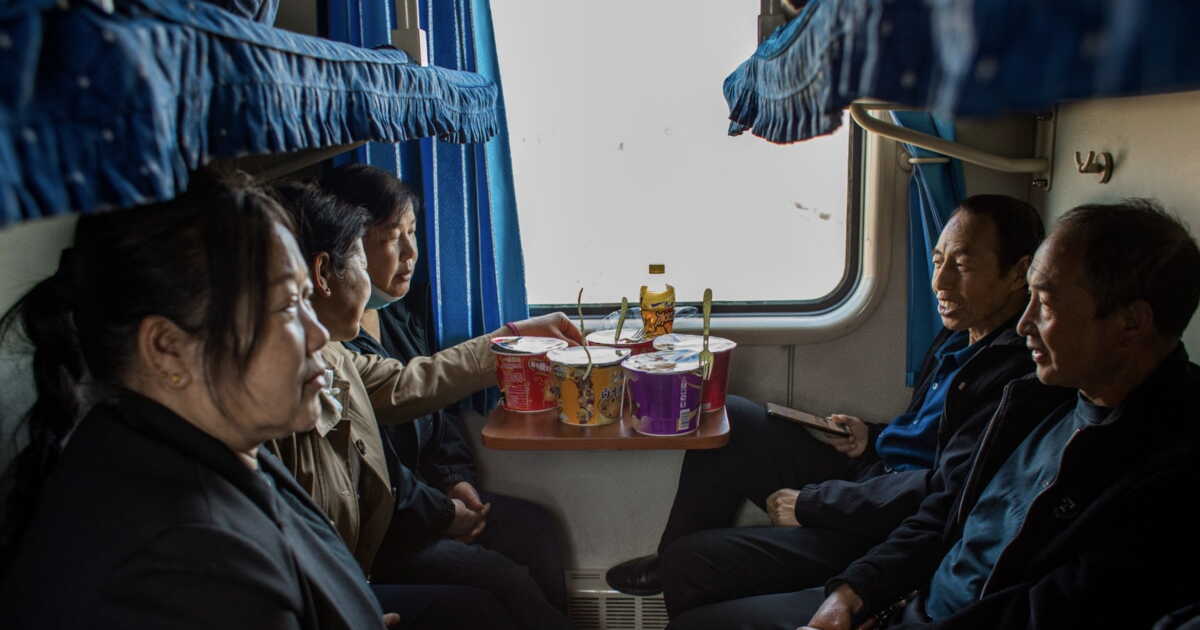
Traveling on the Chinese green trains requires a bit of foresight: online booking, a passport is essential, seats are often spartan and the comfort is rudimentary. But with a few smart moves and the right accessories, the experience remains simple and transportive. Here is the essential to know before boarding.

Old Trains but Dematerialized Tickets

WeTravel Acquires Tourwriter to Strengthen Its Bespoke Travel Offering


WeTravel annonce l’acquisition de Tourwriter - Depositphotos.com @pressmaster

Hurtigruten


WeTravel continues to develop in the high-end multi-day travel segment.

The American company announced, Wednesday, September 2, 2026, the acquisition of Tourwriter, a New Zealand-based company specializing in software for designers of customized travel and for incoming agencies (DMC).

The financial terms of the operation were not disclosed. This marks WeTravel’s first acquisition since its $92 million Series C funding in 2025, raised notably from Sapphire Ventures, Left Lane, Base10 and Cross Creek.

With this deal, WeTravel aims to strengthen its presence in the most complex and valued segment of the travel experiences market, which the company estimates at $271 billion.


Two complementary areas of expertise in bespoke travel

Founded in 2003, Tourwriter brings 23 years of expertise in developing software for professionals in the bespoke travel sector. Its platform today supports operators specializing in personalized experiences in 35 countries.

The company has notably developed features dedicated to itinerary creation, supplier management and their pricing, price and margin calculations, commissions, bookings, invoicing, accounting and data analytics.

According to WeTravel, Tourwriter generated more than one billion dollars of itinerary sales over the last two years.

On its side, WeTravel counts more than 10 000 travel businesses and more than 8 000 partners using its platform worldwide. Its system covers notably itinerary creation, online booking, task management, multi-currency payments, deposits and payment schedules, as well as the management and payment of suppliers.

The company has also recently launched WeTravel virtual and physical cards, available in more than 40 countries.


Growing demand for personalized travel

The acquisition comes as WeTravel observes a rise in demand for bespoke and luxury travel.

According to its Annual Trends Report 2026, based on more than one million bookings made on its platform and responses from thousands of professionals, 56% of operators consulted noted increased interest in high-end personalized travel bookings in 2025, compared with the previous year.

WeTravel’s booking data also show an acceleration in 2026. In the first half, bookings by organizers specializing in bespoke and luxury travel rose 16% year over year, while their dollar volume grew by 31%.

This growth, however, comes with increasing operational complexity. Each trip is built individually, meaning professionals must simultaneously manage supplier pricing, currencies, commissions, taxes, deposits and settlements with multiple providers.

Part of these operations still relies on a combination of specialized software, spreadsheets and banking tools, with manual re-entries between the different steps.


Platforms that will remain separate

In the initial phase, Tourwriter and WeTravel will continue to operate as two distinct platforms. WeTravel plans, however, to invest in the development of the Tourwriter product, notably by providing its international payment infrastructure and its AI tools.

We are thrilled to partner with Glenn and invest in the Tourwriter platform“, explains Ted Clements, CEO of WeTravel. The stated objective is to progressively integrate international payment solutions and the AI tools developed by WeTravel.

For Glenn Campbell, CEO and cofounder of Tourwriter, this operation opens “a new chapter” for the company, while maintaining its goal of helping luxury travel professionals improve profitability and client service.


No immediate changes for Tourwriter clients

WeTravel notes that current Tourwriter clients will keep the same product, the same teams, the same pricing and the same support.

In the coming months, they should progressively gain access to new international payment services and AI features developed by WeTravel.

Glenn Campbell will continue to lead Tourwriter. The team, consisting of about 30 employees spread across New Zealand, London and other regions worldwide, will join WeTravel’s international organization, which counts over 400 employees and has offices in Australia, Azerbaijan, the Netherlands, and the United States.