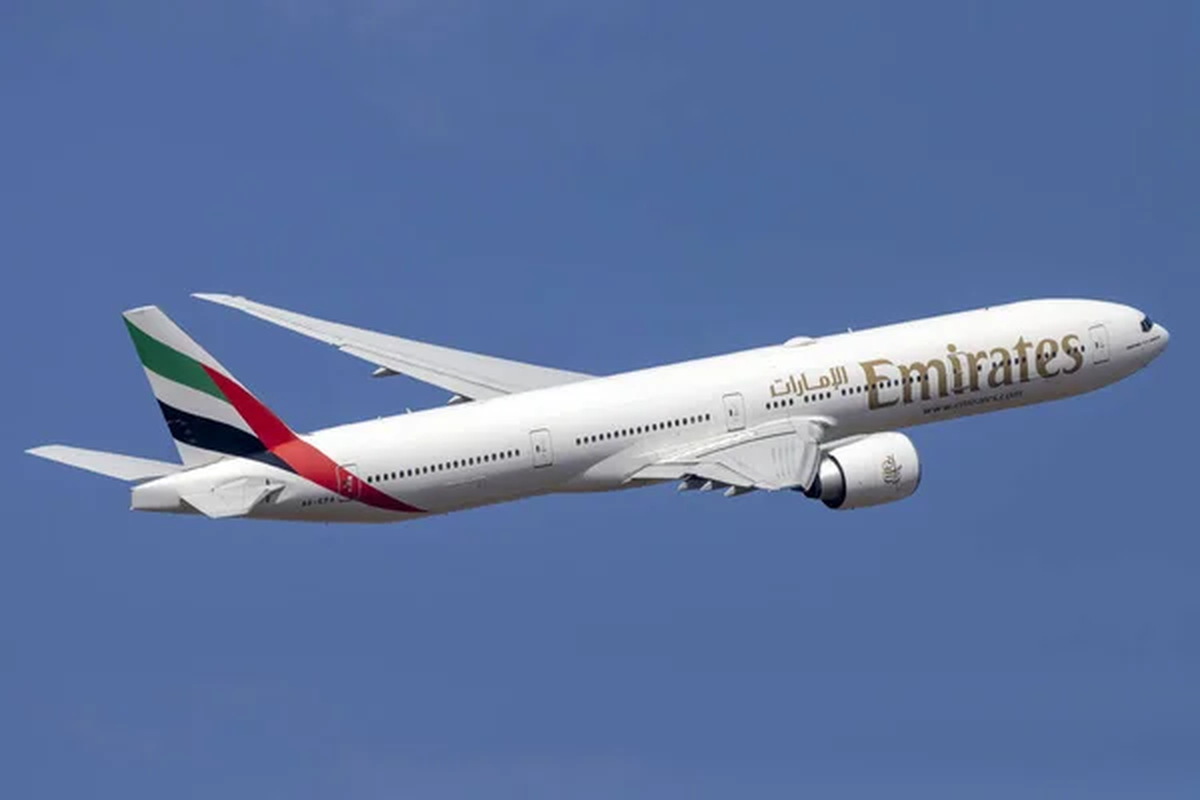
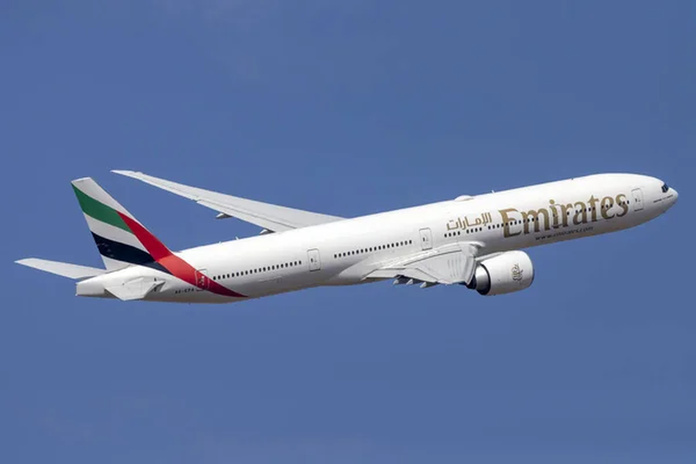

Emirates Launches Cabin Crew Recruitment Drive in Five French Cities


Emirates lance une campagne de recrutement pour ses équipages dans cinq villes françaises, Depositphotos.com photo by Photo by gordzam

TAP Air Portugal


Emirates is seeking new candidates in France to join its cabin crews.

The recruitment sessions will be held successively in Marseille on July 6, in Paris on July 16, in Bordeaux on July 18, in Lyon on July 20, and finally in Toulouse on July 29. These open-house days offer applicants a chance to secure a position with the Dubai-based airline.

The company is looking for profiles to greet passengers and ensure onboard safety by applying regulatory procedures. Those selected will then relocate to the United Arab Emirates and undergo training at the carrier’s training center.

All cabin crew members will benefit from a competitive salary, free company housing and medical coverage.


Practical details for participating in the selection sessions

The assessment process will span a full day for each selected city. Applicants must submit their online application dossier with a CV written in English and a recent photo.

The organization advises pre-registering online to facilitate the reception process, even though walk-in presentations without an appointment remain welcome on the day.

Emirates’ teams will inform the preselected candidates during the day about the timing of the assessments and any additional interviews.

New recruits will then work in an international environment that brings together more than 148 nationalities speaking 72 languages.


A stronger presence on the French aviation market

This recruitment drive coincides with maintaining a significant level of activity for the airline within the national territory. The company currently operates 35 weekly flights to French passengers from three major regional airports.

This schedule includes three daily Airbus A380 services from Paris, a daily A380 rotation from Nice, and a daily Airbus A350 flight from Lyon.

To date, the airline operates a modern fleet of more than 280 wide-body aircraft and counts more than 360 aircraft on order to support its global expansion.


Business Travelers’ Habits Still Drive Up Costs


Une étude menée par OpinionWay pour Cegid et Corporate Mobilities met en lumière l’impact des comportements des voyageurs professionnels sur les coûts - Depositphotos.com, peshkova

Costa Rica


Business travel policies do not always suffice to control costs.

This is one of the key findings of the 8th wave of the Observatory of Professional Travel, conducted by OpinionWay for Cegid and Corporate Mobilities with 505 business travelers.

The study analyzes 25 observed behaviors throughout the travel journey, from trip preparation to return.

It highlights a less visible portion of business travel costs: the costs linked to travellers’ habits, trade-offs, and routines.


Des pratiques qui peuvent générer des surcoûts

According to the study, between 20% and 50% of business travellers regularly adopt behaviours that could raise the cost of their trips.

The use of taxis and ride-hailing services is one of the main examples: 55% of respondents say they take a taxi or a ride-hailing service without checking available alternatives. Furthermore, 48% rely on an assistant to make a reservation when they could do it themselves.

The same proportion uses their company car even though other transport modes might be relevant.

Another observed behaviour: 43% of travellers add extra services to their initial booking. For Cegid and Corporate Mobilities, these practices do not necessarily reflect a desire to bypass rules or to spend more.

They would rather be linked to a combination of personal and organizational factors: habits, search for comfort or efficiency, but also rules deemed inappropriate, tools that are not user-friendly, and processes that are too complex.

While the study reveals a strong willingness to change behavior, a single rule is not sufficient to modify practices. It needs to be accompanied by simple, flexible and comprehensive tools“, notes Laurent Lassure, Product Marketing Manager for Cegid Notilus at Cegid.


Les politiques de mobilité durable plus efficaces que les règles contraignantes

The study also reveals a genuine willingness to change. Depending on the behaviours studied, between 68% and 90% of travellers say they are ready to modify their practices when they are not systematic or regular.

But this evolution depends on the environment provided by the company. The main levers identified are first organizational: rules better adapted to the activity’s constraints (27%), booking tools that are simpler and faster (26%), clearer rules (26%), and streamlined processes (25%). Travellers thus seem to expect more system evolution than a simple injunction to change their habits.

The study also compares the impact of different types of internal policies. Implementing an obligatory travel policy, based on highly structured rules and limited autonomy, improves behaviours, but only moderately.

According to the practices, the gain ranges from 5 to 16 points compared to organizations without a travel policy. In terms of using a taxi or a VTC when other alternatives exist, the improvement would be only 4.5 points.

The introduction of a formalized sustainable mobility policy, however, emerges as the most decisive factor of the study. It improves behaviors by 15 to 38 points depending on the observed practices compared to organizations that do not have one. For the authors, such a policy helps create a framework in which behavioral changes become more natural.


La voiture reste privilégiée par une majorité de voyageurs

The car remains central in professional travel.

More than half of those surveyed prefer their company or personal vehicle, even when other solutions could be relevant.

This raises questions about the alignment between mobility policies and corporate travel policies, as well as the degree of freedom given to employees in choosing their mode of transport.


Le pré-booking, un levier encore largement sous-exploité

The study also examines the different moments along a business trip. It identifies the preparation phase, or “pre-booking,” as one of the main optimization levers. At this stage, the cost of the trip remains largely modifiable, with a “changeability” estimated between 79% and 88%.

During the booking, the cost remains adjustable, but with less leeway, ranging between 68% and 90% depending on the studied behaviours.

Once the trip has started, the cost is largely committed and requires more structural transformations.

After the trip, it becomes visible through expenses and reporting data, but it is then too late to act on costs already incurred.

“It is precisely the pre-booking and its highest changeability on which organisations should focus first in a context where providers predominantly concentrate on the booking phase,” says Jérôme Fouque, cofounder of Corporate Mobilities.

The study thus concludes that action must be taken upstream of the trip. For companies, cost control would therefore not rely solely on stricter travel policies, but also on suitable tools, simplified processes, and a better integration of sustainable mobility considerations.


Breakdowns: Travel Remains Resilient as Tensions Drive Tourism [ABO]


Défaillances : le voyage résiste encore, mais les tensions gagnent le tourisme - Depositphotos.com Auteur Dwara Art

IFTM prenez RDV avec TourMaG


Altares a recensé 17 486 procédures collectives au deuxième trimestre 2026, soit une hausse de 5,4 % sur un an. Depuis le début de l’année, 37 700 entreprises ont fait défaut, près de 1 500 de plus qu’au premier semestre 2025.

Si le rythme ralentit légèrement, le niveau des défaillances demeure près de 40 % supérieur à celui observé avant la crise sanitaire.

Les très petites entreprises restent les plus exposées (+8,3 % de défauts chez les entreprises de -3 salariés), tandis que les services figurent parmi les secteurs les plus touchés.

A noter également, que les défaillances des entreprises de -3 ans progressent de 12,7%.


Le voyage continue de mieux résister

Dans ce contexte, le secteur du voyage fait figure d’exception relative.


Au deuxième trimestre, les agences de voyages enregistrent un niveau de défaillance identique à celui de l’an dernier, avec 12 procédures ouvertes. Les services de réservation et activités connexes font même légèrement mieux, passant de 10 à 8 défaillances (-20 %).

Seule ombre au tableau : les voyagistes voient le nombre de procédures passer de 1 à 6. Au total, les activités liées au voyage recensent 26 défaillances contre 23 un an auparavant.

La photographie est toutefois plus favourable lorsqu’on observe le premier semestre dans son ensemble. Les activités de voyage totalisent 54 défaillances, contre 59 sur les six premiers mois de 2025, soit un recul d’environ 8,5 %.

Pour Thierry Millon, directeur des études Altares, cette résilience s’explique aussi par la capacité d’adaptation des professionnels. « Le secteur subit malgré tout une situation qui doit l’amener à être très à l’écoute du client. Mais pour y arriver, il faut évidemment être en capacité de pouvoir résister financièrement », souligne-t-il.


L’hébergement décroche, le transport reste contrasté

Thierry Millon estime toutefois que cette résistance du secteur ne doit pas masquer les fragilités qui apparaissent dans d’autres activités touristiques. « Le tourisme présente plutôt des indicateurs de résistance sur les voyages en particulier. Mais cela ne concerne pas encore les activités de l’hébergement-restauration », observe-t-il.

En effet, tous les métiers du tourisme ne suivent pas la même trajectoire.

Altares souligne une forte dégradation de l’hébergement, avec 133 défaillances au deuxième trimestre (+41,5 %). Les hôtels sont particulièrement touchés avec 91 procédures, en hausse de 54 %, tandis que les structures d’hébergement touristique de courte durée progressent également de 50 %.

« L’hôtellerie classique souffrait déjà de la concurrence des hébergements de courte durée. Désormais, c’est à peu près tout le monde qui se retrouve dans la même situation », constate le directeur des études Altarès. Selon lui, les établissements positionnés sur le milieu de gamme sont aujourd’hui les plus exposés, tandis que les offres premium et les établissements les plus économiques résistent davantage.

Du côté du transport, la situation demeure contrastée.

Le transport routier de marchandises reste sous tension, même si les défaillances reculent légèrement (-2 %).

En revanche, les difficultés persistent dans le transport routier de voyageurs, où les défaillances restent concentrées chez les taxis. Altares rappelle que leur niveau demeure plus de deux fois supérieur à celui observé avant la crise sanitaire.


Altares · Corporate Insolvencies
Insolvencies in the Travel & Passenger Transport Sector
Safeguard, receivership and judicial liquidation filings · Q2 2026
Q2 2026
vs Q2 2025

National Context
Altares Study — Paris, July 16, 2026
Nearly 17,500 insolvencies in Q2 2026 (all sectors combined) (+5.4%)
With 17,486 open procedures, the second quarter confirms the high level of insolvencies in France. Since the start of the year, 37,700 companies have defaulted, two-thirds directly in liquidation, i.e. 1,500 more than in the first half of 2025. Difficulties hit especially very small and young firms, moderating the social impact of the rise: the number of jobs at risk falls by 9.5% year on year to 58,830 staff.
17 486
Q2 Procedures

37 700
in 6 months

58 830
jobs at risk (−9.5%)

+1 500
vs 2nd half 2025

Key Figures · Q2 2026 – Travel & Transports

Travel — All Travel Sub-sectors
26
insolvencies
▲ +13,0 % vs Q2 2025

Travel Transports
270
insolvencies
▲ +1,5 % vs Q2 2025

Combined Total
296
insolvencies
▲ +2,4 % vs Q2 2025


Focus
Travel Sector
26 insolvencies in Q2 2026

Travel Agencies
7911Z

12
= 0,0 %

vs 12 in Q2 2025 · 18 in Q2 2024

Q2 22Q2 23Q2 24Q2 25Q2 26

Tour Operators
7912Z

6
▲ +500 %

vs 1 in Q2 2025 · 8 in Q2 2024

Q2 22Q2 23Q2 24Q2 25Q2 26

Booking Services
7990Z

8
▼ −20,0 %

vs 10 in Q2 2025 · 11 in Q2 2024

Q2 22Q2 23Q2 24Q2 25Q2 26

Ensemble Voyages — Annual Insolvencies History
Travel Agencies + Tour Operators + Booking Services

96

93

97

94

72

90

103

120

104

2017
2018
2019
2020
2021
2022
2023
2024
2025

Analysis : After a peak at 120 insolvencies in 2024, the travel sector returned to 104 in 2025 (−13.3%). In Q2 2026, the trend reverses with 26 insolvencies versus 23 in Q2 2025 (+13.0%). The rise is driven by tour operators (6 versus 1 in Q2 2025), while travel agencies remain stable (12) and booking services retreat (8 vs 10, −20%).


Distribution of the 26 Travel Insolvencies · Q2 2026
Agencies 46,2 %
Tour Operators 23,1 %
Booking Services 30,8 %

Travel Agencies (12)
Tour Operators (6)
Booking Services (8)


Transports
Passenger Transport
270 insolvencies in Q2 2026


Taxis & VTC — Sector under intense strain
4932Z
254
insolvencies in Q2 2026
▲ +1,6 %

Taxis and VTC account for 94.1% of the insolvencies in the passenger transport sector. The rise has been ongoing since 2021 (305 → 859 in 2025). In Q2 2026, it cools slightly: 254 insolvencies vs 250 in Q2 2025.

319

515

571

339

305

395

470

648

859

2017
2018
2019
2020
2021
2022
2023
2024
2025

Other Transport Sub-sectors · Q2 2026

Sub-sector
Q2 2025
Q2 2026
Change

Maritime Transport
4
3
−25 %

Inland Water Transport
0
0

Air Transport
0
1
n.s.

Regular Road Transport
7
4
−42,9 %

Other road transport
9
11
+22,2 %


Summary
Yearly Evolution — Comparative

Travel Sector
Annual Insolvencies 2017–2025
2017
96
2018
93
2019
97
2020
94
2021
72
2022
90
2023
103
2024
120
2025
104

Passenger Transports
Annual Insolvencies 2017–2025
2017
453
2018
650
2019
669
2020
413
2021
341
2022
454
2023
543
2024
726
2025
927

Source : Altares — Corporate insolvency statistics
Safeguard, receivership and judicial liquidation filings · Q2 2026
NAF codes : 7911Z, 7912Z, 7990Z (Travel) · 5010Z, 5030Z, 5110Z, 4932Z, 4939A, 4939B (Passenger Transport)


Une économie qui manque toujours d’élan


Ce qu’il faut retenir du baromètre Altares au 2e trimestre 2026

  • 17 486 défaillances d’entreprises ont été enregistrées au 2e trimestre, soit +5,4 % sur un an. Le premier semestre totalise 37 700 procédures, un niveau toujours très élevé.

  • Les défaillances restent près de 40 % supérieures à leur niveau d’avant-Covid, malgré un ralentissement de leur progression depuis plusieurs mois.

  • Les très petites entreprises demeurent les plus fragiles : les structures de moins de trois salariés représentent 75 % des procédures et voient leurs défaillances progresser de 8,3 %.

  • Les jeunes entreprises sont particulièrement exposées : les sociétés de moins de trois ans enregistrent une hausse de 12,7 % des défaillances, majoritairement sous forme de liquidations judiciaires.

  • L’impact sur l’emploi recule : malgré la hausse des procédures, le nombre d’emplois menacés baisse de 9,5 %, à 58 830 salariés.

  • Les services aux entreprises décrochent (+13,9 %), tout comme les services aux consommateurs (+15,7 %), tandis que l’agriculture (+21 %) connaît une forte dégradation.

  • La construction résiste globalement (-0,8 %), grâce au recul des défaillances dans le gros œuvre et le second œuvre, même si la promotion immobilière reste en grande difficulté.

  • Le tourisme présente un visage contrasté : les activités de voyage restent relativement résilientes, mais l’hébergement se dégrade fortement avec une hausse de 41,5 % des défaillances, dont +54 % pour les hôtels.

  • La moitié des régions françaises repasse dans le vert, notamment la Bretagne, la Normandie, la Bourgogne-Franche-Comté, le Centre-Val de Loire, la Corse et la région Provence-Alpes-Côte d’Azur. À l’inverse, Auvergne-Rhône-Alpes enregistre une envolée des défaillances (+22,9 %).

  • Pour Altares, le reflux des défaillances n’est pas encore en vue. Avec une croissance attendue limitée à 0,7 %, une consommation atone et des coûts d’exploitation toujours élevés, le cabinet anticipe 34 000 à 35 000 nouvelles procédures collectives au second semestre 2026.

Group Travel Reclaims Its Value in an Uncertain Global Context as Calafell Evasión Takes Charge to Drive Change


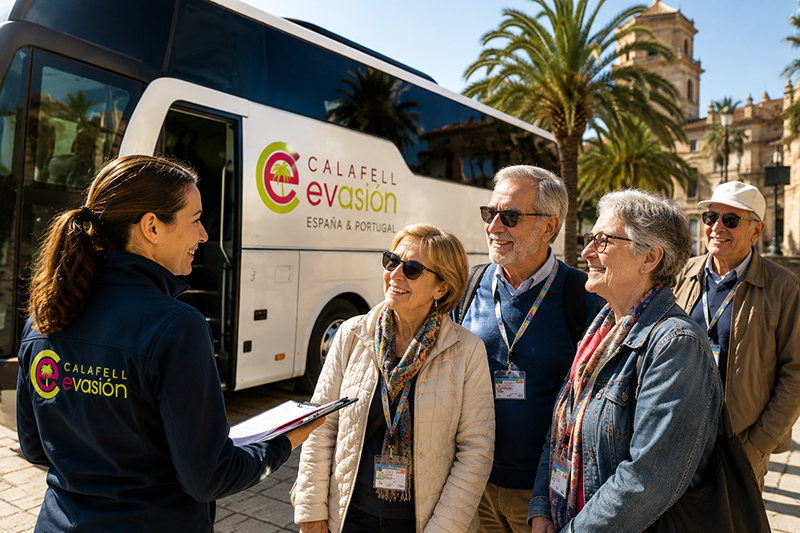
Le groupe en voyage sur la péninsule Ibérique © Calafell Evasión / Image générée par IA pour illustration promotionnelle

CroisiEurope


Today, travelers place greater emphasis on safety, the proximity of services, and the reliability of the organizations they rely on for their trips.

In this new context, group travel regains its full relevance. More structured, more reassuring and easier to organize, it meets a genuine need for serenity. For agencies and organizers, choosing an experienced local partner also becomes essential to ensure smooth stays that align with clients’ evolving expectations.


Le voyage de groupe : une réponse aux nouvelles attentes des voyageurs

For several years, traveler behavior has evolved. Where some once sought distant destinations or very rapid trips, many now favor experiences that are more accessible, more human, and better organized.

The current international context accelerates this trend. Groups want to travel to stable destinations, easily reachable and equipped with solid infrastructure. They also seek more active guidance, capable of securing every phase of the stay and responding quickly in case of unforeseen events.


© Calafell Evasión / Image générée par IA pour illustration promotionnelle

In this dynamic, group travel emerges as a reassuring solution. It helps pool costs, simplify planning, and above all, provides genuine peace of mind for both participants and organizers.

This shift also highlights the importance of human connection in tourism. Travelers no longer seek merely to “see” a destination, but to experience a collective, convivial, and authentic moment together.


Espagne et Portugal : des destinations adaptées aux réalités actuelles


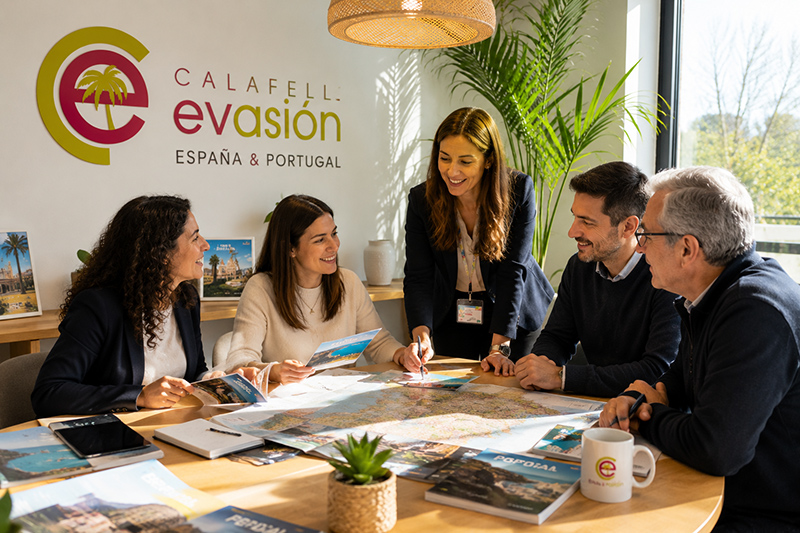
© Calafell Evasión / Image générée pour illustration promotionnelle

In this context, the Iberian Peninsula naturally emerges as a particularly relevant destination for groups.

Spain and Portugal offer a rare balance between accessibility, safety, cultural diversity, and high-quality tourism infrastructure. Their geographic proximity helps limit travel times and the impact of rising fuel costs, while ensuring a genuine sense of change of scenery.

Another major advantage is the variety of possible experiences. Cultural stays, tours, hiking, gastronomy, traditional or seaside events… the Iberian Peninsula meets a wide range of expectations, with the possibility to travel almost year-round thanks to a particularly favorable climate.

In a world where uncertainty increasingly shapes travel decisions, Spain and Portugal appear as destinations that are both reassuring and inspiring.


Le rôle essentiel du réceptif local

More than ever, agencies and organizers need strong local partners who can anticipate difficulties and guarantee reliable execution.

The role of the DMC is no longer limited to mere logistics. It becomes a trusted ally, capable of securing operations, ensuring on-site responsiveness, and guiding groups through a tourism landscape that is continually evolving.

At Calafell Evasión, this close proximity to on-site realities has been one of the company’s cornerstones for over 30 years. The teams collaborate daily with carefully selected local partners to ensure the quality and stability of the services offered.

The integration of Promenade in Portugal now strengthens this presence across the entire Iberian Peninsula and enables agencies to obtain even more comprehensive coverage of the destination.


Et demain ?


Dans un contexte mondial incertain, le voyage de groupe reprend toute sa valeur. Calafell Evasión décide de prendre les choses en main et d’initier le changement…
Calafell Evasion, Espagne et Portugal

[email protected]

(+34) 977 37 30 15

Website

facebook linkedin