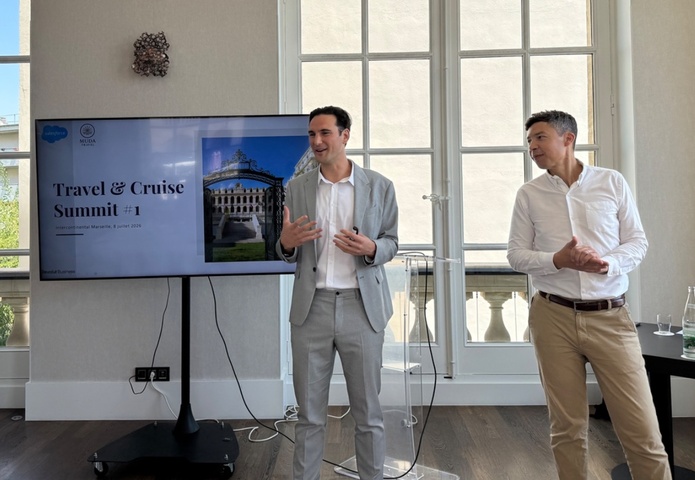

Travel & Cruise Summit Marseille: A New Meeting for Tourism Leaders (Video)


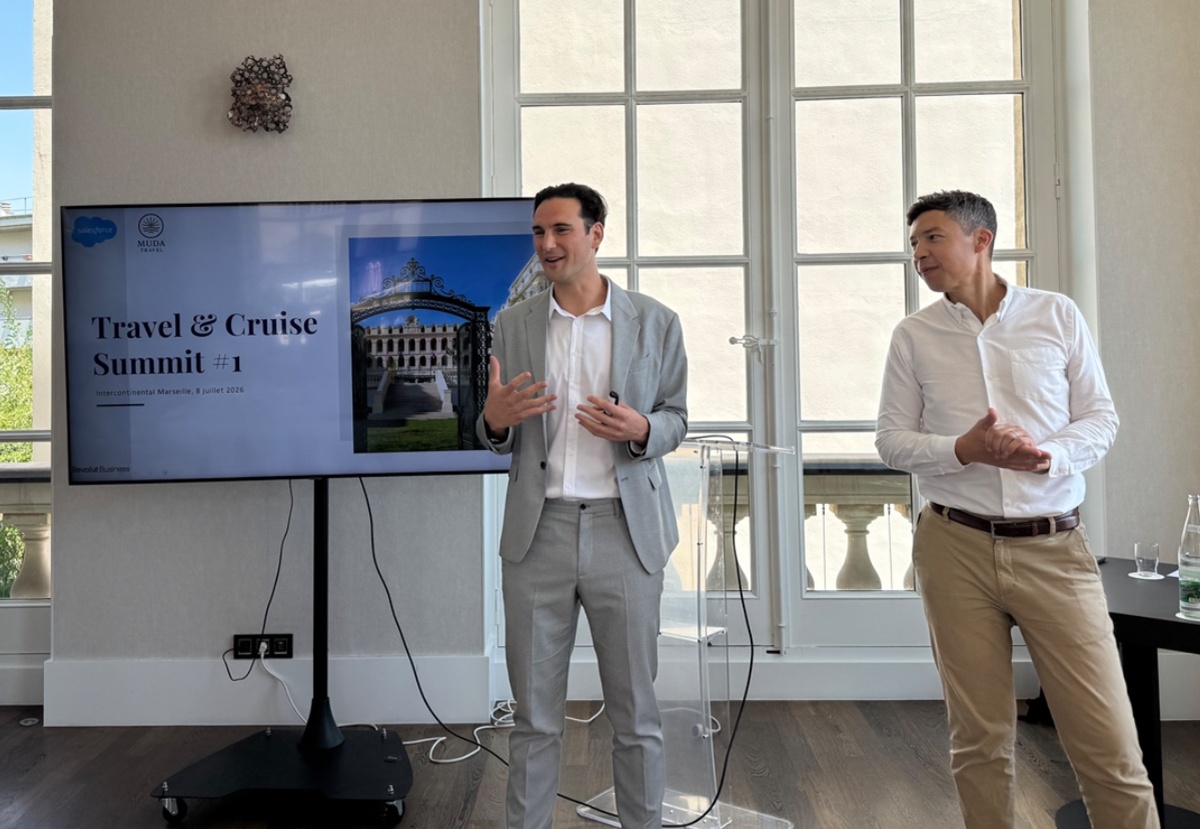
Le futur du travel, de la croisière et de la relation client à l'ère de l'IA, au cœur des débats du « Travel & Cruise Summit Marseille » - Photo : NP

Costa Rica


It was in the setting of the InterContinental Marseille Hôtel Dieu that the young consulting firm MUDA Travel Consulting — celebrating its first anniversary at the start of July — brought together clients, partners and prospects for an intimate gathering on July 8.

About thirty travel executives, mostly from the luxury travel and cruise sectors, gathered for an afternoon of reflection and exchange, in a relaxed, convivial atmosphere.

Named “Travel & Cruise Summit Marseille”, this event — supported by Salesforce, Revolut Business and TourMaG — was the occasion for the co-founders, Medih Fatihi and Thomas Verdier Fuentes, to better showcase the full scope of their capabilities. MUDA brings together around twenty independent consultants with varied profiles: engineers, HR specialists, customer-relations experts, etc. — but also to highlight the projects of the clients they accompany. The partners, among others, include former Ponant executives, giving them a solid expertise in the worlds of luxury and cruising.

In the room, several Ponant executives had traveled to attend, but also well-known figures from the maritime world such as Hervé Bellaïche (Catlante Catamarans), Clément Mousset (ex-Orient Express Silenseas), and other luxury names such as Véronique Leiber (Peplum).


AI at the Heart of the Discussions

If the setting, facing the Old Port on a very sunny day, helped elevate the gathering, the content and the quality of the exchanges laid the first stone of this new “club” of leaders.

On the program then, the future of cruising and the customer relationship in the AI era.

Far from another AI conference, the format was meant to be interactive, led by Medih Fatihi and Thomas Verdier Fuentes, but also by their partner Salesforce, which joined to discuss the challenges of customer relations in hospitality in the AI era.

The speakers notably stressed that travelers, especially the younger generations, now expect ever more personalized experiences and immediate responses, whatever the channel used.

In this context, AI is expected to automate low-value tasks, while the teams focus on advisory, customer relations and the creation of differentiating experiences.

Another issue highlighted: the evolution of Internet search and visibility. Professionals emphasized the importance of “GEO” (Generative Engine Optimization), which consists of making travel offers visible and usable by conversational AIs like ChatGPT or Claude.

Incomplete or outdated data can now penalize a brand directly in the responses generated by these new tools.


Gen Z, a Clientele Not to Be Neglected

Equally enriching was the discussion about the future of luxury cruising, and more broadly the experience sought by high-net-worth clients. “Behaviors are changing, and notably Gen Z, who is much more oriented toward experience than possessions. A few years ago, one sign of wealth was a second home; today it’s more about going to live different experiences,” introduced Medih Fatihi.

A boon for the travel sector, provided one knows how to attract these clients.

The speakers cited in particular the Ritz-Carlton, Four Seasons, Orient Express or Aman groups to emphasize that the clientele of these hotels is not necessarily the same as the one found aboard their ships.

Read about this: Luxury cruises: the high end sets sail!

“There is a marketing and distribution challenge” for shipowners, added Medih Fatihi, who, to stand out, must offer more intimate, lesser-known destinations and increasingly refined onshore experiences.

Wealthy people turn to experiences to feel things, while in a more and more connected world they feel increasingly disconnected,” emphasized Alina Oenning, who has been working for several months to launch a new yachting company.

Without being able to reveal many details about her project at the moment, the leader nonetheless shared her feedback and questions about Gen Z. “Nothing excites them anymore, neither a Dior purchase nor a luxury car,” she said, noting that while experience is sought by her clients, the ‘purpose’ is also an integral part of the equation.

In other words: what’s the point of consuming a luxury product if there is no purpose, or rather meaning?

For her, this purpose can be expressed, for example, by inviting cruisers to participate in scientific research that can be conducted aboard expedition ships.

A way to foster open-mindedness, gatherings, exchanges and to feel involved within a club. What better way to build loyalty? MUDA’s teams would hardly disagree…


Clermont-Ferrand Sets Sail with the 2026 Travel Journal Rendezvous


Travel brings at least two pleasures: the pleasure of doing it and the pleasure of telling about it.

Everyone, in their own way, chooses according to their tastes, possibilities, and talents if they have any.

Some write, others prefer stills or cinema, but the majority are content to chatter away at happy hour or after a meal.

There is also another, less common, category that favors charcoal, pencil, brush, or marker that draw on Canson paper. These are carnetists.

If the word is unknown, or nearly so, to dictionaries and spelling checkers, it takes on full meaning in Clermont-Ferrand in mid‑November. Since the turn of the century, it is in the Auvergne capital that the International Travel Sketchbook Rendezvous takes place.

It brings together about 120 carnetists who present and comment on their drawings to more than 15,000 visitors expected in 2026.


Clermont by the Sea


L'affiche 2026 du Rendez-vous international du Carnet de voyage - Illustration : Joël Alessandra

The organizers have unveiled the poster. It is the work of a comic book author, Joël Alessandra, himself a carnetist.

He has turned the Auvergne capital into a seaside city. “Clermont-Ferrand has no sea – and that is precisely the starting point of this poster,” the author notes.

From his boat, the carnetist approaches the city by an impossible path: a sea crossing toward an inland volcanic city. This unlikely image embodies the very essence of carnet practice—the ability to reinvent reality, to bring forth the unexpected from the familiar (…) Clermont, with its ochre roofs and the black spires of its cathedral, appears as a dreamed‑of stopover, an inner port that every carnetist joins in their own way. »

All that remains is to wish the Travel Sketchbook a smooth voyage and a lovely port of call for thousands of cruise passengers!

Also read : Travel Sketchbook Rendezvous Clermont-Ferrand: the 2025 winners are…


Business Travel: Fewer Trips, Yet Greater Strategic Stakes Than Ever


Voyage d'affaires : moins de déplacements, mais des enjeux plus stratégiques que jamais - Depositphotos.com, Milkos

Costa Rica


À l’heure où le travail hybride a profondément rebattu les cartes des déplacements professionnels, le voyage d’affaires résiste et se réinvente.

Selon le rapport mondial de FCM Consulting, le taux d’occupation des hôtels dans les principaux marchés d’affaires a ainsi atteint 73,7% au niveau mondial en 2025, en hausse de 1,3 point par rapport à l’année précédente.

Dans plusieurs destinations, la progression est encore plus marquée : Sydney affiche 81,5% (+4 points), Singapour 79,2% (+2 points), tandis que Tokyo (82,9%) et Londres (82%) s’imposent parmi les marchés les plus actifs.

Au milieu de ce paysage en plein essor, la France se détache et devient la championne mondiale du tourisme d’affaires entrant, avec une hausse de 53% des visites professionnelles internationales en un an, soit 11,6 millions de voyageurs supplémentaires.

Cette reprise reflète un changement structurel des pratiques. Le travail hybride n’a pas mis au fin aux déplacements professionnels, mais il a contribué à les recentrer sur l’essentiel : relation client, développement commercial, gestion de projets, événements.

Les réunions internes de routine, autrefois grandes pourvoyeuses de voyages, ont fortement diminué. Les entreprises privilégient désormais les voyages liés à la relation client, au développement commercial, à la gestion de projets ou aux événements professionnels.

Résultat : 77% des entreprises estiment désormais que les réunions en présentiel restent essentielles à l’atteinte de leurs objectifs.


Des programmes hôteliers à repenser de fond en comble

If demand is picking up again, hotel programs for companies, however, have not always kept pace.

According to FCM Consulting, many have evolved through successive adjustments without a comprehensive rethink of their overall operating model: suppliers changed, policies tweaked, yet the overarching architecture remained largely intact.

The report illustrates its point with the case of a large international group whose program was completely revamped. Following an audit of spend and booking practices, 545 hotels were contracted under a global tender, expanding the program’s coverage to 80%.

At stake are €5 million in savings versus market rates, and an additional potential reduction of €2.4 million identified.

The report also highlights an underutilized lever: hotel loyalty programs. Complimentary breakfast, lounge access, upgrades—these benefits can enhance the traveler experience without incurring extra costs for the company, and promote adherence to the travel policy.

The resistance linked to loyalty status is often underestimated during a program change“, notes Rachel Newns, Global Hotel Practice Lead at FCM Consulting. “If not addressed early enough, it can undermine procurement decisions that are otherwise well founded.”

To read: FCM Consulting launches an index to measure the value of business travel

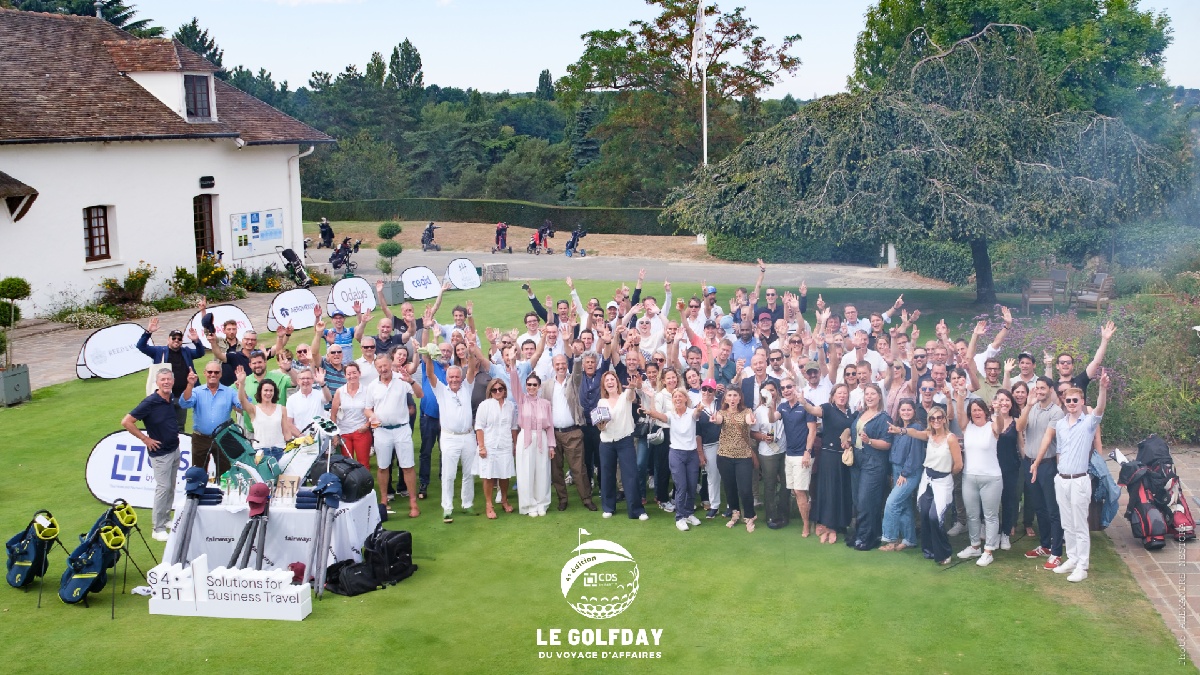
Business Travel: GolfDay Invites Professionals on August 25


Le GolfDay du voyage d'affaires se tiendra au Golf de Fourqueux le 25 août 2026 - Photo S4BT

Costa Rica


The fourth edition of GolfDay for business travel will be held on August 25, 2026 at the Fourqueux Golf Club. Organized by S4BT – Solutions for Business Travel, the event will bring together players in business travel for a day that blends sporting competition, an introduction to golf, and professional networking.

According to the organizers, this new edition already attracts strong interest, with many registrations recorded several weeks before the event. Registrations remain open subject to availability.

The goal of GolfDay is to foster exchanges in an informal setting, prior to the resumption of activity.


The program will begin at 7:45 a.m. with a welcome coffee, before the competition kicks off at 9:00 a.m. Participants wishing to explore the discipline can take part in an initiation supervised by professionals starting at 11:30 a.m.

All guests will then reconvene around a networking lunch at 2:00 p.m., followed by the prize-giving.

The competition is open to industry professionals holding a valid FFGolf license. Non-golfers can participate in the initiation before joining the other participants for the networking sessions and the closing ceremony.

“GolfDay has become a true gathering moment for the players in business travel. It is an opportunity to meet differently, to take the time to exchange before the back-to-school rush, to create new connections and to share a convivial moment before the resumption. The enthusiasm for this fourth edition is already on track.

We are looking forward to welcoming you on August 25, 2026 on the Fourqueux greens to experience together a wonderful day, blending business, good humor… and, of course, a few fine swings!”
, says Rebecca Xerri, Global Chief Marketing Officer of S4BT.

Perk Launches the First MCP Connector to Unify Travel, Expenses, and Invoices


Perk lance le premier connecteur MCP pour unifier voyages, Depositphotos.com Photo by dream4fx

Costa Rica


The company positions itself as the leading player in its category to integrate invoice reconciliation and event management via the MCP protocol.

This announcement comes amid a period of rapid growth for the startup, which recently raised more than one billion euros in funding and whose presidency is held by the French Jean-Christophe Taunay-Bucalo.

For him, automating repetitive tasks constitutes a major productivity lever for businesses: “AI must restore to employees the power to do what they love most: their vocation, their mission. The MCP connector from Perk is another way to achieve that. If you remove the work that was never the real job, there remains room for growth and for the people who truly count.”

Thanks to this open standard protocol, users can now formulate simple queries such as “Which Q2 invoices are unpaid?” or “Show me all flight lines for our cost center in Boston” to obtain structured answers and download supporting documents in PDF. The tool also integrates Perk Events management, enabling tracking of registrations, venues, and upcoming seminar sessions.


A Response to the Demand for Automating Enterprise Workflows

The protocol integration addresses a shift in how businesses operate. According to an internal survey conducted in June 2026 among 420 organizations, nearly a quarter (23%) already configure or connect AI solutions to their existing systems, with business travel at the forefront of processes professionals want to automate.

Nikita Miller, Chief Product Officer at Perk, emphasizes the operational simplification brought by this update: “Every team in a company touches travel and expense data, but most still spend their time rummaging through reports and switching platforms to find simple answers. It is this invisible work that this MCP connector eliminates, meeting teams in the tools they already use.”

The data consultation service will be operational from launch. The technical roadmap foresees, during the summer of 2026, the introduction of writing capabilities that will allow directly making travel reservations, submitting expense reports, uploading receipts, and managing approval and modification flows from compatible AI assistants.

Travel for Less: Outdated Tips That Could Cost You Money

Traveling without blowing your budget doesn’t necessarily mean systematically choosing the cheapest option. Some tips widely shared on the Internet no longer have much effect, while other strategies can genuinely reduce the bill. The destination, dates, transportation, and meals offer several ways to save, provided you know where to look. Travel experts reveal strategies that can truly make a difference, without sacrificing all comfort on your vacation.

Leverage Flexibility to Lower Travel Costs

To pay less, the first instinct is often to choose a destination and then search for the best fare to get there. Yet, proceeding in the reverse order can be much more advantageous. Jesse Neugarten, founder and CEO of Dollar Flight Club, considers that flexibility regarding the destination is the most effective way to bring down the bill. “Being flexible about where you’re going is by far the biggest lever”, he told Travel + Leisure. Rather than sticking to a single city, it can be worthwhile to compare several destinations and keep the one that offers the most attractive tickets.

This method is particularly useful for travelers who haven’t fixed their itinerary yet. Flight comparators allow you to visualize fares to several destinations and spot gaps sometimes considerable. It can also be worthwhile to compare nearby “secondary” airports, even if that means driving, bus, or train for tens of kilometers.

The timing of the trip constitutes another important lever. The most convenient departure and return days are also often the most sought after. Shifting your stay by a day or two can then be enough to obtain better rates. “Everyone is trying to maximize their vacation days today”, explains Travel + Leisure’s Jimmy Yoon, head of analytics at Point.me. So, being flexible about the days you depart remains worthwhile. A person who can travel outside the most popular dates thus has an extra advantage when booking.

This flexibility is also useful for travelers who use points or miles. Availability with these programs is limited, so booking well in advance generally allows for a wider choice. Conversely, people with very flexible schedules can sometimes take advantage of last-minute openings, especially during the week preceding departure.

Ditch Outdated Tips and Watch Small Expenses

Not all online recommendations deserve to be followed, however. Clearing your cookies or using a private browsing window before searching for a plane ticket does not lower the price. Jesse Neugarten is categorical: “Clearing your cookies and booking in private browsing does nothing, and it has never really helped.” Even the famous recommendation to buy your ticket on Tuesday afternoon is no longer considered a reliable rule. It would be tied to an era when airlines posted promotions themselves in a way very different from today.

On-site, savings can also come from expenses you might not think about when planning your trip. Chauffeur-driven car journeys, for example, can quickly add to the bill. Jimmy Yoon recommends prioritizing public transport, especially in European and Asian cities where networks are often well developed, fast, and affordable.

He also suggests comparing several platforms before booking a tour or activity. The same experience can be offered at different prices across sites, with occasional promotions likely to further reduce the bill. Travelers who have credit cards offering rewards programs can also check if some offers provide an extra discount.

Food, finally, is a category where it’s easy to modulate spending. Rather than multiplying expensive restaurants, it’s better to identify the meals for which an extra expense is truly worth it. A lunch at a fine dining establishment can notably let you discover its cuisine for a price lower than that of dinner. For other meals, local markets and food halls offer another way to sample a destination’s specialties without dedicating a large portion of the budget to every meal.

And cheaper isn’t always the most economical. A flight ticket of 59 euros can become far less attractive after adding a bag and choosing a seat. “Once you add a bag and seat selection to a 59-euro ticket, you often exceed the price of a standard economy ticket with a traditional airline”, notes Jesse Neugarten. In some cases, a slightly higher fare can therefore avoid a cascade of surcharges and offer more flexibility. A logic summarized by Jimmy Yoon: “It all depends on knowing where it’s worth splurging to keep the trip comfortable, rather than trying to cut costs everywhere”.

Business Travel: Under-35s Travel More Than Older Adults


Les jeunes actifs redonnent une place centrale aux voyages d’affaires - Depositphotos.com, Rawpixel

Costa Rica


Business travel still has plenty of life left.

According to a study conducted by CSA for Navan, published on July 15, 2026, 71% of French workers consider business trips to be an important, or even essential, part of their professional life.

Over the past twelve months, 51% of those surveyed travelled for work, whether regularly or occasionally.

But behind this average lie strong generational differences.

The under-35s are notably more likely to travel for professional reasons: 64% of them say they did so in the past year, compared with only 38% of workers aged 50 and older.

Contrary to some common beliefs, the most connected generation is not the one least attached to physical exchanges. On the contrary, 86% of those under 35 believe that business travel helps strengthen working relationships and corporate culture. A figure that drops to 64% among professionals aged 50 and over.

Trade shows are the primary reason for travel for the entire group of respondents, cited by 44% of them. Team events, like seminars, come next with 38% of responses.

This perception also translates into future prospects. Only 25% of under-35s anticipate a decrease in business travel in the coming years, compared with 37% of workers aged 50 and over.


The “bleisure” trend more deeply rooted among under-35s

Another notable difference between generations is how they extend business trips with personal activities.

Among those who travel for their job, 65% of under-35s report having already combined business travel with leisure by lengthening their stay, often or occasionally. This practice affects only 24% of travelers aged 50 and over.

The desire is strong among young professionals who have not yet had the chance to do so. 77% of under-35s say they would be ready to take advantage of such an opportunity if it presents itself.

The choice of accommodation also reflects evolving practices. While hotels remain the preferred option, particularly for 45% of business travelers, alternatives are gaining ground among the younger minds.

18% of those under 35 thus state a preference for renting a local lodging via an online platform for a multi-day stay, compared with 14% on average among all professionals.


The train favored by older professionals

The choice of transport mode reveals, however, an unexpected result.

With comparable duration and cost, the train is more preferred by professionals aged 50 and above: 60% choose it, compared to 52% of those under 35.

This difference does not mean that younger professionals are less sensitive to efficiency or environmental impact. They place more importance on the possibility of working during the trip. 39% of them cite this argument to justify their transport choice, versus 28% among those 50 and older.

Time management before a flight also illustrates different behaviors. 14% of those under 35 report arriving less than an hour before their plane departs, versus 7% of professionals aged 50 and older.

When organizing a business trip, professionals weigh up gains in time, comfort and flexibility.

Overall, 52% of travelers prefer saving time, even at the expense of comfort. Conversely, 40% prefer traveling in better conditions, even if it lengthens the journey.

The under-35s stand out for their pursuit of flexibility. Refundable and adaptable tickets are an important criterion for 46% of them, vs 39% of professionals aged 50 and over.

For the latter group, time savings remain the main criterion, cited by 55% of respondents. This priority is even more pronounced among managers, at 60%.


Frustrations differ by generation

The organization of business travel remains generally well managed by professionals. 68% feel it does not present major difficulties. However, 22% still view the process as complex and consider administrative tasks a constraint.

Technological tools seem to help simplify these tasks: 75% of professionals polled feel they make organizing their travels easier, either in part or in full, a figure that rises to 82% among frequent travelers.

However, sources of frustration vary by age. Among those under 35, managing expense reports and receipts is the main difficulty, cited by 41% of them.

Internal processes are also more frequently pointed out: 33% encounter difficulties related to waiting for managerial approval, compared to 28% among those 50 and older. Booking changes are also more often mentioned by younger professionals, at 33% versus 22% for their elders.

For professionals aged 50 and over, travel-related unforeseen events constitute the primary source of frustration. Delays and cancellations are thus cited by 44% of them.


Amelia Brille Published by Amelia Brille TourMaG.com Editor
View all articles by Amelia Brille

  • picto Linkedin
  • picto email
Add TourMaG to your Google News feed Google Actualités icône  

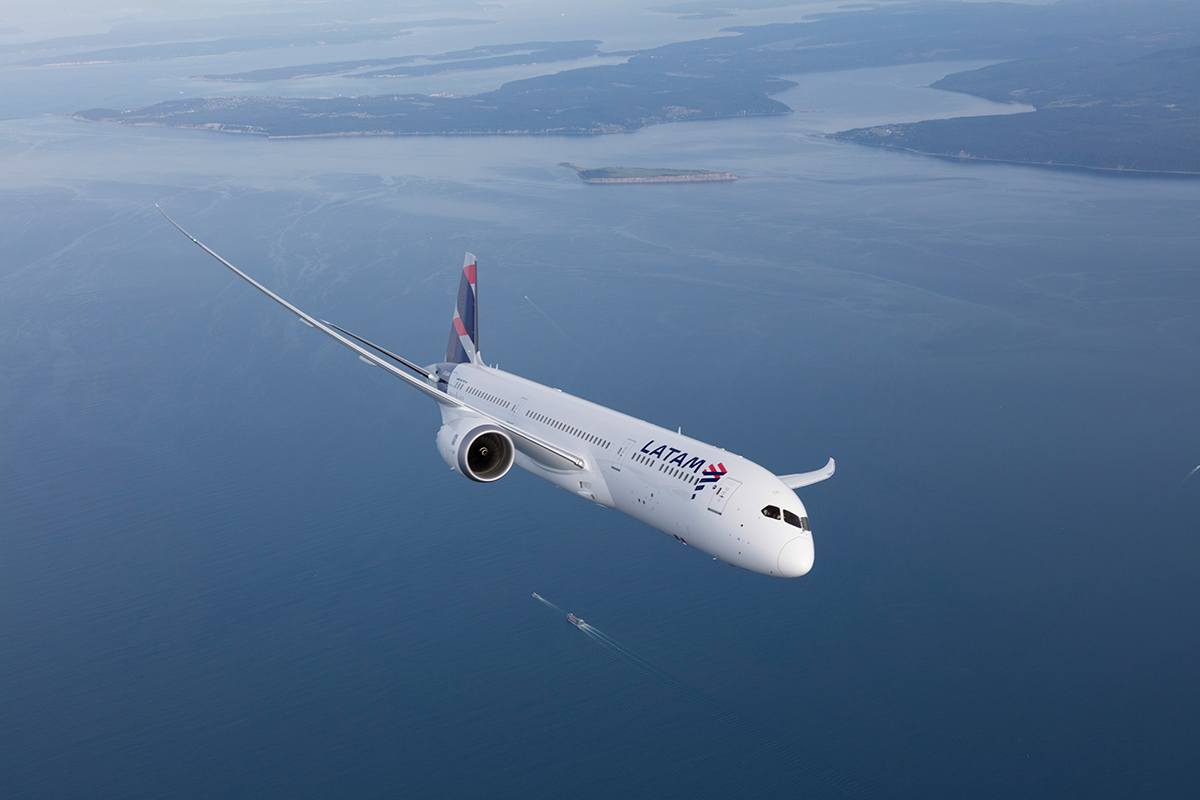
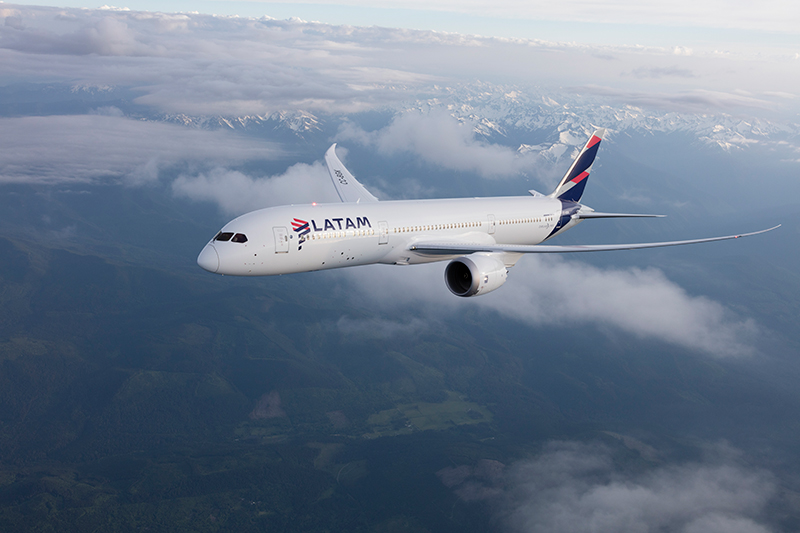
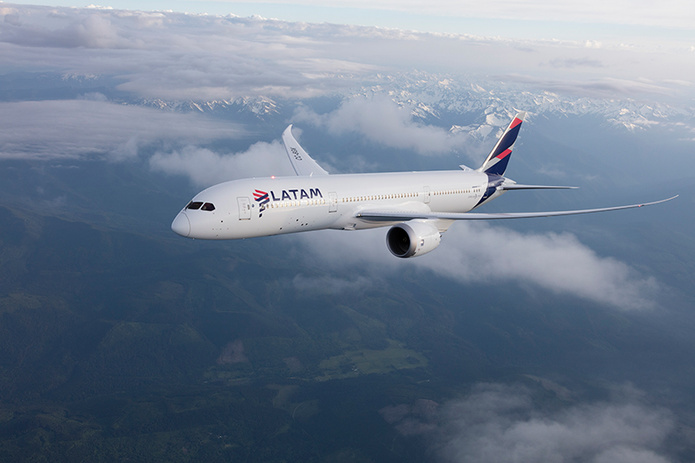
LATAM Airlines: Global Sales Support Excellence for Travel Professionals


© LATAM Airlines

Costa Rica


To accompany its distribution partners, the company relies on a highly specialized structure: the Global Sales Support (Global Sales Support – GSS) team. This tailor-made service is entirely dedicated to assisting travel agencies across all segments (leisure, business, online) as well as companies affiliated with the LATAM Corporate program, thereby ensuring efficient and borderless commercial connectivity.


A Multilingual Infrastructure and International Expertise

One of LATAM Airlines’ Global Sales Support’s major strengths lies in its international dimension and its ability to adapt culturally. The GSS team handles an impressive annual volume of more than 1.5 million requests worldwide. To offer a smooth and personable experience, the service is structured to respond in six key languages: French, Spanish, English, Portuguese, German, and Italian.

For Europe, and especially for the French market, service hours are perfectly aligned with the rhythms of local agencies. French-language support is available Monday through Friday, from 9:00 to 17:00, ensuring optimal responsiveness during business hours. Beyond these time slots or for absolute operational emergencies, the global channels take over to guarantee business continuity on a global scale.


360° Support: The Pillars of LATAM Airlines Support

The GSS service offering has been segmented to address with precision each type of issue encountered by travel agents. It revolves around four major areas of intervention :

1. Operational and Technical Support. This pillar forms the core of daily assistance. GSS advisors accompany agents through complex technical steps such as fare calculation (public or private fares), ticket reissuance procedures, and the association of electronic EMD documents for ancillary services, notably seat selection and baggage. Additionally, this unit handles requests for special services essential for passenger comfort, such as Unaccompanied Minor assistance (UMNR), or the carriage of pets in cabin (PETC) and in the hold (AVIH).

2. NDC Support by LATAM Airlines. In the era of digital transformation, LATAM Airlines positions itself at the technological forefront with its own NDC ecosystem. The GSS support offers specialized assistance for all requests related to issuances and redemptions via this platform. Whether it is voluntary changes or involuntary reissues following itinerary changes, the team also manages specific commercial exceptions (such as proposals to change airports for affected passengers), enabling agencies to navigate this new technological environment with ease.

3. Commercial and After-Sales Support. Profitability and administrative management of travel agencies are also central priorities for LATAM Airlines. The GSS support acts as a facilitator in resolving disputes related to Debit Memos (ADM). It is also responsible for applying commercial flexibility policies (pre-sale waivers) and discounts directly via the Latam Trade portal. Agents can request handling of refunds and the creation of user accounts in the private space.

4. Group Management. For group travel, Series and Charter Flights LATAM Airlines offers robust solutions for groups of at least 10 passengers sharing the same itinerary, whether for corporate or leisure purposes. The GSS offers two negotiation formats: ad-hoc groups, and the “AD HOC Series” for off-schedule requests. For large-scale projects, the Charter service manages the entire operational chain: PNR creation, invoicing, integration of name lists, issuance of the Master Ticket, and transmission of manifests to airport authorities.


© LATAM Airlines


Des canaux de communication optimisés et des engagements de service (SLA) stricts

To minimize waiting times for professionals and ensure maximum efficiency, LATAM Airlines commits to rigorous service standards (SLA) across several fast-response communication channels:

Phone: Via the dedicated French market line (+33 184080261), the average response time is 3 minutes, allowing you to speak directly with an advisor for case follow-up.

Online chat: Available directly on the portal www.latamtrade.com, this channel offers real-time interaction with a specialized agent, with an average wait time of only 20 seconds, enabling immediate contact for urgent cases.

Email: For cases requiring the submission of documents (such as [email protected]), LATAM guarantees an initial response within 8 hours and a final resolution within 48 hours.


© LATAM Airlines


LATAM Airlines : un Support Global des ventes d’Excellence pour les professionnels du voyage
Commercial Contact

Anabelle Araujo – [email protected]

Commercial Help Desk :

[email protected]

Groups Service :

[email protected]

More information on our travel agents platform: www.latamtrade.com


Breakdowns: Travel Remains Resilient as Tensions Drive Tourism [ABO]


Défaillances : le voyage résiste encore, mais les tensions gagnent le tourisme - Depositphotos.com Auteur Dwara Art

IFTM prenez RDV avec TourMaG


Altares a recensé 17 486 procédures collectives au deuxième trimestre 2026, soit une hausse de 5,4 % sur un an. Depuis le début de l’année, 37 700 entreprises ont fait défaut, près de 1 500 de plus qu’au premier semestre 2025.

Si le rythme ralentit légèrement, le niveau des défaillances demeure près de 40 % supérieur à celui observé avant la crise sanitaire.

Les très petites entreprises restent les plus exposées (+8,3 % de défauts chez les entreprises de -3 salariés), tandis que les services figurent parmi les secteurs les plus touchés.

A noter également, que les défaillances des entreprises de -3 ans progressent de 12,7%.


Le voyage continue de mieux résister

Dans ce contexte, le secteur du voyage fait figure d’exception relative.


Au deuxième trimestre, les agences de voyages enregistrent un niveau de défaillance identique à celui de l’an dernier, avec 12 procédures ouvertes. Les services de réservation et activités connexes font même légèrement mieux, passant de 10 à 8 défaillances (-20 %).

Seule ombre au tableau : les voyagistes voient le nombre de procédures passer de 1 à 6. Au total, les activités liées au voyage recensent 26 défaillances contre 23 un an auparavant.

La photographie est toutefois plus favourable lorsqu’on observe le premier semestre dans son ensemble. Les activités de voyage totalisent 54 défaillances, contre 59 sur les six premiers mois de 2025, soit un recul d’environ 8,5 %.

Pour Thierry Millon, directeur des études Altares, cette résilience s’explique aussi par la capacité d’adaptation des professionnels. « Le secteur subit malgré tout une situation qui doit l’amener à être très à l’écoute du client. Mais pour y arriver, il faut évidemment être en capacité de pouvoir résister financièrement », souligne-t-il.


L’hébergement décroche, le transport reste contrasté

Thierry Millon estime toutefois que cette résistance du secteur ne doit pas masquer les fragilités qui apparaissent dans d’autres activités touristiques. « Le tourisme présente plutôt des indicateurs de résistance sur les voyages en particulier. Mais cela ne concerne pas encore les activités de l’hébergement-restauration », observe-t-il.

En effet, tous les métiers du tourisme ne suivent pas la même trajectoire.

Altares souligne une forte dégradation de l’hébergement, avec 133 défaillances au deuxième trimestre (+41,5 %). Les hôtels sont particulièrement touchés avec 91 procédures, en hausse de 54 %, tandis que les structures d’hébergement touristique de courte durée progressent également de 50 %.

« L’hôtellerie classique souffrait déjà de la concurrence des hébergements de courte durée. Désormais, c’est à peu près tout le monde qui se retrouve dans la même situation », constate le directeur des études Altarès. Selon lui, les établissements positionnés sur le milieu de gamme sont aujourd’hui les plus exposés, tandis que les offres premium et les établissements les plus économiques résistent davantage.

Du côté du transport, la situation demeure contrastée.

Le transport routier de marchandises reste sous tension, même si les défaillances reculent légèrement (-2 %).

En revanche, les difficultés persistent dans le transport routier de voyageurs, où les défaillances restent concentrées chez les taxis. Altares rappelle que leur niveau demeure plus de deux fois supérieur à celui observé avant la crise sanitaire.


Altares · Corporate Insolvencies
Insolvencies in the Travel & Passenger Transport Sector
Safeguard, receivership and judicial liquidation filings · Q2 2026
Q2 2026
vs Q2 2025

National Context
Altares Study — Paris, July 16, 2026
Nearly 17,500 insolvencies in Q2 2026 (all sectors combined) (+5.4%)
With 17,486 open procedures, the second quarter confirms the high level of insolvencies in France. Since the start of the year, 37,700 companies have defaulted, two-thirds directly in liquidation, i.e. 1,500 more than in the first half of 2025. Difficulties hit especially very small and young firms, moderating the social impact of the rise: the number of jobs at risk falls by 9.5% year on year to 58,830 staff.
17 486
Q2 Procedures

37 700
in 6 months

58 830
jobs at risk (−9.5%)

+1 500
vs 2nd half 2025

Key Figures · Q2 2026 – Travel & Transports

Travel — All Travel Sub-sectors
26
insolvencies
▲ +13,0 % vs Q2 2025

Travel Transports
270
insolvencies
▲ +1,5 % vs Q2 2025

Combined Total
296
insolvencies
▲ +2,4 % vs Q2 2025


Focus
Travel Sector
26 insolvencies in Q2 2026

Travel Agencies
7911Z

12
= 0,0 %

vs 12 in Q2 2025 · 18 in Q2 2024

Q2 22Q2 23Q2 24Q2 25Q2 26

Tour Operators
7912Z

6
▲ +500 %

vs 1 in Q2 2025 · 8 in Q2 2024

Q2 22Q2 23Q2 24Q2 25Q2 26

Booking Services
7990Z

8
▼ −20,0 %

vs 10 in Q2 2025 · 11 in Q2 2024

Q2 22Q2 23Q2 24Q2 25Q2 26

Ensemble Voyages — Annual Insolvencies History
Travel Agencies + Tour Operators + Booking Services

96

93

97

94

72

90

103

120

104

2017
2018
2019
2020
2021
2022
2023
2024
2025

Analysis : After a peak at 120 insolvencies in 2024, the travel sector returned to 104 in 2025 (−13.3%). In Q2 2026, the trend reverses with 26 insolvencies versus 23 in Q2 2025 (+13.0%). The rise is driven by tour operators (6 versus 1 in Q2 2025), while travel agencies remain stable (12) and booking services retreat (8 vs 10, −20%).


Distribution of the 26 Travel Insolvencies · Q2 2026
Agencies 46,2 %
Tour Operators 23,1 %
Booking Services 30,8 %

Travel Agencies (12)
Tour Operators (6)
Booking Services (8)


Transports
Passenger Transport
270 insolvencies in Q2 2026


Taxis & VTC — Sector under intense strain
4932Z
254
insolvencies in Q2 2026
▲ +1,6 %

Taxis and VTC account for 94.1% of the insolvencies in the passenger transport sector. The rise has been ongoing since 2021 (305 → 859 in 2025). In Q2 2026, it cools slightly: 254 insolvencies vs 250 in Q2 2025.

319

515

571

339

305

395

470

648

859

2017
2018
2019
2020
2021
2022
2023
2024
2025

Other Transport Sub-sectors · Q2 2026

Sub-sector
Q2 2025
Q2 2026
Change

Maritime Transport
4
3
−25 %

Inland Water Transport
0
0

Air Transport
0
1
n.s.

Regular Road Transport
7
4
−42,9 %

Other road transport
9
11
+22,2 %


Summary
Yearly Evolution — Comparative

Travel Sector
Annual Insolvencies 2017–2025
2017
96
2018
93
2019
97
2020
94
2021
72
2022
90
2023
103
2024
120
2025
104

Passenger Transports
Annual Insolvencies 2017–2025
2017
453
2018
650
2019
669
2020
413
2021
341
2022
454
2023
543
2024
726
2025
927

Source : Altares — Corporate insolvency statistics
Safeguard, receivership and judicial liquidation filings · Q2 2026
NAF codes : 7911Z, 7912Z, 7990Z (Travel) · 5010Z, 5030Z, 5110Z, 4932Z, 4939A, 4939B (Passenger Transport)


Une économie qui manque toujours d’élan


Ce qu’il faut retenir du baromètre Altares au 2e trimestre 2026

  • 17 486 défaillances d’entreprises ont été enregistrées au 2e trimestre, soit +5,4 % sur un an. Le premier semestre totalise 37 700 procédures, un niveau toujours très élevé.

  • Les défaillances restent près de 40 % supérieures à leur niveau d’avant-Covid, malgré un ralentissement de leur progression depuis plusieurs mois.

  • Les très petites entreprises demeurent les plus fragiles : les structures de moins de trois salariés représentent 75 % des procédures et voient leurs défaillances progresser de 8,3 %.

  • Les jeunes entreprises sont particulièrement exposées : les sociétés de moins de trois ans enregistrent une hausse de 12,7 % des défaillances, majoritairement sous forme de liquidations judiciaires.

  • L’impact sur l’emploi recule : malgré la hausse des procédures, le nombre d’emplois menacés baisse de 9,5 %, à 58 830 salariés.

  • Les services aux entreprises décrochent (+13,9 %), tout comme les services aux consommateurs (+15,7 %), tandis que l’agriculture (+21 %) connaît une forte dégradation.

  • La construction résiste globalement (-0,8 %), grâce au recul des défaillances dans le gros œuvre et le second œuvre, même si la promotion immobilière reste en grande difficulté.

  • Le tourisme présente un visage contrasté : les activités de voyage restent relativement résilientes, mais l’hébergement se dégrade fortement avec une hausse de 41,5 % des défaillances, dont +54 % pour les hôtels.

  • La moitié des régions françaises repasse dans le vert, notamment la Bretagne, la Normandie, la Bourgogne-Franche-Comté, le Centre-Val de Loire, la Corse et la région Provence-Alpes-Côte d’Azur. À l’inverse, Auvergne-Rhône-Alpes enregistre une envolée des défaillances (+22,9 %).

  • Pour Altares, le reflux des défaillances n’est pas encore en vue. Avec une croissance attendue limitée à 0,7 %, une consommation atone et des coûts d’exploitation toujours élevés, le cabinet anticipe 34 000 à 35 000 nouvelles procédures collectives au second semestre 2026.

How Can Travel Keep Us Aligned? [ABO]


Lors du Forum des Pionniers 2026, sur les bords du Nil, des jouets en plastique apportés par les Pionniers ont été laissés aux enfants Nubiens. Sur le moment, tout semblait généreux. Puis une question est apparue. Étions-nous en train de laisser un souvenir… ou une distorsion ? - Photos : Jules DESPRETZ et Nicolas Demare

IFTM prenez RDV avec TourMaG


The Pioneer Forum 2026, designed by Travel Insight, Travel Evasion, and ESCAET, with the support of the Egyptian Ministry of Tourism and Antiquities and local teams, will undoubtedly remain a rewarding professional experience.

Bringing together more than 130 leaders from the French tourism sector in a country as fascinating as it is intricate was a true challenge.

Hotels, ships, guides, conferences, networking, logistics, and more—all contributed to making that week an exceptional experience.

Yet sometimes, it is precisely the most beautiful experiences that move us.

Not because they are flawless. Because they compel us to see things differently.


Leaving a memory… or a distortion?

I remember a suspended moment. I was swimming alone in the Nile, protected by a benevolent pioneer.

I had moved away from the shore. The noise faded away gradually. Before me, the river resumed its silent majesty. Behind me, life carried on.

Nubian families were enjoying that summer day. Pioneers laughed with inflatable rings and plastic water pistols. Three participants chose to explore the desert on camelback. Others preferred to climb the dunes on foot, simply to see what lay beyond the horizon.

As we left, the toys were left for the children. In the moment, everything seemed generous.

Then a question surfaced.

Were we leaving a memory… or a distortion?


Incorporating life into decision-making

A few hours later, another scene fed this reflection.

During the White Evening, everyone received a string of lights. One was handed to me. I declined it. I offered no explanation. I did not need to.

The look on the person offering it, as well as that of my neighbor, told me the message had landed. Later, back on the boat, some people hung their garlands above the Nile. One of them fell into the river.

A simple garland. One more drop.

I then asked myself: at what moment does a “fairy drop” become the drop too many?

That was when I felt misaligned. Not with the organizers. With myself. Because I understood that my work is no longer merely about supporting CSR approaches.

My work is to bring living beings into the room where decisions are made.


A sum of small gestures that prompt reflection

Throughout the journey, I paid attention to the details.

An air conditioner blasting at 17°C in a corridor wide open to the outdoors while the thermometer hovered near 40°C. Not only a needless energy expense, but above all a health risk for people constantly shifting from one thermal shock to another.

Partially consumed water bottles and discarded empties. Tote bags distributed but rarely used for local purchases.

Camel-back excursions offered almost instinctively to live a child’s dream, even as animal-welfare concerns become central for a new generation of travelers, a nightmare for adults.

Taken individually, none of these details seems grave. Together, they tell a story. They reveal our way of deciding.


A single question to transform a decision


About Cathy Bou

Cathy Bou - Photo : Nicolas Demare, Nidimages
Cathy Bou’s career is that of a professional who grew up alongside tourism.

She joined Thomas Cook as an intern at a travel agency in Arcachon, where she built a rich and evolving career for almost twenty-five years.

From travel agent to head of customer relations in the Île-de-France region, she explored the industry in all its facets: distribution, customer relations, managing sensitive situations, leadership, change management, and the early challenges of sustainable development.

Driven by a thirst to learn and to share, she decided in 2015 to reinvent herself and earned a Master in Management of Corporate Social Responsibility (CSR) at CNAM. This training marked a decisive turning point: applying her tourism expertise to sustainable transformation.

She subsequently founded Agapè, a consulting firm focused on responsible strategy. Since then, she has guided companies, travel agencies, tour operators, event organizers, and health sector players in building models that balance economic performance, environmental responsibility, and social impact.

Her path has led her to speak at major international events such as COP21, the G7 in Biarritz, the BIG expo by Bpifrance, and the IUCN World Conservation Congress, as well as to work with public institutions, large corporations, and leading organizations, including the Curie Institute.

Nothing in her background predestined her to this trajectory. It is precisely this practitioner’s viewpoint, forged by on-the-ground experience as much as strategic reflection, that now informs her analyses.

Through her columns in TourMaG, she advocates a conviction: the tourism of tomorrow will be built by reconciling the health of businesses, the health of people, and the health of living beings.


About Agapè

Agapè is a consulting firm specializing in responsible strategy that supports organizations in their transformation, certification, environmental assessment, and capability-building initiatives.

The firm primarily operates in the realms of tourism, events, and health, with a strong belief: responsible performance arises from balancing economic, human, environmental, and governance dimensions.

It also rests on leaders’ ability to understand complexity, make informed decisions, and act with consistency.

Through its advisory, audit, training missions and the development of digital solutions, Agapè helps organizations turn their responsible commitments into real drivers of performance, resilience, and the preservation of living beings.

More than a consulting firm, Agapè develops an ecosystem of methods, tools, and training designed to accompany decision-makers in the transitions shaping the world of tomorrow.