
China: Year of the Fire Horse Boosts Tourism Numbers [ABO]


Les autorités chinoises anticipent un record de 9,5 milliards de trajets passagers sur la période de 40 jours entourant les festivités du Nouvel An - DepositPhotos.com, yuliang11

CroisiEurope


As the chunyun period, the annual peak for travel tied to the Chinese New Year, has just begun in 2026, domestic tourism is experiencing the most spectacular yearly surge.

Rush to trains, to planes, to highways… The nine days of holidays granted to Chinese workers represent a golden opportunity to pack bags, hit the road, and visit family. And they indicate staggering crowds in transit hubs and at the legendary tourist sites.

Already, Chinese authorities are forecasting a record of 9.5 billion passenger trips over the 40-day period surrounding the festivities, up from 9.02 billion last year.

This speaks to the health of a sector that the government is keen to support in order to offset its tepid economic performance.

Also read: Young Chinese rediscover their traditions


Many foreign visitors

But resident populations are not the only ones elbowing their way through crowds and queuing for hours in shops.
From abroad, many visitors choose to come to China to experience the Spring Festival. Among them, the diaspora remains eager to return home.

Also read our series dedicated to diasporas
In the crowded streets of many cities, there are tastings of local specialties, traditional performances, festive customs, markets, popular parades, lit lanterns, etc. Immersion in a millennial culture is both vibrant and warm and guarantees a change of scenery. “It is also an ideal way to start the New Year,” newspapers claim.

For another proof of this momentum: according to data from the travel platform Qunar, the number of domestic flights booked during the New Year holidays by travelers with non-Chinese passports rose by nearly 30% year over year.


Korea, Singapore, Russia…

According to the head of public affairs at the travel platform Ctrip, Malaysia, the Republic of Korea, Singapore, Japan and Russia are among the main origins of visitors.

It should be noted that visa exemption policies covering 76 countries are playing a decisive role in this rebound: bookings from Russia alone soared by 471%, while trips by Korean tourists rose by 95% during the Spring Festival period.


Starting February 17, 2026, the Middle Kingdom has decided to extend its visa-exemption policy to ordinary passport holders from Canada and the United Kingdom. A measure set to last through the end of 2026.


The Chinese outbound market is rebounding


A major bottleneck

This two-way flow of travel to and from China, one of the defining features of the 2026 Chinese New Year, should not obscure that people from other nationalities are also traveling, notably Vietnamese, Thai, and Singaporean travelers who are pouring into neighboring destinations of the Middle Kingdom and creating traffic jams all around the region, and a novelty: scattering into the mountains as well.


Snow, the White Gold, to attract both domestic and international tourists

Important and forward-looking: the development of mountain tourism is spectacular.

For populations in Southeast Asia, now is the ideal moment to come to China and breathe the mountain air, enjoying leisure activities such as hiking and taking in exceptional panoramas.

Among them, Sichuan emerges as the most popular destination for travelers from Singapore, Malaysia, but also Indonesia, Thailand and even Australia where winters are increasingly warm.

For example, the newspaper China Daily notes the success of the “Dagu Glacier scenic area,” which drew nearly 140,000 visitors. According to border crossing data, one and a half million travelers crossed the border on December 2, 2025, a 48% increase.

In Harbin, one of the world’s largest ice and snow parks, during the 2024-2025 season, 90 million visitors were welcomed, including many Russians, Japanese and Koreans—about 20,000 per day. A record celebrated with international awards and explained by new direct air links and the opening of new facilities and activities.

In any case, the city claims revenues around $22 billion USD! A performance reflected in the growing enthusiasm for skiing. Had the Chinese leader promised to put 400 million people on the pistes?


A five-year strategy

If the Chinese press attaches so much importance to these movements, according to a leading researcher at the Tongcheng Institute of Research, this dynamic can be explained by several factors, including the rising value of the Chinese passport, the proliferation of visa-exemption agreements, and the improvement of international air connections from numerous Chinese cities.

He also notes that Chinese culture is generating increasing interest among young people abroad. “The Chinese New Year, as the most important traditional festival, naturally attracts those who want to experience an authentic encounter at the heart of Chinese culture,” he explains.

Meanwhile, the tourism minister recalls that 2026 marks the starting point of a five-year tourism development plan designed to raise the offer to international standards. Sources www.xinhuanet.com

Finally, remember that after a 2025 year guided by the Wooden Snake, 2026 is the Year of the Fire Horse—a remarkable convergence that occurs only once every 60 years!


Josette Sicsic - DR

Josette Sicsic, journalist, consultant, lecturer, has been observing the shifts of the world for more than 25 years to analyze their impact on the tourism sector.

After developing Touriscopie for over two decades, she remains at the frontline of current events, decoding the present to forecast the future. On the site www.tourmag.com, in the Futuroscopy section, she publishes several times a week forward-looking and analytical articles.

Contact: 06 14 47 99 04

Email: [email protected]

Between Cartels, Carnivals, and Soccer: The Reconfiguration of the American Imagination


Les carnavals reflètent à merveille l’histoire humaine, religieuse, artistique d’un continent, tout en lui conférant un outil de promotion touristique puissant - Crédit photo : Embratur

CroisiEurope


This Sunday and Monday, Mexico has demonstrated the insecurity that pervades its stunning landscapes, seaside resorts, and colonial towns… following the death of the cartel kingpin: El Mencho.

Put under a genuine curfew, numerous cities closed schools and government offices, sometimes airports, to shield their populations from the violence of armed clashes between police and traffickers.

Backed by American intelligence, the army indeed achieved the unthinkable: killing the godfather of these monstrous networks that operate from south to north across the continent and today threaten around twenty Mexican states, including the major ones from Jalisco and its capital Guadalajara to Puebla and Veracruz.

In tourist-heavy zones, visitors attempted to leave as quickly as possible as airports were closing.

From France, the Quai d’Orsay immediately reacted and urged “to strictly avoid zones where the security forces are operating, to stay vigilant, to seek shelter, and to limit any non-essential travel by following information shared by reliable local media and the authorities’ instructions…” !


From Mexico to Veracruz

While waiting for a clearer picture of a situation that could either intensify or temporarily ease, the mood here is therefore not festive.

Yet, among all Latin American countries, Mexico ranks among the most festive. Indeed, its carnivals are less famous than its Day of the Dead festival which, across the country, attracts thousands of curious visitors eager to immerse themselves in a local tradition that is particularly captivating.

A century old, the Veracruz Carnival tops the list of the most spectacular, but there are also carnivals in Campeche, Merida, and Mazatlan — one of the oldest — which attract a significant share of visitors, the majority of whom are indigenous. This lends them the sought-after authenticity.

In fact, mixing pagan and Christian traditions, the spectacularly costumed parades, loudly powered by the trumpets of the “mariachis” and the satirical verses aimed at local and national authorities, help shape, here as elsewhere, that eccentric and transgressive atmosphere that gives carnival its charm.


From New Orleans to Mobile, American carnivals

Plus au nord of this country with 140 million inhabitants that attracts around 40 million international tourists each year – including members of the American diaspora -, we arrive in the USA, where one can discover the renowned New Orleans Carnival which each year, over about ten days, draws roughly one and a half million spectators who come to applaud 5,000 participants in musical parades and other processions.

Yet New Orleans is not the only place to celebrate this now-secular event where one discovers costumes, dances, music, and where people get drunk and party in a particularly joyful and wild atmosphere.

Elsewhere in Louisiana but also in Alabama, smaller carnivals attract a mixed national audience and some international visitors drawn by the originality of the event and the quality of the musicians.

They pour into the streets of Montgomery and especially Mobile, which offer a bustling schedule of parades organized by the region’s “mystic societies,” parading throughout the city and displaying their traditions, and thus their identity.


The Carnival King: Rio and its samba schools

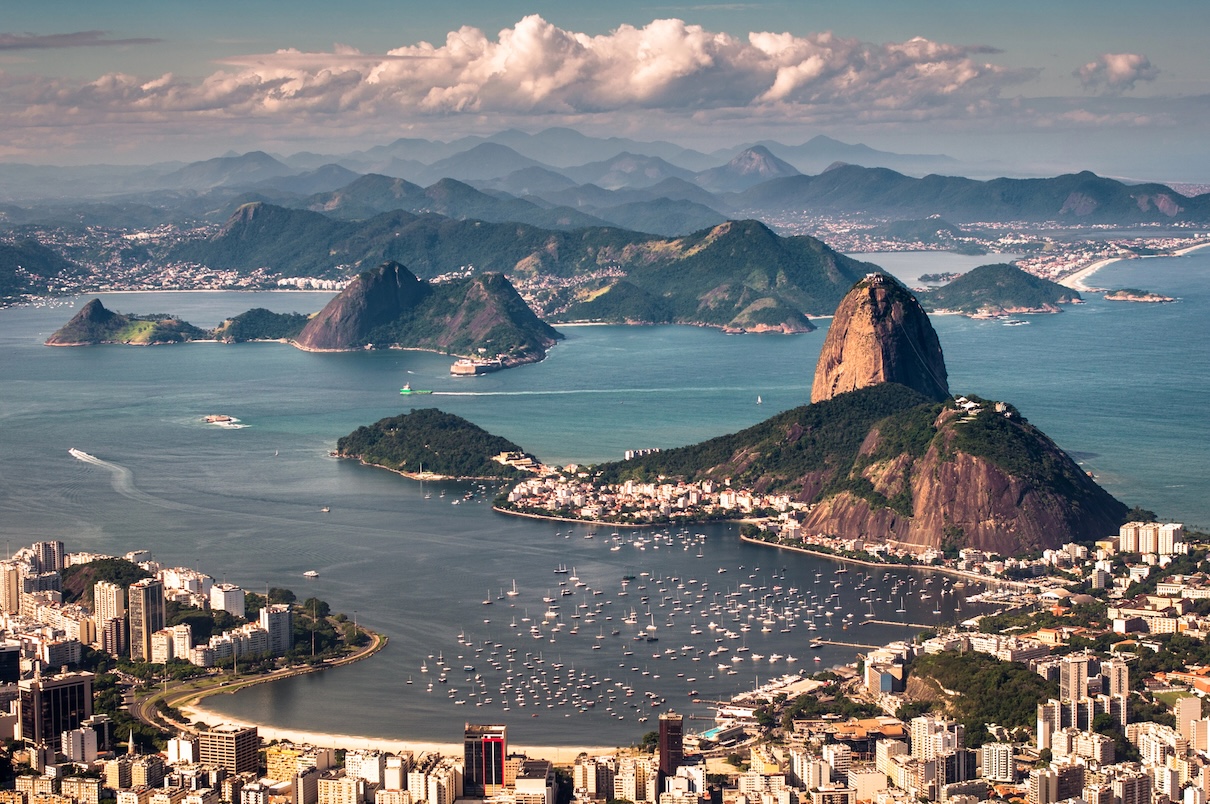
Obviously, the crown for the most surprising and memorable carnivals goes to Rio.

Pouring millions of people into the streets to have fun, let off steam, and push daily reality to the limit, this carnival features, beyond the official parades of the samba schools, hundreds of smaller processions: the “bloсos,” where Cariocas and national and international tourists, this year totaling about 65 million participants, come together. That figure is 22% higher than last year.

According to Embratur and the tourism ministry, the carnival injected into the city’s economy, especially through hospitality which operated at near full capacity with an almost 100% occupancy rate, 67 million USD.

On the aviation side, aircraft ticket purchases rose by 9% from abroad, notably from Chile (+41%), the USA (+11%) and Argentina (+8%)… to which are added millions of travelers who arrived by road, making the powerful neighbor the leading outbound market for Brazil, with 40% of its total foreign visitors.

Beyond Rio and its famous finale at the Sambódromo drawing about 80,000 privileged spectators, perfectly managed by the municipality, other Brazilian carnivals fire the imaginations of millions of tourists:

Bahia: international reservations and ticket sales to the state jumped 43%, with Argentina and Portugal leading;

São Paulo: more than 16 million people attended the parades of 600 “bloсos”;

Belo Horizonte: the number of participants is estimated at 6.2 million and the economic impact at 190 million USD;

– as for Recife and Olinda, they recorded 3.6 million and 4 million attendees respectively, with a carnival featuring its own musical rhythms (frevo and maracatu instead of samba), drawing crowds to street parades and outdoor shows.


Risks of violence and soccer


Josette Sicsic - DR

Journalist, consultant, speaker, Josette Sicsic has been observing world changes for more than 25 years to analyze their consequences for the tourism sector.

After developing Touriscopie for over 20 years, she remains at the forefront of current events where she decodes the present to forecast the future. On the site www.tourmag.com, in the Futuroscopie section, she publishes several times a week forward-looking and analytical articles.

Contact: 06 14 47 99 04

Email: [email protected]

From Female Travelers to Influencers: We Women [ABO]


Des voyageuses aux influenceuses : nous les femmes !  - Depositphotos.com  Auteur Nadezda_Grapes

CroisiEurope


… The idea struck me suddenly to glance at the great pens of the Beat Generation, those of Kerouac, Ginsberg, Ferlinghetti, Jack London… which to this day remain references in literature dedicated to the “road” and all its symbolism of counterculture waging war against an “american dream” that no longer answered the aspirations of the sixties.

And what did I discover? Simply, that not a single female writer had the luck to be retained by literary history! Not one! While, at the same time, many young American women were traveling on unlikely roads through Asia, South America, and the Middle East!

In Europe at the same time and particularly in France, as the “backpackers” followed in the footsteps of their North American contemporaries, the landscape was equally bleak. With only a few very small exceptions (Muriel Cerf’s L’Anti Voyage), it was mainly the women engaged in the feminist struggle who were making the headlines.

“Stand up, women” shouted the newcomers coming of age, demanding sexual freedom, the right to abortion, contraception and other rights to education indispensable to the fulfillment of half of humanity!


The Pioneers!


Alexandra David-Néel - CC Wikipedia

To believe that the road and the journeys it permitted were surely the realm of these young women whose appearances were made uniform by roughly cut hair and embroidered shirts.

To believe that travel, being synonymous with learning and knowledge, was closed to women still confined to their kitchen and their children.

Some names, however, began to circulate and to serve as references. It was the grand Alexandra David-Néel who began her first work with the words “Obedience is death,” explaining her thirst for travel whose culmination in 1912 was her arrival in Lhassa where she finally approached the Dalai Lama!

Reaching the age of 101 years before passing away in Dignes, Alexandra was indeed accompanied by a young servant whom she regarded as her adopted son. For all that, this icon of travel has always shown a curiosity and a courage perfectly indispensable for wandering on Asian roads where more than once she had to pass herself off as a man to move forward!

This disguise tactic is, moreover, well known to female travelers. In 1766, for instance, a certain Jeanne Barret embarked on Bougainville’s around-the-world expedition. Disguised as a sailor, she used the voyage to develop her passion for botany and collected thousands of plant samples. Unmasked in Tahiti, she returned to France some ten years later and was absolved of her fault.

We can also recall through her writings of “La monja Alferez,” this young Spanish woman who deserted her convent at the start of the seventeenth century to embark on conquest ships, disguised as a soldier. That’s Catalina de Erauso!

We also mention the one who commanded the largest pirate fleet in history. A Chinese woman born in 1775… “Innumerable, humble and extraordinary, these survivors have been swallowed up,” write Alexandra Lapierre and Christel Mouchard in their book: “They Conquered the World.” Editions Arthaud.


Georges Sand, from Venice to Majorca

Encouraged by the development of maritime and land transport, the traveling women of the nineteenth and twentieth centuries are therefore not pioneers in the strict sense. They embody, without realizing it, an evolution in the status of women which, though long and full of obstacles, is undeniable. But, in France as well, these writers—“travelers”—were not numerous.

And few remember them. Flora Tristan in South America leaves a name, while Isabelle Eberhardt (born in 1877) also disguises herself as a man, leaving writings: “In the Warm Shadow of Islam.” A narrative about Algeria where she spent many years.

Among the writers of the era, the best known, Colette, was not a great traveler. A few returns between the provinces and Paris sufficed. By contrast, George Sand, a child of the nineteenth century (born in 1804), besides her travel between Paris and Nohant, experienced the hardship of travel abroad.

Majorca in the company of Frédéric Chopin during the winters of 1838 and 1839 has been mentioned by the writer in her diary with a vitriolic pen against the natives for whom she showed an unacceptable intolerance. In her book “A Winter in Majorca,” she nevertheless exercises her talent into a kind of narrative already akin to travel guides.

And, conversely, after a few months in Venice in the company of Alfred de Musset, she leaves in her correspondence lines that are both romantic and realistic about the Serenissima and its inhabitants. Lines perfectly romantic and realistic at once!


Ella Maillart, Margaret Mead… Edith Wharton!

A product of Europe in the thirties, grew tired of her gilded cage in Switzerland. After a journey across the Caucasus, she nonetheless published writings on Russian youth. Then came China, where she travels in 1934 and takes the opportunity to publish her first reports for Le Petit Parisien.

Iran, Turkey, Afghanistan, India—where she eventually settles—pass before her eyes and inspire all sorts of writings. Then, back in Europe where she dies in 1997, she brings the concept of cultural travel, spiritual travel, lectures, and yoga classes. Very active, also the American Margaret Mead who used her journeys to exercise her anthropologist’s skills among the tribes of New Guinea and the surrounding region.

Highlighted by the unforgettable film “Out of Africa,” the Danish Karen Blixen also contributed to the quality of women’s travel literature. Blazing, these narratives about Africa nearly earned her the Nobel Prize.

A few more words on these superb voices who were the novelist Edith Wharton, who, in the twenties, published accounts of her travels in France, Italy, Morocco… A passionate traveler, she also used her books to offer a historical, cultural, artistic description of the countries she visited. All of this with a voice often laced with humor.

And again, we are not far from a travel guide. Finally, what about Vita Sackville-West? Born in 1892, she was a poet, gardener, journalist. Wife of a British diplomat, she stayed in the Middle East, notably in Iran, India, Egypt… from which she drew inspiration to write both novels and popular science works.


Not Afraid at All! A New Inventory of Tourist Fears [ABO]


Il existe des peurs liées intrinsèquement au voyage : grèves, retards, annulations, catastrophes climatiques - DepositPhotos.com, nicoletaionescu

CroisiEurope


Departing inevitably creates a change, hence cognitive dissonance all the more serious when the journey takes place in a foreign, distant, little-known country.

Who doesn’t feel a twinge of apprehension when packing their backpack before boarding the plane for a “terra incognita”?

Even the most experienced backpackers admit this small pang on the way to the airport…

And then, and above all, let us not forget that there exists a category of individuals totally averse to the idea of traveling. These people suffer from hodophobia. Such are anxiety disorders totally irrational but impossible to control, which manifest through a variety of symptoms such as palpitations, headaches, dizziness, breathing troubles…

Generated most often by a complicated personal history involving exile and separation (divorces), this pathology is all the more difficult to treat as it is rarely identified as such or confused with fear of flying, which indeed affects more people.


The contradictions of a traveler in search of safety

Another finding: although an immense majority of travelers consider safety as a priority (89%), 1 in 3 admits not taking out specific insurance!  

A paradox difficult to explain since about a third of travelers surveyed by Safertourism have already faced health issues related to the following situations:

– either, an extreme heatwave (39%)

– or, a illness requiring medical intervention (32%)

– or fatigue resulting from exceeding their physical limits (22%).

This paradoxical laxity can also be attributed to the exaggerated optimism of many travelers who consider health problems to concern “others” and rely on their lucky star.

But it is also linked to economic issues. Insurance is perceived as expensive and sometimes unnecessary. Many people indeed imagine they are already insured by their bank, their home insurance, etc.


Food, allergies, insects and other ordinary fears

Another finding of interest: legions of fears that are not new and have always been part of traditional apprehensions whenever one travels.

Thus, while dining is one of the most appealing aspects of travel, an increasing number of people fear issues related to a diet that is too exotic for their stomachs. They are at least 39% in this case. And this, despite precautions many of them do not hesitate to take.

The risks related to drinking water are also increasingly mentioned and not only in distant countries. In Europe, people are beginning to worry about it too. Rightly so.

Just as concerns grow about the quality of swimming waters, whether fresh or salty. And then there is the air we breathe, especially in large Asian metropolises like Bangkok or New Delhi.

Likewise, the endless list of allergies! Rarely mentioned a decade ago, these have become an invisible foe that can force some people to cut their travels short.

Finally, insect bites, particularly mosquitoes, are so well publicized that they’ve climbed the charts of major fears and now come with comprehensive medical kits and vaccines. Big enough to spoil a stay, they are becoming tougher and are not likely to disappear.


Watch out for falls!

There is also a longstanding fear shared by vacationers in general, but especially by older people: the fear of falls and other slips that can sometimes prevent continuing a trip.

These risks account for more than a third of bodily incidents.

Not to mention the car accidents whose shadow remains ever-present in travelers’ minds.


Fears linked to a shifting geopolitics


And the female travelers: “She Travel Safe”, a campaign for them

A distinct category, though overrepresented among travelers, women more and more often speak of their fears of traveling solo in certain countries with a dubious reputation but also in Western countries plagued by all sorts of acts of delinquency.

Estimated to represent half of female globetrotters, these women benefit from the campaign “The she travel safe” launched by the Safertourism foundation to encourage them to take precautions.

Moreover, they are already more numerous than men in taking out insurance. Just in case!

In the meantime:

– 64% say they avoid returning home alone in the evening ;

– 56% avoid places they have been advised against ;

– 48% do not go out at night ;

– 27% admit they do not take taxis or rideshares driven by male drivers.

That shows the globetrotter is still far from combining travel with serenity. Hence their preference for guided getaways and group trips with “girlfriends”!


Josette Sicsic - DR

Journalist, consultant, speaker, Josette Sicsic has been observing the world’s changes for over 25 years in order to analyze their consequences for the tourism sector. 

After having developed for more than 20 years the magazine Touriscopie, she remains at the forefront of current events where she decodes the present to forecast the future. On the site www.tourmag.com, in the Futuroscopie section, she publishes prospecting and analytical articles several times a week. 

Contact: 06 14 47 99 04

Mail: [email protected]

Urban Tourism: The Herculean Efforts of Elected Officials [ABO]


Les murs peints du 14 éme arrondissement à Paris, consacrés à Jacques Demy - Photo JS

CroisiEurope


Le maire du treizième arrondissement à Paris ne cache pas ses ambitions. Son arrondissement déjà largement touristique avec une foultitude d’hôtels, brasseries, lieux culturels… doit continuer à attirer des touristes. Comment ?

Pour atteindre ses objectifs, le maire a choisi de positionner son arrondissement sur le street-art.

Moins élitiste, très créatif, le développement de cette forme d’art constitue l’un des moyens de séduire sur un mode interactif un public de jeunes et des artistes souhaitant démontrer leurs talents.

Synonyme de tourisme urbain, la diversité et la qualité culturelles ne sont pourtant que l’un des chantiers auxquels doit s’atteler une ville aux ambitions touristiques affirmées. Pour exister aujourd’hui, celles-ci doivent en effet plus que jamais investir, innover, communiquer, étonner, se renouveler…


Tourism with a Heavy Footprint

With hundreds of millions of individuals of all nationalities on its books, it is true that urban tourism remains an unrivaled historical practice in the spectrum of tourist activities.

It may be challenged by the growth of urbanization, population, and the ups and downs of the economy, but which leisure tourists would deprive themselves of a heritage visit, a shopping day, a show, and an exceptional nighttime activity? And which business traveler would resist the lure of a fine meal, a museum outing, or a drink at a nightlife bar?

Who else would resist the temptation of using city airport and rail facilities that allow these places to be reached quickly and dwell there for very short, particularly immersive and culturally enriching stays?

As core components of leisure tourism, all these activities have been promoted and developed over centuries of history during which the city asserted many other strengths: those generated by medical research, the university, politics, justice, science, commerce…

Crossroads and international or regional showcases, they have become so indispensable that some are tempted by this new craze called demarketization. They try to make themselves “a little” forgetful by tourists who are too numerous.

These famous “over-tourists” often caricatured and vilified by a poorly informed or outright misinformed public, who are most often not so numerous outside peak periods.


Destinations in urban areas account for 75% of global tourism. The major cities themselves account for half of that share. In France, urban tourism captures 42% of business overnight stays, i.e. in 2024, a rise of +5.5%, and 64% of the French hotel capacity (in number of rooms), including 25% for Paris and the Île-de-France region.

Sources : Atout France


Investments in “Sustainable” Strategies

But beware, none of the great and mid-sized universally known cities waited for tourist windfall with arms folded. To stay in the race, strategy and investment were necessary.

A task all the more difficult as the city must satisfy two publics who do not share the same expectations. Building a convention center is equivalent to also making this facility a venue for performances.

Renovating a monument or a museum should allow local residents to frequent it without pushing through crowds. Implementing a public transport service must first address the needs of locals, etc.

All of it within a sustainably preserved environment. An imperative that all cities have now incorporated and seek to respect by implementing, with more or less shared methods: greening, soft mobilities, management of road traffic, development of pedestrian zones, accessibility for all (notably the disabled), a balanced climate policy, and the use of eco-friendly materials for buildings (including tourist facilities), all equally eco-responsible… At the head of these exemplary cities: Copenhagen, Oslo, Barcelona, Amsterdam, Berlin…

In France, according to the GDS Index, these cities are Lyon, Bordeaux, Grenoble, Paris, Strasbourg, Nantes… A number of cities that, trailblazers on the subject, have all proposed programs including the development of their environmental actions.


The Intelligence of Cities


The Ten Most Visited Cities by International Tourism

This ranking relies mainly on data published by Euromonitor International, through its Top 100 City Destinations Index 2025, today the global reference for measuring international city tourism traffic. It is obviously influenced by current events but remains representative of the volumes that cities face.

1. Bangkok, Thailand – 30.3 million visitors

2. Hong Kong – 23.2 million

3. London, United Kingdom – 22.7 million

4. Macau – 20.4 million

5. Istanbul, Turkey – 19.7 million

6. Dubai, United Arab Emirates – 19.5 million

7. Mecca, Saudi Arabia – 18.7 million

8. Antalya, Turkey – 18.6 million

9. Paris, France – 18.3 million


Balancing the Needs of Local and Visiting Populations

Finally, the new orthodoxy (for over a decade now) is to reconcile the interests and practices of tourist populations and resident populations. A colossal task that all players in territorial tourism have taken up, without possessing foolproof recipes or the means to implement them.

Indeed, for a long time, the appearance of the “Greeters” has enabled tourists to visit a territory in a personalized way. Competing with a few other associations, this movement has been a success.

Another welcome practice, easing contact with locals, is the exploration of a neighborhood around a specific theme: cinema, song, Art Nouveau, industrial art, “street art,” chocolate shops, locally brewed beers…

This inexhaustible and innovative way of bringing places to life is all the more successful because it involves resident populations traditionally distant from tourists. Welcoming school groups in exchange programs is another tool not to neglect, as well as all sports or cultural associative exchanges.

Dances, balls, “ephemeral beaches,” open-air cinema and other street animations and festivals are also excellent means of letting two kinds of audiences coexist. Marathons, rallies, night walks, on foot or by bike, also meet the playful, festive, and participatory demands of urbanites and their visitors…

In short: to be perfect, the “urban comedy” must indeed be human first and foremost. And tourism must be the link enabling two worlds to live together in peace. A digital link, yes, but also and above all: a human link!

And let us stop describing the tourist as a “over-tourist” just to ease the mood.


Josette Sicsic - DR

Journalist, consultant, lecturer, Josette Sicsic has been observing the shifts in the world for over 25 years to analyze their consequences for the tourism sector.

After developing the Touriscopie journal for more than 20 years, she continues to be on the front line of current events where she decodes the present to forecast the future. On the site www.tourmag.com, Futuroscopie section, she publishes several times a week forward-looking and analytical articles.

Contact: 06 14 47 99 04

Email: [email protected]

End of Sora: AI, the Age of Illusionists? [ABO]


Fin de Sora : l'IA, le temps des illusionnistes ? - Depositphotos.com Auteur rokas91

CroisiEurope


… After a dazzling start crowned by a million users, SORA would thus fall into the AI’s forgotten corners, pushing its owner to refocus on more lucrative activities, notably professional tools.

The promising experience at the outset had fizzled out. And this despite its almost magical qualities for the user. Indeed, which graphic designer, photographer, videographer, or advertiser has not succumbed to the temptation to call on an AI to produce in a few seconds a wholly artificial work where no human would recognise themselves and could claim image rights?

And no one could bill for the fees owed for its meticulous service? As for situations and landscapes, monuments and other sites… which can be transformed with impunity, they are already among the first victims of large‑scale falsification that is not always appreciated.


Exemple : la campagne de Chamonix et de tant d’autres (Coca Cola, Mac Do…) ont été jugées responsables de vouloir tromper le public avec des images au rabais, manquant totalement de l’authenticité qu’elles sont censées vendre.

Certes, la mention « Image générée par l’IA, sublimée par l’homme » était visible. Ce qui n’est pas toujours le cas.

Mais tout de même, elle suggérait que tant qu’une législation très stricte n’est pas en place, la transparence des techniques utilisées pour informer et séduire une clientèle, sont douteuses et trompeuses.


Les contre offensives : Occitanie, Intermarché…

Facing such an onslaught that is technically, economically and often aesthetically unbeatable, the enemies of generative AI have stepped up to the plate.

Another example among others: Intermarché’s advertisement, in December 2025, was intent on proving its attachment to traditional advertising creation processes by having its spot produced by a team of around sixty humans!

Real artists and technicians working in a studio with their own skill and genius. Global success for the brand and for the advertising fable’s big bad wolf turned into a star!

Less known but just as commendable and convincing was the Social Media campaign proposed by the Occitanie region with the slogan: « In Occitanie we do not generate our journeys, we live them! ».

Driven by a firm intent to demonstrate that it is not a victim of machines and their approximate creativity, the region showcases its preference for real people and real sites and landscapes as it can offer visitors, and for genuine sustainable tourism!

« Out » Sora! For the moment, at least. And for those who can afford to rely on good old techniques and to preserve a sector extremely valuable for France where the cultural and creative industries (audiovisual, cinema, video games, music, live performance, books, press, radio and advertising) generated 102.7 billion euros in revenue in 2024 and directly employ around 586,000 people, with an additional 463,000 jobs indirect at suppliers and service providers!


Des émotions humaines pour et par des humains

Evidently, the war between the old and the new seems once again very much open. And it is far from calming down as the tsunami of AI’s arrival has been powerful and rapid. Is this war, for the moment, justified? Or unjustified?

While travel agents and many other professions wonder how they will be treated, or what side they may take from this unexpected, free aid that has fallen from the sky with such effectiveness, psychologists, sociologists, and other humanities specialists are trying to understand the transformations taking place in our brains and thus in our behaviours.

Among them, Bruno Patino (president of Arte) has just published a book entitled The Time of Human Obsolescence.

A serious yet easy-to-read analysis, which, like many others, compares the arrival of AI with the invention of the printing press. The latter, 500 years ago, allowed knowledge to be disseminated and recognized authors as untouchable experts.

A fortunate time of cognitive stability nourished by verified information coming from above!

And then the Internet arrived and produced a kind of chaos that indeed yields a universal library but also what the author calls a form of fragmentation. We fragment, we crumble, we sink… while believing we are freeing ourselves!

We chase the truth, believing we are equipped to discover and strengthen it. Through the constant, dripping connections on our screens, we think we participate in an uninterrupted circular conversation while we shut ourselves up with algorithms in silence and solitude, while filling data centers with millions of data that will be sold to the highest bidder and will worsen water shortages and CO2 emissions!

A Grand View Research study predicts that by 2030, the AI market should represent 1,811.75 billion dollars, i.e., an average annual growth rate of 37.3% between today and the end of this decade.


Where Will Western Bashing Lead Us?


Où nous conduira le bashing contre l’Occident ? - Depositphotos.com Auteur robeo123

CroisiEurope


Le dernier ouvrage de Frédéric Martel : « Occidents : enquête sur nos ennemis » ne nous laisse pas vraiment de doute. Il raconte, parmi tant d’autres, le grand renversement idéologique de notre époque marquée par son obsession pour la destruction de l’Occident. ».

En quoi cela intéresse-t-il l’activité touristique ? A chacun de voir en fonction de son métier. Mais, internationale, par définition bienveillante, porteuse de progrès et de différences … l’industrie touristique est parmi les plus sensibles à ce « bashing » anti occidental qui nourrit l’actualité.

D’autant que cette industrie a mis en place des modèles de développement très « occidentalisées » aujourd’hui contestés.


The Lights of the West Are Also Fought By Leaders Eager to Control Their Populations

… Que se passe-t-il ? Fort heureusement, si l’on prend les choses par le bon côté : l’élection d’un anti Victor Orban, prêt à défendre la bannière européenne dans un pays qui s’en éloignait, atténue les voiles sombres d’une guerre sans doute inutile et sans fin. Ouf !

La Hongrie ne va pas rejoindre les rangs de ces crypto ennemis d’une Europe qui, malgré ses défauts, demeure l’un des bastions de la culture occidentale et défend les valeurs fondamentales du vivre ensemble : tolérance sous toutes ses formes, justice sociale, défense des faibles, démocratie, paix, liberté, libre circulation des biens et des personnes, respect des droits de l’homme et la femme…

– Mais, de l’autre côté, ce même Occident reste suspendu aux incartades de ce guignol sénile et tout puissant qui se bat à coup de bombardements, missiles, rockets et surtout à coup d’une intolérance absolue pour toute forme de pouvoir autre que celui de ses dollars.

– Autre constat : les lumières de l’Occident ne sont pas seulement combattues par des tyrans fous de Dieu ou de pouvoir, mais par bien d’autres dirigeants avides de contrôler leur population.

Partout en Asie, en Inde, en Extrême Orient, en Afrique, Russie, Corée du Nord, Chine… de « semi » dictateurs se montrent soucieux de maintenir une chape de plomb sur leurs populations afin de les préserver des « mauvaises mœurs » que nous exhibons dans notre culture, notre cinéma, nos modes de vie… et ces Gafam en train de coloniser nos neurones… Comme le dirait l’historien Gilles Keppel : « on vit donc dans un anti occidentalisme d’atmosphère ».

– Enfin, et surtout, il convient non seulement de remarquer que l’Occident a des ennemis à l’extérieur qu’il tente de pourfendre. Mais, il en a aussi à l’intérieur de ses frontières.

Lesquels ? Il s’agit tout simplement de ces troupes grandissantes de militants et activistes des extrêmes qui à l’intérieur même de pays démocratiques cherchent à vouloir restaurer des valeurs traditionnelles archi conservatrices comme celles véhiculées par les croyants, les religieux, les racistes de tout poil, les antisémites, les néo nazis, néo fascistes…

Têtes de proue de ces mouvements, les partis d’extrême droite et, nouveau paradoxe, ceux d’extrême gauche qui se retrouvent dans la même détestation et complexifient encore plus le chaos du monde. Car il y a bel et bien chaos et nul ne sait combien de temps il durera.


Geopolitical Chaos, Tourism Chaos

En première ligne des secteurs affectés par une nouvelle guerre du « Golfe » qui, à ce jour, n’est toujours ni gagnée, ni perdue et flotte dans les eaux troublées du détroit d’Ormuz : l’activité économique et touristique.

Suivies de près par les médias cherchant à comprendre si ces destinations de rêve qu’étaient les Emirats arabes unis, Oman, le Qatar… allaient retrouver leur glamour, leur attractivité et leurs clientèles issues tout autant d’Europe que d’Asie et Afrique, cette actualité est d’autant plus anxiogène que les vacances s’annoncent pour des privilégiés qui s’envoleraient bien au soleil. A condition que le « Dieu Pétrole » le leur permette.

Mais si l’on veut lire entre les lignes, ajoutons que l’anti occidentalisme ambiant n’est pas qu’une idée. Disséminé partout, il est de nature à pénaliser les nombreuses destinations vivant de l’activité touristique.

– D’une part, la population locale de ces pays est à même de se retourner contre ces voyageurs qui incarnent à leurs yeux la débauche, le vice, les excès de toutes sortes.

Observables depuis les premiers déplacements de tourisme de masse, autant en Égypte, qu’Espagne, Italie et en France… ces comportements « osés », peu respectueux des traditions locales, contribuent à leur façon à créer et entretenir un rejet de l’Occident. Provoquant des chocs culturels largement décrits et documentés, ils peuvent aussi être générateurs de liens plus confiants et pacifiques. Mais, selon les destinations, la partie est loin d’être gagnée.

– Autre impact sur le tourisme : le développement touristique en lui-même. Inventé, construit, élaboré par des Occidentaux pour des Occidentaux, le tourisme a imposé ses modèles et ses concepts à toute la planète.

Industrie occidentale par excellence, son activité en a toutes les qualités en termes d’efficacité, fonctionnalité, dynamisme économique… Mais, elle en a aussi tous les défauts : quand elle s’implante dans des pays dits émergents, elle « colonise » des territoires, les dénature, elle en efface l’histoire et in fine les dégrade, avec la même constance et uniformité.

Mettant à sac pour son propre usage des pans entiers du patrimoine géographique et humain, l’Occident travaille pour lui et pour sa propre économie dont il s’abstient le plus souvent de partager les recettes.

… Si l’anti occidentalisme continue de s’épanouir, il y a donc fort à craindre que le désordre mondial en cours ne fera que s’accentuer. Avec en embuscade, candidate à une domination du monde : la Chine et son milliard d’habitants au cœur d’une Eurasie repensée…


East versus West? The Conflict Is Not New

Car non content d’échauffer les esprits et de les manipuler, l’anti occidentalisme est en train de remanier la carte géopolitique internationale.

De la « paisible » bipolarisation de la guerre froide et de la « mondialisation heureuse » nous sommes entrés dans un monde multipolaire où les USA et l’Occident ne feront pas tout seuls la loi, la culture, la pensée, la conquête de l’espace, des énergies et surtout de l’intelligence et de la morale.

Dès maintenant, nos avions et bateaux et trains devront emprunter les grandes routes d’un monde redessiné, hybridé entre toutes les cultures et les modes de pensée qui le composent. Et surtout par leurs seuls intérêts.

Orient contre Occident ? Le conflit n’est pas nouveau.

Pour autant, il sera d’autant plus difficile à maîtriser que l’Afrique reste une grande inconnue qui attend l’Occident au tournant. Tandis que la Chine, l’Inde, la Russie… ont déjà plus ou moins fait leurs choix et que le Moyen-Orient risque encore de souffrir longtemps en attendant que la sagesse reprenne ses droits.


Josette Sicsic - DR

Journaliste, consultante, conférencière, Josette Sicsic observe depuis plus de 25 ans, les mutations du monde afin d’en analyser les conséquences sur le secteur du tourisme.

Après avoir développé pendant plus de 20 ans le journal Touriscopie, elle est toujours sur le pont de l’actualité où elle décode le présent pour prévoir le futur. Sur le site www.tourmag.com, rubrique Futuroscopie, elle publie plusieurs fois par semaine les articles prospectifs et analytiques.

Contact : 06 14 47 99 04

Mail : [email protected]

Moose Migrations: Swedish-Style Well-Being [ABO]


Depositphotos.com binnerstam@telia.com

CroisiEurope


Some promotional films are more original than others.

They can even cost less and captivate millions of devoted viewers for years, in front of their screens. Why? What happens there?

And well, it’s simple: we are in Sweden, in its far north and we witness thanks to about thirty cameras scattered across the forest, the migration of a hundred or so moose who leave the coast to spend their sunny days inland!

A noticeably rougher and more authentic form of reality TV, this initiative demonstrates the power that animal spectacles in their natural habitat can have. The spectacle relaxes, soothes, opens the door to meditation, to renewal, to tranquility…


Slow TV: a new movement in relaxation

Perfectly aligned with Sweden’s image as a premier wellness destination, televised moose migrations fit into a larger movement known as Slow TV.

Invented by the Norwegians about fifteen years ago, this form of television involves programs where nothing happens. Truly nothing!

Thus, Norwegians had set up cameras filming for seven straight hours a railway line followed by a train! Silence, fixed shots… In fact, they embraced the techniques of underground cinema developed by Anglo-Saxon filmmakers in the 1970s to depict reality.

A master of the genre, for instance Andy Warhol attached a camera to sleeping young women. It lasted four hours, and people cried genius! The film was titled Chelsea Girls! Artistically, the method thus became therapeutic.

svtplay.se, the channel that produces and broadcasts the moose migration program, effectively turns this millennial ritual into a global event.

With a 24/7 broadcast, the program accumulates more than 500 hours of live that some viewers watch during vacations they take to follow the moose transhumance through the forest, including the crossing of a river. The highlight, the river crossing, drew 70 animals in 2025 compared to 87 in 2024.

While many bears as well as foxes, reindeer, otters and legions of birds and birds of prey have joined this show. A spectacle that is quite unpredictable but whose benefits are recognized by scientists.


The benefits of slow, passive viewing

Indeed, a recent study conducted by Sweden’s Agricultural Sciences University (SLU) among people who followed The Great Moose Migration in slow TV format confirms that watching the event reduces stress, calms the mind, and strengthens the sense of connection to nature:

– It also fosters a sense of emotional closeness to nature, despite the digital experience.

– The natural sounds (wind, river, birds) play a key role in this immersion.

– The editing-free format nor narration reinforces the feeling of authenticity and presence.

– Watching also offers an aesthetic dimension: perfectly synchronized bird formations or schools of fish moving in a fluid motion create a visual harmony that naturally slows the inner rhythm.

– Finally, this kind of spectacle can provoke a sense of wonder while the live chat (which is offered) creates an engaged community, fostering exchanges, learning, and sometimes even environmental engagement.

– Last but not least: Slow TV appears as a credible complement to outdoor experiences, capable of producing effects close to real contact with nature, without replacing it.


For example: bird migrations that do us good

If this experience provides an excellent example of the power of immersive animal spectacles on our minds, it isn’t the only one. Without svtplay’s help and screens, a simple forest stroll as offered by forest therapy worldwide is part of it.

While it must be acknowledged that observing animal and bird migrations is increasingly popular.

Leading the way are bird migrations at certain times of the year, in vast, perfectly organized bands that delight ornithology enthusiasts whose numbers are growing. The LPO claims 80,000 members and 460,000 followers on social media.

In France, the Somme Bay, Der-Chantecoq Lake, Teich Nature Reserve, the Camargue, and especially the famous Cap Gris-Nez offer opportunities for walks and spectacular observations. Integrated into the Caps and Opal Marshes Regional Natural Park, the bird migrations crossing this park include fulmars, seagulls, and terns.

Proposals by associations come in three levels: those offered by the LPO (Ligue pour la Protection des Oiseaux), advanced scientific networks (SEOF and RFO), and small local associations.

Internationally, ornithologists speak of flyways and catalog some of the finest spectacles: the Nebraska crane migration with over 500,000 cranes, the pink flamingos of the African Rift, autumn migrations of raptors at Veracruz (Mexico), millions of raptors (sparrowhawks, buzzards, falcons). The Wadden Sea in Northern Europe, the Danube Delta (Eastern Europe), the Strait of Gibraltar, coastal migrations in Australia and New Zealand…

All are among other prime destinations for these spectacular journeys, to which we should add the grand animal migrations some tour operators offer: wildebeests, zebras, gazelles in the Serengeti, caribou in the Arctic, elephants in southern Africa… and of course whales popularized by Canadians on the Saint Lawrence River or dolphins.

Often overlooked, the migrations of monarch butterflies (Canada, Mexico) are impressive, and of course emperor penguins who collectively traverse long ice routes to breed… delight a few privileged observers.


Secondary Homes: The “Second Home” Poised to Be Summer’s Big Winner [ABO]


En France, 13% de nos compatriotes possèdent une résidence secondaire - DepositPhotos.com, AlexGukBO

CroisiEurope


Par les temps chaotiques que nous vivons, d’une enquête à l’autre, le même constat apparaît.

Oui, les Européens, dont les Français, mais aussi les Nord Américains, hésitent à engager des dépenses pour leurs vacances d’été.

Et seule une amélioration géopolitique et économique les incitera à sortir de leur tanière pour boucler leurs bagages. Des bagages soit dit en passant, que l’on veut de plus en plus légers, voire inexistants, histoire de ne pas s’acquitter de suppléments !

Toutes les possibilités de faire une économie sur les prochaines vacances sont en effet bonnes à prendre. Et parmi elles, il est clair que l’économie sur l’hébergement arrive en tête.

D’où le succès de la location d’appartements, de maisons, de gîtes et autres chalets… notamment pour des familles ou des groupes d’amis.

D’où la multiplication régulière des échanges sur les sites spécialisés comme Home Exchange qui affiche 200 000 membres, dont 60 000 Français.

D’où la prolifération de séjours en résidences secondaires et maisons de famille. Lesquelles, cet été plus que jamais, deviennent les hébergements refuges sur lesquels se dirigent non seulement ceux qui ont la chance d’avoir une deuxième maison, et surtout ceux qui ont la chance d’avoir des proches, amis ou familles qui en possèdent une.

Au total, on estime à 15 millions le nombre de ces lits dits « non marchands ».


The French and Their Second Homes: A Record

Additional data: in France, 13% of our fellow citizens own a secondary residence.

A high figure, making our country the most advanced in this field with about 3.3 to 3.5 million properties. That is 9.2% of the French housing stock.

Among these fortunate owners, a quarter inherited their properties. Meanwhile, others, according to a study by Atout France, spent an average of €214,000 to acquire a property most often located in the following tourist areas:

– on the coast: 37% (notably in resort towns)

– in mountainous areas (ski resorts and others): 28%

– in urban areas: 16%

– in the countryside: 43%.

28% of these residences occupy isolated sites.

If these statistics are taken into account, at least 13% of the French spend their holidays in second homes. At least in part.

These, however, are also, and increasingly more often, rented to third parties, directly or on platforms. Notably in the countryside where Airbnb, for example, is waging an effort to expand its green-property rental stock.

Other major clienteles of the second home: relatives (family and friends) to whom the property is most often lent or rented.

Very difficult to measure precisely, this population is complemented by vacationers staying in family and friends’ houses, of which the share is estimated at 30 to 40% of vacationers, largely consisting of families (91% for houses located on a rural coastline).

Extended families most often include grandparents who gladly host their grandchildren during part of the holidays, thereby serving as babysitters. Retirees, most often, these seniors use these accommodations to stay there alone, for a longer part of the year.


We squeeze in, but we manage to pull it off!

The sleeping capacity of these accommodations, however, ranges from 3.7 beds for the smallest spaces to 7.2 for spaces larger than 150 m2.

Yet, the crown for tightness goes to the mountain resorts where, on smaller surfaces, the sleeping capacity averages 6.1. This recalls the policy of French mountain development in the sixties, namely the integrated resorts that massively sold cabin studios.

Finally, 7 out of 10 second homes have a garden, park, courtyard… and only 15% of second homes have a swimming pool.

Note that people who are employed spend less than 6 weeks on average in their property, while retirees spend 9 weeks on average. Drawn to less polluted air, Île-de-France residents are those with the longest stays.


Elsewhere in Europe, Bulgaria Takes the Lead!

On average across Europe, 69% of the population owns their principal residence. Among them, it’s estimated that about a quarter also own a second home.

And the country with the greatest number of such second homes is… surprise, Bulgaria.

Greece, at 39%, comes in second place, followed by Croatia (37%). This situation is closely tied to a desire to maintain a link with a family property where Greeks and Croats have their origins and want to preserve them.

During vacation periods in which entire families migrate to the islands, particularly in Greece, and among them the countless Greco-Americans who, every summer, return to reconnect with their roots and spend the summer in their family homes or in newly built villas.

On the opposite end of the spectrum are the Netherlands, where less than one owner in ten (8%) owns a second property. Not so much due to lack of means but rather the desire to settle abroad to live more cheaply. They are 29% in this case, versus 24% on average in Europe, according to the Eurostat study.

In Ireland, only 11% of Irish people own a second residence. Indeed, 71% of Irish people feel that properties are too expensive.

Such data, in any case, allow us to state that owning a second home is not necessarily a practice reserved for the wealthiest. On the contrary, more modest populations seek to preserve a family heritage still little sought after by external buyers.


A Future That Continues the Present


The Four Profiles of Owners Identified by Atout France

Finally, thanks to the numerous data gathered, Atout France’s study has drawn up a typology of owners. It distinguishes four broad categories whose behaviors must be taken into account:

The Heirs (30%) : as their name indicates, they inherited their property in an overwhelming majority: 79%. This is more often located in an isolated place: 43%. 52% judge the expenses involved as bearable. They occupy their residence for 12 weeks on average and are the most likely to lend it out. Three-quarters of them do not hesitate to let others borrow their home, compared with 2/3 among the others. The vast majority (91%) moreover do not rent out their property.

Retirees in Search of Rest (28%) : all or almost all of it is in their designation. Retirees therefore seniors, 68% are married and 78% of them also own their principal residences (compared with 71% on average). If 81% do not rent out their property, 30% occupy it for 10 to 15 weeks on average per year (on an average occupancy of 15 weeks). They have often invested heavily in renovations and are therefore more numerous than average to consider turning it into their principal residence (13% vs. 9%).

The Uninhibited Hedonists (31%) : They are 53 on average, active, and 81% own their principal residence. A rate higher than the average of 76%. Owners, they are also buyers of a second home but they are the least intensive in occupancy. Their property is occupied for 11 weeks on average per year. Logically, they are therefore the most numerous to rent out their property: 22%.

The Investors (11%) : they are the fewest but the youngest: they average 46 years old, a third are under 40, and more than a quarter are single. Recent buyers of their property, they show very high occupancy scores: 21 weeks in the past year, mainly for rental as they themselves spend less than 2 weeks there. It is indeed in this group that the largest volume of regular renters is found: 53% versus 3% for the first two categories and 7% for the third.


Josette Sicsic - DR

Journalist, consultant, speaker, Josette Sicsic has been observing the mutations of the world for more than 25 years in order to analyze their consequences for the tourism sector.

After having developed the Touriscopie journal for more than 20 years, she remains at the forefront of current events where she interprets the present to foresee the future. On the site www.tourmag.com, Futuroscopie section, she publishes several times a week forward-looking and analytical articles.

Contact : 06 14 47 99 04

Email : [email protected]