
End of Sora: AI, the Age of Illusionists? [ABO]


Fin de Sora : l'IA, le temps des illusionnistes ? - Depositphotos.com Auteur rokas91

CroisiEurope


… After a dazzling start crowned by a million users, SORA would thus fall into the AI’s forgotten corners, pushing its owner to refocus on more lucrative activities, notably professional tools.

The promising experience at the outset had fizzled out. And this despite its almost magical qualities for the user. Indeed, which graphic designer, photographer, videographer, or advertiser has not succumbed to the temptation to call on an AI to produce in a few seconds a wholly artificial work where no human would recognise themselves and could claim image rights?

And no one could bill for the fees owed for its meticulous service? As for situations and landscapes, monuments and other sites… which can be transformed with impunity, they are already among the first victims of large‑scale falsification that is not always appreciated.


Exemple : la campagne de Chamonix et de tant d’autres (Coca Cola, Mac Do…) ont été jugées responsables de vouloir tromper le public avec des images au rabais, manquant totalement de l’authenticité qu’elles sont censées vendre.

Certes, la mention « Image générée par l’IA, sublimée par l’homme » était visible. Ce qui n’est pas toujours le cas.

Mais tout de même, elle suggérait que tant qu’une législation très stricte n’est pas en place, la transparence des techniques utilisées pour informer et séduire une clientèle, sont douteuses et trompeuses.


Les contre offensives : Occitanie, Intermarché…

Facing such an onslaught that is technically, economically and often aesthetically unbeatable, the enemies of generative AI have stepped up to the plate.

Another example among others: Intermarché’s advertisement, in December 2025, was intent on proving its attachment to traditional advertising creation processes by having its spot produced by a team of around sixty humans!

Real artists and technicians working in a studio with their own skill and genius. Global success for the brand and for the advertising fable’s big bad wolf turned into a star!

Less known but just as commendable and convincing was the Social Media campaign proposed by the Occitanie region with the slogan: « In Occitanie we do not generate our journeys, we live them! ».

Driven by a firm intent to demonstrate that it is not a victim of machines and their approximate creativity, the region showcases its preference for real people and real sites and landscapes as it can offer visitors, and for genuine sustainable tourism!

« Out » Sora! For the moment, at least. And for those who can afford to rely on good old techniques and to preserve a sector extremely valuable for France where the cultural and creative industries (audiovisual, cinema, video games, music, live performance, books, press, radio and advertising) generated 102.7 billion euros in revenue in 2024 and directly employ around 586,000 people, with an additional 463,000 jobs indirect at suppliers and service providers!


Des émotions humaines pour et par des humains

Evidently, the war between the old and the new seems once again very much open. And it is far from calming down as the tsunami of AI’s arrival has been powerful and rapid. Is this war, for the moment, justified? Or unjustified?

While travel agents and many other professions wonder how they will be treated, or what side they may take from this unexpected, free aid that has fallen from the sky with such effectiveness, psychologists, sociologists, and other humanities specialists are trying to understand the transformations taking place in our brains and thus in our behaviours.

Among them, Bruno Patino (president of Arte) has just published a book entitled The Time of Human Obsolescence.

A serious yet easy-to-read analysis, which, like many others, compares the arrival of AI with the invention of the printing press. The latter, 500 years ago, allowed knowledge to be disseminated and recognized authors as untouchable experts.

A fortunate time of cognitive stability nourished by verified information coming from above!

And then the Internet arrived and produced a kind of chaos that indeed yields a universal library but also what the author calls a form of fragmentation. We fragment, we crumble, we sink… while believing we are freeing ourselves!

We chase the truth, believing we are equipped to discover and strengthen it. Through the constant, dripping connections on our screens, we think we participate in an uninterrupted circular conversation while we shut ourselves up with algorithms in silence and solitude, while filling data centers with millions of data that will be sold to the highest bidder and will worsen water shortages and CO2 emissions!

A Grand View Research study predicts that by 2030, the AI market should represent 1,811.75 billion dollars, i.e., an average annual growth rate of 37.3% between today and the end of this decade.


Moose Migrations: Swedish-Style Well-Being [ABO]


Depositphotos.com binnerstam@telia.com

CroisiEurope


Some promotional films are more original than others.

They can even cost less and captivate millions of devoted viewers for years, in front of their screens. Why? What happens there?

And well, it’s simple: we are in Sweden, in its far north and we witness thanks to about thirty cameras scattered across the forest, the migration of a hundred or so moose who leave the coast to spend their sunny days inland!

A noticeably rougher and more authentic form of reality TV, this initiative demonstrates the power that animal spectacles in their natural habitat can have. The spectacle relaxes, soothes, opens the door to meditation, to renewal, to tranquility…


Slow TV: a new movement in relaxation

Perfectly aligned with Sweden’s image as a premier wellness destination, televised moose migrations fit into a larger movement known as Slow TV.

Invented by the Norwegians about fifteen years ago, this form of television involves programs where nothing happens. Truly nothing!

Thus, Norwegians had set up cameras filming for seven straight hours a railway line followed by a train! Silence, fixed shots… In fact, they embraced the techniques of underground cinema developed by Anglo-Saxon filmmakers in the 1970s to depict reality.

A master of the genre, for instance Andy Warhol attached a camera to sleeping young women. It lasted four hours, and people cried genius! The film was titled Chelsea Girls! Artistically, the method thus became therapeutic.

svtplay.se, the channel that produces and broadcasts the moose migration program, effectively turns this millennial ritual into a global event.

With a 24/7 broadcast, the program accumulates more than 500 hours of live that some viewers watch during vacations they take to follow the moose transhumance through the forest, including the crossing of a river. The highlight, the river crossing, drew 70 animals in 2025 compared to 87 in 2024.

While many bears as well as foxes, reindeer, otters and legions of birds and birds of prey have joined this show. A spectacle that is quite unpredictable but whose benefits are recognized by scientists.


The benefits of slow, passive viewing

Indeed, a recent study conducted by Sweden’s Agricultural Sciences University (SLU) among people who followed The Great Moose Migration in slow TV format confirms that watching the event reduces stress, calms the mind, and strengthens the sense of connection to nature:

– It also fosters a sense of emotional closeness to nature, despite the digital experience.

– The natural sounds (wind, river, birds) play a key role in this immersion.

– The editing-free format nor narration reinforces the feeling of authenticity and presence.

– Watching also offers an aesthetic dimension: perfectly synchronized bird formations or schools of fish moving in a fluid motion create a visual harmony that naturally slows the inner rhythm.

– Finally, this kind of spectacle can provoke a sense of wonder while the live chat (which is offered) creates an engaged community, fostering exchanges, learning, and sometimes even environmental engagement.

– Last but not least: Slow TV appears as a credible complement to outdoor experiences, capable of producing effects close to real contact with nature, without replacing it.


For example: bird migrations that do us good

If this experience provides an excellent example of the power of immersive animal spectacles on our minds, it isn’t the only one. Without svtplay’s help and screens, a simple forest stroll as offered by forest therapy worldwide is part of it.

While it must be acknowledged that observing animal and bird migrations is increasingly popular.

Leading the way are bird migrations at certain times of the year, in vast, perfectly organized bands that delight ornithology enthusiasts whose numbers are growing. The LPO claims 80,000 members and 460,000 followers on social media.

In France, the Somme Bay, Der-Chantecoq Lake, Teich Nature Reserve, the Camargue, and especially the famous Cap Gris-Nez offer opportunities for walks and spectacular observations. Integrated into the Caps and Opal Marshes Regional Natural Park, the bird migrations crossing this park include fulmars, seagulls, and terns.

Proposals by associations come in three levels: those offered by the LPO (Ligue pour la Protection des Oiseaux), advanced scientific networks (SEOF and RFO), and small local associations.

Internationally, ornithologists speak of flyways and catalog some of the finest spectacles: the Nebraska crane migration with over 500,000 cranes, the pink flamingos of the African Rift, autumn migrations of raptors at Veracruz (Mexico), millions of raptors (sparrowhawks, buzzards, falcons). The Wadden Sea in Northern Europe, the Danube Delta (Eastern Europe), the Strait of Gibraltar, coastal migrations in Australia and New Zealand…

All are among other prime destinations for these spectacular journeys, to which we should add the grand animal migrations some tour operators offer: wildebeests, zebras, gazelles in the Serengeti, caribou in the Arctic, elephants in southern Africa… and of course whales popularized by Canadians on the Saint Lawrence River or dolphins.

Often overlooked, the migrations of monarch butterflies (Canada, Mexico) are impressive, and of course emperor penguins who collectively traverse long ice routes to breed… delight a few privileged observers.


Secondary Homes: The “Second Home” Poised to Be Summer’s Big Winner [ABO]


En France, 13% de nos compatriotes possèdent une résidence secondaire - DepositPhotos.com, AlexGukBO

CroisiEurope


Par les temps chaotiques que nous vivons, d’une enquête à l’autre, le même constat apparaît.

Oui, les Européens, dont les Français, mais aussi les Nord Américains, hésitent à engager des dépenses pour leurs vacances d’été.

Et seule une amélioration géopolitique et économique les incitera à sortir de leur tanière pour boucler leurs bagages. Des bagages soit dit en passant, que l’on veut de plus en plus légers, voire inexistants, histoire de ne pas s’acquitter de suppléments !

Toutes les possibilités de faire une économie sur les prochaines vacances sont en effet bonnes à prendre. Et parmi elles, il est clair que l’économie sur l’hébergement arrive en tête.

D’où le succès de la location d’appartements, de maisons, de gîtes et autres chalets… notamment pour des familles ou des groupes d’amis.

D’où la multiplication régulière des échanges sur les sites spécialisés comme Home Exchange qui affiche 200 000 membres, dont 60 000 Français.

D’où la prolifération de séjours en résidences secondaires et maisons de famille. Lesquelles, cet été plus que jamais, deviennent les hébergements refuges sur lesquels se dirigent non seulement ceux qui ont la chance d’avoir une deuxième maison, et surtout ceux qui ont la chance d’avoir des proches, amis ou familles qui en possèdent une.

Au total, on estime à 15 millions le nombre de ces lits dits « non marchands ».


The French and Their Second Homes: A Record

Additional data: in France, 13% of our fellow citizens own a secondary residence.

A high figure, making our country the most advanced in this field with about 3.3 to 3.5 million properties. That is 9.2% of the French housing stock.

Among these fortunate owners, a quarter inherited their properties. Meanwhile, others, according to a study by Atout France, spent an average of €214,000 to acquire a property most often located in the following tourist areas:

– on the coast: 37% (notably in resort towns)

– in mountainous areas (ski resorts and others): 28%

– in urban areas: 16%

– in the countryside: 43%.

28% of these residences occupy isolated sites.

If these statistics are taken into account, at least 13% of the French spend their holidays in second homes. At least in part.

These, however, are also, and increasingly more often, rented to third parties, directly or on platforms. Notably in the countryside where Airbnb, for example, is waging an effort to expand its green-property rental stock.

Other major clienteles of the second home: relatives (family and friends) to whom the property is most often lent or rented.

Very difficult to measure precisely, this population is complemented by vacationers staying in family and friends’ houses, of which the share is estimated at 30 to 40% of vacationers, largely consisting of families (91% for houses located on a rural coastline).

Extended families most often include grandparents who gladly host their grandchildren during part of the holidays, thereby serving as babysitters. Retirees, most often, these seniors use these accommodations to stay there alone, for a longer part of the year.


We squeeze in, but we manage to pull it off!

The sleeping capacity of these accommodations, however, ranges from 3.7 beds for the smallest spaces to 7.2 for spaces larger than 150 m2.

Yet, the crown for tightness goes to the mountain resorts where, on smaller surfaces, the sleeping capacity averages 6.1. This recalls the policy of French mountain development in the sixties, namely the integrated resorts that massively sold cabin studios.

Finally, 7 out of 10 second homes have a garden, park, courtyard… and only 15% of second homes have a swimming pool.

Note that people who are employed spend less than 6 weeks on average in their property, while retirees spend 9 weeks on average. Drawn to less polluted air, Île-de-France residents are those with the longest stays.


Elsewhere in Europe, Bulgaria Takes the Lead!

On average across Europe, 69% of the population owns their principal residence. Among them, it’s estimated that about a quarter also own a second home.

And the country with the greatest number of such second homes is… surprise, Bulgaria.

Greece, at 39%, comes in second place, followed by Croatia (37%). This situation is closely tied to a desire to maintain a link with a family property where Greeks and Croats have their origins and want to preserve them.

During vacation periods in which entire families migrate to the islands, particularly in Greece, and among them the countless Greco-Americans who, every summer, return to reconnect with their roots and spend the summer in their family homes or in newly built villas.

On the opposite end of the spectrum are the Netherlands, where less than one owner in ten (8%) owns a second property. Not so much due to lack of means but rather the desire to settle abroad to live more cheaply. They are 29% in this case, versus 24% on average in Europe, according to the Eurostat study.

In Ireland, only 11% of Irish people own a second residence. Indeed, 71% of Irish people feel that properties are too expensive.

Such data, in any case, allow us to state that owning a second home is not necessarily a practice reserved for the wealthiest. On the contrary, more modest populations seek to preserve a family heritage still little sought after by external buyers.


A Future That Continues the Present


The Four Profiles of Owners Identified by Atout France

Finally, thanks to the numerous data gathered, Atout France’s study has drawn up a typology of owners. It distinguishes four broad categories whose behaviors must be taken into account:

The Heirs (30%) : as their name indicates, they inherited their property in an overwhelming majority: 79%. This is more often located in an isolated place: 43%. 52% judge the expenses involved as bearable. They occupy their residence for 12 weeks on average and are the most likely to lend it out. Three-quarters of them do not hesitate to let others borrow their home, compared with 2/3 among the others. The vast majority (91%) moreover do not rent out their property.

Retirees in Search of Rest (28%) : all or almost all of it is in their designation. Retirees therefore seniors, 68% are married and 78% of them also own their principal residences (compared with 71% on average). If 81% do not rent out their property, 30% occupy it for 10 to 15 weeks on average per year (on an average occupancy of 15 weeks). They have often invested heavily in renovations and are therefore more numerous than average to consider turning it into their principal residence (13% vs. 9%).

The Uninhibited Hedonists (31%) : They are 53 on average, active, and 81% own their principal residence. A rate higher than the average of 76%. Owners, they are also buyers of a second home but they are the least intensive in occupancy. Their property is occupied for 11 weeks on average per year. Logically, they are therefore the most numerous to rent out their property: 22%.

The Investors (11%) : they are the fewest but the youngest: they average 46 years old, a third are under 40, and more than a quarter are single. Recent buyers of their property, they show very high occupancy scores: 21 weeks in the past year, mainly for rental as they themselves spend less than 2 weeks there. It is indeed in this group that the largest volume of regular renters is found: 53% versus 3% for the first two categories and 7% for the third.


Josette Sicsic - DR

Journalist, consultant, speaker, Josette Sicsic has been observing the mutations of the world for more than 25 years in order to analyze their consequences for the tourism sector.

After having developed the Touriscopie journal for more than 20 years, she remains at the forefront of current events where she interprets the present to foresee the future. On the site www.tourmag.com, Futuroscopie section, she publishes several times a week forward-looking and analytical articles.

Contact : 06 14 47 99 04

Email : [email protected]

Water Parks: A Mixed Future [ABO]


Alors qu'on dénombre 65 millions de visiteurs dans le monde, l’explosion des parcs aquatiques, notamment dans les régions désertiques, est-elle raisonnable ?  - DepositPhotos.com, timonko

CroisiEurope


Dream with us! There was a time when a stay in Marrakech was reserved for the few: in the Mamounia salons, at the casino for a festive evening, in the Palmeraie for a tennis match, near Jemaa el-Fna square to drink mint tea on a terrace, and even more so inside the Club Méditerranée’s walls…

A destination of elitist rank par excellence, Marrakech, the pink city, at the foot of the snow-capped Atlas Mountains, was a place that triggered fantasies…

But I’m talking about a era when the city counted only a handful of charming hotels, very few resorts, a few regular daily flights from Europe, a mellah, souks perfumed with spices and leather tanned and studded by artisans with millennial know-how…

In short! In Marrakech, one wandered under flamboyants and jacarandas in Guéliz, taking care to avoid little donkeys and yellow taxis that bobbed along in search of a client…

Different times, different customs and different motivations for a rare tourist whose numbers rose in spring, dimmed during summers that were too hot, or celebrated a New Year’s Eve around a true “pastilla” made with pigeon meat!

In 1980, Marrakech welcomed one to two million visitors.


Marrakech : a spectacular boom

What happened? Over the last ten years, it is clear that Morocco decided to accelerate its development in tourism.

Spotted by a jet set hungry for insider experiences, Marrakech, like the rest of the country, has allowed the proliferation of numerous luxury hotels and riads (mostly upscale) distributed by European tour operators to a growing clientele seeking rest, a mild winter climate, and the authenticity of the Cherifian Kingdom.

Spreading more and more, increasingly congested by relentless traffic and with the arrival of roughly 8 to 10 million visitors, the destination features a hotel stock that has exploded, rising from about 150 hotels to 2,000 today.

This has shifted the pink city from a high-end tourism image to a more mass-oriented tourism, drawn by a mosaic of more playful than cultural offers, nearer to a theme park than a patrimonial destination.

Among media mentions, a recent M6 program highlighted the surge of water parks as a genuine cash cow for families, with no fewer than 38 parks, about a dozen large ones, at all price points, with or without lodging, competing in imagination and technical prowess to diversify their entertainment offerings.

The mere slides were insufficient, as Oasiria, the largest of Marrakech’s parks, offers 58 slides across 8 pools – including a wave pool that makes it the largest in Africa.

With very affordable rates, these parks are also accessible through time-based entries (2 hours, for example 18 euros), with or without lodging, in 5-star accommodations or camping…

Yet, behind this undeniable commercial success that will likely keep Marrakech among the world’s most coveted destinations, lie grave environmental problems, notably the risk of water shortages.

According to a piece in the Moroccan daily Médias24, despite heavy winter rainfall, the levels of groundwater and dam water (especially around Marrakech) have not risen enough to look to the future with optimism.

Thus, Oasiria operates 7,500 cubic meters of water for its pools spread across ten hectares, representing a staggering 7.5 million liters of stored water, equivalent to several thousand days of domestic consumption for a Moroccan family.

In addition to the initial filling, one must also compensate for evaporation at 40°C, clean the filters, water the green spaces, launder linens, refresh the water, ensure air conditioning… and do the same for hundreds of hotel pools, villas, and ten major golf courses into which 10 million air travelers flow annually, i.e., 28,000 travelers per day spread across 90 to 100 flights daily.


The Market Reports study on the evolution of consumer demand for parks notes a 47% rise in family group attendance and a 29% increase in indoor hybrid facilities. We are looking at 65 million visitors worldwide across 1,200 parks!


On the Emirates side, activity is ramping up too

If the southern Moroccan jewel now delights families with children, the United Arab Emirates are not to be outdone.

Eager to expand and diversify their clientele, they anticipate 15 to 20 large water parks if one includes independent large water parks, those integrated into hotels and resorts, and grand aquatic tourist complexes.

In Dubai alone, Aquaventure Waterpark is regarded as one of the world’s largest water parks, boasting more than 100 attractions.

Wild Wadi Water Park, near the Burj Al Arab, Legoland Water Park, Jungle Bay Waterpark, Laguna Waterpark… draw a large share of regional, European, and Asian visitors thanks to a very family-friendly all-inclusive offering.

In Abu Dhabi, more cultural in tone, parks are fewer in number but Yas Waterworld, for instance, a vast 15-hectare park, offers more than 40 attractions.

In the other emirates, a few new attractions are also beginning to emerge. While Saudi Arabia has likewise positioned itself on this family, regional, and international market with an increasingly spectacular and costly array of entertainments—almost pharaonic.

Once again, the water challenge persists, but so does the question of women’s attendance that remains to be fully addressed.

Should we split aquatic space in two? Should we share opening hours by gender?

Given the country’s ambition to become one of the world’s largest destinations, it seems more openness is indeed underway.

But for water, desalination plants, wastewater recycling, and restrictions will not suffice for long. And again (as we can see today), the future is not decided and far from assured.


Europe does not hold back


In France, Aquascope sets the tone for the future

Named “Best water park in the world” by Thea Awards, during a prestigious ceremony in Hollywood, the Aquascope, located in the Futuroscope park, is organized into three domains, spread over a 6,000 m2 area.

It features wave pools, slide races, and eight impressive slides including the “Matrix”, a rafting ride aboard oversized tubes.

More than anything, combining the best of technology, the Aquascope, with its attraction “The Abyss of Light”, makes it possible to experience cinema while staying in the water and floating amid all kinds of water movements.


Worldwide, the USA and Asia-Pacific

With more than 1,200 water parks in operation globally, including 345 located in North America, the Asia-Pacific region has also witnessed the fastest expansion of water park developments, accounting for 38% of new openings between 2022 and 2024.

As for the pioneers—the United States—they are approaching saturation, boasting 117 outdoor water parks and 45 indoor water parks. Florida alone is home to 29 major parks, including Disney’s Typhoon Lagoon, which welcomed over 1.6 million visitors in 2023.

One could also mention Las Vegas, where casinos no longer suffice to keep the cash registers ringing. With an 8% drop in attendance, the gaming capital is also betting on water-based attractions.

But you still have to make the trip! Marrakech, as you may have gathered, remains far more accessible.

Until when? That is the question indeed. And once again, perhaps it would be wiser not to delay too long in recognizing the seriousness of the situation.


Next-generation attractions

To keep audiences coming back, manufacturers are rolling out next-generation attractions, such as intelligent slides with biometric monitoring and interactive customization of experiences.

In 2024, 14 models of water slides were equipped with integrated VR headsets. The combination of physical sensations and digital experiences boosted the popularity of the rides by 46%.

Wave-simulation pools using AI algorithms to calibrate models are now installed in 11 countries.

Lazy rivers with synchronized music and AR environments were launched by three companies between 2023 and 2024. ProSlide, for its part, unveiled six new hybrid rides combining vertical drops and wave motion

See the site: www.iaapa.org


Photo Josette Sicsic

Journalist, consultant, speaker, Josette Sicsic has been observing the changes in the world for over 25 years to analyze their impact on the tourism sector.

After developing Touriscopie for more than 20 years, she remains at the forefront of current affairs where she decodes the present to forecast the future. On the site www.tourmag.com, in the Futuroscopie section, she publishes several prospective and analytical articles each week.

Contact: 06 14 47 99 04

Email: [email protected]

Djerba the Beautiful, the Sweet, the Faithful: What’s the Future? [ABO]


Djerba : la belle, la douce, la fidèle : quel avenir ? - photo JS

CroisiEurope


A recent article in Le Figaro forewarns. Tourism in Djerba, Tunisia is in a difficult state: “50 bookings per day instead of a hundred,” summarizes the director of the Royal Garden Palace, a five-star hotel. That figure is low and is, of course, alarming.

Moreover, this year there was hope for a 7 to 8% increase compared to 2025, which had performed notably well: “1.23 million tourists were hosted there, representing a 5% rise from the previous year and a 1.1% increase over the 2019 record,” explains to our colleague the regional delegate of the ONTT, the National Tourism Office.

For a destination whose tourism GDP hovers around 10% and where the sector employs roughly 400,000 to 500,000 people at all levels, it is true that a downturn in clientele, however modest, can be worrying.

Yet, for the lodging director of the 4-star El Mouradi Djerba Menzel, the mood is considerably different: “I am not optimistic,” confides the lively Tarek Afdhal: “I am very optimistic”!

And yet the hoteliers have a lot to do to fill the approximately 600 rooms of an establishment that was a pioneer in the 1970s on an island nearly devoid of any tourist development but which was chosen to become one of the jewels of the Maghreb.

Sprawled across 33 hectares, the El Mouradi residences, respectful of the local architectural tradition (the menzel) are spaced enough to preserve the charm and calm of a hotel which, in high season, welcomes around 1500 vacationers, among whom the French account for about 30%.

Britons, Germans, Belgians but also Scandinavians or Poles complete another third, while the domestic Tunisian market seems fully thriving.

According to Tarek Afdhal, it makes up roughly 27% of the clientele. Within this group there are also many Libyans (often coming for treatment) and neighboring Algerians seeking the hotel quality that Algeria is far from providing.


An increasingly diverse offering


L'équipe de direction de l'hôtel El Mouradi Djerba Menzel. Tarek Afdhal deuxième personne en partant de la gauche - Photo JS

Why so much optimism? Besides the quality of the accommodation stretched along a white beach, the hotel offers seven swimming pools with a stunning panorama, and all the sports and leisure facilities sought by children and parents.

Certainly, El Mouradi is not particularly original in its approach to entertainment delivered by a majority of young Tunisians, entering the tourism world through this door. For more than three-quarters of a century, holiday clubs have offered roughly the same model of entertainment.

For the simple reason that this model works rather well.

But, cherry on top: this four-star offers Djerba’s flagship activity, a spa and a thalassotherapy center. Managed by the Arcadia brand, this center, which also has a saltwater pool, is at the forefront in therapeutic aquatic treatments as well as massages and other aesthetic services.

All at a particularly affordable price!


Excellent value for money

In these times, it goes without saying that the price factor is far from negligible.

By stacking promotions, the Djerba hotel is especially competitive. A rate of around fifty euros per person per day in a double room with all-inclusive…

This is what the island of Djerba and its numerous four-star hotels can offer in the pre-season. For quintuple rooms designed for families, prices collapse: barely 128 dinars per person per day, or roughly forty euros!

And when you consider that the service is particularly courteous and smiling, it is clear that the tourism offered by the island is accessible. Especially when the climate (as on May 24/25/26, 2026) is breezy and cool! A kind of miracle!


Luxury: an unbeatable lineup


Les habitations d’El Mouradi, respectueuses de la tradition architecturale locale (le menzel) sont suffisamment distantes pour préserver le charme et le calme d’un hôtel - Photo JS

If since the seventies, Djerba has witnessed the opening of large establishments capable of hosting several thousand people in an exceptional atmosphere for the era and already at attractive rates, the current trend leans toward upgrading the range.

While officially there are about 80 four-star hotels, there are around ten five-star ones and their number is set to rise in the years to come.

Thus beside a Radisson Blu, an Iberostar Eolia, an Hadur sbal Prestige (only suites), the construction of a future Marriott is underway on the former Les Sirènes site in the Sidi Mahrez tourist zone.

Although delayed, at its next opening it should count around 500 sea-front rooms. And like many others, 18 exactly, it should offer a spa and a high-end thalassotherapy facility as renowned as those that truly attract wellness enthusiasts.

In search of efficiency, aesthetics, and pleasure, this clientele is growing all the more as the island excels in this activity as well. For proof, Kais Nabli, the director of the Athénée Thalasso et Spa, the Ferrari of thalassotherapy centers at the Radisson Blu (www.atheneethalassa.com), says: “We attract loyal clients, especially among the affluent elderly, who sometimes return twice a year, mostly in the off-season.”

Indeed, while prices are higher than elsewhere, 35 to 200 euros per massage are well within reason compared to rates in France. They give Tunisia a highly competitive and legitimate positioning that we already highlighted in a previous feature and which we confirm through an initial 2040 horizon scenario.


The threats to Djerba’s tourism


Live from Djerba/ Josette Sicsic

– El Mouradi is a Tunisian group owning 16 hotels including the one in Djerba, Sunshine travel agency and a transport company. The agency offers guided excursions across the island.

https://www.elmouradi.com/

– Sunshine Vacances: Tel. 01 48 17 01 15

www.sunshinevacances.fr/

– Nouvelair. The first private airline founded in 1989. Member of the Tunisian Travel Service group, serves Djerba from Paris, Lille, Nice, Nantes

www.nouvelair.com


Josette Sicsic - DR

Journalist, consultant, speaker, Josette Sicsic has been observing, for more than 25 years, the changes shaping the world in order to analyze their consequences for the tourism sector.

After over 20 years of developing the Touriscopie journal, she remains at the forefront of current events where she decodes the present to forecast the future. On the site www.tourmag.com, in the Futuroscopie section, she publishes several times a week forward-looking and analytical articles.

Contact: 06 14 47 99 04

Mail: [email protected]

Edgar Morin: Toward an Increasingly Complex Leisure Time [ABO]


Edgar Morin : vers un temps libre de plus en plus complexe - Depositphotos.com  Auteur ALLVISIONN

CroisiEurope


In a life busy with repetitive tasks, increasingly urgent, constraining and most often bureaucratic, Edgar Morin is the author of that famous line: “When there is a vacancy of values, there is value in vacations.”

A finding that has never deserved less resonance than in our chaotic era, where peace is menaced by the madness of a few, by robots and machines that deprive humanity of the respite necessary for its survival.

The time available for leisure, which gradually became a component of the social order since the summer of 1936, has indeed become the one we place at the top of our priorities.

As a bearer of physical and mental rest, it makes it possible to break with routine, with obligations and especially with our everyday geography. It most importantly enables the regeneration of the strength of workers outside mandated time.


The Duration of Time Expands

Having become an indispensable pause, free time now tends to lengthen as our societies evolve. After 1936 and the 15 days of paid holidays finally granted to workers, the third week appeared in 1956, and the fourth week was granted in 1969, within the social gains package of May ’68.

Finally, in 1982, the fifth week codified a progression reflecting the shared aspiration for an improved quality of life and a possibility to fragment annual vacation times into multiple trips, allowing the tourism machinery to operate across several periods of the year. And for individuals to diversify their leisure consumption. And provided they have the means, their expenditure on tourist travel.

According to Jean Viard in his work: “The Triumph of a Utopia”, work now occupies only 10 to 12% of our lives compared with 40% in 1936!*


From Collective Rhythms to Individual Rhythms

Another major shift is the RTTs, which disrupted working times and fractured collective rhythms.

Fracturing in favor of personal time, sometimes endured but most often chosen, the reduction of working time has made free time more flexible and malleable, generating not only a sense of freedom but also the freedom to schedule leisure activities at times different from those of the majority.

A privilege that is increasingly sought after.


From Telework to Holidays Every Day

What more can be said about this other source of fragmentation that has become prominent since teleworking has entered our routines? Contributing to the elasticity of constrained time, telework blends free time with work.

We work and entertain ourselves at the same time from the edge of a swimming pool on the far side of the world! So much so that an American journalist described our era as the era of “holiday-everyday”—holidays every day…

And, finally, since AI is doing the work for us, aren’t we on the verge of a new mutation of working time and, consequently, of leisure time? If analysts are to be believed, we will no longer work as before and, more importantly, employment will necessarily fall!


A Caution About the Contradictions of the Leisure Industry


Read also: an interview excerpt from Marianne magazine with Jean Viard, about Edgar Morin known as the father of “complex thought.”

Jean Viard:Behind complex thought lies the idea that the West has progressed by separating knowledge. The scientific nature of things has been defined as: mathematics to mathematicians, physics to physicists, etc.

Yet, in his view, the moment has come to bring knowledge together. Deep down, that is, if you wish, the heart of complex thought: we have separated knowledge, but now, to understand the world, we must unify them. We need to reintegrate humanism and values everywhere.”


Josette Sicsic - DR

Journalist, consultant, lecturer, Josette Sicsic has been observing the mutations of the world for more than 25 years to analyze their implications for the tourism sector.

Having developed the Touriscopie journal for over two decades, she remains at the forefront of current events where she decodes the present to anticipate the future. On the site www.tourmag.com, in the Futuroscopie section, she publishes several times a week forward-looking and analytical articles.

Contact: 06 14 47 99 04

Email: [email protected]

Google Search Trends: What Travel Agencies Should Anticipate in 2027 [ABO]


La vraie question pour une agence de voyages en 2026 : êtes-vous présent à chaque étape du parcours de votre prospect, ou seulement à la dernière ? - DepositPhotos.com, Y-Boychenko

CroisiEurope


Your traveler will pass through Google, sooner or later. The platform accounts for more than 93% of online searches in France (StatCounter, 2025) and handles about 14 billion queries per day worldwide (SparkToro, 2025).

But reducing Google to a search engine in 2026 greatly underestimates what you are dealing with.

Sophie is searching for her trip to Brazil on Google Search, but she also watches inspirational videos on YouTube, checks itineraries on Google Maps, encounters content in her Discover feed between search sessions, and receives emails in Gmail.

Google is a complete ecosystem of touchpoints, each corresponding to a different stage of a traveler’s decision journey.

Conversational AI platforms, despite the media buzz they generate, accounted for 0.16% of total internet traffic in France in 2025 (SE Ranking, 2025).

OpenAI projects $14 billion in losses in 2026 despite $13 billion in revenue, no advertising format exists in these tools to date, and AI Overviews are not deployed in France.

Google, on the other hand, remains profitable and keeps the user within its ecosystem. Sophie might use ChatGPT in week 1 for inspiration. In week 6, when she’s looking for a reliable agency, she returns to Google.

Google is evolving, though. Short search queries of 1 to 2 words, which represented 42% of searches in January 2025, dropped to 31% by June (Kartic Ahuja, 2025).

Where a traveler used to type “Brazil circuit” in 2018, today they type “Brazil family circuit 2 kids 15 days February.” For an agency whose campaigns target only generic keywords, a growing share of qualified demand escapes them each month.


The real journey of a traveler: Sophie wants to travel to Brazil

Sophie is 38 years old, she lives in Lyon, she has 2 children. She has dreamed of Brazil for several years.

This Monday evening, lying on the sofa after putting the kids to bed, she picks up her phone and types “family Brazil trip February” into Google. She has no intention of booking tonight. She just wants to begin to see, to feel, to imagine.

Week 1. She explores. She watches YouTube videos about Rio and the Amazon, reads blogs from traveling families, accumulates references. She broadens her consideration universe without yet comparing or choosing. This is where SEO plays its role: if your agency publishes expert content about Brazil for families, Sophie may find you before she even thinks of looking for an agency. It’s the discovery lever.

Week 3. Her queries change in nature. “Family Brazil trip” becomes “Brazil circuit 15 days Rio Iguazu Amazon” then “Brazil family travel agency specialist.” She compares itineraries, eliminates options, tightens her criteria. She evaluates. Google Performance Max comes into play: automatically broadcasting your ads on all Google surfaces—Search, YouTube, Gmail, Maps, Discover and Display—it tracks Sophie as she moves across platforms and keeps your presence at every step of her thinking. It’s the lever of coverage and repetition.

Week 6. She looks for proof. “Reviews of Brazil family travel agency,” “testimonials: Brazil circuit with kids.” She reads your Google reviews, checks your Trustpilot page, opens your About page. She wants to know to whom she will entrust two weeks of family life and a budget of 12,000 euros. According to the study “Decoding Decisions” (Google / The Behavioural Architects, 31,000 real buyers), 70% of purchase decisions are influenced by factors other than price, with social proof at the top. Your customer reviews are at this stage as important as your ads. It’s the lever of reassurance.

Week 8. She types your exact name into Google. She already knows you, one way or another. Google Search captures this final intention with precision: it is the decision lever, the one most directly linked to the booking. And if she had filled out a form but didn’t finish during a previous visit, a well-targeted email could have helped bring her back. It’s the lever of the relationship over time.

“The Power of Travel 2050”, published in January 2026 by Google and Alvarez & Marsal based on billions of queries, documents this cycle: 60 to 90 days between the first search and final booking for high-value circuits.

According to Google Consumer Insights, the traveler consults an average of 38 digital sources before contacting a provider. A prospect must be exposed to a brand’s message at least 7 times before making a purchase decision (Braithwaite Communications, 2025).

Between Week 1 and Week 8, Sophie encountered several agencies. Some were present only at the final decision moment. Others had seeded touchpoints throughout her 60 days of reflection. And it is precisely toward those agencies that she sent her quotation request.

Five levers allow you to build this presence, without starting everything at once: Google Search and customer reviews first, Performance Max, then SEO and email, at the pace of your growth.


What 2026 behaviors signal for 2027 and beyond

The trends documented in this article outline a clear trajectory. Here is what a travel agency should anticipate now:

1. Tracking and data have become foundations, not options. With the gradual end of third-party cookies, agencies that have built a solid customer database—emails, on-site behaviors, booking history—will have a durable edge over competitors. A reliable measurement system is the prerequisite for any serious advertising decision.

2. AI agents will enter travel planning. Google and others are developing assistants capable of designing a complete itinerary from expressed preferences. Well-ranked, well-rated, and well-documented agencies on their destinations will be the ones these agents recommend first. That said, no algorithm will replace the judgment of an experienced travel advisor, their ability to detect what a client doesn’t yet know how to express, nor the legal guarantee and human support offered by a licensed agency in case of contingencies. AI helps to discover. The agency protects, advises, and reassures.


3. Personalization of ads will accelerate. Google possesses highly granular behavioral data. Agencies that properly feed their campaigns with their own customer data will achieve increasingly precise targeting, and acquisition costs will mechanically drop.

4. The decision cycle will shorten for strong brands. Experienced travelers decide faster when they trust. An agency with a clear brand, solid reviews, and visible destination expertise does not need 60 days to convince Sophie. She needs 20.

5. Video and UGC (User Generated Content) will become standalone acquisition levers. YouTube Shorts and immersive video formats are advancing in search and inspiration behaviors. Beyond formats, it is the authentic stories of travelers that will make the difference: a client who shares their Brazil experience in video, in a story, in a detailed review, is worth more than any studio-produced advertisement.

6. The true competitive advantage of a travel agency remains the human touch. Quality service, a well-constructed offer, a personalized experience and the ability to spread it by those who have lived it: this is where loyalty and digital word-of-mouth are built. Robert Cialdini demonstrated this with social proof; Dale Carnegie with the art of building lasting relationships: people decide with emotion before justifying with reason. Travel is a 100% emotional experience. Agencies that succeed in getting their travelers to speak, to collect UGC, to transform every satisfied client into an ambassador, build something no algorithm can buy.

Also read: Travel agencies: how much to invest in Google Ads to acquire a customer in 2026?


In brief

– Google accounts for more than 93% of online searches in France and processes about 14 billion queries per day worldwide.

– Your prospects’ search habits have evolved dramatically: searches are longer, more precise, and a traveler’s journey before requesting a quote now spans 60 to 90 days and multiple channels.

– Conversational AI tools are getting a lot of attention, but still represent only 0.16% of total internet traffic in France (SE Ranking, 2025).

– The fundamentals of Google Ads remain solid.

– The real question for a travel agency in 2026: are you present at every stage of your prospect’s journey, or only at the last one?


Right-Wing Environmentalist vs Eco-Feminist Activist: Unfiltered Dialogue Between Piot Father and Daughter [ABO]


"Ce que j’aime chez Gabrielle, c’est son questionnement, son esprit critique" selon François Piot en parlant de sa fille Gabrielle - Crédit photo : François Piot

CroisiEurope


Dans un monde dominé par la peur et les rapports de force, le réchauffement climatique est relégué dans les petites lignes de bien des médias.

Le backlash écologique est bien réel, la brutalité donne le tempo du monde et de son actualité. À rebours de ces nouvelles valeurs, François Piot, entrepreneur humaniste du secteur du tourisme, résiste avec ses idéaux et ses entreprises.

S’il n’est pas le plus engagé des patrons du secteur sur la cause climatique, il n’hésite pas à faire passer quelques messages pour défendre un tourisme plus respectueux de la planète, mais aussi du vivant.

Outre son rapport au monde de l’entreprise, nous avons poussé les portes de chez lui pour en savoir plus sur sa relation avec Gabrielle Piot, l’une de ses cinq filles, personnalité engagée et influente sur les réseaux sociaux pour un monde plus soutenable.

Nous avons, le temps d’un instant, croisé leurs regards sur le monde, le tourisme et l’entreprise familiale.

Je suis inquiète pour le tourisme, mais aussi pour toutes les autres industries. À court terme, je suis inquiète de la polarisation de la société, de la montée de l’extrême droite et du masculinisme. Puis, à moyen et long terme, je m’interroge sur la manière dont nous allons vivre avec des ressources finies, des fractures sociales importantes et des besoins primaires de plus en plus menacés.

Pour moi, vivre une forme de sobriété, ça ne peut pas se résumer à seulement réduire mon impact
“, nous explique celle qui figure parmi les 35 jeunes leaders français d’avenir.

Le décor est planté, ouvrons les portes.


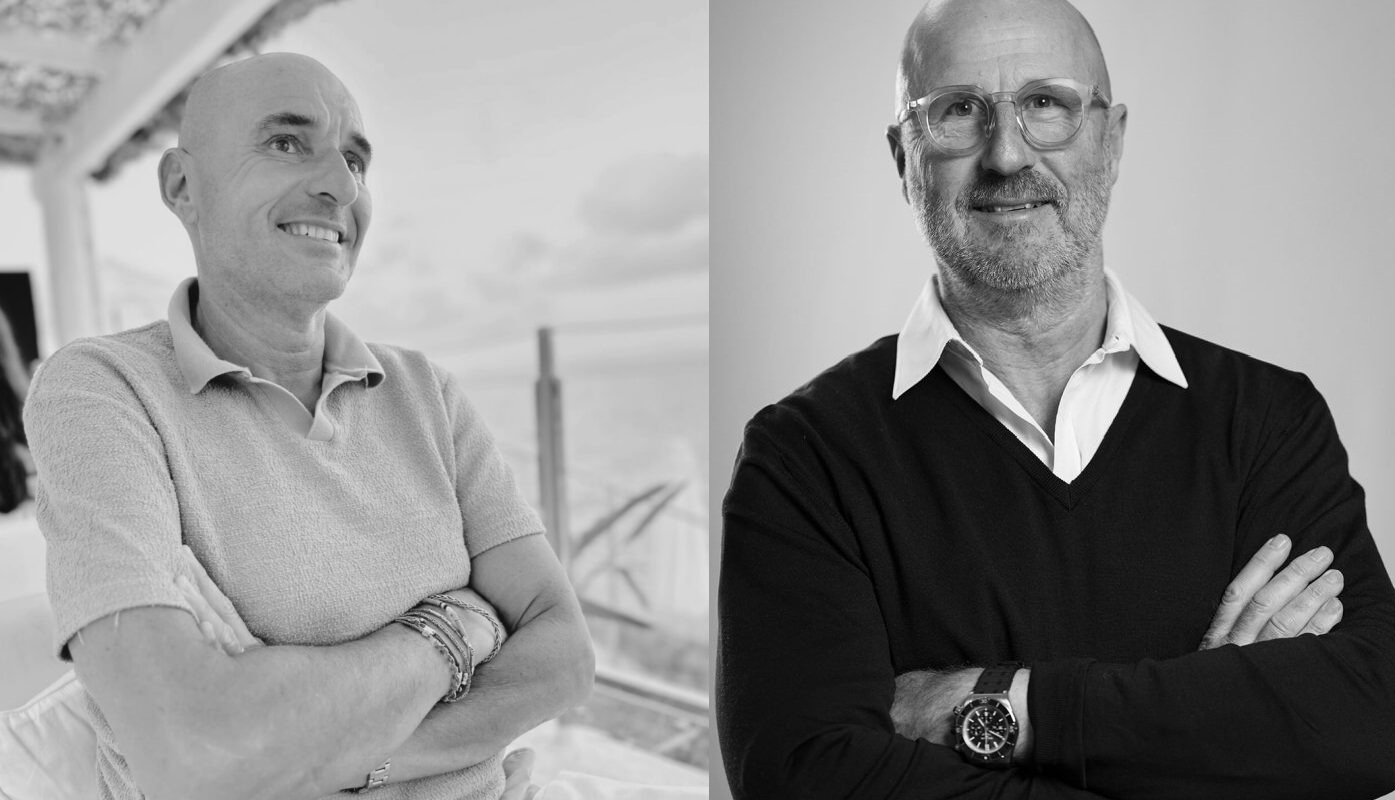
Gabrielle and François Piot converge around a shared view of sobriety

Pour Gabrielle Piot, la sobriété peut être heureuse, telle que l’imagine Timothée Parrique. Selon elle, elle est aussi l’unique porte de sortie de l’humanité face au dérèglement climatique, mais aussi l’une des valeurs cardinales de son père.

La sobriété est une qualité que la profession me reconnaît parfois, même si ce n’est pas toujours le mot utilisé. Mon credo, c’est qu’est riche celui qui a adapté ses besoins à ses moyens.

Celui qui en veut toujours plus n’est jamais riche, parce qu’il n’aura jamais assez d’argent pour se payer tout ce qu’il jalouse chez le voisin.

Par contre, la sobriété ne doit pas être confondue avec une vie monacale ou privée de plaisir. Ce n’est pas parce qu’on se prive qu’on est heureux, c’est parce qu’on n’a pas besoin de consommer qu’on est heureux“, explique François Piot, qui en fait un cadre de vie.

De belles phrases qui éloignent parfois le dirigeant de son secteur de prédilection.

Il n’est toutefois pas question, pour lui, de remettre en cause les modes de consommation, ni de juger la façon dont partent ses voyageurs. Il accepte la différence, tout comme la manière dont sa fille voit le tourisme.

Pour moi, voyager, c’est prendre le temps. Attention, je ne veux pas imposer ma vision. Je suis convaincue qu’on profite davantage quand on n’est pas en train de courir partout et de surconsommer.

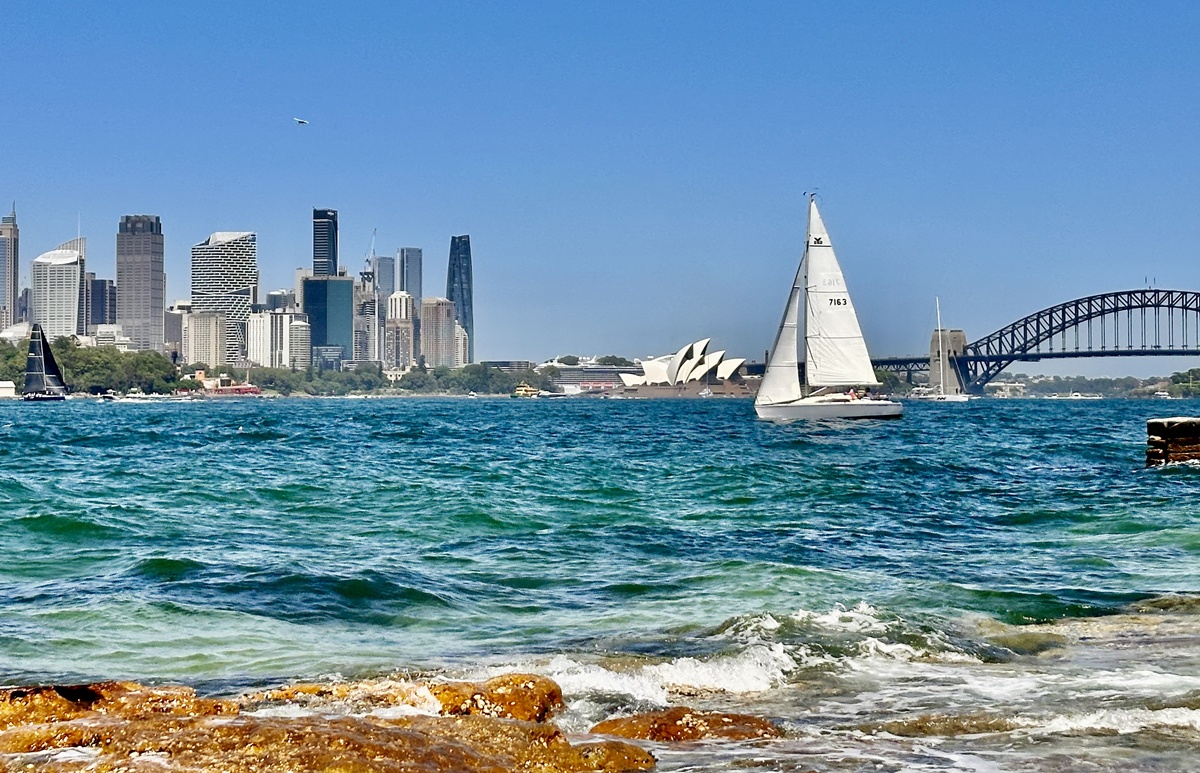
Aujourd’hui, il y a une forme de surconsommation du tourisme. On ne prend pas le temps de s’imprégner d’une culture. Ce qui me gêne, c’est cette expression : “J’ai fait tel pays.” On ne “fait” pas l’Australie parce qu’on a passé trois jours à Sydney. On coche des cases, mais on ne découvre pas vraiment
“, poursuit Gabrielle Piot, qui ne cherche pas à faire la morale ni à son père, ni aux professionnels du secteur, mais partage simplement sa vision des choses.

Un point que rejoint, en quelque sorte, son père.


Vacation clubs: “I question the future of these gilded ghettos”

Il y a quelque chose qui m’a toujours choqué dans notre industrie : les clients qui partent une ou deux semaines à l’autre bout du monde sans sortir de l’hôtel.
Et je le dis tout en sachant que nous vendons aussi ce type de séjours, c’est tout le paradoxe. C’est la partie du métier dont je ne suis pas très fier.

Je m’interroge sur l’avenir de ces vacances dans des ghettos dorés, qui ne profitent pas toujours aux populations locales. À mon avis, elles vivent leurs dernières heures de gloire. Malgré tout, c’est un sujet que les agences de voyages commencent à traiter.


Si un client se rend en agence pour demander à partir un week-end à Pékin, il est possible de lui vendre ce qu’il veut, mais il est aussi possible d’entrer dans une phase de sensibilisation et d’information sur les thématiques environnementales et sociales du voyage.

Je rejoins la plupart des ecolos qui disent qu’il faut voyager pas forcément moins loin, mais moins souvent et plus longtemps. Nous devons passer d’un appétit de collectionneur à un appétit de gourmet,” estime alors le dirigeant de Prêt à Partir.

Il n’est pas question, pour un agent de voyages du réseau, de refuser une vente. Son rôle, selon le Meurthois, est plutôt d’argumenter et de sensibiliser à la cause écologique.

Un point de vue dans lequel se retrouvent les deux membres de la famille Piot. Ce n’est pas le seul. Ils ont arpenté les mêmes couloirs et les mêmes classes de la prépa scientifique du lycée Sainte-Geneviève, mais avec 30 ans d’écart.

Par la suite, François Piot a suivi des études d’ingénieur, avant de poursuivre avec une thèse en biologie moléculaire et de travailler quelques années dans un laboratoire.

Gabrielle Piot est elle titulaire d’un double diplôme : “l’un en école d’ingénieur, avec une spécialisation dans le BTP, et l’autre dans une université écossaise, où j’ai obtenu un Master of Science en ingénierie environnementale.

Il y a eu pas mal de sujets autour des énergies renouvelables, de l’économie circulaire, de la gestion des déchets, de la justice climatique, de la comptabilité carbone, etc. Après une expérience d’un an comme consultante en économie circulaire dans un cabinet appartenant à Bouygues, j’ai rejoint Hability, ex-2tonnes.

C’est une entreprise de l’économie sociale et solidaire qui crée des expériences pédagogiques autour de la transition environnementale et sociale. Nous avons en commun, avec papa, cette envie d’apprendre les sujets scientifiques
“, imagine-t-elle.


What to do about the overconsumption of tourism?

Des formations d’ingénieur qui ont façonné leur manière de penser, avec une préférence pour les connaissances établies plutôt que pour le ressenti ou l’intuition, comme le font certains de nos leaders politiques.

Malgré leurs différences de points de vue, les discussions entre le père et la fille inspirent autant l’un que l’autre.

Pour Gabrielle, la colère à l’encontre des entreprises a laissé place à l’engagement politique, mais aussi à une meilleure compréhension de ce monde et des questionnements que peuvent avoir les dirigeants.

J’ai la chance d’avoir, avec Gabrielle, une forme de panel de réactions des jeunes engagés. Cela m’évite parfois des erreurs de communication, notamment sur des malentendus.

Nous ne parlons pas aux mêmes communautés, elle évolue dans d’autres cercles. Cela nourrit ma réflexion.

Ce que j’aime chez Gabrielle, c’est son questionnement, son esprit critique. Je suis très content de son engagement personnel et du fait qu’elle le vive aussi dans son entreprise,
‘ se félicite François Piot, cette fois-ci avec sa casquette de papa.

Malgré tout, il existe des divergences.

Les points d’anicroche se retrouvent surtout dans les solutions à apporter face à une société qui surconsomme et ne semble pas vouloir changer en profondeur ses habitudes.

La jeune femme se retrouve plutôt dans la vision de Jean-Marc Jancovici.

Pour moi, tous les vols ne se valent pas. Il est beaucoup plus justifié de prendre l’avion pour aller voir sa famille à l’autre bout du monde que de prendre un vol pour une semaine de vacances à New York.

C’est ma vision du monde, je ne cherche pas à l’imposer à tout le monde. Je considère que ceux qui peuvent faire des efforts doivent les faire.

Je ne défends pas la privation pour la privation. Ce qui me dérange, c’est quand certaines entreprises créent un besoin et font croire que notre bonheur en dépend.


Dans le tourisme, on vend souvent une nature sauvage, silencieuse, magnifique, sans personne. Mais une fois sur place, tout le monde se retrouve au même endroit,
” se désole la responsable des partenariats chez Hability, ex-2tonnes, qui défend plutôt la mise en place de quotas.


Leader is to be “in the service of the company not of his political commitments”


Romain Pommier Publié par Romain Pommier Journaliste – TourMaG.com
Voir tous les articles de Romain Pommier

  • picto Facebook
  • picto Linkedin
  • picto email
Ajoutez TourMaG à votre flux Google Actualités Google Actualités icône

APST Reports Record Equity, but Prudence Remains for 2026 [ABO]


Présent au congrès annuel des EDV 2026 à Disneyland Paris, Mumtaz Teker, le président de l'APST a indiqué que le fonds de garantie était "en très bonne santé financière, avec un niveau de fonds inédit de 40 M€, et environ 70 M€ de trésorerie" - Photo : CE

CroisiEurope


With more than sixty years on the clock, APST is now leaning into financial security.

Indeed, nearly seven years after the collapse of Thomas Cook—and its 42 million euros in claims—the association has managed to replenish its equity.

By the end of 2025, they reached €39.7 million, up from €31.3 million a year earlier, according to the latest 2025 moral and financial report, which will be presented to members on June 24 at the 61st Ordinary General Assembly at the Salons Hoche in Paris.

In 2026, there is little doubt that the symbolic 40 million mark will be reached, as confirmed by the APST president, Mumtaz Teker, during a speech at the annual congress of the Travel Companies (EDV), referring to “an unprecedented fund level of 40 million euros, and around 70 million euros in treasury“.

The results achieved exceed budget forecasts“, he enthuses in this regard, in the introduction to the moral report, attributing this performance notably to “the growth in activity volumes” realized by members and to “a stringent management of our charges“.

He also notes that the association “has reinforced its leadership position in the financial guarantee market for travel and stay operators, with about 52% of market share in the number of guaranteed operators, accounting for nearly 70% of the sector’s business volume.”

As of December 31, 2025, the guarantee fund thus counted 3,413 members, versus 3,454 in 2024 (-1.2%), while the number of guaranteed establishments rose sharply to 6,590 from 5,648 in 2024 (+14.2%).

This trend reflects both sector consolidation and a broader footprint of its players.


306 new memberships in 2025

In parallel, the APST president highlights in the report the “steady dynamism in business creations” in tourism, with 396 membership requests examined in 2025 and 306 accepted.

As for resignations and removals, they were also up in 2025, at 162 and 83 respectively, “reflecting a portfolio adjustment dynamic within a stricter management framework“, comments the association.

The guarantor’s teams also had a busy time with guarantee renewals – 576 decisions versus 161 in 2024 and 18 in 2023. An increase due to the approaching expiry of a large volume of memberships granted in previous years.

Note that 19 companies left the APST to go to another guarantor last year; a figure that balances with the 17 companies already registered who requested membership with the guarantor.

Thus, between the rise in its own funds and tighter risk management by its members, the association emerges stronger from the last decade and the trials it has faced.

With nearly €2 billion in theoretical gross commitments as of 31 December 2025 (1,988,840,300 € exactly), it holds a total of counter-guarantees (of all kinds) of €1,184,417,183, including €93,095,324 in bank counter-guarantees.

Included in this amount are the letters of comfort given by companies guaranteeing a theoretical commitments amount of €402,484,863“, adds the report.


27 claims in 2025, including Jacqueson Tourisme

This tighter management does not prevent the fund from being exposed to the default of some of its members. And this despite a general 12.8% drop in sector failures compared with 2024.

Thus, of the 123 failures that occurred in 2025, 27 cases involve APST.

The most significant, according to the report, is Jacqueson Tourisme, for which the fund handled in service nearly 500 files for a little over 2,000 clients.

Globally, the service-based handling system applied by APST has, in their words, “enabled savings of more than 1 million euros compared to refunds that would have had to be issued“, the association notes with pride.

As for cash reimbursements for client files, the fund carried out 625 reimbursements during the 2025 financial year, of which 539 concerned Jacqueson Tourisme (516,752.41 €) and 10 Yam’s (84,647.62 €), for a total amount of 761,643.83 €.

Nevertheless, “the defaults of APST member companies are down 30.7% in 2025 compared to 2024“, notes the treasurer Michèle Laget Herbaut. In total, they account for 22% of sector defaults.

Result for APST: while the amount of contributions collected in 2025 exceeded forecasts by 11.3%, it remained 2.9% below those received in 2024.

Because contribution scales were not modified, this slight decrease is explained 90% by a lower business volume realized by our members than in 2024, and by an increase in bonuses granted, with 2025 including a new bonus awarded to members with small business volumes“, analyzes the treasurer.

Thus, the guarantee fund generated a net positive result of €8.3 million (and €15 million excluding costs of claims and exceptional charges amounting to €6.7 million). This represents the “third best result achieved since 2019“, emphasizes Michèle Laget Herbaut.


Projects in the pipeline

Among other important measures or projects implemented by APST in 2025 are “the modernization of our operations, notably through the dematerialization of exchanges via the member space (declarations of business volume, online memberships)“, notes Mumtaz Teker.

These IT advances also concern the digitization of membership requests – prospects can now complete their file online and track its progress; as well as the signing of warranty deeds via Docusign; or the initiation of a reflection on artificial intelligence.

In the same vein, projects will be deployed this year, such as the dematerialization of invoices by the second quarter.

Furthermore, to facilitate the settlement of service providers in tourism within the framework of releasing APST guarantees in services, an interface must be created to automate banking flows.

Finally, a “AI project focused on evaluating and proactively managing members’ risk“, aimed at providing “concrete tools available in 2026” is in the works.


A recurring result of €14.5 million expected for 2026


Anaïs Borios Published by Anaïs Borios Journalist – TourMaG.com
See all articles by Anaïs Borios

  • picto Facebook
  • picto Linkedin
  • picto email
Add TourMaG to your Google News feed Google Actualités icône