

Currencies: The Euro Under Pressure in a Stressed Market [ABO]


Economic Situation

Devises : l’euro sous pression dans un marché sous tension  - Depositphotos.com,  Andy Dean Photography

CroisiEurope


The word “stagflation” is on the lips of analysts everywhere, but let us be clear: we have not reached that point yet, and panic is not warranted as long as vigilance remains.

German inflation expected at +2.4% in May remains barely above the ECB target, and Germany’s GDP even surprised on the upside in Q1 with +0.3% quarter-on-quarter. It is hard to call this stagnation under such conditions.

Yet three signals deserve attention. Budget deficits are widening, with France at 5.1% of GDP and Germany at 3.7% according to the European Commission, which reduces governments’ capacity to absorb a fresh shock.

The US-Iran confrontation keeps Brent around $105 a barrel, up 25% since January, an energy pressure that is gradually seeping into production chains. And British industrial order books, a solid leading indicator for Europe, are at their weakest since 2020.

The ECB finds itself in a bind. A rate hike in June seems likely, but it would probably be the last one of the cycle. The real question then becomes: when will the first easing occur, in the autumn or later?

For the euro, this uncertainty already weighs on it. EUR/USD has moved from 1.2019 to 1.1617 over four months, supported by a real rate differential that continues to favor the dollar. If the eurozone indeed slides into stagflation this summer, the ECB would have little real room to maneuver, and the single currency would keep retreating.


Exchange Rates: The Technical Snapshot

EUR/USD hovers around 1.1625 this Monday after a 1.4% pullback over the week, well off the peak of 1.1784 touched ten days ago. The 1.15–1.17 zone should cap trading this week.

To breakout above 1.18, a clear signal of de-escalation in Hormuz would be required. To slip below 1.15, hawkish FOMC minutes or another acceleration in inflation would be needed. Both scenarios remain plausible.

The Swiss franc continues to defy gravity even as the dollar recovers. EUR/CHF trades between 0.9150 and 0.9200. The CHF is no longer just a cyclical safe haven; it has become a structurally strong currency. As long as Hormuz remains tense, betting against the Swiss franc looks risky.

The yen, meanwhile, stays under pressure. EUR/JPY sits around 186, and the weekend underscored the central issue: Prime Minister Takaichi publicly praised the benefits of a weak yen while her Finance Ministry attempts to curb depreciation. This internal contradiction prevents a durable rebound. The risk of BoJ intervention is rising again, making this pair one to watch closely.

The pound stays trapped in a vise. EUR/GBP ranges between 0.8580 and 0.8620. The Bank of England should hold rates steady, and Wednesday’s UK inflation will be the real catalyst. With a forecast rise to 3.4% year-on-year, the pound suffers from a paralyzed central bank and a cooling economy, a combination that leaves little room for maneuver.


WEEKLY SUPPORTS WEEKLY RESISTANCES
S2 S1 R1 R2
EUR/USD 1.1480 1.1550 1.1700 1.1780
EUR/GBP 0.8560 0.8600 0.8680 0.8720
EUR/CHF 0.9050 0.9080 0.9150 0.9200
EUR/CAD 1.5850 1.5950 1.6080 1.6180
EUR/JPY 182.50 183.80 185.80 187.00


The supports and resistances shown below indicate, respectively, the lower and upper points within which prices are expected to move during the course of the week.


The information presented in this publication is provided for informational purposes only and does not constitute investment advice, nor a sell offer, nor a solicitation to purchase, and should in no way serve as a basis or be considered as an incentive to engage in any investment.


Mondial Change is a French financial institution, founded in 2015, specializing in managing international payments and currency risk.

Mondial Change also supports numerous players in tourism: travel agencies, group organizers, tour operators, receptive units…

www.mondialchange.com

Contact: [email protected]

Fixed-Term Contract for Career Change: A Milestone in the Labor Code [ABO]


Le CDD de reconversion permet aux salariés d'avoir l'opportunité de réaliser une reconversion professionnelle en suspendant simplement temporairement leur contrat de travail initial - Depositphotos.com, zagandesign

CroisiEurope


2026 brings its share of surprises, notably regarding the reconversion fixed-term contract!

At a time when skills assessments are in vogue (in 2024, more than 80,000 assessments were funded through the CPF), this arrangement also adds flexibility to potentially test another occupation.

Also read: The skills assessment for whom? Why?

In this regard, Article L.1242-3, 5th of the French Labour Code provides that a CDD can be concluded “for the reconversion period mentioned in Article L.6324-1 […] for a duration of at least six months.”

The article has been in force since January 1, 2026.


Reconversion CDD: What is it for?

But what is the point of this CDD?

Simply put, the employee can try out a new job or a different professional environment within a host company without breaking immediately and directly with their original employer.

Consider the case of a recruitment officer at a renowned company who has always wanted to work with children: she became a camp counselor.

A successful transition and the sense of having fulfilled a long-held wish.

This mechanism therefore allows employees already on permanent contracts (CDI) or fixed-term contracts (CDD) to have the opportunity to undertake a professional reconversion in another company by temporarily suspending their initial contract.


Find all of Julia Rousseau’s chronicles by clicking here.


For the hosting company, a way to recruit an already experienced profile

France Travail also presents this mechanism as a means for the host company to recruit a profile that is already experienced, by supporting them with training and potentially offering a permanent contract (CDI) at the end, if the reconversion proves successful.

But how does it work if the original contract is suspended during the reconversion CDD period?

A written agreement must specify the terms of organization, the suspension period, the conditions for an early return, and the consequences in case of termination of the probation period. Everything must be legally formalized just as with the end of a “classic” contract.

Thus, at the end of this CDD, there are two options available to the employee: either rejoin their initial position or a similar role, or continue with the host company, with a defined exit from the initial contract.

This new mechanism could become a reliable tool to safeguard professional career paths, provided it is, of course, properly regulated.

In my view, it represents a meaningful step forward to support mobility, reconversions, and professional transitions within a more secure framework. The aim is to test a new occupation while being “protected.”


Tourism: After a Difficult May, Operators Turn to the Government for Support [ABO]


Laurent Abitbol : "Nous sommes plongés dans une crise psychologique" - Depositphotos @yellow_man

CroisiEurope


The months come and go, closely resembling one another for the tourism sector, or nearly so.

After turning red in March, the situation hardly improved in April and seems to continue its downward slide in May. Indicators are not favorable for a large portion of the industry, and even players who seemed to be navigating fairly well are starting to struggle.

It must be said that the month just ending was not particularly favorable for travel agencies.

There were many long weekends this year and, to be honest, there weren’t many bookings in travel agencies.

After that, it should be noted that we now work on a 12-month basis rather than four months. July and August no longer really count as peak season in distribution.

The worry is there, always, but as long as the financial year isn’t over, no one can draw conclusions. We risk a strong rebound in June, because travel remains an imperative for the French,
” explains, optimistically, Richard Vainopoulos.

In terms of departures, Tourcom will post a slight -2% compared to May 2025. It’s a not-too-bad outcome.

And while the network head concedes that there wasn’t much of a crowd in the agencies and that the training helped keep the staff busy, the profession appears, at least in part, to gaze with concern at a backorder that isn’t taking off and jeopardizes, or even erases outright, the head start gained at the beginning of the year.


Laurent Abitbol: “We are in the midst of a psychological crisis”

On Laurent Abitbol’s side, the slowdown in activity intensified again in May.

The situation is even worse in May than in April. We are seeing a sales trend around -25%.

Unfortunately, there is no improvement. I am not worried because we are resilient, but it must not last too long.

We are in a real psychological crisis.


This war and its impacts don’t encourage consumption, due to the news and the rise in fuel prices. So imagine travel, it’s double trouble… people don’t want to leave,
explains the head of the Marietton group.

Last week, the businessman explained observing a 24% drop in orders between March and May. A drop that nearly erases all the gains recorded by Selectour agencies since the start of the year.

And the situation does not seem much better elsewhere. Because when the leader of French distribution grimaces, usually the industry isn’t in a better position, with one exception…

The month of May is always complicated, it looks to be worse than 2025.

After that, we have a cushion compared to the rest of France, because our companies are often on the border with Germany or Luxembourg. The impact is therefore smaller.


We have clients who work in these countries, with higher salaries. Moreover, we also work with tour operators such as Luxair, which decided not to implement a fuel surcharge, but also with German and Belgian players.


To tell you the truth, Fensch Voyages has been at -6% since March. It’s a bit the trend in the Grand Est, we are far from the figures of our peers,


“I think the summer is dead unfortunately”

A little further north, Abou Fall, owner of three franchised TUI agencies, also slightly stands out from the market.

It’s not catastrophic, but the momentum isn’t great either.

I still have one agency growing and two others in the red. There is, of course, a bit of worry, because the decline has been steady since March at my points of sale in negative territory.

At the end of February, we were +12% ahead for my group and, to date, we have moved into the negative,
he tempers, having previously served as France sales director for the TUI network of franchised agencies before opening his own agencies.

And here closes the rather optimistic parenthetical of this article. For the other messages sent and calls made have yielded responses that contrast with these last two testimonies.

“One boss explains that the figures of the next EDV barometer should be very poorly oriented compared with April, already unfavourable. Another major executive tells us that his numbers are very bad, while a third estimates that this crisis is even worse than the Covid one.”

The anxiety is palpable, without giving in to panic.

There is growing concern within the profession.

For us, we had quickly taken precautions, so we are limiting the damage. But, like everyone, we would like this not to last too long.

Personally, and I hope to be mistaken, I think the summer is dead unfortunately. Unless there is a rapid improvement in the situation, but at this moment there are too many threats weighing on consumers,
” estimates Grégory Monna, director of travel activities at Chauchard Évasion – Voyages Triangle.

This assessment is shared by other leaders, with a few nuances, except for Laurent Abitbol.


“Beaucoup d’acteurs sont en difficulté” et “l’activité partielle est refusée”… par l’État

Enfin, with one caveat, the Lyonnais believes that unblocking the Hormuz Strait might unlock everything.

Leisure is in crisis, fortunately groups and business travel are holding up. As long as the strait remains closed and the war continues, it will be difficult to restart the engine.

We must wait for this to pass. We keep the back straight, it’s a long process.


We keep the teams occupied with training and other initiatives. For the moment, I am not overly worried about the profession. However, this could hurt the industry if it lasts over time.

And to restart activity, I oppose price cuts. Do not slash prices, nor advertise with such promotions, because that sends a bad message to customers. Then, we simply cannot sell at a loss,
” argues the chair of the board of Selectour.

The solution lies in Donald Trump’s hands.

And while the American president seems to no longer know how to disentangle himself from this conflict, the Soccer World Cup is approaching rapidly. There is no doubt that a war between two participants in this very World Cup would be poorly viewed by the world press and could spoil the festivities.

Will this timing be favorable to a lasting peace between the United States and Iran? The days to come will tell us.

In the meantime, as sales begin to recover, professionals knock on the State’s door, which does not seem more concerned about the situation of travel agents.

From what I hear in the sector, many players are in difficulty and some are extremely worried.

And we are among them, because with such a May, we will not be able to cover the salaries of our employees. We are in a deep anxiety crisis, fueled by media coverage. There was the conflict in the Middle East, then the spike in oil prices, the fear of a kerosene shortage, the hantavirus on the cruise ship… and now, we are facing a heatwave.

Regarding partial unemployment, which is becoming a major topic of discussion, requests are refused within the industry, with only a few rare exceptions“, laments a business owner who preferred to remain anonymous.


Passport Without a Given Name: Why This Passenger Was Denied Boarding [ABO]


Passeport sans prénom : pourquoi ce passager a été refusé à l’embarquement -  Depositphotos.com Auteur LP2tudio

CroisiEurope


A passenger filed a complaint with Mediation following a boarding denial on a flight from Paris to the United Arab Emirates, the first leg of a journey aimed at reaching Chennai. He sought reimbursement for the costs incurred to modify his trip, as well as compensation for a service he lost at the destination.

The travelers held a confirmed booking for two successive flights operated by the same airline. They planned to spend four days in the Emirates to celebrate a family event and had even booked a table at a restaurant.

On the day of departure, the passenger’s boarding was refused because the prenom on his passport was “ Xxx ” and his passport contained no other given names, but only a surname.

Forced to adjust his itinerary, the passenger incurred costs to reserve a direct new flight to his final destination. He also had to pay cancellation fees related to the booking made in the Emirates.


What the texts say:

Legally, the airline’s General Conditions of Carriage remind that it is the passenger’s responsibility to verify entry requirements for the countries visited and to ensure the compliance of their travel documents.

Moreover, information published by French authorities indicates that since December 2023, the United Arab Emirates have been denying entry to travelers whose passports contain incomplete or atypical information, notably when entries such as “X” replace a name, a given name, or a date of birth.

UAE authorities’ guidance also confirms that travelers whose passport contains only a surname, with no given name, are not allowed to enter the territory.


What the Tourism and Travel Mediation recommends:

In this context, the boarding denial appears justified, as the passenger did not possess documents that conform to the local authorities’ requirements.

Consequently, the costs incurred to modify the ticket cannot be reimbursed. Similarly, the loss of the restaurant reservation does not constitute compensable harm, as it did not correspond to a damage foreseeable at the time the contract was formed, in accordance with Article 1231-3 of the Civil Code.

In light of these elements, the Tourism and Travel Mediation concluded that there was no legal basis to require the airline to reimburse the claimed sums.


Find all the practical cases of the Tourism and Travel Mediation by clicking HERE.


Should We Hire Talent From Outside the Tourism Industry? [ABO]


Faut-il recruter des profils hors tourisme ? - Depositphotos.com studiostock

CroisiEurope


Profiles from retail, education, events, or tech… the gateways to tourism are multiplying. An evolution first driven by shortages.

“We sometimes recruit profiles from outside tourism when we can’t find anyone.”, summarizes Céline Gleizes, HR manager at Eden Tour.

Valérie Dufour, head of the employment section at TourMaG, notes, however, that recruiters remain attached to specialized training: “I still have a majority of recruitment staff in travel agencies who favor tourism training among candidates, with the BTS Tourism minimum and experienced professionals for tailor-made trips.”

But she also observes “a small revolution” in HR practices within the sector. The Covid crisis deeply weakened tourism attractiveness. Demanding hours, salaries sometimes deemed insufficient, high operational pressure: many professionals left the sector without necessarily returning.

“Tourism companies do not hire from outside out of sheer resignation, analyses Valérie Dufour. They must respond to an historic talent shortage, but also to a profound transformation of professions.”

Tourism has become digital, client expectations have evolved, and the sought-after skills are now sometimes found outside the sector.

Yet this openness does not mean that “everyone can do tourism”. “Many candidates think that organizing their own vacations is enough, notes Céline Gleizes. But when they discover the complexity of agency work, some realize it isn’t for them.

Valérie Dufour recalls that some jobs remain highly technical. “Knowledge of destinations, insurance, air tariff pricing or tools like Amadeus cannot be improvised.” she emphasizes.


Travel as a Common DNA

At Prêt à Partir, Fatima Faivre fully embraces recruiting atypical profiles, with one essential condition: « The person must have a traveler’s profile. Be passionate about travel. »

For the regional director, the decisive criterion isn’t so much the diploma as the travel culture.

« A person outside tourism who has never traveled is very difficult. On the other hand, seasoned travelers know what they are talking about. »

Some tour operators specializing in tailor-made travel now prefer to train enthusiasts rather than recruit only travel technicians.

Valérie Dufour cites notably the example of Voyageurs du Monde, which has taken a bold gamble: « It is easier to learn the technique of selling trips to someone who knows a country by heart than to learn the passion for a destination to a tourism technician. »

The group thus hires former expatriates, journalists, historians or avid travelers before training them in professional tools and sector rules.

At Flash Voyages, Ghislaine Homond recounts hiring a former Russian primary schoolteacher. « I rely a lot on intuition. In two weeks, I saw that she had potential, » she recalls.

Seven years later, this employee is still with the company.


Soft Skills Have Become Priorities

What recruiters look for today goes far beyond mastering a GDS or fare strategies.

“What interests me is character, insists Fatima Faivre. Whether she can do B2B or not isn’t important. She’ll learn it very quickly with us.”

The most sought-after qualities now are adaptability, listening, stress management, and a sense of service.

Valérie Dufour even speaks of a shift in HR priorities: “In a sector where technique is learned more and more quickly, behavioural skills make the difference.”

She emphasizes the importance of emotional intelligence, the ability to handle the unexpected, and the “spirit of hospitality.” “That natural generosity, that ‘care,’ is probably the most difficult skill to teach.”

At Eden Tour, the primary criterion being sought remains often commercial.

“When the candidate does not come from tourism, we primarily look for a good seller.”

The rise of generative artificial intelligence is accelerating this evolution.

“The travel advisor becomes an augmented profile, AI handles part of the repetitive tasks, but the human added value becomes central: listening, personalization, the ability to reassure and to narrate the journey.”

According to her, the job is evolving toward a role of “trusted expert” rather than a simple reservation agent.


Find all articles in our series “Very Special Agent – The Practical Guide for the Pro” by clicking this link.


Experienced Profiles Are Not Always the Easiest to Integrate


Caroline Lelievre Published by Caroline Lelievre Journalist – TourMaG.com
See all articles by Caroline Lelievre

  • picto Twitter
  • picto Linkedin
  • picto email
Ajoutez TourMaG à votre flux Google Actualités Google Actualités icône

Tourism in the Face of Climate Change: Adapt or Endure? [ABO]


Tourisme : des destinations best sellers seront invivables... - crédit photo : visuel généré à l'aide de l'IA

CroisiEurope


In 2014, to raise awareness about climate change, TF1 attempted a projection exercise during a weather bulletin.

We are August 17, 2050. France is smothered under an oppressive sun, barely veiled.

“Tomorrow morning, temperatures will already be very high, notably in Paris, Perpignan or Nice, with 26 degrees. In the afternoon, we will reach or exceed 40°C: 41 in Strasbourg, 40 in the capital, 42 in Lyon and up to 43 degrees forecast in Nîmes,” announced Evelyne Dhéliat, during a weather bulletin aired after the evening news.

Science fiction? Not at all. Just twelve years earlier, one could see that there was no need to project so far. These temperatures, which used to belong to forecasting, have become reality, even before summer has begun.

As economist Maxime Combes notes, Evelyne Dhéliat made three errors in her forecasts: no, Brittany and the Cotentin will not be spared; no, you won’t have to wait until August to burn on the spot; and no, you shouldn’t wait until 2050 either.

Indeed, by the end of 2026, France is already beating records one after another. It had already reached 37.8 °C at La Couronne in Charente, 37.4 °C in Perpignan and 37.6 °C in Narbonne.

While travel agencies struggle, France burns. And some still prefer to avert their eyes, when they don’t choose to laugh.


Tourism: Best-Selling Destinations Will Become Unlivable…

On his side, Daniel Riolo, a journalist whose humor is increasingly lacking, urged the French to stop “whining“, while asserting “it’s hot, enough already!

A few hours later, in a classroom in Soustons, in the Landes, the thermometer surged and reached 53 degrees.

We are at the end of May, the students are suffocating, but all it will take is to slip on a T-shirt and open the windows. Seriously? Two very bad pieces of advice in such a situation.

Let us be clear: our industry cannot avoid a reflection on its future, even as crises follow one another, whether for travel agencies or for institutional actors.

To read: Greenhouse gas emissions: tourism must (quickly) act or die?

Because if we do nothing, an entire swath of destinations marketed by distribution, but also countries heavily dependent on tourism, will become unvisitable during the summer period.

If we do nothing, the South and the Mediterranean basin will be regions comparable to the desert of Africa. In short, this region will no longer be attractive for summer vacations. The sand will be so hot that no one will be able to walk there.

Tourists will not want to stay in their hotel room all day, when there are other places to go out.

If we do nothing, I am not optimistic for this region
“, explained a few years ago Wouter Vanneuville, climate adaptation expert at the European Environment Agency.

The clock is ticking. And even if adaptation in Europe is very costly, doing nothing will cost more, economically and in human terms.


… infrastructures will become obsolete

This episode of historical precocity reminds us that destinations are not the only things that are not adapted: our infrastructures are not in a better position.

Last week, SNCF had no choice but to cancel trains.

The carrier explained that this decision was necessary due to the risk of air conditioning failures, because equipment is too old and not robust enough to withstand extreme temperatures.

At the last EDV conference, Jean Castex, the former prime minister, underscored the urgency of the situation.

I often say that climate-skeptics would be stunned by the evolution observed in just 15 years if they visited the SNCF.

This impact is now considerable. The consequences are not limited to more pronounced climatic phenomena.


We are particularly witnessing a rise in forest fires. Yet, our lines traverse numerous wooded areas, which can have a very significant impact on rail traffic.

There is also a disruption of wildlife and a sharp increase in trees falling onto the network. In ten years, they have multiplied by fourteen“, confided the CEO of SNCF.

The carrier also keeps a close watch on problems with catenaries, power supply, or the overheating of rails. When it is 37 °C, the temperature of the rail can reach 55 °C. At that level, it can warp.

In 2025 already, the new Nantes station had to be closed due to the heat. It has again made headlines last week.

Air travel will not be spared either.


Tourism is not the climate’s arch-enemy, but it must question itself!

In 2017, the city of Phoenix, United States, turned into a true furnace. The thermometer exceeded 50 degrees.

The hotter the air, the less dense it is. Therefore, one must reach a higher takeoff speed. The length of the runway can be a determining factor in achieving that speed. In Phoenix, with this heat wave, air density made takeoffs impossible“, explained Clément Mallet, project manager for mobility and adaptation at Carbone 4, in a previous article.

Global warming will also intensify turbulence.

According to a study by researchers at the University of Reading, these phenomena are becoming more frequent due to warmer air. Today, on a Paris–New York flight, passengers experience an average of 10 minutes of turbulence.

By 2050, that will be more like 20 to 30 minutes.

Here are as many examples as there are to show that our industry is not ready to face this phenomenon that we, humanity, have created. And we have not even spoken about rising sea levels or the dwindling of snow in the mountains… nor about the regulatory risk that could be imposed on companies…

Good news, we still have our fate in our own hands.

And contrary to what a recently posted LinkedIn message by a captain suggested, it is clear that taxing French aviation will not change everything. But it is not either by shifting blame onto others or by minimizing one’s own impact on global warming that we will advance the debate.

With such reasoning, we could have allowed people to keep smoking in restaurants, bars or cafes. After all, one cigarette cannot hurt anyone. Likewise, it would be easier to avoid picking up after Fido’s poop or to refrain from throwing a bottle in the trash…

Of course, it is the sum of individual behaviors that is at stake. Only a broad, global awareness will keep our old Earth breathable.

So no, we should not stop traveling, nor flying. But we must all, collectively, adopt a reasoned behavior, so that this industry remains the powerful lever of emancipation and inclusion, whether in 2050 or beyond.


Three Cyberattacks in Three Days: Why Tourism Will Have to Prove Its Security [ABO]


Christophe Mazzola revient sur la cyberattaque qui touché 3 opérateurs du tourisme : Belambra, Maeva et Gîtes de France -  Depositphotos.com Auteur denrud

CroisiEurope


Mi-mid May, as families finalize their summer bookings and the sector enters its peak period, a single attacker reminded vacation accommodation of a truth they would rather not face. In seventy-two hours, three major players acknowledged a data breach.

On Friday, Pierre & Vacances-Center Parcs, via its platform “La France du Nord au Sud,” a subsidiary of the Maeva brand. On Saturday, Belambra and its forty-four clubs. On Sunday, the Gîtes de France network.

Three business models that were previously separated, brought together in a single weekend by the same weakness and the same method of operation.


What Was Leaked, and What No One Looks At

Each press release insisted on the same point: no banking data.

Pierre & Vacances even specifies that no e-mail address would have been collected on their side. This phrasing has become a crisis-communication reflex, and that is precisely where the misjudgment lies.

It reassures about the only risk that the general public can name, the credit card, and it distracts attention from what was actually stolen.

The loot lies elsewhere. At Gîtes de France, nearly 389,000 customers are affected, with reservations dating back to 1995, and the batch would include around 360,000 records related to minors and children registered in stay files.

Names, dates of overnight stays, e-mails, phone numbers, postal addresses. No card numbers, certainly, but enough information to craft a phishing message with perfect credibility. When the fake email cites the real date, the real place, and the child’s real first name, the victim’s vigilance weighs little.

In a sector where personal data is inherently family-oriented and spread over time, the absence of banking details is not good news; it’s a mirage.


A Sector Designed to Demonstrate

The most troubling element isn’t technical; it’s political. The hacker didn’t seek to quietly monetize their breach. They publicly claimed their action, explaining in their own words that they acted to demonstrate how porous France is in terms of cybersecurity.

In other words, these three companies did not face a sophisticated criminal operation. They served as a vehicle for a demonstration. And the choice of tourism is hardly a coincidence.

The sector accumulates the risk factors I’ve observed in the field for years. Foundations that have stacked up for three decades without anyone asking why a reservation from 1995 still exists.

A shared IT subcontracting model, where several departmental structures rely on the same provider, hence the same vulnerability. A seasonality that concentrates activity, pressure, and the lowering of vigilance on the same weeks.

And a culture where security is still seen as a technical cost line rather than as a condition of the customer relationship.


The Real Scandal Is the Data We Should Never Have Kept

What strikes me is not that these attacks were possible, but that they were predictable. The risk had been identified, sector-specific, documented for months. The missing half of the equation was the decision to act.

I call this the decision gap, the structural delta between the moment we know and the moment we decide.

A data from 1995 still exploitable in 2026 is not a technical accident. It is a retention decision that was never made, thus never arbitrated, thus renewed by default year after year. The sector has confused commercial memory with passive accumulation.

Or the data that is best protected is the one you no longer hold. Minimization and limited retention durations are not regulatory constraints to endure; they are levers to reduce the attack surface: what no longer exists in the system cannot leak.

Three decades of reservations kept “just in case” became, in a single weekend, three decades of exposed responsibility.


Digital Trust, the New Asset of Tourism


Who Is Christophe Mazzola?


Photo : Christophe Mazzola

Christophe Mazzola is a cybersecurity expert, founder of the Cyber Academy and head of the GRC practice at Cresco Cybersecurity.

His objective: to make cybersecurity accessible to everyone.

A speaker, author, and CISO, he supports companies and institutions in a pragmatic approach to digital security, at the crossroads of leadership, pedagogy, and digital sovereignty.

Why Falling Oil Prices Could Change the Game in the Currency Markets [ABO]


Economic Situation

Pourquoi la baisse du pétrole pourrait changer la donne sur le marché des devises - Depositphotos.com, Auteur yellow_man

CroisiEurope


May will be remembered for an historic move in oil. Brent fell by roughly 19% over the month, dipping back to around $92, marking its worst monthly performance since March 2020.

The engine behind this retreat is diplomatic: Washington and Tehran reportedly reached a preliminary agreement to extend their 60-day ceasefire and reopen the Strait of Hormuz, through which about a fifth of global oil and LNG passes. Tehran would commit to clearing the passage of mines within 30 days. An important caveat: Trump has not yet endorsed the terms, and JD Vance tempered the prevailing optimism. Nothing has been signed.

This pullback changes the inflation equation. Energy had been fueling the price spiral since the outbreak of the conflict at the end of February. If the price of crude stabilizes at a lower level for a sustained period, inflationary pressures should mechanically ease in the coming months.

And yet, the ECB is preparing to tighten on June 11, with a market-implied 90% probability. A 25 basis-point rise would lift the deposit rate from 2.00% to 2.25%, the first tightening since 2023. Why tighten when the energy shock is receding? Because the ECB does not react to yesterday’s oil, but to today’s inflation.

In April, harmonized inflation rose to 3.0% across the euro area, and May flash estimates show a persistent acceleration in France, Italy and Spain. The figures are in, and some governors would have argued for a hike as early as April.

And the euro, meanwhile, remains stuck below 1.17, caught between diplomatic optimism and Frankfurt’s monetary resolve.


Exchange Rates: The Technical View

When oil plunges, safe-haven currencies give up their gains first. The Swiss franc is the clearest example: EUR/CHF has risen to around 0.9105 after peaking near 0.90 during the crisis. The flight-to-safety pressure is easing, and the SNB, with its policy rate at zero, allows it to stand by.

EUR/USD remains stuck around 1.1654, near a six-week low. As long as the Fed keeps its range at 3.50%-3.75% with no hint of easing, the dollar maintains a yield advantage that outstrips every other factor. Technically, the 1.1550-1.1600 area acts as support: below it, the path to 1.1500 opens.

Above this, the 100-day moving average near 1.1720 caps any rebound. EUR/GBP hovers around 0.8650, with no significant underlying movement. EUR/CAD sits near 1.5980: the Canadian dollar is naturally exposed to oil, and a persistently lower oil price would weaken it, thereby mechanically supporting the pair. Finally, EUR/JPY around 185.5 is the issue to watch this week.

The Governor of the Bank of Japan is due to speak soon, and any signal about the continuation of Japan’s monetary normalization could wake a yen that has notably lagged.


WEEKLY SUPPORTS WEEKLY RESISTANCES
S2 S1 R1 R2
EUR/USD 1.1500 1.1580 1.1720 1.1800
EUR/GBP 0.8560 0.8610 0.8700 0.8750
EUR/CHF 0.9020 0.9060 0.9150 0.9200
EUR/CAD 1.5850 1.5920 1.6050 1.6130
EUR/JPY 183.50 184.50 186.50 188.00


The supports and resistances shown below indicate, respectively, the low and high points within which prices are expected to move over the course of the week.


The information presented in this publication is provided for informational purposes only and does not constitute investment advice, an offer to buy or sell, or a solicitation to engage in any investment activity.


Mondial Change is a French financial institution, founded in 2015, specializing in the management of international payments and foreign exchange risk.

Mondial Change also supports many players in the tourism sector: travel agencies, group organizers, tour operators, inbound operators…

www.mondialchange.com

Contact: [email protected]

Bali, Cuba, USA, Egypt: Tourism News Roundup [ABO]

La revue de presse internationale de la semaine - Depositphotos.com Auteur serezniy

CroisiEurope


In the May 2026 press review overview for the week starting June 1, 2026:

Global tourism continues to grow despite geopolitical tensions

Bali: the “taxi war” makes life harder for tourists

Egypt: tourism keeps advancing strongly in 2026

Madrid bets on tourism intelligence to manage its growth

United States: international flight prices are starting to come down

Cuba: major Spanish hotel groups retreat under American pressure

Tokyo: Shibuya now fines for street littering

A new 1,300 km railway line will connect Germany to the Ukrainian border

Hotels see an edge over booking platforms thanks to AI

Oddity! Off to “hell”: the 666 bus to Hel makes a grand return to Poland


Global tourism remains on the rise despite geopolitical tensions


Le tourisme international a progressé de 2 % au premier trimestre 2026, avec environ 307 millions de voyageurs dans le monde, selon ONU Tourisme. @depositphotos/potowizard

International travel grew by 2% in the first quarter of 2026, totaling around 307 million travelers worldwide, according to UNWTO.

Although the year began with solid momentum, the conflict in the Middle East slowed growth in March, triggering flight disruptions, higher oil prices and increased transport costs.

Europe and Africa posted the strongest results, while the Middle East saw a steep drop in arrivals (-14%).

Facing geopolitical uncertainty and rising travel costs, experts suggest tourists may favor closer destinations and seek better value for money. Despite these challenges, the industry continues to show global resilience.

Read more on untourism.int


Bali: the “taxi war” complicates life for tourists


Une bataille invisible entre VTC et conseils de village traditionnels fait gonfler les prix des courses des taxis. @depositphotos/OlgaGauri

In Bali, a long-standing conflict pits ride-hailing drivers using apps like Grab against the banjar, village councils that regulate traditional taxi activity. As a result, in some areas, VTC drivers refuse to pick up customers for fear of intimidation or assault.

Tourists are left with no option but to use local taxis, which are often much more expensive, with fares set by the banjar. According to the South China Morning Post, a large portion of the fare goes to these village councils. This situation also reflects growing economic tensions on the island as tourism slows in 2026.

More to read on the South China Morning Post site


Egypt: tourism continues its strong growth in 2026


L’ouverture du Grand Musée Égyptien au Caire a boosté l’activité touristique du pays. @depositphotos/Tamer_Soliman

Egypt welcomed 6.1 million tourists from January to April 2026, a 7% increase compared with the same period in 2025.

The country’s success is partly explained by the opening of the Grand Egyptian Museum in Cairo, the appeal of the Red Sea coastal resorts, and prices deemed competitive by international travelers.

Backed by substantial international promotion, Egypt now targets an ambitious goal: to reach 30 million visitors per year by 2030.

An article from traveldailynews.com


United States: international flight prices are starting to come down


Cuba: major Spanish hotel groups retreat under American pressure


Les groupes espagnols Meliá et Iberostar ont annoncé l’arrêt d’une partie importante de leurs activités hôtelières à Cuba.@depositphotos/sepavone

The Spanish groups Meliá and Iberostar have announced the closure of a large portion of their hotel activities in Cuba, in response to the sanctions imposed by the Trump administration.

This withdrawal comes amid a grave tourism crisis in Cuba. The country recorded nearly a 56% drop in tourist arrivals at the start of 2026, while several airlines have reduced or suspended flights to the island.

An article from euronews.com


Tokyo: Shibuya now fines for street littering


L’arrondissement de Shibuya, au cœur de Tokyo, verbalise les personnes qui jettent des déchets dans les espaces publics.@depositphotos/sepavone

The Shibuya ward, at the heart of Tokyo, has begun imposing fines on people who discard waste in public spaces. Since June 1, 2026, offenders face a 2,000-yen fine (about $12.50) as part of a campaign to curb illegal dumping.

Authorities say the problem has worsened with rising tourist numbers and street-level consumption around Shibuya’s busy railway hubs. Around fifty officers will patrol to issue fines. Meanwhile, take-away food and beverage shops must now provide trash bins for customers.

Read on nhk.or.jp


A new 1,300 km railway line will connect Germany to the Ukrainian border


La compagnie tchèque Leo Express lancera le 25 juin 2026 une nouvelle liaison ferroviaire directe de plus de 1 300 kilomètres, qui reliera la ville polonaise de Przemyśl, à la frontière ukrainienne, à Francfort et son aéroport.@depositphotos/jonnysek

The Czech company Leo Express will launch on June 25, 2026 a new direct rail link of more than 1,300 kilometers, one of the longest in Europe.

The train will connect the Polish city of Przemyśl, near the Ukrainian border, with Frankfurt and its airport, passing through Krakow, Prague, Dresden and Leipzig.

This daily line aims to strengthen links between Western and Eastern Europe while facilitating access to Ukraine.

Passengers will have on board Wi‑Fi, power outlets, air conditioning and dining services on this nearly 19‑hour night ride.

An article from euronews.com


Hotels see an edge over booking platforms thanks to AI


Selon des experts, les groupes hôteliers pourraient mieux tirer parti de l’intelligence artificielle que les agences de voyages en ligne (OTA).@depositphotos/Jirsak

At the IHIF hotel conference in New York, several analysts highlighted that hotel groups could leverage artificial intelligence more effectively than online travel agencies (OTAs).

According to Barclays, hotels enjoy a major advantage thanks to their loyalty programs, their customer data, and the strength of their brands — areas where AI could boost personalization and customer relations.

Even though excitement around AI remains measured in the hotel industry, professionals already see significant potential to improve operational efficiency and commercial performance. Analysts, however, caution that the real impact of AI on traveler spending and the hotel sector is still in its early stages.

A Skift.com briefing


Insolite ! Off to “hell”: FlixBus brings back the 666 bus to Hel, Poland


FlixBus relance la mythique ligne de bus 666 vers la station balnéaire de Hel, en Pologne. @depositphotos/philipus

Good news for travelers who enjoy dark humor and unusual selfies: the legendary bus route 666 to the seaside town of Hel, Poland returns this summer thanks to FlixBus. This link of more than 1,300 km will connect Krakow to the Hel Peninsula on the Baltic coast, passing through Warsaw and several popular vacation stops.

Known for years as “the bus to hell” due to the wordplay between Hel and hell, the route had become a real tourist and social media magnet.

Discontinued in 2023 after religious protests, bus 666 is revived today with an explicit wink from FlixBus, which bets on humor as much as on the appeal of this highly popular summer destination.

Read on euronews.com

The Pioneers Forum 2026 Live [ABO]

Top of Travel: A Featured Window into TourMag’s Digital Edition

In the latest digital edition of TourMag, a dedicated module called “Top of Travel” takes center stage, pairing a prominent promotional banner with a focused, reader-friendly presentation. The layout positions an advertisement to the left, drawing the eye with a bold visual cue, while the main content area is streamlined for easy consumption. The banner, branded with the label “Top of Travel,” immediately signals a curated highlight reel designed to showcase travel stories, trends, and recommendations.

At the heart of the page lies an embedded live experience that invites readers to engage with freshly updated material. The central column hosts a live feed that is delivered through an embedded streaming element, allowing real-time interaction with current travel content. This live component acts as a dynamic gateway to evolving stories, enabling readers to access timely coverage without navigating away from the page. The implementation emphasizes a seamless, uninterrupted viewing experience, ensuring that the latest developments in travel are readily accessible.

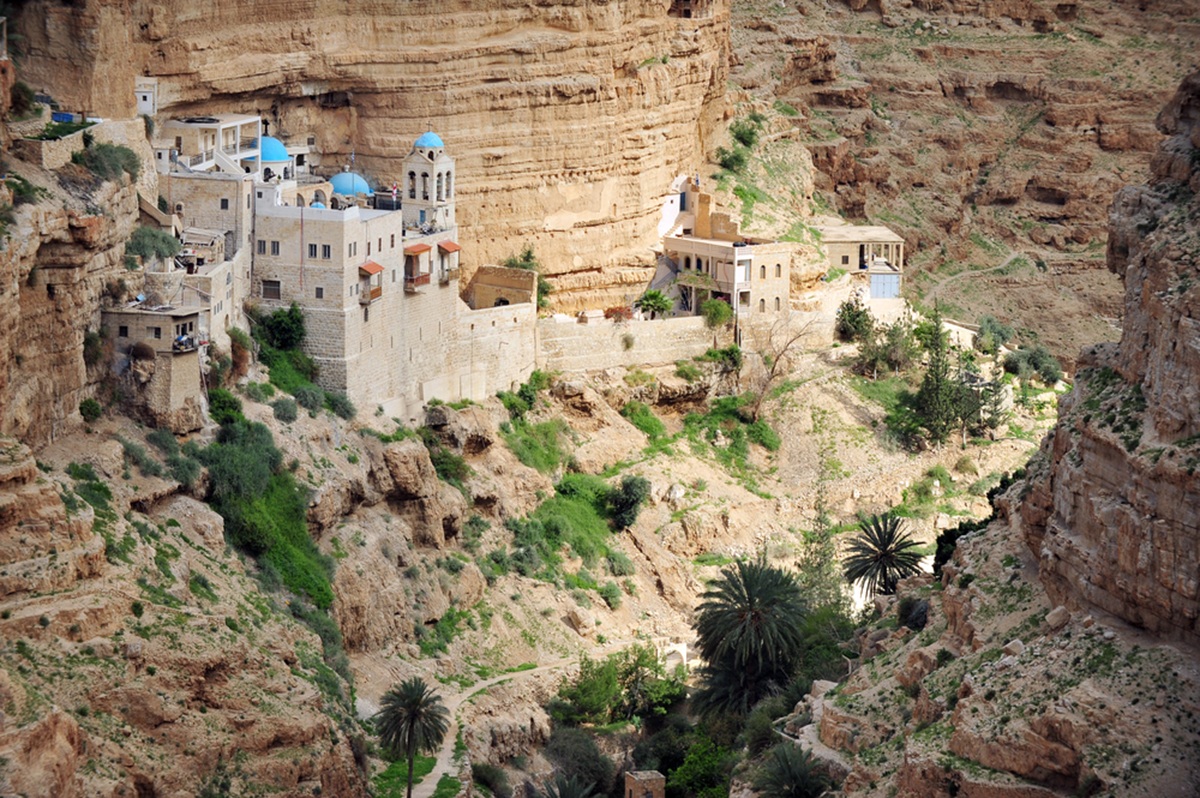
The page’s visual narrative is anchored by a striking photograph credited to Jules Despretz. The image serves as a focal point for the reader, offering a compelling entry into the surrounding text and multimedia elements. The accompanying credit acknowledges the photographer’s contribution, underscoring TourMag’s commitment to showcasing high-quality visuals in conjunction with text-based reporting. The presentation of the image aligns with the site’s broader editorial aesthetic, balancing aesthetic appeal with informative content.

Layout choices throughout the page reflect a deliberate emphasis on readability and focus. The design minimizes distractions by hiding auxiliary columns and optimizing the main reading area for a clean, centered experience. This approach prioritizes the core article content and the embedded live feed, allowing readers to immerse themselves in the subject matter without the clutter often associated with multi-column layouts. The result is a streamlined, distraction-free environment that highlights the featured travel coverage.

The structure also conveys a sense of immediacy and accessibility. By presenting the most relevant material in a single, prominent column, readers can quickly grasp the key narratives and then explore related multimedia elements as desired. The combination of an eye-catching banner, a live content stream, and a powerful photographic centerpiece creates a cohesive reading experience that mirrors contemporary digital publishing trends, where speed, clarity, and visual engagement are paramount.

In keeping with TourMag’s editorial cadence, the page integrates multi-media elements to supplement traditional text. The live feed provides an ongoing stream of travel conversations, updates, and perspectives, complementing the article’s written components. Readers are invited to interact with the content through the embedded experience, experiencing a blend of reporting, commentary, and real-time commentary that enriches the overall narrative.

The photographic highlight by Jules Despretz anchors the page’s visual storytelling. The image’s presence reinforces the journalistic value of pairing descriptive prose with compelling visuals, offering readers a more immersive understanding of the travel landscape. While the banner and the live feed drive the page’s dynamic qualities, the still photograph grounds the experience with a moment of visual resonance.

From a technical standpoint, the page adopts a focused approach to presentation. The left-side promotional element, the central live content module, and the prominent photograph work in concert to deliver a concise, engaging experience. The removal of extraneous side columns and the centering of the primary content contribute to a clean, modern aesthetic that aligns with contemporary web design principles. This layout choice supports quick scanning, easy navigation, and a straightforward path from introduction to multimedia exploration.

In summary, TourMag’s Top of Travel page exemplifies a deliberate fusion of advertising, live content, and high-quality photography to create a compelling reader experience. The combination of a bold promotional banner, a real-time embedded feed, and a captivating credit for the lead image demonstrates how editorial teams can harmonize commercial elements with substantive travel coverage. The result is a focused, immersive environment that invites readers to explore current travel narratives in a streamlined, visually engaging format.