

Amadeus Expands Hotel Offering for Leisure Travel Agencies


Amadeus a annoncé de nouvelles fonctionnalités de distribution hôtelière - Depositphotos.com @Mojahid_Mottakin

Aer Lingus


Amadeus strengthens its strategy in hotel distribution with the launch of new features aimed at leisure travel agencies.

Developed through its partnership with HyperGuest, these solutions are designed to enable professionals to access a broader hotel offering and to simplify the management of their contracts and rates.

Available via Amadeus Leisure Connect Plus, the new functionality enables agencies to manage and distribute their own private hotel agreements from the Amadeus Travel Platform.

A single connection provides access to more than 150 channel managers via APIs in real time, allowing in particular the automation of price and availability updates, the faster onboarding of new properties, and the distribution of their content across different sales channels.

Agencies thereby retain control of their private rates and can also tailor their offers with additional services: breakfast, parking, upgrade, early or late departure, kids club or even spa.


15 000 additional independent hotels

In parallel, the integration of HyperGuest enables Amadeus Value Hotels to add 15,000 independent properties from a direct source.

This expansion strengthens the net-rate offering for leisure travel agencies, with more information on properties, pricing plans, and available services.

For Amadeus, the objective is also to provide richer and more structured hotel content as the use of AI-assisted travel search grows.

Through this partnership, Amadeus aims to respond to the growing fragmentation of hotel distribution by enabling agencies to combine different sourcing within a single infrastructure.

The integration with HyperGuest should thus allow agencies to broaden their offering and simplify the management of their direct contracts, while hotels benefit from expanded access to the distribution channels of travel professionals.


Amelia Brille Published by Amelia Brille TourMaG.com Editor
See all articles by Amelia Brille

  • picto Linkedin
  • picto email
Add TourMaG to your Google News feed Google News icon  

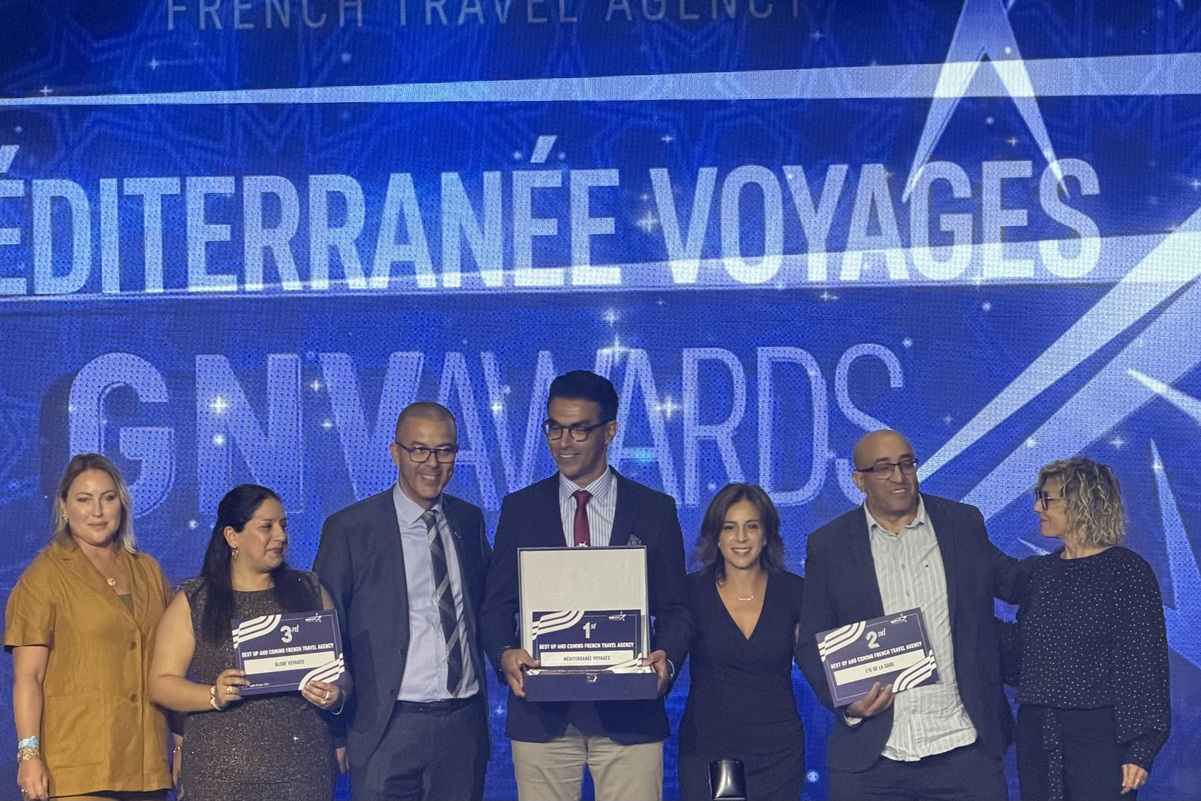
GNV Rolls Out the Red Carpet for Travel Agencies in Marrakech


C'est Sète, port d'attache français de GNV, qui accueillera la prochaine cérémonie des GNV Awards, à l'automne 2027 - Photo : LG

Aer Lingus


The travel agencies certainly deserved this spotlight.

With more than 50% of sales generated via indirect distribution, they constitute the primary sales channel for GNV.

Even more, they have grown by 6.2% year over year, a pace that outstrips the company’s overall performance.

A point that Matteo Della Valle, the company’s Chief Commercial Officer, did not fail to mention during the 7th edition of the GNV Awards.

Held in grand fashion this weekend in Marrakech, the event allowed participants to discover the Ochre City through several excursions, while enjoying the comfort of the Mövenpick Marrakech, a five-star establishment whose stars are well deserved.


The Mediterranean Voyages Trophy

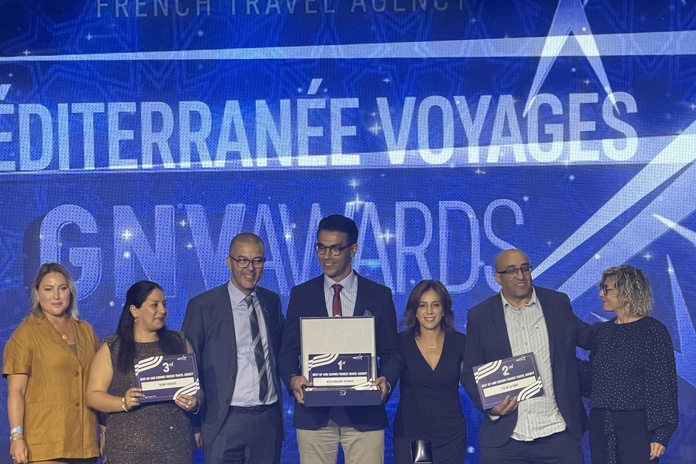
During this ceremony, which annually rewards the most successful partner agencies and welcomes new members into the Elite Partner and Elite Premium programs, the Méditerranée Voyages agency was named the most performing on the French market.

As proof of the importance placed on France, it’s Sète, the main French home port for GNV, that was chosen to host the next edition of the event.

From the port of the Hérault region, the company operates routes to Morocco (Tangier and Nador) as well as to Algeria (Algiers and Bejaïa).

Another eagerly awaited announcement: the opening of sales for summer 2027. It will take place on October 12, with a promotional campaign planned during the first two weeks of sales.


2.2 million passengers in nine months

GNV also took the opportunity to present its results for the first nine months of 2026.

The airline carried around 2.2 million passengers, up 2% compared with the same period of the previous year.

In North Africa, results are up in Algeria, while performances recorded in Morocco and Tunisia remain broadly stable compared with 2025.

Traffic to the Italian islands likewise continues to grow, with an 8% rise in Sicily and 6% in Sardinia. Volumes to the Balearic Islands and Albania remain, for their part, stable.


Four new LNG-powered vessels

The company also signed on Monday a three-year partnership with the Moroccan National Tourist Office (ONMT).

This agreement provides for joint promotional campaigns to support the kingdom’s tourism ambitions, which aim to attract 30 million visitors by 2030.

Finally, GNV unveiled the names of four future ships: GNV Jupiter, GNV Mars, GNV Venus and GNV Mercury.

These LNG-powered units are currently under construction at Guangzhou Shipyard International in China. The first, the GNV Jupiter, is slated to join the fleet by the end of 2027.

The vessel will be able to accommodate up to 2,500 passengers and will feature 500 cabins. It will also offer a freight capacity of 3,500 linear meters.


Laurent Guéna Published by Laurent Guéna Journalist – TourMaG.com
See all articles by Laurent Guéna

  • picto Linkedin
  • picto email
Ajoutez TourMaG à votre flux Google Actualités Google Actualités icône

TourCom Enhances Payment Solutions for Travel Agencies


TourCom poursuit le développement de son offre de paiement avec deux nouveaux dispositifs - Depositphotos.com @vlad_star

CroisiEurope


TourCom évoult sa plateforme de paiement avec de nouvelles solutions destinées à répondre aux besoins des agences de voyages et de leurs clients. Le réseau déploie notamment une fonctionnalité de paiement différé, développée avec la technologie d’Adyen et en partenariat avec Visa.

Cette solution vise à apporter davantage de flexibilité dans la gestion des flux financiers des agences, notamment dans un contexte marqué par la multiplicité des prestataires, des délais de règlement variables et des enjeux de sécurisation des transactions.

Le dispositif permet de dissocier le moment où la transaction est effectuée du règlement effectif. Pour les agences, l’objectif est notamment de gagner en souplesse dans la gestion de leur trésorerie, tout en conservant le même niveau de rémunération.

La rémunération reste ainsi identique, que la carte soit utilisée en prépaiement ou en débit différé. TourCom présente également cette fonctionnalité comme un moyen de simplifier et de sécuriser les opérations de paiement des agences.


A Hosted Card for Corporate Clients

The network is concurrently expanding its business travel offering with the launch of a hosted card, operated using the Adyen technology.

Offered by agencies to their Corporate clients, this solution should allow centralizing payment for services related to business travel and facilitate the monitoring of corporate travel expenses.

TourCom also partners with Airwallex to extend its system to managing expenses incurred by employees during their business trips.

The objective is to cover the different stages of the expense cycle: before departure, reservations and payments can be made via the TourCom Payment Platform; during the trip, employees’ expenses are managed with Airwallex solutions; after the trip, companies have tools for reporting, accounting reconciliation, and expense control.

With these new solutions, TourCom aims to offer agencies, regardless of size, tools to meet the various payment needs of their clients.

The network thus intends to strengthen support for independent agencies by giving them access to shared solutions that cover both payment management and, for business travel, the tracking of professional expenses.


Amelia Brille Published by Amelia Brille TourMaG.com Writer
See all articles by Amelia Brille

  • picto Linkedin
  • picto email
Ajoutez TourMaG à votre flux Google Actualités Google Actualités icône  

TourCom Champions Customization to Improve Its Agencies’ Margins


Richard Vainopoulos, président de TourCom. Photo: TB

CroisiEurope


Traditionally, TourCom opens the travel industry’s autumn season for distributors with a workshop that brings together the receptive operators with whom the network of travel agencies collaborates, a few days before the IFTM trade show.

2026 did not escape the rule, with several innovations. First, the presence of the press, as its president Richard Vainopoulos—who had been discreet for several years—decided to speak up more frequently.

Moreover, this year TourCom makes a double move, with a first day that allowed agencies to meet the referenced TOs, and a second devoted to the receptives.

Fifty receptives were present in Paris for the occasion out of a total of 85, coming to meet 200 agencies and underscoring their growing influence. “With hotel reservation consolidators, they account for about 15% of our leisure sales, which total 800 million euros,” recalled Richard Vainopoulos.


Se démarquer avec des voyages sur-mesure

And to specify that TourCom was the first to reference this offer, both to meet demand when TOs were fully booked and also to stand out with tailor-made products, differentiating themselves—especially from those available online—and delivering higher margins.

He also reminded, during his opening speech to members, that “to margin” is not a dirty word.

“It is the basis of good management, the fair compensation of our know-how. In the future commissions will be limited. Tomorrow, agencies that know how to margin and sell TOs with added value will be the winners.”

Read also: TourCom confirms its European ambitions


« Vendre un prix peut mettre votre entreprise en péril »

“It’s better to sell less, but better. That’s what helped us get through the summer. Selling on price can put your business at risk. The quality of service is essential to differentiate from the web players who sell in bulk to profit without caring about the rest.”

And to commend its members and, more broadly, the network, for showing resilience, demonstrating a strong ability to respond to repatriate customers stranded around the world.

“Tech players dream only of erasing us, but we are still here, with mastery of ever more tools that make us unique. France is one of the few countries where there is still a fear of charging for service.”


« L’été n’est plus la haute saison »

Richard Vainopoulos also used the workshop to share his vision for tomorrow’s challenges and sector mutations.

Taking a swipe at a few players: a competing network that looks like a frog trying to be bigger than the ox, or the Protourisme consultancy whose summer forecasts he brands as alarmist and calls for necessary caution regarding the stream of information on television.

“From now on, we sell trips for 12 months; summer is no longer the peak season. We have had many last-minute bookings, with impressive dossiers. In the end, the annual balance sheet is what counts.”

If he believes that, in today’s anxiety-inducing context, the tourism industry is doing fairly well – “I am not worried about the future of agencies,” he stressed – he does not overlook the ongoing transformations, notably technological ones.


Le danger d’une offre banalisée avec l’IA

Beginning with AI, which can prove effective for saving time but will not replace the agencies.

Besides pointing out that it is a heavy consumer of energy and natural resources, with by 2030 a water demand equivalent to the consumption of 1.3 billion people, he emphasizes the importance of not taking the easy route.

“AI can err, with potential early disputes. Be careful not to believe everything. And with too much AI, the risk is to banalize its proposals in the face of competition. Your strength lies in added value,” he states.


Facture électronique, le chantier de demain


Une légère croissance espérée en 2026

Which, Richard Vainopoulos hopes, will make a difference in an environment that remains highly competitive, and attract even more new members.

The network currently lists 855 points of sale in France to date, up from 850 at the start of the year, with the agencies in Belgium and Luxembourg to be added.

Richard Vainopoulos announces around fifteen new arrivals, against four resignations and a few removals for financial or ethical reasons, and hopes for a slight growth in business volume in 2026, driven in particular by business travel.

Ôvoyages: Toward In-House Travel Agencies?


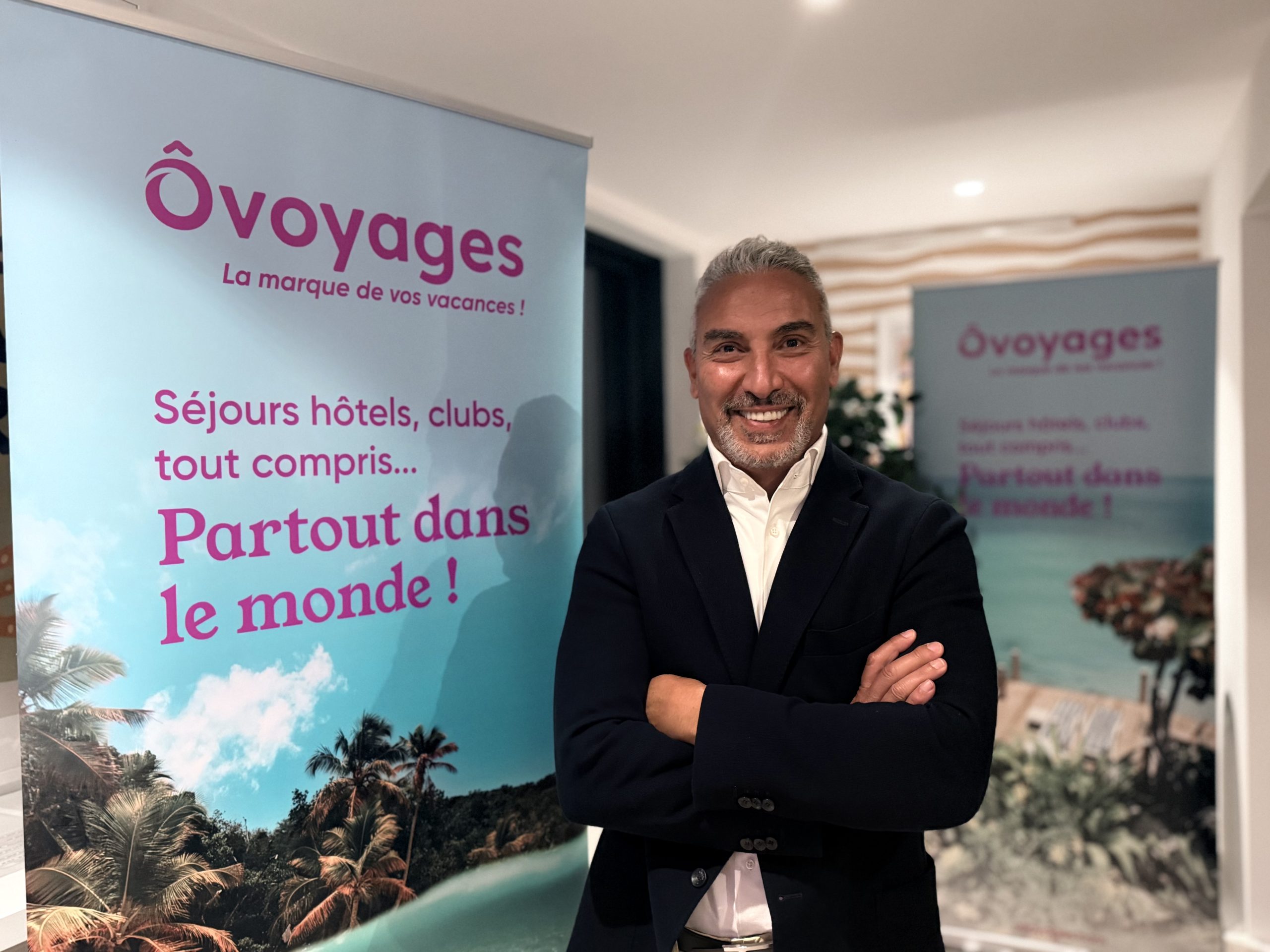
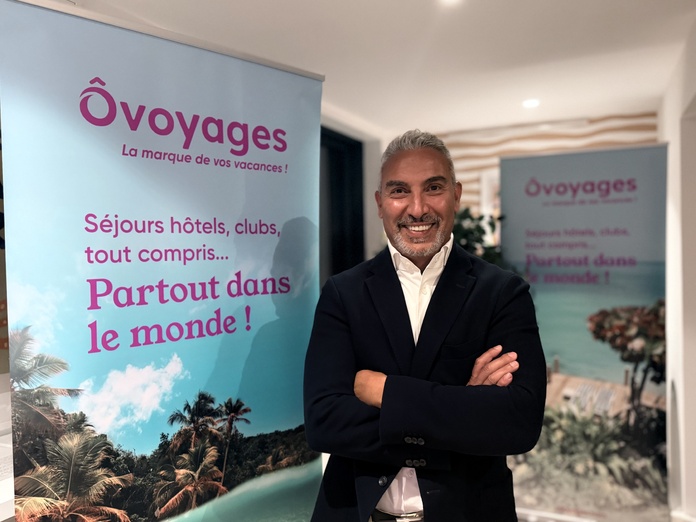
Raouf Benslimane, cofondateur et président d’Ôvoyages - Photo : AB

CroisiEurope


It was during an evening hosted in its new Levallois-Perret offices on September 10, 2026, that Ôvoyages outlined its ambitions and prospects.

Installed in offices now twice as large, the tour operator aims to support its growth and continue developing on several fronts.

The year 2026 has been turbulent for Ôvoyages. Conflicts in Ukraine and the Middle East, fires, shifts in fuel prices, and persistent pressure on purchasing power: the travel operator navigated in a particularly uncertain environment.

After having lagged behind the previous fiscal year, the group believes it has managed to reverse the trend over the summer.

The summer allowed us to catch up. So we are slightly ahead, explains Raouf Benslimane, cofounder and chairman of Ôvoyages-Thalasso No. 1.

The shoulder season also looks favorable, and some destinations are already showing a head start for 2027.

A situation that does not prevent the leader from remaining prudent: the return to activity remains, in his view, “under tension“, in a market where “nothing is guaranteed“.


Ôvoyages privilégie le volume pour préserver ses positions

Si le bilan commercial est positif, la saison s’est néanmoins accompagnée d’une pression importante sur les prix. Les nombreuses réservations de dernière minute ont alimenté la concurrence sur les destinations majeures et pesé sur les marges.

Ôvoyages a choisi de maintenir ses volumes plutôt que de réduire son activité. “On ne considère pas qu’on a perdu de l’argent, on considère qu’on a investi pour préserver nos positions“, précise Raouf Benslimane.

Le groupe entend désormais récuperer de la rentabilité sur les autres périodes de l’année, notamment grâce à l’arrière-saison et à l’hiver, mais aussi en accélérant sur les destinations récemment lancées.

Parmi les bonnes performances de l’exercice, l’Albanie, nouvelle destination pour Ôvoyages, se distingue. Le Maroc reste pour sa part une destination stratégique, tandis que la Grèce et les Canaries sont parvenues à se maintenir. Mais c’est surtout l’Égypte qui constitue l’une des surprises de l’année.

Malgré la proximité du conflit au Moyen-Orient, la demande est restée solide et la destination est même repartie en forte croissance pendant l’été.

Le long-courrier poursuit également sa progression, notamment sur la République dominicaine et le Mexique. Le groupe développe parallèlement la Colombie, la Tanzanie, Zanzibar et le Vietnam.


Plus de 100 Ôclubs, mais la priorité n’est plus au nombre

Ôvoyages a désormais franchi le cap des 100 Ôclubs. Pour le groupe, l’enjeu n’est cependant plus de multiplier les ouvertures à tout prix. “On ne court pas après le nombre“, affirme Raouf Benslimane.

La priorité est désormais donnée à la qualité et à la différenciation de l’expérience proposée aux clients.

Le groupe souhaite notamment renforcer le concept d’expérience immersive, avec davantage de découverte des cultures et des populations locales.

Le Maroc illustre cette stratégie. Après avoir annoncé vouloir rapidement renforcer sa présence sur cette destination, Ôvoyages indique être désormais autour de 50 000 pax en quatre ans.


Ôvoyages veut devenir un acteur de référence sur les circuits

Le groupe reconnaît avoir identifié une faiblesse sur cette activité, avec une offre jusqu’ici jugée insuffisamment consistante et différenciante. Il lance donc une production renforcée, qui compte désormais 500 produits circuits.

L’offre est structurée autour de trois niveaux : Essentiel, Collection et Premium, afin de proposer une segmentation plus lisible aux clients et aux agents de voyages. Le catalogue s’articule également autour des Ôcircuits, Ôcombinés et Autôtours.

Le groupe met notamment en avant une promesse de départ garanti à partir de deux participants, avec des groupes pouvant aller jusqu’à 36 personnes selon les produits.

Autre axe de différenciation : privilégier des hôtels 4 et 5 étoiles et intégrer davantage de prestations au prix du circuit. La gamme met également l’accent sur les expériences locales et la découverte des destinations.

Le Vietnam constitue actuellement la première destination circuits d’Ôvoyages, devant le Maroc. Le groupe y revendique notamment une offre positionnée sur des catégories hôtelières supérieures et intégrant davantage de prestations.


Jamaïque, Cap-Vert et Finlande au programme de l’hiver


Vers des agences de voyages en propre ?

À plus long terme, Raouf Benslimane évoque également une piste encore très exploratoire : le développement d’agences de voyages physiques.

Le dirigeant explique qu’il aimerait, à terme, pouvoir nouer un partenariat ou éventuellement créer des agences en propre. Il ne s’agit toutefois pas, à ce stade, d’un projet acté ni d’un calendrier d’ouvertures annoncé, mais d’une réflexion sur l’évolution possible du modèle du groupe.

“J’aimerais bien faire un partenariat ou carrément avoir nos propres agences de voyages“, indique-t-il.

Cette réflexion s’inscrit notamment dans sa conviction que le réseau physique conservera sa place malgré le développement du digital et de l’intelligence artificielle : “Je pense que l’agence de voyages physique a toujours un avenir“.

Pour l’heure, Ôvoyages entend surtout poursuivre son développement sur son cœur de métier, avec les clubs et désormais les circuits comme principaux leviers de croissance.


Amelia Brille Publié par Amelia Brille Rédactrice TourMaG.com
Voir tous les articles d’Amélia Brille

  • picto Linkedin
  • picto email
Ajoutez TourMaG à votre flux Google Actualités Google Actualités icône  

8 New Traveler Habits That Travel Agencies Should Adopt [ABO]


1. The traveler sometimes wants to travel… alone

Les 8 nouvelles habitudes des voyageurs que les agences doivent intégrer - Depositphotos.com Studiostock

CroisiEurope


The solo traveler is becoming more appealing, but traveling alone does not necessarily mean seeking isolation. The client may want autonomy while wishing to meet other travelers, take part in activities, or enjoy a reassuring setting.

According to the Travel Trend Report 2026 from Dertour Group, nearly 30% of respondents across 13 European countries plan to travel alone in the coming twelve months. In France, the share reaches 32.2%.

The question is not only whether the client travels solo, but what they are seeking behind that decision: freedom, rest, encounters, personal challenge or security. This answer will guide the proposal toward an individual stay, an escorted tour, or a plan alternating free time and group activities.


2. Slow travel puts journeys back on track… with a longer pace

Less rushing, staying longer in one place, favoring gentle mobility, and exploring a destination in depth: slow travel answers a desire to travel differently.

According to the Dertour study, 53.2% of Europeans surveyed are drawn to slow travel. Among them, 58.5% want to take more time to discover a destination without feeling rushed.

This trend can manifest as a stay in a single region, a less dense itinerary, a discovery on foot or by bicycle, or even a river cruise. The agency must therefore pay attention to the pace the client desires. Does he prefer to add more stops or take time to settle in? Does he want to visit more places or fully enjoy a few sites?


3. The train becomes a real alternative

Trains can now serve as a strong selling point, beyond the environmental question. Arriving in the city center, comfort, and the possibility to enjoy the journey itself: it meets several traveler expectations.

At Déclic Evasion, train-focused stays increased by 16% between 2024 and 2025. Families, travelers wishing to avoid airports, or clients seeking another way to move around may be interested.

However, selling rail travel remains complex, between booking tools, connections, after-sales service, and disruption management. For the agent, the challenge is to know the relevant itineraries and propose the train when it adds real value to the trip, rather than waiting for the client to ask.


4. Travelers seek more personalization

In the face of a standardized offer accessible in a few clicks, personalization remains a major asset for the agency. It starts with qualifying the need: pace, interests, constraints, comfort level, travel habits, or desire for autonomy.

The DIGITRIPS Pro survey conducted with more than 400 travel agents in France in 2026 confirms this central place of personalized advice: 47 % of respondents name it as their number one daily priority.


6. Travelers also seek meaning


7. Travelers want experiences… not necessarily more activities

Meetings, workshops, culinary discoveries, nature-based activities, unique accommodations: travelers seek experiences that match their tastes and personality.

But immersion does not necessarily mean multiplying activities. A packed program can run counter to the desire for disconnection or for slow time.

The challenge is to find the right balance between discoveries, free time and breathing space.


8. Not chasing every trend

Solo, slow, train, responsible tourism, immersive experiences, tailor-made travel, AI… Should we offer all of it? No.

An agency is not expected to become an expert in every trend. Specialization can help it build a recognizable expertise, provided it is based on real demand, operational capacity, and a coherent business model.

The aim is to identify evolutions that match its clientele and its territory, then build competence in those with commercial potential. Monitoring, training, familiarization trips and observing demand can help filter them.

Instead of always starting with “Where would you like to go?”, why not ask: “How do you like to travel?”

Alone or with others? Slowly or with a dense program? By train or by plane? With a lot of autonomy or with guidance? In search of comfort, adventure, encounters, or disconnection?

These answers will often help reveal the destination or the product. And perhaps this is where the profession is evolving: not only knowing the destinations, but knowing the different ways to travel.


Find all the articles in our series “Very Special Agent – The Practical Guide for Pros” by clicking this link.

Can Travel Agencies Still Make a Living?


Devis, service... Pour Eric Beatens, "le temps n’est pas gratuit, il doit être payé" par le client ! - Depositphotos

Climats du Monde


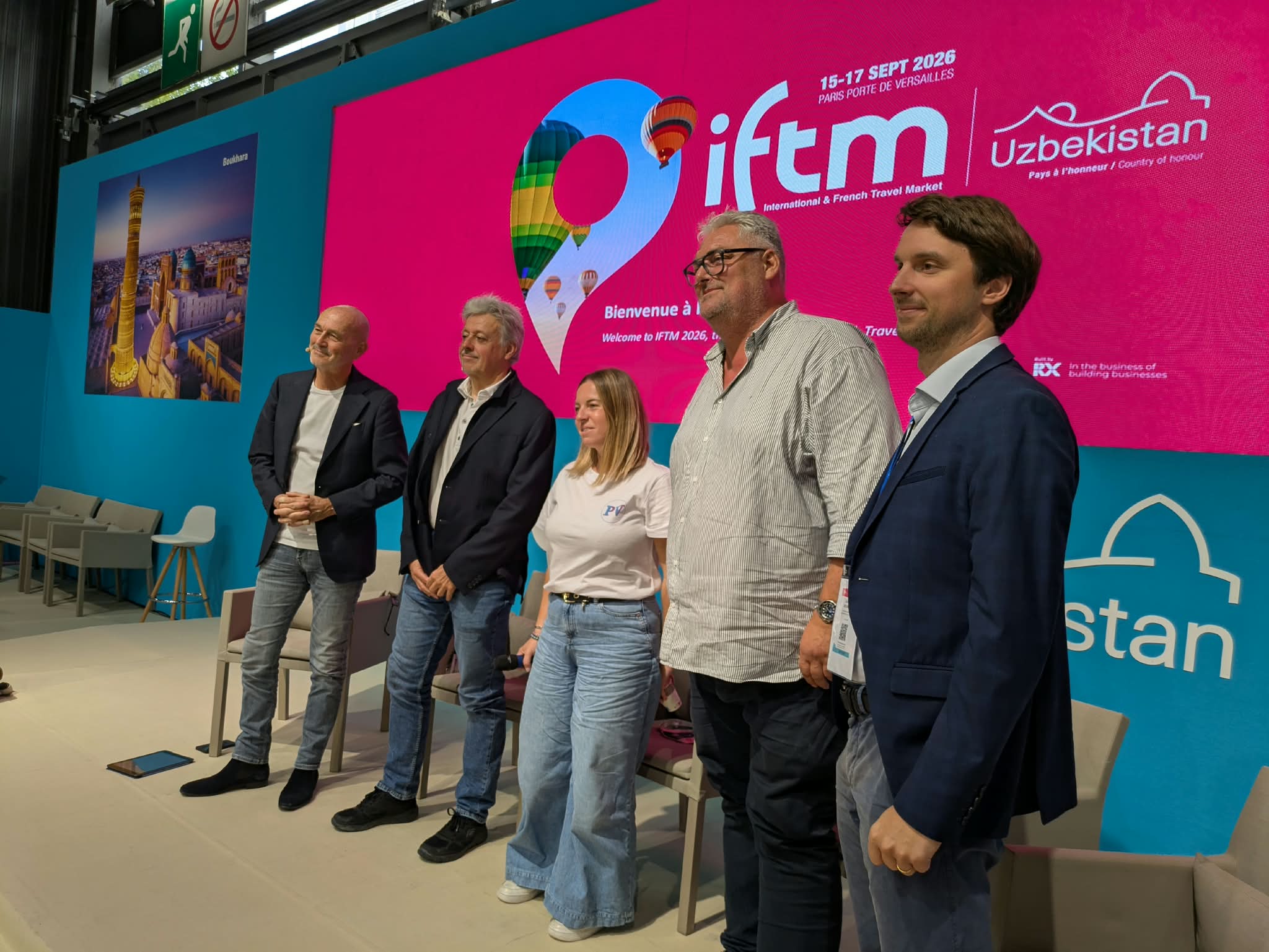
When mention is made of IFTM, the older generation’s eyes brighten as they recall Deauville, the blessed era for a generation.

Champagne flowed freely there; the very upscale seaside resort was privatized by the industry, and even stars would come to energize memorable soirées. Since then, not that the show has lost its luster, but the industry has undergone several mutations that have strongly impacted its business model.

There was zero commission, NDC, the Internet, and the proliferation of online travel agencies. Then producers, notably tour operators, moved into BtoC distribution.

Throughout all this, travel agencies had to carve a path to continue to exist.

“From the moment I bought Centrale Voyages, in March 2024, to today, the fees charged by our agencies, i.e., the honoraria, have collapsed in the corporate sector.

We have reduced the invoicing of our fees touched by ten times over ten years. It is largely due to digital players.

These companies are in conquest mode and will seek to be profitable only in the long term. We still make a living with small businesses, with whom we have a close relationship
“, explained François Lévêque, CEO of Centrale Voyages, during the conference “Travel Agencies: How to Create Value?” organized at the IFTM on September 17, 2026.


Corporate agency: “we are reaching balance, albeit barely”

The tone on Plus Voyages is not exactly upbeat either.

The agency, which started out purely focused on leisure, has diversified into business travel to the point that this activity now accounts for 70% of its business volume.

A rapid growth that does not come without trade-offs.

“In corporate, we cannot margin. However, we can charge service fees, but the levels are so low that we cannot earn a living.

Then the suppliers’ commissions, we receive them at the end of the year, so we have to wait.

On this activity, we are reaching balance, albeit barely. The leisure side allows us to recover margin, around 10%, and the events side even more, around 25 to 30%, with higher margins“, continued Solenn Le Brazidec, the managing director of the agency.

A finding that seems to hold for mid-sized corporate agencies. The big players in the market, such as Amplitudes and others, manage to stand out thanks to their own technological solutions and volumes.

To improve this situation and generate margin, in order to keep teams in business travel, the leadership of Plus Voyages decided to launch a new brand in… leisure.

Legends of Africa offers tailor-made stays on the African continent, a way to generate added value. But the exercise is not always so straightforward.

Because, to exist, the new entity relies on online client acquisition, a process that comes with a cost and not only benefits.


Quotations, service… “Time is not free, it must be paid by the client!”


Pour François Lévêque, il existe encore "une quantité de services que nous n’arrivons pas à monétiser" - Photo : RP

“In our country, the notion of service is broadly hard to value. The availability of a service is the norm.

Traditionally, in business travel, we did not charge for our services. In leisure, I do not question our strategy of acquiring clients on the web, but we are asking a lot about quotes.

We take time to respond, share our expertise and know-how. It’s a bit as if all of this were being sold off, because we often do not receive responses from the people who contact us
“, asks Solenn Le Brazidec.

One observation that also applies to the press. For two decades, Internet taught readers that information was free. It nevertheless requires journalists, graphic designers and developments.

Information has a price. For those who want to support our journalists, subscription remains the best solution.

And that is what Eric Beatens, the president of Eric&TheTrip, is fighting against. “Time is not free; it must be paid. It is up to us to calculate the cost of the time spent on such or such request, in order to know what we can do and bill for it.

When I launched Eric and the Trip, I offered a travel advisory service, but I quickly stopped that, because the travel planner activity is not profitable. Bespoke travel is much more lucrative
“, he explains.


“A quantity of services we cannot monetize”

In 2023, Manor had established a pricing grid, akin to what banks or telecom operators in France implement. A bank transfer, an overdraft facility, a loan… nothing is free, and anyone who opens an account knows it.

If members did not really take hold of the subject, the initiative was interesting. It aimed to add value to what travel agencies do for their clients, be they business or leisure travelers.

“Today, everyone complains, but who offers something else? The only value proposition, in my exchanges with professionals, has been: prices must be increased. It is our responsibility to have a vision for the future and a business model“, Grégory Mavoian, then-president of the Manor network, explained.

We listed everything we do to create a catalog of pricing conditions. It isn’t fixed; it is evolving. It isn’t possible to sell at a loss; each service has a cost“.

It should be noted that, for certain services like rail, profitability is negative for corporate agencies.

On one hand, clients don’t want to pay anymore, but they request more and more technologies that require developments. On the other hand, suppliers pay commissions that increasingly resemble crumbs at the end of a meal, except for hegemonic players.

Under these conditions, it becomes very difficult to envision a bright future for this activity, which will probably end up affecting only a handful of companies, because salvation will come from volume.

“We are facing a quantity of services we cannot monetize. It occupies a large part of my time, but I have no answer to this problem, added François Lévêque.

We try to be differentiating, except that we do more or less the same thing. My job is to become more productive; I have no choice, otherwise we will disappear.

To increase our margins, we rely on remuneration of financial flows, and I go looking for pennies that linger everywhere. We are a bit at break-even. Without retrocommissions, we would have no value.

I feel that urgent situations are needed to demonstrate our value, but everything is quickly forgotten“, assessed the leader.


Increasing margins: agents face a “psychological barrier”

The two leaders confronting the financial downturn in business travel seek a remedy by developing leisure and the lucrative bespoke travel.

This lifeline must keep the entire operation afloat, thanks to the margins it yields, but also the cash flow generated by deposits.

For Éric Baetens, it’s time for the sector to assert itself and not be ashamed of making money.

“When I started, I turned to bespoke travel, because it is difficult to compare offers. The client has no reference point with other agencies. Standardized products will always be hard to margin.

After, regarding the margin to apply, at first I was at 13%, then, after the Covid period, I decided to raise it to 17%, due to costs and other factors. At the same time, Voyageurs du Monde achieves a margin of around 30%.

I didn’t tell my clients anything, these four points are almost painless for them. Except that this increase generated 30% more revenue. It allowed me to fund my accreditations, to pay the freelancer who handles these files.

The main hurdle is psychological; it is in our heads, us, the travel agents“, the travel agent confides, who also acknowledges that his case is specific because he is alone, without overhead or client acquisition costs.

By the way, according to Enterprises of the Voyage, new entrants who register do not come to compete with Booking or Airbnb, nor to impose a new technology.

They often rely on niches to develop their activity, thus benefiting from community involvement and effective word-of-mouth.

If the question of value is an eternal one, artificial intelligence comes to challenge the certainties that the web took thirty years to impose. In the corporate sector, this revolution is raising questions.

“In my view, AI is simply the continuation of SBT. At the time, we were already wondering about the impact on humans, and, let’s be honest, it is enormous. AI will have an impact on humans. With the implementation of Wondermiles, we reduced staffing needs by 35%.

In tourism, AI will help us gain productivity, because people always want to speak to a human and need someone to talk to on the phone or via video. Then trust remains paramount“, reassures Solenn Le Brazidec, the associate managing director of Plus Voyages.


Agencies: 10 Tips to Sell the Train More Effectively [ABO]


1. Identify the Right Clients and Focus on Practicality

Agences : 10 conseils pour mieux vendre le train - Depositphotos.com Auteur studiostoks

Hurtigruten


The train should not be presented solely as an eco-friendly alternative to flying. Families, travelers who value autonomy, environmentally conscious customers, or those looking to avoid airport constraints constitute good targets.

« Typically, for a family, the train is incredibly simple. You arrive in the city center rather than being far from the airport and having to pay again for a shuttle. », notes Hugo Bazin, cofounder and CEO of Tictactrip and Very Train.

Olivier Bernard, founder and partner at Déclic Evasion, also highlights « the ease of access and comfort », notably with a booking window of only 30 minutes before departure for TGV INOUI, as well as « the high frequency of TGV INOUI or OUIGO services, which offers great flexibility in planning ».


The train can also meet the expectations of travelers seeking more autonomy. « A well-prepared train journey, with a good travel diary, is still well structured », recalls Laure Jacquet, director of Discovery Trains, an agency specializing in train travel.


2. Turn the Journey into an Experience

The train can be more than just a means of transport: landscapes, night trains, scenic itineraries, or historic trains can build a genuine experience.

« The primary motivation of train travelers, at least those who go through an agency, is not ecology nor love of rail travel. These travelers mainly want to experience a different kind of journey. », observes Laure Jacquet.

« People love the train, adds Hugo Bazin. We can walk, use the restrooms, work, read… You’re not in a car where you must stay focused, and you’re not in the plane where you have to arrive very early.

The travel advisor can also rely on destinations that are close and easy to access : Brussels, Amsterdam, Geneva, London or getaways in France. « Brussels, it’s under two hours by train and you arrive in the center » illustrates Hugo Bazin.


3. Favor One Carrier

Avoid, when possible, multiplying carriers on the same itinerary.

« If one carrier manages the route, they will be more easily able to offer a solution in case of a missed connection », explains Laure Jacquet. Her advice: « choose the same company from start to finish ».


4. Allow Plenty of Time for Connections

Caution is especially important in Germany.

« On all routes in Germany, plan generous connections, truly generous », insists Laure Jacquet. When possible, it’s even better to allow a layover night rather than a too-tight connection.


6. Check Timetables and Stations


7. Anticipate Disruptions

Train canceled or a compromised connection: « above all, don’t panic », advises Laure Jacquet. The first instinct should be to head to the railway company’s ticket counter.


« They are aware. They know that a train has been canceled and they already know if there is a solution », she explains. For the agency, the key is therefore to anticipate difficulties and identify the right contacts.


8. Rely on an Aggregator or a Specialist

Distribution remains a major hurdle. « The first obstacle to selling trains through an agency is the lack of offers, such as a truly dedicated B2B platform for trains with an agency account », says Hugo Bazin.

For complex cases, it’s better to depend on a specialist. « Trains aren’t straightforward », he concedes.

Aggregators can serve as an entry point for beginner agencies. « Aggregators are handy », confirms Laure Jacquet, especially to simplify managing multiple carriers. But « as soon as you become a specialist, it’s better to go through the carriers’ own sites ».

Discovery Trains represents Austrian trains (ÖBB) but also Canadian Via Rail Canada, Swiss trains (CFF/SBB) and the Swiss Travel System.

Read also: Travel Agencies: Is Train Travel Easier to Sell than Air Travel?


9. Sell a Package Rather than a Ticket

The low remuneration of base tickets remains a hurdle. « Today, SNCF pays travel agencies or resellers very little », notes Hugo Bazin. Hence the value of building a comprehensive offer.

« If we talk about a complete package, it becomes interesting », he explains. Train, accommodation, and activities can create more value and margin. Very Train thus announces an average commission of 8 to 12% on the overall package, while circuits published on the Discovery Trains site are commissioned at 10% for agencies.

For Olivier Bernard, rail travel is also a compelling product for groups and works councils. « The group terms for SNCF INOUI trains allow adaptation to organizational constraints with more flexible registration deadlines and better control of financial risks in case of partial cancellations. »


10. Get Training and Start Simple

Training remains essential to master the specifics of rail travel. Laure Jacquet invites agencies to participate in Travel Talk organized by Discovery Trains on October 8, 2026.

« We want to overturn preconceived notions. Well-sold, the train is a pleasant and profitable product, provided you know its codes and know how to showcase this experience », she insists.

The right approach for a starting agency: begin with simple itineraries, train and learn, and don’t hesitate to rely on a specialist when the project becomes more complex.


Find all articles in our series “Very Special Agent – The Pro’s Practical Guide” by clicking this link.


Caroline Lelievre Written by Caroline Lelievre Journalist – TourMaG.com
See all articles by Caroline Lelievre

  • picto Twitter
  • picto Linkedin
  • picto email
Add TourMaG to your Google News feed Google Actualités icône
Hervé Bellaïche (Catlante): Travel Agencies Are Our Main Growth Engine


TourMaG – The summer is drawing to a close. What assessment do you make of the 2026 season?

Hervé Bellaïche : The assessment is fairly positive, at least above our expectations. We were concerned because market trends suggested a difficult market that had trouble stabilizing.

In the end, we recorded a large number of last-minute bookings, about 20% more than usual. We also achieved an excellent August, the best in five years. So we are very commercially satisfied.

Travel agencies have been a great help and today constitute our main growth engine.

Beyond the commercial results, what matters most for Catlante is the customer experience, the quality of service and overall satisfaction. And in this regard, feedback is consistently excellent. Clients come back telling us they spent fantastic holidays, sometimes even “the best holidays of their lives.” That is what motivates us to go even further and to make the brand more widely known.

TourMaG – Travel agencies have thus embraced the cabin-cruise concept on a catamaran. How did you develop this distribution network?

Hervé Bellaïche :
A few years ago, Catlante was nearly exclusively sold direct. We found a second growth engine with travel agencies, thanks to the work undertaken for about two years to develop distribution networks.

It wasn’t necessarily easy. When you have a history of operating primarily through direct sales, you have to learn to work with a network of endorsers. I’ve been in the tourism industry for 20 years and for 20 years I’ve advocated this growth channel. I’m therefore very pleased that we managed to implement it at Catlante.

In the first half of the year, we’ve seen an 80% growth in travel agencies. It’s working very well, with two phenomena: some agencies are literally exploding their sales, with three- to fourfold increases over their previous level, while others still haven’t jumped aboard and are stagnating.

Our analysis is that some agencies have understood the appeal of this new type of vacation, which is popular, while others have not yet integrated this evolution.

TourMaG – The travel sector has faced the consequences of geopolitical tensions in the Middle East. Has your product proven particularly resilient?

Hervé Bellaïche :
Yes. In summer, around 90% of our production is in the Mediterranean. We have many departures from the Marseille coast, up to Saint-Tropez, but also from Corsica toward the north and southern Corsica, or Italy.

We also have departures from Palma to Minorca and Majorca in the Balearics. So these are mainly close-to-home trips. We also have a few trips to the Seychelles, which were more affected by the difficulties related to the Middle East.

Our product is resilient and even acted as a kind of travel refuge.

Some agencies have called us saying they had clients initially planned for long-haul trips or even within France, in areas hit by storms or fires, who had to rethink their plans. That perhaps explains part of the last-minute bookings.

We notably had a few families who had planned to go to the Landes region, Cap-Ferret for example, and who ultimately redirected to a Catlante trip.


TourMaG – What is the current split between cabin cruises and privatizations?

Hervé Bellaïche :
Catlante indeed does two kinds of offerings. We invented this cabin-cruise model: essentially sharing a boat, somewhat like a guesthouse on the sea. Our vessels are specifically designed for this, with plenty of space.

Clients frequently tell us they have met amazing people while still being able to live their own life. The act of sharing the boat can be a first hurdle at the time of booking, but once aboard, the initial hesitation completely fades away.

Today, roughly two-thirds of our activity comes from the cabin product. A couple, two couples or a family can take one, two or three cabins on the six cabins each boat offers. We have six cabins per boat, with a crew of two to three people.

The remaining one-third corresponds to groups or families who come together and privatize the boat.

TourMaG – Cabin cruising remains a niche product. Is it becoming more mainstream?

Hervé Bellaïche :
I can’t speak for the entire industry, but at Catlante we sense strong demand.

I believe this owes more to the way Catlante operates than to a general democratization of the sector. The company has been around for 23 years and, for 23 years, we have focused on the same thing: cabin-catamaran cruises, whether cabin-based or privatized, with crew.

Our know-how, our methods and our approach help us build client loyalty. We operate at smaller volumes compared with large tour operators—probably 10, 20 or 50 times less. We handle between 6,000 and 10,000 passengers per year.

We perform our activities in a professional manner. It is craftsmanship on a grand scale. We always depart with 12 people. Each departure is precisely shaped, personalized and customized. Yet we manage to run roughly 500 departures per year.

TourMaG – What are your prospects for the winter season 2026-2027 and which destinations will you offer?

Hervé Bellaïche :
The Caribbean is at the heart of our winter activity. The Grenadines stand out as a particularly fantastic destination to discover by boat and by catamaran.

We also propose tours around Martinique, Guadeloupe, Saint-Barthélemy and Antigua and Barbuda. We have a whole range of Caribbean destinations that lend themselves especially well to catamaran vacations.

We reach incredible lagoons, moving from paradise beaches to paradise beaches, from secret coves to secret coves. It is quite amazing.


TourMaG – How does the winter season look commercially?

Hervé Bellaïche :
Like many players, we’ve fallen a bit behind. We had a lot of momentum for the summer and managed to maintain it. For the winter, however, we sense a tendency toward last-minute bookings.

We still have quite a bit of availability for this winter. This does not overly worry us, but the activity will need to take off at the start of the autumn term. We look forward to the rentrée to boost sales and ensure that clients join us this winter.

We also tend to extend the summer season into September, or even late September, with departures in Corsica, the Balearics and more generally in the Mediterranean. We then begin the Caribbean season around mid-November. That gives us a little time to fill the order book.

TourMaG – 2027 will be an election year in France. Are you worried about the presidential elections?

Hervé Bellaïche :
Not at all. What could actually worry us is purchasing power.

We remain with prices that, relative to the product’s quality, are very well positioned. In our satisfaction surveys, which we analyze in great detail, a large number of clients tell us that the value for money is incredible.

Nevertheless, we do not want to raise prices to keep the product accessible. We prefer to increase the number of boats and grow our customer base rather than raise rates.

We are not, either, in a discounting framework. We have never done it and we will never do it.

One can be concerned about the situation of French clients and their purchasing power. On the other hand, I do not think that the fact that people must vote or fear what is going to happen will stop them from travelling. The experiences from previous years have shown us that this kind of context did not have a drastic impact on the travel industry.

TourMaG – What will be Catlante’s next engagements with tourism professionals?

Hervé Bellaïche :
We obviously continue all our familiarization tours and our actions with professionals. Our salespeople travel across France to meet travel agencies.

We are increasingly organizing familiarization trips and ship visits. It’s enough to contact Catlante and our sales team to arrange this kind of event.

We have put a lot of work into this area this year. We welcomed around 2,000 people, including nearly 500 travel agents aboard our ships to discover our product.

We will also be present at the IFTM, even though we will unfortunately not have a stand, as we do not yet have the budgets required or the critical size to do so. We will also be present at the Grand Pavois in La Rochelle at the end of September, at Cannes for the Nautical Fair, and at the Paris Boat Show in November.

Finally, we will organize in the coming months an evening bringing together our clients and our most loyal agencies, as well as a few partners and friends, to allow everyone to meet.

Because travel, too, is about that. At Catlante, it is about meeting, sharing and exchanging.

In a world that is very disconnected, what we advocate with Catlante is reconnecting with nature, switching off the phone, real reconnection and reconnecting with oneself. We want to connect and reconnect clients with one another.

FRAM Launches Selfcare to Automate Flight-Cancellation Management for Travel Agencies


FRAM lance Selfcare pour automatiser la gestion des annulations de vols des agences - Depositphotos.com  Auteur visuals6x

TAP Air Portugal


A few weeks after unveiling the project at the Convenc’Tour of the CEDIV, FRAM unveils a new tool for travel agencies.

The tour operator announces the launch of Selfcare, a new tool integrated into its BtoB FRAMPRO platform, designed to simplify the management of flight cancellations.

This feature addresses a recurring issue driven by the rising disruptions in air travel, which heavily involve travel agencies and the teams of tour operators.


In a first phase, the tool concerns Stay (holidays) files

Specifically, Selfcare enables agencies to receive cancellations communicated by airlines more quickly, immediately access the available re-protection options, and confirm with their clients the chosen option on the spot, without prior revalidation by FRAM when the processing is automated.

The aim is to shorten processing times for cases while allowing the tour operator’s teams to focus on the more complex scenarios. When automatic processing is not feasible, the file is forwarded to the Service Avant Départ.

In this initial phase, the tool covers Stay dossiers for which a reprotection solution is available. Other cases will continue to be handled by FRAM teams.


FRAM: empowering agencies with autonomy and responsiveness

The group plans a gradual scaling of the system. By the end of 2026, nearly all FRAM and Plein Vent files affected by this type of processing should be integrated into Selfcare.

« Our partners asked for more autonomy and responsiveness when a flight is canceled.

Selfcare directly answers this expectation. It is a useful innovation, built from their feedback. And this is only the first step: we will continue to enhance Selfcare in the coming months
», states Cyrille Fradin, president of Groupe Karavel-FRAM.


Up to 50 euros covered per person in case of air re-protection

In parallel with this technological evolution, FRAM announces a commercial measure aimed at reducing the financial impact of transport changes.

In the event of an air reprotection, the tour operator will now cover up to 50 euros per person for any additional transport costs. This contribution will be directly added to the file to lessen the traveler’s out-of-pocket amount and to facilitate securing departures.

This announcement comes amid a context where air disruptions have heavily strained the entire distribution chain in recent months.

At the Convenc’Tour of the CEDIV held in June, Jean-Christophe Guillin recalled that FRAM had recorded 3,800 PNR cancellations between April 1 and August 31 due to the conflict in the Middle East.

These figures illustrate the scale of the processing to be managed and the need to automate part of the processes.