
Three Cyberattacks in Three Days: Why Tourism Will Have to Prove Its Security [ABO]


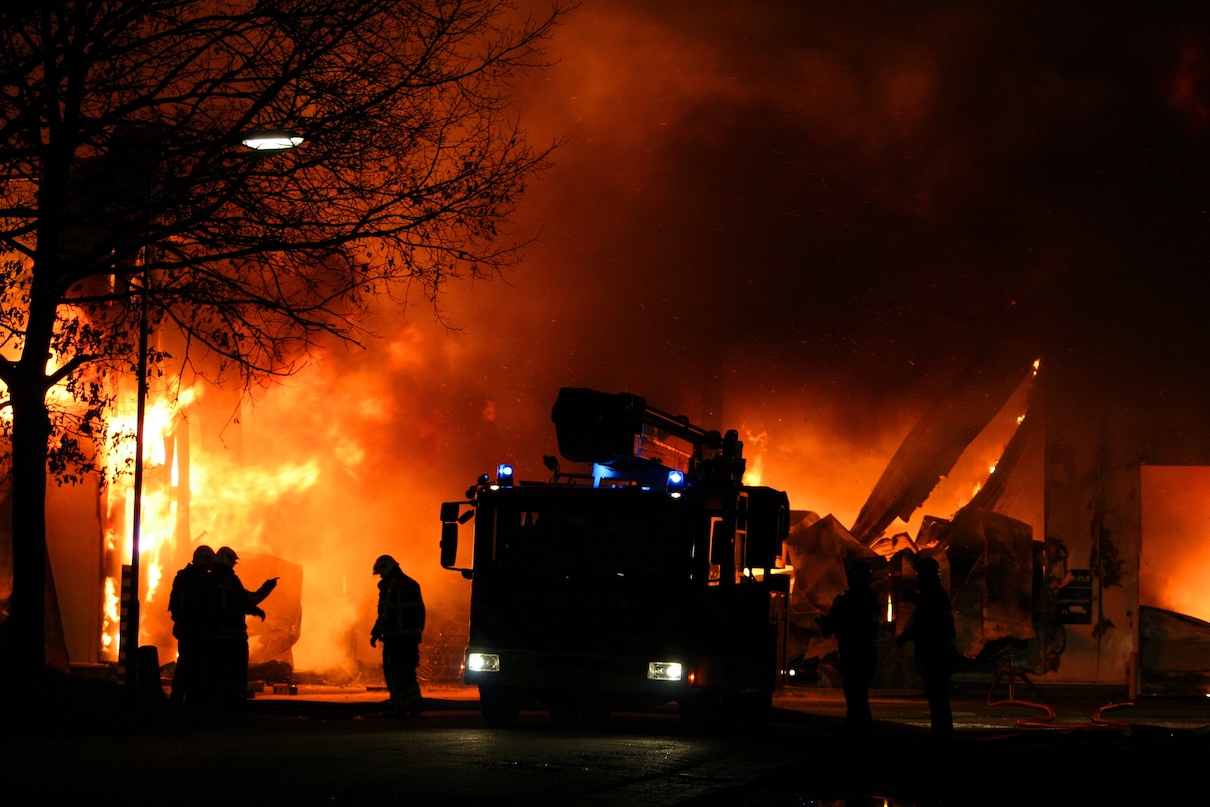
Christophe Mazzola revient sur la cyberattaque qui touché 3 opérateurs du tourisme : Belambra, Maeva et Gîtes de France -  Depositphotos.com Auteur denrud

CroisiEurope


Mi-mid May, as families finalize their summer bookings and the sector enters its peak period, a single attacker reminded vacation accommodation of a truth they would rather not face. In seventy-two hours, three major players acknowledged a data breach.

On Friday, Pierre & Vacances-Center Parcs, via its platform “La France du Nord au Sud,” a subsidiary of the Maeva brand. On Saturday, Belambra and its forty-four clubs. On Sunday, the Gîtes de France network.

Three business models that were previously separated, brought together in a single weekend by the same weakness and the same method of operation.


What Was Leaked, and What No One Looks At

Each press release insisted on the same point: no banking data.

Pierre & Vacances even specifies that no e-mail address would have been collected on their side. This phrasing has become a crisis-communication reflex, and that is precisely where the misjudgment lies.

It reassures about the only risk that the general public can name, the credit card, and it distracts attention from what was actually stolen.

The loot lies elsewhere. At Gîtes de France, nearly 389,000 customers are affected, with reservations dating back to 1995, and the batch would include around 360,000 records related to minors and children registered in stay files.

Names, dates of overnight stays, e-mails, phone numbers, postal addresses. No card numbers, certainly, but enough information to craft a phishing message with perfect credibility. When the fake email cites the real date, the real place, and the child’s real first name, the victim’s vigilance weighs little.

In a sector where personal data is inherently family-oriented and spread over time, the absence of banking details is not good news; it’s a mirage.


A Sector Designed to Demonstrate

The most troubling element isn’t technical; it’s political. The hacker didn’t seek to quietly monetize their breach. They publicly claimed their action, explaining in their own words that they acted to demonstrate how porous France is in terms of cybersecurity.

In other words, these three companies did not face a sophisticated criminal operation. They served as a vehicle for a demonstration. And the choice of tourism is hardly a coincidence.

The sector accumulates the risk factors I’ve observed in the field for years. Foundations that have stacked up for three decades without anyone asking why a reservation from 1995 still exists.

A shared IT subcontracting model, where several departmental structures rely on the same provider, hence the same vulnerability. A seasonality that concentrates activity, pressure, and the lowering of vigilance on the same weeks.

And a culture where security is still seen as a technical cost line rather than as a condition of the customer relationship.


The Real Scandal Is the Data We Should Never Have Kept

What strikes me is not that these attacks were possible, but that they were predictable. The risk had been identified, sector-specific, documented for months. The missing half of the equation was the decision to act.

I call this the decision gap, the structural delta between the moment we know and the moment we decide.

A data from 1995 still exploitable in 2026 is not a technical accident. It is a retention decision that was never made, thus never arbitrated, thus renewed by default year after year. The sector has confused commercial memory with passive accumulation.

Or the data that is best protected is the one you no longer hold. Minimization and limited retention durations are not regulatory constraints to endure; they are levers to reduce the attack surface: what no longer exists in the system cannot leak.

Three decades of reservations kept “just in case” became, in a single weekend, three decades of exposed responsibility.


Digital Trust, the New Asset of Tourism


Who Is Christophe Mazzola?


Photo : Christophe Mazzola

Christophe Mazzola is a cybersecurity expert, founder of the Cyber Academy and head of the GRC practice at Cresco Cybersecurity.

His objective: to make cybersecurity accessible to everyone.

A speaker, author, and CISO, he supports companies and institutions in a pragmatic approach to digital security, at the crossroads of leadership, pedagogy, and digital sovereignty.

Bali, Cuba, USA, Egypt: Tourism News Roundup [ABO]


La revue de presse internationale de la semaine - Depositphotos.com Auteur serezniy

CroisiEurope


In the May 2026 press review overview for the week starting June 1, 2026:

Global tourism continues to grow despite geopolitical tensions

Bali: the “taxi war” makes life harder for tourists

Egypt: tourism keeps advancing strongly in 2026

Madrid bets on tourism intelligence to manage its growth

United States: international flight prices are starting to come down

Cuba: major Spanish hotel groups retreat under American pressure

Tokyo: Shibuya now fines for street littering

A new 1,300 km railway line will connect Germany to the Ukrainian border

Hotels see an edge over booking platforms thanks to AI

Oddity! Off to “hell”: the 666 bus to Hel makes a grand return to Poland


Global tourism remains on the rise despite geopolitical tensions


Le tourisme international a progressé de 2 % au premier trimestre 2026, avec environ 307 millions de voyageurs dans le monde, selon ONU Tourisme. @depositphotos/potowizard

International travel grew by 2% in the first quarter of 2026, totaling around 307 million travelers worldwide, according to UNWTO.

Although the year began with solid momentum, the conflict in the Middle East slowed growth in March, triggering flight disruptions, higher oil prices and increased transport costs.

Europe and Africa posted the strongest results, while the Middle East saw a steep drop in arrivals (-14%).

Facing geopolitical uncertainty and rising travel costs, experts suggest tourists may favor closer destinations and seek better value for money. Despite these challenges, the industry continues to show global resilience.

Read more on untourism.int


Bali: the “taxi war” complicates life for tourists


Une bataille invisible entre VTC et conseils de village traditionnels fait gonfler les prix des courses des taxis. @depositphotos/OlgaGauri

In Bali, a long-standing conflict pits ride-hailing drivers using apps like Grab against the banjar, village councils that regulate traditional taxi activity. As a result, in some areas, VTC drivers refuse to pick up customers for fear of intimidation or assault.

Tourists are left with no option but to use local taxis, which are often much more expensive, with fares set by the banjar. According to the South China Morning Post, a large portion of the fare goes to these village councils. This situation also reflects growing economic tensions on the island as tourism slows in 2026.

More to read on the South China Morning Post site


Egypt: tourism continues its strong growth in 2026


L’ouverture du Grand Musée Égyptien au Caire a boosté l’activité touristique du pays. @depositphotos/Tamer_Soliman

Egypt welcomed 6.1 million tourists from January to April 2026, a 7% increase compared with the same period in 2025.

The country’s success is partly explained by the opening of the Grand Egyptian Museum in Cairo, the appeal of the Red Sea coastal resorts, and prices deemed competitive by international travelers.

Backed by substantial international promotion, Egypt now targets an ambitious goal: to reach 30 million visitors per year by 2030.

An article from traveldailynews.com


United States: international flight prices are starting to come down


Cuba: major Spanish hotel groups retreat under American pressure


Les groupes espagnols Meliá et Iberostar ont annoncé l’arrêt d’une partie importante de leurs activités hôtelières à Cuba.@depositphotos/sepavone

The Spanish groups Meliá and Iberostar have announced the closure of a large portion of their hotel activities in Cuba, in response to the sanctions imposed by the Trump administration.

This withdrawal comes amid a grave tourism crisis in Cuba. The country recorded nearly a 56% drop in tourist arrivals at the start of 2026, while several airlines have reduced or suspended flights to the island.

An article from euronews.com


Tokyo: Shibuya now fines for street littering


L’arrondissement de Shibuya, au cœur de Tokyo, verbalise les personnes qui jettent des déchets dans les espaces publics.@depositphotos/sepavone

The Shibuya ward, at the heart of Tokyo, has begun imposing fines on people who discard waste in public spaces. Since June 1, 2026, offenders face a 2,000-yen fine (about $12.50) as part of a campaign to curb illegal dumping.

Authorities say the problem has worsened with rising tourist numbers and street-level consumption around Shibuya’s busy railway hubs. Around fifty officers will patrol to issue fines. Meanwhile, take-away food and beverage shops must now provide trash bins for customers.

Read on nhk.or.jp


A new 1,300 km railway line will connect Germany to the Ukrainian border


La compagnie tchèque Leo Express lancera le 25 juin 2026 une nouvelle liaison ferroviaire directe de plus de 1 300 kilomètres, qui reliera la ville polonaise de Przemyśl, à la frontière ukrainienne, à Francfort et son aéroport.@depositphotos/jonnysek

The Czech company Leo Express will launch on June 25, 2026 a new direct rail link of more than 1,300 kilometers, one of the longest in Europe.

The train will connect the Polish city of Przemyśl, near the Ukrainian border, with Frankfurt and its airport, passing through Krakow, Prague, Dresden and Leipzig.

This daily line aims to strengthen links between Western and Eastern Europe while facilitating access to Ukraine.

Passengers will have on board Wi‑Fi, power outlets, air conditioning and dining services on this nearly 19‑hour night ride.

An article from euronews.com


Hotels see an edge over booking platforms thanks to AI


Selon des experts, les groupes hôteliers pourraient mieux tirer parti de l’intelligence artificielle que les agences de voyages en ligne (OTA).@depositphotos/Jirsak

At the IHIF hotel conference in New York, several analysts highlighted that hotel groups could leverage artificial intelligence more effectively than online travel agencies (OTAs).

According to Barclays, hotels enjoy a major advantage thanks to their loyalty programs, their customer data, and the strength of their brands — areas where AI could boost personalization and customer relations.

Even though excitement around AI remains measured in the hotel industry, professionals already see significant potential to improve operational efficiency and commercial performance. Analysts, however, caution that the real impact of AI on traveler spending and the hotel sector is still in its early stages.

A Skift.com briefing


Insolite ! Off to “hell”: FlixBus brings back the 666 bus to Hel, Poland


FlixBus relance la mythique ligne de bus 666 vers la station balnéaire de Hel, en Pologne. @depositphotos/philipus

Good news for travelers who enjoy dark humor and unusual selfies: the legendary bus route 666 to the seaside town of Hel, Poland returns this summer thanks to FlixBus. This link of more than 1,300 km will connect Krakow to the Hel Peninsula on the Baltic coast, passing through Warsaw and several popular vacation stops.

Known for years as “the bus to hell” due to the wordplay between Hel and hell, the route had become a real tourist and social media magnet.

Discontinued in 2023 after religious protests, bus 666 is revived today with an explicit wink from FlixBus, which bets on humor as much as on the appeal of this highly popular summer destination.

Read on euronews.com

New Caledonia Tourism and Aircalin Relaunch Destination Promotion in France


Nouvelle-Calédonie Tourisme et Aircalin relancent la promotion de la destination en France - Depositphotos.com Auteur THPStock

Top of Travel


Nouvelle-Caledonie Tourisme et Aircalin lancent une nouvelle campagne de promotion destinée au marché métropolitain. Déployée du 27 mai au 23 juin 2026, l’opération, baptisée « Our Heart Beats Yours », vise à renforcer l’attractivité de l’archipel et à soutenir la reprise du tourisme français vers la destination.

Dans un contexte de consolidation du marché hexagonal, la campagne entend « réaffirmer l’identité singulière de la Nouvelle-Calédonie et mettre en lumière sa pleine capacité d’accueil », tout en contribuant à dépasser « les perceptions négatives désormais obsolètes ».

Pour y parvenir, les deux partenaires misent sur une mobilisation de l’ensemble de la filière touristique, associant professionnels calédoniens, tour-opérateurs et réseaux de distribution français.


A lire aussi :
Tourisme : des signaux de reprise “prometteurs” en Nouvelle-Calédonie


Des offres attractives pour les voyageurs

Le dispositif combine visibilité digitale, campagnes sur les réseaux sociaux, vidéos, opérations de retargeting, actions presse et « accompagnement des voyageurs tout au long de leur parcours d’achat ».

La signature retenue fait référence au célèbre cœur de Voh, rendu mondialement célèbre par les photographies de Yann Arthus-Bertrand. Selon les promoteurs de la campagne, elle incarne « la promesse d’une destination authentique, généreuse et profondément vivante ».

Pour soutenir cette relance, Aircalin met en avant une offre promotionnelle sur les vols entre Paris et Nouméa, proposés à partir de 1 599 euros TTC en classe Economy pour des voyages effectués entre juin 2026 et avril 2027, hors vacances scolaires.

De leur côté, plusieurs tour-opérateurs spécialisés commercialisent des séjours tout compris à partir de 2 850 euros, tandis que les voyageurs individuels pourront bénéficier de réductions pouvant atteindre 50 % auprès de partenaires locaux.

Premier marché émetteur historique de la destination, la France métropolitaine demeure un enjeu pour l’économie touristique calédonienne.

Saint Lucia Tourism Office Unveils New Website


L'office du tourisme de Sainte-Lucie dévoile son nouveau site internet, Depositphotos.com Auteur SimonDannhauer

Top of Travel


A small island nation in the eastern Caribbean, Saint Lucia is home to 187,768 residents and stands out for its rich history and diverse culture. The island harbors wild nature, with more than 70% of its territory covered by tropical forest. Its volcanic topography includes ten major peaks that overlook a coastline stretching 158 kilometers.

To showcase the island’s merits, the tourism office, Saint Lucia Tourism Authority, has just unveiled its new website.

A more modern and interactive web portal. The site offers immersive visuals, streamlined navigation, and enriched content. These changes allow visitors and professionals to easily explore accommodations, attractions, events, restaurants, and activities tailored to their interests.

The platform provides immediate access to offers, exclusive promotions, and seasonal packages. It is a beneficial tool for both industry professionals and travelers seeking information to fuel their Saint Lucia travel plans.

To read: Distinct Destinations: Saint Lucia, the island with many faces


A Summer Campaign to Inspire a Love for Discovering Saint Lucia.

In addition to this new website, the Saint Lucia Tourism Authority unveils its 2026 summer campaign: What Kind of Summer Are You? (which summer suits you?)

This campaign highlights special offers and experiences.

Louis E. A. Lewis, CEO of the Saint Lucia Tourism Authority, states: Today marks an exciting new step in how we communicate with travelers from around the world. Our new site strengthens Saint Lucia’s digital presence and serves as a dynamic platform dedicated to storytelling, inspiration, and conversion. Coupled with our summer campaign, it invites travelers to experience the best of Saint Lucia, with exceptional offers and unforgettable experiences to come.

Where Do the French Go on Vacation? Tourism Trends Decoded by Petit Futé

“Petit Futé” is doing well, and has many bright years ahead. On the occasion of the fifty-year anniversary of the travel guide created in 1976, its co-founder Jean-Paul Labourdette remains optimistic. French travel has evolved, and so has Petit Futé. From a small guide for students in the city of Nancy, the publication has become a reference for travelers, with guides available for 192 destinations. The digital turning point occurred in the 2000s, and by 2025 the site counted 80 million visitors.

France Is Riding the Wave

Cape Verde’s Tourism Sector Continues to Grow


Le Cap-Vert continue son ascension, Desposit.photos.com

Top of Travel


Le chiffre est désormais officiel et témoigne du changement de dimension de la destination : avec 1 248 052 visiteurs enregistrés en 2025, le Cap-Vert affiche une progression solide de +6 % par rapport à l’exercice 2024 (qui comptait 1 177 467 visiteurs).

Ce nouveau record s’inscrit dans une dynamique à long terme spectaculaire.

En l’espace de dix ans seulement, la fréquentation touristique a plus que doublé dans le pays, bondissant de +119 %.

Dans un contexte mondial pourtant marqué par des incertitudes géopolitiques, le Cap-Vert s’impose définitivement comme l’une des valeurs refuges et l’une des destinations les plus dynamiques du continent africain.

Outre sa stabilité politique exemplaire, cet État insulaire situé au large du Sénégal bénéficie d’un climat tropical sec particulièrement clément, avec des températures douces, comprises entre 24 °C et 30 °C, et un ensoleillement quasi permanent qui séduisent les voyageurs en quête de dépaysement.


Cape Verde doubles its number of tourists in 10 years!

This passage past the 1.24 million visitor mark is not an isolated peak, but the result of four years of uninterrupted growth since 2022.

After having first crossed the symbolic milestone of one million tourists in 2023, the archipelago continues to push its limits.

Thus, 6,120,204 overnight stays were recorded in 2025, an increase of +8.3 % (higher than the growth in arrivals, a sign that tourists stay longer or spend more).

The bed occupancy rate rose to 72 %, gaining 12 percentage points in one year, and as much as 20 points compared with 2022 (52 %).

These indicators prove that the Cape Verde model is not subjected to a fleeting trend, but rests on solid fundamentals, managing to smooth its visitation across all quarters of the year thanks to a diversified offering.


Cape Verde: Sal and Boa Vista, engines behind this record of attendance

While all ten islands of the archipelago benefit from this appeal, this historic record of 1.24 million visitors is largely driven by its two seaside powerhouses.

Sal Island remains the primary anchor of tourist flows, capturing 57.7% of arrivals by itself.


It is firmly complemented by Boa Vista, which records 24.4% of arrivals and shows an exceptionally strong occupancy rate, confirming travelers’ preference for its endless fine-sand beaches and its premier hotel complexes.

Together, these island pillars drain more than 82% of visitors, attracting a largely European clientele, non-residents representing 95.5% of total arrivals. Within this market, France stands out as the 4th global partner, with more than 120,000 travelers in 2025.

French tourists are distinguished by a strong appetite for green and cultural tourism. They feed the more preserved islands such as Santo Antão, renowned for its striking volcanic reliefs and hiking trails, Santiago, historic cradle housing Cidade Velha, or São Vicente, the archipelago’s cultural and musical capital, inseparable from the famed singer Cesária Évora.

A trend that demonstrates that, behind the overall record figures, Cape Verde is progressively succeeding in diversifying its sectors.

Tourism in Geopolitical Turbulence: Industry Under Pressure


Tourisme mondial 2026 : une croissance résiliente malgré les turbulences géopolitiques, despositphotos.com

Top of Travel


Global tourism showed resilience in the first quarter of 2026, with 307 million travelers traveling abroad, or 6 million more than the same period in 2025, up 2%, according to the latest UNWTO barometer.

If January and February were marked by solid demand, rising by 2.5%, March saw a clear slowdown, up only 0.4%, directly linked to geopolitical tensions.

Europe and Africa emerge as the engines of this growth.

Europe, the world’s leading destination, hosted more than 130 million visitors, a 4% increase, benefiting in part from a shift in flows toward Southern Europe, the Mediterranean, the North and the East.


Tourism: The Middle East stalls

Africa also climbs by 4%, supported by a striking 18% jump in North Africa in March.

Asia and the Americas, by contrast, show more restrained momentum. The Asia-Pacific region posts an overall 3% growth, restrained by a 27% drop in South Asia due to air-transport disruptions, although Oceania, at +9%, and Northeast Asia, at +5%, register solid performances.

The Americas register a moderate 2% uptick, masking wide disparities between the dynamism of Central America at +18% and the downturn in South America at -1%.

To read: Tourism: after a difficult month of May, operators turn to the government!

Conversely, the Middle East is in a slump. The region is bearing the full force of the conflict, with a 14% drop in arrivals in the first quarter and hotel occupancy collapsing from 75% in January to 48% in March. Only Egypt stands out, with a pronounced 16% rise.

The Middle East conflict is profoundly altering the travel economy well beyond its geographical area.

Shaikha Al Nuwais, Secretary-General of UNWTO, notes that disruptions to air links, coupled with maritime instability in the Strait of Hormuz, are driving up the price of oil and kerosene.

This situation leads to a mechanical rise in airfares and a reduction in transport capacity.


Tourism: Transport costs darken the outlook

The Middle East conflict deeply reshapes the travel economy beyond its regional borders.

Shaikha Al Nuwais, Secretary-General of UNWTO, notes that disruptions to air links, coupled with maritime instability in the Strait of Hormuz, trigger a surge in the price of oil and kerosene.

This situation causes a mechanical increase in airfares and a reduction in transport capacity.

According to IATA, air traffic in the Middle East contracted by 61% in March, although global air traffic overall maintained a 4% growth for the quarter, thanks to the shift of flows toward European, Asian and African airlines.

In the face of these inflationary pressures and prevailing uncertainty, industry professionals display more measured optimism for the summer season in the Northern Hemisphere.

The UNWTO Confidence Index stands at 105 for May to August, down from 117 at the start of the year. Nearly two-thirds of experts believe that the conflict negatively affects demand.


These economic constraints push travelers to adjust their behavior: the search for value for money becomes paramount and demand tends to shift toward nearby destinations.

Despite this climate of uncertainty, which is expected to trim global growth by 1 to 2 percentage points versus initial forecasts, significant opportunities loom, notably for Canada, the United States, and Mexico, which are preparing to host the FIFA World Cup.

Niagara Falls Hosts Workshop for French Tourism Professionals


Les Chutes du Niagara s'invitent à Paris, Despositphotos.com

Top of Travel


Niagara Parks invites tourism professionals.

On the occasion of a workshop organized on June 11, 2026 at Flow Paris, French travel agencies and tour operators will be able to discover the latest developments.

At the heart of this 2026 season, Niagara Parks pursues a dual strategy: enriching the on-site experience and simplifying the purchasing journey for travel agents and tour operators.

The destination, which stretches over more than 56 kilometers along the Niagara River, thus broadens its offering. The season’s program highlights a diversification of outdoor activities and new technological attractions.

On this occasion, travel agencies and tour operators will be able to discover several major innovations, notably the Niagara Takes Flight project, presented as the province of Ontario’s first flying theater, as well as guided walking and educational tours. A new consolidated pricing system, the Niagara Falls Pass, will also be introduced to simplify visitors’ site experiences.


A network of Canadian partners mobilized for French travel agents

This meeting will allow industry professionals to engage directly with a delegation of Canadian representatives. In addition to the Niagara Parks office, several major operators from the region will attend, including transport companies Niagara City Cruises and Niagara Helicopters, as well as local hotel groups such as Fallsview Group, Canadian Niagara Hotels, and the Old Stone Inn Boutique Hotel.

To close the event, the organizers will offer various professional activities. A raffle will notably enable participants to win gift cards as well as a two-night study stay on site.

This trip will include access to local transport facilities, a helicopter sightseeing flight over the area, and an on-site welcome at the Table Rock Welcome Centre, the main observation point overlooking the Horseshoe Falls.

Workshop registrations: [email protected]

To read: Record year for Canada’s largest tourism fair

Tourism Amid Geopolitical Tensions: Health of Industry Leaders and Employees at Stake


Le Tourisme face aux tensions géopolitiques : Cathy Bou, fondatrice et dirigeante d’AGAPÈ s’exprime sur le sujet © nidimages / Nicolas Demare

Top of Travel


Fresh from the COVID-19 pandemic, the sector is once again put to the test. Gulf monarchies, once hailed as the safest tourist destinations in the world, have in a single day become among the riskiest places.

Caught in a trap, thousands of holidaymakers turn to their travel agencies. Between emergency repatriations, destination changes and refund requests, travel agents and tour-operator teams, the magicians of our holidays, must face immense psychological pressures, and their mental health is undoubtedly affected. A silent deterioration of working conditions for these agents takes hold, exacerbated by the psychological precarity that the sector’s probable collapse could entail, with massive layoffs looming.

The closing of airspaces, navigational difficulties at sea, skyrocketing oil prices and surging insurance premiums have finally redrawn the map of zones accessible to tourists with fewer risks. “Dubai used to account for 70% of my annual turnover. Overnight everything collapsed. Today I spend two-thirds of my time reassuring clients who are blocked or panicked, while the remaining third is spent undoing what I had spent months building. Reprogramming isn’t even on the agenda given the great uncertainties about the end of this conflict in the Middle East. The hardest part for us travel agents is imagining our professional future. It’s truly depressing.” Sabrina, a staff member, portfolio manager for Maghreb and the Middle East at a French tour operator, shares with us.


Industry professionals on the brink of burnout

“We have shifted from dream merchants to firefighters. I used to sell dreams, dream destinations, voyages that changed lives. Now I am on the verge of becoming a psychologist, not knowing what tomorrow holds – how can we continue to sell when we are the ones on the edge of a nervous breakdown?” confides Sandrine, an employee at the same company. In this climate of emotional precarity and operational survival, how can a process aimed at achieving certifications or labels such as Travelife-ISO20121 – 26000-ATR or any other framework be steered?

What challenges lie ahead for the CSR approach, and what levers can the CSR consultant pull?


Challenge 1: Priorities

When a crisis hits in the middle of a certification-support process, the CSR consultant faces the paradox of priorities: urgency versus the standard.

Sabrina has just spent the day coordinating the evacuation of 200 tourists stuck in Abu Dhabi without success. The airport and the region’s airspace are closed. Sandrine has spent the last half hour dealing with the anger of a young married couple whose honeymoon in Dubai has just been cancelled. The two employees are in an extremely tense emotional state. At the same moment, the CSR consultant accompanying their company toward renewing its certification enters the office. The look she exchanges with the two employees convinces her that this is not the right moment to discuss standards*.

* The names have been altered to avoid identifying the individuals concerned


Challenge 2: Embody CSR, not endure it

For Agapè, the CSR consultant’s role in such a context is to show empathy, to listen to the management and to the employees, and not to appear as a zealot defender of the standard, adding an extra workload. The consultant has a moral obligation to immerse themselves in the palpable tensions in order to reshape the certification process agenda, reorganize the schedule, and demonstrate that it is ultimately a pedagogy, a guidance toward practices that preserve human beings first, then the planet.


Challenge 3: Social effectiveness

The social dimension is the central pillar of any corporate social responsibility approach, says Cathy Bou, founder and CEO of AGAPÈ.

Lately, we are encountering many cases of psychological pressure and decline in the quality of life and working conditions (QVCT). Our own situation could deteriorate as we encounter sensitive scenarios. Yet, our reading of the frameworks requires us to prioritize the protagonists, to consider sustainability in its entirety (Social, Economic, Environmental). It is certainly common for environmental concerns to take precedence.

The challenge for the consultant in this anxiety-filled climate for company leaders and their employees is to be a buffer between all parties. To succeed in their mission, the consultant must ensure that the management’s order of priorities is reversed. “They must convince the leadership to place health and safety — for themselves, their employees, collaborators and other providers — at the top of the CSR priority stack.” No certification would be credible if it is built on social distress and the collapse of teams. In such a case, the initiative would be nothing more than a “social-washing”.

When the initiative lacks humanity, when the consultant and the management ignore distress, the CSR standard will inevitably be perceived as cynicism by stakeholders, a new checkbox for the management. “We are asked to be eco-responsible certified, to think about carbon footprints or waste management while there are sickness absences, burnouts, fatal accidents during missions — it’s the height of cynicism.”


Contact Agapè CSR to initiate your process


Egypt: A Heritage Destination and the Ministry of Tourism and Antiquities Strategy


L'Égypte, 5 000 ans de patrimoine et une destination en perpétuel mouvement © IStock

Top of Travel


In a region where destinations open and close at the pace of crises, Egypt stands out as an exception. Year after year, the country continues to welcome travelers from around the world, propelled by an undeniable asset: 5,000 years of history, an archaeological heritage of incomparable richness, and a capacity for renewal that keeps the destination at the heart of current events.


In 2025, Egypt welcomed nearly 19 million tourists, a rise of 21% compared to the previous year. This performance places the country well above the global average for sector growth. The stated goal: 30 million visitors by 2030.


An Unparalleled Guardian of Heritage

Rare are the countries that unite under one authority the promotion of tourism and the preservation of archaeological heritage. Egypt took the step in 2019, merging its Ministry of Tourism and Antiquities into a single entity. An architecture built on a simple fact: in Egypt, heritage and tourism are inseparable. Every archaeological discovery becomes a world event. Every surge of visitors raises questions of conservation. Steering one without the other has never been an option.


The Ministry’s mission thus covers the entire chain: national tourism strategy, supervision of excavations and restoration, museum oversight, regulation of the hotel sector, promotion of the destination on international markets. A scope that makes this institution one of the most integrated public tourism actors in the world.


A Living Heritage That Continues to Reveal Itself

What distinguishes Egypt from most heritage destinations is that its heritage is not static. It continually renews itself. In 2020, the unearthing of more than 100 intact sarcophagi at Saqqara, dating back 2,500 years, made headlines worldwide. In 2021, the discovery of the “lost golden city” of Luxor was described by some Egyptologists as the most important find since Tutankhamun’s tomb in 1922. In 2023, new excavations at Saqqara revealed tombs adorned with remarkably well-preserved paintings.


These discoveries are not the product of chance. They result from a proactive policy by the Ministry, which has relaunched and structured excavation programs across the country, in collaboration with international archaeological missions. This ongoing flow fuels global interest in Egypt and keeps the destination in the media spotlight. For tourism professionals, this effect is tangible: every major discovery triggers a rise in online searches, press articles, and public interest. Archaeology functions here as an organic promotional tool, unmatched in the sector.


It is this ability to continually renew itself that makes Egypt a destination apart. Where other heritage destinations rely on a stock of attractions, Egypt keeps discovering itself.


The Grand Egyptian Museum: A New Major Asset

The Grand Egyptian Museum is the centerpiece of this strategy. Located two kilometers from the Pyramids of Giza with a direct view of the plateau, it is the largest archaeological museum in the world, dedicated to a single civilization. The entire treasure of Tutankhamun, more than 57,000 objects, is gathered there for the first time in one place after having been dispersed for a century. Since its opening, the GEM has attracted nearly 500,000 visitors in a single month.


For a tour operator planning Egypt, the GEM concretely changes the product. It transforms the classic half-day “pyramids + Sphinx” into a full-day experience with high added value. It enables themed itineraries that deepen the stay. And it creates an internationally renowned cultural entry point that repositions Cairo alongside museums such as the Louvre or the British Museum.


Le Grand Musée Égyptien, au pied des pyramides de Gizeh, plus grand musée archéologique au monde © Ministère du Tourisme et des Antiquités


A Diversifying Offering

Beyond its pharaonic heritage, Egypt broadens its palette. The Red Sea coast continues to upscale for seaside and diving experiences, with occupancy rates exceeding 90% in peak season. New destinations are emerging and greatly enriching programming possibilities: the Fayoum Oasis for travelers seeking nature and authenticity, Siwa for its unique character at the gates of the Libyan desert, Alexandria for its Mediterranean heritage. The coastal city of New Alamein has established itself as a major new hub, with a dramatic rise in charter traffic.


This diversification enables professionals to craft stays that combine ancient culture, seaside, adventure, and discovery, all in one destination reachable in 4 hours 30 minutes from Paris. For agencies and tour operators, it’s a strong argument: Egypt is not a single-product destination; it is a country with multiple entry points, capable of meeting a wide range of expectations.


Bien au-delà des pyramides, l'Égypte diversifie son offre entre oasis, mer Rouge et côte méditerranéenne © IStock


A Laboratory for Global Tourism


Learn More


L'Égypte, destination patrimoine : la stratégie du Ministère du Tourisme et des Antiquités
Ministry website:

www.presidency.eg

Egypt Experience website:

www.experienceegypt.eg

facebook instagram youtube