
Pioneers Forum 2026: AI, a New Leadership Challenge for Tourism Leaders


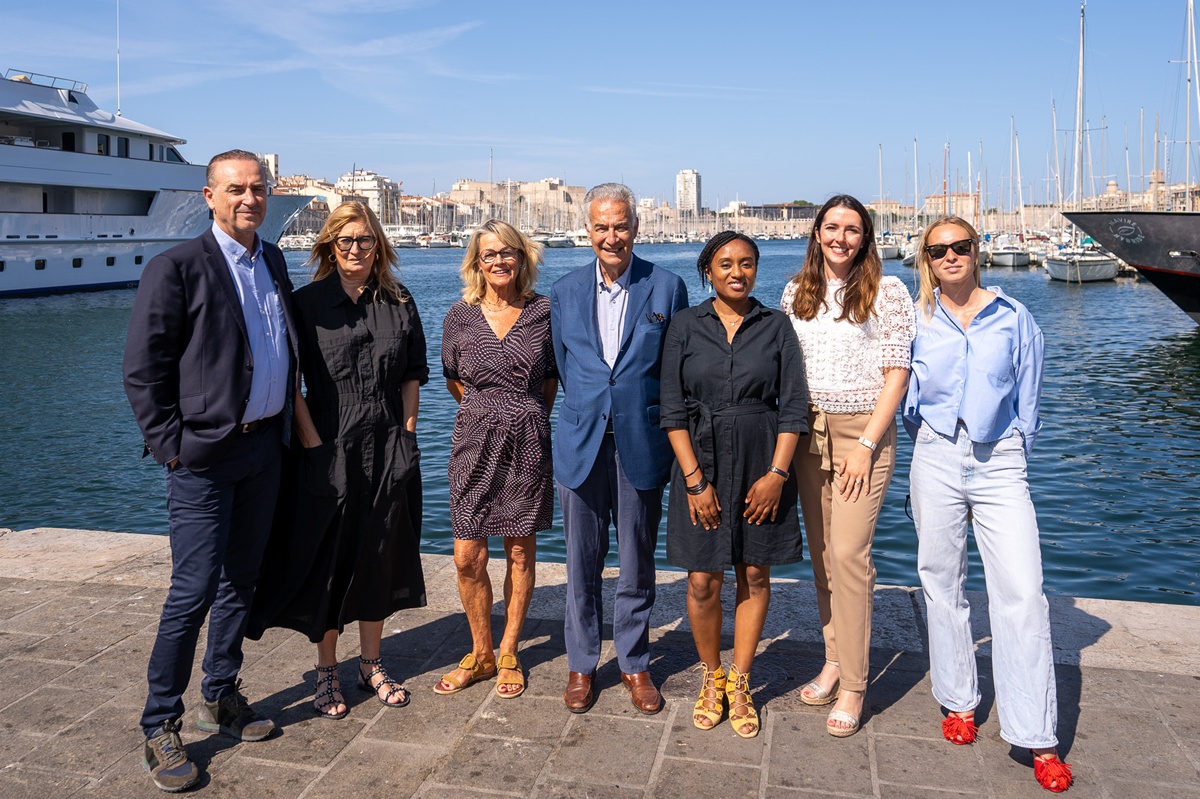
Au Forum des Pionniers, les dirigeants du tourisme confrontent leurs visions sur les transformations qui recomposent leurs métiers. © Jules Despretz / Forum des Pionniers 2025

Top of Travel


A Quiet Revolution, Yet Profound

Two or three years ago, AI in tourism was for many simply a matter of technological watch. Demos were watched, chatbots were tested, and questions were raised about possible uses. Today, the tools are deployed, teams are using them, and early feedback is beginning to outline a reality more nuanced than the initial promises.

AI hasn’t revolutionized everything all at once. It settles quietly, in successive layers, into very different functions. Destination risk monitoring, customer guidance, automation of repetitive tasks, compliance in business travel: in each area, it adds value, but it also moves something. Part of professional judgment, part of decision-making, a certain relationship to the craft.

It is this shift, more than the technology itself, that the Forum des Pionniers 2026 will explore. A 24th edition to understand how AI quietly reshapes four structural dimensions of the sector: risk monitoring, customer guidance, team management, and the steering of business travel.


Risk Monitoring: How to Use AI Effectively to Truly Protect

Tourism is one of the sectors most exposed to external crises. Conflicts, climate events, health alerts, diplomatic tensions: recent months have reminded us of this. And atop this exposure there is now growing regulatory pressure, turning monitoring into a genuine obligation. In the face of this double challenge, AI now promises an unprecedented protective capability: it aggregates weak signals, models scenarios, and raises real-time alerts. Dedicated tools can now evaluate a destination’s risk in minutes, where previously human monitoring took days.

But using it well requires understanding its legal and operational levers, its strengths and its weaknesses. Canceling a program six weeks before departure, covering a fuel-price increase over six months, maintaining a destination when authorities partially discourage it: these trade-offs remain human, often solitary, and largely irreversible. AI sees, sorts, alerts. It is the leader who bears the responsibility. And in this new setup, a question naturally enters boardrooms: at what point can we say we have “listened” to AI, and at what point does the opposite decision become hard to defend?


Guidance: When AI Prepares, Human Judgment Reclaims Its Role

The travel advisor profession has always rested on a skill that’s hard to automate: listening, understanding, and anticipating what the client does not yet know how to express. AI today is deeply restructuring this work. From understanding the client’s need to delivering a relevant offer, models quietly transform every step of the booking process, without the traveler, or sometimes the seller, noticing. The search for content is reinvented, old filtering criteria become obsolete, and teams adopt the tools quickly enough.

But this new organization of work profoundly changes the place of humans in the sales act. When AI prepares a recommendation, it’s not that expertise vanishes; it’s the advisory time that is freed up. The question remains what to do with it. A simple quality check of what the algorithm produced? Or, on the contrary, a revalorization of judgment, centered on what the machine cannot see: hesitation, unspoken desire, an unvoiced family constraint? The answer is neither fixed, nor identical across organizations. But it is what will largely determine the value advisory can command in the years to come.


Outils de veille, de recommandation, de productivité : l'IA s'invite désormais dans le quotidien des dirigeants du tourisme. © iStock


Teams: AI Quietly Reshapes Jobs

AI often takes root in organizations from the top: strategic decision, chosen tool, planned rollout, expected adoption. But it’s at the bottom that things actually change. The advisor who finds their brief shortened. The marketing team discovering that its content can be generated in seconds. The back office whose tasks are automated without having been given time to discuss it with them.

AI does not brutally destroy jobs; it quietly reshapes roles. And it is precisely this silence that can gradually generate resistance, disengagement, and a loss of meaning. For leaders, the question is no longer only about choosing the right tool. It is about whether teams were involved, listened to, and supported before deployment. It is also about what to do with the time freed by automation, and who decides how it is used. Upskilling, reallocation of workload, headcount reduction? Three answers, three different companies, and three managerial cultures that reveal themselves as AI arrives.


Business Travel: Between Technological Promises and On-the-Ground Realities

Business travel is perhaps the arena where AI promises are strongest: massive data, codified processes, travel policies to enforce — everything seems assembled for an ideal application. And yet, 60% of large French companies still do not know how to exploit the volumes of data they generate.

This is the paradox. Between disappointing chatbots and AI audits with ROI now proven, the gap between the technological promise and the field reality is almost never technical. It is organizational. Identifying where AI truly creates value, laying the right foundations now, and not confusing deployment with adoption: these are decisions that do not happen by accident. And those who make them today will avoid paying tomorrow the price of delay.


About ESCAET and Travel-Insight


Impact Consultants: Your Growth Partner for Tourism & Travel


© Impact consultants

Top of Travel


A trajectory built on action

This is not merely another consulting firm that studies, diagnoses and delivers recommendations that are theoretically sound. IMPACT CONSULTANTS only recommends organisations and practical solutions which its partners stand behind, drawing on their hands-on experience as business leaders. Founded by Paul de Rosen and Rodolphe Lenoir, the firm grew with a simple idea: in the Travel sector, a firm’s value is measured by its usefulness and its ability to move projects forward concretely.

A few reference points: +150 assignments completed for players in Travel, €1.9M in revenue in 2025, a team of 15 people and a pool of 25 experts mobilized across more than 8 countries, 3 offices (Paris, Marseille and Monaco). Clients such as Accor, La Compagnie des Alpes, Maeva, Air Austral, Palomino, Digitrips or PortAventura have trusted this approach.


Accelerate your growth today, build your performance for tomorrow

At IMPACT CONSULTANTS, the mission is clear: to be useful by solving growth challenges, now and for the long term.

This translates into an approach that is both strategic, to guide or secure the structuring choices (markets, model, positioning, international growth), operational, to produce measurable results (sales, distribution, RM/pricing, go-to-market), and change-management oriented : as the Travel market evolves continuously, the firm aims to provide its clients with the best information and analyses on practices to navigate this context effectively.


Four levers, one direction: your performance

IMPACT CONSULTANTS operates in four complementary areas, all aimed at a single objective: to accelerate and sustain the growth of its clients.

Growth plan — Markets, positioning, international and external growth: the firm helps its clients secure their structuring choices and cross their next milestones.

Commercial services — Deep commercial effectiveness: organization of sales teams, management of distribution networks, concrete go-to-market plans. No theory: practical mechanics that work.

Offer management — Revenue optimization, reliability and activatability of commercial data, performance-driven governance. Better-informed decisions, margins better preserved.

Transformation and data management — Support for transformation projects (digital, organizational, tools): the firm helps its clients steer change by embedding evolutions in teams and processes.


Tangible results, proven on the ground

International is in the DNA of IMPACT CONSULTANTS. New markets, new channels, new partners: the firm mobilizes a network of experts in more than 8 countries to test hypotheses on the ground, secure local feasibility and accelerate execution.

These interventions translate into concrete results: PortAventura World exceeded its targets in the French market in the first year; Digitrips was supported in its phases of international testing; Futuroscope for the commercial plan backing the €300 million investment; Accor for implementing a new high-performing global organization; or Palomino for the sale of its activities to Jancarthier.

Do you have growth ambitions for 2026 and beyond? Don’t leave your trajectory to chance. Let’s transform your projects into concrete results together. Let’s talk about your next milestone.


Contact IMPACT CONSULTANTS


IMPACT CONSULTANTS : Le partenaire de croissance des acteurs du Tourisme et du Travel
Rodolphe Lenoir

Email: [email protected]

Website: https://www.impactconsultants.eu/

linkedin


Pioneers Forum 2026: Egypt’s Tourism Leaders Confront Uncertainty


Les Pionniers à Marseille, en mai 2025 © Jules DESPRETZ

Top of Travel


From May 30 to June 4, 2026, 130 tourism decision-makers will fly to Egypt, traveling between Cairo and Aswan, with Luxor on the route.

Placed under the theme “Steering the Uncertain,” this new edition promises to be rich in exchanges, in reflections and in discoveries!

An edition focused on meetings, exchanges and professional opportunities

Created in 2000 by Pierre Amalou, the promise of the Forum des Pionniers has not changed for more than two decades: to create the conditions for shared reflection on the topics that stir the sector, in an environment conducive to in-depth discussions and to professional rapprochement. Participants find there as much strategic keys as concrete opportunities for collaboration, in a climate of trust and sharing.


The 2026 edition can rely on the Ministry of Tourism and Antiquities of Egypt, signaling strong government commitment to the event and marking the country’s tourism ambitions. EgyptAir, one of the oldest airlines in the world and a spearhead of Egyptian connectivity, as well as Travel Evasion, a French specialist in the destination, lend their support to this new edition.

This year, renowned companies such as Adyen, Agapè CSR, Allianz Partners, Alma, Atlas, HDB Solutions, Impact Consultants, Orange Travel, PenguinWorld (Quartier Libre, Resaneo, SpeedMedia), Travel Tech Factory and Vox Group have confirmed their presence as sponsors of the 24th edition of the Forum des Pionniers.


Un terrain de réflexion collective pour décrypter les grandes mutations du secteur

The 2026 theme “Steering the Uncertain” invites us to measure what is at stake today in the world of tourism. The traditional reference points of the trade have been upended in just a few years, pushing leaders to invent new methods of steering.

Between geopolitical instability, the emergence of artificial intelligence in all professions, and a coming wave of leadership transitions, the daily life of executives has changed. The Forum aims to provide a space to pose the right questions and to elicit operational answers, drawing on the diversity of experiences gathered in the room.

● How to decide and commit resources when the economic and geopolitical horizon is clouded?

● What role should AI play in travel professions, and how to preserve what gives teams their value?

● How to hand down, tomorrow, a tourism business, and what does that entail to prepare today?

Workshops on collective intelligence, masterclasses and moments of exchange will pace the reflection. These formats are designed to bring forth participants’ voices, rather than place them in the audience’s position.


Retours d'expérience et débats : le Forum des Pionniers favorise l'émergence de réflexions partagées entre dirigeants du tourisme.  © Jules DESPRETZ


At the end, juxtaposed viewpoints, shared concrete cases and, true to the Forum’s DNA, professional connections that extend far beyond the event. The Pioneers will depart with a sharper reading of the ongoing transformations, practical tools to address them, and a network of peers that can be activated throughout the year.


L’Égypte en toile de fond, entre patrimoine universel et nouvelle dynamique touristique

It is in Cairo and along the Nile that the Pioneers community will gather. Egypt, which surpassed 19 million visitors in 2025, is experiencing an unprecedented phase of tourism growth not seen in decades. The country has made tourism a pillar of its economic strategy, closely linking it to the valorization of its heritage.

The recent opening of the Grand Egyptian Museum, the rehabilitation of major pharaonic sites, and the upgrade of hotel offerings compose a picture where historic heritage sits alongside a genuine ambition for renewal. Forum participants will discover this duality through immersion, through visits to major sites and meetings with local players who shape today’s Egyptian tourism.

This destination provides a particularly illuminating setting for leaders who come to question their own steering repertoires. Beyond the framework, Egypt adds additional material for reflection on a sector’s ability to transform without denying what makes it unique.


Airbnb: 3rd Edition of the Heritage and Local Tourism Grand Prix


Airbnb et la Fondation du patrimoine lancent la 3e édition du « Grand Prix du patrimoine et du tourisme local », Despositphotos.com, Photo by Primakov

Dream Yacht


From Monday, June 1, Airbnb and the Heritage Foundation invite the French to vote to support the project of their choice among 12 emblematic rural sites spread across France.

This initiative, with Airbnb as a sponsor, aims to restore the heritage of communes with less than 20,000 inhabitants that hold significant historical, architectural, or cultural interest, in order to turn them into drivers of economic and tourist development:

  • The Pionsat Castle (Puy-de-Dôme)​
  • The Cachat refreshment stand in Evian-les-Bains (Haute-Savoie)
  • The La Mure Market Hall (Isère)

  • The Châtelet of the Château de Vitré (Ille-et-Vilaine)
  • Capu Neru Tower in Coti-Chiavari (South Corsica)
  • The Governor’s Stables and the King’s Bastion in Rocroi (Ardennes)
  • The Lewarde Mining History Center (Nord)
  • The Daubigny Museum in Auvers-sur-Oise (Val-d’Oise)
  • The Medieval Castle of Château-sur-Epte (Eure)
  • The Suspension Bridge of Tonnay-Charente (Charente-Maritime)​
  • Saint-Pierre Church of Collonges-la-Rouge (Corrèze)​​
  • Marsillargues Castle (Hérault)

The three communes that receive the most votes will benefit from substantial financial support to accelerate restoration work: €150,000 for first prize, €125,000 for second, and €100,000 for third.


How to vote?

The general public has a voting window from June 1 to June 28, 2026, at midnight to express their vote and back their favorite site.

To participate, all you need to do is log on to the official website of the Heritage Foundation. The winners will then be announced during July 2026.

Alexandre Giuglaris, General Manager of the Heritage Foundation, states: “Heritage is a cause that brings people together. Through this Grand Prix, the Heritage Foundation invites everyone to support the heritage site that matters most to them. By voting, you contribute concretely to safeguarding the treasures of our rural landscapes.”


A Real Impact for France’s Rural Areas

This competition is part of a broader program: since 2022, 215 projects located in rural zones across France have already benefited from support through this partnership.

Demonstrating the local roots of the initiative, nearly 90% of these projects are in towns with fewer than 3,500 inhabitants, and about 75% of them aim to ultimately welcome the public.

Tourism 2026: Decoding Travelers’ New Consumption Habits


Le Mastercard Economics Institute a publié son rapport annuel « Travel Trends Report 2026 », Despositsphotos.com, Photo by olegda88

Dream Yacht


Following the strong rebound after the pandemic, the sector has entered a maturity phase.

For its 2026 edition, Mastercard’s annual report (based on macroeconomic analysis of real, aggregated and anonymized transaction data) paints a portrait of a global traveler who is resilient yet highly selective.

In the face of persistent inflation and rising fuel costs that drive higher hotel and airline prices, travelers do not give up on traveling. Instead, they weigh options, compare, and optimize their choices.

Our data confirm that the travel economy remains resilient. Behaviors are shifting toward a more thoughtful approach, with Europeans placing greater emphasis on value for money, financial affordability, and authentic experiences“, analyzes Natalia Lechmanova, Chief Economist for Europe at the Mastercard Economics Institute.

Read: AirPlus, Kresus and Mastercard tackle corporate indirect spend


Europe remains the queen of the game (with Paris leading the spotlight)

In this global tourism competition, the Old Continent shines brilliantly. Europe maintains its status as the preferred destination for cultural and gastronomic tourism, occupying six of the ten top spots among the world’s most visited destinations.

Despite disruptions in energy supply chains and airspace disturbances forcing carriers to adjust certain routes, optimism prevails for the summer season.

Projections for air capacities from June to September indicate sustained growth compared with the previous year.

In this context, Paris is expected to register the strongest global growth.

Behind the French capital, Amsterdam and Brussels show similar momentum, while Barcelona, Madrid and Frankfurt also benefit from a notable rise in international arrivals.


Spending disparities: each nationality has its priorities

One of the report’s insights concerns analyzing tourist behavior once on the ground. In France, expenditures vary considerably based on visitors’ origins.

Swiss travelers favor retail, notably high-end shopping, making Paris their preferred destination. The British and the Dutch, meanwhile, clearly dedicate their budgets to gastronomy, emphasizing dining and haute cuisine.

The Germans adopt a more pragmatic approach, allocate a significant portion of their spending to everyday grocery purchases.

In Spain, the situation is radically different: nightlife occupies a prominent place. Consequently, British tourists spend on average 32% more than other nationalities in clubs and nightlife venues.


The eco-responsible boom: train travel (luxury) on the right rails

The second major trend highlighted in the 2026 edition is the dramatic rise in travel spending related to rail journeys between 2022 and 2025.

Supported by Europe’s strategy for sustainable mobility, which aims to double high-speed rail traffic by 2030, rail travel is no longer just a zero-emission transport option: it is becoming a true immersive experience.

Some nationalities stand out in this dynamic. Spanish travelers now allocate 2.7% of their travel budget to rail (versus 1.8% in 2022), followed closely by the Dutch (2.2%), as well as Belgians and the British (2.1%).

Beyond the conventional network, it is the luxury rail travel segment that is experiencing exceptional growth. Today it accounts for nearly 20% of global rail tourism expenditures. This premium market, particularly buoyant, especially appeals to Italian travelers, who alone dedicate half (50%) of their rail budget to these exceptional rail cruises.

Green Is Our Gold: Sustainability Becomes a Major Tourism Draw in Australia [ABO]


Tourism Australia a lancé en mars 2026 son initiative "Green is Our Gold" - DepositPhotos.com, bennymarty

Dream Yacht


When 77% of international travelers say that sustainability is important in their daily lives, and 70% that it influences their travel choices, a long-haul destination can no longer merely promise spectacular scenery.

Tourism Australia has understood this.

Launched on March 19, 2026, at the Destination Australia conference in Melbourne (Narrm) in front of 800 professionals, the initiative “Green is Our Gold” now structures the country’s sustainable commitment.

At the Australian Tourism Exchange 2026 in Adelaide, the program was placed at the heart of professional conversations, including those aimed at European markets.


Five Pillars, a Toolbox, 360,000 Businesses

Green is Our Gold brings together the Australian tourism industry around a shared promise“, explains a spokesperson from Tourism Australia’s Sustainability and Communications team met in Adelaide.

According to her, operators who sign the Green and Gold Promise access a practical toolkit containing operational sustainability tools and on the five pillars to embody.

These five pillars, formalized by Tourism Australia, have become the common grammar of Australian responsible tourism:

Celebrate Community : support local players and their businesses,

Embrace Culture : share heritage, including the stories of the First Nations,

Preserve Place : protect natural and iconic environments,

Respect Wildlife : ensure the health of the wildlife unique,

Take Care : encourage responsible travel, in the manner of locals.

More than 360,000 Australian tourism businesses are targeted by this rollout.

The momentum was confirmed at ATE26: more than 1,000 professionals signed the Green and Gold Promise during the fair, marking their formal commitment to the five principles.

The official engagement platform is accessible at greenisourgold.australia.com, where operators and organizations can sign the charter and download the practical kit.

The program is designed to last. The spokesperson describes “Green is Our Gold” as a lasting platform, designed to endure over time.

Phase 1, extending until 2027, aims to mobilize the industry. Phase 2 includes gradual integration into the Aussie Specialist program, which will directly affect French agencies trained by Tourism Australia.


Robin Mack: “Green is Our Gold is a Call to the Industry”


Manifeste "The Green and Gold Promise" - Illustration Tourism Australia

In an interview with TourMaG in Adelaide, Robin Mack, Managing Director of Tourism Australia, defends a strong industry conviction. “Green is Our Gold is a call to the industry to go even further,” he asserts.

Australia has a solid history of sustainable growth in tourism, and many companies have already integrated sustainability, delivering world-class experiences that respect our natural environments, cultures and communities.

For Robin Mack, two logics converge. First, that of the First Nations: “Our First Nations culture and sustainability are deeply linked.” Then that of geography: “We cannot escape our location. It’s a long flight to get here. When travelers are on site, we must show them how well we practice sustainability on the ground.

The initiative fits within the national THRIVE 2030 framework and complements the National Sustainability Framework for the Visitor Economy launched in 2023.


Between Industry Commitment and Carbon Accounting: a Balancing Equation

The initiative is not universally welcomed. At ATE26, several professionals highlight the paradox of a country that heavy invests in mining while access remains reserved for long-haul travel.

The critique has its legitimacy. But industrial awareness, on the scale of a continent, nonetheless marks progress.

The whole challenge now lies in transmission. That the program reaches regional operators and small firms, that agents pass the baton to their clients, and that these clients in turn accept concrete gestures, such as choosing a reusable water bottle over a plastic bottle, in a country where tap water is drinkable everywhere.

Transmission, in short, as the implicit fifth pillar of the program.


Sébastien Cros

Government Launches Campaign to Boost Low-Carbon Tourism


Le Gouvernement relance la campagne « Marquons les esprits, pas la planète », despositphotos.com

Dream Yacht


Le ministre Serge Papin engage une action de sensibilisation face à l’impact environnemental des déplacements liés aux vacances et aux loisirs des Français.

Alors que le transport représente 69 % de l’empreinte carbone globale du tourisme en France, la majorité de ces émissions découle directement du trajet effectué entre le domicile et le lieu de séjour.

En France, la voiture individuelle reste le mode de transport prédominant pour 79 % des départs en vacances et génère 53 % des émissions de gaz à effet de serre du transport touristique.

À l’inverse, si le transport aérien ne représente que 6 % de l’ensemble des voyages enregistrés, son impact écologique s’avère disproportionné, puisqu’il totalise 44 % des émissions de la filière.

A lire : Gaz à effet de serre : le tourisme doit (vite) agir ou mourir ?

Le ministro du Tourisme vient de lancer une campagne qui doit faire évoluer les comportements individuels en valorisant le voyage en train comme une composante à part entière de l’expérience touristique, tout en incitant à l’usage du vélo, de la marche ou de l’autopartage une fois arrivés à destination.


“Marquons les esprits, pas la planète” : une campagne pour transformer l’imaginaire du voyage

Pour maximiser l’impact de son message auprès du grand public, la DGE s’appuie sur un partenariat avec sept structures spécialisées dans les mobilités alternatives, l’hébergement et les loisirs.

La campagne est ainsi relayée par le réseau coopératif d’autopartage Citiz, la fédération d’hébergement Gîtes de France, ainsi que Lokki Rent, une plateforme dédiée à la location d’équipements sportifs.

Le secteur de l’aventure et des médias thématiques est également mobilisé à travers l’organisateur de courses de plein air La Mad Jacques et le média Mollow, spécialisé dans la décarbonation du voyage.

A lire : Évolution de la pollution des transports : faut-il s’alarmer ?

Enfin, l’application de guidage pour le vélo et la randonnée La Trace, ainsi que le site d’information Voyagerentrain.fr, complètent ce dispositif pour toucher une large communauté de voyageurs prêts à transformer leurs habitudes de déplacement.

La diffusion des supports de communication sera assurée pendant trois mois.

Ce réseau de diffusion est renforcé par le soutien d’organismes institutionnels et professionnels majeurs, parmi lesquels Atout France, l’ADEME, ADN Tourisme, l’association Acteurs du tourisme durable, le Réseau des Grands Sites de France, la Fédération nationale des Parcs naturels régionaux, ainsi que l’Autorité de régulation professionnelle de la publicité.


Le déploiement de la campagne tout au long de la saison estivale entend ainsi proposer des alternatives concrètes pour concilier découverte des territoires et préservation des écosystèmes.

Has Dubai Tourism Recovered After Drone Strikes?

Life in Dubai seems to have returned to its normal course, at least outwardly. While air traffic has resumed and restaurants are once again fully booked, tourists remain hesitant to visit, particularly because the emirate is still threatened by missiles and drones coming from the Gulf.

Even though most attacks have been intercepted before reaching the United Arab Emirates, fear is still present on the ground. This is why hotels, airlines and hospitality and food-service players are redoubling efforts to entice visitors to return.

Tourism stakeholders are trying to reassure visitors

CNN Travel went to meet several Dubai residents to better gauge the situation on the ground. The outlet in particular spoke with Naim Maadad, founder and CEO of Gates Hospitality, who explained that information relayed by international media did not necessarily reflect the reality on the ground. “Airports, hotels, restaurants and tourist attractions remain fully operational”, he said at first. He then stated that the main challenge was psychological.

“Travel advisories, insurance limitations and international news inevitably influence consumer behavior, even if the on-the-ground reality is very different. The sector must therefore redouble its efforts to communicate reassuring, transparent and trustworthy messages, without giving the impression of downplaying regional sensitivities,” he said. Victor Abou-Ghanem, CEO of STORY Hospitality, also stressed that travel warnings were hindering visitors’ return.

“For a family planning a vacation, a government advisory, an insurance restriction or the fear of flight disruptions can be enough to postpone a trip, even if the destination operates normally”, he recounted before adding that money was also a factor, with oil prices impacting air tickets. Economists warn that repercussions could be felt long after a durable ceasefire. They estimate that Dubai’s hotel occupancy could fall to as little as 10% in the second quarter, down from 80% before the conflict.

Measures put in place to revive tourism

In response to this decline in tourism, Dubai authorities acted by launching an ambitious set of support measures designed to speed up the rebound. Among them were the suspension of the daily hotel tax applied to upscale establishments, the removal of the 7% municipal tax on hotel and restaurant invoices, the deferral of hospitality-related sales fees, and the waiving of fees for the extension and cancellation of event permits.

The authorities also allowed hotels, serviced apartments and holiday homes to defer payment of taxes on lodging and dining for three months, easing pressure on operators as visitor numbers began to rise again. Businesses responded by offering promotions and incentives rarely seen since Dubai’s post-pandemic tourism boom.

A fashion designer based in Dubai for nearly 20 years, who asked to remain anonymous, said the scale of discounts currently offered across the emirate is unprecedented since the Covid-19 pandemic began, especially in the tourist district of J1 Beach. “Many of these places, once crowded, are now offering exceptional discounts. The city keeps functioning, people keep going out, but businesses must double their efforts for every customer,” he stated.

Tourism Careers in the AI Era: Technological Change or the New Hospitality? [ABO]


L’IA ne transforme pas seulement les métiers du tourisme existants, elle fait apparaître de nouvelles fonctions - DepositPhotos.com, BiancoBlue

Dream Yacht


Artificial intelligence is no longer a speculative topic in French tourism.

In under three years, it has established itself within travel agencies, tourism offices, hotels, booking platforms, airlines, and even the professions of cultural mediation.

Behind the trend, a tangible reality is taking shape: AI already reshapes professional practices, the skills expected, and the relationship between travelers and destinations.

The phenomenon is all the more significant because tourism is a sector characterized by abundant human interactions, data, and personalization. AI therefore acts simultaneously on three dimensions: automating repetitive tasks, augmenting human capacities, and creating new services.

Moreover, according to a study by OPCO Mobilités dedicated to “Artificial Intelligence in Travel Jobs in 2025,” usages are spreading rapidly across sector companies, even though maturity levels remain highly uneven.

The study highlights that AI is now seen less as a peripheral innovation and more as a structural transformation of travel professions.


A transformation comparable to the arrival of the Internet

For many professionals, AI represents a disruption on a scale comparable to the web’s emergence in the 2000s or the smartphone revolution of the 2010s.

In the tourism trades, the earliest uses developed around chatbots, recommendation engines, or hotel revenue management.

Today, generative AI enables the production of content, the construction of personalized itineraries, the automation of a portion of customer relations, and assistance to staff in their daily tasks.

Also read: Artificial Intelligence: How to Use It Daily in Travel Agencies?

This evolution touches nearly the entire travel chain: inspiration and search for stays, booking, customer relations, hotel operations, flow management, territorial marketing, heritage mediation, data analysis, HR management and training.

The challenge is no longer purely technological. It becomes organizational, human, and strategic.


The jobs most affected

TRAVEL AGENTS: from seller to “augmented travel designer”

The role of a travel agent is among the most exposed to generative AI. Long focused on booking and information access, it is shifting toward advisory duties, expertise, and emotional support. Travelers already use ChatGPT, Gemini, or Claude to prepare itineraries, compare destinations or generate customized programs.

The added value of the professional thus lies not in access to raw information, but in the reliability of recommendations, the safety of itineraries, deep destination knowledge, the ability to create bespoke experiences, and human guidance.

AI thus becomes an assistance tool. It helps draft commercial proposals, create complex itineraries, produce quotes, respond quickly to requests, and personalize offers.

French platforms such as Galdeo are developing automated quotation and travel notebook solutions for bespoke travel professionals. The profession gradually shifts toward the role of an “augmented travel designer,” where humans retain roles of arbitration, creativity, and relationship.

HOTEL INDUSTRY: automate without dehumanizing

Hospitality is another major testing ground. AI is used for dynamic pricing, demand forecasting, energy optimization, automated check-ins, conversational assistants, review management, satisfaction analysis, and predictive maintenance.

New API-first PMS like those developed by Mews or Cloudbeds facilitate the integration of automation and predictive analytics.

But hospitality remains a sector where human warmth remains central. Several groups now emphasize an “AI + human” logic rather than a wholesale replacement of staff.

Industry leaders remind that automation should free time to strengthen high-value interactions: front desk, concierge, guest experiences, and handling delicate situations.

In other words, fewer repetitive tasks, more attention paid to the guest.

TOURISM OFFICES AND DESTINATIONS: toward “conversational destinations”

Destination management organizations (DMOs) are entering a new phase as well. Generative AI profoundly reshapes content production, multilingual translation, social media dissemination, visitor relations, data qualification, flow and behavior analysis.

Tourism offices are already piloting conversational assistants capable of replying to visitors 24/7 in several languages.

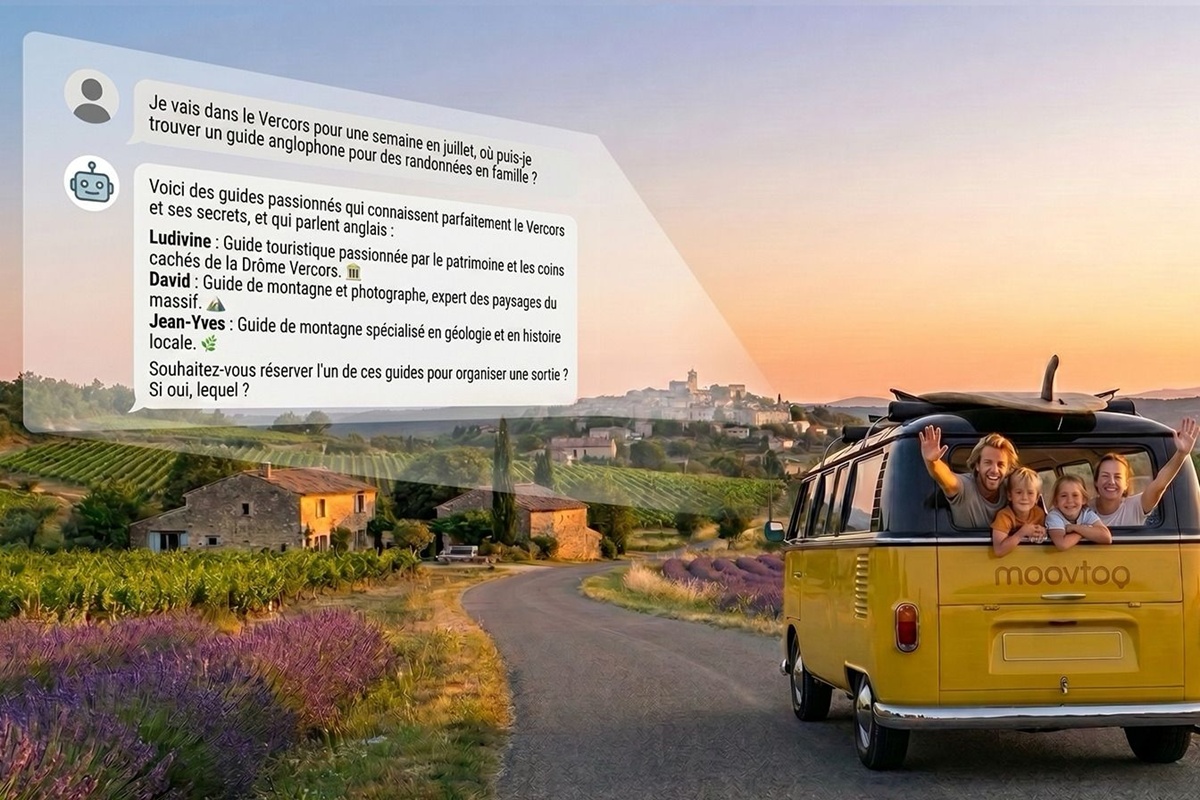
The emergence of “conversational destinations” is likely to be one of the major shifts to come: tomorrow, visitors will converse directly with territorial AIs able to recommend experiences, manage mobility, book activities, or tailor suggestions in real time.

Actors such as Ask Mona or Moovtoo are already working on conversational experiences applied to heritage, museums, and cultural territories. This evolution changes the roles of communications officers, community managers, and tourism promotion managers.

The skills expected evolve toward editorial leadership, supervision of AI content, conversational strategy, data management, and the analysis of user behavior.


The new roles that are emerging

AI is not only transforming existing professions: it is creating new roles.

Among emerging profiles in tourism:

AI Content Manager: a professional responsible for supervising AI-produced content (texts, images, videos, translation, editorial coherence, search engine optimization).

Tourism Prompt Designer: a specialist in crafting AI prompts tailored to tourism uses (creating itineraries, client responses, mediation scenarios, marketing production).

Head of AI & Customer Experience: a hybrid role spanning marketing, customer relations, and innovation, tasked with steering conversational tools and personalisation.

Territorial Data Analyst: a profile increasingly sought to analyze attendance, mobilities, visitor behaviors, tourism consumption, e-reputation, and campaign performance.

Tourism AI Trainer: the surge in needs for cultural acclimation is creating a substantial training market. Many organizations now offer modules dedicated to AI applied to travel, hospitality, or destinations.


L’IA agentique : prochaine révolution ?


Vers une nouvelle hospitalité ?

The real challenge of artificial intelligence in tourism is likely not solely technological, but profoundly cultural.

AI pushes the sector to redefine what makes its human value: the attention given to visitors, the personalization of experiences, the quality of guidance, mediation, emotion, and the relationship.

Professionals who extract the most benefit from these tools will probably not be those who attempt to replace humans, but those able to use technology to strengthen the quality of hospitality and free up time for high-value interactions.

Tourism thus enters a paradoxical phase: the more services become automated, the more human authenticity becomes precious.

AI does not herald the disappearance of tourism jobs; it accelerates their transformation and forces destinations, businesses, and schools to rethink the training of professionals.

The question becomes strategic: how can we master technologies while preserving the very essence of welcome and human connection?


Brice Duthion - Photo : BD

Brice Duthion is the president and founder of the agency “Les nouveaux voyages extraordinaires” (LNVE), specializing in consultancy, conferences, and communication.

He engages with numerous public and private actors in his areas of expertise: tourism and hospitality, culture and heritage, territories and public policy.

[email protected]

ADN Tourism Sets the Record Straight on the Consequences of Piracy


L’ensemble des données a été récupéré par ADN Tourisme, alors que Vacansoleil, du groupe Maeva, a été piraté à son tour - Depositphotos

Dream Yacht


One week after the hack it experienced, ADN Tourisme can now gauge the scale of the damage and implement a fix to the information circulated by the cyber attackers.

The federation of institutional stakeholders indicates that the exfiltrated data would concern not 50,702 individuals but 2,869 users.

An important difference also concerns the amount of data stolen, which would not be 100 GB, but actually 91 GB, covering around 50,000 contractual documents.

Far from being trivial, the damages therefore appear considerably less significant than what the hackers claimed.


ADN Tourisme retrieved the exfiltrated data

Thus, it was not ADN Tourisme’s platform that was compromised, but the association’s legal site. And contrary to what had been claimed, not all of the data had been deleted, but was retrieved by the entity.

Moreover, no identifiers leaked since this involved a Single Sign-On (SSO) connection.

ADN Tourisme wishes to emphasize that it has never contracted with companies such as SNCF, Leroy Merlin, BPCE or ALPA GROUP.

To read: Three hacks in three days: why the tourism sector will have to prove its security

The compromise of the platform allowed the attackers to move into other platforms of the same service provider and thus to siphon contracts with these companies.

The tourism sector has endured a dark May, with a series of hacks that shows no sign of stopping.