Yunnan’s Giant Elevator That Helps Schoolchildren Also Draws Tourists

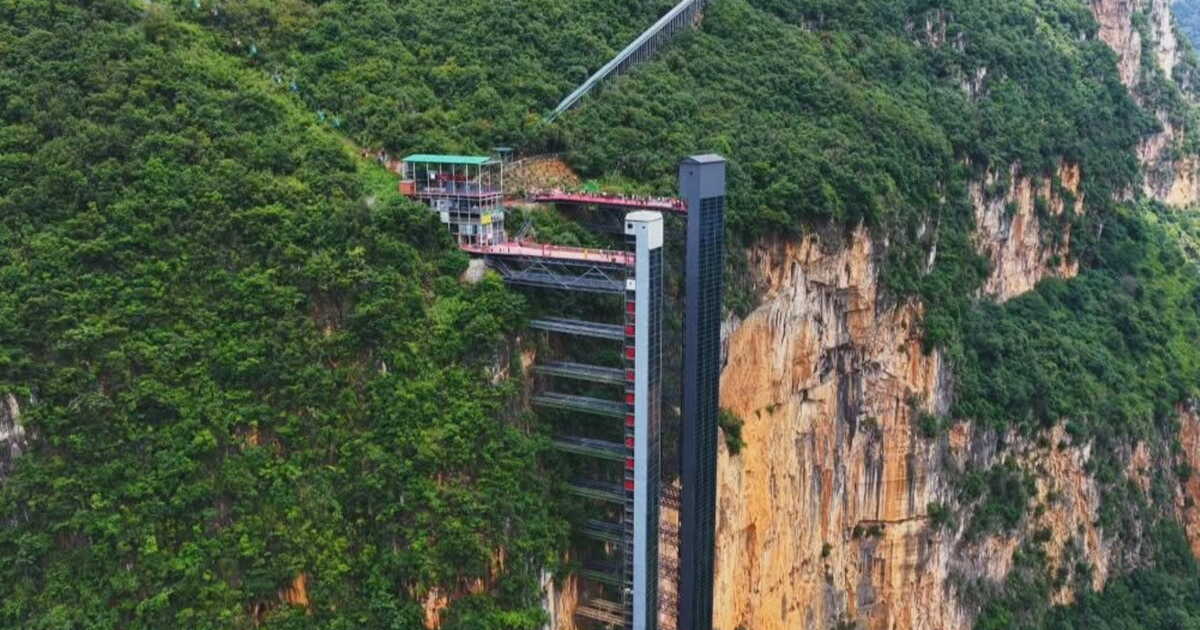
No longer needing to rise at dawn. The lives of about twenty Chinese children have become much simpler thanks to a simple elevator. Until now, these inhabitants of Yunnan province in the southwest of the country had to plan for a three-hour trek to reach their school, perched at the top of the Nizhuhe Grand Canyon. With the installation of an elevator called Fuyao and built by the Chinese company Ningbo Hongda Elevator, the journey now takes only half an hour, according to Interesting Engineering.

This glass cabin, which can accommodate up to 81 people at a time, makes it possible to ascend the roughly 288 meters separating the village of Nizhuhe from the other communities in the city of Xuanwei, at the canyon’s edge, in just 50 seconds. To reach Guanzhai School, at an altitude of 1,650 meters, residents must, after exiting the elevator, ride a cable car for 30 minutes.

Tourists also greatly benefit from the new elevator

In 2022, already, a steel elevator named Qingyun had been erected along the canyon’s rock to facilitate journeys. Building a second one was not easy, particularly due to the logistical constraints of installing an elevator in the middle of a canyon that is heavily affected by humidity and fog. But it is now fully functional and complementary to the previous one.

The opening of Fuyao was not only designed to accommodate the handful of exhausted schoolchildren who faced six hours of walking each day to study. It is also a way to attract tourists. Since its inauguration, authorities estimate welcoming up to 15,000 visitors per day.

In China, altitude is no joke

The Chinese are no strangers to elevator feats. In Zhangjiajie National Forest Park sits the Bailong Elevator. It is regarded as the tallest outdoor elevator in the world, capable of climbing up to 326 meters amid the mountains that served as the backdrop for the film Avatar.

To draw in tourists, Chinese authorities are also rolling out even more spectacular attractions: glass bridges and suspended ladders have proliferated in recent years across the country. A way to scare oneself and make a splash on social media… to entice others to visit.


Why Are Tourists Flocking to China?

About 35 million foreign tourists entered China in 2025. The figures from the previous year were already higher than those recorded before the pandemic, but those for 2026 look even more promising. In the first half of the year, 18 million visitors from visa-free countries visited the Middle Kingdom, pushing foreign arrivals up by 20%. For Claire Thum, a young Singaporean who chose to travel to this territory after seeing enticing videos on social media, “the first step was to set foot in Shanghai”.

Cities Where Pickpockets Target Tourists Most

Each year, the world’s most famous tourist sites attract millions of visitors from around the globe. Yet such heavy footfall also benefits pickpockets, who take advantage of crowded spaces to steal phones, wallets, and other valuables. A study conducted by the comparison site Compare the Market identified destinations where tourists are most exposed to pickpocketing and scams. Unsurprisingly, European cities feature prominently in this ranking.

European cities dominate the ranking by a wide margin

Paris thus lands at the top of Compare the Market’s study. The French capital, which welcomes millions of tourists each year, is judged to be the destination with the highest risk of suffering a pickpocket. The most frequented areas, notably around the Eiffel Tower and Montmartre, are among the main trouble spots. In these places where crowds are very large, pickpockets exploit the bustle and moments of inattention to operate discreetly. As a result, Paris scores 60.61 out of 100 on the overall “Fear of being assaulted or robbed” index, more than 20 points ahead of the second-ranked city.

Rome ranks fourth. The major tourist sites of the Italian capital, such as Roma Termini station, the Trevi Fountain, the Colosseum, and the Spanish Steps, also draw very large crowds, creating fertile ground for opportunistic thefts.

London occupies sixth place. Pickpockets frequently employ distraction techniques, targeting shopping streets and crowded spaces, where they sometimes operate in groups to divert the attention of their victims.

Athens sits in seventh place. The Acropolis, which welcomes a large number of visitors, is regularly cited among the zones where vigilance is required. On Facebook, a user even notes: “Pickpockets are everywhere, not just in Athens. Just be careful…” Another testimony: “I know someone who recently returned from Athens and had their wallet stolen. You simply have to stay very vigilant.”

Sofia ranks eighth. In addition to pickpocketing, travelers are urged to beware of overpriced taxis and currency-exchange scams, notably around the central train station, the central bus station, and the Lions Bridge.

Barcelona appears in ninth position. The Ramblas, Plaça de Catalunya, the Gothic Quarter, and Montcada Street are among the areas most closely watched. According to the Barcelona Police, 48.1% of the city’s offenses recorded in 2023 were pickpocketing. The Barcelona Yellow guide also urges caution: “Tourists visiting Barcelona are advised to be careful if they wear expensive watches near luxury hotels, shopping districts, and at the exits of nightclubs in the more upscale neighborhoods.” It adds: “There has been an increase in criminal gangs targeting high-end personal accessories in recent years. If you travel by car, do not leave valuables in plain sight during highway stops or when parking in underground garages.”

Amsterdam completes the top 10. The Dam Square, the central railway station, the Rijksmuseum, and certain areas of the Red Light District are considered zones where visitors should be extra vigilant.

The United States places three cities in the global top 10

Aside from Europe, the United States is the country most represented in the ranking, with three cities among the ten.

Las Vegas ranks second in the list. Known for its casinos and nonstop entertainment, it scores 47.69 out of 100 for traveler concerns about being assaulted or robbed. While the pickpocket score is relatively low, concerns about scams are the highest, at 8.4 out of 10.

New York completes the podium. The American metropolis records a score of 49.68 out of 100 for fears of assault and theft. International tourists are also particularly worried about scams and the disappearance of personal belongings.

Fifth in the ranking, Los Angeles records 15.2 out of 100 on the index dedicated to pickpocketing and scams. Despite its prestigious image, some highly frequented areas, such as Hollywood Boulevard and the nightlife districts, remain conducive to petty crime.

Ranking of the destinations most affected by pickpocketing and scams

  1. Paris, France
  2. Las Vegas, United States
  3. New York, United States
  4. Rome, Italy
  5. Los Angeles, United States
  6. London, United Kingdom
  7. Athens, Greece
  8. Sofia, Bulgaria
  9. Barcelona, Spain
  10. Amsterdam, Netherlands
  11. Lima, Peru
  12. Milan, Italy
  13. Budapest, Hungary
  14. Istanbul, Turkey
  15. Orlando, United States
  16. Nairobi, Kenya
  17. Dubai, United Arab Emirates
  18. Berlin, Germany
  19. Ho Chi Minh City, Vietnam
  20. Kuala Lumpur, Malaysia
  21. Prague, Czech Republic
  22. Beijing, China
  23. Bangkok, Thailand
  24. Vienna, Austria
  25. Warsaw, Poland
  26. Miami, United States
  27. Tokyo, Japan
  28. Antalya, Turkey
  29. Singapore
  30. Hong Kong
  31. Macao, China
  32. Shanghai, China
  33. Taipei, Taiwan
  34. Mecca, Saudi Arabia

Source: Compare the Market

Honesty Boxes Delight Locals and Tourists Across Scotland

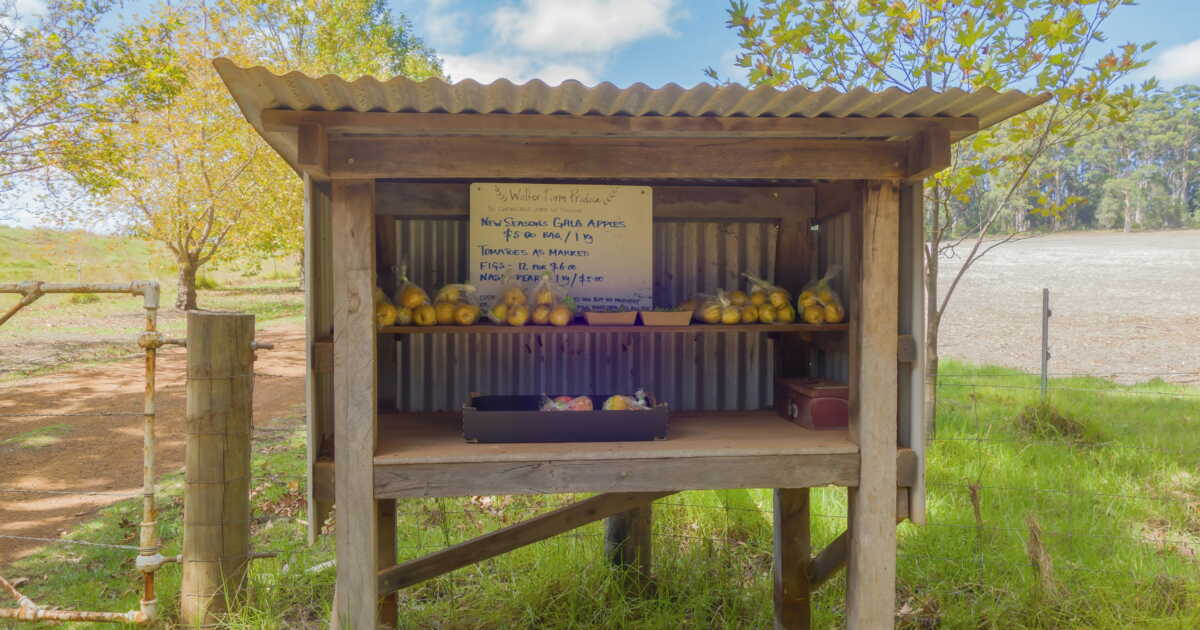
It’s a pleasure one never tires of. At the end of a long walk or around a street corner: stumbling upon a box containing eggs, bread, pastries, or even small works of art. In Scotland, the honesty boxes (literally: boxes of honesty) make exactly that possible, and have done so for several decades, reports The Telegraph. The tradition is so deeply rooted in the country that there is now a website listing the honesty boxes.

There are reportedly more than 340. Anyone who decides to install one—whether it is painted pink, red, decorated with a few drawings, or left in its natural state—can register on this site so that locals and tourists alike can come help themselves to good things. But all of this is not free! You will never see a seller beside the honesty boxes, but the principle of these boxes is precisely to rely on the honesty of passersby to leave a small coin in exchange for food or an item.

Honesty Boxes Remain Popular Despite the Move to Digital Payments

This tradition enables people—mostly women—who have never had the chance to turn cooking or art into a profession to rekindle their passion. In Lerwick, the capital of the Shetland Islands, the Telegraph journalist met Lynn Johnson. Since 2008, she bakes daily to fill the garden shed she has set up as a box, which has become enormously successful. But there are no professional premises in sight, only two domestic ovens in her own home, and a steady use of stand mixers. Lynn Johnson’s growing fame eventually allowed her to open a small tea room and a shop, in addition to the shed that houses her treats.

But are customers really that honest? According to the box owners interviewed by the Telegraph, while tourists sometimes tend to steal goods, locals always leave something in return. And the era of credit cards and all-digital payments does not seem to be a real obstacle to the survival of these boxes. While owners typically request cash payments, more and more signs indicate the number or mobile banking profile to transfer payment for the goods.

The Concept of Honesty Boxes Is Spreading Worldwide

The idea of honesty boxes isn’t confined to Scotland. If you’ve hiked on well-trodden trails in France, you may have come across such a space. They still remain relatively uncommon here, but they are becoming more widespread elsewhere in the world. Some have emerged in the United States, Australia, Japan, and New Zealand.

Holidays in Gironde: Tourism Professionals Reassure Tourists Despite Fires

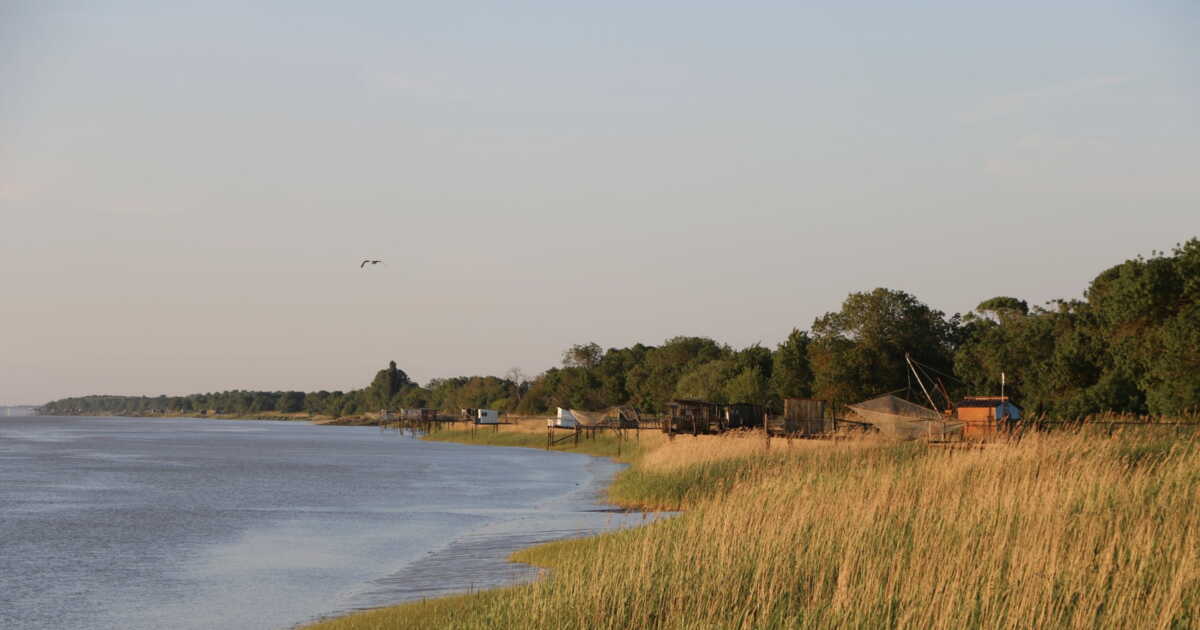
“The Gironde is big, very big” : as mass evacuations and cancellations of bookings due to the fires unfold, tourism professionals hope to salvage the rest of the season in this vast department, where the forest does not burn everywhere.

“I urge tourists not to come, not to join the Gironde”, said on Sunday the department’s prefect Sophie Brocas, also inviting “the tourists present to consider another destination”.

Major losses for tourism

About 220,000 people, including holidaymakers, have already been evacuated in recent days from several Gironde towns, especially popular seaside resorts at this time of year such as Lège-Cac-Ferret. “It’s a crushing blow to a large part of the department that is mainly touristic; tourism is completely halted, it’s the end of the season”, says Patrick Seguin, president of the Gironde Chamber of Commerce and Industry (CCI).

Nevertheless, “The Gironde is big, very big”, reminds AFP the president of the Union of Trades and Industries of the Hotel Industry (UMIH) Gironde, Franck Chaumès. “This comes from a good intention”, the prefect made this announcement “to give road routes easily accessible to firefighters and authorities” but “we hope it will be rectified” to “try to save the month of August”, he adds.

Claire Bigat, who lives in Lille and had planned two weeks of vacation in Andernos, between Biscarrosse and Lège-Cap-Ferret, “given the circumstances”, “does not want to go”. “Access seems uncertain, we have seen the authorities’ instructions and we do not want to clog the roads. Besides, our son is asthmatic, we cannot be in the smoke, and if it is to spend a vacation of desolation because everything has burned, it’s not worth it”, she tells AFP.

At Bordeaux train station, Francine Chauvirey, 76, who was spending holidays at her son’s, anticipated her return to Paris. “I had trouble breathing because of the smoke, so we changed my train ticket”, she confides to the AFP, her face protected by an FFP2 mask. Vila, a 32-year-old painter, likewise shortened his trip to Bordeaux to return home to Finland, “because of the fires”.

Tourism accounts for 7% of the department’s GDP, more than 40,000 jobs and 3.2 billion euros in direct spillovers, according to the department’s site.

“On the Cap Ferret peninsula, there are 100% losses since everyone has been evacuated”, according to Franck Chaumès. This concerns “around a hundred establishments: hotels, bars, restaurants, nightclubs” and “two campsites out of ten have burned”.

In the 22 other evacuated municipalities, commerce “is at a standstill” as well. “And there are also the Landes, he adds. Nearly 40,000 holidaymakers, staying in 45 campsites in Gironde and Landes, have been evacuated so far, said Sunday to AFP Nicolas Dayot, president of the National Federation of Outdoor Hospitality (FNHPA).

Cancellations far beyond the areas affected by the fires

The evacuated zones are not the only ones seeing departures. “We have cancellations at the other end of Gironde: in Médoc, Libournais which is 70 km from Cap Ferret… It’s a catastrophe”, laments Franck Chaumès of UMIH Gironde.

A view shared by the co-chair of the Saint-Émilion tourism office, Jean-Daniel Debart, who says, “of course we must clear the roads but we must adopt more nuanced statements because not all of Gironde is affected”. “In Saint-Émilion, we are more than 80 km from the fires, this is not the Arcachon Basin”, he tells AFP. He laments that there are already “dozens of cancellations” including for August and beyond, with, for example, an “cancellation of a group that was due to come in September”, and dozens of refund requests.

One can “do oenotourism in the vineyards”, acknowledges Patrick Seguin of the CCI, “but given what French and foreign tourists see in the media, it does not tempt them to come”.

The Heart of America Attracts Tourists

The United States, a vast North American nation formed by 50 states, today counts more than 348 million inhabitants and has Washington, D.C. as its capital. Each year, millions of travelers from around the world embark on legendary road trips here, whether in New York to admire the Statue of Liberty, in San Francisco to marvel at the famed Golden Gate Bridge, or in New Orleans to soak up its festive atmosphere.

Yet the country also hides quieter destinations where unforgettable experiences await, such as Nashville, Eureka Springs, or Portland. According to CNN Travel experts, the heartland state of the United States also deserves a substantial detour. To reach it, you must cover long stretches by car along immense highways that run to the horizon across vast arable lands. Likewise, small towns, akin to simple stopovers, surface beneath a boundless sky.

The geographic center of the United States lies in northern Kansas

Determining the center of the United States has sparked disagreements for many years. “There is no universally accepted definition of the geographic center, nor any method entirely satisfactory for determining it,” stated the U.S. Department of the Interior in a 1964 report. In an attempt to resolve this issue, experts from the U.S. Coast Survey and Geodetic Service employed a precise scientific approach.

They cut a cardboard map of the country and balanced it on the point of a pin to identify its center of gravity. Subsequently, the position was shifted slightly by a few hundred meters to avoid landing on private property. This experiment revealed that the central point lies in the northern part of Kansas, near the town of Lebanon. Following this discovery, the site experienced an unexpected tourist boom.

If you wish to explore the center of the United States, you’ll take I-70 into the rural Kansas road network, winding through farming country and past the river town of Manhattan, then Clay Center, which marks the halfway point between Los Angeles and New York.

Along your journey, you’ll glimpse grain silos, water towers, red-brick barns, Texaco stations that have closed their doors, and endless fields. In Cawker, about 25 minutes from the center, a roadside kiosk on Route 24 houses a quirky spectacle that has made this tiny town famous: the world’s largest ball of twine.

What can one find at the center of the United States?

As CNN Travel notes, the geographic center near Lebanon sits in a very quiet rural area. There you’ll discover a small single-room white chapel, a pine grove, covered picnic tables, and a spring-mounted playground for children. A few signs also indicate the significance of the place.

Additionally, a marker lists the coordinates (39° 50′ N, 93° 35′ W) of what is today called the “historic center,” and a mast flies the flags of Kansas and the United States. On the opposite side of the road, beyond a barbed-wire fence, three large wooden crosses stand sentinel. The interior of this tiny chapel exudes an unexpected serenity, flooded with a soft light filtered through sheer drapes, making it a place conducive to contemplating the world around us.

This is a plaque that indicates the exact coordinates of the geographic center of the United States.

Miyazaki-Inspired House in China Attracted Tourists, Authorities Demolished It

Pendant des années, elle a intrigué les voyageurs de passage dans la province chinoise du Guizhou. Avec ses étages empilés de manière improbable, ses structures en bois et ses échafaudages de bambou, cette habitation hors normes évoquait pour beaucoup les décors fantastiques des films du studio Ghibli, fondé par Hayao Miyazaki et Isao Takahata. Mais cette maison devenue attraction touristique dans le village de Xingyi a finalement été détruite par les autorités chinoises. Une démolition spectaculaire qui met fin à un long bras de fer entre son propriétaire et l’administration locale.

A Structure That Became a Symbol of Resistance

À l’origine, la maison de Chen Tianming n’était qu’un simple bungalow en pierre situé dans le village de Xingyi, dans le sud-ouest de la Chine. Mais à partir de 2018, cet habitant de 43 ans a commencé à transformer progressivement l’habitation familiale en une construction verticale atypique, composée de petites pièces en contreplaqué empilées les unes sur les autres.

Selon l’AFP, Chen Tianming a investi environ 200 000 yuans, soit plus de 25 000 euros, sur une période de huit ans pour donner forme à ce projet. Au fil du temps, la bâtisse a gagné des étages jusqu’à atteindre une dizaine de niveaux. Et sa silhouette pyramidale et désordonnée a rapidement attiré l’attention des touristes et des internautes chinois.

De nombreux visiteurs se sont alors mis à comparer cette maison aux univers imaginés par Hayao Miyazaki, célèbre réalisateur japonais et cofondateur du Studio Ghibli. De “Princesse Mononoké” au “Voyage de Chihiro” en passant par “Totoro” et “Le Château Ambulant”, le studio Ghibli est connu pour ses films d’animation aux décors très détaillés, souvent composés de villages anciens, de bâtiments immenses aux formes irrégulières et d’univers mêlant nature, poésie et fantastique.

De quoi, donc, faire penser aux assemblages de bois, les détails bricolés et l’aspect presque irréel de la maison de Chen Tianming. Plusieurs internautes chinois ont notamment fait le parallèle avec “Le Château ambulant”, un film mettant en scène une immense construction mobile composée d’extensions métalliques et d’éléments assemblés de manière chaotique. Comme dans ce long-métrage, la maison de Xingyi semblait s’être construite progressivement, presque sans logique architecturale classique, au fil des ajouts réalisés par son propriétaire.

Mais derrière cette apparence poétique se cachait un contexte beaucoup plus conflictuel. En 2018, une grande partie du village de Xingyi avait été détruite dans le cadre d’un projet touristique porté par les autorités locales. La région est connue pour ses paysages montagneux spectaculaires, très prisés des visiteurs. Alors que de nombreuses familles ont quitté les lieux, celle de Chen Tianming a refusé de partir.

Le projet de complexe touristique ayant ensuite pris du retard, l’homme a poursuivi la transformation de sa maison, malgré les avertissements répétés des autorités. Ces dernières considéraient l’édifice comme dangereux et dépourvu des autorisations nécessaires.

View this post on Instagram

A Swift Demolition Under Police Supervision

Le conflit a pris une tournure décisive en août 2024, lorsque les autorités locales ont officiellement qualifié la maison de “construction illégale”. Chen Tianming a alors reçu l’ordre de détruire tous les ajouts réalisés au fil des années et de ne conserver que le bungalow d’origine.

Le 18 mai dernier, les autorités de Xingyi ont adressé un dernier avis à la famille, exigeant qu’elle quitte les lieux avant 9h du matin le mercredi suivant. Après l’expiration du délai, des agents des forces de l’ordre et du bureau de la sécurité publique sont intervenus sur place. Selon l’AFP, Chen Tianming et ses parents ont été escortés hors de la propriété avant le début de la démolition. Son téléphone aurait également été confisqué et il aurait été placé en détention pendant l’opération.

Quelques heures seulement ont suffi pour réduire la construction à son état initial. Sur les images filmées après les faits, on distingue des amas de matériaux éparpillés là où se dressait auparavant cette étrange tour devenue célèbre sur les réseaux sociaux.

Malgré la disparition de sa maison, Chen Tianming affirme ne pas éprouver de regrets. “Je ne ressens pas de regret, parce que regretter ne sert à rien”, a-t-il déclaré à l’AFP. Il a également ajouté : “Je ne me blâme pas non plus de ne pas avoir réussi à la protéger : c’est simplement que la force qui a conduit à sa destruction était trop puissante”. L’homme espère désormais obtenir une reconnaissance juridique du caractère illégal de cette démolition forcée. “Alors j’aurai une chance de la restaurer“, a-t-il conclu.