Sri Lanka: Dignity Restored for Highlands Tea Pickers

Tea leaf rolling is her specialty. Every day, Dhananjani Madhumathi, 40, settles into the workshop at Amba Estate (“the Amba estate”), an organic plantation in the Ceylon designation perched in the Highlands, in the center of Sri Lanka. “Madhu,” as close relatives call her, sits at a long wooden table. Above a wicker basket, she delicately, with the tips of her fingers, rolls the morning-picked shoots. “Here, we only pluck the bud and the very first leaf, which appear every ten or eleven days at the tip of the stems, she explains. That is how we obtain the best aromas.” Quality teas typically consist of the bud and the first two leaves of the shoot, the freshest and most tender. Here, we are therefore one notch above. The rolled tea is then dried on large sieves, packed, sent by truck to Colombo, the capital, and then exported.

A Century-Old Plantation

Top 10 Must-Visit Places in Arles

Table of Contents


  • Discover the Arles Arenas

  • Stroll through the historic center

  • Explore the Réattu Museum

  • Discover the Camargue Natural Park

  • Visit the Ancient Theatre of Arles

  • Discover the Alyscamps district

  • Marvel at the Van Gogh Space

  • Taste Gardianne de Taureau

  • Visit Montmajour Abbey

  • Discover the Arles Antique Departmental Museum

Located in the Bouches-du-Rhône department, in the Provence-Alpes-Côte-d’Azur region, Arles is the largest commune in France by area, spanning over more than 75,893 hectares. A city of history, culture and natural landscapes, Arles has no shortage of assets to charm its visitors.

Discover the Arles Arenas

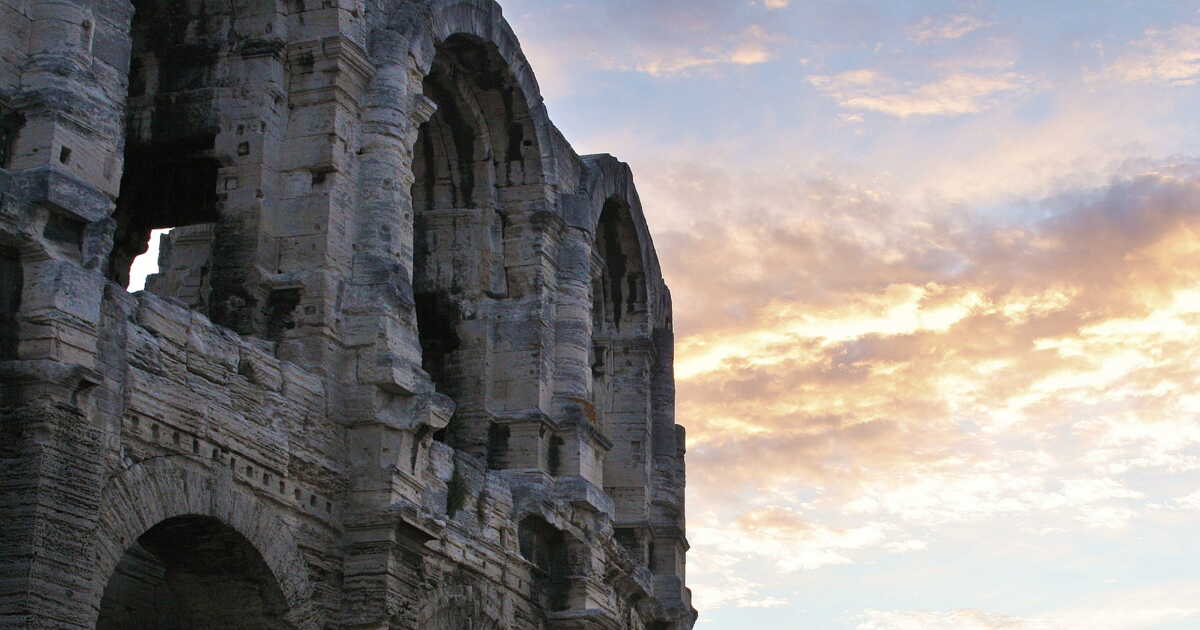
Situated in the heart of Arles’ city center, the arenas are the city’s must-see attraction. Built around 80 CE, these arenas now host numerous performances throughout the year, including Easter ferias. Surrounding shops and restaurants know how to delight visitors.

> Discover the artisanal activities of our partner in Montpellier

Stroll through the historic center

In Arles, enjoy the historic center and don’t hesitate to wander the cobbled streets. Shops and restaurants enliven the downtown area where life is pleasant and where Camargue specialties are to be tasted.

> If you want to discover in pictures the 10 things to do in Arles, head to our slideshow!

Explore the Réattu Museum

As the Fine Arts Museum of the city of Arles, the Réattu Museum will appeal to lovers of architecture and artworks. Built along the bend of the Grand Rhône, the Réattu Museum offers a unique view to contemplate. The museum houses a beautiful collection by painter Jacques Réattu, but also works by Vincent van Gogh, as well as various photography and sculpture exhibitions.

Discover the Camargue Natural Park

Created on September 25, 1970, the Camargue Natural Park is a site of European importance where one can discover nearly 276 species of birds. A natural space welcoming migratory birds, the park sees around 122,000 birds each year. Within the Camargue Natural Park, visitors can also discover the numerous pink flamingos, the Camargue salt flats, not to mention the Vaccarès pond, covering 13,117 hectares and classified as a protected area.

Visit the Ancient Theatre of Arles

Built under the reign of Emperor Augustus, the Ancient Theatre of Arles is among the earliest theatres of the Roman world. Classified as a historical monument since 1840, the Ancient Theatre of Arles draws visitors, though only two columns have survived out of the initial hundred, not to mention the splendor of the cavea ruins. Today, the theatre is open for visits and hosts numerous festivities during the summer.

Discover the Alyscamps district

Meaning Champs-Elysées in Provençal, the Alyscamps district is full of Gallo-Roman remains including Saint-Honorat Church and the Chapel of the Porcelets. The Alyscamps stroll is equally pleasant. The district has even been immortalized several times by painters Vincent van Gogh and Paul Gauguin.

Marvel at the Van Gogh Space

This expansive quadrilateral, formerly the Hôtel-Dieu, will become one of your favorite places in Arles. You will especially enjoy its flowering gardens and its cultural space that hosts exhibitions and other events through the Vincent Van Gogh Foundation. The Van Gogh Space also welcomes students from Aix-Marseille University and hosts numerous exhibitions, particularly during the Rencontres de la Photographie held this year from July 4 to September 26.

Taste Gardianne de Taureau

While visiting Arles, don’t miss sampling the local specialties. Take advantage of the many restaurants in the historic center to savor the famous Gardianne de Taureau. Among other Arles culinary specialties are fougasse, the Arlesian soup, Camargue rice, and raïto sauce.

Visit Montmajour Abbey

On the outskirts of the city of Arles, Montmajour Abbey bears nearly eight centuries of history and Provençal architecture thanks to its monuments from various eras. Visitors appreciate the charms of Hermitage Saint-Pierre, the Chapel Sainte-Croix in a clover shape, the Pons de l’Orme tower from the 14th century, not forgetting the Saint-Maur Monastery, dating from the 18th century.

Discover the Arles Antique Departmental Museum

Founded in 1995, the Arles Antique Departmental Museum aims to bring together all of Arles’ archaeological collections. From Prehistory to late Antiquity, this museum holds a diverse and history-rich collection. At the heart of the museum, also discover the Hortus garden, Roman-inspired, which delights children. A perfect family outing.

Discover the activities of our partner :

What is the difference between a city, a village, and a municipality?

What differentiates a large village from a small town? What exactly are their definitions? A few answers.

What is the origin and definition of the word “ville”?

It is not always easy to distinguish a town from a village… especially since the word ville derives from the Latin villa, which means a farm! In the past, the villa indeed referred to an agricultural estate or a house located in the countryside.

This term then took two parallel directions, giving rise to the words :

  • villagium, then designating the farm as we know it;
  • ville, which referred to a “group of houses”.

Thus, the city is far from being a recent notion, and it covers indeed different realities depending on where in the world one lives. In France, the city is understood as a place where populations gather to carry out certain activities: commerce, craft trades, and service provision.

Agricultural activities, for their part, are the domain of villages. Moreover, the city is characterized by a concentration of housing organized along streets, which can be numerous depending on the size of the cities.

What is meant by village?

But this definition is also tending to disappear… For in many villages, one also finds concentrations of housing and various activities related to commerce, crafts, and services. Just like in cities.

Yet a village remains linked to the countryside and to the agricultural activities that are overrepresented there. But again, this distinction is far from being sufficient. In general, it is the number of inhabitants that is taken into account to distinguish a village from a city.

The figure used by INSEE for this criterion is 2,000. Beyond 2,000 inhabitants, therefore, the commune is considered a (small) city. However, there is also a nuance here.

Indeed, some municipalities with more than 2,000 inhabitants can keep the designation of village if the residents are dispersed around the center, and not concentrated in the heart of the commune.

In summary, city and village, what distinction?

The number of inhabitants and their distribution thus provide a consensus for clearly identifying a city from a village. Another criterion also enters into this distinction: housing density.

If the housing in the center of a commune exceeds 2,000 occupants, it means there is a dense housing stock capable of housing a significant number of people. As mentioned earlier, a densely built-up population of fewer than 2,000 souls constitutes a village; beyond that, we speak of a city.

What about the distinction between village and bourg? INSEE introduces here the criterion of the distance between two dwellings. When there are fewer than 200 meters between two homes, we speak of a bourg. Beyond that, we speak of a village, provided the other criteria mentioned are also met.

City, village and commune: what are the differences?

The commune is in fact the smallest administrative subdivision that exists in France. A commune can thus be either a city or a village, and it is necessarily administered by a mayor.

Today, to distinguish the different typologies of urban areas, INSEE refers to the notions of rural communes and urban communes, based on a density grid.

Low-density communes are described as rural, and communes with intermediate or high population density are called urban.

A New Embarrassing Trend Spreading Across Airports

Fortunately, ridicule isn’t fatal! If you spot someone wearing a T-shirt that catches your eye at the airport, it’s because they’ve fallen for this new concept making the rounds on social media. It’s a challenge that involves wearing a shirt chosen by a friend, often quite conspicuous and hard to ignore. The Washington Post recently interviewed several people who took part in this trend.

Take Kate Swenson, a 43-year-old mother who, while traveling with friends, had to wear a T-shirt reading: “posez-moi des questions sur ma diarrhée explosive”. The only rule was to wear it for the entire first day, even if it made her uncomfortable. “I just remember the laughter, then regrets, then more laughter.” Some of her friends had to wear T-shirts proclaiming that they “transpiraient à des endroits inhabituels”, that they “arboraient des piercings corporels insolites”, or that they “avaient besoin d’un énorme cocktail”.

Following that, they recounted being tapped on the hand by flight attendants and laughing from strangers. Their social media post has racked up more than 83 million views on Instagram to date, and the friends said they felt “like celebrities” after being recognized on their Florida-departing cruise.

A Fun Challenge, but with Boundaries to Respect

Aarya Patel, who also took on the challenge by wearing a T-shirt that read “j’ai fait caca aujourd’hui”, said it was “a way to set the tone for the trip.” “We were finishing finals at that time. It helped us forget all that and focus on the trip”, she claimed. However, one should not forget that some airlines may refuse to transport passengers wearing clothing deemed indecent or offensive, in accordance with their terms of carriage.

That’s why one shouldn’t stretch their imagination too far. Paul Davis, a social-media and online-safety trainer based in Toronto, warned on his professional Facebook page against the “hypersexualized, aggressive and degrading” versions of this airport-shirt exchange and spoke to parents about them. He finds it cute, but only “within the bounds of good taste.”

He feared that compromising videos could harm some people and prevent them from obtaining a scholarship or a job, or that problematic clothing could trigger real-life conflicts. He also stressed that jokes about shirts referencing weapons are never a good idea. “I’d rather be cautious,” Davis said. “I remind kids every day that the Internet never forgets, and that, since it never forgets, it can be merciless”, he concluded.

Visiting Museums Every Week Could Slow Human Aging, Science Says

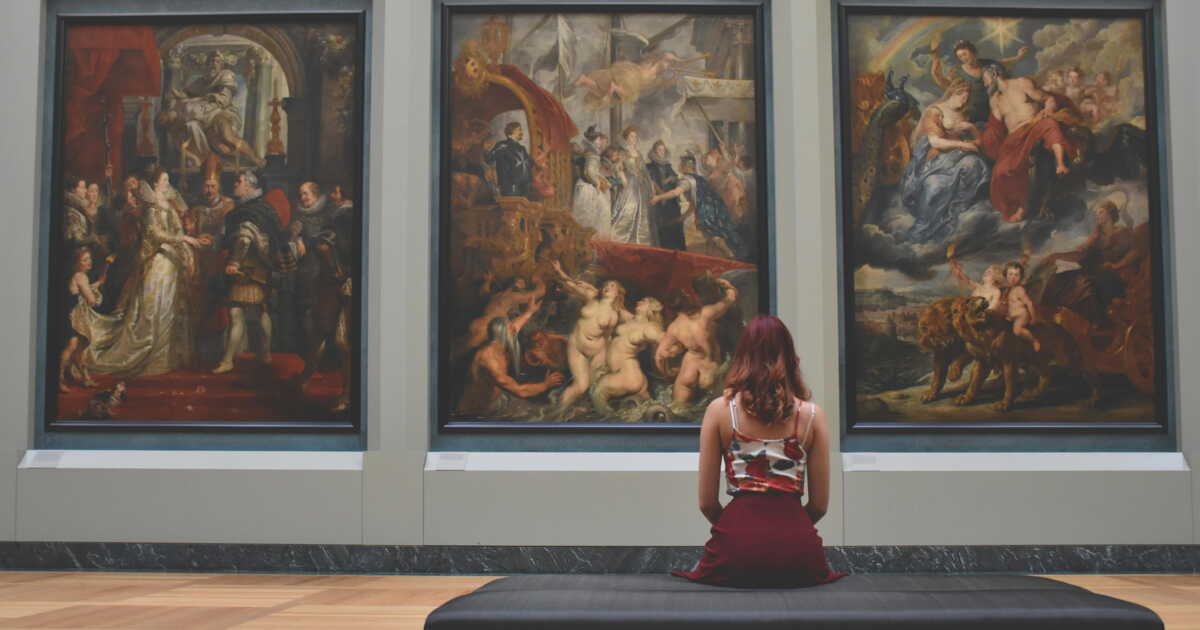
What if visit prescriptions were about to become standard practice? For a year now, Yvelines has been testing a scheme that allows caregivers to offer patients a free museum visit. A model already adopted in Canada for several years.

And for good reason, in 2019 the WHO confirmed in a report that art has positive effects on mental and physical health. While several research studies have corroborated this report, a new British study suggests that art could influence biomarkers of aging.

This study conducted by scientists at University College London (UCL) and published Monday, May 11, 2026 in the journal Innovation in Aging asserts that a weekly artistic or cultural activity could slow the pace of aging, and as much as a weekly physical activity.

“Our study provides the first evidence that engaging in an artistic or cultural activity is linked to a slowing of biological aging”, declares Feifei Bu, an epidemiologist at UCL and senior author of the study, as reported by Science Alert.

A study conducted on 3,500 people

To reach their conclusions, the researchers analyzed health data from more than 3,500 adults in the United Kingdom, while measuring how often they participated in artistic or cultural activities. The scientists included visits to a museum or library, attending an art exhibition, crafts, singing or painting.

They then used epigenetic clocks (a biochemical test that measures the accumulation of methyl groups on DNA), thereby measuring the biological age of these individuals. In general, study participants who practiced at least once a week one of the activities mentioned above showed less pronounced signs of aging than those with a less varied cultural life.

According to the PhenoAge clock, their biological ages were on average one year younger than those who did not engage in artistic activities. The DunedinPACE clock, which measures the pace of aging, indicates a 4% slowdown for weekly practice.

Is art as effective as exercise for health?

Their findings indicate that artistic activities reduce stress, inflammation and improve cardiovascular disease risk, i.e., benefits similar to those of physical activity.

“These results prove that engaging in artistic and cultural practice should be recognized as a health-beneficial behavior, on par with physical exercise,” says Daisy Fancourt, an epidemiologist and lead author of the study, who has been studying the health benefits of art at UCL for nearly ten years.

AI Is Entrusted with Power on a Philippine Island, and It Could Backfire

What if an entire territory were steered not by elected officials, but by artificial intelligences inspired by the great figures of history? This is the captivating and unsettling bet proposed by British entrepreneur Dan Thomson, founder of Sensay, who asserts that he has acquired an island in Palawan province, Philippines, to establish a micronation governed by bots.

A year after the announcement, the project continues to provoke curiosity, skepticism and questions that go far beyond the tech world. Between the promise of supposedly objective governance and fears of AI missteps, this real-life experiment raises questions that could, tomorrow, extend beyond the borders of this small tropical island.

Hecate Temple in Turkey Still Attracts Witches

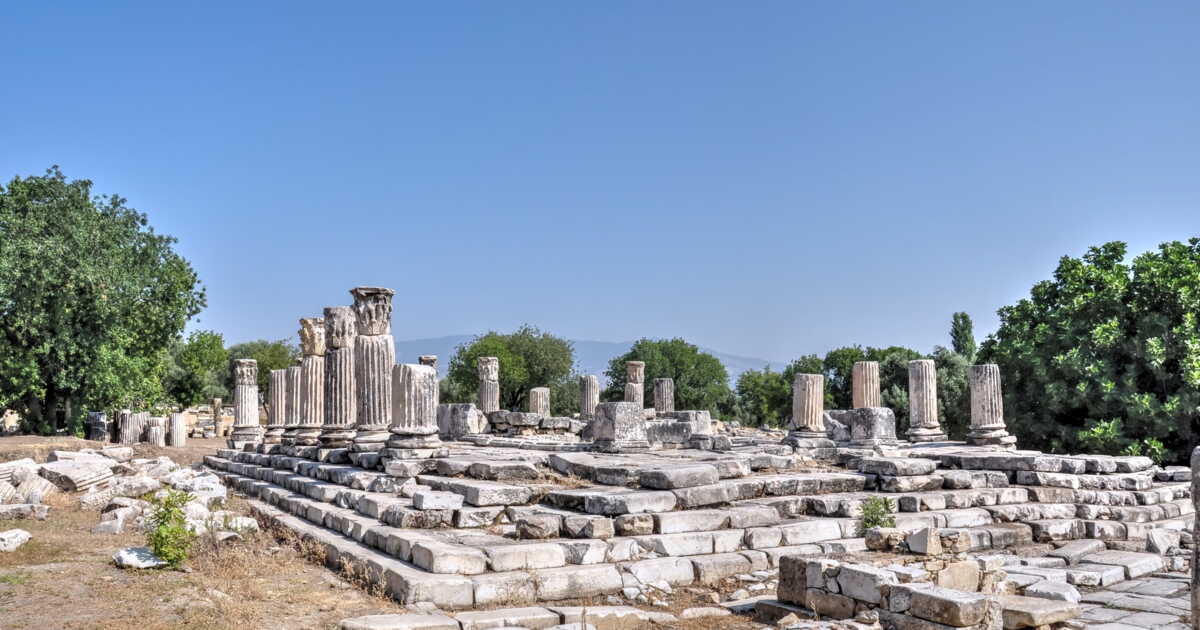
The rolling hills of Muğla Province in southwestern Turkey cradle the ruins of the ancient city of Lagina. Far from being a local tourist draw like the coastal villages of Akyaka, Marmaris, or Bodrum, the site nonetheless attracts a modest yearly stream of visitors who come specifically to pay homage to Hecate.

There, dating to the Late Hellenistic period and the early Roman Empire, a temple was erected in honor of this powerful Greek goddess, traditionally associated with magic and the Moon, but also with passages between worlds and communication with the dead.

While the worship of most other Greek deities, or even Roman ones, faded with Antiquity, Hecate remains a steadfast object of veneration. Followers from all over the world crowd into the complex to leave offerings or call upon her services.

At the End of a Sacred Road

It must be said that the Lagina sanctuary is a unique case in the ancient world. It is not merely a building, but a genuine religious center in its own image. Curious visitors wandering among its ruins, still scattered with columns, feel as if they are crossing the threshold into a parallel world, or at least stepping through a place as charged with history as it is with spirit. “It is the only temple of this scale in the world built exclusively for the goddess Hecate”, explains Professor Bilal Söğüt, who directs the excavations of Lagina and the neighboring ancient city of Stratonikeia, on CNN, the American network.

In the past, the two sites were linked by the Sacred Way, a stone-paved road a little over eight kilometers long. Lined with fountains, wells, or other small villages, this path once served major religious processions to the temple dedicated to Hecate. Already, crowds from across the region traveled to commemorate her.

Still a Pilgrimage Site

The most important ritual of the era was the so-called key-bearer rite, during which a young girl, a “kleidouchos” (literally “key-bearer”), carried the sacred token to and from along this route between Stratonikeia and Lagina. Throughout the journey, she was accompanied by a choir. “This key not only opens physical doors. It symbolizes the ability to move from life to death, from the conscious to the unconscious, from the old to the new”, notes researcher and author Hüma Zeybek, a specialist in Hecate, to CNN.

Since its construction, the site has experienced fierce political upheavals. After 88 BCE, the region was swept by conflicts between Rome and the kingdoms of Asia Minor. Stratonikeia chose the side of the legionaries, an alliance that earned it favors. From then on, Lagina took on renewed importance. In return, the Romans heavily invested in the temple and organized the festival Hekatesia-Romaia in honor of the goddess.

For these adherents of old times as well as those of today, Hecate, archetype of the wise old woman, serves as a guide in moments of crisis or transformation. Today, witches and wizards of a different kind continue to make the journey to greet her, to embrace her legacy, or to absorb her energy. “There is no other cult where material traces and traditions have been preserved so intact.” notes researcher Emrah Urtekin.

Louis Vuitton Trunks on Display: 130 Years of Adventures and Grand Journeys

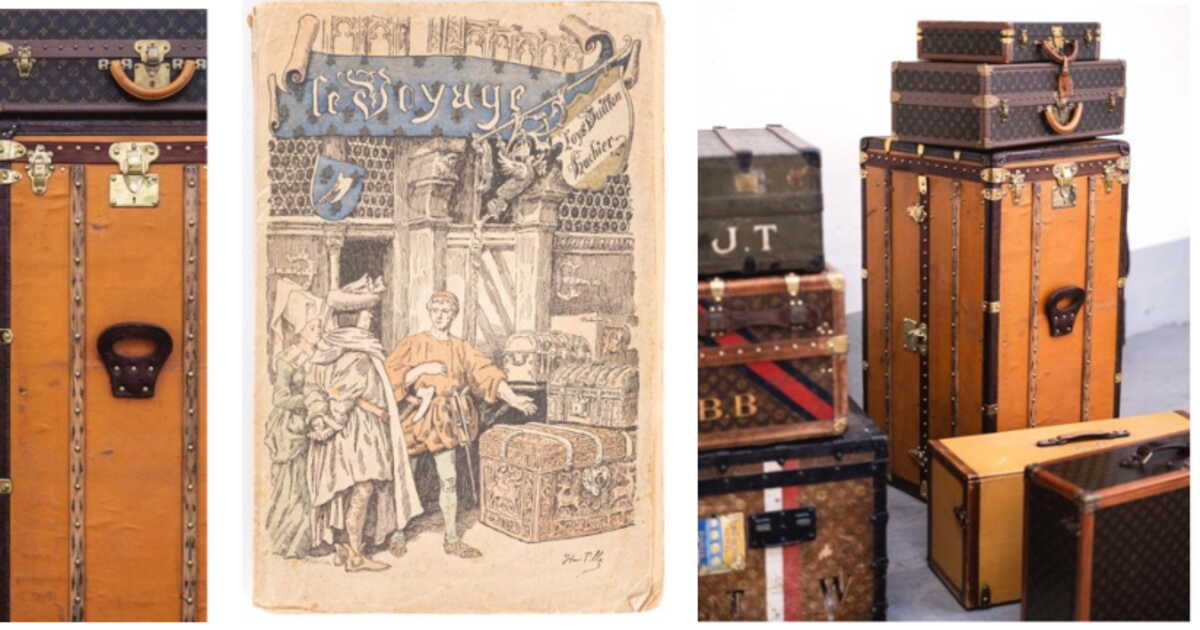
Sleeping in the heart of the jungle, writing aboard the Orient Express, or crossing the Atlantic with dozens of suitcases: Louis Vuitton trunks tell a whole history of travel on their own. On the occasion of the Monogram canvas’s 130th anniversary, the auction house Gros & Delettrez is organizing a public exhibition from May 19 to 21, 2026 at 2, rue de Bérite, in the 6th arrondissement of Paris, ahead of an exceptional auction on May 21 dedicated to the universe of the French house: explorer bed-trunks, library trunks, travel cases, or models designed for transatlantic crossings.

Far more than mere luggage, these objects tell a certain idea of travel, between luxury, innovation and adventure. To understand how these creations accompanied the evolution of travel styles since the 19th century, we spoke with the auctioneer Antoine Saulnier, who has led the sales of this specialty for over 15 years.

The Monogram canvas is celebrating its 130th anniversary this year. How did this motif become such a strong symbol of luxury and travel?

Antoine Saulnier: Even when it was created in 1896, this canvas was truly a mark of distinction. At the time, most trunk-makers used plain canvases, often Trianon gray or khaki, or striped canvases. Georges Vuitton, Louis Vuitton’s son, created this monogram largely because the house was heavily copied. When he passed by the shop windows of rivals on Rue Saint-Honoré, he saw models very similar to theirs, sometimes even presented with phrases like “as with Louis Vuitton”. The creation of the monogram was therefore also a way to assert a distinct identity and to combat counterfeiting. The initials “LV” became a real signature.

Then, Louis Vuitton quickly became a major house. Louis Vuitton was the layetier-emballeur of Empress Eugénie, which contributed greatly to its reputation.

Then, in the 20th century, the house did not limit itself to trunks: the monogram expanded to leather goods and other objects. It went down into the street, it became visible everywhere.

And obviously, the brand’s international expansion amplified this phenomenon. The monogram has been revisited by artists such as Takashi Murakami or Stephen Sprouse. Today, Louis Vuitton is probably one of the most well-known luxury brands in the world.

What is fascinating is that it all started with a young man who arrived in Paris on foot, penniless, from the East of France.

Were Louis Vuitton trunks particularly innovative for their time?

Yes, absolutely. It’s even the brand’s great strength. Louis Vuitton has always sought to invent solutions that others did not dare to offer. There is, by the way, a famous anecdote: before creating his own house, Louis Vuitton worked for another trunk-maker. A client reportedly asked for a solution to transport glasses during a long journey. His boss refused, but Louis Vuitton allegedly replied that it was possible. This spirit of innovation has truly marked the house’s entire history.

Everything was fully customizable. This is clearly evident in this sale with trunks designed for explorers. We showcase notably two exceptional bed-trunks, including one made for Jules Tivan, an explorer of the French Congo. These are objects designed for extreme conditions.

There were also “Aéro” trunks, created to be lighter in order to travel by hot air balloon or by airplane. Louis Vuitton also designed trunks for automobile cruises, such as those used in the Citroën expeditions of the Yellow Cruise (April 4, 1931 to February 12, 1932) or the Black Cruise (October 28, 1924 to June 26, 1925).

And that went even further, the house produced medical boxes, trunks to transport photographic equipment, picnic necessities, travel secretaries… We even had very specific models, such as suitcases intended for transporting hunting rifles for ladies. At the time, travel often meant departing with an entire personal universe: clothes, accessories, writing objects or leisure equipment. Each creation met a very precise need.

Did the explorer models require particular materials?

Yes, everything was designed according to the travel conditions and the type of expedition. For explorers like Pierre Savorgnan de Brazza or Jules Tivan, trunks had to withstand extremely difficult environments, whether humidity, bad weather, insects, heat or long transports.

We can see this clearly with the bed trunks presented in this sale. They are quite extraordinary: inside, there was the entire frame of a foldable bed allowing comfortable sleep during an expedition, even in the jungle. These trunks were also very heavy and often required porters.

Some were made with materials specially chosen to protect their contents. For example, there were trunks coated with zinc, sometimes considered unsinkable, to prevent moisture from entering. Others were made of brass, wood or entirely leather for the most luxurious models.

Everything was designed to measure according to the traveler’s needs and the nature of the expedition. Some trunks were intended for transporting clothes, others for delicate equipment, furs, pharmaceuticals or even equipment specific to great explorations. Everything was organized to prevent objects from moving during transport and to arrive intact despite sometimes extremely long journeys and challenging weather conditions.

Looking at the evolution of the models, can we see a change in the way of traveling over time?

Yes, entirely. At the time, traveling often meant crossing the Atlantic with thirty or forty trunks. Luggage was designed to be stored for long periods, sometimes for weeks of crossing. One could bring a lot of belongings. Even a single full trunk required porters; you did not carry your luggage yourself.

With the arrival of the automobile and especially the airplane, constraints changed: lighter luggage, more maneuverable, and easier to carry by oneself. Today, journeys are much faster. Louis Vuitton understood this very well, and the house developed rolling models, more practical, suited to modern travel.

The very notion of luxury has changed. In the past, luxury also meant taking the time of travel. We crossed the world by boat, we traveled by train, we settled in for weeks. The journey almost became part of the experience. Some travelers carried wardrobe trunks, travel libraries or travel secretaries to continue writing, reading or changing clothes during several weeks of crossing. Today, travel is much faster and more frequent, especially by airplane, so the relationship with luggage is no longer the same at all.

But the know-how, it continues to exist. Louis Vuitton still maintains its historic workshop in Asnières-sur-Seine, where bespoke orders are crafted. The artisanal precision remains the same.

What are your favorites in this sale?

I really like the yellow canvas desk and laundry trunk from the early 20th century. It’s a very rare model, entirely original and in remarkable condition. The bed trunks are also quite extraordinary. They are seen very rarely today.

But I also have a soft spot for the small writing-library trunk. I find that it perfectly embodies the luxurious travel of the early 20th century. One can easily imagine someone on the Orient Express, writing after dinner, reading during the journey, then closing his trunk before stepping off the train. This type of object truly tells of an era when travel took time and was part of everyday life. It’s a very famous model. A similar example belonged to Ernest Hemingway and was found after his death in the Ritz’s cellars with an unpublished manuscript. I find this story fascinating.

Who buys these kinds of pieces nowadays?

The profiles are very varied. There are Louis Vuitton collectors, travel enthusiasts, lovers of vintage leather goods, but also institutions. These objects represent a piece of history: the history of travel, of luxury, of craftsmanship and fashion.

But there are also buyers who simply want a beautiful decorative piece. Today, most of these trunks no longer travel. They become coffee tables, decorative objects in a living room or a bedroom. There are also decorators, hotels or interior designers who buy this kind of pieces for their projects.

Even if some people still occasionally use vintage Louis Vuitton luggage for particular trips, these pieces have become, above all, collectibles and decorative objects, more than everyday travel luggage.

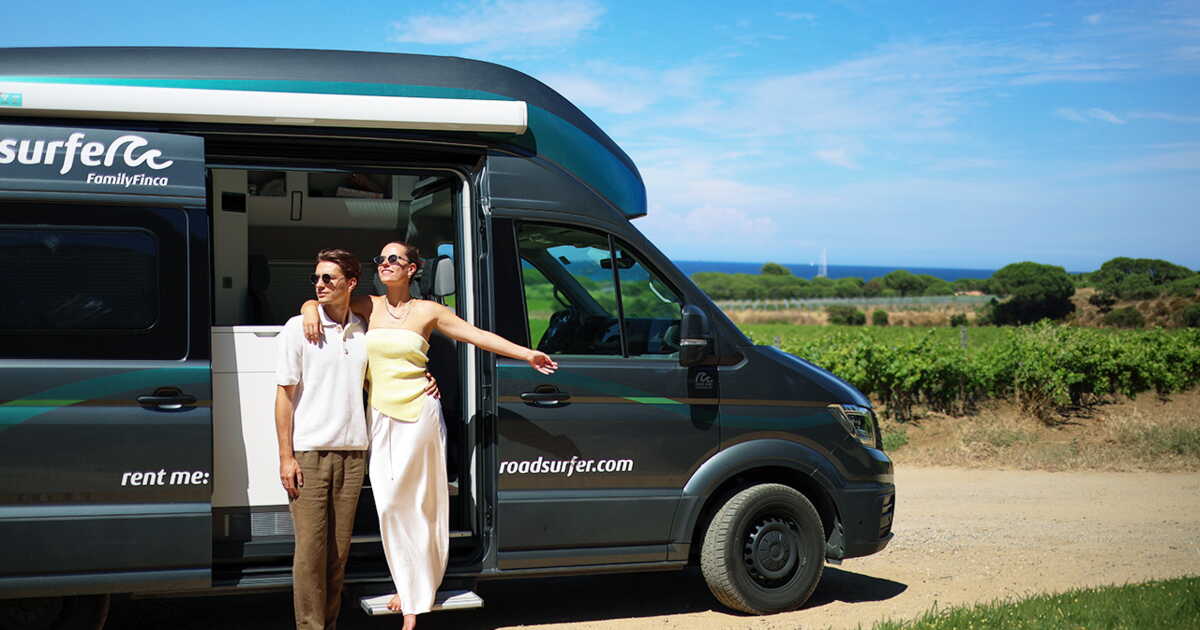
Campervan Rental: Why Roadsurfer Is the Ideal Last-Minute Road Trip Solution

What if the best trips were ultimately those we hadn’t really planned? As spring’s long weekends approach and summer holidays loom, more and more travelers are ditching ultra-planned stays in favor of more spontaneous getaways. This is where renting a converted van, or a motorhome, emerges as the ideal solution for vacationers seeking freedom, flexibility and adventure.

In this rapidly expanding world of nomadic travel, roadsurfer has established itself as the global leader in van-based journeys. Founded in 2016 in Munich, the company now counts over 10,000 vehicles distributed across nearly 100 agencies in 16 countries. Compact vans, converted campervans, or family motorhomes: the brand offers a modern, fully equipped fleet designed to simplify last-minute departures. With unlimited kilometers and a spontaneity-driven approach, roadsurfer presents a new way of traveling, where the destination matters less than the freedom to hit the road whenever the urge arises.

The spontaneous road trip for travellers seeking freedom

Setting off without a fixed program, adjusting the route according to the weather, or extending a stop by the ocean: the road trip answers a growing desire for flexibility. In recent years, travel has transformed. Holidaymakers now seek freer experiences that can adapt to their momentary wishes.
Renting a converted van fits perfectly with this trend. In just a few clicks, you can book a equipped vehicle and hit the road a few hours later. An ideal solution for off-the-cly weekend getaways as well as last-minute summer holidays.

roadsurfer has precisely built its offering around this spontaneity. The brand relies on recent, comfortable and fully equipped vehicles, with unlimited kilometers to travel without constraint. Compact vans for a duo getaway, converted vans for several weeks on European roads, or family motorhomes — each traveler profile can find the model suited to their adventure.

To simplify organization even further, the platform also offers detailed practical sheets to help travelers choose the vehicle that matches their project. A surfing weekend on the Basque coast, a crossing of the Alps, or an improvised loop through Tuscany do not require the same needs. roadsurfer thus turns motorhome rental into a simple, fluid, and immediately accessible experience.

Offices across France and Europe for last-minute departures

One of roadsurfer’s major advantages lies in its wide network of agencies, designed to facilitate spontaneous departures. In France, travellers can pick up their vehicle near major cities and airports: Paris, Lyon, Aix-Marseille, Bordeaux, Nantes, Toulouse, Lille, Nice or Strasbourg are among the main starting bases. The Geneva agency, located in the Pays de Gex, also makes a quick escape to Switzerland or the Italian Alps feasible.

This strategic presence greatly simplifies last-minute departures. Quick spell of good weather forecast ahead? A long weekend on the horizon? It is enough to book a vehicle and head toward the destination of choice.
All of Europe becomes a playable field. Thanks to the numerous roadsurfer agencies across the continent, travelers can easily imagine a road trip spanning several countries: along the Portuguese coast, exploring the Scandinavian fjords, crossing the Dolomites, or sleeping by Croatian lakes. This improvisational freedom is now one of the main attractions of renting a converted van.

roadsurfer spots: the platform that makes spontaneous wandering easier

To improvise a road trip also means being able to easily find where to sleep. It is precisely to answer this new way of traveling that roadsurfer developed roadsurfer spots, a platform for booking unusual sites across Europe.
The concept is increasingly appealing to nomadic travel enthusiasts: spontaneously booking a unique spot at a farm, a winery, a natural space, or with a private individual, often close to preserved landscapes. Available notably in France, Germany, Italy and Spain, the platform makes it easy to combine itinerancy and lodging without having to plan every step weeks in advance.

This approach reinforces the sense of freedom that accompanies motorhome rental and van rental. A sunset facing the Atlantic, a night amid Italian vineyards, or a wake-up in front of Austrian mountains can now be improvised on the fly of the journey.

More than just a vehicle rental company, roadsurfer thus positions itself as a true facilitator of spontaneous travel. A brand capable of turning a last-minute urge for escape into an immediate adventure, with this promise that has become rare: the ability to still depart without planning every detail, simply because the road calls.

With the GEO12 code, enjoy 12% off any booking for 2026 or 2027 (minimum 3 nights). Offer valid from May 5 to June 8, 2026.

Sponsored article by Roadsurfer. The editorial team did not participate in the production of this article.

Best Train Trips in the United States This Summer

Traversing the Rockies, skirting the Pacific Ocean, or reaching the Grand Canyon aboard a historic train… In the United States, several rail lines turn travel into a true journey experience. While summer holidays often herald crowded airports and saturated highways, train travel is attracting more and more travelers who seek slower pace and spectacular scenery. This renewed interest is far from incidental: Amtrak, the U.S. public railway company, logged 34.5 million passenger trips in the latest fiscal year. From panoramic cars to steam locomotives, certain American routes offer journeys among the continent’s most impressive landscapes.

From the Rockies to the Pacific, routes carved for the great outdoors

In the western United States, several lines let visitors discover iconic scenery without taking the wheel. Among them, the Canyon Spirit, formerly known as the Rocky Mountaineer, links Moab to Denver in two days, threading the Rockies and the red rock formations of Utah and Colorado. The itinerary passes through Glenwood Canyon, carved by the Colorado River, and provides access to Arches National Park. On board, travelers enjoy glass-dome panoramic cars, spacious seating, and meals inspired by regional specialties. Nights are spent in hotels along the route.

Further north, in Alaska, the Coastal Classic of the Alaska Railroad connects Anchorage to Seward in 4 hours and 30 minutes. This seasonal line, operated from mid-May to mid-September, runs along Turnagain Arm before traversing the wild landscapes of the Kenai Peninsula. Glaciers and waterfalls punctuate the journey to Seward, the gateway to Kenai Fjords National Park.

In California, Amtrak’s Pacific Surfliner remains one of the country’s most popular itineraries. The line runs from San Diego to San Luis Obispo along much of the Pacific coastline, with stops in several seaside towns, including Santa Barbara. “The train journey itself is breathtaking, winding along the southern California coast and offering fascinating views of the Pacific Ocean”, said Jason Abrams, head of public relations at Amtrak, to Travel + Leisure.

The Amtrak network is also betting heavily on this line this summer. New connections have been added between San Diego and Los Angeles to coincide with the FIFA World Cup, further boosting the Surfliner’s appeal for summer travelers.

Historic trains that hark back to the Golden Age of American rail

Other routes appeal mainly for their heritage value. This is the case of the Grand Canyon Railway, which runs daily between the town of Williams, Arizona, and the south rim of the Grand Canyon. The trip lasts about 2 hours and 15 minutes in each direction and then travelers spend more than three hours on site before the return. A distinctive feature of the journey: some rotations are operated by vintage locomotives, recalling the glory days of American rail.

In Colorado, the Durango & Silverton Narrow Gauge Railroad traverses some of the state’s most spectacular mountain scenery. This historic line links Durango to Silverton in 3 hours and 30 minutes aboard a narrow-gauge train classified as a National Historic Landmark, a designation given by the U.S. government for exceptional historical significance. Up to three departures are offered each day during the peak season. Travelers then have a few hours to explore Silverton, an old mining town perched in the mountains.

Another emblematic line is the Cumbres & Toltec Scenic Railroad, straddling New Mexico and Colorado. Considered one of the best-preserved steam railways in the United States, it follows the meanders of a canyon before crossing a viaduct rising 42 meters high. This route operates six days a week from late May to late October.

Finally, long-distance enthusiasts can board the Amtrak Cascades, which connects Eugene, Oregon, to Vancouver, Canada, in a little over ten hours. The journey traverses the Columbia River Gorge and affords views of Mount St. Helens. Jason Abrams also noted to Travel + Leisure that Amtrak’s new Airo trains were set to enter service on this line this summer, with “new levels of physical comfort, a more coherent travel experience, upgraded equipment and dining services meeting today’s travelers’ expectations”.