
65% Cut in Air Passenger Tax: Here Are the 26 Affected Lines


Baisse de 65 % de la taxe sur les billets d'avion : voici les lignes 26 lignes concernées ! - depositphotos.com Auteur ilixe48

IFTM


The government is implementing, from June 1, 2026, a reduction in the passenger air transport tax (TSBA) for certain air routes deemed essential to territorial development.

Announced by Philippe Tabarot, Minister of Transport, this measure targets routes operated under a public service obligation (PSO) and under a public service delegation (DSP).

The scheme reduces by 65 % the amount of tax applied to each ticket, dropping it from 7.40 euros to 2.63 euros.

Planned by the initial 2025 finance law, this reduction was conditioned on the prior agreement of the European Commission. French authorities had begun talks with Brussels since the law’s enactment. Following these exchanges, the Commission confirmed the measure’s compatibility with EU law, thus paving the way for its entry into force.


The government is working to extend the scheme to overseas territories.

The measure covers, notably, several metropolitan routes serving towns such as Aurillac, Brive, Le Puy-en-Velay or Rodez. It also includes connections between Corsica and the mainland, notably to Paris-Orly, Marseille and Nice, as well as the links connecting Strasbourg to various European metropolises and the Brest–Ouessant line. In total, 26 air routes are affected.

The decree implementing this reduction was published on May 31, 2026.

By making these routes more financially accessible, this measure reflects the Government’s will to support the connectivity of the least-served territories and to ease the cost of air travel to and from these destinations,” stated Philippe Tabarot.

The minister also indicated that the government would continue its work to extend a similar scheme to overseas territories.

The European Commission, however, regarded the mechanism provided for in the finance law for Overseas routes as not legally retainable in its current form. “We therefore actively pursue the work started to find a solid and appropriate legal solution for our Overseas Territories,” he added.


Here are the 26 routes affected by the air ticket tax reduction:

– Aurillac – Paris ;

– Brive – Paris ;

– Le Puy – Paris ;

– Castres – Paris ;

– Rodez – Paris ;

– Limoges – Paris ;

– Tarbes – Paris ;

– Brest – Ouessant ;

– Limoges – Lyon ;

– La Rochelle – Lyon ;

– Poitiers – Lyon ;

– Strasbourg – Madrid ;

– Strasbourg – Munich ;

– Strasbourg – Copenhagen ;

– Ajaccio – Paris (Orly) ;

– Bastia – Paris (Orly) ;

– Calvi – Paris (Orly) ;

– Figari – Paris (Orly) ;

– Bastia – Marseille ;

– Bastia – Nice ;

– Calvi – Marseille ;

– Calvi – Nice ;

– Ajaccio – Marseille ;

– Ajaccio – Nice ;

– Figari – Marseille ;

– Figari – Nice.


LIAT and Air Caraïbes Partner to Boost Caribbean Connectivity


LIAT et Air Caraïbes s’allient pour renforcer la connectivité dans les Caraïbes - Depositphotos.com @mvaligursky

CroisiEurope


LIAT (2020) Limited (Liat Air) and Air Caraïbes have announced the signing of an interline agreement aimed at facilitating passenger travel across the Caribbean and to Europe via Paris-Orly.

This partnership now enables customers of the two carriers to travel with a single ticket and a centralized reservation, by combining the networks of both operators.

The agreement links LIAT Air’s intra-Caribbean network, serving the Eastern Caribbean, Guyana, Jamaica and several other regional destinations from its hub at Antigua’s V.C. Bird International Airport, to Air Caraïbes’ operations based in Guadeloupe and Martinique.

The French carrier also operates long-haul services between the Caribbean and Paris-Orly, thereby paving the way for simplified connections between the region’s different linguistic and economic zones, as well as to the European market.


A Simplified Passenger Experience

Thanks to this interline agreement, travelers will be able to book combined itineraries through travel agencies and global distribution systems.

Baggage will be checked through to the final destination, removing the need for rechecking or carrying multiple tickets during connections.

Among the main benefits announced:

A single ticket covering flights operated by LIAT Air and Air Caraïbes

Baggage checked through to the final destination

Expanded access to a Caribbean network spanning English-, French-, and Dutch-speaking islands

Facilitated connections to Paris-Orly via the Pointe-à-Pitre and Fort-de-France hubs

Integrated booking through distribution channels and travel agencies


A Shared Ambition for a Better-Connected Caribbean

For LIAT (2020) Limited, the agreement marks a significant milestone in advancing regional connectivity. Its chief executive, Hafsah Abdulsalam, emphasizes a development long-awaited by tourism stakeholders and travelers: “By linking our networks with Air Caraïbes, we greatly facilitate travel between the Caribbean’s English-, French-, and Dutch-speaking islands, as well as the connection to Europe via Paris.”

On the side of Air Caraïbes, Chief Commercial Officer Hugues Heddebault highlights the aim of simplifying regional mobility: “A better-connected Caribbean is a more open, more accessible and more dynamic Caribbean.”

The two airlines believe this partnership will strengthen the region’s attractiveness by easing inter-island travel, business trips, and tourist flows. The simplified opening to European markets, via Paris-Orly, should also boost visitor arrivals and the movement of the Caribbean diaspora.

Interline tickets will be available for sale through travel agencies and authorized distribution channels as of the coming into effect date, which will be announced soon.


Amelia Brille Published by Amelia Brille TourMaG.com Editor
See all articles by Amelia Brille

  • picto Linkedin
  • picto email
Add TourMaG to your Google News feed Google Actualités icône  

Ebola: Air France Flight Crews Barred from Entering the United States


Les PNC d'Air France demandent l’obtention d’un droit de retrait sur la ligne vers Kinshasa - Depositphotos @RLGUESSAZ

CroisiEurope


After being shaken by hantavirus, the world watches with concern what is happening in the Democratic Republic of the Congo.

Since the beginning of May, the Central African country has been hit by a resurgence of the Ebola virus. On May 15, the government officially declared the 17th outbreak of Ebola virus disease to strike the country.

And unfortunately, the virus is spreading quite rapidly to neighboring nations. To date, more than 1,100 suspected Ebola virus cases have been recorded in Africa, including 263 confirmed cases and 43 deaths.

The strain behind this outbreak currently has neither a vaccine nor a treatment.

And the virus exhibits a case fatality rate between 30% and 50%. Under these conditions, the World Health Organization has declared the situation an international public health emergency.


Several countries have imposed restrictions on travelers heading to the Democratic Republic of the Congo and its neighboring countries, starting with the United States.

These decisions, taken to prevent the virus’s importation, are now causing difficulties in the aviation sector, starting with Air France.


Democratic Republic of the Congo: travelers barred from entering the USA…

Since May 22, 2026, the Centers for Disease Control and Prevention has issued a decree limiting entries into the United States.

Thus, the Donald Trump administration “suspends entry to the United States for foreign nationals who have stayed in the Democratic Republic of the Congo, in Uganda, or in South Sudan within the last 21 days“.

However, whereas commercial flight crews had previously been exempt, with the stricter rule now in place, Air France cabin crew cannot travel to the USA after completing a rotation between Paris and the DRC.

The UNAC, a union counting 2,500 members within the company, fears after having “learned today, Thursday, May 28, 2026, that the cabin crew are now affected by the ban on re-entering the US territory.

Shipments are being rebuilt
“.

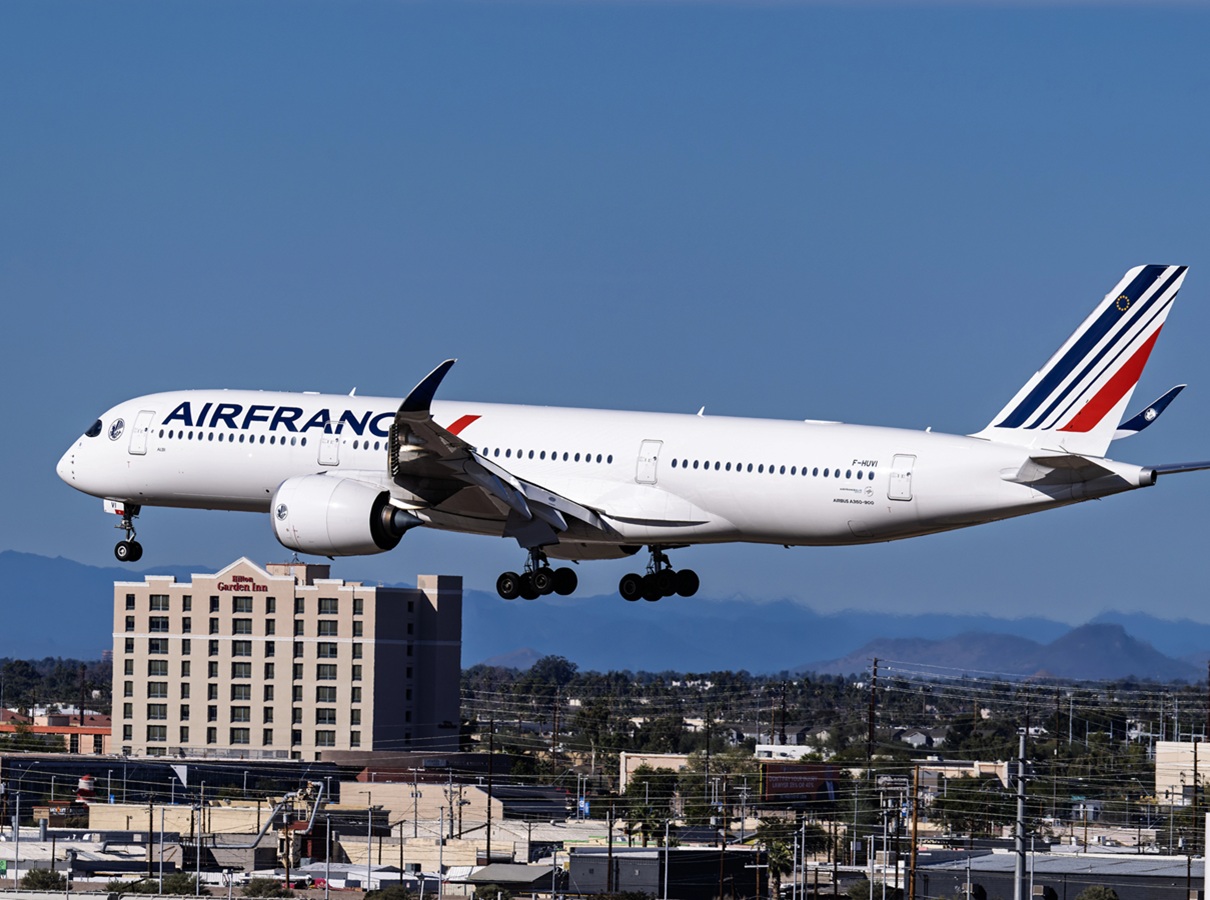
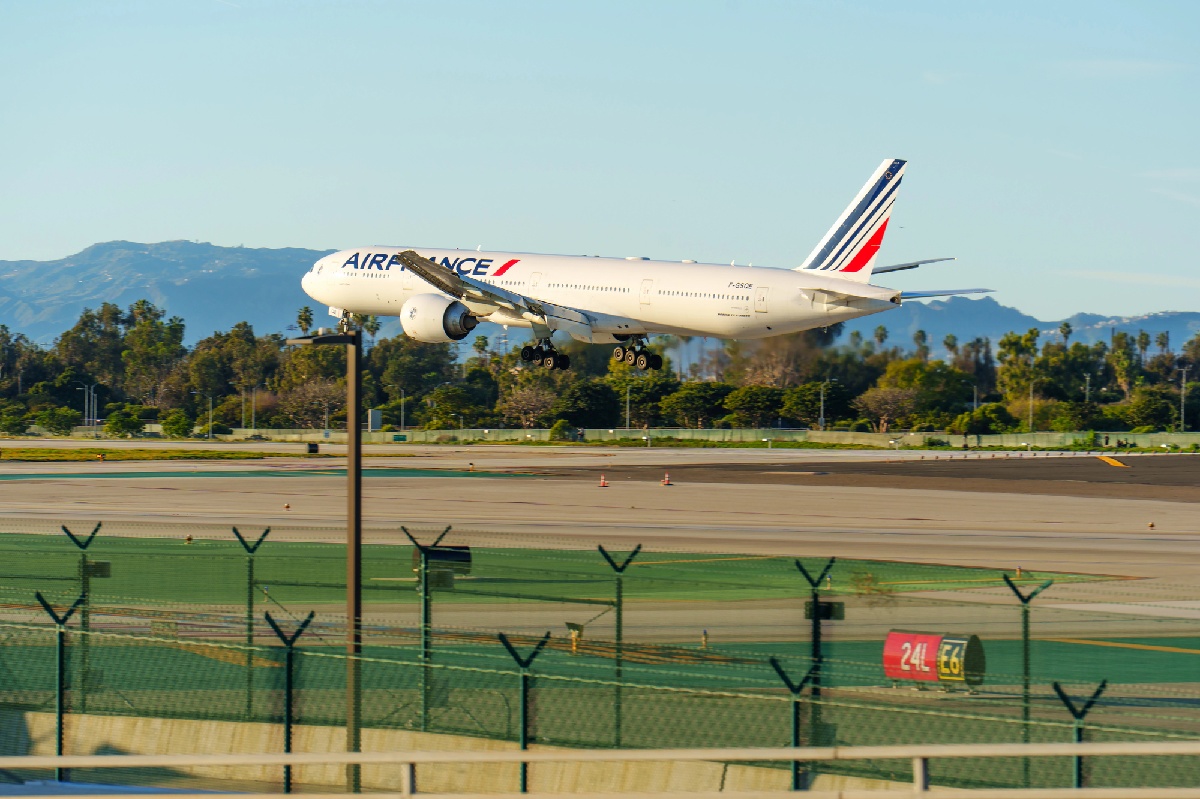
Kinshasa is served from Paris at four flights per week. The flight is operated with an Airbus A350-900. Air France has 41 aircraft of this type in its fleet.

Discussions have begun between the unions and Air France management to establish a right of withdrawal for crew members who no longer wish to operate on the France–Democratic Republic of the Congo route.


Flight Attendants Not Spared by Ebola Restrictions

They could thereby avoid being barred from staying in the United States, and also sidestep the risk of contracting the virus.

An extraordinary CSSCT meeting has, however, been requested by the UNAC to management more than a week ago.

We have renewed our request to organize an extraordinary CSSCT meeting and invite representative trade unions to join us
“, the union specifies.

On its side, the airline has acknowledged receipt of the American decision.

It recalls that French and foreign passengers can no longer travel to the USA after staying in one of the countries affected by the outbreak within the last 21 days.

To read: Dominican Republic, Maldives: Air France redeploys its aircraft for the next winter

American citizens or residents affected by this measure are still allowed to enter the United States, but only via certain specific airports.

As with all airlines, Air France is required to comply with the entry conditions imposed by the countries it serves.

Customers affected by these new rules will be informed, and commercial measures have been put in place to allow them to modify their trip without charges
“, the national carrier told us.

For now, while the DRC is the source of the outbreak, Uganda has recorded several cases, but all neighboring countries of the giant African nation are now considered at risk.

According to Africa CDC, the African Center for Disease Control and Prevention, the countries that could be affected are: South Sudan, Rwanda, Kenya, Tanzania, Ethiopia, the Congo, Burundi, Angola, the Central African Republic, and Zambia.


Romain Pommier Published by Romain Pommier Journalist – TourMaG.com
See all articles by Romain Pommier

  • picto Facebook
  • picto Linkedin
  • picto email
Add TourMaG to your Google News feed Google Actualités icône

Paris Air Forum 2026: An Edition Defined by Industrial and Geopolitical Shifts


Paris Air Forum réunira le 12 juin à la Maison de la Mutualité plus de 1 000 acteurs de l’aéronautique - Photo : Paris Air Forum

CroisiEurope


À un peu plus d’une semaine de son ouverture, Paris Air Forum s’apprête à réunir, le vendredi 12 juin à la Maison de la Mutualité, l’ensemble des grands acteurs de l’aéronautique, du spatial et de la défense européens.

Plus de 1 000 visiteurs et 120 intervenants sont attendus pour cette nouvelle édition, organisée dans un contexte géopolitique et industriel marqué par l’accélération des transitions technologiques et la recherche de souveraineté stratégique.

Dans un environnement où la souveraineté technologique s’impose comme une priorité, l’édition 2026 du Paris Air Forum mettra en lumière les grandes transformations à l’œuvre dans les filières aéronautiques, spatiales et de défense.

Intelligence artificielle, transition énergétique, autonomie stratégique : autant de thématiques abordés par les industriels, décideurs publics et experts internationaux.


A Strategic Gathering at the Heart of Sector Changes

Parmi les temps forts annoncés figurent notamment :

les enjeux de l’IA dans la préparation des armées de l’air du futur

la souveraineté à l’épreuve du chaos mondial

une rencontre entre Guillaume Faury et Arthur Mensch

la réindustrialisation européenne et son rôle stratégique

la capacité des industries à rester à la pointe à l’ère du numérique

la montée en cadence des fournisseurs face aux besoins croissants

ou encore l’avenir des programmes de défense après 2027


Conferences, business and innovation on the program

Le Paris Air Forum s’articulera autour de quatre salles de conférences, où leaders industriels et experts croiseront leurs analyses pour décrypter les grandes tendances du secteur.

En parallèle, l’événement proposera un dispositif complet dédié aux échanges professionnels : rendez-vous d’affaires via la plateforme Vimeet, permettant de planifier des rencontres qualifiées en amont, networking, avec des espaces dédiés pour favoriser les échanges tout au long de la journée et espace exposants, consacré aux innovations industrielles et aux solutions concrètes des acteurs du secteur.

L’objectif est de faciliter les connexions entre décideurs, industriels et innovateurs afin de renforcer les coopérations dans un contexte de forte transformation des filières.

Au-delà des innovations technologiques, cette édition 2026 interrogera les grandes équations stratégiques du moment : l’avenir de la réglementation aérienne, la compétitivité européenne face aux puissances mondiales, ou encore la place de l’Europe dans la course spatiale.

La question de la capacité du continent à rester une “ligne de champions” dans le spatial sera notamment au cœur des échanges, dans un contexte de concurrence internationale accrue.


Amelia Brille Publié par Amelia Brille Rédactrice TourMaG.com
Voir tous les articles d’Amélia Brille

  • picto Linkedin
  • picto email
Ajoutez TourMaG à votre flux Google Actualités Google Actualités icône  

Air Caraïbes Celebrates 25 Years of Travel With Its Customers


La marque Air Caraïbes célèbre 25 ans de voyages avec ses clients, photo Air Caraïbes

CroisiEurope


This year, Air Caraïbes marks its 25 years of existence: a quarter-century of history and growth dedicated to connecting mainland France, the Antilles, French Guiana, and the Caribbean. Since its creation, the airline has achieved a highly symbolic milestone by carrying 30 million passengers, equal to about 30 times the combined population of Guadeloupe, Martinique, Saint Martin, and French Guiana.

This success is, above all, the story of a family-owned entrepreneurial venture. Air Caraïbes arose from the takeover and restructuring of struggling regional Antillean carriers led by Jean-Paul Dubreuil. Today, the group is chaired by his son, Paul-Henri Dubreuil.

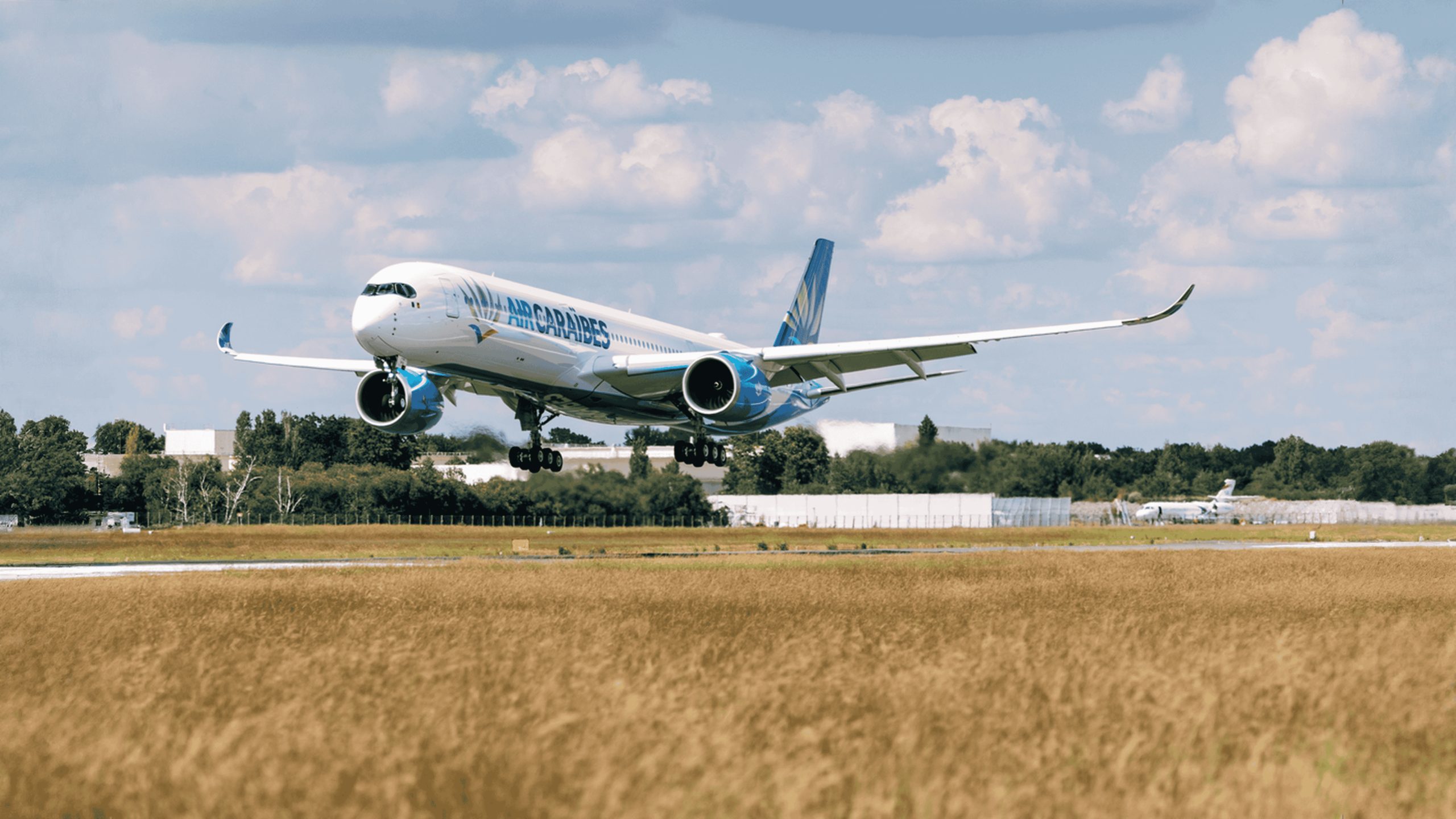
The company distinguished itself by becoming the first French carrier to operate the Airbus A350 XWB. It will continue on this momentum starting October 15, becoming the first to operate flights to Saint-Martin Juliana in the A350-900.

In terms of network, the airline currently serves nine destinations from Paris-Orly. It maintains a dense schedule with up to 120 long-haul flights and around 190 regional flights per week. To support this activity, Air Caraïbes relies on a fleet of 13 aircraft (including seven latest-generation Airbus A350 XWB) and the commitment of more than 1,200 employees.

To read: LIAT and Air Caraïbes join forces to strengthen Caribbean connectivity


A major contest to thank travelers

To celebrate this anniversary, Air Caraïbes has launched a major prize draw titled “30 Million Thanks!”. The campaign, which begins this Tuesday, June 2, 2026, will run until June 11, 2026.

Completely free and with no purchase requirement, the contest is accessible directly on the airline’s website.

It is open to residents of Guadeloupe, Martinique, French Guiana, Saint Martin, and mainland France. Up for grabs for participants: 10 round-trip tickets to be won on the airline’s transatlantic network.

.

Air France-KLM and Transavia Offer Free Changes on Summer Tickets


Air France-KLM, Transavia dégainent des billets modifiables sans frais pour l'été - Depositphotos.com

CroisiEurope


As the summer season approaches, the Air France-KLM group affirms that its airlines Air France, KLM, and Transavia will be able to transport all of their customers this summer.

Already at the Travel Companies Congress in Disneyland Paris at the start of May, Henri Hourcade, Senior Vice President France of Air France-KLM, stated: “Our summer program will be kept. No flight will be canceled for reasons related to the price of kerosene”.

In a press release published on Tuesday, June 3, 2026, the group indicates it is actively preparing for the peak summer period and wishes to assist travelers who have not yet booked their holidays.

Benjamin Smith, Chief Executive Officer – Air France -KLM, declared: During this period, our airlines will operate nearly 2,200 flights per day to more than 320 destinations around the world. Our teams are fully mobilized to welcome our customers, who have already travelled massively in May on the occasion of the various long weekends in France and the Netherlands

This statement comes as “questions about fuel availability have filled the media space”, notes the group. Air France-KLM nonetheless asserts that its airlines have the means to ensure their flight program and transport their passengers during the peak season.

The group also specifies that whatever the purchase date, Air France, KLM and Transavia commit to not seeking any fare adjustments in the event of rising fuel costs for bookings already confirmed and paid.


Air France – KLM, Transavia: Tickets Modifiable at No Charge for the Summer

Afin d’encourager les réservations et d’offrir davantage de souplesse aux voyageurs, Air France, KLM et Transavia lanceront à compter du 3 juin 2026 une campagne promotionnelle sur les voyages au départ de la France.

Dans ce cadre, les clients pourront bénéficier de billets modifiables sans frais, une mesure présentée par le groupe comme un moyen d’apporter davantage de flexibilité dans l’organisation de leurs déplacements estivaux.

Air France-KLM précise ainsi vouloir rassurer les voyageurs et les accompagner dans la préparation de leurs vacances alors que débute la période de forte activité du transport aérien.

Air Tahiti Nui and Air Tahiti Activate Their Codeshare Agreement


Air Tahiti Nui et Air Tahiti activent leur accord de partage de code - Photo : Air Tahiti Nui

CroisiEurope


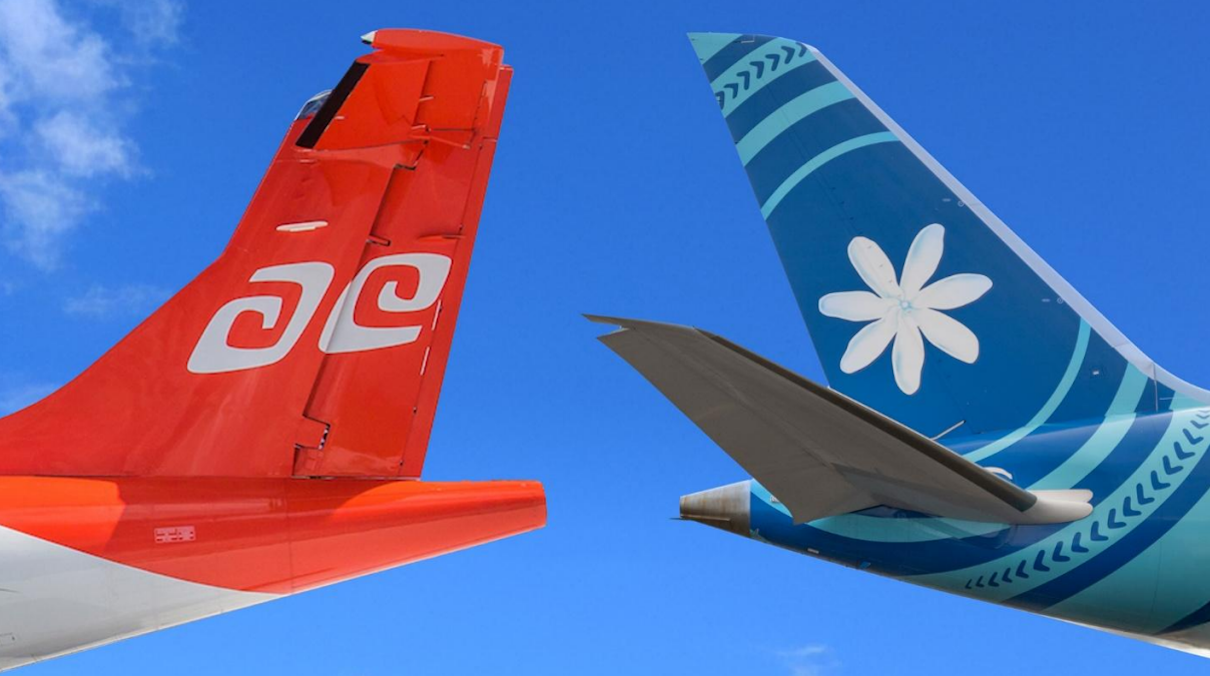
Air Tahiti Nui and Air Tahiti officially activated, on Wednesday, June 3, 2026, their code-sharing agreement signed in December 2025.

This commercial cooperation now allows passengers to book itineraries that combine Air Tahiti Nui’s international flights with certain inter-island connections operated by Air Tahiti under a single ticket.

Concretely, Air Tahiti Nui will now place its code “TN” on several domestic flights operated by Air Tahiti.

The aim is to simplify connections for international travelers wishing to extend their stay beyond Tahiti.


Un partenariat stratégique pour la destination

Thanks to this arrangement, customers departing from Europe, the United States, Japan or New Zealand can book in a single operation their international flight to Tahiti along with the connection to Bora Bora or Rarotonga in the Cook Islands.

International segments are operated aboard Air Tahiti Nui’s Boeing 787-9 Dreamliner, while inter-island services are managed by Air Tahiti on ATR 72.

For the two Polynesian carriers, this partnership aims to streamline the travel experience and to strengthen the destination’s appeal.

The agreement also marks a new milestone in the commercial rapprochement between the two carriers, who intend to facilitate access to the major tourist islands of the South Pacific.


Amelia Brille Published by Amelia Brille TourMaG.com Editor
See all articles by Amelia Brille

  • picto Linkedin
  • picto email
Add TourMaG to your Google News feed Google Actualités icône  

Failures: Should We Expect an Air Pocket?


Défaillance : faut-il s'attendre à un trou d'air ? Depositphotos.com

CroisiEurope


The APST today presents solid finances.

Record equity, strengthened liquidity, and controlled claims: nearly seven years after the Thomas Cook shock, the tourism guarantor appears to have regained some color.

Encouraging indicators are reinforced by the vitality of business startups and the arrival of 306 new members in 2025.

That said, zero risk does not exist in tourism. Despite tighter management and stronger control tools, the APST had to deal with 27 failures last year, including Jacqueson Tourisme, which required handling close to 500 cases, representing more than 2,000 clients.

2026 is no exception, with the failure of Dogan Voyages, considered one of the year’s major cases. Despite the guarantor’s solid financial results, the sector remains exposed.

Beyond this failure, concern is indeed present.

“If 2025 has been another very positive year, caution remains for 2026. The outlook for international tourism is moving downward, driven by an uncertain international context that strongly impacts our sector,” recalls Mumtaz Teker, president of the APST.

Indeed, American and Israeli strikes against Iran have plunged global tourism into a new phase of uncertainty.

After having urgently managed the repatriation of travelers—as well as substantial costs for professionals—the sector now faces a form of consumer reluctance.

Bookings are slowing down: as with Selectour, whose tourism sales show a 24% decline in March, April and May…


“Each month, it slips a little further. This is not an economic crisis, but a psychological one,” notes Laurent Abitbol, chair of the executive board of Selectour, who invites its members to “weather the downturn” while awaiting a potential rebound.


With persistent inflation, geopolitical tensions, rising fuel costs, and a gloomy climate, many people are delaying their travel decisions.

And this is probably where the main concern for the coming months lies.

If the summer is far from guaranteed, last-minute bookings could help limit part of the damage… unless the French ultimately favor nearby holidays, or make budget choices that disadvantage travel agencies.

Because while all observers agree that the crisis will not erase the desire to travel, consumers could temporarily adopt a more wait-and-see attitude, preferring to secure their budgets in a tense international context.


Will they ease off the brake as the sunny days approach?

It remains to be seen whether last-minute bookings will be enough to rescue a summer season that still looks highly uncertain.

Because the main worry centers on the return.

In tourism, many operators collect payments today… but settle their suppliers after customers depart. When bookings slow down abruptly, the machinery can quickly seize up and weaken some players.

Social charges, rents, loan repayments, and supplier payments continue to fall due each month, regardless of the level of bookings.

Thierry Millon, Director of Studies at Altarès, had not he urged to remain especially vigilant in the coming months? He believes that “the sector is clearly in difficulty,” even though activity remains relatively resilient compared with other service sectors.

The risk is therefore to see financially strained companies emerge, facing major deadlines with weakened cash flow.

Announcements surrounding the Iranian conflict are now constantly evolving, with threats of escalation, temporary ceasefires, tensions in the Hormuz Strait, and contradictory statements from the various parties.

A fragile, oscillating situation that fuels uncertainty and prevents travelers from projecting themselves with confidence. And without confidence, there is no visibility… precisely what the sector needs most today.


Céline Eymery Published by Céline Eymery Editor-in-Chief – TourMaG.com
See all articles by Céline Eymery

  • picto Facebook
  • picto Twitter
  • picto Linkedin
  • picto email
Add TourMaG to your Google News feed Google Actualités icône

Carry-On Luggage, Delays, Refunds: What Could Potentially Change for Air Travelers

“Only 38% of eligible passengers currently exercise their rights.” That is what the association Que Choisir Ensemble, which defends consumers and users, asserts. But traveling by air in Europe could soon take place under new rules. After more than thirteen years of discussions, the European Union is preparing to amend Regulation (EC) No 261/2004, the reference text governing passenger rights in cases of delay, cancellation, or denied boarding since 2004. On Monday, June 15, 2026, negotiators from the European Parliament and the Council reached a provisional agreement on this long-awaited revision.

A compromise presented by Brussels as a major advance, although several consumer-advocacy groups strongly nuance this enthusiasm. The President of the European Parliament, Roberta Metsola, welcomed an agreement she deemed balanced: “The Parliament has always been the staunchest defender of air passengers’ rights. This agreement will strengthen air passenger rights across Europe. It will bring more transparency and predictability for both consumers and airlines, without imposing unnecessary administrative burdens on our industry. Parliament fought hard to make travel fairer and procedures clearer, and this is what we have managed to achieve.”

A Framework for Travelers Long Threatened

Since 2005, and except in exceptional circumstances, airlines operating in Europe have been required to compensate passengers in the event of cancellations or delays exceeding three hours. This regime is regularly challenged by the European aviation sector, which argues that the regulation costs them about €8 billion per year. For many passenger advocates, the principal merit of the new compromise is thus primarily to prevent a weakening of existing protections. The APRA, the Association of Passenger Rights Advocates, established in 2017 to defend travelers’ interests, shares a similar sentiment.

“Europe came perilously close to the harshest rollback in the history of European consumer rights. The Parliament deserves praise for stopping that,” stated Tomasz Pawliszyn, president of APRA, in a press release. He added, “We are relieved that the European Parliament stood firm. Given how these negotiations unfolded, especially in recent weeks, preserving the status quo became the best possible outcome.”

What Should Change for Travelers in Practical Terms?

Among the most visible changes is the handling of cabin baggage. Airlines will now have to display at the start of the booking process a fare that includes a carry-on bag. The initial price shown can no longer correspond solely to a ticket that allows only a bag to be placed under the seat. Travelers will also retain the right to a free personal item, namely a handbag, a laptop bag, or a small backpack, provided it adheres to the maximum dimensions of 40 × 30 × 15 cm. Moreover, in the event of a prolonged wait on the tarmac, passengers will receive stronger guarantees. After two hours with doors closed on the aircraft, they must be able to disembark. While waiting, the airline must provide water, access to toilets, and a comfortable temperature.

Indemnities Unchanged Despite Inflation and a Major Cut in Claim Deadlines

The amounts of financial compensation remain the same: €250 for flights up to 1,500 km, €400 for routes between 1,500 and 3,500 km, and €600 for distances beyond 3,500 km. Airlines, however, may reduce compensation by half on long-haul journeys if a rapid re-routing is offered or if the final delay does not exceed four hours. These sums have not been adjusted for inflation, a point criticized by the associations. Nevertheless, carriers will be exempt from compensation when the disruption results from extraordinary circumstances such as natural disasters, war, extreme weather, air-traffic-control strikes, or dangerous passenger behavior.

The reform’s main sticking point concerns the claim deadline. Passengers will have only nine months after their flight to file a compensation claim directly with the airline, whereas under French law, the period could extend up to five years. Airlines will, however, be required to send within four days, electronically, clear explanations of the procedure to follow after a cancellation or delay.

Better Protection for Families and Vulnerable People

The text also strengthens the rights of families and vulnerable travelers. Airlines must ensure that anyone accompanying a child under 14 can sit next to them at no extra charge. This rule also applies to passengers with reduced mobility, to people with disabilities, and to pregnant women. Passengers with reduced mobility will also have a right to compensation if an airport malfunction prevents them from reaching their boarding gate in time. The compromise is not yet finally adopted; the European Parliament and the Council must separately approve the text within six weeks following a legal review. A plenary vote is already scheduled for July.

The APRA nevertheless notes that the work is far from finished… “This result shows that passenger rights are among the most valuable consumer protections in Europe. The strength of public and political reaction to the proposed changes shows that Europeans are not willing to see these rights weakened, and certainly not in the name of convenience or cost reductions for airlines in the event of flight disruptions,” the association stated in its press release. “This message should guide future discussions on passenger rights policy. Yet the structural difficulties facing travelers have not vanished. If policymakers preserve the current framework after thirteen years of negotiations, we would have hoped for more significant improvements for passengers. These issues will need to be addressed.” Thus, while the reform brings several useful clarifications for travelers, it does not revolutionize a system many had hoped would be strengthened further…