

MICE in Tanzania: A Grand-Scale Incentive Travel Experience with Tanganyika Expeditions


© Tanganyika Expeditions

Climats du Monde


Tanzania is particularly well suited to incentive travel thanks to the richness of its landscapes, the diversity of its parks, and the excellent quality of its lodging offer. Canvas camps, lodges, and upscale properties allow the atmosphere of the trip to evolve as the journey progresses. The small time difference with Europe and the pleasant temperatures on the high plateaus are also valuable advantages for groups.


The safari, a highlight in its own right

In an incentive trip, the safari does not need to be overloaded with activities to leave a mark on participants.

The days spent in the parks naturally create peak moments: wildlife watching, discovering the landscapes, moving by vehicle, and conversing with the guides. Each outing retains an element of unpredictability, which gives every trip its own rhythm.

Our job is to design a coherent itinerary that fits the available time, without multiplying stopovers at the expense of the experience. The choice of parks, accommodations, and travel times is tailored to the group’s profile and the duration of the stay.


© Tanganyika Expeditions


Resources tailored for large-scale operations

Organizing an incentive also rests on practical resources.

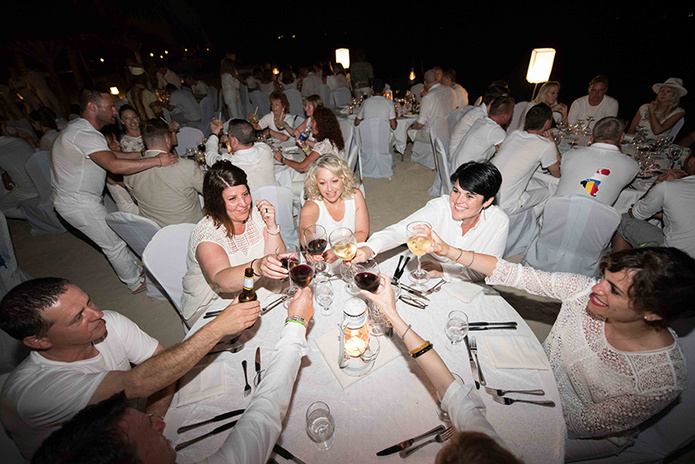
Our teams are accustomed to coordinating vehicles, guides, accommodations, meals, and transfers for groups of varying sizes. We can notably set up a bivouac capable of accommodating up to 200 participants, depending on the project.

This type of setup makes it possible to include an overnight stay in the heart of nature within a larger-scale program. Tents, catering, and on-site teams are brought together to create a true highlight, while maintaining an orderly framework.

This capacity illustrates a key aspect of MICE in Tanzania: the environment can be spectacular, but the success of a program also depends on meticulous preparation of every detail in advance.
© Tanganyika Expeditions


Zanzibar, a complete change of atmosphere

After the continent, Zanzibar can form a very different second part of the stay.

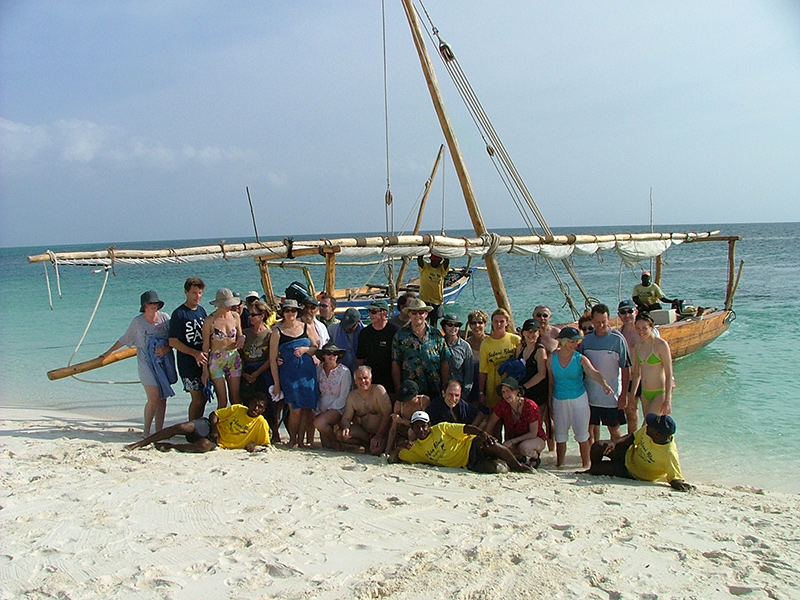
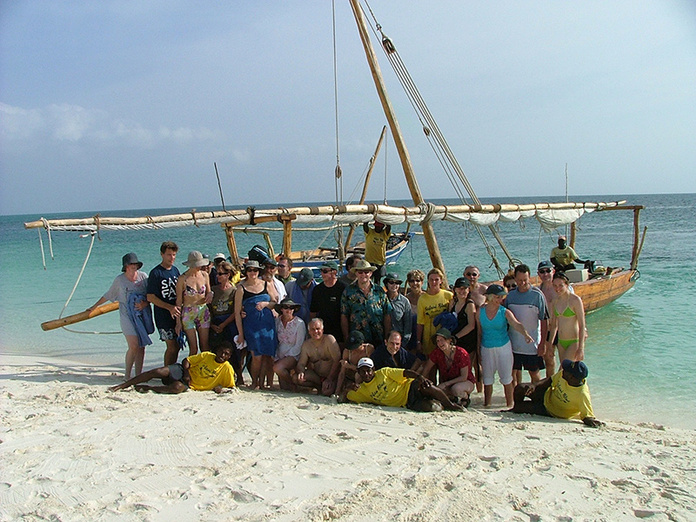
The archipelago combines Indian Ocean beaches with cultural heritage. Stone Town, a UNESCO World Heritage site, introduces a historical dimension before reaching the coast.

This stage can serve as a true transition in the journey: after several days devoted to safari, the pace becomes more relaxed. Participants can enjoy more free time, while still having the option to organize shared moments.

Zanzibar is therefore not merely a beach extension. The archipelago adds another facet to the itinerary without leaving the country.
© Tanganyika Expeditions


Ticketing integrated into the travel preparation

The success of a program starts well before arrival on site.

We have our own ticketing service, which helps our partners in finding air travel solutions tailored to the dates, the size of the group, and the planned itinerary.

Do not hesitate to contact us for more information or for a personalized quote.


From Fieldwork to Travel Design: Bram Van den Bossche’s View on a More Off-the-Beaten-Path Thailand


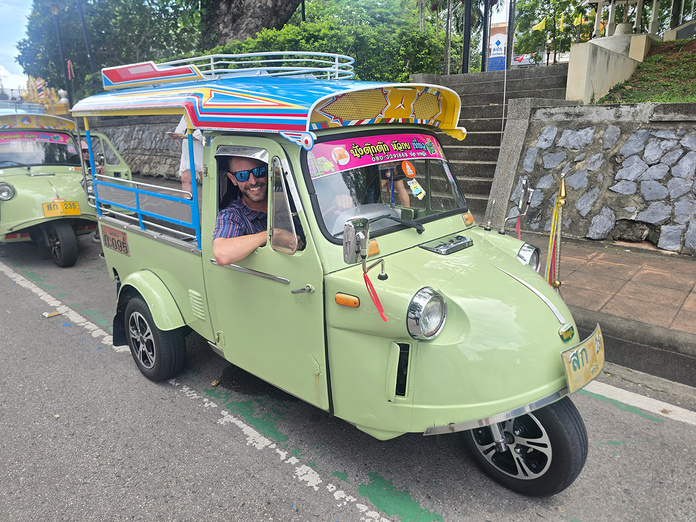
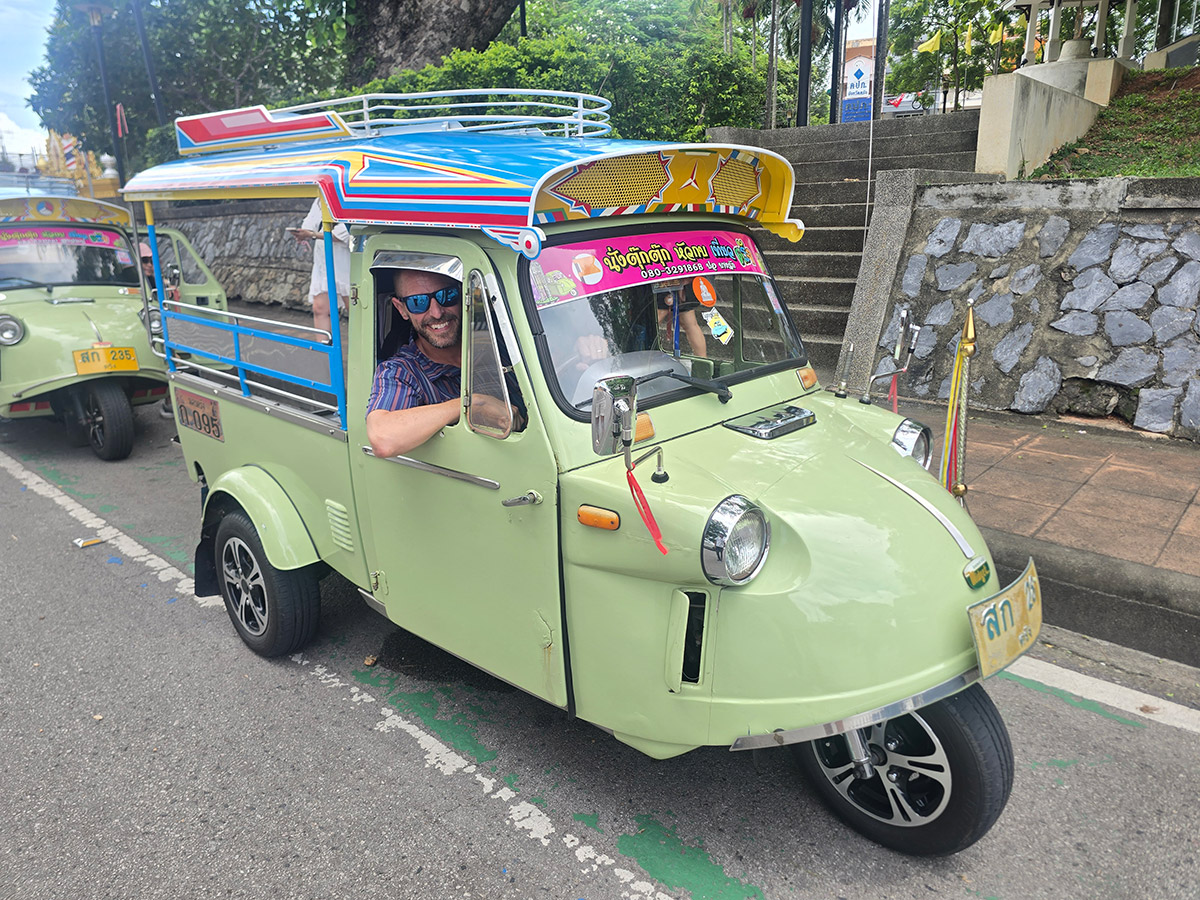
Bram Van den Bossche, Production Manager chez Easia Travel, à bord d’un « frog tuk-tuk » à Trang, dans le sud de la Thaïlande. © Easia Travel

Climats du Monde


It was upon returning from an inspection in southern Thailand that we had the chance to sit down with Bram.

With a head full of ideas and still fresh, he was able to share a few impressions and lessons drawn from the field, while reflecting on his experience and how it now informs the journeys thoughtfully crafted every day at Easia Travel.


You spent several years on the ground as a tour leader in Southeast Asia, while based in Thailand. What did this experience teach you about travelers’ expectations and their way of discovering a destination?

Bram Van den Bossche: « I’ve learned that travelers are no longer looking merely to check off the must-see sites, which they often already know from social networks or the Internet. Of course, they still want to experience them in person, but it’s frequently the experiences around those sites that truly make the difference. Authentic encounters, unexpected moments, and lesser-known discoveries are often what they remember most. »


Today, when you evaluate or build an itinerary in Thailand, how does this hands-on field experience influence your way of working?

Bram Van den Bossche : « Many itineraries look excellent on paper but can be a nightmare in reality. Changing hotels every day, with long transfers between stops, lets you see a lot in a short time, but it can also be very tiring.

I’ve led trips like that in the past, but I’ve also run tours with a slower pace, and I’ve seen a real difference. On fast-paced journeys, travelers often finished tired, feeling they would have liked more time. On slower trips, they left more satisfied, with the sense that they had built a true connection with the destination. »


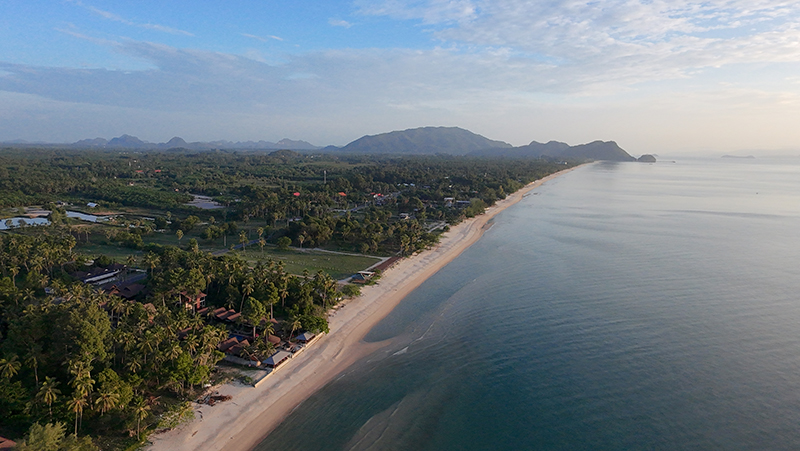
Khanom Beach – Une côte encore préservée, loin des sentiers battus. © Easia Travel


After almost 18 years in Thailand, are you still surprised by the destination?

Bram Van den Bossche : « Absolutely. I would say most travelers only see the country’s best-known sites. But once you stray a little from the classic routes, there is a lot to explore and discover.

In the South, for instance, regions like Khanom, Phatthalung, or Trang offer a completely different facet of the destination, with well-preserved landscapes, local communities, and experiences still seldom visited. Thale Noi Lake in Phatthalung, or certain small communities around Surat Thani, are excellent examples.

And even in more well-known places like Bangkok, Phuket, or Chiang Mai, there are still many local neighborhoods, restaurants, and experiences that you only uncover if you know where to look. »


You recently explored several regions of Southern Thailand. What stood out the most during this inspection?

Bram Van den Bossche : « Precisely what I was mentioning earlier. The whole region and the trip were stunning, but as soon as we moved away from the well-trodden itineraries and famous sites, we found ourselves in local communities, in very peaceful and authentic environments. For example, our very first meal took place within a local community in Surat Thani. It was simple, yet truly delicious, featuring dishes you would never find on a hotel menu.

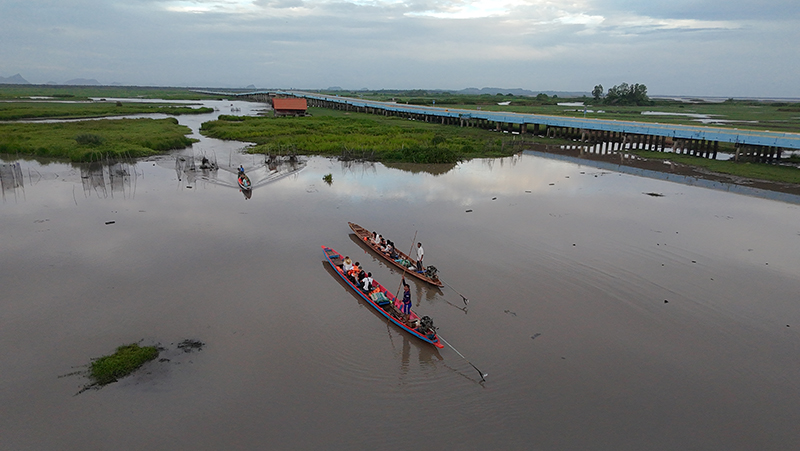
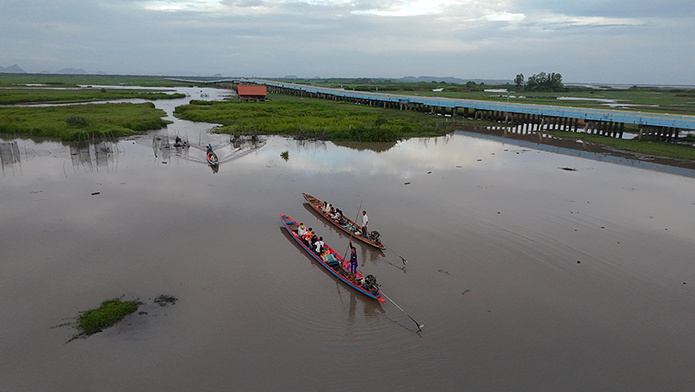
I also greatly enjoyed Thale Noi Lake, in Phatthalung. We set out early in the morning by boat, in a very calm atmosphere among lotus, birds, water buffalo, and small scenes of life around the lake. It’s the kind of simple, but highly memorable moment that reveals another facet of Southern Thailand. »


Les deux embarcations des équipes d’inspection d’Easia Travel sur le lac Thale Noi. © Easia Travel


In a destination as competitive as Thailand, what do you see as the added value of having a DMC team on the ground?


If you had to offer a piece of advice to a travel professional who wants to present a more intimate Thailand to their clients, what would it be?

Bram Van den Bossche : « I would especially urge not to pit the must-see attractions against more intimate experiences. It’s all about balance and the client profile.

For curious, flexible travelers who welcome a bit of unpredictability, you can easily complement the big classics with less-visited regions, more local experiences, or unexpected stops.

The goal is to find the right balance to offer a trip that is smooth, original, and truly tailored to each person’s expectations. »

It is with these few tips that our conversation with Bram ends. After nearly 18 years in Thailand, his perspective remains deeply rooted in the field, curiosity, and the search for new experiences. An expertise he now brings to the journeys developed by Easia Travel, with a commitment to offering itineraries that are increasingly fair, original, and attuned to each traveler’s expectations.

If this vision of the destination inspires you, contact our Easia Travel team in Thailand now to discuss your upcoming projects.


Du terrain à la conception des voyages : le regard de Bram Van den Bossche sur une Thaïlande plus confidentielle
Alex Lodola

[email protected]

www.easia-travel.com

facebook linkedin youtube

>> Easia Travel Cambodia in the DESTIMAG Directory

>> Easia Travel Laos in the DESTIMAG Directory

>> Easia Travel Thailand in the DESTIMAG Directory

>> Easia Travel Vietnam in the DESTIMAG Directory


Travel Tech: How DIGITRIPS Simplifies Travel Distribution

© DIGITRIPS et Adobe Stock

Climats du Monde


With its new series “Travel Tech Inside,” DIGITRIPS Tech, the tech backbone of the DIGITRIPS group, aims to make the technologies that enable searching, connecting, distributing and selling travel more accessible. The objective: explain simply what lies behind a booking, without multiplying acronyms — and to reaffirm a belief: technological complexity should stay in the background so that the experience itself remains simple.

This pedagogy does not stop at this article: DIGITRIPS Tech is applying the same explanatory effort on the blog digitrips.com, where every topic addressed here is revisited and explored in depth through dedicated content.


Behind a hotel booking, an ecosystem that has become complex

Dozens of players and data to connect

What kind of players lie behind a search that takes only a few seconds on a booking site? Hotels, chains, bed banks (also called bed banks, those wholesalers who pool hotel stock), tour operators, online agencies, TMCs, booking platforms and other distributors must move large volumes of data: availability, rates, cancellation terms, descriptions, visual content, or payment rules.

Historically, these exchanges relied on well-known professional tools: the GDS (Global Distribution System), which centralizes the offering for agencies; the channel manager, which synchronizes a hotel’s rates and availabilities across all its sales channels; or the PMS, the management software used at the hotel reception. Travel tech today complements or modernizes these traditional building blocks rather than replacing them.

With this diversity of players, there is also a multiplication of content sources. A distributor can now combine direct hotel contracts, several third-party providers (notably bed banks) and its own commercial agreements. Each connection has its own technical and contractual rules, and must be integrated, maintained and steered over time.

See the guide to hotel distribution by DIGITRIPS.

Accessing the offer is no longer enough

The challenge is therefore no longer merely to access the offer: it must be made truly usable. How to aggregate contents, harmonize data, limit duplicates, compare rates, and apply the right distribution rules? That is the real work, often invisible.

What is at stake for hoteliers? It is different, but equally strategic: being able to distribute more broadly their negotiated contracts, without multiplying technical connections or losing control over their commercial terms.

These operations never appear on the end-user side. Yet they play a direct role in the speed of a search, the relevance of results, price competitiveness, and the reliability of the booking. Travel tech is therefore not merely a technical layer: it has become the indispensable infrastructure for modern travel distribution.


DIGITRIPS Tech, the connector for hotel and travel distribution

DIGITRIPS Tech links the different links in the travel distribution chain, with a simple role: to facilitate the flow of inventory between suppliers, producers, and distributors through connectors, tools developed by the Group’s teams.

What is a connector in travel distribution? A connector is a technological solution that enables the systems of suppliers and distributors to communicate with one another — a kind of next-generation GDS, but designed to talk also with channel managers, the PMS, and direct contracts. The connector ties availabilities, rates and bookings together, while harmonizing data, to make a complex offer directly exploitable by travel professionals.

The group relies on a dual culture to build its connectors: historically a travel trader, DIGITRIPS, through DIGITRIPS Tech (formerly Koedia) also develops its own distribution technologies. This hybrid model allows approaching travel tech from concrete problems: how to faster integrate new content sources? How to enrich a hotel inventory? How to better manage distributed content while preserving margin?

Connecting travel content sources

A crucial step is to simplify access to the different travel content sources (air, land). A centralized integration enables distributors to connect to multiple providers without multiplying technical developments, often time- and resource-intensive. This approach also facilitates linking hoteliers who want to distribute their rates with professionals seeking new content.

Orchestrating distribution rules

Connecting sources is not enough: you must decide which content to display, under what rules, and for which markets. Orchestration allows you to govern the selection of providers, display priorities, commercial rules or distribution conditions. The technology becomes a control tool, not merely a means to access more offers.

Valuing available content

Connectivity must finally serve a business objective. An enriched, better-structured inventory that is easier to steer helps distributors strengthen the relevance of their offer: valorize negotiated contracts, broaden sales channels, adapt the distribution model to each company’s objectives. The goal is not to add another layer of technology, but to reduce the visible complexity for users.


In plain terms: the words of hotel distribution

Some simple landmarks to help you navigate beyond jargon — and which are developed in more detail on the blog digitrips.com:

• GDS: the historical system that centralizes hotel and air offerings for travel agencies.

• Channel manager: the tool that real-time synchronizes an hotel’s rates and availabilities across all its sales channels.

• PMS: the software used at reception to manage rooms, arrivals and departures.

• Bed bank (bed bank): a wholesaler that buys hotel stock in volume to resell to distributors.

• Direct contract: a commercial agreement negotiated directly between a distributor and a hotel, with no intermediary.

• Connector: the technology that links all these systems together and harmonizes their data and travel content.


Hotel distribution: combining third-party providers and direct contracts

Combining bed banks and direct contracts

For travel distributors, centralizing multiple sources allows expanding the available offering without managing each connection separately. A hotel aggregation platform can bring together bed banks and direct contracts within the same environment.

These two models complement each other more than they oppose. Bed banks provide broad, quickly accessible coverage. Direct contracts offer greater control over rates, commercial terms, and the relationship with hotel partners. A hybrid approach enables combining their advantages according to markets, destinations, and the objectives of each company.

Read the article: bed bank or direct contract, which hotel distribution strategy should you choose?

TravelPlugz: aggregating and steering all your suppliers

TravelPlugz centralizes content derived from the client’s contracts with its third-party suppliers (DMCs, Wholesalers, Bedbanks, etc.) and thus provides access to a broad and constantly updated inventory:

• Aggregate all housing contracts of distributors

• Optimize prices and the relevance of the offering

• Enrich distribution platforms.

A tool designed to master and structure a multitude of feeds.

Hotel Direct Access: exploiting direct contracts in real time

Hotel Direct Access focuses on direct contracts negotiated by the distributor with hotel chains or independents: secure access to negotiated rates, real-time availabilities, centralized stock management… A major competitive advantage for players with exclusive and differentiating contracts.

Complementary, these two solutions offer an aggregation power and full control of direct contracts, for richer content, greater relevance, and above all a complete price comparison across providers.


Turning complexity into an advantage


A sales team at your service

The members of the DIGITRIPS Tech team are at your disposal to accompany you. You can contact them at the following email address: [email protected].

To learn more about the DIGITRIPS group and its solutions, visit our site www.digitrips.com


Can Travel Agencies Still Make a Living?


Devis, service... Pour Eric Beatens, "le temps n’est pas gratuit, il doit être payé" par le client ! - Depositphotos

Climats du Monde


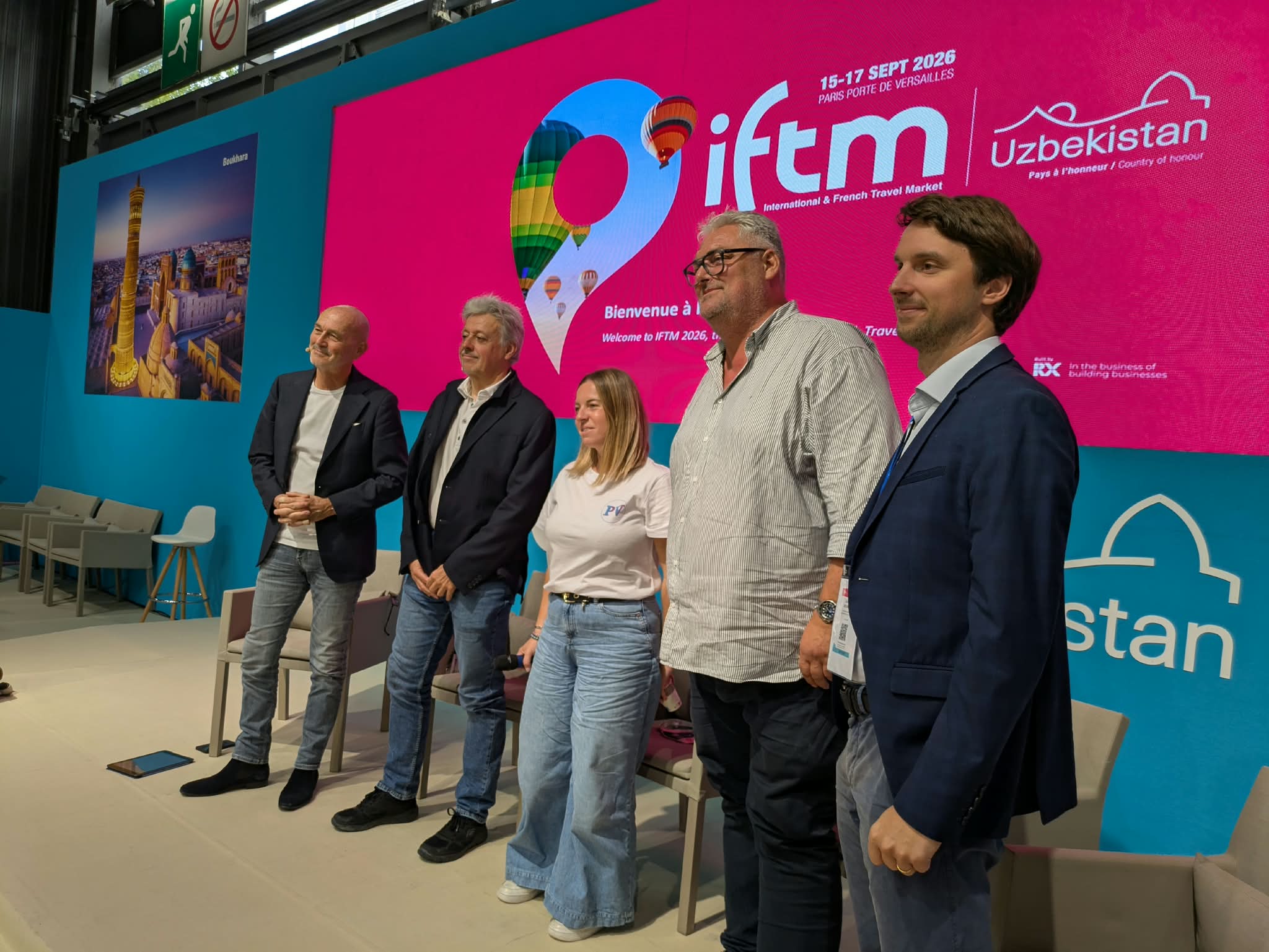
When mention is made of IFTM, the older generation’s eyes brighten as they recall Deauville, the blessed era for a generation.

Champagne flowed freely there; the very upscale seaside resort was privatized by the industry, and even stars would come to energize memorable soirées. Since then, not that the show has lost its luster, but the industry has undergone several mutations that have strongly impacted its business model.

There was zero commission, NDC, the Internet, and the proliferation of online travel agencies. Then producers, notably tour operators, moved into BtoC distribution.

Throughout all this, travel agencies had to carve a path to continue to exist.

“From the moment I bought Centrale Voyages, in March 2024, to today, the fees charged by our agencies, i.e., the honoraria, have collapsed in the corporate sector.

We have reduced the invoicing of our fees touched by ten times over ten years. It is largely due to digital players.

These companies are in conquest mode and will seek to be profitable only in the long term. We still make a living with small businesses, with whom we have a close relationship
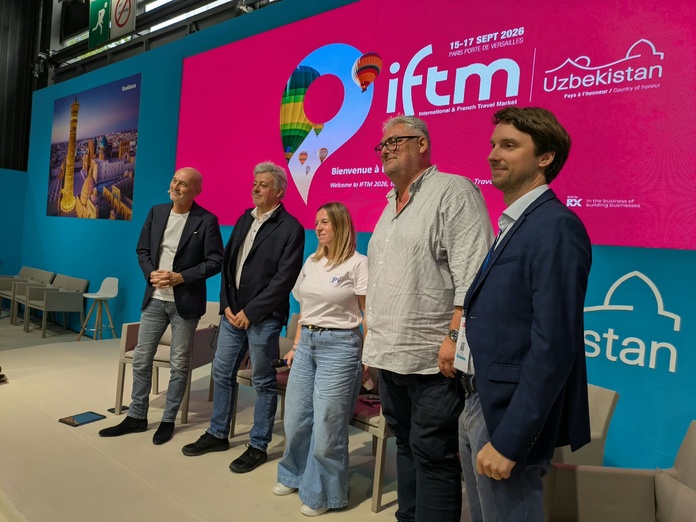
“, explained François Lévêque, CEO of Centrale Voyages, during the conference “Travel Agencies: How to Create Value?” organized at the IFTM on September 17, 2026.


Corporate agency: “we are reaching balance, albeit barely”

The tone on Plus Voyages is not exactly upbeat either.

The agency, which started out purely focused on leisure, has diversified into business travel to the point that this activity now accounts for 70% of its business volume.

A rapid growth that does not come without trade-offs.

“In corporate, we cannot margin. However, we can charge service fees, but the levels are so low that we cannot earn a living.

Then the suppliers’ commissions, we receive them at the end of the year, so we have to wait.

On this activity, we are reaching balance, albeit barely. The leisure side allows us to recover margin, around 10%, and the events side even more, around 25 to 30%, with higher margins“, continued Solenn Le Brazidec, the managing director of the agency.

A finding that seems to hold for mid-sized corporate agencies. The big players in the market, such as Amplitudes and others, manage to stand out thanks to their own technological solutions and volumes.

To improve this situation and generate margin, in order to keep teams in business travel, the leadership of Plus Voyages decided to launch a new brand in… leisure.

Legends of Africa offers tailor-made stays on the African continent, a way to generate added value. But the exercise is not always so straightforward.

Because, to exist, the new entity relies on online client acquisition, a process that comes with a cost and not only benefits.


Quotations, service… “Time is not free, it must be paid by the client!”


Pour François Lévêque, il existe encore "une quantité de services que nous n’arrivons pas à monétiser" - Photo : RP

“In our country, the notion of service is broadly hard to value. The availability of a service is the norm.

Traditionally, in business travel, we did not charge for our services. In leisure, I do not question our strategy of acquiring clients on the web, but we are asking a lot about quotes.

We take time to respond, share our expertise and know-how. It’s a bit as if all of this were being sold off, because we often do not receive responses from the people who contact us
“, asks Solenn Le Brazidec.

One observation that also applies to the press. For two decades, Internet taught readers that information was free. It nevertheless requires journalists, graphic designers and developments.

Information has a price. For those who want to support our journalists, subscription remains the best solution.

And that is what Eric Beatens, the president of Eric&TheTrip, is fighting against. “Time is not free; it must be paid. It is up to us to calculate the cost of the time spent on such or such request, in order to know what we can do and bill for it.

When I launched Eric and the Trip, I offered a travel advisory service, but I quickly stopped that, because the travel planner activity is not profitable. Bespoke travel is much more lucrative
“, he explains.


“A quantity of services we cannot monetize”

In 2023, Manor had established a pricing grid, akin to what banks or telecom operators in France implement. A bank transfer, an overdraft facility, a loan… nothing is free, and anyone who opens an account knows it.

If members did not really take hold of the subject, the initiative was interesting. It aimed to add value to what travel agencies do for their clients, be they business or leisure travelers.

“Today, everyone complains, but who offers something else? The only value proposition, in my exchanges with professionals, has been: prices must be increased. It is our responsibility to have a vision for the future and a business model“, Grégory Mavoian, then-president of the Manor network, explained.

We listed everything we do to create a catalog of pricing conditions. It isn’t fixed; it is evolving. It isn’t possible to sell at a loss; each service has a cost“.

It should be noted that, for certain services like rail, profitability is negative for corporate agencies.

On one hand, clients don’t want to pay anymore, but they request more and more technologies that require developments. On the other hand, suppliers pay commissions that increasingly resemble crumbs at the end of a meal, except for hegemonic players.

Under these conditions, it becomes very difficult to envision a bright future for this activity, which will probably end up affecting only a handful of companies, because salvation will come from volume.

“We are facing a quantity of services we cannot monetize. It occupies a large part of my time, but I have no answer to this problem, added François Lévêque.

We try to be differentiating, except that we do more or less the same thing. My job is to become more productive; I have no choice, otherwise we will disappear.

To increase our margins, we rely on remuneration of financial flows, and I go looking for pennies that linger everywhere. We are a bit at break-even. Without retrocommissions, we would have no value.

I feel that urgent situations are needed to demonstrate our value, but everything is quickly forgotten“, assessed the leader.


Increasing margins: agents face a “psychological barrier”

The two leaders confronting the financial downturn in business travel seek a remedy by developing leisure and the lucrative bespoke travel.

This lifeline must keep the entire operation afloat, thanks to the margins it yields, but also the cash flow generated by deposits.

For Éric Baetens, it’s time for the sector to assert itself and not be ashamed of making money.

“When I started, I turned to bespoke travel, because it is difficult to compare offers. The client has no reference point with other agencies. Standardized products will always be hard to margin.

After, regarding the margin to apply, at first I was at 13%, then, after the Covid period, I decided to raise it to 17%, due to costs and other factors. At the same time, Voyageurs du Monde achieves a margin of around 30%.

I didn’t tell my clients anything, these four points are almost painless for them. Except that this increase generated 30% more revenue. It allowed me to fund my accreditations, to pay the freelancer who handles these files.

The main hurdle is psychological; it is in our heads, us, the travel agents“, the travel agent confides, who also acknowledges that his case is specific because he is alone, without overhead or client acquisition costs.

By the way, according to Enterprises of the Voyage, new entrants who register do not come to compete with Booking or Airbnb, nor to impose a new technology.

They often rely on niches to develop their activity, thus benefiting from community involvement and effective word-of-mouth.

If the question of value is an eternal one, artificial intelligence comes to challenge the certainties that the web took thirty years to impose. In the corporate sector, this revolution is raising questions.

“In my view, AI is simply the continuation of SBT. At the time, we were already wondering about the impact on humans, and, let’s be honest, it is enormous. AI will have an impact on humans. With the implementation of Wondermiles, we reduced staffing needs by 35%.

In tourism, AI will help us gain productivity, because people always want to speak to a human and need someone to talk to on the phone or via video. Then trust remains paramount“, reassures Solenn Le Brazidec, the associate managing director of Plus Voyages.


Trenitalia vs Eurostar: How Competition Could Change Travel for Passengers


Trenitalia face à Eurostar : ce que la concurrence pourrait changer pour les voyageurs - Depositphotos.com @AndreyKr

MSC Croisières


After 32 years of Eurostar’s monopoly, the rail link between Paris and London is about to enter a new era.

 
With orders for 19 trains and a launch now targeted for 2029, Trenitalia is preparing its entry onto one of the last major international rail corridors still largely dominated by a single operator.

 
For Clément Hugon, cofounder and co-CEO of Kombo, this announcement constitutes “a huge announcement” for the sector. “This is the unlocking of the last international axis that was completely monopolistic“, he notes.

 
While this link is particularly strategic, it also presents significant constraints. Crossing the Channel Tunnel requires in particular specific trains and numerous authorizations, in addition to procedures related to crossing the border.

 
“It’s the most complex because it requires more authorizations, specific trains, there is customs. It’s a somewhat peculiar protocol“, explains Clément Hugon.

 
A complex market, but also particularly attractive. Today, around 11 million passengers use the Paris-London rail axis each year. According to Kombo’s cofounder, the capacity of the Channel Tunnel is nonetheless far from being reached: around 400 trains would run there daily, against a maximum capacity estimated at 1,000 trains.

 
The arrival of new operators could therefore significantly increase the number of travelers transported.


A Price Drop Expected

For travelers, one of the main effects of this opening to competition could be price-related. According to Clément Hugon, the prices currently charged on Paris-London remain high, notably due to the monopolistic situation.

 
“The monopoly has allowed Eurostar to impose very high fares, sometimes even higher than by air“, he notes.

 
At Kombo, the expectation is therefore for a significant drop in prices. “Clearly, in our view, ticket prices will fall a lot. We estimate the price drop at around 30%“, the cofounder states.

 
This estimate is notably based on observations from other markets opened to competition. Clément Hugon cites the example of Paris-Marseille, where Trenitalia recently entered the market against SNCF.

 
“Trenitalia arrived with an offer broadly less than 30% compared to SNCF, and SNCF adjusted fairly quickly“, he explains. He adds that a similar logic could take hold on Paris-London.


Eurostar Will Have to Adapt Its Strategy

The incumbent operator does not wait for its competitor to arrive without reacting. Eurostar has already ordered 50 new trains from Alstom, an investment that should allow it to increase and renew its capacity. For Clément Hugon, pricing strategy should also be a central element of Eurostar’s response.

 
The difference with Trenitalia’s entry on other markets lies, however, in the scale of the planned offering. “It’s not just a few Trenitalia trains, it’s a real offering that will clearly compete with Eurostar in volume“, he stresses.

 
Prices won’t be the only battleground. Frequencies, schedules, comfort and services could also become decisive arguments to attract and retain travelers.


Brussels and Amsterdam in Sight

The opening of the cross-Channel market could extend beyond the Paris-London axis. Among the next connections likely to attract competition, Clément Hugon mainly cites Brussels and Amsterdam.

 
“There are direct Amsterdam-London services and they are almost always full. There is strong demand because these are two major European capitals“, he notes.

 
For Kombo’s cofounder, the Brussels-London and Amsterdam-London routes thus appear as the most obvious markets to host more competition in the long term.


Competition Favorable to Kombo

For Kombo, the arrival of new operators also represents an opportunity. The platform, founded in 2016 by Clément Hugon and Matthieu Marquenet, now draws about one million travelers using its services to move around in France and across Europe.

 
“When there is competition, there is a need for comparison. And Kombo’s raison d’être is to compare and combine the different companies“, Hugon explains. The increase in traveler numbers is another favorable factor. If competition lowers prices and broadens the offering, it could help attract some air travelers to trains.

 
According to Kombo, the challenge goes beyond merely reshuffling market shares between Eurostar and Trenitalia. “We expect a doubling of traveler volume on this axis“, estimates Clément Hugon.

 
It now remains to wait until 2029 to concretely measure the effects of this opening. In the meantime, both Eurostar and Trenitalia will need to specify their respective offers. The Italian operator has another argument in its Executive class, which, according to Kombo, is particularly suited to the business clientele heavily present on Paris-London. This adds a new arena of competition to a market that is bound to transform.


Slow Travel and Solo Travel Are Growing in Popularity Among Europeans


Le slow travel et le voyage en solo progressent - DepositPhotos.com, melis82

MSC Croisières


Dertour Group publie les résultats d’une étude consacrée aux nouvelles façons de voyager des Européens.

Réalisée auprès de 8 000 personnes dans 13 pays européens, l’enquête met notamment en évidence l’intérêt pour des séjours plus lents et pour le voyage en solo.

Parmi les personnes intéressées par le slow travel, 58,5% souhaitent prendre davantage leur temps pour découvrir une destination sans se sentir pressées.

Pour 52%, ce mode de voyage est associé au bien-être et à la réduction du stress.


A quest for disconnection

La déconnexion numérique apparaît également comme une motivation importante.

48,9% des répondants considèrent les vacances comme une occasion de s’éloigner des réseaux sociaux et des sollicitations numériques. Cette proportion dépasse 50% chez les 25-44 ans.

Le rapport souligne aussi l’émergence du profil du voyageur JOMO (Joy of Missing Out), qui privilégie un nombre limité d’expériences plutôt qu’une accumulation de visites.


Solo travel is on the rise

Près de 30% des personnes interrogées envisagent de voyager seules dans les douze prochains mois.

Cette proportion atteint 37,6% chez les célibataires, tandis qu’environ un quart des personnes en couple ou mariées envisagent également un voyage en solo.

La France figure parmi les marchés les plus favorables à cette tendance, avec 32,2% des répondants envisageant un voyage seul, derrière l’Allemagne et la Suède.

Les voyageurs solo séjournent par ailleurs en moyenne 10,4 jours, contre 8,9 jours pour l’ensemble des voyageurs, et partent davantage hors saison.

Dertour Group indique enfin développer des offres adaptées à ces nouvelles attentes, avec notamment des circuits « GowiththeFlow », les Blue Cruises d’I.D. Riva Tours ou encore le concept hôtelier Slow Glamour d’ananea.

Egypt: Bookings Rebound, but Travel Professionals Remain Cautious


Égypte : les réservations repartent, mais les professionnels restent prudents - Depositphotos.com, calinstan

MSC Croisières


Is Egypt potentially emerging from the dip caused by the Middle East conflict?

After several months in the red, bookings are rising again according to the latest figures from the EDV-Orchestra barometer.

In August 2026, the number of bookings for Egypt increases by 21.1% compared to August 2025. An acceleration after a +4.8% in July, while the destination still posted significant declines in spring: -5.5% in June, -34.2% in May, -42.6% in April and -66.8% in March.

The year had started well. Order intake showed gains of +50.3% and +17.7% respectively in January and February 2026, still according to the barometer.

The destination’s visitor numbers were also in positive territory.

After reaching the record threshold of 19 million in 2025, international arrivals rose a further 4% from January to the end of May 2026 (vs the same period in 2025), according to the Egyptian Ministry of Tourism and Antiquities.

The number of French tourists posted an even stronger rise. Already up 31% for the entire 2025, they also recorded an increase of 22% between January and the end of May 2026 (vs the same period in 2025).


An end-of-year with last-minute sales?

Data that does not reflect the spring booking standstill, as trips were already booked.

« Sales are anticipated a bit more than for other destinations. They were therefore already secured and there were no cancellations. April thus proceeded normally, departures were full. Groups for March, April, May and June, which are key periods for this activity, were arranged without any issue », explains Bruno Abenin, Commercial Director of Travel Evasion.

« Egypt has never been directly involved in the conflict » recalls Gonzague de Gélis, president of the Kuoni France Group. « We did not cancel any departures; it was bookings that were halted. It stopped completely in March, April, May and June; then bookings slowly picked up in June, we were at -50% versus June 2025. After that, things picked up in July, with an acceleration in August », he sums up.

Gonzague de Gélis mentions a 60% rise in August bookings compared to last year, a year that was already considered good.

For these bookings made in August, the tour operator notes strong momentum for upcoming departures: +40% for 2027 departures and +100% for 2026 last-minute departures. « It is the destination that is showing the strongest growth in August » he adds.


A rebound, but professionals remain cautious

At Mondial Tourisme, Selatt Erdogan also confirms the restart, but puts it in perspective: « Yes, there is a rebound, it is indeed there, but we remain below our objectives. »

The tour operator believes in the destination and therefore expands his lineup with a new seven-night combo named “Treasures of the Nile to the Pyramids of Cairo“.

The product couples a Cairo discovery with a Nile cruise, in a shorter format than the nine-night combo “Pyramids to the Red Sea“.

At Travel Evasion, Bruno Abenin remains cautious too. For him, the year is “good,” though it could have been “excellent” after the successive impacts of March, April, May and June.

Looking at the current fiscal year ending in late September, the specialist estimates that Egypt activity should still grow by 14 to 16%. « We are riding the very strong activity we saw in Autumn 2025. July-August, which are not big sales months, are tracking the same as last year. The summer was driven by last-minute sales with still available capacities.

But we must be cautious with the figures: if we go from 2 to 4 bookings that is a 100% increase, and yet it remains small… Major deals will start next week, with our main distribution partners,
» he details.

He is counting on the upcoming holidays: « We are betting on putting quite a few seats back on sale for the All Saints’ holidays. Typically, at this time, order books are full.

Here, we have specifically restocked: we have added air capacity on the two All Saints departures, notably for the Nile cruise. We are betting on selling it now, last minute.
»

As for Cyrille Fradin, president of the Karavel-FRAM-Promovacances group, he, too, remains prudent. While he acknowledges the improvement in July and August, he notes it came after a period when sales were almost at a standstill. « We started from such a low base », he recalls.


The Grand Egyptian Museum of Cairo, an extra showcase for the destination

Recalling the strong sensitivity of Egyptian sales to the evolution of the geopolitical context, he adds: « Egypt actually lives at the pace of Iran ».

According to him, every new alert concerning the Iran-U.S. conflict or the Strait of Hormuz can immediately have commercial consequences for the destination, even if Egypt is not directly touched.

The true resilience indicator will be Egypt’s ability to sustain its momentum over time, he believes.

« Where I think we can really pause to say there is resilience is when, after these few shocks, we truly see it materialize and endure over time. At that moment, we could start talking about a recovery, but right now it seems a little early… »

Nevertheless, Egypt has an asset that few destinations can claim: an exceptional historical and cultural heritage, now complemented by the Grand Egyptian Museum of Cairo.

Open since November 2025, this new site provides an additional selling point for professionals, enriching an offering already anchored by the pyramids, temples, Nile cruises and Red Sea beach stays. A factor that reinforces Egypt’s status as a destination apart.


Céline Eymery Published by Céline Eymery Editor-in-Chief – TourMaG.com
See all articles by Céline Eymery

  • picto Facebook
  • picto Twitter
  • picto Linkedin
  • picto email
Add TourMaG to your Google News feed Google Actualités icône

How Much Investment Is Needed to Start a Travel Agency?


Au-delà des obligations légales, plusieurs dépenses dépendront de la manière dont vous souhaitez développer votre activité - DepositPhotos.com, DragonImages

MSC Croisières


L’ouverture d’une agence de voyages est une activité très réglementée. Les premiers frais concernent donc les obligations administratives. n
n
n La première est l’immatriculation auprès d’Atout France, obligatoire pour vendre des voyages. Son coût est de 295€ tous les trois ans. n
n
n Ce montant reste relativement accessible, mais l’obtention de cette immatriculation nécessite un dossier solide. Deux éléments sont indispensables pour que celui-ci soit accepté : une garantie financière et une assurance de responsabilité civile professionnelle. n
n
n La garantie financière protège les clients si l’agence n’est plus en mesure d’honorer ses engagements (faillite, cessation de paiement, etc.). Son montant dépend notamment du chiffre d’affaires prévisionnel. Dans la pratique, elle est souvent fixée autour de 200 000€, même si certains dossiers ont pu être acceptés avec une garantie de 50 000€. n
n
n L’assurance professionnelle, elle, coûte entre 300€ et 1 500€ par an, également calculée selon le chiffre d’affaires prévisionnel. Ces coûts sont lourds, mais non négociables : ils sont la condition pour vendre des voyages en toute légalité, et pour garantir la protection du consommateur. n
n
n Toujours dans les frais administratifs, il faut également prévoir les coûts de création de l’entreprise, généralement compris entre 200 et 600€, ainsi qu’un capital social suffisamment crédible. Même si aucun minimum n’est imposé, il est souvent conseillé de prévoir au moins 5 000€.


Costs to expect depending on your project

Beyond the legal requirements, several expenses will depend on how you plan to develop your activity:


• a CRM : to manage your clients, quotes and bookings, software is almost indispensable. Several travel-focused solutions exist, with subscriptions between €50 and €100 per month.

• a website : if you want to boost your online visibility, you’ll need a domain name and a website. If you build it yourself, budget around €300 per year. If you hire a professional, the budget typically starts around €1,500 and can exceed €15,000 depending on the features you want.

• a visual identity : logo, graphic charter, colors… This is what will allow future clients to recognize you. Again, the cost can be nil if you do everything yourself, or vary between €300 and €1,500 depending on the provider.

• marketing : online advertising, communication materials, trade shows, partnerships, referral partners or local press… The options are numerous and will depend on your development strategy.

• a commercial premises : working exclusively online remains the most economical option. However, if you want to open a physical agency, you’ll need to add rent, utilities, renovations, supplies, and any salaries.

• training : tourism is constantly evolving. It is therefore important to budget for ongoing training. There are specialized programs, as well as professional networks, associations (like Les Femmes du Tourisme) or cooperatives such as the EDV.

• familiarization trips : if you want to become a specialist in a destination or a type of travel, it can be prudent to budget for trips on site, meeting local partners or taking part in educational tours. This is often what then allows you to offer truly differentiating trips.


From an outsider’s perspective, the travel agent profession may seem straightforward. Booking a hotel online appears easy, but behind each file lie significant responsibilities, adjustments, small attentions, emergencies to anticipate, and numerous skills to master.

You assume responsibility by sending clients off to destinations around the world. This is precisely why the profession is so strictly regulated: these obligations exist primarily to protect travelers.


Can you get started with a small budget?

The good news is that yes. In recent years, new models, already well developed in English-speaking countries, are gradually arriving in France.

They allow you to legally practice the travel agent profession without having to set up your own agency right away. The principle is simple: you attach yourself to an already registered agency, which provides you with its license, its tools and its legal framework.

Depending on the models, you can operate as a business introducer or sell independently under the agency’s license, depending on the tools made available to you.

Read also: Independent travel advisor: the keys to getting started!

This opportunity, initially reserved for tourism professionals, is gradually opening up to people from entirely different backgrounds, notably those undergoing a career change. This evolution makes it possible to start without being confined to the travel planner status, which remains limited in support and can be off-putting to travelers.

In return, dedicated training and privileged support are provided to guarantee client protection all the way to the destination.

Opening your own agency therefore often requires tens of thousands of euros when you add up guarantees, tools and business development.

Fortunately, that is no longer the only way to practice this profession. Today, there are models that let you start gradually, test your activity and develop your client base before, if you wish, creating your own agency.

Storytelling for Travel Agents: Tell Me a Real Story, No Tall Tales


Image générée par IA Chat GPT

MSC Croisières


In the first episode, we talked about personal branding: the image you leave behind, the way you’re identified, what makes people want to trust you.

Today, we move to the second pillar: storytelling. And no, storytelling isn’t about spinning stories to embellish reality like a Titanic trailer, sunset, violins and the promise of eternal happiness as extra baggage.

Storytelling is much simpler. It’s giving meaning to what you do. It’s turning information into a living message, turning an offer into a projection, turning advice into useful content, turning a hassle into a lesson, turning expertise into concrete proof.

In plain terms, it isn’t about inventing a story. It’s about knowing how to tell the right one. And in tourism, there’s no shortage of material.


Your role is to restore meaning

A product sheet informs. A story makes it understood.

Saying: « A well-located hotel with a pool. » is information.

Saying: « This hotel, I would especially recommend to a family that wants to unpack, avoid long travel times and enjoy real comfort without spending their vacation in transit. »

There, you’re already telling something. You’re giving context. You’re helping the client to picture themselves. You’re transforming a technical spec into advice.

And that’s exactly where storytelling becomes useful. Because today, the traveler is overwhelmed by comparison sites, Google reviews, TikTok videos, platforms, influencers and promises of “best price.” He sees it all.

But he does not always understand what is truly meant for him. Your role is to restore meaning. A bit like in Men in Black: everyone sees the scene, but few really know what lies behind it.

In travel, behind a beautiful offer, there is often a detail that changes everything.

And this detail is often you who spots it.


Find all of JC’s best tips here by clicking here


Educating: Make it understood

A good storytelling doesn’t start with: “What am I going to tell?”

It starts with: “What do I want to make them understand?”

Example. You want to explain that an agency isn’t necessarily more expensive than booking directly.

You could write: “Using an agency doesn’t always cost more.” That’s true, but it won’t make a room jump up like a Freed from Desires chorus.

You could also tell: “This week, a client arrived with three tabs open, two hotels compared, a flight spotted and a real question: am I making a good deal or a mistake? By going through the file point by point, we found that the cheapest hotel was 45 minutes from everything, the return flight required an extra night, and baggage wasn’t included. In the end, the best price wasn’t the one they thought.”

There, you’re no longer in argument. You’re in demonstration. And that’s much stronger.


Telling a hotel story is telling an experience

In our profession, details are essential: dates, flights, schedules, board basis, transfers, hotel category, terms. But that’s not always what triggers interest.

A raw offer says: “7-night stay with all-inclusive, direct flights, transfers included, 4-star hotel.”

A told story offers: “Do you want to travel with family without worrying about every meal, every transfer and every expense on site? This formula is for that: you arrive, you drop your bags, the kids head to the pool, and you can finally breathe.”

The traveler no longer reads just a service. They picture themselves in it. As Forrest Gump would say, an offer is sometimes like a box of chocolates: what matters isn’t just the packaging, it’s knowing what’s inside… and whether the client will like the taste.


Behind the scenes: your best scenario


In tourism, our role isn’t to say yes to everything. Our role is to advise. And sometimes, advising means saying no.

No, this destination isn’t ideal at this time. No, this hotel doesn’t fit the profile. No, this cheaper offer might hide constraints.

When told intelligently, that “no” becomes proof of expertise.

“People often ask me if I can find something cheaper. The answer is yes, sometimes. But my real role isn’t just to find cheaper. It’s to find fair. And sometimes the cheapest becomes very expensive when it doesn’t suit the traveler.”

In Ocean’s Eleven, the plan works because every detail is thought through. In travel, it’s the same.


Storytelling must stay sincere!

Storytelling doesn’t mean writing a novel. A good narrative can fit in a few lines.

“She absolutely wanted a seaside hotel. After discussion, she mainly wanted to be able to do everything on foot. So it wasn’t the beach that needed to be sought first, but the right neighborhood. That’s also our job: understand the real demand behind the demand.”

Short. Clear. Useful.

A too-short correspondence, an out-of-the-way hotel, a transfer not foreseen, or an offer that hides constraints can become useful content.

Of course, we anonymize and respect clients. But we draw a lesson.

“This week, a traveler thought they had found a great offer. On paper, yes. In reality, the arrival airport was two hours from the city, the transfer cost a fortune, and the schedules wasted nearly a day on site. A good offer isn’t just a price. It’s a coherent whole.”


Storytelling is more about explaining to whom a destination fits… and to whom it does not fit.

“I would recommend this destination to those who like to take their time and enjoy a true local atmosphere. On the other hand, if you’re looking for constant activity and very festive evenings, it may not be the best choice.”

Storytelling must stay sincere! This is the key point.

Storytelling works when it is sincere. It should not turn a travel agent into a manufactured character, but reveal your view, your experience, your beliefs and your way of working.


Conclusion: tell simply, tell truthfully

At heart, storytelling isn’t about telling more. It’s about telling better.

Behind every offer, every hotel or every destination, there is a reflection. Our job isn’t only to reserve. It’s to listen, understand, advise, safeguard and accompany.

If we don’t tell our value, others will summarize it for us. So we might as well take control.

With sincerity, pedagogy, personality and hands-on experience. Because good storytelling isn’t about inventing a pretty story. It’s about telling the true value of your profession.


JC, whose real name is Jean-Charles Franchomme, has been working in the tourism industry for more than 20 years.

Since 2024, he is a sales and web executive for groups at Steam Evasion, where he leverages his dual field and digital expertise.

He is also the founder of the Facebook community “100% travel deals and expertise” which brings together 3,800 travelers.

An entrepreneur at heart, he also co-founded two influential Facebook groups in the sector: CDMV (Collective for the Defense of Travel Trades) and Helpdesk for Tourism Pros, which have become essential exchange spaces for professionals.

Best Travel Destinations for Retirees in 2026

When retirement comes, the French feel like traveling. According to a 2025 Ipsos study, 63% of seniors over 65 plan to travel in the next five years, and 70% have already done so in the past two years. And they are far from the only ones. Across the world, those over 65 who can afford it take advantage of retirement to discover new destinations. So much so that the travel site Firebird Tours has compiled a list of the best countries to visit as a retiree.

The travel site has decided to highlight places “where being 60 is better than being 20”. It bases this on several objective criteria: the share of seniors in the country, reduced rates in museums and in transportation, the percentage of places walkable on foot, indices of peace, safety and national health, as well as the number of UNESCO-listed sites and Michelin-starred restaurants.

The Best Retirement Destination Is Found in Asia

With these criteria, France only ranks 24th. Despite hosting 641 Michelin-starred restaurants in the country — more than anywhere else — the perceived safety level, which is rather low, costs it many points. It is therefore far from the top of the ranking, with Japan occupying first place. Thanks to its aging population and to the infrastructure designed for them, to its rich culture and to its safety beyond question, the land of the rising sun would be the best destination for retirees.

The first European country on the list appears in second place. It is Germany. This is notably thanks to its senior-friendly transport policy, including for non-German residents, to its 54 UNESCO sites and to its 336 Michelin-starred restaurants. Almost all other top-10 countries are European. We find Spain, Slovenia, Switzerland, Austria, Denmark, Finland and the Netherlands. Like France, Italy is pushed into the background and ranks 11th.

A Ranking You Can Create Yourself Based on Your Own Criteria

In tenth place we find Canada, the first American country to appear in the ranking. The United States sits at 20th, still ahead of France. Results quite different from the usual travel rankings. For a long time, France has been the undisputed leading destination for world travelers. Moreover, our seniors do not tire of it: 55% of their stays take place in France.

If you are a retiree looking for your next destination but only some of the criteria proposed by Firebird Tours interest you, you can look at the details. If we focus only on the criterion of special pricing for older travelers in transportation, Hungary comes first. In terms of safety, however, New Zealand tops the list. For fine dining, there is no secret: France is the place to stay.