Travel Agent: How to Build Your Personal Brand


1. Start by defining what you want to embody


Agent de voyages : comment développer son personal branding ? - Depositphotos.com Auteur Studciostock

Aer Lingus


Before publishing, you must know what you want others to associate with your name.

“Personal branding constitutes the summary that others can read about a professional when they are not in the room”, explains Stanislas Lucien, managing partner of Travel Insight and founder of Hautevoix, a company dedicated to personal branding.

The goal is not to talk about everything, but to build a coherent editorial line.

Being recognized as a specialist for a destination, an expert in a type of travel, or an observer of the sector helps create a specific territory of expression.


For Jessica Sorin, founder and CEO of the Manaventura group, a specialist in Polynesia, this reflection was essential: “Working on our brand image allowed us to identify what set us apart, to strengthen our positioning as an expert on Polynesia, and to fully own my voice.”


2. Do not aim to become an influencer

Personal branding does not require copying the playbooks of popular public content creators. A tourism professional does not need to multiply artificial videos or staged scenes.

“The key, in my view, is to stay true to yourself. Copying someone else doesn’t work.”, says Pierre Doucet, founder of Terre d’Ailleurs.

After trying the classic social media codes, he chose a more personal approach: “In the beginning, everyone was showing trips, weekends, a highly staged life. I realized we all ended up doing the same thing. Today, I mainly do Pierre Doucet, without trying to fit into an ideal image.”

The same logic applies to Myriam Tord, deputy head of Versailles Voyages and cofounder of the Helpdesk Official for Tourism Pros. Her presence on LinkedIn sprang from a simple desire: to explain a profession that is often poorly understood.

“Travel agents suffer from a lack of visibility and representation. People don’t know our trade, but you can’t blame them: who really talks about what we do and our added value?”


3. Publish content that is useful, not merely visible

The success of a personal brand rests less on quantity than on the relevance of the content.

At Manaventura, the posts that perform best directly address travelers’ questions.

“We don’t publish for the sake of publishing. Each piece of content answers a question a traveler asks themselves: budget, itineraries, accommodations, local culture or mistakes to avoid,” notes Jessica Sorin. The key to standing out rests on three main things: expertise, consistency and authenticity.”

For Myriam Tord, the best content also comes from the field: “This can come from a problem encountered at the Helpdesk, a discussion during a workshop, or a situation experienced at the agency.”

Her advice: don’t automatically look for the topic “that will get views,” but share a genuine point of view. “When a post is sincere and authentic, you can feel it.”


4. Find your rhythm and sustain it over time

One common mistake is confusing regularity with an obligation to publish. Producing content solely to feed an algorithm often leads to messages with little depth.

Pierre Doucet prefers to prioritize ideas over a strict calendar: “I don’t aim to produce a lot of content. I’d rather have a good idea than publish regularly without substance.”

Myriam Tord operates similarly: “I publish only when a topic speaks to me. When I have an idea, I note it on my phone or draft the post.”

That said, consistency remains essential. “The initial effects don’t appear until six to twelve months. The first year feels slow. The second year changes the game. Past content keeps producing results. The network grows. Mentions come without solicitation. The third year redefines the position. The professional becomes indispensable in their segment.”, recalls Stanislas Lucien. Personal branding is a long-term investment, built on accumulation.


6. Measure the real outcomes: trust, opportunities and sales

Personal branding is not limited to the number of views or followers. Its value is primarily measured by the relationship built with prospects and partners.


At Manaventura, the commercial impact is already visible: “A significant portion of our inquiries today comes directly or indirectly from networks. More than half of travelers discover Manaventura online before contacting us,” says Jessica Sorin.

For Pierre Doucet, networks contribute to several objectives: “Visibility, notoriety and above all conversion into sales.” But all of this works together.”

Stanislas Lucien also notes a shift in the sales journey: “The topic isn’t influence. The topic is trust.” A well-known and recognized professional inspires more confidence even before the first meeting.


7. Professionalize your approach when it becomes strategic

As the journey progresses, some players decide to structure their communications more systematically.

Jessica Sorin has gradually built a dedicated organization: “At first, everything rested on me: the agency, client files, networks, the content. Today, two people are dedicated to the group’s communications.”

Pierre Doucet has also chosen to work with support through a partnership with Travel Insight: “The idea is to provide a more professional framework, without completely replacing my way of communicating. My objective remains to sell trips.”

In a competitive sector like tourism, the ability to embody one’s expertise becomes a differentiating advantage. Personal branding does not replace the know-how of a travel agent. It simply makes it visible.


Caroline Lelievre Published by Caroline Lelievre Journalist – TourMaG.com
See all articles by Caroline Lelievre

  • picto Twitter
  • picto Linkedin
  • picto email
Ajoutez TourMaG à votre flux Google Actualités Google Actualités icône

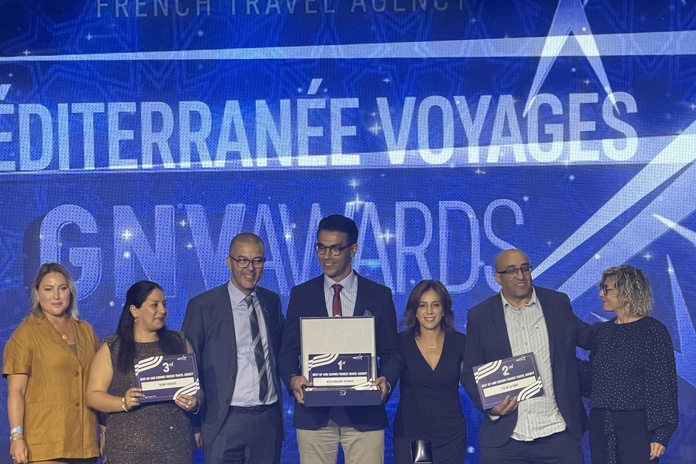
GNV Rolls Out the Red Carpet for Travel Agencies in Marrakech


C'est Sète, port d'attache français de GNV, qui accueillera la prochaine cérémonie des GNV Awards, à l'automne 2027 - Photo : LG

Aer Lingus


The travel agencies certainly deserved this spotlight.

With more than 50% of sales generated via indirect distribution, they constitute the primary sales channel for GNV.

Even more, they have grown by 6.2% year over year, a pace that outstrips the company’s overall performance.

A point that Matteo Della Valle, the company’s Chief Commercial Officer, did not fail to mention during the 7th edition of the GNV Awards.

Held in grand fashion this weekend in Marrakech, the event allowed participants to discover the Ochre City through several excursions, while enjoying the comfort of the Mövenpick Marrakech, a five-star establishment whose stars are well deserved.


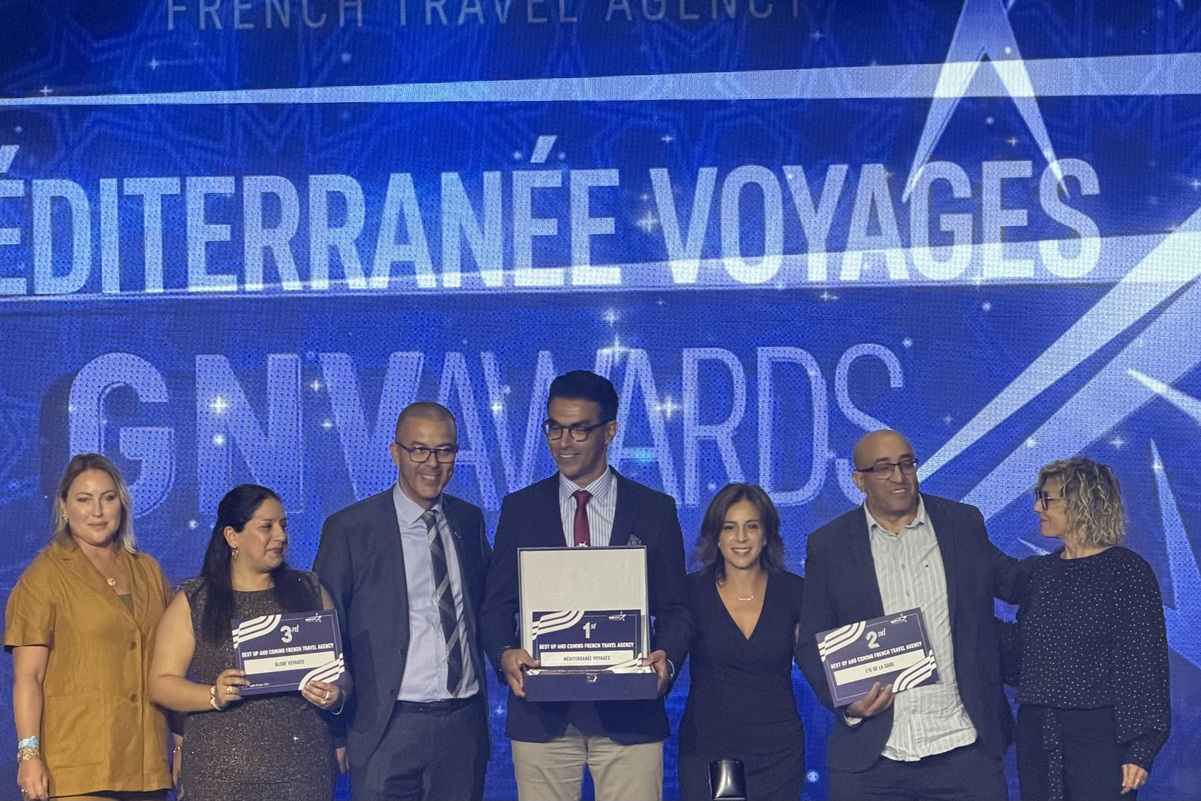
The Mediterranean Voyages Trophy

During this ceremony, which annually rewards the most successful partner agencies and welcomes new members into the Elite Partner and Elite Premium programs, the Méditerranée Voyages agency was named the most performing on the French market.

As proof of the importance placed on France, it’s Sète, the main French home port for GNV, that was chosen to host the next edition of the event.

From the port of the Hérault region, the company operates routes to Morocco (Tangier and Nador) as well as to Algeria (Algiers and Bejaïa).

Another eagerly awaited announcement: the opening of sales for summer 2027. It will take place on October 12, with a promotional campaign planned during the first two weeks of sales.


2.2 million passengers in nine months

GNV also took the opportunity to present its results for the first nine months of 2026.

The airline carried around 2.2 million passengers, up 2% compared with the same period of the previous year.

In North Africa, results are up in Algeria, while performances recorded in Morocco and Tunisia remain broadly stable compared with 2025.

Traffic to the Italian islands likewise continues to grow, with an 8% rise in Sicily and 6% in Sardinia. Volumes to the Balearic Islands and Albania remain, for their part, stable.


Four new LNG-powered vessels

The company also signed on Monday a three-year partnership with the Moroccan National Tourist Office (ONMT).

This agreement provides for joint promotional campaigns to support the kingdom’s tourism ambitions, which aim to attract 30 million visitors by 2030.

Finally, GNV unveiled the names of four future ships: GNV Jupiter, GNV Mars, GNV Venus and GNV Mercury.

These LNG-powered units are currently under construction at Guangzhou Shipyard International in China. The first, the GNV Jupiter, is slated to join the fleet by the end of 2027.

The vessel will be able to accommodate up to 2,500 passengers and will feature 500 cabins. It will also offer a freight capacity of 3,500 linear meters.


Laurent Guéna Published by Laurent Guéna Journalist – TourMaG.com
See all articles by Laurent Guéna

  • picto Linkedin
  • picto email
Ajoutez TourMaG à votre flux Google Actualités Google Actualités icône
Group Travel: ATR Launches Tool to Evaluate Responsible Offers


ATR launched in September a scoring system for analyzing offers aimed at organizers of group travel.

This tool complements the practical guide published in April 2026 following a survey conducted between June and December 2025 among 148 organizations, mainly CSE and COS.

It is designed to provide a common base for evaluating the proposals received and progressively integrate responsible criteria into tenders.

The scoring rests on five pillars: environmental impact, human impact, carbon footprint, responsible communication, as well as inclusivity and accessibility.


A Tool to Aid Comparison


ATR complète son guide dédié aux voyages de groupe avec un outil de scoring pour comparer les offres selon différents critères responsables - Photo : ATR

The criteria notably take into account respect for ecosystems, the program’s local anchoring, transport choices, the quality of experiences, carbon transparency, the fight against greenwashing, and accessibility.

ATR specifies that the objective is not to achieve a perfect score, but to provide a benchmark to identify strengths and areas for improvement of the various proposals.

The tool should also enable organizers to question tour operators and service providers about their practices and commitments.

The guide furthermore recommends integrating social and environmental criteria from the bids and terms of reference, notably by prioritizing, when possible, trains and public transport, accommodations that are committed and locally rooted, or activities that respect the environment and local communities.


Currencies: Euro Slump Weighs on Travel [ABO]


Economic Situation

L'euro est tombé ce lundi sous 1,12 dollar, au plus bas depuis mai 2025 - Depositphotos.com, HandmadePicture

Aer Lingus


All major currencies gained ground against the euro last week, and the euro itself slipped this Monday below 1.12 dollars, its lowest level since May 2025.

A strong dollar alone would not account for such a broad decline: the weakness originates from the eurozone itself.

Europe buys almost all of its energy abroad and settles those purchases in dollars. Each uptick in prices forces it to acquire more American currency, which in turn weakens the euro and fuels European inflation, at 3.8%.

High energy costs and a weak euro stem from the same root, and both add to the price tag of services purchased outside the euro area.

There are also two immediate reasons. First: the European Central Bank does not want to rush its tightening. It has raised its rate twice since June, but Christine Lagarde advocates for a “measured response,” as credit already becomes more expensive even before high energy translates into higher wages. Investors hardly expect another rate increase this month: the probability dropped from 60% to 18% for October, versus 73% for December.

The second: France’s debt. The spread between France and Germany on ten-year borrowing widened by 0.34 point over five sessions, to nearly 1.41 points on Friday, and the budget will only be examined by Parliament starting October 13.

The tension remains, in our view, and also according to State Street, a French affair.

Three escape hatches remain open for the euro: cheaper energy, a calmer French debt, or a weaker dollar.

Friday provided a test for the third option: the U.S. economy created only 29,000 jobs, and yet its currency did not retreat. Winter purchases are therefore being built on a persistently weak euro.


FX Rates: The Technical Outlook

Two thresholds gave way in rapid succession against the dollar.

The 1.13 level collapsed last week, with Friday’s session closing at 1.1253.

The year’s floor of 1.1216 was breached this Monday morning during Asian trading, the rate slipping to 1.116.

Up next are the hurdles at 1.11 and 1.10. North American hotel, cruise and incoming services priced in dollars thus cost more than in September.

The move isn’t limited to the dollar alone. On Wednesday, the euro hit its best level of the year against the Swiss franc, at 0.9486, only to shed 1.33% the following day; today it trades around 0.929 franc.

Over the week it also fell 1.17% against the British pound, and 0.45% against the Canadian dollar. It stands this Monday at 0.846 pounds, barely above its annual low of 0.8455.

Waiting for a rebound is essentially a bet on one of the three exit doors mentioned above. Splitting purchases, rather than committing all at once, reduces the risk this bet entails but does not eliminate it.

Dubai clearly illustrates the direct impact of this slide. The United Arab Emirates dirham has been pegged to the dollar since 1997, at 3.6725 dirhams per dollar, and it remains fixed.

A stay in the Emirates therefore tracks the euro against the dollar exactly, with no cushion: today it takes about 4.10 dirhams for one euro, versus nearly 4.13 on Friday. For departures already booked, the margin shrinks accordingly.


WEEKLY SUPPORTS WEEKLY RESISTANCES
S2 S1 R1 R2
EUR/USD 1.1028 1.1140 1.1366 1.1478
EUR/GBP 0.8329 0.8414 0.8584 0.8669
EUR/CHF 0.9140 0.9234 0.9420 0.9514
EUR/CAD 1.5714 1.5875 1.6195 1.6356
EUR/JPY 174.09 175.86 179.42 181.19


The supports and resistances shown below indicate, respectively, the lower and upper points within which prices are expected to move during the week.


The information presented in this publication is provided for informational purposes only and does not constitute investment advice, an offer to sell, or a solicitation to buy, and should in no case be used as a basis or be considered an inducement to engage in any investment.


Mondial Change is a French financial establishment, founded in 2015, specializing in the management of international payments and exchange risk.

Mondial Change supports a wide range of tourism players, travel agencies, tour organizers, tour operators, and inbound operators…

www.mondialchange.com

Contact : [email protected]


Technology, AI, and Clubs: Kepler Travel Takes on a New Dimension


Kristania Karci, Stéphane Michaut et Selim Kadhi lors de l'IFTM 2026 - Photo : AB

Aer Lingus


« To live happily, let us live hidden ». That’s a motto that suits Kepler Travel well.

Founded in 2014 by Sam Zribi and Selim Kadhi, the travel operator now records an annual turnover of €30 million and a net profit that has hovered in recent years around €1.5 million.

And yet, they are hardly ever in the spotlight. “We are a tour operator specialized in circuits, seaside stays and multi-destination combinations across the world. We work on white-label for mini-networks, coach operators, mass retailers, independent agencies, OTAs, etc.” says Sam Zribi, co-founder of the group and former head of the Tunisia-focused TO Amplitude (Amplitravel). “There, we are in very advanced negotiations with very large distribution networks.”


Kepler Travel, from DMC grouping to tour operator

To endure over time despite successive crises, the TO can notably rely on its model, a precursor for its era. “We did disintermediation before its time,” recalls Sam Zribi.

Originally, Kepler Travel is a consortium of several receptive DMCs. Our president, Selim Kadhi, managed to bring them on board to be able to offer agencies the right product at the fair price.

Brazil, then Costa Rica, Jordan, Oman, Vietnam, Cambodia, India, Nepal, Sri Lanka, Panama and finally the Mediterranean basin with Tunisia and Morocco… Kepler gradually expanded its reach worldwide, drawing in, on the other side, OTAs with packaged products offered at very favorable rates.

“We don’t take a margin on these products,” explains Selim Kadhi, president and co-founder of Kepler. “Our revenues come directly from the activity of the DMCs in which we are either shareholders or partners. Hence our strong operational mastery of price and product.”

New destinations in South America are expected to join the TO’s catalog soon.


Tailor-made products for every client

One of Kepler’s additional strengths, beyond competitive pricing, is its ability to offer differentiated products to each client, especially for groups or GIRs.

“Some fellow TOs have fallen into wholesale industrialization. They no longer have time for bespoke solutions. That’s why you see the same product in the mass market.

We, we try to target the distributor by creating for them their own circuit. We even have a dedicated team for bespoke services,

” notes Sam Zribi. “We have remained artisans.”

This is also the advantage of having teams on site. “We deliver within 24 hours. Moreover, with us the product manager is also the salesperson. He plays a forward-looking, production, and sales role. His end-to-end mastery is our strength, as his relationship with buyers across different networks is direct,” adds Sam Zribi.

Additionally, to always stay one step ahead in production, the B2B tour operator has set up an internal service charged with observing evolving client purchasing behavior: length of stays, booking lead times, etc.

In total, Kepler employs about ten people at its Paris headquarters, across the air, commercial and management areas. Support functions — back office, call center, collections — are located abroad.

Today, the TO counts between 200 and 300 partner agencies. “We work well with coach operators because we offer departures from the provinces,” adds the co-founder. Kepler is also known in the French-speaking markets — Belgium and Switzerland — as it offers departures from Geneva and Brussels.


A cutting-edge technology tool

Another strong point of the travel operator: its technology. “During Covid, we developed our tool to become one of the best on the market,” comments Kristania Karci, Deputy General Manager in charge of commercial and production at Kepler.

Today, we sell highly dynamic packages with transfers, land arrangements (i.e., hotel stays), and air travel, all while being connected to five airline APIs simultaneously. We have also recently become NDC.

It should be noted that on the air side, the TO charters flights during the summer, notably to Tunisia.

The next project concerns artificial intelligence. “We believe that within 5 to 10 years, the model of the classic tour operating, with strong commitments to air and land, will wear out. The upcoming Generation Z consumes in a different way. So, to keep the customer at the heart of our strategy, we have surrounded ourselves with the best in technical and IT. We are developing our own AI to automate as much as possible our sales processes,” continues Kristania Karci.

“We are a classic TO with the tools of tomorrow,” she sums up.


Kepler launches its wellness-focused club concept

Beyond its TO activity, Kepler also runs a travel agency in Palaiseau (91). There, it markets, among other things, ferry crossings to the Maghreb.

But the big novelty remains the launch of the first vacation club made by Kepler, entirely dedicated to well-being. Opened on July 1, within the Yadis Djerba 5-star, the Oléo Experience Family club offers a premium experience designed around family, well-being, and local immersion.

On the program: daily yoga, parent-child activities, sensory experiences, culinary workshops, and discovery of Tunisian culture.

“We have been working on this project for two years,” notes Kristania Karci. “Tunisia being ranked the second destination for thalassotherapy after France, we know they have the know-how to help us launch this new brand, which our distributor clients have asked us for,” adds Selim Kadhi.

After Djerba, the group already intends to position its Oléo brand in other countries, “by partnering with brands such as Iberostar, Magic Life (TUI), Melia,” lists the TO’s co-founder.

With all these projects on the drawing board, Kepler Travel has decided to recruit a familiar figure from the agencies to gain visibility. For a little over a month, Stéphane Michaut (formerly Naar Voyages) has been named Director of BtoB Development.

“Kepler has all the makings of a great company: solid production, technology that truly stands up, an adapted business model, and above all people who know their trade to the tip of their fingers,” summarizes the new director. It is now his mission to attract new distributors!


Ukraine: French Travel Agency Offers a Trip to Western Ukraine


L’agence française JMB Voyages propose un circuit "Noël en Ukraine" - Depositphotos

Aer Lingus


A year ago already, tourism professionals had traveled to Ukraine for a solidarity stay with the Ukrainian people.

In the spring, a new edition again allowed several industry players to discover the country’s reality, among them Jean-Marie Bernard.

The head of JMB Voyages, who went from selling dreams on glossy paper with Québec Le Mag to realizing travelers’ wildest dreams, as we reported in a previous article, then experienced an event that deeply unsettled him.

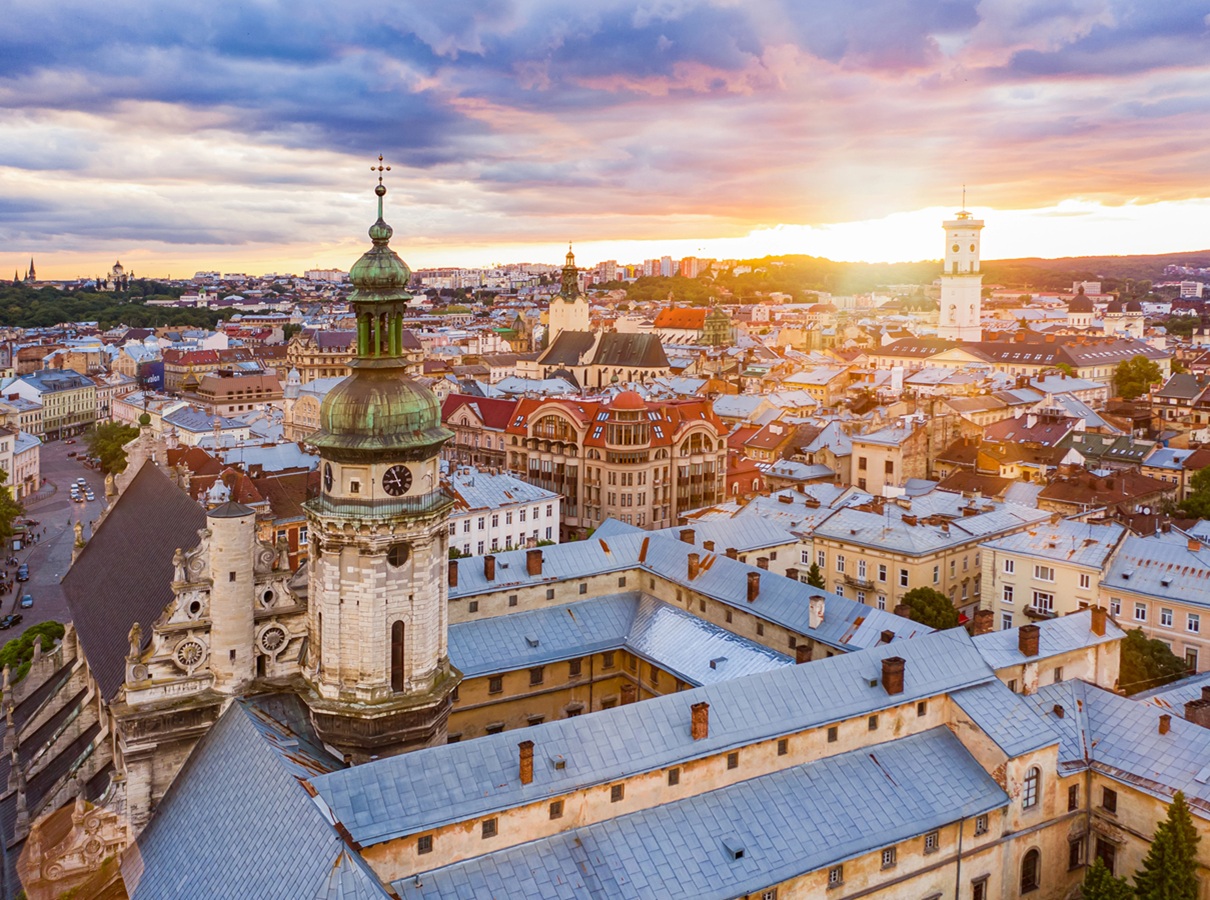
From that experience was born an idea: to offer, in turn, a trip to Ukraine, prioritizing the parts of the country spared by the conflict. It is an eight-day circuit, in December next, in the Carpathians and Galicia, around Lviv.

“During this journey, I befriended Olga Sansone (the director of Vacanture, a Ukrainian incoming operator). Before the war, she had six offices, but since then, activity has obviously slowed.

Following this stay and this meeting, Olga and I decided to give it a try. The idea is to help, with plenty of quotation marks, Vacanture to keep its head above water and to survive.

I am therefore proposing a trip to Ukraine, obviously in a conflict-free area.

Of course, that does not mean there has never been anything in this region, but I returned there on my own recently, and I heard no alert
“, explains Jean-Marie Bernard.


Travel to Ukraine: “I went to the country twice, in 2026”

A bet that may seem crazy, even troubling, and the organizer is well aware of it.

“I suspect that not all feedback will be friendly. I’ve talked about it around me; people call me crazy.

There is no financial objective for me, nor any publicity. I have visited the country twice this year. You know, this trip offers many beautiful things to see, but what will be most memorable are the encounters.

They are interesting for everyone, because they are also comforting for Ukrainians, who see foreigners who are neither diplomats nor humanitarians.

It is also a way to keep hotels and infrastructures, like the incoming agency, afloat while bringing, on my scale, a glimmer of hope
“, he confides.

Moreover, this is not the first initiative from a French operator.

Already in January last year, Nomade Aventure decided to create a journey in Transcarpathia.

A circuit that will only go on sale once the conflict is over, or at least when France Diplomatie indicates that it will be possible to travel there, changing the tint of its map, currently entirely red.

Just like JMB Voyages, the tour operator does not want to fall into voyeurism or dark tourism, but to offer a sign of hope to suffering populations.

However, unlike Nomade Aventure, for JMB Voyages, the Ukraine stay will indeed take place. It will run from December 10 to 17, 2026. It plans to explore the western part of the country, immersed in the Christmas festivities.


Travel to Ukraine: Lviv, the Carpathians, Drohobytch and Jovkva on the programme…

The departure will be from Paris, heading to Rzeszów, in Poland.

“We decided to pick a small airport really very close to the Ukrainian border.

We opted to avoid Kraków, because it is a large city and a very touristy destination. It would therefore have been difficult to pass through without visiting it. We really wanted to focus on Ukraine.

Then travellers will board a bus chartered by us to reach Lviv. I will be present on this trip, as will Olga, who will be our guide on this occasion
“, details the leader.

During the week, travellers will stay in one hotel, Leopolis, a mythical 5-star in the largest city in the west of the country.

It will then allow excursions across the region, to discover villages of the Carpathians, Drohobytch, a salt town whose wooden Saint George church is on the UNESCO list, or Jovkva, a Renaissance jewel…

“The idea is not to multiply accommodations. We have made the journey as pragmatic as possible.

I know the hotel, the restaurants, the museums, etc. I have no doubt about the quality and organization of what we will offer.

In Lviv, there is no problem. We will go to places not very far away. The center of Lviv has not been touched by the war, and fortunately, because it is magnificent.

There is a very intense cultural and social life. I myself was surprised by this; it is quite disconcerting. They live the present moment to the fullest. They are living life to the maximum present.
“, he explains.

This aligns with observations by Fabrice Del Taglia, head of Nomade Aventure, who noted that inhabitants live a normal life in a prosperous city reminiscent of Prague or Budapest.


Ukraine: “many people go there, there are many Europeans”

Now the task is to find participants.

And, unsurprisingly, the organizer does not expect a flood of applications.

“The main uncertainty lies in how potential participants will respond. I have no idea at all.

We are not at all on traditional marketing to sell trips.

The idea, to fill the trip, is to focus on people who have a particular bond with the country and the Ukrainians, such as associations, NGOs or friendly associations, this kind of audience. One has to be realistic: no tourist wanting to travel in December will choose Ukraine
“, Jean-Marie Bernard does not kid himself.

To depart, the trip must count at least 12 participants and, at most, 20 people will be admitted.

On the French Government’s travel advisory site, the country is formally discouraged, whatever the motive for travel.

Under these conditions, is it possible to send tourists on site?

“There are several legal issues in this matter.

The country is formally discouraged. Now, the recommendations of the MAE have no absolute value. The Court of Justice of the European Union explains well that these are factors to consider, but it is not because a destination is red that it is forbidden to go there.

It is also necessary to check whether there are indeed exceptional and unavoidable circumstances on site preventing proper execution of the contract.

In my humble opinion, it is not forbidden to send travelers. However, the fact that the country is entirely red automatically entails an insurance exclusion.
“, analyzes Chloé Rezlan, associate lawyer and co-founder Adeona Avocats.


Can a travel agency send travelers to a country at war?

Jean-Marie Bernard has of course asked himself the question.

“First of all, you should know that the country is not completely hermetic. Many people go there, whether NGO workers, diplomats, business leaders, etc.

I saw it when crossing the border. There are still many Europeans in general, French, Italians, Spaniards, Germans. Moreover, it is quite easy to go there.

As for insurance, travellers will automatically benefit from standard cancellation insurance, the cost of which is borne by JMB Voyages.

And medically, Olga works with a Ukrainian insurance company that covers all medical costs, as well as war risks. So, if ever an attack hits a place where we are, a response will be possible
“, the boss explains.

A way to respond to the doubts of the lawyer.

It should be noted that Jean-Marie Bernard maintains, like other French people, a special relationship with Ukraine since the large-scale conflict launched in 2022 by Russia.

“I hosted a Ukrainian family for a year at my home. In Champsaur, where I live, we also created an association of which I became president, Solidarité Ukraine Champsaur-Valgaudemar.

We have carried out quite a few initiatives to help these people, who fled the war, to integrate. In fact, I visited the family I had hosted this year. They now live in Kiev.

It is a very impressive city, which lives almost normally, aside from the alerts. Since my stay, the capital has unfortunately become a particular target of Russia, which makes life there very difficult today.

The trip we are proposing is more of a test run to prepare for the future, the post-war period. When life returns to normal everywhere, tourism in the country will no doubt be one of the sectors that will help reconstruction of the country and the nation
“, concludes the one who hopes for peace to restore Ukraine’s grandeur and its tourism.


Travel Agents Cup 2026: Who Will Succeed France’s Best Travel Agent?


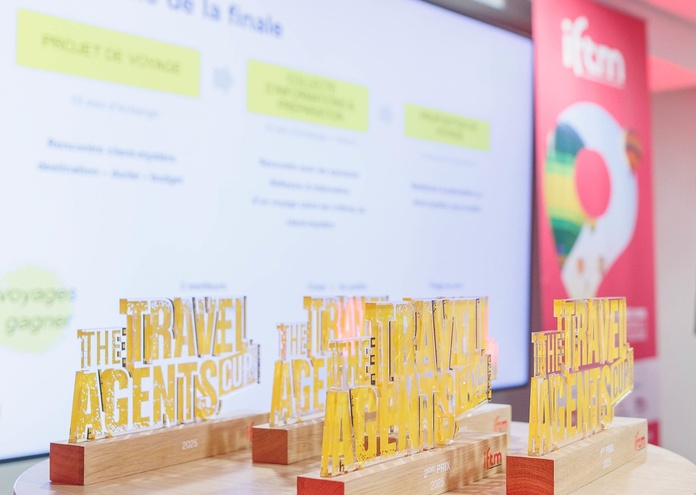
La Travel Agents Cup revient pour une 13e édition - Photo : IFTM

Aer Lingus


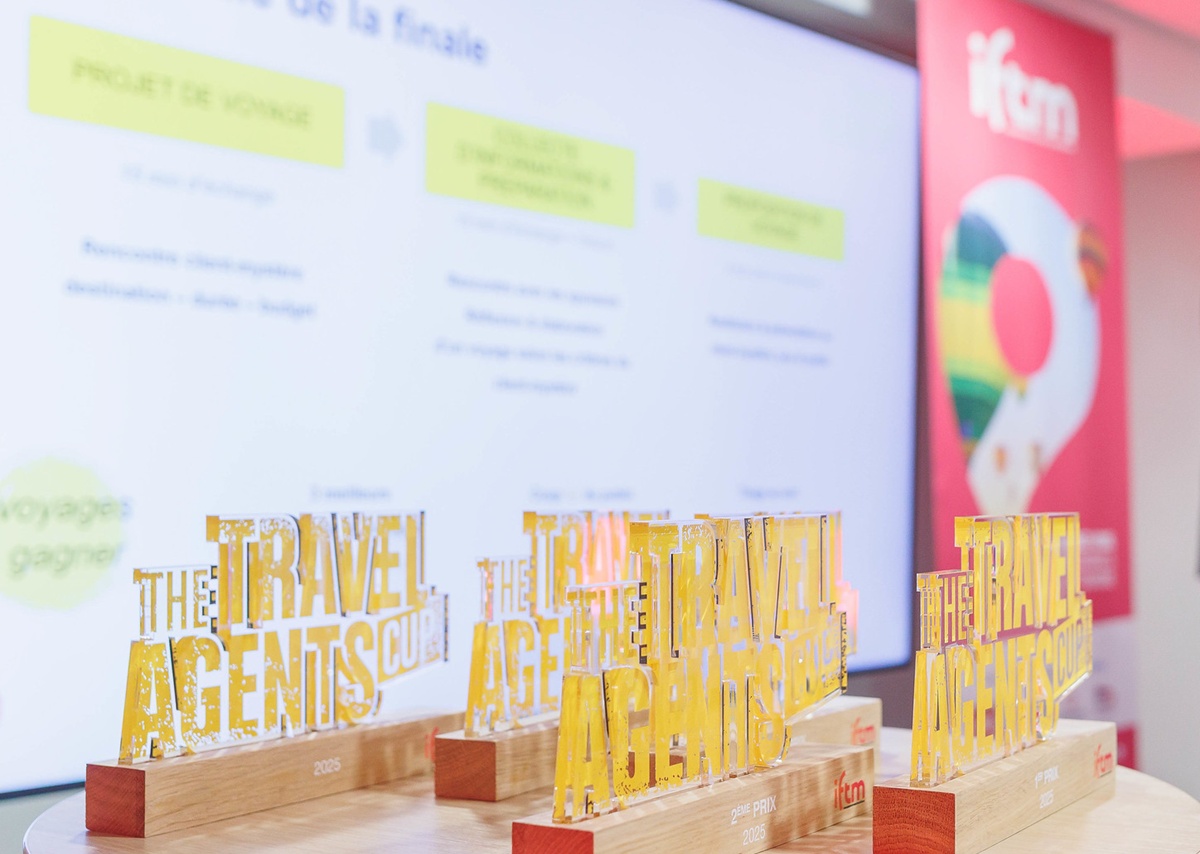
For its 13th edition, the Travel Agents Cup has selected ten finalists from the sixteen candidates who tried their luck this year.

Coming from all corners of France and representing different networks and agencies, they will meet on September 17, 2026 at 3:30 PM at the IFTM for a final that will test their ability to listen, advise and persuade, after an initial selection based on a candidacy video.


Ten profiles, one common goal

The finalists are :

– Gabin Blin-Le Tanter, Carrefour Voyages Angers Grand Maine

– Anaïs Devlieger, Havas Voyages Montreuil-sur-Mer

– Emma Gourdoux, Juen Voyages Le Pontet

– Malaury Laviolette, Navitour Compiègne

– Florian Minaux, TUI Store Nancy

– Amandine Mottola, Bleu Voyages Mougins

– Adeline Rimbert, Auchan Voyages Beauvais

– Rémi Roussel, Voyages Couture Marseille

– Vincent Signoret, Verdié Voyages Pau

– Marine Veyssiere, Rêve Voyages Brive-la-Gaillarde


A fictitious client… and no information to start

The final’s premise rests precisely on an element of unpredictability.

On the morning of September 17, each candidate will have twenty minutes to interact with a fictitious client. The peculiarity of the exercise: they will not know in advance either the client’s profile, itinerary, or budget.

It will be up to them to ask the right questions, understand their interlocutor’s expectations, and above all to quickly build a coherent proposal.

Once the needs are identified, the finalists will then have to look for the most suitable solutions directly at the stands of the competition’s partners.

An exercise that thus highlights both knowledge of products and the human and commercial qualities of the trade: listening, responsiveness, curiosity, the ability to rebound and to tailor a proposal.


Four minutes to persuade

In the afternoon, the cards will be redistributed. The ten finalists will take the stage on the Arena by Ouzbékistan, transformed for the occasion into a real travel agency.

They will then have only four minutes to defend their proposal in front of the jury and their fictitious client.

The jury will be composed of professionals from different sectors of the industry: Marie Allantaz for IFTM, Guillaume Beurdeley for Les Entreprises du Voyage, Jean-Charles Franchomme for the CDMV, Fabrice Guagliata for Air France, Stéphane Jaladis for the AJT, Guillaume Linton for ASIA and the Village of Tour Operators, Emmanuelle Llop for Equinoxe Avocats, Karin Mallet Gautier for Konect Agency / ADONET, Émilie Matti for AVIS, Aurélie Soulat for Costa Croisières and Myriam Tord for the Helpdesk des Pros du Tourisme.

At the end of the competition, four prizes will be awarded.

Three podium spots will be chosen by the jury, while a fourth prize will allow the public to participate directly in the competition: the Public Favorite Award, decided by a live vote on social networks.

Now remains to know which of these ten professionals will stand out and win the title of “Best Travel Agent in France.”

The answer on Thursday, September 17, 2026 at 3:30 PM, on the Arena by Ouzbékistan stage, at the IFTM.


Amelia Brille Published by Amelia Brille TourMaG.com Editor
See all articles by Amelia Brille

  • picto Linkedin
  • picto email
Add TourMaG to your Google News feed Google Actualités icône  

French People Want to Travel but Struggle to Take Action


L’envie de voyager des Français reste forte malgré les freins - Depositphotos.com, Ivantsov

CroisiEurope


A study conducted by Qualimétrie for Marco Vasco among 1,033 French people highlights a paradox: the desire to travel remains strong, yet the organization of trips is becoming an increasing obstacle.

According to the study, 90% of respondents have a dream travel project that they never realized.

Budget remains the main obstacle, cited by 68% of those surveyed.

But lack of time has also become a significant brake: it affects 40% of respondents, and up to 59% of those aged 25-34. The complexity of organizing trips is, meanwhile, mentioned by 33% of those polled, with a share reaching 43% in the Île-de-France region.


The desire to travel persists despite geopolitical tensions

In this context, professional support seems to retain its appeal. 76% of French respondents consider a travel agency useful or indispensable today, compared with only 9% who deem it useless.

Expectations primarily focus on security and reliability (27%), ahead of travel planning (25%), price (25%) and destination expertise (23%). Price remains a significant lever: 59% of respondents say they would be ready to depart today if rates were more attractive.

International uncertainties do not seem to fundamentally undermine departure plans.

66% of those questioned say their desire to travel has not changed despite geopolitical tensions, while 20% declare it has weakened. Nearly one French person in two (48%) also plans to revive a trip that was previously postponed or canceled.

In the short term, 75% of respondents anticipate leaving abroad in the next six months.

For 2027, the projection is even higher: 85% plan to travel outside France, even though only 5% have already booked their stay.


Europe for short getaways, Asia for longer journeys

In terms of destinations, Europe tops travel intentions (53%), ahead of Asia (30%) and North America (16%).

The duration of the stay nonetheless influences choices. For one week to ten days, Europe is preferred by 66% of respondents. For ten to twenty days trips, Asia becomes the destination of choice for a French person in two.

The motivations are mainly linked to discovery: 29% mainly want to discover new cultures and 24% seek unique experiences, while 20% primarily look for rejuvenation.

Beyond travel intentions, 83% of the French surveyed say they are more inclined to open their horizons and discover the world. This aspiration is especially pronounced among women and the 25-44 age group.

According to Marco Vasco, this momentum is already starting to show in bookings. The bespoke travel specialist says it has observed, for a month now, a recovery in bookings for 2027.


Amelia Brille Published by Amelia Brille TourMaG.com Editor
See all articles by Amelia Brille

  • picto Linkedin
  • picto email
Add TourMaG to your Google News feed Google Actualités icône  

From Hospital Director to Travel Agent: Jean-Baptiste Tolsa Aims to Modernize the Travel Profession’s Image


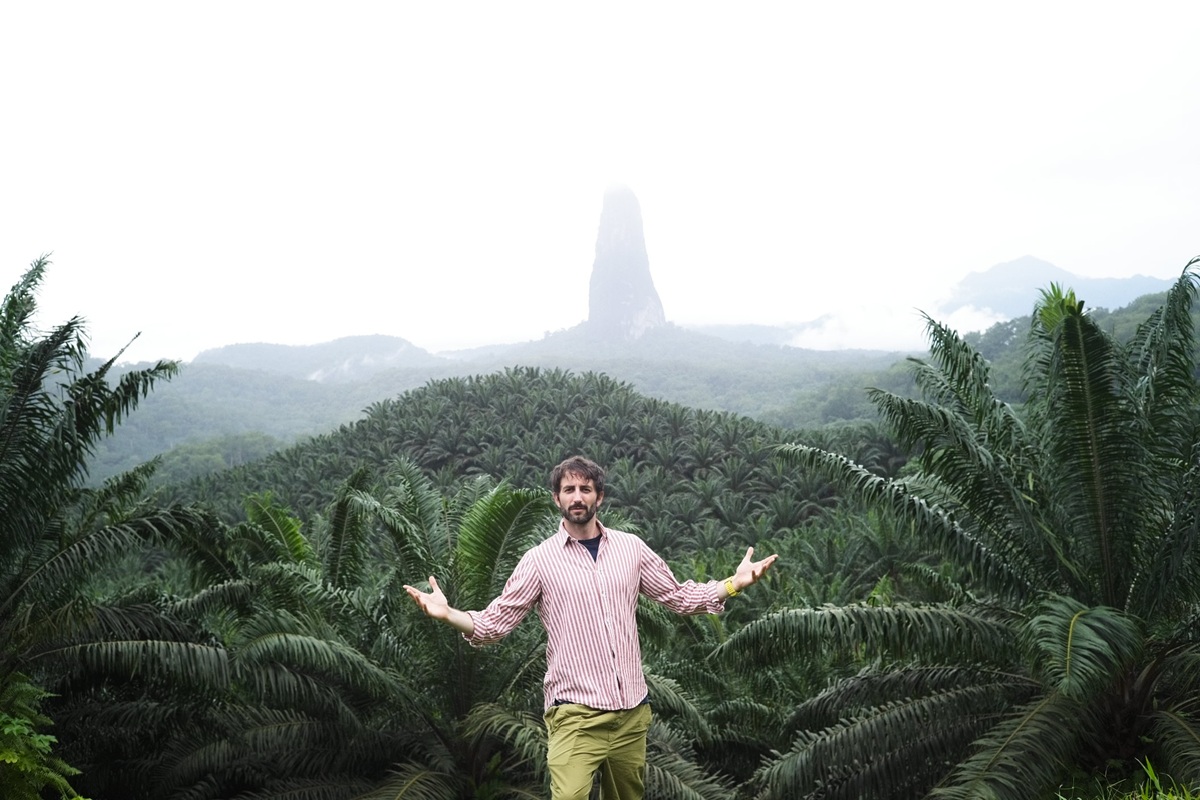
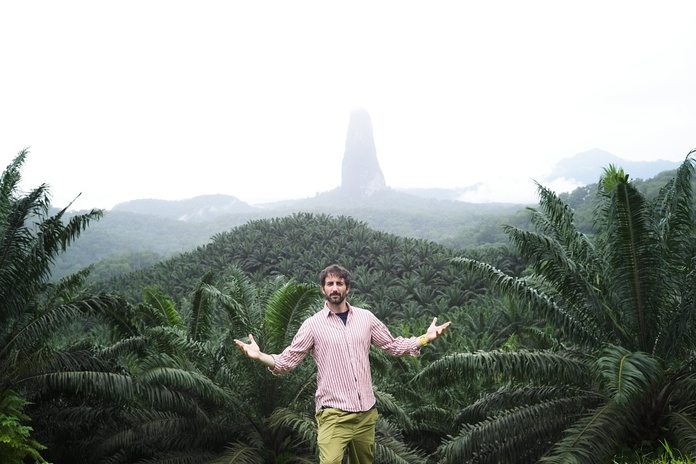
« Je vends ce que j’ai vu et ce que je connais. Je suis allé à São Tomé cette année, une merveilleuse destination contre-tourisme, pour voyager autrement », précise Jean-Baptiste Tolsa, fondateur de l'agence Odyssélux. @odysselux

CroisiEurope


Changer de secteur professionnel n’est jamais un long fleuve tranquille. Pour Jean-Baptiste Tolsa, le passage de la direction d’un hôpital à la création d’une agence de voyages aura même pris des allures de parcours du combattant.

À l’origine de cette reconversion, un voyage de noces en Nouvelle-Zélande. Son meilleur ami lui montre un devis qu’il juge particulièrement élevé et difficile à comprendre. Le futur agent de voyages se penche alors sur les chiffres et estime à près de 50 % la marge brute appliquée au voyage.

« À cette période, à l’hôpital, c’était très compliqué. C’était aussi un moment où je ne me retrouvais plus vraiment dans le monde de la santé. Je lui ai donc proposé de créer son voyage », raconte Jean-Baptiste Tolsa.


Une création d’agence semée d’obstacles

En 2023, il se lance donc dans la création d’Odyssélux, sans reprendre de formation spécifique au tourisme. Son parcours lui fournit toutefois quelques bases solides : école de commerce, master 2 en droit des sociétés et master 2 en gestion des établissements de santé.

« La formation au métier d’agent de voyages, je l’ai faite sur le tas, tout seul », explique le fondateur de l’agence. Le plus compliqué ne sera finalement pas d’apprendre le métier, mais de créer l’entreprise, notamment d’obtenir la garantie financière.

« Pour un nouvel arrivant, c’était très simple : je n’ai eu que des refus pour obtenir la fameuse garantie financière », raconte Jean-Baptiste Tolsa.

Après plusieurs démarches, c’est finalement l’APST qui accepte de l’accompagner. Mais au prix, selon lui, d’un parcours particulièrement lourd.

« La procédure a été très longue et bureaucratique. Je pensais quitter la santé parce que c’était trop bureaucratique et un monde un peu vieillissant. Et, en fait, je suis arrivé dans un monde encore plus vieillissant que la santé », déplore le fondateur d’Odyssélux.

La demande de l’APST est, selon lui, particulièrement conséquente : 80 000 euros d’apport, auxquels s’ajoutent environ 20 000 euros d’engagement personnel.

« 80 000 euros, c’est une somme sensationnelle pour un métier qui n’a pas des marges fantastiques », estime le chef d’entreprise.

La création de son agence en France lui prendra ainsi six mois avant même d’avoir commencé son activité.


L’Estonie comme solution de secours

Face à ces difficultés, Jean-Baptiste Tolsa cherche d’autres solutions. Il découvre qu’il est possible de créer une entreprise dans un autre pays européen et monte une agence de voyages en Estonie, comme solution de secours.

« En Estonie, la création de l’entreprise se fait en 24 heures. En une semaine, vous avez vos statuts d’agence et la garantie financière », affirme Jean-Baptiste Tolsa.

Il indique avoir payé environ 500 euros pour la création de la société et 3 000 euros pour la garantie financière. Il ne s’est finalement pas servi de cette structure, la création française ayant abouti.

L’expérience nourrit néanmoins sa réflexion sur le cadre réglementaire français. « Six mois pour créer une entreprise, aujourd’hui, ce n’est pas possible. Six mois, plus la formation, plus l’argent : il va falloir enlever des étapes », considère le fondateur de l’agence.

Pour lui, il ne s’agit pas de remettre en cause la responsabilité des professionnels, mais de simplifier l’accès à l’entrepreneuriat. « Je pense qu’il faut faire un peu plus confiance aux gens qui se lancent, compte tenu des responsabilités qu’ils prennent sur leurs épaules », plaide le fondateur d’Odyssélux.


« Il faut moderniser notre image »

Au-delà des contraintes administratives, le fondateur d’Odyssélux porte un regard critique sur l’image de la profession.

Dans une publication LinkedIn volontairement provocatrice, il écrivait ainsi : « Il est devenu socialement gênant de passer par une agence de voyage. »


Une formule qui fait suite à une interview du chef d’entreprise publiée dans la presse locale. « 80 % des gens ont commenté, grosso modo, que les agences ne servaient à rien. “Moi, je peux trouver tout seul”, “L’IA est meilleure”, etc. », rapporte Jean-Baptiste Tolsa.

Pour le chef d’entreprise, le problème dépasse la question du prix. Il touche à la perception de la valeur ajoutée de l’agent de voyages. « Il y a une vraie question d’image à revoir autour de l’expertise. On fait confiance à l’expert », souligne le fondateur d’Odyssélux.

Sa réponse ? « Montrer davantage le travail réalisé par les professionnels plutôt que de chercher à culpabiliser ceux qui se passent de leurs services. »

Pour lui, les acteurs du tourisme doivent toutefois changer de méthode. Plutôt que des campagnes défensives ou « anti-quelque chose », il appelle à une communication collective et davantage tournée vers la modernité.

« Il faut arrêter de voir l’agence de voyages comme trois personnes derrière un bureau qui ne savent pas trop où elles sont allées et qui vendent des tarifs 50 % au-dessus de ce qu’on peut trouver ailleurs », lance le fondateur de l’agence.

Il plaide notamment pour davantage de présence sur les réseaux sociaux, une meilleure lisibilité des marges et une véritable réflexion autour des influenceurs.

« Il n’y a pas de véritable gestion des influenceurs dans le voyage », considère le fondateur d’Odyssélux. Autre piste : reconnecter les agences aux destinations qu’elles vendent, en développant par exemple des campagnes de promotion territoriale portées par les professionnels français.


Repenser le modèle de l’agence

Cette réflexion sur l’image rejoint celle qu’il porte sur le modèle économique des agences de voyages.

« J’ai l’impression que les agents de voyages voient le monde du voyage côté business, côté agents, et rarement du côté des voyageurs », constate le chef d’entreprise.

À l’inverse, il mise sur une approche très personnelle chez Odyssélux. « Je crée un itinéraire comme je l’aurais créé pour moi si je partais seul », explique le fondateur de l’agence.

L’agence se positionne sur le sur-mesure et privilégie les destinations que son fondateur connaît personnellement. Avec 70 pays visités, Jean-Baptiste Tolsa dispose déjà d’un terrain de jeu conséquent.

« Je vends ce que j’ai vu et ce que je connais. J’aime découvrir des destinations alternatives. Je suis allé à São Tomé cette année, une merveilleuse destination contre-tourisme, pour voyager autrement », précise Jean-Baptiste Tolsa.


Trouver le bon canal de vente


« Je ne pense pas qu’on soit morts, loin de là »

Après un début d’année 2026 conforme à ses objectifs, l’activité a marqué le pas au printemps avec la guerre au Moyen-Orient, avant de repartir progressivement.

Un comportement qui lui semble révélateur d’une évolution de la demande : les clients voyagent peut-être moins, mais lorsqu’ils partent, ils sont davantage disposés à déléguer.


« On se rend compte que les gens partent de moins en moins, mais quand ils partent, ils partent vraiment. Et ils veulent déléguer à ce moment-là », estime le chef d’entreprise. D’où, une nouvelle fois, l’importance de l’image de la profession. « Je ne pense pas qu’on soit morts, loin de là », affirme Jean-Baptiste Tolsa.


2027 sous le signe de l’IA

Pour 2027, Jean-Baptiste Tolsa entend poursuivre son développement progressivement. Son principal chantier reste encore à trouver : un canal de vente suffisamment clair et efficace.

Il travaille aussi sur l’intelligence artificielle, avec l’idée d’automatiser une partie du processus commercial.

Pas question pour autant de brûler les étapes. Après avoir travaillé sur son blog et testé la publicité ciblée, le fondateur d’Odyssélux compte poursuivre ses expérimentations.

« Comme je suis une petite entreprise, il faut prendre le temps, petit à petit, de construire chaque année un petit truc supplémentaire », conclut Jean-Baptiste Tolsa.

TourCom Enhances Payment Solutions for Travel Agencies


TourCom poursuit le développement de son offre de paiement avec deux nouveaux dispositifs - Depositphotos.com @vlad_star

CroisiEurope


TourCom évoult sa plateforme de paiement avec de nouvelles solutions destinées à répondre aux besoins des agences de voyages et de leurs clients. Le réseau déploie notamment une fonctionnalité de paiement différé, développée avec la technologie d’Adyen et en partenariat avec Visa.

Cette solution vise à apporter davantage de flexibilité dans la gestion des flux financiers des agences, notamment dans un contexte marqué par la multiplicité des prestataires, des délais de règlement variables et des enjeux de sécurisation des transactions.

Le dispositif permet de dissocier le moment où la transaction est effectuée du règlement effectif. Pour les agences, l’objectif est notamment de gagner en souplesse dans la gestion de leur trésorerie, tout en conservant le même niveau de rémunération.

La rémunération reste ainsi identique, que la carte soit utilisée en prépaiement ou en débit différé. TourCom présente également cette fonctionnalité comme un moyen de simplifier et de sécuriser les opérations de paiement des agences.


A Hosted Card for Corporate Clients

The network is concurrently expanding its business travel offering with the launch of a hosted card, operated using the Adyen technology.

Offered by agencies to their Corporate clients, this solution should allow centralizing payment for services related to business travel and facilitate the monitoring of corporate travel expenses.

TourCom also partners with Airwallex to extend its system to managing expenses incurred by employees during their business trips.

The objective is to cover the different stages of the expense cycle: before departure, reservations and payments can be made via the TourCom Payment Platform; during the trip, employees’ expenses are managed with Airwallex solutions; after the trip, companies have tools for reporting, accounting reconciliation, and expense control.

With these new solutions, TourCom aims to offer agencies, regardless of size, tools to meet the various payment needs of their clients.

The network thus intends to strengthen support for independent agencies by giving them access to shared solutions that cover both payment management and, for business travel, the tracking of professional expenses.


Amelia Brille Published by Amelia Brille TourMaG.com Writer
See all articles by Amelia Brille

  • picto Linkedin
  • picto email
Ajoutez TourMaG à votre flux Google Actualités Google Actualités icône