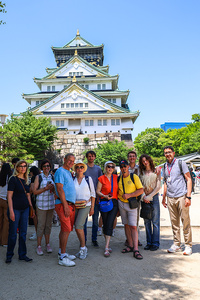
Shanti Travel Launches GIR 2027 Collection and Bets on a New Generation of Small-Group Travel


An Offering Now Structured into Three Ranges


© Tristan Scohy

CroisiEurope


To respond to this evolution, Shanti Travel is now structuring its offer around three distinct ranges to simplify the choice for travelers as well as for agencies.

The first, named Integrales, brings together major discovery itineraries. It covers the iconic Asian destinations with complete circuits designed for first-time discovery or for deeper exploration. Among the novelties is the program « Paths of Imperial China », a new addition entering the 2027 catalog and marking China’s return to the heart of the specialist’s offer. This range also includes itineraries in Japan, Vietnam, Sri Lanka, India, Nepal, Bali, and the Philippines.

The second range, Treks & Adventure, targets travelers who want to venture off the beaten path. From the high passes of Ladakh to the Torajan villages of Sulawesi, via the trails of Annapurna or the mythical cities along the Silk Road in Uzbekistan, these programs emphasize hiking, lesser-known regions, and on-the-ground experiences.

Finally, Shanti Travel inaugurates a third category dedicated to family travel. The first representative of this new range, Bali with Family, proposes an itinerary crafted with children in mind, featuring suitable activities and pacing designed so that both parents and children can fully enjoy the stay. Other destinations will enrich this collection in the coming seasons.


Small Groups of Manageable Size to Enhance Immersion

© Tristan Scohy

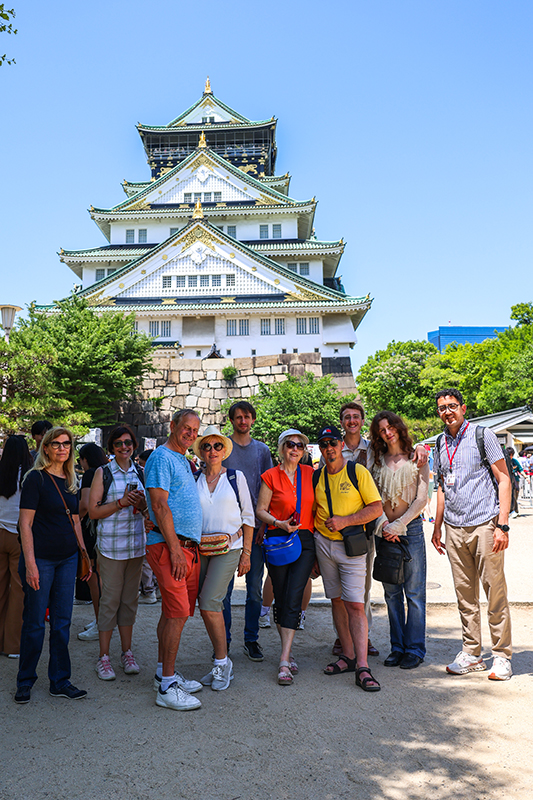
Beyond this new segmentation, the tour operator preserves what defines its GIR: groups limited to twelve participants maximum, with certain departures guaranteed with as few as two or four travelers depending on destinations, French-speaking local guides, including on trekking itineraries, as well as a Francophone support available before and during the trip.

This format allows for a more flexible approach to travel, access to more intimate accommodations, and fosters exchanges with local populations. Travelers also benefit from more personalized guidance throughout their stay.


“The Shanti Moments”, a throughline across all circuits


© Tristan Scohy

The 2027 collection also introduces a throughline named “The Shanti Moments”, present across all non-trekking circuits.

Four experiences punctuate the itineraries: a welcome meal to foster early exchanges among participants, a farewell dinner, an offbeat activity allowing the discovery of a lesser-known facet of the destination, and a high-impact experience carried out in partnership with an NGO or a local community.

The aim is to strengthen encounters, create a genuine group dynamic, and add meaning to travel by offering experiences that go beyond mere sightseeing.


A Response to Travelers’ Emerging Expectations

This evolution reflects a market-wide trend. Travelers no longer seek merely a well-constructed itinerary; they want to experience a collective journey while preserving a certain level of intimacy. The success of small groups hinges precisely on this balance between guidance, logistical comfort, and immersion.

With this 2027 collection, Shanti Travel aims to accompany this shift in expectations while reaffirming its long-standing Asia expertise. More than a simple catalog of circuits, this new offering expresses a commitment to providing journeys where meeting, sharing, and discovery hold as much importance as the sites visited.

Through this new organization and the arrival of new programs, the specialist thus confirms its ambition to make small-group travel a credible alternative between bespoke individual journeys and traditional tours, in a region of the world where cultural immersion remains one of the primary motivations for departure. Beyond exploring destinations, this format also fosters connections between travelers. Small groups naturally create a convivial dynamic, conducive to exchanges, sharing experiences, and, often, the birth of genuine friendships that endure long after return.



© Tristan Scohy


PromPerú Trains Travel Agencies in Marseille


Louis Roche, PDG de ProDesti, a animé à Marseille une session de formation « Connaisseur du Pérou » organisée par PromPerú à destination des agences de voyages - DepositPhotos.com, pawopa3336

CroisiEurope


After obtaining the Qualiopi certification and strengthening its portfolio of specialized trainings, ProDesti continues its development in the tourist destinations segment. This time, PromPerú has called on the organization to train travel agencies in the Marseille region, with a clear objective: to improve their expertise of the destination.

A free training session for on-site travel agencies.

For almost four hours, participants alternated between presentations of the destination, exchanges of experience and technical questions.

An approach faithful to ProDesti’s philosophy, which prioritizes trainings led by active tourism professionals and centered on the commercial realities of agencies.

“PromPerú’s objective is really to showcase Peru in the Marseille region, to help travel agents better master the destination and thus sell it better.”, explains Luis Roche, CEO of ProDesti and trainer on Peru and Chile.


A Destination That Goes Beyond Machu Picchu

The program notably covered the country’s different regions, the circuits, the visits to Machu Picchu, the railway connections, the domestic flights, as well as possible extensions.

Throughout the training, Luis Roche sought to dispel the image of Peru being limited to Machu Picchu. “There are many things to explore beyond Machu Picchu. It should be noted that two-thirds of the country is jungle.”, he recalls, by highlighting the regions of Iquitos, Madre de Dios, Chachapoyas and also the sites of the Moche and Lambayeque civilizations.

The objective is also to give travel advisers concrete arguments to tailor their recommendations according to their clients’ profiles.

The questions, moreover, addressed very operational topics: the various circuits to Machu Picchu, the categories of trains, or the domestic air services.


A Highly Advanced Training

Present at this session, Barbara Roussel, director of Voyages Couture, believes that this type of training provides real added value. “We already know the destination, but this gives us access to all the information. Even when we are experienced, it remains valuable. It makes us much more confident and brings additional expertise.”, she explains.

The professional also underscores the quality of Luis Roche’s intervention: “It is an extremely advanced training. It is not generic; we go into the detail of the circuits. The instructor is passionate and engaging, and it makes you want to discover the destination.”

According to Luis Roche, Peru also possesses strong commercial arguments. “It is a destination that is sold almost all year round, between March and November. It has the best value-for-money in South America.”, he notes, before adding: “Peruvian gastronomy is clearly a major selling point for French travelers.”

Oman, Qatar, UAE: Travel Guidelines for French Travelers


Le Quai d'Orsay a actualisé ses conseils aux voyageurs pour plusieurs pays du Moyen-Orient - DepositPhotos.com, titoOnz

CroisiEurope


While several Gulf destinations remain accessible to French travelers, the Quai d’Orsay is calling for heightened vigilance.

The recommendations vary by country, but French authorities consistently urge travelers to follow local guidelines, to regularly check the information from their airline and to enroll in the Fil d’Ariane scheme before departure.

In Jordan, where the territory is regularly overflown, and at times targeted, by missiles and Iranian drones since July 9, the ministry recommends particular vigilance.

Travelers are urged to heed the alert sirens, to seek shelter immediately in case of an alert and to avoid the Azraq and Mafraq areas, in the northeast of the country.

A particular vigilance is also recommended in the Qatr region (Aqaba). If airspace remains open, travelers are advised to verify the status of their flight with their airline.


Vigilance renforcée dans plusieurs pays du Golfe

To Oman, French nationals are urged to exercise the greatest vigilance following Iranian strikes that targeted the territory.

Travel within the Salalah, Duqm, Musandam regions as well as along the border with Yemen is discouraged unless there is an imperative reason.

In case of an alert, the Quai d’Orsay recommends following the authorities’ instructions, taking shelter and staying away from military or security installations.

The ministry has also updated its recommendations for the United Arab Emirates, Qatar, Kuwait and Bahrain.

In these four countries, French authorities urge travelers to demonstrate heightened vigilance, to follow the instructions of local authorities and in case of an incident to stay informed about the progression of the regional situation.

Travel Compositor Integrates AskIA with AI Trips to Streamline Travel Booking


Travel Compositor poursuit le développement de son offre basée sur l'intelligence artificielle - Depositphotos.com, toppercussion

CroisiEurope


Travel Compositor, the Spanish publisher of booking engine solutions for online leisure travel distributors and a subsidiary of the Travelsoft group, announces a new evolution of its AI Trips platform.

Named AskIA, this feature introduces a conversational interface enabling users to design, quote, and book a complete itinerary from a simple description of their travel project.

The company explains that this evolution aims to limit the steps of the booking journey, by reducing the number of clicks and simplifying the choice among the different offers available.


A booking guided by conversation

Unlike a traditional search engine, AskIA relies on a conversational approach.

Users describe the desired trip, for example a multi-week circuit or a stay tailored to specific preferences, and the artificial intelligence automatically generates a customized proposal.

The solution selects the various services needed for the trip and then allows finalizing the booking in a few steps. According to Travel Compositor, the entire process can be completed in three clicks.

The tool is capable of assembling different tourism products within a single booking, including flights, accommodations, transfers, activities, insurance, car rental, rail journeys or tickets for various services.


A rollout reserved for Premium Innovator customers

This novelty will initially be offered at no extra cost to clients participating in the Premium Innovator program. They will benefit from early access to this feature as part of its launch.

For Travel Compositor, this integration marks a new milestone in its AI-driven strategy for travel booking.

Alongside the arrival of AskIA, Travel Compositor also unveils Smart Filter, a feature intended to improve the display of search results for hotels and transport.

This intelligent filter should help travelers identify more quickly the options deemed most relevant, with the aim of streamlining searches and improving the user experience across the company’s various booking engines.


Amelia Brille Publié par Amelia Brille Rédactrice TourMaG.com
Voir tous les articles d’Amélia Brille

  • picto Linkedin
  • picto email
Ajoutez TourMaG à votre flux Google Actualités Google Actualités icône  

Amazing Travel Superstitions Still Found Around the World

Setting off toward an unknown destination has always been a small adventure. Before hitting the road, boarding a ship, or taking to the skies, certain people carry out actions they attribute particular significance to. Passed down through generations, these beliefs blend protection, luck, and a fear of the unknown. And depending on the country, the precautions to ensure a good journey can be, frankly, surprising. In several Eastern European countries, departure is regarded as a moment so important that it deserves its very own ceremonial rite.

Before You Set Off, It’s Best to Observe Certain Rituals

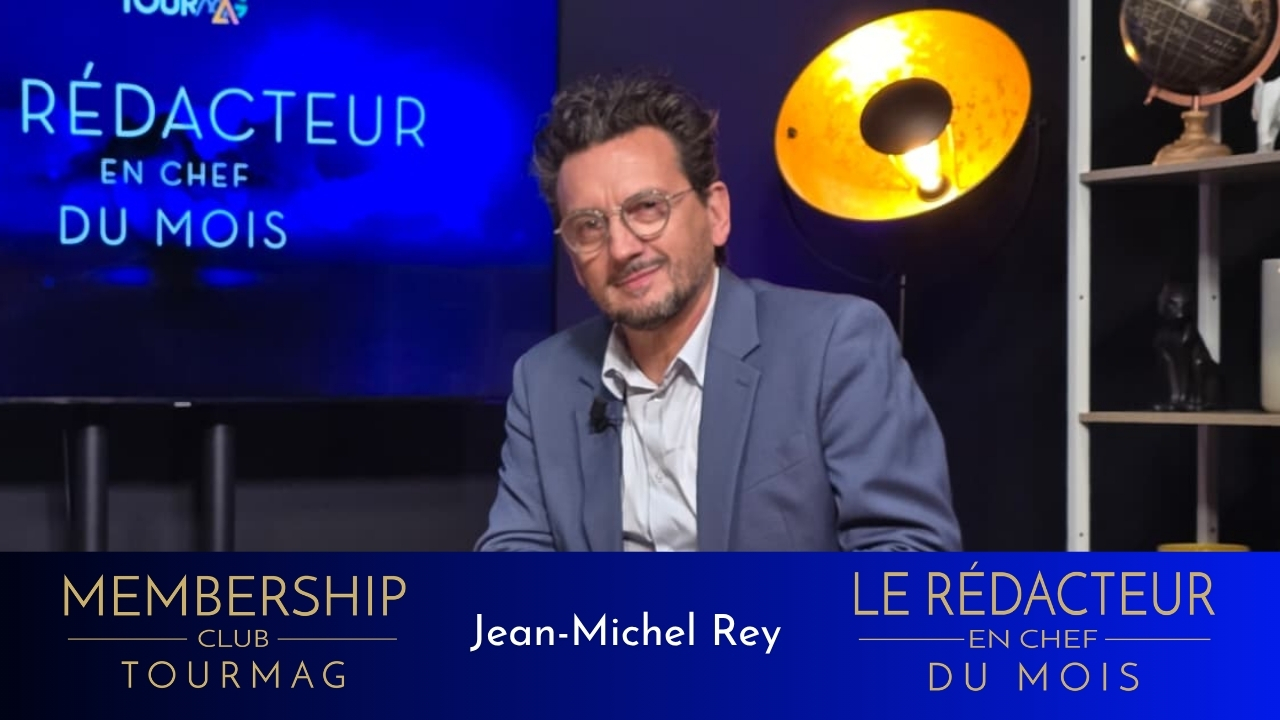
Jean-Michel Rey (Digitrips): Simplifying Travel Agencies’ Day-to-Day Operations


TourMaG – You joined Digitrips a few months ago, after a long career in tourism. What inspired you to begin this new chapter?

Jean-Michel Rey: It’s been several years now that I’ve been active in this industry, where I had the chance to perform a variety of roles. This diversity of experiences has given me a lot of knowledge, and I’m delighted to share it with Digitrips, which I joined at the beginning of April.

Why Digitrips? It’s a company that has always piqued my interest. I have followed its development in recent years with close attention, especially since I already knew several members of the management team.

That was additional encouragement to follow its news. I knew this company was in tune with the times, and I was not mistaken. Today, I’m discovering a company driven by very strong momentum.


TourMaG – Digitrips is a distinctly tech-oriented company, whereas you come more from tour operating, distribution or even accommodation…

Jean-Michel Rey : Precisely, Digitrips brings together a lot of talent and diverse skills.

Today, the company rests on three main areas of expertise: the air activity from MisterFly, the hotel sector with HResa, and the technology developed by Koedia.

These three entities are now united under the Digitrips brand. It is a multifaceted company, operating in several lines of business.

And I’m fortunate to have practiced nearly all of these roles before, but in different companies. Today, I can find them all within a single structure.


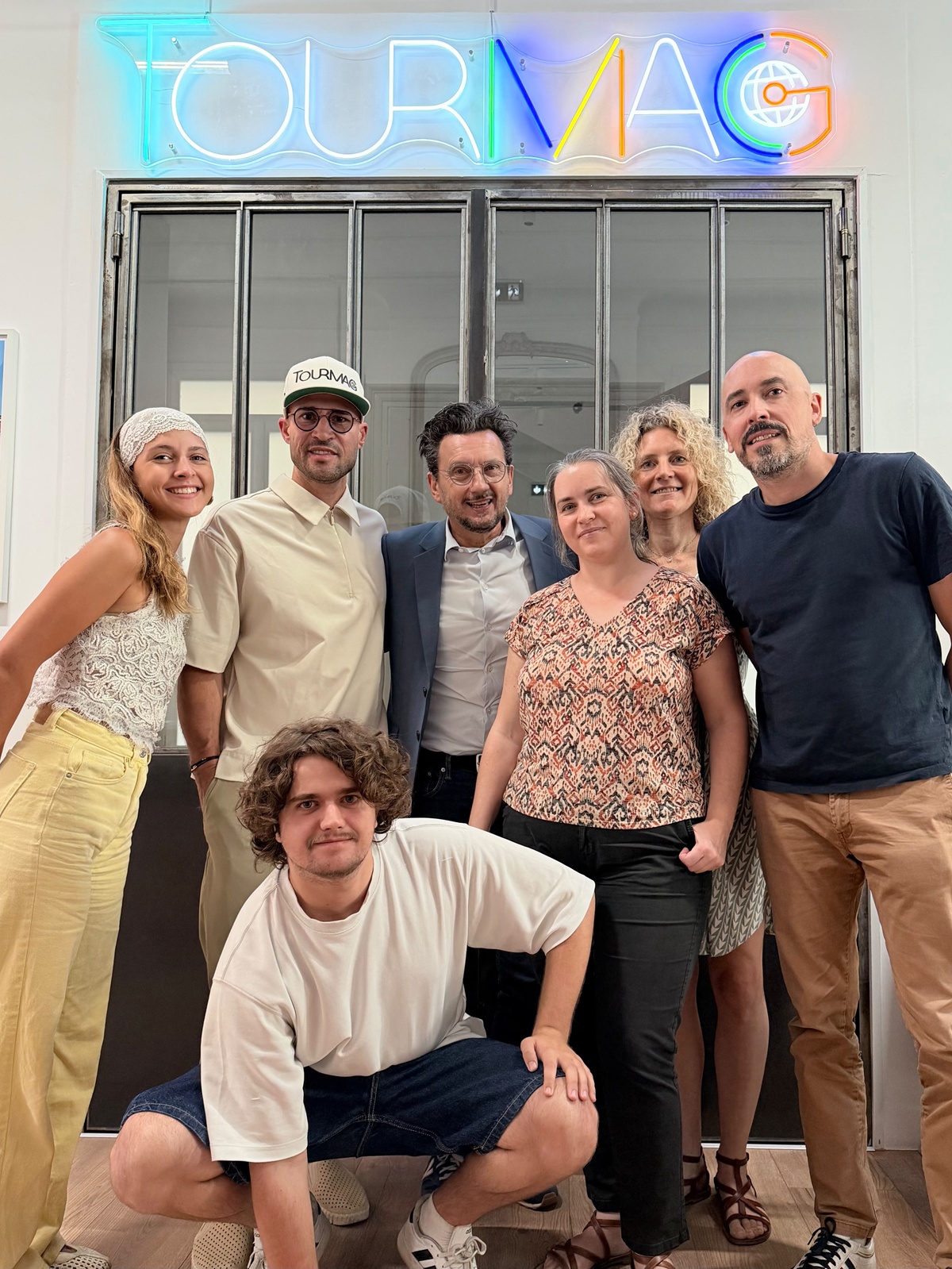
Jean-Michel Rey surrounded by TourMaG editorial staff - XP Photo

TourMaG – The Middle East conflict has significantly disrupted the market since late February. How did Digitrips navigate this period?

Jean-Michel Rey:
In terms of air activity, we obviously faced a crisis period. We had to organize repatriations with our partners, travel agencies and tour operators, in a context that was never straightforward. It was also essential for airlines to cooperate.

Next, we entered a period of wait-and-see. Air bookings slowed a bit, but ultimately less than we feared, despite higher ticket prices.

In terms of accommodation, where we specialize in leisure stays, we paused more than in business travel, which remains largely domestic and thus was less affected.

However, we are recording double-digit growth in a particularly promising activity for us: the dynamic package.


Digitrips: “We want to keep enriching the dynamic package”

TourMaG – Is the dynamic package a major focus of development?

Jean-Michel Rey :
Yes, of course. We want to continue enriching this solution with new features and new possibilities for travel agencies.

Today, I no longer need to persuade anyone of the value of the dynamic package. Everyone now understands its benefits.

For the client, it guarantees a trip fully customized by their travel agent. For the agent, it’s the ability to manage their margin, to freely choose their products while relying on a reliable partner for organizing the trip.

It is therefore a product that provides both security for agencies and real resilience.

TourMaG – The market seems to be rebounding since June. Do you also see this recovery?

Jean-Michel Rey :
We did observe it in June, following a May that had been very weak, which was fairly expected.

Since the start of July, the trend has been somewhat less favorable. We aren’t really witnessing the last-minute rush of reservations that some might have anticipated. The business should rather build up gradually.


TourMaG – Over the course of your career, have you observed a significant shift in the expectations of travel agencies?

Jean-Michel Rey :
Yes, mainly driven by technology, which is now present throughout our industry.

We practice a profession where the human relationship remains essential. It’s important to preserve that dimension. But technology also brings us a lot in terms of time savings, productivity and profitability.

Our challenge is therefore to offer solutions that are increasingly comprehensive while staying easy to use.

We regularly conduct barometers with our client agencies. One of our latest surveys showed that a travel agent could use up to eight different tools during a single workday, from Google to their back-office.

Our aim is precisely to leverage our proprietary technology, which we develop entirely in-house, to simplify their daily lives and offer them a true one-stop shop, whether they want to book a flight, a hotel, or both.


A new partnership with Selectour on the accommodations side


Hotel central: Digitrips Pro partner of GIE ASHA

Since July 1, 2026, the group has integrated the ASHA GIE’s commercial selection as a partner hotel central, thereby giving agencies within the Selectour and Havas Voyages networks direct access to its Digitrips Pro platform.

Digitrips was already a partner of the Havas Voyages network; this agreement extends its collaboration to Selectour and thus to the ASHA GIE. The agreement also provides for the integration of DIGITRIPS solutions within the payment centers of the group and a gradual rollout across the entire Selectour ecosystem.

The group will also strengthen its presence at the major events organized by the Selectour and Havas Voyages networks, whether at sales force meetings, congresses, or promotional activities.

“This partnership marks a new milestone in the development of DIGITRIPS within the French tourism distribution. The trust placed today by the GIE ASHA confirms the relevance of our vision: to develop innovative technologies and high-quality product and service offerings that meet the needs of travel agencies,” says Nicolas Brumelot, cofounder and president of DIGITRIPS.

“We are convinced that the integration of DIGITRIPS will strengthen our accommodations offering and provide our agencies with a powerful, easy-to-use solution tailored to the expectations of our advisers. This partnership fully aligns with our strategy of selecting the best tools to serve our networks,” states Laurent Abitbol, president of GIE ASHA.

Beyond the Exchange Rate: What Top Travel CFOs Are Really Watching


© Airwallex

CroisiEurope


At the start of 2025, an interesting phenomenon unfolded in Canada. The United States announced a fresh set of tariff measures. Travel by Canadians to the United States collapsed immediately. Yet Canadian domestic tourism—road trips, lakeside cabins, national parks—surged to fill the gap. The currency shifted. Travelers moved even more.

Tannah Matus, CFO of Secret Food Tours, followed the situation with a highly professional eye. Her team had not anticipated the tariff changes, nor Canadians’ responses, nor the impact on exchange rates. What she did do, however, was build systems to monitor real travel movements and reallocate resources accordingly. “We focus more on people’s movements than on the policies behind FX implications,” explains Tannah Matus. “Is the American traveler still traveling? What share of the U.S. domestic market is occupied by domestic travel?” The currency impact matters, but changing traveler behavior matters even more. And it creates opportunities for operators who are nimble enough to seize them.

This instinct—to observe behavior rather than the Bloomberg terminal—has fueled all the Airwallex Margin Fortification Playbook 2026 conversations. The top finance teams in the sector do not build elaborate macroeconomic models. They track signals that most spreadsheets fail to capture.

With Golf Traveller, Darren Behan sees risk in the calendar, not in the market. “When a major tournament is announced, our financial architecture must be ready to support a sudden, day‑to‑day surge in multi‑currency transactions.” For a luxury operator where a single booking can exceed $20,000, missing on a currency conversion or payment timing during a peak demand period is not theoretical: it is a real competitive disadvantage with a concrete price tag.

Flash Pack’s clientele are predominantly American and female. The CFO, Oliver Lee, monitors in near real time how world events influence traveler confidence. When customers feel less comfortable about a destination (for political, security, or negative publicity reasons), bookings shift before analysts publish projections. Detecting these signals early gives operations time to rearrange itineraries, adjust marketing investments, and renegotiate supplier commitments. Lee notes that perceptions of safety and hospitality evolve faster and weigh more than exchange rates when customers decide whether to click “book.”

Adam Mitchell, Financial Controller at On the Go Tours, provides a lesson in preparation. Egypt had long been the company’s flagship destination. When the Israel‑Gaza conflict began to worry clients about the broader region, On the Go Tours had already begun diversifying. “They had already initiated a plan to broaden our portfolio,” explains Adam Mitchell. “Historically, we were heavily oriented toward Egypt. Even before tensions rose in the Middle East, we started opening other destinations, which helped when things became complicated in the region.” The lesson is clear: the time to diversify is before a crisis hits. When you need protection, it’s already too late to build it.

Jamie Tran Rico Pisa, at Transforma Travel Group, takes an unconventional tack: preparing for good news. His firm tracked how likely it was that British travelers could soon enter China visa‑free, a development likely to spur demand. “We already have many travelers traveling from the UK to China,” he says. “But we may need to bolster our operating team in China so that we feel fully prepared to absorb the surge.” Transforma runs regional discussion groups where teams share everything—from health alerts to natural disaster warnings. Information flows quickly enough to let the business adjust plans before problems explode, and to be ready when opportunities arise.

The through line is proactive intelligence rather than crisis improvisation. These teams don’t wait for an incident to occur to hold a meeting. They have embedded listening mechanisms into the daily cadence of their operations.

The question then becomes how to deploy cash while it’s available. If FX risk and operational frictions are complex, multidimensional problems, dormant cash management is, by contrast, surprisingly simple. All the CFOs interviewed for the playbook follow roughly the same approach: sweep excess working capital into yield‑bearing accounts and resist the urge to over‑complicate things.

“We have sweep accounts, short‑term accounts that generate market rates,” explains Oliver Lee. “We use rolling deposit accounts, with roughly a one‑month notice, that offer a return from major financial institutions. And that’s it.” He stresses the need not to over‑complicate Flash Pack at its current scale. Larger firms can diversify into corporate bonds or other instruments, with dedicated treasury teams to drive those strategies. “But at our size, one of our rules is to keep things simple. You don’t really earn more yield by adding complexity when you have a few million. The impact is marginal.”

Tannah Matus shares this view and notes that the current rate environment makes the math particularly attractive. With dollar deposits yielding around 4 to 4.5%, even the simplest accounts generate meaningful returns. Left idle, this excess cash is, in her words, “just a salary, money that’s sleeping.”

But travel cash flows obey a constraint not faced by most industries: client deposits, not corporate surpluses. Jamie Tran Rico Pisa makes this limit crystal clear: “We operate within a fairly narrow field, because, ultimately, these are client deposits. We must ensure that these funds are used to finance the trip.”

The regulatory framework reinforces this caution. Zoe Powell, Director of Travel, Hospitality and Leisure at Xeinadin and formerly with the Civil Aviation Authority, notes that ATOL‑licensed tour operators face strict liquidity requirements: “Typically, around 70% of client funds must be held in cash or cash equivalents, readily available.” Some operators must keep these funds in an escrow account until the client returns. These constraints cap the yield accessible, which precisely explains why all the CFOs in the playbook favor simple savings accounts over more exotic solutions.

The consensus is clear: in today’s rate environment, given the fiduciary responsibilities inherent in the travel sector, sophisticated treasury strategies offer only a marginal gain that does not justify the added complexity, risk, or sleepless nights.

Three principles emerge from these exchanges:

● Observe behavior, not just rates, because the most advanced operators look at where travelers actually go, not merely what currencies do.

● Keep yield strategies simple, since accounts like sweep and rolling deposits work reliably for most players in travel.

● Build a financial infrastructure that absorbs shocks rather than amplifying them, turning finance teams into true business partners rather than back‑office functions.

Or, more bluntly as Jonathan Wall of Xeinadin puts it: the gap between booking and settlement will always exist. What matters is what happens inside your organization, because that is where your expected profit can literally vanish.

To access the complete set of experiences from five finance leaders, covering currencies, payments, operations, and working capital, download the playbook: “Guide 2026: How to Protect Your Margins.”


Contact Airwallex


Au-delà du taux de change - Ce que les meilleurs directeurs financiers du travel regardent vraiment
To get in touch with us, please fill out this contact form

Website: www.airwallex.com

facebook linkedin twitter instagram youtube


Emerging Travel Group (RateHawk, Roundtrip) Expands Its Airline Offering With Travelport


De nouvelles fonctionnalités pour simplifier la gestion post-réservation - Depositphotos.com, Rawpixel

CroisiEurope


Emerging Travel Group, the parent company of RateHawk, ZenHotels and Roundtrip, announces the strengthening of its partnership with Travelport.

The company is expanding the integration of Travelport’s aviation content, with the aim of simplifying reservation management and post-booking operations for travel professionals.

This development is expected to enable agents and travel managers to carry out certain air-ticket related tasks more easily, such as issuing, canceling, or voluntary refunds.

The announcement comes as the peak summer season approaches, a period when booking volumes and modification requests are especially high.

Emerging Travel Group began integrating Travelport’s offering in 2025.

Airline tickets from the platform were initially added to RateHawk, a multi-product booking platform for travel professionals, and to Roundtrip, its business travel solution.


Travelport bets on integrated workflows

Users of these two platforms can also access Travelport’s GDS rates and content, as well as the NDC content from certain airlines.

The announced extension is designed to further facilitate dossier management once a booking is made, directly from the environments used by professionals.

“Direct access to the various offers from airlines is essential for travel professionals, as it allows them to manage their clients’ itineraries and make changes without having to contact third-party providers“, explains Fredrik Bonnalt, head of the non-accommodation offering at Emerging Travel Group.

According to him, this integration also helps speed up the booking process and improve customer service.

For his part, Jason Toothman, Travelport’s Chief Commercial Officer, underlines the growing demand for integrated management of air content within a single workflow.

He highlights TripServices, Travelport’s platform dedicated to the creation and management of travel products, which should enable professionals to access, book and manage content more quickly.


Emerging Travel Group aims for IATA accreditation

The partnership also aligns with Travelport’s artificial intelligence strategy. The group recently announced a collaboration with Cognizant and Anthropic, some features of which will rely on TripServices to further integrate AI into travel professionals’ workflows.

In parallel with its collaboration with Travelport, Emerging Travel Group continues its development in the airline distribution market.

The group is particularly aiming to obtain IATA accreditation for several of its legal entities worldwide. The first accreditation has already been obtained in Germany.


Amelia Brille Published by Amelia Brille TourMaG.com Editor
See all articles by Amelia Brille

  • picto Linkedin
  • picto email
Add TourMaG to your Google News feed Google Actualités icône  

Is the 100ml Liquids Rule for Air Travel Really Necessary?

For nearly twenty years, travelers have had to limit the contents of their liquids to 100 ml when passing through security checks at airports. A constraint so familiar that it now seems inseparable from air travel. Yet a security expert argues that this rule is not truly based on safety logic. And the advent of new scanners at several major airports could well render this rule obsolete.

A measure born after a foiled attack plot

To understand the origin of this limit, one must go back to the summer of 2006. In the United Kingdom, authorities uncovered a planned attack involving liquid explosives that those behind it allegedly intended to conceal in beverage bottles and transport in carry-on luggage. The operation was fortunately thwarted before it could be carried out.

Following this discovery, British authorities initially prohibited passengers from carrying liquids beyond security checks. A few months later, in November 2006, the ban was eased: travelers were allowed to carry liquids, but only in containers with a maximum capacity of 100 ml.

This rule, later adopted at many airports worldwide, has since required passengers to remove their bottles from their luggage or present them according to the applicable procedures. Shampoo, cream, perfume or toothpaste must thus comply with this limit, or they will be discarded at security.

But for Bruce Schneier, a security technology expert and member of the Harvard Kennedy School, this logic is problematic. Interviewed on The Telegraph’s The Travel Expert podcast, he argues that the measure is primarily what he calls a “security theatre”.

“It is 100% security theatre. They do not do this with safety in mind; they do it as a compromise, which would make no sense if it were a real security issue”, he stated

New scanners are gradually making the limit obsolete

The expert points to a notable difference between how dangerous items are treated and how liquids are handled. In his view, a passenger who tries to pass through security with a weapon and is detected clearly cannot continue their journey as if nothing had happened. Meanwhile, for an illegal liquid, the situation is entirely different.

“If I go through airport security with a weapon and they find it… they ruin my day. If I go through security with a bottle of liquid and they find it, they throw it away and let me pass”, he explains.

Bruce Schneier also notes that this difference in handling makes the restriction peculiar: the liquid is deemed problematic enough to be banned on the plane, yet eliminating it at the checkpoint is sufficient to resolve the issue. “Here is something so dangerous that you cannot take it on a plane, but so harmless that security officers will throw it into a trash can next to them”, the expert states in the same podcast.

In practice, technology is starting to shift the balance. Next-generation scanners allow officers to analyze the contents of luggage more precisely, without passengers necessarily having to remove their liquids or electronic devices.

In the United Kingdom, several airports have already scrapped the 100 ml limit. In January, Heathrow became the largest airport in the world to abandon it completely after completing the deployment of the new scanners, as part of a £1 billion investment (approximately €1.17 billion). Birmingham, Bristol, Gatwick, and Edinburgh have also completed the installation of these devices.

Pegasus Trains: The Company That Loves Tour Operators and Travel Agencies [ABO]


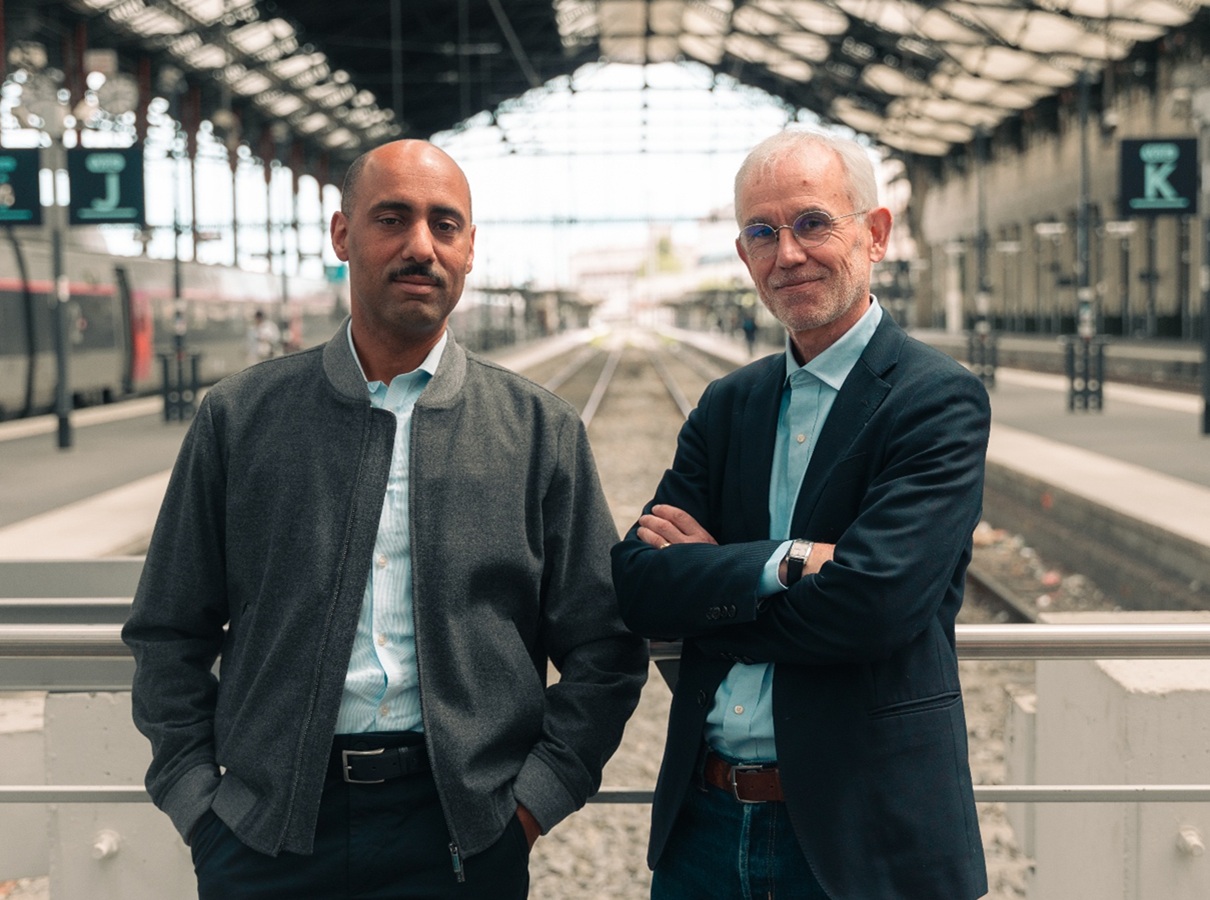
David Mascorda et Guillaume de Marcillac, les deux fondateurs de Pegasus Trains - Crédit photo : Emile Rivet

CroisiEurope


Nobody knows it, or almost, but the SNCF is not the only French railway company operating on our soil.

In fact, lurking in the shadow of its big sister, there is nevertheless a company that owns a train and has been running since winter 2025.

At its head, a familiar face in the tourism industry: Guillaume de Marcillac. He is known as the former CEO of TravelFactory and as a former financial head of Egencia and Karavel-Promovacances. He now wears the hat of train chief, leading Pegasus Trains.


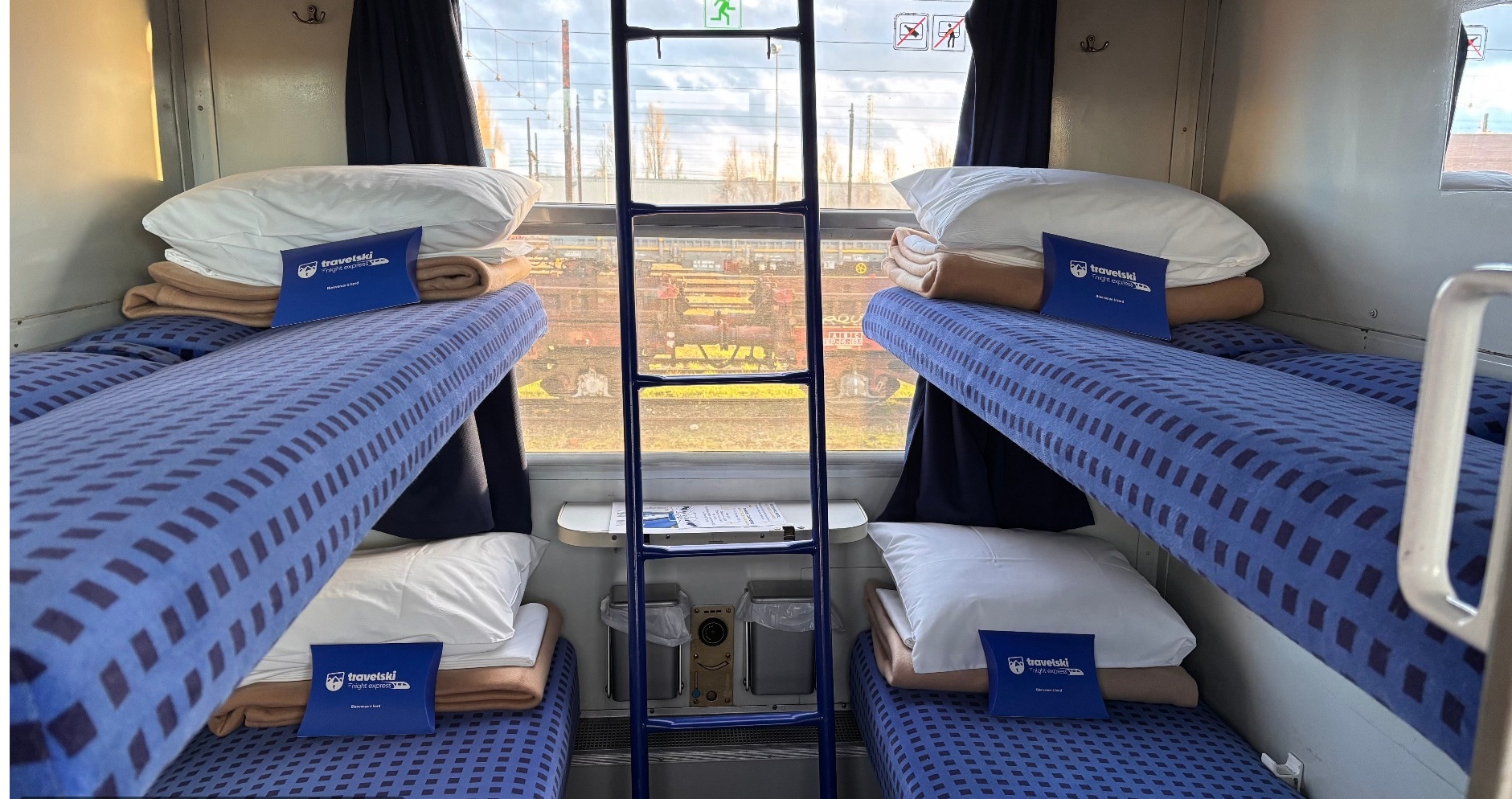
After a first trial run with his previous employer during the launch of the Travelski Express, to redeploy the Eurostar between London and Bourg-Saint-Maurice, Guillaume de Marcillac decided to take off and thus create his own railway company.

The first challenge was to find rolling stock. “We combed across Europe to find owners willing to lease cars and a locomotive. It required a lot of work to locate and negotiate equipment coming from different places.

Our dining car comes from the Netherlands, the sleeping cars come from Baden-Württemberg, and the locomotive from France.

There are very substantial entry barriers in rail, which explains the very small number of new entrants
“, explains the fortunate cofounder of Pegasus Trains and owner of a train set.


Pegasus Trains: “We are in slow travel,” not a high-speed train

The second hurdle was securing homologation to run the trainset in France.
“We are a railway company, but I do not use the term ‘railway company’, which is a legal term. Indeed, there are three statuses in the railway world.

The first is that of an authorized candidate, which means you are recognized as credible by SNCF Réseau and SNCF Gares & Connexions. You are an official interlocutor for these companies.

The second status is called the railway license. A bit like the registration for travel agencies, it is a recognition granted by the Ministry of Transport and Bercy, based on having sufficiently strong equity and certain management characteristics.

The last grade, the highest, is the security certificate of the railway company. It is a complex process, which takes time to obtain,” he explains.

To read: Rail Charter Service: what if you charter trains?

With the license in hand, Pegasus Trains thus cannot have its trains operated by its own crews. The company must recruit staff who hold this certificate.

To find drivers, it is enough to go through SNCF or freight operators also authorized to carry passengers. There are also European operators whose core business is to hold this safety certificate, as is the case with European Sleeper.

“We are in a sense an orchestrator, with the equipment on one side, the locomotive on the other and the driver. We assemble all these building blocks.

We are also in slow travel. We do not offer high speed, like TGVs or Frecciarossa. We can, in one night, travel 1,300 km.
”


Pegasus Trains: “We will have two train sets in operation” by the end of 2026


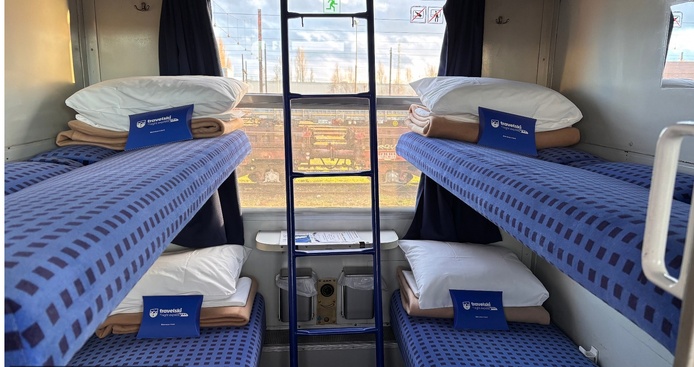
Pegasus Train devrait sortir de la montagne pour desservir le littoral l'été prochain - Crédit photo : Pegasus Trains

Thus, Pegasus Trains offers a journey that is slower than the TGV, but with the merit of being decarbonized.

Each train set has a capacity of between 300 and 650 passengers, depending on client needs. It includes a dining car.

The trains have an international vocation, even though they cannot travel to the United Kingdom, as the Channel Tunnel requires very specific features reserved for Eurostar.

“These are trains that have already been renovated by their owner, with whom we have an agreement for the long term.

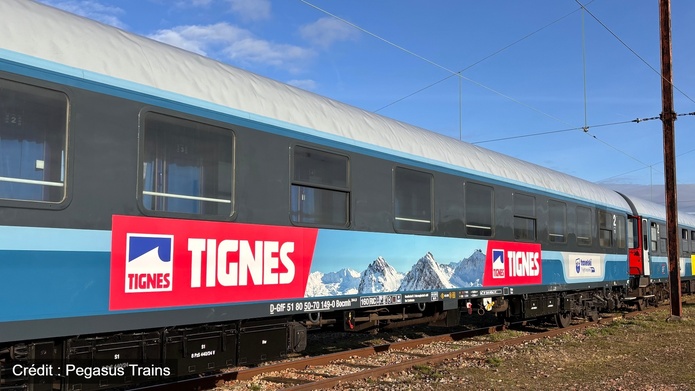
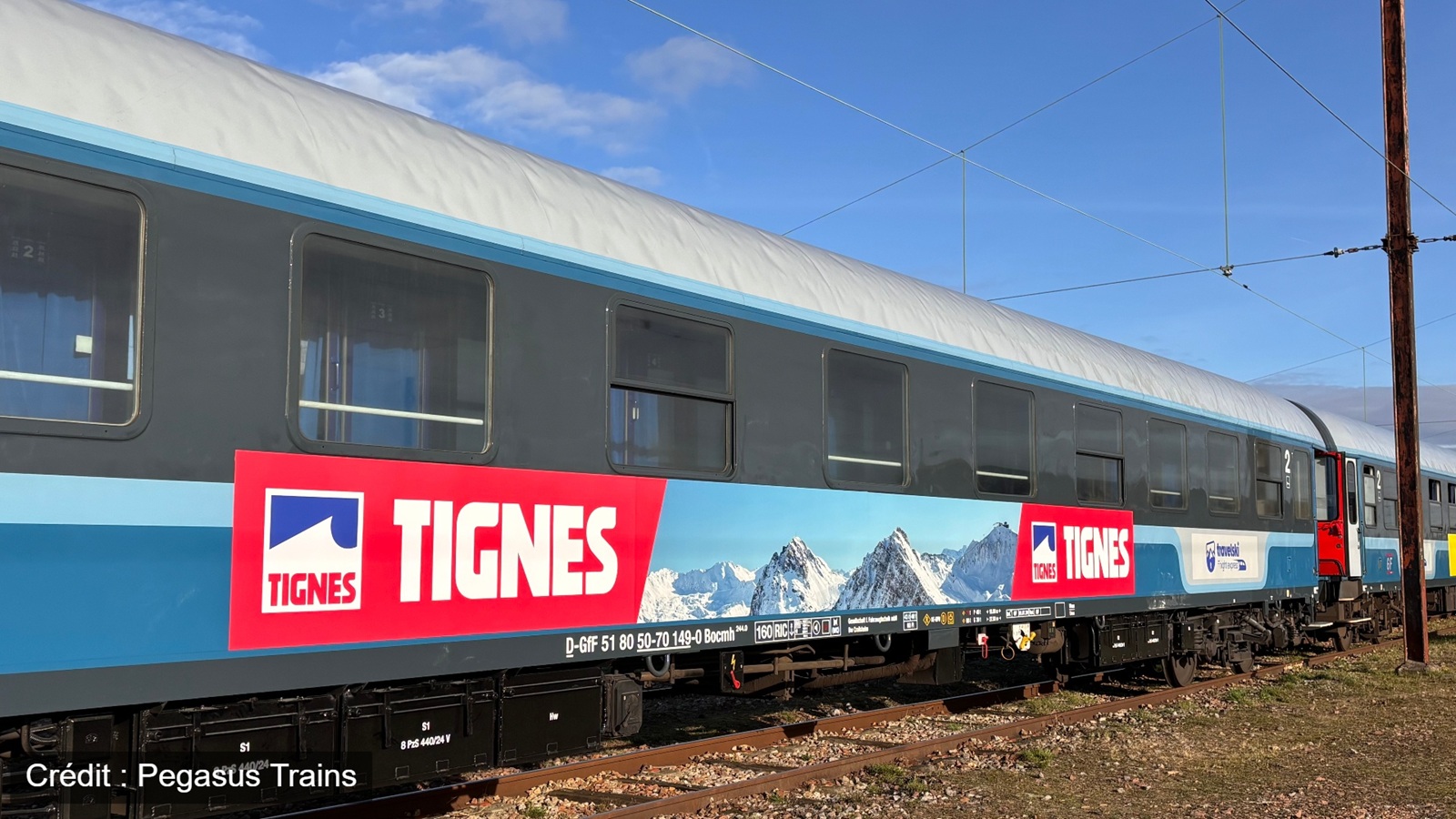
The rolling stock is not our property, so we cannot make modifications. However, it is possible for us to do a lot of exterior and interior decoration. Our trains also serve as a communication platform
“, continues Guillaume de Marcillac.

Consequently, the train becomes a marketing element for destinations and tour operators, such as Travelski.

Duly noted, buoyed by this success, after two winters of chartering for the winter-sports tour operator, the railway company aims to grow its fleet.

“Our vision is that, gradually, our fleet will grow and our project is to gradually own our own trains, which we will renovate ourselves. That takes time.

Starting at the end of 2026, we will ramp up and have two train sets in operation,
rather than the single one we have today


Pegasus Trains is set to leave the mountains and serve the coast next summer


Pegasus Train : "nous allons nous adresser aux agences de voyages" et aux TO - Photo : Pegasus Trains

The first train will continue to operate between Paris and Bourg-Saint-Maurice, while the other will have a more European destiny.

“The second train will depart from Amsterdam, then stop in Rotterdam, Antwerp and Brussels-Midi, before heading into the Alps.

It is intended for Dutch, Belgian, and also a little for British travelers, as Eurostar stops at Brussels-Midi.
We are in full preparation for its deployment, and once again, the Compagnie des Alpes has pre-booked it under a multi-year contract.

They are very satisfied with the initial rotations that have taken place
“, congratulates the cofounder of Pegasus Trains.

To read: Agencies, how to sell the train better?

If the rakes will run in Travelski colors for weekend rotations, weekday rotations are being considered for the rolling stock on the Paris-origin line.

A product that will be more aimed at travel agencies, group organizers, and tour operators. Departures will occur every Tuesday evening and returns on Wednesday mornings.

“Our business model is not only to operate in winter but also to operate in summer, thus year-round.

Currently, we are talking with other tour operators for spring and summer 2027, in order to serve territories beyond the French mountains
“, reveals Guillaume de Marcillac.

Pegasus Trains could venture out to sail along the coast, serving urban destinations, or even offering trips abroad next year.

It must be said that this kind of product fits perfectly with events and the various festivals that take place in winter as well as in summer.