Ryanair: Half-Year Profit Falls 15%


Ryanair : le bénéfice semestriel recule de 15 % - Depositphotos.com Auteur frantic00

Marriott Mauritius


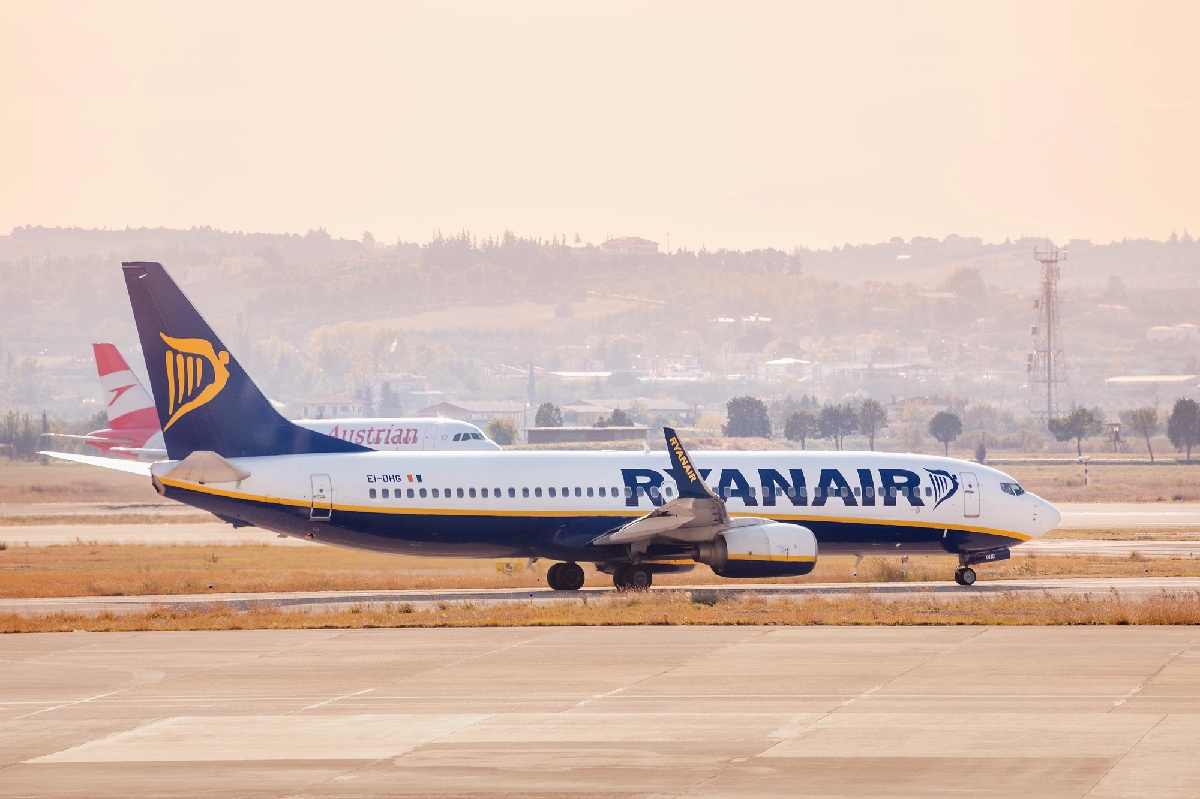
Ryanair publie des résultats semestriels en baisse.

For the first half of its 2026/2027 financial year, ended September 30, the airline posted a net profit of €2.15 billion, down from €2.54 billion a year earlier (-15%), according to its release.

Revenue rose by 3%, to €10.08 billion. Traffic climbed by 6%, to 125.8 million passengers, but the average fare fell by 4%, to €55.70. Ancillary revenues rose by 6%, to €3.08 billion.

Operating costs rose by 10%, to €7.69 billion. The price of the 20% of unhedged kerosene has doubled, to around $130 per barrel. The remainder is hedged at about $67 until March 2027, according to the release.


A fuel bill weighing in at around €2 billion in 2027/2028

For 2027/2028, Ryanair is hedged at 25%, at about $95 per barrel. The airline estimates its fuel bill will rise by around €2 billion, based on current forward prices. It expects a substantial increase in European short-haul fares, which would not be enough to offset this additional cost. It is revising its costs, notably airport and wage agreements, with potential temporary freezes of wages.

The traffic target for 2026/2027 has been lowered from 216 to 214 million passengers. Ryanair aims for more than 220 million passengers (+3%) in 2027/2028, with the delivery of 16 Boeing 737 MAX 10s for the summer of 2027.

The company is putting on sale 126 new routes and a Rimini base for the summer of 2027. Capacities will be focused first on Albania, Italy, Morocco, Slovakia and Sweden, at the expense of Austria, Germany and the Spanish regions.

Demand in the third quarter is deemed solid, with fares slightly higher than those of the previous year. In the absence of visibility for the fourth quarter, Ryanair does not publish an annual profit forecast.


CJEU: Updates on compensation for flights delayed by air traffic management


CJUE : du nouveau sur l’indemnisation des vols retardés par la gestion du trafic aérien - Depositphotos.com  Auteur Savvatexture

Marriott Mauritius


The Court of Justice of the European Union (CJEU) clarified in a ruling issued on 8 October 2026 that an air traffic management decision does not, by itself, constitute an extraordinary circumstance within the meaning of Regulation (EC) No 261/2004, as stated in a press release.

Carriers face this type of decision “in an ordinary and regular manner,” the Court notes. It is therefore necessary to identify the event that led to the decision and verify, on a case-by-case basis, whether it falls outside the carrier’s effective control. The carrier must demonstrate that the decision was taken because of a circumstance that itself was extraordinary.

The CJEU thus overturns, for the first time, a ruling rendered as a preliminary ruling by the European Union Court. On 21 January 2026, the latter had held that only the decision, and not its motive, was decisive.


Delay attributable to the extraordinary circumstance must be deducted

The case concerns an Izmir-Warsaw flight that arrived more than three hours late in July 2023. The aircraft had been delayed on its previous leg, from Katowice, by a traffic-management decision related to airspace restrictions in Hungary and Romania due to the weather.

A technical fault subsequently required more than two hours of repair in Izmir. A specialized company, to whom the passenger ceded her rights, is seeking 400 euros from the carrier.

Weather conditions can constitute an extraordinary circumstance if their severity prevents the flight from operating safely and as scheduled, the Court recalls. The Polish court will have to verify this.

Such an event may be considered even if it did not, by itself, cause a delay of at least three hours. The portion attributable to it must then be deducted from the total delay to determine the right to compensation.

Lufthansa Group: €543 Million Fuel Cost Increase, Operating Profit Up


Lufthansa Group : 543 millions d’euros de carburant en plus, un résultat opérationnel en hausse - Depositphotos.com Auteur MamunSheikh

Marriott Mauritius


Lufthansa Group absorbs the rise in jet fuel.

According to its press release published on November 3, 2026, the group posted an adjusted EBIT of €1.4 billion in the third quarter, up 6%. Its revenue reached €12.2 billion, up 9%. It represents, according to the group, its highest quarter by revenue.

The adjusted EBITDA stands at €2.045 billion, up 6%.

The fuel bill rose by €543 million year over year. The adjusted EBIT margin declined to 11.5%, compared with 11.9% a year earlier.


Network carriers increased their capacity by 1.6%, mainly on long-haul routes. Their unit revenue rose by 5.2%, with yield up 6.8% and load factor down by 1.3 percentage points. Their adjusted EBIT, however, fell by €108 million, to €853 million.

SWISS, Austrian Airlines and Brussels Airlines performed better than a year earlier. Lufthansa Airlines also bore about €65 million in costs related to strikes in the first half.

Eurowings reduced its capacity by 3.5% after suspending its flights to the Gulf. These services were replaced by shorter routes to Southern Europe. The SunExpress joint venture contributed €103 million (+€20 million).

The point-to-point segment posted an adjusted EBIT of €214 million (+€16 million).


Solid Performance for Cargo and Maintenance

Lufthansa Cargo triples its operating profit, to €162 million. Lufthansa Technik, focused on maintenance, reaches €200 million (+54 %).

The group expects an annual jet-fuel bill of €9.3 billion. It is hedged at about 86% for passenger airlines in 2026, and at more than 60% for 2027.

The group tightens its full-year adjusted EBIT guidance to between €1.7 billion and €2 billion.

« Where we will position ourselves within this range will depend not only on fuel costs and demand, but especially on Lufthansa Cargo’s results in the fourth quarter », says Till Streichert, Chief Financial Officer, in the release.

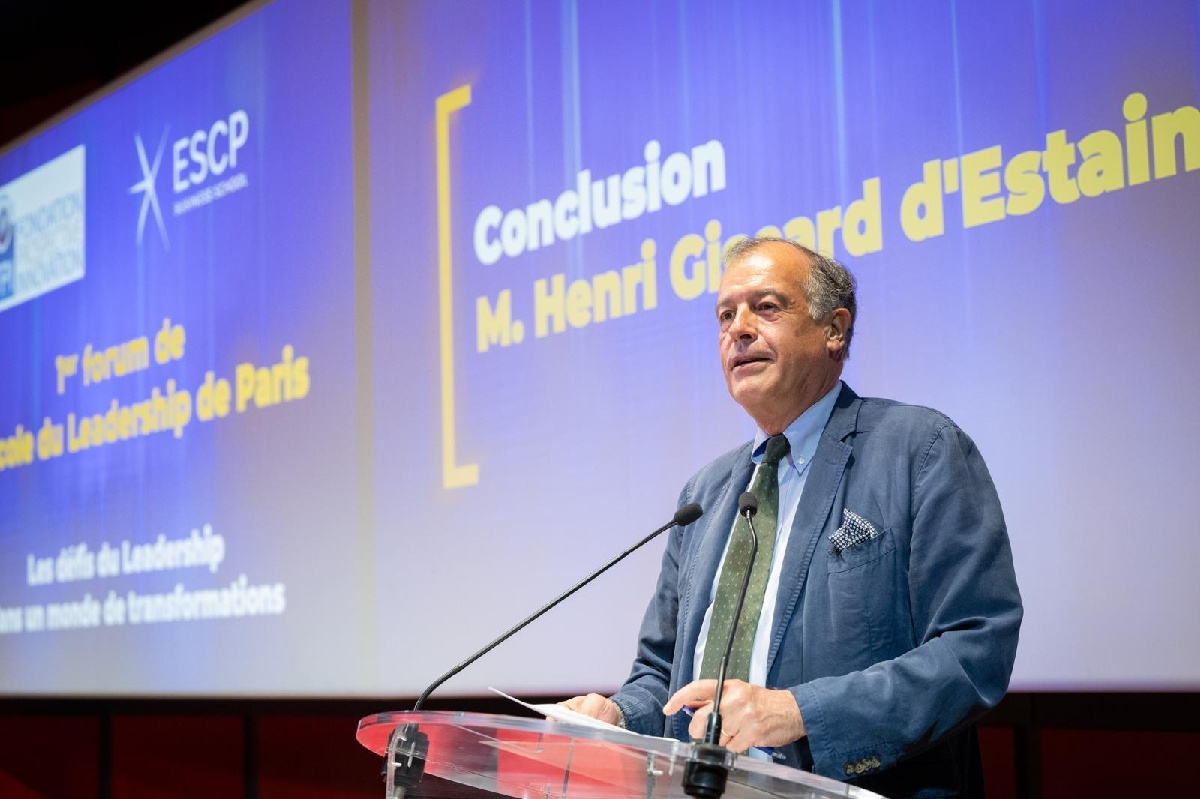
Henri Giscard d’Estaing: If Leadership Were Told to You [ABO]


Henri Giscard d’Estaing : si le leadership vous était conté - Photo ESCP

Marriott Mauritius


… The last time I met Henri Giscard d’Estaing, it was in Serre-Chevalier for the inauguration of a newly renovated mountain Club Med, aligning with the brand’s renewed criteria. It was July 2025, and the Club announced its pivot toward mountain life both in summer and winter.

And, on that occasion, it celebrated its partnership with the region’s elected officials and operators in Provence‑Côte d’Azur in view of the upcoming 2030 Winter Olympics. A rare opportunity for this leader about whom, on July 7, 2025, I wrote: “Henri Giscard d’Estaing stays the course. And that is all the more true because the group’s solid results are meeting expectations and make him an untouchable figure.”

But the tale of this fragile tourism sector decided otherwise. A few days after this meeting, the man who had saved Trident was abruptly dismissed by his Asian shareholders, to the astonishment of all, inside and outside the company. A new page opened for the enterprise. Meanwhile, his former chairman had to chart another course. Which one?


Leadership: a School, a Culture, an Ambition

My surprise was probably as great as yours when, a few weeks ago, Paris hosted a presentation at ESCP Business School—a kind of think tank dedicated to “defining, qualifying and promoting the specificities of French and European leadership in their political, economic, entrepreneurial, and societal dimensions.”

Born from reflections conducted with former Prime Minister Jean-Pierre Raffarin and his foundation “Prospective and Innovation,” this new structure should also “contribute to building and disseminating a leadership pedagogy adapted to the challenges of the 21st century”!

For a starting point: Henri Giscard d’Estaing does not budge: “In a world of uncertainty and worry, leadership is more necessary than ever, and this in all areas of the economy.” But not everyone who aspires to lead has what it takes.


“Leadership is learned and cultivated. It is not enough to have a strong personality. I see it as the result of methods and personal and professional traits…”


Far from limiting his reflections and advice to the tourism industry alone, the former head nonetheless draws on his own story to lift a brand that perhaps did not need a revolution but at least a major turning point.


A Long and Complex Method


“The upgrading to a higher end must begin with a rational, sensitive, and well-considered approach, arising from an economic and human equation. The matter is complex; it involves moving the client from one paradigm to another so that they understand why they pay more for their holidays.”


We Move to a Value Strategy

Was the verdict sealed? Not quite. The choice of the upscale segment must primarily draw on the Club’s historical base and on the values that have built its reputation and success for decades.

Which values? “Freedom, the pioneering spirit, kindness, and multiculturalism,” proclaims Henri Giscard d’Estaing, also evoking friendship, curiosity, and a sense of purpose…


“Freedom was becoming the luxury, the hallmark of the high-end we wanted to establish.”


Finally, more broadly, for Henri Giscard d’Estaing, upgrading to a higher end must occur both at the corporate level and at the level of the regions.

Giving Austria and Mauritius as examples, he believes that “France and Europe probably have no choice but to upgrade. I think we would gain from offering a more qualitative offering centered on our extraordinary heritage.”


Three determinants shape upgrading to the higher end

The economic model (cost structure)

Market evolution (willingness to pay more for a qualitative offer)

The brand’s intangible drivers


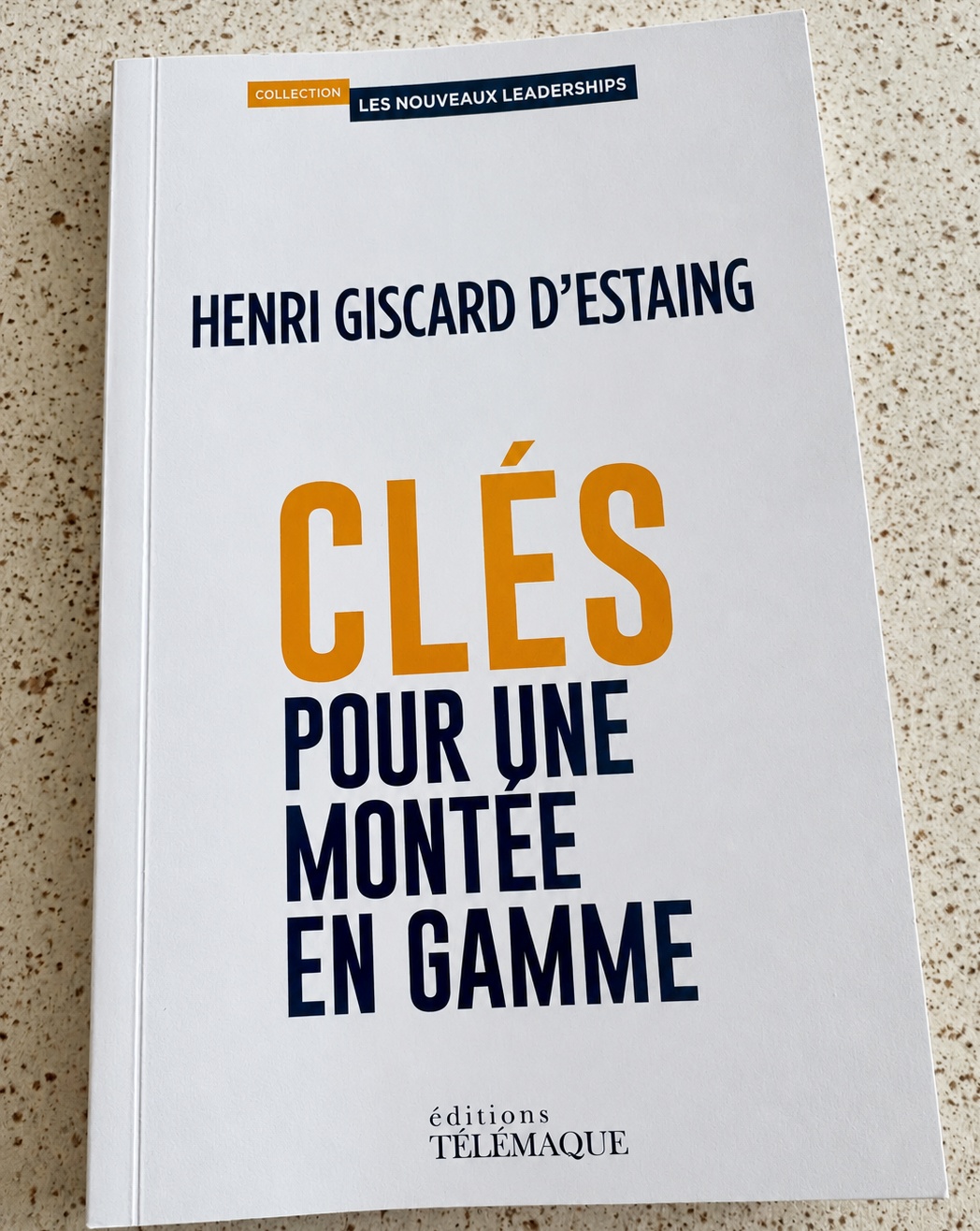
Le livre d'Henri Giscard d’Estaing - Photo JS
… In fine, after outlining in his book “Keys for a Higher-End Upgrade” twelve chapters corresponding to the twelve stages of the twenty years at the helm of Club Med, HGE confesses his wish to transmit and establish a leadership of French and European origin, derived from a structured thought capable of rivaling American and Asian industrialists who have shaped a model that continues to dominate though it falters.

Keen to be useful to his peers and to all young people drawn to the tourism sector, this new school of thought will also run debate workshops during which various leaders will share their journeys and present them to their audience.

Finally, I would emphasize that the former executive’s discourse is educational and cordial, but devoid of any vengeful tone. Explaining what was, at best, a brutal departure and an unduly messy separation from his shareholders, he thanks those who helped him and suggests that:

“In working to make Club Med an international success, it escaped us.” A collective “us” that says a lot about the sincerity of the man who saved a major institution. And not just any institution.

Read: in “Keys for a Higher-End Upgrade”. Télémaque Editions. 15 euros.

In the collection “The New Leaderships” which gives voice to leaders from all backgrounds, led by Henri Giscard d’Estaing.


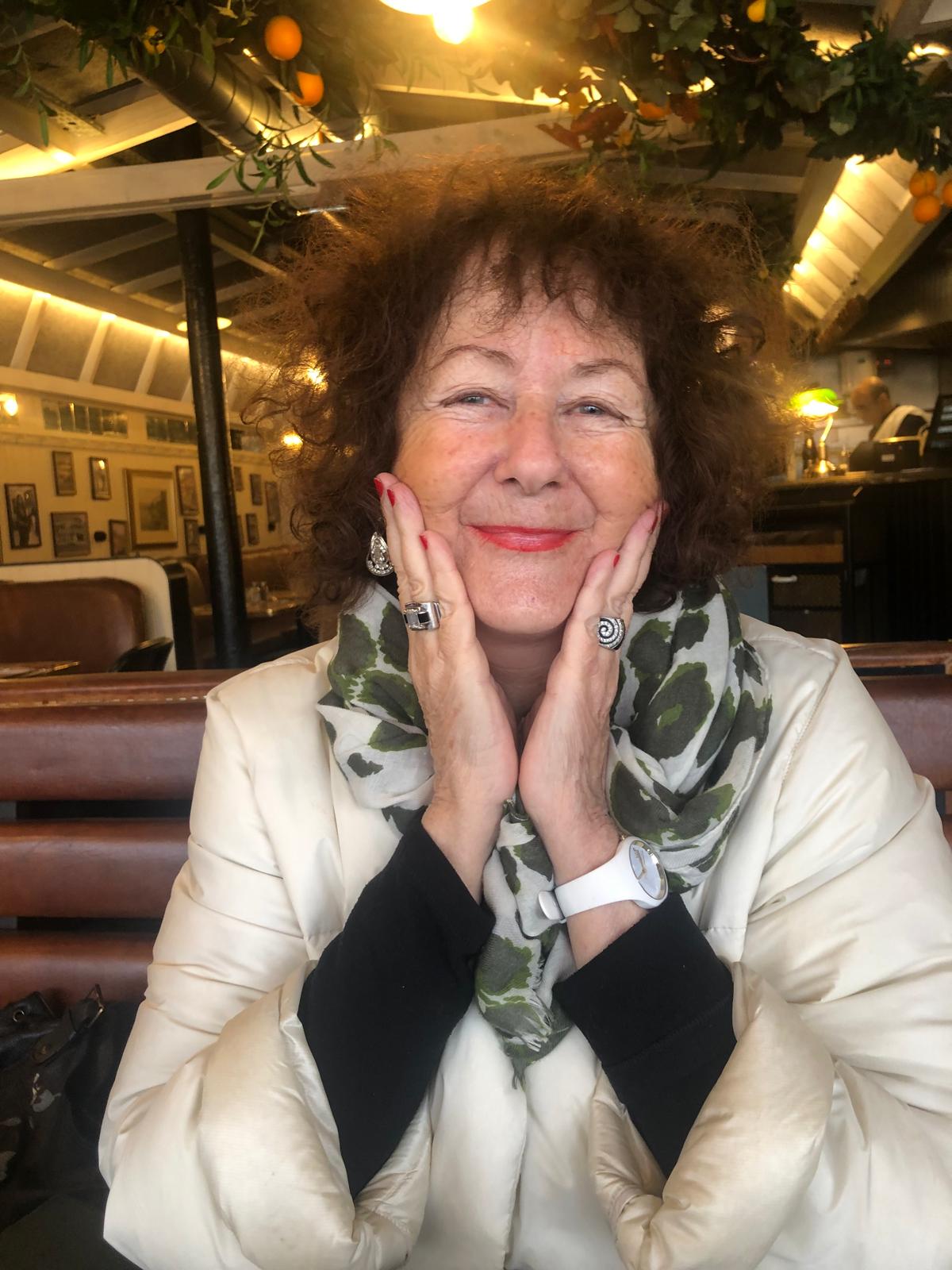
Josette Sicsic - DR
Journalist, consultant, lecturer, Josette Sicsic has been observing the world’s changes for more than 25 years to analyze their impact on the tourism sector.

After developing the Touriscopie journal for over 20 years, she remains at the forefront of current events where she decodes the present to predict the future. On the site www.tourmag.com, in the Futuroscopy section, she publishes several times a week forward-looking and analytical articles.

Contact: 06 14 47 99 04

Email: [email protected]


Travel Agent: How to Create 100% Accessible Trips [ABO]


1- Asking the Right Questions at the Very First Interaction

Pour les agences de voyages, il s’agit d’identifier précisément les besoins de chaque client, de contrôler l’accessibilité des prestations et des hébergements et d’anticiper les éventuelles difficultés.  @Depositphotos.com/studiostock

Marriott Mauritius


Avant de rechercher une destination, l’agent de voyages doit comprendre les besoins du client : mobilité, fatigabilité, soins sur place, régime alimentaire, accompagnement ou appréhensions. L’objectif est de recueillir les informations nécessaires sans présumer des capacités d’une personne à partir de son handicap.

« Il faut préparer un questionnaire qui permette de poser les bonnes questions, même si certaines peuvent sembler intrusives », recommande Annette Masson, présidente de l’association Tourisme et Handicaps. Il s’agit notamment de savoir si le voyageur utilise un fauteuil manuel ou électrique, s’il peut prendre l’avion ou le train et s’il aura besoin d’une assistance ou de soins pendant le séjour.

Malik Badsi, fondateur et PDG de Yoola, insiste sur la nécessité d’identifier les éventuels troubles associés. « Il faut notamment identifier les besoins matériels, le niveau de mobilité, les capacités physiques et la fatigabilité du voyageur. » Certaines situations nécessitent une expertise particulière, notamment lorsque des besoins médicaux ou des difficultés psychiques s’ajoutent au handicap moteur.

La manière d’aborder ces questions compte tout autant. « Il faut avant tout établir une relation de confiance. Cela passe par le dialogue, l’écoute et le temps consacré à la compréhension de chaque personne », souligne Jennifer Weber, fondatrice d’Avantagon Consulting et chargée de projet chez Elstarecon Événements et Conseils.

Tharith Tep, fondateur du tour-opérateur Le Monde en Fauteuil, lui-même en fauteuil roulant après un double AVC, conseille de rester naturel : « On peut simplement demander : “Avez-vous des besoins spécifiques ? Comment pouvons-nous vous aider ?” L’essentiel est de s’adresser directement au voyageur et de lui laisser la possibilité d’expliquer ce dont il a besoin. »

Lire aussi : Tharith Tep : après un double AVC, il réinvente le voyage avec Le Monde en Fauteuil


2 – Verify Each Service, Beyond Online Information

Une fois les besoins identifiés, l’agence doit contrôler concrètement l’accessibilité des hébergements, des activités et des espaces communs. Une chambre référencée comme adaptée aux personnes à mobilité réduite peut convenir à une personne marchant avec difficulté sans répondre aux besoins d’un voyageur en fauteuil roulant qui ne peut pas effectuer seul ses transferts.

« Il ne faut pas se fier uniquement aux informations affichées sur un écran », prévient Jennifer Weber. Elle recommande de demander des photos et des descriptifs précis, puis d’interroger les prestataires. Un pictogramme ne garantit pas, par exemple, l’absence de marches ou la présence d’un ascenseur adapté.

Annette Masson conseille de s’appuyer sur des critères techniques et une grille de vérification. Elle cite une expérience menée avec Thomas Cook, qui avait mis en place un questionnaire destiné aux chefs de produits. Celui-ci permettait de contrôler les dimensions des chambres, la hauteur des lits ou encore l’accessibilité de la piscine, du restaurant et des espaces de petit-déjeuner.

« Ils prenaient des photos pour permettre une vérification complémentaire au retour. Le tour-opérateur avait sorti une petite brochure, une personne “dédiée” coordonnait. C’était surtout un premier pas, il y a plus de dix ans, sur l’intégration », raconte-t-elle. Elle rappelle également l’enjeu commercial : « Ce qu’il faut surtout pour les agences de voyages, c’est leur dire qu’il y a une réelle clientèle. »

En France, selon une étude publiée en février 2023 par la Direction de la recherche, des études, de l’évaluation et des statistiques (DREES), 7,6 millions de personnes de 15 ans ou plus vivant à domicile étaient concernées en 2021 par un handicap au titre d’une limitation sensorielle, physique ou cognitive sévère, ou d’une forte restriction dans les activités de la vie quotidienne.

Sur le terrain, les contrôles doivent être précis. « Il faut vérifier les dimensions, les accès, les circulations et les éventuels obstacles sur les itinéraires », confirme Tharith Tep. Pour ses séjours, il travaille avec des réceptifs locaux capables de se rendre sur place et de prendre des mesures. Un simple trottoir peut devenir un obstacle s’il n’a pas été anticipé.

Malik Badsi souligne les difficultés auxquelles se heurtent les agences qui découvrent une destination : « Même lorsqu’on demande des photos et des mesures, il faut parfois attendre une semaine avant d’obtenir une réponse. » Yoola s’appuie donc sur un réseau de fournisseurs connus, des partenaires locaux et des visites réalisées au fil des années.


3- Securing Transportation and Getting Around

L’accessibilité doit être assurée tout au long du parcours, du domicile à la gare ou à l’aéroport, puis jusqu’à l’hébergement et aux activités.

« Il faut se rapprocher de ses fournisseurs pour comprendre comment effectuer les réservations et quelles informations recueillir », rappelle Annette Masson. Les agences doivent connaître les procédures d’assistance des compagnies aériennes et ferroviaires, au départ comme à l’arrivée. Elles doivent aussi vérifier les solutions de transfert, les autocars classiques n’étant pas toujours adaptés aux personnes en fauteuil roulant.

Pour les vols, les contraintes techniques peuvent être importantes. « Les fauteuils doivent être validés par la compagnie aérienne », explique Malik Badsi. Il faut notamment contrôler les dimensions des fauteuils électriques et les caractéristiques de leurs batteries, soumises à des restrictions. Les règles pouvant varier selon les transporteurs et les appareils, elles doivent être confirmées avant la réservation.

Pour ses séjours en France, Tharith Tep organise la prise en charge dès l’arrivée en gare. Il prévoit notamment des groupes de quatre personnes en fauteuil roulant, un format compatible avec les véhicules adaptés de son prestataire AMC Transport Express, spécialisé dans le transport de personnes en fauteuil, y compris électrique. Il travaille également à la location de matériel médical livré directement sur le lieu de vacances.

Jennifer Weber recommande de « prévoir des marges suffisantes pour les transferts et les correspondances et d’intégrer des temps de repos ».

Le carnet de voyage peut regrouper les étapes, les contacts d’urgence, les coordonnées de professionnels de santé et les informations pratiques utiles au voyageur.


4- Adapter le rythme et anticiper les imprévus

Le temps nécessaire à la toilette, à l’habillage ou aux déplacements peut modifier l’organisation d’une journée. Il faut donc adapter le programme aux besoins du voyageur.


« Il ne faut surtout pas surcharger les programmes », insiste Tharith Tep. Pour certaines personnes, la préparation du matin peut prendre près de deux heures. Le programme doit en tenir compte, quitte à prévoir moins de visites. Selon les besoins, il peut aussi être nécessaire d’organiser des soins ou des séances de kinésithérapie.

Il ne s’agit pas pour autant de limiter systématiquement les activités. « Certaines personnes ayant un handicap important peuvent gravir le Kilimandjaro, tandis que d’autres, avec un handicap invisible ou une santé fragile, ne pourront pas marcher 500 mètres sans aide », rappelle Jennifer Weber. L’agent doit partir des envies et des capacités de chacun, plutôt que de se fier aux apparences.

Les imprévus doivent également être anticipés. Malik Badsi évoque des situations où un problème à l’arrivée à l’hôtel, comme une demande de paiement inattendue, peut provoquer une forte anxiété. Le stress et la fatigue risquent alors d’amplifier les difficultés.

La transparence reste essentielle. « Si une activité n’est pas réalisable ou praticable, il faut le dire clairement », insiste Jennifer Weber. Mieux vaut proposer une alternative que laisser le client découvrir sur place que la prestation annoncée n’est pas accessible.


Caroline Lelievre Publié par Caroline Lelievre Journaliste – TourMaG.com
Voir tous les articles de Caroline Lelievre

  • picto Twitter
  • picto Linkedin
  • picto email
Ajoutez TourMaG à votre flux Google Actualités Google Actualités icône

Ailleurs Business: Growth, Key Accounts, and the Competitive Landscape


Ailleurs Business : croissance, grands comptes et bataille concurrentielle [ABO]

Marriott Mauritius


TourMaG – You took on the role of Commercial Director at Ailleurs Business a little under four years ago. What assessment would you make of these years ?

Florent Jutigny: Indeed, I joined Ailleurs Business at a time when the company needed to complete the integration of the agencies it had previously acquired, in the context of the Bleu Voyages acquisition.

The challenge was to finish this integration, which had not always been carried through, while equipping the group with the means to respond to demanding markets. When Laurent Abitbol (chairman of the Marietton Développement group) wished to appoint a Commercial Director at Ailleurs Business, the objective was also to develop activity, retain existing clients and strengthen the portfolio. That was my roadmap.

I did not come from the business travel sector. I spent fifteen years at Edenred, a company best known for meal vouchers, gift vouchers and CESU, which provides employee benefits. This experience gave me keys to address B2B services markets that are fairly broad.

Entering the business travel sector, I quickly noticed similarities with what I already knew. Business travel rests on a platform that connects a company sending its employees on trips with a network of suppliers, such as airlines or railway operators.

The objective is to bring together all these players so that employees can travel under the best possible safety conditions, with tools tailored to streamline exchanges.

In almost four years, we have thus moved from a phase of integration and reconstruction, in the post-Covid context, to a new stage. Today, we are capable of addressing large-scale markets, notably public ones, which require significant expertise, both on the digital side and in the realm of technical systems and their interconnection.

We are able to address complex markets by their size, by the complexity of their decision-making process, by the technology involved, and which can represent tens of millions of euros for some.

The idea is to have the capacity to address both small markets and very large markets alike. We know how to work with every kind of target.


Ailleurs Business is more than 200 people and 13 business desks

TourMaG – You also emphasize technology, but Ailleurs Business is also about its people.

Florent Jutigny:
Indeed. Ailleurs Business comprises more than 200 people, with long-time employees across the organization, and 13 business desks.

Today’s markets are increasingly digitized. Yet even though the share of requests that go through our desks is becoming minority: 5%, 10%, or as low as 2% depending on the client, every request handled by our teams must be perfectly managed. That’s where we stand out: our ability to handle complex requests thanks to the expertise of our staff.

TourMaG – Is the market becoming more competitive?

Florent Jutigny:
The business travel market is moving in all directions today. Competition is intense; you could call it a real dogfight.

On one side, there are large international players, such as Carlson Wagonlit Travel, which was acquired by Amex GBT, which itself was acquired by Long Lake Management. On the other side, technology-forward firms like Navan or Swile offer a strongly technology-driven approach.

Ailleurs Business sits somewhere in between these two models.


An increasingly competitive market

TourMaG – In light of this competition, what are your strengths?

Florent Jutigny :
We are a French player and we represent a compelling travel success story, notably propelled by Laurent Abitbol. This French dimension and sovereignty issues are assets in a market that is rapidly evolving.

The figures from the Marietton Développement group and the Selectour network, of which we are members, testify to a certain solidity. In today’s context, that’s reassuring for our clients. When a company chooses a business travel agency, it must be sure that its partner will still be there tomorrow. Financial strength and the company’s longevity are therefore essential.

Our belonging to the Selectour cooperative is also an advantage. Laurent Abitbol is also its president, which strengthens our ability to negotiate with suppliers and to obtain the best pricing terms for our clients.

These suppliers provide both content, notably transport offers, and technological solutions. Today, it is essential to have enough weight in these two areas to select the best offers and the most effective tools.


TourMaG – Are there major market stakes at the moment?

Florent Jutigny :
Our sales force is organized around two segments. One team concentrates on the middle market, with companies representing roughly one million euros in business volume. A key accounts unit focuses on public and private markets, capable of responding to tenders ranging from 3 million up to several tens of millions of euros.

This year, the market has been particularly dynamic, with a high volume of tenders. But competition has also intensified significantly. When I arrived four years ago, some markets, especially the public ones, attracted few bidders. Today, we can find more than fifteen agencies competing on a single tender.

This evolution has several consequences. Client response times are lengthening and competition is becoming fiercer. While technical criteria remain important, price is taking a central role in decisions.

We must therefore always be better, differentiate ourselves, and provide ever more precise responses to client expectations.


“When a service is free, one must ask where the TMC gets paid”


Our ambition is to reach 500 million euros in annual business volume by 2030

TourMaG – You also assist companies that have subsidiaries abroad. How do you respond to these international needs?


Florent Jutigny : We recently signed a partnership with Globalstar, which enables us to provide a global response in most countries around the world. The aim is to support companies that need to consolidate their data and manage their local emissions, with a single contract carried by the agency.

TourMaG – How do you envisage the year 2027?


Florent Jutigny : 2027 is being prepared now. In our market, there is a lag between tender responses and the actual start of contracts. The markets we are working on today will begin to generate activity and revenue next year for many of them. So we have already been preparing for 2027 for several months.

We will finish 2026 with growth. For 2027, it is still too early to provide precise forecasts. We do know, however, that the year will bring new challenges. The political context, particularly with presidential elections, could slow the publication of certain tenders.

We are therefore already forecasting the markets likely to be launched and we stay vigilant. We are already working on contracts that should allow us to approach 2027, a year that promises to be as complex as 2026.


TourMaG – What are Ailleurs Business’ growth objectives in the mid term?

Florent Jutigny :
Our ambition is to reach 500 million euros of annual business volume by 2030.

To achieve this, we have outlined several milestones. We will reach 300 million euros by the end of 2026. The goal is then to surpass 400 million in 2027, before attaining 500 million by 2030.


Céline Eymery Published by Céline Eymery Editor-in-Chief – TourMaG.com
See all articles by Céline Eymery

  • picto Facebook
  • picto Twitter
  • picto Linkedin
  • picto email
Add TourMaG to your Google News feed Google News icon


Lu 1682 fois

Tags :
ailleurs business, marietton developpement

Rate

New comment :


All rude, abusive, or defamatory comments will be removed by the moderator.

Report misuse

In the same section :

<
>

Friday 13 November 2026 – 10:50 Djokovic, Spain, AI, San Francisco… The week’s tourism news panorama

Friday 13 November 2026 – 07:38 Greece stay: stones on the sand, a missing restaurant… what about compensation? [ABO]

Change: Why Travel to Canada and Japan Could Cost More [ABO]


Economic Situation

Change : pourquoi les voyages au Canada et au Japon pourraient couter plus cher - Depositphotos.com Auteur VisualGeneration

Marriott Mauritius


The oil has resumed its advance. The strikes by the Houthi rebels against Saudi Arabia pushed Brent to $116.72 by Friday evening: a closing high not seen since April 29, up 6.2% in seven days and almost 70% above last year’s average.

Currencies, meanwhile, mostly followed the central banks: those from which investors expect a rate increase rose. The Canadian dollar provides the clearest illustration.


The Bank of Canada
warned that inflation would be “significantly higher” than it had estimated in July, and a rate hike on Wednesday is now deemed likely by more than 75%, versus a one-in-three chance seven days earlier. Nothing is decided yet, as the country shed 68,000 jobs in September.

The yen, for its part, owes its rise to fear. Thursday, the US technology stock index fell by 2.6%, and investors gravitated back toward the Japanese currency, which serves as a safe haven when markets wobble. The prospect of a December Japanese rate hike sealed the deal.

The euro did not benefit from either of these forces. The euro area imports its energy abroad: an expensive barrel weighs on its bill and slows activity. The first October activity index fell to 51.9, versus 52.7 expected. This slowdown, in our view, is restraining the European Central Bank. As long as crude stays at this level, the euro will be poorly equipped against currencies with rising rates.


Exchange Rates: The Technical View

Two currencies have returned to their best level against the euro since the start of July. On Friday, 1.5665 Canadian dollars per euro at the European Central Bank reference rate, i.e., 1.69% lower than seven days earlier, and 175.51 yen, i.e., 1.30% lower.

A Quebec self-drive or a Japan tour priced in the country’s currency thus costs more than in mid-October. This level, in our view, will hold only if the Bank of Canada indeed raises rates on Wednesday: without action on its part, the euro would rise toward 1.5920 Canadian dollars.

The other currencies moved less. The euro is worth 0.8373 British pounds, 0.9227 Swiss francs and 1.1193 US dollars, after declines of 0.78%, 0.49% and 0.53%. This drop against the dollar stems from the euro’s weakness against all three, rather than a particular strength in the American currency.

We see the euro moving between 1.1110 and 1.1320 dollars this week, likely toward the bottom end of this range if the US Federal Reserve reinforces on Wednesday the December rate rise that almost all investors already expect.

Egypt, at the opening of its winter season, is moving in the opposite direction. Its currency has weakened for two weeks, for the same reason as the euro: the country imports more petroleum products than it sells, and a dear barrel pushes up the demand for dollars. The dollar rose from 53.18 Egyptian pounds on October 14 to 55.90 on October 25, according to the country’s central bank, which quoted the euro at 62.63 pounds on the same day. A stay on the Red Sea priced in local currency thus costs less than at the start of the month.


WEEKLY SUPPORTS WEEKLY RESISTANCES
S2 S1 R1 R2
EUR/USD 1.1110 1.1150 1.1260 1.1320
EUR/GBP 0.8290 0.8330 0.8420 0.8460
EUR/CHF 0.9140 0.9180 0.9270 0.9310
EUR/CAD 1.5500 1.5600 1.5800 1.5920
EUR/JPY 173.50 174.50 176.90 178.00


The supports and resistances shown below indicate the lower and upper levels within which prices are expected to move during the week.


The information presented in this publication is provided for informational purposes only and does not constitute investment advice, nor an offer to sell, nor a solicitation to buy, and should in no way be used as a basis or be considered as an inducement to engage in any investment.


Mondial Change is a French financial institution, founded in 2015, specializing in the management of international payments and exchange risk.

Mondial Change accompanies many players in tourism, travel agencies, tour organizers, tour operators, inbound operators…

www.mondialchange.com

Contact: [email protected]


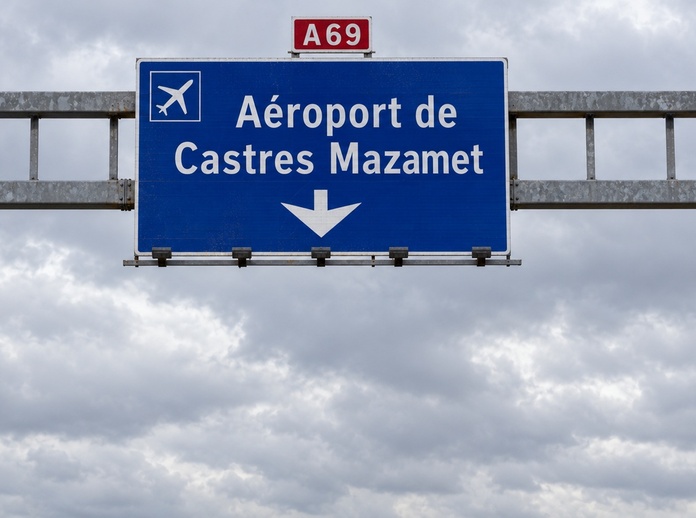
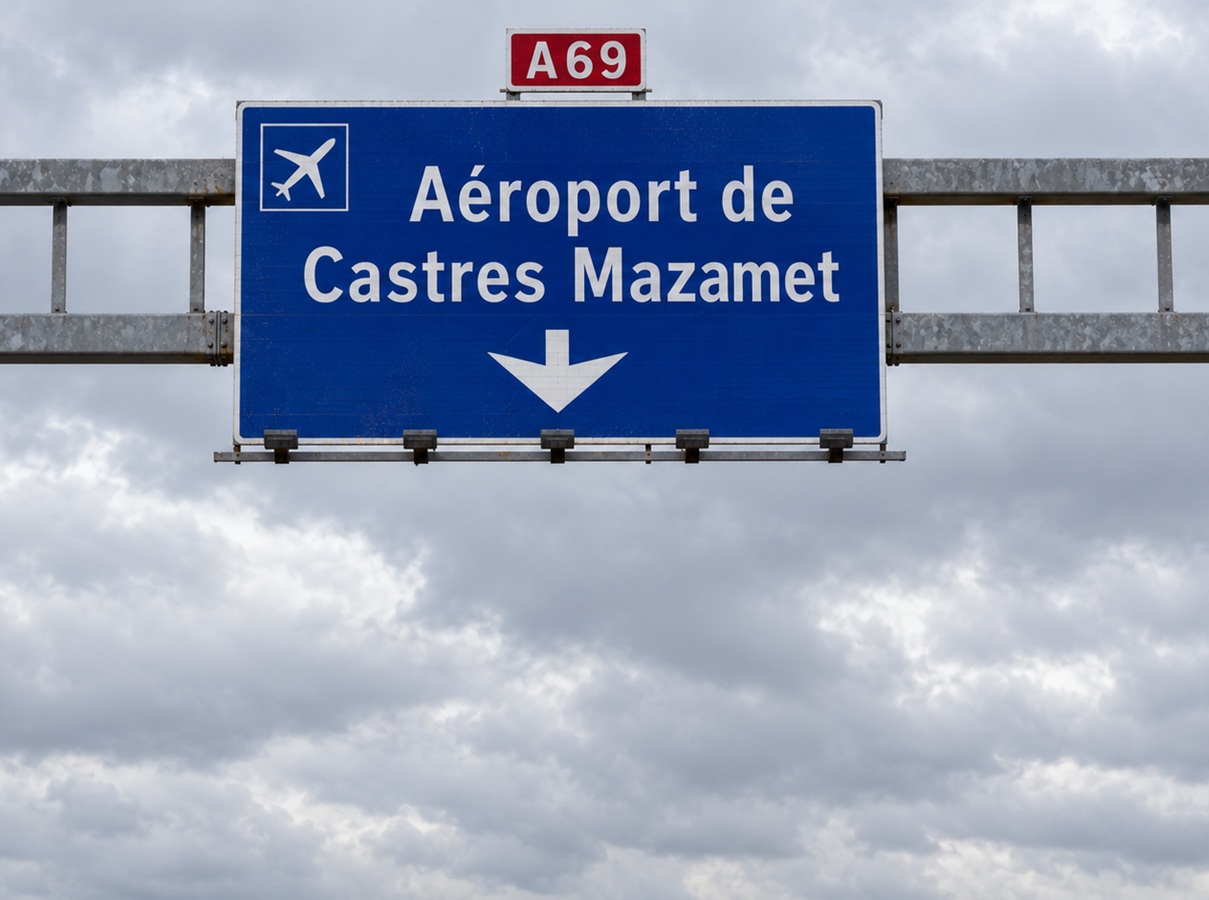
Castres Airport: Victim of the A69 or a Sign of the Fragility of Provincial Airports? [ABO]


En 2025, seulement 30 259 passagers ont fréquenté l'aéroport de Castres - Depositphotos.com, modifié avec l'IA

Marriott Mauritius


A few days before the riots that shook the Hexagon, 1,500 people took to the streets in the southwest of France.

 
They were protesting the opening of the A69 motorway, connecting Castres to Toulouse.

This stretch, declared a public utility in July 2018, was slated to be inaugurated on October 15, 2026. Because of protests and last-minute security checks, the ribbon-cutting was postponed to the first week of November, with no exact date.

Before reaching that point, the project had generated a great deal of ink and sparked strong opposition in the region because of its environmental cost. And, almost a unique case in France, it also cast a shadow over the maintenance of an airport, namely Castres.

“We are in total uncertainty about the Castres-Paris line, which has been operated by Chalair for three years now. We are reaching the end of the DSP (public service delegation). The State tells us that, since we have the highway, it will terminate the DSP, simply to save money.

We do not want the State to disengage from its obligation of public service“, laments a worker in the Castres airport control tower.


Castres Airport: End of State Subsidy and Abandonment of Works

Even though Reims did have an airport that was forced to close its passenger terminal in 2006, just six years after its renovation, due to modernization costs and the opening of the TGV Est line, commercial airports closing in France are a rare thing.

Yet, the threat weighs on the handful of Castres employees, who have experienced real roller-coaster months lately.

“This is an airport that was built in 1990. It opened up Tarn and the Castres metropolitan area, while the nearest high-speed line is in Bordeaux (300 km from Castres).
The Pierre Fabre group, a major local employer, is behind the airport. It also owns the rugby team, Castres Olympique.

Thirty years ago, it actively participated in the airport’s creation to ferry its executives. The problem is that since its creation there has been no strategic and commercial development, explains a disheartened employee.

Imagine that in 2025, only 30,259 passengers used the airport, a figure that, while up 6.6% from 2024, is entirely tied to its sole commercial route serving Paris Orly.

Aside from this activity, the facility hosts the aero club, some private jets, and the nearby parachute regiment.

“Without the OSP (public service obligation) for the Castres-Paris route, the airport cannot survive.

And then we face a second problem with our runway. It measures 1,820 meters in length and 30 meters in width. To develop Castres-Mazamet, we would have to rebuild the runway to accommodate larger aircraft, and because its surface is at the end of its life“, continues our interlocutor.

The total envelope for resurfacing the asphalt exceeds 6 million euros. This financing requires the agreement of the partners of the Castres-Mazamet airport joint authority.

The region and the department condition their participation in the runway’s refurbishment on the continuation of commercial activity, even though there is no “certainty about the future use of the infrastructure“.


Castres Airport vs A69: The State Favors the Highway, but…

Local authorities want the State to provide assurances of support and long-term viability in its policies to reduce isolation.

But for several months now, the executive has faced strained finances and must quickly trim the budgets at the Treasury. To do so, it is conducting a spending purge.

Yet, by the end of 2025, the threat of cutting funding for the public service delegation loomed, and it was not only dependent on the 2026 Finance Bill.

“To accompany local authorities until the A69 comes into service, which will give Castres residents faster and smoother access to Toulouse, the public service delegation signed in 2023 for the Castres-Paris line, due to expire at the end of May 2026, was extended to mid-October 2026, the Ministry of Transport succinctly informed us, anticipating the line’s closure in October.

[The State’s financial commitment is maintained for this period.] The airport infrastructure will remain operational for business aviation and for its military activities.

And now the famous A69 returns to the forefront. At the start of September, the operator of the Castres-Paris line was also mired in total uncertainty, navigating day to day.

Alain Battisti, head of Chalair, told us then that he could not see clearly and wanted to know what would become of the service, just 15 days before the subsidy ended.

The road, which had shown a certain commercial success, was then weighed against the entirely new highway. It became the focus of a fierce battle between associations on one side and local elected officials and the Castres economic ecosystem, including the Pierre Fabre group, which had actually launched the airport.


Castres Airport: 185 Euros in Subsidies per Flight Ticket!

A stretch of tarmac that carries, beyond its ecological impact, a number of constraints. “Parking at Castres Airport is free, traffic isn’t heavy. Without the line, residents would have to reach Bordeaux (300 km) to take the high-speed train or Toulouse to catch a flight. In the latter case, it would cost them almost 12 euros in tolls for a round trip, plus the price of parking at the airport,” insists a worker in the Castres airport tower.

“The Toulouse airport is nonetheless about 1 hour and 20 minutes by car. We’ll gain 20 minutes, but it’s 90 kilometers away. So it isn’t a 60-kilometer stretch that will relieve our city,” he fumes.

The concessionaire, for its part, announced a time saving of about thirty minutes. Users will form their own judgment.

Yet the other potential bad surprise is the unfavorable opinion of the Conseil d’État regarding subsidies granted by local authorities to reduce toll prices by around 33%.

Without this authorization, the bill will rise from 12 to 20.40 euros for a round trip, enough to call into question the real value of such a stretch.

With the highway turning out to be not as advantageous and more expensive than expected, the maintenance of the air service under the public service delegation for the Tarn sub-prefecture has again become a priority in recent weeks.

“You have the workers whose position we understand well, then there are all the elected officials, the companies… the entire local fabric that wants to keep its airport“, explains the agglomeration.

It is a foundational infrastructure for the city, not so much for the general public, but for businesses, because the airport is near a very dense business zone, one of the most active in the Tarn. It also affects the image and attractiveness of our territory.

Thus, in response to the anger of the local authorities, the government did a U-turn. It was decided to extend the State subsidy in support of the service until 31 December 2026.

Local authorities reached a financial agreement to keep the line, but without Paris’s backing, the service will be provided at a reduced frequency from January 2027, and this will continue until the following May.


Tourism: Guadeloupe Seeks Fairer Distribution of Cruise Tourism Benefits


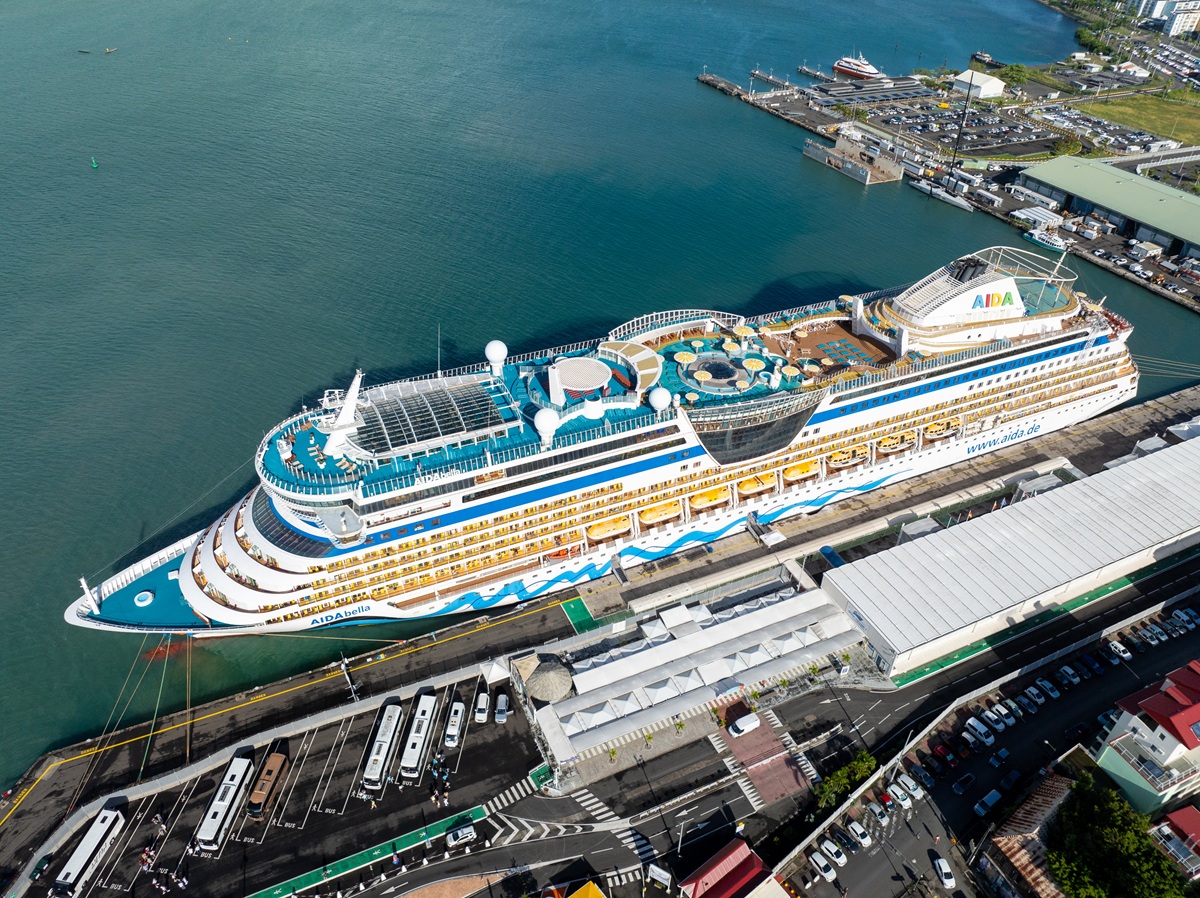
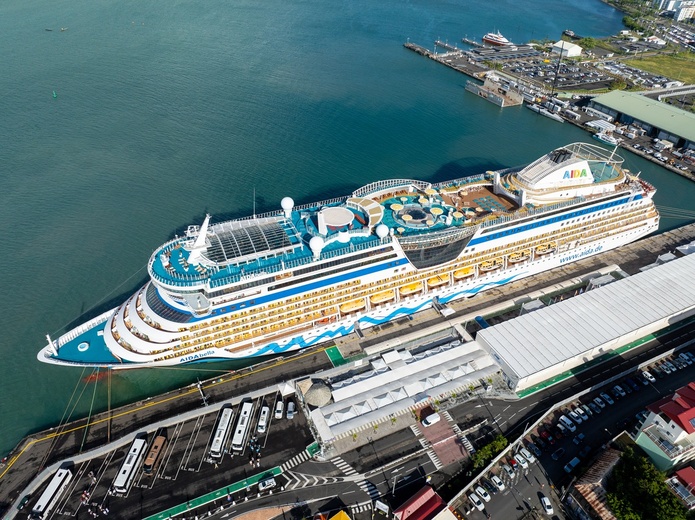
Les Allemands représentent 28,1 % des croisiéristes interrogés par le CTIG. Toutes nationalités confondues, 80 % des répondants souhaitent revenir en Guadeloupe. © Grand Port Maritime de Guadeloupe

Marriott Mauritius


The Guadeloupe cruise season will begin with calls at the Îles des Saintes.

On October 27, Le Bellot (Ponant Explorations) was anticipated to call at Terre-de-Haut. In Pointe-à-Pitre, the Mein Schiff 2 (TUI Cruises) will open the season on November 7, followed by the Renaissance (Ambassador Cruises) on November 16, the MSC Opera on the 21st, and the Costa Favolosa on the 26th.

The season will also be marked by the arrival of the MSC World Europa and the presence of the Costa Fascinosa. The overall capacity of the scheduled ships is estimated at 430,000 passengers, versus 386,906 passengers hosted the previous season.


For the Guadeloupe Islands Tourism Committee (CTIG), these calls are the culmination of months of preparation, with the aim of letting the territory benefit more from passenger spending.


Five Call Points for Ships

The answer starts with the distribution of port calls. In addition to the two ports of Pointe-à-Pitre and Basse-Terre, three moorings are added: Terre-de-Haut, Deshaies and Saint-Louis, on Marie-Galante. For three seasons, CTIG has encouraged operators to diversify their itineraries, notably by presenting Deshaies to shipowners accustomed to Saintes.

“We have a territory today that is multi-destination”, emphasizes Laurence Corenthin, head of cruise and nautical activities at CTIG.

A single vessel can thus offer, from season to season, different discoveries within the archipelago. According to the manager, the number of calls at Deshaies rose by nearly 60 % during the previous season.

British visitors particularly enjoy the shooting locations of the series Death in Paradise around which some operators propose tours and investigative games.


Shops Open During Port Calls

In Pointe-à-Pitre, the goal is also to help passengers find businesses that are open and attentive to their needs. The CTIG rolled out the Cruise Friendly arrangement, in which 21 merchants participated during the previous season.

Free for members, it provides visibility through signs and an interactive map sent to the cruise lines. In return, they commit to opening on port-call days, including Sundays.

“We created a WhatsApp group”, explains Laurence Corenthin. Merchants are informed about the ships expected, the number of passengers and their nationalities. This allows anticipating crowding and adjusting their welcome.

72 % of the member respondents say they are satisfied or very satisfied with the traffic generated by cruise passengers and all wish to renew their participation. Fortified by these results, the committee is now planning to extend the scheme to Terre-de-Haut ahead of other port sites.


Training Guides and Merchants

Furthermore, at the start of September, nearly 90 professionals, guides and excursion providers, participated in four days of training organized with Aquila, a Canadian organization specializing in cruise tourism and a partner of the Florida-Caribbean Cruise Association.

This certification aims to strengthen their knowledge of this industry, their mediation techniques and their ability to manage different situations during guided tours. The Vendor Excellence training, designed for merchants and tourism professionals, helped to better understand the expectations of cruise-going customers and to improve the quality of welcome, products and services offered.

These trainings recorded a 100 % satisfaction rate.

The CTIG also surveyed more than 300 professionals during the previous season in order to refine its strategy. Beyond the port towns, the survey also covers communes frequented on excursions such as Sainte-Anne, Bouillante or Saint-François.

The results are positive, even if they reveal contrasting situations. Among the 201 respondents in the segment dedicated to merchants, 70 % report an increase in footfall thanks to cruise passengers and 75 % say they are satisfied or very satisfied with this clientele. On markets, however, 84 % of vendors estimate the average basket below 20 euros and nearly six in ten report a decrease in passenger spending.

The developing small mobile payment terminals that allow merchants to accept card payments without worrying about currencies should help to improve outcomes.


CSR: What If Trust Is Stronger Than Rules?


A force d’organiser notre société autour de la défiance, ne risquons-nous pas de déresponsabiliser ceux-là mêmes que nous voulons responsabiliser ? - Photos : Nicolas Demare et DepositPhotos.com, kantver

Marriott Mauritius


In October 2014, I am in Pointe-Noire, Congo. Sitting in a comfortable chair, with the air stirred by a fan, I check my emails.

Since leaving Thomas Cook a year earlier, my professional life resembles more a path than a career plan.

I resumed my studies at CNAM, pursuing a master’s in Quality, Sustainable Development and Corporate Social Responsibility. I mingle with unemployment. And, thanks to my friend Auguste Loko, who studies in the same cohort as me, I make several trips to Congo-Brazzaville to accompany a deputy on the issue of waste.

That day, an email arrives from my quality professor. He speaks of an end-of-study internship to participate in the preparation of COP21. The description is short. I search for information on the Internet and one thought immediately arises: I must be part of it.

I return to France. I prepare my interview by talking about circular economy, government exemplarity, and responsibility. On January 5, 2015, I begin my internship at the Ministry of Ecology, alongside Yasmine Bekri, who pursues the same master as I do. My mission includes notably deploying the action plan she defined around ISO 20121.

I had studied this standard at CNAM. I was about to discover what it could produce in real life.


When a Standard Gets People Moving

ISO 20121 was still relatively new at the time. Published in 2012, it offers event stakeholders a management system that accounts for the economic, social and environmental impacts of their activities.

It will be revised in 2024, with a stronger focus on inclusivity and the legacy of events.

At COP21, what struck me, however, wasn’t the framework. It was the people.

I led the waste and circular economy group. Around the table sat players who, usually, can be rivals. And every morning, almost, I wanted to bring more of them into the dance. Among them, small organizations capable of offering solutions different from those of traditional players, notably on bio-waste such as Moulinot Compost.

I discovered then something that hasn’t left me: a standard can be a powerful transformation tool when it enables people to move toward a common objective.

COP21 also transformed me. After leaving Thomas Cook and a period of doubt, I regain part of my confidence. I especially discover my ability to unite very different actors, with rhythms sometimes far apart, and to bring forth solutions between them.

I want to pursue entrepreneurship. Yet economic reality quickly reminds me that a conviction alone is not enough to fill a order book. I take up a salaried role as CSR lead in a health purchasing group. An excellent professional experience, but far less fulfilling personally. Less than two years later, I leave that position and gradually return to Agapè.

At that time, a friend tells me a sentence I won’t forget: “Let the acorn grow and stop pulling it out of the ground to see if it has roots.” I have finally decided to let Agapè grow.


Certification Is Never the Beginning of the Story

Since then, I have supported 45 ISO 20121 certifications. And I have almost always seen the same scenario.

At first, the company rarely comes to me saying it wants to transform its relationship with the world. The motivation is often far more pragmatic: a client demand, a bid, market evolution, or a competitor already certified. That doesn’t bother me.

I simply start elsewhere. I listen to the intention. I question the will. I ask: why do you want to do this?

Then we enter the certification process. The standard provides the skeleton. We work on impacts, stakeholders, objectives, action plan, indicators, responsibilities, procurement.

At first, my clients often find this heavy, even when I try to lighten it as much as possible. And then comes the first management review.

Suddenly, the documents stop being documents. Connections appear. The teams understand why they did all this. They look back and discover the path traveled.

A second moment arrives a few semianes later: the closure of the first certification audit.

I then see among leaders, who are otherwise seasoned, an emotion we all know. The CAP, the baccalaureate, or the driving license moment. The same tension before the result. The same relief when the third party confirms that the system stands.

But getting the license has never meant knowing how to drive forever. The work begins after.


Also Accept Not Succeeding

Over the years, I have watched organizations change. CSR, initially entrusted to a person who handles it in addition to all their other duties, gradually becomes the concern of a committee.

Then sometimes a dedicated reference appears. Some organizations also choose to delegate this function to a CSR transition manager, a role I sometimes occupy.

Practices evolve. Responsible purchasing gradually becomes routine, sometimes with difficulty. Actions around events change. Action plans are tracked, reshaped, adapted.

And above all, organizations learn something that we sometimes have trouble accepting: progress does not mean hitting every objective.

At each management review, we question them again. Some objectives must be reinforced. Others abandoned or adapted to context. My clients sometimes worry: “But what will the auditor think if we lower our objective?”

I then remind them that the management system does not ask them to tell a perfect story. It asks them to show how they steer, evaluate, correct, prove, and improve their approach.

However, life itself is sometimes a much harsher auditor. Burnout, sick leave, accidents, heatwaves, fires, droughts and extreme climate events do not read our action plans. They evaluate, in their own way, the collective outcome of our decisions.

I wrote last month in these columns: “Life does not negotiate. It responds.” I think so even more today.


Eleven Years Later, the Circle Widens


Another Law? And Yet…

I must admit: when I looked at the new European rules aimed at better framing environmental claims and sustainability labels, my first reaction was not enthusiasm. It was: another law.

I know the necessity of law. I am aware of abuses, notably greenwashing, that led lawmakers to intervene. My reaction thus isn’t aimed at the rule itself. It stems from something deeper.

For a long time I have read Laozi’s Tao Te King, a text that accompanies me far beyond my profession. There I find an ancient question about the accumulation of rules and what a society produces when it tries to regulate everything.

That is why I refuse to give up a question: by organizing our society around distrust, aren’t we risking disempowering those we want to make responsible?

I do not want a world where we act correctly only because a text compels us, where every word must be spoken first with the thought of how we will defend ourselves later.

I prefer a world in which we spontaneously agree to answer for what we do. And that what we do always commits us to something larger than ourselves. For me, it comes down to three words: respect for the living.


Trust Is Not Naivety

This may seem paradoxical coming from someone who loves standards, certifications, indicators and audits. I see no contradiction.

Trust is not naivety. It does not prevent measurement or proof. It does not excuse outside observation. On the contrary: a responsible organization should want to know its impacts, share its data, listen to its stakeholders, accept contradiction, and confront its approach with the view of a third party.

The standard does not replace conscience. It gives it a method.

Certification does not create responsibility. It allows it to be tested.

And auditors, consultants, employees, suppliers, and customers can continue to be the bees that circulate and spread good practices.

If I could today encounter the woman seated under her fan in Pointe-Noire in October 2014, a few seconds before she opens the email that will change part of her life, I think I would tell her: “Go all out. Have trust. Stay aligned with your deepest convictions. Sometimes go fast. Often slow down. Do with less, and better, always. Less effort, more conviction. And be patient.”

Eleven years later, I could probably give exactly the same advice to the organizations I accompany.

We will continue to need standards, certifications, auditors, data, and evidence. But I would like all of them to serve a greater objective than themselves: to help us become trustworthy again.

And you, how many rules do you need to be responsible? I would be glad to discuss in the comments. And if your organization is considering an ISO 20121 approach or the new ISO/UNDP 53001, let’s talk.

And what if trust were our new world?


About Cathy Bou


Cathy Bou - Photo : Nicolas Demare, Nidimages

Cathy Bou’s journey is that of a professional who grew up with tourism.

She joined Thomas Cook as an intern at a travel agency in Arcachon, where she built, over nearly twenty-five years, a rich and evolving career.

From travel agent to head of customer relations in the Paris region, she discovers the trade in all its dimensions: distribution, customer relations, handling sensitive situations, management, change management and the early challenges of sustainable development.

Driven by a thirst to learn and to transmit, she chose in 2015 to reinvent herself and earned a Master in Management of Corporate Social Responsibility (CSR) at the Conservatoire national des arts et métiers (CNAM). This formation marked a decisive turning point: to put her tourism expertise at the service of sustainable transformation.

She then founded Agapè, a consultancy specializing in responsible strategy. Since then, she has supported companies, travel agencies, tour operators, event organizers and health sector actors in building models balancing economic performance, environmental responsibility and social impact.

Her career has led her to speak at major international events such as the COP21, the G7 in Biarritz, the BIG fair of Bpifrance, and the IUCN World Conservation Congress, as well as with public institutions, large companies and leading organizations, including the Curie Institute.

Nothing in her background destined her for this trajectory. It is precisely this practitioner’s view, forged by field experience as much as by strategic reflection, that now informs her analyses.

Through her columns in TourMaG, she defends a conviction: the tourism of tomorrow will be built by reconciling the health of businesses, the health of people, and the health of living beings.


About Agapè

Agapè is a consulting firm in responsible strategy that supports organizations in their transformation, certification, environmental assessment and upskilling efforts.

The firm mainly operates in the worlds of tourism, events and health, with a strong conviction: responsible performance arises from balancing the economic, human, environmental and governance dimensions.

It also rests on the ability of leaders to understand complexity, to make informed decisions, and to act with coherence.

Through its consulting, auditing, training missions and the development of digital solutions, Agapè helps organizations turn their responsible commitments into a real lever of performance, resilience and the preservation of life.

More than a consulting firm, Agapè builds an ecosystem of methods, tools and training designed to accompany decision makers through the transitions that shape tomorrow’s world.