CFC Cruises Rebrands as Ambassador Cruises: A New Identity to Strengthen Its Ambition in the French Market


What stays the same: the Francophone experience aboard Renaissance

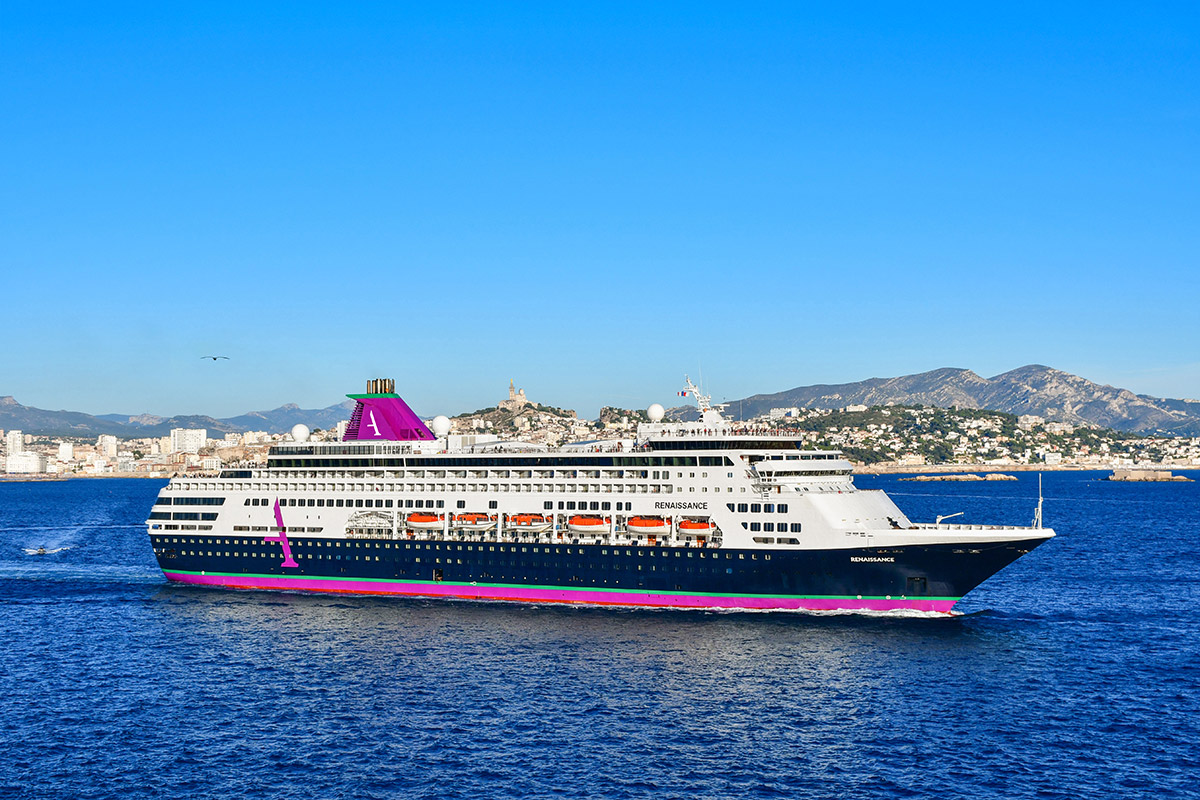
Renaissance sous les couleurs d’Ambassador Croisières. © Andy Humbert

Climats du Monde


It is perhaps the essential takeaway: becoming Ambassador Croisières does not mean giving up what defines the identity of Compagnie Française de Croisières.

French‑speaking guests will again encounter aboard Renaissance its distinctive atmosphere, its traditional décor, a warm, convivial ambience, and the high standard of the cuisine and the crew’s service. The company will also continue to offer a cruising approach that is distinct from the largest ships, leaning more toward destination discovery, the quality of calls at ports that are sometimes out of reach for the biggest vessels, and the pleasure of taking one’s time, all within a Francophone setting.

Ambassador Croisières will maintain its European North and Mediterranean itineraries, exclusively departing from the French ports of Dunkerque and Marseille, allowing travelers to reach Renaissance without necessarily flying before the start of their cruise. Winter Caribbean sailings designed for an international clientele, offered aboard Renaissance from Pointe‑à‑Pitre since 2025, remain on the programme for upcoming seasons as well.


2028: an expanded lineup and new destinations

Another important development: the new itineraries for 2028 will soon be available for sale. This refreshed schedule aims to preserve the carrier’s DNA by continuing to visit its flagship destinations: Norway, Iceland, the Baltic, as well as Greece, the Adriatic, Spain, and the Caribbean, while introducing several new options and particularly appealing itineraries.

Among the highlights announced, Egypt will join the program with a 14-night cruise from May 28 to June 11, 2028, including notably a two-day stop in Alexandria to explore the legendary pyramids of Giza.

Ireland will make a strong comeback with an itinerary from July 16 to 24, 2028 that blends British and Irish coasts and offers the chance to visit Cork, Dublin, Liverpool and the Isles of Scilly.

Finally, from September 28 to October 4, 2028, travelers will be able to explore the south of Norway, with its iconic capital Oslo and the northern Denmark region in just six nights.

With this 2028 schedule, Ambassador Croisières intends to continue a strategy that combines enduring classics—those that helped drive CFC’s success—with new propositions, featuring itineraries crafted to emphasize the richness of the ports of call and the discovery of destinations.


New tools for travel professionals

Along with this new brand, the entire ecosystem aimed at travel professionals is evolving as well. To assist travel agencies in discovering and promoting the offer, new tools and sales materials will be rolled out progressively.

The 2026-2027 and 2027-2028 seasons will notably benefit from new brochures, crafted in an elegant Italianate format, more immersive and richly illustrated. Intended as true invitations to travel, they will let readers dive into the Renaissance experience both on board and at the proposed destinations, while equipping advisors with the essential keys to present the offer to their clients.

This new identity will also be accompanied by a range of point-of-sale materials designed for shop floors: small countertop stands, easy to set up, and a large-format Tribeca-style totem to boost the brand’s visibility within agencies.

Through these new aids, Ambassador Croisières seeks to empower professionals to better promote the brand, enhance its positioning, and ignite the desire to travel. This approach reflects the company’s commitment to strengthening its ties with French and Francophone distribution networks and to making travel agencies a key partner in its growth.


A new identity, the same commitment

With this new identity unveiled at the IFTM trade show in Paris, Ambassador Croisières opens a fresh chapter of its development in France, built on the foundations laid by CFC Croisières and reinforced by the strength of an international group. This evolution clearly signals an ambition: to offer Francophone travelers an ever richer and more distinctive cruising experience, while strengthening closeness with its sales partners. Stay tuned over the coming weeks to discover the new 2028 lineup and the many innovations that will enrich Ambassador Croisières’ offering.

“This evolution is fully in line with CFC’s continuity, at sea as on land, with the same ambition and the same teams to carry it forward. The name change to Ambassador Croisières does not compromise our presence in France: our French office remains at the heart of our development and our teams continue to support our passengers, our partners and our agencies daily. We preserve what defines our identity and uniqueness, while benefiting from the group’s strength to sustain growth and open new opportunities. It is a new chapter in our history, but above all a step forward that lets us face the future with confidence.” — Maëlysse Pierrot-Guibourt, President of Ambassador Croisières.


Contact Ambassador Croisières


CFC Croisières devient Ambassador Croisières : une nouvelle identité pour une ambition renforcée sur le marché français
Information and reservations at 04 84 89 02 90 and on www.ambassadorcroisieres.fr
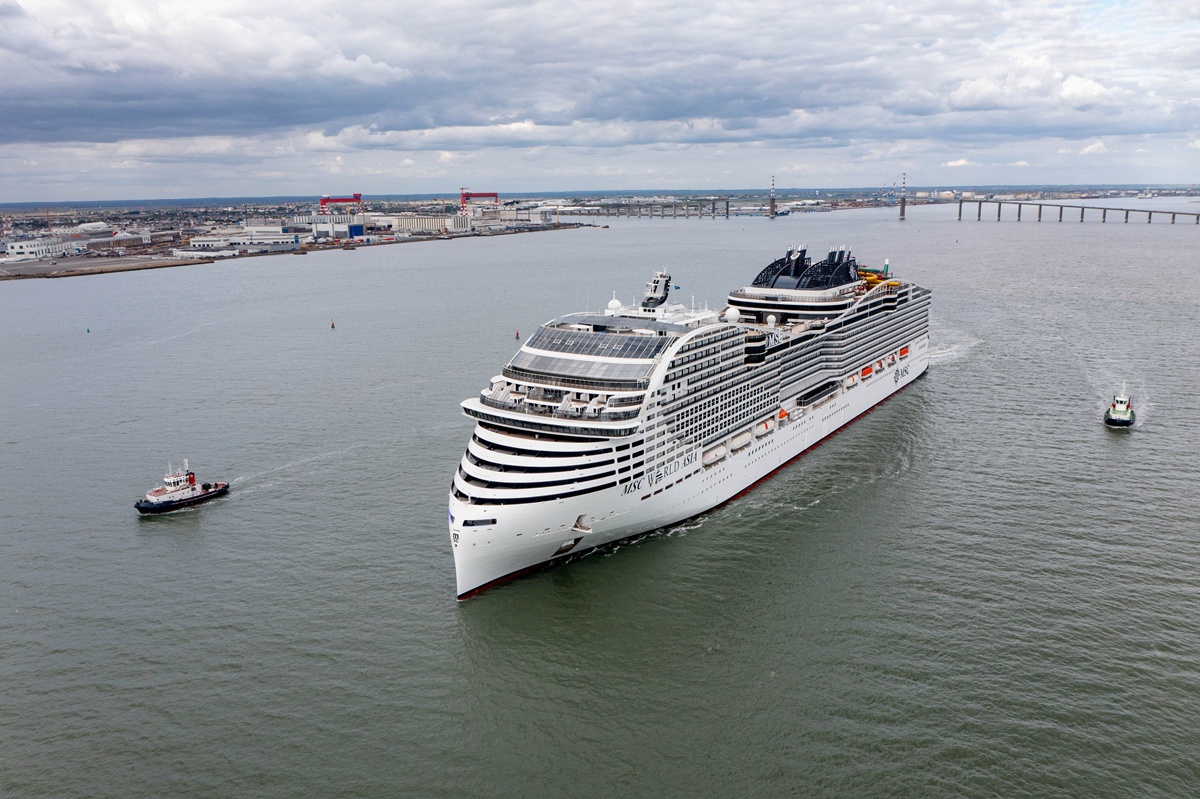

MSC World Asia: What MSC’s New Ship Will Bring to the French Market


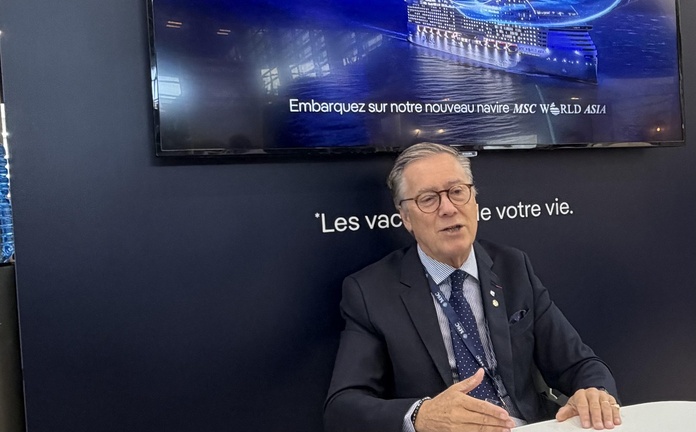
Patrick Pourbaix, DGl France de MSC Croisières, veut faire de MSC World Asia un nouvel accélérateur du développement de la compagnie sur le marché français - Photo : LG

Climats du Monde


The MSC World Asia is Asian in name only and only partly in its onboard universe.

For its debut, the third ship of the World class will indeed follow a trajectory that is distinctly French.

Currently under construction at the Chantiers de l’Atlantique, it will be the 20th MSC vessel built in Saint-Nazaire. It is set to be officially christened in Le Havre on November 28 before steering toward Marseille, its home port for its first season.

MSC Cruises will take advantage of this inaugural crossing to host onboard the AllStars, its annual gathering bringing together its most engaged distribution partners. The ship will arrive in Le Havre on November 27 before its christening the following day.

The MSC World Asia will then head to Marseille, where its first season will begin on December 5. It will offer seven-night cruises in the Western Mediterranean, with calls in Barcelona, Genoa, Civitavecchia, Messina and Valletta.

A positioning far from trivial for MSC. “Half of the passengers we book in France depart from Marseille,” noted Patrick Pourbaix, Chief Executive of France at MSC Cruises, during a conference organized at IFTM.


Après Marseille, les Antilles françaises


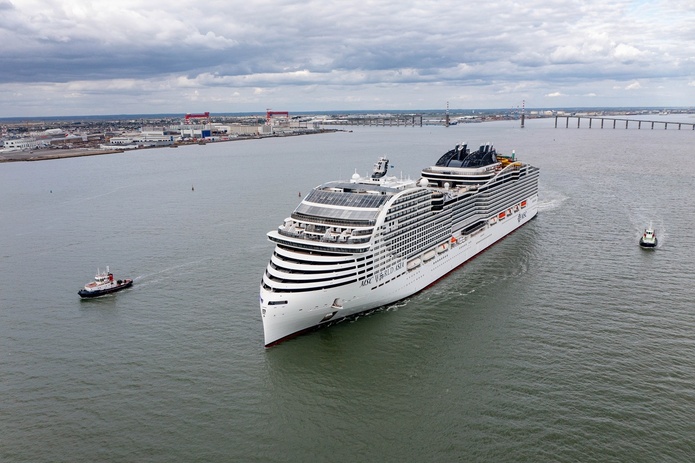
Le MSC World Asia arrivera au Havre le 27 novembre avant son baptême, organisé le lendemain - Photo : MSC Croisières

But the MSC World Asia’s French history won’t stop at Marseille.

In winter 2027-2028, the vessel will cross the Atlantic to reach the southern Caribbean.

It will then offer 7- and 14-night cruises with embarkations notably in Fort-de-France and Pointe-à-Pitre.

This decision is partly a consequence of the geopolitical situation. Initially slated for the Persian Gulf, the MSC World Asia was redeployed after that programming was abandoned. But it also answers MSC’s success in the French Antilles.

Patrick Pourbaix presents a striking figure: about 10% of the populations of Martinique and Guadeloupe would cruise each year, a rate he estimates ten times higher than in metropolitan France.

MSC now aims to contribute to the formation of a genuine European hub in the Caribbean around the French Antilles, fed by local clientele, metropolitan travelers and several European markets.


MSC sera présent toute l’année aux Antilles

This strategy will extend beyond the World Asia alone. With the MSC Opera, the company will establish a permanent presence in the region.

The vessel, smaller than the World-class units, is expected to offer a complementary itinerary, notably toward the Dominican Republic. MSC also plans packages including flights from the mainland for its summer programming.

The arrival of the World Asia, however, comes after a year of mixed results for MSC in France.


Des réservations plus tardives en 2026

Patrick Pourbaix recognises that the accumulation of geopolitical and economic uncertainties has led the French to postpone their decisions quite significantly. “There has been a huge booking delay,” he notes.

But the executive rejects the idea that this phenomenon pushed MSC to fill its ships with promotions: “It wasn’t a last-minute surge in fares and bargain prices.”

The company, conversely, continues its premiumization strategy. It asserts having achieved its goal of improving its Net Promoter Score (NPS), notably thanks to new services offered through its app, including a chatbot powered by artificial intelligence to respond to passenger requests aboard.

This “premiumization” is also reflected in sales. Patrick Pourbaix states that the average spend per booking continues to rise. And France holds a special place: it is, according to MSC, its leading European market for Yacht Club sales, the premium-luxury space installed aboard its ships.


Alberta Ramps Up Its Push into the French Market in 2026


© Travel Alberta

Climats du Monde


With 11 % more French travelers in 2025, Alberta confirms the growing interest from France for the destination and aims to sustain this momentum by strengthening its presence among French stakeholders and distributors.

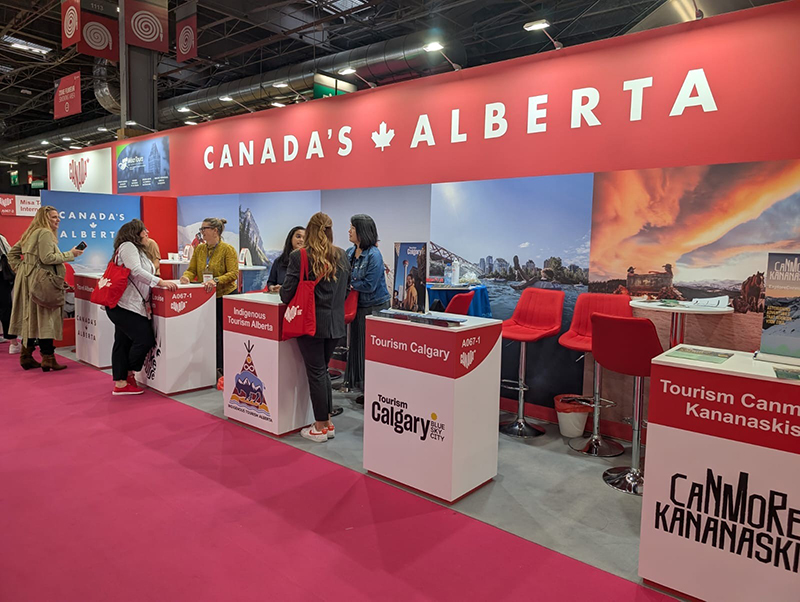
Travel Alberta at the IFTM2026 Show, Stand L004

On the occasion of the must-attend IFTM 2026, Travel Alberta marks its return to French tourism professionals.


© Travel Alberta


At Stand L004, visitors will have the Alberta team on hand, including:

– Tannis Gaffney, Chief Marketing Officer, Travel Alberta

– Marie-Hélène Rathé, International Market Manager, Travel Alberta

– Amélie Cocheteux, Head of Trade and Media for Travel Alberta, 360tourisme

– Marilyn Bell, Vice President Travel Trade Market and Product Development, Tourism Calgary

– Mito Ota, Trade Manager at Tourism Calgary

This presence signals a particularly active re-entry for the destination, which aims to strengthen its ties with French tourism professionals and highlight the full diversity of its offering: vast spaces, Canadian Rockies, outdoor experiences, Western culture, Indigenous heritage, a vibrant culinary scene, and winter adventures.


Travel Alberta and the Digitrips Evening


© Digitrips

A highlight of this autumn: Alberta will sponsor the Digitrips evening, marking a first collaboration between a destination and Digitrips within this professional event.

Placed under the Alberta banner, the evening promises a Western-flavored atmosphere and several surprises for guests. It offers Alberta the chance to present its brand universe in a different, friendly, immersive format, brought right to the heart of the French tourism players.


Banff Mountain Film Festival kicks off its tour in France

Another major autumn event: from September 21st, the grand French tour of the Banff Mountain Film Festival will start in Grenoble and travel to 23 other cities across France.

Sponsored by Travel Alberta, this tour serves as a natural relay to showcase the adventure spirit linked to the destination. Through films devoted to mountains, exploration, pushing boundaries, and expansive spaces, the festival provides a powerful showcase of the values that define Alberta’s identity.

With more than 6,000 spectators expected, the tour also presents an opportunity to directly reach a community highly aligned with the destination: active travelers, mountain and outdoor enthusiasts, and lovers of wide-open spaces.


© Travel Alberta


The Australian Outback: How to Market It to French Travelers


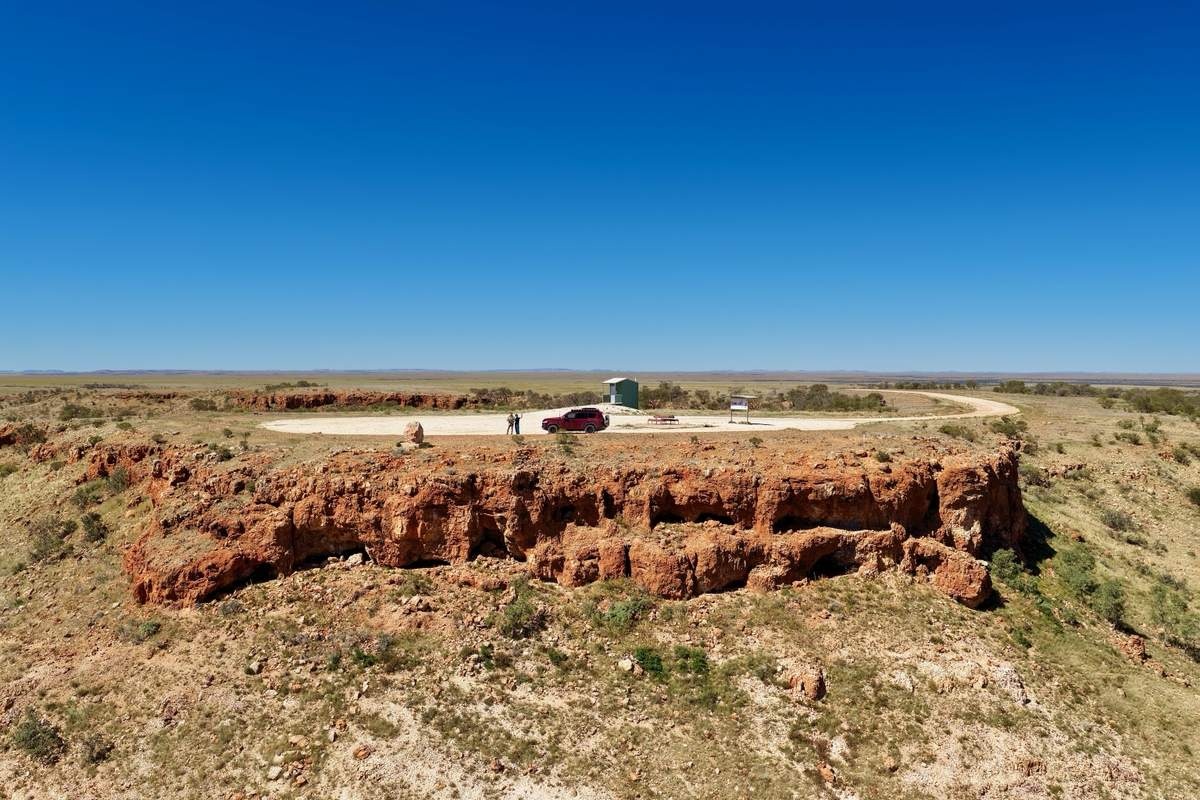
Sur les pistes de l’Outback du Queensland, la route devient une composante à part entière du voyage - Photo : Sébastien Cros / WeTravelAustralia

Hurtigruten


For twenty-four days, we drove between Adelaide, Broken Hill, Tibooburra, Thargomindah, Quilpie, Longreach, Winton, Mount Isa, Boulia, Bedourie, Birdsville, Betoota, then the long descent southward.

More than 5,000 kilometers with Marion, my 23-year-old niece and the expedition’s operations chief, to tell live about an Australia that the French market still astonishingly knows little about.

The live coverage has now ended. We returned with dust in our luggage, thousands of photographs, dozens of hours of footage and testimony, but above all with a conviction: the Queensland Outback is not a tourist product to be invented. It already exists.

Access is there, experiences as well, accommodations are improving, events pace the season and, above all, the men and women who give soul to these territories remain incredibly accessible.

What strikes most on the road is the rarity of European travelers. During our crossing, we met Australians in caravans, families, retirees traveling their own country, a few foreign backpackers on Working Holiday Visa.

But practically no Europeans traveling this Outback as a touring itinerary, and almost no French. For the French trade, this vacuum perhaps constitutes the opportunity.


Another Australia for those who already think they know it


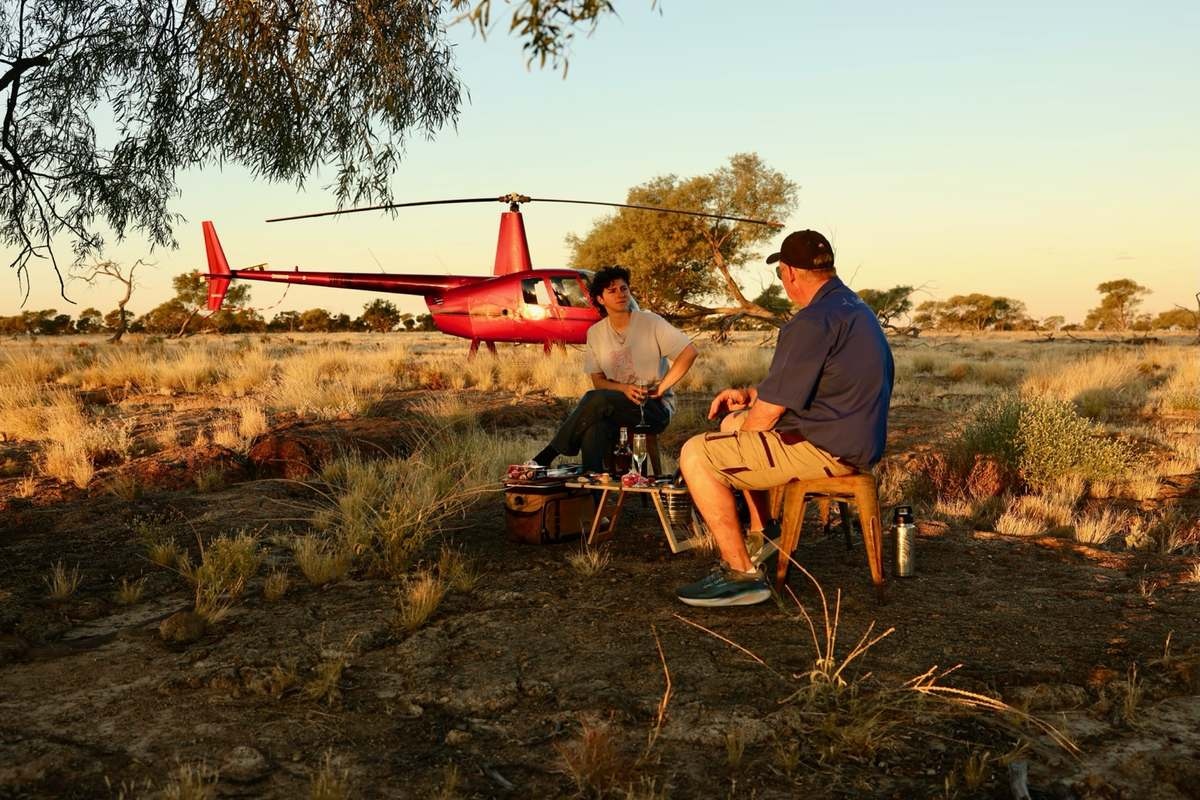
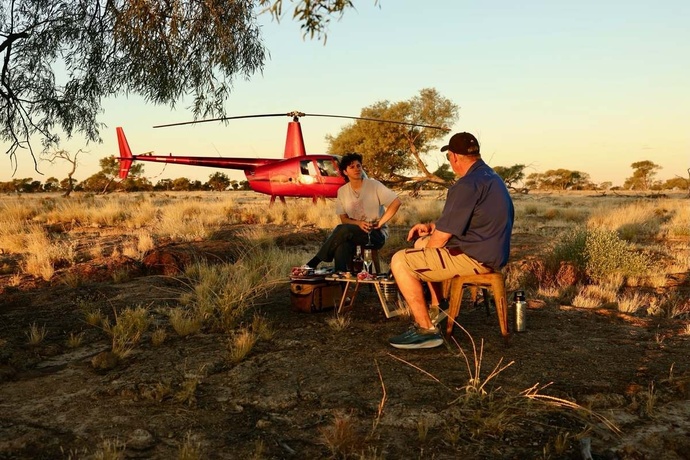
Dans l’Outback, l’expérience peut aussi prendre une dimension plus exclusive : survol et coucher de soleil au cœur des grands espaces - Photo : Sébastien Cros / WeTravelAustralia

The first instinct would be to reserve Queensland’s Outback for seasoned travelers. That would be a mistake.

Its natural market is obviously that of repeaters, those clients who already know Sydney, Melbourne, the Great Barrier Reef or the Red Centre and who now ask what else they could discover in Australia.

But the potential is broader. Couples accustomed to self-drives, travelers drawn to wide open spaces, photography lovers, heritage or train enthusiasts, families with teenagers, premium clients who prioritize experience over ticking off sites — the profiles likely to love the Outback are numerous.

We simply need to explain to them what luxury they are seeking. For the Outback’s luxury is not necessarily a five-star suite. It can be a table set facing the sunset, a helicopter perched alone above the plains, a beer shared with the owner of a remote pub, a Thomson River cruise, or the absolute silence of the Channel Country.

Comfort also exists. In Longreach and especially Winton, more sophisticated accommodations now allow immersion with quality services. But we must be clear with the client: the Outback retains a rustic edge, and that is also why people come here.


Do not turn our 5,000 kilometers into a catalog product

Our expedition surpassed 5,000 kilometers. That certainly does not mean we should ask a client to reproduce them. It’s probably the first business lesson of these three weeks: the Outback must be modularized.

For a first discovery, Longreach and Winton already allow for an immersion of four to six nights.

Read also: Longreach, why this gateway to the Outback still escapes French travelers

Longreach brings together several of the great stories of inland Australia around Qantas, stockmen and the Thomson River. Winton adds Waltzing Matilda, the dinosaurs, the Royal Theatre, aerial experiences and a surprisingly creative community.

For travelers with more time, the route can extend to Mount Isa and become a ten-day or longer itinerary.

Then comes another level of immersion: Boulia, Bedourie, Birdsville, Betoota and the Channel Country. Distances grow, services become sparser, and the road gradually becomes an essential component of the journey.

Finally, for lovers of the grand road trip, there is a much more ambitious crossing: Broken Hill, Silverton, Tibooburra, the Corner Country, the Queensland Outback, then Birdsville. Three weeks then allow building a trip where the road is no longer merely the means to reach the stops. It becomes the experience itself.


In the Outback, slowing down is part of the product

We sometimes followed the kilometers because our editorial mission required it. We needed to reach an interview, film before sunset, keep an appointment, or simply continue our loop.

For a holiday client, I would build it differently. The mistake would be to try to recoup the kilometers by multiplying overnight stops.

Longreach deserves several nights, Winton as well. Mount Isa can become a true stop when paired with an event. Birdsville deserves more than a photo in front of its famous pub before hitting the road again.

Because it is often when one stops driving that the Outback truly begins to speak.

In Winton, the time spent on site allowed us to meet entrepreneurs, artists, residents and personalities we would never have known during a simple pass-through. No brochure can guarantee these encounters, and one should not try to script them all.

On the other hand, a good itinerary can create the time needed for them to arrive. For the producer, the question should not be how many kilometers a client can travel in two weeks, but how much time to allow for them to begin to belong a little to the place they pass through.


The road is better than its reputation, but it doesn’t improvise


This is where bespoke travel reclaims all its science

This reality places back at the center a chain that online booking sometimes tends to forget: the client, their travel agent, the tour operator and the Australian receptive. Each holds a part of the answer.

The agent knows their client, their road-trip experience, their comfort level, their budget, their tolerance for distances and their capacity to accept some unpredictability.

The tour operator assembles the trip, the flights, the vehicle, the accommodations, the experiences and the overall rhythm.

The Australian receptive brings this knowledge of the terrain that becomes particularly valuable as soon as you leave the major classic itineraries: realistic distances, seasonality, road conditions, alternatives, events, rental constraints and small addresses.

This is precisely the kind of destination where bespoke travel regains all its science.

The right trip is not about connecting dots on a map. An extra night can change the experience, an event can determine the travel dates, a closed route can impose another loop and the vehicle choice can depend on the itinerary. What might appear as a complication becomes exactly what the travel professional knows how to do: transform complexity into freedom for the client.


From historic pubs to glamping, do not oversell comfort

Accommodation deserves the same transparency. A large part of the charm of this Australia rests on its historic pubs, its independent motels, and its small family properties.

Tibooburra, Birdsville, Betoota and other stops should not be compared to hotels in Sydney or Melbourne. They offer something else.

Sleeping on-site, dining at the counter, hearing the floor creak under your steps and talking with the person who runs the establishment are part of the journey.

Next to this deliberately rustic Australia there are nonetheless more sophisticated accommodations, notably around Longreach and Winton. The right product can thus alternate the two: one night for history, another for comfort.


When tourist expenditure stays within the community


Robert « Robbo » Haken, au Betoota Hotel : « More French people ! Tell them to come over here. » - Photo : Sébastien Cros / WeTravelAustralia

This is perhaps one of the most interesting dimensions of the product. In a large part of our itinerary, the traveler’s money goes directly to small local businesses and communities.

The pub owner may be the one who serves dinner. The pilot who takes you to see the sunset is a local entrepreneur.

The guides, museums, shows, cruises and events often rely on family-run, community or small-scale structures.

In Betoota, Robert “Robbo” Haken revived a pub that had been closed for more than twenty years in a town that had ended up with a population of zero. When I asked him what to tell the French, his reply had nothing to do with marketing: More French people! Tell them to come over here.

Behind the humor lies an economic reality. In communities sometimes counting only a few hundred inhabitants, tourist spending is immediately noticeable. Selling the Outback also means helping to sustain the Outback.


Isolation does not mean danger

I wanted to ask Marion. She is 23, arrived from Paris, and had never traveled in this Australia before.

After more than 5,000 kilometers, her answer was simple: At no moment did I feel unsafe.

This does not, of course, excuse the precautions proper to remote regions: water, fuel, weather, road conditions, distances, adapted driving, offline maps and a prepared itinerary.

But one must distinguish two notions that European travelers sometimes confuse: isolation and danger are not synonyms.


2027, an opportunity to showcase another Australia

The Rugby World Cup 2027 finally offers a particularly interesting window for the French market.

With Brisbane and Townsville among the host cities, Queensland will be directly integrated into the travel plans of a portion of the international supporters.

Some will already know Australia, others will take the trip as an opportunity to extend their stay. Why offer only the Australia they already know?

Longreach, Winton, Mount Isa or parts of the Channel Country can offer very differentiated extensions, depending on dates, connections and available time.

More broadly, the product’s ingredients are already present: air gateways, rail, roads, self-drives, accommodations at different levels, bookable experiences and an events calendar. And above all, French travelers remain rare there. It’s rare, and commercially valuable.


The Outback does not require being an adventurer; it requires good advice

After 24 days and more than 5,000 kilometers, this is probably the most useful conclusion I can share with the trade. We must neither trivialize the Outback nor present it as an expedition reserved for a few specialists. It must be sold properly.

Choose the client, determine the time they have, build the right rhythm, select the entry door, then choose the vehicle, cross-check the itinerary with the event calendar, plan alternatives and above all leave enough time for encounters to take place: this is exactly why the travel agent, the tour operator, and the Australian receptive have an essential role here.

Rather than reproducing our 5,000 kilometers, the goal should be to build the Outback that truly matches the client.

Four nights or three weeks, by train, by plane, then by car, in a SUV or a 4×4, around Winton, a rodeo at Mount Isa, an arrival at Birdsville or a grand crossing from Broken Hill: there is not a single Outback journey.

And perhaps that is its greatest strength. The challenge is no longer whether the Queensland Outback can be sold in France. The product already exists. The challenge now is to translate it for the French market and, perhaps especially, not to transform it too much.

Because what we sought during these 5,000 kilometers was not merely a new route to put in a brochure. It was an Australia where one can still push open the door of a pub and speak to the person who runs it, meet the one who collects the kangaroos, listen to a stockman tell his country, or stay an hour longer simply because a conversation has just begun.

An Australia still lived in before being staged. For us, travel professionals, to build the road that leads there.


Sébastien Cros


Sébastien Cros - Photo : SC

Sébastien Cros is an independent journalist and photographer based in Australia, founder of WeTravelAustralia™.

After twenty-five years in the Australian tourism industry, notably as Managing Director of Across Australia (Goway group), he now dedicates his writing to editorial narratives dedicated to the destination, at the crossroads of storytelling, photography and on-the-ground perspective.

The 18–40 Market: A Highly Heterogeneous Core Target Audience [ABO]


Selon une récente étude VVF et Ifop sur les vacanciers âgés de 18 à 40 ans, le modèle des vacances reproduites à l’identique de génération en génération s'effrite au profit d'un choix plus identitaire - DepositPhotos.com, NewAfrica

Costa Rica


A brief look back at the history of tourism reminds us quickly that the first paid holidays granted to workers produced images that became iconic in holiday iconography.

On a bicycle, in beach attire, attempting awkward strokes, picnicking along lake shores… the earliest vacationers did not rush toward distant destinations, nor even toward close ones.

Most spent their free time not as they « could » but as they « knew » how to do it.

For the occupation of “vacations” by leisure activities and, in particular, travel, a know-how and above all a culture is required, which would only develop later, after World War II, with the emergence of mass destinations equipped to host mass tourism!

Read on this subject: Edgar Morin: toward a time of increasingly complex leisure

To such an extent that 600,000 reduced-fare train tickets were sold in 1936 and 1.8 million the following year! In a country inhabited by around 40 million people.


Youth studied: a question of the era

To return to the mythology of paid vacations in France, note that photos and documentary films from the Popular Front era show vacationers who were rather young.


How old were they? They were obviously part of the active population, hence over 14 years old.

Were they really considered young? Of course. But they were mainly “young adults,” already fathers or mothers, employees, workers, more or less educated… most of whom had little culture or experience of leisure time.

Times changed and compulsory education being set at 18, yesterday’s youths are not those of today.

Moreover, as marketing has entered our habits, consumer-behavior studies of vacationers increasingly dissect many population segments to target them more effectively. Children, adolescents, families, seniors, women, solo travelers, very high incomes, city dwellers, etc.: the list is long.

Thus, VVF in partnership with Ifop revealed a study on the 18 – 40 age segment that provides some quantitative and qualitative elements not to be neglected, though far from exhaustive. They poorly reflect the obvious differences between the 15 – 24 and the 18 – 34-year-olds traditionally used by study institutes.

Between a 25-year-old, single, employed and a 40-year-old family man with two young children, the differences are dizzying and clearly show up in their vacation consumption.

On one side, you can be a young startup entrepreneur, comfortably paid, teleworking from the other side of the world and making generous use of your credit card and last-minute flights, despite the appearance of an eternal backpacker, backpack on your back and multiple screens.

On the other, you’ll have a dad building sandcastles with two little ones or a single mother struggling to take care of her children.


Generations: qualitative segmentation that works

It is also worth noting that the generation-based segmentation, which is far more qualitative, enjoys great prominence.

Generations X, Y, and especially Z have captured popular imagination. Everyone, almost, knows that Gen Z, currently aged 15 to 29, must be watched closely since they anticipate the behaviors of tomorrow.

Yet one must know how to segment them from their dominant attitudes:

– engaged

– pragmatic

– hedonistic

– ultra-connected

– creative…

And that is still not enough, since Publicis Media, for example, proposes a slightly different and more operational segmentation, based on the dominant personality traits of Gen Z and their consumption:

– the militants (impact and values)

– the shrewd (prices and promotions)

– the explorers (experiences and trends)

– the creators (influence and content)

– the ambitious (success and status)

– the securitarians (savings and stability).


“The Silent Rift in Vacations Among 18-40s”

In this labyrinth that we will revisit, set up by marketers, what does the Ifop/VVF study, which sought to learn more about vacationers aged 18 to 40, tell us?

First observation, according to this study: the majority of 18-40-year-olds treat themselves to at least one trip per year. But, for 38% of them, it is a single trip and mainly in summer. This does not mean that spring vacations are not beginning to emerge. On the contrary, 16% of those who travel do so, while 11% opt for weekends!

Fragmented, the “new departures” are undeniably linked to new working times and their new organizations, especially teleworking and the reduction of working time.

But budget remains the main concern this year, more than others: 86% worry about it and 55% see it as the main influencer on their vacation choices. With costs in mind: accommodation for 66% of respondents, especially the older ones.


Nature, yes! But ecology… meh!

Other noteworthy observations: 53% of young people imagine future vacations that are more environmentally responsible, but only 6% of respondents currently place environmental concerns as the main trigger for their vacation choices in light of the cost-of-living pressure.

And yet, returning to roots and nature constitutes the most widely supported projection for 62% of them… but in 20 years! A convenient way to excuse their current practices and, in particular, their urge to travel far!

Finally, it seems interesting to note that the model of vacations reproduced identically from generation to generation is eroding in favor of a more identity-driven choice. People no longer depart as they did in childhood.

It must be said that today’s offer is not only massive, but diverse, accessible and fully integrated into consumption. The urge for disruption is therefore enormous. Henceforth, “92% of young adults perceive at least one change in their way of traveling compared to their parents, with the destination becoming the main marker of this generational rupture.”

“A strong symbol of this emancipation, one in two French people (50%) aged 18 to 40 categorically rejects the idea of an imposed family tradition and does not wish to perpetuate their parents’ vacation rituals”!

Yet! Considering the number of young people who enjoy sharing their vacations with their parents to benefit from their lifestyle, financial help, and ability to take care of grandchildren, there would still be a lot to say on this topic!

There would be as much to say about differences between generational behaviors and ages or even about subjective ages…


The holiday village: an unbeatable model for families

In the face of these changes, the study highlights a very strong attachment to the holiday village model: 40% of respondents say they mainly choose this type of accommodation, far ahead of hotels (9%).

The holiday village reaches the same cumulative level as rental and camping combined.

This success rests on several strong expectations: the simplicity of organization, comfort, sociability and suitability for family stays.

The study thus reveals two major vacation models:

– an experiential and autonomous model, driven by rentals and camping;

– a more structured, reassuring, and family-oriented model embodied by the holiday village.


Josette Sicsic - DR

Journalist, consultant, lecturer, Josette Sicsic has been observing the world’s changes for over 25 years to analyze their consequences for the tourism sector.

After having developed the Touriscopie journal for more than 20 years, she remains at the front lines of current events where she decodes the present to forecast the future. On the site www.tourmag.com, Futuroscopie section, she publishes several times a week forward-looking and analytical articles.

Contact: 06 14 47 99 04

Email: [email protected]


Forex Market: Volatility Persists This Week [ABO]


Economic Situation

L'euro contre dollar se situe autour de 1,1440, en légère hausse sur la semaine, après avoir atteint son meilleur niveau depuis le 19 juin - Depositphotos.com, LeleMezzadri

IFTM prenez RDV avec TourMaG


In June, prices in the United States fell by 0.4% for the month, a first since April 2020. The market immediately assumed that the Fed would stop raising rates, and the dollar finished the week lower.

But there is a wrinkle: this weekend, tensions between the United States and Iran intensified, and Brent crude rose above $90, its highest level since mid-June. In other words, the snapshot taken in June is already out of date.

This inflation figure, published on July 14, surprised everyone. Annual inflation fell from 4.2% to 3.5%, well below the 3.8% expected. The main driver is clear: energy dropped by 5.7% for the month, and gasoline by 9.7%.

As a result, bond yields plunged and the dollar hit its lowest level of the month.

Why did this drop happen? This figure reflects June, a calmer period thanks to a ceasefire agreement signed on June 17 between Washington and Tehran. The Strait of Hormuz had reopened, oil had fallen, and so had gasoline.

But that calm has ended. Last week, attacks resumed on both sides. On Saturday, Iran struck a major oil facility in Kuwait, and then announced that the ceasefire was no longer valid.

Traffic in the Strait of Hormuz collapsed, and on Monday morning Brent rose again above $90, about 20% higher than before the conflict began.

Should we ignore this June price drop? Not, because it isn’t explained solely by energy. The core inflation (which excludes energy and food) remained stable for the month and slowed on an annual basis, from 2.9% to 2.6%. Services excluding energy did not rise, and housing gained only 0.1%. A portion of this decline is therefore real, and that is what reassured markets about Fed rate expectations.

The issue, however, is the calendar. The next inflation figure, July’s (which will reflect the latest energy price rise), will be published only in mid-August, i.e., after the Fed meeting scheduled for July 28–29. The central bank will thus have to decide based on a June figure that the current oil situation has already rendered obsolete.

The market expects the Fed to hold rates steady (between 3.50% and 3.75%), but the Fed chair Kevin Warsh’s press conference promises to be tricky: it’s hard to rule out a rate hike when oil is rising, yet difficult to advocate one right after prices have fallen.

In short, this June inflation decline is partly a misleading effect tied to the temporary drop in oil. As long as the situation around the Hormuz Strait remains tense, inflation will stay elevated, and it seems premature to say the Fed will not raise rates again.

For the companies involved, this means that the euro/dollar exchange rate will stay volatile, oscillating between seeking safe havens and pricing in rate expectations.

In this context, it is better to systematically hedge against these fluctuations than to bet on a specific direction.


Exchange Rates: The Technical Overview

On the foreign exchange market, two forces are currently at odds.

On one side, geopolitical tensions push investors toward safe-haven assets. On the other, expectations about interest rates weigh on the dollar since the U.S. inflation data was released.

The euro against the dollar is around 1.1440, up slightly for the week, after hitting its best level since June 19. Thursday, the European Central Bank is expected to hold its rate at 2.25%, but what matters most is what Christine Lagarde will say at the press conference.

A rate hike in September is already widely anticipated by the markets, and if it confirms this idea, it would support the euro.

Conversely, if oil continues to rise sharply, investors will again favor the dollar as a safe haven. It is expected that the EUR/USD pair will move between 1.1325 and 1.1555 this week.

For the Canadian dollar, the Bank of Canada left its rate unchanged on Wednesday at 2.25%, for the sixth consecutive time, with a cautious tone. Its governor, Tiff Macklem, however warned that rate hikes could become possible again if the price of oil remained high for a sustained period.

An interesting detail: bets against the Canadian dollar are at their highest since late 2024. Yet, with oil above $90, many of these investors could be forced to buy back the currency, which could push the EUR/CAD pair lower.

The Japanese yen remains the most penalized currency in the current environment. It stands at 185.76 against the euro and about 162.35 against the dollar, near its historical lows. The Bank of Japan did raise its rate to 1.00% in June, but the gap with rates of other major central banks remains enormous, and no one expects another hike before autumn. Japan’s June inflation, published on Friday, will reveal whether this normalization can accelerate.

The Swiss franc continues to play its usual stabilizing role. The euro against the franc remains around 0.9230, within the 0.92 to 0.93 range that analysts expect it to trade in the coming months.

On the British side, the euro against the pound is around 0.8502. Britain’s inflation data on Wednesday, expected to ease to 2.7%, will be decisive for the Bank of England’s July 30 decision, with the rate currently at 3.75%. A reassuring inflation figure would confirm the view that the bank will hold its rates and keep the pair in its current range.


WEEKLY SUPPORTS WEEKLY RESISTANCES
S2 S1 R1 R2
EUR/USD 1.1215 1.1325 1.1555 1.1670
EUR/GBP 0.8330 0.8415 0.8590 0.8675
EUR/CHF 0.9045 0.9140 0.9320 0.9415
EUR/CAD 1.5715 1.5875 1.6195 1.6355
EUR/JPY 182.05 183.90 187.60 189.45


The weekly supports and resistances shown below indicate the lower and upper bounds within which prices are expected to move during the coming week.


The information presented in this publication is provided for purely informational purposes and does not constitute investment advice, an offer to sell, or a solicitation to buy, and should in no way be used as a basis or considered as an inducement to engage in any investment activity.


Mondial Change is a French financial institution, founded in 2015, specializing in the management of international payments and foreign exchange risk.

Mondial Change also supports numerous players in the tourism sector, including travel agencies, group organizers, tour operators, and inbound operators…

www.mondialchange.com

Contact: [email protected]


Recruitment in Travel Agencies: A Market Still Under Pressure


Au sein des réseaux de distribution, les difficultés de recrutement persistent. Essentiellement sur les postes d’agent de voyages et commercial groupes.@depositphotos/rawpixel

CroisiEurope


« Our recruitment needs are recurring, primarily for sales advisors, due to a natural turnover inherent to tourism », explains a HR manager within a network of distribution agencies.

This difficulty is amplified in certain geographic areas that are less attractive. « In some sectors, notably in the East, we receive very few applications », confirms Aurélie Hébrard, administrative HR assistant within the Salaün group.

The lack of experienced profiles sometimes significantly lengthens recruitment timelines.


Attractiveness of the profession, volatile youth and inadequate training

Beyond the simple lack of candidates, agencies face a deeper issue: the attractiveness of the job. Young generations struggle to envision themselves in a sedentary role at an agency.

“Today’s youth have trouble wanting to stay eight hours a day behind a desk. They need space and mobility”, observes Aurélie Hébrard.

Another major hurdle is the mismatch between initial training and field realities. The Tourism BTS, often cited, is considered too general and not sufficiently professionalizing.
“Young people discover the profession only once on the job and some abandon during the probationary period, because they did not expect a job that complex,” testifies Céline Gleizes, HR manager of the Eden Tour network. Today, we have to teach them everything, even after a BTS, a bachelor’s degree or a master’s.
The lack of understanding of the profession remains strong: demanding customer relations, mastery of destinations, administrative constraints and commercial skills form a package often underestimated by candidates.


Training, diversifying channels and elevating the professions

In response to these findings, companies are implementing multiple strategies to attract and secure recruitment.

« We have implemented a welcome pack with specific bonuses for positions open for more than six months in tight zones », explains the HR manager of a large network. The brand also relies on specialized job boards such as TourMaG to obtain more targeted applications.

The brand also invests in visibility of the professions: presentations in schools, job dating, career videos featuring employees and a referral program, convinced that « employees are the best ambassadors ».

For its part, Eden Tour has chosen internal training, despite the time investment that this entails. « It takes between six months and a year to be fully operational, depending on profiles », notes Céline Gleizes. The network also favors professional training, such as those from Selectour Academy, deemed closer to the needs of agencies.

In a market that remains tight, tourism players share a common conviction: recruitment will rely as much on adapting training as on a better valuation of a demanding profession, often idealized but still too little known.


Caroline Lelievre Published by Caroline Lelievre Journalist – TourMaG.com
See all articles by Caroline Lelievre

  • picto Twitter
  • picto Linkedin
  • picto email
Add TourMaG to your Google News feed Google Actualités icône

SNCF Set to Enter Italy’s High-Speed Rail Market


L'AGCM vient de s'exprimer en faveur de la libre concurrence sur le marché italien de la grande vitesse - Depositphotos.com, @Hans_Chr

IFTM prenez RDV avec TourMaG


The Italian Competition Authority and Market Authority (AGCM) has issued a ruling favorable to opening up the high-speed market to competition in Italy.

A step welcomed by SNCF Voyages Italia, a subsidiary of SNCF Voyageurs.

The Authority validated the commitments made by the infrastructure manager Rete Ferroviaria Italiana to ensure fair access terms for new operators.

For SNCF Voyages Italia, this decision constitutes an important first step. But it must now be followed by concrete measures, including the immediate allocation of a portion of the requested rail slots.

Without this access to capacity to run trains, the launch of the project will not be possible.


Un projet d’investissement prévu pour 2027

The company plans to launch its new high-speed offering in September 2027.

The project relies on the introduction of 15 next-generation trains, with the goal of carrying more than 10 million passengers per year in Italy.

The offering aims to provide more capacity, “optimal comfort, competitive fares and an environmentally friendly travel experience,” says SNCF Voyages Italia in a press release.

The industrial plan foresees 13 daily round-trips : 9 between Turin and Naples, and 4 between Turin and Venice.

For the company, this level of activity is essential to make the investments viable. Without these minimum conditions, the project could not be fully implemented.


Un projet aux retombées économiques significatives, mais encore conditionné

According to a study conducted with Università Bocconi and its GREEN research center, the project could generate more than €480 million in economic spillovers per year.

These benefits would include a contribution to growth, new tax revenues, the creation of more than 4,000 direct and indirect jobs, time savings for travelers, and an average easing of prices due to intensified competition.

Despite the decision of the Competition Authority, SNCF Voyages Italia nevertheless believes that several conditions remain essential to bring its market entry to fruition.

The company is asking in particular for sufficient access to additional rail slots, the possibility to operate maintenance facilities in Italy, and obtaining the necessary certifications for its trains. Without these guarantees, the launch of the new offering could not be realized within the planned timelines.

SNCF Voyages Italia urges all sector stakeholders to collaborate to enable a successful entry into the Italian market, in compliance with European regulations.


Amelia Brille Published by Amelia Brille TourMaG.com Editor
See all articles by Amelia Brille

  • picto Linkedin
  • picto email
Add TourMaG to your Google News feed Google Actualités icône  

Currencies: The Euro Under Pressure in a Stressed Market [ABO]


Economic Situation

Devises : l’euro sous pression dans un marché sous tension  - Depositphotos.com,  Andy Dean Photography

CroisiEurope


The word “stagflation” is on the lips of analysts everywhere, but let us be clear: we have not reached that point yet, and panic is not warranted as long as vigilance remains.

German inflation expected at +2.4% in May remains barely above the ECB target, and Germany’s GDP even surprised on the upside in Q1 with +0.3% quarter-on-quarter. It is hard to call this stagnation under such conditions.

Yet three signals deserve attention. Budget deficits are widening, with France at 5.1% of GDP and Germany at 3.7% according to the European Commission, which reduces governments’ capacity to absorb a fresh shock.

The US-Iran confrontation keeps Brent around $105 a barrel, up 25% since January, an energy pressure that is gradually seeping into production chains. And British industrial order books, a solid leading indicator for Europe, are at their weakest since 2020.

The ECB finds itself in a bind. A rate hike in June seems likely, but it would probably be the last one of the cycle. The real question then becomes: when will the first easing occur, in the autumn or later?

For the euro, this uncertainty already weighs on it. EUR/USD has moved from 1.2019 to 1.1617 over four months, supported by a real rate differential that continues to favor the dollar. If the eurozone indeed slides into stagflation this summer, the ECB would have little real room to maneuver, and the single currency would keep retreating.


Exchange Rates: The Technical Snapshot

EUR/USD hovers around 1.1625 this Monday after a 1.4% pullback over the week, well off the peak of 1.1784 touched ten days ago. The 1.15–1.17 zone should cap trading this week.

To breakout above 1.18, a clear signal of de-escalation in Hormuz would be required. To slip below 1.15, hawkish FOMC minutes or another acceleration in inflation would be needed. Both scenarios remain plausible.

The Swiss franc continues to defy gravity even as the dollar recovers. EUR/CHF trades between 0.9150 and 0.9200. The CHF is no longer just a cyclical safe haven; it has become a structurally strong currency. As long as Hormuz remains tense, betting against the Swiss franc looks risky.

The yen, meanwhile, stays under pressure. EUR/JPY sits around 186, and the weekend underscored the central issue: Prime Minister Takaichi publicly praised the benefits of a weak yen while her Finance Ministry attempts to curb depreciation. This internal contradiction prevents a durable rebound. The risk of BoJ intervention is rising again, making this pair one to watch closely.

The pound stays trapped in a vise. EUR/GBP ranges between 0.8580 and 0.8620. The Bank of England should hold rates steady, and Wednesday’s UK inflation will be the real catalyst. With a forecast rise to 3.4% year-on-year, the pound suffers from a paralyzed central bank and a cooling economy, a combination that leaves little room for maneuver.


WEEKLY SUPPORTS WEEKLY RESISTANCES
S2 S1 R1 R2
EUR/USD 1.1480 1.1550 1.1700 1.1780
EUR/GBP 0.8560 0.8600 0.8680 0.8720
EUR/CHF 0.9050 0.9080 0.9150 0.9200
EUR/CAD 1.5850 1.5950 1.6080 1.6180
EUR/JPY 182.50 183.80 185.80 187.00


The supports and resistances shown below indicate, respectively, the lower and upper points within which prices are expected to move during the course of the week.


The information presented in this publication is provided for informational purposes only and does not constitute investment advice, nor a sell offer, nor a solicitation to purchase, and should in no way serve as a basis or be considered as an incentive to engage in any investment.


Mondial Change is a French financial institution, founded in 2015, specializing in managing international payments and currency risk.

Mondial Change also supports numerous players in tourism: travel agencies, group organizers, tour operators, receptive units…

www.mondialchange.com

Contact: [email protected]


Caribbean: CATLANTE Adapts Its Offering to a More Hesitant Winter Market


© Catlante Catamarans

CroisiEurope


In the Caribbean, the real booking window often opens at the start of summer. It’s the moment when customers begin to seriously consider their winter holidays, still having choices for flight availability, cabins, and the best rates.

This year, however, many are hesitating more. The geopolitical context slows down some decisions, plans are postponed, even as we need more than ever to disconnect and look forward to joyful projections for the future.

In this context, CATLANTE provides very concrete answers to the main booking barriers: an all-inclusive onboard formula that helps manage the budget from the start, human-sized cruises on catamarans with only 12 passengers, and several offers designed to simplify the departure, including for solo travelers or families.

Clear, readable, and easy-to-sell arguments to help agencies trigger bookings now, during a key period for winter sales.


Voyageurs solo : CATLANTE réduit fortement le supplément single

Excellent news for solo travelers: the single fare is significantly reduced, with only 25 % surcharge instead of 75 % on certain periods. A rare proposition in the cruise world, where solo travelers often have to pay nearly the price of two people.

This offer applies to cruises departing from Martinique, Guadeloupe and Saint-Martin, between November 7, 2026 and December 17, 2026, then from March 4 to April 1, 2027.

The idea: travel alone at a very reasonable rate and fully enjoy the very distinctive atmosphere of CATLANTE cruises.

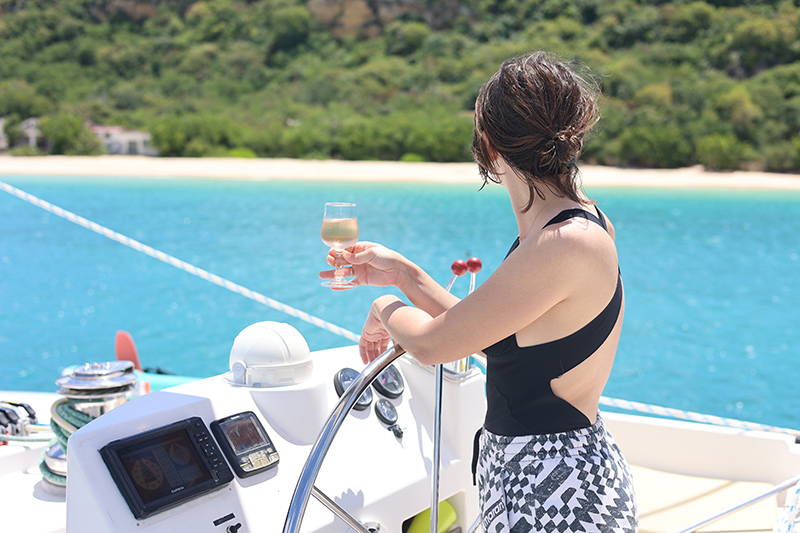
On board, solo travelers often find exactly what they’re looking for: genuine sociability, without crowding, in a relaxed and natural setting. Shared meals, swims in deserted coves, sunset cocktails or island-hopping quickly create simple and spontaneous bonds.

Another important advantage: unlike large impersonal cruises, CATLANTE catamarans accommodate only about 12 passengers. A human scale that completely changes the experience.


© Catlante Catamarans


CATLANTE facilite aussi les vacances en famille et entre amis

CATLANTE also makes departures for families or groups of friends easier thanks to a particularly attractive offer on triple cabins: the third passenger is free on certain Grenadines cruises, in triple occupancy, aboard the Catlante 600 catamarans of the Confort range.

This offer applies to departures on Thursdays and Fridays, from November 13, 2026 to April 15, 2027.

For a family with a teenager, three friends, or even a parent traveling with two children, the savings become quite meaningful. And above all, it allows access to a vacation package that is particularly complete: accommodation, generous all inclusive, water activities, dream stops, and turquoise sea.

Because it’s also one of the great strengths of CATLANTE cruises: once aboard, everything becomes incredibly simple.

No need to repack every two days, to catch ferries, to search for hotels, or to juggle logistics between several islands. The catamaran becomes a true floating guesthouse, moving from stop to stop while travelers fully enjoy their vacation.


Proposez une belle odyssée antillaise avec CATLANTE

À partir de 1 500 € par personne absolument tout inclus, CATLANTE propose sans doute l’un des formats les plus séduisants de l’hiver dans les Caraïbes : a seven-day one-way cruise between Guadeloupe and Martinique (or the reverse), sailing island to island.

The concept makes it very easy to build a long Caribbean voyage of nearly two weeks, with no fatigue or complicated logistics. A few days in Guadeloupe before boarding, a week of sailing along the islands with CATLANTE, then a few days in Martinique before the return flight (or vice versa).


© Catlante Catamarans


A true Antillean odyssey!

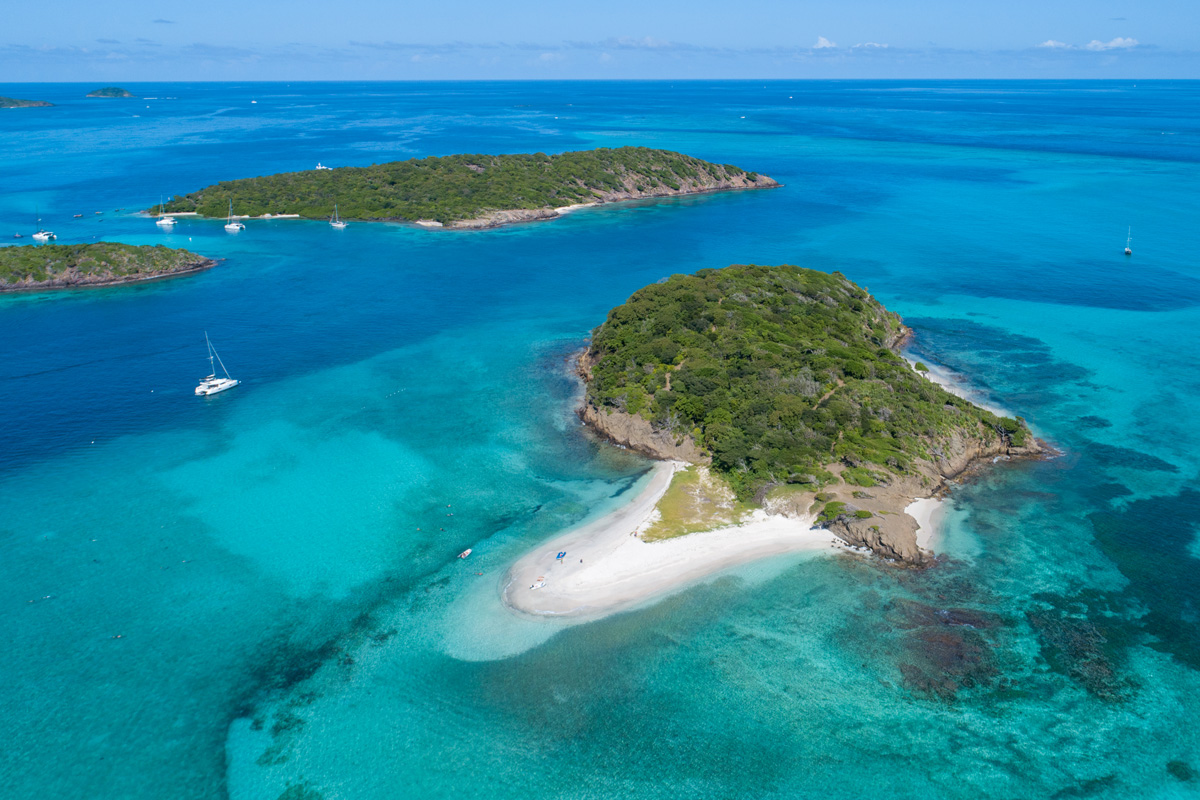
Marie-Galante and its long golden beaches, the archipelago of Les Saintes and its mythical bay, Dominica and its spectacular nature, the tranquil coves of Martinique: each stop changes completely the ambiance, landscapes, and pace.

And above all, everything unfolds with great simplicity. No permanent hotel changes, no long road hours, few transfers. The boat advances while passengers simply enjoy the journey.

Two to three stops per day, swimming that is only accessible by boat, villages reached by tender, sometimes dolphins that accompany the catamaran… All of it in the CATLANTE atmosphere: only about a dozen passengers aboard, a professional crew and a convivial vibe, far from the standards of large cruises.

A particularly appealing formula for travelers who already know the Grenadines and want to discover another facet of the Caribbean, even more varied, always immersive and incredibly easy to live.

CATLANTE advisors are available to answer all your questions 7 days a week at 01 55 20 90 90.

Sign up for the CATLANTE Catamarans agency newsletter!