Italy Vacation: Must-Know Rules Before Dining Out

Dining at a restaurant in Italy is a serious business. Cutting your spaghetti, ordering a cappuccino at 2 p.m., asking for a carafe of water—these are French reflexes that risk betraying you to the Italians. Some rules may seem strict to foreign visitors, but they remind us that sampling an Italian specialty means also immersing yourself in a culture, adopting its codes, and accepting to disrupt your habits.

Coffee, a Whole Story

Do you dream of a delicious espresso? In Italy, a coffee is inherently an espresso. So there is no need to specify it, unless you want a ristretto. As for the moment you order your coffee, it also matters. No Italian waiter will agree to bring it to you before your meal is completely finished, as well as your glass of wine. The ultimate mistake is ordering a cappuccino after a meal. Don’t even think about it. Italians drink their cappuccino (which contains milk and sugar) in the morning, as breakfast. After 11 o’clock, cappuccino time has passed!

Shaking Up the Order of Courses

For a beginner, reading a menu in Italy can be unsettling. A traditional meal is composed of 4 courses: antipasti (starters), primi piatti (first courses), secondi piatti (second courses), dolci/frutta (desserts or fruit).

And that plate of pasta or that risotto you crave so much is part of the “primi piatti.” Of course, restaurateurs will accept (perhaps with a sigh) serving you only spaghetti alle vongole, even if you forget to order a meat or fish dish that would normally come next.

Asking for a Carafe of Water

There is nothing stopping you from asking, but it is very unlikely you’ll get your way. Even when ordering still water (Acqua naturale) rather than sparkling (Acqua frizzante), a bottle of mineral water typically appears on your table. A tip? Don’t bother fighting it.

Adding Parmesan to Seafood Pasta

Imagine you’re in Venice and order Spaghettoni al nero di seppia at the Do Farai (Calle del Cappeller, Dorsoduro 3278). When the plate arrives, you’ll have to resist the urge to ask for parmesan at all costs. In Italy, mare and monti do not mix. This applies to parmesan on pasta, as well as to the secondo piatto, which would then be… only fish.

Cutting the Spaghetti

Here is a rule you must never break, or you might see the carabinieri appear behind you. We’re hardly exaggerating! The shape of the pasta is its very essence, and cutting it deprives it of its identity. And don’t even think about using a spoon to make life easier. Again, this is a gesture considered particularly ineloquent.

Good to know. For the same reason, spaghetti should never be broken before cooking.

7 Things to Do in Suriname: Outings and Activities to Discover

Suriname, a country in South America tucked between Brazil, Guyana, and French Guiana, captivates with its cultural and natural diversity. Its capital Paramaribo, UNESCO World Heritage-listed, and its tropical forests offer a unique backdrop for adventurers and curious travelers from all horizons. Whether drawn to its beaches, its rich history, or the promise of pristine nature, Suriname provides a variety of activities that deserve to be explored.

If you’re wondering what to do during your visit, here is a detailed guide to the must-see experiences. Before traveling abroad, we remind you to consult the Travel Advice from the Ministry of Foreign Affairs to learn about security and health risks specific to certain areas, and the administrative steps to complete before your trip.

1. Explore Paramaribo, the historic capital

Paramaribo serves as the perfect starting point for your adventure. Its wealth of historic landmarks and its culturally diverse ambience are truly engaging. Don’t miss the Saint Peter and Paul Cathedral-Basilica, a wooden construct completed at the close of the 19th century, as well as Fort Zeelandia, a stone relic from the colonial era. A stroll through the old town will lead you to places like the Neve Shalom Synagogue and the Keizerstraat Mosque, emblematic of religious coexistence.

2. Brownsberg Nature Park discovery

Just a few hours from Paramaribo, Brownsberg Nature Park is a popular destination for hiking enthusiasts. The park offers spectacular panoramic views of the Brokopondo reservoir and hides waterfalls perfect for a refreshing break. It is a meeting point for nature lovers, with exceptional biodiversity at every turn.

3. Boat excursions at Bigi Pan

The Bigi Pan Reserve is a fascinating aquatic ecosystem located in the northwest of the country. Known for its boat trips, it’s a paradise for birdwatchers. The stilt houses offer distinctive accommodations, enabling direct observation of rare bird species while enjoying unforgettable sunsets over the water.

4. Explore the colonial plantations along the Commewijne River

The plantations along the Commewijne River stand as living witnesses to Suriname’s colonial past. Guided tours of sites such as Mariënburg and Frederiksdorp immerse visitors in the country’s sugar-era history. A bicycle ride through this tranquil region, where dolphins and bucolic landscapes share the scene, reveals another facet of Suriname.

5. Beach and culture at Galibi

In the northeast of Suriname, Galibi is famed for its beaches and, above all, for the spectacle of sea turtles laying eggs on the sandy shore. It is also a unique opportunity to meet the Kali’na Amerindians and discover their ancestral culture. This cultural immersion adds a human and authentic dimension to your getaway.

6. Discovery of the ancient Jewish colony at Jodensavanne

Travel back in time to the ancient Jewish colony of Jodensavanne. Located along the banks of the Suriname River, it reveals the remains of a synagogue and a cemetery, recalling the role of Jews in the region’s history. It is a tranquil, history-filled site that deserves a thorough visit.

7. Fort Zeelandia & Fort Nieuw‑Amsterdam: between colonial heritage and immersion in history

Fort Zeelandia, situated in Paramaribo, is a former Dutch fort shaped like a pentagon, dating from the 17th century, which now houses the National Museum. Just downstream, on the right bank of the river, Fort Nieuw‑Amsterdam — built between 1734 and 1747 — stands as another strategic witness of colonization and now hosts an outdoor museum. When a traveler visits, they can take a boat taxi, discover the wooden or stone bastions, and then proceed to an old plantation, illustrating the transition from a military fort to sugarcane farming.

For history lovers and heritage enthusiasts alike, this itinerary offers a moment to pause and reflect on the past. Moreover, these sites are suitable for travelers in transit who are looking for a day trip near the capital. Note that in mid-August or during the dry season, the soft morning light enhances the fortress walls and surrounding vegetation. Be sure to check opening hours and arrange a local guide to enrich the visit.

In conclusion, Suriname stands out for its cultural and natural wealth, with activities that cater to every curiosity. Whether urban exploration in Paramaribo, outdoor adventures in its nature reserves, or immersion in local stories, every moment spent in this country is a discovery. Suriname offers a journey that blends exploration with authenticity, a destination sure to satisfy all desires for discovery.

Is Suriname a safe country?

Suriname today presents a generally good safety level for travelers, subject to the usual caution. Foreign authorities classify Suriname at the level “exercise normal precautions”, meaning risks exist but are not particularly high. However, in the capital Paramaribo and its surroundings, crimes such as pickpocketing or isolated assaults have been reported, especially in poorly lit areas or late at night.

Consequently, a passing tourist or a traveler eager to discover history would benefit from staying vigilant: entrust hinterland driving to local guides, avoid poorly lit zones, and refrain from displaying signs of wealth. But the country is not off-limits: the vast nature, the presence of Indigenous and Maroon communities, and the warm welcome remain. In short: yes, Suriname can be visited with confidence, provided you adopt a responsible and prepared approach.

Why go to Suriname?

Suriname stands out as a singular destination, halfway between tropical adventure and colonial heritage, offering travelers an experience that is both authentic and well-structured. On one hand, more than 90% of its territory is covered by rainforest — a rarity in South America. On the other hand, the capital Paramaribo, a UNESCO World Heritage site, and its Dutch forts like Fort Zeelandia or Fort Nieuw‑Amsterdam bear witness to a rich colonial past.

These contrasts create an ideal playground for day trips, whether by boat-taxi to an old plantation or a visit to a vibrant city that blends sugar cane, wooden architecture, and traditional ways of life. Suriname thus meets the expectations of history buffs and heritage lovers, as well as nature enthusiasts ready to immerse themselves in a nature reserve or to spot howler monkeys in the dry season. This mix of ecology, history, and cultural diversity makes it a country worth exploring.

Where is Suriname located?

Suriname lies on the northern coast of South America, bordered to the north by the Atlantic Ocean, to the west by Guyana, to the east by French Guiana, and to the south by Brazil. Covering roughly 163,820 km², it is the smallest country in South America by area and is very sparsely populated.

Most of the population lives along the coast or near the river, leaving the interior—deep in the Amazon rainforest—relatively under-urbanized. This location gives it both maritime and river access, making it an interesting starting point for excursions to the central Suriname’s nature reserves.

This article was drafted with the help of artificial intelligence, then corrected, expanded, and validated by the editorial staff.

Australia’s Smallest Town for Sale at a Surprising Price

What if owning an entire town cost less than buying a house or an apartment in some of the major metropolises? In Queensland, Australia, a remote settlement is seeking a fresh start and waiting for its future owner. Behind this unusual listing lies a village that is almost deserted yet equipped with surprisingly complete infrastructure. An unconventional opportunity that could also allow its buyer to instantly boost the number of residents.

An Entire Town for 400,000 Australian Dollars

Tucked away in Queensland’s Outback, more than 800 kilometers west of Brisbane, the small community of Cooladdi is officially up for sale. The price is set at 400,000 Australian dollars, roughly equivalent to 240,000 euros. A sum that includes far more than land: the purchaser would also take over a four-bedroom roadhouse, a motel, a grocery store, a pub, and a four-star restaurant.

Cooladdi holds a rare distinction: with only two residents, it is considered Australia’s smallest town. The two current residents, Carol Yarrow and Jo Cornel, had bought the Foxtrap Roadhouse in 2023 with the aim of reviving the community for three years. As their project nears its end, Carol Yarrow now plans to retire while Jo Cornel wishes to relocate.

The number of inhabitants could, however, shift very quickly depending on who buys the town. Becky Jeisman, a Charleville Real Estate agent handling the sale, explains that “there are currently only two people living in Cooladdi. The population is calculated based on the number of people who own the Foxtrap”. She adds: “It’s the whole town, and if a group of four people buys it, then the population will double”.

A Prosperous Past and an Unconventional Lifestyle

Purchasing Cooladdi isn’t merely about acquiring several buildings. The future owners would also bear responsibility for a large part of the village’s essential services. They would serve as the postman, pub manager, shopkeeper, motel receptionist, and cook. Carol Yarrow sums up this versatility to The Guardian: “Restoration and the pub probably form the core of the work; we also handle mail delivery as part of the postal service”.

Despite this load, she looks back on the experience with fond memories. “I’ve always found that the best thing about it is the local community… the residents who live within roughly 70 kilometers and pass by the property”, she told the British outlet. This small town wasn’t always nearly deserted, though. At its peak, Cooladdi counted 270 residents. The town boasted a school, a butcher shop, a police station, and flourished thanks to the railway. But when the railway line was extended to Quilpie in 1917, its decline began.

“The lifestyle is relaxed”

The closure of passenger train services in 1967, combined with the decline of sheep farming, accelerated residents’ departures and the gradual disappearance of shops and public services. Today, despite this turbulent history, Cooladdi continues to welcome travelers thanks to its location on a busy Outback road that links several towns, notably Charleville, about an hour’s drive away and home to around 3,000 inhabitants.

Former residents remain attached to the place as well. Carol Yarrow tells The Guardian that “since the residents left—many settled in Charleville and the surrounding area—people who grew up here come back to visit the places they once knew”. And she concludes: “We see many travellers and wonderful locals passing through. It’s an exceptional community. The lifestyle is relaxed. All around us, there are only mulga trees.”

Greece: Zakynthos’ Shipwreck Beach to Be Expanded to Save Its Iconic Wreck

Navagio Beach, situated on the western coast of Zakynthos Island in Greece, is routinely ranked among the world’s most beautiful beaches. This small, secluded cove, framed by towering white limestone cliffs and bordered by intensely blue waters, has even become a emblem of Greek tourism. This fame is not solely due to the island’s natural wonders.

In October 1980, the Panagiotis, a cargo ship carrying contraband cigarettes, ran aground on the beach. Forty years later, the wreck remains. Yet, driven by the force of the waves and the weather, it has been heavily eroded. To protect it, the authorities chose a surprising solution: widening the beach. The cost of the operation is estimated at 3.9 million euros.

Extending the Beach by 30 Metres Toward the Sea

This ambitious project, based on a study carried out gratis by the National Technical University of Athens (NTUA), aims to add 45,000 m³ of gravel and sediments to push the shore about 30 metres further into the sea. The materials will be transported by barge and deposited along the coastline and on the seabed.

According to the project’s technical description cited by the Greek information site eKathimerini, “backfilling with appropriate sediments constitutes the gentlest form of intervention from the viewpoint of coastal engineering and will help protect the wreck from the action of large waves during winter storms.” Once the wreck is safeguarded, the Zakynthos municipality plans to proceed with its restoration for 2.5 million euros.

A Controversial Project on a Site Still Threatened

Is this solution a lasting one? Asked by the German daily Westdeutsche Allgemeine Zeitung (WAZ), Manolis Vasilakis, a geology professor at the University of Athens, doubts it. The researcher believes this intervention represents a major modification of a natural site and questions the relevance of such expenditure to transport tens of thousands of tonnes of gravel that will be swiftly carried away by the sea.

It is also worth noting that facing the risk of landslides and rockfalls, and after several accidents involving tourists, access to the beach and the boat approach are regularly restricted during the tourist season. In 2026, access to the cove will remain forbidden until October 31. Visitors can only admire the wreck from an elevated platform or at a distance from the sea.

Things to Do in the Faroe Islands: 9 Top Outings and Activities

The Faroe Islands, a little-known Nordic archipelago, offer breathtaking landscapes and an immersion in pristine nature. Between raging seas and steep mountains, this destination captivates with its isolation and unique culture. If you’re wondering what to do in the Faroe Islands, here is a selection of activities that will make your stay a memorable experience.

1. Discover Gásadalur and the Múlafossur waterfall

The village of Gásadalur, on Vágar island, is a must-see highlight when traveling to the Faroe Islands, especially for the Múlafossur waterfall, which plunges powerfully into the North Atlantic, creating an impressive natural spectacle. Access was eased from 2004 thanks to a road tunnel, increasing the appeal of this isolated site. This ideal starting point for a full day of exploration is distinguished by a wild landscape, framed by cliffs and dotted with wandering sheep.

Not far away, the village of Bøur, or bour in the Faroe Islands, completes this excursion by offering a favorable vantage for photography and contemplation. If the weather in the Faroe Islands remains variable, particularly in October, it can occasionally give way to sunshine on the island, elevating the beauty of the place. A visit here fits neatly into a well-planned Faroe Islands budget, despite the high costs tied to driving on the islands and the price of fuel.

2. Explore the historic village of Saksun

The village of Saksun, situated on Streymoy, stands out for its colorful turf-roofed houses and its 19th-century church, nestled in a setting of raw, breathtaking landscapes. Accessible by a narrow winding road, this place offers a unique experience of returning to origins, between nature and culture.

The landscape, especially at low tide, invites a walk to the lagoon and reveals a palette of colors that contrast with the North Atlantic sky. The time in this suspended village invites contemplation, and despite the weather some days, the visit is a strong moment of travel in the Faroe Islands. Integrated into a budget for a reasonable trip, this detour is recommended for travelers seeking preserved places off the beaten path.

3. Hike to the Kallur Lighthouse on Kalsoy

The island of Kalsoy, often nicknamed the “flute of the Faroe Islands” for its elongated shape, houses the Kallur Lighthouse, accessible by a ferry crossing to Syðradalur and then a panoramic hike from the village of Trøllanes. This excursion offers a spectacular view of the neighboring islands, up to the Drangarnir arch, visible on a clear day.

Seabirds, notably puffins, nest along the cliffs, making the hike even more rewarding. Due to isolation, the site is sparsely visited, and the weather in this village can feel motionless. The budget for this activity on the Faroe Islands includes car rental, the ferry passage, and weather-appropriate gear for Kalsoy’s climate, which can be harsh at times. The effort is well rewarded by the beauty of the place, making it a perfect destination for nature lovers and wild landscapes.

4. Admire Sørvágsvatn Lake and its optical illusions

The Sørvágsvatn Lake, also known as Trælanípa, is one of the most astonishing sites in the Faroe Islands. From certain viewpoints, an optical illusion makes the lake appear to float above the ocean. This geological curiosity is accessible after a moderately challenging hike, offering a dramatic backdrop of sea, cliffs and changing light.

The road to the starting village traverses maritime zones ripe for observing seabirds. The water, seemingly suspended, recalls the icy waters of Lapland or the April waters in the Nordic fjords. Including this excursion in a Faroe Islands budget remains reasonable, despite fuel costs and the need for a vehicle. On clear days, sunset turns the scene into a living painting, reinforcing its reputation as a true visual paradise.

5. Puffin watching at Mykines

The island of Mykines, to the west of the archipelago, is a major destination for watching Atlantic puffins. These iconic seabirds nest on the steep cliffs during the summer. Accessible by boat, and depending on the Faroe Islands weather, the island also offers a hike to an isolated lighthouse overlooking the North Atlantic.

A full day is required for this visit, demanding good organization, including ferry rates, again fuel prices, and sometimes midday sandwiches to avoid costly options. The unique experience Mykines offers justifies its inclusion in any trip to the Faroe Islands. The sea crossing, the sheep, and the wild landscape complete the picture of a nature encounter in its most original form.

6. Boat excursion to Vestmanna

The Vestmanna site, on the west coast of Streymoy, offers a boat trip to discover cliffs and sea caves in a highly immersive setting. This unique experience includes passages close to cavities where seabirds nest, as well as natural arches shaped by centuries.

Against the backdrop, the beauty of the place remains constant, reinforced by the frequent presence of wandering sheep visible from the road to the harbor. The activity, albeit subject to high prices, can be incorporated into a balanced travel budget. The contrasts between the water at bøsdalafossur, the black cliffs, and the bright sun on a clear day give this sea outing a distinctive relief within the broader context of a trip to the Faroe Islands.

7. Immerse yourself in history at Kirkjubour

Kirkjubøur, on the southern coast of Streymoy, represents one of the oldest historic centers of the Faroe Islands, with exceptional patrimonial richness. The site houses the ancient village of Kirkjubøur, the Roykstovan farm, continuously occupied since the Viking era, as well as the ruins of the St. Magnus Cathedral.

Accessible via a small road from Tórshavn, the visit fits easily into a full day of cultural discovery. The presence of local products and the authenticity of the place offer a strong contrast with the vibrancy of Tórshavn. The prices for this visit remain moderate and compatible with a measured budget in the Faroe Islands. The richness of the surrounding landscape and the view of the North Atlantic give Kirkjubøur a major cultural and geographical value.

8. Stroll through the streets of Tórshavn

Tórshavn, the capital of the Faroe Islands, is a mid-sized city with a distinct charm, balancing modernity and tradition. The Tinganes district, with its red wooden houses, forms the heart of the old town of Tórshavn. The heights of Tórshavn offer a view over the port and the island of Streymoy, while the Tórshavn Hilton Garden Inn represents an attractive accommodation option for travelers seeking comfort.

The city is best discovered on foot, exploring its museums, its restaurants where you can taste local products, and its cafes where you can have a midday sandwich. Driving in the Faroe Islands makes Tórshavn easily accessible from Vágar Airport, despite the relatively notable price of fuel. For those seeking an urban rendezvous in a natural setting, this discreet capital is a strategic starting point.

9. Venture to Gjógv

Located on Eysturoy island, the village of Gjógv derives its name from the natural gorge that forms its harbor. This singular geological site, known as the “Cleft of Gjógv”, is part of a network of hikes offering spectacular landscapes on neighboring islands and the North Atlantic. Gjógv’s isolation and the small road leading there make it an ideal spot for travelers seeking calm.

Despite high overall prices across the territory, the village remains accessible with careful budgeting for a trip. Wandering sheep, seabirds, and weather that is sometimes sunny or foggy shape the unique atmosphere of this place. The gorge, windswept, provides an ideal backdrop for photographing the wild landscape of this part of the Faroe Islands.

The Faroe Islands offer a varied range of activities for travelers seeking authenticity and preserved nature. Whether through hikes, maritime explorations, or cultural encounters, this archipelago manages to surprise at every turn. To maximize your experience, consider a multi-day trip to fully live each facet of Faroese life.

How many days does it take to visit the Faroe Islands?

For a truly enriching trip to the Faroe Islands, a duration of 5 to 7 days is ideal. This period allows you to explore the spectacular landscapes of Streymoy, to head to Mykines to observe the Atlantic puffins, and to wander the heights of Tórshavn, the capital, with its colored houses and its perfectly preserved old town.

This format also offers the opportunity to reach iconic places like the Drangarnir arch or the Múlafossur waterfall, visible from the village of Bøur. A full day can be dedicated to Kalsoy, famous for its wild atmosphere and steep trails. With a rental car, you can organize each starting point flexibly, enjoying the beauty of the place, the sun on the island when the weather allows, and the road to the villages that outline a true natural paradise.

Is life expensive in the Faroe Islands?

Budgeting for a trip to the Faroe Islands deserves careful consideration. High costs are a reality, especially for accommodation, food, and fuel. The Tórshavn Hilton Garden Inn or accommodations around the village of Bøur offer good value for money depending on the season, but overall costs remain significant.

A midday sandwich can cost the price of a full meal elsewhere in Europe, and driving in the Faroe Islands, while convenient, involves tolls on certain bridges or ferries. Plan a Faroe Islands budget adjusted to these constraints, without neglecting the countless sheep and landscapes of raw beauty that give this territory its unique character. Budget-conscious travelers can optimize by cooking locally with local products or choosing off-season itineraries, where prices may be more favorable.

What is the best time to visit the Faroe Islands?

The weather in the Faroe Islands, known for its variability, plays a central role in planning a stay. The period from May to September is generally considered the most favorable. Sunny days with clear skies offer an incomparable light on the landscapes, revealing the full majesty of the North Atlantic, from the village of Trøllanes to the heights of Tórshavn.

On the other hand, traveling in October exposes you to capricious weather, with frequent showers and reduced visibility. Yet, some autumn days can reveal a raw beauty, heightened by the solitude on the roads and the endless time spent indoors warming up. It’s also the season when seabirds remain prominent, and wandering sheep freely cross the roadside.

What to bring back from a trip to the Faroe Islands? The choice of lasting souvenirs

Bringing back a souvenir from the Faroe Islands means extending the experience of this journey to the far reaches of the North Atlantic. Local products take a prime place: sheep wool — outnumbering the inhabitants —, Viking-inspired crafts, or canned fish, typical of the region.

In Tórshavn, the mid-sized city retains traditional shops where time seems to stand still. In this context, the ideal gift is often modest but meaningful: a handmade scarf, a book on traveling in the Faroe Islands, or a framed photograph of the Múlafossur waterfall seen from Bøur. Each object then becomes a backdrop for telling the perfect place discovered between sea, rock and sky.

This article was written with the help of artificial intelligence, then corrected, expanded and validated by the editors of the desk.

Chocolate, Slavery, and Luxury Tourism in São Tomé and Príncipe: 5 Things to Know

Voters in São Tomé and Príncipe, a small island state in central Africa, are set to head to the polls on Sunday, July 19, 2026 to elect their president. A former Portuguese colony that became an independent state in 1975, São Tomé and Príncipe is a Lusophone archipelago located in the Gulf of Guinea with around 200,000 inhabitants, renowned for its cocoa and coffee production. Here are five things to know about the country.

1. “The Chocolate Island”

Cocoa is deeply rooted in the history of São Tomé and Príncipe, and the island of São Tomé earned the nickname “The Chocolate Island”. By the end of the 19th century, the archipelago was the world’s leading producer with nearly 35,000 tonnes per year. On the slopes of an extinct volcano overlooking the Atlantic, the cocoa, derived from plants imported by the Portuguese in the 18th century, grows in a lush landscape. The fertile soils of São Tomé do not require fertilisers or pesticides.

But after independence in 1975, “the Portuguese left with their know-how, epidemics struck the cocoa and the State redistributed land to former workers without any oversight. Production collapsed,” explained to AFP Maria Nazaré Ceita, a historian at the University of São Tomé. Likewise, São Tomé and Príncipe has long been a hub of coffee culture and remains so, with production smaller but oriented towards high quality. The production of vanilla and pepper has recently developed.

2. Slavery and Colonization

“Who has shown this long path? This path to São Tomé ?”, asked the famous Cape Verdean singer Cesária Évora in her 1992 song Sodade, in memory of her Cape Verdean compatriots forcibly brought to work on the São Toméan plantations. The islands of São Tomé and Príncipe were colonized by the Portuguese from the late 15th century. They were the scene of a violently brutal slave trade, initially aimed at the intensive cultivation of sugar cane and then cocoa and coffee.

Thousands of men and women from Central Africa were forced into servitude to work on the plantations. According to historians, São Tomé and Príncipe was a hub of the transatlantic slave trade: around six million people are believed to have been deported from the island at that time. With the abolition of slavery in 1876, “contractual workers” were then brought—often by force—from Angola, Mozambique, Cape Verde, Gabon or Congo.

3. Paradise Beaches and Luxury Tourism

With luxuriant nature and paradisiacal beaches on these volcanic islands where nearly 600 species of plants have been catalogued, the country has all the makings of a small paradise. Yet underdeveloped infrastructure, challenges in investing in the tourist sector, and the cost of travel hinder the development of tourism in the archipelago. Visiting during the dry season is a luxury: a round trip from Lisbon costs around 1,500 euros. Tourism aimed at a wealthy clientele has therefore grown, with several luxury hotels in the archipelago, including three five‑star properties.

4. The Oil Hope

Launched in the early 2000s, oil exploration has given rise to many hopes in the country. Several international companies, including the French group TotalEnergies in 2024 or Brazilian Petrobras in 2023, have secured offshore exploration licenses. “Commercial production is expected after 2030,” according to the energy sector lobbying group African Energy Chamber, “subject to fruitful discoveries and a sustained influx of investments.”

5. A Model of Democracy in Africa

After attempts at coups in 2003 and 2009, the parliamentary regime has stabilized, and the country has established itself as a model of parliamentary democracy in Africa. One coup attempt, quickly foiled by the army, did nevertheless occur in November 2022. Since the introduction of multi-partyism in 1991 after 15 years of a Marxist one-party regime, two parties have dominated São Toméan political life and jostle for power, the Independent Democratic Alternative (ADI, centre-right), and the Movement for the Liberation of São Tomé and Príncipe – Social Democratic Party (MLSTP-PSD, centre-left), born from the former single party.

Border Control: Twin Sisters Misidentified by the New European Biometric System (EES)

It’s a mistake that should never have happened. On April 10, 2026, the European EES and ETIAS systems were deployed at airports to improve the management of the external borders of the Schengen area by automating travelers’ identity checks, making them more reliable and efficient. For reference, the EES (Entry Exit System) concerns all nationals of non-member EU countries or those associated with the Schengen area who undertake short stays (up to 90 days within a 180-day period) on the territory of a Schengen member state.

However, since its implementation, this new device has already caused numerous difficulties for travelers, notably long queues. The reasons include airports not yet sufficiently equipped to accommodate this system, as well as several technical malfunctions. The President of the European Commission, Ursula von der Leyen, recently admitted that it suffers from “unresolved technical problems and requires a lot of work”.

These are not the only problems since the deployment of this new system. In May, a British national attempting to join the United Kingdom from Cluj-Napoca, Romania, was accused of illegal stay in the Schengen area. The authorities reproached her for not properly recording her departure after a previous stay in Amsterdam, in April 2026. The problem? It was not she who had gone there, but her twin sister.

The system duped by the similarity of the two facial scans

Following this, the young woman was interrogated for about fifteen minutes by border officers. When she explained that she had a twin sister, they initially suspected that she had lent her passport to her sister, which was false. Her sister was in the United Kingdom at the time of the events and had never set foot in Romania. She was ultimately allowed to take the plane, but remains concerned about her future travels.

The EES confused the two women due to the similarity of their facial scans, but perhaps also because of their surnames, dates of birth, and nationalities, which constitute the only common points detected by the system. Conversely, their fingerprints, first names, and passports are different.

According to Niovi Vavoula, a lecturer in cyberpolicy at the University of Luxembourg, this unusual situation could be explained by a misrecorded departure for her twin sister during her Amsterdam stay, but also by insufficient checks by the Romanian authorities in Cluj. “This type of incident is very common and is corroborated by many testimonies”, she told the POLITICO media outlet.

The authorities pointed at after this malfunction

The traveler’s interrogation would also have suggested that “the Romanian authorities did not do their job properly”. “According to the briefing you sent me, it seems the authorities are not sufficiently trained to distinguish between the different processes and rely on facial images as the sole identification method”, Niovi Vavoula told the media outlet POLITICO.

She then added: “the fact that they did not verify passport information in the EES, nor take into account that the EES is still new and that it contains various problems, illustrates what is known as anchoring bias, which is the tendency to rely on the first piece of evidence and neglect the rest”. On the European Commission’s side, a spokesperson said that the Commission “does not comment on individual cases.” He did, however, specify that “Member States are responsible for the data recorded in the EES, to which the Commission has no access”.

He concluded by recalling that “if a traveler is concerned about how their data is handled, they have the right to request the rectification and augmentation of their personal data. In such a case, they can contact the competent authorities of the Member State, either at the border or by directly reaching out to those authorities”.

The Odyssey: Where Was Christopher Nolan’s New Film Shot?

Summary


  • Ithaca, Sicily’s jewel on the screen

  • Bringing Troy to life in Morocco

  • The encounter with the Cyclops and the underworld, a journey to the edge of the world

  • Odysseus on the seas of the world

With The Odyssey, his 13th feature film, Christopher Nolan offers an ambitious reimagining of the famous Homeric poem. The American director signs an epic that is as intimate as it is spectacular, where the viewer walks in Odysseus’ footsteps. He does not merely watch him face the Cyclops: he stands beside him in the cave. He trembles with him before a devastated Troy, shares his torments on Calypso’s island. An extraordinary immersion that also owes much to breathtaking sets. Christopher Nolan and production designer Ruth De Jong, nominated for an Oscar for Oppenheimer, the director’s previous film, roamed the world to find unique locations that allowed them to bring Odysseus’ adventures to life.

“We knew that our story began and ended in a Mediterranean region, but to visually render on screen the regions traversed by the hero from the beginning to the end of the tale we needed landscapes with contrasting features and extreme weather conditions: raging seas, strong winds, torrential rain, and snow. We needed a cocktail of all this to give the film an incomparable force, as if we were addressing the very first readers of Homer,” explains Christopher Nolan in the film’s press kit. So the British director did not limit himself to Italy and Greece; he also shot in Morocco, Iceland, Scotland, and also in the United States, where a vast set was built in a Los Angeles studio.

The Beautiful Ithaca, Sicily’s Jewel on Screen

Odysseus, king of Ithaca, leaves his wife Penelope and his son Telemachus to join the expedition led by Agamemnon in the name of his brother Menelaus, whose wife has been abducted by Paris, one of Troy’s princes. It is on Favignana Island, the largest of the Egades archipelago, a few kilometers from Sicily, that most of the scenes set in Ithaca were filmed. The island holds a true treasure, Castello di Santa Caterina, a 15th‑century castle perched atop Mount Santa Caterina, where Christopher Nolan was granted permission to place his cameras by the Italian Ministry of Culture.

A true logistical headache for the filming crew, who did not obtain permission to build a road access. A cable car, installed for the occasion, and helicopters allowed the equipment to reach the castle. As for the crew, actors and technicians, they made this exhausting daily trek on foot.

Other sets were built nearby, including the city of Ithaca, the pigsty and the dwelling of Eumaeus, Odysseus’ faithful companion. Yet the production had to move to Los Angeles, in a studio, to shoot the interiors of the palace, notably the confrontations with Penelope’s suitors.

Bringing Troy to Life in Morocco

In Homer’s telling, Troy is “holy Ilion,” a city “with broad streets,” protected by tall and impregnable walls. Each reader projects their own vision of Troy. A city that resists but finally succumbs after 10 years of siege and a ruse that remained mythical. To depict Troy, the Odyssey crew settled in Aït Benhaddou, a Moroccan village in the Ouarzazate province that had already embodied Zucchabar in Gladiator or the city of Yunkai in Game of Thrones.

It was here that an immense set of more than 10,000 m2 was built, consisting of more than 60 structures. True to his habits, Nolan avoided relying on visual effects to enlarge the set in postproduction. Thus the Temple of Athena, over 11 meters tall and 26 meters deep, and the wide staircase leading to Troy’s central square were built from scratch.

A second major challenge awaited the crew: to depict the legendary Trojan Horse, usually shown on wheels. Nolan insisted on making Odysseus’ ruse even smarter. So, when the horse first appears on screen, it is half-buried in the sand, as if cast ashore by Poseidon. That beach is Essaouira, in Morocco.

The Encounter with the Cyclops and the Underworld, a Journey to the Edges of the World

To capture the essence of the underworld—a desolate realm where light bears no resemblance to any other—Nolan drew on a natural marvel: Iceland’s midnight sun. Far from Ithaca, Odysseus wrestles with wind and rain, but above all with Hades and a figure, whose name we will keep secret, who confronts him with his terrible mistakes.

Another legendary confrontation, the one between Odysseus and his companions against the Cyclops. It is in Greece that the director set his cameras this time, in the Cave of Nestor, located in the Peloponnese. An exceptional natural set by its dimensions (20 meters long by 16 meters wide, topped by a vault rising 30 meters) which also has the particularity of being linked to several Greek myths. Indeed, in this cave the god Hermes is said to have hidden the fifty oxen stolen from his brother Apollo.

The Enchanting Calypso

During his voyage, Odysseus becomes waylaid and lands on the island of Ogygia, where lives the alluring and dangerous Calypso. The nymph keeps him captive for seven years, promising immortality… if he forgets his homeland and his family. It is the famous white dune of Dakhla, located on the Moroccan coast, that served as the setting for the scenes between Odysseus and Calypso. With its immaculate sand and turquoise waters, this landscape, both fascinating and unsettling, perfectly illustrates Calypso’s ambiguous refuge.

Odysseus on the Seas of the World

During the ten years of his turbulent voyage back to Ithaca, Odysseus does not merely face the Cyclops or confront the witch Circe; these astonishing scenes were filmed in Scotland, between Culbin Forest and the cliffs of Findlater Castle, battling giants and resisting the siren songs. The bulk of his journey actually unfolds on the seas. It is a Norwegian ship, the Draken, built using ancient techniques, that embodied Odysseus’ vessel.

The nautical scenes were shot at sea in most of the countries traversed, including Morocco, Italy, Greece, Iceland, and Scotland. The actors, who learned to row and navigate, faced extraordinary weather conditions. “As spectators, we ourselves witness the trials faced by Odysseus’ men, and we empathize with them. The harsh reality of their journey is a vital element of the story, and the dedication of these remarkable actors was crucial to making these sequences convincing”, notes Christopher Nolan. Mission accomplished.

Why Are Cabin Lights Dimmed During Takeoff and Landing?

If you’ve ever flown — or you’ll be taking to the skies this summer for a vacation — you’ve probably noticed something remarkable: during takeoff and landing, the cabin lights are switched off. It’s not to create a zen ambiance in the cabin or to reassure passengers terrified by these stages of the flight. There is a real scientific reason behind it, explains Condé Nast Traveller India.

What to Do in Serengeti National Park: 5 Must-Do Activities

In this article, we will explore in detail the various activities available to visitors of the Serengeti in Tanzania, thereby providing a comprehensive roadmap to make the most of this fascinating destination.

1. Vehicle Safaris (Game Drives)

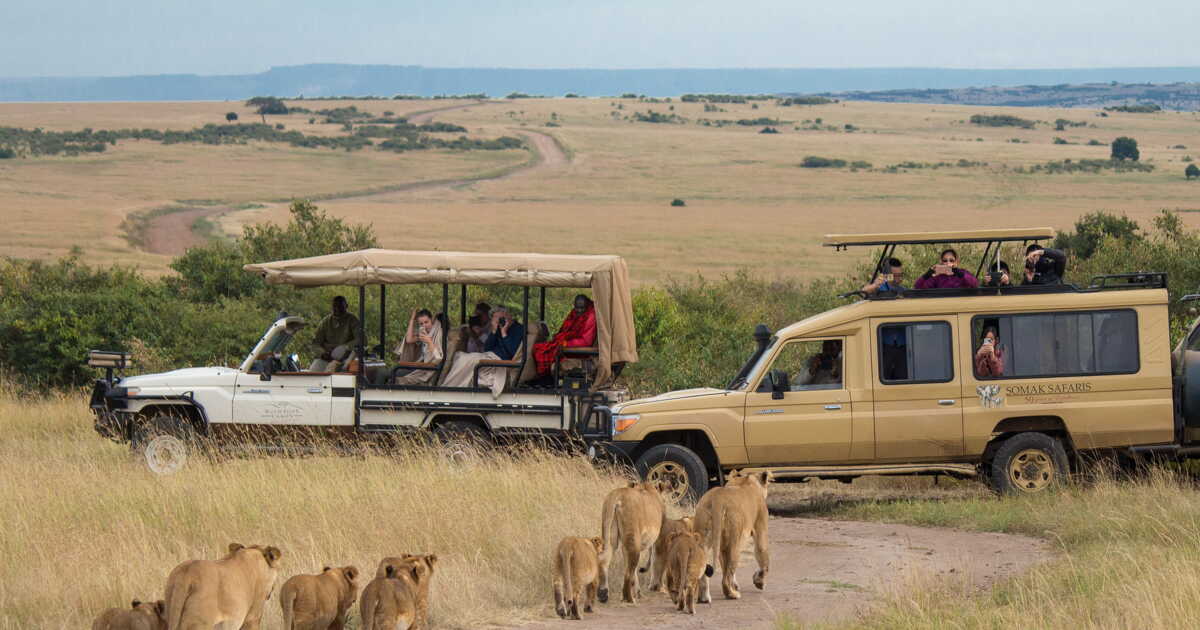
Vehicle safaris are among the main activities when visiting Serengeti National Park. These excursions allow visitors to traverse different parts of the park in search of its iconic wildlife.

Safaris can be planned for the morning or the afternoon, with each period offering unique conditions for animal viewing. The Seronera area is particularly prized for its feline population, while the Western Corridor along the Grumeti River is an excellent zone for observing large predators and crocodiles.

2. The Great Migration

One of the park’s major attractions is the Great Migration, a natural phenomenon where millions of wildebeest, accompanied by zebras and gazelles, traverse the park in search of fresh pastures.

This spectacle occurs year-round, but certain periods, such as the Mara River crossings between July and October, are especially sought after for their dramatic intensity. Visitors can plan their visit around the migration calendar to maximize their chances of witnessing this spectacle.

3. Observation of the “Big Five”

Serengeti National Park is one of the best places in Africa to observe the famous “Big Five“: the lion, the leopard, the elephant, the buffalo, and the rhinoceros, although the latter is rare. Each of these species can be seen in different zones of the park, though their presence can never be guaranteed due to the vast territories these animals roam. Early morning or late afternoon safaris can increase the chances of spotting them.

4. Hot Air Balloon Flight

For a different vantage point of the Serengeti, visitors can opt for a sunrise hot-air balloon ride. This roughly 1 to 1.5-hour flight provides an aerial view of the landscape, allowing observation of the wildlife and park topology. At the end of the flight, a champagne breakfast in the savannah is often included, making this experience memorable and unique.

5. Cultural Visits and Encounters with the Maasai

In addition to wildlife, a visit to the Serengeti offers the opportunity to discover local culture by meeting the Maasai, an indigenous people living in the park’s peripheral areas. Although these visits are typically organized outside the park boundaries, they provide insight into the traditions and way of life of this community that coexists with the surrounding wildlife.

The Serengeti National Park offers a multitude of activities that allow visitors to immerse themselves in its unique landscapes and abundant wildlife. Whether for wildlife viewing, cultural exploration, or balloon panoramas, the Serengeti promises an unforgettable travel experience. By taking practical advice and recommendations into account, visitors can effectively plan their stay and make the most of their adventure in this exceptional site.

What are the tourist attractions of Serengeti National Park? Discovering the natural treasures of a unique ecosystem

Serengeti National Park is among Africa’s most iconic tourist attractions, renowned for its endless plains, Africa’s predators, and the spectacular Great Migration. A true sanctuary of the African savanna, this UNESCO-listed park draws travelers each year to observe the Big Five, hippos, Grant’s gazelles, and more than 500 bird species in their natural habitat.

The experience can be enhanced by a private Tanzania safari aboard a jeep, accompanied by a French-speaking guide or an expert guide who tailors the itinerary to the safari program. Charming lodges or luxury accommodations set in the heart of the park allow you to witness the dawn awakening of wildlife in comfort suited to travelers from around the world.

Park in Tanzania: why Serengeti is a jewel of wildlife

Choosing a park in Tanzania for a safari means opting for the Serengeti, a benchmark in biodiversity. Its ecological role transcends national borders, as it forms, together with the Ngorongoro Conservation Area and the Masai Mara Reserve in Kenya, a cross-border ensemble vital for the zebra and wildebeest herds and the predators in pursuit of their prey.

The richness of its ecosystems—from the central Serengeti region to the more distant areas of the northwest or the south of the Serengeti—allows for diverse observations, including hippos across different regions or rare bird species. Planning a Serengeti safari with experienced guides offers an immersion in one of the last great natural theatres where the daily life cycle of Africa’s wildlife unfolds.

Serengeti Plain: an iconic expanse shaped by migration

The Serengeti Plain embodies the essence of Tanzania’s safari landscapes, with endless grasslands, isolated acacias, and horizons punctuated by the movement of herds. Each year this conservation area becomes the stage for the Great Migration, a primal quest for fresh grass by hundreds of thousands of wildebeest, closely followed by their predators.

This phenomenon, observable from a charming lodge or during a private-guided safari, constitutes an exceptional wildlife spectacle, immortalized in popular imagination thanks to the Lion King. From the shores of Lake Victoria to the Ngorongoro Crater, the Serengeti Plain offers a breathtaking view of the rhythms of wildlife, revealing nature’s beauty in its rawest form.

Wildlife in Tanzania: observing fauna at the heart of the Serengeti

Wildlife in Tanzania finds in the Serengeti an exceptional natural setting for observation and photography. This national park hosts all the symbols of African fauna: the Big Five, predators within the park, hippos, and herds of zebras near water sources.

Guides, some of whom are francophone, have an intimate knowledge of where species concentrate according to the dry season, vegetation, and climatic conditions. Travelers can thus enjoy full immersion, often aboard a jeep, sometimes on foot depending on the available options.

The Serengeti is not merely a safari backdrop; it is a vibrant natural habitat that offers daily a new scene of interactions between prey and predators, in harmony with the biological rhythms of wildlife.

Serengeti National Park: prices, options and tips for organizing your safari

The price of Serengeti National Park depends on several parameters, including the season, the activities chosen, and the type of in-park accommodation. Entrance fees typically amount to several tens of dollars per day, with additional costs for a private jeep safari in Tanzania, the presence of an expert guide, and the level of comfort desired: from luxury lodges to mobile camps.

For an optimized stay, it is recommended to plan with a safari-specialized agency, which can combine the best observation moments – such as the dry season – with hotels or lodges located in strategic areas. Whether you head in search of the Big Five or prioritize the Great Migration, the Serengeti more than justifies the investment, as the experience remains unparalleled in the African landscape.

This article was drafted with the help of artificial intelligence, then revised, supplemented, and validated by the editors of the newsroom.