
Jet Tours Launches Agency Partner Program


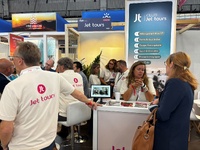
Jet tours lance un programme partenaire pour les agences - Photo AB

Aer Lingus


After establishing an ambassadors club comprised of around twenty travel agents, Jet Tours is set to launch a new program designed to make partner agencies the brand’s go-to references in their territory.

Unveiled at the IFTM, it notably includes a dedicated marketing fund from the first year, monthly webinars focusing on new products and destinations, a dedicated booking number, and visibility for partner agencies on Jet Tours’ B2C site.

The agencies will also receive a communications kit, invitations to brand events and eductours, and enhanced commercial support, with a quarterly meeting dedicated to results and goals.


The launch of the agency program planned for early 2027
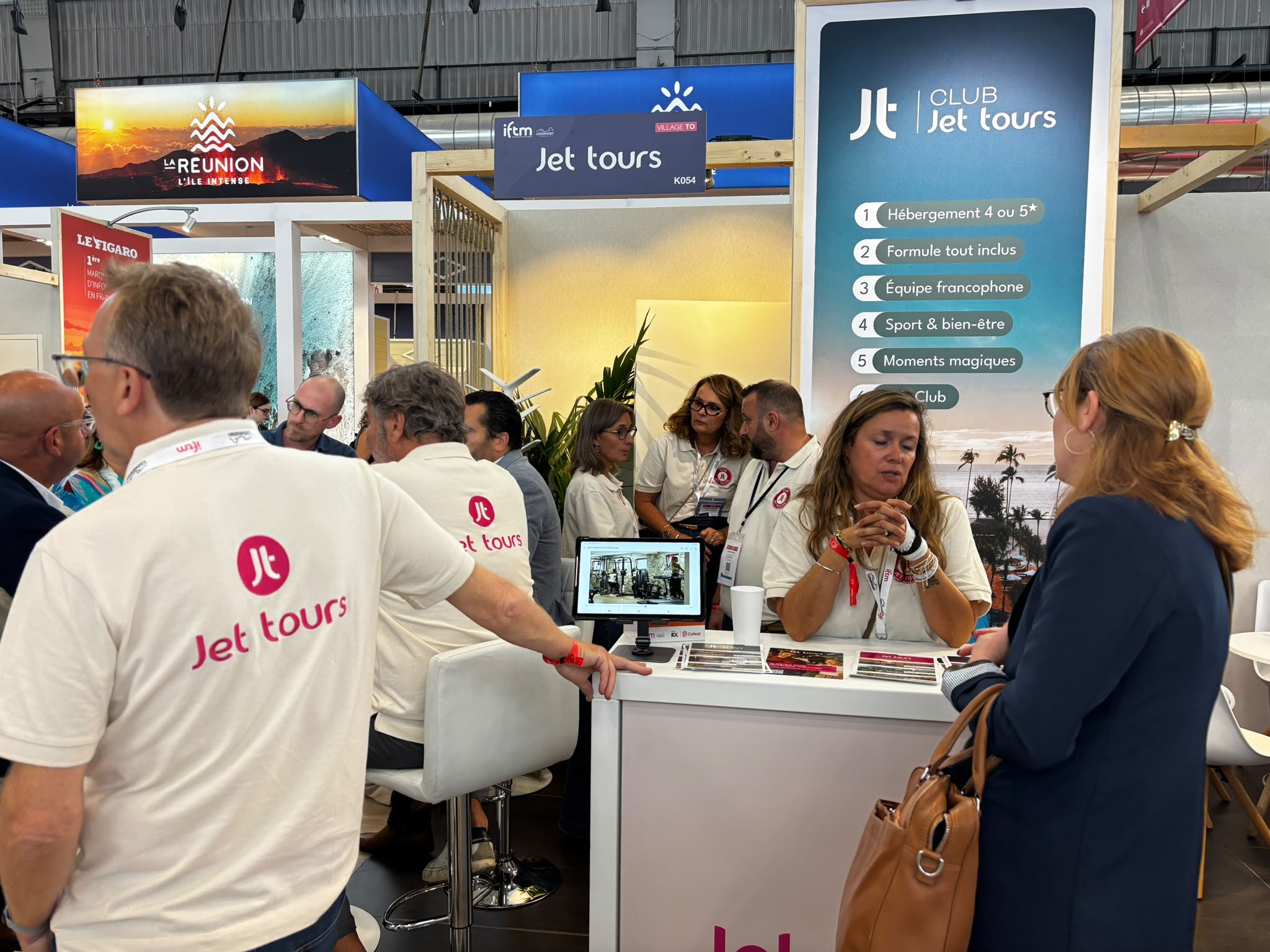

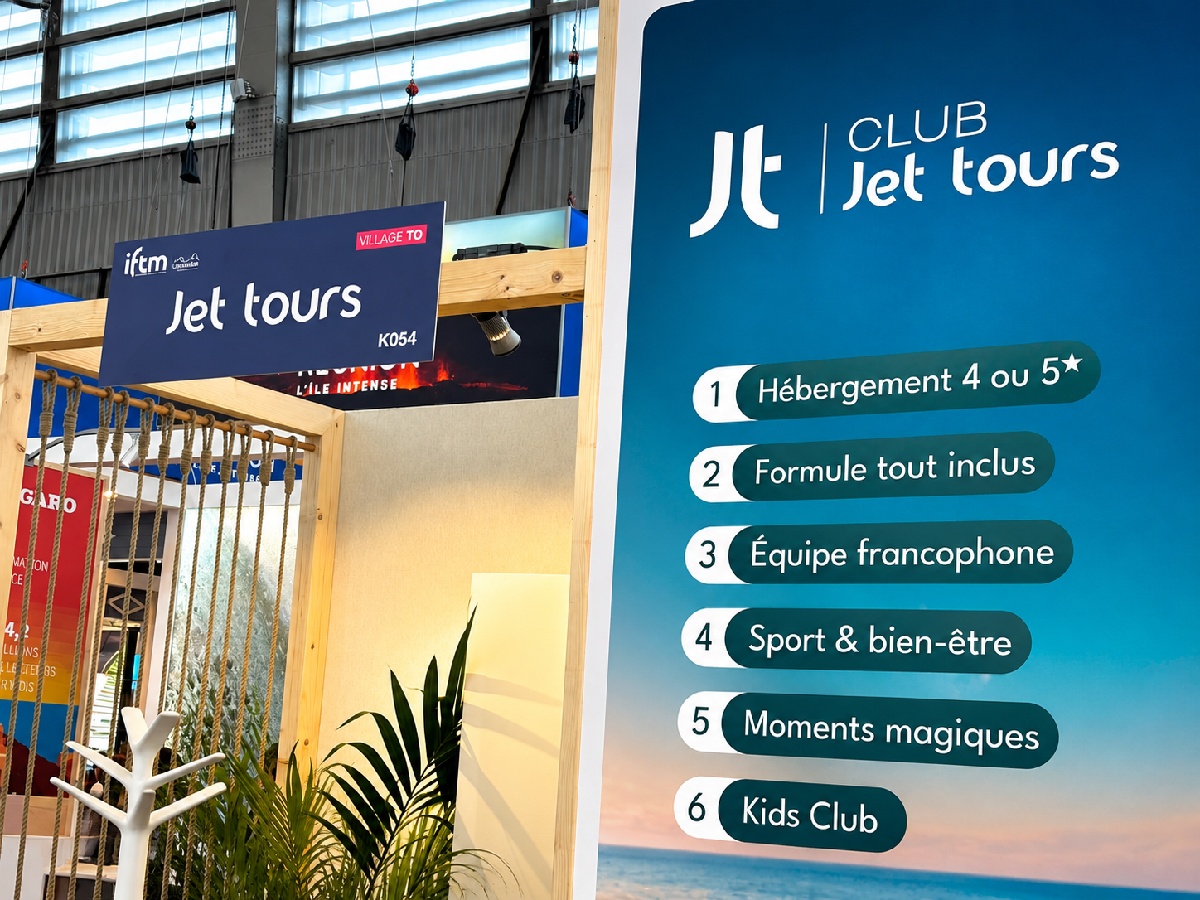
Le stand Jet tours sur l'IFTM - AB

In return, a minimum annual turnover of €50,000 is required to join the program, with the status being reviewed each year.

Partners will notably need to ensure a visible Jet Tours presence in-store and relay every quarter the brand’s communications to their clients.

They will also participate once a year in a “partners” day” in Paris.

Interested agencies can already contact their sales representative. The deployment of the program is planned for early 2027.


Jet Tours’ New Clubs

Alongside commercial activities, Jet Tours continues to expand its offering.

The tour operator also announced at the show three new Jet Tours clubs, all five-star properties that enrich the lineup: the Jet Tours Ocean Riviera Paradise Club in Mexico, the Jet Tours The Eden Beruwala Club in Sri Lanka, and the Jet Tours Paradisus Grand Cana Club in the Dominican Republic.

This summer, the brand already boasted three other clubs: Club Jet Tours Ostria Resort & Spa 5* in Crete, the Club Jet Tours Khaolak Marriott Beach Resort & Spa 5* in Phuket, Thailand, and the Club Jet Tours Anaya Zanzibar 5* (owned by NG Travel).


Grand Nord Grand Large Expands Its Winter Bivouac Trips


Grand Nord Grand Large développe une gamme de voyages autour du bivouac hivernal - Depositphotos.com, rdonar

Aer Lingus


Snow bivouacking is developing as a new way to explore the polar environments.
Grand Nord Grand Large (GNGL) offers several itineraries that allow travelers to progress, from mountain initiation to autonomous trips in northern regions.
The offering rests on an immersive approach to travel, with nights in tents or under a tipi, the preparation of the camp, the management of the cold and, depending on the stays, pulling a pulka or advancing with dog teams.
Participants are accompanied in learning the techniques needed for these environments.


From the Vercors to Nordic Territories

The itinerary can begin in the Vercors, with a weekend introduction to winter bivouacking. Travelers learn, notably, how to set up a camp, tow a pulka, and insulate themselves from the cold, before a night under a tipi. The stay is offered from €480 for three days.

In Norway, GNGL offers a six-day trek off the beaten path. The aim is to develop participants’ autonomy through orientation, terrain reading, the use of maps and GPS, and cold management. The stay is listed from €1 790.

The Finnish Lapland constitutes a more immersive stage, with ten days of trekking through snowy forests and frozen lakes. Travelers pull their pulka and participate in camp setup, meal preparation and water provisioning. The stay is offered from €3 690.

Finally, in Canada, GNGL combines a dog-sled raid with bivouacking for ten days. Participants take part in daily tasks, notably camp setup and provisioning of wood and water. The trip is offered from €3 190.


Amelia Brille Published by Amelia Brille TourMaG.com Editor
See all articles by Amelia Brille

  • picto Linkedin
  • picto email
Add TourMaG to your Google News feed Google Actualités icône  

Marietton Development Acquires 3 New Camps in Peru and Tanzania


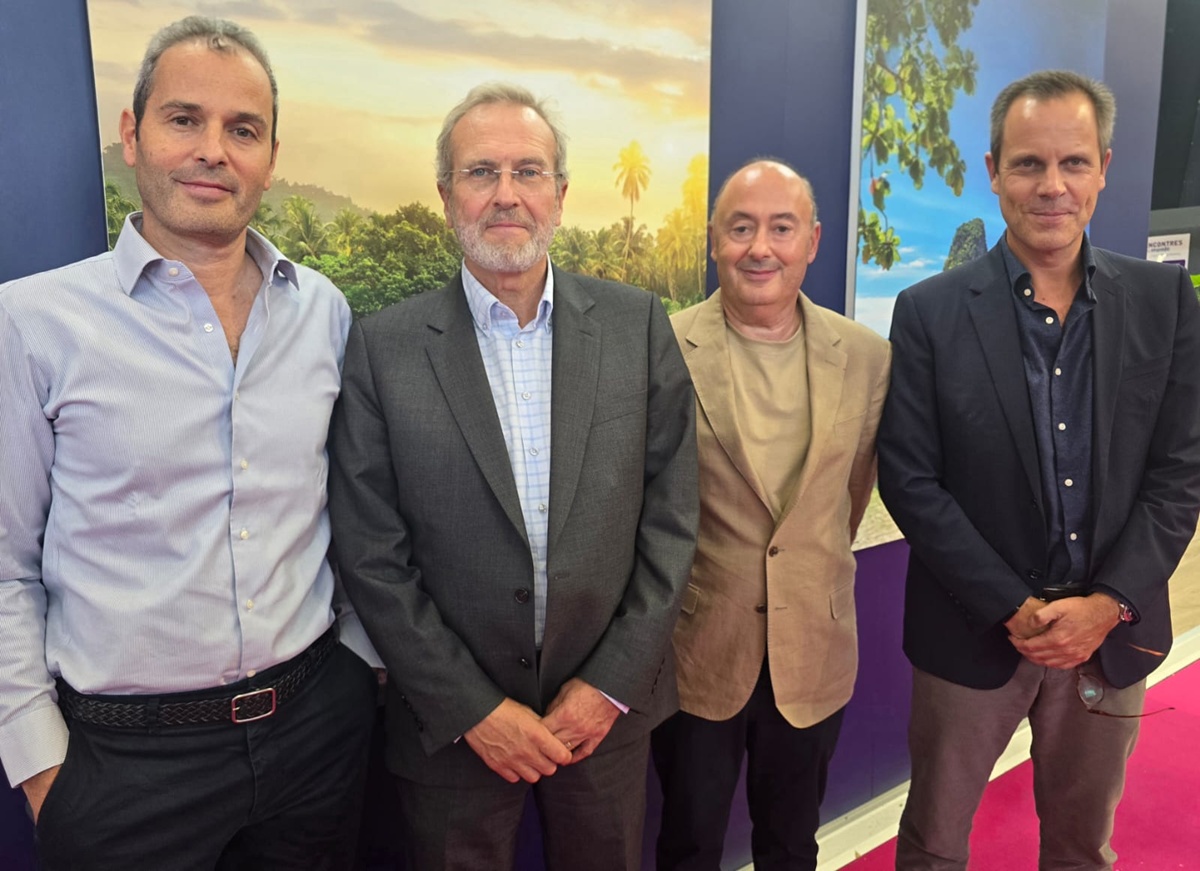
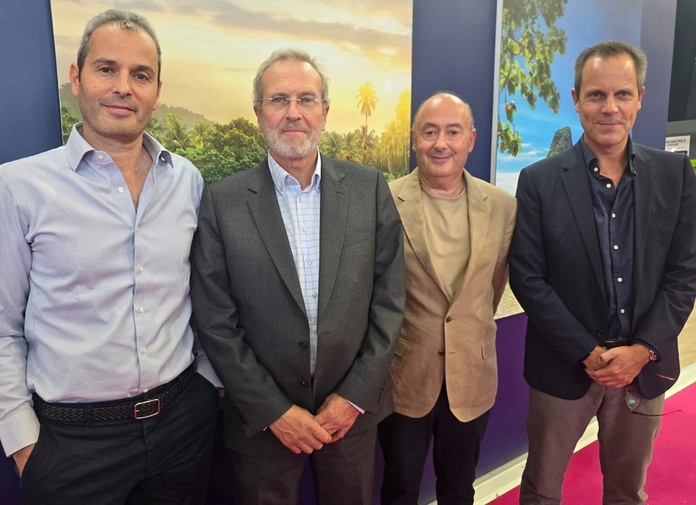
Arnaud Abitbol, Frédéric Braun (Akilanga, Altanueva, Amahuaca), Laurent Abitbol et Christophe Jacquet du groupe Marietton Développement - Photo CE

Aer Lingus


On the sidelines of a press conference held as part of the IFTM, Laurent Abitbol, president of Marietton Développement, announced on Tuesday, September 15, 2026, that his group would continue its external growth strategy by pursuing asset acquisitions. « Certarès wants us to buy assets, hard assets » he stated.

Two days later, the deal was completed. The group is accelerating its development in experiential hospitality with three operations recently confirmed.

Through its receptive network Akilanga – Altanueva – Amahuaca, it acquired a 22-unit camp located in the Sacred Valley of Peru, 40 minutes from Machu Picchu.

In Tanzania, two camps of 14 units each (including two family tents) also join its portfolio, one in the Serengeti and the other in Tarangire.

The teams working in the camps themselves helped build them. The furniture, notably the beds, was designed on site and then produced from prototypes.

A third camp is also in the works to the south of Tarangire.

« This third camp will enable the creation of a new tourist itinerary. The southern exit provides access to lakes where hippos and crocodiles live, opening the way to an aquatic safari experience.

This itinerary will also enable encounters with tribes, which are still not frequently visited by tourists,
» details Frédéric Braun, CEO of Akilanga, Altanueva and Amahuaca.


A project for an eco-lodge in Peru

This announcement comes just one week after announcing the acquisition of a private lodge, adjacent to a 5,000-hectare reserve in South Africa, whose opening is scheduled for November 2027.

In Peru, the acquisition of the new camp is only a first step. The group also plans to open an eco-lodge : « A new itinerary will be created to relieve the Sacred Valley of crowds.

The objective is to stop concentrating flows on back-and-forth trips to Machu Picchu, but to implement a looping circuit, in one direction or the other. This will help distribute flows more evenly, notably between flights and trains.

Therefore we plan to open an eco-lodge on this new itinerary, on the mountainside
», adds Frédéric Braun.

The project foresees the construction of about twenty units built with bamboo and palm leaves. The identified terrain already hosts coffee and cacao crops, allowing the development of experiences around these productions, as well as lunches with Altiplano communities, accessible during a half-day excursion.


Developing a more experiential tourism

« We want to offer different kinds of accommodations. Guests want to experience something, with these acquisitions we are meeting that demand, » specifies Laurent Abitbol. « Of course, these camps will be marketed by the group’s tour operators, but also by other travel agents; it will not be exclusive », he continues.

The Marietton Développement group, which acquired Japan Experience at the beginning of January 2026, had also acquired about twenty homes in Tokyo and Kyoto as part of that deal.


Travel Agents Cup 2026: Who Will Succeed France’s Best Travel Agent?


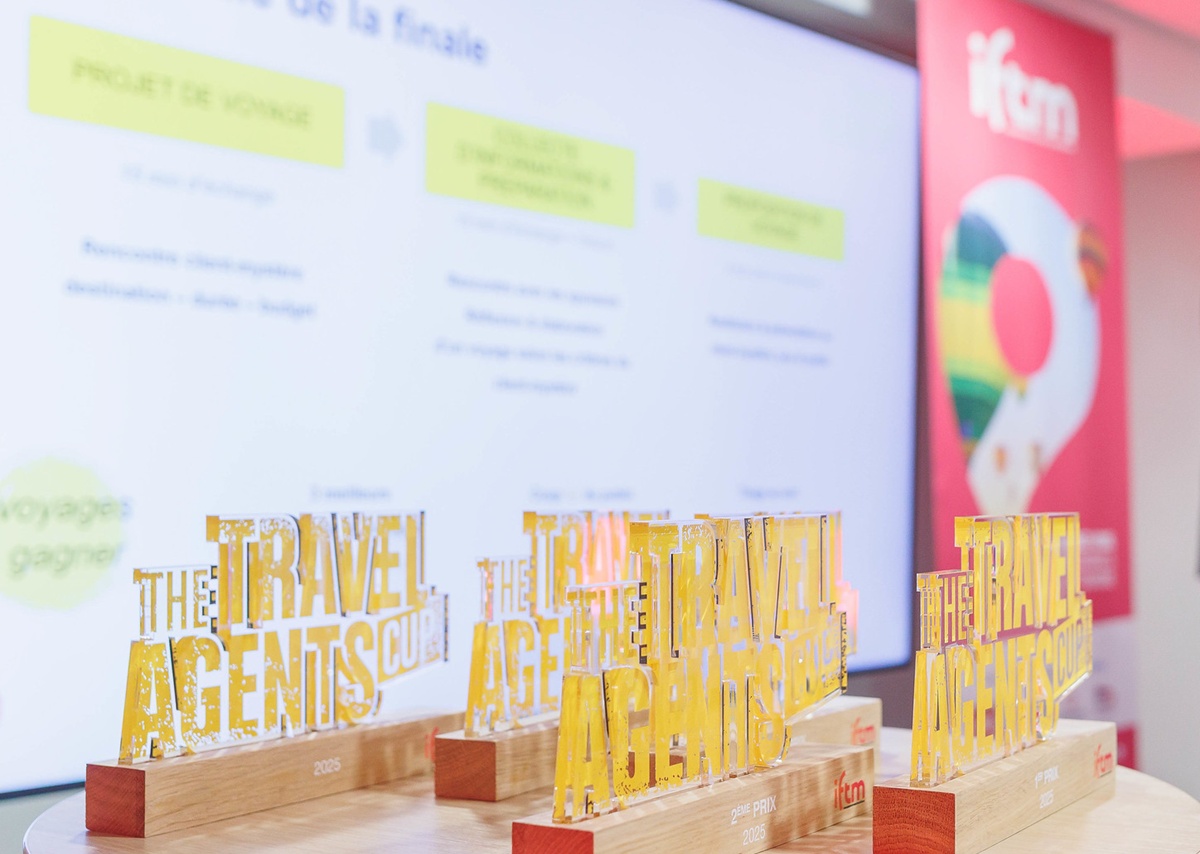
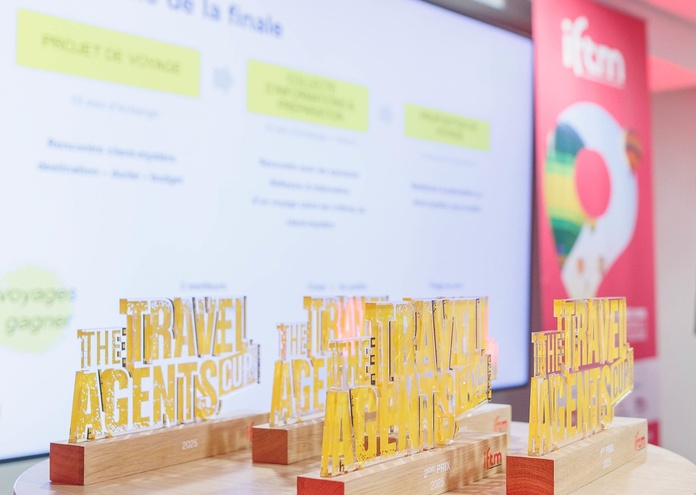
La Travel Agents Cup revient pour une 13e édition - Photo : IFTM

Aer Lingus


For its 13th edition, the Travel Agents Cup has selected ten finalists from the sixteen candidates who tried their luck this year.

Coming from all corners of France and representing different networks and agencies, they will meet on September 17, 2026 at 3:30 PM at the IFTM for a final that will test their ability to listen, advise and persuade, after an initial selection based on a candidacy video.


Ten profiles, one common goal

The finalists are :

– Gabin Blin-Le Tanter, Carrefour Voyages Angers Grand Maine

– Anaïs Devlieger, Havas Voyages Montreuil-sur-Mer

– Emma Gourdoux, Juen Voyages Le Pontet

– Malaury Laviolette, Navitour Compiègne

– Florian Minaux, TUI Store Nancy

– Amandine Mottola, Bleu Voyages Mougins

– Adeline Rimbert, Auchan Voyages Beauvais

– Rémi Roussel, Voyages Couture Marseille

– Vincent Signoret, Verdié Voyages Pau

– Marine Veyssiere, Rêve Voyages Brive-la-Gaillarde


A fictitious client… and no information to start

The final’s premise rests precisely on an element of unpredictability.

On the morning of September 17, each candidate will have twenty minutes to interact with a fictitious client. The peculiarity of the exercise: they will not know in advance either the client’s profile, itinerary, or budget.

It will be up to them to ask the right questions, understand their interlocutor’s expectations, and above all to quickly build a coherent proposal.

Once the needs are identified, the finalists will then have to look for the most suitable solutions directly at the stands of the competition’s partners.

An exercise that thus highlights both knowledge of products and the human and commercial qualities of the trade: listening, responsiveness, curiosity, the ability to rebound and to tailor a proposal.


Four minutes to persuade

In the afternoon, the cards will be redistributed. The ten finalists will take the stage on the Arena by Ouzbékistan, transformed for the occasion into a real travel agency.

They will then have only four minutes to defend their proposal in front of the jury and their fictitious client.

The jury will be composed of professionals from different sectors of the industry: Marie Allantaz for IFTM, Guillaume Beurdeley for Les Entreprises du Voyage, Jean-Charles Franchomme for the CDMV, Fabrice Guagliata for Air France, Stéphane Jaladis for the AJT, Guillaume Linton for ASIA and the Village of Tour Operators, Emmanuelle Llop for Equinoxe Avocats, Karin Mallet Gautier for Konect Agency / ADONET, Émilie Matti for AVIS, Aurélie Soulat for Costa Croisières and Myriam Tord for the Helpdesk des Pros du Tourisme.

At the end of the competition, four prizes will be awarded.

Three podium spots will be chosen by the jury, while a fourth prize will allow the public to participate directly in the competition: the Public Favorite Award, decided by a live vote on social networks.

Now remains to know which of these ten professionals will stand out and win the title of “Best Travel Agent in France.”

The answer on Thursday, September 17, 2026 at 3:30 PM, on the Arena by Ouzbékistan stage, at the IFTM.


Amelia Brille Published by Amelia Brille TourMaG.com Editor
See all articles by Amelia Brille

  • picto Linkedin
  • picto email
Add TourMaG to your Google News feed Google Actualités icône  

Dream Trip: Why the Agency Is Moving from Colmar’s Outskirts to Neuf-Brisach


Voyage de Rêve poursuit son développement avec une nouvelle implantation à Neuf-Brisach - Depositphotos.com @PhotoA

CroisiEurope


Voyage de Rêve changes address.

The Alsatian agency, which had been located up to now in Saint-Crépin, on the outskirts of Colmar, has just opened a new space at 1 rue de l’Église in Neuf-Brisach.

A move that serves several objectives for its founder: to get closer to its customers, strengthen its visibility and win over a new customer base.

“We had a substantial clientele that came from this area. We moved closer to that clientele, and, in addition, we filled a gap“, explains Régis Heitzler, founder of Voyage de Rêve.

Located about ten kilometers from the former agency, Neuf-Brisach mainly offers the advantage of being near the Rhine and the German border.

A strategic location for the agency, which benefits from an accreditation allowing it to market the products of several German tour operators.


Voyage de Rêve: a strategic foothold at the German border

The proximity to Germany is indeed a feature of the new point of sale. According to the manager, the products offered by German tour operators can be 10 to 15% cheaper than their French counterparts on certain packages.

“Instinctively, I would immediately propose a German tour operator to you“, explains him, citing several players in the German market.

Voyage de Rêve thus markets departures from different regional airports, notably Basel-Mulhouse, Zurich and Frankfurt, depending on products and client needs.

But the choice of Neuf-Brisach also answers a visibility challenge. The old agency was located in an industrial zone, “between two construction companies“, with limited visibility to the general public.

The new installation, at the heart of a more commercial environment, should allow Voyage de Rêve to strengthen its local presence.


Steady activity despite a tougher environment

On the commercial front, the manager also expresses satisfaction with the agency’s situation. After a quieter period linked notably to geopolitical uncertainties, sales are picking up.

For July and August 2026, Voyage de Rêve records sales at only 3% below the level seen during the same period in 2025. A performance deemed satisfactory by the manager, especially since 2025 had been a record year for the agency.

“2025 was a record year. So minus 3% compared to that year, that remains very good. I am very satisfied“, emphasizes Régis Heitzler.

This trend also confirms the relevance of the positioning developed by the agency around advice and personalization.


Voyage de Rêve aims to develop corporate travel

The next step in development will, however, take place on a new field: corporate travel.

Voyage de Rêve is currently working with a specialized consultant to build an offering for companies in the region. The concept will combine travel, seminars, training and team-building activities.

“We will propose to the companies in the region trips in team-building mode“, explains the manager. The objective will notably be to offer stays including half-day training sessions, group challenges and support aimed at improving the teams’ commercial performance.

The project is currently under construction, with a launch planned for 2027.


Amelia Brille Published by Amelia Brille TourMaG.com writer
See all Amelia Brille’s articles

  • picto Linkedin
  • picto email
Add TourMaG to your Google News feed Google News icon  

French People Want to Travel but Struggle to Take Action


L’envie de voyager des Français reste forte malgré les freins - Depositphotos.com, Ivantsov

CroisiEurope


A study conducted by Qualimétrie for Marco Vasco among 1,033 French people highlights a paradox: the desire to travel remains strong, yet the organization of trips is becoming an increasing obstacle.

According to the study, 90% of respondents have a dream travel project that they never realized.

Budget remains the main obstacle, cited by 68% of those surveyed.

But lack of time has also become a significant brake: it affects 40% of respondents, and up to 59% of those aged 25-34. The complexity of organizing trips is, meanwhile, mentioned by 33% of those polled, with a share reaching 43% in the Île-de-France region.


The desire to travel persists despite geopolitical tensions

In this context, professional support seems to retain its appeal. 76% of French respondents consider a travel agency useful or indispensable today, compared with only 9% who deem it useless.

Expectations primarily focus on security and reliability (27%), ahead of travel planning (25%), price (25%) and destination expertise (23%). Price remains a significant lever: 59% of respondents say they would be ready to depart today if rates were more attractive.

International uncertainties do not seem to fundamentally undermine departure plans.

66% of those questioned say their desire to travel has not changed despite geopolitical tensions, while 20% declare it has weakened. Nearly one French person in two (48%) also plans to revive a trip that was previously postponed or canceled.

In the short term, 75% of respondents anticipate leaving abroad in the next six months.

For 2027, the projection is even higher: 85% plan to travel outside France, even though only 5% have already booked their stay.


Europe for short getaways, Asia for longer journeys

In terms of destinations, Europe tops travel intentions (53%), ahead of Asia (30%) and North America (16%).

The duration of the stay nonetheless influences choices. For one week to ten days, Europe is preferred by 66% of respondents. For ten to twenty days trips, Asia becomes the destination of choice for a French person in two.

The motivations are mainly linked to discovery: 29% mainly want to discover new cultures and 24% seek unique experiences, while 20% primarily look for rejuvenation.

Beyond travel intentions, 83% of the French surveyed say they are more inclined to open their horizons and discover the world. This aspiration is especially pronounced among women and the 25-44 age group.

According to Marco Vasco, this momentum is already starting to show in bookings. The bespoke travel specialist says it has observed, for a month now, a recovery in bookings for 2027.


Amelia Brille Published by Amelia Brille TourMaG.com Editor

See all articles by Amelia Brille

  • picto Linkedin
  • picto email
Add TourMaG to your Google News feed Google Actualités icône  

From Hospital Director to Travel Agent: Jean-Baptiste Tolsa Aims to Modernize the Travel Profession’s Image


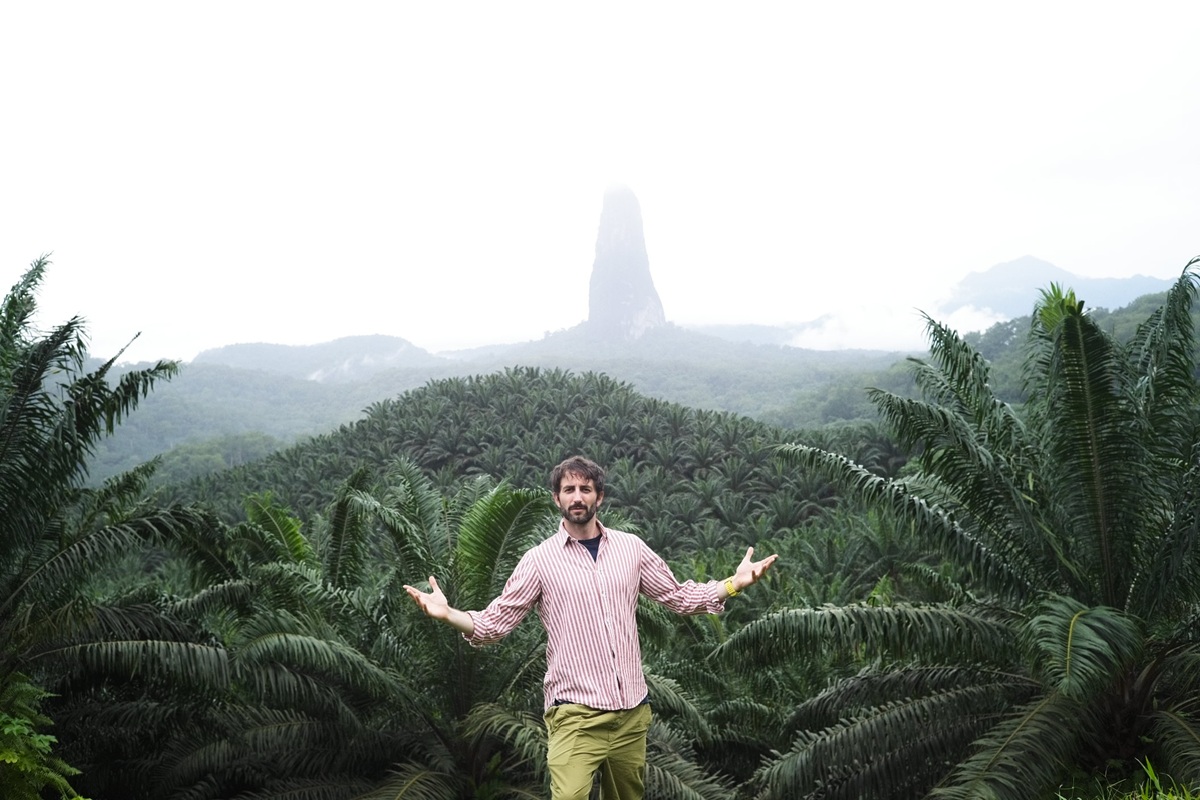
« Je vends ce que j’ai vu et ce que je connais. Je suis allé à São Tomé cette année, une merveilleuse destination contre-tourisme, pour voyager autrement », précise Jean-Baptiste Tolsa, fondateur de l'agence Odyssélux. @odysselux

CroisiEurope


Changer de secteur professionnel n’est jamais un long fleuve tranquille. Pour Jean-Baptiste Tolsa, le passage de la direction d’un hôpital à la création d’une agence de voyages aura même pris des allures de parcours du combattant.

À l’origine de cette reconversion, un voyage de noces en Nouvelle-Zélande. Son meilleur ami lui montre un devis qu’il juge particulièrement élevé et difficile à comprendre. Le futur agent de voyages se penche alors sur les chiffres et estime à près de 50 % la marge brute appliquée au voyage.

« À cette période, à l’hôpital, c’était très compliqué. C’était aussi un moment où je ne me retrouvais plus vraiment dans le monde de la santé. Je lui ai donc proposé de créer son voyage », raconte Jean-Baptiste Tolsa.


Une création d’agence semée d’obstacles

En 2023, il se lance donc dans la création d’Odyssélux, sans reprendre de formation spécifique au tourisme. Son parcours lui fournit toutefois quelques bases solides : école de commerce, master 2 en droit des sociétés et master 2 en gestion des établissements de santé.

« La formation au métier d’agent de voyages, je l’ai faite sur le tas, tout seul », explique le fondateur de l’agence. Le plus compliqué ne sera finalement pas d’apprendre le métier, mais de créer l’entreprise, notamment d’obtenir la garantie financière.

« Pour un nouvel arrivant, c’était très simple : je n’ai eu que des refus pour obtenir la fameuse garantie financière », raconte Jean-Baptiste Tolsa.

Après plusieurs démarches, c’est finalement l’APST qui accepte de l’accompagner. Mais au prix, selon lui, d’un parcours particulièrement lourd.

« La procédure a été très longue et bureaucratique. Je pensais quitter la santé parce que c’était trop bureaucratique et un monde un peu vieillissant. Et, en fait, je suis arrivé dans un monde encore plus vieillissant que la santé », déplore le fondateur d’Odyssélux.

La demande de l’APST est, selon lui, particulièrement conséquente : 80 000 euros d’apport, auxquels s’ajoutent environ 20 000 euros d’engagement personnel.

« 80 000 euros, c’est une somme sensationnelle pour un métier qui n’a pas des marges fantastiques », estime le chef d’entreprise.

La création de son agence en France lui prendra ainsi six mois avant même d’avoir commencé son activité.


L’Estonie comme solution de secours

Face à ces difficultés, Jean-Baptiste Tolsa cherche d’autres solutions. Il découvre qu’il est possible de créer une entreprise dans un autre pays européen et monte une agence de voyages en Estonie, comme solution de secours.

« En Estonie, la création de l’entreprise se fait en 24 heures. En une semaine, vous avez vos statuts d’agence et la garantie financière », affirme Jean-Baptiste Tolsa.

Il indique avoir payé environ 500 euros pour la création de la société et 3 000 euros pour la garantie financière. Il ne s’est finalement pas servi de cette structure, la création française ayant abouti.

L’expérience nourrit néanmoins sa réflexion sur le cadre réglementaire français. « Six mois pour créer une entreprise, aujourd’hui, ce n’est pas possible. Six mois, plus la formation, plus l’argent : il va falloir enlever des étapes », considère le fondateur de l’agence.

Pour lui, il ne s’agit pas de remettre en cause la responsabilité des professionnels, mais de simplifier l’accès à l’entrepreneuriat. « Je pense qu’il faut faire un peu plus confiance aux gens qui se lancent, compte tenu des responsabilités qu’ils prennent sur leurs épaules », plaide le fondateur d’Odyssélux.


« Il faut moderniser notre image »

Au-delà des contraintes administratives, le fondateur d’Odyssélux porte un regard critique sur l’image de la profession.

Dans une publication LinkedIn volontairement provocatrice, il écrivait ainsi : « Il est devenu socialement gênant de passer par une agence de voyage. »


Une formule qui fait suite à une interview du chef d’entreprise publiée dans la presse locale. « 80 % des gens ont commenté, grosso modo, que les agences ne servaient à rien. “Moi, je peux trouver tout seul”, “L’IA est meilleure”, etc. », rapporte Jean-Baptiste Tolsa.

Pour le chef d’entreprise, le problème dépasse la question du prix. Il touche à la perception de la valeur ajoutée de l’agent de voyages. « Il y a une vraie question d’image à revoir autour de l’expertise. On fait confiance à l’expert », souligne le fondateur d’Odyssélux.

Sa réponse ? « Montrer davantage le travail réalisé par les professionnels plutôt que de chercher à culpabiliser ceux qui se passent de leurs services. »

Pour lui, les acteurs du tourisme doivent toutefois changer de méthode. Plutôt que des campagnes défensives ou « anti-quelque chose », il appelle à une communication collective et davantage tournée vers la modernité.

« Il faut arrêter de voir l’agence de voyages comme trois personnes derrière un bureau qui ne savent pas trop où elles sont allées et qui vendent des tarifs 50 % au-dessus de ce qu’on peut trouver ailleurs », lance le fondateur de l’agence.

Il plaide notamment pour davantage de présence sur les réseaux sociaux, une meilleure lisibilité des marges et une véritable réflexion autour des influenceurs.

« Il n’y a pas de véritable gestion des influenceurs dans le voyage », considère le fondateur d’Odyssélux. Autre piste : reconnecter les agences aux destinations qu’elles vendent, en développant par exemple des campagnes de promotion territoriale portées par les professionnels français.


Repenser le modèle de l’agence

Cette réflexion sur l’image rejoint celle qu’il porte sur le modèle économique des agences de voyages.

« J’ai l’impression que les agents de voyages voient le monde du voyage côté business, côté agents, et rarement du côté des voyageurs », constate le chef d’entreprise.

À l’inverse, il mise sur une approche très personnelle chez Odyssélux. « Je crée un itinéraire comme je l’aurais créé pour moi si je partais seul », explique le fondateur de l’agence.

L’agence se positionne sur le sur-mesure et privilégie les destinations que son fondateur connaît personnellement. Avec 70 pays visités, Jean-Baptiste Tolsa dispose déjà d’un terrain de jeu conséquent.

« Je vends ce que j’ai vu et ce que je connais. J’aime découvrir des destinations alternatives. Je suis allé à São Tomé cette année, une merveilleuse destination contre-tourisme, pour voyager autrement », précise Jean-Baptiste Tolsa.


Trouver le bon canal de vente


« Je ne pense pas qu’on soit morts, loin de là »

Après un début d’année 2026 conforme à ses objectifs, l’activité a marqué le pas au printemps avec la guerre au Moyen-Orient, avant de repartir progressivement.

Un comportement qui lui semble révélateur d’une évolution de la demande : les clients voyagent peut-être moins, mais lorsqu’ils partent, ils sont davantage disposés à déléguer.


« On se rend compte que les gens partent de moins en moins, mais quand ils partent, ils partent vraiment. Et ils veulent déléguer à ce moment-là », estime le chef d’entreprise. D’où, une nouvelle fois, l’importance de l’image de la profession. « Je ne pense pas qu’on soit morts, loin de là », affirme Jean-Baptiste Tolsa.


2027 sous le signe de l’IA

Pour 2027, Jean-Baptiste Tolsa entend poursuivre son développement progressivement. Son principal chantier reste encore à trouver : un canal de vente suffisamment clair et efficace.

Il travaille aussi sur l’intelligence artificielle, avec l’idée d’automatiser une partie du processus commercial.

Pas question pour autant de brûler les étapes. Après avoir travaillé sur son blog et testé la publicité ciblée, le fondateur d’Odyssélux compte poursuivre ses expérimentations.

« Comme je suis une petite entreprise, il faut prendre le temps, petit à petit, de construire chaque année un petit truc supplémentaire », conclut Jean-Baptiste Tolsa.

Manor Celebrates Its 40th Anniversary and Aims to Grow


Manor fête ses 40 ans et veut poursuivre sa croissance - TB

CroisiEurope


On the occasion of its 40th anniversary, Manor intends to continue its development while preserving the fundamentals of its model, the network explains in a press release.


The French group of independent travel agencies now claims nearly 90 agencies and 2.5 billion euros in business volume.


President of Manor since 2022, Grégory Mavoian specifies in the release: “I did not take over a network to rebuild. I took over a solid group, the fruit of nearly forty years of work carried out by my predecessor Jean Korcia, the administrators, the teams and the members.”


Two additional agencies are set to join the group in September 2026

The group highlights the actions undertaken since 2022 to modernize its identity, with a new logo, a refreshed visual universe, a new website and a strengthened digital presence.


Manor has also created Manor Loisirs, with François Piot, to notably bolster its appeal to mixed agencies, positioned both in business travel and leisure.


“The quality of our partnership, the trust built with François and the results achieved have made Manor much more attractive to mixed agencies,” stresses Grégory Mavoian.


Another development: the choice of Wondermiles as the online booking tool for the network.


According to Manor, these various initiatives have supported a significant progression of its indicators. The number of agencies rose from about 60 to nearly 90, while the business volume advanced from 1.5 to 2.5 billion euros.


Two additional agencies are set to join the group in September 2026.


“The aim is to be stronger together”

Despite this growth, Manor states its intention to preserve its model based on the independence of its members.


The group highlights the pooling of purchases, tools, data, expertise and innovation, while allowing agencies to retain their own identity and their relationship with their clients.


Manor also asserts a specificity in incentives, with 100% of incentives returned to the members.


For the coming years, the stated objective is therefore to strengthen the resources available to the agencies without turning Manor into a standardized network.


“The aim is to be stronger together, never becoming a standardized network, and to make Manor the independent grouping that delivers the most value to its members,” the group states.


“A major announcement, which will mark the start of a new ambition for Manor”

To celebrate its 40th anniversary, Manor will bring its members together in Venice. Eleven speakers from different backgrounds are set to participate in the event, with profiles announced in fields such as politics, hacking or professional chess.


Grégory Mavoian also announces that he will use the gathering to unveil “a major announcement, which will mark the beginning of a new ambition for Manor.”


Beyond this anniversary, the group plans to prepare its members for the transformations affecting the travel industry. Artificial intelligence, data, distribution, market concentration and environmental challenges are among the main topics identified.

EDV Méditerranée: Turning Constraints into Solutions


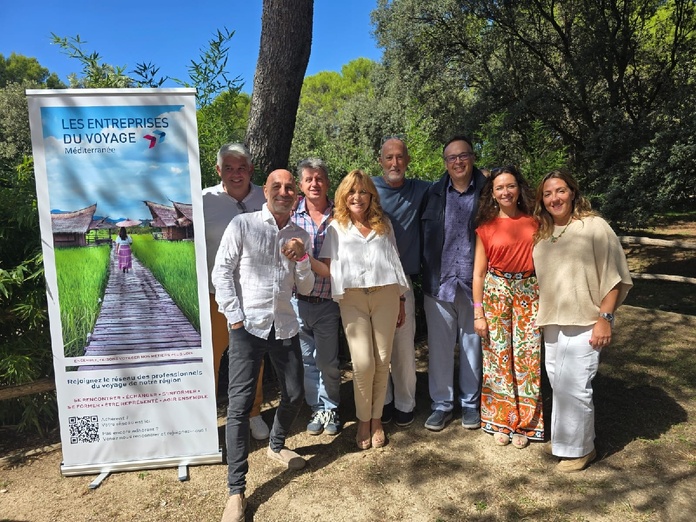
Le conseil d'administration des EDV Méditerranée au Parc animalier de la Barben dans les Bouches-du-Rhône - photo CE

CroisiEurope


The EDV Méditerranée members resumed on September 11 at the Barben Animal Park near Aix-en-Provence.

About sixty professionals: travel operators, inbound operators, partners and suppliers, members or non-members of the association, attended, exactly 25 years to the day after the attacks on the World Trade Center in New York and the Pentagon.

A date chosen by Christine Crispin, president of EDV Méditerranée, which is no accident: “It was a horrific event that everyone can still recall where they were when the twin towers fell. It shook the world and, for us, tourism professionals, it marked a real turning point. There is clearly a before and after September 11.”

Airport procedures, in particular, have profoundly changed since, with checks and formalities multiplying.

But September 11 was only the first in a long series of crises the sector has faced: tsunamis, avian flu, the Icelandic eruption, SARS, Covid, and, more recently, the conflicts in Ukraine and the Middle East. For Christine Crispin, the verdict is nevertheless clear: tourism has always managed to rebound.

“Each time, tourism recovers, tourism becomes stronger, tourism transforms,” she emphasizes. New destinations, new seasons, new behaviors: in her view, adaptability is one of the sector’s main strengths.

This capacity to weather crises fits within a broader economic and political context. Invited to look at the French situation, Franz-Olivier Giesbert, journalist and columnist, notably criticized the trajectory of public finances. “It’s been eight years that we’ve been 100% in deficit, in a budget deficit, and it will continue…,” he remarks. For the columnist, the challenge also lies in the ability to make decisions and to implement changes: “One needs a bit of will, a bit of courage.”


“Our job is to know how to turn constraints into solutions”


Emmanuelle Llop, du cabinet Equinoxe Avocat - Photo CE

Malgré le contexte, la profession doit aussi composer avec des réglementations, des restrictions et des formalités susceptibles d’évoluer très rapidement, sans oublier ces aléas climatiques, économiques et géopolitiques.

« Our job is to know how to turn constraints into solutions. We are here to find solutions, from morning to night and all night», résume Christine Crispin.

Un rôle qui prend d’autant plus d’importance que les responsabilités juridiques des professionnels sont importantes. Emmanuelle Llop, du cabinet Equinoxe a notamment rappelé, lors de cette journée que : « The travel agent’s activity rests primarily on contractual responsibility. When they sell a trip composed of several services: transport, accommodation, car rental or other services, they are responsible for their proper execution, in accordance with what was planned and sold in the contract. »

Les crises géopolitiques, les catastrophes naturelles ou encore les événements climatiques peuvent également remettre en cause la réalisation d’un voyage. Emmanuelle Llop a rappelé, lors de son intervention, que les circonstances exceptionnelles et inévitables à destination peuvent avoir des conséquences importantes sur l’exécution du contrat de voyage, notamment lorsqu’un déplacement devient impossible.

Elle a également insisté sur la difficulté d’apprécier ces situations suffisamment en amont. Une situation susceptible d’évoluer dans les semaines précédant un départ ne permet pas nécessairement de conclure, plusieurs mois auparavant, que le voyage ne pourra pas avoir lieu.

Pour les agences, l’enjeu consiste donc à anticiper sans surinterpréter, tout en disposant d’informations suffisamment fiables pour conseiller leurs clients.


Agencies, inbound operators, carriers and airports: a single chain


Les participants à cette journée de rentrée organisée par les EDV Méditerranée - Photo CE

Au-delà des responsabilités propres à chaque professionnel, les acteurs du voyage « doivent travailler ensemble » martèle Christine Crispin.

« Nous faisons absolument tous partie de la même chaîne : agence de voyage, transporteur, aéroport, tour-opérateur, voyagiste », insiste-t-elle.

La présidente des Entreprises Méditerranée rappelle que les flux touristiques fonctionnent dans les deux sens : une liaison internationale permet à des voyageurs étrangers de venir découvrir une région, mais elle offre également aux habitants du territoire la possibilité de partir vers cette destination.

Lors de cette même journée, Céline Lacroix, responsable du développement commercial aéronautique de l’Aéroport Marseille Provence, a de son côté expliqué que l’ouverture d’une nouvelle liaison repose sur l’analyse de la demande, du potentiel de marché et de la stratégie des compagnies : « La première chose à regarder, c’est la demande, et elle doit être envisagée dans les deux sens. Une liaison aérienne ne sert pas uniquement à faire partir des voyageurs français : elle doit aussi permettre d’attirer des visiteurs internationaux.

Ces voyageurs séjournent dans nos hôtels, visitent Marseille et parcourent la Provence. C’est donc un véritable moteur pour l’économie locale. Il faut ensuite analyser le potentiel du marché, en croisant l’offre et la demande, pour mesurer les possibilités de développement et justifier les investissements. »

Après l’annonce par United d’une ligne directe Marseille – New York à l’été 2027 l’aéroport Marseille – Provence renforce encore sa connectivité avec le lancement par Egyptair d’une nouvelle liaison entre Marseille et Le Caire (4 vols par semaine à l’été 2027). Céline Lacroix a également ajouté que la plateforme étudiait également le développement de liaisons vers les pays nordiques et à plus long terme vers des marchés comme l’Inde.


Marseille – Provence: new international connections on the horizon


Christine Crispin et Franz-Olivier Giesbert - Photo EDV Med

Des annonces que les élus locaux, également présents, ont accueilles avec enthousiasme. Julien Harounyan, adjoint au maire de Marseille en charge de l’attractivité économique et du tourisme durable aimerait aussi voir sa ville reliée aux pays du Golfe : « Cela demande un vrai travail de lobbying. »

Karima Zerkani-Raynal, adjointe au maire d’Aix-en-Provence en charge de l’attractivité et du tourisme va dans le même sens : « Cela nous permettrait aussi de faciliter les flux depuis l’Australie, qui est une clientèle à haute contribution. »

Au-delà de la connectivité, l’enjeu pour le territoire reste de désaisonnaliser l’activité touristique. Les acteurs du territoire souhaitent faire de Marseille, d’Aix et de la Provence une destination capable d’attirer des visiteurs toute l’année.

« Notre but, c’est de donner envie que vous veniez, leur permettre de venir et d’accéder à notre territoire, leur donner envie de rester, rester plus longtemps, et surtout leur donner envie de revenir à d’autres saisons », résume Julien Harounyan.


Pour y arriver, Christine Crispin défend la notion de collectif qui permet d’anticiper les évolutions et permet de passer les turbulences comme nous l’avons connu lors du Covid.

« Notre force, justement, c’est le collectif », conclut-elle, tendant une main aux opérateurs et professionnels qui souhaiteraient adhérer au syndicat professionnel.

TourCom Enhances Payment Solutions for Travel Agencies


TourCom poursuit le développement de son offre de paiement avec deux nouveaux dispositifs - Depositphotos.com @vlad_star

CroisiEurope


TourCom évoult sa plateforme de paiement avec de nouvelles solutions destinées à répondre aux besoins des agences de voyages et de leurs clients. Le réseau déploie notamment une fonctionnalité de paiement différé, développée avec la technologie d’Adyen et en partenariat avec Visa.

Cette solution vise à apporter davantage de flexibilité dans la gestion des flux financiers des agences, notamment dans un contexte marqué par la multiplicité des prestataires, des délais de règlement variables et des enjeux de sécurisation des transactions.

Le dispositif permet de dissocier le moment où la transaction est effectuée du règlement effectif. Pour les agences, l’objectif est notamment de gagner en souplesse dans la gestion de leur trésorerie, tout en conservant le même niveau de rémunération.

La rémunération reste ainsi identique, que la carte soit utilisée en prépaiement ou en débit différé. TourCom présente également cette fonctionnalité comme un moyen de simplifier et de sécuriser les opérations de paiement des agences.


A Hosted Card for Corporate Clients

The network is concurrently expanding its business travel offering with the launch of a hosted card, operated using the Adyen technology.

Offered by agencies to their Corporate clients, this solution should allow centralizing payment for services related to business travel and facilitate the monitoring of corporate travel expenses.

TourCom also partners with Airwallex to extend its system to managing expenses incurred by employees during their business trips.

The objective is to cover the different stages of the expense cycle: before departure, reservations and payments can be made via the TourCom Payment Platform; during the trip, employees’ expenses are managed with Airwallex solutions; after the trip, companies have tools for reporting, accounting reconciliation, and expense control.

With these new solutions, TourCom aims to offer agencies, regardless of size, tools to meet the various payment needs of their clients.

The network thus intends to strengthen support for independent agencies by giving them access to shared solutions that cover both payment management and, for business travel, the tracking of professional expenses.


Amelia Brille Published by Amelia Brille TourMaG.com Writer
See all articles by Amelia Brille

  • picto Linkedin
  • picto email
Ajoutez TourMaG à votre flux Google Actualités Google Actualités icône