When you’re a woman, traveling alone can sometimes be pricey. More expensive than for a man. In London, BBC journalist Lorin Bozkurt recounts that she was offered two types of capsules in a Piccadilly Circus hotel, those small design spaces where a bed simply fits in. The ones reserved for an exclusively female clientele were priced at 45 pounds (about 52 euros) per night, while the others, mixed, were priced at 35 pounds (about 41 euros).
Yet no extra comfort accompanied the first offer, aside from a corridor accessible only by card and, above all, the promise of feeling safer for an extra 10 pounds. This difference illustrates what some specialists call the “avoidance tax”, akin to its marketing cousin, the “pink tax”. Female travelers do not necessarily pay more for the same trip than their male counterparts, but they often make different decisions, motivated by safety, which can end up increasing the bill.
The luxury of having peace of mind
Better-located hotels, a taxi rather than public transport, travel insurance or an extra charge for an earlier early check-in during the day… Expenses pile up. And they aren’t necessarily the same for men. Carried by the British broadcaster, a study from the Safer Tourism Foundation shows that “64 % of women avoid walking home alone at night abroad”, compared with 43 % for the opposite sex.
Nearly half of women also forgo wandering the backstreets of an unfamiliar city at night. “They don’t travel less because they are less adventurous than men. They operate in an environment where the risks are different”, explains Stephanie Boyle, director of the Safer Tourism Foundation’s She Travels Safe campaign.
Safer, therefore more expensive
For women accustomed to traveling solo, these precautions eventually become reflexes. Jen Kaarlo, who has 53 countries under her belt, tells the BBC she plans all her movements in advance. After experiencing several troubling incidents, including being drugged without her knowledge in a bar in Paris, the young woman avoids “any risky situation”. In Panama, she even preferred to pay nearly $200 extra (about €173) to ensure she wouldn’t have to share her sleeping arrangements with strangers during a trip to the San Blas Islands.
Jodie Hughes, who has been traveling alone since the age of 19, makes the same point. She says she used to favor youth hostels to save money, but now chooses other options because a women-only dorm can be more expensive than a mixed dorm. “I’d rather travel less often, but when I travel, I want to be safer”, she says. At Generator Hostels, whose Bruges property has been singled out, it is explained that women’s rooms are “in high demand” and that their prices reflect that demand.
“Safety should not be a competitive element. It shouldn’t be something that lets companies think they can charge more because they are safer”, replies Stephanie Boyle. Beyond the price of rooms or transport, these precautions also carry a less visible cost. They force travelers to plan more, sometimes give up going out, or choose a more expensive option rather than a spontaneous one. The question is therefore no longer only whether one can afford an extra expense, but whether one can afford not to spend it. “The mental load, I think, is the heaviest of all”, confesses Jen Kaarlo.
Quieter, sometimes forgotten by traditional circuits, Banteay Srei, Neak Pean, Banteay Samrè, or Phnom Kulen reveal another grandeur of Khmer civilization: refined architecture, centuries-old places of devotion, and landscapes steeped in mystery.
Banteay Srei, a jewel of pink sandstone
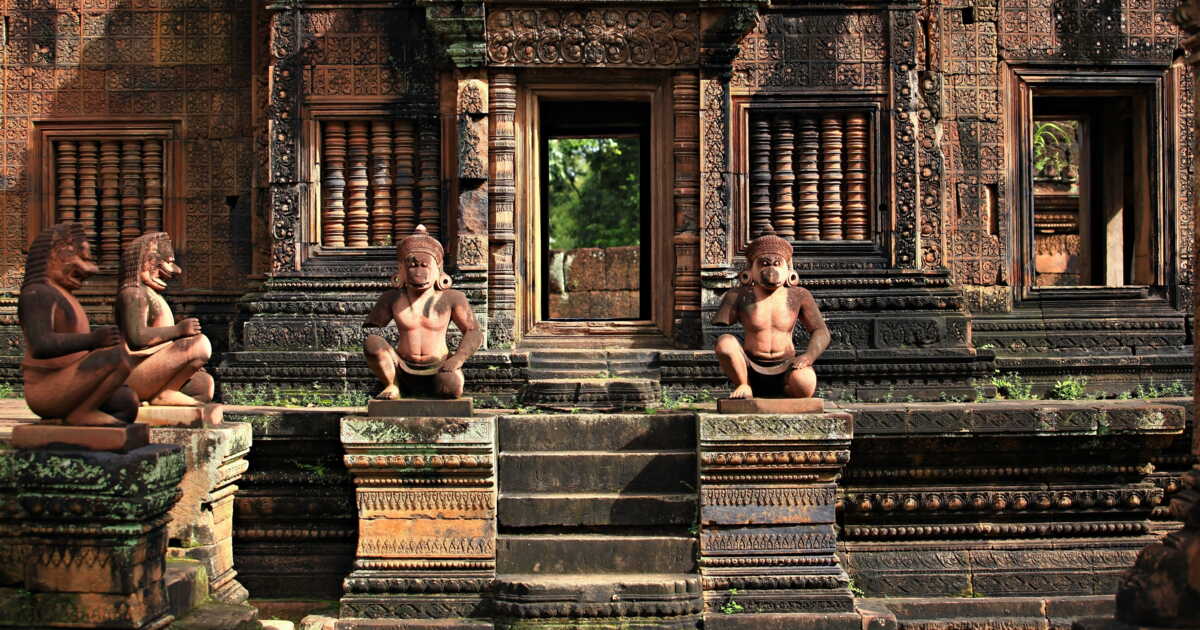
Guardians with monkey heads (photo) or lions, graceful dancers, garlands of delicate flowers… Located far from the beaten tracks, 30 km from the main site, Banteay Srei is one of the rare temples that was not commissioned by a king, but by a high dignitary, in the year 967. It is nonetheless legendary in more ways than one. First, because it was built in pink sandstone, and secondly… because André Malraux once borrowed its bas-reliefs, in 1923! Go at opening (7:30 a.m.), when Cambodians come to burn incense.
Neak Pean, the island of waters that heal
On the Grand Circuit, do not miss a stop on the northern bank of Jayatataka Baray, an artificial reservoir. From there, a wooden footbridge spans the water to lead to Neak Pean, a XIIth-century Buddhist complex. This island-sanctuary remains sacred in the eyes of Cambodians. Its basins, designed to recreate on Earth the mythical lake Anavatapta, located in the Himalayas, house waters with healing properties, into which pilgrims would splash themselves to ward off diseases.
Banteay Samrè, the little brother of Angkor Wat
It’s one of the best-kept secrets of the archaeological park. No one goes there, and yet this XIIth-century temple is exceptional. Moreover, Banteay Samrè will remind you of something: here is the miniature copy of the most famous Khmer temple, Angkor Wat! The same elegance, the same play of symmetry, the same lotus-bud shaped sanctuary tower. Combine its visit with that of Banteay Srei, and take the opportunity to stop in a village along the roadside to taste artisanal palm sugar.
The Roluos Complex, the cradle of Khmer art
Any visit to the archaeological park should always begin with this fabulous site of the first Angkorian art from the 9th century, located near the village of Roluos, 15 km east of Siem Reap. This complex indeed tells the crucial transition from brick-and-wood constructions to those in stone (gray sandstone). Three temples to explore: Lolei, Preah Ko, and Bakong. The latter, in remarkable condition, is flanked by a modern monastery. The monks’ psalms are a delight…
Phnom Kulen, the Mount Olympus of Cambodia
At 487 m in height and 50 km from Siem Reap, Phnom Kulen is more than a mountain dominating the virgin forest. The country’s independence as an empire was proclaimed here in 802. On this spiritual mountain, one meets monks in saffron robes, families in festive attire, and hermits seeking to meditate. A “river of a thousand lingams” (phallic symbols) and waterfalls flow here, where one enjoys bathing. Do not miss the grand reclining Buddha, in the small temple at the summit.
The most beautiful spots to admire sunrises and sunsets
After living the euphoria of a dawn at Angkor Wat, experience another early wake-up call, this time away from the crowds, at the mount temple of Phnom Bakheng, a site that opens at 5 a.m. We climb in the dark on this natural hill where a gray stone pyramid sits. An exceptional view of the sun rising from the foliage, with Angkor Wat in the distance, seen in silhouette. In the evening, around 5 p.m., head to Pre Rup, dedicated to Shiva, with its imposing towers that rise above the forest.
They helped us produce this report
Specialists in Cambodia, Les Maisons du Voyage invite you to trace the footsteps of our reporters, with a thirteen-day and ten-night circuit, from 2835 euros (flights, accommodations, visits and a French-speaking guide included). From Kampot to Siem Reap, far from the mapped routes, this journey tells the glorious hours of the gods-king of Angkor. The program includes little-known archaeological sites, isolated villages with ancestral traditions, and encounters with the Khmer people, who are reconnecting with their invaluable heritage. Committed to responsible tourism, the local partner ensures that each journey benefits Cambodian communities and the preservation of the heritage. maisonsduvoyage.com
➤ Article published in GEO magazine no. 570, “Cambodia,” August 2026.
➤ Do you love GEO? Then to miss nothing, discover our subscription options to receive GEO monthly at home with ease.
A land of plenty where the hippies made their home
Morro Bay, Sacred Nature
From desert to Sequoias, the spirit of Indigenous peoples lingers
Spring has taken up residence in Sacramento, about a 90‑minute drive north of San Francisco. Along brick buildings covered with colorful murals, people stroll with iced coffee in hand, in the cool river air and the scent of honeysuckle. At 1215 19th Street, in the artsy Midtown district, Patrick Mulvaney goes from table to table on the terrace of the restaurant bearing his name. Local caviar, house‑made smoked salmon, crackling pork with miso and apple butter, all washed down with sparkling wines… For more than twenty years, this jovial sixty‑something in his eternal Hawaiian shirt has been the local face of the Slow Food movement, born in 1986 in Italy to counter the threat of fast foods. “Our valley is America’s pantry,” he boasts. “Tomatoes, grapes, rice, apricots… I can cook in the evening with fruits and vegetables picked that morning!” Several times a week, the chef stocks up about 20 km away, at the Soil Born urban farm on the banks of the American River. This 22‑hectare operation on public land has been cultivated since 2001 by an association that runs weekly markets and feeds the surrounding schools and restaurants with organic, seasonal vegetables.
From “flower power” to “farmers markets”
Delicious, healthy, locally sourced products, in California, the land of technology, glitter, and intensive agriculture (like the tomato, a staple of ketchup)? The wealthiest state in the United States still manages to surprise! In Sacramento, the stronghold of horticulture in the United States, locavorian logic has boldly been enshrined as a principle by the authorities. In 2012, the city proclaimed itself the capital of the Farm-to-Fork movement (“from the farm to the plate”), which advocates sourcing from local growers. Hospital kitchens, for example, source 90% of their supplies within a 240‑km radius, ensuring steady income for producers and aiding their transition to organic. A move that contrasts with the consumerism and competitive spirit that prevail elsewhere in the Golden State. And it invites even tourists to break away from clichés. San Francisco, Los Angeles, Yosemite, Death Valley: these destinations remain essential. But to truly taste the California dolce vita, you must venture to off‑radar spots, where the joy is in good eating, slow time, and preserved nature. A California still steeped in the animism of Indigenous peoples, the pastoral frugality of ranchers, and the ideals of the hippies, many of whom returned to the land here.
The Local Flavor
It is precisely during the flower-power years, in 1974, that Randii MacNear arrived in Davis, a city of 65,000 adjacent to Sacramento, whose university is renowned for its agriculture department. Born near New York, this woman passionate about local produce helped establish here in 1977 the first Certified Farmers’ Market in California, a label guaranteeing the local origin of products. On this bright March Saturday, she welcomes customers who head toward about forty stalls lined under wrought‑iron canopies. To Balkan tunes played by an accordionist, families, retirees, and green‑haired youths fill their baskets with early vegetables, goat cheeses, and loaves of bread sold directly and at fair prices by regional growers, some of whom have run their stalls since the market’s founding. An almost rural vibe that Randii says was inspired… by the Old Continent!
“In Europe, the market square sits at the center of villages, and you know those who feed you by their first names,” she says. “That’s what we wanted to reproduce here.”
All around, the heart of Davis radiates the same relaxed atmosphere. Along broad sidewalks flecked with oaks, maples, and ginkgo trees, a whole spectrum of cafés, bakeries, second‑hand bookstores, art galleries… and even a bike‑friendly network, a rarity in the United States, letting you pedal to explore historic Davis (Davis Bike Loop, 19 km) or local craft breweries (Davis Brewery Bike Loop, 16 km).
Old Objects, New Life
Along the country roads that traverse the Yolo County saline plains, where large farms coexist with small organic growers, you can also reach Park Winters, a Victorian estate dating from 1865, tucked among pistachio and sunflower fields. In 2010, Rafael Galiano and John Martin traded the hustle of San Francisco for this four‑hectare property, converting it into a chic country bed & breakfast that appeals to urban, well‑off locals. The place, though upscale, cultivates a sense of conviviality and rustic simplicity.
“What we love is giving old objects a new life”, notes Rafael, as cats purr on cushions and blackbirds flit through the garden trees. Almost everything here is upcycled: the piano that belonged to the previous owner, the chairs, the sideboard, the counter… Every weekend, the hosts serve guests a seasonal brunch, set out under a vast covered veranda. Opposite, fields of flowers invite visitors to pick their own bouquet of carnations, ranunculus, or sweet peas, for 38 dollars the two hours. “Believe me, it’s more effective than thirty minutes with a shrink!” laughs the host.
3 Hidden Delicacies of California Terroir
Ollalieberry : a cousin of the blackberry and raspberry, this very sweet and tangy fruit grows only in Oregon and California. In the coastal town of Cambria, Linn’s Easy as Pie café sells it as syrups, jams, jellies, and luscious tarts.
Dates : in Indio, near Palm Springs, the Shields Date Garden palm grove produces common varieties (Medjool, Barhi) and others unique in the world, like the Brunettes, less sweet, with a honey and caramel aroma.
Pacific Gold Oysters : these small Pacific oysters with firm flesh and very salty taste are raised, for example, by the Morro Bay Oyster Company. You can buy them on site and enjoy them perched facing the bay, watching the otters.
Lodi, the Wine Differently
Further south, in the little town of Lodi, Jeremy and Choral Trettevik have set out to develop a more sustainable and accessible alternative to California’s dazzling yet often exclusive wines. Unlike the posh valleys of nearby Napa and Sonoma, the Lodi wine region is known for producing everyday table wine. It has also recently welcomed vintners eager for virtuous practices, such as limiting irrigation in a California prone to severe droughts. The couple Trettevik are part of this movement. On their operation along Route 88, in an anthracite‑colored barn that starkly contrasts with the blue sky, they strive to offer free tastings and wine‑education lessons in a country where such practices are viewed as elitist. They also host local events. This Saturday, a producer market set up at the foot of the century‑old Zinfandel plant. Glasses in hand, to the backdrop of a small concert, locals trade plants, take cuttings of vines… and bottles. “Modern life is obsessed with money and success,” laments Jeremy Trettevik. “If people have money to spend on wine, let them put it in a bottle to share with friends!”
From Lodi you can reach Interstate 5 within a few miles, which heads toward Los Angeles across the endless Central Valley agricultural basin. In the distance to the left, the first foothills of the Sierra Nevada, with peaks still snow‑covered at the end of March. To the right, the heights of the Diablo Mountains, which hide access to the Paso Robles region and San Luis Obispo County, a bastion of La Dolce Vita often overlooked by tourists, where Pacific breezes kiss green pastures ideal for grazing.
“Life is too beautiful to hurry”
In the hamlet of Parkfield, the Varian family has been keeping the V6 Ranch running since the 1960s, an 8,000‑hectare estate populated by beef cattle where the simple cowboy lifestyle—centered on family, land, and livestock—persists. Today, John and Barbara Varian also welcome outsiders. They host guests in cottages converted from old village buildings and offer a Western‑tinged program: barbecue (sitting on saddles repurposed as stools!), horseback rides, and lasso lessons… Each year their bluegrass music festival echoes through the mountains with fiddles, harmonicas, and banjos. “Here, the land is like a member of the family: that is the message we want to share,” explains Barbara, recalling the slogan of San Luis Obispo County: “Life is too beautiful to hurry.”
A land of plenty where hippies made their home
This motto seems to permeate this utopia half‑way between San Francisco and Los Angeles, even along the coast where briny air blends with scents of eucalyptus and maritime pines. No surprise that hippies once settled in the coastal villages of Cambria and Cayucos to pursue pottery and body painting away from the city. Although they long ago ceded space to retirees and surfers, a relaxed, timeless spirit still lingers. Shops close at 5 p.m., wine bar terraces populate the lawns, and people greet one another without knowing each other. Nature, too, remains fully present. In Morro Bay’s small fishing harbor, at the mouth of the Chorro and Los Osos creeks, nets are hauled in and fish are sold right on the pier. On the beach, children paddle a few strokes from the sea otters, which linger in these shallow waters to avoid shark jaws.
Morro Bay, Sacred Nature
At the foot of the natural history museum, Virginia Flaherty, an ornithologist and kayak guide, waits by her craft, life jacket in hand. With a few paddle strokes, the sixty‑somethings leads in a monastery‑like silence to the heart of the Morro Estuary Natural Preserve, a protected estuary where grebes, herons, turnstones, and other shorebirds thrive… But also remarkable bat rays, whose broad imprints can be seen in the sand where they bury themselves. In this expanse of water separated from the ocean by a dune, enormous red and yellow starfish sprawl across the rocks, pelicans bow their chests, and otter families drift off to sleep, their paws tangled.
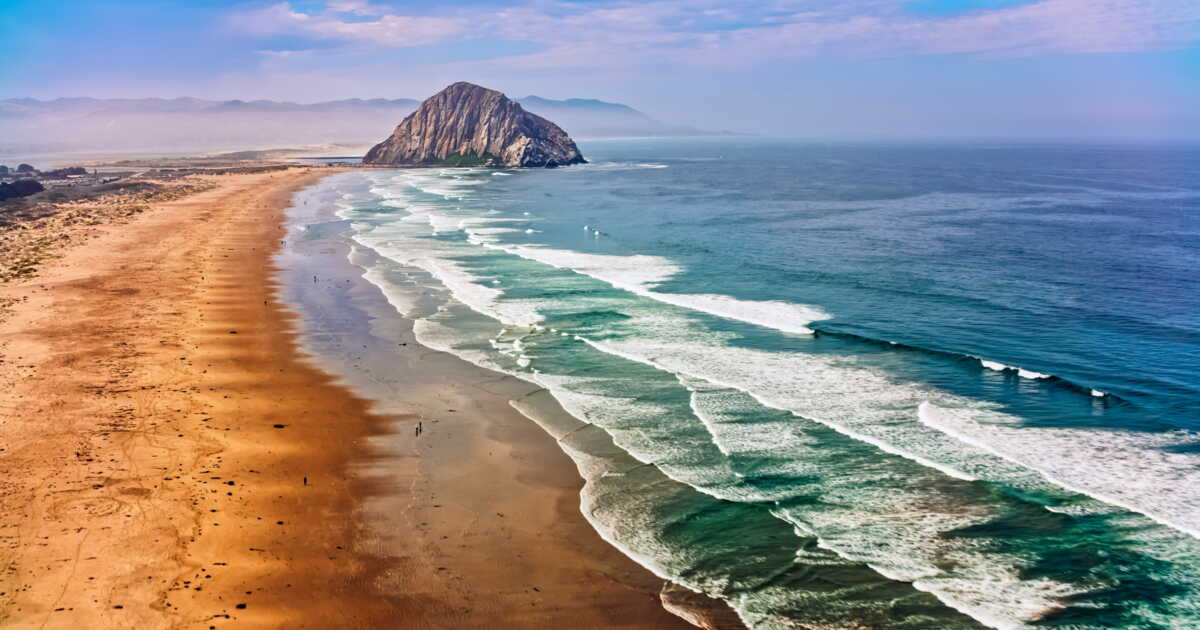
Morro Bay is also famous for Morro Rock, a volcanic‑origin rock that towers above the bay at 176 meters. This landmark is sacred to the Salinan and Chumash tribes, the Indigenous peoples of the region. It’s a different story that surfaces throughout rural California: that of Indigenous peoples, present here for at least 19,000 years. Away from the metropolises and their sprawling suburbs, the names of rivers, mountains, and villages often derive from their heritage.
From Desert to Sequoias, the Spirit of Indigenous Peoples Floats
Even in Palm Springs, an artificial oasis in the desert east of the City of Angels, a resource long exploited by Indigenous peoples lies beneath the surface: a mineral spring at 40°C, slightly sulfurous, used to ease stress, muscle pains, and skin issues. The Agua Caliente Band of Cahuilla Indians, descended from the Cahuilla people, has managed to keep the operation going. To immerse yourself, you must visit the Spa at Séc‑he (“the sound of bubbling water”), a sacred cultural site adorned with mosaics of deities, such as Grandmother Spider, creator of the world. “Indigenous peoples have shaped the landscapes of this region for millennia,” explains Kate Anderson, spokesperson for the tribe. From desert to redwood forests, traces of our ancestral culture are everywhere. Even in these rough stone bathtubs where one now lounges, water bubbling up to the neck provides a pleasant way to reconnect with California’s deep soul!
Tracing a route in “Cool California”
Prefer regional airports
To avoid gridlock in big cities and dive straight into rural California. Car rentals are also cheaper there. Example itinerary: Paris–Sacramento via San Francisco on the way out, Palm Springs–Paris via Los Angeles on the return.
Stroll through farmers markets
Many small towns have their own. You can grab a bite, meet the local farmers… For market days: ecologycenter.org/food-farming/farmers-market-finder
Learn about Indigenous heritage
The Visit Native California site is full of information for discovering Indigenous California: places to visit, experiences… visitcalifornia.com/native
Try train + bike
Driving remains king, but there are alternatives! Amtrak operates five lines across the Golden State, with the option to bring your bike aboard. amtrak.com
Follow on Instagram
The Visit California tourism board’s account offers ideas for off‑the‑beaten‑path escapes.
➤ Article appeared in GEO HS magazine no. 134, “Grandes évasions à petite vitesse,” August–September 2026.
➤ If you love GEO, discover our subscription options to receive GEO at home every month.
1. Diving and snorkeling in the Bazaruto Archipelago
2. Safari at Gorongosa National Park
3. Cultural exploration of Ilha de Moçambique
4. Surfing and lounging on Tofo beaches
5. Discovering the capital, Maputo
6. Hiking in the Niassa Reserve
Traveling to Mozambique with peace of mind: Is it safe to travel to Mozambique? (and how to understand the dangers of tourism in Mozambique)
Understanding the country’s unique appeal: Why do tourists go to Mozambique?
Enjoying Mozambique differently: What to do in Mozambique when it rains?
A two-person getaway in total serenity: What to do in Mozambique as a couple?
Experiencing local life at dusk: What to do in Mozambique in the evening?
Sharing the adventure with the youngest: How to organize a family trip to Mozambique?
Nestled on the south-eastern coast of Africa, Mozambique is a destination that entices travelers with its varied landscapes and endless possibilities for adventure. From pristine beaches to lush national parks, and through sites rich in culture and history, Mozambique offers a unique travel experience.
First and foremost, we remind you to consult the Foreign Affairs Ministry’s Travel Advice to understand security and health risks specific to certain areas and the administrative steps to take before your trip.
1. Diving and snorkeling in the Bazaruto Archipelago
The Bazaruto Archipelago, a cluster of islands off the coast, is renowned for its preserved coral reefs and marine life. Here, the crystal-clear water invites you to scuba dive and snorkel, two flagship activities that allow you to encounter dugongs, sea turtles, and an incredible variety of tropical fish. Accessible by boat from Vilankulos, the archipelago offers an exceptional underwater experience in a breathtaking natural setting.
2. Safari at Gorongosa National Park
The Gorongosa National Park is a national ecological treasure, home to rich biodiversity including lions, elephants, and a multitude of bird species. Photo safaris guide visitors through its wild expanses, offering a unique opportunity to observe wildlife in its natural habitat. The best time to visit the park is from May to September, during the dry season, when animals congregate around water points.
3. Cultural exploration of Ilha de Moçambique
UNESCO World Heritage-listed Ilha de Moçambique is an island steeped in history. Portuguese architecture features prominently, with the majestic Fort São Sebastião and well-preserved colonial buildings that trace the era when the island was a major center of trade. Wandering its cobbled streets returns you to a time when the spice and gold trade flourished, while offering enriching interactions with the local culture.
4. Surfing and lounging on the beaches of Tofo
Situated in the Inhambane region, Tofo Beach is a beloved destination for surfers and sunseekers. Its waves attract surfers of all levels, while its white-sand stretches are perfect for sunbathing. Tofo also serves as a gateway for spotting whale sharks and manta rays, drawing travelers eager for exceptional marine experiences.
5. Discovering the capital, Maputo
Maputo, the vibrant and dynamic capital, is a must-visit for those curious about urbanism and culture. The city presents an eclectic blend of colonial architecture, contemporary street art, and colorful markets, such as the Maputo Municipal Market where artisans and vendors offer local goods and fragrant spices. For nightlife enthusiasts, Maputo does not disappoint, with numerous lively restaurants and bars reflecting a unique cultural fusion.
6. Hiking in the Niassa Reserve
Less frequented than its counterparts, the Niassa Reserve is a jewel for lovers of pristine nature. It is home to large herds of African elephants, as well as lions and buffalos. Because of its remoteness, the reserve offers more intimate safaris. The visit is ideal for adventurers seeking discoveries away from the beaten path.
This overview of Mozambique’s activities highlights the richness of experiences to be had in this country that is emerging on the tourism scene. From the lush biodiversity of Gorongosa National Park to the historic heritage of Ilha de Moçambique, and the magical diving of the Bazaruto Archipelago, every traveler will find something to feed their wanderlust. By exploring the beaches of Tofo or the capital Maputo, travelers are invited to immerse themselves in Mozambique’s vibrant cultural mosaic, where each stay promises a new discovery.
Traveling to Mozambique with peace of mind: Is it safe to travel to Mozambique? (and how to understand the dangers of tourism in Mozambique)
The country remains an attractive tourist destination, but it is important to stay informed, particularly in the northern region and the Cabo Delgado province. Travelers are advised to consult the Mozambican Embassy, check health precautions, review the exemptions on the e-Visa platform, and favor areas with suitable infrastructure.
By following simple guidelines, this country bordered by the Indian Ocean offers a fascinating setting of wild nature, cultural discoveries, and breathtaking landscapes. Regional capitals, renowned guesthouses, and Maputo’s Central Station stand as reliable reference points. Security thus remains a matter of preparation, serving a balanced stay that blends curiosity with vigilance.
Understanding the country’s unique appeal: Why do tourists go to Mozambique?
Asking why one would travel to Mozambique is to explore the diversity of its strengths. The country attracts with its white-sand beaches, coral reefs, dive sites, and the peaceful beauty of the Islands of Mozambique or Ilha do Ibo, true windows into the era of colonial buildings.
With unforgettable adventures, road trips, and sunsets along the Indian Ocean coastline, Mozambique stands as a virtuous tourism destination where wild nature remains preserved. Art lovers will appreciate the Casa de Ferro, an architectural masterpiece nicknamed the Iron House, or the wood sculptures of the Makonde people.
The period from April to November often represents the best season, powered by traditional Mozambican music, including marrabenta, which accompanies daily life and helps shape cultural identity.
Enjoying Mozambique differently: What to do in Mozambique when it rains?
Addressing the question “What to do in Mozambique when it rains?“, the answer leans toward places of strong heritage value. Museums, colonial buildings, the Central Railway Station, or a visit to the Casa de Ferro allow for a deeper understanding of the country’s history while staying indoors.
Travelers can also explore traditional music, meet local artists who work with wood sculpture, or linger in welcoming guesthouses, true places of relaxation. These moments foster a more immersive approach focused on cultural discovery, cuisine, and human exchange. Even away from diving spots, Mozambique offers a small paradise where one gets closer to the essential and where every place reveals a fragment of national identity.
A two-person getaway in total serenity: What to do in Mozambique as a couple?
Exploring Mozambique as a couple invites prioritizing intimate experiences. White-sand beaches, coral reefs, protected islands like Ilha do Ibo and the Islands of Mozambique offer a peaceful setting conducive to rejuvenation. Watching a sunset over the Indian Ocean, staying in attentive guesthouses, or discovering traditional Mozambican music create a subtly romantic atmosphere.
Itineraries might include road trips where you glimpse the Zambezi River, visits to colonial buildings, or cultural strolls around the Iron House. These experiences, enhanced by the ideal travel window from April to November, reveal a true ecological jewel, quiet yet profoundly appealing for travelers seeking serenity.
Exploring local life at dusk: What to do in Mozambique in the evening?
The question of evening activities in Mozambique highlights the country’s cultural dimension. In the major cities, traditional music, marrabenta, and urban music set the pace for evenings, offering understated and authentic experiences.
Seafront dinners along the Indian Ocean, encounters around crafts, or guided nocturnal strolls through vibrant neighborhoods extend the day in a tranquil atmosphere.
Guesthouses and certified hotels may host concerts or cultural exchanges, reminding us that Mozambique remains above all a country of hospitality and cultural discovery, where each place embodies a facet of its plural identity.
Sharing the adventure with the youngest: How to organize a family trip to Mozambique?
The question of organizing a family trip to Mozambique highlights the importance of a travel plan built with responsibility. White-sand beaches, family-friendly guesthouses, visits to colonial buildings and the Central Railway Station offer educational and accessible activities.
Watching wildlife, exploring near coral reefs, or taking cultural walks with the Makonde people helps raise awareness in younger travelers about the world’s diversity. It is important to properly plan the tourist visa, health precautions, and favorable periods such as April to November.
The country thus appears as a gateway to a true ecological jewel, where every experience enriches the understanding of travel and the world.
This article was drafted with the aid of artificial intelligence, then corrected, expanded, and validated by the newsroom’s journalists.
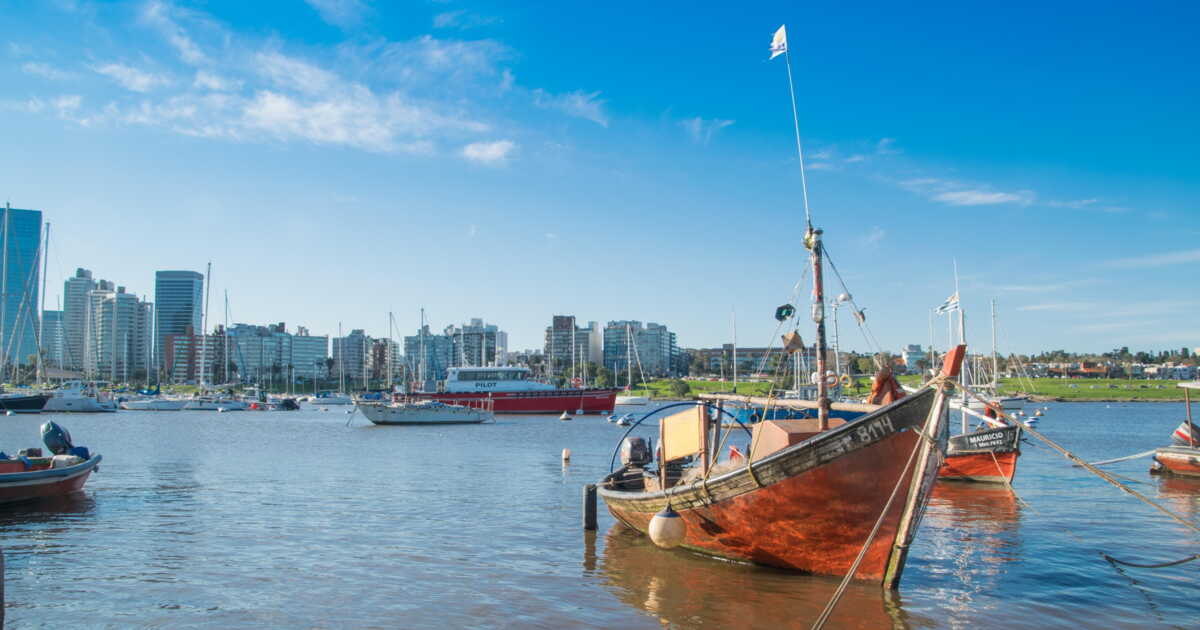
Is Uruguay a tourism destination worth considering when traveling in South America?
What is the best time to visit Uruguay to enjoy all its facets and landscapes?
What are good reasons to visit Uruguay at least once in a lifetime?
Halfway between Brazil and Argentina, Uruguay cultivates a discreet yet distinctive identity. From cities with rich heritage to isolated villages, through wild coastlines and discreet vineyards, the country holds many surprises for those who take the time to discover it.
1. Explore Montevideo
Montevideo, the capital of Uruguay, is a must-see stop for any trip to Uruguay. Strolling through Ciudad Vieja, you’ll immerse yourself in the historic heart of Montevideo, where colonial façades and narrow streets tell the country’s evolution through the centuries. Don’t miss Mercado del Puerto, an iconic spot where Uruguayans and travelers come together to savor the typical grills served in a convivial atmosphere.
Around the Plaza Independencia, the Palacio Salvo, a landmark of the city’s landscape, embodies early 20th-century architecture. The Rambla, which runs along the majestic Rio de la Plata, offers a refreshing stroll, ideal for watching sunsets over this estuary with a sea-like expanse, and for understanding why daily life in Montevideo is often linked to water and seaside relaxation.
2. Visit Colonia del Sacramento
Listed as a UNESCO World Heritage site, Colonia del Sacramento perfectly illustrates the colonial charm that helped shape part of Uruguay’s history. This calm, photogenic town is one of the few places in the country where you can stroll along narrow cobblestone streets and observe colorful houses testifying to bygone eras.
A visit to Colonia is ideal for curious travelers seeking to understand the cultural roots of South America, with many viewpoints to admire the river and open spaces that invite you to contemplate the landscape. Whether it’s a day trip from Montevideo or an overnight stay in this historical jewel, Colonia del Sacramento remains a essential stop on any itinerary in Uruguay.
3. Discover Punta del Este
Punta del Este, located on Uruguay’s Atlantic coast, is one of the most prestigious seaside resorts in the country. Renowned for its spectacular beaches, such as Brava Beach with the iconic sculpture “The Hand,” this destination draws travelers from around the world in search of sun, sea, and a sophisticated ambience.
Nearby lies Casapueblo, a unique architectural work that serves as a museum, art gallery, and hotel, offering breathtaking ocean views. Beyond beachside leisure, Punta del Este offers a lively nightlife and a variety of cultural activities, making it a perfect place to combine relaxation, artistic exploration, and gastronomic discoveries typical of Uruguay.
4. Experience a unique stay in Cabo Polonio
For travelers seeking authenticity, Cabo Polonio represents an extraordinary adventure in rural Uruguay. Isolated from the rest of the country and not connected to the electrical grid (only a few homes and shops have solar panels), this fishing village invites you to disconnect in an unspoiled natural setting of dunes, wild beaches, and near-silence.
One of Cabo Polonio’s main attractions is the opportunity to observe sea lions in their natural habitat, a captivating experience for wildlife enthusiasts. The simplicity of local life and the absence of paved roads make this place a must for those who want to understand another facet of life in Uruguay, far from the main tourist zones and in a setting where nature rules supreme.
5. Savor the local gastronomy
Uruguayan cuisine is a fusion of flavors inherited from European and South American traditions, perfectly representative of a country where conviviality is central. On your trip to Uruguay, don’t miss tasting chivito, a generous sandwich that has become iconic, as well as asado, the Uruguayan barbecue craft, often shared among Uruguayans in a warm atmosphere.
Pair these iconic dishes with mate, the traditional drink that punctuates social gatherings and embodies daily life in Uruguay. Local markets and family-run restaurants will give you the opportunity to discover authentic recipes while chatting with locals, for a culinary immersion rich in emotion and fully revealing of the country’s culture.
6. Discover the Rocha coastline
The Rocha coast, on Uruguay’s eastern shore, is a protected region where nature expresses itself boldly, with wild beaches, dunes, and preserved spaces. Places like Punta del Diablo attract travelers with their bohemian vibe and waves ideal for surfing, while La Pedrera offers a blend of seaside lifestyle and tranquility.
This coastal stretch invites you to observe local wildlife in a setting where oceanic and land influences combine to create spectacular, ever-changing panoramas. For those looking to stray from the beaten path on a trip to Uruguay, Rocha represents a natural interlude that reveals the immense diversity of landscapes this country can offer.
7. Visit the vineyards
Uruguay has built a solid wine reputation thanks to varieties like Tannat, which yields powerful, expressive wines. By exploring the country’s vineyards, travelers will have the opportunity to discover the Uruguayan winemaking process, from vine to bottle, while enjoying guided tastings in welcoming bodegas.
These visits not only allow you to appreciate the wine wealth of Uruguay, but also to meet passionate producers who share their know-how with pride. The pastoral ambiance surrounding the estates provides an ideal setting to deepen your understanding of local agriculture and the rural economy of this South American country admired for its living wine traditions.
8. Discover Art Deco architecture
Architecture in Uruguay stands as a living testament to the country’s historical and cultural evolution, with a notable presence of Art Deco style, especially in Montevideo. As you walk the streets, travelers will discover how Art Deco blends harmoniously with colonial and modern buildings, creating a unique visual identity.
This architectural style appears in ornate façades, geometric motifs, and edifices that tell of a period of prosperity and openness to international influences. This architectural exploration offers a rewarding perspective on how Uruguay absorbed and adapted global artistic currents while forging its own cultural imprint within the urban and patrimonial life of the country.
9. Travel safely
Uruguay is often regarded as one of the safest countries in South America, offering travelers a climate of calm and confidence to explore freely. Whether you’re visiting the urban centers of Montevideo or cruising along coastal and inland regions, life in Uruguay is marked by a relaxed atmosphere where travel, cultural exploration, and outdoor activities unfold smoothly.
Despite this positive reputation, it remains essential to follow basic precautions, especially in very touristy areas or during large public events. By staying informed and respectful of local customs, visitors can fully enjoy their trip to Uruguay while appreciating the warmth of the Uruguayans and the country’s richness in complete safety.
10. Relax on the beaches
Uruguay’s beaches are among the country’s most enticing attractions, offering remarkable diversity—from lively shores to secluded stretches. Whether you choose the vibrant waters of Punta del Este or seek the serenity of less-visited coves, Uruguay’s coast invites relaxation, surfing, or simply admiring the seascape.
Long stretches of sand, sometimes framed by dunes and always washed by the Atlantic, provide settings for swimming, peaceful strolls, or simply basking in the sun. For travelers seeking a seaside pause, these beaches embody the spirit of freedom and well-being that defines the Uruguay experience by the water.
To conclude, Uruguay is a destination rich in adventures and discoveries. Whether you favor beaches, culture, gastronomy, or nature, the country offers a multitude of activities capable of satisfying all types of travelers. By exploring the many facets of Uruguay, you’ll also have the opportunity to appreciate a relaxing way of life in a country that has preserved its authenticity.
Is Uruguay a tourism destination worth considering when traveling in South America?
Often eclipsed by its Brazilian and Argentine neighbors, Uruguay is nonetheless a tourism destination in its own right. This South American country, on a human scale, appeals to travelers seeking authenticity, tranquility, and cultural diversity. Life in Uruguay unfolds in small, nuanced steps—from the streets of Ciudad Vieja in Montevideo to the peaceful beaches of Cabo Polonio, or the rural landscapes around Tacuarembó.
Its high safety level, compared to other countries in the region, makes it a particularly reassuring destination for travelers. Far from mass tourism, travel in Uruguay unfolds with a gentler approach focused on discovery, wandering, and respecting local rhythms.
What is the best time to visit Uruguay to enjoy all its facets and landscapes?
Uruguay benefits from a temperate climate that allows pleasant stays year-round, but the ideal period runs from December to March, when the southern summer offers temperatures conducive to beachside relaxation. This season is particularly well-suited for exploring the beaches of Punta del Este, the wild coves of La Pedrera, or the sunsets from the Cerro San Antonio in Piriápolis.
However, winter, from June to August, although cooler, remains favorable for cultural visits, particularly in the capital of Uruguay, where the eclectic style of the Palacio Salvo and the historic streets of Colonia del Sacramento, a World Heritage site, are best appreciated under a soft light. This season also allows exploring emblematic places like the Mercado del Puerto, where you can taste maté, the national beverage shared among Uruguayans.
What are good reasons to go to Uruguay at least once in your life?
More than just a destination, Uruguay offers a unique travel experience that blends heritage, nature, and modernity. Visiting this country allows you to discover a society rooted in tradition yet forward-looking. From Montevideo to Punta del Este, from the wild charm of Cabo Polonio to the colorful houses of Colonia del Sacramento, geographic and architectural contrasts provide a dense field of exploration.
Wildlife enthusiasts can watch sea lions amid the dunes or along the shores of the Maldonado department, while the curious will appreciate the many trails leading to authentic villages. Add to that a vibrant cultural scene, little-known gastronomy, and perpetually flowing water between rivers and the ocean. For travelers seeking serenity and human richness, travel in Uruguay stands out as a sustainable and enriching alternative to the usual South American tour circuits.
This article was written with the help of artificial intelligence, then corrected, expanded, and validated by the editors of this desk.
It’s a journey that leaves a lasting imprint. For no one escapes the enchantment of the world’s greatest archaeological site, with its hundreds of temples spread across 402 square kilometers (four times the area of inner Paris). Angkor denotes above all a megacity—the religious, economic, and political heart of an empire of builders that shone from the 9th to the 14th century through its refinement and its audacity. To erect the single temple of Angkor Wat, five million tons of sandstone were required—a mass comparable to the Great Pyramid of Khufu in Egypt. Between olive-hued lakes, colossal carved faces, bas-reliefs of dancers and mythical animals, every detail responds to cosmic codes where the influences of Hinduism and Buddhism intertwine…
The Secrets of Angkor
And this sanctuary is nothing like a museum. The Cambodians practice prayers and rituals there; everywhere in the corridors monks light incense—a continuity that gives these places their soul. When you go there early in the morning, aboard a tuk-tuk, you feel like Henri Mouhot, the man who introduced the site to Europe in the 19th century. Then you wander along the two circuits of the archaeological park, classified in 1925, to admire the most famous edifices. You should stay here for at least three days, ideally five, to stroll through the less-known temples, sometimes nearly deserted, and to experience unprecedented moments. And to enjoy a pleasant surprise: Siem Reap, a friendly and creative city with a living craft heritage inherited from Angkor’s golden age. Enjoy your discovery!
Our tips for a serene visit
Entrance Pass: how does it work?
Nominal with photo, the pass, valid for one, three or seven days, is often purchased online or via the Angkor Pass app. But the paper pass, adorned with a beautiful image of the site and written in Khmer, makes for a far nicer souvenir! To obtain it, head to the central gate of the archaeological park, 4 km from Siem Reap. Preferably the day before, after 16:45, to enjoy an extra evening: with the pass dated for the next day, you can enter Angkor the same evening without it counting as a day! angkorenterprise.gov.kh
The time needed to explore without stressing
Plan for three days to cover the two main routes (the Small Circuit, 17 km, and the Grand Circuit, 26 km), plus a few outlying sites. Four to five days is better! And abandon the idea of seeing everything. Even Angkor Wat alone deserves three to four hours to wander the galleries with their 800 metres of carved reliefs.
Crowd-busting tips
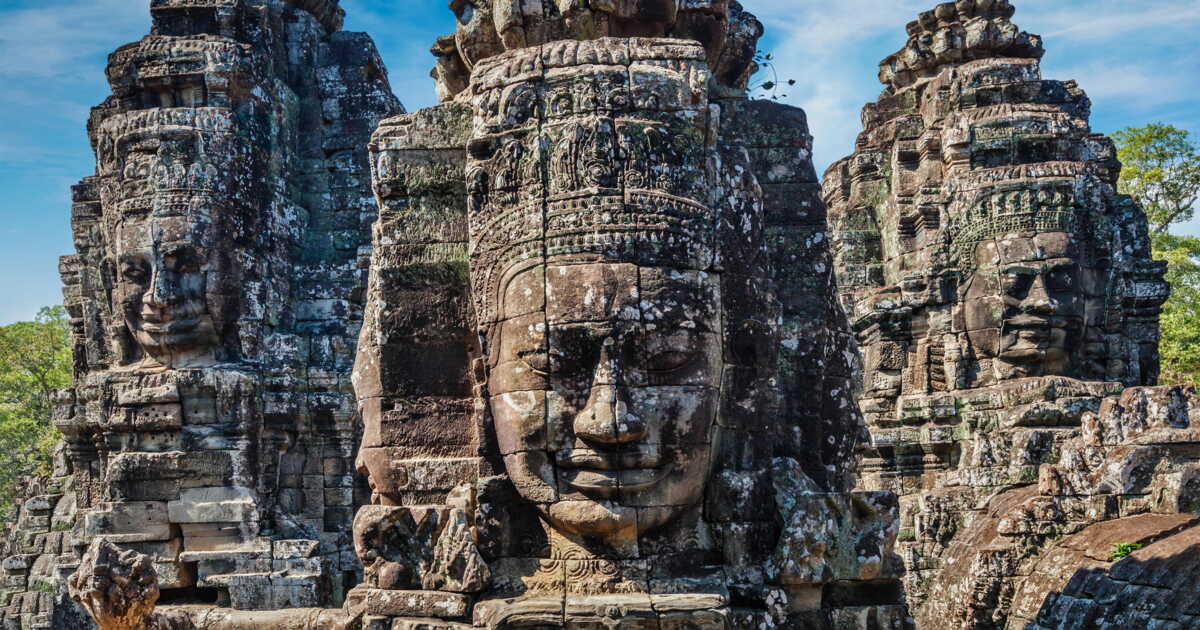
To visit Bayon, in Angkor Thom, go at 7:30 am. For an hour you’ll be one-on-one with nearly 200 faces with enigmatic smiles. For Angkor Wat, have an early lunch, then head there from noon, in a relaxed mood. As for Ta Prohm, temple built in 1186 by Jayavarman VII in memory of his mother, and entangled by the roots of giant fig trees, aim for late afternoon. Best entry: the East Gate, often neglected.
Tuk-tuk, user guide
For 20 to 30 dollars per day, and a maximum of four passengers, it’s the most practical way to explore the site. The tuk-tuk picks you up at the hotel in the morning, waits in front of each temple, and brings you back in the evening. To choose your driver, nothing beats a little interview on the sidewalks of Siem Reap. To verify that he speaks a bit of English, or even French—there are some! A 5-dollar supplement for very early departures.
Interactive maps to see everything without getting lost
The official Angkor Pass app is very well made, with its interactive map showing all the temples, the hours, and explanatory notes (in English). Another essential: The Map, a very clear paper plan, equipped with a useful chronological timeline, distributed free of charge in hotels, cafés, etc. On the map, a QR code links to a digital version, which is full of “good tips.” themapcambodia.com
They helped us produce this report
Specialists in Cambodia, Les Maisons du Voyage invite you to follow in the footsteps of our reporters, with a thirteen-day and ten-night itinerary, from 2835 euros (flights, accommodations, visits and a French-speaking guide included). From Kampot to Siem Reap, far from the beaten paths, this journey recounts the glorious hours of the gods-king of Angkor. On the program: lesser-known archaeological sites, isolated villages with ancestral traditions, and encounters with the Khmer people, who are reconnecting with their priceless heritage. Committed to responsible tourism, the local partner ensures that each trip benefits Cambodian communities and the preservation of the heritage. maisonsduvoyage.com
➤ Article published in GEO magazine No. 570, “Cambodia,” August 2026.
➤ Do you love GEO? Then to miss nothing, discover our subscription plans to receive GEO at your home every month with ease.
Setting off toward an unknown destination has always been a small adventure. Before hitting the road, boarding a ship, or taking to the skies, certain people carry out actions they attribute particular significance to. Passed down through generations, these beliefs blend protection, luck, and a fear of the unknown. And depending on the country, the precautions to ensure a good journey can be, frankly, surprising. In several Eastern European countries, departure is regarded as a moment so important that it deserves its very own ceremonial rite.
Before You Set Off, It’s Best to Observe Certain Rituals
In Russia, for instance, there is a tradition that travelers pause for a moment before leaving the house. Known as “prisyadem na dorozhku”, this custom involves taking a quiet, brief pause right before departure. It is thought to help gather one’s thoughts and verify that nothing has been forgotten, but it also carries a superstitious dimension: interrupting the departure for a moment is believed to help ensure the journey goes smoothly. The tradition is also known in Ukraine, where relatives may sit together before departure in a short moment of silence.
Still in Russia, returning home after you have already started your trip is considered a bad omen. If a forgotten item forces the traveler to turn back, a belief holds that they should look at themselves in a mirror before continuing. This gesture is intended to neutralize the misfortune caused by that unexpected return. Another precaution? Some traditions advise against taking out the trash just before leaving, so as not to symbolically carry misfortune with you.
In the Balkans, another everyday element may accompany the traveler: water. In Serbia, in particular, it is traditional to pour water behind someone who is departing to wish them a happy journey. The symbol is telling: if the water flows freely and without obstacle, the trip should proceed without a hitch. The custom can also be invoked before an exam, a job interview, or any other important event.
Protection can also take a much more tangible form. In Bosnia and Herzegovina and other parts of the Balkans, garlic has long been associated with protection against the evil eye and malicious influences. A clove can be carried in luggage as a good‑luck charm. But this belief is part of a broader tradition. Garlic indeed carries in various European and Asian cultures a reputation as a protective object. However, claims that it specifically shields travelers from drowning are far less well documented.
Certain precautions finally concern what is best not to do. In several folk traditions, sweeping immediately after someone departs is discouraged. The act could symbolically sweep away their luck or prevent their return. This principle is especially found in Balkan folklore. The traveler therefore leaves the house, but their return must continue to be symbolically safeguarded.
Once on the Road, the Good-Luck Charms Change with Cultures
Superstitions do not disappear once the door is behind you. They can instead focus on the mode of transport itself. With the advent of aviation, new habits emerged, some of which became genuine family rituals. Accounts in the folklore archives at the University of Southern California report, for example, the habit of touching the outside of the airplane before boarding, sometimes with the right hand, as a way to request that the flight go smoothly.
Another superstition involves boarding the plane with the right foot forward. The idea is simple: begin the journey “on the right foot.” Again, this practice has been documented in family recollections collected by American folklore archives. The right side is traditionally associated with luck in various cultures, so starting a new adventure this way is believed to attract favorable omens.
Numbers can also influence whether a hotel room or an airplane seat feels reassuring. Thirteen is considered unlucky in many Western countries, to the extent that some buildings and hotels do not have a 13th floor. In China, it is rather the number 4 that is avoided in certain circumstances, its pronunciation being close to the word for death in several Chinese languages. This aversion, known as tetraphobia, explains why some buildings, hotels, or hospitals may skip this number.
The Birth of the Infamous Friday the 13th
In Italy, finally, the unlucky number is traditionally 17. The belief is linked to the Roman numeral XVII, which can be rearranged into VIXI, a Latin expression meaning “I have lived”, interpreted as a veiled way of saying “I am dead”. Some Italian establishments thus avoid this number, just as their Western counterparts may avoid 13. The superstitious traveler may also be wary of Friday.
In some Western traditions, starting a journey on that day was considered unfavorable, a belief especially prevalent in the maritime world. Sailors, indeed, have accumulated over the centuries a host of rules regarding departures, words to say or avoid, and signs that signal the course of a crossing. It is precisely from this old blend of beliefs around Friday and the number 13 that the reputation of Friday the 13th was born.
3. Discover the history at the Museum of Yugoslavia
4. Dive into Belgrade’s nightlife scene
5. Admire the Uvac Canyon
6. Explore Petrovaradin Fortress
Is Serbia a Safe Country? Discover Safety in Serbia for Your Trip
Is Serbia an expensive destination? Understanding the cost of living and travel in Serbia
Still largely spared from mass tourism, Serbia captivates with the diversity of its landscapes and the richness of its cultural heritage. From the bustling capital to the mountains, traditional villages, and the banks of the Danube, the country offers a multitude of experiences. Here are the places and activities not to be missed to explore this lesser-known Balkan destination.
1. Explore Kalemegdan Fortress in Belgrade
Exploring Kalemegdan Fortress, in Belgrade, is a must for any stay in Serbia, at the heart of Serbia’s history and the old Balkan towns. Located at the confluence of the Danube and the Sava, this iconic fortress of the capital of Serbia reveals impressive ramparts, true witnesses to Serbian medieval architecture and the Roman era.
As you walk along the ramparts of this fortress, you get a remarkable view of the city center, near the famous Knez Mihailova pedestrian street. The site also offers archaeological remnants and houses the military museum, evoking historical figures such as Constantine the Great.
Within this remarkable setting, visitors grasp the strategic and cultural importance of the fortress in the region’s history, while enjoying the outdoor activities offered in the adjacent parks, making Kalemegdan one of the beautiful places not to be missed when traveling in Serbia.
2. Hiking in Tara National Park
Hiking in Tara National Park reveals one of western Serbia’s greatest natural treasures. A true jewel of biodiversity, this park, crossed by the Drina River and located near Bosnia and Herzegovina, captivates with its pine forests and mountain landscapes conducive to outdoor activities.
The hiking trails lead to remarkable viewpoints, notably over the Drina canyon. Tara National Park stands out as a premier destination for those who choose Serbia by road, seeking beautiful places and an immersion in the region.
3. Discover the History at the Museum of Yugoslavia
Discovering the history at the Museum of Yugoslavia in Belgrade is to access a fundamental part of Serbia’s history and the Balkan region. This museum, located in the city center of the White City, houses a rich collection of objects, documents and photographs tracing the Yugoslav era, highlighting the influence of figures like Tito. Through its exhibitions, it evokes the history of the former Yugoslavia, while fitting into the broad panorama of cultural events that mark the capital of Serbia.
4. Dive into Belgrade’s Nightlife Scene
Diving into Belgrade’s nightlife offers a fresh perspective on the capital of Serbia, whose reputation extends far beyond its borders. The city stands out for the vitality of its cultural events and its nightlife, illustrated by the famous splavovi on the Danube, but also by the traditional kafanas in the Skadarlija district, just near the Knez Mihailova pedestrian street. This energy helps make Belgrade a hub for travelers seeking to experience the authenticity of the old Balkan cities while enjoying a varied and accessible entertainment scene.
5. Admire the Uvac Canyon
Admiring the Uvac Canyon means exploring one of Serbia’s natural wonders and the Uvac Nature Reserve, located in the western part of Serbia. This site impresses with its spectacular meanders and the diversity of its landscapes, including rock formations, towering natural structures and emerald-green waters.
Ideal for outdoor activities such as boat trips, the Uvac Canyon also invites visitors to observe preserved wildlife, including the bearded vulture, contributing to the appeal of visiting as part of a Serbia by road itinerary or as part of a broader exploration that includes the Danube Gorges and Đerdap National Park.
6. Explore Petrovaradin Fortress
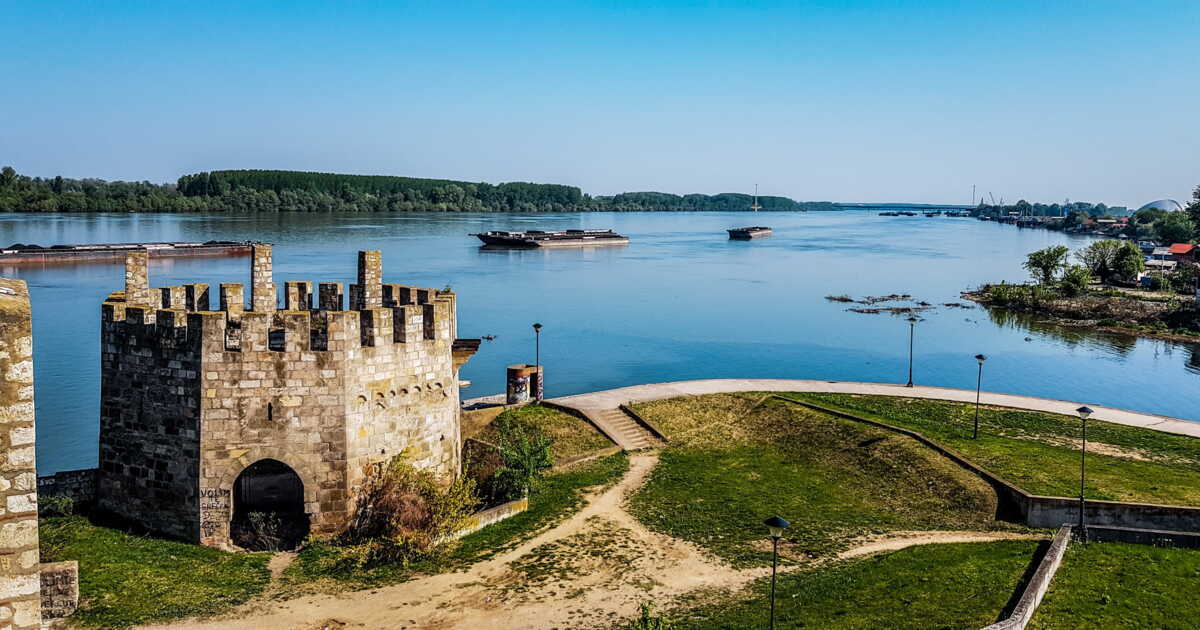
The Petrovaradin Fortress, an iconic symbol of Novi Sad in Serbia, is a site that fascinates with its imposing ramparts and its medieval towers offering unique panoramas over the Danube. Built to protect the region and reinforced over the centuries, it remains today a symbol of Serbia’s history and a prime place for outdoor activities and cultural discoveries. Walking along its ramparts, visitors can admire imposing towers, archaeological remnants and architectural treasures that testify to the region’s military and strategic past.
The fortress is also the stage for major cultural events and allows immersion in the wealth of Serbia’s world heritage. Whether you arrive in Serbia by road or by plane, visiting the Petrovaradin Fortress remains an unmissable experience, blending history, medieval architecture and views over the Novi Sad city center. Photography and history buffs will find plenty of beautiful places to capture, and lovers of military towers will be delighted by the variety of towers and ramparts to explore.
Serbia offers a rich mosaic of landscapes and cultures. Whether you are passionate about history, a nature lover, or simply curious to discover new cultures, this country will not fail to satisfy your appetite for discovery. From the dynamism of Belgrade to the serenity of the national parks, every visitor will find something to enjoy. For those who want to go further, Serbia is full of other treasures, including its Orthodox monasteries or its Roman remains scattered across the country. A trip to Serbia promises a cultural and natural adventure like no other.
Is Serbia a Safe Country? Discover Safety in Serbia for Your Trip
Serbia, with its ancient Balkan towns like Belgrade and Novi Sad, is regarded as a relatively safe destination for travelers. Whether you explore the Petrovaradin fortress walls, stroll along the Knez Mihailova pedestrian street in Belgrade, or discover Subotica’s architectural treasures, risks remain moderate.
Visitors can enjoy outdoor activities in natural sites such as the Đerdap National Park, the Uvac Nature Reserve, or the Danube gorges, while feeling safe. The presence of modern tourist infrastructure and the well-organized capital of Serbia guarantee a tranquil stay.
Even more remote regions, such as the North of Serbia or the West of Serbia, are generally accessible and safe for travel, with opportunities to discover archaeological remains and the Lepenski Vir prehistoric sites without danger. Traveling in Serbia by road or by air remains straightforward and secure, whether you visit fortresses, medieval towers, or beautiful natural places.
Is Serbia an Expensive Destination? Understanding the Cost of Living and Travel in Serbia
Serbia attracts travelers with a very affordable cost of living compared to Western Europe. Whether you choose to explore Niš, Belgrade or Novi Sad, the budget remains reasonable, whether for airfare, accommodation or meals in the city center.
Visits to the impressive Petrovaradin fortress walls, the military towers, or the Lepenski Vir prehistoric site do not weigh heavily on the budget, while outdoor activities such as exploring the Drina canyon or the pine forests are often free or very accessible. The Mokra Gora region, the Skull Tower and the architectural treasures of Subotica offer rich cultural experiences at a lower cost.
By exploring Serbia by road, or by using a plane to reach the capital of Serbia, you can fully enjoy Serbia’s history, archaeological remains, and Serbian monuments, all while managing your expenses. Even cultural events and visits to world heritage sites, such as Gamzigrad-Romuliana, remain accessible, making Serbia a destination that is both affordable and rich in discoveries.
This article was written with the help of artificial intelligence, then revised, completed and validated by the newsroom’s journalists.
Famed for its hospitality and distinctive cuisine, the Yucatán is a region that attracts travelers from all walks of life eager to explore its natural and architectural wonders.
1. Immerse Yourself in the Maya Past at Chichén Itzá
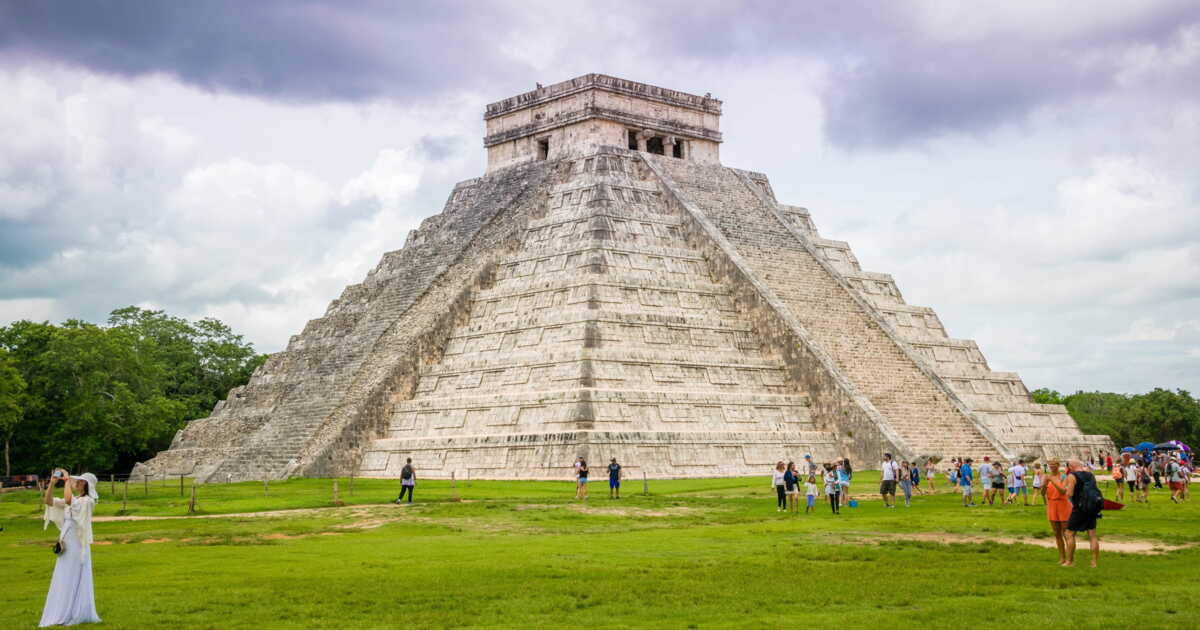
Starting with Chichén Itzá, at the heart of the Yucatán Peninsula, allows you to approach the pre-Columbian heritage through a structured reading of the ancient city, dominated by the Kukulcán Pyramid, whose architecture testifies to Maya ritual and astronomical knowledge.
Walking through the temples and the ball courts, guided by local guides, offers a methodical understanding of religious and civil practices, in an environment that remains one of the region’s most iconic landmarks.
A useful tip is to arrive early to avoid the crowds, especially those arriving from Cancún or Tulum after two to three hours on the road, while taking advantage of the morning light that highlights the architectural volumes. This immersion in the Maya past enhances the cultural reach of the trip across the peninsula.
2. Discover the Mysterious Cenotes
The cenotes of the peninsula are a singular geological resource, offering travelers direct access to natural freshwater formations of remarkable purity. Whether it’s the Gran Cenote (located in the neighboring state of Quintana Roo), Ik Kil, or more intimate sites such as Oxman (both in the state of Yucatán), each presents an immersion in a karstic environment, suitable for swimming or observing the hydrological systems.
These cavities, often accessible by paved trails, fit into a logic of discovery that complements the major nearby archaeological sites such as Ek Balam or Coba, enriching the exploration of the peninsula. By moving away from the coastal tourist zones of Cancún or Tulum, this approach offers a different face of the region, more subterranean and intimate.
3. Stroll Through the Streets of Mérida
As the cultural capital of the state of Yucatán, Mérida offers an urban landscape that harmoniously blends colonial heritage with Maya influences, manifested in its markets, palaces, and museums arranged along structured axes such as the Paseo de Montejo.
Its lively streets provide a gradual approach to local artistic expressions, reinforced by a vibrant cultural life that comes alive in the evenings on public squares.
This city serves as a strategic base to organize excursions to the cenotes, nearby archaeological zones, or traditional villages of the peninsula. Between the beaches of the coast and inland cultural sites, Mérida embodies the urban and patrimonial dimension of a well-planned journey.
4. Relax on the Beaches of Tulum
The beautiful beaches of Tulum, located on the Caribbean coast, offer an ideal setting for an immersion in a preserved coastline, characterized by fine white sand and turquoise waters bordered by a sometimes rough sea. In addition to beach relaxation, the pre-Hispanic ruins perched above the sea allow for a combination of cultural discovery and landscape observation.
This blend of natural and patrimonial resources makes Tulum a key element of a well-structured itinerary. The contrast between white sand, marine life, boat trips, and traces of Maya civilization gives this stage a rich and thoughtful balance.
5. Explore the Wildlife and Flora of Río Lagartos
The Río Lagartos Reserve serves as a privileged natural observatory for studying local biodiversity, especially for watching flamingos and mangrove ecosystems. Boat excursions, led by specialized guides, provide an educational framework to understand the interactions between fauna, flora, and wetlands in a region particularly conducive to ornithology and nature photography. This visit fits into a broader approach to the Yucatán Peninsula, which also includes its ecological, insular, and lacustrine dimensions.
6. Walk in the Footsteps of the Ancients at Uxmal
Less frequented than Chichén Itzá, Uxmal offers a calmer approach to the Puuc architecture, characterized by the ornamental elaboration of buildings such as the Devin Pyramid or the Governor’s Palace. This visit, ideally undertaken at opening time in the morning to avoid the heat of midday, highlights Maya architectural mastery while providing a contextual reading of the site, complementary to the ones offered at Ek Balam or Coba. Including Uxmal in your trip broadens the range of archaeological sites you can explore while maintaining a pleasant travel pace.
7. Venture into the Jungle at Coba
The Coba site, buried within the dense jungle vegetation, offers an exploration route that blends walking or biking with a gradual discovery of its ceremonial structures, among which the Nohoch Mul pyramid stands out. The network of ancient paths, still legible, helps understand the Maya urban layout and its interaction with the forest environment, offering a perspective different from more open cities like Chichén Itzá.
8. Sail to the Islands of Holbox and Cozumel
The islands of Holbox and Cozumel, accessible from the coast by ferry, offer two distinct visions of the insular environment of the peninsula. Holbox, renowned for its laid-back vibe and seasonal whale shark viewing, serves as a preserved space conducive to walking. Cozumel, meanwhile, is especially prized for its coral reefs, providing an ideal entry into marine ecosystems through diving.
9. Lose Yourself in the Colors of Valladolid
The city of Valladolid, whose historic center is characterized by houses in vivid hues and cobblestone streets, offers a tangible illustration of the peninsula’s colonial heritage. Its central position makes it easy to connect the major archaeological sites and the surrounding cenotes.
10. Savor Yucatán Gastronomy
Regional cuisine, characterized by iconic dishes such as Cochinita Pibil or Sopa de Lima, constitutes an essential facet of the cultural experience. The markets of Mérida and Valladolid offer lively opportunities to discover local ingredients and typical spices, while dedicated workshops or haciendas will introduce you to authentic traditional culinary techniques, thus complementing the exploration of the historical sites.
11. Exploring Cancún in the Yucatán: Beaches, History and Adventures in One Trip
Cancún, the tourist heart of the peninsula, captivates with its beautiful beaches, its facilities and its position as a starting point to reach, after a few hours of travel, numerous archaeological sites like Chichen Itzá, Coba and Ek Balam. Travelers can also take boat trips to Isla Mujeres or venture toward cenotes. Excursions to Bacalar and its turquoise lagoons or birdwatching for pink flamingos in the region offer a total immersion in nature.
In summary, the Yucatán is a multifaceted region, offering cultural treasures, unique natural landscapes, and a rich culinary scene to discover. Whether you are a history buff, a nature lover, or simply seeking relaxation, this Mexican destination holds countless surprises. Take advantage of each facet to live a comprehensive, enriching experience.
Is the Yucatán Really Worth It? Explore the Treasures of This Peninsula
Questioning the value of a trip to the Yucatán is already opening the door to an exceptional adventure. This peninsula, at the crossroads of Cancún’s beaches, major archaeological sites (Chichen Itzá, Coba, Ek Balam) and cenotes, is one of the richest regions in Mexico.
Visits to ruins, swimming in fresh waters, a boat trip to Isla Mujeres or a stop in Mérida compose a varied itinerary. Whether you are on a road trip or a longer, slower stay, travelers converge: the peninsula is well worth the detour.
What to Do in Yucatán When It Rains? Exciting Discoveries Despite the Weather
Even in rainy weather, the region does not lose any of its charm. The underground cenotes provide a natural shelter for an unforgettable swim. Archaeological sites such as Ek Balam or Chichen Itzá remain accessible with good rain gear, as do the museums of Mérida. If a downpour hits Cancún, explorers’ tips suggest sheltering in the city’s superb Maya Museum or wandering through its covered art galleries and shopping centers.
Family-Friendly Must-Do Activities in the Yucatán: Adventures for Young and Old
The peninsula is an ideal destination for families. A swim in cenotes enchants children and relaxes parents. Visits to ruins such as Chichen Itzá, Ek Balam or Coba offer a broad historical immersion. The sheltered beaches of Cancún or Isla Mujeres are perfect for family downtime, offering calm, shallow waters (unlike Tulum’s beaches, which are better suited to adults and confident swimmers due to their waves and currents).
What to Do in Yucatán in the Evening? Enjoy Lively Evenings Between Culture and Relaxation
The Yucatán doesn’t sleep after sunset. Evenings in Mérida or Cancún reveal a cultural richness: outdoor concerts, traditional dance performances, or night markets. In the beach towns of Tulum or Isla Mujeres, you enjoy a more relaxed atmosphere around dinners facing the beautiful beaches.
Some boat excursions, notably to Bacalar, offer sunset cruises, a privileged moment to observe the pink flamingos. For history enthusiasts, visiting a archaeological site like Chichen Itzá at night, when a sound and light show is organized, remains an unforgettable experience.
What Budget to Plan for 15 Days in the Yucatán? Estimating Costs for a Full Trip
Organizing a 15-day stay in the Yucatán requires a good estimate of the costs. In a Yucatán road trip mode, expenses vary according to accommodation (from a seaside resort to a hostel), transportation (rental car, boat, excursions), meals, and visits to ruins such as Chichen Itzá, Coba, or Ek Balam.
Plan for a daily budget of 50 to 150 €, depending on your comfort. The cenotes of the Yucatán, must-see like the Gran Cenote, often require a small entry fee (5 to 10 €). On the activity side, cruises to Bacalar, strolls to the beautiful beaches of Tulum or Cancún, or the discovery of the pink flamingos of Celestún enrich the stay.
Although certain tourist zones of the Yucatán are very busy, it is essential to stay informed about safety. The main beach towns like Cancún, Tulum, and Bacalar are generally safe for tourists, but it is advisable to heed local recommendations and avoid certain isolated areas at night.
Trips to the archaeological sites, the cenotes of the Yucatán, or a boat ride along the coast are conducted safely when organized with certified guides. By planning your stay carefully and favoring well-known routes, the Yucatán remains a top destination for tourism, combining culture, nature, and relaxation without compromising safety.
This article was drafted with the help of artificial intelligence, then revised, expanded, and validated by the editors of the publication.
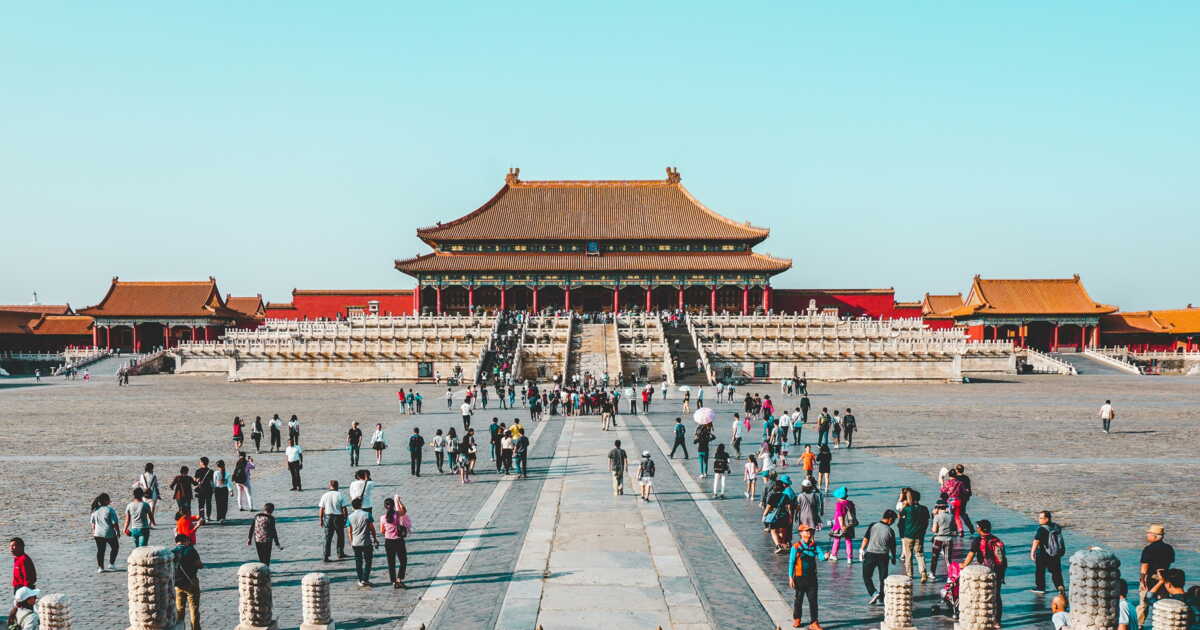
About 35 million foreign tourists entered China in 2025. The figures from the previous year were already higher than those recorded before the pandemic, but those for 2026 look even more promising. In the first half of the year, 18 million visitors from visa-free countries visited the Middle Kingdom, pushing foreign arrivals up by 20%. For Claire Thum, a young Singaporean who chose to travel to this territory after seeing enticing videos on social media, “the first step was to set foot in Shanghai”.
According to Bloomberg, on Wednesday, August 12, the traveler announced she is already preparing a new expedition to Yunnan, Xinjiang and Harbin. The intensive campaign conducted by Beijing on social media, in the hope of changing the country’s image, which had been tarnished in particular by the pandemic, is working.
The Triumph of a More Aggressive Communications Campaign
Since 2023, China has gradually introduced visa exemptions for nationals from 50 countries, including France, and is spending more to promote its cities on Western platforms, including those normally blocked in China, such as X (the platform formerly known as Twitter) and TikTok. Chongqing is positioning itself, for example, as an essential online destination, while visitors are encouraged online to discover Huawei, DJI, Pop Mart stores or hot-pot restaurants. To simply embrace the “Chinamaxxing” trend!
“China becomes more vibrant, richer and more attractive when international tourists no longer limit themselves to traditional tourist sites but begin to immerse themselves in local daily life. It is in this way that they discover authentic China”, says Bobo Rok, founder of the AI-powered travel guide Kora.
“The rise of inbound tourism gives the country the soft power it has been seeking for years. I have heard several recent visitors say that, in their eyes, Shanghai is the new Tokyo”, adds Olivia Plotnick, founder of Wai Social, a Shanghai-based agency.
Economic Benefits and Persistent Problems
While domestic consumption remains fragile, foreign tourists spend much more than before in Chinese stores. In Shanghai, foreign visitors can represent up to 70% of the footfall in some Miniso stores at certain times, according to Bloomberg. China nevertheless remains far behind the world’s major tourist revenue powers. Locally, purchases by international visitors account for less than a third of those recorded in the United States.
Moreover, the return of tourists has not managed to erase other challenges. In major Chinese cities, payments, heavily digitized, can become complicated for a foreigner without a local bank account, phone number or local electronic wallet. The absence of certain Western apps further complicates foreigners’ movements. And the country’s political image may still deter. “I did not expect a regime so omnipresent and omnipotent. Cameras everywhere, police everywhere”, recounts Virgile Kebaïli, a 23-year-old French student, who nevertheless says he is ready to return.
Having regained its place on the world tourism map, Beijing must now succeed in turning this spike of curiosity into a truly sustainable movement.