
“It’s Absurd, Unreal”: Tour Operators Rally Against Maldives’ 17% Tax [ABO]


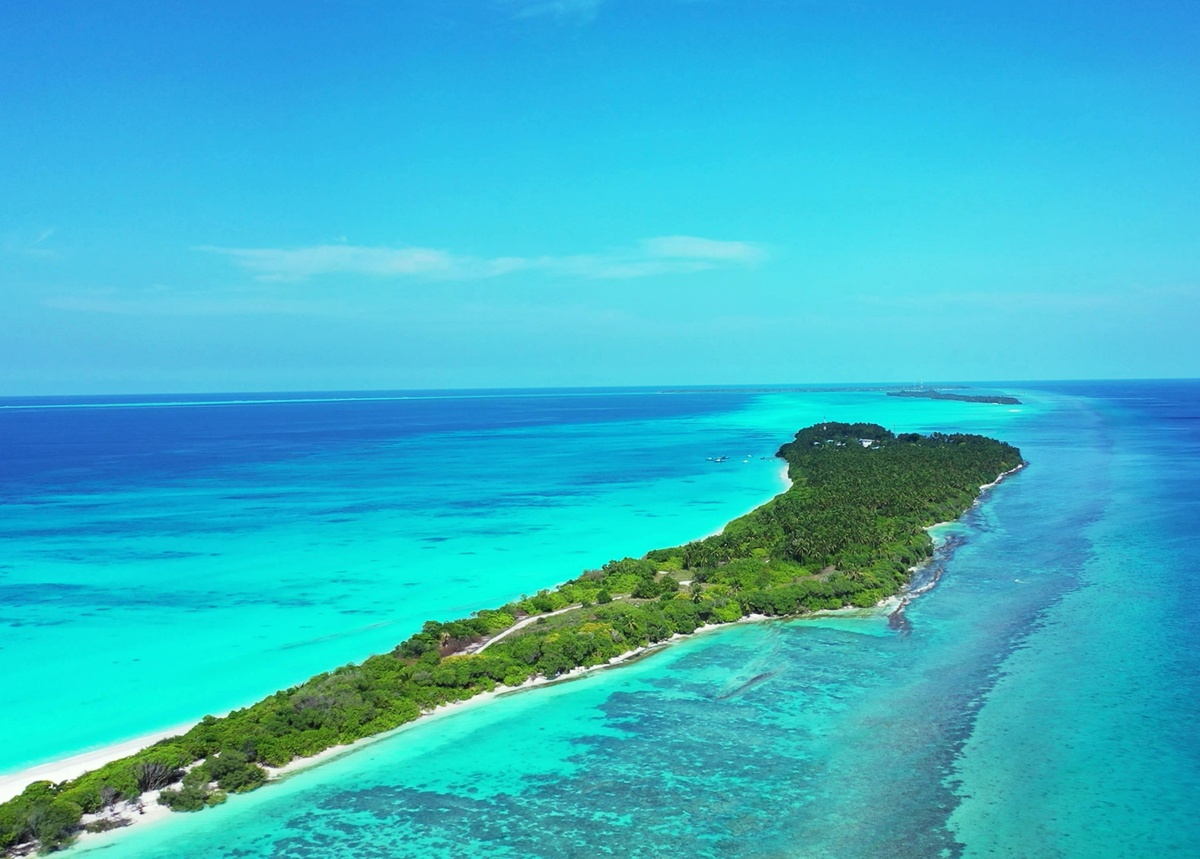
"C'est aberrant, irréel" : les voyagistes vent debout contre la taxe de 17 % aux Maldives - Depositphotos.com wirestock_creators

CroisiEurope


It’s another dossier for SETO, EDV and ECTAA that has come to the forefront in August.

The Maldivian government announced last month an expansion of the Tourism Goods and Services Tax (TGST) to foreign travel operators.

The Maldivian tax administration, the Maldives Inland Revenue Authority (MIRA), has indeed drafted a new measure that has provoked a global uproar among tour operators worldwide.

It provides for taxing at 17% the producers, agencies, OTAs or other foreign companies that assemble accommodation, transfers and other land-based services.

However, the TGST will not be levied on the entire price of the stay. The taxable base roughly corresponds to what remains for the tour operator after deducting the amounts paid to Maldivian suppliers. In other words, the tax effectively targets the margin that professionals make on the package.


It’s Completely Unreal, It Makes No Sense

A move that set off a wave of indignation among tour operators and travel operators alike.

“They are asking us to fold into our prices a tax equal to 17% of the margin earned on the land-based services sold to the Maldives for a given file. In other words, it’s incomprehensible, because we don’t know our margins before selling. Moreover, our margins do not apply only to the land portion, but also to the air component,” explains Patrice Caradec, president of SETO, a touch irate.

“It’s absurd, continues Hélion de Villeneuve, chief executive of Austral Lagons. They could have raised entry fees, the e-visa, or the local taxes on hotels and services. That would have been passed on to us automatically, and it would have been much simpler. If they need money, we can understand that.

But now they’re asking us to register on a site, to declare the margins we make on the destination and, on those margins, they will take 17%. This is utterly unreal, it makes no sense.
”


SETO, EDV and ECTAA Have Written to Maldivian Tax Authorities

SETO, along with the Voyage Companies (Entreprise du Voyage) and ECTAA, thus penned a letter to the Maldivian authorities, and to the tax services handling this file. A letter that essentially went unanswered.

«  We explained to them that their regulation is unintelligible and cannot be implemented in these terms. This cannot be done overnight.

We asked for a meeting to try to imagine an alternative arrangement.» details Patrice Caradec, who adds: «  It’s utterly crazy: they’re asking us to provide the purchase prices of hotels and the selling prices of hotels. But we don’t sell hotels; we sell packages. We could pretend we don’t margin on hotels, only on the flight ticket. That would be ridiculous. »

Tour operators and Maldivian producers must therefore register on an online platform before September 30, something that French tour operators as a whole have rejected, according to Patrice Caradec.

«  We asked our members what their position was and who intended to register on the platform. It is clear that, across Europe, not a single operator is registering.  » specifies the SETO president.


The Protest Extends Beyond European Tour Operators

Activated on the dossier since the end of August, ECTAA continues to press the Maldivian finance and tourism ministers to demand an urgent postponement of the October 1 deadline.

The association laments a deficient preparation by local authorities, unable to provide clear answers to industry questions.

For Eric Drésin, secretary-general of ECTAA: “Faced with a tax reform of such complexity imposed within untenable deadlines, we are maintaining pressure on the Maldivian authorities, while ensuring active coordination with our members and the WTAAA international association.

All tour operators and distributors working with the Maldives denounce an undue administrative burden and clear risks of double taxation. We could not be clearer.
”

Indeed, the challenge is not confined to French tour operators. In India, for instance, the Outbound Tour Operators Association of India (OTOAI) has also urged the Maldivian government to review and withdraw this provision, according to Travel Trade Journal.

In Germany, the Deutscher Reiseverband (DRV) is calling for a postponement of the measure. The organization notes that the legal basis was adopted only on August 31, with an effective date planned for October 1, even though operators market and price their programs several months in advance.

In the United Kingdom, the Association of British Travel Agents (ABTA) has also stepped forward. The professional association has written directly to the president of the Maldives to request at least a six-month postponement of the application of the new tax, in order to allow for genuine consultation.
Fuel Prices: Airlines Face the Moment of Truth [ABO]


Le carburant provoque rarement, à lui seul, la faillite d’une compagnie. Il agit plutôt comme un révélateur et parfois comme le détonateur final - Depositphotos.com, svedoliver

CroisiEurope


In my column published on April 22, “Aviation in the Face of the Great Slowdown,” I was already analyzing the surge in jet fuel following the outbreak, on February 28, 2026, of the conflict in Iran.

This shock now imposes concrete decisions: which routes to keep, at what price, and with which aircraft?

For an industry whose margins remain structurally thin, a sustained rise in fuel can quickly undermine the profitability of a single route, then the network, and in the most fragile cases, even threaten the survival of a company.


An Immediate Shock to Margins That Are Razor-Thin

Fuel, alongside staff, constitutes one of the main expenditure items for an airline.

Its weight varies with the fleet, the business model, and the price of fuel.

But with margins often limited to just a few euros per passenger, a sustained rise can quickly erase the anticipated profit.

Filling the aircraft is no longer enough. A route with a load factor of 95% can easily lose money if it mainly carries passengers who bought low-cost tickets.


Fuel Hedging Only Delays the Hit

Fuel hedges temporarily shield margins. They allow certain carriers to keep their fares while competing players already bear the higher costs.

But they do not eliminate either the risk on uncovered volumes or the risk of renewing contracts at higher prices.

The dollar adds a currency risk: a company whose revenues are collected in a weaker currency can simultaneously face the rise of jet fuel and that of its invoicing currency.

Ryanair illustrates the advantage, but also the limits, of this protection. For its fiscal year from April 2026 to March 2027, the group hedged 80% of its jet fuel needs at around $67 per barrel. In the first quarter, the 20% uncovered cost nearly $150 per barrel, more than double year over year, while the average fare fell by 6%. Despite hedging, the fuel bill rose by 16% and net income fell by 34%.

Qatar Airways illustrates another trade-off. Its chief executive, Hamad Al-Khater, calls the current crisis the most significant in the airline’s history. In an interview with Bloomberg TV reported on September 20, he mentions jet fuel around $182 per barrel, about 90% above its level at the end of February 2026. Qatar is not yet passing this extra cost directly to passengers: it is prioritizing the most profitable routes and temporarily suspending less performing services.

Fuel no longer weighs solely on margins; it also shapes capacity and the network.


Medium-Haul: Reducing Without Undermining the Network

On the medium-haul, airlines have a degree of flexibility. They can cut a frequency, suspend a route during the winter, close a base, or redeploy an aircraft to a more profitable destination.

The first casualties will be the marginal routes: those kept to fill a slot, defend a market position, or deter a competitor from entering, but whose profitability remains insufficient.

Moving from three daily flights to two more-filled rotations reduces overall consumption. But this saving can make the offering less attractive to business travelers and reduce the chances for connections.

The major low-cost carriers, with their low unit costs and their ability to redeploy aircraft, can profit from the withdrawal of weaker players.

Traditional carriers have other advantages: premium customers, cargo and connections. Yet their cost structure and the interdependence of routes complicate capacity reductions.


Will We Need to “Break Up the Schedules”?

During the IFTM 2026 trade show, last week, one of France’s leading aviation experts told me: “To get out of this, we’ll have to break up the schedules.” It may no longer be enough to simply suspend a few underperforming routes.

For the most exposed airlines, it will be necessary to reconsider the very architecture of their network, abandon certain historic positions, and concentrate resources on the routes that can preserve cash flow.

The task is particularly difficult. Routes do not operate independently. Some feed a hub or enable a profitable long-haul connection.

Removing a seemingly loss-making service can therefore weaken other routes that seemed profitable. Modifying a program already marketed also incurs costs: rerouting passengers, refunding tickets, reorganizing crews, losing connections, and tarnishing the airline’s image.


Who Will Trim Capacity First?

A reduction in capacity can improve load factors and support fares. But no airline necessarily wants to be the first to act.

Each may hope that a competitor will drop frequencies or abandon a route before them. They could then maintain their offering, win back some passengers, and benefit from price increases triggered by capacity reductions.

We are witnessing a form of poker game. The carrier that cuts its schedule first risks giving up slots and market share. Those that wait too long may continue to operate flights that drain their cash flow.

Capacity discipline is gaining ground: Lufthansa has already announced short-haul reductions, while Air France-KLM is curbing growth and redeploying aircraft toward the most promising markets. Reducing a network can be decided quickly. Rebuilding it may take years.


The Passenger Will Ultimately Pay

The rise in fuel costs will not be immediately passed on to tickets.

On a highly competitive route, an airline cannot raise fares alone without losing customers. It will probably start by reducing promotions, limiting the cheapest fare classes, and increasing ancillary revenues: baggage, seats, priority boarding, or onboard services.

The reduction in capacity can also help sustain prices: when a service disappears or a competitor pulls out, seats become scarcer. The passenger may then face higher-priced tickets, less choice, and less convenient schedules.


Can Fuel Trigger Bankruptcies?

Fuel rarely causes the bankruptcy of an airline on its own. It acts more as a revealer and sometimes as the final detonator.

The most threatened carriers will be those with insufficient cash reserves, high indebtedness, expensive aircraft leases, an aging fleet, weak fuel hedging, and unprofitable routes.

Independent carriers without a major shareholder, some regional operators, and long-haul models that rely primarily on very low fares appear particularly vulnerable.

Therefore, the first airline to fail will not necessarily be the one that consumes the most fuel, but the one with the least time to react and not enough money to hold on.


The Hour of Decisions

In the short term, airlines must protect their cash, adjust their fares to demand, and shrink capacity that no longer covers costs.

In the medium term, they must continue to refresh fleets and develop partnerships, despite financing and delivery constraints.

The question is no longer whether airlines will raise prices or cut programs. They will probably do both.

The remaining question is who will be willing to move first and who can afford to wait. In air transport, bankruptcies are rarely caused by a single event. But for some carriers, the surge in jet fuel could well be the last drop in the tank.


Eric Didier - DR

A passionate entrepreneur and specialist in air transport, with more than three decades of experience, Eric Didier coordinated the launch of the Oneworld alliance before creating and developing Qatar Airways in France and on several European markets, where he held key leadership positions, ensuring the growth and success of the airline.

An expert in team management and in commercial strategies, alliances and distribution, he has worked with several major airlines, contributing to their international expansion.

He now leads the consulting firm TED Advisory Services.

Exchange Rates: Where Is Travel Most Expensive? [ABO]


Economic Situation

Taux de change : où les voyages coûtent-ils le plus cher ? - Depositphotos.com Auteur chrupka

CroisiEurope


Exporting Gulf oil is picking up again, but it is steering clear of Europe. The Middle East shipped 12.8 million barrels per day in September, hailed as a record since February, but this is mistaken: there is still a shortfall of six million barrels compared to that month, and transit through Hormuz has fallen to 7.4 million barrels per day, versus roughly a dozen to fifteen a year ago.

Yet Saudi Arabia has more than doubled its September loadings to 5.4 million barrels per day after 2.4 in August. However, they exit via Ras Tanura and head for Asia.

The pipeline linking the kingdom to the Red Sea was damaged on September 10 and 11. It has only been back in operation since the 23rd, at a reduced throughput. Aramco has even informed at least two European refiners that no cargo would reach them in October.

These missing barrels are being replaced at a high price. Norwegian crude Johan Sverdrup fetched as much as $35 more per barrel than the Brent benchmark, a gap that had stood at just 60 cents on September 8. The disruption mainly affects refined fuel: the Gulf is shipping only a quarter of the diesel sold before the war, and every barrel converted into Europe yields more than $85 for refiners, like never before.

At the pump, the diesel price stood at €2.399 per liter on September 25, a level that the March 2022 peak of €2.1407 had not reached. In one out of ten stations, at least one type of fuel was out of stock.

The €450 million in targeted subsidies announced by the state will not lead to lower displayed prices. In our view, this European disadvantage will persist as long as Gulf barrels head toward Asia: transfers, coaches, and winter travel are therefore budgeted on fuel that remains durably expensive.


Exchange Rates: The Technical Update

The euro closed Friday at 1.1391 dollars, down 0.81% on the week, marking its third consecutive decline. A floor is emerging between 1.1323 and 1.1353; if it yields, the path could open toward 1.09, which we do not expect. Our short-term range stands from 1.13 to 1.15.

Services priced in dollars, including North American hotel stays and cruises, are therefore a bit more expensive than in August, with no break in sight.

The Canadian dollar had everything going for it to benefit from the crisis, since Canada sells oil. It did not benefit: one euro was still worth 1.6111 Canadian dollars on Friday. Its central bank did not tweak its rate, kept at 2.25%, and Alberta ships its crude by pipeline to its American neighbor at a discounted price.


The yen, however, deserves attention.


Japan and the United States had jointly bought yen in August to support the Japanese currency, and Tokyo reminded on September 24 that this arrangement remains in force. A yen buyer thus faces two risks: the market, and a political decision capable of sending the currency surging. It took 179.17 yen to buy one euro on Friday evening.

Morocco, for its part, offers unusual visibility. The dirham’s value is pegged to a basket consisting of 60% euros and 40% dollars, within a fluctuation margin of 5%, so it never strays far from the euro.

The dirham is slowly retreating for four weeks, down 0.3% between September 17 and 23, to around 10.945 dirhams per euro. A Marrakech-traded circuit therefore settles at the same price as in August on the exchange, when fuel nonetheless weighs on it.


WEEKLY SUPPORTS WEEKLY RESISTANCES
S2 S1 R1 R2
EUR/USD 1.1323 1.1359 1.1450 1.1495
EUR/GBP 0.8520 0.8560 0.8635 0.8680
EUR/CHF 0.9355 0.9400 0.9475 0.9520
EUR/CAD 1.5960 1.6040 1.6190 1.6270
EUR/JPY 176.60 178.00 180.50 181.90


The supports and resistances shown below indicate, respectively, the lower and upper bounds within which prices are expected to move during the course of the week.


The information presented in this publication is provided for purely informational purposes and does not constitute investment advice, nor an offer to sell, nor a solicitation to buy, and should in no way be used as a basis or be taken into account as an incentive to engage in any investment.


Mondial Change is a French financial institution, founded in 2015, specializing in international payments management and foreign exchange risk.

Mondial Change also supports numerous players in tourism, travel agencies, group organizers, tour operators, and incoming operators…

www.mondialchange.com

Contact : [email protected]


LATAM: From Chapter 11 to Record Profitability [ABO]


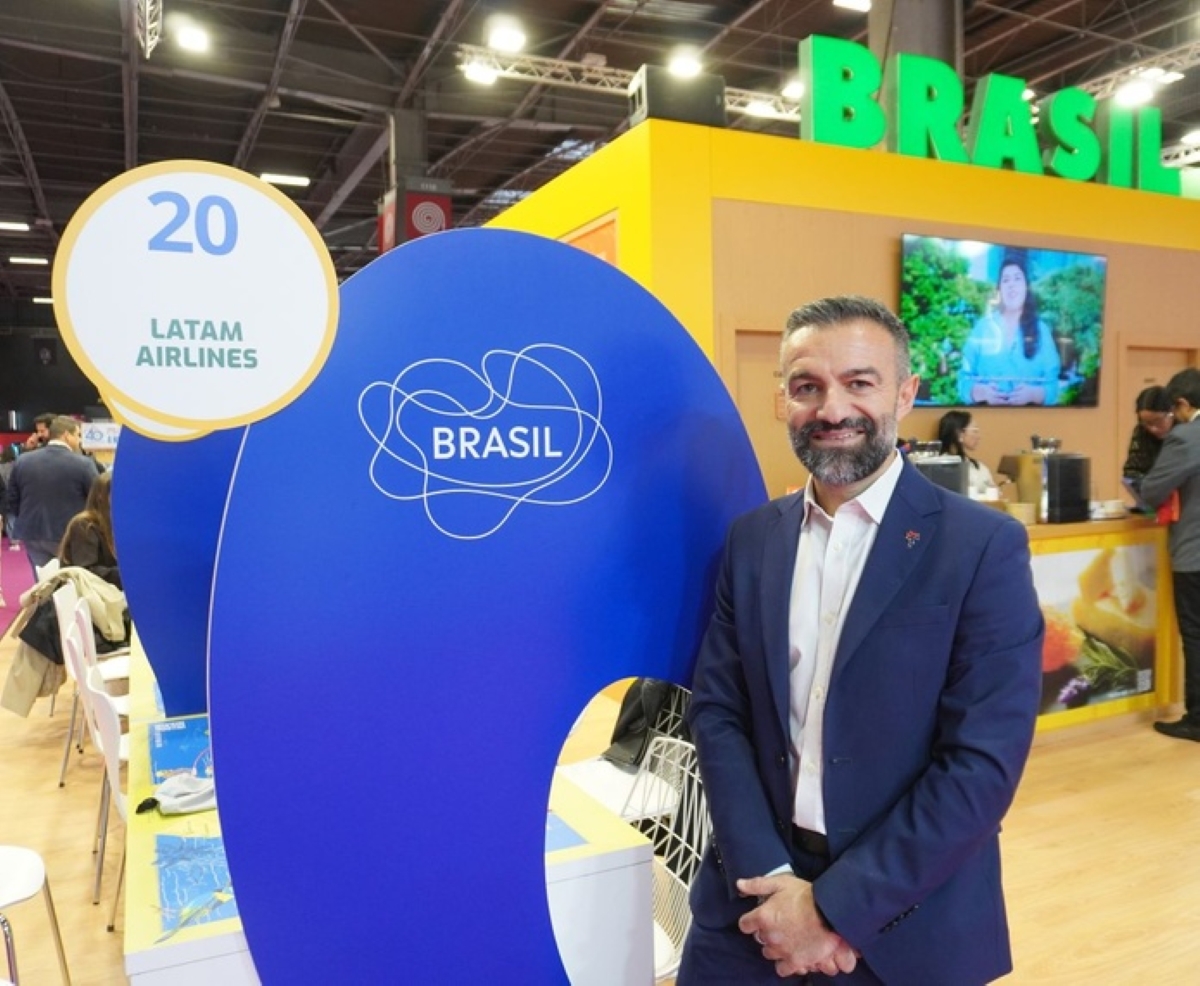
Davide Ioppolo,  directeur commercial de LATAM Airlines pour le Royaume-Uni, la France, l'Allemagne et l'Italie. Photo : C.Hardin

CroisiEurope


Things had a very rough start back in 2020 when Roberto Alvo, the new LATAM CEO, the leading South American carrier born from the merger of Chilean LAN Chile and Brazilian TAM, took the helm.

Two months later, the company had to file for Chapter 11 protection under the U.S. bankruptcy code.

Due to the pandemic, traffic collapsed with aircraft grounded and borders closed. Six years on, in July last year, Roberto Alvo was elected “Executive Leadership” for the Latin America and Caribbean region in London, at the Airline Strategy Awards ceremony.

Furthermore, at the moment we were handing the microphone to Davide Ioppolo at the IFTM fair on September 16, Roberto Alvo was honored with the BRAVO CEO of the Year 2026 award, a distinction awarded by the Council of the Americas (COA) as part of the 31st edition of the BRAVO Business Awards.

The prize will be presented to him on November 19 in Miami, United States. These honors celebrate the LATAM CEO’s actions over the past six years, during which he steered the airline to profitability returning, reduced debts, a modernized fleet, and strengthened strategic partnerships, notably with Delta, which became a shareholder.

As of this September, LATAM has once again become the leading airline group in Latin America with very strong growth in Brazil, Chile and Peru.


Massive product investments: in 2027 LATAM will offer a Premium Economy

TourMaG – LATAM is currently in good shape, with very solid results.

Davide Ioppolo : Yes, we closed 2025 with 87 million passengers carried and net income about 50% higher than the previous year.

So it has been a spectacular year. And looking at 2026, it was almost the same. In the first quarter, we posted record revenue and profitability.

For the first six months, results were positive. The situation remains healthy, but we saw the second quarter hit results hard.

We remain with positive results, but not as strong as in the first quarter. And this is, of course, due to higher fuel prices.

TourMaG – Your profits have allowed you to invest more than $400 million in new cabins. What will be new on board?

Davide Ioppolo : We are indeed investing heavily in our cabins. We had already invested $360 million in business cabins, and we will have business suites with a door providing better privacy.

We will continue to make strong investments, not only in cabins but overall, and in the premium segments. They’re the ones that can best absorb price increases.

For example, we renovated our São Paulo lounge. We are doing the same in Lima and in Santiago de Chile. And for the first time in LATAM’s history, in 2027, we will have Premium Economy, because we are seeing very strong growth in this segment.

Investments also to outfit aircraft with Wi‑Fi. Currently, nearly our entire domestic fleet is Wi‑Fi equipped and we are starting to outfit long-haul aircraft.


Travel agencies are LATAM’s primary sales channel

TourMaG – Is the Europe–South America flow currently very dynamic?

Davide Ioppolo : Absolutely, South America is even more on European corporate agendas since the Mercosur agreement was signed, and that’s why we want to keep delivering an even better service.

We are currently seeing many Italian and French companies investing in South America, acquiring Brazilian, Chilean, and Peruvian companies. We observe this phenomenon and want to be there to capture the demand.

TourMaG – Besides the cabins, you have also invested to improve the quality of the relationship between the airline and travel agents, the sellers, through a program: Global Sales Support.

Davide Ioppolo : Yes indeed, and the idea is to offer them facilities to sell LATAM. I first want to reiterate the importance of travel agencies for us. They are the primary sales and distribution channel.

Two important points also tied to the French market that really please me.

This year we have seen airline revenues rise, often due to price increases.

What we have observed in France is also a source of satisfaction. If we look only at travel agencies and tour operators, excluding direct sales and Online Travel Agencies, we see, for example on a key axis for us, the France–Brazil axis, a very strong growth, and it’s not just a growth in the average fare, it’s an increase in passenger volume.

If we zoom in on the summer season, the same pattern appears on the France–Peru axis.

And returning to our Global Sales Support, these solid results are also due to this program that provides excellent support for travel agencies with a charter on our website dedicated to them.

To ensure an immediate response with real people and also with artificial intelligence.

Regarding the AI we launched a month ago, the early feedback has been very positive. And in any case, there will always be a person available to help solve problems. I am particularly pleased with this implementation for the French market; it was and remains one of my main objectives.

TourMaG – Far from the French market, but with the French, you have developed a collaboration with the cruise line “Ponant” to operate flights between Chile and Argentina. Could this become a regular arrangement?

Davide Ioppolo : I can’t share public information, but I can say that we have been working together for several years. We are good partners, I believe, and there’s no reason not to run more operations with this major company that Ponant is.

And what gave me pleasure is that for these flights to Antarctica, we reached an agreement to use SAF. Sustainability is important at LATAM and it isn’t easy for us because most SAF is produced in Europe and the United States.

It is still a very expensive fuel and in South America, unfortunately, we do not have large-scale SAF production.

TourMaG – So a particular effort then?

Davide Ioppolo : Yes, but also shared with Ponant. We appreciated it.


LATAM: a domestic network that is expanding and gaining agility

TourMaG – To return to the dynamic French market, will there be any new developments?

Davide Ioppolo : We don’t have true new offerings per se, but we have opened new destinations that could interest the French market.

We opened Amsterdam in April, Brussels in June. The Hauts-de-France region and the Benelux are very important for LATAM.

We held workshops in Lille and all travel agencies were of course interested.

I’d also like to add, on the novelty side, what we are doing in South America. New destinations we will open or have already opened.

The idea is to offer the largest possible domestic and regional network. To this end, we signed an order with the Embraer aircraft manufacturer that will supply smaller airplanes with capacities of 150 or even 100 seats.

We will operate from São Paulo, Brasilia, Curitiba, Porto Alegre. We will build an even stronger mesh, offering the largest possible domestic network.

We operate almost 60 destinations in Brazil and over the next two years we will reach nearly 100 destinations in Brazil.

And this will be possible thanks to these well-adapted modules that will also allow us to optimize frequencies, by scheduling a flight in the morning and one in the evening. More agility therefore, and this is also very interesting for the French market.

*This opening to Amsterdam along with the strengthened partnership with Delta reinforces the idea that LATAM, which left the OneWorld alliance, could join SkyTeam


Receptifs France: A 2026 Year of Resilience and Uncertainty [ABO]


« Participer à l’IFTM est indispensable pour rencontrer de nouveaux partenaires et rappeler que la France est aussi un marché à travailler », estime Patricia Linot, présidente de France DMC Alliance.@ Alexandre Lescure

CroisiEurope


In 2026, French receptive operators had to contend with highly varied situations across regions and clienteles.

In the Jura, Emmanuel Robert, commercial director of Doubs Jura Voyages – Bourgogne Emotions and of the Le Lac hotel complex, reports a season that was particularly dynamic.

« We were fully booked from early May to late October », he explains. Located between 900 and 1,200 meters in altitude, the territory benefited from visitors who shifted their plans due to the intense heat or fires in other regions. The lakes and Jura forests drew a substantial clientele, mainly Francophone. « We typically comprise 80% French and 20% foreigners, of which 90% are Swiss, Belgians and Germans. »

In the Hautes-Alpes, Sandrine Eyraud-Massot, head of Déesse Voyages, also observes growth in its receptive activity, notably thanks to new markets. Her agency, which operates across a wide territory from Nice to Perpignan and into the Alps, hosts groups and mini-groups in spring and autumn.

« We are receiving increasingly more requests from the United States, the United Kingdom, Spain and Italy », she notes. The professional also highlights a shift in how clients discover the agency. « Some tell us they found us thanks to ChatGPT. » This phenomenon pushes her to improve her SEO, client reviews and external links.


The Leisure Groups Under Pressure

Not all segments, however, experienced the same momentum. In Hauts-de-France, Nicolas Dequéant, president-founder of Septentrion Tours, notes a year broadly similar to the previous one, but tougher for leisure groups.

« Group dossiers were slowed down by the war in Iran. Some clients preferred to put their projects on hold, » he explains. Associations and seniors were also sensitive to rising fuel prices. The losses recorded in spring could not always be recovered, even as the order book for 2027 continued to fill.

Heat waves also disrupted activity. Nicolas Dequéant notes last-minute cancellations for excursions aimed at an elderly audience. Some outings were postponed, notably from July to September.

Conversely, the agency observes a more spontaneous international demand, notably from American and Canadian visitors for renting mini-vans to reach battlefields.

« We receive last-minute requests for chauffeur-guided services or cruise stopovers. » Again, ChatGPT appears to play a role in finding providers.


International Markets in Evolution

The difficulties faced by certain foreign clienteles are also noted by Patricia Linot, president of France DMC Alliance and head of Rendez-vous Fontainebleau.

On a network scale, she observes a significant decline in Canadian groups, penalized by diminished purchasing power and the cost of transatlantic flights. Australian school groups have, for their part, postponed their visit to autumn.

American clienteles remain present. « Some receptive operators report more Americans, while Canadians are fewer, » she says. International tensions have led to cancellations or postponements, notably toward autumn or spring 2027.

Fires have also affected the image of certain destinations. In the Southwest, American clients canceled stays after seeing images of the fires widely broadcast in the media. « One must then reassure and explain the real situation on the ground », emphasizes Patricia Linot.

The MICE segment appears to be the most fragile. « There are many requests for quotes, but few verifications. Companies remain cautious in the face of uncertainties and costs. » Receptives therefore spend time negotiating, without always managing to actualize the projects.


Selling France More Effectively to the French

For professionals, visibility and networking remain essential. « Participating in IFTM is indispensable to meet new partners and to remind that France is also a market to be developed », says Patricia Linot.

The signing, during the fair, of a partnership between Entreprises du Voyage and ADN Tourisme, aimed at improving knowledge of the France destination among travel agents, is « a very good signal » for Patricia Linot. France DMC Alliance is indeed preparing, with the two entities, « promotional and training actions for travel agents to sell stays with an experience in France to a French clientele that is not used to this ».

A pedagogical effort will therefore be necessary to familiarize French clients with these offerings. While receptive operators contend with an uncertain environment, everyone is already looking toward 2027, with the goal of consolidating their markets, diversifying their clienteles and better highlighting the experiences offered across the territory.

Cacophony Over the Summer Report: “It’s Time to Sit Around the Table” [ABO]


La France toujours leader mondiale : "pas d’inquiétude" pour le moment selon Bercy - Image IA, Chat GPT

CroisiEurope


Since the health crisis, summer tourism tallies have become the new perennial staple on rolling news channels.

Compiled by the end of July, they are supposed to gauge the season’s pulse. And this year, unlike the previous ones, the summer looked bleak.

French clientele, affected by inflation, would no longer have the means to treat themselves to a restaurant, nor even to take a few days away to escape the intense heat.

Remember, earlier in the week, the minister told TourMaG.com that “if we count June, July, August and September, we are stable (for French clientele, ndlr). But I note a slight regression in the heart of the season, in July-August“, always about the French.

The occupant of Bercy even stressed that the summer had been saved by… foreign travelers.

And yet, INSEE came to contradict all these statements… even those of Serge Papin!


Summer Review: “Revisiting the Communication on Tourism Figures”

Following the element of surprise, the minister of Tourism’s staff analyzed these figures and, according to its representatives, the numbers unveiled earlier in the week “do not completely contradict everything we said, particularly regarding domestic demand.

It should also be noted that INSEE focuses on attendance based on bookings, and not on tourism revenues, nor on international arrivals.

Therefore, one must be cautious when comparing different indicators. If you change the thermometer, you may not have the same feel.


It is true that everyone compares using different tools, whether it is the Travel Companies, the UMIH, the Alliance France Tourisme or KPMG.

But, for Bercy, this cacophony is counterproductive, even though INSEE provides the official statistics, albeit “fragmentary”.

Thus, during the peak season, as everyone issues announcements to alert about their members’ situation or to spotlight their concerns, Jean Pinard, president of the consulting firm Futourism, calls for a reset of the evaluations and the reports, so that they reflect exactly the real trends, and not bundles of presumptions.

“It is now time to bring everyone to the table to clearly define what we measure, why and by which methods” continues the author of the study for the Terram Institute, titled Holidays: History and Geography of an Unfinished Right.


INSEE’s Summer bilan “translates changes in foreign consumption”

Even the same tune from Bercy, which is surprised by this battle of figures and public statements in the middle of peak summer season.

“It would be interesting to review the communication on tourism figures. That there be a concerted effort to determine when, how and from what basis actors can speak. This situation concerns us.

Reports are drafted along the way and it isn’t only the fault of the media, because everyone goes with their messages. There is a reflex to speak up to say that the season was worse or better. This may not be the best solution.

Beyond this observation, it should invite us to think
“, laments the minister’s staff.

If the tourism ecosystem agrees to denounce this summer cacophony, for Serge Papin’s entourage, INSEE’s figures rather reinforce the analysis he delivered at the IFTM.

“We achieved a solid season, which did not experience the kind of rupture we might have feared given the circumstances, but neither a surge.

The French needed holidays. This perhaps also reflects changes in consumption patterns, notably in the international clients’ booking habits.

Moreover, the international receipts recorded in July, up compared with the previous year, lead us to think that the tourist season was positive, especially for international clientele
“, continues the minister’s office.

Ultimately, the surface contradiction may not be entirely so in practice, once the first impression has passed.

Incidentally, in the interview he granted us, Serge Papin already revealed that overnight stays were up by 1%. INSEE reports, for its part, an increase of 1.1% between May and August, for 2.8 million additional overnight stays.


A change in consumption habits

Moreover, this INSEE assessment is rich with several lessons for the ministerial office. “We draw from this two major conclusions.

First, a shift in the consumption habits of international customers, notably in terms of bookings and overnight stays.

Second, tourist demand has stabilized, across all markets. It has ultimately been quite present, though, again, prudence remains.

Foreign clients want to experience life the French way and Europe. They can do so in different ways. On one hand, they may opt to undertake a tour of Europe and visit as many countries as possible, which generates few overnight stays in each.

On the other hand, they may seek a more intimate experience of the destination, returning outside the major attractions and visiting the same country several times.

We may be at this point, with a decrease in overnight stays tied to package tours and a move toward more experiential tourism, closer to what Europeans experience. And for these travelers, stays are not always in hotels
, details Serge Papin’s office.

France, beyond being a European crossroads – which explains why receipts are lower than in Spain or the United States – is also an entry point for North American and Asian travelers who want to discover Europe, starting or ending their itinerary with a few days in Paris.


France still a global leader: “no worries” for the moment


Romain Pommier Published by Romain Pommier Journalist – TourMaG.com
See all articles by Romain Pommier

  • picto Facebook
  • picto Linkedin
  • picto email
Add TourMaG to your Google News feed Google Actualités icône

Jeremy Grasset (Shanti Travel): ‘Amerigo Acquisition Strengthened Our B2B Image’ [ABO]


Jérémy Grasset (Shanti Travel) : "le rachat d'Amérigo a renforcé notre image B2B" - Photo Shanti Travel

CroisiEurope


TourMaG – With Shanti Travel, Tierra Latina and Amérigo, your group now covers a substantial portion of the world. How is this ensemble organized?

Jérémy Grasset : Indeed, Shanti Travel mainly focuses on Asia. We have a presence in Japan, Indonesia, Vietnam, the Philippines, Sri Lanka and Singapore.

Tierra Latina specializes in Latin America. We also maintain offices in Brazil and Argentina, as well as a Mexico City office under the Mexikoo brand.

With Amérigo, we added North America: the United States and Canada. This brings geographic complementarities. Amérigo is also active in Latin America, which also helps generate volume for our receptive activities.

TourMaG – Why did you decide to acquire Amérigo?

Jérémy Grasset: Jean Eustache (founder of Amérigo ndlr) approached me last year and suggested that we explore a discussion. We quickly realized that our activities complemented one another, particularly in terms of geography.

There was also a solid opportunity to launch Asia within Amérigo as a tour operator, for both group services and GIRs. We had GIR productions that were not widely distributed until now. Thanks to Amérigo, they are now more widely shared.

Amérigo is indeed registered as a tour operator and is listed with around 3,000 agencies in France.

In a second phase, we also plan to restart a bespoke service for Asia. But for the moment, we must take the time to integrate.


Complementarity between tour operator and receptive but also autonomy

TourMaG – This acquisition strengthens your presence in the French B2B market…

Jérémy Grasset :
Exactly. We were already recognized in the French B2B market, but quantifying it was challenging. And, achieving visibility is tougher for receptive operators.

The fact of having acquired Amérigo has reinforced our B2B image in the market. It now allows us to attract more groups and more B2B clients.

TourMaG – Some groups in the tour-operating business acquire receptive firms. This time, a receptive is acquiring a tour operator. How do you view this complementarity between the two lines of business?

Jérémy Grasset : Those who know the sector understand the difference between the two trades, but today, a French tour operator that produces everything in-house, purchases its rooms from a database and offers bespoke experiences is almost a receptive.

Direct production by tour operators is increasing, especially in countries where labor costs are high. In the United States or Canada, for instance, it is difficult to offer bespoke arrangements with a receptive behind it: there aren’t many that still do that. Receptives in developed countries mainly handle groups or GIRs.

It makes sense that this complementarity exists and that tour operators acquire receptive firms. Indeed, we have a receptive firm that is taking over a tour operator.

TourMaG – Amérigo will be able to rely on your receptive networks, but can it also collaborate with receptive operators that are competitors?

Jérémy Grasset : We aim to preserve this complementarity between the different units while maintaining a certain autonomy. Within our group, internal competition between units and competition with external rivals can coexist in a healthy way.

In travel, we often speak of partners rather than mere competitors. You can be competitive with your partners and partner with your competitors. Crises tend to strengthen collaboration across the different disciplines.

What matters is that the traveler experiences a wonderful journey, fulfills their dreams, and that the trip is executed flawlessly.


“We must diversify risks and sources of clientele”

TourMaG – What brought you closer to Amérigo?

Jérémy Grasset :
At Amérigo, there was a culture of receptive business, since, for years, Jean (Eustache ndlr) built receptive networks and represented LatAm and North America. He knows the trade very well.

In the final months of collaboration, we realized we spoke the same language. We are two product-oriented companies with excellent field knowledge. Amérigo’s teams possess a very good understanding of their destinations.

This, I believe, is the strength of the group today: in each entity, we have seasoned destination experts.

TourMaG – Asia, Americas… Are you targeting other geographic zones such as Oceania or Africa?

Jérémy Grasset : Being a specialist in a single region is no longer feasible nowadays. There are many geopolitical surprises, so we must continue diversifying risks as well as clientele sources.

The United States, despite some difficulties, remains an attractive destination for us. The day when Asia or Japan falters, and political shifts occur, we know the United States will rebound.

Oceania, we have begun selling on our site for our receptive activities. Once we have a traveler, it is, of course, interesting to offer another destination. In B2B as well, it works well.

Africa, why not, but for now it is not in the current projects.

Diversification also concerns client sources. Shanti is a hybrid, multichannel group, which should enable us to adapt to evolving markets and to become more agile.

We do not know exactly what will work tomorrow. Today there is the AI revolution, but also a return to agencies for high-quality luxury bespoke travel. We observe several trends in parallel, and it is hard to predict which will prevail.

That is why we are expanding in this manner, notably to secure activity.


TourMaG – Have you created synergies between the different teams?

Jérémy Grasset :
We have always invested heavily in training, both for destinations and for sales techniques and tools.

We are now more focused on destination training. The advantage is that Amérigo, like Shanti, shares a true culture of effective IT tools. We find ourselves aligned with these approaches.

The teams have learned to know each other and to meet. These are fields that can be somewhat different, but we try to figure out together how things work.

There are also recruitments underway. For Asia, we are seeking major destination specialists. This allows us to rely on former Shanti travel experts who moved back to France for personal reasons, and whom we are bringing back into Amérigo, for example.


TourMaG – How much does the group weigh today?

Jérémy Grasset :
The group currently amounts to 35 million euros.

TourMaG – What are your next priorities?

Jérémy Grasset :
For now, we are in a phase of deepening the destinations we already cover. There will be new developments later, but it is too soon to discuss them.

Today, the objective is to consolidate the whole. We must, if you will, “digest the acquisition,” integrate the new elements and train the teams.


Céline Eymery Published by Céline Eymery Editor-in-Chief – TourMaG.com

See all articles by Céline Eymery

  • picto Facebook
  • picto Twitter
  • picto Linkedin
  • picto email
Add TourMaG to your Google News feed Google Actualités icône

Muse, Instinct, OpenClaw…: Will Personal AI Agents Become the New Travel Agents? [ABO]


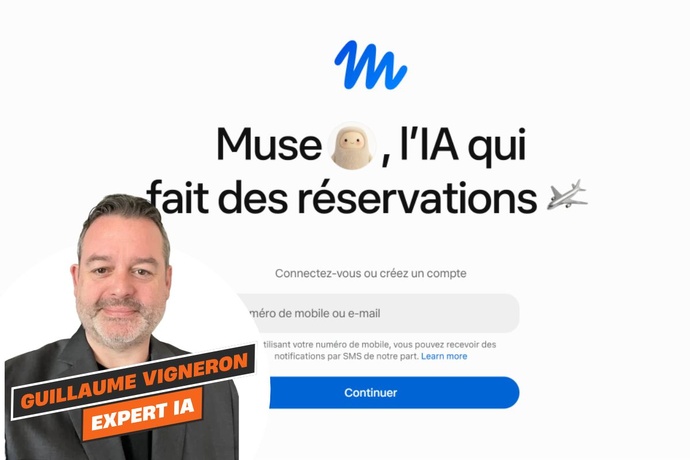
Muse, Instinct, OpenClaw... : les agents IA personnels vont-ils devenir les nouveaux agents de voyage ? - Photo Capture écran Muse

CroisiEurope


Having learned to answer our questions, artificial intelligence enters a new era, an evolution that could prove particularly favorable for tourism.

Behind the new agents such as Muse, Instinct, Hermes, or OpenClaw lies a far more important question: tomorrow, who will actually organize our trips, and above all, who will control the relationship with the traveler?

Since November 30, 2022 and the explosive launch of ChatGPT 3.5, generative AI has mainly accustomed us to chat: you ask your favorite AI a question, the model answers and can propose an itinerary for Athens, compare two destinations, or suggest a hotel.

Since the beginning of 2026, a new generation of tools, the AI agents, begins to take another step. This time—as the name suggests—they act.

This wave began at the start of the year with the release of OpenClaw on January 29, 2026, the principle of which will inspire all the other products: Hermes Agent in February, GrokBot and Instinct in August, and finally Muse from Meta in September.

In less than a year, the market has transformed around this (very real) promise: to move artificial intelligence from the status of interlocutor to that of a permanent executor.


From Simple Digital Advisor to Persistent Executor

The travel sector could become one of the best testing grounds for this new generation of AI capable of taking action online.

The reason lies in the very nature of a trip: planning four days in Copenhagen requires chaining together a considerable number of small operations such as searching for the cheapest flight, looking at hotels in the best location, knowing the exchange rate, checking museum or attraction hours, booking a good table, or tweaking the plan when weather changes.

Individually, none of these tasks is very complicated, but their accumulation — in AI terms, orchestration — is much more demanding.

This is precisely what AI agents seek to absorb.

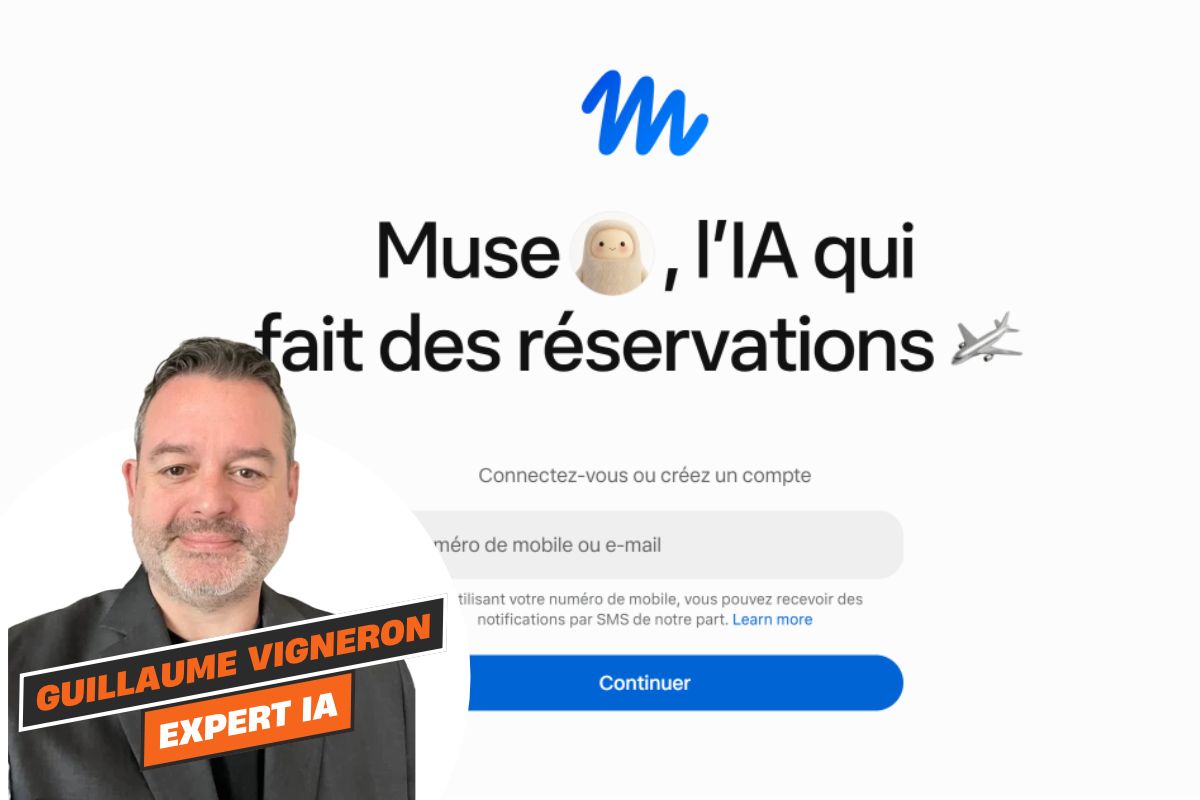
A late-September Business Insider piece offers a fairly concrete glimpse of this evolution. Jay Eskenazi, a former UX professional at Expedia, tested several tools, including Muse, Instinct, and Grok Bot, during a three-week trip across Europe.

He no longer asked an AI merely to craft a travel program; he fed it his own notes, preferences, and constraints.

Muse could then reorganize his days by taking into account opening hours and ticket availability, and even showed signs of initiative: the agent suggested coherent geographic itineraries and could transfer them to Google Maps.

During the trip, it continued to adapt its recommendations based on newly available information. Impressive.

While it is not yet the fully autonomous travel agency promised by some marketing-driven rhetoric, the shift in usage is already visible: the user no longer necessarily looks up information before every decision but progressively delegates the search and organization to their agent.


From Information Search to Goal Definition

For about two decades, a large portion of the digital tourism economy has rested on a simple action: the traveler searches online.

They open Google, Booking, Expedia, Airbnb or Skyscanner, compare results, click, and pay. Each platform thus tries to become the starting point of this search.

The AI agent changes this logic because a traveler could simply request:

“Organize four days in Lisbon for two adults, under 1,500 euros in total, with a view of the Tagus but not too far from the Bairro Alto.”

From there, the agent could query several services, compare prices with the user’s known preferences, verify cancellation conditions, and then prepare the booking so the traveler only has to click “accept.”

The economic battle would shift as soon as the question is not only which site appears first on Google, but which offer will be selected by the AI agent.

Accenture sums up this change quite directly in a study titled “Win the AI agent, win the traveler” published in September 2026.

According to this study, tourism companies must now think about their visibility to AI agents themselves, what is called GEO for Generative Engine Optimization.

If an agent compares hotels, loyalty programs, cancellation policies, and payment methods for its user, it becomes a decisive intermediary in the decision.

Tourism SEO could thus gradually gain a second target: after the human, the machine working for them.


Travel Players Do Not Stay Idle

For several years, Expedia has been developing planning features in natural language and has stepped up the integration of its services with several AI environments in 2026. The company has notably made its inventory accessible from Muse.

Its CEO, Ariane Gorin, nevertheless believes that a single agent will probably not control the entire travel journey. She bets instead on a coexistence between multiple entry points and specialized agents.

Other players are already pushing further.

In Europe, Visa announces that it has completed real commercial transactions initiated by AI agents with participating merchants. Travel is among the sectors targeted by the development of these payment infrastructures.

eDreams ODIGEO is also working with Visa to enable identified agents to make reservations within parameters defined by the client.

The goal is precisely to distinguish an authorized agent from any automated traffic and to keep authentication mechanisms around payments.

The boundary between advisor and buyer is thus starting to become rather blurred.


Towards a Personal Traveler Agent?


Guillaume Vigneron - Photo : Super Agence SAS

Guillaume Vigneron is the founder of La Super Agence SAS, a Paris-based consulting and training firm specialized in generative AI. He assists managers and executive committees in the operational and strategic adoption of generative AI, structuring usages, governance, and transformation roadmaps.

His approach focuses on management, organizational, and performance challenges linked to integrating AI into companies. He has already trained over 1,500 professionals in the practical use of generative AI in their work.

Guillaume Vigneron also speaks as a lecturer on topics related to AI, the future of work, and organizational transformation.

Voyages d’Exception Accelerates Diversification as It Marks Its 15th Anniversary [ABO]


Toute l'équipe de Voyages d'exception s'apprête à déménager dans des locaux plus spactieux @Voyages d'exception

CroisiEurope


Voyages d’Exception no longer wants to be identified solely with maritime and river cruises. As it approaches its fifteenth anniversary, the tour operator is accelerating its diversification into cultural circuits and railway journeys. These activities now account for roughly 20% of its revenue.

The tour operator is notably organizing French-speaking groups aboard the Maharajas’ Express in India, the African Explorer in southern Africa, and the Silk Road Express in Central Asia.

“We are the only French operators to arrange francophone groups with speakers on these exceptional trains. They are complex products that require significant commitments, but clients love them,” says Lionel Rabiet, founder and director of Voyages d’Exception.


Explorator must enrich its land-based offerings

La reprise des actifs d’Explorator doit encore doper cette diversification. Voyages d’Exception a conservé quatre salariés de cette marque historique, spécialisée dans les circuits culturels et les destinations hors des sentiers battus.

Oman, le Tadjikistan, la Mongolie ou l’Algérie figurent parmi les territoires qui ont construit son identité. Lionel Rabiet entend préserver ce positionnement tout en accélérant la transformation technologique de la société et le renouvellement de la clientèle

« Explorator possède un véritable ADN pionnier, fondé sur l’immersion et la rencontre avec les populations locales. Notre objectif est de permettre à la marque de se développer à nouveau et d’aller vers de nouvelles destinations », explique-t-il.

Voyages d’Exception veut créer des synergies commerciales, marketing et opérationnelles entre les deux structures. Le groupe modernise également les outils technologiques d’Explorator afin de faciliter la production et la commercialisation des circuits.


Small-ship cruises are proving more resilient

Le maritime n’est pas abandonné pour autant. Alors que le Japon et la Patagonie, ses deux premières destinations, ont marqué le pas en 2026, les croisières proposées à bord de petites unités enregistrent de bons résultats.

Le voyagiste renforcera donc ce segment en 2027. Près d’une dizaine de départs doivent être programmés avec Star Clippers, notamment au Costa Rica, aux Antilles, au Panama et en Méditerranée.

« Nous travaillons avec des groupes de 15 à 25 passagers. Cela nous permet de proposer notre accompagnement et nos conférenciers tout en conservant l’atmosphère et l’expérience propres à ces navires », explique Lionel Rabiet.

Le partenariat avec Windstar Cruises doit également se développer. Les croisières proposées en Polynésie rencontrent déjà leur public avec des itinéraires qui vont jusqu’aux marquises.

« Ce sont des bateaux à taille humaine, avec de grandes cabines et une très belle qualité de service. Ils correspondent bien à ce que recherchent nos clients et les prix sont raisonnables par rapport à la concurrence », estime Lionel Rabiet.


Belgium as a new growth lever

Voyages d’Exception veut aussi élargir sa carte. Parmi les nouveautés annoncées en 2027 figure une croisière aux Fidji, une destination encore peu présente dans les programmations françaises.

Le voyagiste prépare également un voyage sur la rivière Kwaï, en Thaïlande. Cette production doit lui permettre de proposer une autre approche du pays, loin des itinéraires balnéaires ou des circuits les plus classiques.

Cette production élargie doit désormais trouver davantage de débouchés dans les agences. Le B2B représente environ 20 % des ventes de Voyages d’Exception, mais a reculé de 10 % en 2026.

Le voyagiste compte accélérer en Belgique, où il vient de recruter un nouveau commercial : Benoit Hodeige. Le potentiel y demeure largement inexploité : à activité comparable, le taux de pénétration de Voyages d’Exception serait cinq fois inférieur à celui observé en France ou en Suisse.

« Nous sommes très en retard en Belgique alors que nous proposons des produits uniques et que de nombreuses agences ont le potentiel pour les vendre. Nous devons maintenant activer ce marché », reconnaît Lionel Rabiet.


Flight Cancellations Right Before Your Trip: What Compensation Is Available for Package Holidays? [ABO]


Vols annulés juste avant un séjour : quid du dédommagement dans le cadre d'un forfait ? - Depositphotos.com  Auteur alexeynovikov

CroisiEurope


A female traveler filed a request with the Mediation after the cancellation of the flights included in a package holiday bound for Iceland. If the travel agency agreed to refund the stay, the client also believed she was entitled to a so-called ‘mirror’ compensation.

The trip consisted of a one-week stay in Iceland. A few days before departure, the airline responsible for the outbound and return flights canceled both legs.

Following this cancellation, the travel agency offered two options: reschedule the stay by one day, at a surcharge of €330, or keep the original dates with new flights, which would incur a surcharge of €980.

The traveler refused these two proposals and requested a full refund of the package, as well as an additional compensation.

The agency agreed to refund all amounts paid, but refused any additional compensation.


Ce que disent les textes :

To render its opinion, the Mediation relied on the provisions of Article R. 211-9 of the Tourism Code. This text provides that when an essential element of the contract is modified before departure, the professional must inform the traveler of the proposed changes and give them the choice to accept them or terminate the contract.

If the traveler refuses these modifications, they can obtain a full refund of the amounts paid.

In this case, the cancellation of the flights indeed constituted a modification of an essential element of the contract. The agency proposed replacement solutions, which the traveler was free to accept or refuse. After rejecting these proposals, she was allowed to cancel her stay at no cost and obtain the full refund of her package.


Ce que préconise la Médiation Tourisme et Voyage :

Dans ces conditions, la Médiation a considéré que le professionnel avait respecté les obligations prévues par le Code du tourisme.

Aucun élément ne permettrait de justifier l’octroi d’une indemnisation complémentaire, le remboursement intégral du séjour constituant une réparation suffisante.


Retrouvez tous les cas pratiques de la Médiation Tourisme et Voyage en cliquant HERE.