Et si chaque itinéraire racontait désormais sa propre histoire ?
Today, travelers seek far more than a simple sequence of ports of call. They want to experience an atmosphere, discover a destination from a different angle and choose a journey that aligns with their desires, whether it be relaxation, culture, gastronomy, or discovery.
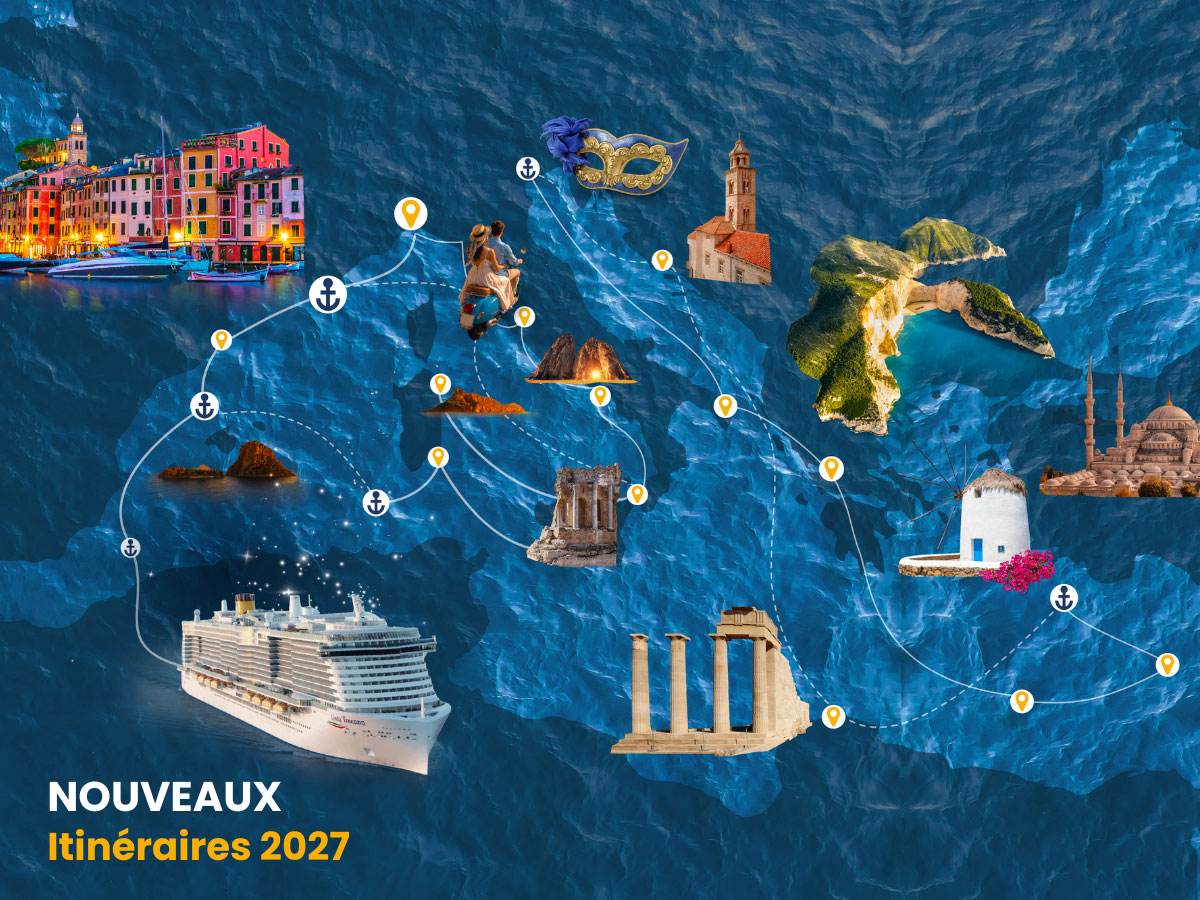
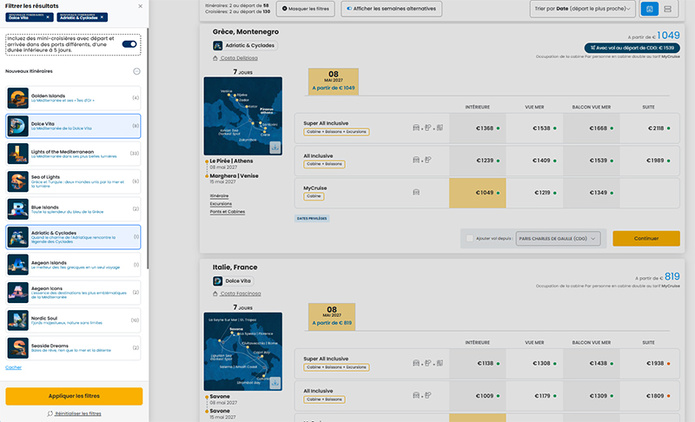
More than ever, the overall experience, both onboard and on land, has become a decisive criterion in choosing a vacation. It is in this logic that Costa is rethinking its summer 2027 programming with a new generation of itineraries built around clearly identifiable travel universes.
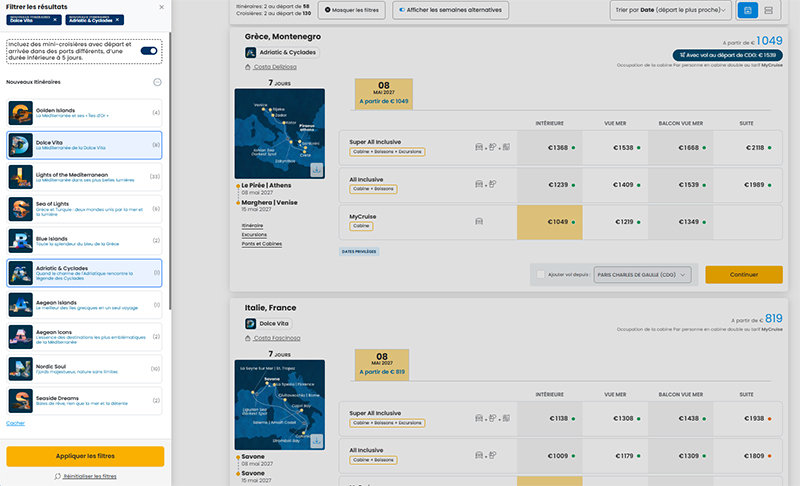
The company is gradually moving away from a purely geographical approach in favor of real travel concepts. Each itinerary now has its own identity, expressed from its name and carried by a strong emotional throughline. Thus, Dolce Vita speaks to lovers of the Mediterranean art of living, between Portofino, Taormine and the Amalfi Coast. Blue Islands highlights the finest Greek islands and their infinite shades of blue. Golden Islands takes travelers to the heart of the “Islands of Gold” in the Mediterranean, with four islands united by crystal-clear waters, vibrant atmospheres and spectacular sunrises and sunsets. Nordic Soul invites travelers to discover Northern Europe through its grand landscapes, preserved nature and Scandinavian way of life. With Adriatic & Cyclades, Costa brings together the charm of the Adriatic and the mythical magic of the Cyclades for an immersion among cultures, traditions and iconic panoramas.
These itineraries are only a preview of the new Summer 2027 collection. Many other itineraries await discovery, each designed to offer a different way to explore a destination and experience the cruise. Through this approach, Costa turns the itinerary into a true travel experience, giving travel agencies new selling points and a more inspiring way to present its offer.
How do these new itineraries facilitate sales in agencies?
This new approach helps agents guide clients more easily according to their desires rather than a simple list of ports of call. The choice is no longer limited to Western or Eastern Mediterranean, but to different ways of living one’s vacation: relaxation, cultural discovery, spectacular landscapes, Mediterranean ambiance, or immersion in nature.
For advisors, the messaging also evolves. It becomes possible to recommend an experience before recommending a destination. A client drawn to elegance, gastronomy, and the art of living will naturally be steered toward Dolce Vita, while a lover of islands, turquoise landscapes and seaside atmosphere will find happiness in Blue Islands.
The company also reinforces this promise with exclusive experiences on board and on land. The Sea Experiences, the Land Experiences inspired by the visited regions create a stronger link between the itinerary and the traveler’s experience, offering a seamless journey from the first to the last day of the cruise.
How to entice a former client to sail again to a destination they already know?
This is one of the major strengths of this lineup. Many travelers already know the Mediterranean’s classics or the Greek Islands. Yet, thanks to this new approach, they now have new reasons to return.
The experience evolves both on land and at sea. A client who sailed in the Mediterranean a few years ago will not simply rediscover the same itinerary: they will find a new way to live their journey. The storytelling of journeys, the Sea Experiences & Land Experiences on offer allow re-discovering familiar places from a totally new angle.
Finally, among the highlights of the Summer 2027 season, Costa also signs the return of the highly anticipated Eclipse Cruise. After the success of the 2026 edition, sold out, it will once again offer the chance to observe a total solar eclipse at sea on August 2, 2027, departing La Seyne-sur-Mer on July 27, 2027 with a return on August 7, 2027, aboard the Costa Fascinosa. A 10-day rare experience that perfectly illustrates the company’s ambition: to transform every cruise into a unique and memorable journey.
Where to find all the information to sell these new concepts?
To assist agencies in marketing this new offering, the Italian company has also modernized Costa Extra, its sales portal dedicated to tourism professionals.
Summer 2027 sales are now open, with all the new itineraries available for booking. Agents can find all the information they need to sell: detailed descriptions, sales arguments, visual contents and videos dedicated to each travel concept, whether Dolce Vita, Blue Islands, Golden Islands, Nordic Soul, Seaside Dream or Lights of the Mediterranean.
We are already preparing the major event of the new season: IFTM which will take place from September 15 to 17 in Paris.
This year, your 36 Receptive Leaders await you on more than 130 m2, offering nearly 100 destinations! Breakfasts and appetizers, VIP cocktails and numerous activities await you! Warm and professional atmosphere guaranteed!
Our Stand: J080
Today, we would like to introduce two of our members, Verde Sicilia and Tarot Tours Garranah:
The organization Verde SICILIA is a family-owned company founded in 2002, specializing in inbound tourism for groups and individuals, led by Loredana Giordano, Ivan Sabella, and represented in France by Francesco Bonfiglio.
The vocation is the marketing of southern Italy, Sicily and Sardinia from France.
It provides tourism services such as accommodation, on-site transport and guided tours, also through its integrated coach company.
As a receptive operator, the company mainly works with B2B partners, such as travel agencies, tour operators or corporate travel companies. Its presence with its own offices in Palermo and in Malta allows it to offer a full range of on-site services and to guarantee local assistance to clients.
The company has specialized expertise in these destinations and can propose itineraries and products tailored to the tastes and interests of French travelers.
The company’s production is seasonal. It focuses on the April-to-October period for the islands, corresponding to the peak tourist season in Italy.
Verde SICILIA is also positioned in the Spanish and Latin American markets with an Incoming activity.
We attend the IFTM fair every year (stand H084, 2023 edition)
The proposed programs include classic cultural circuits as well as various themed themes, transfers, hotels and resort centers and on-site excursions, but also individual self-guided tours.
Departures of on-site programs are planned according to flight arrival times at Palermo and Catania airports (nearly daily from Paris during the season, and based on 2/3 rotations per week from the provinces) to offer great flexibility to customers.
80 % of production is tailor-made for groups and individuals.
The Garranah Group was founded in 1979 and since then has maintained a high level of commercial operation with exceptional service and customer care.
GARRANAH is the family name of the founders, the personal guarantee of commitment to serving your business and your clients.
The assets of the Garranah Group are distributed across the following sectors:
Tarot Tours Garranah DMC
Mirotel for floating hotels
Azur Hotels and Resorts
Sun West Hotels and Resorts
KG for real estate and tourism investment
Tarot Tours Garranah for Transport
Tarot Garranah:
This is our DMC with the necessary expertise to manage regular travel programs, conferences, incentive trips, and it can also organize prize-giving ceremonies in traditional Egyptian settings.
Tarot Tours is ISO 9001 certified.
We handle and provide services to more than 300,000 clients annually and to 70% of the French market.
Our headquarters are in Cairo with local branches in Luxor, Aswan, Hurghada, Sharm el-Sheikh and Taba, covering Egypt’s major tourist destinations.
www.tarottours.com
Fleet of cruise ships, ships owned and operated:
– M/S Leonardo Da Vinci
5-star Deluxe
57 cabins
– M/S Star of Luxor
5-star Deluxe
54 cabins
– M/S Tarot
5-star
66 cabins
– M/S Nile Azur
5-star
62 cabins
– M/S Champollion I
5-star
51 cabins
– M/S Zahra
5-star Deluxe
27 Royal Suites
(M/S Zahra is managed by Oberoi Hotels and Resorts, the most luxurious ship on the Nile)
Tarot Garranah for Tourist Transport
We own a large fleet of touring buses and vans.
AZUR RESORTS & HOTELS
The hotel management company operating hotels and resorts located in Hurghada, Marsa Alam, Damietta and Sohag.
All properties are located directly on the Red Sea coastline and offer all-inclusive programs.
www.azur.travel
– Arabella Azur Resort
4-star
520 rooms
– Arabia Azur Resort
4-star
526 rooms
– Giftun Azur Resort
4-star
522 rooms
– Bel-Air Azur Resort
4-star
215 rooms
– Wadi Lahamy Azur
4-star
130 rooms
– Marlin Inn Azur
4-star
418 rooms
– Pharoah Azur
5-star
365 rooms
– Lamar Azur
4-star
122 rooms
– Diamant Azur
4-star
154 rooms
Sun West for the management of hotels and resorts :
Cairo
– Azal Pyramids Hotel
4-star
400 rooms
The Azal Pyramids Hotel is located in Cairo, in the Pyramids district, www.azalpyramids.com
– Land of Azal Dreams
5-star
300 rooms
The Azal Dream Land Hotel is located in Giza in the 6th October city and will be in service from January 2024
Hurghada :
– Elysee Dream Hotel
4-star
245 rooms
The Elysee Dream Hotel is located in Hurghada with a private beach based on an all-inclusive package.
Aswan / Abu Simbel :
– Azal Lagoons Resort
5-star
124 rooms
The Azal Lagoons Resort is a work of art located in Aswan Abu Simbel with breathtaking views of the Nile and motifs inspired by the pharaohs
Assouan Mango Island
The Garranah Group owns and operates its own private island located in the heart of Aswan, overlooking mountain dunes and landscapes beyond imagination.
20 years alongside tourism professionals
Receptifs Leaders: these days 36 members, including 34 DMCs and nearly 100 destinations + 2 service companies: Airport assistance & Visa.
Receptifs Leaders are a market reference, a true label of quality and mindset.
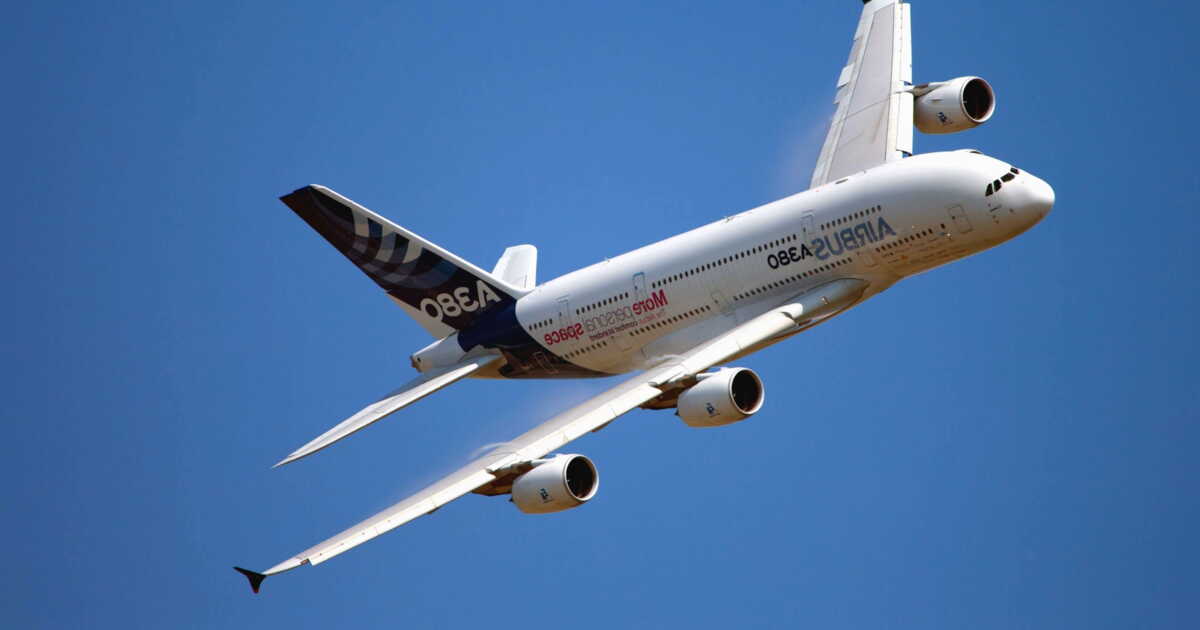
Delay, cancellations, passengers disembarking… Intense heat can disrupt air travel as unexpectedly as a storm or a snow event. The culprit is a physical phenomenon that makes the takeoff phase especially tricky. And when the thermometer climbs too high, airlines can be compelled to rethink their plans… sometimes at the last moment.
To take off, an aircraft needs its engines and wings to have access to a sufficient amount of air. But as temperature rises, the air expands and becomes less dense. Engines and wings then have less air to generate the thrust and lift required for liftoff.
Air that is too hot makes takeoffs harder for airplanes
“That’s why a hot summer day can disrupt operations as much as snow or ice,” explains Cary Grant, a professor at the Embry-Riddle Aeronautical University and a former United Airlines pilot, cited by CNN. This constraint becomes particularly significant when temperatures are very high. For an aircraft to be able to take off in these conditions, it must reach a sufficient airspeed. A longer runway can then help compensate for the performance loss linked to the lower air density.
Mais tous les aéroports ne disposent pas de pistes suffisamment longues. Les compagnies peuvent donc être amenées à réduire la masse de l’appareil. “Dans certains cas, les compagnies aériennes peuvent réduire le poids de l’avion pour décoller en toute sécurité en déchargeant du fret ou des passagers. Elles peuvent également réduire la quantité de carburant embarquée pour accueillir tous les passagers, auquel cas elles devront peut-être ajouter une escale pour atteindre leur destination”, a ainsi indiqué la Federal Aviation Administration (FAA).
Passengers disembarked due to extreme heat
Lorsque les températures deviennent exceptionnellement élevées, même une réduction du poids de l’avion ne suffit toutefois plus nécessairement. Les appareils sont alors soumis à des essais permettant de déterminer les conditions dans lesquelles ils peuvent être exploités en toute sécurité. Au-delà de certaines températures, les procédures prévues par le constructeur peuvent ne plus autoriser le vol.
“Bien que réduire le poids puisse être une solution, les températures dépassent parfois les températures maximales auxquelles l’avion a été soumis pendant les essais. Lorsque cela se produit, le manuel d’exploitation ne contient aucune donnée permettant de faire voler l’avion”, a confirmé la FAA. Cette situation n’est pas seulement théorique. En juillet 2026, American Airlines a ainsi dû retirer 32 passagers d’un vol au départ de l’aéroport international Harry Reid, à Las Vegas, alors qu’une vague de chaleur frappait la ville.
Mais les effets de la chaleur ne concernent d’ailleurs pas uniquement les avions. Les personnels travaillant sur les pistes sont, eux aussi, exposés à des températures difficiles, tandis que les compagnies doivent maintenir des conditions acceptables à bord. “Nous avons mis en place un solide plan de gestion de la chaleur pour nos employés afin de garantir qu’ils disposent d’une hydratation suffisante et de lieux où se rafraîchir”, a ainsi détaillé Southwest Airlines à CNN.
A phenomenon set to become more common?
In the cabins, heat can also become uncomfortable when the aircraft is waiting on the ground. Southwest Airlines explains that crew members may ask passengers to close the window shades to limit the rise of the interior temperature. The phenomenon could also become more frequent. According to the Environmental Protection Agency, heat waves are getting hotter and more frequent.
For travelers, this means that high temperatures can now be an additional factor to consider before taking to the air. “It’s either 32 people who decide to change their plans, or we’re all going to change ours, because the airplane literally cannot take off”, recounted Jared Guynes, one of the affected passengers, according to CNN.
Pour autant, Cary Grant recommande aux voyageurs de ne pas s’alarmer lorsqu’une compagnie modifie les conditions d’un vol en raison de la chaleur. “Je dirais de ne jamais s’en inquiéter, car la compagnie aérienne veille toujours à la sécurité. C’est sa priorité numéro un”, affirme-t-il. Selon lui, les passagers ont donc surtout intérêt à faire preuve de souplesse lorsque les températures extrêmes perturbent leur programme.
PortAventura World will open two new experiences this summer: “Coral Bay, The Lost Legend,” an expansion of the Caribe Aquatic Park, and “Makamanu Jungle, The Adventure Trek.”
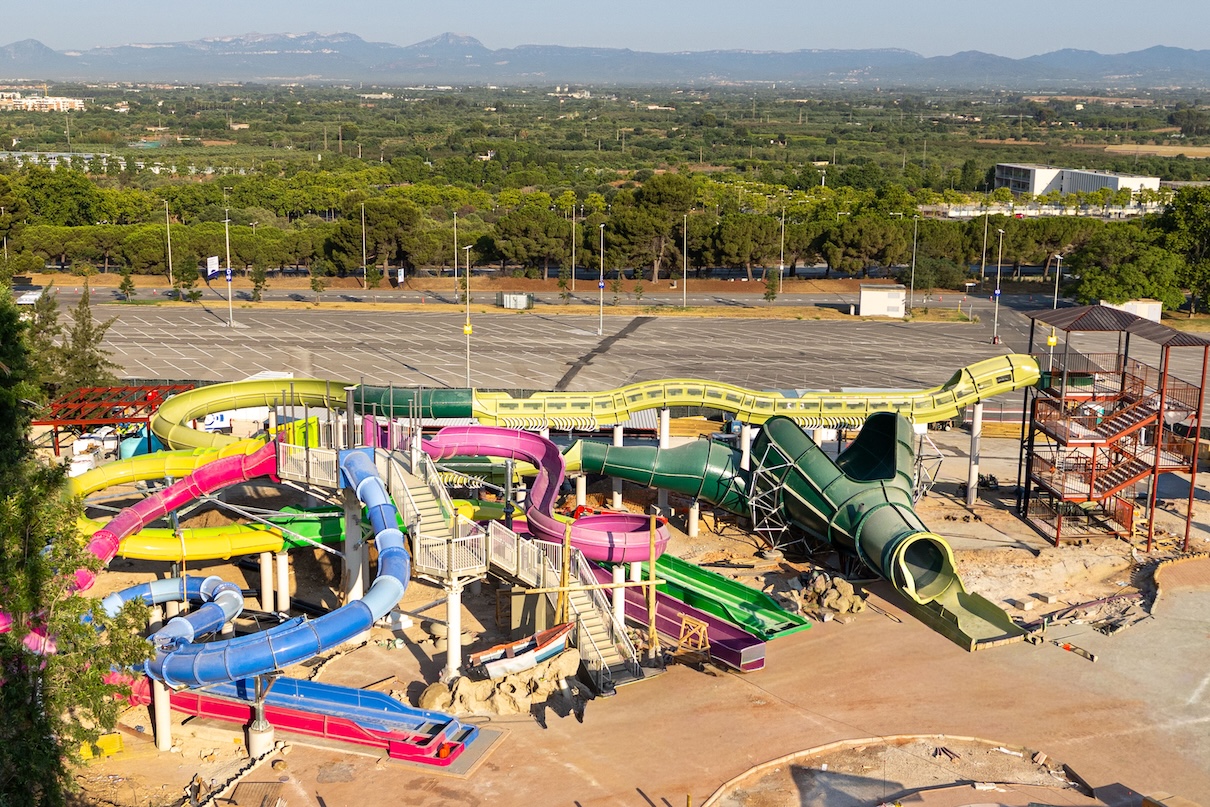
The new water zone of over 6,000 m², named “Coral Bay, The Lost Legend,” draws inspiration from an ancient sunken pirate cove that resurfaced from the depths of the ocean. Water, exploration and themed scenery will guide this extension of Caribe Aquatic Park, following the park’s best attendance year in its history, according to PortAventura World.
Among the new installations is Cyclone, described as the second family water coaster in the world and the first in Europe designed for a family audience.
Visitors will also be able to discover Pirate Bay, touted as the world’s first multi-adventure pool, as well as The Crab, a tower housing five different slide routes.
The youngest guests will have access to an interactive space named Splash Port. The whole complex will be complemented by a new dining venue, El Bucanero, together with several relaxation areas integrated into the theme of this underwater pirate city.
An Adventure Trail Through Polynesia’s Lush Vegetation
The second novelty will take place in PortAventura Park’s Polynesia zone with “Makamanu Jungle, The Adventure Trek.”
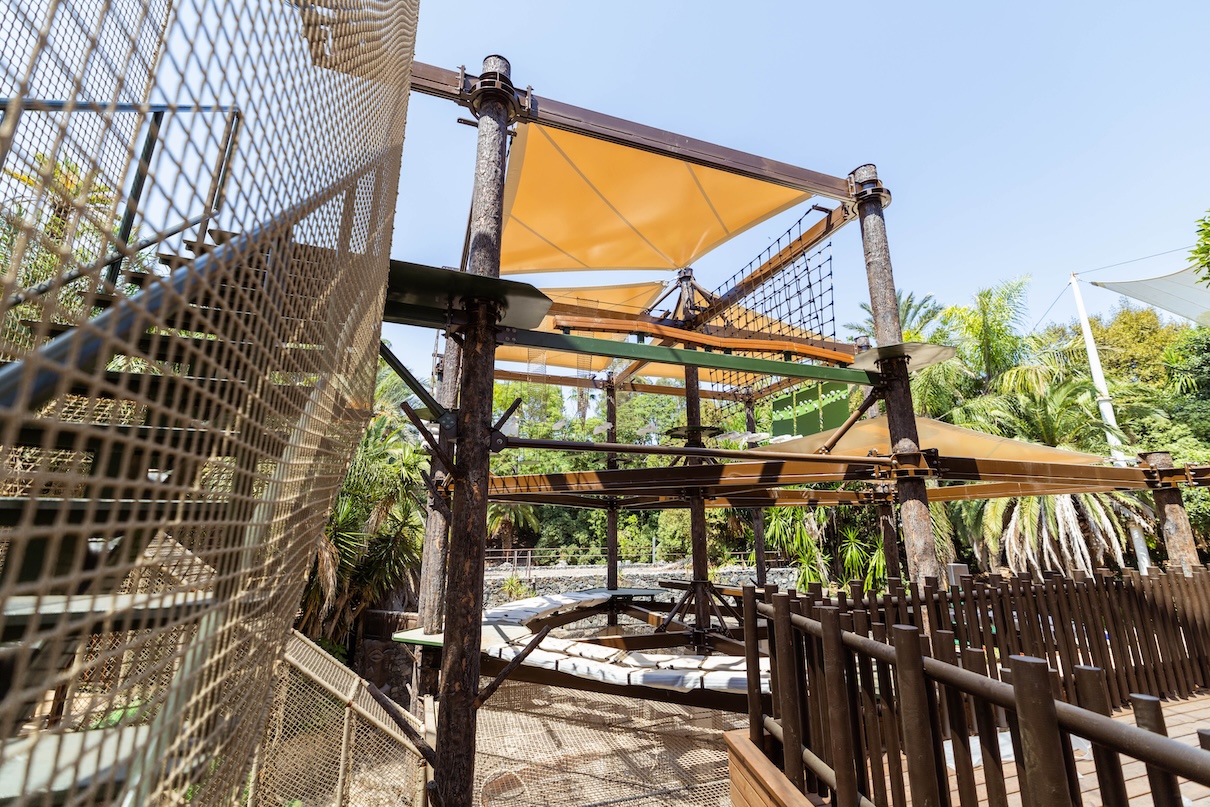
This 135-meter aerial course will wind through tropical vegetation using walkways, rope tunnels, suspended bridges and high structures. The scenery will evoke an ancient volcanic quarry hidden within the jungle.
Aimed at a family audience, the experience will offer several difficulty levels. It will notably include 18 elevated treehouses, 20 rope tunnels, three rope ladders, four slides and a central four-story structure providing varying degrees of adventure.
The new area will also benefit from direct access from the Far West zone, creating an additional link between the park’s two realms.
Strengthening its Position in Family Tourism
PortAventura World states that the new zone will include spaces accessible to people with reduced mobility. A harness-equipped rope course will also be offered to visitors seeking a more athletic experience.
Throughout the course, several visual elements will reference Makamanu, the iconic show that marked the resort’s history for many years.
With these two new experiences, PortAventura World continues to develop its offering for families and aims to renew its appeal to both returning visitors and new customers.
The resort believes that these investments will help strengthen its positioning among the leading family vacation destinations in Southern Europe, by further diversifying its summer leisure offerings.
Published by Amelia Brille TourMaG.com Editor See all articles by Amelia Brille
The seasonal air route operated by Loganair between Jersey, the largest of the Channel Islands, and Paris (and also Bordeaux) was launched at the start of June 2026.
This launch signals the Scottish airline’s intention to connect the island to Roissy-Charles de Gaulle*, an airport offering connections to more than 390 destinations worldwide. It’s also a boon for those who want, departing from Paris, to quickly escape to an island.
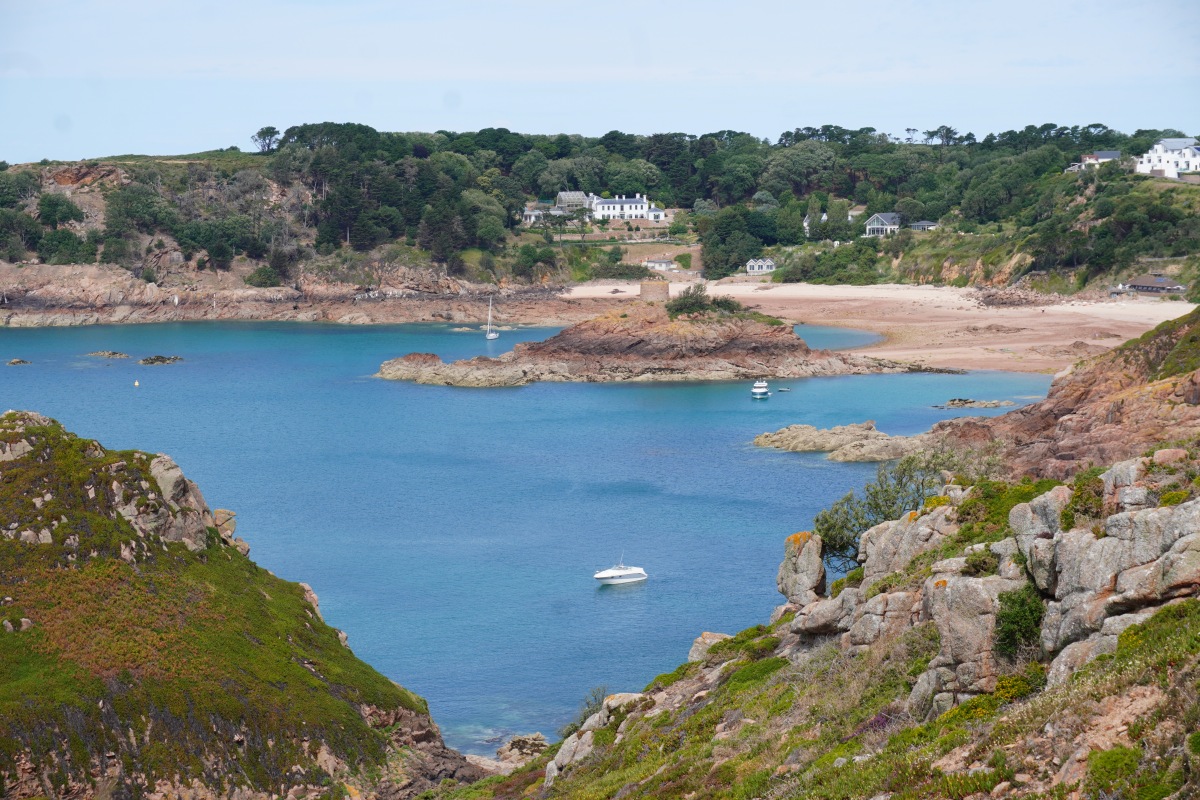
At the invitation of Visit Jersey, TourMaG set off for a weekend to totally unwind just 22 kilometers from the French coast.
An island within (almost) 20 minutes of Paris
Now, to reach Jersey from Paris, you’ll need very little time, probably less than it takes to go from the heart of the capital to CDG airport.
Moreover, in summer, with the time difference between France and England, the Loganair flight bound for the island departs at 12:55 and lands at 13:15, giving us almost the impression that we arrive in 20 minutes.
For those who aren’t really fans of flying or the grandeur of Charles de Gaulle, rest easy: the Loganair flight departs from Terminal 3, a small airport “like in the countryside,” away from the vast terminals where jumbo jets disgorge or refuel hundreds of passengers.
At Terminal 3, for the Loganair flight, check-in and the security and border checks take only a few minutes.
The aircraft, an ATR 72, will also charm with its sobriety and quick boarding for a maximum of 70 passengers.
Fifteen minutes after the door opens, the island is yours
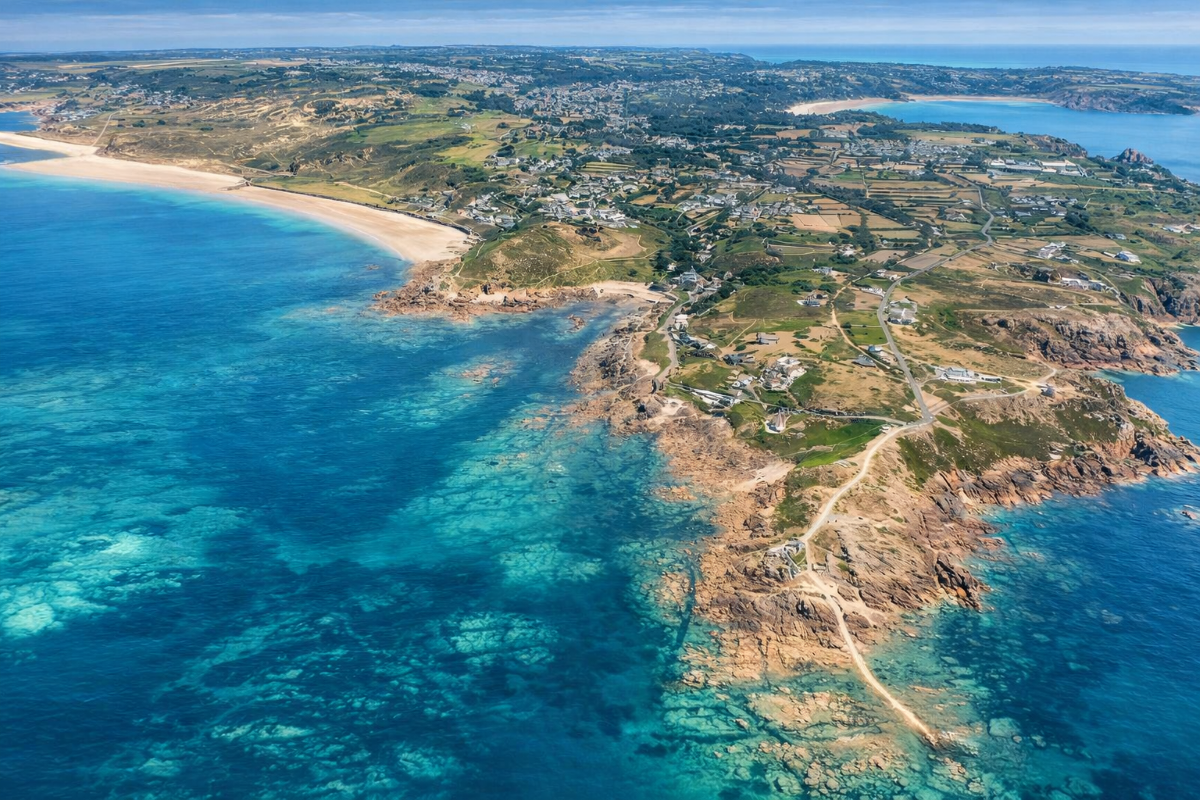
In good weather, the flight is pleasant. Barely enough time to sample an undefinable snack offered, of which the British have the secret, before the plane flies over the island and already presents a pretty view: Mont Orgueil and its castle, Saint-Hélier, the capital, the La Corbière point and its pure white lighthouse.
Leaving Jersey’s airport is as calm as departing from Roissy: a few steps on the tarmac, grabbing checked baggage in 3 minutes, and the formalities.
Fifteen minutes after the door opens, the island is yours.
The best of summer in Jersey
Less than 20 kilometers from the French coast, Jersey has been England since 1204, when these Channel Islands remained under the English crown and then the British throne.
For this short stay, we let Visit Jersey, the tourism office, guide us, offering activities and interesting addresses to ensure a varied weekend full of impressions on an island that summer proudly showcases.
Since we are being told in every tone that the time of heatwaves has come, and indeed we notice it these days, Jersey is one of the ideal retreats.
From continent-wide heat to the best of the summer season here: radiant skies, turquoise water, and a heat that is very bearable thanks to sea breezes.
In this still-temperate part of Europe, rain will still often invite itself, but our stay progressed without a drop.
A variety of accommodations
Jersey offers a very varied range of accommodations of all kinds, by the sea of course, but also in a rural setting, in the English countryside or in the town, notably in Saint-Hélier, the capital.
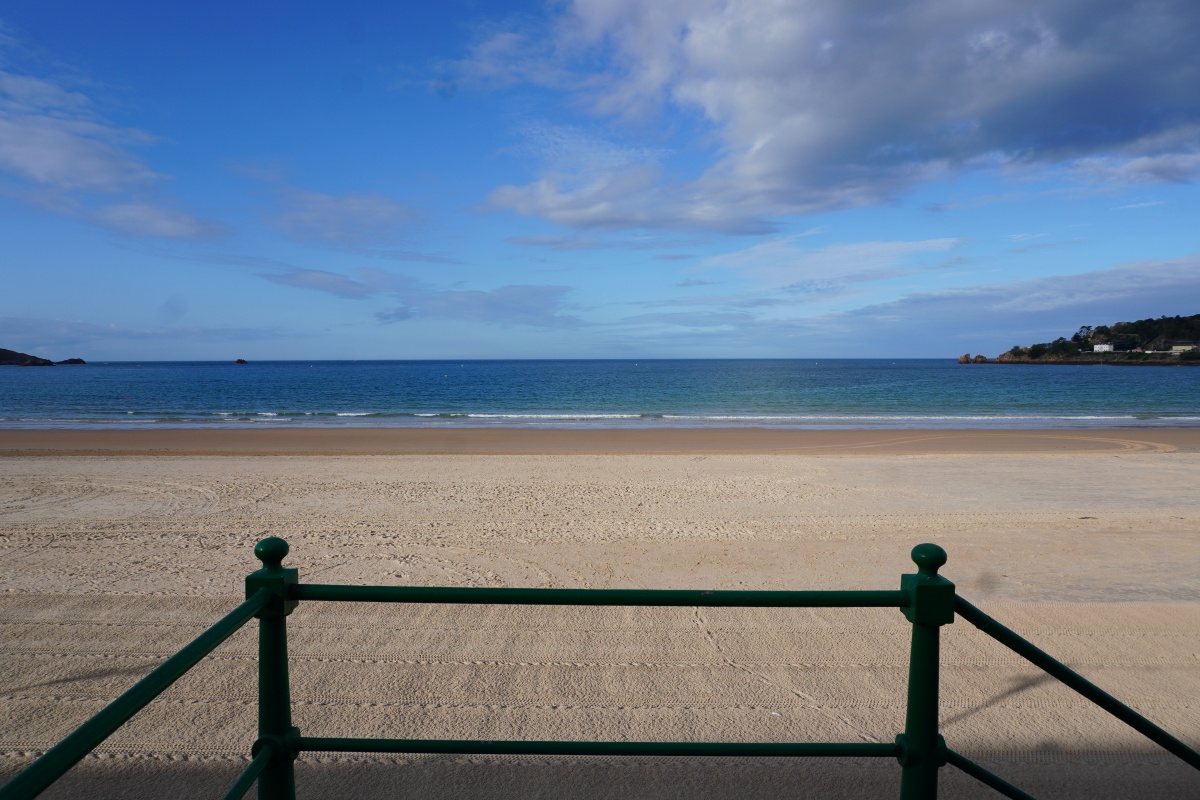
We stayed at the L’Horizon hotel, built in 1850 by a Bengal Army colonel, ideally located on the beach of the small bay of Saint-Brélade, in the south of the island.
In late June, the beach, one of the most sought-after, is still relatively quiet during the day and practically reserved for you in the evening and morning. The view is magnificent and it only takes a minute to find yourself walking with your feet in the water.
The four-star hotel, in addition to its privileged location, features a spa and a pool as well as a high-quality restaurant with a pleasant terrace.
Many other options beyond hotels are available. The island lists more than 9,000 possibilities: guesthouses, rentals, campsites, and even unusual stays in towers or old fortifications.
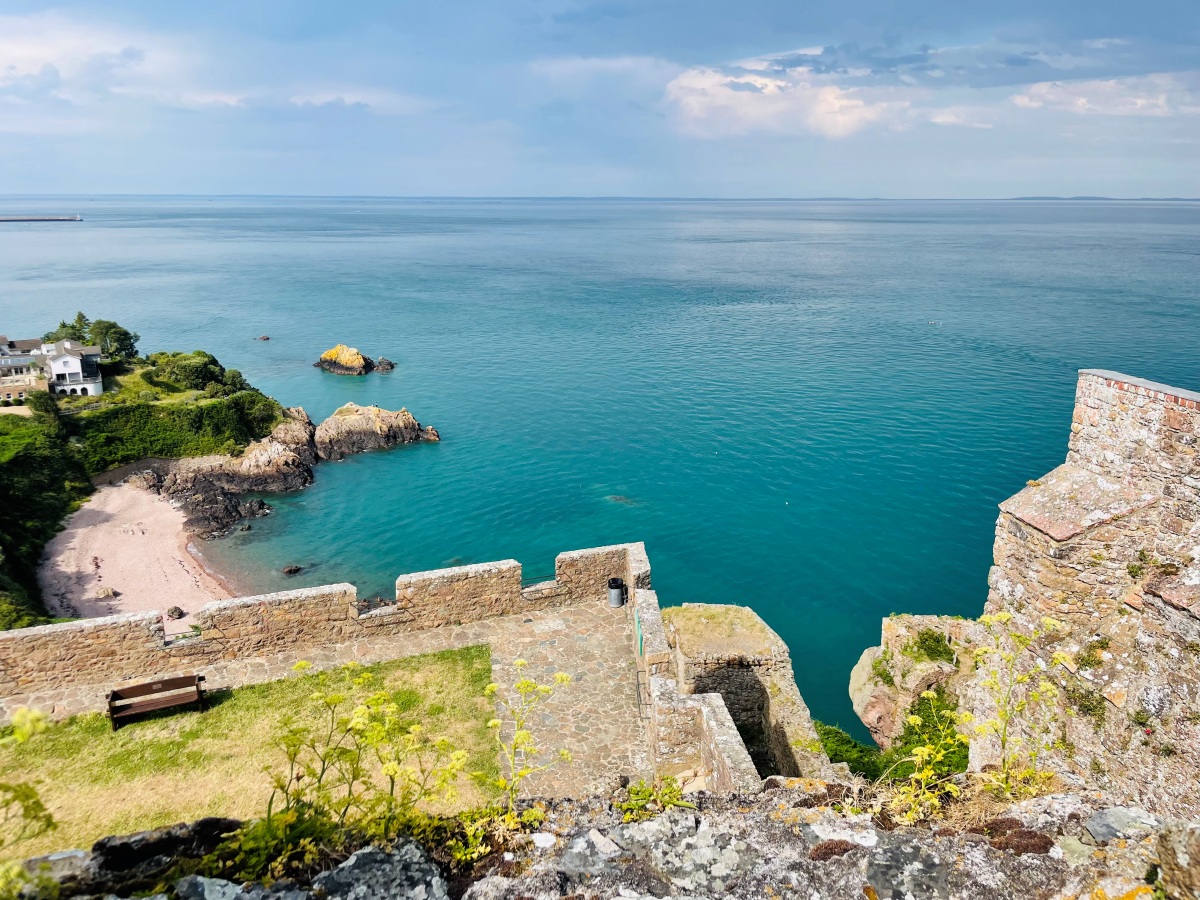
A grand and historic site selected for us among many: Mont Orgueil Castle, a true medieval fortress overlooking the charming small port of Gorey on the island’s western side, built in the 13th century to protect the territory from French attacks.
Perched on the rocks, it is the quintessential castle.
Nothing is missing: guard paths, vaulted rooms, secret passages and its little staircases, and up top, an exit onto a promontory with a splendid view over the Grouville Bay, and in the distance the French coast. There too, a very impressive journey back in time.
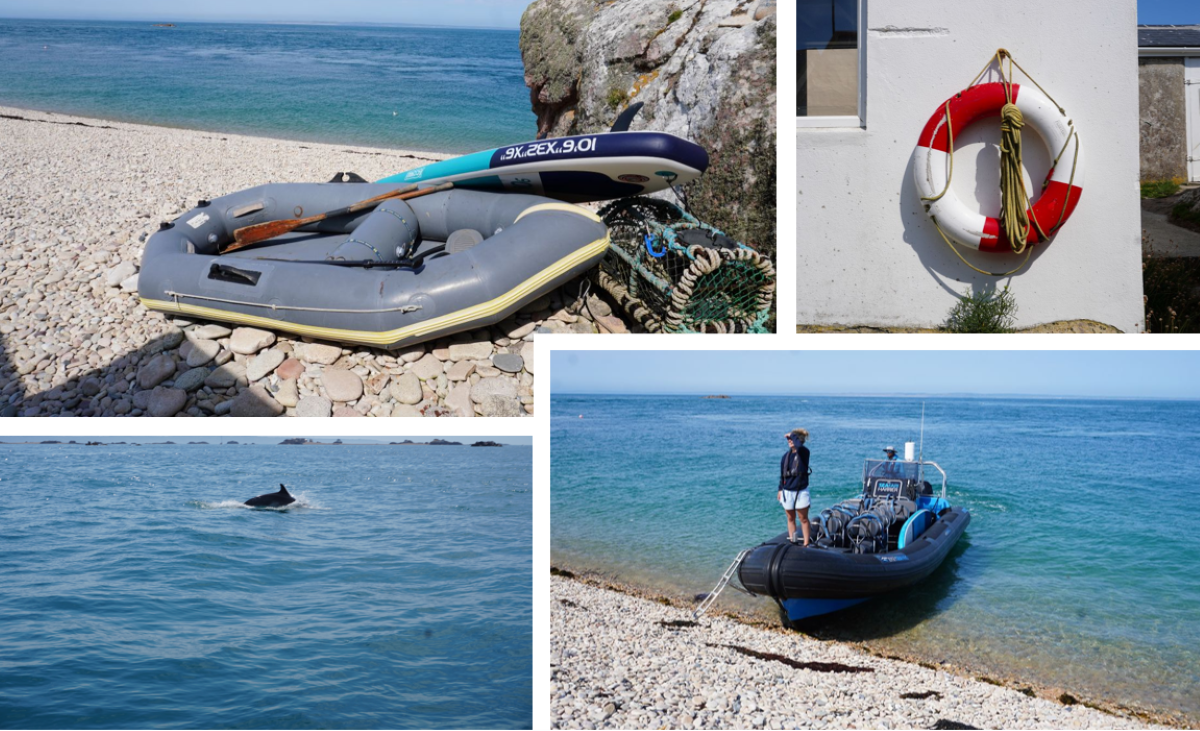
On the hiking side, we chose Jersey Seafari’s Seafari, which takes you from the St Catherine’s West jetty aboard a powerful rigid-hulled boat for a crossing to the tiny archipelago “Les Écréhous.”
High-speed thrills to reach these small islets, then, once on site, the large zodiac slows down and is accompanied by dolphins.
The craft glides gently between the islets, with a few fine sailboats moored. We land on Marmotière Beach for a delicious swim in clear waters before heading back.
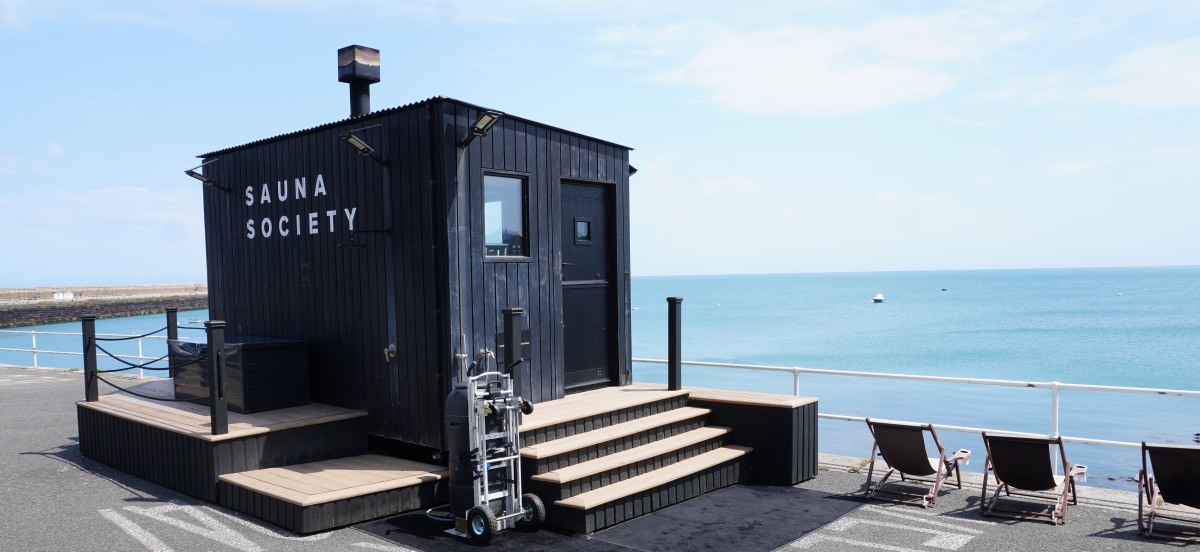
Near the jetty and facing the sea: a curiosity to try on returning from a stroll: the Sauna Society, for a relaxing break. As its name suggests, a charming little wood-fired sauna for enjoying the benefits of hot-cold therapy.
Finally, Saint-Hélier, the port city and capital of the island, also deserves a detour.
It has kept its historic heart with Georgian and Victorian houses, and local stone façades. One can stroll along King Street, the main pedestrian street, or the Central Market, typically Jersey, with its fountain.
However, since Jersey became an offshore financial center, the town has seen many modern, tall buildings rise up, not really in the Anglo-Norman style, and some may regret it.
The island is rich. It is good for maintaining its natural, historical and cultural heritage. And if, in the town center, one encounters a “business style” urbanization, one can also admire, all around the island and especially along the seafront, magnificent properties.
Finally, Saint-Hélier’s small bus station, “Liberation Station,” makes it very easy to get around the island thanks to a well-organized bus network, easy to access, reliable for timetables, and serving the entire island.
Gastronomic stopover
Jersey is known for the quality of its food. Between the abundance of local produce, the creaminess of dairy products, the freshness of seafood, the purebred Jersey cow, and these delicious “Jersey Royals,” small new potatoes grown on the island since 1880. On country roads, you’ll find them in “Honesty stalls” until the end of July.
You help yourself and the producer trusts you to pay about £2 for a bag of potatoes harvested that very morning. Three great addresses among many we tested: The surprising Christopher’s in Saint Helier, in Saint Helier. A discreet door in a dark street, a few stairs and a lovely room with a menu focused on aged meats.
Le Sumas on the small Gorey harbor, with a pretty terrace overlooking the sea and Mont Orgueil Castle. Refined cuisine using many local seafood products.
The Beach Club on Saint Brélade Beach to enjoy, with a cocktail, the sunset and later, in a relaxed setting, a Mediterranean-influenced cuisine.
Outdoor enthusiasts and fans of local discovery have their ideal travel companion.
The IGN has significantly enriched its public mapping service by launching a major update, designed to facilitate the exploration of France and its overseas territories.
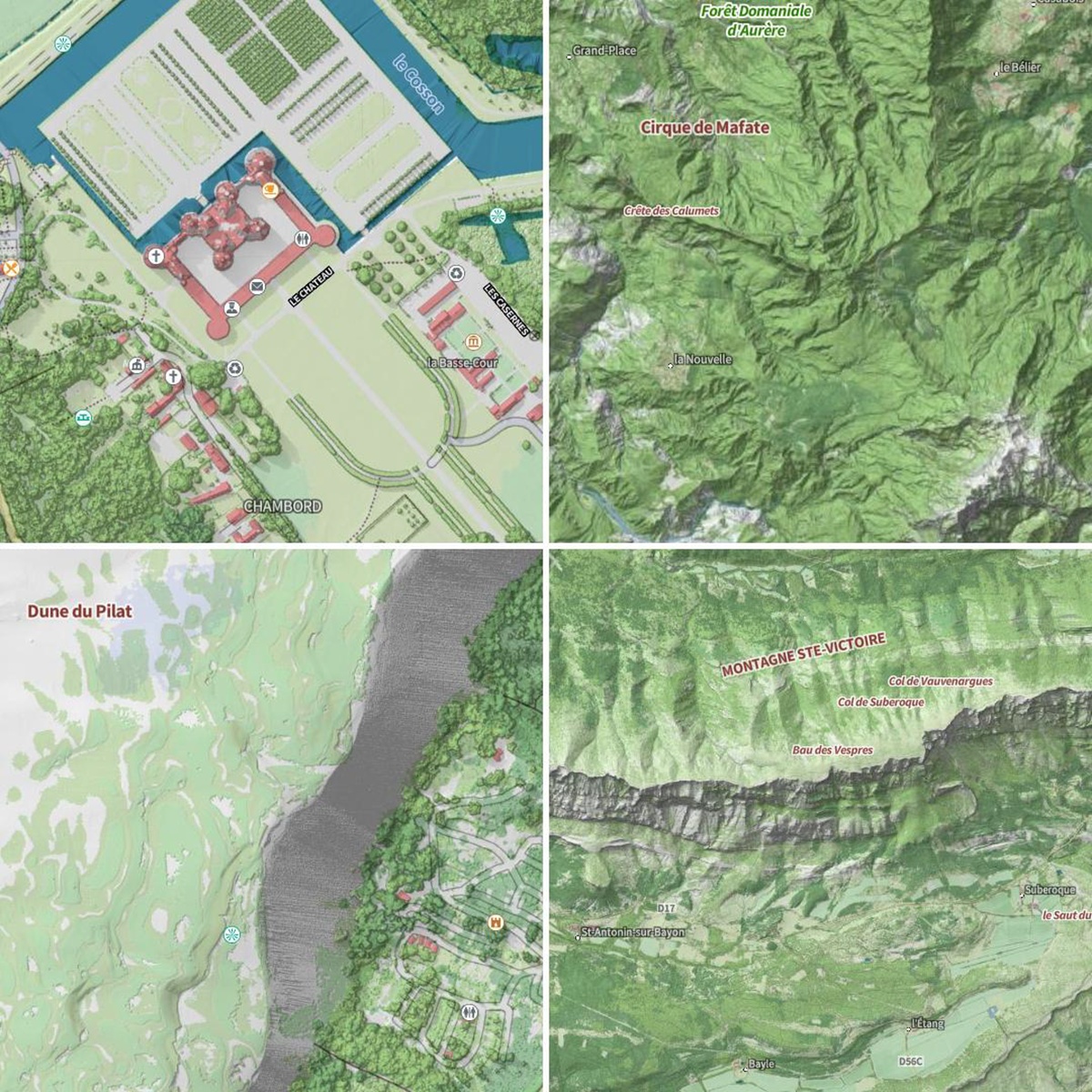
This «Summer Pack» notably stands out by offering a new ultra-precise high-definition map called “Plan IGN HD”.
Available exclusively on the app, it covers more than two thirds of the French territory, including DROM, and reveals with remarkable clarity the relief, the built environment, and the vegetation to provide a highly immersive reading of the space.
In addition to this technical advance, one of the most awaited features by the hiking community is added: the ability to overlay the routes of marked hiking trails (PR) and long-distance trails (GR) on any map background, including aerial photographs.
A comprehensive tool, blending guided hikes and the local cultural calendar
In addition to refining the geodetic display, the platform becomes a genuine travel guide thanks to the deployment of a thematic layer named “Idées rando”.
This contains over 6,000 walking, horseback riding, or cycling routes carefully selected and accompanied by a detailed editorial presentation to help each user choose according to their desires and physical level.
The other strength of this summer edition lies in the ongoing integration of local events provided in real time by the various French tourist offices.
Whether it is traditional markets, open-air concerts, or village festivities, the app brings together a wealth of ideas for cultural and festive outings across the entire national territory to help plan holidays while discovering the richness of each region’s heritage.
Also read: Cartes IGN: a free app to explore France
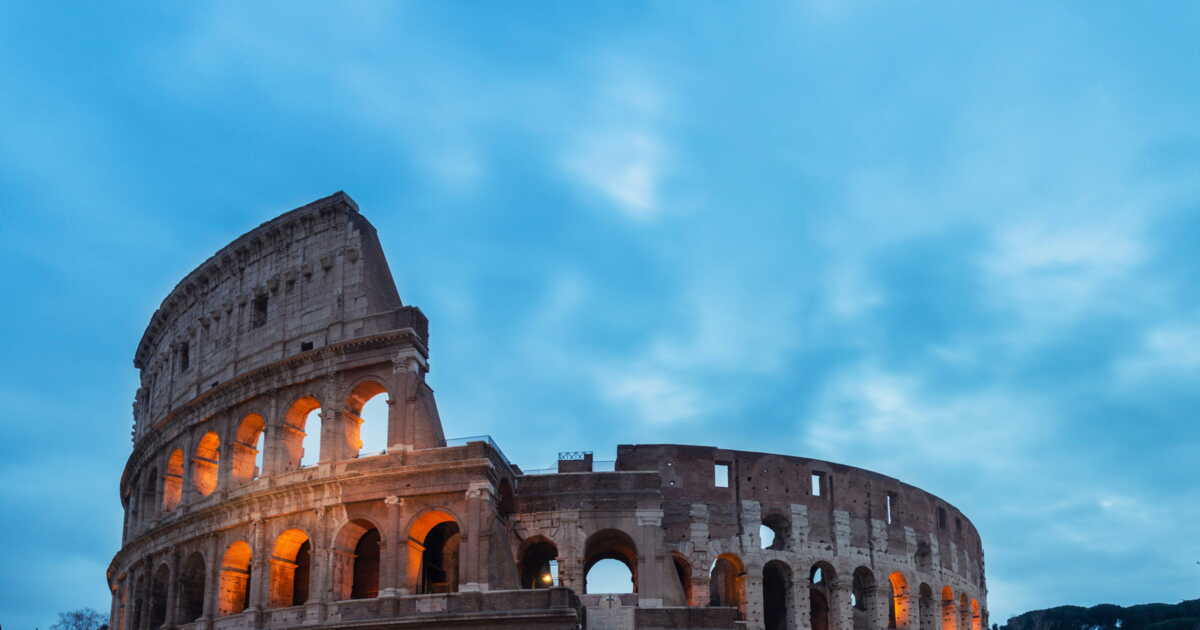
A curling under a bright sun and just a few meters from the Colosseum? It’s an activity that has drawn some Italians in for several months. A curling rink has indeed been installed on the Oppian Hill, amid Rome’s ancient monuments. “Everything happened in a completely spontaneous way and we had a lot of fun”, tells the New York Times Luca Puzziferri, a 37-year-old doctor who came to try the sport with his wife and two friends.
Since the Milano-Cortina Winter Games held in February, curling has generated a certain enthusiasm among Italians. The Italian team notably won a bronze medal in mixed doubles, sparking unprecedented interest in the discipline in the Bel Paese.
A curling rink in an exceptional location
This curling rink in the unique setting was installed last June by Sport e Salute, the public body responsible for promoting sport in Italy. “After the Olympic Games, everyone had a dream: to discover curling,” explains to our colleagues Diego Nepi Molineris, the organization’s chief executive. The institute wished to take advantage of the curling spotlight to encourage Italians to discover the sport even more.
To create an outdoor rink that can withstand the heat, its surface is made of plastic. It measures about 12 meters long by nearly 3 meters wide, compared with roughly 45 meters by 5 for a regulation rink. The stones are also much lighter and the brooms are mainly used to retrieve them rather than to modify their trajectory.
The idea is therefore not to turn participants into Olympic athletes, but simply to introduce the rules and the sensations of curling. “It’s the spirit of the game that counts”, says Andrea Gios, president of the Italian Ice Sports Federation.
What is the popularity of curling in Italy?
If the country hopes to attract new players, curling facilities in Italy are few. The country currently has only seven dedicated rinks, all located in the north, for just 425 licensed players. The north of the boot is indeed the cradle of the discipline since it was introduced there in the 1950s in the Alps, at Cortina d’Ampezzo.
The sports officials now hope to capitalize on the momentum created by the Olympic Games to develop the sport. If demand is sufficient, the rink installed opposite the Colosseum could be rebuilt with real ice as early as November. It would not be of international dimensions, but would at least allow Romans to get an introduction to curling. This would thus help sustain interest in the discipline.
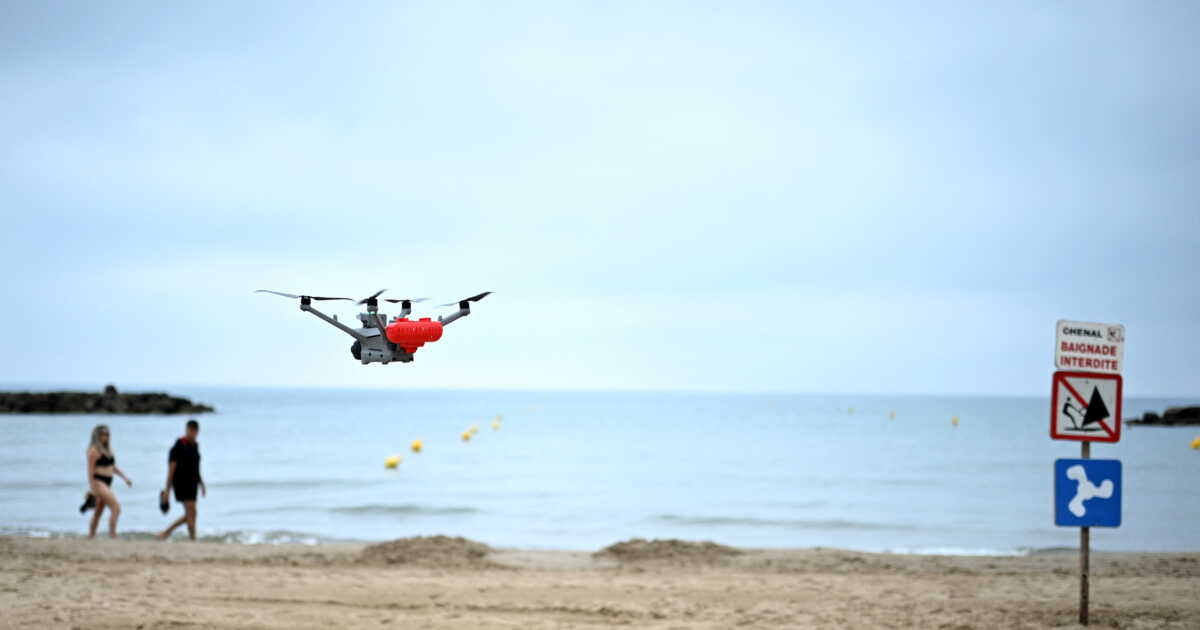
“If you’re in trouble, we will drop a buoy,” proclaims from the air an AI-powered drone, hovering a few arm’s lengths off the shore at Valras-Plage (Hérault) in southern France, where this device designed to detect drowning risks is currently being tested. The three heatwaves that have swept France since May have driven up drowning figures. In two and a half months, 274 people have died in the sea, in rivers, or in private pools, not counting non-fatal drownings that could leave serious after-effects.
Near Béziers, along the Mediterranean coast, Instadrone, a company specializing in the use of drones in industrial settings, aims to broaden its activity to monitoring bathing areas. It has thus received backing from the intercommunal authority and from the Valras station, which are financing the ongoing tests. Those tests should pave the way for the necessary authorizations within about a month, with a view to a full rollout by the summer of 2027.
An autonomous drone to detect the early signs of distress
“Dropping lifebuoys with a drone has been done for five years in the Landes region. But it was always in manual mode. We are bringing full automation,” explained to AFP by Instadrone’s founder, Cédric Botella, at the foot of the main lifeguard post, just steps from the station’s casino. The device appears as a large metal box, inside which a drone is ready to take off at any moment, day or night, notably thanks to its thermal camera.
In patrol mode, its mission is to “cover the 2.5 km stretch of beach by flying behind the breakwater, flying along the shoreline, without flying over swimmers but directing its cameras toward them, while avoiding filming people on the beach”, adds Mr. Botella, a former judicial police officer who has turned to entrepreneurship.
“If it detects erratic behavior, such as someone who ‘blocks the flow’, it will approach and send them an audio message saying that help is on the way. If needed, it will drop a buoy that inflates automatically on contact with water”, continues Botella.
Other scenario: a lifeguard spots someone in difficulty, or someone alerts them. In that case, the lifeguard, who will be trained in this new technique, will take control of the drone and send it to the exact location to assess the situation. Finally, “if during a midnight swim there is an incident, there will be an emergency number that will allow us to trigger the drone immediately and locate the person”, he also notes.
A reinforcement for lifeguards, including off-season
In cruising mode, the system costs around 2,000 euros per month for the community that adopts it, according to the entrepreneur, who hopes for its generalization. “Life has no price”, remarks the mayor of Valras-Plage, Daniel Ballester, who strongly backs the initiative and came to observe the latest tests.
“It won’t replace humans, but it opens up new ways to stay operational,” adds the official, who hopes to extend coastal monitoring to morning and evening hours and to times of the year when beaches are not watched by rescuers.
In May, the early arrival of a heat wave in France had drawn an unusual influx of visitors to the Mediterranean and Atlantic shores while beaches were not yet monitored, posing safety challenges.
We have selected the ten used cars that fit these criteria, cross-checking reliability data from J.D. Power and ADAC with BPM Cars’ insights, a multi-brand dealership group that partnered with this ranking.
What Makes a Real Road-Trip Car
Four criteria separate the contenders. First, trunk space: below 450 litres and a family’s suitcases spill over onto the rear seat. Next, fuel consumption, measured at 130 km/h, which can vary widely between models of similar size. Comfort for long distances—seats, soundproofing, adaptive cruise control—makes the difference between arriving fresh or drained. Finally, reliability: a breakdown 800 km from home can ruin a holiday more reliably than poor weather. Our selection, focused on the brands distributed by BPM Cars’ network, the partner in this ranking, does not tell you how to plan the departure; the mandatory preparation steps, including maintenance, tires and equipment, are detailed in BPM Cars’ road-trip preparation guide. It indicates which car to put into the equation, and road safety recalls the non-negotiable rule: a break every two hours.
The Top 10 Road-Trip-Ready Used Cars for Your Vacation Drive
1. Volvo V60 (2018-2022)
The wagon that looks after its crew. Volvo’s seats are a benchmark that ten hours on the road confirm, and its safety equipment ranks among the most complete on the market. The 529-litre boot is square and swallows the vacation logistics. The D3 and D4 diesels, followed by the B4 mild-hybrids, cover the distance while calling for about 5.5–6.5 L/100 km on the highway. Price ranges from €22,000 to €32,000 depending on the year. Network maintenance isn’t cheap: a full history and a solid warranty are welcome at purchase.
2. Suzuki Swace Hybrid (2021-2024)
The wisest hybrid wagon of the moment, and the most overlooked: the Swace is the technical twin of the Toyota Corolla Touring Sports, produced on the same British assembly lines with the same 1.8 122 hp hybrid powertrain, reputed among the most durable on the market. About 5 to 5.5 L/100 km on long journeys, enough to link Paris to the Basque coast with a single tank, and the Crit’Air 1 badge to cross metropolitan areas. Its 596-litre boot swallows family luggage, and its conspicuity on the used market makes it a bargain, around €17,000 to €22,000. Discover the Suzuki universe at BPM Cars.
3. Alfa Romeo Stelvio (2020-2023)
The SUV that loves the road as much as you do. The sharpest chassis in its class, a responsive steering feel, and a sedan-like balance: the Stelvio turns winding national roads into driving pleasure, without sacrificing its 525 litres of boot. The 2.2-litre diesel from 160 to 210 hp stays thrifty over long stretches, around 6–7 L/100 km. Prices range from €28,000 to €40,000 for facelifted years from 2020 onward, the best finished and most reliable phase of the model’s career. A well-documented history is essential, as electronics can be finicky at times. Our used Stelvio guide details the versions to target.
4. Hyundai Santa Fe Hybrid (2021-2023)
The XL format for the family road trip: up to seven seats, a boot over 630 litres in five-seat configuration, and a 230 hp hybrid powertrain that remains smooth on long stretches, from the outskirts to the hairpins of the Cevennes. Like the Tucson, it comes with Hyundai’s five-year unlimited-mileage warranty, transferable to the second owner, a genuine safety net far from home. Expect to pay €30,000 to €40,000 depending on year and trim. Its size—about 4.80 metres—requires a little care in village parking, the only real bottleneck of all this space. Discover the Hyundai universe at BPM Cars.
5. Mercedes-Benz E-Class Estate (2018-2022)
The rolling palace of the ranking: 640 litres of boot space, reference-level sound insulation and a suspension tuned for long legs. The 220d diesel, powered by the reliable OM654 four-cylinder, runs down to around 5.5–6 L/100 km at a steady legal speed—an economical long-distance performer. Expect to pay between €28,000 and €42,000 depending on year and mileage. It’s the choice of travelling families and heavy-mile drivers; in town, its 4.93-metre length requires broad maneuvering. See the E-Class Estate at BPM Cars.
Good to know. Several models in this ranking regularly pass through BPM Cars’ guaranteed stock: a 200-point check, 12 to 36 months of warranty, and a complete maintenance history, so you can head off with peace of mind. Discover the used stock.
6. Hyundai Tucson (2021-2024)
The compact SUV that heads off on vacation with its warranty: five years of unlimited mileage, transferable to the second owner, ensuring travel coverage. Its boot ranges from 546 litres to 620 litres depending on engine, and its spacious cabin makes it a true family car, with hybrid versions showing smooth and economical behavior on long stints. Expect to pay €20,000 to €28,000. See our used Tucson guide to pick the right version.
7. Jeep Compass (2021-2023)
The road-trip spirit par excellence: generous ground clearance, rugged look, roomy interior and a 438-litre boot. The 1.3 turbo petrol with 130 or 150 hp gets the job done without fuss, and the plug-in hybrid 4xe adds all-wheel drive for steep forays. Prices range from €18,000 to €26,000 for recent years, with higher figures for 4xe. For the latter, check the charging history; the simple petrol remains the rational choice. See the Compass at BPM Cars.
8. Mercedes GLC (2020-2022)
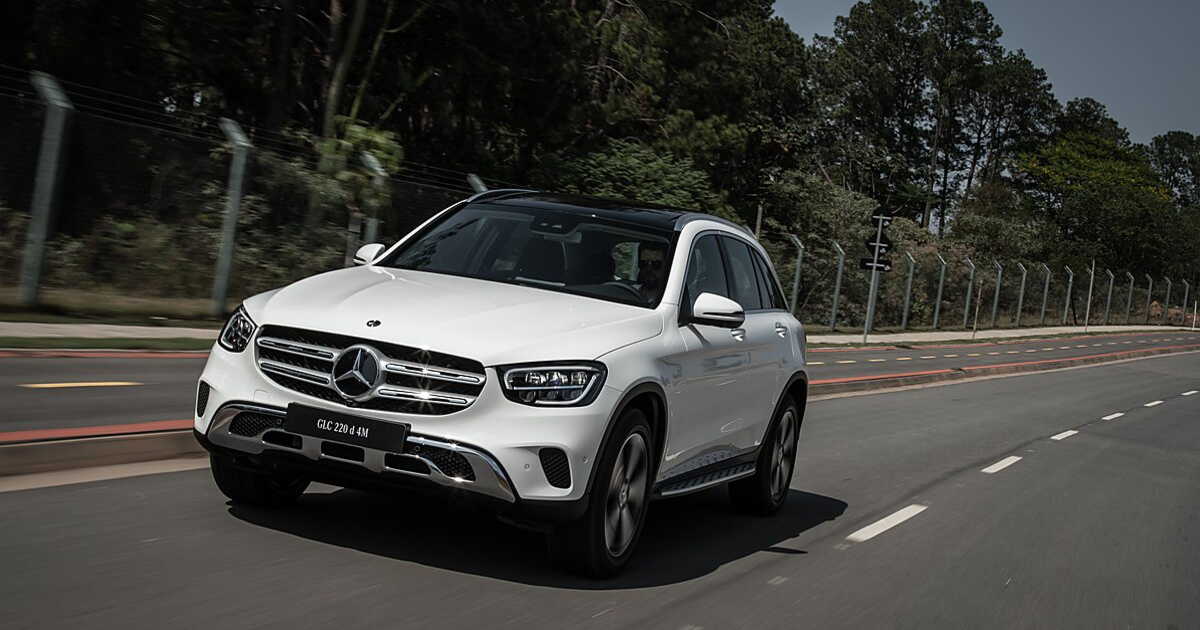
The highway is its realm. Attentive soundproofing, long-haul seating and effective adaptive cruise: the GLC makes 1,000 kilometres down to the south a routine trip. ADAC places it at the top of its reliability class, and the OM654 diesels, the 200d and 220d, are frugal around 6.5 L/100 km at legal speed and among the brand’s most enduring. Expect to pay €32,000 to €45,000, avoiding the plug-in hybrid 350e from this period, which is less reliable. See the GLCs at BPM Cars.
9. Volvo XC60 (2018-2022)
The raised driving position of the SUV, plus extra Volvo comfort. The XC60 inherits the long-haul seats and safety repertoire of the V60 in a taller, more accessible package for children and grandparents alike, with a 505-litre boot. The D4 diesels and mild-hybrids B4 hold the distance, priced between €25,000 and €38,000 depending on year. The same recommendation as for its wagon cousin applies: a complete history and a solid warranty make a difference at purchase. Discover the Volvo universe at BPM Cars.
10. Suzuki Vitara (2019-2023)
The entry ticket for the road trip, between €14,000 and €22,000. Lightweight and frugal thanks to mild hybridization, available with AllGrip all-wheel drive for the Pyrenees’ tracks or Cévennes’ lanes, the Vitara offers high reliability and steady ADAC praise, inherited from a straightforward engine. Its 375-litre boot requires smart packing—soft bags rather than rigid suitcases—and highway noise isolation remains modest. For couples and small families who prioritize the itinerary over luxury, it’s freedom at the best price.
Our selection is made in partnership with BPM Cars. Family SUVs, wagons and recent hybrids pass weekly through the group’s guaranteed stock: 200-point check, 12 to 36 months warranty and a complete history delivered to the buyer. See the available vehicles.
Estate or SUV: Which Should You Pick for the Vacation Road?
For similar overall size, the estate retains the rational advantage: a lower center of gravity, better behavior when loaded, and highway fuel consumption about 0.5 to 1 L/100 km lower than a comparable SUV, thanks to aerodynamics at 130 km/h. The SUV answers with a higher driving position, more relaxed for many drivers, usable ground clearance off the pavement, and easier boarding for children and grandparents. Both schools have their champions in this ranking; to delve deeper, our used estate guide and our guide to 7-seat SUVs detail the best family profiles.
Also read on GEO: all our travel ideas.
Frequently Asked Questions
Which used car should you choose for a road trip?
Reliable choices combine large boot space, fuel efficiency and reliability: Volvo V60, Suzuki Swace Hybrid and Mercedes E-Class Estate on the wagon side; Alfa Romeo Stelvio, Hyundai Tucson or Santa Fe on the SUV side. For a tight budget, the Suzuki Vitara remains unbeatable from €14,000.
Which car uses the least fuel on the vacation road?
The Suzuki Swace Hybrid is the most economical in our lineup: around 5–5.5 L/100 km on long trips thanks to its proven hybrid chain. For diesels, a E-Class 220d or a GLC 220d drops to about 5.5–6.5 L/100 km at a steady, legal pace.
Should you service an used car before a road trip?
Yes, systematically: levels, tires, brakes, air conditioning and the timing belt/chain should all be checked before a long journey. A car purchased from a dealership, serviced and guaranteed like BPM Cars, leaves with these checks already done, making departure preparation simpler.
The ideal road-trip car isn’t the most expensive; it’s the one that arrives with no suspicious noises, all luggage aboard and passengers rested. A proven mechanical, a roomy boot and a transparent history: BPM Cars’ stock brings all three together.
See all BPM Cars opportunities
For short trips, prefer walking or cycling. #MoveLessPolluting
Sponsored article by BPM Cars. The editorial team did not participate in the production of this article.
Each summer, thousands of travelers seek the perfect moment to capture coastal landscapes. Among them, the “golden hour”, that brief period after sunrise or before sunset when light is soft and warm, turns beaches into particularly photogenic settings. A study conducted by photography specialists reveals which European beaches offer the best conditions to capture these moments between July and August. And several French sites are among the destinations listed in this ranking.
Germany Dominates the Rankings
To establish this ranking, MPB experts, a platform specializing in second-hand photo and video equipment, analyzed 40 renowned European beaches. They relied on data from the National Oceanic and Atmospheric Administration (NOAA) regarding the sun’s position during July and August, examining in particular the average duration of the golden hour, the orientation of the beaches relative to sunrise and sunset, and the variation of the sun’s position over the summer.
The beach of Timmendorfer Strand, located in Lübeck Bay in Germany, takes first place with an overall score of 63.7 out of 100. It offers an average golden hour of 53.1 minutes and stands out especially for its exceptional sunrise alignment, rated at 87.5 out of 100. The sun thus appears almost in line with the axis of the beach, an ideal setup for photographers who want to shoot facing the sea.
Continuing in Germany, Warnemünde Beach near Rostock ranks second in the ranking. It shows the longest golden hour in the study, with an average of 53.4 minutes. Unlike Timmendorfer Strand, it does not stand out for an exceptionally well-aligned sunrise, but rather for a more balanced profile, with identical scores of 42.7 out of 100 for sunrise and sunset. Its wide sandy beach and its lighthouse thus offer shooting opportunities at various times of the day.
Mediterranean Beaches Do Not Fall Behind
The Italian beach of La Pelosa, in Sardinia, completes the podium with a score of 60 out of 100. Although it has a shorter golden hour, estimated at 39.1 minutes, it benefits from a low variation in the sun’s position during the summer (19.7 degrees). This stability makes it easier to plan shoots and allows photographers to reproduce similar light from one day to the next.
Other beaches also feature among the study’s top-ranked. La Concha, in San Sebastián, Spain, places fourth thanks in particular to a good alignment of the sunset (65.4 out of 100). In Spain as well, Playa de las Canteras, in the Canary Islands, and Playa de Muro, in Mallorca, appear in the top 10. Several Greek beaches also stand out, such as Navagio in Zakynthos and Paleokastritsa in Corfu, particularly favorable for sunsets with respective alignment scores of 81.8 and 81.1 out of 100.
Fig Tree Bay in Cyprus, as well as Cala Goloritzé in Sardinia, complete this group of well-positioned Mediterranean destinations. In the Netherlands, Scheveningen and Zandvoort offer some of the longest golden hours in the ranking, with averages of 50.2 and 50.5 minutes respectively, and prove especially suitable for late-afternoon photography.
Three French Beaches Among the Top-Ranked
In France, conditions vary significantly across the coastlines. Étretat Beach, in Normandy, ranks fifth in the European standings with an overall score of 52 out of 100. It notably has the best sunset alignment of the entire study, with a score of 90.1 out of 100. The famous Norman cliffs thus provide a setting particularly well-suited for images taken as the sun sinks toward the horizon.
With an average golden hour of 47 minutes, photographers also have a relatively long window to play with contrasts between the rocks, the sea, and light variations. This kind of landscape enables images where the relief gradually turns into silhouettes while the final glimmers of the day color the sky. On the Mediterranean coast, Palombaggia Beach in Corsica ranks twelfth ex aequo with a score of 49.5 out of 100. It stands out for its sunrise alignment, rated at 75.4 out of 100, but is not suitable for sunset photographs according to the study’s criteria.
The Pampelonne Beach, near Saint-Tropez, shows a similar profile with a sunrise score of 74.6 but a zero for sunset. It ties for fourteenth ex aequo with a score of 48.9 out of 100. Stretching about 4.5 kilometers, this famed beach in the Var department is known for its vast expanse of fine sand and turquoise waters. Its golden hour lasts on average 40.8 minutes, allowing photographers to enjoy morning light that enhances both the coastline and the renowned beach clubs and the pine trees that line part of the shore.
A Few Tips for Capturing Great Photos
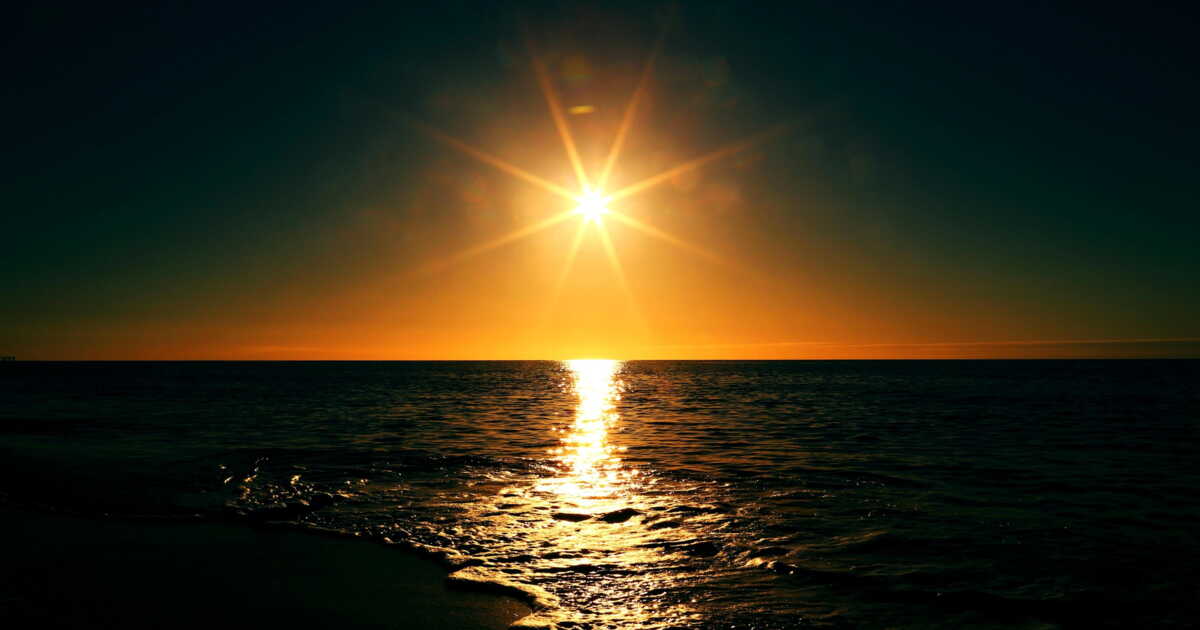
MPB specialists also remind a few simple rules to succeed with your shots during this period. They especially recommend using a tripod to stabilize the camera when light drops quickly, as well as paying close attention to exposure to avoid losing the details of the sky around the sun. They finally suggest choosing an aperture between f/8 and f/11. This setting helps keep the foreground and the horizon sharp and can produce a starburst effect when the sun is partially hidden by an element of the landscape.


















 Published by Amelia Brille



 Published by Christophe Hardin