
Receptifs France: A 2026 Year of Resilience and Uncertainty [ABO]


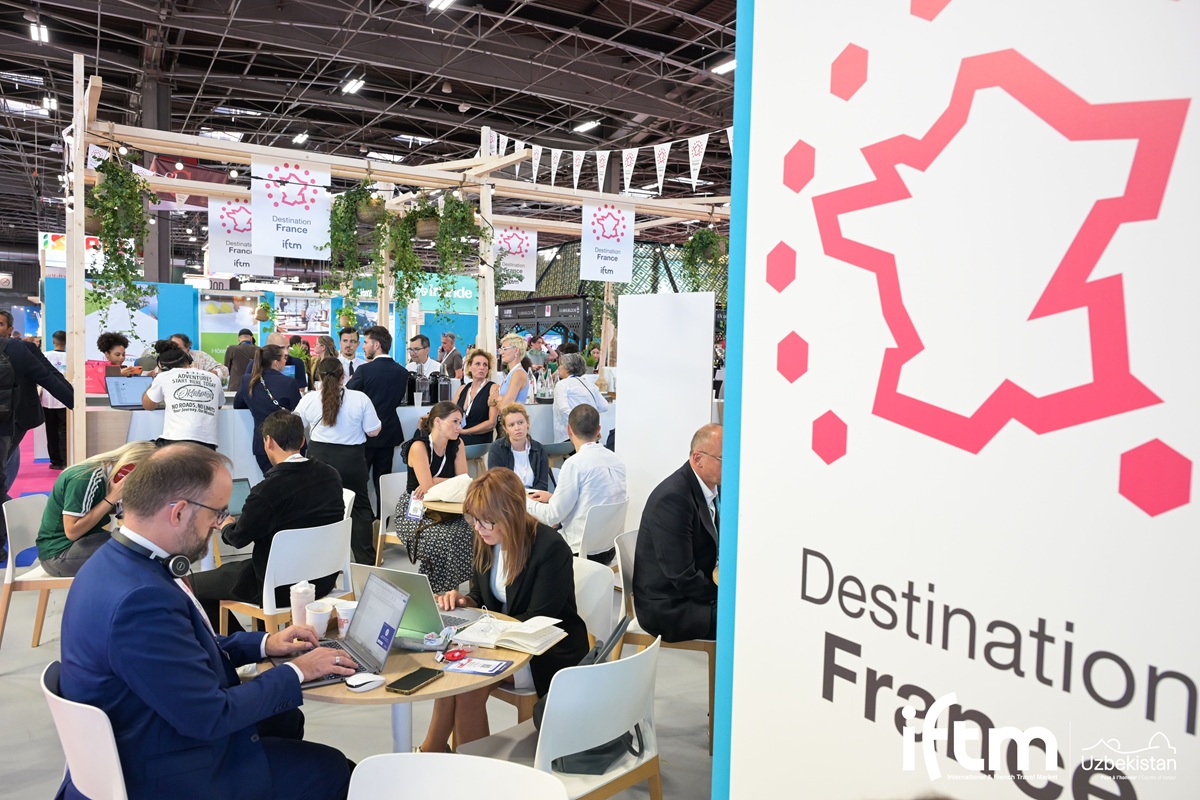
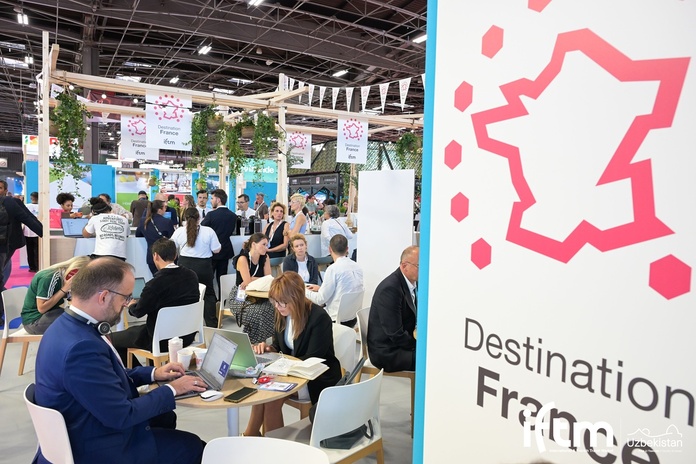
« Participer à l’IFTM est indispensable pour rencontrer de nouveaux partenaires et rappeler que la France est aussi un marché à travailler », estime Patricia Linot, présidente de France DMC Alliance.@ Alexandre Lescure

CroisiEurope


In 2026, French receptive operators had to contend with highly varied situations across regions and clienteles.

In the Jura, Emmanuel Robert, commercial director of Doubs Jura Voyages – Bourgogne Emotions and of the Le Lac hotel complex, reports a season that was particularly dynamic.

« We were fully booked from early May to late October », he explains. Located between 900 and 1,200 meters in altitude, the territory benefited from visitors who shifted their plans due to the intense heat or fires in other regions. The lakes and Jura forests drew a substantial clientele, mainly Francophone. « We typically comprise 80% French and 20% foreigners, of which 90% are Swiss, Belgians and Germans. »

In the Hautes-Alpes, Sandrine Eyraud-Massot, head of Déesse Voyages, also observes growth in its receptive activity, notably thanks to new markets. Her agency, which operates across a wide territory from Nice to Perpignan and into the Alps, hosts groups and mini-groups in spring and autumn.

« We are receiving increasingly more requests from the United States, the United Kingdom, Spain and Italy », she notes. The professional also highlights a shift in how clients discover the agency. « Some tell us they found us thanks to ChatGPT. » This phenomenon pushes her to improve her SEO, client reviews and external links.


The Leisure Groups Under Pressure

Not all segments, however, experienced the same momentum. In Hauts-de-France, Nicolas Dequéant, president-founder of Septentrion Tours, notes a year broadly similar to the previous one, but tougher for leisure groups.

« Group dossiers were slowed down by the war in Iran. Some clients preferred to put their projects on hold, » he explains. Associations and seniors were also sensitive to rising fuel prices. The losses recorded in spring could not always be recovered, even as the order book for 2027 continued to fill.

Heat waves also disrupted activity. Nicolas Dequéant notes last-minute cancellations for excursions aimed at an elderly audience. Some outings were postponed, notably from July to September.

Conversely, the agency observes a more spontaneous international demand, notably from American and Canadian visitors for renting mini-vans to reach battlefields.

« We receive last-minute requests for chauffeur-guided services or cruise stopovers. » Again, ChatGPT appears to play a role in finding providers.


International Markets in Evolution

The difficulties faced by certain foreign clienteles are also noted by Patricia Linot, president of France DMC Alliance and head of Rendez-vous Fontainebleau.

On a network scale, she observes a significant decline in Canadian groups, penalized by diminished purchasing power and the cost of transatlantic flights. Australian school groups have, for their part, postponed their visit to autumn.

American clienteles remain present. « Some receptive operators report more Americans, while Canadians are fewer, » she says. International tensions have led to cancellations or postponements, notably toward autumn or spring 2027.

Fires have also affected the image of certain destinations. In the Southwest, American clients canceled stays after seeing images of the fires widely broadcast in the media. « One must then reassure and explain the real situation on the ground », emphasizes Patricia Linot.

The MICE segment appears to be the most fragile. « There are many requests for quotes, but few verifications. Companies remain cautious in the face of uncertainties and costs. » Receptives therefore spend time negotiating, without always managing to actualize the projects.


Selling France More Effectively to the French

For professionals, visibility and networking remain essential. « Participating in IFTM is indispensable to meet new partners and to remind that France is also a market to be developed », says Patricia Linot.

The signing, during the fair, of a partnership between Entreprises du Voyage and ADN Tourisme, aimed at improving knowledge of the France destination among travel agents, is « a very good signal » for Patricia Linot. France DMC Alliance is indeed preparing, with the two entities, « promotional and training actions for travel agents to sell stays with an experience in France to a French clientele that is not used to this ».

A pedagogical effort will therefore be necessary to familiarize French clients with these offerings. While receptive operators contend with an uncertain environment, everyone is already looking toward 2027, with the goal of consolidating their markets, diversifying their clienteles and better highlighting the experiences offered across the territory.
Cacophony Over the Summer Report: “It’s Time to Sit Around the Table” [ABO]


La France toujours leader mondiale : "pas d’inquiétude" pour le moment selon Bercy - Image IA, Chat GPT

CroisiEurope


Since the health crisis, summer tourism tallies have become the new perennial staple on rolling news channels.

Compiled by the end of July, they are supposed to gauge the season’s pulse. And this year, unlike the previous ones, the summer looked bleak.

French clientele, affected by inflation, would no longer have the means to treat themselves to a restaurant, nor even to take a few days away to escape the intense heat.

Remember, earlier in the week, the minister told TourMaG.com that “if we count June, July, August and September, we are stable (for French clientele, ndlr). But I note a slight regression in the heart of the season, in July-August“, always about the French.

The occupant of Bercy even stressed that the summer had been saved by… foreign travelers.

And yet, INSEE came to contradict all these statements… even those of Serge Papin!


Summer Review: “Revisiting the Communication on Tourism Figures”

Following the element of surprise, the minister of Tourism’s staff analyzed these figures and, according to its representatives, the numbers unveiled earlier in the week “do not completely contradict everything we said, particularly regarding domestic demand.

It should also be noted that INSEE focuses on attendance based on bookings, and not on tourism revenues, nor on international arrivals.

Therefore, one must be cautious when comparing different indicators. If you change the thermometer, you may not have the same feel.


It is true that everyone compares using different tools, whether it is the Travel Companies, the UMIH, the Alliance France Tourisme or KPMG.

But, for Bercy, this cacophony is counterproductive, even though INSEE provides the official statistics, albeit “fragmentary”.

Thus, during the peak season, as everyone issues announcements to alert about their members’ situation or to spotlight their concerns, Jean Pinard, president of the consulting firm Futourism, calls for a reset of the evaluations and the reports, so that they reflect exactly the real trends, and not bundles of presumptions.

“It is now time to bring everyone to the table to clearly define what we measure, why and by which methods” continues the author of the study for the Terram Institute, titled Holidays: History and Geography of an Unfinished Right.


INSEE’s Summer bilan “translates changes in foreign consumption”

Even the same tune from Bercy, which is surprised by this battle of figures and public statements in the middle of peak summer season.

“It would be interesting to review the communication on tourism figures. That there be a concerted effort to determine when, how and from what basis actors can speak. This situation concerns us.

Reports are drafted along the way and it isn’t only the fault of the media, because everyone goes with their messages. There is a reflex to speak up to say that the season was worse or better. This may not be the best solution.

Beyond this observation, it should invite us to think
“, laments the minister’s staff.

If the tourism ecosystem agrees to denounce this summer cacophony, for Serge Papin’s entourage, INSEE’s figures rather reinforce the analysis he delivered at the IFTM.

“We achieved a solid season, which did not experience the kind of rupture we might have feared given the circumstances, but neither a surge.

The French needed holidays. This perhaps also reflects changes in consumption patterns, notably in the international clients’ booking habits.

Moreover, the international receipts recorded in July, up compared with the previous year, lead us to think that the tourist season was positive, especially for international clientele
“, continues the minister’s office.

Ultimately, the surface contradiction may not be entirely so in practice, once the first impression has passed.

Incidentally, in the interview he granted us, Serge Papin already revealed that overnight stays were up by 1%. INSEE reports, for its part, an increase of 1.1% between May and August, for 2.8 million additional overnight stays.


A change in consumption habits

Moreover, this INSEE assessment is rich with several lessons for the ministerial office. “We draw from this two major conclusions.

First, a shift in the consumption habits of international customers, notably in terms of bookings and overnight stays.

Second, tourist demand has stabilized, across all markets. It has ultimately been quite present, though, again, prudence remains.

Foreign clients want to experience life the French way and Europe. They can do so in different ways. On one hand, they may opt to undertake a tour of Europe and visit as many countries as possible, which generates few overnight stays in each.

On the other hand, they may seek a more intimate experience of the destination, returning outside the major attractions and visiting the same country several times.

We may be at this point, with a decrease in overnight stays tied to package tours and a move toward more experiential tourism, closer to what Europeans experience. And for these travelers, stays are not always in hotels
, details Serge Papin’s office.

France, beyond being a European crossroads – which explains why receipts are lower than in Spain or the United States – is also an entry point for North American and Asian travelers who want to discover Europe, starting or ending their itinerary with a few days in Paris.


France still a global leader: “no worries” for the moment


Romain Pommier Published by Romain Pommier Journalist – TourMaG.com

See all articles by Romain Pommier

  • picto Facebook
  • picto Linkedin
  • picto email
Add TourMaG to your Google News feed Google Actualités icône

Jeremy Grasset (Shanti Travel): ‘Amerigo Acquisition Strengthened Our B2B Image’ [ABO]


Jérémy Grasset (Shanti Travel) : "le rachat d'Amérigo a renforcé notre image B2B" - Photo Shanti Travel

CroisiEurope


TourMaG – With Shanti Travel, Tierra Latina and Amérigo, your group now covers a substantial portion of the world. How is this ensemble organized?

Jérémy Grasset : Indeed, Shanti Travel mainly focuses on Asia. We have a presence in Japan, Indonesia, Vietnam, the Philippines, Sri Lanka and Singapore.

Tierra Latina specializes in Latin America. We also maintain offices in Brazil and Argentina, as well as a Mexico City office under the Mexikoo brand.

With Amérigo, we added North America: the United States and Canada. This brings geographic complementarities. Amérigo is also active in Latin America, which also helps generate volume for our receptive activities.

TourMaG – Why did you decide to acquire Amérigo?

Jérémy Grasset: Jean Eustache (founder of Amérigo ndlr) approached me last year and suggested that we explore a discussion. We quickly realized that our activities complemented one another, particularly in terms of geography.

There was also a solid opportunity to launch Asia within Amérigo as a tour operator, for both group services and GIRs. We had GIR productions that were not widely distributed until now. Thanks to Amérigo, they are now more widely shared.

Amérigo is indeed registered as a tour operator and is listed with around 3,000 agencies in France.

In a second phase, we also plan to restart a bespoke service for Asia. But for the moment, we must take the time to integrate.


Complementarity between tour operator and receptive but also autonomy

TourMaG – This acquisition strengthens your presence in the French B2B market…

Jérémy Grasset :
Exactly. We were already recognized in the French B2B market, but quantifying it was challenging. And, achieving visibility is tougher for receptive operators.

The fact of having acquired Amérigo has reinforced our B2B image in the market. It now allows us to attract more groups and more B2B clients.

TourMaG – Some groups in the tour-operating business acquire receptive firms. This time, a receptive is acquiring a tour operator. How do you view this complementarity between the two lines of business?

Jérémy Grasset : Those who know the sector understand the difference between the two trades, but today, a French tour operator that produces everything in-house, purchases its rooms from a database and offers bespoke experiences is almost a receptive.

Direct production by tour operators is increasing, especially in countries where labor costs are high. In the United States or Canada, for instance, it is difficult to offer bespoke arrangements with a receptive behind it: there aren’t many that still do that. Receptives in developed countries mainly handle groups or GIRs.

It makes sense that this complementarity exists and that tour operators acquire receptive firms. Indeed, we have a receptive firm that is taking over a tour operator.

TourMaG – Amérigo will be able to rely on your receptive networks, but can it also collaborate with receptive operators that are competitors?

Jérémy Grasset : We aim to preserve this complementarity between the different units while maintaining a certain autonomy. Within our group, internal competition between units and competition with external rivals can coexist in a healthy way.

In travel, we often speak of partners rather than mere competitors. You can be competitive with your partners and partner with your competitors. Crises tend to strengthen collaboration across the different disciplines.

What matters is that the traveler experiences a wonderful journey, fulfills their dreams, and that the trip is executed flawlessly.


“We must diversify risks and sources of clientele”

TourMaG – What brought you closer to Amérigo?

Jérémy Grasset :
At Amérigo, there was a culture of receptive business, since, for years, Jean (Eustache ndlr) built receptive networks and represented LatAm and North America. He knows the trade very well.

In the final months of collaboration, we realized we spoke the same language. We are two product-oriented companies with excellent field knowledge. Amérigo’s teams possess a very good understanding of their destinations.

This, I believe, is the strength of the group today: in each entity, we have seasoned destination experts.

TourMaG – Asia, Americas… Are you targeting other geographic zones such as Oceania or Africa?

Jérémy Grasset : Being a specialist in a single region is no longer feasible nowadays. There are many geopolitical surprises, so we must continue diversifying risks as well as clientele sources.

The United States, despite some difficulties, remains an attractive destination for us. The day when Asia or Japan falters, and political shifts occur, we know the United States will rebound.

Oceania, we have begun selling on our site for our receptive activities. Once we have a traveler, it is, of course, interesting to offer another destination. In B2B as well, it works well.

Africa, why not, but for now it is not in the current projects.

Diversification also concerns client sources. Shanti is a hybrid, multichannel group, which should enable us to adapt to evolving markets and to become more agile.

We do not know exactly what will work tomorrow. Today there is the AI revolution, but also a return to agencies for high-quality luxury bespoke travel. We observe several trends in parallel, and it is hard to predict which will prevail.

That is why we are expanding in this manner, notably to secure activity.


TourMaG – Have you created synergies between the different teams?

Jérémy Grasset :
We have always invested heavily in training, both for destinations and for sales techniques and tools.

We are now more focused on destination training. The advantage is that Amérigo, like Shanti, shares a true culture of effective IT tools. We find ourselves aligned with these approaches.

The teams have learned to know each other and to meet. These are fields that can be somewhat different, but we try to figure out together how things work.

There are also recruitments underway. For Asia, we are seeking major destination specialists. This allows us to rely on former Shanti travel experts who moved back to France for personal reasons, and whom we are bringing back into Amérigo, for example.


TourMaG – How much does the group weigh today?

Jérémy Grasset :
The group currently amounts to 35 million euros.

TourMaG – What are your next priorities?

Jérémy Grasset :
For now, we are in a phase of deepening the destinations we already cover. There will be new developments later, but it is too soon to discuss them.

Today, the objective is to consolidate the whole. We must, if you will, “digest the acquisition,” integrate the new elements and train the teams.


Céline Eymery Published by Céline Eymery Editor-in-Chief – TourMaG.com

See all articles by Céline Eymery
  • picto Facebook
  • picto Twitter
  • picto Linkedin
  • picto email
Add TourMaG to your Google News feed Google Actualités icône

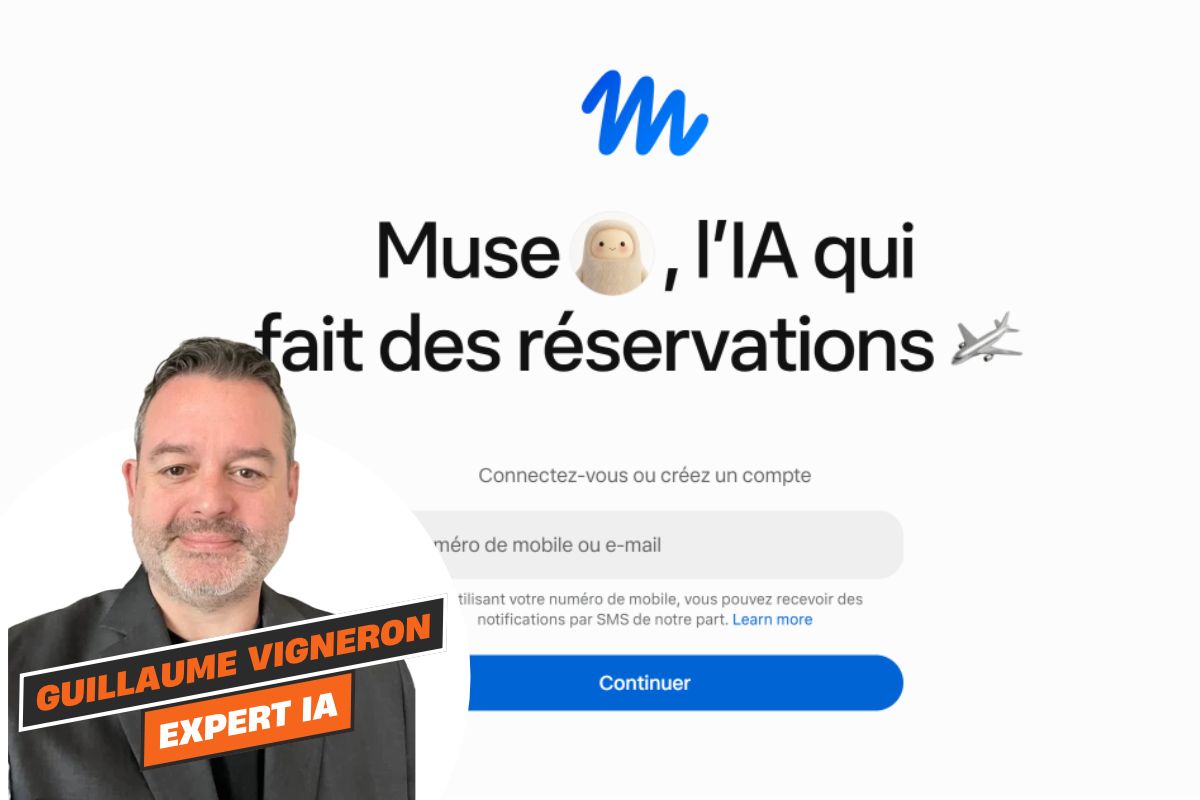
Muse, Instinct, OpenClaw…: Will Personal AI Agents Become the New Travel Agents? [ABO]


Muse, Instinct, OpenClaw... : les agents IA personnels vont-ils devenir les nouveaux agents de voyage ? - Photo Capture écran Muse

CroisiEurope


Having learned to answer our questions, artificial intelligence enters a new era, an evolution that could prove particularly favorable for tourism.

Behind the new agents such as Muse, Instinct, Hermes, or OpenClaw lies a far more important question: tomorrow, who will actually organize our trips, and above all, who will control the relationship with the traveler?

Since November 30, 2022 and the explosive launch of ChatGPT 3.5, generative AI has mainly accustomed us to chat: you ask your favorite AI a question, the model answers and can propose an itinerary for Athens, compare two destinations, or suggest a hotel.

Since the beginning of 2026, a new generation of tools, the AI agents, begins to take another step. This time—as the name suggests—they act.

This wave began at the start of the year with the release of OpenClaw on January 29, 2026, the principle of which will inspire all the other products: Hermes Agent in February, GrokBot and Instinct in August, and finally Muse from Meta in September.

In less than a year, the market has transformed around this (very real) promise: to move artificial intelligence from the status of interlocutor to that of a permanent executor.


From Simple Digital Advisor to Persistent Executor

The travel sector could become one of the best testing grounds for this new generation of AI capable of taking action online.

The reason lies in the very nature of a trip: planning four days in Copenhagen requires chaining together a considerable number of small operations such as searching for the cheapest flight, looking at hotels in the best location, knowing the exchange rate, checking museum or attraction hours, booking a good table, or tweaking the plan when weather changes.
Individually, none of these tasks is very complicated, but their accumulation — in AI terms, orchestration — is much more demanding.
This is precisely what AI agents seek to absorb.

A late-September Business Insider piece offers a fairly concrete glimpse of this evolution. Jay Eskenazi, a former UX professional at Expedia, tested several tools, including Muse, Instinct, and Grok Bot, during a three-week trip across Europe.

He no longer asked an AI merely to craft a travel program; he fed it his own notes, preferences, and constraints.

Muse could then reorganize his days by taking into account opening hours and ticket availability, and even showed signs of initiative: the agent suggested coherent geographic itineraries and could transfer them to Google Maps.

During the trip, it continued to adapt its recommendations based on newly available information. Impressive.

While it is not yet the fully autonomous travel agency promised by some marketing-driven rhetoric, the shift in usage is already visible: the user no longer necessarily looks up information before every decision but progressively delegates the search and organization to their agent.


From Information Search to Goal Definition

For about two decades, a large portion of the digital tourism economy has rested on a simple action: the traveler searches online.

They open Google, Booking, Expedia, Airbnb or Skyscanner, compare results, click, and pay. Each platform thus tries to become the starting point of this search.

The AI agent changes this logic because a traveler could simply request:

“Organize four days in Lisbon for two adults, under 1,500 euros in total, with a view of the Tagus but not too far from the Bairro Alto.”

From there, the agent could query several services, compare prices with the user’s known preferences, verify cancellation conditions, and then prepare the booking so the traveler only has to click “accept.”

The economic battle would shift as soon as the question is not only which site appears first on Google, but which offer will be selected by the AI agent.

Accenture sums up this change quite directly in a study titled “Win the AI agent, win the traveler” published in September 2026.

According to this study, tourism companies must now think about their visibility to AI agents themselves, what is called GEO for Generative Engine Optimization.

If an agent compares hotels, loyalty programs, cancellation policies, and payment methods for its user, it becomes a decisive intermediary in the decision.

Tourism SEO could thus gradually gain a second target: after the human, the machine working for them.


Travel Players Do Not Stay Idle

For several years, Expedia has been developing planning features in natural language and has stepped up the integration of its services with several AI environments in 2026. The company has notably made its inventory accessible from Muse.

Its CEO, Ariane Gorin, nevertheless believes that a single agent will probably not control the entire travel journey. She bets instead on a coexistence between multiple entry points and specialized agents.

Other players are already pushing further.

In Europe, Visa announces that it has completed real commercial transactions initiated by AI agents with participating merchants. Travel is among the sectors targeted by the development of these payment infrastructures.

eDreams ODIGEO is also working with Visa to enable identified agents to make reservations within parameters defined by the client.

The goal is precisely to distinguish an authorized agent from any automated traffic and to keep authentication mechanisms around payments.

The boundary between advisor and buyer is thus starting to become rather blurred.


Towards a Personal Traveler Agent?


Guillaume Vigneron - Photo : Super Agence SAS

Guillaume Vigneron is the founder of La Super Agence SAS, a Paris-based consulting and training firm specialized in generative AI. He assists managers and executive committees in the operational and strategic adoption of generative AI, structuring usages, governance, and transformation roadmaps.

His approach focuses on management, organizational, and performance challenges linked to integrating AI into companies. He has already trained over 1,500 professionals in the practical use of generative AI in their work.

Guillaume Vigneron also speaks as a lecturer on topics related to AI, the future of work, and organizational transformation.

Voyages d’Exception Accelerates Diversification as It Marks Its 15th Anniversary [ABO]


Toute l'équipe de Voyages d'exception s'apprête à déménager dans des locaux plus spactieux @Voyages d'exception

CroisiEurope


Voyages d’Exception no longer wants to be identified solely with maritime and river cruises. As it approaches its fifteenth anniversary, the tour operator is accelerating its diversification into cultural circuits and railway journeys. These activities now account for roughly 20% of its revenue.

The tour operator is notably organizing French-speaking groups aboard the Maharajas’ Express in India, the African Explorer in southern Africa, and the Silk Road Express in Central Asia.

“We are the only French operators to arrange francophone groups with speakers on these exceptional trains. They are complex products that require significant commitments, but clients love them,” says Lionel Rabiet, founder and director of Voyages d’Exception.


Explorator must enrich its land-based offerings

La reprise des actifs d’Explorator doit encore doper cette diversification. Voyages d’Exception a conservé quatre salariés de cette marque historique, spécialisée dans les circuits culturels et les destinations hors des sentiers battus.

Oman, le Tadjikistan, la Mongolie ou l’Algérie figurent parmi les territoires qui ont construit son identité. Lionel Rabiet entend préserver ce positionnement tout en accélérant la transformation technologique de la société et le renouvellement de la clientèle

« Explorator possède un véritable ADN pionnier, fondé sur l’immersion et la rencontre avec les populations locales. Notre objectif est de permettre à la marque de se développer à nouveau et d’aller vers de nouvelles destinations », explique-t-il.

Voyages d’Exception veut créer des synergies commerciales, marketing et opérationnelles entre les deux structures. Le groupe modernise également les outils technologiques d’Explorator afin de faciliter la production et la commercialisation des circuits.


Small-ship cruises are proving more resilient

Le maritime n’est pas abandonné pour autant. Alors que le Japon et la Patagonie, ses deux premières destinations, ont marqué le pas en 2026, les croisières proposées à bord de petites unités enregistrent de bons résultats.

Le voyagiste renforcera donc ce segment en 2027. Près d’une dizaine de départs doivent être programmés avec Star Clippers, notamment au Costa Rica, aux Antilles, au Panama et en Méditerranée.

« Nous travaillons avec des groupes de 15 à 25 passagers. Cela nous permet de proposer notre accompagnement et nos conférenciers tout en conservant l’atmosphère et l’expérience propres à ces navires », explique Lionel Rabiet.

Le partenariat avec Windstar Cruises doit également se développer. Les croisières proposées en Polynésie rencontrent déjà leur public avec des itinéraires qui vont jusqu’aux marquises.

« Ce sont des bateaux à taille humaine, avec de grandes cabines et une très belle qualité de service. Ils correspondent bien à ce que recherchent nos clients et les prix sont raisonnables par rapport à la concurrence », estime Lionel Rabiet.


Belgium as a new growth lever

Voyages d’Exception veut aussi élargir sa carte. Parmi les nouveautés annoncées en 2027 figure une croisière aux Fidji, une destination encore peu présente dans les programmations françaises.

Le voyagiste prépare également un voyage sur la rivière Kwaï, en Thaïlande. Cette production doit lui permettre de proposer une autre approche du pays, loin des itinéraires balnéaires ou des circuits les plus classiques.

Cette production élargie doit désormais trouver davantage de débouchés dans les agences. Le B2B représente environ 20 % des ventes de Voyages d’Exception, mais a reculé de 10 % en 2026.

Le voyagiste compte accélérer en Belgique, où il vient de recruter un nouveau commercial : Benoit Hodeige. Le potentiel y demeure largement inexploité : à activité comparable, le taux de pénétration de Voyages d’Exception serait cinq fois inférieur à celui observé en France ou en Suisse.

« Nous sommes très en retard en Belgique alors que nous proposons des produits uniques et que de nombreuses agences ont le potentiel pour les vendre. Nous devons maintenant activer ce marché », reconnaît Lionel Rabiet.


Flight Cancellations Right Before Your Trip: What Compensation Is Available for Package Holidays? [ABO]


Vols annulés juste avant un séjour : quid du dédommagement dans le cadre d'un forfait ? - Depositphotos.com  Auteur alexeynovikov

CroisiEurope


A female traveler filed a request with the Mediation after the cancellation of the flights included in a package holiday bound for Iceland. If the travel agency agreed to refund the stay, the client also believed she was entitled to a so-called ‘mirror’ compensation.

The trip consisted of a one-week stay in Iceland. A few days before departure, the airline responsible for the outbound and return flights canceled both legs.

Following this cancellation, the travel agency offered two options: reschedule the stay by one day, at a surcharge of €330, or keep the original dates with new flights, which would incur a surcharge of €980.

The traveler refused these two proposals and requested a full refund of the package, as well as an additional compensation.

The agency agreed to refund all amounts paid, but refused any additional compensation.


Ce que disent les textes :

To render its opinion, the Mediation relied on the provisions of Article R. 211-9 of the Tourism Code. This text provides that when an essential element of the contract is modified before departure, the professional must inform the traveler of the proposed changes and give them the choice to accept them or terminate the contract.

If the traveler refuses these modifications, they can obtain a full refund of the amounts paid.

In this case, the cancellation of the flights indeed constituted a modification of an essential element of the contract. The agency proposed replacement solutions, which the traveler was free to accept or refuse. After rejecting these proposals, she was allowed to cancel her stay at no cost and obtain the full refund of her package.


Ce que préconise la Médiation Tourisme et Voyage :

Dans ces conditions, la Médiation a considéré que le professionnel avait respecté les obligations prévues par le Code du tourisme.

Aucun élément ne permettrait de justifier l’octroi d’une indemnisation complémentaire, le remboursement intégral du séjour constituant une réparation suffisante.


Retrouvez tous les cas pratiques de la Médiation Tourisme et Voyage en cliquant HERE.


Booking, Micro-Trips in India: This Week’s Key Takeaways [SUBS]


La revue de presse internationale de la semaine - Depositphotos.com Auteur serezniy

CroisiEurope


Au sommaire de la revue de presse de la semaine du 28 septembre 2026 :

Shorter and more frequent stays in 2027

Booking.com will not be able to acquire Etraveli

Tourist destinations: AI becomes a new lever of influence

IHG accelerates its development in Japan amid tourist demand

India struggles to regain its international tourists

The travel sector pushes the EU to regulate biometrics

Gaming travel turns the hotel into a playground

Germany: bookings remain subdued in winter 2026-2027

Odd! Aluminum-wrapped passport: the quirky anti-piracy trick travelers are talking about


Shorter and more frequent stays in 2027


Hilton observe un essor des micro-voyages, nouvelle tendance de 2027. @depositphotos/EdZbarzhyvetsky

According to Hilton’s annual report, travelers will favor in 2027 shorter and more frequent stays, with the rise of micro-trips.

The group also notes a growing interest in personal development-focused trips, outdoor activities, and well-being.

Another takeaway: despite the rise of AI in travel planning, human recommendations remain largely preferred.

More to discover on euronews.com


Booking.com will not be able to acquire Etraveli


Booking perd son recours sur l'acquisition de Etraveli. @depositphotos/erix2005

The European Union Court confirmed the ban on Booking’s acquisition of the Swedish group Etraveli for €1.63 billion.

Etraveli, owner of Gotogate and Mytrip among others, would have allowed the American group to strengthen its flight-booking offering and develop a broad “travel ecosystem”, risking marginalizing competitors.

Booking can still bring the case before the Court of Justice of the European Union.

A Reuters report


Tourist destinations: AI becomes a new lever of influence


Les destinations touristiques doivent apprendre à exister dans les réponses des IA. @depositphotos/AndrewLozovyi

With 69 % of 18-28-year-olds and 64 % of Millennials using AI to prepare their trips, destinations must now learn to exist in AI assistant responses.

According to Andrés Martínez, CEO of iUrban, they should better structure their official information to be picked up by AI, but also use these tools to steer visitors toward less-visited sites and highlight local identity. The challenge: not letting algorithms funnel tourists to the same places.

More to read on hosteltur.com


India struggles to regain its international tourists


The travel industry pushes the EU to regulate biometrics


Cinq acteurs du voyage et des technologies veulent encourager le déploiement volontaire de la biométrie dans les aéroports européens. @depositphotos/irko6969

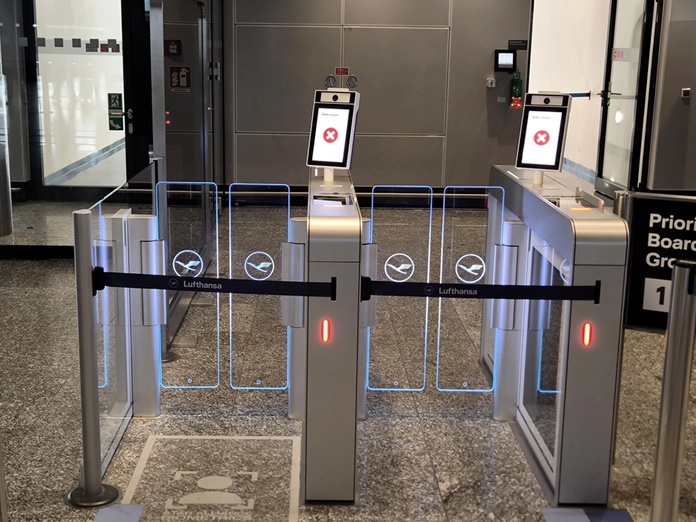
Five players in travel and technology, including ACI Europe, Amadeus, IATA and SITA, have formed a coalition to advocate the voluntary deployment of biometrics at European airports.

They are calling for a clear regulatory framework ensuring data protection and the maintenance of non-biometric alternatives.


According to IATA, 74 % of travelers surveyed prefer sharing their biometric data rather than their passport or boarding pass.

A Travel Daily News report


Gaming travel turns the hotel into a playground


Minecraft ouvrira en 2027 près de Londres un hôtel qui offrira une immersion complète dans le monde des jeux vidéo. @depositphotos/rafapress

The travel surrounding video game universes is stepping up a level, with hotels now offering full immersion rather than mere entertainment. A 69-room Minecraft-themed hotel will open in 2027 near London, inside Chessington World of Adventures.

The phenomenon is also developing in Japan with Pokémon-themed rooms and in Spain with hotels that integrate consoles, virtual reality and themed spaces.

Read more on euronews.com


Germany: bookings remain subdued in winter 2026-2027


Les vacanciers boudent les vacances en Allemagne à l’hiver 2026-2027.  @depositphotos/Gorilla

After a dynamic summer 2026, with revenues up 4%, winter bookings lag behind.

According to Travel Data + Analytics, revenues for the winter season 2026/27 are currently 2% below last year, with the number of travelers down 6%. Long-haul trips are especially affected, notably to the United States (-28%) and the United Arab Emirates (-52%).

More to read on reisevor9.de


Insolite ! Aluminum-wrapped passport: the quirky anti-piracy trick travelers are talking about

On TikTok and Reddit, a travel tip is making waves: wrapping your passport in aluminum foil to block the radio reading of its chip.

While metal can indeed block radio waves, the risk of fraudulent passport reading is already limited by several security features.

Result: between the passport and the foil, travelers might mainly gain… a few extra touches at checkpoints.

Source: lefigaro.fr

What If Kindness Is the New Luxury? Brazil’s DMC Blumar Leads by Example [ABO]


Fondée il y a plus de 40 ans, Blumar s’est progressivement imposée comme l’un des acteurs majeurs du tourisme haut de gamme au Brésil - Photo : Alexandre Macieira

CroisiEurope


Contemporary luxury is no longer defined solely by visible signs of prestige. It unfolds in the quality of the lived experience, in the precision of support, and in the ability to forge a fair relationship with a destination.

In Rio de Janeiro, this evolution takes on a particular dimension. The city does not simply host visitors: it engages, it connects, it transmits a culture of hospitality deeply rooted in its identity.

In this context, certain players play a decisive role, often behind the scenes. Their mission is to transform the richness of a destination into coherent, seamless, and memorable experiences.

Blumar sits among these benchmark operators, capable of blending international standards with a nuanced understanding of the local terrain.

The encounter with Bruno Teixeira, Business Manager of the receptive agency in Rio de Janeiro, immediately illuminates this reality.

From the first exchanges, a quality stands out with evident clarity: genuine availability, constant attention, and a way of relating that goes beyond the professional frame. Kindness is not presented here as a pose, but as a natural disposition.

The advisory becomes a conversation, the expertise a transmission, and the welcome an experience in itself.

Also read: Brazil: generous hospitality as a lever for transforming luxury tourism


Forty Years of Expertise at the Service of a Destination

Founded more than forty years ago, Blumar has gradually established itself as one of the leading players in Brazil’s luxury tourism.

The company has built itself on an in-depth knowledge of the country, developing an approach that goes beyond mere logistical organization to give travel real meaning.

Initially focused on the destination of Búzios, a seaside resort north of Rio, Blumar expanded its scope to cover the entire Brazilian territory.

Today, the operator covers more than thirty destinations, from the Amazon to the Pantanal, from Fernando de Noronha to Ouro Preto. This national reach is a significant advantage in a country where distances, regional cultures, and operational realities require fine expertise.

This ability to grasp Brazil in its diversity rests on a strong belief: the quality of a stay depends first on the women and men who make it possible. The company relies on experienced local teams, capable of translating the expectations of international travelers while respecting the cultural specificities of each region.


An Integrated Approach to Luxury Travel

In Rio de Janeiro, Blumar collaborates with the market’s most renowned hotels.

The Belmond Copacabana Palace, a true institution inaugurated in 1923, embodies heritage and service excellence. The Fairmont Rio presents a contemporary interpretation of international hospitality, integrated into the Carioca context. The Janeiro Hotel, located in Leblon, offers an immersion in a neighborhood that has become one of the nerve centers of the city’s cultural and gastronomic life.

Also read: Rio de Janeiro: a collection of hotels that embody different cultures of luxury

lodging is, however, only one component of the experience.

Blumar has structured a global offering covering all segments of luxury tourism: individual trips, groups, incentive programs, congress and event management, and onshore services for international cruise lines, including Crystal Cruises.

This organization rests on proprietary digital infrastructure, allowing partner agencies to access availability, itineraries, and visual content directly. In a market where responsiveness and precision are essential, this tool represents a decisive operational lever.


Experience as the Heart of the Value Proposition


Une réalité du luxe contemporain : la valeur ne réside pas uniquement dans l’accès, mais dans la qualité de l’interprétation - Photo : Felipe Amaral

The private experiences segment occupies a central place in the expectations of high-end travelers. Blumar has developed an offering that meets this shift by prioritizing access, personalization, and cultural depth.

In Rio de Janeiro, this approach translates into experiences such as private tours of UNESCO World Heritage sites, privileged access to Christ the Redeemer via trails through Tijuca Forest, helicopter flights over Guanabara Bay, and behind-the-scenes immersions in Carnival.

These proposals fit into a narrative of exploring the territory, where each experience contributes to a deeper understanding of Brazilian culture.

As Bruno Teixeira notes, “our clients benefit from guidance by experienced local guides who know the city inside out, its neighborhoods, rhythms, and codes. It is this knowledge that transforms a good stay into a memorable experience.”

This approach highlights a fundamental truth of contemporary luxury: value lies not only in access, but in the quality of interpretation.


Responsibility and International Recognition


Kindness as the Foundation of Sustainable Hospitality

Rio de Janeiro provides a valuable lens on the evolution of contemporary luxury. The city shows that excellence rests not only on mastering standards, but on the quality of the relationships built between people.

Through players like Blumar, this reality takes a concrete form. Technical expertise, structured offerings, and knowledge of the territory lay solid foundations. But the difference is found elsewhere.

It lies in this willingness to welcome without calculation, to listen without filters, to advise with discernment. Kindness then becomes a standalone competence. It is not decreed; it is embodied.

In a sector seeking meaning and authenticity, this approach opens a clear perspective: hospitality of tomorrow will not be limited to organizing experiences. It will need to be able to create connections, transmit a culture, and leave a lasting imprint.

In Rio, this reality is evident. Blumar offers a structured reading of it. Bruno Teixeira provides a deeply human embodiment.


Laurent Delporte


Laurent Delporte - Delporte Hospitality

Laurent Delporte is the president and founder of DELPORTE Hospitality.

After 25 years of experience in luxury hospitality, notably within the Accor group, he combines visionary thinking, an international hospitality culture, managerial and operational skills, and a network of independent experts to support decision-makers in hospitality for the benefit of their clients, staff, and partners.

As a recognized consultant in the hospitality industry, an executive coach for leaders, and a speaker in the world of hospitality, he also directs the magazine DH-Mag dedicated to trends in hospitality and speaks at major schools and trade shows (HEC, Sup de Luxe, EquipHotel, Maison & Objets…).

Moreover, Laurent Delporte ranked 8th in the international ranking of hospitality influencers in 2024 by the American magazine Global Hospitality and the International Hospitality Institute (IHI) based in the United States. He was also named among the 25 luxury-sector speakers worldwide.

How to Start a Travel Agency Legally [ABO]


1. Define your activity precisely

Agent de voyages : comment se lancer en toute légalité - Depositphotos.com studiostoks

CroisiEurope


Before diving in, it is essential to know what you want to sell and under what framework. In France, selling travel and holidays requires registration with Atout France, as well as professional liability insurance and a financial guarantee.

“Significant investments”, notes Jean-Charles Franchomme, cofounder of the Collective for the Defense of Travel Professions (CDMV).

There are solutions for professionals who do not wish to create their own agency, notably business introductions or travel design, carried out in partnership with a registered agency.

“To practice as a travel planner, you must stay within the legal framework,” reminds Jean-Charles Franchomme. He also advises to “not engage in pre-sales, on-trip support, or post-trip aftercare.” The professional should also not use affiliate links nor enter directly into contracts with receptive operators.

The term travel planner does not correspond to a precise legal status. “Travel Planner is a registered trademark of the Havas network. It is therefore not a newly invented profession. It’s simply a term that has become highly trendy,” he adds.


2. Choosing the business introducer status

A business introducer connects a potential client with an accredited travel agency. They can search for clients, gather their needs, and relay information to the agency, but they do not complete the sale of the trip.

“To operate within the business introducer framework, three conditions apply,” explains Guillaume Beurdeley, deputy secretary-general of Entreprises du Voyage. The contract must be concluded directly between the registered agency and the client. Funds must be paid to the agency, not to the introducer. Finally, the introducer must not present themselves as the seller of the trip. »

The introducer can then be compensated by the agency, according to the terms laid out in their agreement. They must not collect the trip price and then pass the funds on themselves.


3. Rely on an agency or a collective

Collectives offer another path. Mannon Philippé, a freelance travel agent and member of My Way, chose this model after completing training in tourism. “My Way provides a legal framework and tools to sell travel under compliant conditions,” she explains.

Each member can , with a logo, a brand, and a social media presence. The client remains informed about the framework within which the trip is sold. “The contract is between the client and My Way, and payments are paid directly to the organization”, she notes.

The collective also provides tools, mentorship, and a sense of community. “Members can exchange practices and help one another, especially when starting out or entering from another professional field”, explains Mannon Philippé, who coordinates this support within the collective.


4. Distinguishing the introducer from the travel designer

The role of the travel designer is broader than that of the business introducer. At Voyage Couture, Barbara Roussel works with six of them and draws a clear line between the two functions.

“The business introducer presents the client to us, passes along their brief, and then we manage the entire trip,” she explains. In this model, compensation amounts to roughly 30% of the margin.

The travel designer, by contrast, accompanies the client throughout the sale. “They will manage the sale, design the trip, communicate with the client, and prepare the enrollment form,” details Barbara Roussel. The agency retains administrative management, payments, and reservations. The travel designer’s pay generally represents 50–60% of the margin.

“The travel designer and the travel planner are largely the same thing. The difference is that they work within the legal framework of an agency.”

A contract is drawn up with each travel designer. It specifies, among other things, operating rules, approved suppliers, client ownership, and payment terms. Barbara Roussel stresses the importance of working with reliable suppliers and upholding the agency’s professional liability. “No supplier can be used without my agreement,” she notes, after encountering an issue with a provider.


6. Avoid a relationship that resembles salaried employment


7. Start gradually

Freelance work offers greater freedom, but it demands rigorous organization. “Clients may reach their advisor in the evening or on weekends. Mornings are often devoted to administrative tasks, research, and preparing files,” explains Mannon Philippé, who suggests planning in advance how you will structure your day and your income streams.

“You have to be aware that income is not immediate. It takes time to grow your client base.”

Barbara Roussel likewise advises newcomers to start gradually. “First, you need to secure yourself,” she says. Joining a collective or working with an agency allows you to test your market before considering individual registration.

It is a way to grow your activity while staying within the regulatory framework.


Find all articles in our series “Very Special Agent – The Practical Guide for the Pro” by clicking this link.

Presidential Election: Is Tourism Still Overlooked?


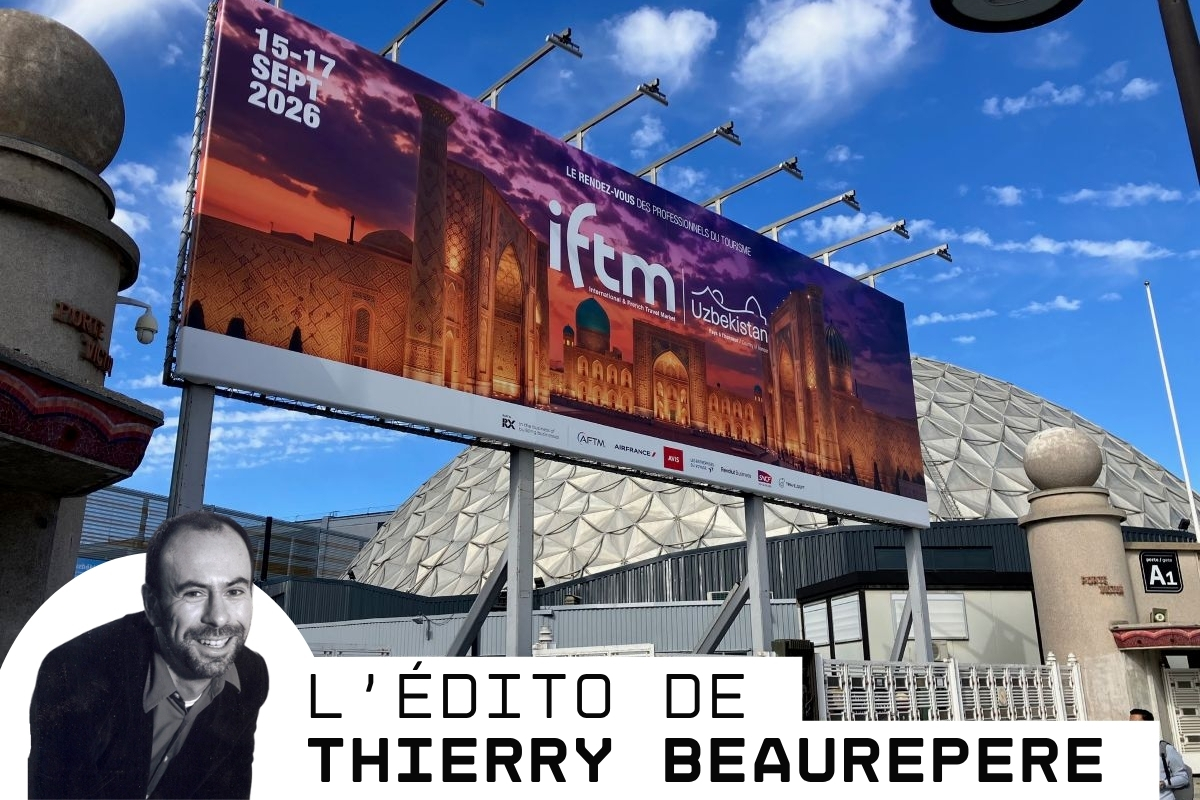
Élection présidentielle : pas de défilé politique à l’IFTM  Photo: TB

CroisiEurope


Parions que du 12 au 18 octobre, les allées du Mondial de l’Auto seront copieusement garnies de modèles de voitures dernier cri… et de personnalités politiques.

Entre une R5 électrique, nouvelle star de l’industrie automobile française, et l’appel à acheter tricolore, ministres et candidats à la présidentielle auront à cœur de se mettre en scène pour témoigner de leur soutien à l’industrie française.

Fin septembre, un autre salon, en l’occurrence Batimat, était au cœur de l’actualité. De Marine Le Pen à Jean-Luc Mélechon en passant par Gabriel Attal, ils étaient nombreux à afficher leur soudain amour pour le parpaing et la brique.

En février prochain, c’est un autre défi qui les attendra : battre le record de la plus longue visite au Salon de l’agriculture. A deux mois de l’élection présidentielle, il est certain que les agriculteurs n’auront pas assez de batterie de téléphone pour faire un selfie avec toutes les personnalités attendues !

Dans le sillage d’un Jacques Chirac glouton qui adorait « caresser le cul des vaches » entre un verre de rouge et deux rondelles de saucisson, Emmanuel Macron a placé la barre très haut en 2024 : 12 heures de visite ! Qui fera mieux ?


No Political Parade at IFTM

The automotive sector today accounts for 1.1% of France’s GDP and employs 329,000 people. The construction sector does better still, representing 5% of national output.

As for French agriculture, with its 673,000 farmers, it now accounts for only 2.1%. Far less than tourism, which supports around two million direct and indirect jobs and brings in about 222 billion euros in revenue, or 8% of GDP.

Yet, there was no surge at the IFTM entrance two weeks ago; no security drill with teeth banged in… Because the annual gathering of tourism professionals did not attract any major political figures.

Read also : The IFTM announces an 8.2% rise in attendance in 2026


Serge Papin, the multitasker…

Ah yes, forgive me! Serge Papin opened the event. A bare minimum courtesy for the tourism minister who, to be fair, has little time on his hands.

Not to be mistaken for mockery! He finds it hard to do better given how he wears multiple hats: tourism, but also small and medium-sized enterprises, commerce, craftsmanship, and purchasing power; a true calling!

As if he single-handedly absorbed everything others were unwilling to take on; a stack of mandates to avoid having too many ministers in the photo, at a time when it’s fashionable to pretend economy is being made.

It’s worth noting, by the way, that the post of tourism minister — when there is one — is somewhat of a stepping-stone, always handed to a secondary political party: Communists or left radicals when the Socialists win, centrists when the right dominates… Like an honorary reward for good and loyal service.


For Sarkozy and Hollande, tourism pays off!

In 2025, Gabriel Attal dared to stroll the IFTM, weaving between the Air France and MSC Cruises stands, the SNCF and Selectour. An exception!

This year again, the organizers had hoped for the same. But in the end, being too busy, he went elsewhere. As for his rivals, they likely don’t even know there exists a tourism professionals’ show in France.

Nothing new, to be honest. In more than 35 years of the show, first Top Resa in Deauville and then IFTM in Paris, I don’t recall shaking hands with a candidate for the top job, nor handing a microphone to a Prime Minister; even less to a president.

And from Nicolas Sarkozy to François Hollande, our former presidents seem to take an interest in tourism only when they are no longer in office, and are generously paid to put on a show at the Selectour congress.

Read also : François Hollande invited to the next Selectour congress


France, soon to be dethroned from the podium?


A sector that does not whine!

Optimists will say this demonstrates a dynamic sector that runs on its own, capable of organizing itself without whining and begging for help! And that is a good sign indeed…

The proof came last spring with the Iran conflict, when it was necessary to repatriate French citizens stranded across the globe. Everyone rolled up their sleeves, from travel agencies to tour operators.

And everyone still waits for the State to compensate them financially as it knows how to do when drought scorches the wheat or a storm devastates the vineyards.

Others will denounce the lack of a long-term vision from our leaders, even if Emmanuel Macron has officially set the goal of making France the champion of sustainable tourism by 2030.


In tourism, you don’t work, you have fun…

In practice, professionals hardly have avenues to make their voices heard: no manure to dump in front of prefectures, no pallets to burn at the roundabout of an industrial zone.

A strike by travel agencies would have only a modest impact! And it’s hard to imagine restaurateurs refusing to serve a fancy coffee to their customers to defend their trade… And anyway, it’s well known: in tourism, you don’t work, you have fun!

There remains a lobbying activity to push messages through. Thus, a few months before the presidential election, Alliance France Tourisme (which brings together the sector’s largest companies) unveiled a twenty-year roadmap.

Read also : Alliance France Tourisme reveals its five priorities


“No money, but a direction”

With a basic premise: rely on reliable economic indicators. The recent muddle over the summer tourism balance shows how much work remains to be done! And with a demand: “no money, but a direction, political steering, and a stable framework” that resists political turnover.

“It isn’t forbidden to dream that some candidates take an interest in tourism,” commented Dominique Marcel, president of the body, at a press conference held last week.

The election of a new president of the Union of Trades and Industries of the Hospitality Industry (UMIH) on October 13 should also push the employers’ union to speak out more forcefully in the weeks ahead.

Read also : Does INSEE contradict the Ministers’ summer balance?


A tourism debate on December 1

Meanwhile, the Confederation of Tourism Actors (CAT), ADN Tourisme, the National Association of Officials of Tourist Areas (ANETT), and the National Tourism Institutes (INNTO France) announce a “grand oral du tourisme – presidential 2027” on the upcoming December 1.

“Despite its economic, social, and territorial weight and its inherently transversal nature, tourism remains still underrepresented in major national debates and in the strategic choices that will shape the country’s future,” the coalition laments.

Candidates will be invited to present their vision and commitments for the future of tourism, from taxation to vacations for all, from ecological transition to innovation…

By mid-September, Gabriel Attal, David Lisnard, Édouard Philippe, and Bruno Retailleau had confirmed their participation. But we know this: their promises will bind only themselves…


Thierry Beaurepère Publié par Thierry Beaurepère Journaliste
Voir tous les articles de Thierry Beaurepère

  • picto Linkedin
  • picto email
Ajoutez TourMaG à votre flux Google Actualités Google Actualités icône