Air France Opens New 500-Square-Meter Lounge at Frankfurt Airport


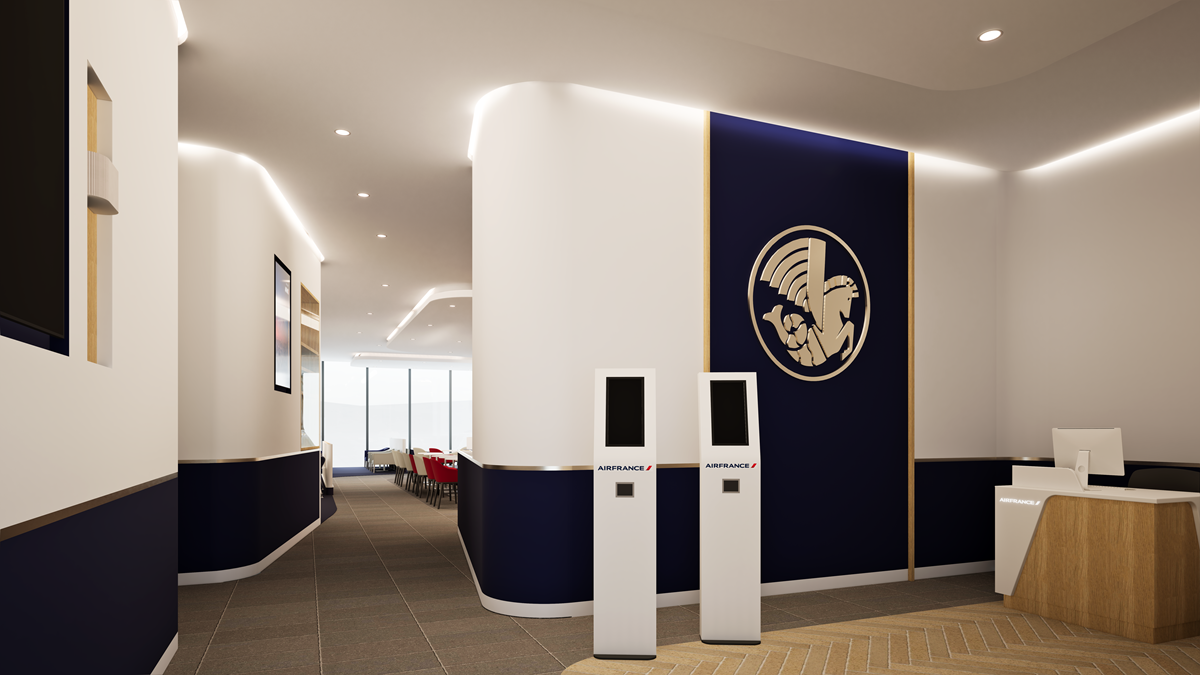
Air France inaugure un nouveau salon de 500 m² à l'aéroport de Francfort - Photo Air France wings architects

MSC Croisières


Air France franchit une nouvelle étape dans le déploiement de ses standards d’accueil avec l’ouverture, ce 1er septembre 2026, de son tout nouveau salon à l’aéroport international de Francfort.

Aménagée au sein du Terminal 3 inauguré au printemps dernier, cette infrastructure de près de 500 m² propose près de 120 places assises pour recevoir les clients Business et les membres Flying Blue Elite Plus d’Air France, de KLM et de l’alliance SkyTeam.

Accessible quotidiennement de 5h à 21h30, le salon s’organise autour de plusieurs zones distinctes destinées au repos, au travail ou à la restauration. Les usagers disposent d’un espace de travail équipé d’une cabine acoustique, d’un coin relaxation en retrait, ainsi que d’équipements connectés comprenant des bornes d’éligibilité à l’entrée, un accès Wi-Fi gratuit, des prises électriques et USB, et une offre de presse numérique via l’application de la compagnie.

Le salon intègre également un espace réservé exclusivement aux membres du programme Flying Blue Ultimate pour leur garantir davantage d’intimité. Cet investissement s’inscrit en soutien de l’activité opérationnelle du transporteur français sur la plateforme allemande, où il assure jusqu’à cinq liaisons quotidiennes vers son hub de Paris-Charles de Gaulle.

« A moment of calm and French refinement before the flight », souligne la compagnie à l’occasion de l’inauguration de cet espace opéré en partenariat avec Global Lounge Network. Conçu avec l’agence MARKS, le lieu offre une vue panoramique sur les pistes et intègre le mobilier de designers français comme Pierre Paulin et Ronan & Erwan Bouroullec.


A dining offer focused on French know-how and sustainable development

At the heart of the setup, the fifty-seat dining area offers a menu of savory, sweet and vegetarian dishes refreshed throughout the day. The menu highlights French specialties, accompanied by a selection of wines, champagnes and local beers.

In terms of operational management of the site, procurement prioritizes locally sourced and seasonal products. The company also notes that it implements measures to reduce food waste and to sort and recycle all waste generated by the dining service.


Flight Deals Barometer: Maghreb Leads Summer Flight Searches


Baromètre Bourse des Vols : le Maghreb domine les recherches en plein été - Depositphotos.com

MSC Croisières


The Maghreb confirms its weight in summer searches. Algiers holds the top spot in the ranking, with a 4% year-on-year rise. Marrakech climbs two places to reach the 5th position (+11%), and Tunis remains in the Top 10, at 8th (+14%).

By contrast, overseas destinations continue to be affected by airfares. Saint-Denis de La Réunion falls by 55%, while Pointe-à-Pitre (-67%) and Fort-de-France (-22%) also register steep declines.

“Mid-summer data confirm the Maghreb’s leadership and the rebound of certain European and African routes,” notes Caroline Gachet, Marketing & E-commerce Director at Bourse des Vols.

Du côté de l’Europe et du long-courrier, Porto records a 78% rise and reaches the 6th place. The strongest upsurge, however, goes to Abidjan, up 250%, which climbs to 7th. Bangkok, third in the ranking, drops by 34%. Mauritius completes the Top 10 with a 17% increase.

From provincial airports, searches also confirm the appeal for the Maghreb and Africa, notably Marrakech up in Lyon (+60%), Tunis in Nice (+91%), and Oran in Toulouse (+78%). Porto also shows strong progress, notably from Bordeaux (+204%), Toulouse (+179%) and Lyon (+128%). In Marseille, searches to Annaba (Algeria) jump 291%, while Miami grows by 470%.


The Indian Ocean and Asia Make a Strong Showing for All Saints’ Day

The searches conducted so far for the All Saints’ Day holidays show the rising influence of the Indian Ocean region and Asia.

Saint-Denis remains first, ahead of Algiers, while Marrakech climbs two places to take 3rd place. Mauritius achieves one of the sharpest gains, leaping four places to reach 4th position.

The momentum is even more striking for Antananarivo, which vaults 22 places to reach 7th, and Nosy Be, which adds four places. In Asia, Bangkok stays in the Top 5 despite slipping one place, while Tokyo advances 19 ranks to enter 9th.


“For All Saints’ Day, there is a clear tilt toward the Indian Ocean and a strong comeback for Asia,” highlights Caroline Gachet.

The Caribbean remains present but in a scattered pattern: Pointe-à-Pitre loses three places and ends up 6th, while Fort-de-France gains one place and closes the Top 10.

TOP 10 from France

TOP 10 from Paris and 7 provincial airports

TOP 10 All Saints’ Day Holidays


✈ TOP 10 DESTINATIONS

▶
From France in search volume – July-August 2026
Variation in search volume vs N-1

1
Algiers Houari Boumédiène

▲4 %

2
Saint-Denis La Réunion Roland Garros

▼55 %

3
Bangkok

▼34 %

4
Pointe-à-Pitre Le Raizet

▼67 %

5
Marrakech Menara

▲11 %

6
Porto

▲78 %

7
Abidjan Félix Houphouët-Boigny

▲250 %

8
Tunis Carthage

▲14 %

9
Fort-de-France Lamentin

▼22 %

10
Mauritius – Sir Seewoosagur Ramgoolam

▲17 %


✈ TOP DESTINATIONS

▶
Variation vs N-1

‘;
}
if (v === 0) {
return ‘

0 %

‘;
}
if (v ▼‘ + fmt(Math.abs(v)) + ‘ %

‘;
}
return ‘

▲‘ + fmt(v) + ‘ %

‘;
}

var tabsEl = document.getElementById(“tmTabs”);
var rowsEl = document.getElementById(“tmRows”);
var subEl = document.getElementById(“tmSubtitle”);

function render(idx) {
var ville = VILLES[idx];
var html = “”;
for (var i = 0; i ‘
+ ‘

‘
+ ‘

‘ + (i + 1) + ‘

‘
+ ‘

‘ + r.n + ‘

‘
+ ‘

‘
+ varCell(r.v)
+ ‘

‘;
}
rowsEl.innerHTML = html;
subEl.innerHTML = ‘In volume of searches · starting from
‘ + ville.label + ‘
· July-August 2026′;
var btns = tabsEl.getElementsByTagName(“button”);
for (var b = 0; b

Sun PhuQuoc Airways Entrusts European Sales Representation to TAL Aviation Group


Sun PhuQuoc Airways confie sa représentation commerciale en Europe à TAL Aviation Group - DepositPhotos.com, Iryna_Rasko

MSC Croisières


As part of its international expansion, Sun PhuQuoc Airways partners with TAL Aviation Group to structure its commercial presence in the European market.

Based on Phu Quoc Island, the airline, a subsidiary of the Sun Group, plans to grow its fleet to 32 aircraft by the end of 2026, including four widebodies, in order to strengthen its routes in Asia and to prepare its long-haul network.

“The European market is strategically important to us as we develop our international network. The in-depth market knowledge and TAL Aviation’s strong relationships with industry professionals make it the ideal partner to support our long-term growth in the region,” says Tran Viet Loi, the commercial director of Sun PhuQuoc Airways.


A historic order of 40 Boeing 787-9 Dreamliners to support long-haul

This expansion strategy rests on a major investment plan to renew the fleet.

On February 18, 2026 in Washington, D.C., the airline formalized a contract worth $22.5 billion for the acquisition of 40 Boeing 787-9 Dreamliners.

This commitment represents the largest order of wide-body aircraft in the history of Vietnamese commercial aviation.

The gradual arrival of these aircraft will enable the operator to operate direct connections between Vietnamese hubs, Europe and other international destinations.

Gideon Thaler, CEO of TAL Aviation Group, welcomed the partnership: “We are delighted to represent Sun PhuQuoc Airways in Europe. This partnership reflects our commitment to delivering premier representation and distribution.”


Comprehensive management of sales and partnerships in Europe

TAL Aviation’s mandate includes activating travel agency networks, supporting reservations, and developing strategic partnerships with industry players.

The group will rely on its network of local agencies to establish the airline’s presence among European customers.

Through this framework, Sun PhuQuoc Airways aims to position Phu Quoc and the region’s major Vietnamese cities at the heart of tourist and business flows coming from Europe.

Climate, Demography, AI: Alerts You Shouldn’t Ignore [ABO]


Climat, démographie, IA... les alertes qu’il ne faut pas ignorer - Depositphotos.com Auteur OlekStock

MSC Croisières


It would be unnecessary to revisit the flood of comments, analyses, and expert assessments that have poured into the media, and predictions—sometimes highly alarming, sometimes moderate—recorded all over the world; yet there are other alerts issued by our planet in distress that do not bode well for a calm future of travel and tourism.

As an example, we have identified a few of them that will at least help you anticipate development strategies (sometimes far too often reckless) and better understand where the world is headed!


« Tsunami ready »: UNESCO Mobilizes along the Côte d’Azur

While an unexpected mud tsunami has killed hundreds in Nepal (as we write), note that since June Nice, Cagnes-sur-Mer, Saint-Laurent-du-Var, Beaulieu, Villefranche-sur-Mer and Eze have earned UNESCO’s Tsunami Ready label.
They thus join neighboring Cannes, which was labeled in 2024, and now display the 800 warning panels installed along coastal areas to inform affected populations of two things: firstly, the direction to move to distance themselves as much as possible from the water in case of a tsunami alert. Secondly, additional panels indicate zones to be evacuated urgently.

Introduced after the 2004 Indian Ocean tsunami, which, as remembered, claimed more than 220,000 victims including thousands of holidaymakers, this UNESCO-coordinated global tsunami alert system should not go unnoticed in a region that is known to be particularly sensitive to earthquakes and other landslides capable of sweeping away populations and transportation infrastructures, homes, beaches, airports…

Relying on a very dense network of sensors, seismographs, and regional alert centers combining scientific expertise, international coordination, and the ability of local authorities to act quickly, the system is still in its early days but demonstrates the extreme vigilance to which humanity must devote itself in order to avert tragedies with dramatic consequences.

Covering today the ocean basins of the Pacific, the Indian Ocean, the Caribbean, the Northeast Atlantic, and the Mediterranean, the system is thus present in Samos in Greece, in Alexandria, in Costa Rica, in the Marshall Islands, in Honduras, in Cadiz in Spain… and more and more in India, Turkey, as well as in Peru which is celebrating its first label this year. Altogether, 43 countries have developed it.


While UNESCO acts to strengthen the resilience of coastal communities through several key initiatives, all experts are on edge, research is energised and the press fortunately serves as a vigilant, well-documented relay:

– Debating and proposing with Shift Project: Among the many laudable initiatives, note that Jean-Marc Jancovici’s Shift Project has just launched a “citizens’ assembly” consisting of 150 people invited to debate in person. A participatory platform: www.uncommunaccord.fr will allow participation in the debate to which tourism professionals should participate in large numbers.

– In a more tourism-oriented register, note that new data from Protect Group, a major supplier of travel-related products and services, reveal that the conversion rate for reimbursement insurance for its partners has nearly doubled, rising from 14% to 27%. France has also progressed, reflecting travelers’ willingness to manage risks caused by all sorts of operational disruptions or simply by a desire for greater flexibility: “travellers increasingly regard protection as an essential part of the booking process rather than a mere extra option,” said Stephen Joyce, Head of Global Strategy – Travel & Tourism at Protect Group.


Demographic Alert: “Global Depopulation Is the Most Likely Future”

In another domain, just as essential but less visible, the reversal by demographers of forecasts strikes me as particularly evocative of the false detours that forecasting activities can take.

It was said that the world population would reach 10 billion people by 2050, up from 8 billion today. Yet the prospect now points to a dramatic slowdown linked to a decline in fertility rates. Notably in Korea, Brazil, Italy… about forty countries are already affected.

While China, hit by its one-child policy, will see its population by the end of the century fall to around 650 million. And this against the United States where the fertility rate will be higher, so the population will rise without necessarily having the workforce needed for unskilled jobs!

And especially with respect to an Africa that is estimated to reach 2.5 billion inhabitants, i.e., more than double its current level, the world’s geopolitics and the handling of migration flows, including within the continent where they are the most numerous, will have to be reconsidered. Already, it is forecast that 750,000 African immigrants will be legalized in 2050.

…But what does all this mean? An aging population in the West and in China means a population less innovative, less dynamic, more costly for the state, more demanding of care tailored to its needs… But, good news, emphasize the demographers, it will be more peaceful.

As for the geopolitics of this tomorrow’s world, it is far from predictable with countries like Indonesia, Pakistan, Nigeria reaching 400 million inhabitants and India at 1.4 billion.

In any case, for this “old” world, it would also be a good time to consider planning for the future in all equipment to be built, a possible reconversion for seniors, as Japan is already doing!

We could also try to address the worst of the ills affecting seniors: isolation.


TAP Air Portugal: Air France-KLM, AS’s clear-cut objective [ABO]


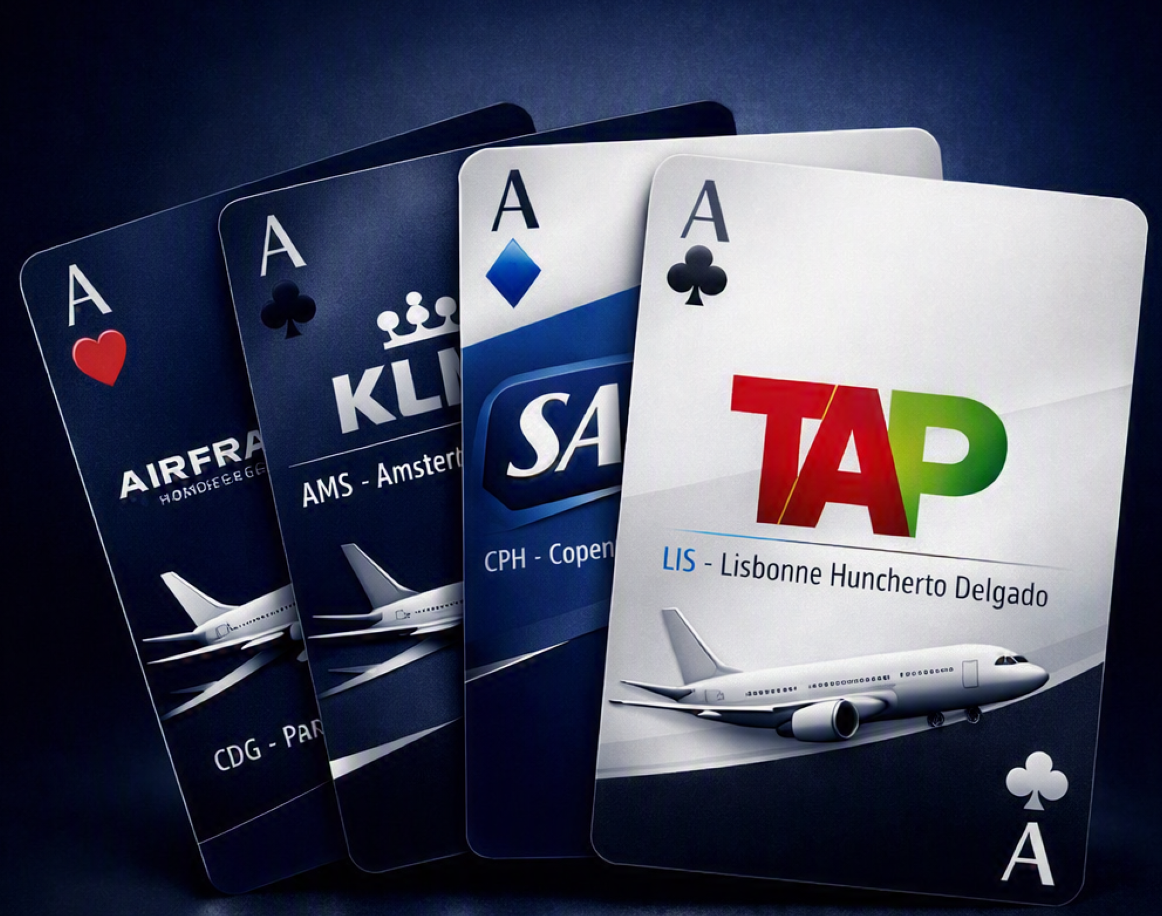
Air France - KLM : objectif carré d’AS - Image : C. Hardin, générée par intelligence artificielle

MSC Croisières


Aux dernières nouvelles, la décision finale du gouvernement portugais pour choisir quel groupe aérien pourra prendre une participation pouvant atteindre 49,9 % du capital de TAP, devrait intervenir à la fin de cet été.

Les deux groupes candidats à la reprise que sont Air France-KLM et Lufthansa ont fait savoir qu’ils avaient remis leur offre contraignante au gouvernement portugais, plus précisément à Parapublica, l’agence de gestion des participations de l’État.

Pour le groupe Lufthansa, cette première étape d’entrer au capital de TAP à hauteur de 49,9 % serait la poursuite de cette stratégie d’acquisitions commencée il y a une vingtaine d’années avec le rachat d’Austrian Airlines, Swiss et Brussels Airlines.

Avec la dernière, ITA Airways, à Rome, acquise fin 2025, et l’éventuelle nouvelle venue TAP à Lisbonne, le groupe allemand règnerait sur l’Atlantique Sud et les axes entre l’Europe vers l’Amérique du Sud et l’Afrique.

Pour Air France-KLM, et pour faire face à ce rival, la stratégie évolue. Les deux hubs de Paris et Amsterdam ainsi que la joint-venture avec l’Américaine Delta ne sont plus suffisants.

Le groupe veut lui aussi se renforcer principalement vers les États-Unis, l’Asie et l’Amérique du Sud. Avec des résultats plutôt solides depuis quelques années, il veut aussi prendre sa part dans la consolidation du transport aérien européen et créer une verticale de quatre Hubs puissants de l’Atlantique Nord à l’Atlantique Sud, un « Mur de l’Atlantique » en quelque sorte, pour faire face.

Regardons ces hubs de plus près.


Copenhagen Will Strengthen Its Position


TAP Air Portugal : Air France - KLM, objectif carré d’AS [ABO]


On June 30 last, in the heat of summer, the news barely drew attention, but it was interesting as it signals the rise of SAS, of which Air France-KLM is the new shareholder.

The Copenhagen-based Scandinavian carrier announced the acquisition of up to 40 new long-haul Airbus A330s for $10 billion, the largest investment in the history of this company.

With the summer 2025 order of 55 Embraer short- and medium-haul aircraft to feed Copenhagen, a promising hub is clearly emerging far north in Europe toward Asia and the United States that Air France-KLM would certainly like to benefit from.

An ongoing project for now since, with a 19.9% stake, the French group remains today more of a competitor than anything else. But if all goes well, the situation should change this year, with Air France-KLM planning to increase its stake in the Scandinavian airline to 60.5%, making it a subsidiary able to capture a market with a high GDP.


Schiphol Amsterdam: The Weak Link?


TAP Air Portugal : Air France - KLM, objectif carré d’AS [ABO]
Faut-il voir dans ce projet de nouveau hub danois plus qu’une complémentarité au hub d’Amsterdam, fief de KLM, dont le gouvernement des Pays-Bas bride la croissance depuis plusieurs mois ? Se substituer ?

Certains, chez KLM, ne sont pas loin de le penser. Avec sa flotte long-courrier en croissance, SAS, à moyen terme, a vocation à « chasser » les clients de KLM pour les attirer vers Copenhague.

Aussi, Ben Smith, le PDG d’Air France-KLM avait dit tout le mal qu’il pensait de la politique du gouvernement néerlandais, gestionnaire de l’aéroport de Schiphol-Amsterdam, et qui avait fixé un niveau élevé de redevances aéroportuaires et voté des mesures visant à réduire le nombre de vols pour limiter les nuisances sonores. Une bataille juridique est engagée depuis.

Côté redevances, et depuis la guerre dans le Golfe, le gouvernement a desserré l’étau en appliquant une remise de 10 % jusqu’en mars 2027.

Un premier geste salué par Ben Smith : « la première bonne nouvelle depuis longtemps aux Pays-Bas concernant les coûts liés aux opérations à Schiphol ».

Mais sur l’affaire des créneaux horaires, le PDG d’Air France-KLM en avait rajouté une couche lors de la dernière assemblée générale d’A4E (Airline for Europe) avec une menace à peine voilée de ne pas avoir d’autre choix que de positionner des avions « ailleurs » en l’absence de suffisamment de créneaux.

Le gouvernement arrivé aux affaires en 2026 reste sur une ligne plutôt favorable aux limitations de vols ; cependant, on sent, à travers les nombreuses déclarations parues dans la presse ces derniers mois, qu’il veut trouver, avec l’ensemble des opérateurs de Schiphol, un compromis équilibré permettant une meilleure compétitivité en matière de connectivité.


Paris CDG Aims to Be More Attractive


TAP Air Portugal : Air France - KLM, objectif carré d’AS [ABO]
Pour le hub parisien d’Air France à CDG, mieux vaut tard que jamais. Il aura fallu attendre cependant assez longtemps avant qu’ADP et le groupe français unissent leurs efforts pour construire un levier d’attractivité : le Stopover.

Un produit développé ailleurs dans le monde, peu en Europe, mais beaucoup « dans les pays qui ont fait de leur secteur aérien une stratégie industrielle souveraine et économique : Istanbul, Dubaï, Doha, Singapour, Hong Kong », comme le précisait Sébastien Justum, Secrétaire général adjoint d’Air France-KLM, lors de la présentation du dernier rapport de la Chaire Pégase sur « Le rôle du transport aérien dans l’attractivité touristique de la France ».

Après le partenariat conjoint Air France–ADP annoncé au dernier salon du Bourget en présence du Président de la République, la décision, enfin, de positionner Paris comme elle aussi une escale sur un parcours international se concrétise.

Voici désormais « Paris Stopover », un nouveau dispositif créé par Air France et Extime Travel, la marque commerciale du Groupe ADP dédiée « aux expériences touristiques ».

ADP nouvelle agence de voyages ? Ça en a tout l’air, sauf que les réservations de vols, hôtels et locations de voitures vendus sur les sites de Paris Aéroport et d’Extime sont gérées par MisterFly.

Alors que 50 % des clients d’Air France arrivant à Paris CDG sont en correspondance, ils peuvent désormais, avec Paris Stopover, et si leur correspondance est au minimum de 27 heures, profiter d’offres, réserver des packages, des offres de séjours conçues par Extime Travel avec transferts, hébergements et activités diverses.

Autre avantage pour Paris CDG, et dont Air France-KLM se félicitera sûrement : le futur contrat de régulation d’ADP, et pour lequel, selon nos confrères des Échos, l’État aurait donné son feu vert. Dans ce plan de développement, il est prévu une forte baisse de la redevance applicable aux passagers en correspondance, avec un abattement passant de 40 à 60 %.

Toujours selon nos confrères des Échos, et sur ce point précis, les opérateurs concurrents d’Air France n’apprécient pas ce qu’ils considèrent comme une « distorsion de concurrence ».

Le SCARA, dans un communiqué récent à dénoncé : « de faire porter aux dessertes aériennes point-à-point européennes, domestiques et ultramarines le financement d’une stratégie qui ne les concerne pas directement puisqu’elle vise à attirer des lignes internationales et à faire de Roissy-CDG un hub de correspondances apte à rivaliser avec les grandes plateformes internationales. »

À ce sujet, l’ART, l’autorité de régulations des transports devrait se prononcer en décembre prochain.


Will River Cruising Be Greener If Ports of Call Provide the Means?


Et si la prochaine révolution environnementale du tourisme fluvial ne se jouait pas uniquement sur l'eau… mais aussi sur les quais ? - DepositPhotos.com, zhukovsky

MSC Croisières


« Ships pollute. » How many times have I heard this remark at the edge of a quay or during a meeting with elected representatives?

Environmental issues are now at the heart of all reflections, and river tourism is no exception to this rule.

Companies are investing in more efficient ships, working on new propulsion systems, reducing their consumption, improving the management of water and waste. This is an indispensable evolution.

But over my years spent alongside companies, crews and territories, I have gained a conviction: the environmental transition of river tourism is not only played out aboard ships. It also happens… on the quays.

And before asking companies to go further, we must first ask whether the stopovers truly give them the means to do so.

Also read: River tourism: a good stopover is when everything flows smoothly


Cutting the engines… but you also need to be able to plug in

I had the chance to lead a stopover that was the first in France to be equipped with electric charging stations allowing boats to cut their engines during their mooring.

I remember that at first, some crew members welcomed this novelty with measured enthusiasm. It required pulling heavy cables, transporting them, and connecting them… It demanded a little more time and new habits.

Then things evolved.

The crews quickly realized the benefits. Passengers enjoyed a quieter environment. The local residents appreciated the disappearance of engine noise. Everyone’s comfort improved.

As is often the case, it simply required a bit of pedagogy and an adaptation period.

This experience taught me one key lesson: you can ask boats to cut their engines, but if there is no electric outlet, what alternative can you offer them?

Ecology cannot rely solely on obligations. It also requires proper infrastructures.


Passenger waste: is the problem really the bin… or its size?

One day, an elected official shared his irritation with me. Passengers returned from their excursions and quickly filled the small bins placed near the quay, and municipal services had to intervene more often.

His remark was understandable. But another question deserves to be asked: were these facilities sized to accommodate several hundred visitors arriving at once?

Travelers who use a bin are not committing an incivility. On the contrary, they are adopting the behavior we expect of them.

The real issue may lie elsewhere.

A cruise stopover does not generate the same needs as daily attendance. Planning larger containers, temporarily boosting collections, or installing additional drop-off points during the season is often a far more effective response than blaming visitors… for using the bins provided to them.


Waste at the edge: a reality we know little about

A boat is not merely a means of transport; it is also a hotel, a restaurant and a living space.

Dozens of people work there and sometimes several hundred travelers stay aboard. Waste is therefore inevitable.

Yet storage capacities remain limited and health constraints are significant.

Especially during the summer period, some waste cannot be kept for long without causing nuisances. It happens that the crews use the stopovers to deposit glass in the town’s sorting columns.

Some see this as a problem. I see more of a question of organization.

Why not imagine a genuine collection service dedicated to boats?

Like water, electricity or other port services, this collection could be organized by the community or a contractor and billed to the companies.

Everyone would benefit: the crews would have a clear solution, the municipality would master the organization, and the waste would be collected in proper conditions.


Buses also have their constraints


Understand before judging

In the end, everyone is already making efforts. Companies invest. Crews adapt their practices. Local authorities look for solutions. Territories develop gentler mobility.

But we sometimes tend to analyze each difficulty in isolation.

Sustainable development rests above all on a global vision: understanding the constraints of the shore, understanding those of the territories, then building together appropriate responses.

We often speak of the transition of ships. It is essential. But perhaps it is time to also talk about the transition of stopovers?

For a vessel does not become more sustainable solely thanks to the technologies it carries. It becomes so also thanks to the infrastructures, services and organization it finds when it docks.


A genuinely shared responsibility

It is not about opposing companies to communities, nor about designating a single responsible party.

The environmental transition of river tourism is a collective responsibility.

Companies must continue their investments, territories must adapt their equipment, stopover managers must anticipate needs, ports, service providers and communities must work together.

It is precisely this cooperation that will bring forth concrete solutions. For sustainable development is not decreed: it is organized. It is built thanks to the innovations of the companies, but also thanks to the engagement of the territories that host them.

Ultimately, a sustainable stopover is not merely a port where a boat consumes less; it is a stopover that gives all actors the means to act.

And if the next environmental revolution of river tourism did not play out solely on the water… but also on the quays?

Also read: Our special dossier dedicated to river cruising


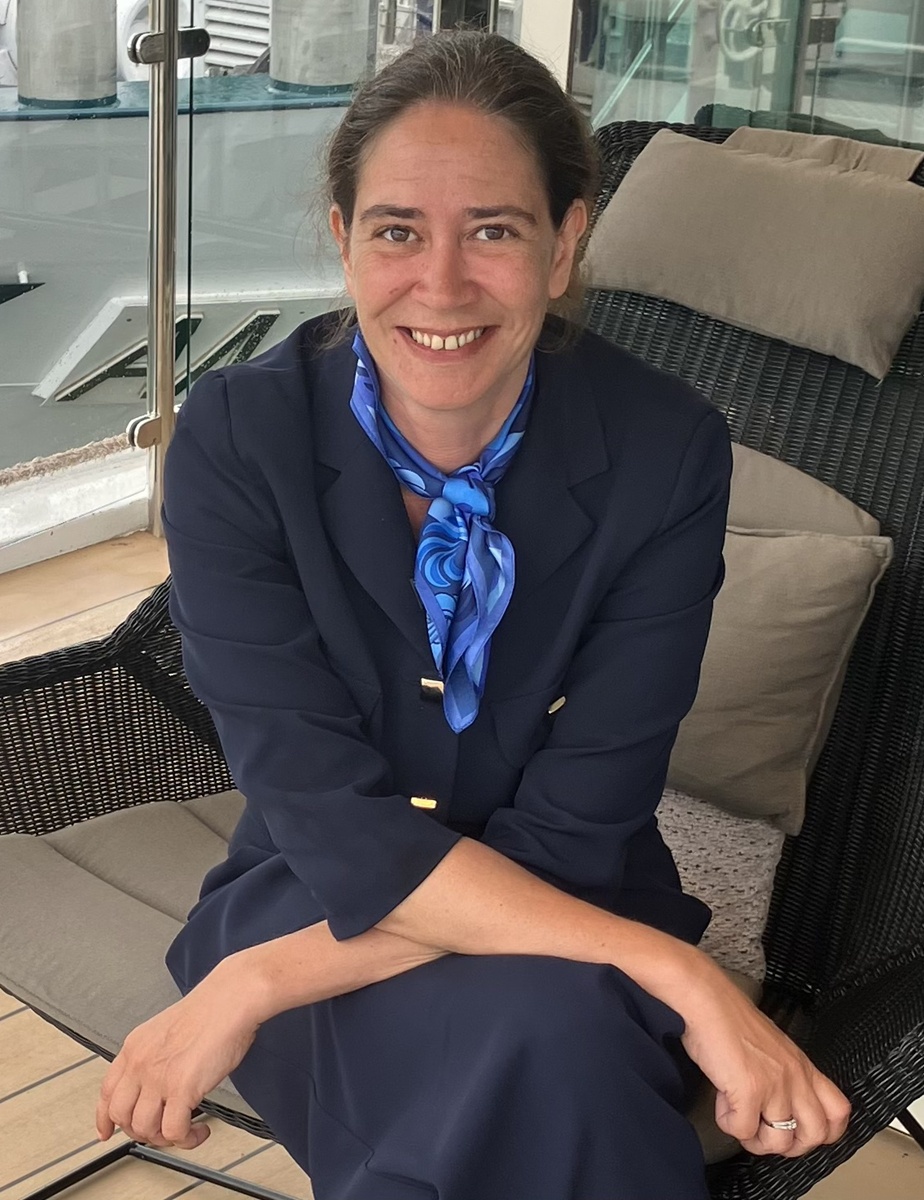
A propos d’Aurélie Feray


Aurélie Feray - Photo : AF Fluvial Conseil

Founder of AF Fluvial Conseil, Aurélie Feray accompanies territories and stakeholders in river tourism on issues of stopovers, passenger experience and tourism development.

Through her columns, she shares a ground-level view of the behind-the-scenes of river tourism, how stopovers operate and the links between boats, crews, destinations and travelers.

Contact : [email protected]

ECTAA: Key Issues Set to Shape Europe’s Autumn Agenda


Eric Drésin, secrétaire général de l’ECTAA, fait le point sur les dossiers à suivre - Photo ECTAA

MSC Croisières


After the summer break, the ECTAA (European Association of Travel Agencies and Tour Operators) returns to work.

In its briefcase, several dossiers to monitor in the coming months. One of the first tasks concerns the implementation of the new directive on package travel.

The text has now crossed the European stage and enters its phase of transposition in the Member States. The European Commission specifies that countries have 28 months to transpose the new rules into their national law, before a six-month entry into force later.

To read: CEI, refunds, packages… what the European directive officially published changes!

The text must thus be transposed no later than September 29, 2028 to enter into force on March 29, 2029.


Package Travel Directive: Avoiding Over-Transposition

« We are in the transition phase for implementation, for transposition », explains Eric Drésin, secretary-general of the European association.

The ECTAA works with its national professional associations to monitor how the text will be rolled out in each country. « We start with the less hot dossiers», he summarizes, with one objective: to prevent compromises reached at the European level from being questioned at the national level.

If the new directive ultimately does not impose a general limitation on prepayments, member states still have limited room for maneuver.

« There is no obligation to limit prepayments, it’s clear, and we’ve managed to rule that out », recalls Eric Drésin. « But if the member states want, they can. » Vigilance is therefore required to avoid the risk of over-transposition. « There, we really want to tighten the screws to avoid this situation. »

The first country to tackle the transposition is Finland, where the ECTAA is expected as early as next week.


Air Passenger Rights: the problem of Intermediation Fees

Another particularly sensitive dossier: the revision of air passenger rights. A political agreement was reached this summer on revising the European framework. The European Commission indicates that the new regime must still be formally adopted and published before it applies, with a delay of 12 months after its publication.

For travel agencies and other intermediaries, one point crystallizes the concerns: refunds in the event of a flight cancellation.

« When a flight is canceled the travel agency will be obliged to reimburse its intermediary fees », explains Eric Drésin. And on this point, the legislative fight is now over: «There is nothing more we can do in the legislation. »

The ECTAA therefore intends to shift the debate to the realm of B2B relations.

The European association has denounced the «disproportionate impact» of these new rules on independent intermediaries and argues that intermediary fees remunerate a service distinct from that of the carrier.


Passenger Package : the dossier to watch closely

But the dossier that could monopolize a large part of the European agenda in the coming months is undoubtedly the Passenger Package, presented in May last.

The package includes three legislative proposals dedicated notably to rail ticketing, to multimodal mobility services (MDMS) and to railway passenger rights. The objective stated by Brussels is to enable travelers to compare and more easily purchase journeys that combine several operators (rail, road, sea), with a single ticket and enhanced rights throughout the entire trip.

In principle, ECTAA is supportive of this evolution. But Eric Drésin points to several difficulties.

The first concerns the absence of air travel in a device presented as multimodal. « We must integrate air transport into this legislative package so that we can have a clearly multimodal and relevant offer for customers », he says.

The organization believes that the principles of access that are fair, reasonable and non-discriminatory (FRAND) should not be limited to rail but should apply to all transport sectors whenever dominant operators impose unfair conditions on their business partners.


Sustainability: a topic that could resurface?

Finally, another topic is expected to return to the foreground: sustainability.

After having occupied an important place in sector debates in the post-Covid years, the issue seemed to have faded from view. For Eric Drésin, the events of this summer could however revive the discussions.

« The question of sustainable travel, of sustainability in our sector, had somewhat disappeared from the news », he notes. But «this summer raised so many questions that it will come back onto the table ».

According to him, national associations could ask the ECTAA to act more on this topic…

Tourism and Climate: 5 Practical Actions to Reduce Your Company’s Carbon Footprint [ABO]


Il faut vraiment voir la transition écologique comme un formidable levier d'innovation et d’adaptation - DepositPhotos.com, duiwoy

MSC Croisières


This summer, it’s hard to open a newspaper without encountering a climate-related story.

The megafires have devastated Gironde, fires have multiplied in several regions of France, water restrictions linked to a drought are taking hold for good… All these events remind us that climate change is no longer a distant scenario. It is already shaping our territories, our landscapes, and our tourist activities.

And as if that weren’t enough, July 2026 has become the hottest month ever recorded in France, after a June that was already historic!

Tourism is on the front line. It suffers directly from climate disruption: shaken seasons, closures of natural sites, tensions over water resources, evolving traveler expectations…

But it also contributes. According to the latest estimates from the Service des données et études statistiques (SDES), the carbon footprint of tourism consumption in France reached 75 million tonnes of CO₂e in 2023.

Movements alone account for 65% of this footprint, making it by far the primary lever of action for the sector.

The think tank The Shift Project also notes that 85% of the distances traveled by the French for their trips still rely on fossil fuels. A finding that shows the scale of the challenge… but also the numerous opportunities for innovation for the sector!

So, faced with these figures, what do we do? Where to begin? First good news: reducing your carbon footprint does not mean giving up travel. No, it’s mostly about rethinking certain practices.

And second good news: not all actions have the same impact. The goal isn’t to change everything at once, but to focus your efforts on the emission sources that matter most. And for that you will need to calculate your carbon footprint!


Measuring to Act More Effectively

Reducing your carbon footprint without a metric is a bit like hiking without a map: you move forward, but it’s hard to know if you’re heading in the right direction.

Tools such as the Bilan Carbone® (created in 2004 by ADEME and carried since 2011 by ABC, the Association for the Low-Carbon Transition), or the GHG Protocol help identify the main emission sources and set action priorities.

Expect not to obtain a perfectly precise figure. The carbon footprint assessment is mainly about understanding where the largest impacts lie so you can invest your time and resources where they will be truly useful.

And now that you have a solid starting point, we can really begin!


1. Act on mobility, the first lever of decarbonization

Unsurprisingly, transport represents the main emission source in tourism.

For many, this is where the biggest gains lie. Of course, a hotel or a travel agency doesn’t always choose the transportation mode for their clients. However, they can influence their decisions.

Some action options :

– highlight train itineraries during the booking process

– offer discounts or benefits to travelers arriving by soft mobility

– develop partnerships with public transport networks or bicycle rental operators

– install charging stations for electric vehicles

– encourage business trips by train whenever possible.

Internally, we can also rethink staff travel through carpooling, a sustainable mobility allowance, or telework when missions allow.

The goal here is not to ban flying or driving, but to offer more alternatives and to make the leaner choices easier and more attractive!


2. Reduce energy consumption in buildings

Hotels, restaurants, campsites, holiday residences, or visitor sites: buildings also account for a substantial share of greenhouse gas emissions.

Good news: many actions can reduce both the carbon footprint AND energy bills at the same time!

Among the most effective levers :

– gradually replacing lighting with LEDs

– improving thermal insulation

– optimizing heating and cooling systems

– installing occupancy sensors in common areas

– regularly monitoring energy consumption to identify drifts.

The most significant investments can be integrated into an energetic renovation strategy over several years. Again, the key is to progress step by step.


4. Buy differently


5. And finally, never forget the digital realm!

Online booking, marketing campaigns, websites, social networks, artificial intelligence… digital technology has become essential in our daily lives and for work.

Unfortunately, because digital isn’t something tangible, its environmental impact is still largely unknown.

Without giving up (of course) on digital tools, it’s possible to adopt a more restrained approach :

– lighten your website and remove unnecessary content

– limit video on your site and on social networks

– extend the life of IT equipment

– limit the storage of superfluous data

– use AI tools when relevant, prioritizing high-value uses.

To learn more about the environmental impact of digital technology, especially AI, I recommend the article “Artificial Intelligence: The Real Environmental Cost of the AI Race” by Bon Pote, and participating in or organizing workshops like The Fresque du Numérique and The Battle of AI.


Bonus idea: getting certified to accelerate your transition

When a company wants to structure its environmental approach, a question sometimes arises: should we aim for a label? The answer is usually yes… provided you don’t treat the label as an end in itself.

A label is not intended to “greenwash” a company. Its real value lies elsewhere: it helps to structure the approach, set objectives, measure progress, and commit to continuous improvement.

For tourism professionals, it also serves as a trust signal to travelers, partners, and employees.

Depending on your activity, several frameworks can guide you :

– La Clef Verte is today the leading international environmental label dedicated to tourist accommodations and restaurants ;

– for tour operators, the ATR label – Acting for Responsible Tourism – highlights agencies committed to a demanding approach to environmental, social, and economic responsibility ;

– companies with an international presence can also look to Travelife, recognized in the sector ;

– you can also rely on cross-cutting standards such as ISO 14001, Engaged CSR (AFNOR) or B Corp, which help structure a global sustainability strategy.

Whatever standard you choose, the essential remains the same: use the label as a tool for progression, not as a mere showcase.

Finally, don’t forget a crucial factor: the people. Raise awareness among your employees and your travelers!

You can find some tips in two previous articles: “10 essential awareness workshops in tourism” and “Responsible travel: how to engage without guilt?”


Reducing Your Carbon Footprint: An Opportunity to Reinvent Tourism

For a long time, ecological transition was seen as a sequence of constraints: new regulations, investments, changes in habits…

Today, it’s essential to view it as a formidable lever of innovation and adaptation.

Of course, reducing your carbon footprint helps limit your impact on the climate. But it’s also an opportunity to control energy consumption, strengthen ties with local actors, offer more authentic experiences, and meet the expectations of a clientele that is increasingly attentive to these issues.

And no, reducing your carbon footprint does not mean doing less tourism. It’s about tourism that is more resilient, leaner, and more desirable.

Each company will progress at its own pace. What matters is to start, to measure progress, and to keep learning.

As always, the best low-carbon strategy is not the one that promises perfection, but the one that becomes a durable part of the company’s daily life!


Key takeaways for tourism professionals

– start by identifying your main emission sources before multiplying actions.

– transport, energy, food, purchases, and digital are the main levers for reduction.

– training your teams is essential to sustainably transform practices.

– support your travelers with simple and positive solutions rather than guilt-inducing messages.

– CSR labels provide an excellent framework to structure your approach and showcase your commitments.

– the low-carbon transition is not only a response to climate change: it’s also an opportunity to strengthen resilience, attractiveness, and competitiveness of your business.


Find all articles by Camille Le Guilloux by clicking here.


Camille Le Guilloux - DR

Expert in Responsible Marketing, Camille Le Guilloux is on a mission to inspire, equip, and guide companies toward more ethical and sustainable marketing practices.

Having become an impact-driven infopreneur and facilitator of various CSR awareness workshops (Climate Fresk, 2 Tons Workshop, Ocean Fresk, Fresk of the New Narratives), she now helps businesses and business-school students implement effective and responsible strategies.

Website: www.kerezenn.com


Jet Tours gears up for the launch of three new clubs [ABO]


Bryce Arnaud-Battandier : plus de la moitié des ventes de Jet tours sont aujourd'hui réalisées en agences de voyages et, surtout, « la croissance se fait sur les agences » - Photo NG Travel

Hurtigruten


Relancée en 2025 par NG Travel auprès du réseau d’agences de voyages, la production de Jet tours se fait une place.

« We are generally growing. Since the start of the year, we have not been in a downward trend. For the group, spring was inevitably challenging and, even though the situation improved in June, July and August, it is not possible to speak of catch-up at this stage.

However, for Jet tours, since the beginning of the year, we have essentially doubled
», confirms Bryce Arnaud-Battandier, Chief Executive Officer of NG Travel, interviewed by TourMaG.

More than half of Jet tours’ sales are now made through travel agencies and, above all, “growth is happening through the agencies,” notes the CEO.

At its launch, the group had set an ambitious objective: €150 million in B2B revenue within three years, then €180 million within five years. „ We are maintaining this ambition to reach €150 million in three years,” he confirms.


Jet tours prepares the launch of three new clubs

To continue this momentum, Jet tours will strengthen its offering.

This summer, the brand had three clubs: Club Jet tours Ostria Resort & Spa 5* in Crete, Club Jet tours Khaolak Marriott Beach Resort & Spa 5* in Phuket, Thailand, and Club Jet tours Anaya Zanzibar 5*.

« The Zanzibar club, owned by NG Travel, performed particularly well », says the CEO, and « the outlook for the winter is very positive ».

Jet tours thus prepares the launch of three new clubs – already signed – which are due to be online in the coming weeks. The objective is for the entire new offering to be fully operational no later than the IFTM show.

The new locations should reinforce NG Travel’s desired positioning: a premium-scale club with particular attention given to dining, sport and families.

The group particularly intends to differentiate itself with sporting services and coaching, but also with clubs tailored for children and teenagers.

« For us, there is really room for premium club experiences. We must excel in the quality of our service and products, because agencies expect flawless service.

This is a positive demand, but it is also why we did not want to move too quickly,
» explains Bryce Arnaud-Battandier.


The innovations presented for the IFTM

Another development axis: the Jet tours Signature line.

The brand had built a portfolio of around 70 products. It will now undergo a partial renewal of the catalog to retire underperforming items and to incorporate new ones.

The principle remains unchanged: select high-quality hotels, negotiate favorable pricing, and above all offer clients exclusive privileges.

Depending on the establishments, these can take the form of an upgrade, an excursion, a massage or other experiences. « We see that it works very well ».

The same logic applies to the tours: Jet tours will continue developing its production.

The brand keeps its small-group circuits, limited to 20 people, with French-speaking guides and a quality pledge. But it will continue to develop its “Essentials” range in parallel.

Everything will be unveiled at the IFTM, where Jet tours intends to present all of its winter novelties.


40% of sales are already for the winter season

For the summer of 2026, last-minute sales boosted activity: 50% of clients booked their summer stay less than 30 days before departure, compared with 25% a year earlier.

«Ultimately, our job is to ensure hoteliers that our clients will arrive, but they are a bit more last minute», explains Bryce Arnaud-Battandier. «On the flight side, we bear some risk, but we have also worked a lot on flexibility.

There was still quite a bit of capacity on the market at perfectly reasonable prices. It was positive for our clients and it allowed us to maintain very fair rates.
»

The booking window was halved: families booked on average 58 days before departure (versus 90 in 2025) and couples 54 days before (versus 84 in 2025).

The average vacation budget remained broadly stable, at €1,557 per person. Greece tops the list with 35% of departures, ahead of Spain (20%) and Tunisia (15%). Together these destinations account for 70% of departures, with Crete particularly favored, as Jet tours notes in a press release.

After a summer dominated by last-minute bookings, the trend reverses for winter with more forward planning.

At Jet tours, 40% of sales already concern the winter season. In the destination ranking, Egypt shows a particularly pronounced comeback. Zanzibar is also among the winter’s strong destinations. The success of the in-house product, the Club Jet tours Anaya, notably drives sales. Finally, the Canaries complete this trio.

Brazil: Generous Hospitality as a Driver of Transformation in Luxury Tourism [ABO]


Au Brésil, l’hospitalité n’est pas une construction récente. Elle s’inscrit dans la culture, dans les comportements et dans la relation à l’autre - DepositPhotos.com, dabldy

Hurtigruten


Brazil has always nourished a powerful imagination, spanning nature, history, and the relationship with others.

This imagination is not unfamiliar to French culture. Since the 16th century, France has shown interest in this territory, notably through the episode of France Antarctique in the bay of Rio de Janeiro.

This long-standing relationship echoes in literature, notably with Rouge Brésil by Jean-Christophe Rufin, which traces this encounter between two worlds. The narrative highlights what still today makes Brazil unique: the capacity to welcome, to blend cultures, and to forge a different relationship with others.

This historical and cultural link between France and Brazil goes beyond the frame of the narrative.

It is reflected in certain architectural influences, in the cross perspectives between the two countries, but also in how French travelers today approach the destination.


A redefining of luxury around experience, relationship and the identity of places

In the context of luxury tourism, this relationship takes on a particular dimension.

It enables French professionals – agencies, investors, hoteliers – to better understand a destination that, while deeply different, shares a common sensitivity around culture, the art of living and hospitality.

Long perceived through partial prisms, sometimes reduced to its structural challenges or to its most iconic images, Brazil today asserts itself as one of the most distinctive destinations in international tourism.

This evolution is neither a fashion trend nor a marketing repositioning. It is part of a long-term movement led by players who have progressively organized the country’s upscale transition.

This transformation does not merely rely on opening new hotels or upgrading infrastructure. It rests on a deeper change: a redefinition of luxury around experience, relationship and the identity of places.

At the heart of this transformation, the Brazilian Luxury Travel Association (BLTA) plays a central role. Created in 2008, the association now brings together 66 hotels and 8 DMCs across 39 destinations throughout the country.

Its mission goes far beyond promotion. It aims to structure a vision of Brazilian luxury, define its standards and carry its voice on the international stage.


A paradigm shift: from product to experience

The international luxury sector is undergoing a structural evolution. Value is no longer measured solely by the quality of equipment or the standardization of service. It shifts toward the ability to create a singular, embodied, and memorable experience.

Brazil presents a strong uniqueness in this context: hospitality is not a recent construction there. It is embedded in culture, in behaviors and in the relationship to others.

This reality constitutes a major competitive advantage. Camilla Barretto, CEO of the BLTA, offers a clear reading: « This is not an obvious luxury. It is a luxury combined with authenticity. If you go to Brazil, you won’t find this place anywhere else. »

This approach redefines the selection criteria for agencies and clients. The choice of a destination no longer rests solely on its level of equipment, but on its ability to create .


A complex territory that requires strong expertise

The main challenge for Brazil lies in its complexity. A continent-country, it cannot be approached as a homogeneous destination.

Each region has its own codes, operational constraints and opportunities.

For travel agencies, this reality implies an increased need for qualified intermediation. Value no longer lies solely in booking, but in the ability to build a coherent, smooth itinerary tailored to the client’s profile.

This is precisely where the Brazilian market is progressing. Actors, including the BLTA, have helped raise the overall level of professionalism by creating standards, networks and selection tools.

The development of tools such as the Mystery Shopper Audit, based on more than 240 criteria, responds to a key expectation of international buyers: transparency of quality.


Emblematic references that structure the perception of luxury


Generous hospitality as a competitive advantage

One of the most differentiating elements of Brazil lies in its relational culture.

The welcome goes beyond mere service. It is expressed in a way of being, in spontaneity, and in a natural attentiveness to others.

Camilla Barretto summarizes this specificity: « We do not pretend to welcome people. We smile at them. … In Brazil, it’s open, it’s free, it’s vibrant. »

This dimension corresponds to what I call generous hospitality. For tourism professionals, this notion represents a strategic lever. It allows creating differentiating experiences without resorting to artifices or excessive investments.

It also constitutes a loyalty driver. A strong relational experience creates a lasting memory, well beyond the material elements of the stay.

Read also : Luxury hospitality: the three keys to creating an experience that leaves travelers with a lasting impression


Sustainability and preservation: a central challenge

The upgrading of Brazil goes hand in hand with a major challenge: preserving the authenticity of its territories. The development of luxury tourism cannot come at the expense of ecosystems and local cultures.

This question becomes central for investors and operators.

The BLTA has integrated this dimension by setting an ESG certification objective for all its members by 2029, in line with the Global Sustainable Tourism Council standards.

This positioning responds to growing expectations from international clients, but also to a long-term requirement: maintain the country’s attractiveness.

Read also: Hospitality: the luxury of tomorrow will be sustainable or no longer


What to remember: Brazil, a strategic market to structure with precision

– Brazil is entering a decisive phase of its tourism development. The country has unique assets: diverse landscapes, rich culture, natural hospitality. The challenge is no longer to discover these assets, but to structure them.

– For travel agencies, Brazil offers a clear opportunity: to propose differentiated experiences with high emotional value, in a market still under construction.

– For investors and operators, the question is more strategic: how to develop a luxury offering while preserving the country’s essence? The answer lies in a fine understanding of what makes Brazil’s singularity. This singularity rests on a simple truth: luxury is not limited to what is seen. It is played out in relationships, attentiveness, and the ability to create connection.

– Generous hospitality is not a concept. It constitutes a real competitive advantage, already present, still partly untapped.

– Brazil does not seek to catch up with the great international luxury destinations. It offers something else: a more human, more embodied, more memorable experience. A territory that does not ask to be transformed, but to be understood.


To follow: Rio de Janeiro: a collection of hotels embodying different cultures of luxury


Laurent Delporte


Laurent Delporte - Delporte Hospitality

Laurent Delporte is the president and founder of DELPORTE Hospitality.

After 25 years of experience in luxury hospitality, notably within the Accor group, he combines a visionary spirit, an international hospitality culture, managerial and operational skills, and a network of independent experts to support decision-makers in hospitality in service of their clients, employees and partners.

As a recognized consultant in the hotel industry, an executive coach to leaders, a speaker in the world of hospitality, he also runs the DH-Mag magazine dedicated to trends in the hotel industry and speaks at leading schools and trade shows (HEC, Sup de Luxe, EquipHotel, Maison & Objets…).

Moreover, Laurent Delporte ranked 8th in the international ranking of hotel influence in 2024 by the American magazine Global Hospitality and the International Hospitality Institute (IHI) based in the United States. He was also selected in the list of the 25 luxury sector speakers worldwide.