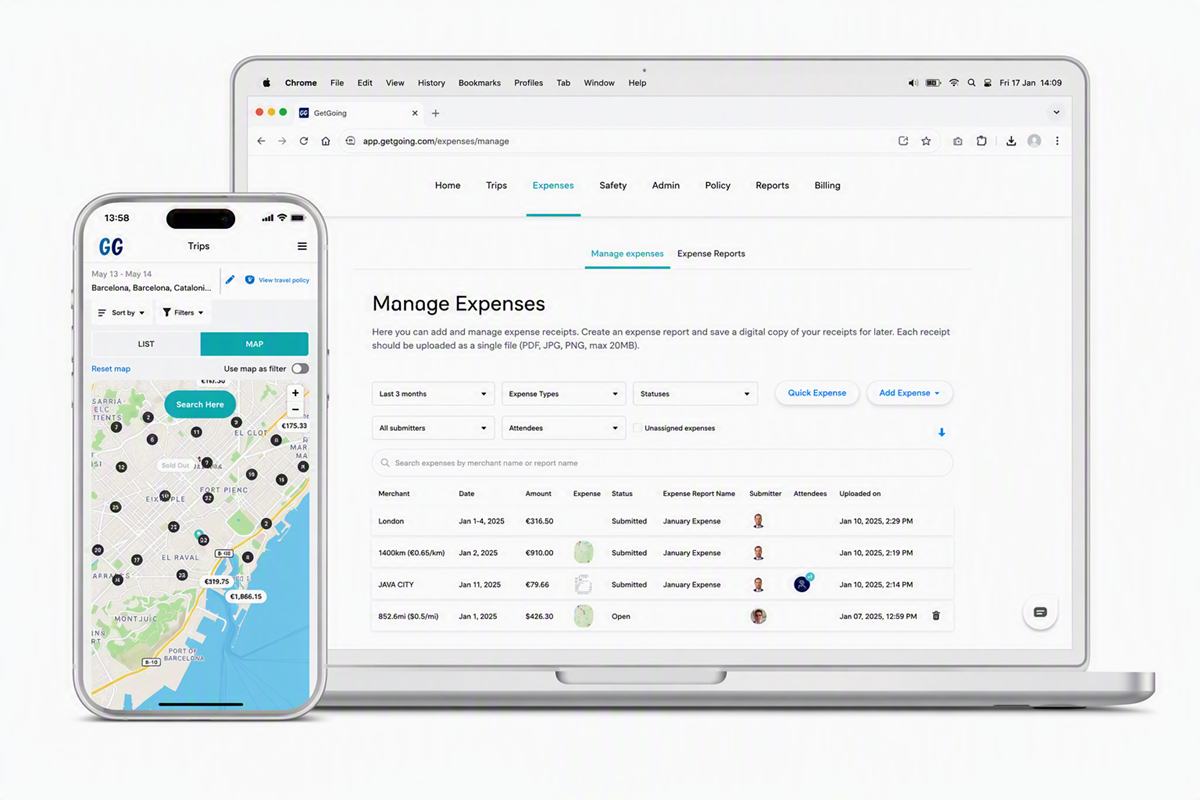

S4BT (CDS Group) Acquires HotelHub


Ziad Minkara, fondateur et PDG du groupe S4BT et Jay Virdee, PDG d'HotelHub - Photo : S4BT

IFTM TourMaG Party


The S4BT Group, a specialist in business travel, has just acquired Travel Centric Technology, the London-based parent company of HotelHub, a hotel technology platform serving international corporate travel agencies.

This supplier is “specialized in consolidating fragmented hotel content from centralized distribution systems (GDS) and non-GDS sources within a single operating environment,” S4BT said in a press release.

Its platform is integrated into the workflows of major international corporate travel agencies and handles complex and high-volume hotel transactions.”

With this acquisition, the Group now represents eight brands specializing in business travel: CDS, Goelett, Corporate Rates Club (CRC), TMS, SIAP, Methodica, Trevium and HotelHub and offers a business hotel service integrated across all TMCs, based on interoperable platforms and open APIs.

Our ambition is clear: to build the most integrated and technologically advanced business travel platform,” said Ziad Minkara, founder and CEO of the S4BT group in this press release.

The acquisition of HotelHub marks a decisive step in this direction. It propels S4BT into a new dimension, strengthens our position and ensures a solid presence in the United Kingdom. It is not a finality, but a foundation on which we will continue to invest, integrate and develop our solutions.”


More than 60,000 hotel reservations per day

HotelHub thus enables S4BT to extend its presence in the United Kingdom, but also to increase the Group’s engineering capabilities, with 50% of the workforce (out of the Group’s 700 employees) now dedicated to technological and product development.

Moreover, HotelHub’s hotel infrastructure will be integrated into S4BT’s reservation platforms, payment solutions and electronic invoicing tools, “providing better operational control and added value to corporate travel agencies and client companies.”

The innovation efforts, notably in AI-driven rate optimization, automated reconciliation and analysis of hotel performance, should improve revenue quality and the operational efficiency of partner corporate travel agencies.

Finally, this integration will enable S4BT to process more than $5 billion in annual hotel reservations and more than 60,000 hotel bookings per day, thanks to access to more than 2 million properties worldwide.

Read also: CDS launches S4BT, Solutions for Business Travel: a European champion in corporate travel

Flight Centre Travel Group: Profit Rises in H1 FY2026


Flight Centre Travel Group : bénéfice en hausse au premier semestre 2026 - Depositphotos.com Auteur Maridav

IFTM TourMaG Party


Flight Centre Travel Group (FLT) unveiled on February 26 solid financial results for the half-year ended December 31, 2025. Underlying profit before tax (UPBT) stood at AUD 124.6 million (EUR 75.07 million), up 4% from the prior year (AUD 119.7 million or EUR 72.11 million).

The group’s Corporate division, led by the FCM Travel and Corporate Traveller brands, continues to set records in terms of business volume (TTV = Total Transaction Value=), according to a group press release.

In Europe, the momentum is particularly striking, notably thanks to the Meetings, Incentives, Conferences, and Exhibitions (MICE) sector.

Steve Norris, Chief Executive of FLT for the EMEA region, notes: « The solid expansion of FCM Meetings and Events has paved the way, the United Kingdom posting a year-on-year increase of 46 %. This success reflects the stability and reliability of FCM’s service delivery, underscored by its strongest post-COVID performance in terms of SLA (Service Level Agreement). »


“There are opportunities for well-positioned players”

These results are driven notably by artificial intelligence and innovation. « This is not about making people work harder. It is about working smarter through AI-based tools and streamlined processes that free up our consultants to focus on complex and high-value client engagements », explains Chris Galanty, Global Head of Corporate at Flight Centre Travel Group.

The group is betting on its proprietary technology platforms, notably Melon and FCM Booking (backed by the Whereto technology), to streamline the client experience.

Today, 10 % of FCM’s global revenue comes from events, payment solutions and advisory services.

As the corporate travel sector enters a period of intense consolidation, Chris Galanty is taking an offensive stance:

« New players disrupt traditional models. (…) This creates opportunities for well-positioned players – and we are seizing them with a strong portfolio of new accounts and high retention. »

With Asia back in profitability and a 13 % growth in the SME segment in the United States, Flight Centre Travel Group, the company approaches the second half of 2026 with clearly expressed confidence.

Korean Air Unveils New Lounge at Los Angeles International Airport


Le nouveau salon Korean Air à l’aéroport international de Los Angeles comprend le salon Miler Club & Prestige Classe au 5e étage - Photo : Korean Air

IFTM TourMaG Party


On March 6, 2026, the South Korean carrier Korean Air will inaugurate its brand-new lounge at Los Angeles International Airport (LAX), inside the Tom Bradley international terminal.

In the lead-up to this opening, nearly 200 guests, partners and industry stakeholders were able to preview the renovated facilities as early as February 26.

Designed by the Singapore-based firm LTW Designworks, the new lounge represents an investment of 65 billion South Korean won and required 22 months of construction. It is the airline’s first renovated lounge abroad, ahead of the forthcoming integration of Asiana Airlines with Korean Air.

Covering a total area of 1,675 m², the space becomes the airline’s largest lounge operated outside South Korea. It unfolds across two levels: the First Class lounge on the 6th floor, and the Miler Club & Prestige Class lounge on the 5th floor.


An interpretation of “modern Korean luxury”

Located on the upper levels of the terminal, the lounge benefits from expansive glass walls and a terrace with a balcony offering a panoramic view of the airport’s interior.

The objective is to create an open and bright environment.

The interior design highlights wooden textures and stone materials, embodying a refined vision of modern Korean luxury.

The space is also enriched with traditional Korean artworks: Buncheong ceramics, brush-and-ink paintings, and Dalhangari jars, blending Eastern heritage with contemporary international aesthetics.


A reimagined premium experience

The First Class lounge includes two private suites, an à la carte dining service with dishes prepared to order, as well as a bar offering craft cocktails and premium beverages crafted by professional bartenders.

On the Miler Club and Prestige Class lounges, an open kitchen allows chefs to prepare dishes on site. The offering also highlights local products, including artisanal beers from Southern California and a signature Los Angeles coffee.

Miler Club passengers can order certain dishes directly from their seats thanks to a digital system accessible via a QR code. Beyond dining, the space includes work zones, family areas and showers.


LAX, a strategic hub

Los Angeles International Airport is Korean Air’s primary North American gateway and a key hub linking Asia, the United States and Latin America.

The lounge will be accessible to eligible Korean Air passengers as well as premium clients of SkyTeam alliance partner airlines, giving them the opportunity to experience the airline’s signature hospitality.

After LAX, Korean Air will continue upgrading its lounge network at its major global hubs. Another renovated lounge is set to be inaugurated later this year at John F. Kennedy International Airport (JFK) in New York.

With the opening of this iconic lounge, Korean Air will further strengthen its presence at LAX while delivering a more refined and differentiated premium travel experience.

We will continue to invest in our services and our infrastructures to exceed the expectations of our international customers
“, said David Pacey, executive vice president and head of in-flight services and lounges at the airline.


Amelia Brille Published by Amelia Brille TourMaG.com Writer
See all articles by Amelia Brille

  • picto Linkedin
  • picto email
Add TourMaG to your Google News feed Google Actualités icône

War in the Middle East: A Tense Business Trip


De nombreux voyageurs d’affaires sont bloqués dans le Golfe, et en Asie, depuis le 28 février 2026, date de l’offensive américano-israélienne. @depositphotos/SIphotography

IFTM TourMaG Party


The joint operation conducted by Israel and the United States, launched on Saturday, March 28 against Iran, has led to the closure of the airspaces of Israel, Qatar, the United Arab Emirates, Bahrain and Kuwait, in addition to Iran’s. This development has severely disrupted international air transport and, by extension, the tourism industry, including the business travel segment.

“There were a lot of calls over the weekend. Our 24/7 services were overwhelmed, recalls Valérie Sasset, Chief Executive Officer of BCD Travel France. And it continued on Monday and Tuesday with a huge volume of client calls.”

Some agencies had to handle particularly delicate situations. “We have hundreds of people stuck in Tel Aviv for a week and others in Asia. They cannot return to Marseille. For now, we are waiting”, explains Philippe Korcia, Chief Executive Officer of Voyages Eurafrique.

Because the Gulf air hubs are major crossroads of global air transport, notably for connections to Asia. “Many of our clients departing from Nice and Marseille transit through Dubai”, he adds.

For other industry players, the impact remains more measured. “The start of the week was a bit tricky, but it’s nothing compared with what our leisure-market colleagues are facing”, notes Maxime Pialat, CEO of Supertripper, whose some clients stranded in Doha or Dubai were able to be repatriated.


Detours, New Tickets, and Improvised Solutions

In response to these disruptions, travel agencies had to act quickly to identify alternative routes and options.

Some organized repatriations via diverted itineraries. “For those stranded near Dubai, we diverted them toward Oman”, explains Philippe Korcia.

Other travelers had to embark on new flights, sometimes at very high prices. “We had to buy back tickets, sometimes one-way at crazy rates. Some returns from Asia cost between 3,000 and 4,000 euros,” he notes.

These unforeseen expenses now raise questions about who bears them. “Will airlines reimburse the full price of unused tickets? And will insurance cover it, or will it be treated as a force majeure case?” ponders the head of Voyages Eurafrique.

At BCD Travel, whose clients are predominantly large accounts, crisis management often channels through other avenues. “Generally, the safety and security partners of major companies take charge of repatriation operations,” explains Valérie Sasset.

Also read: International SOS: no signs of short-term resolution to the conflict

Some agencies managed to limit the damage as well. “As soon as we learned of the conflict, we mobilized immediately,” emphasizes José Martinez, CEO of Amplitudes. “We managed to rehouse almost everyone.”

For Sylvie Perez, owner of Mop Voyages and regional delegate for Selectour Midi-Pyrénées, the corporate side remained relatively under control. “On Qatar-transited flights, we recorded several cancellations. Fortunately, since these were often flexible tickets, refunds were full and straightforward.”

Also read : Sylvie Perez (Mop Voyages): “Despite the uncertainty, our clients value our support”


Business Travel Already Postponed

Beyond immediate crisis management, professionals are already anticipating the consequences over the coming months.

“The situation is quite anxiety-inducing for people who have to travel, estimates Valérie Sasset. Some trips to Asia are likely to be postponed.”

In the immediate term, many business trips are simply rescheduled. “Unless it is absolutely urgent, business travelers do not want to risk getting stuck on the other side of the world,” explains José Martinez.

Besides logistical constraints, travelers’ mindset is also shifting. “It’s never good for business,” summarizes Maxime Pialat. Beyond travel, this situation worries the global economy.

For the moment, sector players remain cautious about the real extent of the impact. “We’re watching this like milk on the fire,” concludes Valérie Sasset. However, it is still too early to precisely gauge the consequences on activity.


Caroline Lelievre Published by Caroline Lelievre Journalist – TourMaG.com
See all articles by Caroline Lelievre

  • picto Twitter
  • picto Linkedin
  • picto email
Add TourMaG to your Google News feed Google Actualités icône

All Nippon Airways Renews Amenity Kits on International Flights


All Nippon Airways (ANA) va renouveler ses trousses de confort - ©AllNipponAirways

IFTM TourMaG Party


The Japanese airline All Nippon Airways (ANA) announces the renewal of its comfort kits intended for passengers in First Class and Business Class on its long-haul international flights as well as on certain medium-haul routes.

The rollout will begin gradually starting in April 2026.

For this new generation of kits, ANA partnered with the Italian house FRANZI, founded in Milan in 1864 and specialized in luxury leather goods.

The pouches have been designed in recycled polyester (RPET) and will be offered in various refreshed designs that rotate with the seasons.

The kits will also include premium skincare products.

In First Class, passengers will discover items from the Japanese brand DECORTÉ, while the kits distributed in Business Class will include products from the Italian house CULTI MILANO, renowned for its fragrances.

These are the first onboard partnerships for the airline with these two brands.


Renewed Onboard Experience

Beyond the premium aspect, ANA states its intention to strengthen its sustainability commitments.

The new kits prioritize reduced packaging and reusable items, notably a pouch designed to be kept after the flight.

Each kit also includes several practical accessories such as a toothbrush, an eye mask, earplugs and tissues. In Business Class, some flights will also offer a USB adapter, while ANA eco-bags will be provided depending on the departure point.

These kits will be offered on flights connecting Japan to Europe and the United States, including Honolulu, as well as to Oceania.


Amelia Brille Published by Amelia Brille TourMaG.com Editor
View all articles by Amelia Brille

  • picto Linkedin
  • picto email
Add TourMaG to your Google News feed Google Actualités icône

FCM Consulting Launches an Index to Measure the Value of Business Travel


FCM Consulting lance un index pour mesurer la valeur des voyages d’affaires - Depositphotos.com, ml12nan

IFTM TourMaG Party


Facing rising pressure on costs and increasing performance demands, FCM Consulting unveils a new tool designed to quantify the value of business travel.

Named Travel Impact Index, it aims to help companies to evaluate more precisely the impact of their business travel programs.

In a context where top management expects measurable returns on investments, travel managers must now demonstrate that business travel contributes to the company’s overall performance.

Beyond their cost, these programs are increasingly analyzed in terms of their ability to generate value.

The Travel Impact Index thus offers a structured analytical framework, enabling an assessment of a travel program’s maturity across several criteria: governance, risk management, data visibility, supplier strategy and stakeholder engagement.

The tool rests on a series of questions designed to measure to what extent travel supports strategic objectives, while minimizing risks and guiding organizational transformations.


A broader approach beyond cost savings

With this index, FCM Consulting aims to go beyond a purely budgetary view of business travel.

The tool invites integrating indicators that are often less visible, such as reducing legal risks, improving the traveler experience, and the impact of travel on business performance.

For Jo Lloyd, Global Head of Customer Management and Consulting at FCM, travel management cannot be reduced to a simple cost-based logic.

Automation and access to data can give the impression that travel management boils down to a price question. In reality, the value lies in expertise, risk management and the decisions made behind each trip.


A decision-support lever for travel managers

According to FCM Consulting, if travel managers acknowledge the need to demonstrate the impact of their programs, discussions with executives are still largely focused on expenditures.

The Travel Impact Index’s objective is therefore to provide indicators aligned with decision-makers’ expectations.

If an organization understands the value of a travel program, it will invest in it. The Travel Impact Index helps travel managers present that value with indicators that speak to decision-makers“, concludes Jo Lloyd.


Amelia Brille Published by Amelia Brille TourMaG.com Editor
View all articles by Amelia Brille

  • picto Linkedin
  • picto email
Add TourMaG to your Google News feed Google News icon  

Carbon Emissions: S4BT and SQUAKE Seal a Partnership


Emissions carbone : S4BT et SQUAKE scellent un partenariat stratégique - Photo S4BT

IFTM TourMaG Party


S4BT and SQUAKE announce the signing of a strategic partnership aimed at helping companies manage, report on, and reduce CO₂ emissions tied to their business travel programs.

Thanks to this collaboration, S4BT clients will now have access to a comprehensive solution that enables calculating, visualizing, and leveraging carbon emission data across all major travel categories: accommodation, air travel, rail, and ground transportation.

In a climate of tightening regulatory requirements and CSR commitments, the Purchasing, Travel and CSR divisions must now have a consolidated and operational view of their carbon footprint, according to a press release.


The integration of SQUAKE’s services into the S4BT environment notably enables:

  • automatically centralizing data arising from travel programs,

  • accessing CO₂ dashboards tailored to different lines of business,

  • producing reports, both internal and external,

  • identifying concrete levers to reduce emissions and costs.


Better Steering of Travel Policies

For Ziad Minkara, President and Group CEO of S4BT, this partnership addresses a profound shift in market expectations: “We believe that the performance of business travel can no longer be judged solely on economic terms: it must be holistic, responsible, and measurable. By structuring a strategic partnership with SQUAKE, we are taking a decisive step. We empower our clients to manage their travel policies with a complete view, actionable data, and a real impact, both financially, operationally and environmentally. »

The same assessment comes from SQUAKE. Its cofounder, Dan Kreibich, underscores the importance of integrated tools: “Companies need tangible and integrated solutions to turn their sustainability commitments into measurable actions. With S4BT, we enable decision-makers to manage their travel policies with transparency, consistency, and real impact. »


José Martinez: Turning Amplitudes Into a European and Then International Company (Video)


TourMaG – The fact that your daughter is taking over the business, does that make you an entrepreneur and a happy father ?

José Martinez : Yes, obviously. It’s a real joy. As a father, being able to hand down the company we created 35 years ago is a great satisfaction.

We work very well together with Laura, which is very positive. She has been in the company for almost eight years and we have not had any disagreements. That’s an important point.

As an entrepreneur too, this is excellent news. In a career, there inevitably comes a moment when one approaches the end of one’s professional journey. Often the last years before retirement are quieter: the leaders let the company run and slow down the development.

The fact that Laura expressed her willingness to take over the company and to continue its development has completely changed my own mindset. It has rekindled my desire to restart the growth dynamic.

This is especially reflected by the opening of the Bordeaux agency and by a very strong commercial development in the TMC activity. We also rely on what differentiates us: our own SBT tool. Today, it is on the market and allows us to win many new accounts. Between 2025 and 2026, we have already confirmed a growth of more than 30% thanks to these new contracts. It is very positive.


A also to see the interview of Laura Martinez, CEO of Amplitudes on TourMaG’s TV platform.


TourMaG – Precisely, you mention your SBT, eYoma. What are the strengths of this solution and its development prospects?

José Martinez : The development prospects are very significant.

One of the strengths of eYoma is its very recent technology. It is a cloud-native tool that makes it easy to connect the platform to different systems: those of our clients, expense reporting tools, and suppliers.

For example, we are directly connected to Air France to offer the entire NDC offering at no extra cost, including without the GDS surcharge that exists. We are also connected to PAO to directly access the SNCF offer and all of its features, without going through an intermediary.

We also have a connection with Distribution, an international rail provider, which allows us to offer cross-border and trans-European journeys. With eYoma, it is possible to book routes such as Prague–Budapest, Vienna–Munich or Rome–Milan.

We are also connected to Travelfusion to access the entire global low-cost offer. In practical terms, you can book a low-cost carrier on the other side of the world, even in China.

The tool has been developed with very recent technologies. It is hosted entirely in France on OVH servers, which guarantees a high level of security. In a context where digital sovereignty is becoming an important topic, we can ensure 100% French hosting.


eYoma, a multi-traveler and multi-service tool

TourMaG – How did you design this tool?

José Martinez :
When we began developing eYoma, I gathered my account managers and asked them to list all the client requests that we could not address with market tools.

That list became the project’s roadmap. Today, when we present our SBT to our clients, they are often surprised by how many of the issues they face we have already resolved. It’s a tool that is popular and helps us win markets.

It isn’t just an SBT. Behind it there is also eYoma Pro, the tool used by our agents. This enables a complete integration between online and offline.

For our teams, the tool is designed around our needs: priority management, task sharing among colleagues, alert systems to track travel progress.

eYoma is also a multi-traveler and multi-service tool. Unlike many SBTs on the market that charge per PNR and limit files to a single traveler, we do not have that constraint. We can therefore include several travelers in one file and group all the travel services together.

Eventually, we will also integrate the possibility of paying for certain services directly via virtual cards created by our clients to manage their travel expenses.

The development possibilities are therefore very numerous.


Amplitudes, “the only TMC in France to own its own technology”

TourMaG – Amplitudes started with bespoke travel, then business travel and now technology. Could you become a technology company?

José Martinez : Becoming a technology company, yes, to some extent. In fact, I think we already are.

This is probably the future of TMCs. In France, we are currently the only TMC to own our own technology. Others rely on external solutions. Yet this model already exists in other countries.

In England, Germany or the United States, several major players have their own technologies. For example, Navan or Perk. We are aligned with this logic.


About twenty years ago, call centers operated entirely with human teams. With the advent of SBT tools, the share of human intervention gradually decreased to around 50%. Today, thanks to capable tools, adoption rates approach 90%. Tomorrow, with the development of artificial intelligence, this figure should rise even further and could reach 95%, or more.


“We are among the French TMCs that want and have the means to internationalize”


“Our vision is more of Amplitudes Worldwide”

TourMaG – Would this internationalization go more through partnerships or through establishments? You also imply that without a large account you could not make the leap.

José Martinez : We are ready to develop internationally if we are given the time and the opportunity. But I am not a strong advocate of partnerships.

Since the beginning, in our leisure activity, we chose not to resell third-party products. We have our own production team and trips we design ourselves, with a high level of mastery and quality control. For the TMC, the logic is the same, with the development of our own SBT.

The day we cross this threshold, I think it will more likely be through direct establishments and full control of what we do. Our technology tool is already ready for this: it is multilingual and can connect to different systems like Sabre or Amadeus. It could therefore work internationally.

Our vision is therefore more that of Amplitudes Worldwide, rather than operating with networks or partners. Networks often pose several difficulties: governance, uniformity of service, data consolidation. These are complex issues when governance is dispersed.


“My analysis, the GDSs have won the battle of the NDC”

TourMaG – You want to keep control…

José Martinez : Exactly. We want to preserve this control.

TourMaG – A word on the NDC, a hot topic in recent years. Where does it stand today? Air France announces rising adoption rates.

José Martinez : Contrary to what the GDSs initially thought, the NDC has ultimately established itself. It is still a relatively young technology that sometimes encounters difficulties, but it is progressing.

Today, for example in our eYoma tool, we pull in both GDS content and NDC content. The NDC share represents about 70% of bookings, which is already very significant, especially for corporate clients. The main reason is simple: fares are often more advantageous.

Features are also improving. Today you can modify a ticket, change a date or destination. It happens that some fare conditions do not surface correctly or some fares appear and then disappear, but that is quite normal for a technology still maturing. Airline booking remains a very complex system.

Moreover, GDSs have regained an important place in this ecosystem. Today there are very wide NDC offerings in Amadeus or Sabre. In a sense, they have managed to re-enter the race, whereas airlines initially hoped to free themselves from it thanks to NDC. My analysis nonetheless is that the GDSs have won the NDC battle.

In the French market, the majority of NDC bookings today go through GDSs, except for some companies like ours that have a culture of difference by choosing direct connection.

For us, it makes sense, especially with Air France which represents about half of our air sales. Just as we found it relevant to connect directly to PAO because 95% of our rail sales today are with SNCF.

We probably will not connect directly to every airline, because GDSs or certain aggregators do a very good job of handling that. However, being directly connected to Air France allows us to offer exactly the same fares and the same offer as on the airline’s site.

This also answers a growing demand for transparency. We can even commit to our clients: if they find a cheaper fare at the same time and under the same conditions, we refund the difference.


Electronic invoicing: the return of commissions ?

TourMaG – You know the issues around electronic invoicing, notably the question of margins that could become completely transparent. Could it change the business travel business model?

José Martinez : For us, the question of margins does not pose an immediate risk.

If an airline grants us a negotiated fare, I am talking about a fare negotiated by Amplitudes, not corporate-negotiated fares, on which we apply a margin, there may be a discrepancy between the invoice sent by the airline and ours. That can create a form of distortion.

The question is therefore how the model will evolve. Perhaps some agencies will ask airlines to revert to a commission system rather than operating with negotiated agency fares. That is a possibility.

These negotiated fares are an integral part of agencies’ business models. Regulatory changes should not undermine this balance. But if the objective is to move toward more transparency, a return to commission could indeed be a solution.

TourMaG – What are Amplitudes’ objectives for 2026 and the vision for the coming years?

José Martinez :
For the TMC part, we already know that the accounts won will ensure a growth of between 15 and 20 points. That’s very good news.

We also began the year with a very positive momentum in leisure activity, even if some events slowed this momentum. Despite that, I think 2026 will be a year of growth. Our objective is clearly to maintain double-digit growth.

Amplitudes is a company built from scratch, without initial capital, and which has gradually grown on solid foundations, with high growth rates.

This year again, we have received two important distinctions: a Financial Times award for high-growth European companies and a distinction from Les Échos, which also published an article about our post-Covid growth.

Our vision remains that of a company in motion. We do not want to be a static enterprise. We want to continue integrating sector evolutions, such as artificial intelligence, explore new destinations and invent new ways to travel.

On our scale, we also try to contribute to the positive image of travel agencies: a committed agency for its clients, whether individuals or businesses, capable of negotiating the best conditions with providers.

The vision we share today with Laura is clear: continue to develop Amplitudes to make it a European company in the near future, and perhaps an international company in the medium term.


Céline Eymery Published by Céline Eymery Editor-in-Chief – TourMaG.com
See all articles by Céline Eymery

  • picto Facebook
  • picto Twitter
  • picto Linkedin
  • picto email
Add TourMaG to your Google News feed Google Actualités icône


Viewed 3,816 times

Tags :
amplitudes, jose martinez, editor-in-chief-of-the-month

Rate

New comment :


All rude, insulting or defamatory comments will be immediately removed by the moderator.

Report abuse

In the same section :

<
>

Thursday, July 16, 2026 – 13:38 Travelodge teams up with DerbySoft to boost its corporate bookings

Wednesday, July 15, 2026 – 15:40 Perk launches the first MCP connector to unify trips, expenses and invoices

TGV Lyria: New Coworking Spaces for Business Travelers


IWG et TGV Lyria annoncent un partenariat pour proposer aux voyageurs d’affaires une offre de coworking - Depositphotos.com, GaudiLab

IFTM TourMaG Party


International Workplace Group (IWG), global specialist in flexible workspaces, and TGV Lyria announce a partnership to enhance the working conditions of business travelers.

This collaboration gives rise to a new coworking offering designed for professionals on the move.

TGV Lyria customers will benefit from exclusive advantages in a selection of spaces operated by IWG, under the Regus, Spaces and Signature brands, located near major stations in France and Switzerland.

While, according to a 2020 INFRAS study, professionals can work during 83% of their train journey, thanks to a conducive and connected environment, the agreement between IWG and TGV Lyria aims to extend this experience by offering work solutions tailored from the moment you arrive at the station.

Present in more than 120 countries with nearly 4,000 sites, IWG deploys a network of modern workspaces near major transport hubs.

This network acts as a lever to meet the needs of the 5.7 million annual travelers using the 17 daily return services between Paris and the Swiss cities of Geneva, Lausanne, Zurich and Basel.


An offering integrated into the TGV Lyria service strategy

This partnership fits into the “New TGV Lyria Services” program, rolled out progressively since January 2025. It aims to provide a travel experience more fluid and coherent, from departure to arrival.

Concretely, TGV Lyria travelers benefit from specific advantages in IWG spaces on the day of their journey. First Signature clients enjoy one hour free in certain spaces, as well as a discount on additional hours.

Travelers in First and Standard classes have access to discounts on day offices, coworking spaces, meeting rooms and subscriptions, upon presenting their ticket.

Reservations are made through a dedicated platform, with on-site teams providing support.

Several sites are involved, notably in Paris, near the Lyon station, as well as in the main Swiss cities served by TGV Lyria, just a few minutes on foot from the stations.


Amelia Brille Publié par Amelia Brille Rédactrice TourMaG.com
Voir tous les articles d’Amélia Brille

  • picto Linkedin
  • picto email
Ajoutez TourMaG à votre flux Google Actualités Google Actualités icône  

SAP Concur and Amex GBT Strengthen Their Unified Travel and Expense Platform


SAP Concur et Amex GBT renforcent leur plateforme unifiée voyage et dépenses - Depositphotos.com Auteur AllaSerebrina

IFTM TourMaG Party


On the occasion of the SAP Concur Fusion 2026 event, SAP Concur and American Express Global Business Travel (Amex GBT) announced new advances around Complete, their joint travel and expense management solution.

Objective: accelerate the integration of traveler and financial journeys through artificial intelligence and an enriched content offering.

Launched in October 2025 within a strategic alliance between the two groups, Complete aims to combine booking, services, payments and expense management within a single experience.


An AI connected to travel advisors

Since then, its adoption has accelerated, driven by enterprises’ demand for a smoother and smarter travel experience, according to the release.

Among the main evolutions announced, the solution now integrates a conversational platform connected to Joule, SAP’s agentic AI.

This platform is able to accompany the traveler throughout their trip, with a particular feature: an automatic transfer to an Amex GBT human travel advisor when the situation warrants, without the traveler having to switch interfaces.

The full integration of Joule is expected in the second quarter of 2026.


Expanded access to transport contents

Complete also gains a new interface dedicated to travel managers. This homepage centralizes data, management tools, approvals and duty-of-care information.

Presented as a single entry point, it should enable monitoring programs, accessing reports and anticipating budget overruns, with analytical capabilities set to be strengthened in future versions.

Another major evolution: the complete integration of the Amex GBT marketplace, giving access to more than 600 airlines and 2 million properties, as well as content from Booking.com, Expedia, NDC and GDS.

The platform also opens to more than 80 rail operators.

The two partners also announce working on a unified NDC implementation to ensure consistent and predictable access to direct airfares.


Towards full automation of expense reports

Building on the 2025 announcements, the integration between Concur Expense and Amex GBT Egencia is being realized. Reservations made via Egencia now automatically feed expense reports with prefilled data.

« Employees no longer have to re-enter their travel details, and finance teams benefit from more reliable data », states the release. This feature is slated for rollout in April 2026 after a pilot phase.

Finally, SAP Concur and Amex GBT are launching a program dedicated to business travel management (TMCs), with two levels of certification: Gold and Silver.