Crowne Plaza annonce l’ouverture du Crowne Plaza Paris Marne-la-Vallée, à Magny-le-Hongre, au cœur de Marne-la-Vallée.
Installed on 2.5 hectares of landscaped gardens, the hotel is located near the region’s theme parks, La Vallée Village and the Paris Val d’Europe golf course.
The property comprises 250 rooms and suites, the majority with views of the golf course.
Designed around the concept of “blended travel” championed by Crowne Plaza, it targets both leisure travelers and business guests, with spaces crafted to combine work and relaxation.
To read: Noted Collection: the new collection from IHG Hotels & Resorts
The hotel features three dining spaces: La Clairière, offering Mediterranean-inspired cuisine; L’Orangerie, open to the gardens and intended especially for breakfasts and private events; as well as the Mystic Bar, designed as a convivial space throughout the day.
Crowne Plaza Paris Marne-la-Vallée: Just Minutes from Disneyland Paris
The wellness offering includes a heated indoor pool, a spa, a fitness center and a space dedicated to yoga and Pilates. Walking trails, a bike rental service, children’s play areas and the proximity to the golf course complete the amenities.
New leisure infrastructures are also set to open soon: padel courts, an outdoor fitness area, a pétanque court and cinema spaces are announced for the end of 2026. An outdoor pool and its bar are planned for spring 2027.
The Crowne Plaza Paris Marne-la-Vallée is located less than 10 minutes from the Marne-la-Vallée–Chessy station and Disneyland Paris thanks to a complimentary shuttle.
The hotel also offers parking and charging stations for electric vehicles.
The project also integrates several sustainability measures, notably the use of recycled materials and technologies aimed at reducing the establishment’s environmental impact.
With this opening, Crowne Plaza now counts 96 hotels and more than 20,400 rooms in Europe, to which 21 properties in development add up to more than 4,300 rooms.
Published by Amelia Brille TourMaG.com Editor View all articles by Amelia Brille
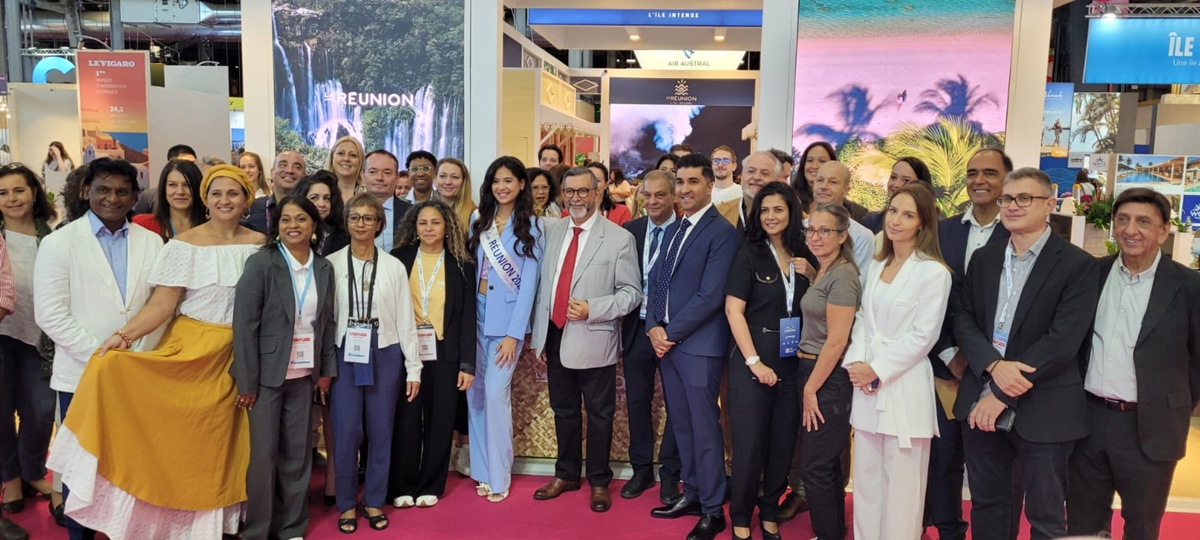
Réunie sous une varangue créole de 200 m², la délégation réunionnaise est venue en force à l’IFTM 2026, du 15 au 17 septembre dernier.
Avant même l’ouverture des portes, le mardi 15 au matin, le président du tout jeune Comité réunionnais du tourisme (CRT), Patrick Lebreton, annonçait devant les acteurs de la destination et la presse, les grands projets de l’île intense pour les prochains mois.
L’occasion aussi de dresser un premier bilan. Car, après une année 2025 record en termes de fréquentation touristique, 2026 s’annonce sur la même lignée. ” Our island welcomed 269 153 external visitors in the first half of 2026, a stable figure (-1%) compared with 2025, in a context marked by geopolitical tensions in the Middle East ” a indiqué le président de CRT.
Des chiffres qui laissent augurer une année similaire à la dernière et ses quelque 580 000 visiteurs métropolitains et internationaux, bien au-delà des niveaux pré-Covid.
“La valeur avant le volume”
Pour autant, si le CRT observe de près la progression des chiffres, l’objectif des 600 000 visiteurs, brandi comme l’objectif ultime depuis plusieurs années, ne semble plus être la priorité n°1.
“Nous avons aujourd’hui une ligne directrice simple : chercher la valeur avant le volume“, a poursuivi Patrick Lebreton, prônant l’engagement du CRT dans le développement touristique durable de l’île et dans “le vivre ensemble”, entre population locale et visiteurs.
En témoigne la volonté du CRT de relancer le concept des “Villages Créoles”, qui s’est étiolé au fil des années. “Nous voulons renouer avec une démarche qui a marqué l’histoire touristique de la Réunion, tout en la réinventant pour répondre aux attentes des voyageurs d’aujourd’hui. Ces villages permettront de mieux raconter la diversité et l’âme de notre île“, a-t-il ajouté.
Mettre en avant la créolité
En février prochain, un hackathon sur 2 ou 3 jours, organisé dans chacun des 13 villages concernés – situés principalement dans les hauts de l’île – et réunissant les acteurs de chaque projet doit permettre de faire ressortir ce qui fait la singularité de ces territoires.
Ce brainstorming va “nous permettre de structurer une boîte à outils, une ingénierie et un accompagnement que nous allons pouvoir proposer aux communes, aux intercommunalités, aux offices de tourisme“, indique Caroline Pain, responsable du service de développement des produits pour le CRT.
Néanmoins, le projet ne repart pas de zéro. “Villages Créoles de l’époque nous a donné une méthode, des référentiels, des chartes, de la communication, beaucoup de supports, etc. Nous avons déjà tout ce bagage-là“.
Un à deux projets par village devrait être retenu et mis en place d’ici fin 2027. Cela pourrait prendre la forme, par exemple, de paniers pique-niques élaborés par des artisans ou restaurateurs du village. “On va pouvoir venir chercher son panier pique-nique et déguster des produits qui sont spécifiques à cet endroit-là“, illustre Caroline Pain.
“Autre idée : l’aménagement de bancs et chaises longues pour contempler les étoiles aux Makes. Car cette initiative a pour but de rendre le voyageur acteur, grâce à des parcours mis à sa disposition“, ajoute Caroline Pain.
Des petits aménagements sont prévus : signalétique, supports mobiliers légers mais identitaires, exposition des habitants, podcast, etc. Avec un objectif à terme : “proposer une formule entre le produit expérientiel et le circuit en autotour“, poursuit Caroline Pain.
Des produits qui devraient aussi intéresser les tour-opérateurs et les agences réceptives.
Attirer davantage de touristes à fort pouvoir d’achat
Bien plus proche, le Comité Réunionnais du Tourisme a profité de l’IFTM pour lever le voile sur sa nouvelle identité visuelle, accompagnée d’une campagne promotionnelle, structurée autour de trois piliers : le territoire et sa verticalité spectaculaire, la rencontre et la culture créole, et enfin l’émotion et les éléments.
“Nous lançons un nouveau spot publicitaire, des affiches et des déclinaisons digitales qui font la part belle au patrimoine exceptionnel de la Réunion. Les pitons, cirques et remparts, sa reconnaissance à l’UNESCO, son lagon, sa verticalité, mais aussi sa culture, son maloya“, a développé Patrick Lebreton.
La campagne se décline sur trois volets : un film TV porté par la Réunionnaise Fleur Lafosse, “construit comme une ascension visuelle du battant des lames aux sommets des montagnes” précise le CRT ; une série de huit visuels d’affichage et des formats digitaux portés par un message déclinable autour de la notion de “Montez en émotions”.
Des initiatives qui doivent à la fois permettre à la Réunion de se distinguer et d’attirer davantage de“touristes à fort pouvoir d’achat”, a ajouté Patrick Lebreton.
Les chiffres du 1er semestre 2026 semblent confirmer cette stratégie, avec 250,9 millions d’euros de recettes touristiques enregistrées, en hausse de 9,5%. “Cette performance est portée par une clientèle d’agrément en forte progression (+17%), tandis que la clientèle affinitaire recule (-16%)“, analyse le CRT dans un communiqué.
Une stratégie plus agressive sur les marchés européens
Si le marché hexagonal représente 83,6% des visiteurs, les marchés européens progressent (+4 %), et notamment la Belgique (+10,3%), l’Allemagne (+13,2%) et la Suisse, alors que les clientèles en provenance de l’océan Indien reculent (-18%).
A noter que le tourisme local a permis d’enregistrer plus de 2,4 millions de séjours et près de 9,9 millions d’excursions à la journée, générant 400 millions d’euros de retombées économiques.
“L’Hexagone reste un marché socle pour nous, mais plusieurs marchés européens portent beaucoup notre croissance. L’idée est donc d’avoir une stratégie un peu plus agressive sur ces marchés, comme la Belgique ou l’Allemagne. Nous serons également au WTM de Londres, étant donné que le Royaume-Uni est un marché assez porteur”, a ajouté Sarah Lhéritier, directrice marketing et communication du Comité réunionnais du tourisme.
“Nous devons continuer sur cette lancée. C’est le cœur de la stratégie que nous avons co-construite ces derniers mois avec le cabinet MKG et les acteurs de l’interprofession”, a souligné, pour sa part, Patrick Lebreton.
La destination discute notamment avec les compagnies aériennes pour transformer l’essai. Dernier exemple en date : des discussions avec la compagnie allemande Condor, afin que cette dernière puisse poser ses appareils à l’aéroport Roland Garros de Saint-Denis, avant de repartir vers Maurice. Pour l’heure, la compagnie assure des vols Francfort-Maurice, tandis que le dernier tronçon vers la Réunion est assuré par Air Austral.
D’ici là, le CRT – qui fêtera son premier anniversaire en octobre – s’attend à connaître une nouvelle année touristique record pour la Réunion. Et planche sur une nouvelle idée : proposer aux Européens, lassés des canicules à répétition, de se laisser tenter par l’hiver austral et ses 23°C…
With 56.1 million skier-days recorded during the 2025/2026 winter, France regains the world’s top spot among ski destinations.
Attendance rose by 2.4% year over year and by 6% compared to the average of the four most recent seasons.
This performance marks the third-best season ever for French resorts, behind the winters of 2008/2009 and 2012/2013.
The Alps and the Pyrenees made especially strong contributions to the national momentum. Compared with the previous winter, attendance rose by 4.5% in Haute-Savoie, by 5% in the Southern Alps, and by 9% in the Pyrenees.
To read: Skiing in France: the complete panorama and the key figures of 2025!
By contrast, the mid-mountain ranges experienced a more uneven season, with declines of 9% in the Massif Central, 12% in the Jura Mountains, and 5% in the Vosges compared with the previous winter.
Mountain: an early-season start and a dynamic January
Snow began falling as early as the end of November, enabling several areas to open in good conditions. After a temporary warm spell at Christmas in some massifs, the return of cold weather and fresh snow at the start of January fostered strong attendance.
The January interholiday period therefore posts a 3% year-over-year rise and a 9% increase compared with the four-winter average.
By February 6, national attendance was already 9% above this average.
The March interholiday recorded a 20% rebound compared with the previous winter, bringing attendance back to the four-year average level.
The spring holidays also climbed by 3%, with an Easter weekend that was especially energetic.
All told, the 56.1 million skier-days allow France to move ahead of Austria (53.7 million) and the United States (52.6 million). This marks the first time since the 2014/2015 winter that France has held the world No. 1 spot.
The mountains continue to rise in summer as well
The assessment by Domaines Skiables de France also reports a rise in summertime attendance.
During the core season, from July 4 to August 22, 2026, the mountain occupancy rate reached 65.8%, up 2.5 percentage points from the previous year. Over the extended season, from June 13 to September 11, occupancy stood at 52.7%, one point higher than in 2025.
To read: Summer 2026: the mountains gain ground and discover their limits
The Pyrenees posted the highest rate, at 55.7%, followed by the Southern Alps at 52.3% and the Northern Alps at 50.8%.
Publié par Amelia Brille Rédactrice TourMaG.com Voir tous les articles d’Amélia Brille
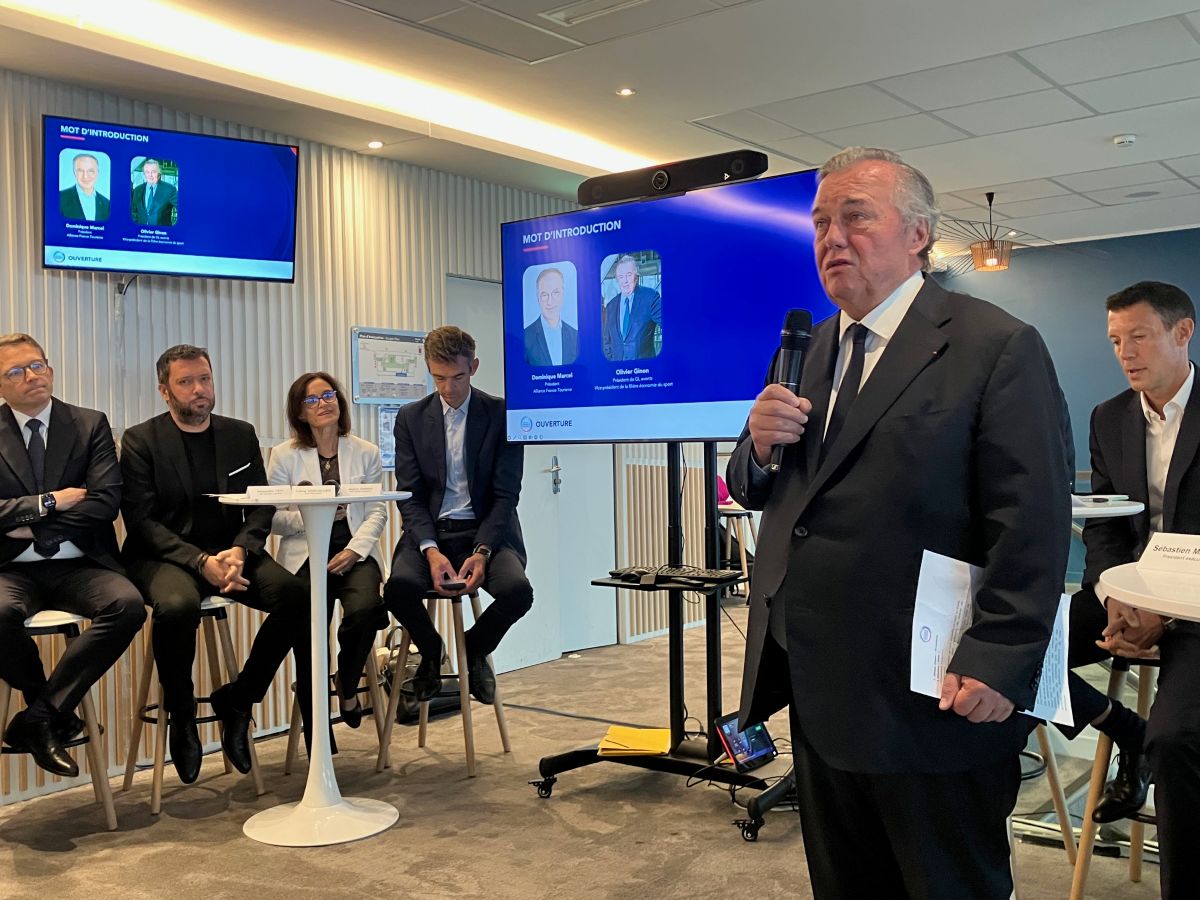
Between the Pope’s visit on September 25 and France’s national team football match on October 2, the window of opportunity at the Stade de France was narrow. Yet it was enough for Alliance France Tourisme to convene a gathering there on September 28.
It was not on the pitch, but in a hushed lounge opening onto the stands, that the organization gathering France’s leading companies in the sector unveiled its proposals to weigh in on the debate of the upcoming presidential election.
The chosen venue was not merely symbolic of France’s capacity to make events (sporting, cultural…) a lever for tourism today and tomorrow.
It also served as a reflection of a tourism landscape today largely driven by private players who fight to ensure France remains the world’s top tourist destination.
« We Must Go After the Clients »
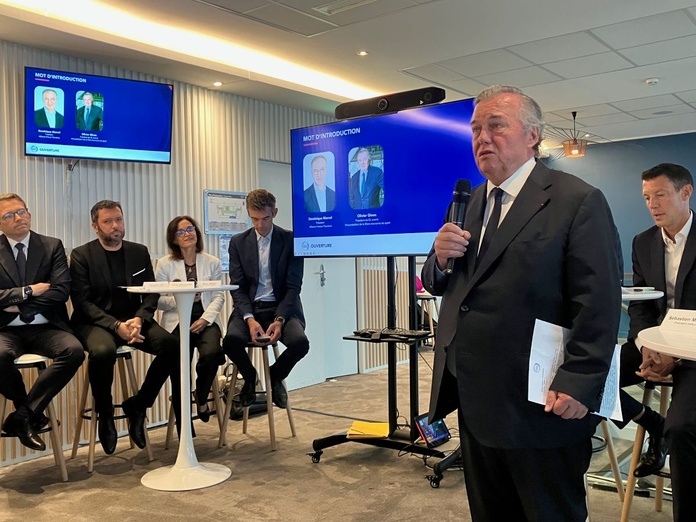
Thus, the swift introduction of Olivier Ginon, CEO of GL Events, a group specialized in business tourism and events, who took over Stade de France management in August 2025 and has notably expanded major concerts there.
« In 12 months, we welcomed a million more visitors than in previous years, with strong economic spillovers for the regions » he noted, a pointed nod to the previous administration.
« We need product strategies, we must go after clients », he added, seeing in that a proof that ambitious goals can pull a country that had been at a standstill forward. We all hope for a powerful rebound after the election.
A Clear Course and a Stable Framework
Alliance France Tourisme outlined a roadmap, because « it is not forbidden to dream that some candidates take an interest in tourism » added Dominique Marcel, president of the organization.
« We are not asking for money: we want a direction, political leadership and a stable framework » explains Alliance France Tourisme, with the aim of creating value rather than merely hosting more international visitors.
The short-term objective is to lift international visitor spending from €77.5 billion in 2025 to €100 billion by 2030, without « bringing more people to the same places, at the same times ».
Meanwhile, Alliance France Tourisme notes that the French represent two-thirds of France’s €222 billion in tourism expenditure and that « this reality must stay at the heart of any national tourism strategy ».
Read also : Tourism: “maintaining an accessible offer is a challenge for our economy,” according to Serge Papin
Three Measures to Boost International Revenues
Thus, simply lengthening all visitors’ stays by half a night (for trips ranging from 3 nights to a month) would translate into an additional €5.8 billion in revenue, calculated by the organization.
In the same logic, improving experiences with a clearer, higher-quality offering would raise the average spend by 15% over five years without increasing the flux, yielding €12.7 billion in revenue.
Finally, a strengthened off-season tourism (mountains in summer, cities outside peak season, developing offerings in new destinations) could boost overnight stays by 5% in five years, equating to an extra €4 billion in revenue.
Read also : Tourism: France is not the world’s leading destination, according to the president of Alliance France Tourisme
A Long-Term Vision, Over 20 Years
To strengthen the tourism and events sector, Alliance France Tourisme has also laid out five long-term priorities with actionable measures and measurable results.
The first is to equip France with a 20-year national strategy that endures through every political transition.
It would be revisited every five years, based on the impact of decisions taken (calculated using 3 to 5 reference indicators kept constant over time) and to adapt to evolving conditions.
The organization advocates for ongoing leadership that brings together the State, the regions and businesses for greater effectiveness.
Simplify Procedures and Encourage Investment
Secure the Financing of Apprenticeship
Employment and training constitute the fourth priority. In the AI era, human intelligence remains essential in a service-oriented profession, notes Alliance France Tourisme.
Yet, the organization believes it is necessary to “safeguard support for apprenticeships and work-study and guarantee multi-year stability of their funding.”
It also calls for an “Act II” of the Avenir Professionnel law by developing degree programs in companies, and to improve pathways to support social mobility and entrepreneurship.
Better Structuring of Excellence Pathways
Finally, Alliance France Tourisme seeks a better structuring of excellence pathways ( gastronomy, craftsmanship-focused tourism, heritage, oenotourism… ) to stand out in an increasingly competitive international landscape.
« France possesses unique assets but too often presents them separately. We must move from simply adding know-how to true chains of excellence ».
In this framework, events and business tourism must form a strategic axis, according to Alliance France Tourisme, through the establishment of a national plan to conquer congresses, trade shows and events and a better coordination between sport, culture, tourism and events to encourage longer stays.
Building on this contribution to the 2027 presidential election, the organization will now need to share its tourism vision with the various candidates.
Written by Thierry Beaurepère Journalist See all articles by Thierry Beaurepère
On the occasion of the Winter 2026/2027 press workshop held on Thursday, September 24, organized by Auvergne-Rhône-Alpes Tourisme, several mountain resorts presented their novelties for the coming season.
At the 2 Alpes, the resort continues its evolution toward a year-round model. The domain now claims nine months of operation per year, driven notably by its altitude: 75 % of the domain sits above the 2,100 meters.
The 2026/2027 season will notably be marked by several experiences designed to renew mountain practices. The resort thus offers dawn skiing with “Premières Traces”, nocturnal gliding experiences under the stars or snowshoe outings along the tracks of the wolf.
Also new: the E-Trott-Rider, an electric all-terrain two-wheeler intended for late-day outings. The device complements an offering aimed at broadening mountain uses beyond traditional skiing. The resort is also developing behind-the-scenes tours of the domain, with workshops on snow, safety and the operation of the infrastructures.
The 2 Alpes are also betting on spring, with a ski season that can extend into early summer and an outdoor offering including notably mountain biking, bike park and nature-based activities.
Courchevel: new infrastructures and panoramic experiences
In the 3 Valleys, Courchevel continues its investments in the ski area. This winter, the resort will inaugurate a 300 square-meter panoramic terrace at the top of Chenus, accessible to skiers and pedestrians alike.
South-facing, it is intended to offer a new space for pause and contemplation facing the Alpine summits.
The La Tania gondola is also undergoing a complete renovation. The 52 cabins will be replaced by eight-seat panoramic models, as part of a 5 million euros investment.
The aim is notably to improve comfort and accessibility of this equipment which transports nearly 400,000 passengers each winter.
The offering also evolves on the accommodation and wellness side, with the opening of new spaces in several resort facilities. At La Sivolière, a new 25-meter swimming pool is set to complement the spa offering.
Méribel and Les Menuires Expand Non-Ski Activities
In Méribel-Mottaret, the domain continues its upgrades with the reprofiling of the Niverolle slope and the installation of an artificial snow network.
The Snow Park benefits from a new visual identity and redesigned signage. At the Chaudanne, a new sanitary block and self-service ticket kiosks should help streamline visitor reception.
In the Menuires, emphasis is more on families and animations. The playful spaces of La Montagnette and the Pixel Area receive new developments to diversify the activities offered on the domain.
The resort will also host the FriendlyMenuires Festival, from March 8 to 11, 2027. For its fourth edition, the event will bring together performances, humor, theatre and concerts, with a program designed around conviviality and après-ski.
Valmeinier: music as a new highlight
In Valmeinier, the winter 2026/2027 will notably be marked by Let’Hit Fest, organized in March 2027. For three days, the resort aims to transform into an electro stage with daytime DJ sets, evening concerts and clubbing nights.
The programming will notably encompass the peaks of the resort, with DJ sets organized near the ski lifts. A way for Valmeinier to strengthen its event offering and extend the experience beyond ski hours.
Some resorts also use the season to highlight their heritage. Arêches-Beaufort will celebrate its 80th anniversary in February 2027. The resort will revisit its history, from the development of its agricultural activity and lifts to its evolution as a mountain destination.
In La Toussuire, the 90th anniversary of the resort will be celebrated. An anniversary program is planned throughout the season, including a major evening on January 29, 2027, featuring a parade, performances and activities.
Val Cenis: panoramic footbridges at the heart of the domain
Val Cenis will offer this winter a new landscape discovery experience with a 126-meter panoramic footbridge, installed at around 2,100 meters above sea level.
Accessible particularly to people with reduced mobility, it should allow visitors to discover different thematic spaces around biodiversity, glaciers and contemplation.
In Courchevel, another novelty plays with height with a panoramic terrace at the Chenus summit, while Saint-Sorlin-d’Arves is developing a new zipline experience with a nearly one-kilometer parcours.
This diversification fits into a context where the mountain seeks to expand its attendance beyond the periods and uses historically associated with winter sports.
In Auvergne-Rhône-Alpes, the 2025/2026 season registered 42.6 million skier-days in the ski lifts, according to data released by Auvergne-Rhône-Alpes Tourisme.
The alert signals were numerous regarding a drop in departures of the French this summer.
From Le Monde to Le Figaro, everyone seemed to be in agreement. Even Serge Papin had confirmed the trend, subtly noting that there had been “a slight regression in attendance in the heart of the season, in July-August.”
Yet the INSEE’s assessment of the summer tourist season 2026 tells a very different story.
While those in Bercy celebrate that foreign visitors rescued the summer, the statisticians’ verdict is that the praise must be found on the French customer, who would have spent more time… in France.
The study rests on data collected from May to August, acknowledging that for the last two months the figures “are provisional.”
Nevertheless, the attendance in French collective tourist accommodations rose by 1.1%, translating into 2.8 million additional overnight stays compared with 2025.
All establishments considered, France would have recorded 260.5 million overnight stays during this period.
Not surprisingly, it is the campsites that posted the strongest activity, with 126.5 million overnight stays, up from 125.1 million the year before. Hotels arrive in second place, with 92 million overnight stays, compared with 90.4 million in 2025.
The French travelers: attendance up by 1.6%
And, to everyone’s surprise, the French contributed fully to this positive balance.
“The resident clientele (French) confirms its strong presence in French collective tourist accommodations in 2026 and accounts for the entire 2.8 million additional overnight stays. Resident attendance rises by 1.6% compared with the 2025 season. The resident clientele represents more than two out of three summer overnight stays in the collective tourism accommodations in 2026“, specifies INSEE.
This finding therefore runs counter to the range of voices heard over the summer.
Moreover, according to the institute, the attendance of non-resident clientele, i.e. those living abroad, “remains flat across the season and even falls in August year on year.”
If foreign travelers were somewhat more numerous in hotels, with an extra 300,000 overnight stays, they stayed away from French campsites, with 200,000 fewer overnight stays.
And INSEE explains, in contrast to the summer chatter, that “non-resident clientele” did not overall contribute “to the rise in summer tourist attendance in 2026“.
Summer 2026: foreign travelers did not contribute to attendance growth!
The foreign clientele remains very important to the tourism ecosystem.
It accounts for, for example, 39.9% of hotel overnight stays.
Among the most present nationalities, the United States lead with 5.4 million hotel overnights, followed by the United Kingdom with 4.3 million, Germany with 3.9 million, and Belgium with 2.8 million.
While Americans top the list, the uptick is less pronounced than in previous summers, at a small +0.8%.
Germans came in greater numbers or stayed longer in France, with a 3.9% rise, as did Belgians (+3.1%), Dutch (+3.0%), and Britons (+1.2%).
It should be noted that overnight stays by Spaniards (-8.5%) and Italians (-3.0%) declined sharply.
Moreover, Asian tourist groups, whose momentum had significantly picked up since the health crisis, experienced notable declines, particularly Chinese (-9.0%) and Japanese (-10.8%).
Summer 2026: The coast remains sought-after, while major cities are in the red!
Unsurprisingly, the coast was the preferred choice for summer holidays.
It recorded 106.3 million overnight stays, up 1.4%, in regions where foreign clientele venture relatively little, representing only 26.9% of attendance.
Travelers favored the Mediterranean with 46.6 million nights, up, ahead of the North Atlantic – Western Channel area with 26.4 million nights, also up, and the South Atlantic with 22.4 million nights, down.
The regions along the Channel therefore saw their attendance rise sharply, by more than 5% relative to 2025, but in volumes much smaller than the other, more popular sectors.
The mountains continue their ascent, with 45 million overnight stays, up 1.3%, still behind the sole Mediterranean.
This progression is primarily due to more travelers in other collective tourism accommodations rather than in hotels and campsites.
Finally, major cities were generally shunned. Overnight stays there fell by 2.5 million amounts, i.e. −3.9%.
A red figure explained in particular by a marked decline in foreign clientele, −7.7%, especially in hotels.
In the same period, rural areas show strong vitality, with an increase of 3.2%.
The summer dynamic would also be sustained by business tourism, as overnight stays rise by 7.6% in 2026 across all collective tourism accommodations, excluding campsites, even if their total remains well below 2019.
So forget everything you thought you knew about the season’s results and forecasts. The summer was indeed carried by the French, while foreign clientele did not boost our sector at all.
This is prompting some observers to suggest that Spain could surpass France’s numbers as early as this year…
Insee Focus n°387 – Saison touristique d’été 2026 (mai à août)
Été 2026 : 260,5 millions de nuitées dans les hébergements collectifs
La fréquentation des hôtels, campings et autres hébergements collectifs de tourisme progresse de nouveau en France, malgré un repli sur la façade Sud Atlantique. Données 2026 provisoires.
Évolution de la fréquentation selon les espaces touristiques
Variation des nuitées entre les étés 2025 et 2026. La fréquentation progresse partout sauf sur la façade Sud Atlantique.
Représentation schématique : l’Insee définit les espaces touristiques à l’échelle communale ; les façades littorales, les massifs et l’intérieur sont ici figurés de manière indicative. Les façades détaillées ne couvrent pas la totalité du littoral (« dont » dans la source : 104,8 M sur 106,3 M en 2026). Le rattachement de la Corse à la façade méditerranéenne n’est pas précisé dans les données. Variations calculées à partir des données arrondies en millions de nuitées.
Clientèle étrangère : les hôtels en tête, une part en léger recul partout
Part des nuitées réalisées par des touristes non résidents, par type d’hébergement collectif, et évolution par rapport à l’été 2025.
Part des non-résidents, été 2026 Niveau de l’été 2025
Type d’hébergement
Part des non-résidents (%)
Écart sur un an
Hôtels
39,9 %
−0,3 pt40,2 % en 2025
Campings
29,6 %
−0,5 pt30,1 % en 2025
Autres hébergements collectifs
19,0 %
−0,2 pt19,2 % en 2025
dont résidences de tourisme
21,3 %
−0,3 pt21,6 % en 2025
Ensemble
31,5 %
−0,3 pt31,8 % en 2025
En volume, les campings devant les hôtels
Nuitées de non-résidents en campings
37,4 millions
−0,2 M par rapport à 2025 (37,6 M)
Nuitées de non-résidents en hôtels
36,7 millions
+0,3 M par rapport à 2025 (36,4 M)
Source : Insee
‘+k[1]+’
‘+k[2]+’
‘;}).join(”);
var panel=document.getElementById(‘tmete26-panel’);
var state={evo:’nui’,cli:’hot’,esp:’tot’,seg:’den’};
function chips(key,opts){return ‘
‘+opts.map(function(o){return ‘‘;}).join(”)+’
‘;}
/* Paired rows 2025/2026 */
function rows(list,max,unit,diffMode){
return ‘
Été 2025Été 2026
‘+
list.map(function(r){
var a=r[1],b=r[2],d=diffMode===’pt’?sg(b-a,1,’ pt’):(diffMode===’pct’?sg(pct(a,b),1,’ %’):sg(b-a,1,’ M’));
return ‘
‘+r[0]+’
‘+f(b)+unit+’‘+d+’
‘;
}).join(”);
}
var R={};
R.evo=function(){
var h=”
Nuitées de la saison d’été par type d’hébergement
Mai à août, 2019 puis 2022 à 2026.
“+chips(‘evo’,[[‘nui’,’Nuitées (millions)’],[‘nr’,’Part des non-résidents (%)’]]);
if(state.evo===’nui’){
var ks=[‘hot’,’cam’,’ahc’],max=270;
h+=’
‘;
} else {
var W=640,H=260,pl=34,pr=70,pt=14,pb=30,mn=14,mx=42;
function x(i){return pl+i*(W-pl-pr)/(Y.length-1);}
function yy(v){return pt+(mx-v)/(mx-mn)*(H-pt-pb);}
var s=”‘;
h+=’
Part des nuitées réalisées par des touristes non résidents, en %. Axe horizontal non proportionnel : 2020 et 2021 absents des données.
‘;
}
return h;
};
R.cli=function(){
var D={
hot:[[‘Résidents’,54.1,55.3,’tot’],[‘Non-résidents’,36.4,36.7,’tot’],[‘États-Unis’,5.3,5.4,’sub’],[‘Royaume-Uni’,4.2,4.3,’sub’],[‘Allemagne’,3.7,3.9,’sub’],[‘Belgique’,2.7,2.8,’sub’],[‘Italie’,2.3,2.3,’sub’],[‘Pays-Bas’,2.1,2.2,’sub’],[‘Espagne’,2.2,2,’sub’],[‘Suisse’,1.9,1.9,’sub’],[‘Ensemble’,90.4,92,’tot’]],
cam:[[‘Résidents’,87.5,89.1,’tot’],[‘Non-résidents’,37.6,37.4,’tot’],[‘Pays-Bas’,12.2,11.8,’sub’],[‘Allemagne’,9.6,9.7,’sub’],[‘Belgique’,4.9,4.8,’sub’],[‘Royaume-Uni’,4.6,4.4,’sub’],[‘Suisse’,2,2,’sub’],[‘Ensemble’,125.1,126.5,’tot’]]
};
var d=D[state.cli],mx=state.cli===’hot’?92:126.5;
return ‘
Nuitées par pays de provenance
En millions de nuitées ; écart 2026/2025 en millions. Principaux marchés étrangers publiés par l’Insee.
Les pays listés ne couvrent qu’une partie des non-résidents (« dont »). ‘+(state.cli===’hot’?’Pour 2025, résidents et non-résidents totalisent 90,5 M, contre 90,4 M publiés pour l’ensemble (effet d’arrondi).’:”)+’
‘;
};
R.seg=function(){
var h=”
Détail par segment
“;
h+=chips(‘seg’,[[‘den’,’Densité de la commune’],[‘cat’,’Catégorie d’hôtel’],[’emp’,’Emplacements de camping’],[‘aff’,’Clientèle d’affaires’]]);
if(state.seg===’den’){
h+=’
Nuitées tous hébergements collectifs, en millions ; variation 2026/2025 en %.
Part des non-résidents en 2026 : 43,0 % en urbain dense (44,8 % en 2025), 28,5 % en urbain intermédiaire (26,8 %), 27,4 % en rural (27,9 %). Dans le rural, les campings totalisent 84,1 M de nuitées en 2026 (81,0 M en 2025).
‘;
} else if(state.seg===’cat’){
h+=’
Nuitées hôtelières, en millions ; variation 2026/2025 en %.
‘+
rows([[‘Non classés’,7.6,6.8,’alert’],[‘1 ou 2 étoiles’,16.9,16.5,’alert’],[‘3 étoiles’,36.3,37.6,”],[‘4 ou 5 étoiles’,29.7,31.1,”],[‘Ensemble’,90.4,92,’tot’]],92,’ M’,’pct’)+
‘
Pour 2025, la somme des catégories (90,5 M) diffère de l’ensemble publié (90,4 M) par effet d’arrondi.
‘;
} else if(state.seg===’emp’){
h+=’
Nuitées en campings, en millions ; variation 2026/2025 en %.
Nuitées d’affaires : 29,0 M en 2026 (26,9 M en 2025), dont 22,3 M dans les hôtels (21,7 M) et 6,7 M dans les AHCT (5,3 M).
‘;
}
return h;
};
var cur=”evo”;
function render(){
var st=root.querySelectorAll(‘.tmete26-static’);for(var q=0;q=BINS[i][0]&&v0.05?’up’:(v0.05?’+’:(v’+s+f(Math.abs(v))+u+”);}
function vr(z,t){return (Z[z].b[t]/Z[z].a[t]-1)*100;}
var t=3,sel=null;
document.getElementById(‘tmcarte26-leg’).innerHTML=BINS.map(function(b){return ‘‘+b[3]+’‘;}).join(”);
function det(z){
var d=document.getElementById(‘tmcarte26-det’);
if(!z){d.innerHTML=’Ensemble France‘+f(260.5)+’ M de nuitées en 2026 contre ‘+f(257.8)+’ M en 2025, soit ‘+sg((260.5/257.8-1)*100,’ %’)+’. Cliquez sur une zone de la carte ou de la liste pour le détail.’;return;}
var o=Z[z];
d.innerHTML=’‘+o.l+’‘+TN[t].charAt(0).toUpperCase()+TN[t].slice(1)+’ : ‘+f(o.b[t])+’ M de nuitées en 2026 contre ‘+f(o.a[t])+’ M en 2025 (‘+sg(vr(z,t),’ %’)+’). Tous hébergements : hôtels ‘+f(o.b[0])+’ M, campings ‘+f(o.b[1])+’ M, autres ‘+f(o.b[2])+’ M. Part des non-résidents : ‘+f(o.nr[1])+’ % (‘+sg(o.nr[1]-o.nr[0],’ pt’)+’).’;
}
function render(){
var ks=Object.keys(Z);
var zs=root.querySelectorAll(‘.z’);
for(var i=0;i0.05?’+’:(vr(z,t)‘+Z[z].l+’‘+sg(vr(z,t),’ %’)+’‘;}).join(”);
det(sel);
}
function pick(z){sel=(sel===z)?null:z;render();}
root.addEventListener(‘click’,function(e){
var c=e.target.closest(‘.tmcarte26-chip’);
if(c){t=+c.getAttribute(‘data-v’);var cs=root.querySelectorAll(‘.tmcarte26-chip’);for(var i=0;i
The Pichet group is accelerating the development of its hotel subsidiary.
In 2026, five properties will join the All Suites network, which brings together hotels, tourism and business residences, as well as accommodation solutions aimed at students and young professionals.
Among the openings announced are the All Suites Appart Hôtel Val d’Europe, in Serris, near Disneyland Paris, with 201 rooms, and the All Suites Hôtel Chartres Centre Gare, which has 99 rooms.
The development also includes two All Suites Study student residences, in Verrières-en-Anjou and Villenave-d’Ornon, with 80 rooms each. In La Teste-de-Buch, the group is developing Papato, a complex of 103 units dedicated notably to seasonal workers and co-living.
Un réseau de 32 établissements et de nouveaux projets
With these developments, the Pichet group claims 32 establishments on the metropolitan territory and about fifteen projects either under construction or in development.
This growth continues the openings from recent years, notably All Suites Paris 13 Porte d’Italie and All Suites Hôtel Paris Pleyel, located on the Village des Athlètes site, in L’Île-Saint-Denis.
The group’s offering covers several segments, from hotel residences and student housing to upscale hospitality. Since 2018, Pichet has also been active in this latter market with the Radisson Blu Grand Hôtel & Spa in Malo-les-Bains, a four-star property, and the Mondrian Bordeaux Les Carmes, a five-star property.
Among the ongoing projects are the renovation of the All Suites Study residence in Canéjan, the commencement of works on a new hotel in Arcachon, the opening of All Suites Coliving in Talence, and the expansion of the Papato site in La Teste-de-Buch. New student residences are also planned, notably in Metz, Bègles, Colombes, Bordeaux and Le Havre.
Un objectif de chiffre d’affaires de 121 millions d’euros en 2030
According to Patrice Pichet, the group’s chairman, the occupancy rate at constant scope reaches 79% across all brands. The group’s accommodation capacity stands at 5,600 beds, with projected 2026 revenue of 83 million euros. The target for 2030 is 121 million euros.
Alongside this expansion, the group intends to strengthen its environmental commitments. More than half of its hotel portfolio currently benefits from the Green Key label, with a goal of certifying all establishments by the end of 2027. The actions undertaken focus notably on waste management, the control of water and energy consumption, and the use of local initiatives.
Finally, Kamel Chaouche, who had held since 2019 the position of national operations director for the hotel activity, was named general manager of this activity in September 2026. He thus leads a subsidiary entering a new phase of development.
Published by Amelia Brille TourMaG.com Editor View all articles by Amelia Brille
Registrations are open for the next edition of Destination Montagnes, which will take place on January 19 and 20, 2027 in Grenoble.
Organized by Atout France, the fair will once again connect French mountain industry professionals with international distribution players.
The 2026 edition brought together nearly 220 French exhibiting companies and more than 400 tour operators from around fifty countries, for over 10,000 business appointments, according to a press release.
Pre- and Post-Tours to Discover the Region’s Offerings
Territories, accommodations, mobility, sporting activities, cultural experiences and wellness offerings will be notably represented at this new edition.
Atout France aims to highlight a mountain offering that is diversifying and now developing across all four seasons.
France registered 56.1 million skier days during the 2025-2026 winter season, which, according to Atout France, places it at the top of global ski destinations ahead of Austria and the United States.
Pre- and post-tours will also enable international tour operators to discover the destinations, accommodations and activities on offer.
Exhibitor registrations are open until November 4, 2026.
Ahead of the show, the Destination Montagnes Meetings will take place on January 18, 2027 at the WTC Grenoble, focusing on the developments and prospects of mountain tourism.
As every year, the IFTM is the moment when the Tourism Minister reveals the excellent summer performance.
The 2026 edition did not deviate from the rule.
Serge Papin highlighted the solid performance of foreign clientele, which generated revenues amounting to 49.5 billion euros between January and the end of July 2026, i.e. +3.7% compared to 2025.
A whole list of outbound markets in growth followed. But the fog remains regarding the French, because indicators would be weak and more trending downward, according to our information.
Among the statistics unveiled: the rate at which French people depart within France in the heart of summer, in July–August, fell by 5 points to 59%, and 84% of French vacationers did so domestically.
“We have 60 % of the French going on vacation each year. This rate has remained the same for decades. And the 40 % of French who do not travel is a remarkably stable figure.
In the past, SOFRES conducted fairly valuable surveys on tourism topics, but this theme is almost abandoned today.
Then all surveys are now conducted online, except one stubborn one: Guy Raffour. His firm and its 16 investigators do Benedictine-like work. They even, for the first time, shed light on those French people who do not go on vacation“, explains Jean-Michel Blanc, former director of vacations at the Caisse centrale d’activités sociales.
22 million French people did not go on vacation
To detail the portrait of non-travellers in France, and the reasons for this situation, Guy Raffour, director of Raffour Interactif, bases his work on real people who take phone calls.
And how does this change things compared to ticking boxes on a website?
“The 16 interviewers call by telephone and compile 400 hours of interviews.
This methodology changes a lot, especially when focusing on non-participants, because the characteristics that keep them from traveling are the same ones that cause them not to appear in online panels.
They are more distant from the Internet, from technological tools, from large cities and are also less mobile
“, Raffour explains.
These are also people whom one must win over, so they open up about the reasons they do not go on vacation. They feel marginal, especially due to the social pressure surrounding holidays.
Read: Tourism in France: a 2026 summer marked by contrasts between international clientele and French choices
The telephone interview therefore holds particular importance.
“It is a central subject, because going on vacation has become an essential need.
Thus, in 2025, 61% of French people aged 15 and over in mainland France went on vacation. Those who took long non-commercial stays accounted for 37%. Long commercial stays accounted for 41%.
From this total, subtract 17%, as these are the people who undertake both types of stays. We adopt the UNWTO definition of vacations, i.e., four consecutive nights away from the habitual residence.
We exclude trips for concerts, festivals or events, unless they included an extension before or after.
In 2025, there were 39% non-participants. This represents 22 million French people. The reasons are very varied“, analyses Raffour.
Non-participants: mainly elderly people and residents of small towns
Let us now draw the robot portrait of non-participants.
Still according to the survey, the average monthly income before tax for a household that traveled was €3,750, versus €2,315 for a household that did not travel.
The difference stands at €1,445.
“A second important characteristic is an 11-year age gap between non-participants and those who travel, the latter being younger.
If those aged 25–50 have the highest departure rate, those aged 65 and over have the highest non-departure rate, at 60%, ahead of the 15–24 and 50–64 groups, each at 35%.
Moreover, the more people there are in a household, the higher the departure rate.“, Raffour reveals.
A social determinism: “workers travel much less than employees”
On socio-professional categories, a few surprises emerge.
Contrary to what one might expect, the highest non-departure rate is among retirees, at 58%. They follow by workers at 44%, farmers at 41%, employees at 36%, and traders at 35%.
The departure rate is 81% for intermediate professions.
“The primary reason people say they didn’t travel is simply insufficient income, so financial constraints take precedence. Then, given international instability and the national context, the French prefer to save.
There is also a difficulty in spotting travel assistance. They exist, but part of the population cannot access them. Social organizations must talk about vacations“, explains Raffour.
Moreover, with the upgrading of the French tourism industry, some respondents noted a lack of entry-level offers.
There are also professional constraints, especially for job seekers, those who change employers, but also precarious workers.
To this, add all those who have trouble being replaced, such as farmers, doctors, firefighters, etc. There is also a social determinism that blocks vacation departure.
“When one has not had the capacity to travel with family or friends, it leads to social reproduction, as Bourdieu stated.
And this is true to the extent that, even when wages of workers and employees are almost equal, workers travel considerably less than employees.
Many people told us they do not know how to plan and organize their vacations. Illiteracy in digital tools is also a major issue to combat.
Finally, the aging population, which is unlikely to improve, brings health problems and loneliness“, concludes Raffour.
There is therefore no single explanation, and there are many levers to achieve greater social justice, provided one is willing to activate them.
Holidays: an entirely interactive infographic on non-participants in France
No vacations in 2025
39%
22 million French peopleaged 15 and over in metropolitan France
The portrait-robot
Who travels the least?
Test a profile
Scores by criterion, not cumulative.
Why they don’t travel
N°1
Insufficient incomePrioritizes essential expenses; no vacation on credit
Source : Raffour Interactif 2026 Barometer “Short stays, holidays, e-tourism”, 1,000 telephone interviews, quota sampling. Holidays: at least one leisure stay of four nights or more. Revenues, age gaps, gender, Paris region and household size: Guy Raffour on TourMaG.com (22 September 2026).
‘;}
/* 1 : pictograms */
var ppl=root.querySelector(‘#rnp-people’),ic=”“,h=””;
for(var i=0;i’+t.k+”;}).join(”);
function showTrait(i){
curT=i;var t=T[i];
[].forEach.call(tb.children,function(b,n){b.setAttribute(‘aria-pressed’,n===i?’true’:’false’);});
[].forEach.call(groups,function(g){g.style.opacity=t.el.indexOf(g.id.slice(7))> -1?’1′:’.15′;});
plate.textContent=t.plate;
var v=t.vs.length?’
/* 4 : test */
var form=root.querySelector(‘#rnp-form’),res=root.querySelector(‘#rnp-res’),score=root.querySelector(‘#rnp-score’);
var defs=[[‘age’,4],[‘csp’,0],[‘com’,0],[‘sexe’,0]];
form.innerHTML=defs.map(function(d){return ‘‘;}).join(”);
function test(){
var n=0,rows=””;
[].forEach.call(form.querySelectorAll(‘select’),function(s){var r=D[s.getAttribute(‘data-k’)].rows[+s.value];if(r[1]>>AVG)n++;rows+=bar(r[0],r[1]);});
res.innerHTML=rows;
score.style.background=n>=3?RED:(n===0?TEAL:NAVY);
score.innerHTML=’‘+n+’/4‘+(n===4?’the portrait-robot of the non-traveller’:’criteria above average’)+’‘;
grow(res);
}
form.addEventListener(‘change’,test);
/* 5 : raisons */
var F=[
{t:’Budget’,c:[‘Limited entry-level offers’,’Cautious savings’,’Summer holidays are costly, taking precedence’]},
{t:’Access’,c:[‘Travel grants hard to find’,’Digital illiteracy’,’Transportation in rural areas’,’Higher fuel costs’,’No housing with relatives’]},
{t:’Constraints’,c:[‘Job insecurity or looking for a job’,’Difficulty replacing oneself’,’Young children’,’Single-parent families’,’Caregiver duties’,’Health, age, disability’,’Moving, work, pets’]},
{t:’Fears’,c:[‘Concerns about complications’,’Anxiety about the unknown’,’Travel fatigue’,’Social determinism’]},
{t:’Other choices’,c:[‘Short breaks and excursions’,’Visits to relatives’,’Everyday leisure’,’A cocoon at home for the year’]}
];
var fb=root.querySelector(‘#rnp-fams’),chips=root.querySelector(‘#rnp-chips’);
fb.innerHTML=F.map(function(f,i){return ‘‘;}).join(”);
function fam(i){
[].forEach.call(fb.children,function(b,n){b.setAttribute(‘aria-pressed’,n===i?’true’:’false’);});
chips.innerHTML=F[i].c.map(function(c,n){return ‘‘+c+’‘;}).join(”);
}
fb.addEventListener(‘click’,function(e){var b=e.target.closest(‘.rnp-fam’);if(b)fam(+b.getAttribute(‘data-i’));});
fam(0);
/* diaporama */
var slides=root.querySelectorAll(‘.rnp-slide’),steps=root.querySelector(‘#rnp-steps’),prev=root.querySelector(‘#rnp-prev’),next=root.querySelector(‘#rnp-next’),stage=root.querySelector(‘#rnp-stage’),cur=0,N=slides.length;
steps.innerHTML=[].map.call(slides,function(sl,i){return ‘‘;}).join(”);
function go(n,noAnim){
if(n=N)return;var dir=n>=cur?1:-1;cur=n;
[].forEach.call(slides,function(sl,i){
if(i===n){sl.hidden=false;sl.classList.remove(‘rnp-in’);if(!noAnim){sl.style.setProperty(‘–rnp-dx’,(24*dir)+’px’);void sl.offsetWidth;sl.classList.add(‘rnp-in’);}}
else sl.hidden=true;
});
[].forEach.call(steps.children,function(b,i){if(i===n)b.setAttribute(‘aria-current’,’step’);else b.removeAttribute(‘aria-current’);b.classList.toggle(‘rnp-done’,i
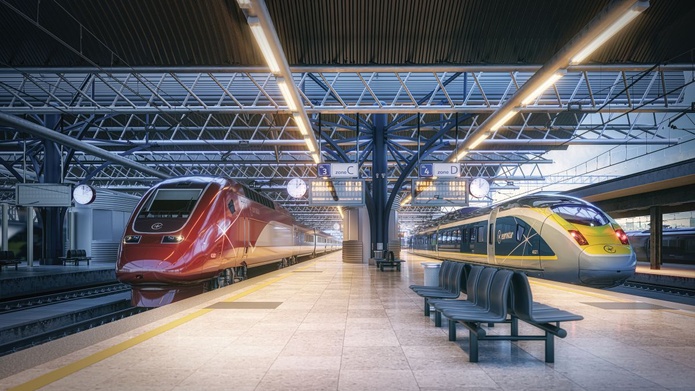
The arrival of Trenitalia and Virgin Trains on the Paris-London axis is not expected before 2029 for the former and 2030 for the latter. But already, faced with competition from air travel, Eurostar is stepping up its commitments to businesses.
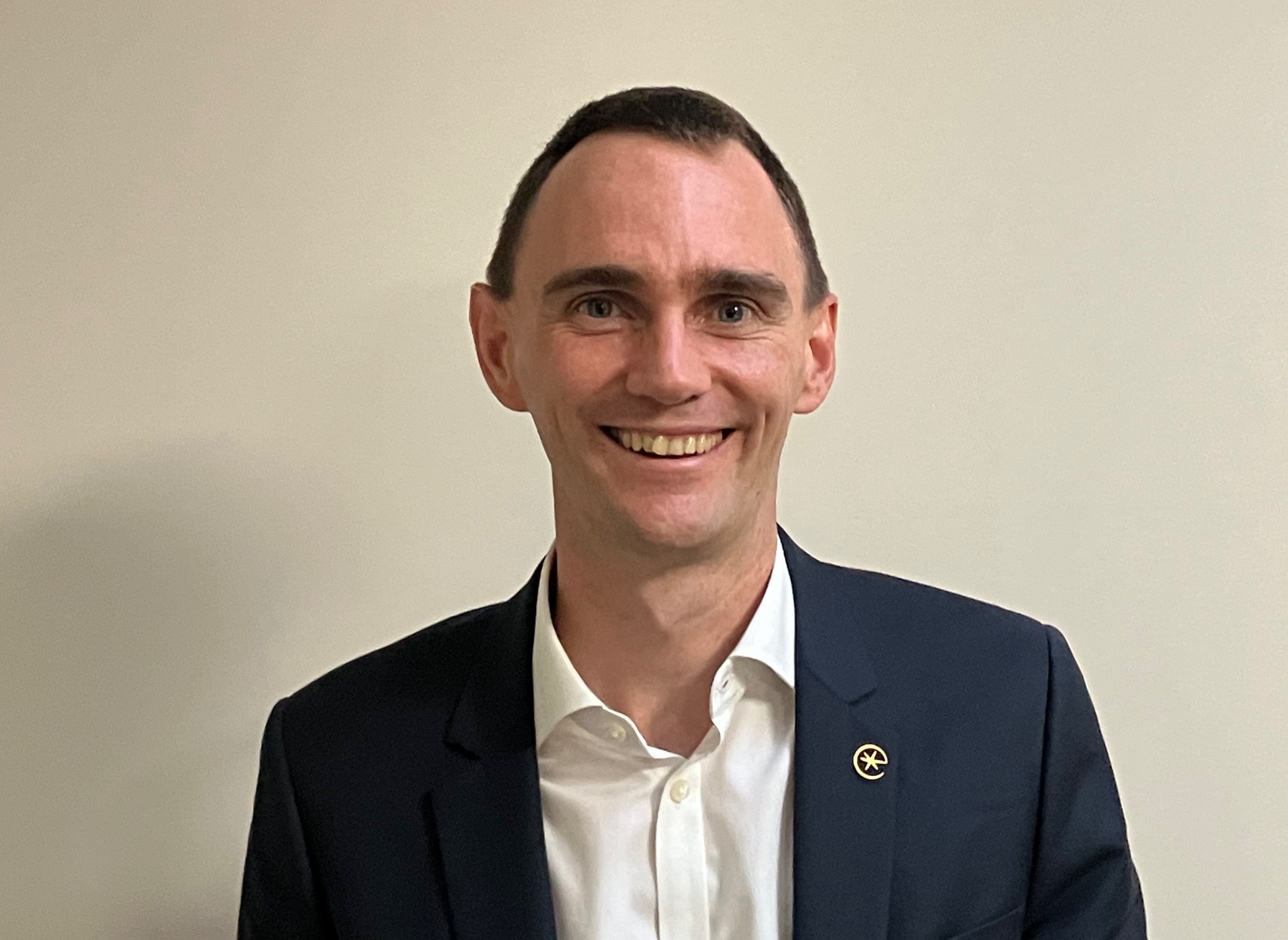
“The corporate segment is valuable for Eurostar and continues to grow, with volumes up by about 2% in the first eight months of 2026 versus the previous year, across all of our routes in five countries” said François Le Doze, Commercial Director, on the occasion of the IFTM show.
Although he does not provide precise figures on the exact share of business travelers in activity, he came to Paris with a few gifts, namely an improved offer dedicated to businesses.
Read also : Trenitalia vs Eurostar: what competition could change for travelers
Two levels that cover eight destinations
Since September 1, the railway company is updating its corporate program, with two levels covering all eight permanent routes, whereas the old contracts were limited to a few axes.
Accessible from €50,000 in annual spend, the Level 1 offers preferential fares and greater flexibility, with a harmonized experience across the network. These discounts reach 5% in First Class and 3% in Plus Class.
The Level 2 (from €150,000) adds further discounts negotiated on a case-by-case basis, dedicated support, and services tailored for large accounts.
“This offering is simpler and more transparent. Companies today operate at a European scale and expect mobility solutions at the same scale” explains François Le Doze.
A more accessible offering
This improvement goes hand in hand with enhanced accessibility of the offering through the online portal Eurostar for Business used by agencies and SMEs and via the various distribution channels.
From 2027, Eurostar for Business will integrate new tools allowing users to easily export travel data and better manage their travel policies.
“We have also formalized contractual frameworks with different technology players to better integrate our offering with SBTs” adds François Le Doze.
Grâce à l’adaptation de son API aux besoins du voyage d’affaires, les entreprises peuvent plus facilement retrouver l’offre d’Eurostar, les tarifs négociés et leurs avantages.
En parallèle, Eurostar continue de renforcer ses autres canaux de distribution, avec notamment une fenêtre de réservation portée à 364 jours dans GDS Air. Cette solution regroupe divers GDS où les entreprises peuvent réserver des billets et services Eurostar sous le code 9F.
Fifty new trainsets to accompany growth
Eurostar carried 20 million passengers in 2025. The company, 55.75% owned by SNCF Voyages Développement (a subsidiary of SNCF Voyageurs), plans to invest €2 billion in the coming years with up to 50 new Celestia duplex trainsets ordered from Alstom to be introduced starting in 2031.
Read also : Eurostar surpasses 20 million passengers and bets on up to 50 new trains
In addition to a 20% higher capacity, they will allow the rail operator, in a context of strengthened competition in Europe, to expand its offering and improve its services.
Opened in 2025, the new Eurostar terminal at Amsterdam Centraal station already helps to better welcome passengers and streamline boarding.
Trains to Switzerland coming soon
Future developments focus especially on the terminal at Gare du Nord in Paris. The redevelopment project named “Future Gare du Nord”, led by SNCF and unveiled in December 2025, notably promises an expanded Transmanche terminal by 2029.
“We are continually working to improve the customer experience. Station management is an everyday challenge and will become even more so in the future with greater competition” says François Le Doze.
Eurostar is also pursuing plans to run its trains in a sixth country, alongside France, the United Kingdom, Germany, Belgium and the Netherlands, with a Swiss service envisaged for 2030.


 Published by Amelia Brille TourMaG.com Editor






 Written by Thierry Beaurepère