
Northern Albania: Culture and Modernity


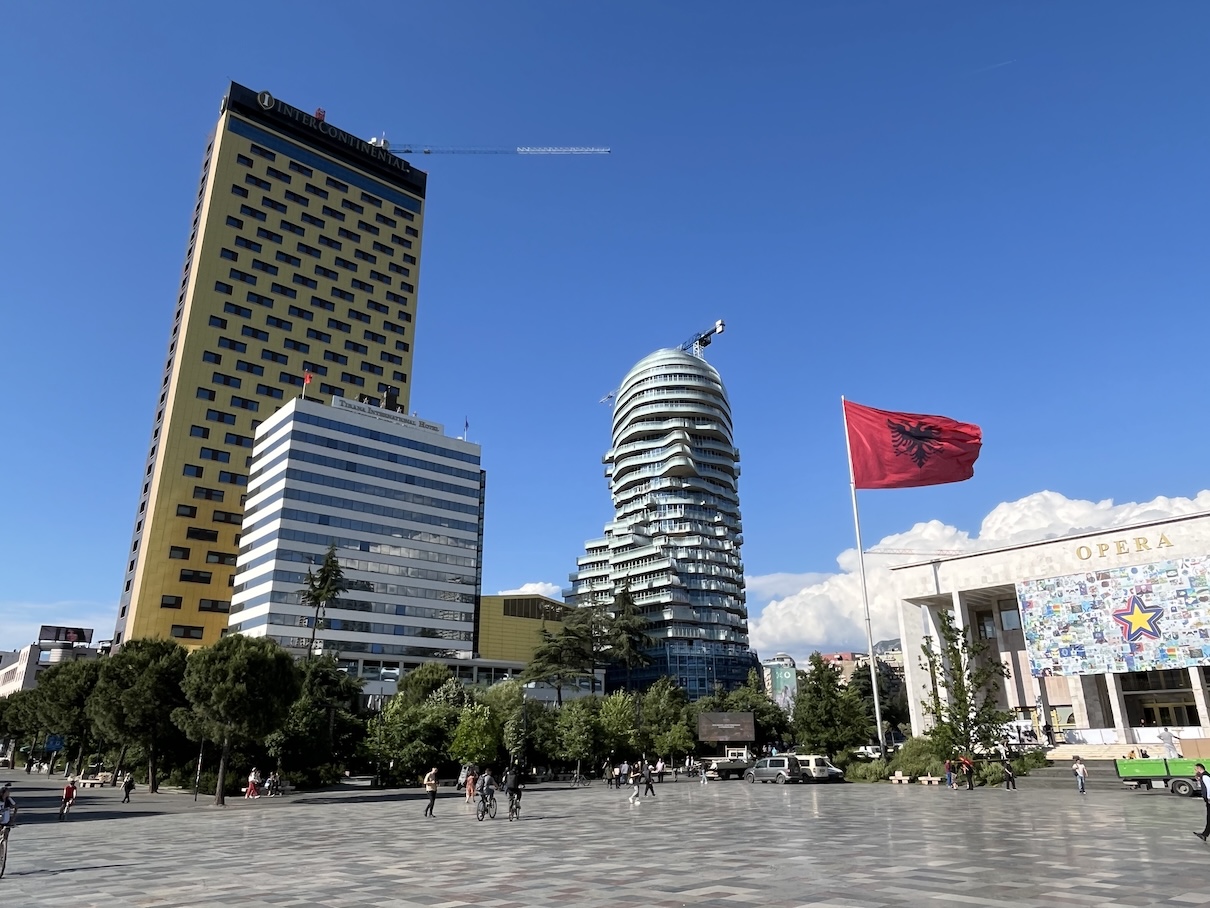
À Tirana, l'immeuble Tirana's Rock dessine le visage du héros national Skanderbeg - Photo JFR

CroisiEurope


Tirana and its 900,000 inhabitants, almost a third of the country’s population, is a diverse capital. In response to the modernist buildings of the 1930s and the postwar communist era, futuristic structures are meant to place the capital firmly in the 21st century.

The result is an eclectic architecture. In the center, the pedestrian square Skanderbeg, the national hero ubiquitous across the country, is represented here by a statue on horseback, embodying this ramshackle urbanism.

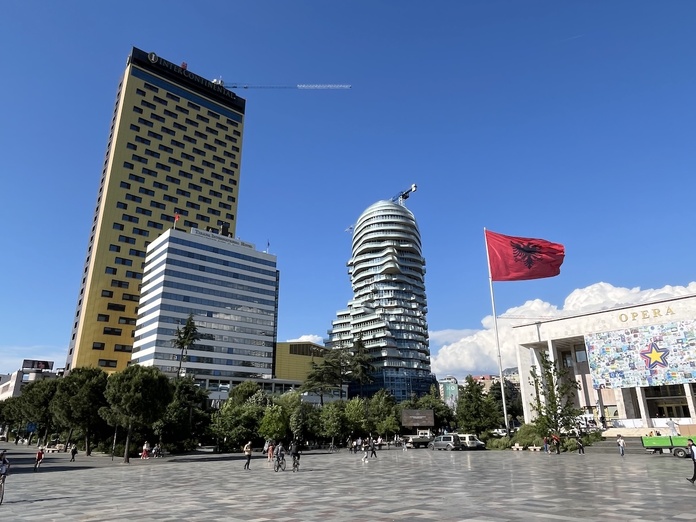
The National History Museum and its large 1980s façade mosaic, the Palace of Culture (1963), the Bank of Albania (1938) or the Et’hem Bey Mosque (late 18th century), sit alongside the new InterContinental hotel and the futuristic Tirana’s Rock tower, whose profile draws the face… of Skanderbeg.


House of Leaves, former headquarters of the secret police

The grim period of Enver Hoxha’s communist dictatorship is laid bare at the House of Leaves. The former headquarters of the Sigurimi, the “Albanian Stasi,” reveals the full arsenal of repression, surveillance, and propaganda implemented by the Albanian state at the height of its paranoia.

In the evening, one can enjoy the vibrancy and Albanian cuisine in one of the many bars and restaurants in the Pazari i Ri and Blloku districts, festive and Westernized.


Citadel of Kruja

Located about 40 kilometers north of the capital, the town of Kruja enchants with its amphitheater-like position on the mountainside. Its fortress is believed to be the birthplace of the hero Skanderbeg, who fiercely resisted the Ottomans in the 15th century.

Rebuilt in the 1980s, it houses a large museum dedicated to the warlord and offers a splendid view over the Adriatic. People also visit Kruja for the bazaar, where a few craftsmen still fashion, in the old way, leather shoes and felt hats.


Shkodra, fascinating national photography museum

80 kilometers further north lies Shkodra. This city of about 150,000 inhabitants, situated 30 kilometers from the Adriatic Sea, is bordered by its namesake lake, adjacent to Montenegro.

It offers a double appeal: firstly its Rozafa fortress, built in the 14th century by the Venetians, whose ruins crown a hilltop across 200 hectares, and secondly the pedestrian bustle of Idromeno and Gjuhadol streets, with their numerous café terraces. Here one also visits the fascinating Marubi National Photography Museum, named after the family that documented Albanian society across three generations.

At the same latitude as Tirana, Durrës is, like all ports, a complex and eclectic city. Albania’s second city, it carries traces of Greek, Roman, Byzantine, Angevin, Venetian, and Ottoman rule, and it has long been a terminus for caravan routes from the East.

It is therefore by exploring the archaeology that one discovers it, visiting the 15,000-seat Roman amphitheatre tucked into the city, the remnants of its walls, and the Archaeological Museum, a thorough synthesis of all these eras.


Crown Plaza Hotel in Durrës

In the midst of a tourist boom, the city, well connected to Italy and the port of Bari by numerous ferries, is set to welcome a marina soon as new hotels rise along the coast, such as the Crown Plaza, recently opened on the seafront.
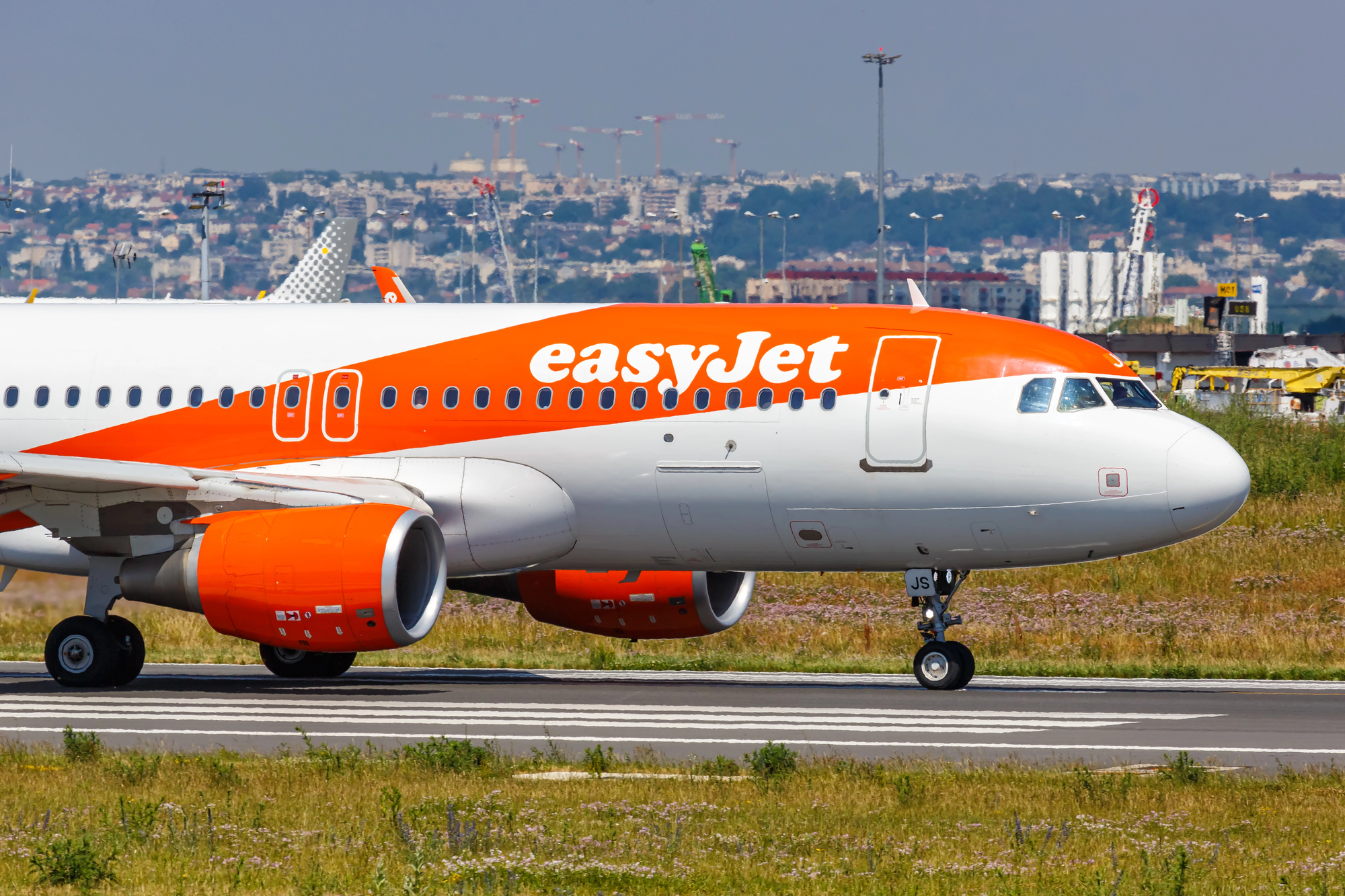
easyJet France: Strike Confirmed for July and August


Grève easyJet France : "des annulations massives de vol" à prévoir dès juillet et en août - Depositphotos, Boarding2Now

CroisiEurope


The tension seems to have reached its peak in the cabins of French aircraft.

While the inter-union of France’s cabin crew threatens a large-scale social movement across all carriers operating in our country, at easyJet the strike is no longer merely a threat. It is set to become a reality.

Last week, we explained that within the orange-liveried company, the flight attendants were lamenting a “catastrophic situation.”

The cause? Scheduling instability. “I have been on duty since 2008, so I know this problem well and how it has evolved, but I have never seen anything like this. The situation is unprecedented. People have no fixed schedule. They are changed for almost anything, sent to the four corners of Europe“, lamented William Bourdon, secretary of the SNPNC-FO section.

A last-chance meeting took place this Thursday, July 23, 2026 with management. It ended in failure.


Grève easyJet France : “des annulations massives de vol”

In a statement, the SNPNC places the responsibility for the coming social action squarely on… management.

Management has also lied about night flights, which were not supposed to occur and are now multiplying nonetheless. The way navigators’ lives are organized has become impossible.

These malfunctions, which management refused to address seriously, render the situation untenable for crews today and jeopardize passenger safety. (…) The proposals put forward proved markedly insufficient and aimed only at buying time
“, states the document.

In light of this assessment, it is not only the SNPNC-FO, but all of the airline’s PNC unions—including UNPNC-CFDT—who filed a strike notice.

A letter has been sent to management to inform them of the decision taken at the end of this last meeting.

Thus, the SNPNC-FO and the other representative organizations for the stewards and air stewards have decided to exercise this right and urge the employees they represent to stop working.


Grève easyJet France : des vols annulés dès la fin du mois de juillet !

As required by law, employees whose absence would directly affect flight operations must inform the employer of their “intention to participate in the strike no later than forty-eight hours before“, as well as the rules governing passenger information.

Given this framework, the unions did not set any date in their strike notice.

They will therefore inform management in accordance with the law, i.e., 48 hours before the start of the walkouts. The letter likewise specifies the unions’ demands aimed at addressing scheduling instability.

They demand the immediate implementation of concrete measures guaranteeing scheduling stability, with a maximum of three changes per month per employee, excluding operational events not attributable to the company, the immediate cessation of layovers without explicit authorization from the employee concerned, and the actual return to voluntary work.

They also request the introduction of a specific night-flight allowance and an immediate revision of onboard procedures.

The signatory unions say they remain at the disposal of management if the latter truly wants to move things forward. This social movement was hardly in doubt, given that the vast majority of SNPNC members had expressed support for this solution.

If no date has been mentioned, there is little doubt that the strike could take place in the coming days and even in August. It will inevitably lead to massive flight cancellations, we are told.

The ball is in easyJet France management’s court.


Réaction de la direction d’easyJet :

We are very disappointed that one of the unions representing our cabin crew based in France has announced a potential action despite our proposals to adjust and address their concerns.

While negotiations are already planned for September, we urge the unions to abandon this counterproductive move at a time that is so important for our customers,” the company stated.


Romain Pommier Publié par Romain Pommier Journaliste – TourMaG.com
Voir tous les articles de Romain Pommier

  • picto Facebook
  • picto Linkedin
  • picto email
Ajoutez TourMaG à votre flux Google Actualités Google Actualités icône

Pegasus Trains: The Company That Loves Tour Operators and Travel Agencies [ABO]


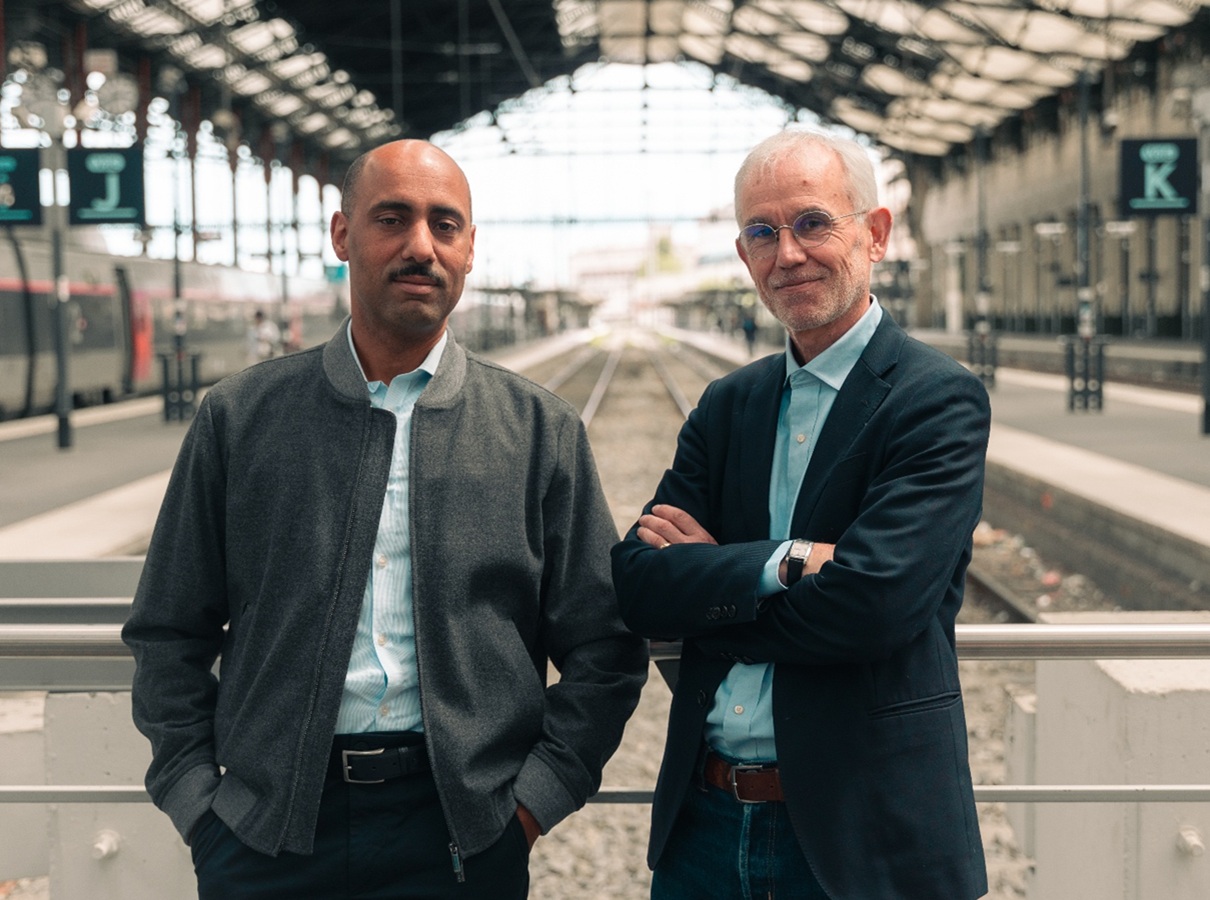
David Mascorda et Guillaume de Marcillac, les deux fondateurs de Pegasus Trains - Crédit photo : Emile Rivet

CroisiEurope


Nobody knows it, or almost, but the SNCF is not the only French railway company operating on our soil.

In fact, lurking in the shadow of its big sister, there is nevertheless a company that owns a train and has been running since winter 2025.

At its head, a familiar face in the tourism industry: Guillaume de Marcillac. He is known as the former CEO of TravelFactory and as a former financial head of Egencia and Karavel-Promovacances. He now wears the hat of train chief, leading Pegasus Trains.


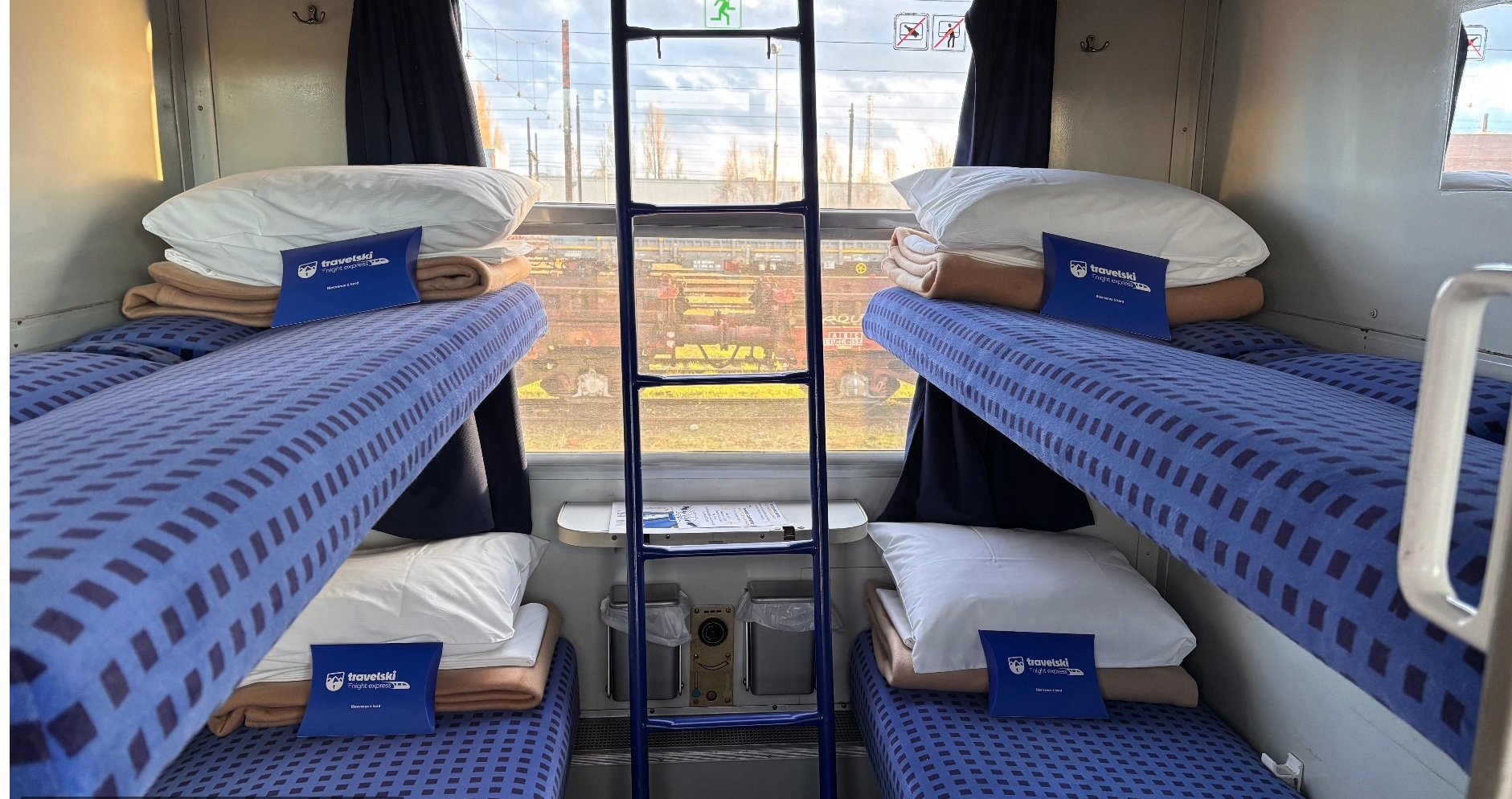
After a first trial run with his previous employer during the launch of the Travelski Express, to redeploy the Eurostar between London and Bourg-Saint-Maurice, Guillaume de Marcillac decided to take off and thus create his own railway company.

The first challenge was to find rolling stock. “We combed across Europe to find owners willing to lease cars and a locomotive. It required a lot of work to locate and negotiate equipment coming from different places.

Our dining car comes from the Netherlands, the sleeping cars come from Baden-Württemberg, and the locomotive from France.

There are very substantial entry barriers in rail, which explains the very small number of new entrants
“, explains the fortunate cofounder of Pegasus Trains and owner of a train set.


Pegasus Trains: “We are in slow travel,” not a high-speed train

The second hurdle was securing homologation to run the trainset in France.
We are a railway company, but I do not use the term ‘railway company’, which is a legal term. Indeed, there are three statuses in the railway world.

The first is that of an authorized candidate, which means you are recognized as credible by SNCF Réseau and SNCF Gares & Connexions. You are an official interlocutor for these companies.

The second status is called the railway license. A bit like the registration for travel agencies, it is a recognition granted by the Ministry of Transport and Bercy, based on having sufficiently strong equity and certain management characteristics.

The last grade, the highest, is the security certificate of the railway company. It is a complex process, which takes time to obtain,” he explains.

To read: Rail Charter Service: what if you charter trains?

With the license in hand, Pegasus Trains thus cannot have its trains operated by its own crews. The company must recruit staff who hold this certificate.

To find drivers, it is enough to go through SNCF or freight operators also authorized to carry passengers. There are also European operators whose core business is to hold this safety certificate, as is the case with European Sleeper.

We are in a sense an orchestrator, with the equipment on one side, the locomotive on the other and the driver. We assemble all these building blocks.

We are also in slow travel. We do not offer high speed, like TGVs or Frecciarossa. We can, in one night, travel 1,300 km.


Pegasus Trains: “We will have two train sets in operation” by the end of 2026


Pegasus Train devrait sortir de la montagne pour desservir le littoral l'été prochain - Crédit photo : Pegasus Trains

Thus, Pegasus Trains offers a journey that is slower than the TGV, but with the merit of being decarbonized.

Each train set has a capacity of between 300 and 650 passengers, depending on client needs. It includes a dining car.

The trains have an international vocation, even though they cannot travel to the United Kingdom, as the Channel Tunnel requires very specific features reserved for Eurostar.

These are trains that have already been renovated by their owner, with whom we have an agreement for the long term.

The rolling stock is not our property, so we cannot make modifications. However, it is possible for us to do a lot of exterior and interior decoration. Our trains also serve as a communication platform
“, continues Guillaume de Marcillac.

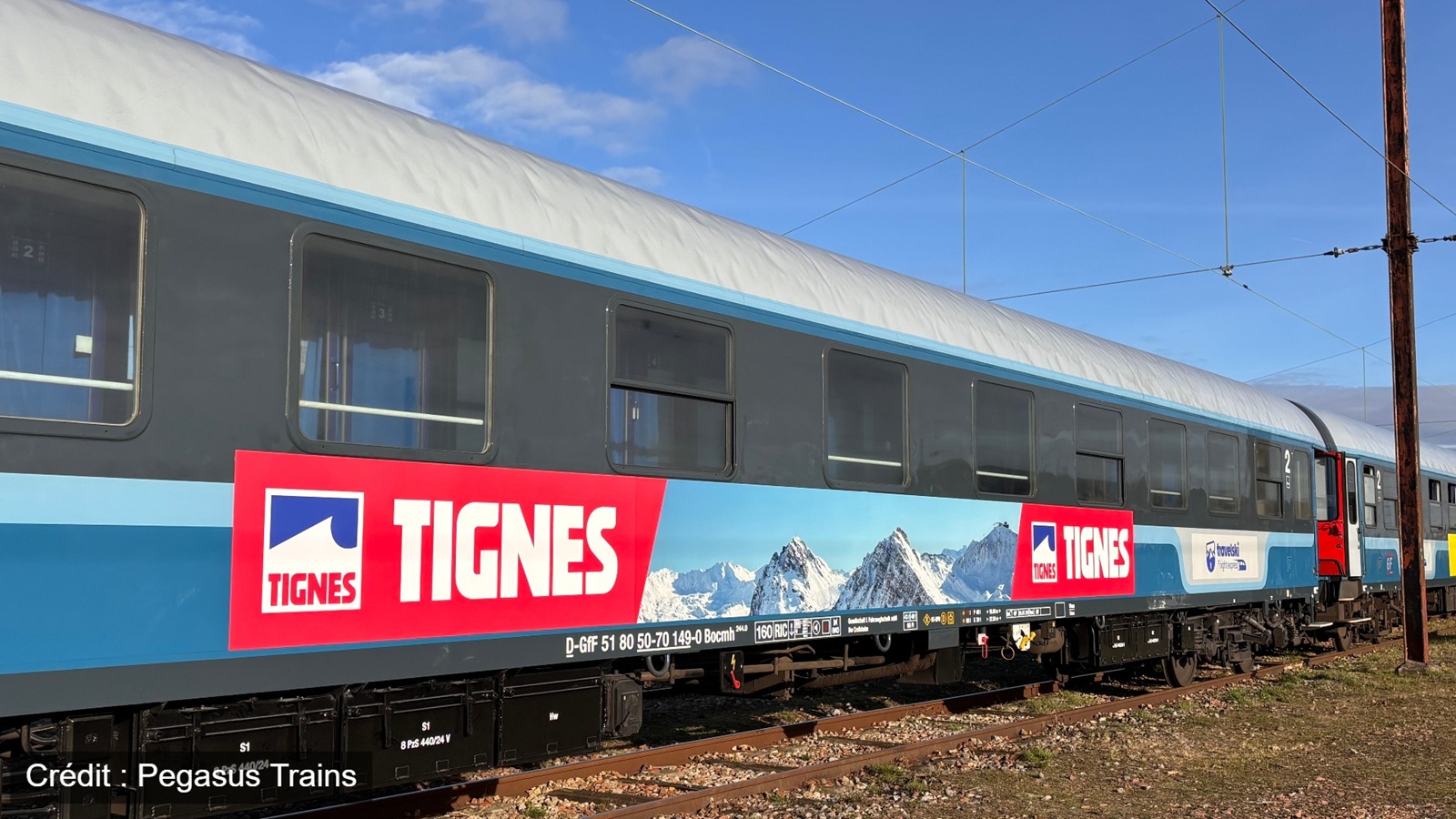
Consequently, the train becomes a marketing element for destinations and tour operators, such as Travelski.

Duly noted, buoyed by this success, after two winters of chartering for the winter-sports tour operator, the railway company aims to grow its fleet.

Our vision is that, gradually, our fleet will grow and our project is to gradually own our own trains, which we will renovate ourselves. That takes time.

Starting at the end of 2026, we will ramp up and have two train sets in operation,
rather than the single one we have today


Pegasus Trains is set to leave the mountains and serve the coast next summer


Pegasus Train : "nous allons nous adresser aux agences de voyages" et aux TO - Photo : Pegasus Trains

The first train will continue to operate between Paris and Bourg-Saint-Maurice, while the other will have a more European destiny.

The second train will depart from Amsterdam, then stop in Rotterdam, Antwerp and Brussels-Midi, before heading into the Alps.

It is intended for Dutch, Belgian, and also a little for British travelers, as Eurostar stops at Brussels-Midi.
We are in full preparation for its deployment, and once again, the Compagnie des Alpes has pre-booked it under a multi-year contract.

They are very satisfied with the initial rotations that have taken place
“, congratulates the cofounder of Pegasus Trains.

To read: Agencies, how to sell the train better?

If the rakes will run in Travelski colors for weekend rotations, weekday rotations are being considered for the rolling stock on the Paris-origin line.

A product that will be more aimed at travel agencies, group organizers, and tour operators. Departures will occur every Tuesday evening and returns on Wednesday mornings.

Our business model is not only to operate in winter but also to operate in summer, thus year-round.

Currently, we are talking with other tour operators for spring and summer 2027, in order to serve territories beyond the French mountains
“, reveals Guillaume de Marcillac.

Pegasus Trains could venture out to sail along the coast, serving urban destinations, or even offering trips abroad next year.

It must be said that this kind of product fits perfectly with events and the various festivals that take place in winter as well as in summer.


Delayed Flight and Ticket Repurchased by the Customer: Why Mediation Split the Difference [ABO]


Vol retardé et billet racheté par le client : pourquoi la Médiation a coupé la poire en deux - Depositphotos.com, dexteris

CroisiEurope


A traveler approached the Mediation following a significant delay on their return flight Tunis – Lyon in November 2024.

They requested reimbursement for the tickets repurchased in an emergency as well as compensation for the additional costs incurred.


The passenger had booked a stay in Tunisia as part of a package tour.

The return flight experienced a particularly long delay, estimated at more than 16 hours according to flight-tracking data.

Significant disruptions were reported at Tunis airport at the same time, linked to technical problems affecting operations.

Given the need to return to France on the scheduled date, the traveler purchased a ticket with another carrier for about €1,810.


What the texts say:

Legally, the Tourism Code provides that the organizer of a package tour is strictly liable for the proper performance of the services provided under the contract.

In case of non-performance of a service, the organizer must provide assistance to the traveler (accommodation, support during the wait, etc.).

The text also states that if the professional does not remedy the situation within a reasonable time, the traveler may address the issue themselves and request reimbursement of the necessary expenses. These costs must however remain proportional to the initial service.

In this case, purchasing a replacement airline ticket is justified by the need to return, but the amount is deemed high in light of the price of the initial package.

By contrast, the file shows that the assistance provided during the delay was insufficient.


What the Mediation Tourism and Travel recommends:

In these conditions, the Mediation determined that compensation was justified and recommended the partial reimbursement of the repurchased tickets to the amount of €905.07, i.e., about half of the sum spent.


Find all the practical cases from the Mediation Tourism and Travel by clicking HERE.


TourMaG Recharges Its Batteries… and Sets a Date for August 17


TourMaG reprendra ses publications à partir du 17 août. La newsletter quotidienne, elle, fera son retour le lundi 24 août - DepositPhotos.com, evphoto48.yandex.ru

CroisiEurope


It’s the final stretch for the TourMaG teams before the summer break. This Friday July 24, your favorite newspaper closes its doors for three weeks.

But worry not! You will still receive, every Wednesday, a newsletter compiling the latest hot (and cold) dossiers produced by our editorial team. The whole thing will be enriched with a touch of expertise on luxury, cybersecurity, CSR, crisis communication, or the strategies of airline companies, thanks to our pool of experts.

A good opportunity to catch up on the latest news you may have missed between two World Cup matches or two heat waves amid climate warming…

Because, if your favorite portal has a reputation for always being on the pulse of the news, we also strive to listen to your requests and the latest market trends. Here is the proof:

– always more practical articles, such as our Pro Guide series or the MTV legal cases;

– in-depth dossiers, such as the one on downtown shops, the rise of river cruising, or vacation clubs;

deep analyses of destinations: Japan, South Korea, Australia;

sociological analyses that are as insightful and relevant in our Futuroscopy column.

This should give you a nice reading list for the beach or by a mountain lake!


The Daily Newsletter Returns on August 24

Once the batteries are recharged, TourMaG will resume publications on August 17.

The daily newsletter, meanwhile, returns on Monday, August 24, for a new year full of news and changes.

Indeed, like tourism professionals, TourMaG continually adapts to technological evolutions and to the practices of its readers.

In the coming months, you will therefore see your reading offer evolve, with new survey formats, increasingly thorough and practical articles to help you in your daily life and, of course, a new dossier unveiled in our print magazine at IFTM!

And not forgetting video!

For a year now, TourMaG has significantly expanded its presence on social networks.

Had you noticed? Instagram and Facebook Stories, YouTube Shorts and LinkedIn, interviews in our Marseille TV studio… Our team is also on the ground, smartphone and microphone in hand, to share the strongest moments of the profession live!

All of this content is set to grow from September, with more debriefings and portraits designed to shed light on your professions.


See You at the Start of the Season!

You’ve probably guessed that this final editorial of the season subtly serves as a reminder of our value proposition, in the face of competition, certainly, but especially in light of the AI surge, pirate sites, Google AI Overviews… or, more simply, the general decline in readers’ attention spans or their ability to stay engaged with an article or a video for more than a few seconds.

That’s why, at TourMaG, we continually adjust the recipe — hot news, in-depth dossiers, practical articles, interviews, videos, podcasts, a WhatsApp thread for our MemberShip Club subscribers, and live events — to stay as close as possible to your expectations.

Adaptability and resilience, does that ring a bell, fellow tourism professionals?

Until August, we wish you a wonderful summer (hopefully without too many disruptions) and, if you haven’t already, remember that you can support us by subscribing!

Finally, we invite you to IFTM, stand R078, in mid-September, as well as to the Club Haussmann in Paris, for the IFTM TourMaG Party evening!

See you very soon!


Anaïs Borios Publié par Anaïs Borios Journaliste – TourMaG.com
Voir tous les articles de Anaïs Borios

  • picto Facebook
  • picto Linkedin
  • picto email
Ajoutez TourMaG à votre flux Google Actualités Google Actualités icône

Creation of the First Barometer for Independent Tourism Professionals


Les indépendants peuvent répondre au questionnaire qui alimentera le baromètredes… indépendants du tourisme - Depositphotos

CroisiEurope


There are still blind spots in sector barometers.

That of Entreprises du Voyage, based on Orchestra data, omits sales of tailor-made trips made with inbound operators or built by stacking services.

These gaps are gradually being filled, for example thanks to data provided by Civitatis.

To reflect the industry more accurately, Travel Force, in partnership with IFTM, launches the first Barometer of tourism independents.

Independents are everywhere in tourism, but nowhere in the figures.

We talk about them, we work with them, but no one had ever really listened to them on a national scale. This barometer finally gives them a statistical presence and the more responses there are, the more their voice will be heard
“, announces Olivier Charmes, president of the consulting and operational reinforcement agency.


Barometer of tourism independents: questionnaire open until end of July

To carry out this barometer, a questionnaire has been posted online.

It consists of several questions and takes between five and six minutes. It aims to establish an unprecedented snapshot of the market for tourism independents in 2025, based on practices, revenues and existing models, and then to reveal the real on-the-ground issues.

To participate in the barometer, click here.

Independent tourism professionals can respond until July 31, 2026, for an activity analysis covering January 1 to December 31, 2025.

After that, the responses will be analyzed and anonymized. No ranking will be established, but an overview of these players will be drawn.

The consolidated results of the study will be available at the IFTM trade show, during a conference on September 17 at 2:30 PM, in room Agora.

The overarching theme of this edition of IFTM is to reveal the value created by travel, and independents contribute a crucial, often invisible, portion of that value in daily life. Welcoming the presentation of this first barometer was an obvious step: it provides the entire industry with data that were missing to understand these professionals and to work with them,” Marie Allantaz, editorial director and strategic management at IFTM.

Among independents, we find consultants, travel planners, trainers, content creators, guides, business introducers, journalists, outsourced salespeople, industry experts…

Non-Conforming Accommodation: Were Travelers Allowed to Leave the Hotel? [ABO]


Hébergement non conforme : les voyageurs pouvaient-ils quitter l'hôtel ? - Depositphotos.com Med_Photo_Studio

CroisiEurope


A holidaymaker turned to Mediation after two consecutive stays in Tunisia booked through the same tour operator, claiming to have suffered shortcomings in the organization and the accommodation. He was notably seeking the full refund of the second trip as well as damages.

The first stay, scheduled in Djerba in the summer of 2025, had already given rise to an accommodation difficulty from the first night due to the unavailability of the originally planned room.

An out-of-court agreement had then been reached between the parties, providing for financial compensation used to finance a second stay.

This second trip, organized in Mahdia a few days later, was in turn marred by non-conformity : the booked lodging (a superior quadruple bungalow) was not available in the form advertised on arrival.

On site, several alternatives were offered by the hotel and its partners, including separate bungalows or closely spaced double rooms, then a complete family solution at a later time.

These proposals were refused by the travelers, who left the establishment before the end of the stay and requested a total refund of the services, as well as additional compensation.


What the texts say:

On the legal front, the professional’s strict liability is engaged in cases of non-performance or poor performance of the services of a tour package (Article L. 211-16 of the Tourism Code).

The Tourism Code, however, provides that the professional may partially exempt itself from liability when it offers replacement solutions that are comparable to remedy the non-conformity.

In this case, the Mediation notes that the on-site lodging solutions reflected a willingness to rectify on the part of the providers. If they did not exactly match the initially booked service, they cannot be considered clearly insufficient in view of the circumstances.


What the Tourism and Travel Mediation recommends:

The rejection of these alternatives and the guests’ early departure therefore does not allow placing all the financial consequences of the interrupted stay solely on the professional.

However, the initial non-conformity of the accommodation is recognized and entitles a price reduction.

Under these conditions, the Mediation deemed that an amicable settlement could be reached and recommended a partial refund equal to 25 % of the price of the second stay.


Find all the practical cases of the Tourism and Travel Mediation by clicking HERE.


Access to Holidays: An Unfinished Right Abandoned by French Policies


Les propositions pour remettre le temps libre à l’agenda des politiques publiques - Depositphotos

CroisiEurope


This morning, while opening a Carambar, I read inside this joke that didn’t really make my daughter laugh.

What is the ultimate irony for the world’s number one tourist destination? That all its inhabitants do not go on vacation!” I admit, it wasn’t the funniest, but surely the most realistic.

France welcomes nearly 100 million tourists each year.

A figure proclaimed and proudly announced by Serge Papin, the minister in charge of Tourism, which is expected to rise again this year, as bookings in accommodation are up 1% to 5%, while those in air travel rise by 3%.

Such figures bring a smile to many sector players, starting with Mark Watkins, the founder of Coach Omnium, who notes “there is no way to distinguish and quantify the foreign visitors who come to metropolitan France.”

But meanwhile, there is one statistic that all governments keep and that seems fairly reliable, namely the rate of French people not taking holidays.

For several decades, four in ten French people do not go on vacation. And that has stagnated.

Thus, in the world’s most visited country, the right to holidays remains “an unfinished right“, according to Jean Pinard, who, in a study published by the Terram Institute, warns policymakers about the inequalities in our country and argues that the time has come to redistribute the gains of the tourism economy in favor of those who make it: the French.


Holidays: social gains upended!

For reference, if 60% of French people go on vacation, 87% of Brits do, 80% of Germans, 75% of Dutch and 64% of Poles.

La France se situe tout juste dans la moyenne européenne.

A troubling fact for the country that enshrined paid holidays as a social gain, which proudly marked in 2026 the 90th anniversary of their creation, which enjoys five weeks of vacation every year and which also reduced the working week to 35 hours.

To read: Paid holidays: 90 years of a social revolution… and a still-open agenda

Despite these social advances, currently questioned by a broad swath of the political spectrum, “the gap between the strength of the tourism apparatus and the population’s actual access to holidays is the subject of this study“, explains Jean Pinard in the preface to his study.

Remember that last June, a bill was filed by deputy Éric Pauget, from the Republican Right, aiming to monetize one week of paid leave per year, to give meaning back to the slogan “work more to earn more”.

The fifth week was introduced just one year after the first Back to the Future script was completed. That’s where we are. Our politicians are forcing the nation to ride a time machine back in time.

We are far from discussions on a four-day week, reflections on leisure time, and a society of recreation.

It is not so surprising, because at a conference during the Aix-en-Provence Economic Meetings, Jean Viard was very pessimistic about the notion of progress, whether technological or social.

And faced with societies that seem lost and often look backward, reminiscent of this right-wing deputy seeking to recall a supposedly happier past, the far-right is on the verge of taking power in many parts of the world.

We must rekindle the desire for the future, recount the three anthropological ruptures: nature taking power, patriarchy exploding, and AI jolting us.
Above all, based on this observation, the politicians must say they will build a better world, that future generations will live better than ours.

To restore confidence among the working classes, we must redraw the idea that the horizon will be brighter
“, proclaimed Jean Viard.


The tourism development is being left to private actors by the State

And to make the future desirable, just months before a high-stakes presidential election, the former director of the CRT Occitanie wants to bring the debate about the right to holidays back to the foreground.

It is now up to policymakers to seize upon this study and to put forward proposals.

It should be noted that, among the French who travel every year, only a fraction stays in hotels, camping sites, resort residences or holiday villages. The use of commercial accommodations is well below 50%, according to the study.

And that is unlikely to improve.

Because if, in the 1950s, the State actively led the creation of ski resorts and coast development to structure the offer, that momentum ended in the 1970s, after President Valéry Giscard d’Estaing’s Vallouise speech.

Over time, this mission was abandoned to private actors, the social dimension gradually fading away.

Additionally, the companies that now shape the French tourist landscape have pursued an upmarket strategy aimed at attracting lucrative foreign clientele, effectively excluding more and more French families.

The text also recalls that the Constitution of October 27, 1946 guarantees everyone “rest and leisure“, and that the law of July 29, 1998 elevates “equal access for all, throughout life, to culture, to sport, to vacations and to leisure” into “a national objective“.

However, since then, almost nothing has been done.

Because the tools that enable the greatest number to travel do not weigh on public finances. They are mainly carried by companies, via the social and economic committees (CSE).

And if nothing changes, then this departure rate will, at best, plateau, or even decline, while we could turn domestic tourism into a real growth lever for the industry.

There is more room for maneuver with the French than with foreign clientele.

Going on vacation is a collective desire and a social marker; moreover, the growth of the global middle class is indeed fueling the flow of tourists worldwide.


Vacation departure policies are powered… by companies!

Those who do not go will not have their children go. For holidays and travel are also social learning.

To reduce this fracture between two Frances, there are holiday departure aids.

First, the best known: holiday vouchers. Only 26% of French people report ever having used them. A relatively low rate, explained by a lack of awareness of the programs among the target audiences.

An instrument funded by both employees and companies, the latter benefiting from employer social exemptions.

The net issuance volume sits at around €1.8 billion.

It is difficult to gauge the CSE’s concrete action on this subject, because the study notes that in 2010, CSE expenses for social and cultural activities amounted to €2.6 billion, of which €728 million were for vacation assistance.

According to the CSE Guide site, the ASC budget, for Social and Cultural Activities, of these bodies is estimated at €5 billion per year.

Holiday assistance, in the world’s most tourist country, mainly relies on corporate social policies, operating within a legal framework created by the State with works councils and then the ANCV, and these policies provide the State with tax revenues estimated at €3 billion“, says Jean Pinard in the study.

Note, however, that the State contributes a little over €180 million in various aid types, AVF, AVS, AVE…, a mere fragment compared with private actions.

Added to this is the rise of digital leisure, which continues to seize the free time of younger generations and also represents a substantial portion of their spending.

The finding is clear and quite precise. If the public sector was the origin of the development of the tourism industry, it has gradually abandoned its role to leave private actors to handle it.

Some will say that, in a market economy, this choice is not irrational.

Others will say that, to build a nation, we must not leave anyone by the roadside in July and August, under penalty of letting political parties rather incongruent with democracy gain ground.


Proposals to Put Leisure Time Back on the Public Policy Agenda!

Jean Pinard calls for a political awakening and wishes to “put leisure time back on the public policy agenda“.

The author of the document, a former professional in various tourism bodies, thus lays out several proposals to close the gap and get as many French people as possible on vacation.

Proposals that would be painless for public finances.

The first is to set up a knowledge apparatus on the health and social cohesion benefits of vacations, and also to measure precisely and regularly the under-use of aid and non-departures.

To address the issue of lack of awareness of the departure-support schemes, he proposes relying on local networks constituted by family allowance funds and municipal social action centers, while simplifying the procedures.

And why not create counters directly in tourist offices? This would also help acculturate certain publics to travel.

In addition, he proposes supporting investment in social and solidarity-based tourism, to maintain an offering accessible to all.

Finally, these measures would be funded by a national departure-support fund, itself financed by a dedicated tourist tax, by contributions from highway concessionaires or by redistributing the VAT paid by foreign customers.

This latter approach already exists in Spain and Portugal.

This contribution from highway concessionaires has already been highlighted by the government to finance the framework law on transport development.

Let us recall that these companies will have accumulated, by 2036, around €76 billion in dividends, nearly five times the proceeds from the 2006 sale of the highways.

If, in 2024, the net income of motorway concession companies (SCA) fell by 3.4%, to €4.3 billion, dividends rose by 9%, to €4.4 billion, according to the Transport Regulatory Authority.

Over to you with your proposals !


Sainte-Claire Group Acquires Eden Tour


Yvon Peltanche fondateur d'Eden Tour avait annoncé à ses équipes avoir reçu plusieurs marques d'intérêt fin 2025 - Photo CE

CroisiEurope


Eden Tour passes under the umbrella of the Sainte-Claire group.

Rumors of the sale of the network led and created by Yvon Peltanche have circulated since 2024. The 66-year-old executive who wished to hand over the reins did not hide, at the end of 2025 during the latest internal seminar, that he had received several “marks of interest”.

If several names circulated, it was ultimately the Sainte-Claire group that won the bid, on July 17 last. Yvon Peltanche will remain for three more years to accompany the company’s transition.

The Selectour member network weighs €65 million in business volume in 2025 (€42.6 million in 2024), for a turnover of €6.7 million (€5.5 million in 2024).


The Sainte-Claire Group Reaches the 100 Travel Agencies Milestone

26 agencies with the acquisition of Aven Tour in July 2025 constitute the network’s footprint. The company is also organized around a production hub – encompassing Azores Voyages, Faroe Voyages and Eden in France – and is broken down into several specialized segments: Eden Groups (group travel), Eden School (school trips), Eden Affairs (ticketing) and Eden Business (seminars and incentives).

On its side, the Sainte-Claire Group led by Eric Kuo counts on the mainland nearly 70 travel agencies bearing various brands such as TUI, Selectour, Havas Voyages, Navitour and Aquatour.

In the overseas territories, the group is also present in Réunion, Guyana, Martinique and Guadeloupe with close to thirty points of sale, including a business hub.

With this acquisition, Sainte-Claire thus surpasses the 100-agency mark and strengthens its presence significantly in the western part of France.

As a reminder, in June 2024, the Sainte-Claire group had acquired Penchard Voyages (four points of sale in Guadeloupe).

IFTM: Launch of ‘Escales Littéraires’, the First Travel Bookstore

IFTM : lancement des "Escales Littéraires", la première librairie du voyage

CroisiEurope


For its grand edition in 2026, the leading professional trade show IFTM adds a new cultural event: Les Escales Littéraires.

Installed on a stand of about forty square meters, fully scenographed, this new attraction hub will bring together the best of travel-related publishing, tourism, fiction, and human adventure.

Born from the desire to celebrate writing in all its forms within the travel sector, the bookstore Les Escales Littéraires is structured around a partnership with Hachette Tourisme and a selection of authors divided into two main categories.

1) The tourism industry author professionals: whether self-published, published on demand, or by independent publishing houses, these familiar faces in the sector reveal their technical works, their essays or their fiction.

2) The flagship authors from Hachette Tourisme (influencers, stars, journalists…) : the minds behind the must-have guides will be present to decode new destinations and the finest travel experiences.

Bien plus qu’un simple espace de dédicaces, le stand des Escales Littéraires sera un véritable lieu d’échanges et de rencontres.

Throughout the three days, an integrated stage area will host the selected authors who will present and sign their works.

The schedule of these interventions will be relayed through the IFTM’s official communication channels and in the professional press.


ARE YOU AN AUTHOR? SUBMIT YOUR APPLICATION

If you are a tourism professional and an author of technical or fiction works and wish to participate in “Les Escales Littéraires,” please send your letter of intent to Jean da Luz-Figueiredo, writer and host of Les Escales Littéraires.

Please include your contact details, a note about your works, and indicate the book(s) you authored, as well as their publication dates.

Contact : [email protected]

Tel. 06 60 71 35 75