

The Cruise Gains Momentum at Amplitudes [ABO]


Le voyagiste privilégie les petites unités, les navires d’expédition et les catamarans, plus conformes à son positionnement haut de gamme, voire désormais très haut de gamme @Deposit-Photos - Yobro 10

CroisiEurope


L’année n’est pas terminée, mais Amplitudes a déjà largement dépassé son meilleur résultat d’avant-Covid dans la croisière.

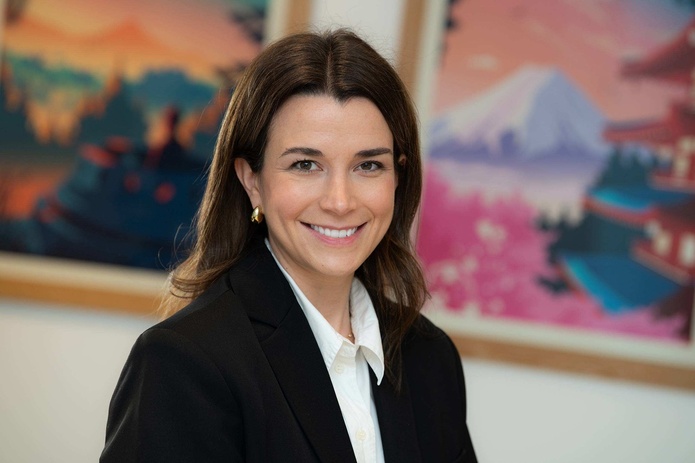
« Avant le Covid, notre meilleure année représentait environ un million d’euros de volume d’affaires. En 2026, nous atteignons déjà près de 1,7 million d’euros, soit une progression de plus de 75 % », indique Laura Martinez, directrice générale d’Amplitudes.

Cette croissance récompense le travail réalisé cette année par le voyagiste. La rubrique croisière de son site internet a été entièrement refondue, tandis qu’une personne dédiée à la production a remis à plat et actualisé les différents produits.

Les conseillers, spécialisés par destination, ont parallèlement été formés aux croisières proposées dans les régions qu’ils connaissent.


From a specialized shop to a shared expertise
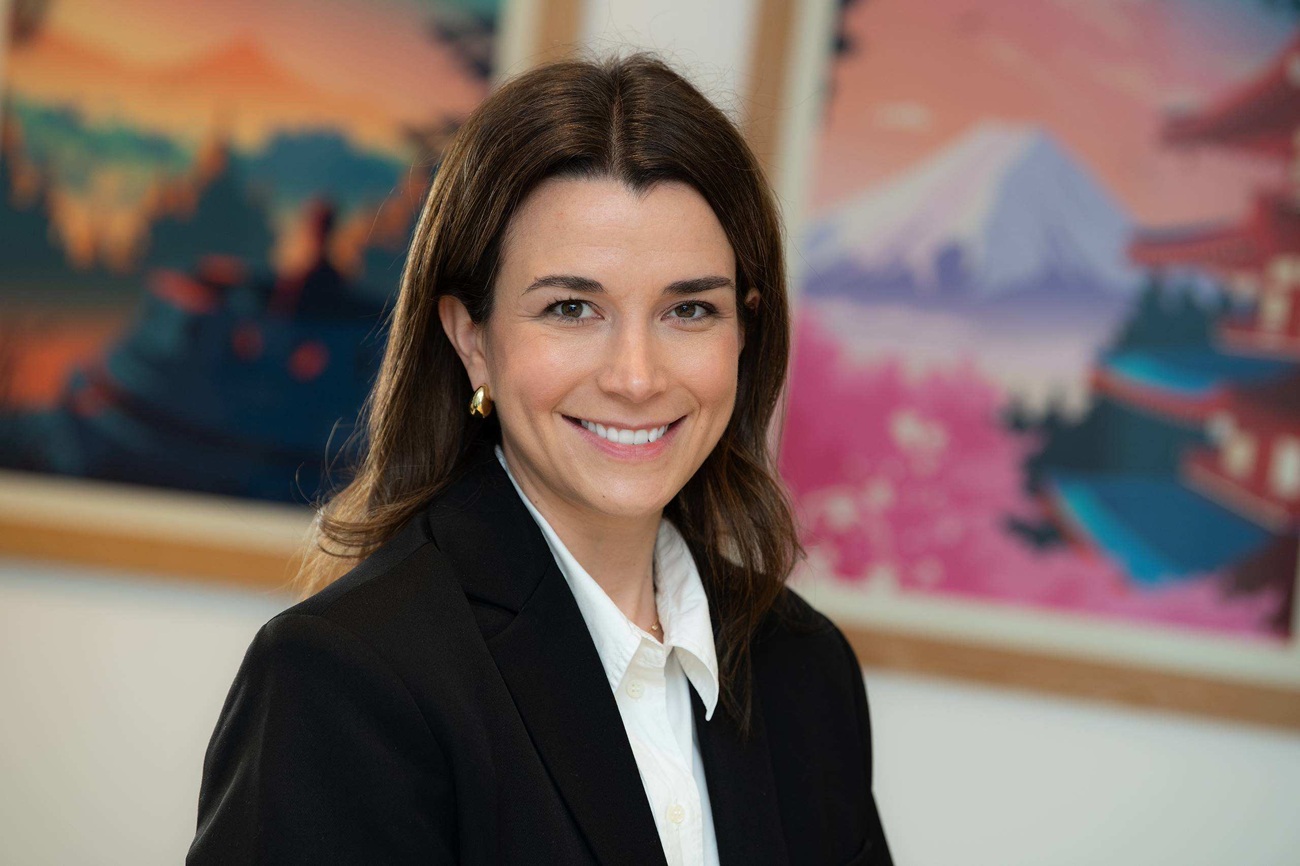

Laura Martinez, directrice générale d'Amplitudes @Amplitudes

La croisière n’est pourtant pas nouvelle chez Amplitudes. Il y a une dizaine d’années, elle était déjà vendue ponctuellement, généralement comme une composante d’un voyage plus large.

Le voyagiste décide d’accélérer en 2017 en ouvrant à Toulouse une boutique entièrement consacrée à ce produit.

L’expérience prend fin en 2023, lorsque la responsable de la boutique quitte le secteur. La difficulté à recruter un profil possédant une connaissance suffisamment large des compagnies conduit Amplitudes à revoir son organisation. La boutique redevient généraliste et la croisière est confiée aux différents spécialistes destinations.

« Nous sommes sortis du système reposant sur un référent. Aujourd’hui, la croisière est vendue par tous nos conseillers, et en particulier par ceux qui ont une affinité avec ce produit », explique Laura Martinez.

Une réorganisation qui n’a donc pas freiné les ventes. « Cela nous a incités à redistribuer les cartes entre nos spécialistes. Finalement, le pari a été plutôt payant, puisque nous enregistrons une véritable croissance du chiffre d’affaires sur ces produits. »


A deliberately tightened offer

Amplitudes ne cherche pas à référencer l’ensemble du marché. Le voyagiste privilégie les petites unités, les navires d’expédition et les catamarans, plus conformes à son positionnement haut de gamme, voire désormais très haut de gamme.

« Nous travaillons volontairement avec une offre de bateaux très réduite, pour qu’elle corresponde à notre ADN et à celui de nos clients. Notre savoir-faire consiste à déterminer quel est le bon bateau pour la personne qui vient nous voir », souligne la dirigeante. Citons Ponant Explorations, Hurtigruten, Aranui, Catlante, Explora Journeys ou encore Dream Yacht.

Cette sélection permet également de répondre à des profils très différents. Laura Martinez observe notamment un rajeunissement de la clientèle. La location de catamarans dans les Caraïbes, particulièrement dans les Grenadines, attire ainsi des familles et des groupes d’amis.

« La croisière n’est pas réservée à une clientèle parfois considérée, dans l’imaginaire collectif, comme très âgée. Chez nous, nous constatons un véritable rajeunissement de la cible. »

Le choix dépend aussi du rythme et des activités recherchés. Certains voyageurs privilégient une croisière sportive, d’autres une expérience contemplative ou culturelle.

Un client peu attiré par les grands paquebots pourra apprécier un catamaran ou un petit navire d’expédition. « Nous proposons ce qui est adapté au client, au rythme qu’il souhaite et à l’expérience qu’il recherche. C’est notre force, car nous effectuons déjà ce travail de découverte du client pour nos circuits terrestres. »


An average basket of around 40,000 euros per booking

La croisière permet surtout à Amplitudes de construire des voyages à forte valeur. Le panier moyen atteint environ 40 000 euros par dossier, généralement pour deux à trois personnes.

Le voyagiste prend le plus souvent en charge les vols internationaux et ajoute des séjours avant ou après la croisière. En Polynésie, une navigation à bord du Paul Gauguin peut ainsi être complétée par plusieurs jours sur des îles qui ne figurent pas au programme du navire.

Cette logique se retrouve en Égypte, au Vietnam ou dans les régions polaires. « Nous proposons le voyage dans sa globalité. La croisière en est une composante, mais nous pouvons ajouter quelques jours, voire plusieurs semaines, avant ou après. C’est tout le savoir-faire du voyage sur mesure », précise Laura Martinez.

La Polynésie, la Norvège, l’Égypte et le Vietnam figurent parmi les destinations qui fonctionnent le mieux.
Salaün Group Holds Up as Activity Declines by 5.1% in 2026 [ABO]


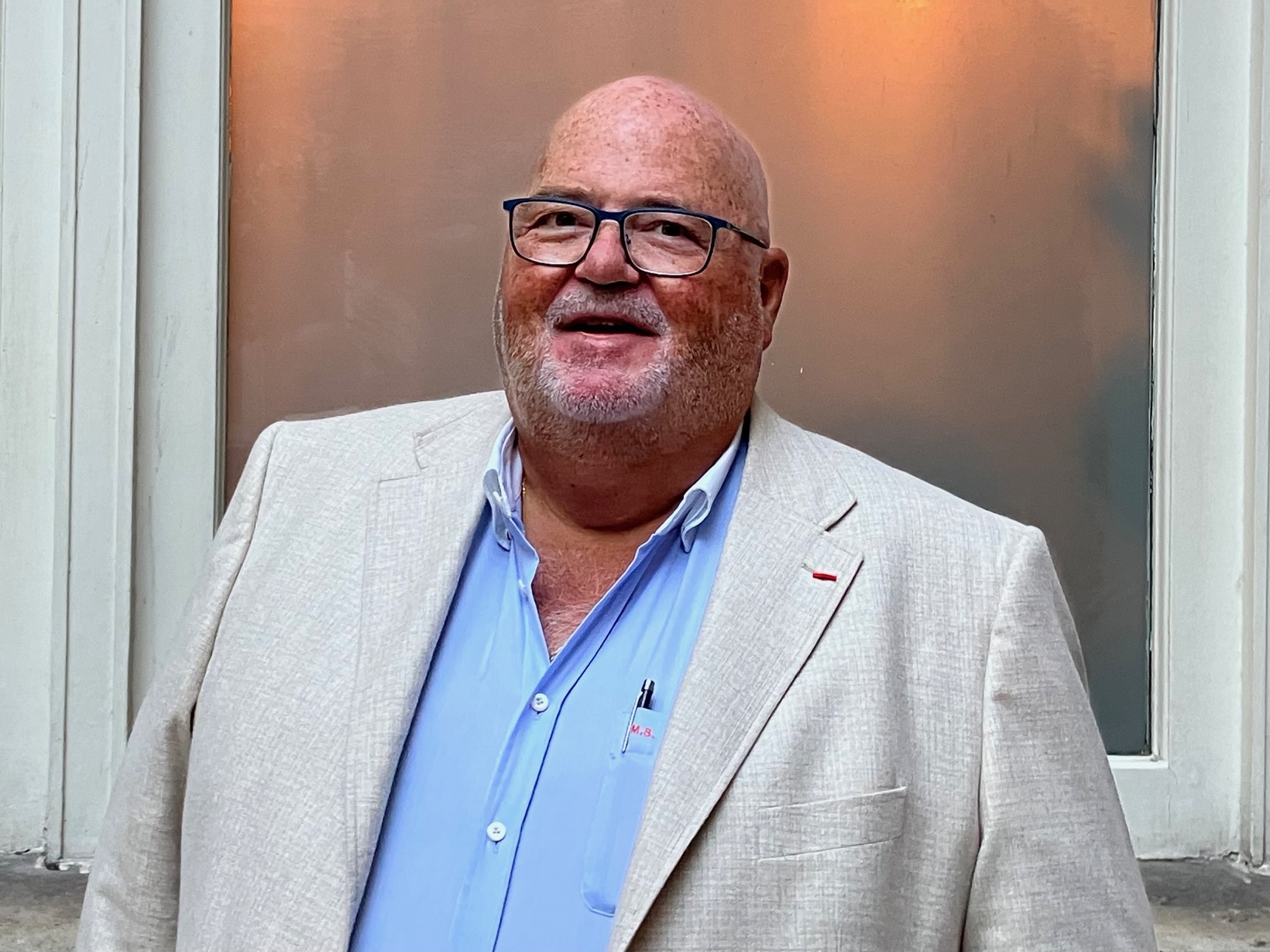
Michel Salaün, président du groupe Salaün - Photo: TB

CroisiEurope


The spring sales plunge last spring, following the war in Iran, had raised fears of the worst. In the end, Salaün withstood the shocks of geopolitics and the spike in kerosene prices.

Among the first to reveal its results, the Breton group is expected to post a consolidated turnover of €174.4 million for the 2026 fiscal year ending September 30, down 5.1% from €183.7 million achieved in 2025.

Nevertheless, Salaün has not yet regained its pre-Covid levels. In 2019, the group posted a consolidated turnover of €241.4 million.


The Consolidated Groups Save the Year

After a return to profitability in 2025, with €5.8 million in profit, the full-year result is not yet known. « But it will be positive despite a difficult year. We have worked on controlling our expenses and our margin » explains Michel Salaün, chairman of the group.

Read also : How the Salaün group got back on track after the Covid shock

In detail, the TO in-house Salaün Holidays (tours) posted €91.5 million in revenue compared to €103 million a year earlier, a decline of 11.2%. It transported 32,950 clients this year, 68% in short-haul and 32% in long-haul.

« The United States was penalized by a Trump effect, high prices and sometimes fake news. Asia, for its part, bore the consequences of the war with travelers hesitant to fly through a Gulf hub. And direct flights are rarer and more expensive, with the impossibility of overflying Russia » adds Michel Salaün.

Conversely, the Groups Boutique shows a strong 11.3% growth, with revenue of €51.2 million in 2026. « The consolidated groups were less affected because the bulk of sales was made before the crisis. The trend remains positive for the coming year » adds the president.


Six new agencies in 2026

Finally, the French distribution network remains resilient with a turnover (margin) of €16.7 million, i.e. around €142 million in business volume.

It now groups 141 agencies (to which one must add about a dozen sales points in Belgium) under a variety of banners, providing a balancing mix: 99 Salaün Holidays, 29 Ambassades Fram, 1 TUI, 8 Havas Voyages and 5 Selectour.

In 2026, six points of sale opened under the Salaün Holidays banner, in Reims, Amiens, Lille (La Madeleine), Orléans, Blois and Arras, to widen territorial coverage. This integrated network accounts for 40% of Salaün Holidays’ sales, helping to smooth out the tremors.

Michel Salaün will share these figures with the group’s 506 employees at the upcoming company convention in Paris, from January 30 to February 1. as well as the innovations for 2027.


Exceptional journeys with a Paris/Dakar circuit and a world tour

Among them, the main brochure (valid until the end of 2027) is expanding further with 444 pages!

It features 102 countries (plus overseas French territories), to be explored through 293 tours and cruises, 53 more than last year. 70 of the itineraries are conducted in small groups, 10 to 20 people for mid-haul and 6 to 12 passengers for long-haul.

This brochure could be updated in January depending on geopolitical developments. Europe leads with 23 new offerings, versus 12 in Asia and 11 in Africa.

Recalling the long, exceptional itineraries from the era of the west-to-east crossing of Russia, Salaün Holidays also innovates with two new intercontinental exceptional circuits.

The first is a grand 36-day road cruise from Paris to Dakar (Spain, Morocco, Mauritania and Senegal) scheduled from March 4 to April 8, 2028, at a price of €18,900 (luxury coach travel, return by plane).

The second is a 23-day around-the-world trip from September 7 to 29, 2027, passing through Japan, Australia, French Polynesia and California, for a price of €19,500.

Read also: Salaün launches a redesigned professional space

Group Travel: A Solid 2026, 2027 Already Well Underway [ABO]


Voyage de groupes : une année 2026 solide, 2027 déjà bien engagée - Photo depositphotos.com Auteur TKKurikawa

CroisiEurope


Despite an uncertain geopolitical context and more substantial budgetary choices, group travel is holding up well in 2026.

At Voyamar, Aurélien Aufort, chief executive of Marietton Developpement, describes a ‘extremely good year for 2026’, while bookings for groups for 2027 are already showing a roughly 30% rise.

The same trend is observed at Syltours. Although the conflict in the Middle East has affected activity, 2026 is performing better than simply holding steady: “We lost a bit of turnover in March. It wasn’t directly linked to the conflicts, but to groups that were in transit through the Middle East, either via Dubai or Doha. We shed just over €3 million, which still represents about 5% of our turnover.”

It is not a negligible figure. Nevertheless, we are delivering a very strong 2026. And so far for 2027, we are a little more than 10% ahead of 2026, explains Jonathan Lament, CEO of Syltours.

The positive trend is also evident at Salaün. The Boutique des Groupes records an 11.3% rise, reaching a turnover of €51.2 million in 2026.

“The built-up groups were less affected because the bulk of sales had already been made before the crisis. The trend remains positive for next year,” adds Michel Salaün, president of the group.


A shift in confirmations from spring to summer

If demand remains robust, professionals nevertheless note a shift in client behavior. Decision times are longer.

Melody Thiebaut, co-founder of LVE Travel, which works notably with CSEs, observes: “Business is doing well. What we’re seeing is that confirmation delays are much longer than usual.

CSEs still have their budgets, but they are paying more attention to the type of travel they offer and to the time frame in which they depart. They are also more budget-conscious. They won’t necessarily choose the costliest trips: they’ll shorten durations to keep costs down, for example. But travel continues and bookings still happen.”


The same phenomenon at Travel Evasion, a specialist in Egypt. The Middle East conflict has led to a shift in confirmations.

Bruno Abenin, Commercial Director, specifies: “For groups, in March, April, May and June, which are important periods, everything happened without any problem, sales had been secured upstream.

We simply notice that customers are a little wait-and-see. Normally, group bookings are made in spring, and now the confirmations arrive later. So it’s slightly delayed in time, but it’s going smoothly.”


Asia is on the rise

Gonzague de Gélis, president of Kuoni France, also describes a similar spring wait-and-see: “In May-June, we received very few responses compared with usual. We were a little worried.

In May-June, we already book for the following year. This year, we produced many quotes, but received few responses. And during the summer, in July-August, we received a lot of confirmations of group quotes we had prepared earlier.

We completely caught up on group sales for 2027.” It has really come back well. We are also fairly confident.
”

On the destination side, Asia appears as one of the major winners in projections for 2027 at Syltours. Vietnam stands out in particular, while Japan also regains strong momentum after a tougher period, notably due to price increases linked to the World Expo.

Indonesia also remains a safe-haven destination for groups, while robust air connectivity across Asia helps keep prices competitive. Asia is also finding a place in LVE Travel’s order books.


The professionals interviewed remain confident for 2027

Other destinations are riding high, such as South Africa “which is starting up very strongly” at Syltours, as well as at LVE Travel.

Canada is also among the growing destinations at Syltours. Jonathan Lament even notes the emergence of inquiries for Western Canada, which could offer an alternative to circuits in the American West. The United States, by contrast, presents a more mixed picture. New York was “really slowing down” in 2026, according to Lament, who nevertheless anticipates a rebound in 2027.

South America, meanwhile, does not seem to captivate due to high prices, notes Mélody Thiebaut of LVE Travel. The outlook is nuanced at Syltours. The operator plans to run nearly 100 groups in South America in 2026. For Jonathan Lament, demand exists but requires more commercial effort: “you have to go after them because air service is less developed than in Asia, for example, and thus less competitive.”

At this stage, the professionals surveyed remain confident for 2027. In this election year, they adjust travel dates to avoid departures on election weekends in April and May 2027. And despite the geopolitical uncertainties that may still weigh on activity, groups performed well in 2026 and bookings are picking up again… a promising sign for the months ahead.


Cruise: Tunisia stop replaced by Italy — should the cruise line compensate the passenger? [ABO]


Croisière : une escale en Tunisie remplacée par l’Italie, la compagnie doit-elle indemniser la cliente ? - Depositphotos.com Auteur bloodua

CroisiEurope


A traveler has brought the Mediation a complaint following a modification of the itinerary of her Mediterranean cruise.

She argued that replacing a planned stop in Tunisia with a stop in Italy diminished the quality of her trip and sought compensation.

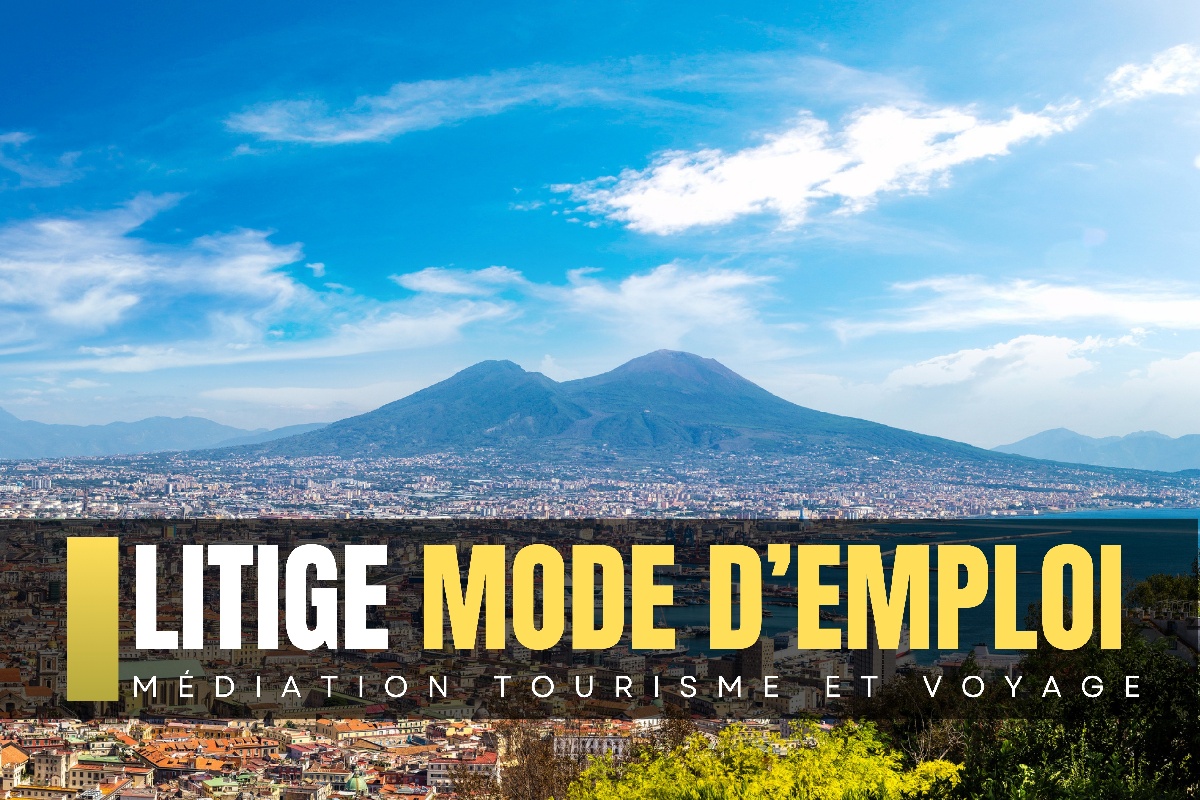
The passenger had booked a one-week Mediterranean cruise. The initial program included, among other components, a port of call at La Goulette in Tunisia. A few days before departure, the itinerary was altered and this stop was replaced with a Naples stop in Italy.

The traveler considered that this modification caused her to miss an important destination of her stay. She also argued that cruises offering an itinerary with a Naples stop were marketed at a lower price than what she had paid. She therefore requested a goodwill gesture of 300 euros.

The cruise company, for its part, refused any compensation, arguing that the modification did not justify a refund.


What the texts say:

To form her opinion, the Mediation relied on Article L. 211-16 of the Tourism Code, which provides that the organizer of a package tour is responsible for the proper execution of the services provided under the contract.

This same text specifies that when a significant portion of the services cannot be provided as agreed, the professional must offer replacement arrangements and, if those are of inferior quality, grant the traveler an appropriate price reduction.

In this case, replacing a stop at La Goulette with a Naples stop did not constitute a simple itinerary adjustment. It involved two destinations located in different countries, offering distinct tourist experiences.


What the Tourism and Travel Mediation recommends:

The Mediation thus considered that this modification concerned an important element of the trip and that the substitute service was of lower quality than initially planned.

Under these conditions, without calling into question the overall execution of the cruise, the Mediation deemed a price reduction justified. It recommended granting compensation equal to 15% of the cruise price to offset the itinerary change.


Find all the practical cases of the Tourism and Travel Mediation by clicking HERE.


8 New Traveler Habits That Travel Agencies Should Adopt [ABO]


1. The traveler sometimes wants to travel… alone

Les 8 nouvelles habitudes des voyageurs que les agences doivent intégrer - Depositphotos.com Studiostock

CroisiEurope


The solo traveler is becoming more appealing, but traveling alone does not necessarily mean seeking isolation. The client may want autonomy while wishing to meet other travelers, take part in activities, or enjoy a reassuring setting.

According to the Travel Trend Report 2026 from Dertour Group, nearly 30% of respondents across 13 European countries plan to travel alone in the coming twelve months. In France, the share reaches 32.2%.

The question is not only whether the client travels solo, but what they are seeking behind that decision: freedom, rest, encounters, personal challenge or security. This answer will guide the proposal toward an individual stay, an escorted tour, or a plan alternating free time and group activities.


2. Slow travel puts journeys back on track… with a longer pace

Less rushing, staying longer in one place, favoring gentle mobility, and exploring a destination in depth: slow travel answers a desire to travel differently.

According to the Dertour study, 53.2% of Europeans surveyed are drawn to slow travel. Among them, 58.5% want to take more time to discover a destination without feeling rushed.

This trend can manifest as a stay in a single region, a less dense itinerary, a discovery on foot or by bicycle, or even a river cruise. The agency must therefore pay attention to the pace the client desires. Does he prefer to add more stops or take time to settle in? Does he want to visit more places or fully enjoy a few sites?


3. The train becomes a real alternative

Trains can now serve as a strong selling point, beyond the environmental question. Arriving in the city center, comfort, and the possibility to enjoy the journey itself: it meets several traveler expectations.

At Déclic Evasion, train-focused stays increased by 16% between 2024 and 2025. Families, travelers wishing to avoid airports, or clients seeking another way to move around may be interested.

However, selling rail travel remains complex, between booking tools, connections, after-sales service, and disruption management. For the agent, the challenge is to know the relevant itineraries and propose the train when it adds real value to the trip, rather than waiting for the client to ask.


4. Travelers seek more personalization

In the face of a standardized offer accessible in a few clicks, personalization remains a major asset for the agency. It starts with qualifying the need: pace, interests, constraints, comfort level, travel habits, or desire for autonomy.

The DIGITRIPS Pro survey conducted with more than 400 travel agents in France in 2026 confirms this central place of personalized advice: 47 % of respondents name it as their number one daily priority.


6. Travelers also seek meaning


7. Travelers want experiences… not necessarily more activities

Meetings, workshops, culinary discoveries, nature-based activities, unique accommodations: travelers seek experiences that match their tastes and personality.

But immersion does not necessarily mean multiplying activities. A packed program can run counter to the desire for disconnection or for slow time.

The challenge is to find the right balance between discoveries, free time and breathing space.


8. Not chasing every trend

Solo, slow, train, responsible tourism, immersive experiences, tailor-made travel, AI… Should we offer all of it? No.

An agency is not expected to become an expert in every trend. Specialization can help it build a recognizable expertise, provided it is based on real demand, operational capacity, and a coherent business model.

The aim is to identify evolutions that match its clientele and its territory, then build competence in those with commercial potential. Monitoring, training, familiarization trips and observing demand can help filter them.

Instead of always starting with “Where would you like to go?”, why not ask: “How do you like to travel?”

Alone or with others? Slowly or with a dense program? By train or by plane? With a lot of autonomy or with guidance? In search of comfort, adventure, encounters, or disconnection?

These answers will often help reveal the destination or the product. And perhaps this is where the profession is evolving: not only knowing the destinations, but knowing the different ways to travel.


Find all the articles in our series “Very Special Agent – The Practical Guide for Pros” by clicking this link.

Air Caraïbes – French bee: Paul-Henri Dubreuil and the Revolving Door of Executives [ABO]


Air Caraïbes - French bee : Paul-Henri Dubreuil et la valse des dirigeants - Photo CH

CroisiEurope


Until the early 2020s, Air Caraïbes and the Dubreuil Aéro group as a whole were held up as a model in France.

It must be said that, at the same time, Air France regularly made headlines due to recurring labor conflicts and results not always matching those of its rivals.

Corsair continuously sought shareholders to avert a feared catastrophe, at the time, following the aborted takeover attempt by Air Caraïbes’ former management.

Then, slowly, the good pupil’s aura began to fade. The ascent of Paul-Henri Dubreuil to the head of the holding company that oversees the two firms in the family group was deemed necessary to preserve the father‑son relationship, according to the whispers we gathered, but also to give a direction to the family empire.

For now three years, a wind of instability has blown over a group that, since its creation and up to Marc Rochet’s departure, had known only one leader.

“The operational results of the Dubreuil Aéro Group have only declined since 2022, while Corsair has moved out of the red. There was a kind of reverse movement.

Strategic errors were made and you can start to see it, even if overall the entity is well managed,
” a well‑informed observer of the group tells us.


Paul-Henri Dubreuil and Christine Ourmières-Widener, a year and then they’re gone…


Since the end of the health crisis, Corsair has shown it can adapt very quickly, but also push its higher-end positioning, while the Dubreuil group would, on its side, have perhaps lost some of its momentum.

This back-and-forth movement is not hard to trace. One must look back to the induction of Paul-Henri Dubreuil at the head of the holding company that oversees the two firms of the family group.

On July 1, 2023, Marc Rochet was compelled to relinquish the general management of Air Caraïbes, while accompanying the new general manager, Christine Ourmières-Widener, as she took office.

The son of Jean-Paul Dubreuil thus ends a duo that had enjoyed great successes for twenty years.

A way, as we wrote at the time, for Jean‑Paul Dubreuil’s son to assert his takeover by forming a new duo, in the image of what his father and Marc Rochet had successfully done.

The entourage of the historic leader thus packs its bags and Christine Ourmières-Widener arrives with her close circle. Methods that disrupted the habits of the family business, while Sophie Jean-Victor, the sister of Paul-Henri Dubreuil, who was then responsible for communications and marketing, was also sidelined.

“Fundamental things were then broken. The company’s identity withered.

Overhead costs rose, substantial salaries were granted to newcomers, then it had to be paid back when parting with them.

Today, some managers are no longer reachable, because processes have been put in place, a bit like a major such as Air France. The contact has become somewhat dehumanized
“, we are told.

When you scrutinize Air Caraïbes’ social accounts, personnel costs rose from €24.57 million in 2022 to €30.56 million two years later, an increase of 24.3%. An increase that may seem significant. Yet, in volume, these costs are roughly similar to those of 2019.

The Christine Ourmières-Widener era was ultimately rather welcomed by some unions, who highlighted a more humane and close management approach.

Moreover, the processes have allowed for the professionalization of the organization and the improvement of the teams’ work. “She sounded the end of the recreation“, comments a former member of her close circle.

Was the challenge to bring the group up to European airline standards to better sell it? It is a rumor that circulated at the time.


Grégory Jamet imagined taking the helm of Dubreuil Aéro and then…

Yet, in December 2024, Christine Ourmières-Widener literally vanished. In the same vein as their commercial director, Brannon Winn, who would never return from summer holidays, without an explanation.

Thus, in January 2025, the sanction falls. Christine Ourmières-Widener and her faithful right-hand are removed. The separation is formalized.

Without knowing the exact reasons, even if we are told—in one account, a major clash, and, on the other, two letters from management in the Caribbean critiquing the CEO—one thing is certain: the link between the shareholder and the former leader would have grown distant over time.

Without a CEO, Paul-Henri Dubreuil would then personally take the reins of the holding, that he had previously resisted aviation, wary of Covid and the industry’s astronomical losses.

He does not yet imagine that the post requires a clear vision, sharpened knowledge, and a great deal of networking with officials to steer the two airlines.

At the head of the group, he looks at the sector, without pretense, all the more so since it remains highly strategic for the family business thanks to its substantial cash position.

Ultimately, the mission is not as easy as expected; he struggles to legitimize his position as airline boss, causing the business’s momentum to falter, and then a new leadership candidate shows up.

At the head of the group, he takes an interest in the sector, without pretense, all the more so as it remains highly strategic for the family business thanks to its significant cash reserves. Ultimately, the mission proves not as easy. Then another leadership contender emerges.

In October 2025, Grégory Jamet was appointed Chief Executive Officer of Groupe Dubreuil Aéro Services, a subsidiary that brings together the support functions for the aviation pole. The man thus imagines himself quite capable of leading the airlines.

The former CEO of COHOR, the association responsible for coordinating schedules at French airports, has been in the fold for several months, but seems to have the boss’s ear.

Paul-Henri Dubreuil extols his CV, speaks of him with high praise, and has him sit at his right during the Comex… until his downfall.


An unsettling instability for the employees

But already, in spring, the tensions flare. Grégory Jamet is sidelined, he does not intervene, or very little, during meetings. His word no longer carries the same weight.

In June last year, in front of many employees, the appointment of Géry Mortreux as general manager of the Air division of the Dubreuil Group is announced, without the former COHOR DG being informed. His departure becomes inevitable.

And while the teams are not yet aware, his ouster is not even mentioned in the press release announcing his… replacement last week.

Now, it is the turn of the former Deputy General Manager Engineering & Maintenance of Air France to bring stability and discipline to a group that seems to be navigating by sight.

Géry Mortreux did not follow the classic path of a future airline executive. He mainly managed maintenance and operations, whether at Corsair or Air France. The new leader will therefore need to add depth.

With a good reputation, he arrives with the ambition to repair the accounts of the two airlines, while internal governance instability begins to weigh on the inside. Continuous leadership changes are not well regarded.

Remember that the group is also going through a delicate social period. The latest strike by PNC at French bee showed that internal dialogue was completely closed.

Within the teams and externally, these last three years are seen more as a period of economic regression, in terms of image and strategic vision.

In addition, the group is going through a delicate social period. The latest PNC strike at French bee demonstrated that internal dialogue was completely closed.

The situation seems more tempered at its tarmac neighbor. “The low-cost exists thanks to the good financial results of Air Caraïbes, but also because it bears certain costs, such as spare aircraft and other charges.

De plus, nous ne comprenons pas pourquoi elle multiplie les ouvertures de lignes qui ne sont pas toujours rentables, deplores a salariée.


Afterwards, the company has never been very transparent. One cannot say there has been a grand revolution; the main change is the instability at the leadership“.


Events: C.Mathez Voyages Unveils Ambitions With New Brand Maison Laget [ABO]


Avec Maison Laget, Voyages C. Mathez veut montrer à tous le savoir-faire de ses équipes - Photo : Voyages C.Mathez

CroisiEurope


Among the women leaders in tourism, she is certainly among the most active.

Her face is well known in the sector, as she has contributed for many years to the smooth running of our institutions.

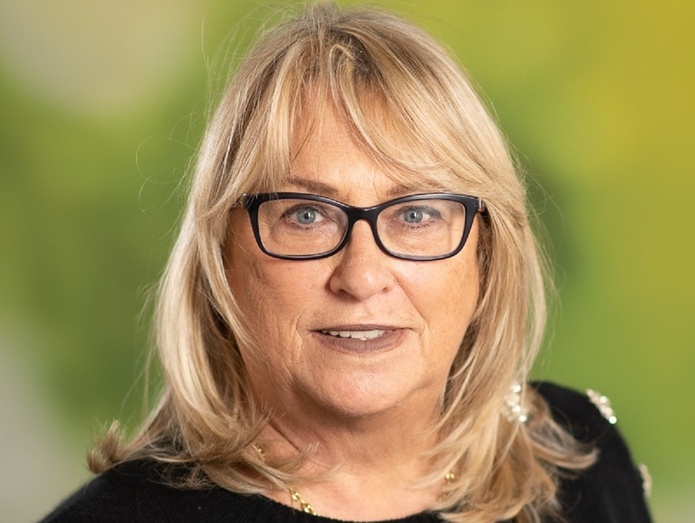
Vice-president of the Manor network, administrator and treasurer of the APST and of the EDV… you will of course recognize Michelle Laget Herbaut.

While women are thinning as one climbs to the highest echelons of the profession, the president of Voyages C. Mathez, a specialist – among other things – in business travel and events, particularly enjoys financial management and continues to keep a close eye on the books at the highest level. “I’ve always been immersed in the institutional world“, she tells us.

A habit she inherited from her father, Jean Laget, the founder of Voyages C. Mathez.


Voyages C.Mathez, a diversified group to endure

Together with her sister, Brigitte Bailet, they have taken the reins of the family business and shared the roles.

Brigitte, based in Nice – where the group’s headquarters is also located – oversees the southern France activity, with teams based in Marseille.

Michelle, on the other hand, runs the northern side from the Paris region. At the head of the group, they juggle three activities: cruise receptive in all the main ports of France, business travel and events.

A diversification that allows Voyages C.Mathez to stay on course, despite all kinds of uncertainties.

“We really need to have several strings to our bow. Depending on the year, some activities will perform better than others, and vice versa. That’s how we manage to get by and endure,” says Michelle Laget Herbaut. “Because with all the hurdles we’ve faced, we can say that our profession is very resilient.”.


Fanny Herbaut Chauveau: the third generation steps into leadership

But while Michelle Laget Herbaut embodies the face of Voyages C. Mathez, behind the scenes, another family member is gradually taking the reins of the business.

She has even just been officially named the third in the group.

Relatively discreet, Fanny Herbaut Chauveau, the daughter of Michelle Laget Herbaut, began her career in the events department nearly 14 years ago, as a project manager.

A graduate of a master’s in human resources, she has also managed the entire HR side of Voyages C.Mathez since 2012, i.e., the management of 47 people, plus about a hundred payroll records during peak season for the guides who work for the cruise receptive arm.

Hesitant at first about starting a profession she did not know, she benefited from the training provided by her mother to get started. It must be said that she has grown up in the milieu since her youngest days. “My grandfather used to take me with him on the cruise ships and my mother in the field. I would help with the cloakroom after-hours with her“, recalls Fanny Herbaut Chauveau.

For four years now, she has become the head of the group’s events division in Paris. And since last week, the new deputy general manager. “We discussed this a lot this summer with my mother. She wished to step back from operational duties, do less fieldwork to focus on financial management and on her institutional role.

I am therefore adding to my responsibilities the business ticketing, which is an important area for us, as well as the commercial division
“, continues Fanny Herbaut Chauveau.


Maison Laget, a new pillar for Voyages C.Mathez

If the new DGA is indeed set to refresh the communications, marketing, and SEO across Voyages C.Mathez’s various activities, she has decided to tackle first the launch of a new brand for its events business.

“Our clients have long known that Voyages C.Mathez also has an events subsidiary, and word-of-mouth has always worked well. However, we are completely invisible online to potential new clients. When you search for ‘event agency’, we don’t show up. That’s normal because we are identified as ‘Voyages’. Today, I want to develop other sectors and other clients, because I want to grow the company“, says Fanny Herbaut Chauveau.

September 15, 2026 marks the birth of Maison Laget, whose name pays tribute to the group’s founder, and which is defined as “a complementary brand, with a high-end positioning, designed for public as well as private or corporate events“, adds Michelle Laget Herbaut.

With the aim of showing everyone the know-how of Voyages C. Mathez’s teams. “In the era of AI and service delivered instantly, all the time, it was very important for us to return to the basics, to keep that warmth and still a concierge-like touch, to be a partner rather than a mere supplier.

Of course I could launch a platform to sell transfers or breakfasts, but if there is no human behind it, it makes no sense
“, emphasizes Fanny Herbaut Chauveau.

Maison Laget will initially have a website, an Instagram page, and a LinkedIn page.


Mumtaz Teker (APST): I Don’t Think There Will Be Cascading Failures [ABO]


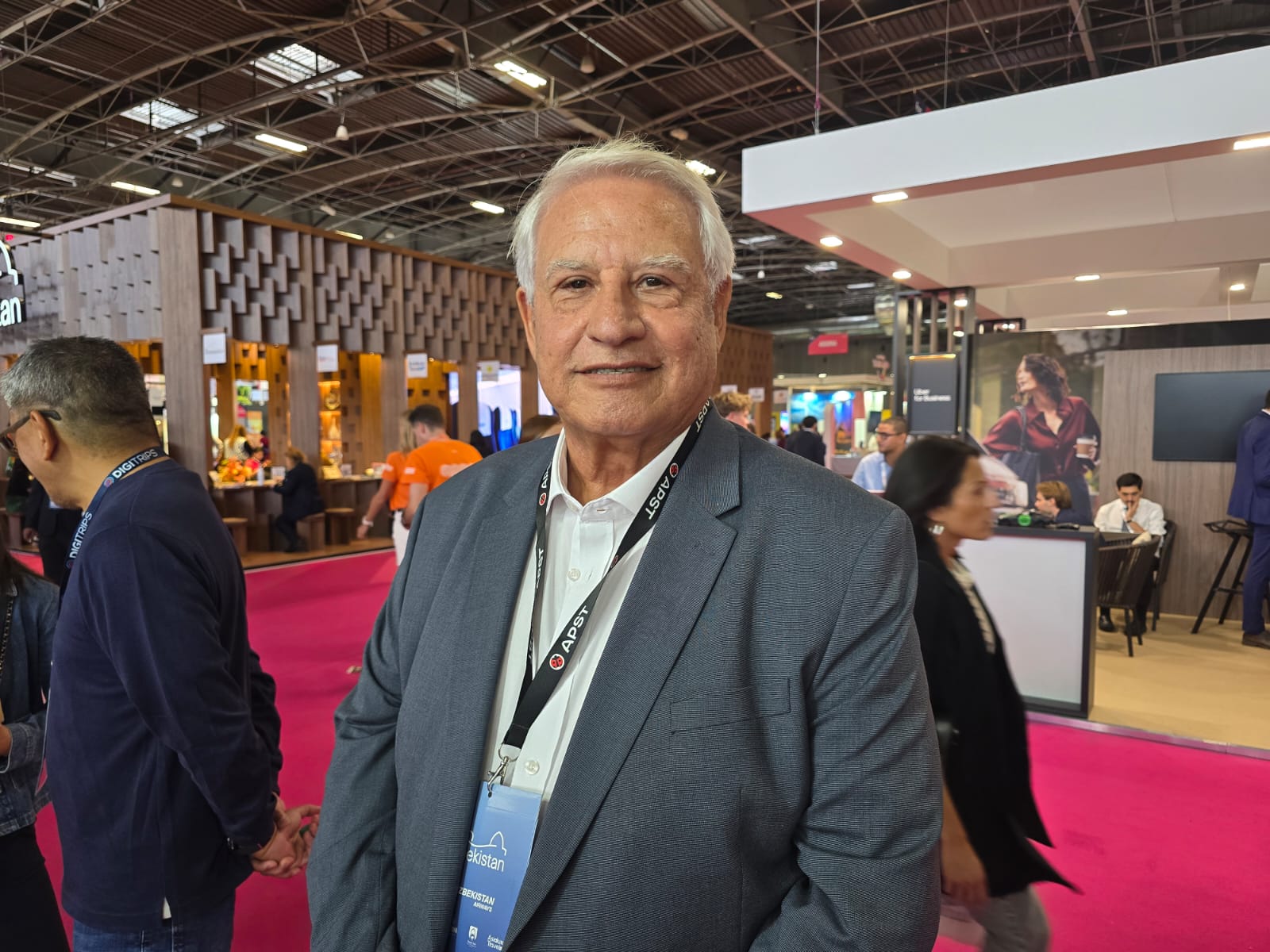
Mumtaz Teker, président de l'APST  dans les allées de l'IFTM - Photo CE

CroisiEurope


TourMaG – Valérie Boned, présidente des EDV, l’a rappelé à l’occasion de l’inauguration de l’IFTM : le contexte reste fragile, après un printemps très compliqué avec le conflit au Moyen-Orient. Pensez-vous que le secteur va faire face à une hausse des défaillances ?

Mumtaz Teker : No, I am not worried, because we closely monitor our members. We have nearly €70 million in liquidity, and our equity reached a record level at the end of 2025.

I remain, of course, cautious. September and October are sensitive months during which there could be potential defaults. However, we do not have members at significant risk.

We are able to absorb all defaults. Obviously I would have preferred the year to unfold differently and for the industry to perform better than in 2025.

2026 will not be a good year, even if we are seeing a revival of activity in recent weeks, which could partly make up for the delay.

But what was lost in the spring will be hard to catch up. I do not believe there will be cascading defaults. There will almost certainly be a few.


Bundling Together, Aligning with a Group Is a Way to Ensure Longevity

TourMaG – Est-ce que le contexte actuel pourrait freiner les nouveaux entrants souhaitant se lancer dans le voyage ?

Mumtaz Teker :
No, we are not seeing a slowdown; we record a healthy stream of entrants every month. We have many inquiries, mainly about niche activities.

We receive between 40 and 60 requests per month, of which about thirty are studied on average by the board. The profession is renewing itself, which is good news.

TourMaG – At the same time, we are witnessing consolidation in the sector. What is your view on this phenomenon?

Mumtaz Teker :
Indeed, the sector is consolidating. Bundling together, aligning with a group, is a way to ensure sustainability.

For several years now, we have been faced with so many events, whether climatic or geopolitical. Grouping together allows us to exist and to grow.


Luxury Travel: Behind the Million-Dollar World, a Highly Demanding Profession [ABO]


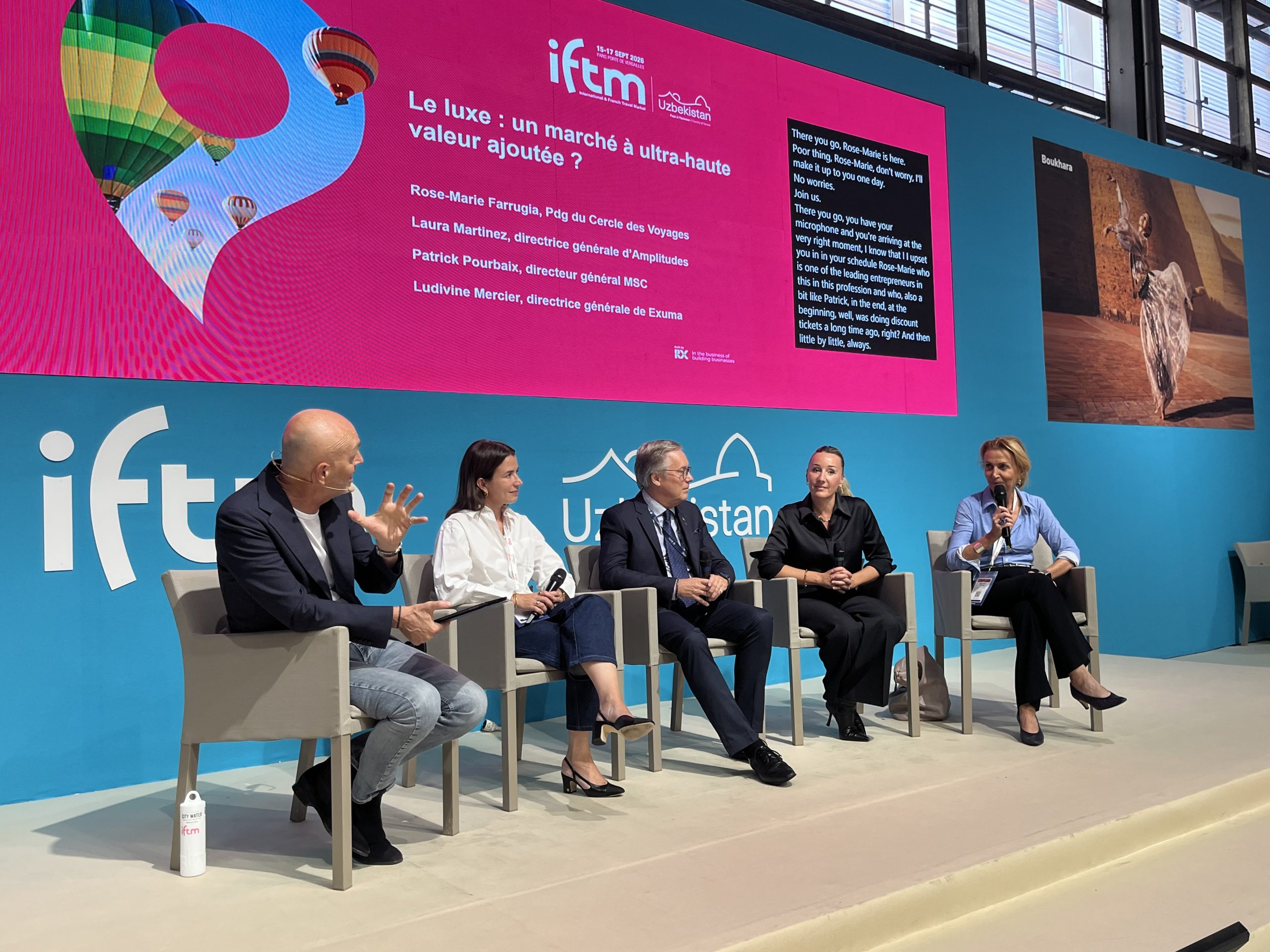
De g. à d. : François-Xavier Izenic, Laura Martinez, Patrick Pourbaix, Ludivine Mercier et Rose-Marie Farrugia © PB,

CroisiEurope


It has become commonplace to assert that the luxury travel is a booming business.

But what exactly does this assertion cover? Who are the clients exactly? Finally, what makes a trip luxurious ?

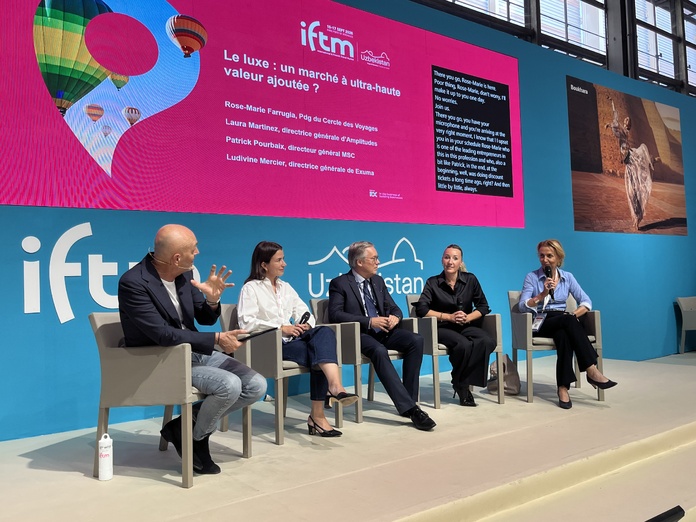
It is on the answers (more complex than it seems) to these seemingly simple questions that the conference focused, on September 16, 2026, by journalist François-Xavier Izenic at the Arena of the IFTM, at Porte de Versailles.

Around the table, four renowned sector players: Laura Martinez, CEO of Amplitudes; Ludivine Mercier, CEO of Exuma; Rose-Marie Farrugia, president of the Circle of Voyages; and Patrick Pourbaix, CEO of MSC France and Explora Journeys, the luxury subsidiary of this cruise company.


Customers more diverse than one might think

To begin with, who are the clients? By general opinion, luxury travel is not reserved for the 51,245 people who, living in France, had a net worth above 10 million dollars in 2024.

The luxury clientele “is everywhere,” nuanced Patrick Pourbaix. It appears, in any case, quite diverse. Among them are families with substantial wealth, show-business figures, political figures, and seniors who, having worked a lot, want to reinvent a third life, added Rose-Marie Farrugia.

Within this clientele there are also affluent individuals who can afford a very high-end trip from time to time; and others who have saved for a long time to treat themselves to A World Tour or THE trip of their lives.

In any case, luxury travel is a growth sector. In this field, profit margins are much higher than in the rest of the tourism industry. The luxury offer also helps build customer loyalty and raise the skills of the staff.

Moreover, the luxury clientele is undeniably increasing in number. “Cruise market growth is 8%, but its luxury segment is 30%,” as Patrick Pourbaix cited for example.

This explains why the sea is becoming the new playground for some major international hotel chains (Ritz-Carlton, Four Seasons, Accor, Aman).


Prices with almost no limits

And the prices ? The answers are varied because “there are no limits except those set by the client,” according to Laura Martinez. The largest budget she has had to handle was one million euros, for a one-month trip for a family of four children.

The same amount, cited by Ludivine Mercier, represented the cost of a three-day trip to Marrakech with a privatized hotel and private jet transfers.

Rose-Marie Farrugia, for her part, prefers to think in terms of price per day, a ratio which, according to her, hovers around 10,000 dollars in the luxury domain.

It is therefore not surprising that, without being completely indifferent, this clientele is much less sensitive than others to the economic situation and to issues of purchasing power.

On the contrary, as Rose-Marie Farrugia stressed, they are very attentive to security and to geopolitical context: “they want zero risk.” “That still depends on destination typologies,” according to Ludivine Mercier.


Personalization and Exclusivity

Price is not the sole—and often not the main—criterion for defining a luxury journey.

Beyond price, what gives it its ultra-high value-added is a sublimated lifestyle, according to Patrick Pourbaix; “exclusivity” for Ludivine Mercier, “rarity, hyper-personalization, a certain singularity and exclusive emotional experiences” for Rose-Marie Farrugia.

In this regard, the latter gave a very telling example of a stay at the Aman Hotel (51 rooms and suites) located in Beijing, right next to the East Gate of the Summer Palace, in a complex of historical pavilions once used by visitors awaiting an audience with Empress Dowager Cixi.

When this palace—crowded with visitors during the day—finally closes its doors, the hotel’s butlers allow guests to wander there at their leisure. “That is something fabulous. We are in the experience and the exclusivity,” insists Rose-Marie Farrugia.

Yet, do the needs and expectations of luxury clients evolve? Yes, it seems so, toward an increased demand for experiences. “It is difficult to introduce in France a product—the Explora Journeys cruises that check all the boxes of the ‘palace’ category—due to the absence of another comparable company in France,” nuanced Patrick Pourbaix, recalling that Le Ponant is positioned as “exploration.”


Not a Margin for Error


PAULA BOYER Published by Paula Boyer Head of the LuxuryTravelMaG section – TourMaG.com
See all articles by Paula Boyer

  • picto Twitter
  • picto Linkedin
  • picto email
Add TourMaG to your Google News feed Google Actualités icône

Climate, Demography, AI: Alerts You Shouldn’t Ignore [ABO]


Climat, démographie, IA... les alertes qu’il ne faut pas ignorer - Depositphotos.com Auteur OlekStock

MSC Croisières


It would be unnecessary to revisit the flood of comments, analyses, and expert assessments that have poured into the media, and predictions—sometimes highly alarming, sometimes moderate—recorded all over the world; yet there are other alerts issued by our planet in distress that do not bode well for a calm future of travel and tourism.

As an example, we have identified a few of them that will at least help you anticipate development strategies (sometimes far too often reckless) and better understand where the world is headed!


« Tsunami ready »: UNESCO Mobilizes along the Côte d’Azur

While an unexpected mud tsunami has killed hundreds in Nepal (as we write), note that since June Nice, Cagnes-sur-Mer, Saint-Laurent-du-Var, Beaulieu, Villefranche-sur-Mer and Eze have earned UNESCO’s Tsunami Ready label.

They thus join neighboring Cannes, which was labeled in 2024, and now display the 800 warning panels installed along coastal areas to inform affected populations of two things: firstly, the direction to move to distance themselves as much as possible from the water in case of a tsunami alert. Secondly, additional panels indicate zones to be evacuated urgently.

Introduced after the 2004 Indian Ocean tsunami, which, as remembered, claimed more than 220,000 victims including thousands of holidaymakers, this UNESCO-coordinated global tsunami alert system should not go unnoticed in a region that is known to be particularly sensitive to earthquakes and other landslides capable of sweeping away populations and transportation infrastructures, homes, beaches, airports…

Relying on a very dense network of sensors, seismographs, and regional alert centers combining scientific expertise, international coordination, and the ability of local authorities to act quickly, the system is still in its early days but demonstrates the extreme vigilance to which humanity must devote itself in order to avert tragedies with dramatic consequences.

Covering today the ocean basins of the Pacific, the Indian Ocean, the Caribbean, the Northeast Atlantic, and the Mediterranean, the system is thus present in Samos in Greece, in Alexandria, in Costa Rica, in the Marshall Islands, in Honduras, in Cadiz in Spain… and more and more in India, Turkey, as well as in Peru which is celebrating its first label this year. Altogether, 43 countries have developed it.


While UNESCO acts to strengthen the resilience of coastal communities through several key initiatives, all experts are on edge, research is energised and the press fortunately serves as a vigilant, well-documented relay:

– Debating and proposing with Shift Project: Among the many laudable initiatives, note that Jean-Marc Jancovici’s Shift Project has just launched a “citizens’ assembly” consisting of 150 people invited to debate in person. A participatory platform: www.uncommunaccord.fr will allow participation in the debate to which tourism professionals should participate in large numbers.

– In a more tourism-oriented register, note that new data from Protect Group, a major supplier of travel-related products and services, reveal that the conversion rate for reimbursement insurance for its partners has nearly doubled, rising from 14% to 27%. France has also progressed, reflecting travelers’ willingness to manage risks caused by all sorts of operational disruptions or simply by a desire for greater flexibility: “travellers increasingly regard protection as an essential part of the booking process rather than a mere extra option,” said Stephen Joyce, Head of Global Strategy – Travel & Tourism at Protect Group.


Demographic Alert: “Global Depopulation Is the Most Likely Future”

In another domain, just as essential but less visible, the reversal by demographers of forecasts strikes me as particularly evocative of the false detours that forecasting activities can take.

It was said that the world population would reach 10 billion people by 2050, up from 8 billion today. Yet the prospect now points to a dramatic slowdown linked to a decline in fertility rates. Notably in Korea, Brazil, Italy… about forty countries are already affected.

While China, hit by its one-child policy, will see its population by the end of the century fall to around 650 million. And this against the United States where the fertility rate will be higher, so the population will rise without necessarily having the workforce needed for unskilled jobs!

And especially with respect to an Africa that is estimated to reach 2.5 billion inhabitants, i.e., more than double its current level, the world’s geopolitics and the handling of migration flows, including within the continent where they are the most numerous, will have to be reconsidered. Already, it is forecast that 750,000 African immigrants will be legalized in 2050.

…But what does all this mean? An aging population in the West and in China means a population less innovative, less dynamic, more costly for the state, more demanding of care tailored to its needs… But, good news, emphasize the demographers, it will be more peaceful.

As for the geopolitics of this tomorrow’s world, it is far from predictable with countries like Indonesia, Pakistan, Nigeria reaching 400 million inhabitants and India at 1.4 billion.

In any case, for this “old” world, it would also be a good time to consider planning for the future in all equipment to be built, a possible reconversion for seniors, as Japan is already doing!

We could also try to address the worst of the ills affecting seniors: isolation.