
What If the Real Barrier to Recruiting French Cabin Crew Was… English?


Recrutement PNC : beaucoup de candidats français maîtrisent les règles de la langue anglaise mais bloquent lorsqu'il faut improviser une réponse - Depositphotos.com, garagestock

IFTM prenez RDV avec TourMaG


Ten years ago, a B2 level in English sufficed to join a French airline.


Candidates would obtain their certification, tick the box, and move on to the next step.

Today, the rules have changed.

The official criteria remain the same, but recruiters now verify what a certificate does not always measure: the ability to hold a fluent conversation.

This shift comes as France shows a marked lag in spoken expression.

According to the EF English Proficiency Index 2025, the French rank 32nd out of 35 European countries for spoken English. A heavy handicap in a sector where interviews are increasingly conducted in English.


French Companies Raise Their Requirements

En 2022, Air France demandait un niveau B1 avec listening (compréhension orale) et reading (lecture) uniquement. Le speaking (expression orale) n’était pas encore exigé.


En 2024, les critères ont évolué : la compagnie demande désormais soit un a minimum B2 on the LILATE, soit un Linguaskill score de B2 dans chacun des trois skills (compétences).
Pour l’anecdote, la majorité des candidats retenus chez Air France et HOP! en 2026 et accompagnés par l’organisme de formation SkySuccess affichaient un niveau C1 au LILATE.

Le TOEIC, dans sa version la plus courante, ne teste que le listening et le reading, pas l’expression orale. Une version avec les 4 skills existe et est acceptée chez French Bee.

Le TOEIC classique n’est d’ailleurs plus accepté par le groupe Air France. Linguaskill et LILATE évaluent les 4 compétences, et les compagnies exigent cette option.

French Bee, qui a récemment ouvert une campagne de recrutement, accepte le Linguaskill B2 ou le TOEIC B2, tous deux avec les 4 skills. Pour le LILATE, le seuil de recevabilité est fixé à C1.

Lors du salon SFMA, plusieurs compagnies françaises et internationales expliquaient que les candidats titulaires d’un C1 étaient valorisés. Certaines testaient même l’anglais directement sur leur stand.

Lire aussi : TOEIC, Linguaskill, LILATE : quelle certification d’anglais choisir pour devenir PNC ?


32nd out of 35 in Europe: the French handicap

The EF English Proficiency Index 2025 measures, for the first time, the four language skills separately. The French results are unequivocal.

In reading comprehension, France scores 555 points. In speaking, it drops to 456 points. Close to a 100-point gap. This gap places France at the 32nd position out of 35 European countries for spoken English. Only Moldova, Turkey, and Italy perform worse.

A Cambridge Assessment English study, echoed by Le Figaro, confirms this finding: the average level of French people in English is around B1. Yet airlines require a minimum B2. Bridging this gap is real.

The explanation is well known. For decades, the French school system prioritized grammar and reading at the expense of speaking.

Many candidates master the rules of the language but freeze when they have to improvise an answer.


Find all articles by Rémi Duchange by clicking here.


How do candidates close the gap?


A challenge for the sector

Against the rankings, the French paradox becomes clear.


French applicants often possess solid theoretical knowledge. But the skill where France ranks 32nd in Europe is precisely the one recruiters prioritize in evaluations.


This raises a question for the sector. With more than 25,000 annual recruitments according to GIFAS and 678 000 cabin crew members to recruit worldwide by 2034 according to the CAE 2025 study, the level of spoken English among French candidates remains a challenge to overcome.


Who is Rémi Duchange?
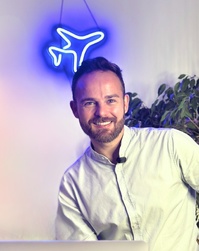

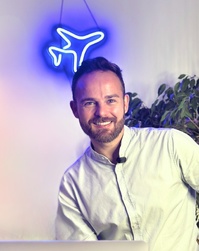
Rémi Duchange - Photo : SkySuccess

Rémi Duchange is the cofounder of SkySuccess, a Qualiopi-certified training organization dedicated to future cabin crew, with nearly 15 years of experience in aviation, including roles as a PNC, cabin chief, and instructor within an international airline.


With his team, he offers a human, bilingual (French/English) and individualized approach: preparation for the LILATE and Linguaskill certifications, personalized recruitment coaching up to hire.


For four years, SkySuccess has helped more than 1,000 students join an airline. The organization supports all profiles, with or without a CCA, beginners or seasoned, thanks to a tailor-made method.


Backed by more than 50,000 followers on Instagram and LinkedIn, as well as its newsletter, Rémi daily shares on his career hub job openings for PNC and ramp agents, as well as tips for succeeding in aviation recruiting.
Baggage Delay: Which Fees Must the Airline Reimburse?


Refus d'embarquement : surbooking, retard à la porte... qui doit prouver quoi ? - DepositPhotos.com  Auteur encrier

IFTM prenez RDV avec TourMaG


A traveler approached the Mediation following an incident on a flight operated by a French airline. He sought reimbursement of expenses incurred due to the late delivery of his baggage as well as their partial damage.

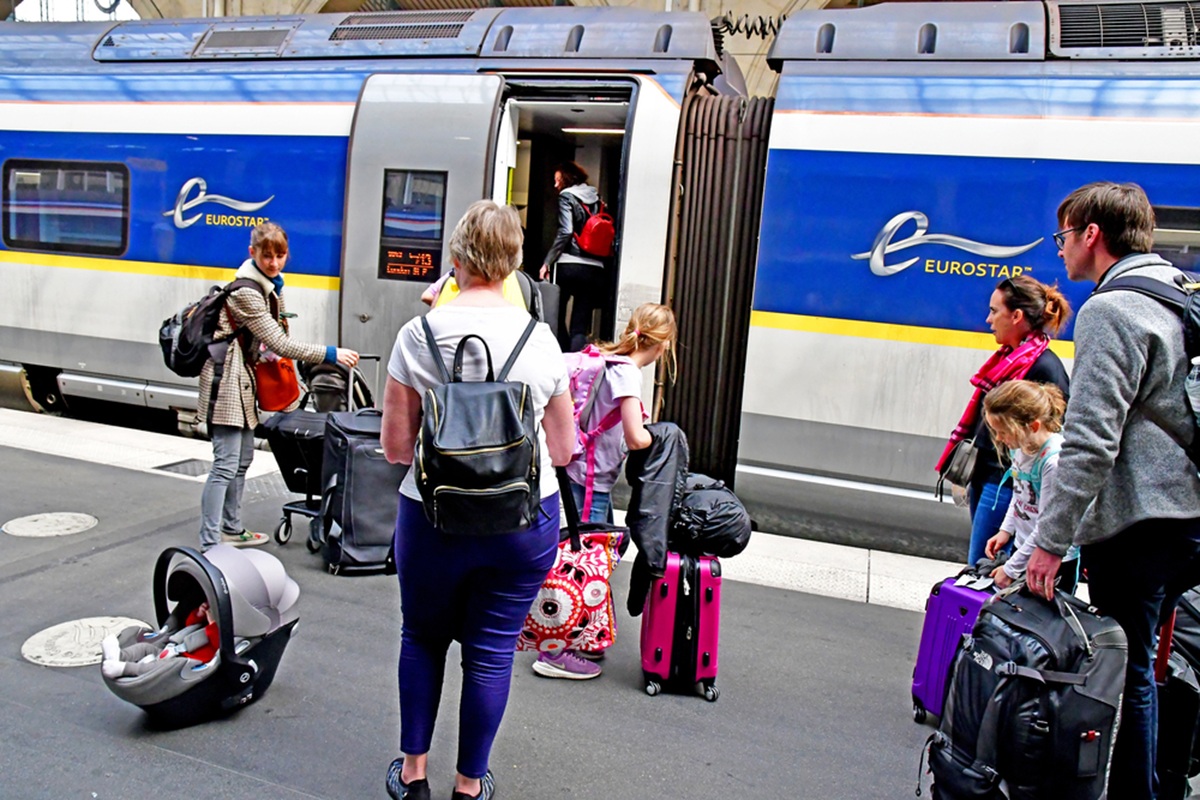
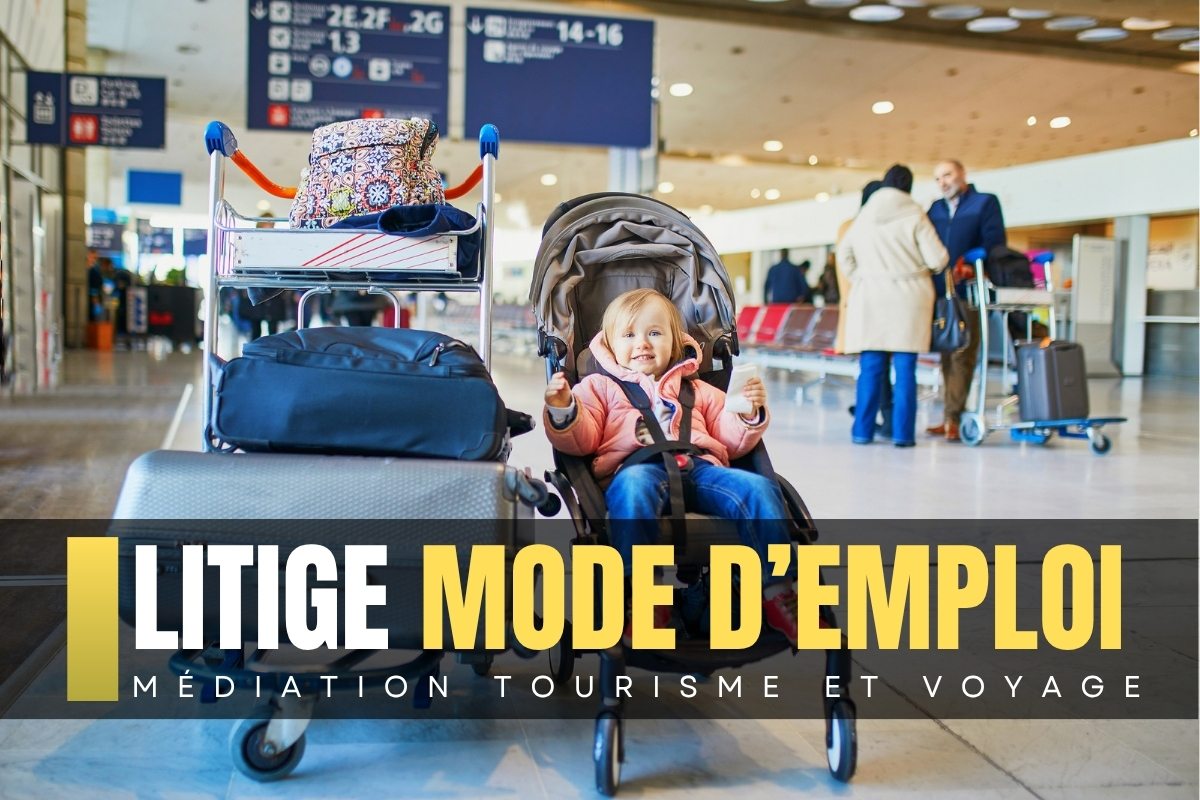
The case concerns a trip taken by a family of four with four checked suitcases, a stroller and an infant car seat. Upon arrival, no luggage was returned.

The suitcases were handed back the next day, while the stroller and the infant seat were not returned until forty-eight hours later. One of the suitcases was also reported as damaged.

While awaiting the return, the passengers had to purchase various essential items (child transport equipment, stroller, clothing, hygiene and feeding products), for a total of 1,233.57 euros. The airline acknowledged the delay and the late delivery, but contested covering the entire amount of expenses.


Ce que disent les textes :

To form its opinion, the Mediation relied on Article 17 of the Montreal Convention of May 28, 1999, which provides that the air carrier is liable for damages resulting from loss, delay or damage to checked baggage while in its custody.

In the event of a delivery delay, the airline must therefore reimburse the passengers’ reasonable and necessary expenses.

By contrast, transport rules and case law acknowledge that only strictly necessary costs may be reimbursed; some purchases fall under personal choices or goods not essential to the waiting situation.


Ce que préconise la Médiation Tourisme et Voyage :

The Mediation also recalls that the airline’s general conditions advise against placing certain essential items in checked luggage, notably medications or items required for daily use. In this case, the costs related to infant hygiene and feeding products were therefore not retained.

However, purchases made necessary by the prolonged absence of the stroller and the infant seat, as well as clothing bought while awaiting the baggage, were considered reimbursable as first-necessity expenses.

Regarding the purportedly damaged suitcase, the claim was rejected due to a lack of sufficiently probative elements allowing to establish the extent of the damage and assess the amount, in accordance with Article 9 of the Civil Procedure Code which requires each party to prove their assertions.

In the end, the Mediation recommended a partial reimbursement of the incurred expenses, up to 1,112.12 euros, to settle the dispute amicably.


Find all the practical cases of the Tourism and Travel Mediation by clicking HERE.


Eurostar, Heatwave, ETIAS… The Week’s Essential Tourism News [ABO]


La revue de presse internationale de la semaine - Depositphotos.com Auteur serezniy

IFTM prenez RDV avec TourMaG


Au sommaire de la revue de presse de la semaine du 13 juillet 2026 :

Eurostar adapts its future trains to extreme heatwaves

In Italy, the tourism sector calls for tougher rules against fake reviews

An NGO advocates for a fairer tax regime for cruises in Europe

Hotel guest satisfaction is rising in North America

In Spain, heatwaves are undermining the loyalty of international tourists


Five trends reshaping the employment market in events

Sports tourism is emerging as the new engine of holidays

ETIAS launch postponed to 2027?

Did you know? Summer scams are targeting travelers more and more


Eurostar adapts its future trains to extreme heatwaves


Les futurs trains Eurostar seront capables d'opérer par des températures atteignant 55 °C.@depositphotos/packshot

In response to the intensification of heat waves across Europe, Eurostar has revised the specifications for its upcoming two-level train fleet, dubbed “Celestia.”

Initially designed to operate up to 45 °C, the new trains will ultimately be equipped with air conditioning capable of functioning at temperatures reaching 55 °C.

Expected from 2031, they are intended to remain in service until the 2060s. An investment of 2 billion euros is earmarked to modernize the fleet, increase capacity by 20%, and better prepare the rail network for the challenges of climate change.

A DailyMail.com article


In Italy, the tourism sector calls for tougher rules against fake reviews


En Italie, les organisations du tourisme italien veulent renforcer la lutte contre les faux avis en ligne un @depositphotos/NiroDesign

The main Italian tourism organizations deem the guidelines proposed by the Italian Competition Authority (AGCM) to combat online fake reviews to be insufficient.

They call for identical rules across all platforms, a complete ban on paid or incentivized reviews, greater transparency about ranking algorithms, and stronger controls against fraud.

According to them, online reviews directly impact the reputation and activity of tourism businesses, justifying a stricter regulatory framework to ensure fair competition and better consumer protection.

An article to be found on ttgitalia.com


An NGO advocates for a fairer tax regime for cruises in Europe


Selon une étude de Transport & Environment (T&E), les croisières bénéficient d'un régime fiscal plus avantageux que les hôtels. @depositphotos/IgorVetushko

According to a study by Transport & Environment (T&E), cruises enjoy a more favorable tax regime: a night onboard is taxed on average twice as little as a night in a hotel, despite a significant environmental impact.

The NGO notably proposes a €15 per passenger per port of call tax, which could generate €335 million per year in France, Spain, and Italy.

It also calls to align cruise VAT with hotel VAT and to strengthen environmental rules to better account for the costs associated with pollution and overtourism.

More at transportenvironment.org


In Spain, heat waves undermine the loyalty of international tourists


Five trends reshaping the employment market in events


L'expérience terrain est désormais plus valorisée que les diplômes dans l’événementiel. @depositphotos/ANDRANIK2017

Despite a challenging job market, event recruiters are now prioritizing specialized profiles capable of demonstrating concrete results and return on investment.

Hands-on experience is now valued more than degrees, even if certifications remain a salary asset.

Another takeaway: companies are rethinking their skill needs and are increasingly turning to freelancers and contract workers rather than permanent hires.

More on skift.com


Sports tourism is emerging as the new engine of holidays


Randonnée, surf, vélo, stages multisports ou bien-être deviennent des critères déterminants dans le choix des destinations. @depositphotos/ArturVerkhovetskiy

According to an analysis by Le Figaro, vacations centered on rest are gradually giving way to active getaways. Hiking, surfing, cycling, multisport camps or wellness programs are becoming decisive criteria in destination choice, driven by the search for convivial experiences and more immersive tourism.

This trend, particularly pronounced in summer 2026, pushes travel players to develop offerings ever more focused on sports activities and nature-based experiences.

Read on lefigaro.fr


ETIAS system launch postponed to 2027?


L'entrée en vigueur de l'ETIAS devrait être reportée à 2027. @depositphotos/Triumph0828

The implementation of ETIAS, the future €20 paid travel authorization for nationals of visa-exempt countries looking to travel to the Schengen area, is expected to be postponed to 2027.

This new timeline would be linked to difficulties encountered in deploying the biometric control system EES, essential for ETIAS to operate. Transport and tourism stakeholders welcome the delay, saying it will help avoid new disruptions at European airports, while the European Commission has not yet officially announced a new launch date.

An article from thetimes.com


Did you know? Summer scams are targeting travelers more and more


Les touristes, sont la cible d’arnaques au faux QR codes. @depositphotos/ArtVibe

Holidays are a prime time for scammers. This summer, travelers should especially beware of “quishing,” a scam using fake QR codes, as well as fake SMS requesting toll payments in transit or fraudulent listings of vacation rentals.

Before booking or paying for a service, it is essential to verify the authenticity of sites, never click on suspicious links, and favor official platforms. A few simple precautions can prevent vacations from turning into a nightmare.

An article from liberation.fr

Advertising, AI, and Word-of-Mouth: What Really Makes CSP+ Customers Book [ABO]


96% des voyageurs ultra-luxe continuent de passer par un conseiller humain pour organiser leurs séjours, malgré les outils de réservation en ligne - DepositPhotos.com, Milkos

IFTM prenez RDV avec TourMaG


In the United States, Resonance Consultancy has tracked the spending habits of affluent travelers since 2007, in partnership with the Leger Institute.

According to its 2026 Future of Luxury Travel study, the wealthiest 10% of American households will spend $544 billion on leisure travel in 2026, with the average per-trip budget rising from $5,100 to $7,900 between 2022 and today.

A McKinsey study specifies that a third of this market now comes from clients with a net worth between $100,000 and $1 million, a profile closer to senior executives or small-to-midsize business leaders than to ultra-wealthy clients.


Trust Comes First, Not Price

According to ColorWhistle’s compilation of 2025-2026 industry studies, 96% of ultra-luxury travelers continue to rely on a professional to organize their high-end trips, despite the growing availability of online booking tools.

TravelAge West interviewed clients with budgets of at least $25,000 on why they choose this route: 84% believe that a recognized advisor provides more value than a prolonged Internet search.

Time savings tops the motivations cited, ahead of itinerary personalization and the reduction of planning-related stress.

These two studies position the travel professional as a buffer against the mental burden of planning, rather than merely a booking intermediary.

Also read: Travel agencies: how much should you invest in Google Ads to acquire a client in 2026?


AI informs, it does not decide

A Skift survey, cited by AltexSoft, shows that 93% of travelers trust artificial intelligence to obtain information about a destination.

Only 2% would entrust AI to handle a booking or a modification to a trip entirely autonomously, without human validation.

This gap marks a clear boundary between using AI as a source of information and its role in the final booking decision.

Also read: Google search evolutions: what a travel agency must anticipate for 2027


The United Kingdom Confirms the Trend

Virtuoso, which surveyed more than 2,400 advisors worldwide for its Luxe Report 2026, notes a similar shift among British and American clients: luxury is defined less by the price tag and more by authenticity and the depth of the connection to a destination.

This same definition is driving agencies like Not Just Travel, which launched in July 2026 an internal certification program to train its advisors in Asia, Europe, and the Middle East, encouraging investment in education rather than solely in the media budget.

The British luxury travel market, valued at $2.81 billion in 2025 according to Market Data Forecast, owes part of its growth to this emphasis on personalization.


What I Take Away for Advertising


In Summary

1. In the United States, wealthy households are spending more per trip, with the average budget rising from $5,100 to $7,900 between 2022 and 2026, on a market valued at $544 billion.

2. 96% of ultra-luxury travelers continue to rely on a human advisor to organize their stays, despite online booking tools.

3. Time savings motivates this choice more than access to exclusive experiences, ahead of itinerary personalization and reducing stress.

4. Travelers trust AI to inform themselves (93%), but rarely to book on their own without human validation (2%).

5. In the United Kingdom, luxury is defined more by authenticity and personalization than by the displayed price, prompting some agencies to invest in advisor training.

6. Referrals remain the sector’s most effective conversion channel at 9.5%, ahead of search and email.


Sources

– Resonance Consultancy, 2026 Future of Luxury Travel (January 2026).

– McKinsey, cited by AltexSoft, Luxury Travel Market (November 2025).

– ColorWhistle, Luxury Travel Consumer Statistics (June 2026).

– TravelAge West, Why Luxury Travelers With $25K+ Budgets Are Turning to Travel Advisors (May 2025).

– Skift, cited by AltexSoft, Travel Advisors Market (January 2026).

– Virtuoso, 2026 Luxe Report (November 2025).

– Not Just Travel, press release (July 2026).

– Market Data Forecast, UK Luxury Travel Market Size & Share Report (June 2026).

– Ruler Analytics, Travel Marketing Statistics (August 2024).

– OpinionWay for American Express, Lifestyle Trends Observatory, 4th Edition (April 2026).


Photo : A. Houizot

Adrien Houizot is a Google Ads consultant who has specialized exclusively in the travel and tourism sector for eight years.

After working with several digital marketing agencies, he now supports travel agencies (B2C & B2B), hoteliers and providers of tourism activities.

He is the founder of Monsieur Travel Marketing.


How Can Travel Keep Us Aligned? [ABO]


Lors du Forum des Pionniers 2026, sur les bords du Nil, des jouets en plastique apportés par les Pionniers ont été laissés aux enfants Nubiens. Sur le moment, tout semblait généreux. Puis une question est apparue. Étions-nous en train de laisser un souvenir… ou une distorsion ? - Photos : Jules DESPRETZ et Nicolas Demare

IFTM prenez RDV avec TourMaG


The Pioneer Forum 2026, designed by Travel Insight, Travel Evasion, and ESCAET, with the support of the Egyptian Ministry of Tourism and Antiquities and local teams, will undoubtedly remain a rewarding professional experience.

Bringing together more than 130 leaders from the French tourism sector in a country as fascinating as it is intricate was a true challenge.

Hotels, ships, guides, conferences, networking, logistics, and more—all contributed to making that week an exceptional experience.

Yet sometimes, it is precisely the most beautiful experiences that move us.

Not because they are flawless. Because they compel us to see things differently.


Leaving a memory… or a distortion?

I remember a suspended moment. I was swimming alone in the Nile, protected by a benevolent pioneer.

I had moved away from the shore. The noise faded away gradually. Before me, the river resumed its silent majesty. Behind me, life carried on.

Nubian families were enjoying that summer day. Pioneers laughed with inflatable rings and plastic water pistols. Three participants chose to explore the desert on camelback. Others preferred to climb the dunes on foot, simply to see what lay beyond the horizon.

As we left, the toys were left for the children. In the moment, everything seemed generous.

Then a question surfaced.

Were we leaving a memory… or a distortion?


Incorporating life into decision-making

A few hours later, another scene fed this reflection.

During the White Evening, everyone received a string of lights. One was handed to me. I declined it. I offered no explanation. I did not need to.

The look on the person offering it, as well as that of my neighbor, told me the message had landed. Later, back on the boat, some people hung their garlands above the Nile. One of them fell into the river.

A simple garland. One more drop.

I then asked myself: at what moment does a “fairy drop” become the drop too many?

That was when I felt misaligned. Not with the organizers. With myself. Because I understood that my work is no longer merely about supporting CSR approaches.

My work is to bring living beings into the room where decisions are made.


A sum of small gestures that prompt reflection

Throughout the journey, I paid attention to the details.

An air conditioner blasting at 17°C in a corridor wide open to the outdoors while the thermometer hovered near 40°C. Not only a needless energy expense, but above all a health risk for people constantly shifting from one thermal shock to another.

Partially consumed water bottles and discarded empties. Tote bags distributed but rarely used for local purchases.

Camel-back excursions offered almost instinctively to live a child’s dream, even as animal-welfare concerns become central for a new generation of travelers, a nightmare for adults.

Taken individually, none of these details seems grave. Together, they tell a story. They reveal our way of deciding.

A single question to transform a decision


About Cathy Bou

Cathy Bou - Photo : Nicolas Demare, Nidimages
Cathy Bou’s career is that of a professional who grew up alongside tourism.

She joined Thomas Cook as an intern at a travel agency in Arcachon, where she built a rich and evolving career for almost twenty-five years.

From travel agent to head of customer relations in the Île-de-France region, she explored the industry in all its facets: distribution, customer relations, managing sensitive situations, leadership, change management, and the early challenges of sustainable development.

Driven by a thirst to learn and to share, she decided in 2015 to reinvent herself and earned a Master in Management of Corporate Social Responsibility (CSR) at CNAM. This training marked a decisive turning point: applying her tourism expertise to sustainable transformation.

She subsequently founded Agapè, a consulting firm focused on responsible strategy. Since then, she has guided companies, travel agencies, tour operators, event organizers, and health sector players in building models that balance economic performance, environmental responsibility, and social impact.

Her path has led her to speak at major international events such as COP21, the G7 in Biarritz, the BIG expo by Bpifrance, and the IUCN World Conservation Congress, as well as to work with public institutions, large corporations, and leading organizations, including the Curie Institute.

Nothing in her background predestined her to this trajectory. It is precisely this practitioner’s viewpoint, forged by on-the-ground experience as much as strategic reflection, that now informs her analyses.

Through her columns in TourMaG, she advocates a conviction: the tourism of tomorrow will be built by reconciling the health of businesses, the health of people, and the health of living beings.


About Agapè

Agapè is a consulting firm specializing in responsible strategy that supports organizations in their transformation, certification, environmental assessment, and capability-building initiatives.

The firm primarily operates in the realms of tourism, events, and health, with a strong belief: responsible performance arises from balancing economic, human, environmental, and governance dimensions.

It also rests on leaders’ ability to understand complexity, make informed decisions, and act with consistency.

Through its advisory, audit, training missions and the development of digital solutions, Agapè helps organizations turn their responsible commitments into real drivers of performance, resilience, and the preservation of living beings.

More than a consulting firm, Agapè develops an ecosystem of methods, tools, and training designed to accompany decision-makers in the transitions shaping the world of tomorrow.

Forex Market: Volatility Persists This Week [ABO]


Economic Situation

L'euro contre dollar se situe autour de 1,1440, en légère hausse sur la semaine, après avoir atteint son meilleur niveau depuis le 19 juin - Depositphotos.com, LeleMezzadri

IFTM prenez RDV avec TourMaG


In June, prices in the United States fell by 0.4% for the month, a first since April 2020. The market immediately assumed that the Fed would stop raising rates, and the dollar finished the week lower.

But there is a wrinkle: this weekend, tensions between the United States and Iran intensified, and Brent crude rose above $90, its highest level since mid-June. In other words, the snapshot taken in June is already out of date.

This inflation figure, published on July 14, surprised everyone. Annual inflation fell from 4.2% to 3.5%, well below the 3.8% expected. The main driver is clear: energy dropped by 5.7% for the month, and gasoline by 9.7%.

As a result, bond yields plunged and the dollar hit its lowest level of the month.

Why did this drop happen? This figure reflects June, a calmer period thanks to a ceasefire agreement signed on June 17 between Washington and Tehran. The Strait of Hormuz had reopened, oil had fallen, and so had gasoline.

But that calm has ended. Last week, attacks resumed on both sides. On Saturday, Iran struck a major oil facility in Kuwait, and then announced that the ceasefire was no longer valid.

Traffic in the Strait of Hormuz collapsed, and on Monday morning Brent rose again above $90, about 20% higher than before the conflict began.

Should we ignore this June price drop? Not, because it isn’t explained solely by energy. The core inflation (which excludes energy and food) remained stable for the month and slowed on an annual basis, from 2.9% to 2.6%. Services excluding energy did not rise, and housing gained only 0.1%. A portion of this decline is therefore real, and that is what reassured markets about Fed rate expectations.

The issue, however, is the calendar. The next inflation figure, July’s (which will reflect the latest energy price rise), will be published only in mid-August, i.e., after the Fed meeting scheduled for July 28–29. The central bank will thus have to decide based on a June figure that the current oil situation has already rendered obsolete.

The market expects the Fed to hold rates steady (between 3.50% and 3.75%), but the Fed chair Kevin Warsh’s press conference promises to be tricky: it’s hard to rule out a rate hike when oil is rising, yet difficult to advocate one right after prices have fallen.

In short, this June inflation decline is partly a misleading effect tied to the temporary drop in oil. As long as the situation around the Hormuz Strait remains tense, inflation will stay elevated, and it seems premature to say the Fed will not raise rates again.

For the companies involved, this means that the euro/dollar exchange rate will stay volatile, oscillating between seeking safe havens and pricing in rate expectations.

In this context, it is better to systematically hedge against these fluctuations than to bet on a specific direction.


Exchange Rates: The Technical Overview

On the foreign exchange market, two forces are currently at odds.

On one side, geopolitical tensions push investors toward safe-haven assets. On the other, expectations about interest rates weigh on the dollar since the U.S. inflation data was released.

The euro against the dollar is around 1.1440, up slightly for the week, after hitting its best level since June 19. Thursday, the European Central Bank is expected to hold its rate at 2.25%, but what matters most is what Christine Lagarde will say at the press conference.

A rate hike in September is already widely anticipated by the markets, and if it confirms this idea, it would support the euro.

Conversely, if oil continues to rise sharply, investors will again favor the dollar as a safe haven. It is expected that the EUR/USD pair will move between 1.1325 and 1.1555 this week.

For the Canadian dollar, the Bank of Canada left its rate unchanged on Wednesday at 2.25%, for the sixth consecutive time, with a cautious tone. Its governor, Tiff Macklem, however warned that rate hikes could become possible again if the price of oil remained high for a sustained period.

An interesting detail: bets against the Canadian dollar are at their highest since late 2024. Yet, with oil above $90, many of these investors could be forced to buy back the currency, which could push the EUR/CAD pair lower.

The Japanese yen remains the most penalized currency in the current environment. It stands at 185.76 against the euro and about 162.35 against the dollar, near its historical lows. The Bank of Japan did raise its rate to 1.00% in June, but the gap with rates of other major central banks remains enormous, and no one expects another hike before autumn. Japan’s June inflation, published on Friday, will reveal whether this normalization can accelerate.

The Swiss franc continues to play its usual stabilizing role. The euro against the franc remains around 0.9230, within the 0.92 to 0.93 range that analysts expect it to trade in the coming months.

On the British side, the euro against the pound is around 0.8502. Britain’s inflation data on Wednesday, expected to ease to 2.7%, will be decisive for the Bank of England’s July 30 decision, with the rate currently at 3.75%. A reassuring inflation figure would confirm the view that the bank will hold its rates and keep the pair in its current range.


WEEKLY SUPPORTS WEEKLY RESISTANCES
S2 S1 R1 R2
EUR/USD 1.1215 1.1325 1.1555 1.1670
EUR/GBP 0.8330 0.8415 0.8590 0.8675
EUR/CHF 0.9045 0.9140 0.9320 0.9415
EUR/CAD 1.5715 1.5875 1.6195 1.6355
EUR/JPY 182.05 183.90 187.60 189.45


The weekly supports and resistances shown below indicate the lower and upper bounds within which prices are expected to move during the coming week.


The information presented in this publication is provided for purely informational purposes and does not constitute investment advice, an offer to sell, or a solicitation to buy, and should in no way be used as a basis or considered as an inducement to engage in any investment activity.


Mondial Change is a French financial institution, founded in 2015, specializing in the management of international payments and foreign exchange risk.

Mondial Change also supports numerous players in the tourism sector, including travel agencies, group organizers, tour operators, and inbound operators…

www.mondialchange.com

Contact: [email protected]


Electronic Invoicing: France Does Not Have the Most Complex Legislation [ABO]


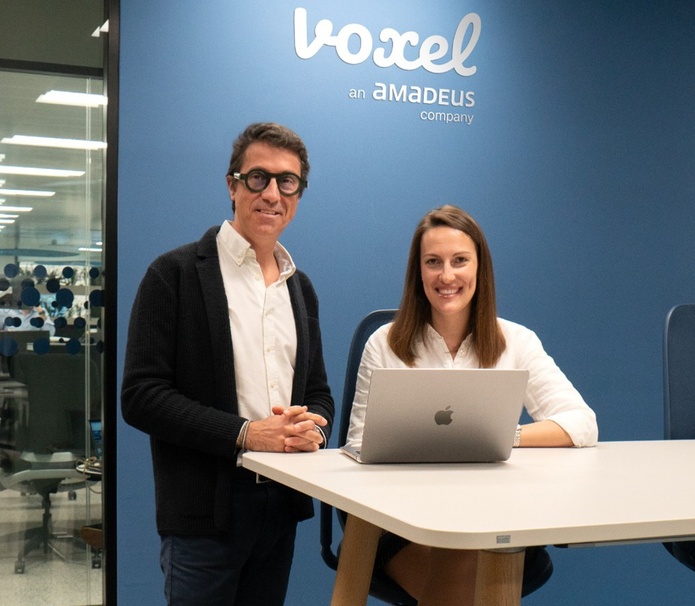
Maud Christophe, directrice du développement chez Voxel, à propos de la facturation électronique : "Nous avons déjà eu l’expérience au Mexique, en Italie" - Depositphotos.com, mrgao

IFTM prenez RDV avec TourMaG


The first of September could offer a glimpse into the administrative and economic chaos of a country unprepared for a reform.

Indeed, France is stepping into an era of modernization by shifting to electronic invoicing.
However, not every ticket will disappear, since this concerns transactions between businesses.

For the state, the objective is fairly straightforward: trace the VAT and bring in new revenues, while avoiding a portion of activity from slipping into a gray area.

Yet, in France such maneuvers can sometimes be chaotic.

While they should all be ready, within about six weeks, to receive their invoices electronically, only 2 million businesses, out of France’s 11 million, would actually be operational according to La Tribune.

And even though the State has acknowledged the looming chaos, it has also stated its intention to be supportive toward players who show good faith and face technical or organizational difficulties in meeting the requirements.

Conversely, penalties could be steep for companies that fail to provide evidence of their challenges in converting to the reform, with fines potentially reaching €15 per invoice not properly transmitted.


Invoicing: “Time lost is cash flow lost”

In light of the urgency of the situation and the mandatory transition that seems misunderstood, we have decided to give a voice to the head of a company that has already lived through several “first Septembers” around the world.

Voxel has been around for 28 years. We are based in Spain, with clients all over the world.

We began by aiming to solve the problems faced by tourism players who wanted to maximize automation in receiving their invoices and matching them, by creating a network linking hoteliers on one side and tour operators and travel agencies on the other, so they could exchange invoices automatically and electronically
, summarizes Maud Christophe, director of development at Voxel.

We connect to the company’s PMS and its accounting system to extract invoice details, validate them, and then send the invoice to the client, she adds.

To read: Electronic invoicing: everything you need to know!


Electronic invoicing: “We’ve already had experience in Mexico, in Italy”

After almost three decades in operation, the company has witnessed electronic invoicing reforms across the globe!

Therefore, for the head of the company, and with the September 1 deadline approaching, there is no need to panic just yet, even if some players in tourism are lagging behind, particularly those that hadn’t started digitizing yet.

Because before France, the next country to adopt this new era is… Chile! Behind it, other Latin American countries will follow.

In Europe, Italy was a pioneer, as it implemented this reform in 2019 to address VAT controls and combat corruption. In 2026, Poland and Belgium followed in January-February, then France in September, and Germany will follow in 2027, summarizes Maud Christophe.

Progressively, we see that many countries are moving toward this for varied reasons.

The implementation of electronic invoicing in Italy was not neutral.

To understand it, one only has to look at the European VAT Gap indicator, which measures the gap in VAT compliance. It represents the difference between revenues that would be collected if all taxpayers complied with tax rules and revenues actually collected, according to the European Commission site.

In Italy, it dropped from over 19% to 15%. In France, it would be only 5.6%.

Beyond this indicator and, in France, even though the obligation is set by the government, digitalization should still bring benefits to tourism industries by allowing them to stay up-to-date with their cash flow.

Indeed, at present, “as soon as there is a problem in a paper or manual process, the hotelier sends the invoice to the travel agency, which takes two to three weeks to process it. So if, for example, the booking number is missing, they will email or call the hotel to have the invoice resent.

All of this stretches out over time. That lost time equals less cash flow
“, explains Maud Christophe.

She continues: “We already had experience in Mexico, in Italy, etc. Each country obviously has its own specifics, but it is not something completely new for us.

There is a lot of worry, but France does not have the most complex legislation on the subject. And we are here to accompany and reassure tourism professionals.

Of course, the major players in the sector have already started ahead; it might be a bit more challenging for smaller ones. And indeed, for tourism professionals who still work in a very manual and not very digital way, this reform requires them to move toward digitization, in addition to updating themselves on this new obligation,
“, analyzes the development director.


Invoicing: “For SMEs, there isn’t a big change”


Facturation électronique : "Pour les PME, il n’y a pas de grand changement" selon Maud Christophe (Voxel) - Crédit photo : Voxel

Thus, starting on September 1, 2026, all enterprises must be capable of receiving electronic invoices.

In addition, large enterprises and mid-sized firms will also need to be able to issue them.

Small businesses, which account for nearly the entire tourism industry with a few exceptions, will have a grace period to issue invoices until the next term.

To read: Tourism businesses: what does 2026 have in store for you tax-wise?

For SMEs, there isn’t a major change. The first step is that they will be required to select an approved platform to receive invoices. For those who have not done so, they still have until September 1 to do it.

This approved platform will therefore fetch all invoices from the major clients of travel agencies. They will continue to receive paper invoices or emails from their smaller suppliers
“, adds Maud Christophe.

The SMEs can then potentially integrate these invoices into their accounting system or retrieve them from the approved platform.

In short, French VAT-liable companies must use an approved platform to receive their invoices by early September. Voxel is, of course, part of this category.

It should be noted that the reform will come with an additional cost at a time when the business models of some players are under pressure. “Travel agencies tell us they paid nothing before to receive their invoices and they wonder: why, tomorrow, should I pay? This is completely legitimate, notes the development director of Voxel.

I advise them to pursue complete digitization of their activities, because today people are employed to manually enter invoices into the accounting system and then reconcile them. All of this carries a very high cost for a business.

With full digitalization, it is possible to have staff truly dedicated to higher-value tasks
, she concludes.


Raise Awareness, Boost Sales, and Sustain Growth: Three Complementary Levers for Sustainable Tourism Growth [ABO]


Trade marketing, représentation commerciale, partenariats stratégiques : ces trois leviers ne s'opposent pas. Ils répondent à des questions différentes - Photos : WinWin Alliances Consulting et DepositPhotos.com, SergeyNivens

IFTM prenez RDV avec TourMaG


It happens, after a familiarization tour, a trade show, or a B2B campaign, that a question naturally arises in our meetings: “How many sales have we generated?”

The question is legitimate. It, however, deserves to be complemented by others.

Because behind the diversity of our actions – trade marketing, commercial representation, strategic partnerships – there are in fact three professions, three horizons, and three value-creation logics.

Distinguishing them, without pitting them against each other, seems to me a condition for the calm with which we steward our investments.


Three professions that converge without merging

Trade marketing builds brand preference among distribution networks. It is about making a destination, an airline, or a receptive partner known, and embedding in distributors’ minds a durable, fair, and memorable image.

The tools are familiar: webinars, trainings, presence at trade shows, newsletters, familiarization tours, roadshows, educational content. Success is read in awareness, engagement, quality of conversations, and memorability of the offer.

When I support the promotion of a destination on the French market in particular, it is precisely this work that occupies the largest share: to create among travel agents a refined and desirable knowledge of the country, which they can mobilize when the client raises their hand. The sale does not trigger at the moment of the webinar. It germinates.

Commercial representation pursues a different, more immediately transactional goal: to open accounts, negotiate agreements, sign contracts, accompany the first sales.

The tools can resemble one another: a lunch, a meeting at a trade show, but the objectives are different. What I do for one client by working on listing and contracting with agency networks, or what I can deliver for an airline developing its TO portfolio, falls under this logic: to convert existing preference into concrete revenue.

Finally, there is a third level, less visible and yet often decisive: strategic partnerships. Identify the right allies, structure the alliances, build a coherent annual plan, align trade, marketing, and sales around a common vision.

This is the least documented work and, in my view, one of the most decisive. It is what I had the opportunity to build at Worldia, and what my experience with territorial authorities and tourist offices taught me to observe on the institutional side.

These three professions sometimes use the same tools. They do not measure the same effects, do not operate on the same horizons, and do not produce the same proofs of success.


What research reminds us about short and long-term perspectives

This distinction of temporalities is not merely a practitioner’s intuition. It is widely documented by marketing effectiveness research.

Binet and Peter Field, in their landmark study The Long and the Short of It, analyzed nearly a thousand cases spanning thirty years of data.

Their main observation deserves thoughtful reflection: short-term activation tactics yield immediate effects but fade quickly, whereas brand-building investments yield both long-term and short-term effects. The reverse is not true.

That does not mean short-term activation is useless, far from it. It means that the two logics are complementary, and neglecting one or the other weakens overall growth.

Binet and Field propose a now-classic benchmark: roughly 60% of investment toward brand-building and 40% toward activation; a balance to adjust to contexts but whose logic remains universal.

Also read: Why do some tourism brands stay in memory… while others disappear immediately?


A B2B specificity worth keeping in mind

Our sector being predominantly B2B, an additional perspective deserves attention: the 95-5 rule, formulated by the researcher John Dawes.

Companies change supplier or service provider on average once every five years, which means that about 5% of B2B buyers are “in the market” in any given quarter, and 95% are not.

Applied to tourism, a TO product manager, a MICE buyer, a travel agency director does not renew their reference partners each quarter.

When a familiarization tour brings together twenty-five professionals, most are not in an immediate purchasing position, but they may be in eighteen months, in two years, in five years.

Dawes’ teaching is valuable: advertising, or more broadly visibility activity, works mainly by building a mnemonic link for the brand, a link that will activate when the need arises.

It is, I believe, a liberating framework. It allows us to evaluate each action by its real contribution, and not by a calendar that is not the buyer’s.


How to articulate the three levers in practice?


A question, rather than a conclusion

Trade marketing, commercial representation, strategic partnerships: these three levers do not oppose each other. They answer different questions, on different time horizons, and together contribute to the sustainable growth of a tourism brand.

The first builds memory. The second converts opportunity into revenue. The third creates the conditions for this to endure over time.

Perhaps the challenge for our executive committees is not so much choosing between these three levers as orchestrating their complementarity, by equipping themselves to evaluate each according to what it can truly produce.

And you, how do you articulate these three phases in your strategy? I would be curious to read your feedback.


Who is Adeline Musset-Sullivan?


Adeline Musset-Sullivan - Photo : WinWin Alliances Consulting
A tourism professional for nearly 20 years, Adeline Musset-Sullivan has worked in institutional, private, and SEM environments, at the crossroads of business development, strategic partnerships, and institutional relations, driven by a strong belief: well-thought collaborations are today one of the most effective growth levers in the sector.

She is recognized for her expertise in business development and public relations within the tourism sector.

Her professional approach, summed up by her motto “kindness and win-win collaboration,” is widely praised in her field.

Her career has taken her from business travel (AMEX GBT, international accounts) to territorial strategy and international promotion, before joining Worldia, where she built and led the Trade & International Partnerships division.

This trajectory has enabled her to develop a 360-degree view of the challenges facing tour operators, destinations, hoteliers, DMCs, brands, and institutions.

She founded WinWin Alliances Consulting, a firm dedicated to supporting travel players—private as well as institutional—in structuring their partnerships, gaining visibility, reaching the right decision-makers, and turning actions into measurable results (conversion, cash-in, impact).

Her approach is collaborative, pragmatic, and ground-oriented. She also works as a trainer and speaker (ESTHUA, ESCAET, INNTO France), convinced that sharing experience is a key driver to advance the sector.

Also read: Tourism: Adeline Musset-Sullivan launches WinWin Alliances Consulting

MOOVTOO: The Designer of Conversational Agents, a New Career in Tourism [ABO]


Le concepteur d'agents conversationnels est un véritable architecte de la connaissance territoriale. Il doit comprendre les modèles d'IA, mais aussi maîtriser la médiation culturelle, la qualité des données, l'écriture, l'expérience utilisateur et l'animation des réseaux territoriaux - DepositPhotos.com, andreynekrasovone

IFTM prenez RDV avec TourMaG


L’intelligence artificielle conversationnelle est souvent présentée comme une technologie capable de remplacer les moteurs de recherche ou les traditionnels chatbots.

Pourtant, derrière les démonstrations spectaculaires des grands modèles de langage se cache une réalité beaucoup plus complexe : une IA n’est performante que si elle est nourrie par des contenus fiables, structurés et contextualisés.

Autrement dit, les véritables créateurs de valeur ne sont plus uniquement les développeurs, mais aussi ceux qui savent organiser, relier et raconter un territoire.

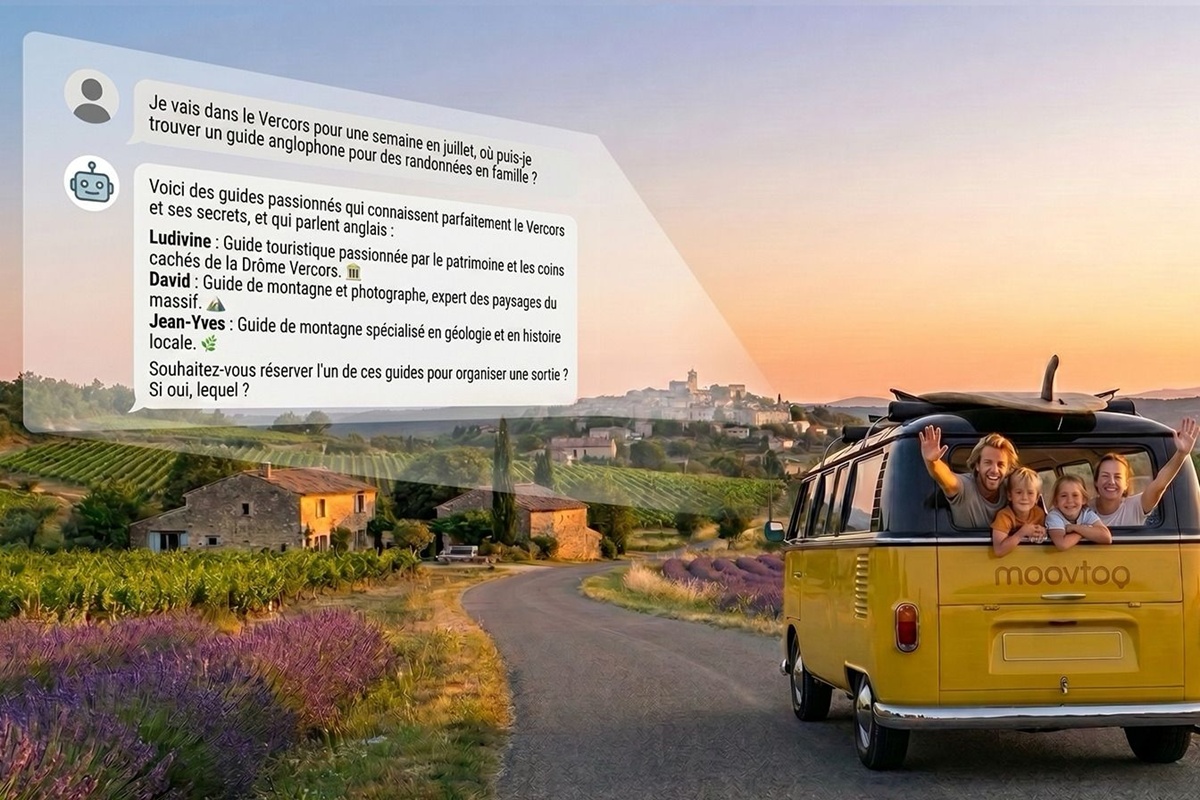
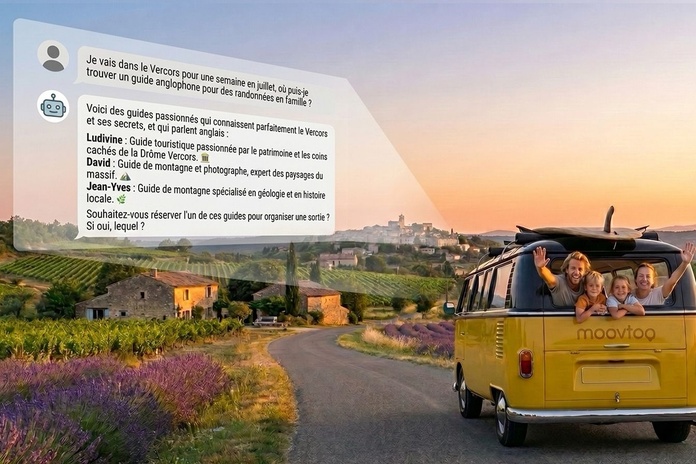
C’est précisément le pari de MOOVTOO, jeune entreprise française qui développe des agents conversationnels spécialisés dans le tourisme.


Letting Data Speak… and Territories

The MOOVTOO idea did not originate with the arrival of ChatGPT. Its founders have been working on this for about six years, at a time when chatbots were still limited to a few predefined scenarios.

Their ambition was already to create a digital tourism guide capable of dialoguing naturally with visitors.

Since then, the revolution of large language models has profoundly changed the possibilities on offer.

Nevertheless, according to the founders, the real challenge is not technological. It consists of building an intelligence capable of understanding a territory in all its richness : heritage, culture, mobility, gastronomy, accommodations, events, services or local narratives.

The objective is no longer merely to answer a question but to accompany a traveler throughout their experience.

Also read: The tourism trades facing AI: technological mutation or new hospitality?


Two complementary paths

Cette vision est portée par deux profils très différents.

Élodie Morel est journaliste de formation. Elle a notamment créé et dirigé le média numérique iloubnan.info au Liban, développant une solide expertise dans la production éditoriale, la narration et l’expérience utilisateur.

Nehmé Lebbos est ingénieur spécialisé dans les systèmes d’information et la Business Intelligence. Il évolue depuis la fin des années 1990 dans les univers du web, de la donnée et du voyage.

Leur complémentarité illustre parfaitement l’évolution actuelle des métiers de l’IA.

Concevoir un agent conversationnel ne relève plus uniquement de l’informatique. Cela suppose également de maîtriser les contenus, les usages, les attentes des voyageurs et les spécificités des territoires. Le métier devient autant éditorial que technologique.


An AI that learns the story of a territory


L'objectif de MOOVTOO : dépasser la simple recommandation algorithmique pour construire une véritable conversation personnalisée - Illustration MOOVTOO

Contrairement aux moteurs conversationnels généralistes, MOOVTOO s’appuie sur un principe de contextualisation avancée.

Chaque destination possède son propre corpus documentaire composé de données touristiques, de contenus éditoriaux, de récits, d’informations pratiques et de ressources locales.

Ces informations alimentent ensuite le modèle de langage grâce aux techniques dites de Retrieval-Augmented Generation (RAG), permettant à l’intelligence artificielle de produire des réponses cohérentes avec la réalité du territoire.

La plateforme repose également sur un important travail de structuration des contenus. Culture, patrimoine, nature, gastronomie, mobilité, hébergements, activités ou événements sont organisés selon un référentiel de variables qui permet de créer des liens intelligents entre des milliers d’informations. L’objectif est de dépasser la simple recommandation algorithmique pour construire une véritable conversation personnalisée. Demain, cette IA pourrait réserver directement une table dans un restaurant, organiser une visite guidée ou composer un itinéraire multimodal adapté aux envies de chaque visiteur.


Humans remain the primary intelligence


A new profession is emerging

Au fond, l’exemple de MOOVTOO révèle peut-être l’évolution la plus profonde des métiers du tourisme.

Demain, les destinations auront besoin de nouveaux profils capables de faire dialoguer les données, les contenus, les outils numériques et les acteurs locaux.

Ces professionnels devront comprendre les modèles d’intelligence artificielle, mais aussi maîtriser la médiation culturelle, la qualité des données, l’écriture, l’expérience utilisateur et l’animation des réseaux territoriaux.

Le concepteur d’agents conversationnels devient ainsi un véritable architecte de la connaissance territoriale.

Dans cette perspective, l’intelligence artificielle n’apparaît plus comme une simple innovation technologique. Elle constitue un nouvel outil de marketing territorial, au service de l’attractivité, de la valorisation des savoir-faire locaux et d’une expérience touristique plus fluide, plus personnalisée… et toujours profondément humaine.

Lire aussi : L. Bertounèche (Genial) : « L’intelligence artificielle ne remplacera jamais l’expérience du territoire »


Brice Duthion - Photo : BD

Brice Duthion est président – fondateur de l’agence “Les nouveaux voyages extraordinaires” (LNVE) spécialisée en conseil, conférences et communication.

Il intervient auprès de nombreux acteurs publics et privés dans ses domaines d’expertise : le tourisme et l’hospitalité, la culture et les patrimoines, les territoires et les politiques publiques.

[email protected]

Rivages du Monde Celebrates 25th Anniversary with Danube Event Cruise


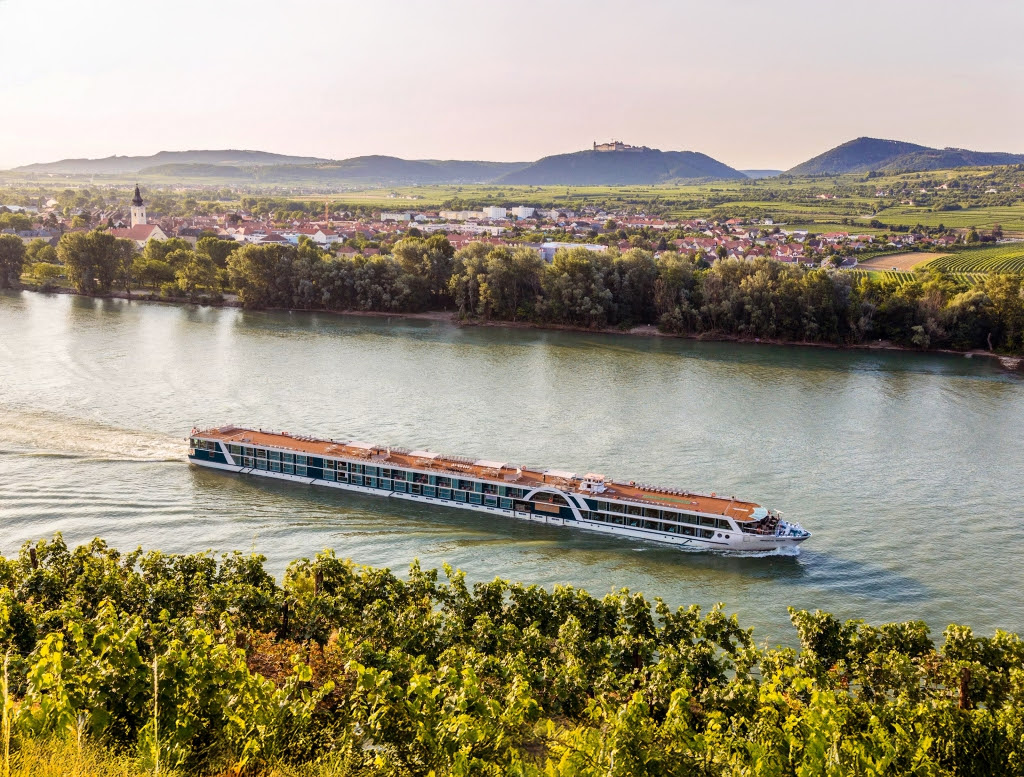
Le M/S Amadeus Silver II naviguant sur le Danube. © Rivages du Monde

CroisiEurope


For its 25th anniversary, Rivages du Monde offers from October 19 to 30, 2026, an unprecedented musical cruise on the Danube, from Bucharest to Munich, aboard the elegant M/S Amadeus Silver II.

The 84 cabins (including 12 junior suites) of this refined floating hotel, served by an elevator and spread over three decks, all provide a distinctly contemporary atmosphere with an outward-facing feel.

The ship’s public areas are also open to the river. Several lounges, a library, a hairdressing and massage service (for an extra fee) and a shop complete the offering. While breakfast is served as a buffet, lunch and dinner are served à la carte in the panoramic dining room.


On board, Wi‑Fi is free.


An Exceptional Program

Thought of as a tribute to culture, music and European heritage, the itinerary will allow visits to the Danube’s most beautiful capitals: Bucharest, Budapest, Bratislava, Vienna, and also Belgrade thanks to a surprise stop in Serbia. Each of these cities, with their palaces, historic cafes and musical traditions, tells the continent’s soul.

Guests will also enjoy a nocturnal cruise through illuminated Budapest and a folklore show in Bulgaria.

For this anniversary cruise, four internationally renowned artists — the mezzo-soprano Delphine Haidan, the pianist Laure Favre-Kahn, the French clarinetist Pierre Génisson and the pianist and conductor Bruno Fontaine — will perform, in the evenings, two concerts.

The first will be a musical journey through the heart of Europe. The second will offer a musical crossing between Europe and America, from Mahler and Strauss’s grand Viennese frescoes to jazz and Broadway lights.

Since its inception in 2001, Alain Souleille, Rivages du Monde, has cultivated a vision of travel where culture, encounters and discovery take precedence over speed.

A quarter of a century later, this anniversary cruise continues to reflect that mindset and to offer an authentic experience.


Also to read:
Rivages du Monde continues to elevate its range


PAULA BOYER Published by Paula Boyer Head of LuxuryTravelMaG section – TourMaG.com
View all articles by Paula Boyer

  • picto Twitter
  • picto Linkedin
  • picto email
Add TourMaG to your Google News feed Google Actualités icône