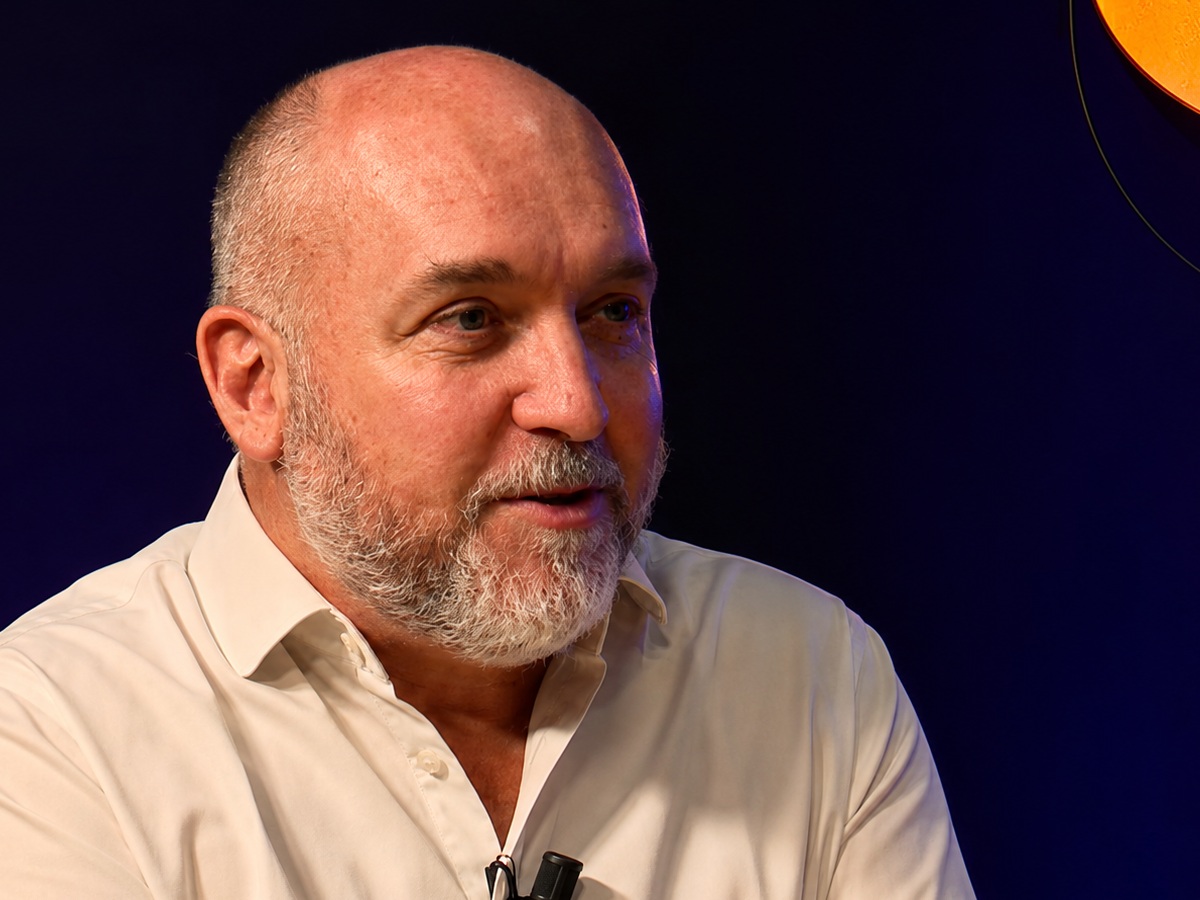

In tourism, there are bosses who juggle multiple roles as others wear yellow jerseys.
Frédéric d’Hauthuille is one of them.
Not only is the founder and leader of Monde Authentique the driving force behind the Club des Créateurs de Voyages, but he also teaches at two tourism schools.
Do you think his commitments stop there?
“I am a partner and development director at Prodesti, which provides training to travel agents and the employees of tour operators.
And then, I speak of it less, but I hold the license for the French market of AirlinePros, which represents airlines.
I have worked within airlines since 1992 up to the launch of Monde Authentique. In 2022, AirlinePros contacted me“, we share Frédéric d’Hauthuille.
Achma Asokan, the cofounder of the company, then decides to broaden the activity beyond the United States, where she has quickly established herself as one of the leading General Sales Agents, or general sales agents, for airlines.
Frédéric d’Hauthuille is one of them.
Not only is the founder and leader of Monde Authentique the driving force behind the Club des Créateurs de Voyages, but he also teaches at two tourism schools.
Do you think his commitments stop there?
“I am a partner and development director at Prodesti, which provides training to travel agents and the employees of tour operators.
And then, I speak of it less, but I hold the license for the French market of AirlinePros, which represents airlines.
I have worked within airlines since 1992 up to the launch of Monde Authentique. In 2022, AirlinePros contacted me“, we share Frédéric d’Hauthuille.
Achma Asokan, the cofounder of the company, then decides to broaden the activity beyond the United States, where she has quickly established herself as one of the leading General Sales Agents, or general sales agents, for airlines.
What is AirlinePros?
AirlinePros was launched in the late 1990s, led by James W. Foster and Achma Asokan.
Its teams are located in India, the United States and Namibia. The company has opened offices around the world, eventually operating in more than 40 countries.
“AirlinePros handles the representation of airlines, primarily in the United States and Canada. It counts 57 client airlines, therefore it represents 57 carriers.
In France, more than 50 airlines do not have a direct presence, but rather operate through a GSA, a general sales agent, hence a representative“, explains Frédéric d’Hauthuille.
For newcomers, a GSA ensures the commercial representation of airlines that do not have the means, or the desire, to be present in France by employing their own staff.
Its teams are located in India, the United States and Namibia. The company has opened offices around the world, eventually operating in more than 40 countries.
“AirlinePros handles the representation of airlines, primarily in the United States and Canada. It counts 57 client airlines, therefore it represents 57 carriers.
In France, more than 50 airlines do not have a direct presence, but rather operate through a GSA, a general sales agent, hence a representative“, explains Frédéric d’Hauthuille.
For newcomers, a GSA ensures the commercial representation of airlines that do not have the means, or the desire, to be present in France by employing their own staff.
AirlinePros: “InterCaribbean will open routes from Pointe-à-Pitre and Fort-de-France”
This model is widespread across the world. There are several players, such as Global Airline Services in France, Aviareps, APG, or AirlinePros, who will adapt to the needs of airlines according to markets.
Some do not need to be represented in France, while others do not need to be represented in the United States.
“We have contracts with five airlines. The one occupying the most of my attention at the moment is InterCaribbean, based in the Turks and Caicos Islands, hence on a British territory, with British traffic rights.
InterCaribbean will open, in the coming months, routes from Pointe-à-Pitre and Fort-de-France.
We are laying out the strategy to be implemented with the airline’s headquarters on the Caribbean territories, and finding ways to route customers from mainland France onto the InterCaribbean network“, reveals Frédéric d’Hauthuille.
If the name InterCaribbean doesn’t ring a bell, it’s partly because the airline has regularly changed its name.
Created in 1991, it was then called InterIsland Airways. Then, in 2003, it was renamed Air Turks & Caicos. Five years later, it merged with SkyKing, before taking its final name in 2013.
It operates around ten aircraft, mainly ATRs and Embraer jets. And that’s not all.
AirlinePros has signed a contract with Sunrise Airways, a Haitian carrier operating two weekly flights between Pointe-à-Pitre and Haiti, and it offers “excellent connections to reach Miami.
Between July and September 13, this route will be operated with an A320, replacing the Embraer 145. This represents a 180% increase in capacity, a major challenge for the summer.”
Some do not need to be represented in France, while others do not need to be represented in the United States.
“We have contracts with five airlines. The one occupying the most of my attention at the moment is InterCaribbean, based in the Turks and Caicos Islands, hence on a British territory, with British traffic rights.
InterCaribbean will open, in the coming months, routes from Pointe-à-Pitre and Fort-de-France.
We are laying out the strategy to be implemented with the airline’s headquarters on the Caribbean territories, and finding ways to route customers from mainland France onto the InterCaribbean network“, reveals Frédéric d’Hauthuille.
If the name InterCaribbean doesn’t ring a bell, it’s partly because the airline has regularly changed its name.
Created in 1991, it was then called InterIsland Airways. Then, in 2003, it was renamed Air Turks & Caicos. Five years later, it merged with SkyKing, before taking its final name in 2013.
It operates around ten aircraft, mainly ATRs and Embraer jets. And that’s not all.
AirlinePros has signed a contract with Sunrise Airways, a Haitian carrier operating two weekly flights between Pointe-à-Pitre and Haiti, and it offers “excellent connections to reach Miami.
Between July and September 13, this route will be operated with an A320, replacing the Embraer 145. This represents a 180% increase in capacity, a major challenge for the summer.”
“Customers refuse to travel on a Gulf airline”
The GSA also represents LIFT, a South African airline founded in 2020, as well as FastJet, a Zimbabwean carrier.
On the Prodesti side, Frédéric d’Hauthuille’s other hat, the first half-year was marked by a slowdown in trainings. In light of falling bookings, the leaders apparently paused some expenditures, starting with training.
“We have 35 trainings and we will launch French Polynesia, which met a demand from our client travel agencies. For 2027, we are preparing trainings on China and Indonesia” announces the head.
As for his latest role, that of head of Monde Authentique, after the turmoil triggered by the war in Iran, with passengers stranded all over the world, evacuations to be carried out, and then bookings thinning out, the summer will be quieter.
A few last-minute dossiers could nevertheless improve the statistics. “We have noticed since late May that more than half of our sales pertain to departures in June, July and August. There are still plenty of seats almost everywhere. I have never seen this in 40 years in the industry.
On the Prodesti side, Frédéric d’Hauthuille’s other hat, the first half-year was marked by a slowdown in trainings. In light of falling bookings, the leaders apparently paused some expenditures, starting with training.
“We have 35 trainings and we will launch French Polynesia, which met a demand from our client travel agencies. For 2027, we are preparing trainings on China and Indonesia” announces the head.
As for his latest role, that of head of Monde Authentique, after the turmoil triggered by the war in Iran, with passengers stranded all over the world, evacuations to be carried out, and then bookings thinning out, the summer will be quieter.
A few last-minute dossiers could nevertheless improve the statistics. “We have noticed since late May that more than half of our sales pertain to departures in June, July and August. There are still plenty of seats almost everywhere. I have never seen this in 40 years in the industry.
Most clients, from the first contact, tell us they will refuse to travel on a Gulf airline. There are many who do not want to depart towards the East, i.e., toward Asia
“, he explains, rather unconcerned about 2027, as clients already envision the next year. Publié par Romain Pommier Journaliste – TourMaG.com
 Voir tous les articles de Romain Pommier


Ajoutez TourMaG à votre flux Google Actualités 


 Published by Amelia Brille

 Published by Céline Eymery






 To return to the mythology of paid vacations in France, note that photos and documentary films from the Popular Front era show vacationers who were rather young.