
Marriott International to Launch Its First The Luxury Collection Resort in Marseillan, France


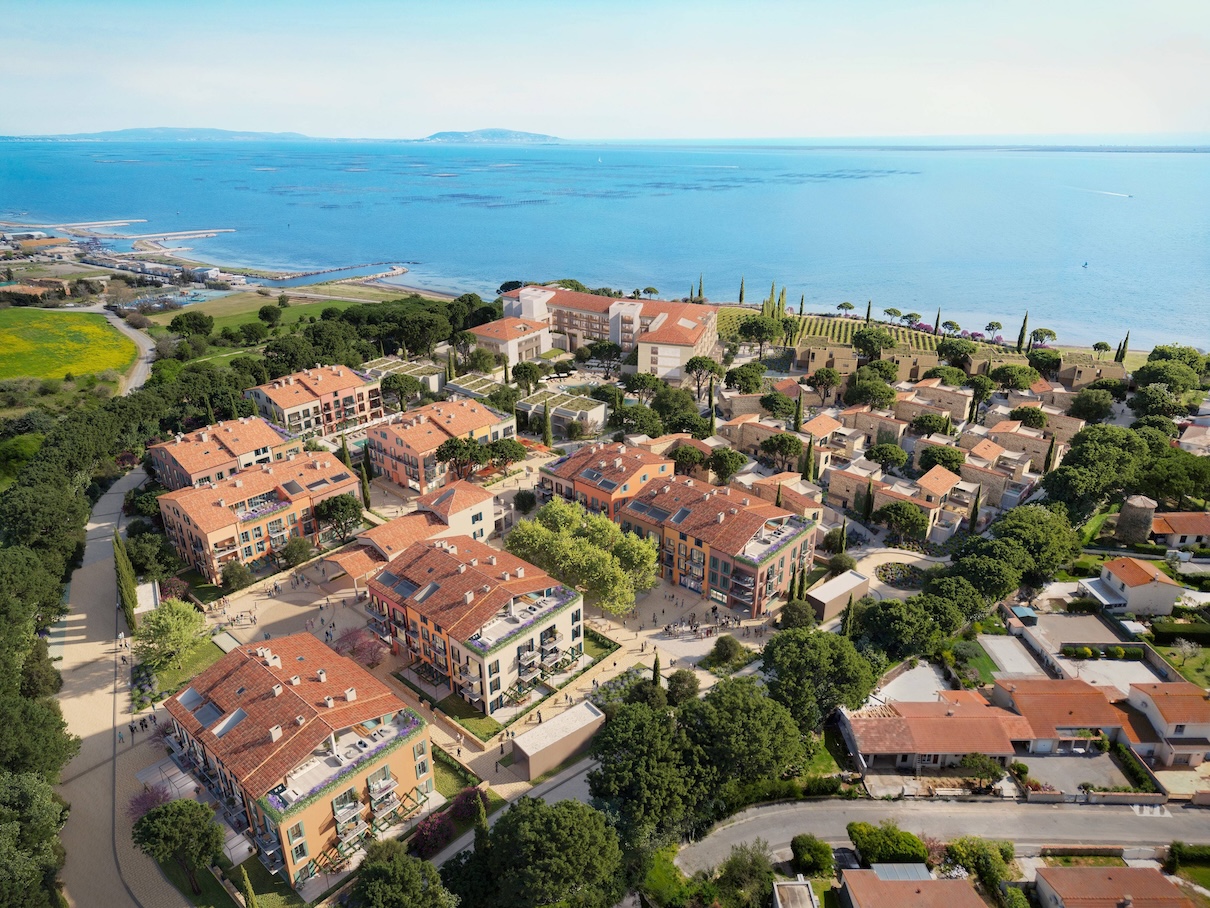
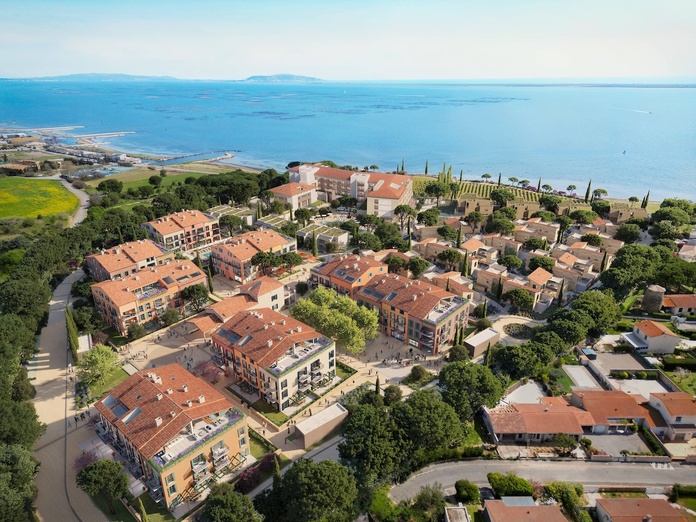
Marriott International et Propriétés & Co prévoient d'ouvrir en 2029 un complexe hôtelier et résidentiel haut de gamme à Marseillan - Photo Marriott International

Costa Rica


Marriott International continues to expand its luxury portfolio in France.

The American group has signed an agreement with Propriétés & Co to develop a The Luxury Collection resort complemented by branded residences in Marseillan, in the Hérault region.

Set on a site spanning more than six hectares along the Thau lagoon, the complex is slated to open according to the announced timetable in 2029. The project aims to integrate with the local fabric and to highlight the maritime, viticultural and landscape heritage of this Languedoc destination.

The forthcoming complex will feature a 72‑room hotel as well as 189 branded residences intended for owners and travelers. The residential offering will include lagoon‑front villas, pool villas, garden suites, apartments and penthouses.

Residents will benefit from access to the resort’s infrastructures and services within a hybrid hospitality and luxury real estate model.

On the dining front, nine concepts are planned, including an oyster and sashimi bar, a fine‑dining restaurant, a French café and a vineyard‑centered bar.

The program also features a 2,000 m² spa and wellness center inspired by Roman baths, several swimming pools, an art gallery and retail outlets.


A first for The Luxury Collection in residential development

For Marriott International, this operation marks a strategic milestone in the French market. The project will represent the group’s first branded residences in France.

“The signing of this project marks an important milestone for Marriott International as we continue to expand our luxury portfolio in Europe’s most coveted resort destinations,” notes Alexandra Goguet, Vice President Development France & Benelux at Marriott International, in a press release.

The group believes Marseillan brings together the attributes sought by international clientele thanks to its natural setting, cultural heritage and position within the leisure destination segment.

For his part, Miguel Espada, president of Propriétés & Co, explains that the ambition is to create “a European benchmark in the resort realm” by leveraging local identity rather than transforming it.


An architecture inspired by Mediterranean heritage

The architectural concept is entrusted to Slowlife Architects, while the interior decoration will be carried out by the Spanish designer Lázaro Rosa-Violán.

The ensemble will draw inspiration from the region’s winegrower houses, featuring stone façades, wooden shutters, wrought iron details and terracotta tones. The interiors will emphasize natural materials, craftsmanship and the codes of luxury hospitality.

Located about 35 minutes from Montpellier-Méditerranée Airport, the resort will offer views over the Thau lagoon, Mont Saint-Clair, Sète and the Mediterranean Sea.

The site also highlights the territory’s natural strengths, with more than 300 days of sunshine per year, a network of cycling paths and nearly 8,000 hectares of protected natural spaces.

Upon opening, scheduled for 2029, the Marseillan complex will become the fourth property in France under The Luxury Collection brand, following the Prince de Galles, a Luxury Collection Hotel; Hôtel de Berri Champs-Élysées, a Luxury Collection Hotel; and the Hotel du Couvent, a Luxury Collection Hotel.


Amelia Brille
Published by Amelia Brille TourMaG.com Editor

See all articles by Amelia Brille

  • picto Linkedin
  • picto email
Add TourMaG to your Google News feed

Google Actualités icône

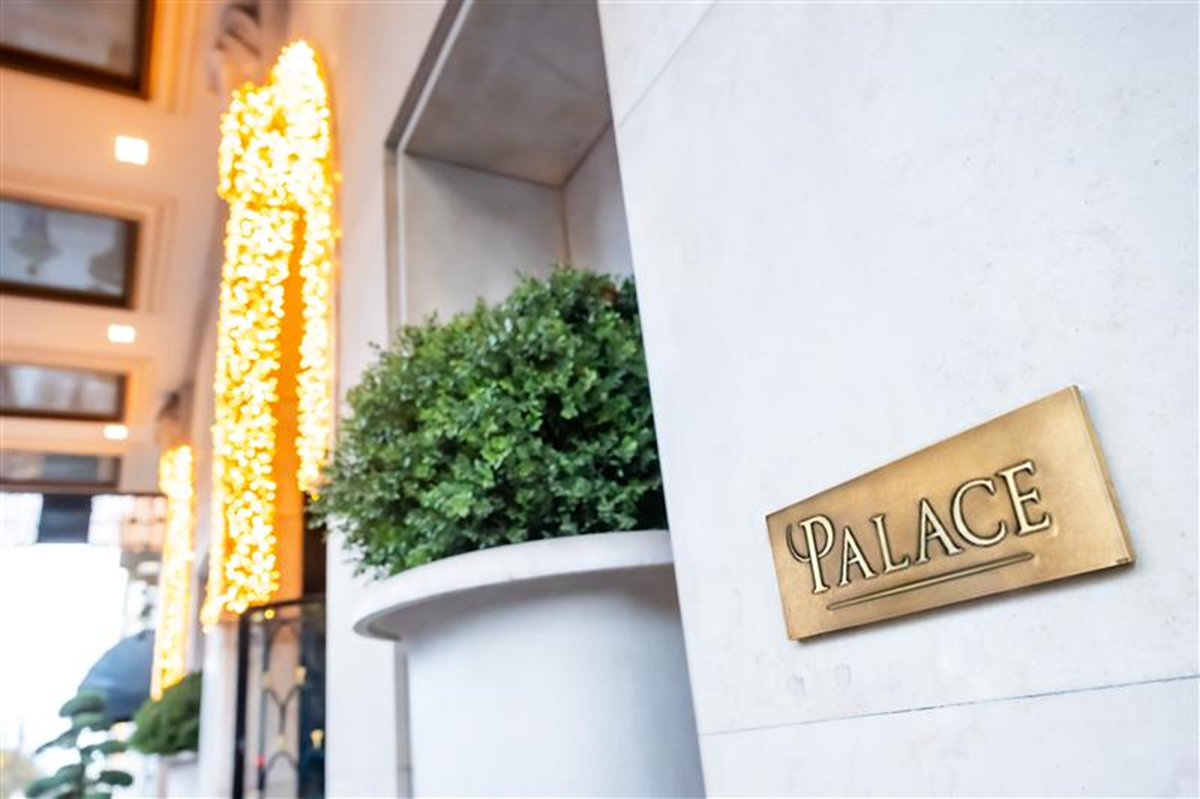
Atout France Launches 2027 Palace Candidacy Campaign


Atout France lance la campagne de candidature pour la distinction Palace 2027, photo by Atout France

Costa Rica


The Palace distinction, established during the overhaul of the hotel ranking to distinguish the elite among five-star establishments, is about to renew its roster of holders.

The national network currently counts thirty-three certified establishments, after the addition of six new addresses at the beginning of the summer.

This honorary distinction, formerly awarded for a longer period, is now granted for a strict duration of three years by the minister in charge of Tourism, on the conclusive opinion of a specialized attribution commission.

To read: Palace Label: “The aim is to attract ultra-luxury clientele to France”


The historical foundations and objectives of the distinction

The creation of the Palace distinction followed the comprehensive modernization of the French tourist accommodation offer, initiated in 2009.

While the introduction of the fifth star aimed to harmonize French standards with international frameworks for high-end hospitality, it soon became evident that a category of establishments with extraordinary characteristics needed to be singled out.

The Palace distinction was thus designed as a promotional tool to highlight exceptional properties on a global ultra-luxury market that is increasingly competitive.

In order to preserve the rarity of this label, the State implemented in 2024 a structural reform of the attribution criteria.

In addition to reducing the validity of the title to three years, the new provisions increased the operating seniority required before applying and restricted the possibilities of waivers when examining the ranking criteria.


The technical eligibility criteria imposed on applicants

For its file to be processed by Atout France, a candidate hotel must imperatively meet four cumulative eligibility criteria, otherwise the application will be immediately rejected.

The first criterion concerns the length of activity: the establishment must demonstrate at least 24 months of continuous operation for a newly created hotel, or a minimum of 12 months if it is a reopening after total refurbishment that required a long-term closure.

The second criterion requires the candidate to hold a current five-star rating.

The third criterion governs the size of accommodations, requiring a minimum surface area of 26m2, bathrooms included, for each room. An exception to this size rule is tolerated for a maximum of 10% of the hotel’s total room count.

Finally, the fourth criterion requires the validation of all the enhanced criteria of the five-star ranking grid. These options on the general grid become mandatory for Palace eligibility, such as the presence of a spa, a fitness area, a valet service, or a minimum ratio of suites within the hotel, with a tolerance margin limited to a single unvalidated criterion.


The preparation of the application file

The application submission is carried out digitally by creating a personal space on Atout France’s digital platform. The technical dossier to be assembled must by regulation include several supporting documents.

This includes first the official application form properly completed, accompanied by the complete report and the control grid stemming from the latest five-star category inspection. The operator must also attach an official document by which they undertake to cover all costs related to the inspectors’ stay and to provide the corresponding invoices.

The centerpiece of the file consists of a presentation “book,” transmitted in digital format or in two paper copies.

This document aims to demonstrate how the establishment meets the 12 exceptional assessment criteria defined by ministerial decree, such as the building’s history, the aesthetics of the premises, or the legendary character linked to famous personalities. Hotels may supplement this submission with annexed documents illustrating their CSR policy, their commitments to the quality of working conditions, or their internal training plans.


The progression of the evaluation and control procedure

From receipt of the file, the instruction process unfolds in two distinct and eliminatory phases. The first phase is purely administrative: Atout France conducts a technical verification of the four eligibility criteria. If the file is validated, it is then transmitted to the Palace distinction allocation commission.

The second phase rests on a on-site qualitative evaluation. Two members of the allocation commission, experts in the hotel sector and the art of living, carry out inspection visits within the establishment to attest to its exceptional character. Their assessments are based on a subjective “faisceau d’indices” spanning overall aesthetics, the quality of personalized hospitality, the gastronomic offering, and the coherence of the guest experience.

Following these inspection visits, the candidate establishment is summoned for an official audition lasting up to 30 minutes in front of all commission members.

This step allows the hotel’s management to defend its file before the commission proceeds to voting. If the commission’s opinion is favorable, the Palace distinction is formally granted by decree of the minister in charge of Tourism.

Air France Unveils Redesign of Its La Première Lounge at Paris-Charles de Gaulle


Air France présente le réaménagement de son salon "La Première à Paris-Charles de Gaulle", photo by Air France

Costa Rica


Air France reorganizes the welcome for its most exclusive guests by unveiling its La Première lounge, completely redesigned during the summer of 2026.

This project extends the airport journey reorganization that began in 2024. It also accompanies the introduction of the new first-class suites aboard the Boeing 777-300ER.

The venue now features an expanded Sisley skincare area and a restaurant operated by chef Alain Ducasse. These arrangements aim to simplify and enhance travelers’ waiting experience before their flight.


Salon Air France: restructuring of dining, rest and wellness areas

The space reorganization centers around several activity hubs resized to accommodate travelers’ waiting times.

The dining area now has increased capacity with more tables. Table service offers a menu developed by the Alain Ducasse group, featuring dishes from classic French cuisine and vegetarian options. The wine and champagne selection is overseen by the airline’s head sommelier, Xavier Thuizat.

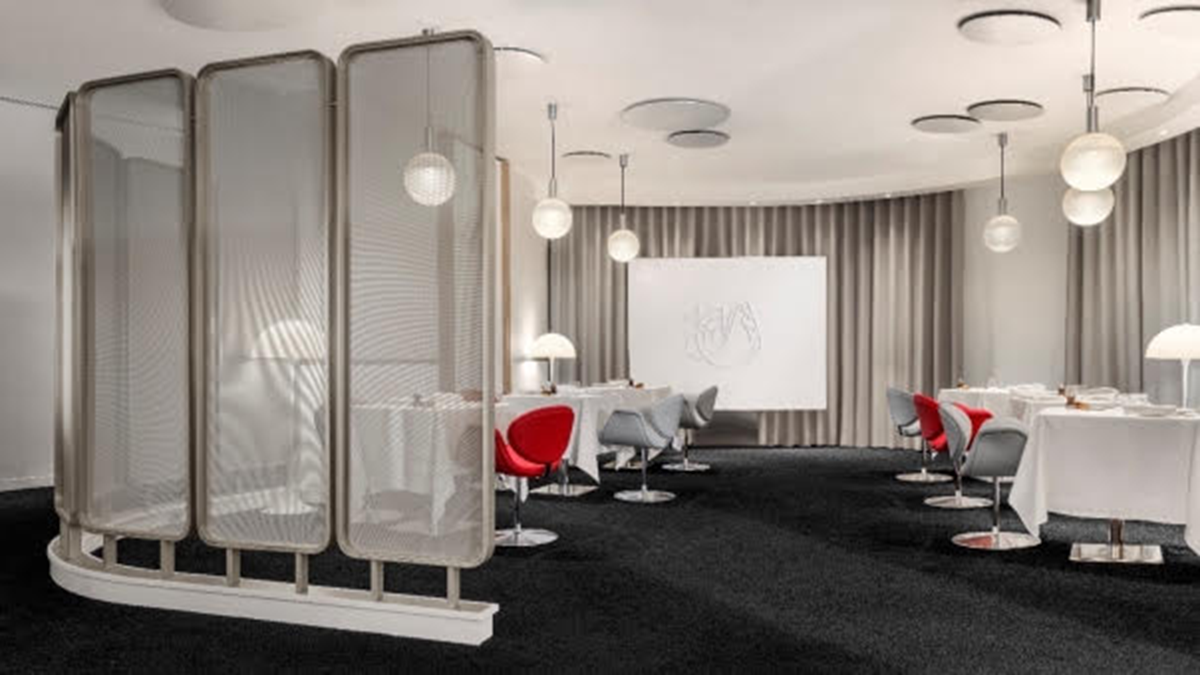
The main lounge area has been redesigned using screens and physical partitions to create individual alcoves. The furniture notably includes reissues of the Ribbon chair by designer Pierre Paulin.

The wellness hub, operated in partnership with the cosmetics brand Sisley, has undergone a technical expansion with the installation of a second treatment cabin, doubling the capacity to handle pre-flight skincare treatments.

The rest area features new individual nap cabins equipped with recliners and sleeping provisions. For professional needs, a work area now includes a closed acoustic booth dedicated to confidential telephone communications.


Adjacent private accommodation option

In addition to the shared lounge, passengers retain the possibility to reserve, for an additional fee, one of three private suites of 45m² laid out in the immediate vicinity.

These step apartments, two of which have a connecting access, include a living room, a bedroom with a double bed, a private bathroom as well as a private outdoor patio. Alain Ducasse’s catering service can be provided upon request, complemented by a welcome featuring caviar and champagne.

AirlinePros: Leading American GSA Represented in France by Frédéric d’Hauthuille (Video)


In tourism, there are bosses who juggle multiple roles as others wear yellow jerseys.

Frédéric d’Hauthuille is one of them.

Not only is the founder and leader of Monde Authentique the driving force behind the Club des Créateurs de Voyages, but he also teaches at two tourism schools.

Do you think his commitments stop there?

“I am a partner and development director at Prodesti, which provides training to travel agents and the employees of tour operators.

And then, I speak of it less, but I hold the license for the French market of AirlinePros, which represents airlines.

I have worked within airlines since 1992 up to the launch of Monde Authentique. In 2022, AirlinePros contacted me
“, we share Frédéric d’Hauthuille.

Achma Asokan, the cofounder of the company, then decides to broaden the activity beyond the United States, where she has quickly established herself as one of the leading General Sales Agents, or general sales agents, for airlines.


What is AirlinePros?

AirlinePros was launched in the late 1990s, led by James W. Foster and Achma Asokan.

Its teams are located in India, the United States and Namibia. The company has opened offices around the world, eventually operating in more than 40 countries.

“AirlinePros handles the representation of airlines, primarily in the United States and Canada. It counts 57 client airlines, therefore it represents 57 carriers.

In France, more than 50 airlines do not have a direct presence, but rather operate through a GSA, a general sales agent, hence a representative
“, explains Frédéric d’Hauthuille.

For newcomers, a GSA ensures the commercial representation of airlines that do not have the means, or the desire, to be present in France by employing their own staff.


AirlinePros: “InterCaribbean will open routes from Pointe-à-Pitre and Fort-de-France”


"Les clients refusent de voyager sur une compagnie aérienne du Golfe" selon Frédéric d’Hauthuille - RP

This model is widespread across the world. There are several players, such as Global Airline Services in France, Aviareps, APG, or AirlinePros, who will adapt to the needs of airlines according to markets.

Some do not need to be represented in France, while others do not need to be represented in the United States.

“We have contracts with five airlines. The one occupying the most of my attention at the moment is InterCaribbean, based in the Turks and Caicos Islands, hence on a British territory, with British traffic rights.

InterCaribbean will open, in the coming months, routes from Pointe-à-Pitre and Fort-de-France.

We are laying out the strategy to be implemented with the airline’s headquarters on the Caribbean territories, and finding ways to route customers from mainland France onto the InterCaribbean network
“, reveals Frédéric d’Hauthuille.

If the name InterCaribbean doesn’t ring a bell, it’s partly because the airline has regularly changed its name.

Created in 1991, it was then called InterIsland Airways. Then, in 2003, it was renamed Air Turks & Caicos. Five years later, it merged with SkyKing, before taking its final name in 2013.

It operates around ten aircraft, mainly ATRs and Embraer jets. And that’s not all.

AirlinePros has signed a contract with Sunrise Airways, a Haitian carrier operating two weekly flights between Pointe-à-Pitre and Haiti, and it offers “excellent connections to reach Miami.

Between July and September 13, this route will be operated with an A320, replacing the Embraer 145. This represents a 180% increase in capacity, a major challenge for the summer.
”


“Customers refuse to travel on a Gulf airline”

The GSA also represents LIFT, a South African airline founded in 2020, as well as FastJet, a Zimbabwean carrier.

On the Prodesti side, Frédéric d’Hauthuille’s other hat, the first half-year was marked by a slowdown in trainings. In light of falling bookings, the leaders apparently paused some expenditures, starting with training.

“We have 35 trainings and we will launch French Polynesia, which met a demand from our client travel agencies. For 2027, we are preparing trainings on China and Indonesia” announces the head.

As for his latest role, that of head of Monde Authentique, after the turmoil triggered by the war in Iran, with passengers stranded all over the world, evacuations to be carried out, and then bookings thinning out, the summer will be quieter.

A few last-minute dossiers could nevertheless improve the statistics. “We have noticed since late May that more than half of our sales pertain to departures in June, July and August. There are still plenty of seats almost everywhere. I have never seen this in 40 years in the industry.

Most clients, from the first contact, tell us they will refuse to travel on a Gulf airline. There are many who do not want to depart towards the East, i.e., toward Asia“, he explains, rather unconcerned about 2027, as clients already envision the next year.


Romain Pommier Publié par Romain Pommier Journaliste – TourMaG.com
Voir tous les articles de Romain Pommier

  • picto Facebook
  • picto Linkedin
  • picto email
Ajoutez TourMaG à votre flux Google Actualités Google Actualités icône

Air France Launches Paris Stopover to Transform Layovers into Tourist Stays


Air France et Extime Travel lancent officiellement « Paris Stopover » - Depositphotos.com @alexeynovikov

Costa Rica


Air France et Extime Travel viennent de lancer « Paris Stopover », une nouvelle offre destinée à transformer les longues correspondances à Paris-Charles-de-Gaulle en véritables séjours touristiques.

Le service, conçu et opéré par Extime Travel, la marque commerciale du Groupe ADP dédiée aux expériences touristiques, permet aux clients d’Air France de prolonger leur escale dans la capitale, à l’aller comme au retour, et de réserver un package comprenant hébergement, transferts et activités.

Le dispositif s’adresse aux passagers ayant réservé un billet Air France incluant une correspondance d’au moins 27 heures à Paris-Charles-de-Gaulle.

Ils peuvent choisir de prolonger leur escale pour une durée comprise entre une et quatre nuits, puis sélectionner leur expérience auprès d’Extime Travel.

L’offre est disponible quelle que soit la cabine de voyage, de l’Economy à La Première, en passant par les classes Premium et Business.

Les prestations peuvent être réservées jusqu’à 48 heures avant le départ, sous réserve de disponibilité.


Une offre clé en main pour les passagers en correspondance

« Paris Stopover » a été conçu pour proposer une prise en charge complète du séjour.

Chaque formule comprend des transferts, une ou plusieurs nuits dans des hôtels quatre ou cinq étoiles ainsi qu’un choix d’activités, à adapter en fonction de la durée de l’escale et des envies du voyageur.

Deux expériences sont proposées au lancement. « Paris Incontournables » permet de découvrir les principaux sites touristiques de la capitale, de la tour Eiffel au Louvre. Une seconde offre est consacrée à Disneyland Paris.

Extime Travel prévoit d’enrichir progressivement le catalogue avec de nouvelles expériences premium ainsi que des excursions culturelles, gastronomiques et festives.

Le groupe souhaite également développer des offres permettant de découvrir les territoires situés autour de l’aéroport Paris-Charles-de-Gaulle.


Un potentiel important auprès des voyageurs internationaux

L’enjeu est significatif pour Air France. La compagnie indique que 50% de ses clients arrivant à Paris-Charles-de-Gaulle sont en correspondance vers une autre destination.

La demande semble également présente chez les voyageurs concernés. Selon une étude de la Chaire Pégase publiée en avril 2026, 81% des passagers en correspondance à Paris se déclarent plutôt ou très intéressés par la possibilité de quitter l’aéroport pendant leur escale afin de découvrir Paris ou des attractions situées à proximité de Paris-Charles-de-Gaulle.

L’intérêt est encore plus marqué chez certaines clientèles internationales, notamment brésilienne, avec 92,3% de voyageurs intéressés, et indienne, avec 90%. Ces deux marchés bénéficient, par ailleurs, depuis avril 2026 d’une exemption de visa de transit aéroportuaire en France, un élément susceptible de faciliter ce type de séjour.


Une nouvelle étape pour le hub de Paris-CDG

Le lancement de « Paris Stopover » s’inscrit dans le cadre de « Connect France », le partenariat stratégique signé en juin 2025 entre Air France-KLM et le Groupe ADP pour renforcer l’attractivité et la performance du hub de Paris-Charles-de-Gaulle.

L’offre doit contribuer à faire de Paris une étape à part entière dans le parcours des voyageurs en correspondance, alors que les grands hubs internationaux cherchent de plus en plus à transformer leurs passagers en visiteurs temporaires.

Air France et le Groupe ADP présentent ainsi « Paris Stopover » comme une nouvelle manière de valoriser le trafic de correspondance et de renforcer le rayonnement de la destination France. Les deux partenaires indiquent que Paris-Charles-de-Gaulle devient, avec ce dispositif, le premier grand hub européen à proposer une expérience touristique de ce type entre deux vols.


Amelia Brille Publié par Amelia Brille Rédactrice TourMaG.com
Voir tous les articles d’Amélia Brille

  • picto Linkedin
  • picto email
Ajoutez TourMaG à votre flux Google Actualités Google Actualités icône  

Electronic Invoicing: France Does Not Have the Most Complex Legislation [ABO]


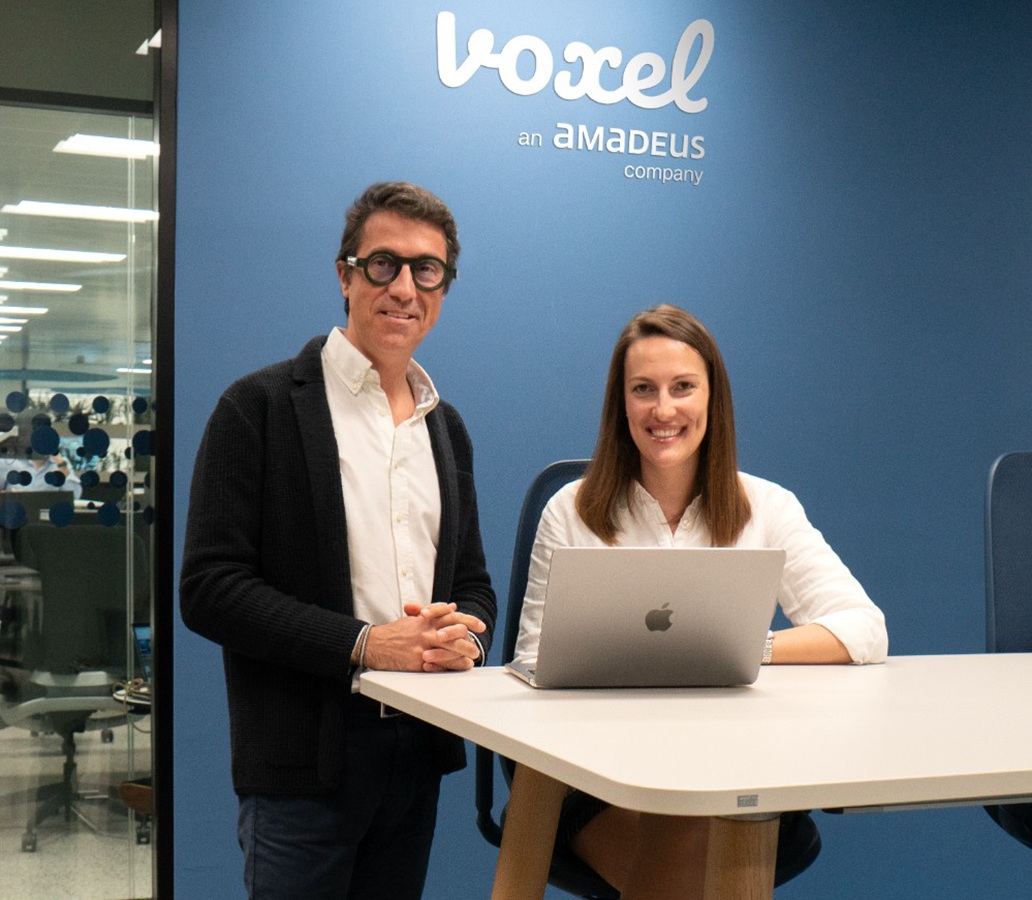
Maud Christophe, directrice du développement chez Voxel, à propos de la facturation électronique : "Nous avons déjà eu l’expérience au Mexique, en Italie" - Depositphotos.com, mrgao

IFTM prenez RDV avec TourMaG


The first of September could offer a glimpse into the administrative and economic chaos of a country unprepared for a reform.

Indeed, France is stepping into an era of modernization by shifting to electronic invoicing.

However, not every ticket will disappear, since this concerns transactions between businesses.

For the state, the objective is fairly straightforward: trace the VAT and bring in new revenues, while avoiding a portion of activity from slipping into a gray area.

Yet, in France such maneuvers can sometimes be chaotic.

While they should all be ready, within about six weeks, to receive their invoices electronically, only 2 million businesses, out of France’s 11 million, would actually be operational according to La Tribune.

And even though the State has acknowledged the looming chaos, it has also stated its intention to be supportive toward players who show good faith and face technical or organizational difficulties in meeting the requirements.

Conversely, penalties could be steep for companies that fail to provide evidence of their challenges in converting to the reform, with fines potentially reaching €15 per invoice not properly transmitted.


Invoicing: “Time lost is cash flow lost”

In light of the urgency of the situation and the mandatory transition that seems misunderstood, we have decided to give a voice to the head of a company that has already lived through several “first Septembers” around the world.

“Voxel has been around for 28 years. We are based in Spain, with clients all over the world.

We began by aiming to solve the problems faced by tourism players who wanted to maximize automation in receiving their invoices and matching them, by creating a network linking hoteliers on one side and tour operators and travel agencies on the other, so they could exchange invoices automatically and electronically
, summarizes Maud Christophe, director of development at Voxel.

We connect to the company’s PMS and its accounting system to extract invoice details, validate them, and then send the invoice to the client, she adds.

To read: Electronic invoicing: everything you need to know!


Electronic invoicing: “We’ve already had experience in Mexico, in Italy”

After almost three decades in operation, the company has witnessed electronic invoicing reforms across the globe!

Therefore, for the head of the company, and with the September 1 deadline approaching, there is no need to panic just yet, even if some players in tourism are lagging behind, particularly those that hadn’t started digitizing yet.

Because before France, the next country to adopt this new era is… Chile! Behind it, other Latin American countries will follow.

“In Europe, Italy was a pioneer, as it implemented this reform in 2019 to address VAT controls and combat corruption. In 2026, Poland and Belgium followed in January-February, then France in September, and Germany will follow in 2027, summarizes Maud Christophe.

Progressively, we see that many countries are moving toward this for varied reasons.

The implementation of electronic invoicing in Italy was not neutral.

To understand it, one only has to look at the European VAT Gap indicator, which measures the gap in VAT compliance. It represents the difference between revenues that would be collected if all taxpayers complied with tax rules and revenues actually collected, according to the European Commission site.

In Italy, it dropped from over 19% to 15%. In France, it would be only 5.6%.

Beyond this indicator and, in France, even though the obligation is set by the government, digitalization should still bring benefits to tourism industries by allowing them to stay up-to-date with their cash flow.

Indeed, at present, “as soon as there is a problem in a paper or manual process, the hotelier sends the invoice to the travel agency, which takes two to three weeks to process it. So if, for example, the booking number is missing, they will email or call the hotel to have the invoice resent.

All of this stretches out over time. That lost time equals less cash flow
“, explains Maud Christophe.

She continues: “We already had experience in Mexico, in Italy, etc. Each country obviously has its own specifics, but it is not something completely new for us.

There is a lot of worry, but France does not have the most complex legislation on the subject. And we are here to accompany and reassure tourism professionals.

Of course, the major players in the sector have already started ahead; it might be a bit more challenging for smaller ones. And indeed, for tourism professionals who still work in a very manual and not very digital way, this reform requires them to move toward digitization, in addition to updating themselves on this new obligation,
“, analyzes the development director.


Invoicing: “For SMEs, there isn’t a big change”


Facturation électronique : "Pour les PME, il n’y a pas de grand changement" selon Maud Christophe (Voxel) - Crédit photo : Voxel

Thus, starting on September 1, 2026, all enterprises must be capable of receiving electronic invoices.

In addition, large enterprises and mid-sized firms will also need to be able to issue them.

Small businesses, which account for nearly the entire tourism industry with a few exceptions, will have a grace period to issue invoices until the next term.

To read: Tourism businesses: what does 2026 have in store for you tax-wise?

“For SMEs, there isn’t a major change. The first step is that they will be required to select an approved platform to receive invoices. For those who have not done so, they still have until September 1 to do it.

This approved platform will therefore fetch all invoices from the major clients of travel agencies. They will continue to receive paper invoices or emails from their smaller suppliers
“, adds Maud Christophe.

The SMEs can then potentially integrate these invoices into their accounting system or retrieve them from the approved platform.

In short, French VAT-liable companies must use an approved platform to receive their invoices by early September. Voxel is, of course, part of this category.

It should be noted that the reform will come with an additional cost at a time when the business models of some players are under pressure. “Travel agencies tell us they paid nothing before to receive their invoices and they wonder: why, tomorrow, should I pay? This is completely legitimate, notes the development director of Voxel.

I advise them to pursue complete digitization of their activities, because today people are employed to manually enter invoices into the accounting system and then reconcile them. All of this carries a very high cost for a business.

With full digitalization, it is possible to have staff truly dedicated to higher-value tasks
, she concludes.


Atout France Has Been Hacked: Cyberattack Hits French Tourism Agency


ttt

tttt
Atout France dans la lignée de Belambra, Maeva et Gîtes de France - Depositphotos retouchée par l'IA
ttt

ttt

t

tt

CroisiEurope


tt

tt

tt

tt

ttt

tttt The list is long and shows no signs of stopping.
tttt
tttt
tttt After the historic wave of hacks that hit tourism in May, revealing a relatively basic vulnerability among several major players in the sector, cyberattacks continue in the tourism industry, without ever stopping.
tttt
tttt
tttt And this time, it is the turn of a public institution to have its vulnerabilities laid bare.
tttt
tttt
tttt Atout France therefore suffered an attack by a malicious individual who could have extracted, according to their statements, data from approximately 400,000 user accounts.
tttt
tttt
tttt Samples, as a gesture of good faith, as is customary on the dark web, have been shared.
ttt

tt

tt

t

ttt

ttt

Atout France Following in the Footsteps of Belambra, Maeva, and Gîtes de France

tt

tt

ttt

tttt The hacker claims to have exploited an access-control flaw, i.e., an IDOR (Insecure Direct Object Reference) vulnerability, according to frenchbreaches, as was the case for Belambra, Gîtes de France or Maeva.
tttt
tttt
tttt “In French, one could translate that as having a direct reference to an unsecured object.
tttt
tttt
tttt That is to say that if a profile, a file or an invoice is stored directly within an application, simply entering the direct address could allow access, even without the proper authorization.
tttt
tttt
tttt We are not facing an extraordinarily sophisticated technical exploit, but rather a misunderstanding of security at the human level,
” we were told by Christophe Mazzola, founder of the Cyber Academy, in a previous article.
tttt
tttt
tttt Beyond this weakness, the consequences can be dire for companies or individuals.
tttt
tttt
tttt Regarding Atout France, about 400,000 user accounts would thus be compromised. The attacker(s) would have access to names, first names, roles, emails, phone numbers, billing postal addresses, organizations, member numbers…
tttt
tttt
tttt A multitude of information that could feed, in the future, phishing campaigns or other highly targeted malicious actions. Vigilance will therefore need to be doubled in case of emails purportedly sent by Atout France in the days and months to come.
ttt

tt

tt

t

ttt

ttt

Pacha Tours and Trenitalia France Also Hacked

tt

tt

ttt

tttt Do not believe that, after the historic wave of hacks that the tourism industry experienced, hackers have lost interest in the sector; quite the opposite.
tttt
tttt
tttt Taking advantage, no doubt, of the sector’s cybersecurity weaknesses, the trophies have been many.
tttt
tttt
tttt There was, at the end of June, Pacha Tours. The hackers claimed to have extracted 2 GB of data thanks to “a code-injection technique used to modify or retrieve data in SQL databases (tables with rows and columns, ndlr)“, according to Cloudflare.
tttt
tttt
tttt Thus, on both the Pacha Tours site and its pro space, the compromised data would concern 31,087 unique individuals, 4,413 unique emails, 3,705 unique phones, 132 cleartext passport numbers, 10,153 PNR codes, and 1,096 B2B agency accesses with passwords in clear text, according to the attackers.
tttt
tttt
tttt But that’s not all, because Trenitalia France also suffered a similar misfortune.
tttt
tttt
tttt The malicious actors gained unauthorized access to certain personal data of customers related to ticket purchases. This attack has been confirmed by the operator.
tttt
tttt
tttt An email campaign was sent to the company’s customers.
tttt
tttt
tttt It reveals that the information in the pirates’ possession includes: civil and identification data (buyer and passenger names, passenger date of birth); contact data (email address, phone number); travel data (information associated with the transport ticket, such as itinerary, travel date and time, ticket number); type of offer or service linked to the transport ticket and data needed to benefit from these offers.
tttt
tttt
tttt Moreover, the attackers claim to have extracted data from 60,568 user accounts, as well as metadata from Smartbox agreements or e-signature documents.
tttt
tttt
tttt “We really need to roll up our sleeves and get to work, because this kind of data leak, in Europe, we are truly among the few who know this story.
tttt
tttt
tttt I work a lot in the United Kingdom, Germany, the Netherlands, Luxembourg, Switzerland and Belgium; there, this isn’t as common. France is acting as the delinquent student,
” Christophe Mazzola explained to us.
ttt

tt

tt

t

easyJet France: Strike Confirmed for July and August


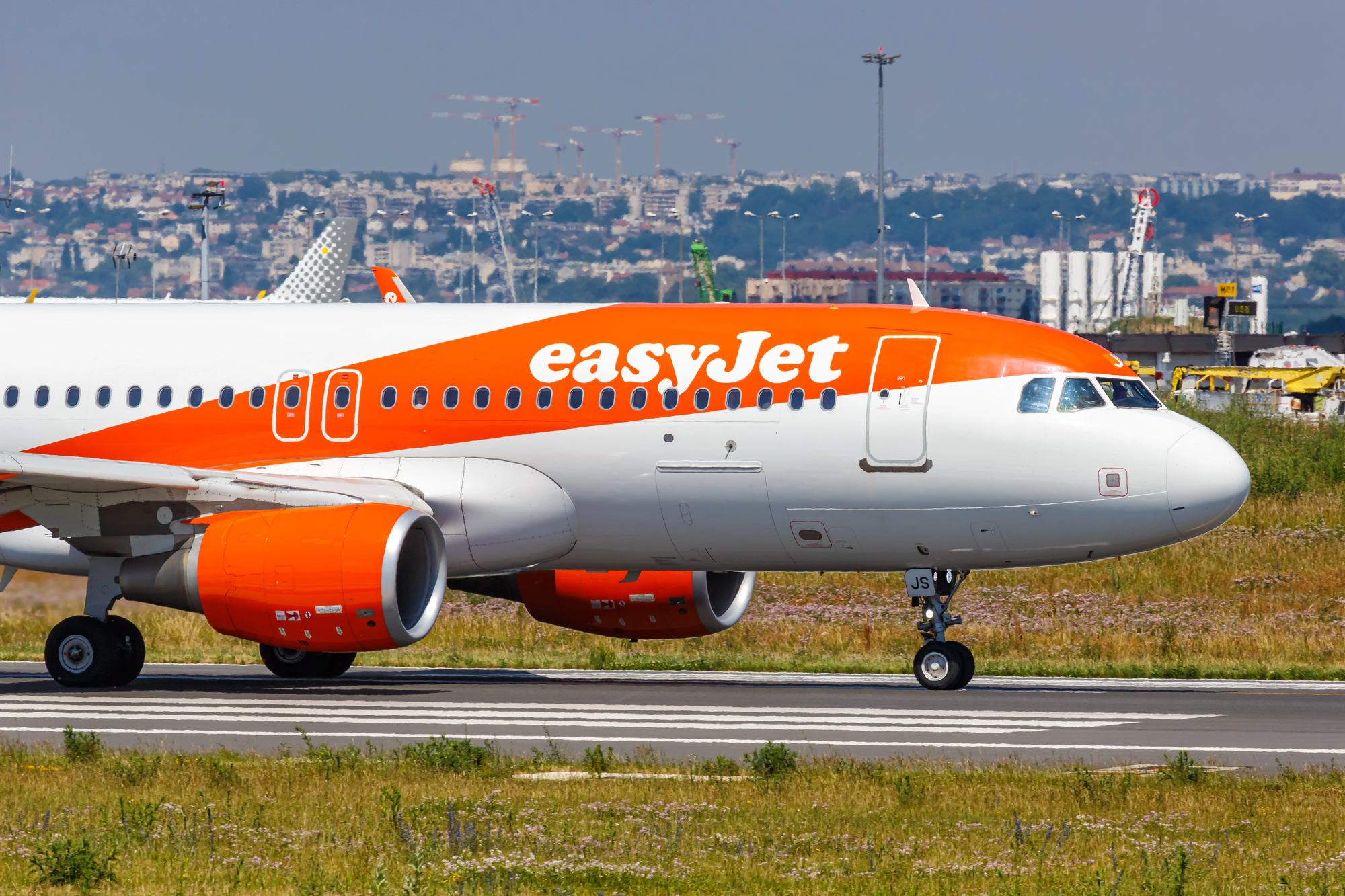
Grève easyJet France : "des annulations massives de vol" à prévoir dès juillet et en août - Depositphotos, Boarding2Now

CroisiEurope


The tension seems to have reached its peak in the cabins of French aircraft.

While the inter-union of France’s cabin crew threatens a large-scale social movement across all carriers operating in our country, at easyJet the strike is no longer merely a threat. It is set to become a reality.

Last week, we explained that within the orange-liveried company, the flight attendants were lamenting a “catastrophic situation.”

The cause? Scheduling instability. “I have been on duty since 2008, so I know this problem well and how it has evolved, but I have never seen anything like this. The situation is unprecedented. People have no fixed schedule. They are changed for almost anything, sent to the four corners of Europe“, lamented William Bourdon, secretary of the SNPNC-FO section.

A last-chance meeting took place this Thursday, July 23, 2026 with management. It ended in failure.


Grève easyJet France : “des annulations massives de vol”

In a statement, the SNPNC places the responsibility for the coming social action squarely on… management.

“Management has also lied about night flights, which were not supposed to occur and are now multiplying nonetheless. The way navigators’ lives are organized has become impossible.

These malfunctions, which management refused to address seriously, render the situation untenable for crews today and jeopardize passenger safety. (…) The proposals put forward proved markedly insufficient and aimed only at buying time
“, states the document.

In light of this assessment, it is not only the SNPNC-FO, but all of the airline’s PNC unions—including UNPNC-CFDT—who filed a strike notice.

A letter has been sent to management to inform them of the decision taken at the end of this last meeting.

Thus, the SNPNC-FO and the other representative organizations for the stewards and air stewards have decided to exercise this right and urge the employees they represent to stop working.


Grève easyJet France : des vols annulés dès la fin du mois de juillet !

As required by law, employees whose absence would directly affect flight operations must inform the employer of their “intention to participate in the strike no later than forty-eight hours before“, as well as the rules governing passenger information.

Given this framework, the unions did not set any date in their strike notice.

They will therefore inform management in accordance with the law, i.e., 48 hours before the start of the walkouts. The letter likewise specifies the unions’ demands aimed at addressing scheduling instability.

They demand the immediate implementation of concrete measures guaranteeing scheduling stability, with a maximum of three changes per month per employee, excluding operational events not attributable to the company, the immediate cessation of layovers without explicit authorization from the employee concerned, and the actual return to voluntary work.

They also request the introduction of a specific night-flight allowance and an immediate revision of onboard procedures.

The signatory unions say they remain at the disposal of management if the latter truly wants to move things forward. This social movement was hardly in doubt, given that the vast majority of SNPNC members had expressed support for this solution.

If no date has been mentioned, there is little doubt that the strike could take place in the coming days and even in August. It will inevitably lead to massive flight cancellations, we are told.

The ball is in easyJet France management’s court.


Réaction de la direction d’easyJet :

“We are very disappointed that one of the unions representing our cabin crew based in France has announced a potential action despite our proposals to adjust and address their concerns.

While negotiations are already planned for September, we urge the unions to abandon this counterproductive move at a time that is so important for our customers,” the company stated.
”


Romain Pommier Publié par Romain Pommier Journaliste – TourMaG.com

Voir tous les articles de Romain Pommier

  • picto Facebook
  • picto Linkedin
  • picto email
Ajoutez TourMaG à votre flux Google Actualités Google Actualités icône

AI-Powered Drone Could Revolutionize Sea Rescue in France by Summer 2027

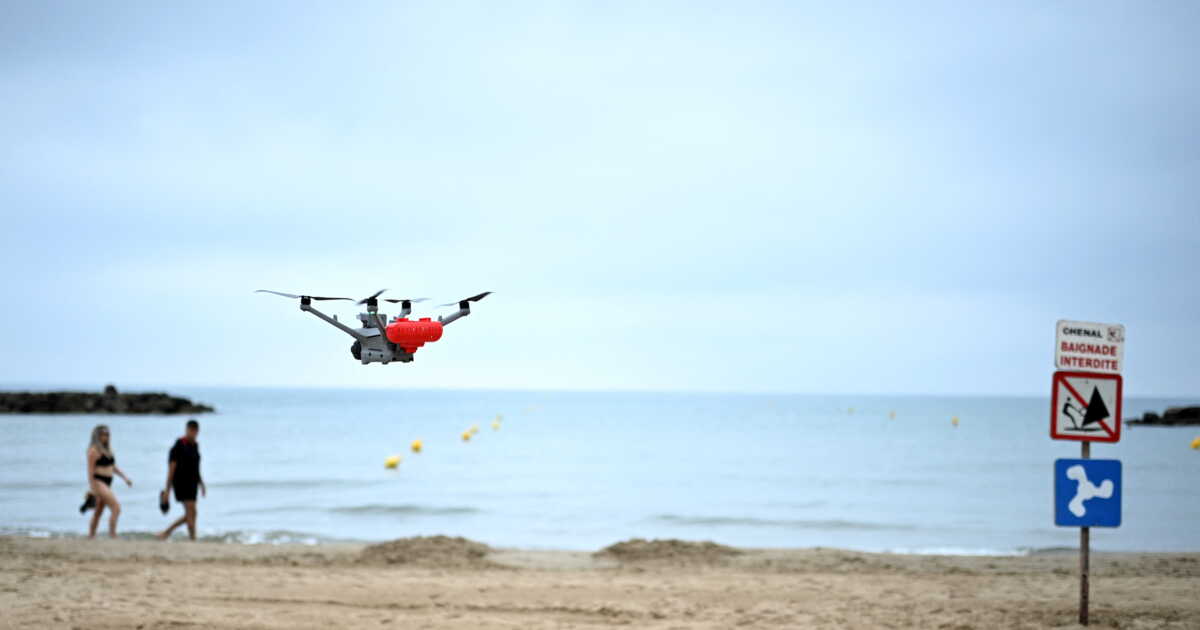
“If you’re in trouble, we will drop a buoy,” proclaims from the air an AI-powered drone, hovering a few arm’s lengths off the shore at Valras-Plage (Hérault) in southern France, where this device designed to detect drowning risks is currently being tested. The three heatwaves that have swept France since May have driven up drowning figures. In two and a half months, 274 people have died in the sea, in rivers, or in private pools, not counting non-fatal drownings that could leave serious after-effects.

Near Béziers, along the Mediterranean coast, Instadrone, a company specializing in the use of drones in industrial settings, aims to broaden its activity to monitoring bathing areas. It has thus received backing from the intercommunal authority and from the Valras station, which are financing the ongoing tests. Those tests should pave the way for the necessary authorizations within about a month, with a view to a full rollout by the summer of 2027.

An autonomous drone to detect the early signs of distress

“Dropping lifebuoys with a drone has been done for five years in the Landes region. But it was always in manual mode. We are bringing full automation,” explained to AFP by Instadrone’s founder, Cédric Botella, at the foot of the main lifeguard post, just steps from the station’s casino. The device appears as a large metal box, inside which a drone is ready to take off at any moment, day or night, notably thanks to its thermal camera.

In patrol mode, its mission is to “cover the 2.5 km stretch of beach by flying behind the breakwater, flying along the shoreline, without flying over swimmers but directing its cameras toward them, while avoiding filming people on the beach”, adds Mr. Botella, a former judicial police officer who has turned to entrepreneurship.

“If it detects erratic behavior, such as someone who ‘blocks the flow’, it will approach and send them an audio message saying that help is on the way. If needed, it will drop a buoy that inflates automatically on contact with water”, continues Botella.

Other scenario: a lifeguard spots someone in difficulty, or someone alerts them. In that case, the lifeguard, who will be trained in this new technique, will take control of the drone and send it to the exact location to assess the situation. Finally, “if during a midnight swim there is an incident, there will be an emergency number that will allow us to trigger the drone immediately and locate the person”, he also notes.

A reinforcement for lifeguards, including off-season

In cruising mode, the system costs around 2,000 euros per month for the community that adopts it, according to the entrepreneur, who hopes for its generalization. “Life has no price”, remarks the mayor of Valras-Plage, Daniel Ballester, who strongly backs the initiative and came to observe the latest tests.

“It won’t replace humans, but it opens up new ways to stay operational,” adds the official, who hopes to extend coastal monitoring to morning and evening hours and to times of the year when beaches are not watched by rescuers.

In May, the early arrival of a heat wave in France had drawn an unusual influx of visitors to the Mediterranean and Atlantic shores while beaches were not yet monitored, posing safety challenges.

Returning to France After a Long Trip: Why the Homecoming Is Often Harder Than Expected

Four years ago, they dropped everything: the apartment, the steady job, the car. They headed to Australia for what was meant to be the first big journey of their lives. Thibaut and Pauline, 25 and 26, didn’t know each other yet when they left France. A few weeks later, they fell in love and began traveling together.

At first, they stayed because they loved Australia and wanted to keep exploring the country. But when their visa could no longer be renewed, the return became unavoidable: “We told ourselves, it’s the end of Australia, a page is turning. We are going to travel for six months in Southeast Asia before returning to France.”

But as the deadline drew closer, concerns emerged: “What scares us is re-acclimating to the French system, explains Pauline. We are bilingual, we don’t want to lose our English and we are used to the Anglophone system, with a great openness in companies. Here, we focus more on our experience and our personality than on our diplomas. And I earn a better living.”

Finalement, au lieu de rentrer, le couple a postulé à un Programme Vacances-Travail (PVT) en Nouvelle-Zélande.

“Nous n’évitons pas à 100 % de rentrer en France, mais nous n’essayons pas d’y retourner non plus. Si nous ne trouvons pas de sponsor pour obtenir un visa en Nouvelle-Zélande, nous pensons déjà au Canada”, raconte le couple. Avec la distance, les aspects qui leur plaisent moins en France se sont accentués. Ils s’inquiètent du coût des loyers, de la qualité de vie, mais aussi du sentiment d’insécurité. Malgré les atouts qu’ils reconnaissent au pays, une part d’eux appréhende toujours l’idée d’y revenir.

Travel, Identity Change and Acclimatization

Pour de nombreux voyageurs, le retour est loin d’être une simple formalité. Après plusieurs années à l’étranger, retrouver sa vie d’avant peut s’avérer plus difficile qu’on ne l’imagine. Floriane, 32 ans, en a fait l’expérience.

Après plusieurs séjours à l’étranger pendant ses études, puis près de deux ans en Australie et un PVT en Nouvelle-Zélande, Floriane décide de rentrer en France en juin 2025 : “Je me suis dit : j’ai 31 ans, ça fait trois ans que je ne vis plus en France, je ne cotise pas pour la retraite, mon CV ressemble un peu à n’importe quoi… ce sont toutes ces questions qui m’ont fait revenir.” Pourtant, une fois en France, les doutes s’intensifient. Lorsqu’elle retrouve ses amis, le décalage est brutal : “Certains de mes proches me disaient : “On vient d’acheter l’appart” ou “On attend le bébé”. J’étais contente pour eux, mais je me prenais un coup de poignard à chaque fois, à me dire : “Mais merde, qu’est-ce que j’ai foutu ?”.

Peu à peu, elle remet en question ses choix, à commencer par son métier de journaliste. Mais ses doutes dépassent le cadre professionnel : ai-je bien fait de rentrer ? Dois-je repartir ? Mais où, et pourquoi ? Des interrogations qu’elle traverse seule, son expérience étant difficile à partager avec son entourage.

Bien vivre son retour en France est possible, à condition de l’anticiper. Le piège est de penser que revenir dans son pays d’origine ne nécessite aucun ajustement. Pour Matthieu Fouché, il faut anticiper ce changement sur le plan mental : « n arrive dans un nouveau pays, l’environnement est tellement différent qu’il y a forcément des modifications identitaires, explique-t-il. Cela entraîne souvent le sentiment d’évoluer positivement : apprendre de nouvelles choses, devenir quelqu’un que l’on apprécie à ce moment-là.”

Le retour implique alors un nouveau bouleversement, parfois appelé en psychologie « choc culturel inversé » : le fait de revenir dans un lieu censé être familier, mais qui semble soudain étranger. “Souvent, de retour d’ expatriation, on ne se rend pas compte de ce qu’il va se passer, explique Pascale Chazelle, coach certifiée dans l’accompagnement des conjoints expatriés. Il y a souvent une période de questionnement et une nécessité de se réinventer : les valeurs ont changé, la relation avec la famille ou les amis aussi, et se pose la question de qui je suis et quels sont mes projets.”

Living Well Upon Returning to France

Living well upon returning to France is possible, provided it is anticipated. The trap is to think that returning to one’s homeland requires no adjustment. For Matthieu Fouché, one must anticipate this mental shift: “When you’re preparing to go to a new country, you expect it to be difficult, that you’ll have to make an effort to meet people. And, well, you should have a bit of that same mental preparation before returning to France.”

This work can also involve introspection. Pascale Chazelle particularly recommends listing the skills gained abroad, to become aware of the evolutions you’ve undergone and to integrate this new identity.

After several years in Australia and Asia, Damien and Fanny, 31, decide to return. After a month of happiness at seeing their loved ones again, the blues arrive: “We were looking forward to our return to France, and yet after a month, ouch. Small depression,” recounts Damien. It’s the first time I’ve ever experienced this in my life. It hurts, I hadn’t seen it coming.

Alors, le couple prend une décision : faire les saisons en France. “C’était une manière pour nous de garder un peu ce côté backpacker, ajoute le jeune homme. Nous avons enchaîné les saisons dans le Sud-Ouest, puis fait une saison en Savoie et actuellement nous sommes du côté de Saint-Malo. Après cet été, je pense que nous allons essayer de nous poser définitivement.”

Si Damien et Fanny ont pu compter l’un sur l’autre, et sont aujourd’hui heureux d’être rentrés, certains voyageurs se retrouvent confrontés à l’incompréhension de leur entourage, renforçant leur sentiment d’isolement. Matthieu Fouché et Pascale Chazelle conseillent alors de se rapprocher de personnes ayant vécu des expériences similaires.

Cependant si le coup de blues s’installe dans le temps avec un réel impact sur la vie quotidienne, une difficulté à établir des liens avec les autres, une tristesse qui se rapproche des symptômes dépressifs, il convient de se faire accompagner par un psychologue.

Le retour en France n’est donc pas forcément un renoncement, mais peut devenir une nouvelle étape. Et si, malgré tout, l’envie de repartir se fait sentir, l’aéroport ne sera jamais bien loin.